Sunday, May 11, 2014

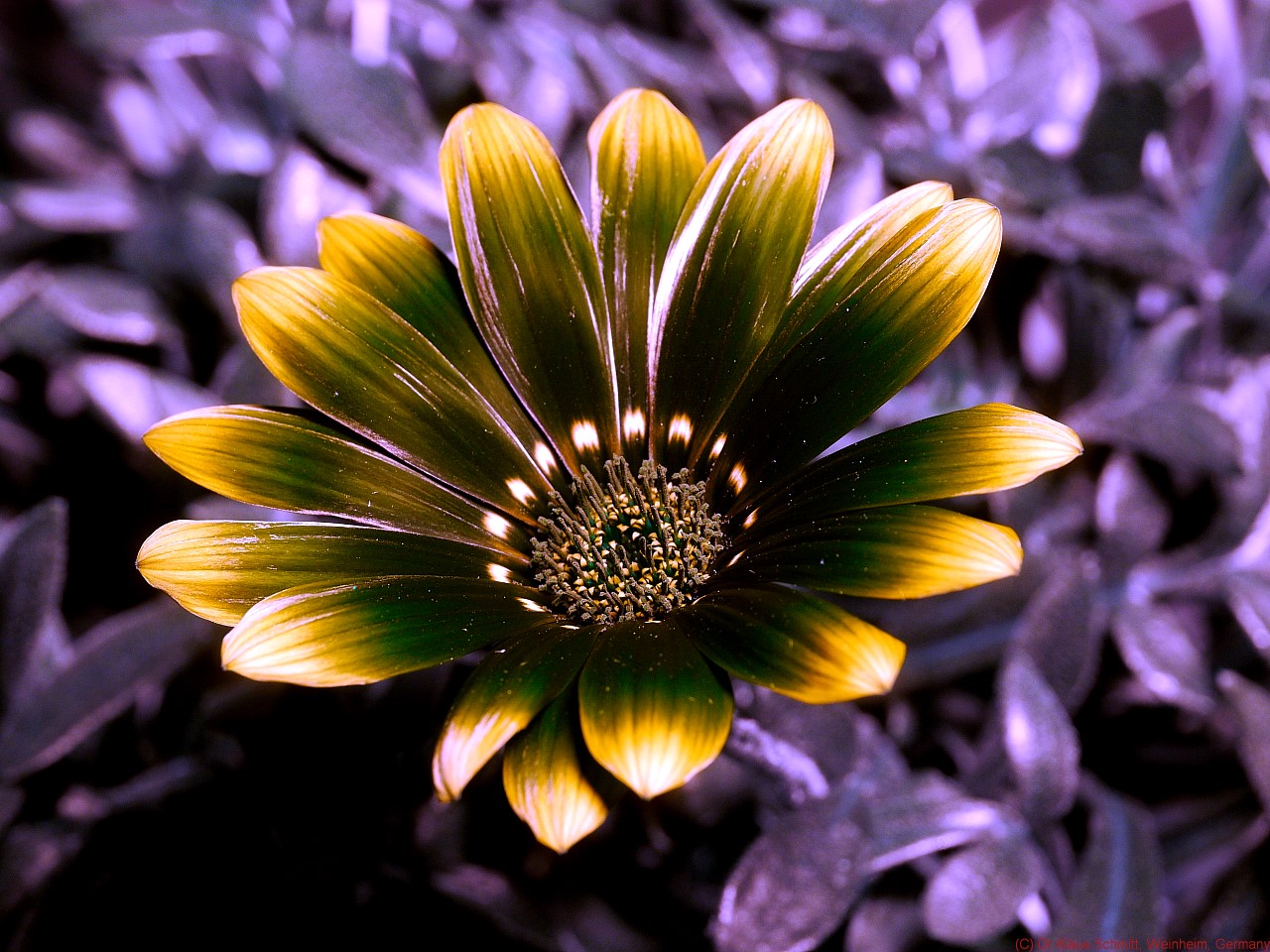
Treasury flower - Gazania rigens in deep reflected ultraviolet photography making blemishes and deterioration visible - plant forensics

Today some details caught my attention on the petals of a long lasting flower I have written about before, Treasury flower - Gazania rigens in reflected ultraviolet photography using my "work horse" UV filter, the Baader-U filter, my Jupiter-U and Saturn-U deeper reaching UV filters. Lens was a CERCO 94mm quartz fluorite lens. Light source was a Xenon flash. All shots were done at about f8.

It is about blemishes which gets visible, the deeper reaching the used UV transmitting filters are. Remember, mine are:
- Baader-U filter (approx. 320-395nm, effective peak approx. 375nm)
- Jupiter-U filter (approx. 280-385nm, effective peak approx. 365nm)
- Saturn-U filter (approx. 300-350nm, effective peak approx. 325nm)

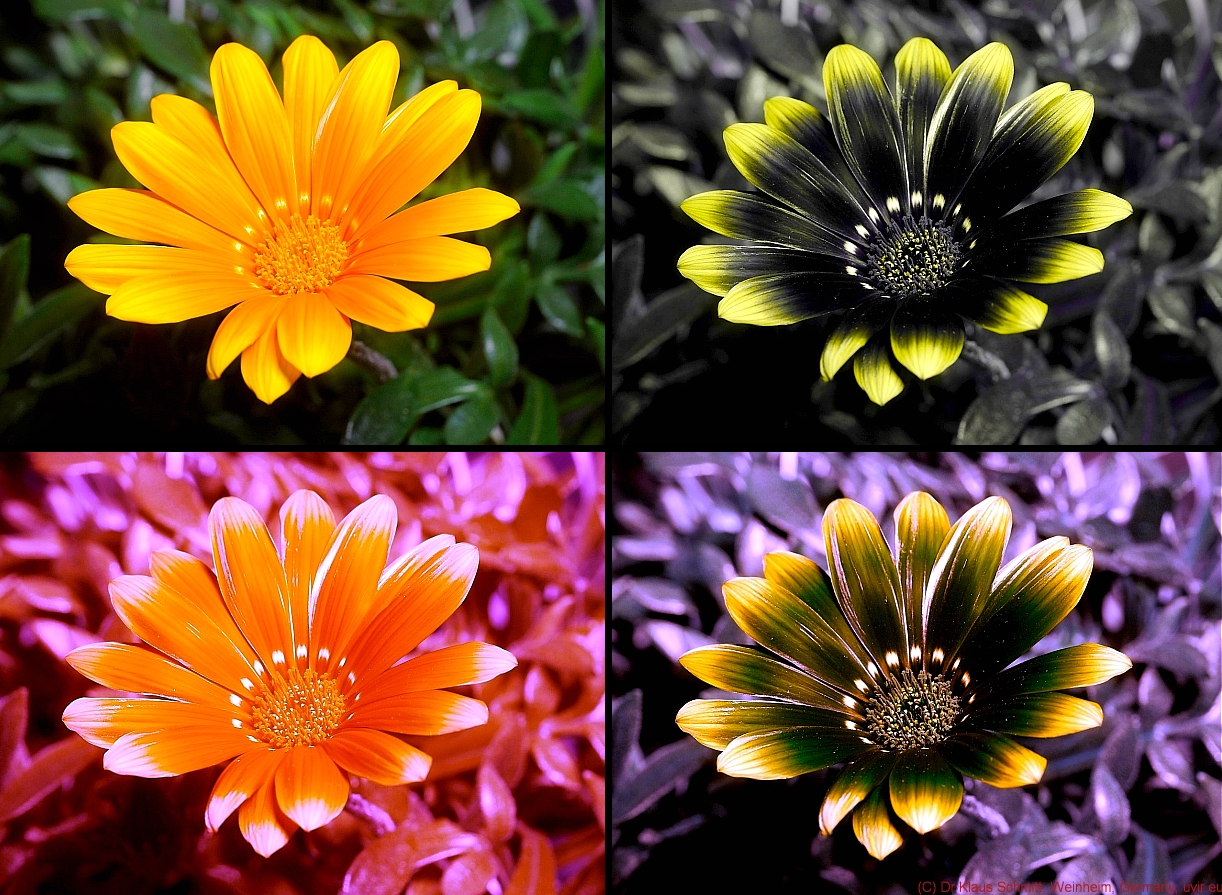
What gets visible, is that the naked human eye does not see anything in the visible image, but already the Baader-U filtered image starts to reveal some dots on the petals, which get more prominently visible when using the Jupiter-U filter and best when using the Saturn-U filter. I have noticed earlier in outdoor shots, that reflected UV imaging reveals plant and specifically flower infections and detoriation much earlier than visible light images. But let's have a look at the following "plant forensic" images....

[click on image to see a larger one]

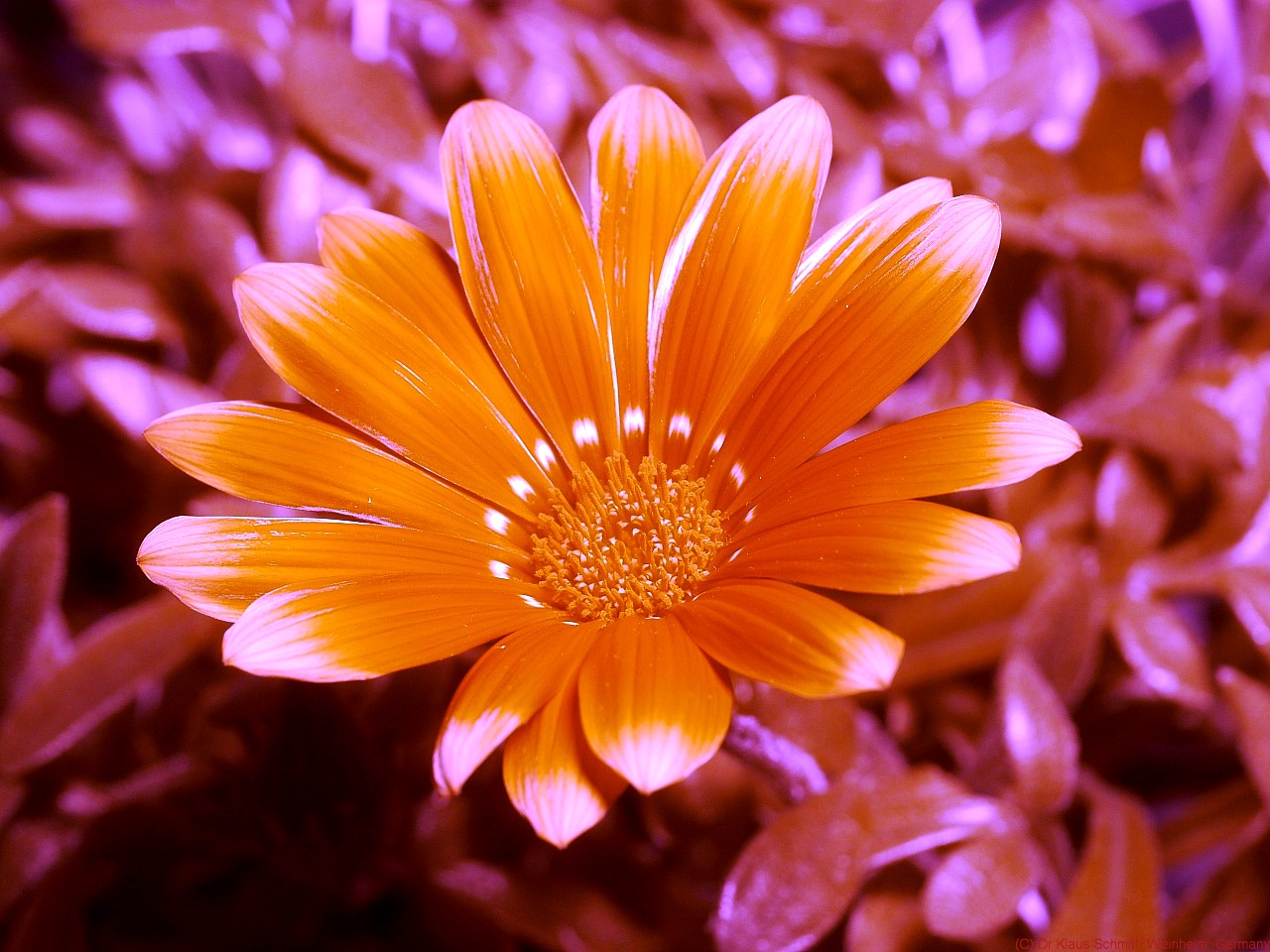
Visible light image (400 - 700nm):
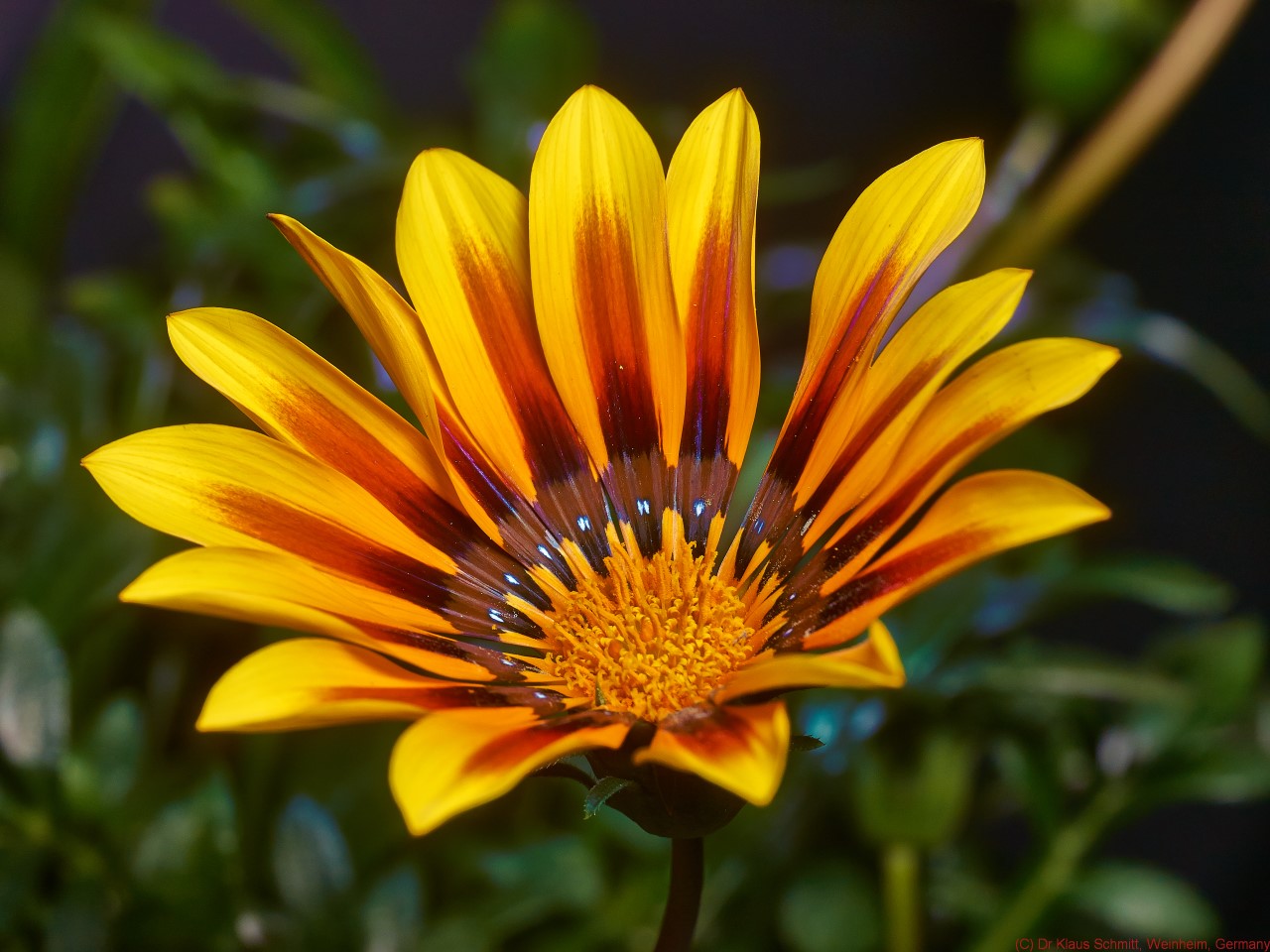
 

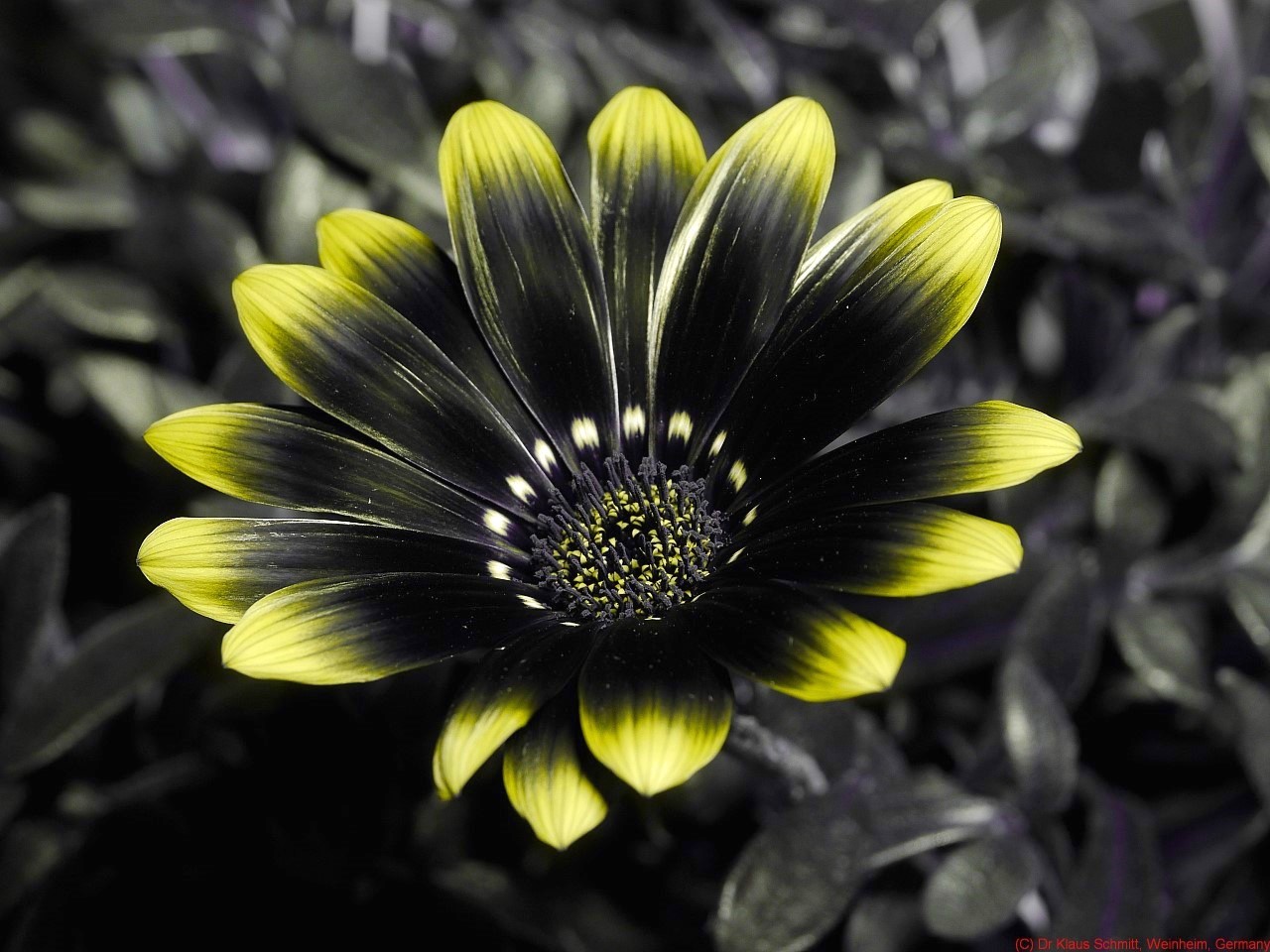
UV image using Baader-U filter (approx. 320-395nm, effective peak approx. 375nm):
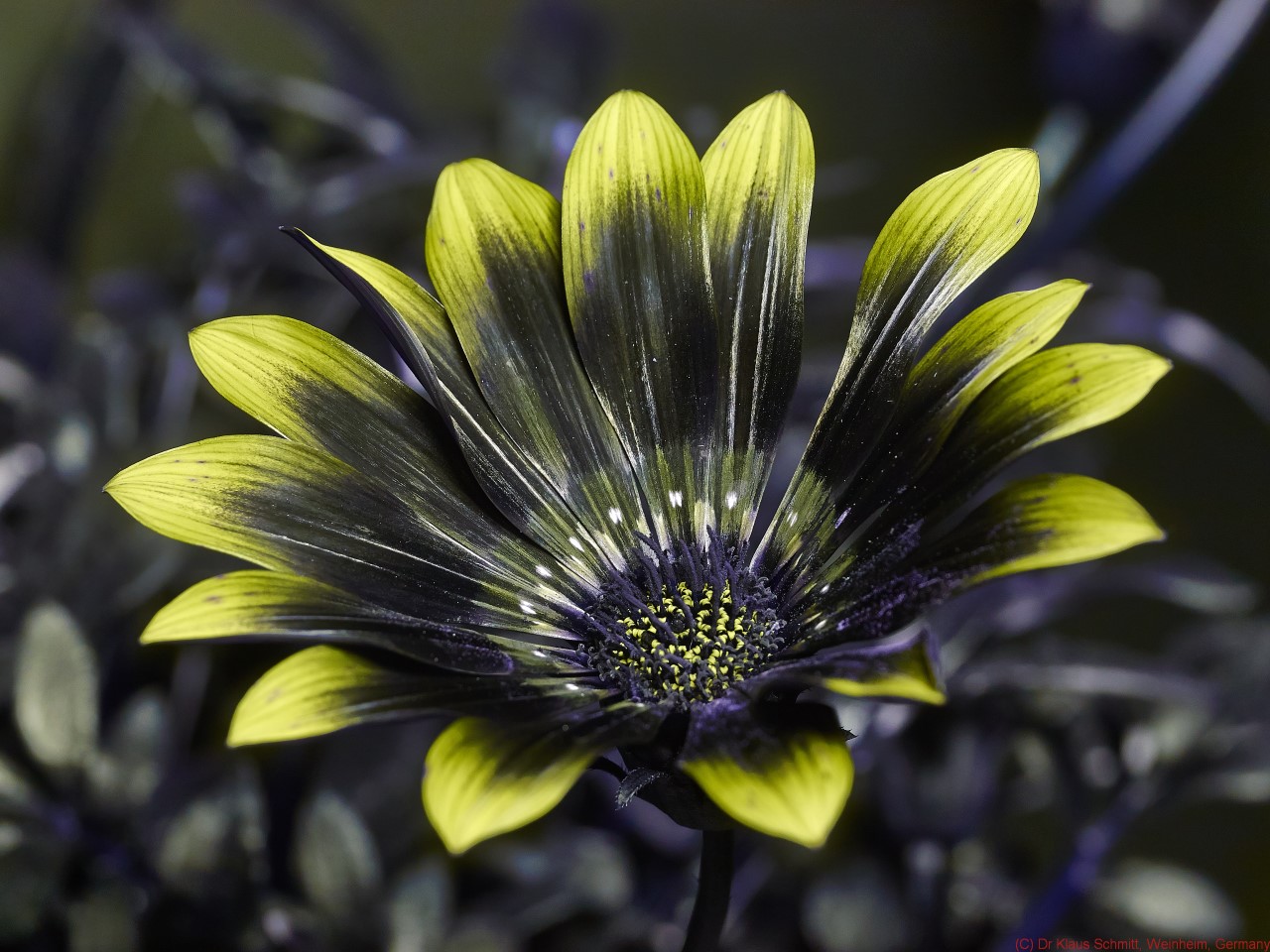
 

UV image using Jupiter-U filter (approx. 280-385nm, effective peak approx. 365nm):
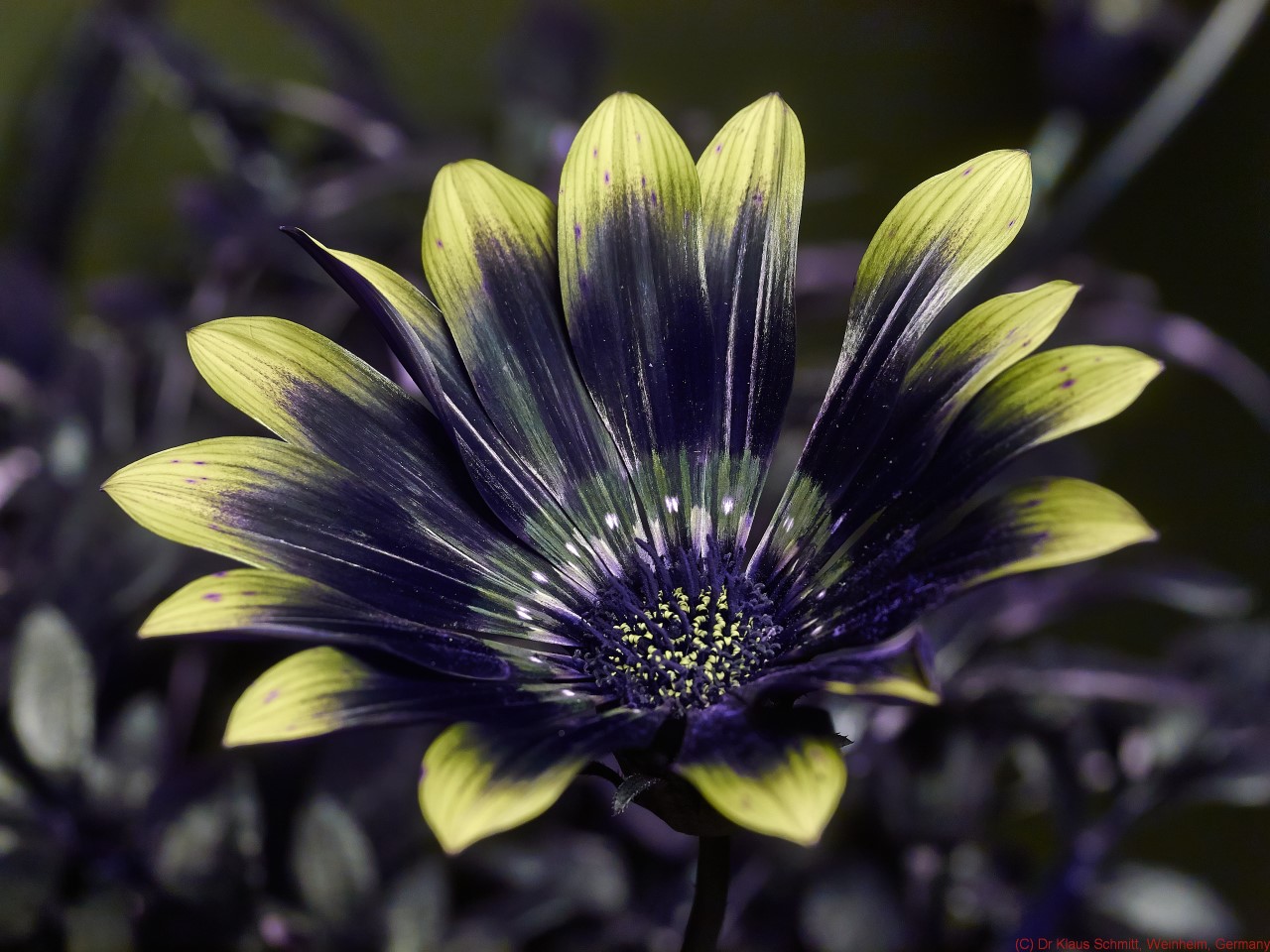
 

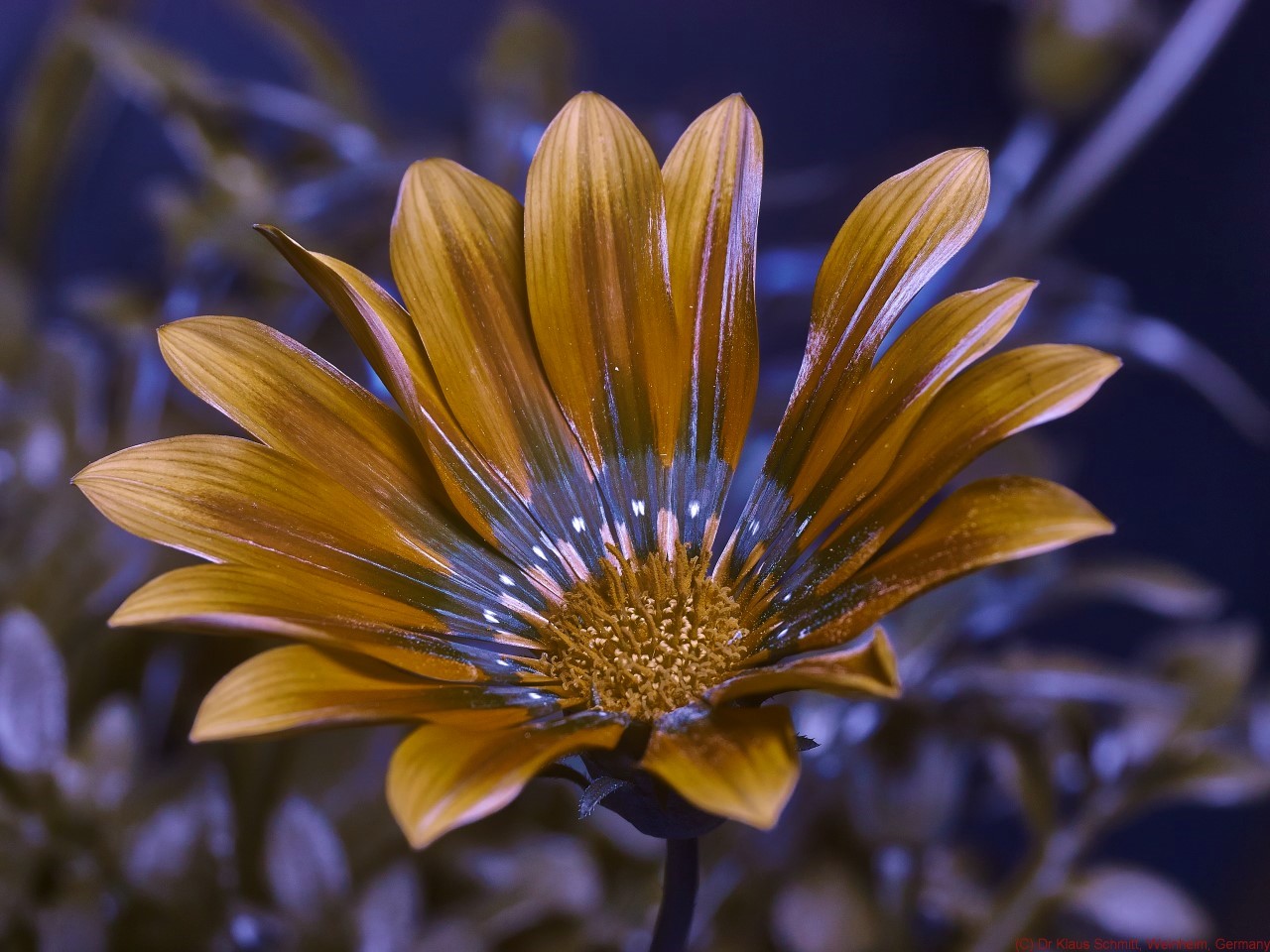
UV image using Saturn-U filter (approx. 300-350nm, effective peak approx. 325nm):
 

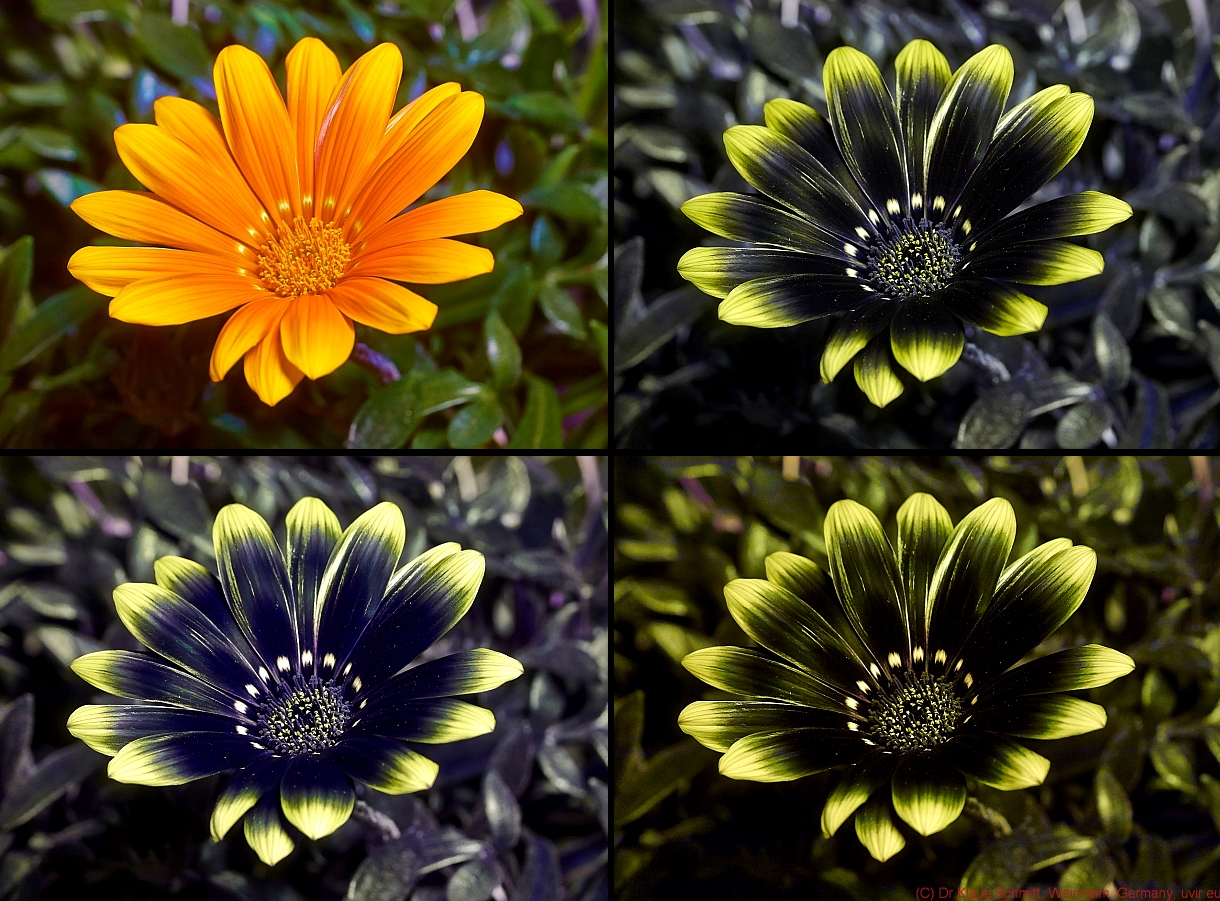
Quadriptych of the above:
 

And now in more detail two quadriptychs:


This Gazania's outer petals reflect strongly UV around 365nm, all invisible to us humans, and the blemishes caused by an infection or deterioration (needs to be studied) get nicely visible in deeper reflected "plant forensics" UV photography.

Stay tuned, more will follow on that fascinating subject...

More info on this very interesting field may be found on my site http://www.pbase.com/kds315/uv_photos

Saturday, May 10, 2014

Treasury flower - Gazania rigens in deep reflected ultraviolet photography, simulated butterfly and bee vision IX

Today shots developed from RAW files of another long lasting flower I have written about before, Treasury flower - Gazania rigens in reflected ultraviolet photography using my "work horse" UV filter, the Baader-U filter, my Jupiter-U and Saturn-U deeper UV filters, as well as my XBV filters for simulating butterfly and bee vision. Lens was a CERCO 94mm quartz fluorite lens. Light source was a Xenon flash. All shots were done at about f8.

[click on image to see a larger one]

Visible light image:
 

UV image using Baader-U filter (approx. 320-395nm, effective peak approx. 375nm):
 

UV image using Jupiter-U filter (approx. 280-385nm, effective peak approx. 365nm):
 

UV image using Saturn-U filter (approx. 300-350nm, effective peak approx. 325nm):
 

Simulated butterfly vision (UV - VIS) using XBV3 filter:
 

Simulated bee vision (UV - VIS) using XBV6 filter:
 

Quadriptych of the above (with bee/butterfly vision):
 

Quadriptych of the above (with deep UV):


Also this Gazania's outer petals reflect strongly UV around 365nm, all invisible to us humans, and there are also highly UV reflecting marks inside around a dark UV center and all that gets even nicelier visible developed from RAW files.

The images developed from jpg are HERE.

Stay tuned, more will follow on that fascinating subject...

More info on this very interesting field may be found on my site http://www.pbase.com/kds315/uv_photos
Treasury flower - Gazania rigens in deep reflected ultraviolet photography, simulated butterfly and bee vision VIII

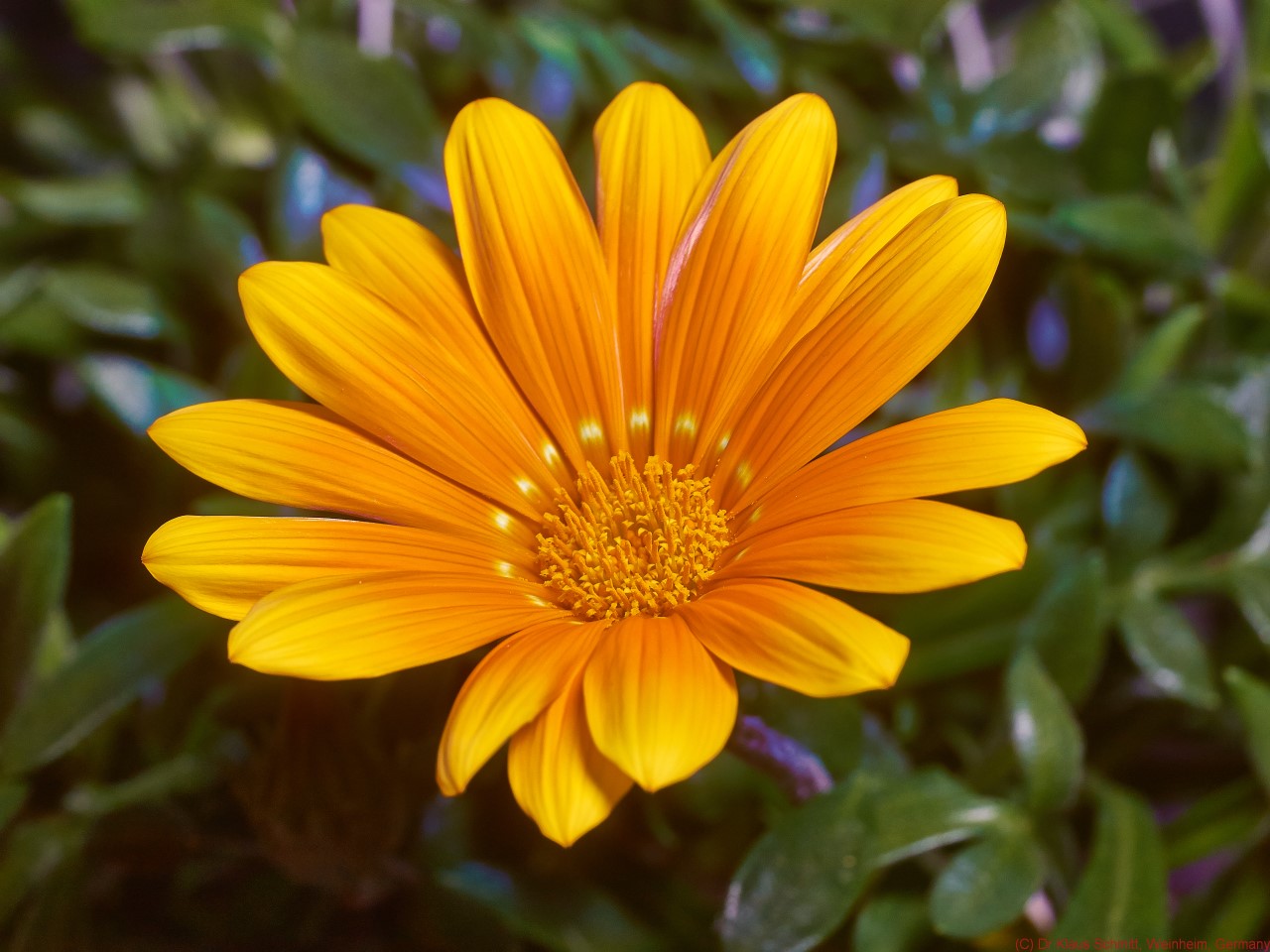
Today shots developed from RAW files of a long lasting flower I have written about before, Treasury flower - Gazania rigens in reflected ultraviolet photography using my "work horse" UV filter, the Baader-U filter, my Jupiter-U and Saturn-U deeper UV filters, as well as my XBV filters for simulating butterfly and bee vision. Lens was a CERCO 94mm quartz fluorite lens. Light source was a Xenon flash. All shots were done at about f8.

[click on image to see a larger one]

Visible light image:
 

UV image using Baader-U filter (approx. 320-395nm, effective peak approx. 375nm):
 

UV image using Jupiter-U filter (approx. 280-385nm, effective peak approx. 365nm):
 

UV image using Saturn-U filter (approx. 300-350nm, effective peak approx. 325nm):
 

Simulated butterfly vision (UV - VIS) using XBV3 filter:
 

Simulated bee vision (UV - VIS) using XBV6 filter:
 

Quadriptych of the above (with bee/butterfly vision):
 

Quadriptych of the above (with deep UV):


This Gazania's outer petals reflect strongly UV around 365nm, all invisible to us humans, and there are also highly reflecting marks inside around a dark UV center. Strangely enough the longitudinal strips disappear and all that gets even nicer visible when developed from RAW files.

The images developed from jpg files are HERE.

Stay tuned, more will follow on that fascinating subject...

More info on this very interesting field may be found on my site http://www.pbase.com/kds315/uv_photos
Treasury flower - Gazania rigens in deep reflected ultraviolet photography, simulated butterfly and bee vision VII

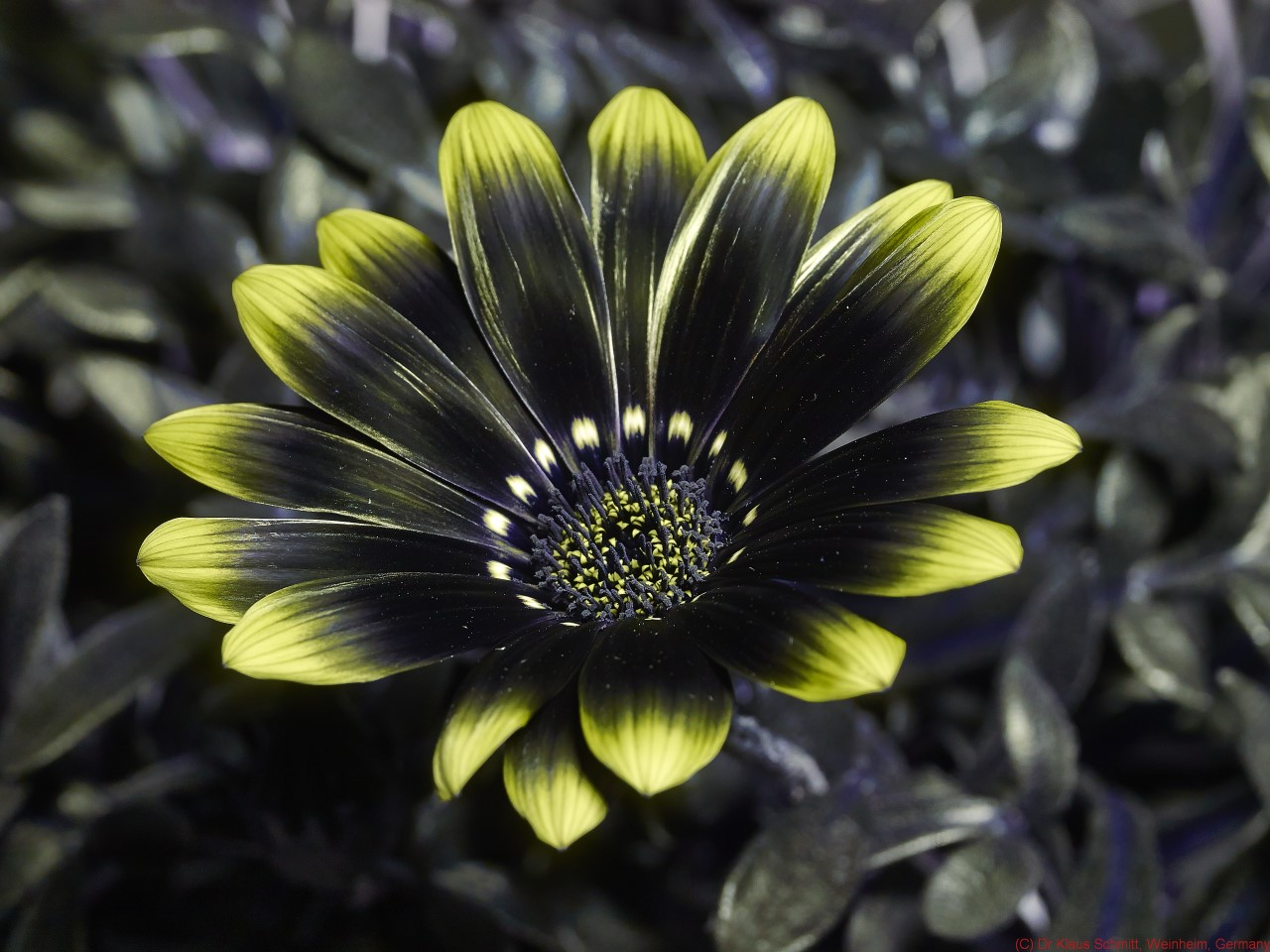
Today shots of another long lasting flower I have written about before, Treasury flower - Gazania rigens in reflected ultraviolet photography using my "work horse" UV filter, the Baader-U filter, my Jupiter-U and Saturn-U deeper UV filters, as well as my XBV filters for simulating butterfly and bee vision. Lens was a CERCO 94mm quartz fluorite lens. Light source was a Xenon flash. All shots were done at about f8.

[click on image to see a larger one]

Visible light image:
 

UV image using Baader-U filter (approx. 320-395nm, effective peak approx. 375nm):
 

UV image using Jupiter-U filter (approx. 280-385nm, effective peak approx. 365nm):
 

UV image using Saturn-U filter (approx. 300-350nm, effective peak approx. 325nm):
 

Simulated butterfly vision (UV - VIS) using XBV3 filter:
 

Simulated bee vision (UV - VIS) using XBV6 filter:
 

Quadriptych of the above (with bee/butterfly vision):
 

Quadriptych of the above (with deep UV):


Also this Gazania's outer petals reflect strongly UV around 365nm, all invisible to us humans, and there are also highly UV reflecting marks inside around a dark UV center and all that gets nicely visible.

The images developed from RAW files are HERE.

Stay tuned, more will follow on that fascinating subject...

More info on this very interesting field may be found on my site http://www.pbase.com/kds315/uv_photos

Treasury flower - Gazania rigens in deep reflected ultraviolet photography, simulated butterfly and bee vision VI

Today shots of a long lasting flower I have written about before, Treasury flower - Gazania rigens in reflected ultraviolet photography using my "work horse" UV filter, the Baader-U filter, my Jupiter-U and Saturn-U deeper UV filters, as well as my XBV filters for simulating butterfly and bee vision. Lens was a CERCO 94mm quartz fluorite lens. Light source was a Xenon flash. All shots were done at about f8.

[click on image to see a larger one]

Visible light image:
 

UV image using Baader-U filter (approx. 320-395nm, effective peak approx. 375nm):
 

UV image using Jupiter-U filter (approx. 280-385nm, effective peak approx. 365nm):
 

UV image using Saturn-U filter (approx. 300-350nm, effective peak approx. 325nm):
 

Simulated butterfly vision (UV - VIS) using XBV3 filter:
 

Simulated bee vision (UV - VIS) using XBV6 filter:
 

Quadriptych of the above (with bee/butterfly vision):
 

Quadriptych of the above (with deep UV):


This Gazania's outer petals reflect strongly UV around 365nm, all invisible to us humans, and there are also highly reflecting marks inside around a dark UV center. Strangely enough the longitudinal strips disappear and all that gets nicely visible.

The images developed from RAW files are HERE.

Stay tuned, more will follow on that fascinating subject...

More info on this very interesting field may be found on my site http://www.pbase.com/kds315/uv_photos

Friday, May 9, 2014

Filter leakage in reflected UV ultraviolet photography - How not to test a filter for leakage IV

Today about a method to test UV transmitting filters for leakage that should not be used. In priciple the idea seems to be straight forward and quite obvious: Shine a strong white light through an UV transmitting filter (a ionic colored LUV U2 will be used here) and if one (or a camera) "sees" something transmitted, that filter seems to leak. Well, let's have a look if that is really that easy....

[click on image to see a larger one]

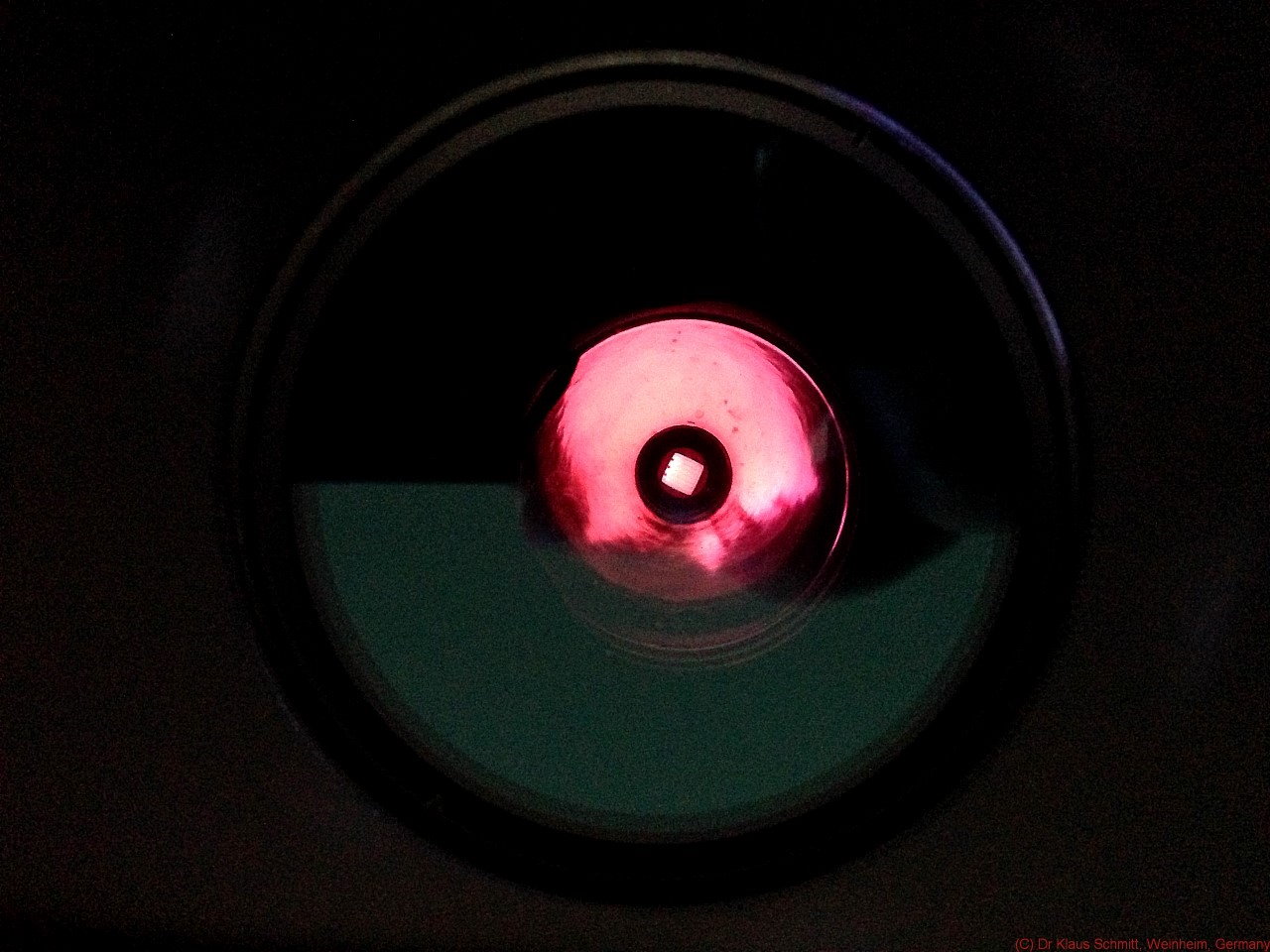
What my iPhone5 sees when shining a strong Cree white LED light through a LUV U2 filter:
 
So do I see leakage here? My iphone sees that as red, but I really see violet, so it either depends on the WB used or theremust be something else. It is basically all a matter of intensities, as the filter from what I know and have measured earlier has about OD4 suppression outside the UV range up to NIR, then using a very strong LED torch with an intensity of for instance 10.000 then gives 0.0001 (OD4) x 10000 = 1 and that can be easily recorded.

But let's see what my spectrometer system reveals about that same situation:
 
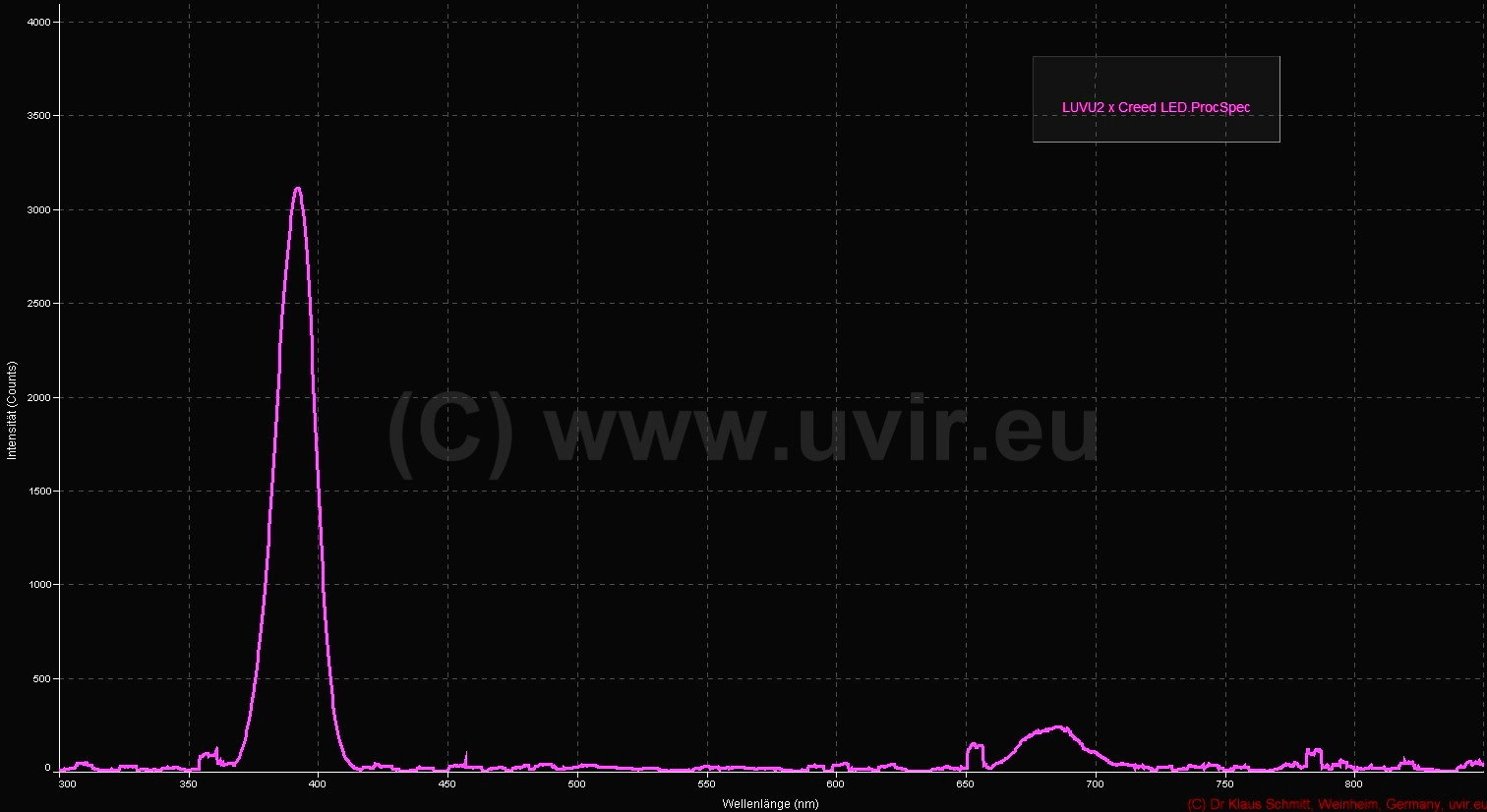
Obviously even that white CREE LED does emit some UV (peaks at 392nm) and there is some red between 650-710nm - that also explains why I see violet, as there is some UV + blue + red. (ignore the ripples, this is just noise caused by the very long integration time).

So what do we see now here in the next image: I have added to the experiment (using the same spectrometer settings) the Cree white LED light w/o that UV transmitting filter shining through 2x ND3 filters, equivalent to using 1x ND6 to reduce that enormous bright light to one my spectrometer can handle:
 
I needed two stacked neutral density ND3 filters (i.e. ND6) to reduce that intensity to a manageable level and to get about the same amount of count at around 670nm. So that means that this Cree LED is so intense, that it is even able to have that internal used phosphor (used to achieve the bright white light) emit some UV and some dark red!

Just to make that clear, ND6 means 1:1.000.000 reduction in intensity, so adjusting my previous example to real data now: if the UV transmitting filter suppresses OD4 (0.0001) and one uses a light with intensity 1.000.000 and shine it through that filter, one would still get 100 intensity counts (or simpler calculated OD6 – OD4 = OD2 equals a factor of 100). BUT in normal photography, one does not have that situation, so this really is irrelevant and renders such "test" useless.

Let me summarize:
I could not detect any IR leakage using the LUV U-2 filter as well as the spectrometric test did not show leakage up to 800nm in my earlier tests. So using a very strong LED torch of unknown properties to shine through such a filter, does not create a suitable and reliable testing method, nor do I recommend to use that. Neither do I recommend to look through such a filter pointing at the sun, as this creates an enormous risk for ones eyesight due to the high UV transmittance!!

I have previously written about filter leakage HERE.

Stay tuned, more will follow on that fascinating subject...

More info on this very interesting field may be found on my site http://www.pbase.com/kds315/uv_photos

Sunday, May 4, 2014

Creeping Zinnia - Sanvitalia procumbens with bumble bee in reflected ultraviolet photography, simulated bee and butterfly vision II

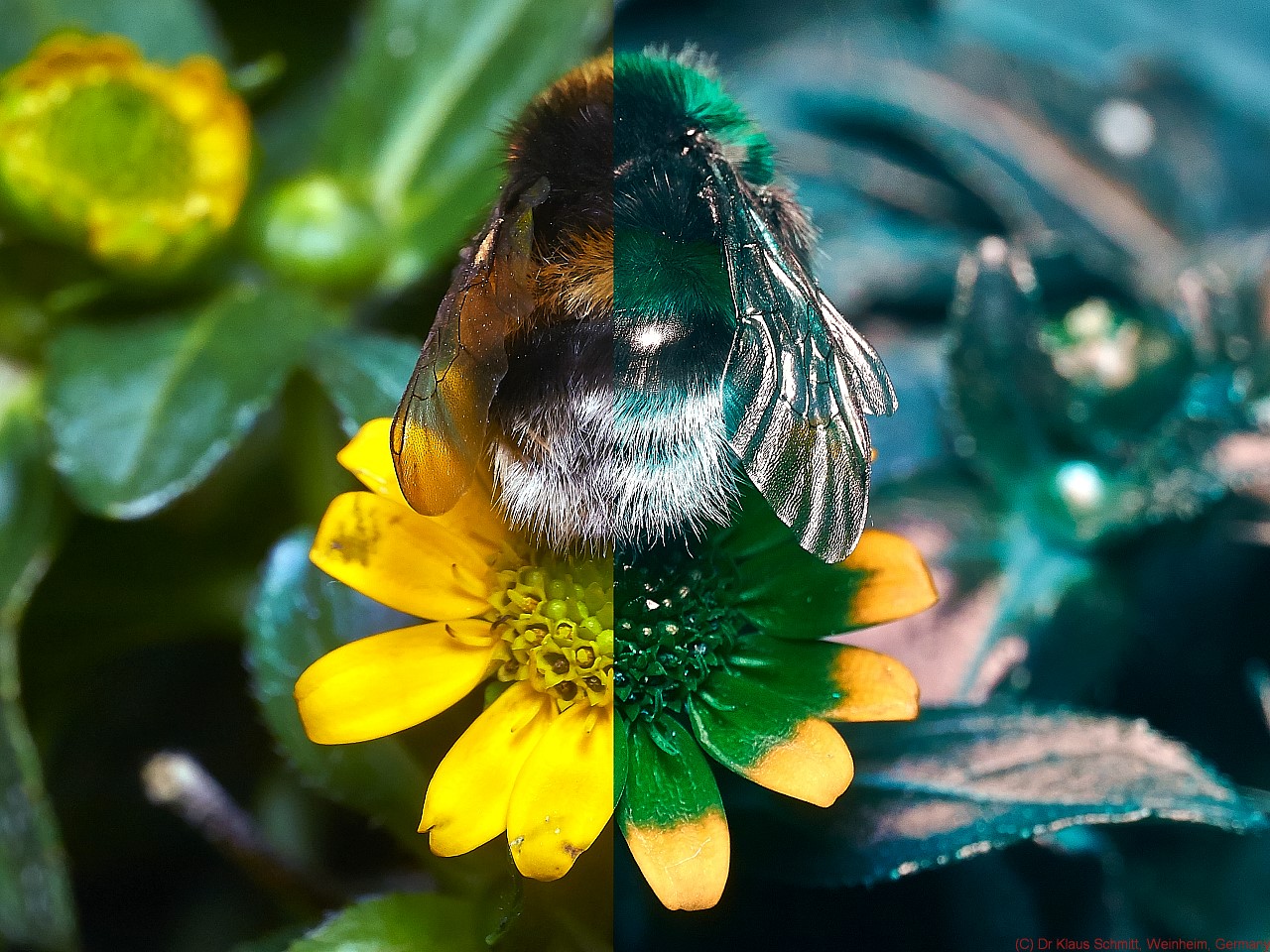
Today side-a-side staged shots of a bumble bee sitting on a spring flower, Creeping Zinnia - Sanvitalia procumbens in reflected ultraviolet photography using my "work horse" UV filter, the Baader-U filter as well as my XBV filters for simulating butterfly and bee vision. Lens was a CERCO 94mm quartz fluorite lens. Light source was a Xenon flash. All shots were done at about f8.

[click on image to see a larger one]

Diptych composite of Visual and UV image:
 

Diptych composite of Visual and simulated Bee Vision image:


Sanvitalia has a strong visible UV pattern, its petal tips are UV bright around 365nm and its center is quite UV dark, whereas the bumble bee is rather UV dark except its rear, which is UV bright around 375nm (as a signal to its colleagues that this flower is occupied?) and all this gets nicely visible also in this composite form.

More about that HERE

Stay tuned, more will follow on that fascinating subject...

More info on this very interesting field may be found on my site http://www.pbase.com/kds315/uv_photos