Wednesday, April 22, 2015

Dandelion - Taraxacum officinale flower in reflected UV ultraviolet photography and simulated bee vision III

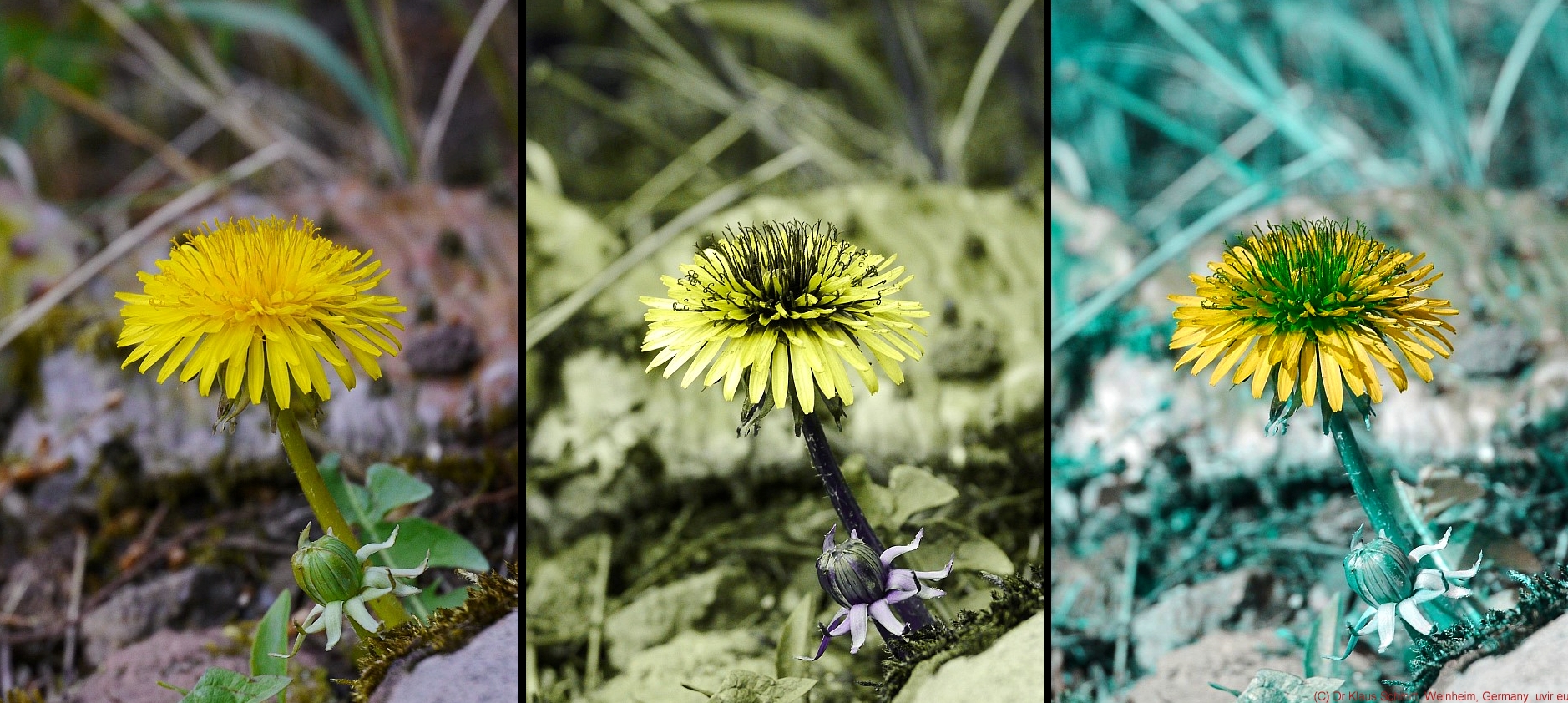
Today shots of an early spring flower, Dandelion - Taraxacum officinale in reflected ultraviolet photography. Lens was a CERCO 94mm quartz fluorite lens. Light source was sunlight. All shots were done in reflected ultraviolet photography using my "work horse" UV filter, the Baader-U filter, as well as my XBV6 filter for simulated bee vision. Lens was a CERCO 94mm quartz fluorite lens. Light source was sunlight. All shots were done at about f8.

[click on image to see a larger one]

Triptych of human vision, UV and simulated bee vision (left to right):
 

This Dandelion flower has quite a prominent UV pattern, its petals are UV bright around 365nm, its center is UV dark, especially the anthers, and this gets quite nicely visible, also in simulated bee vision.

I have written about this flower previously HERE

Stay tuned, more will follow on that fascinating subject...

More info on this very interesting field may be found on my site http://www.pbase.com/kds315/uv_photos

Cretian Rock Tulip - Tulipa saxatilis with crab spider in reflected ultraviolet photography and simulated bee vision

Today shots of a Cretian Rock Tulip - Tulipa saxatilis with a crab spider sitting in it, just having its lunch, in reflected ultraviolet photography, using my "work horse" UV filter, the Baader-U filter, as well as my XBV6 filter for simulated bee vision. Lens was a CERCO 94mm quartz fluorite lens. Light source was sunlight. All shots were done at about f5.6.

[click on image to see a larger one]

Triptych of human vision, UV and simulated bee vision (left to right):
 

This tulip has a rather subtle UV pattern, tricky with inside UV reflective petals, which reflect UV rather well around 380nm using a very shiny petal surface and quite classic, an UV dark center creating a bullseye pattern. Surpisingly the spider also appears quite well in UV and has UV bright spots on it - maybe to attract its prey? Only nature knows...

I have written about this Tulip previously HERE and about the crab spider HERE

Stay tuned, more will follow on that fascinating subject...

More info on this very interesting field may be found on my site http://www.pbase.com/kds315/uv_photos

Wednesday, April 8, 2015

How the sun sees you - human skin and sun blocker effect as seen through reflected UV photography II

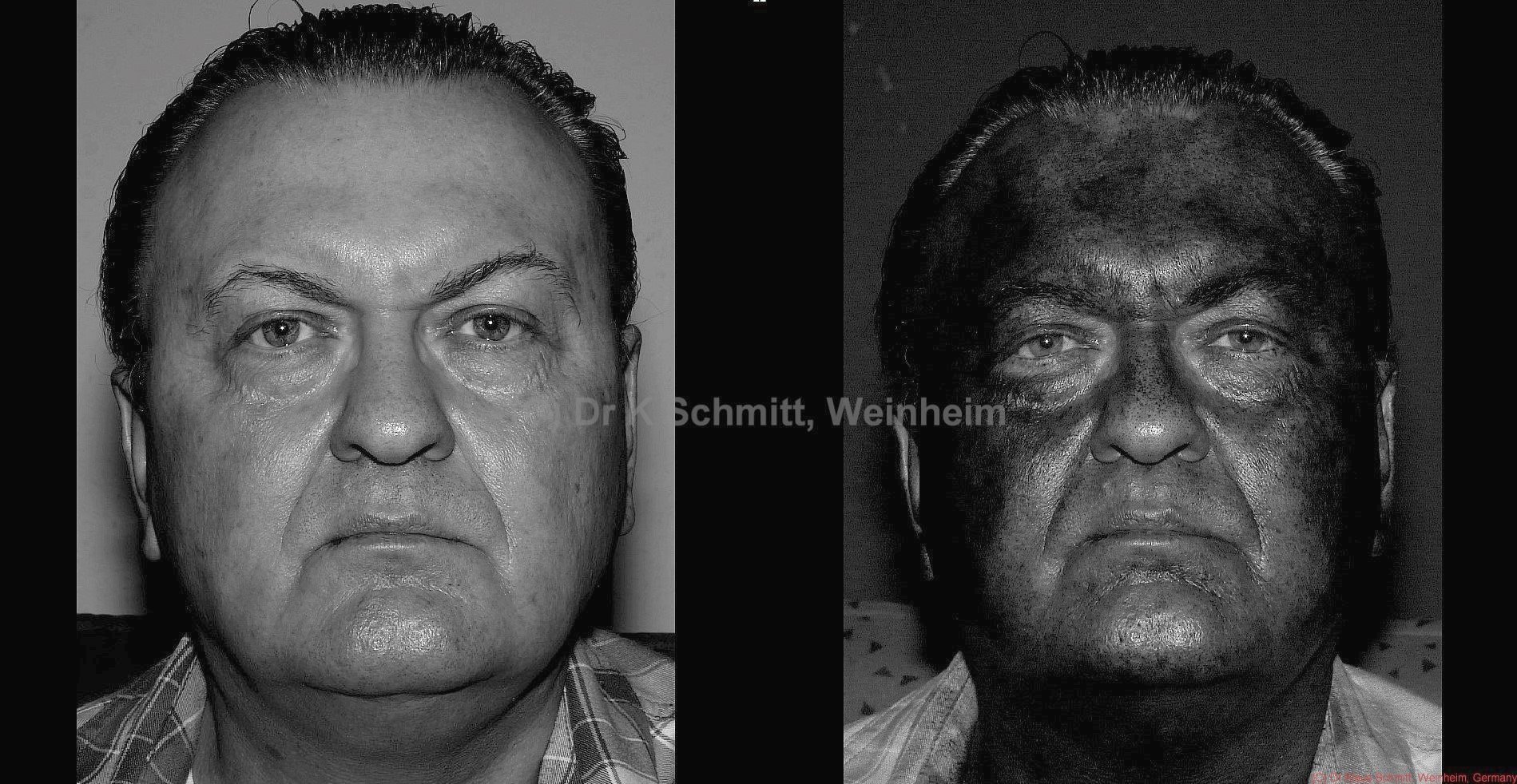
Today more about how the sun sees us and how bees might see us in UV. Well, in other words: how does human skin look like in reflected ultraviolet (UV) light compared to normal human vision. After shaving every morning, I usually apply some day cream to protect my skin. Shots were done inside using a modified for UV Xenon flash. A UV capable lens was used for this. All shots were done at about f5.6.

[click on image to see a larger one]

BW human vision VIS image (left), bw UV image (right)

So, the sunblocker in my daycream obviously has protective effects, clearly visible by the darkened skin. This shows that the used cream absorbs dangerous UV-B and also UV-A radiation (the latter being important to protect against the so called "white" skin cancer). Further its gets visible, that the reflected UV image clearly shows otherwise invisible freckles, about which some dermatologists say that it is skin damage getting visible, caused by the accumulated UV radiation exposure over the years. So whenever you're out in the sun, protect your skin!

To summarize, I would say that reflected UV photography is a very suitable tool to make all that so nicely visible!

I have written about that HERE before.

There is also a corresponding video about that topic HERE

Stay tuned, more will follow on that fascinating subject...

More info on this very interesting field may be found on my site http://www.pbase.com/kds315/uv_photos

Sunday, November 16, 2014

Enhancing the visibility of fossil tissue structures using UV reflected and UV stimulated visible flourescence photography

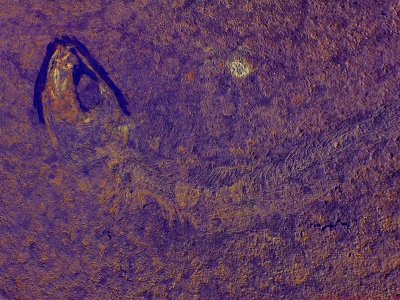
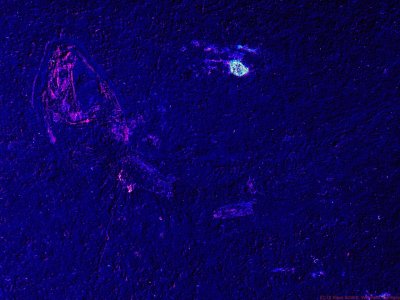
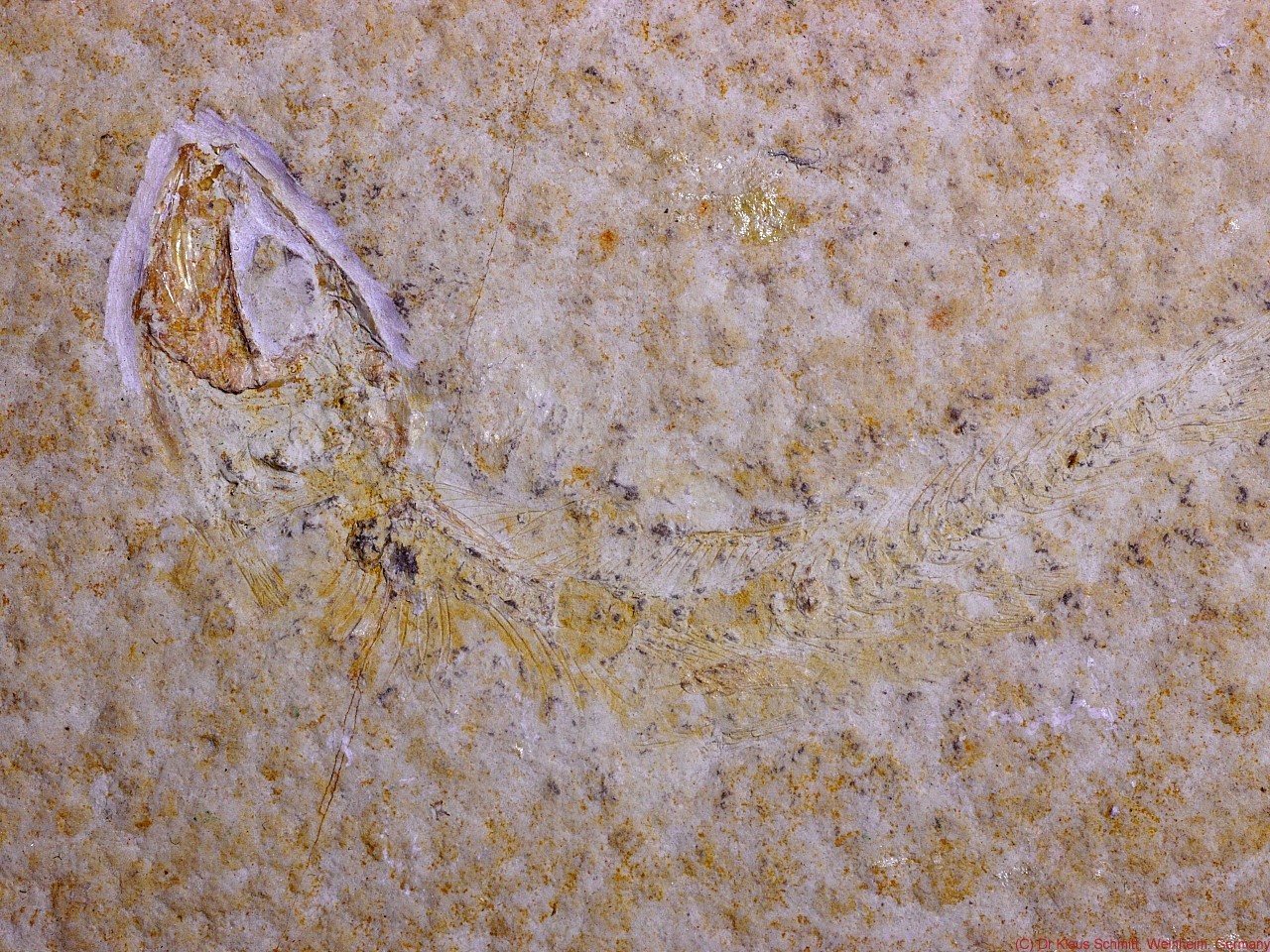
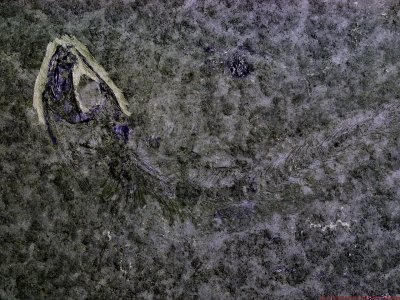
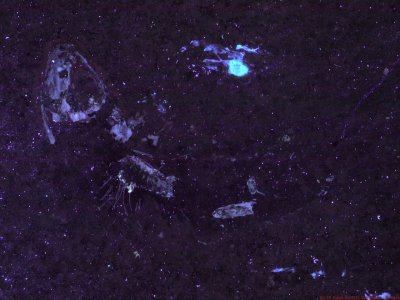
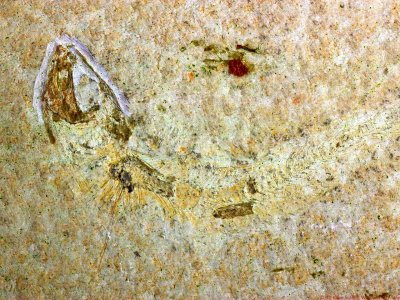
A while ago I had the honor to work with Neal Larson on a paper on fossilized cephalopods found in Hajoula, Lebanon. Today it is again about enhancing the visibility of fossil bone and tissue structures using UV reflected and UV stimulated visible fluorescence photography, but as it is some years later, using more modern equipment now. I will also use my remapping technology consisting of a visible image, a reflected UV image and an UV stimulated visible fluorescence image and combine them into multispectral images.

Lens used was my CERCO f4.1 / 94mm quartz fluorite lens, light sources were a modified high power Xenon flash, as well as a NICHIA 365nm Power LED. Target was a fossilized fish from Solnhofen, Germany, approx. 100 Mio years old.

[click on image to see a larger one]

Visible light image using UV/IR Cut filter:
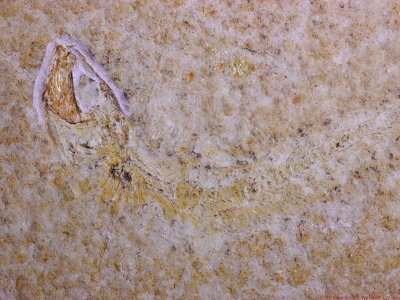

Reflected UV image using Baader-U filter (310-390nm): 

UV stimulated visible fluorescence (FL) using Nichia 365nm UV LED:

Combined VIS - FL multispectral image: 

Combined VIS - UV multispectral image::


Combined FL - UV multispectral image::


It gets nicely visible that using UV light photography brings out much more details than normal visible light photography and by doing so, enhances the visibility of preserved bone and tissue structures quite a bit. Combining those different images into falso color multispectral images  enhances the structures even more.

Stay tuned, more will follow on that fascinating subject...

More info on this very interesting field may be found on my site http://www.pbase.com/kds315/uv_photos
Wednesday, September 17, 2014

How the sun sees you and how the bee sees you - human skin and sun blocker effect as seen through reflected UV photography

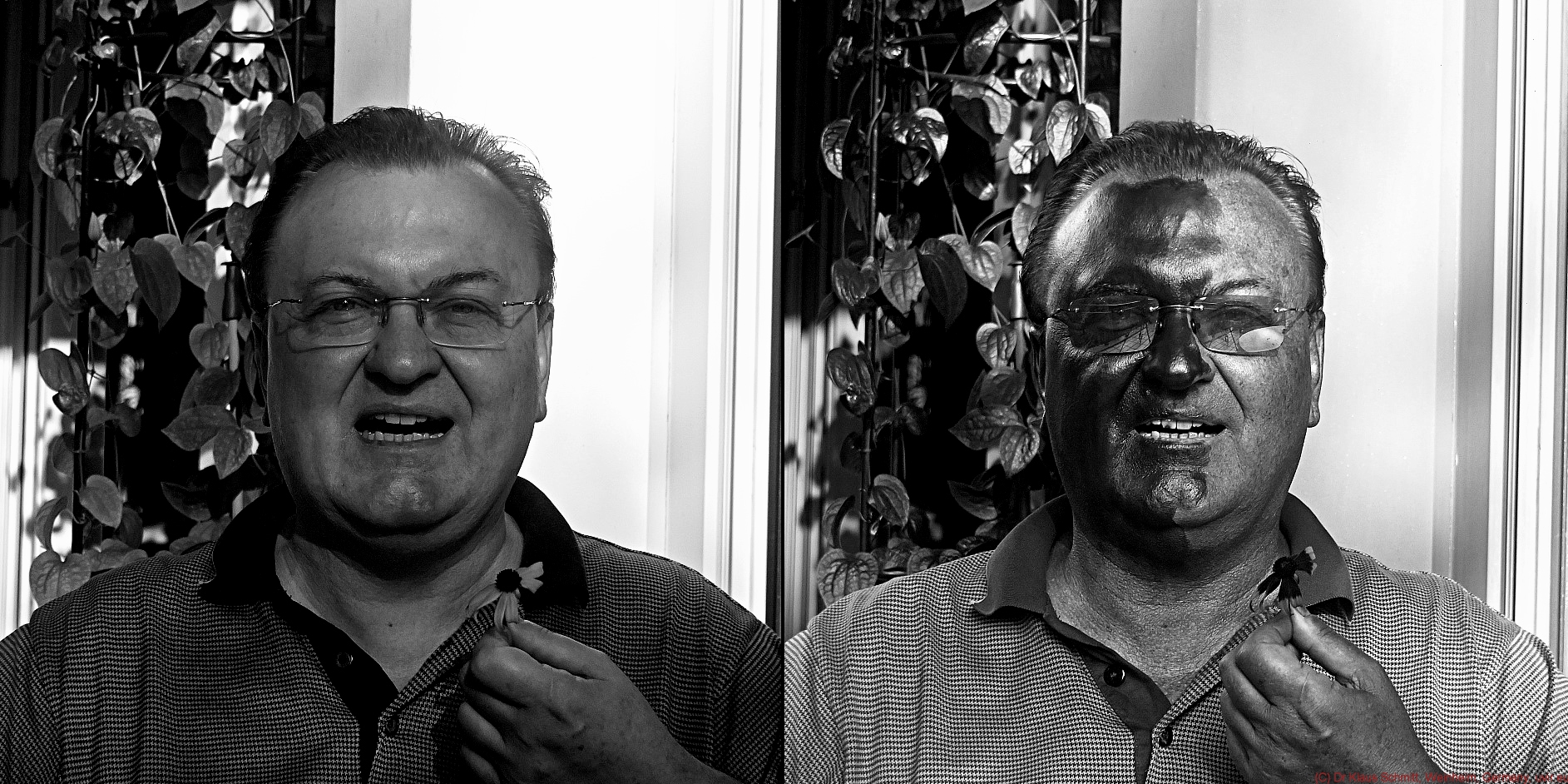
Today about how the sun sees us and how bees might see us. Well, in other words: how does human skin look like in reflected ultraviolet (UV) light and in simulated bee vision (BV) all compared to normal human vision. Sun blocking cream has been applied to the right side of the face to show which impact that has. All shots were done outside using sunlight. A UV capable 35mm lens was used for this. All shots were done at about f5.6.

[click on image to see a larger one]

Color human vision VIS image (left), false color UV image (right)


BW human vision VIS image (left), bw UV image (right)

Aside from the striking impact that SPF50 sunblocker has, it gets quite obvious, that the reflected UV image clearly also shows the UV pattern a Rudbeckia fulgida flower has. Human skin in UV shows otherwise invisible freckles, about which some dermatologists say that is skin damage getting visible, caused by UV radiation. Further to that, the otherwise invisible front tooth repair also gets nicely visible.

P.S.: my polo shirt massively reflects UV around 365nm - that is for the UV nerds only :LOL:

So what would a bee see of that I got asked. Well, let's see...

Color human vision VIS image (left), false color UV image (middle), simulated bee vision BV (right)

So the bee vision (BV) image also shows the effect of the applied sun blocking cream, as well as the flower UV patterns. It is not as striking as the bw image, but what do we know, how a bee really sees us...

So to summarize, I would say that reflected UV photography is a very suitable tool to make all that so nicely visible!

There is a corresponding video about that topic HERE


Stay tuned, more will follow on that fascinating subject...

More info on this very interesting field may be found on my site http://www.pbase.com/kds315/uv_photos

Tuesday, September 16, 2014

Making of Thomas Leveritt video "How the sun sees you" - reflected ultraviolet (UV) photography part I

Well, in August 2014 a video "How the sun sees you" by Thomas Leveritt went viral on the net, a video about using sun cream for skin cancer protection and raising awareness about the need for skin protection. Leveritt used materials and techniques which were known by UV photographers since many years and my readers here have seen my older videos which employed the very same techniques, however used to make visible what bees, butterflies and other insects see and we cannot - ultraviolet (UV) light. Usually I use a false color palette to make UV visible.

Have a look at the following HD black+white video clip to see that it is indeed doable. I would like to show in part II later that such a video can be made using a suitable camera, lens + filter.


Now the following is the same HD video clip, but this time in false UV colors. They have a meaning, but this might be revealed later on.


I hope you enjoyed this funny little clip today!

Stay tuned, more will follow on that fascinating subject...

More info on this very interesting field may be found on my site http://www.pbase.com/kds315/uv_photos

Wednesday, August 13, 2014

150mm Micro reproduction lens for reflected UV photography

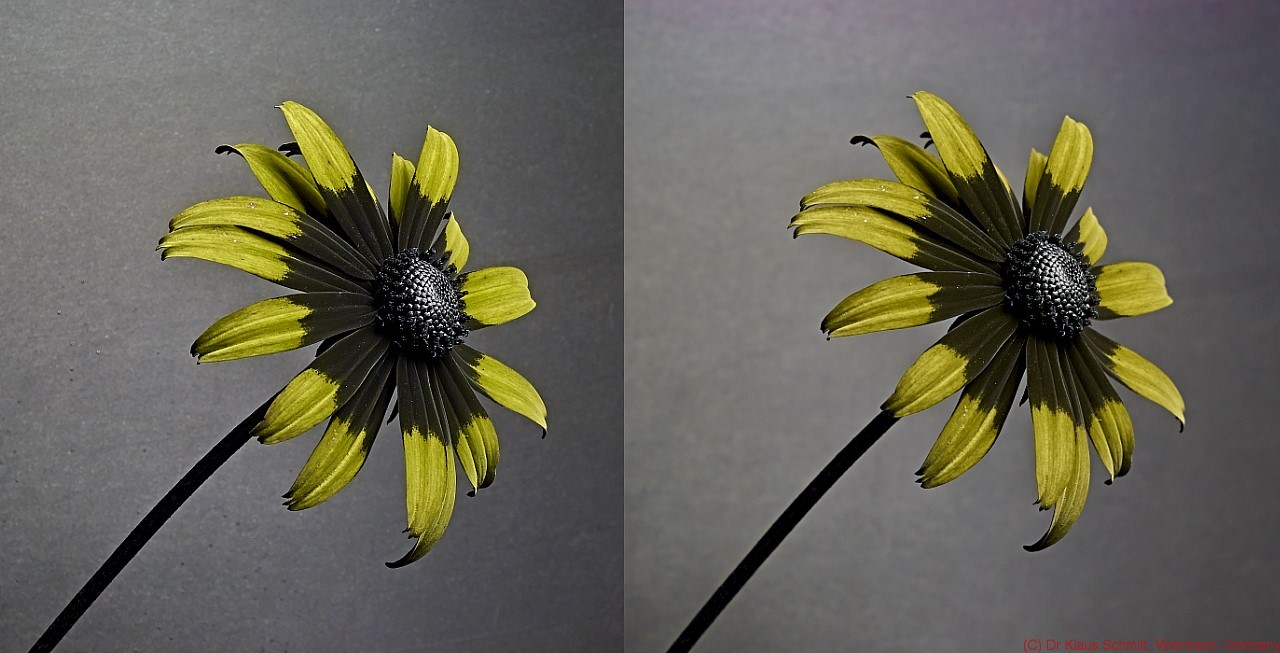
Today about a recent find for UV photography, a high resolution (approx. 150-200 lpm) 150mm micro documentation lens, which I have tested positively for UV use. Of course it shows quite some restrictions, but I'm happy about finding such lens in such longer focal length (150mm), which allows for better working distance in some circumstances. All shots were done it studio. Lens for comparision was my CERCO 94mm quartz fluorite lens. Light source was a Xenon flash. All shots were done at about f8.

[click on image to see a larger one]

Test images using Baader-U filter for reflected UV photography and as a target a Rudbeckia fulgida flower. Adjusted for comparison to even out focal length differences. Individual white balance set per image.

Cerco 94mm (left), Micro Documentation lens (right)

The micro docu lens does quite well and seems to be quite a sharp lens, even when used for UV.

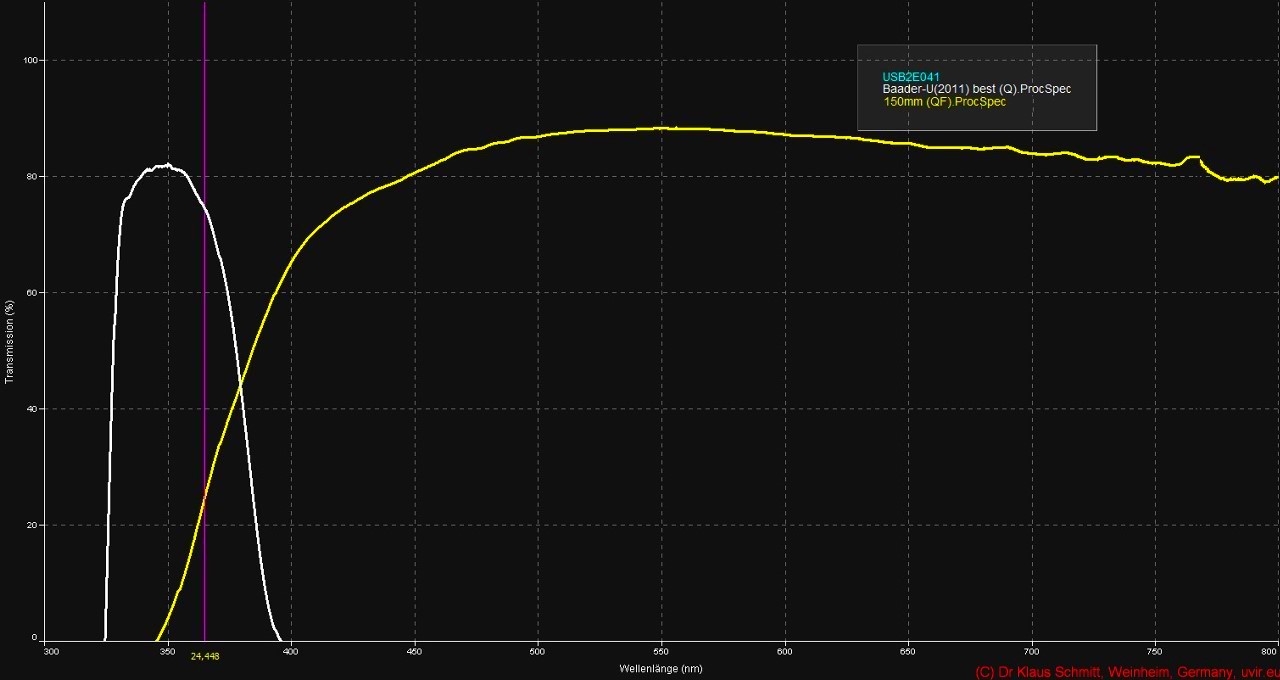
Now about the spectral transmission:

It gets obvious that this micro docu lens only transmits down to about 350nm, but has sufficient transmission around 360nm to make flower UV patterns visible.

So to summarize I would call that a nice find, which adds to the repertoire of suitable UV lenses, especially since it has very high resolution also in UV.


Stay tuned, more will follow on that fascinating subject...

More info on this very interesting field may be found on my site http://www.pbase.com/kds315/uv_photos