Sunday, May 3, 2020

Surprising STEINHEIL f2.8/50mm lens for reflected UV photography III

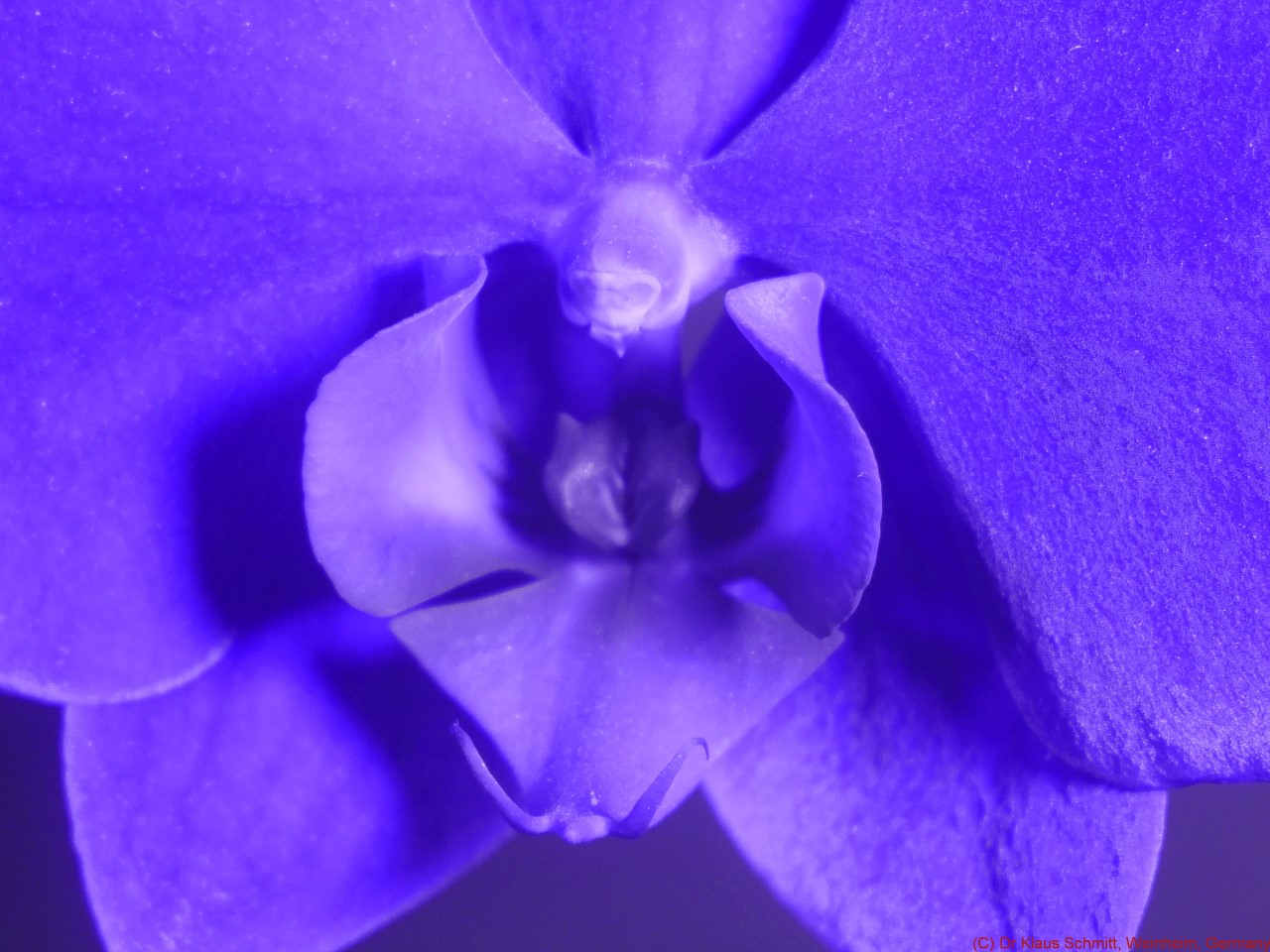
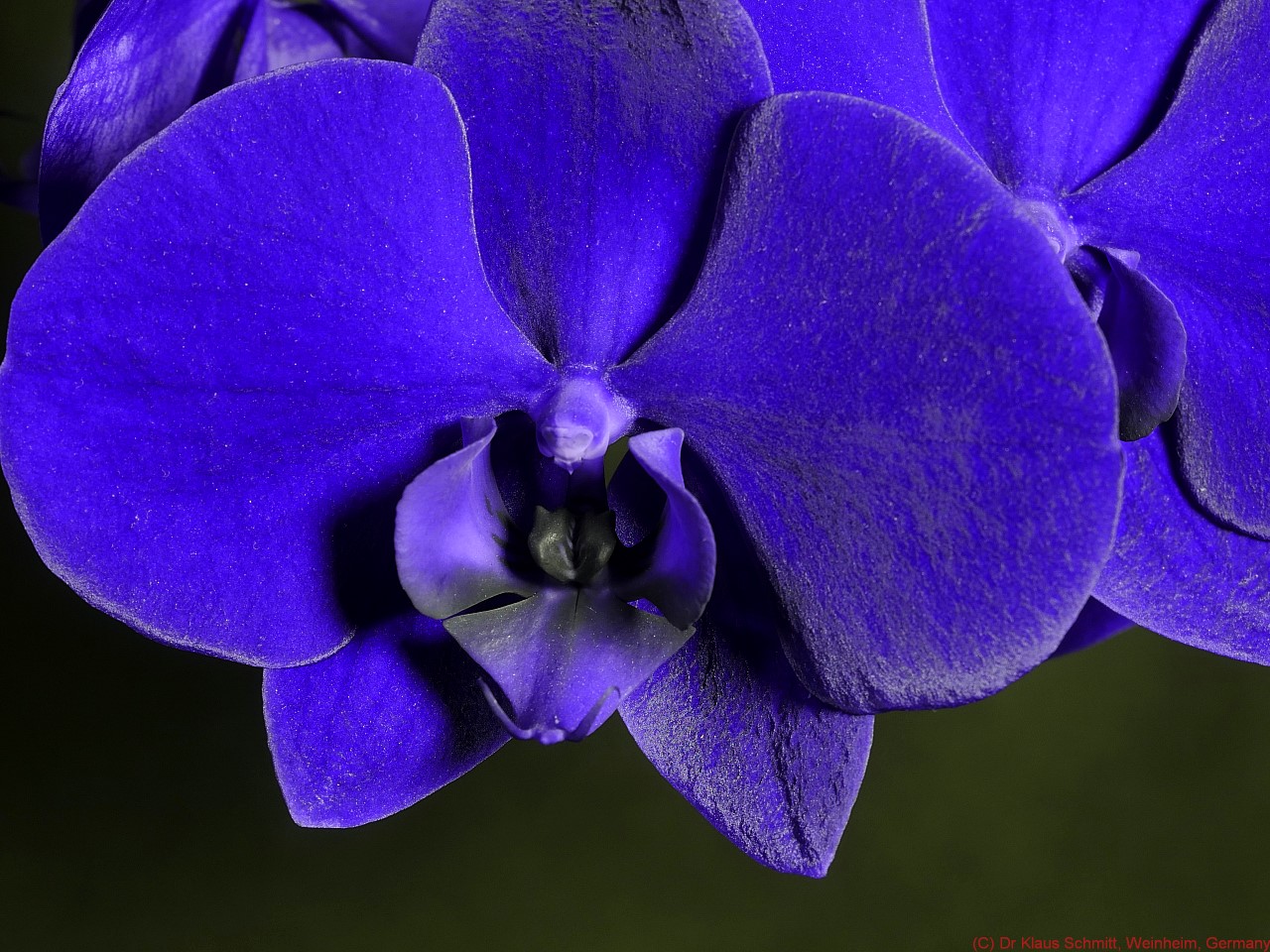
I had mentioned in my previous thread, that a few years ago I got an older lens, which was made decades ago by famous lens maker STEINHEIL . It is a possibly single coated, well made 2.8/50mm lens which attracted me, since it showed some seemingly good UV transmission when shining an 365nm UV LED beam through it. The surprise came when I had it under my spectrometer, revealing its high and deep reaching UV transmission, no other normal lens so far showed. But some outdoor images taken with it revealed, that it cannot be used fully open at f2.8 due to lacking sharpness and definition. So here now some indoor shots done in a controlled environment, using a modified Xenon flash for high UV output.

[click on image gets you a larger image]

VIS image using UV/IR Cut filter:
 

UV image using Baader-U filter (approx. 320-395nm) at f4:
 

UV image using Baader-U filter (approx. 320-395nm) at f5.6:
 

UV image using Baader-U filter (approx. 320-395nm) at f8:
 

UV image using Baader-U filter (approx. 320-395nm) at f11:
 

UV image using Baader-U filter (approx. 320-395nm) at f16:
 

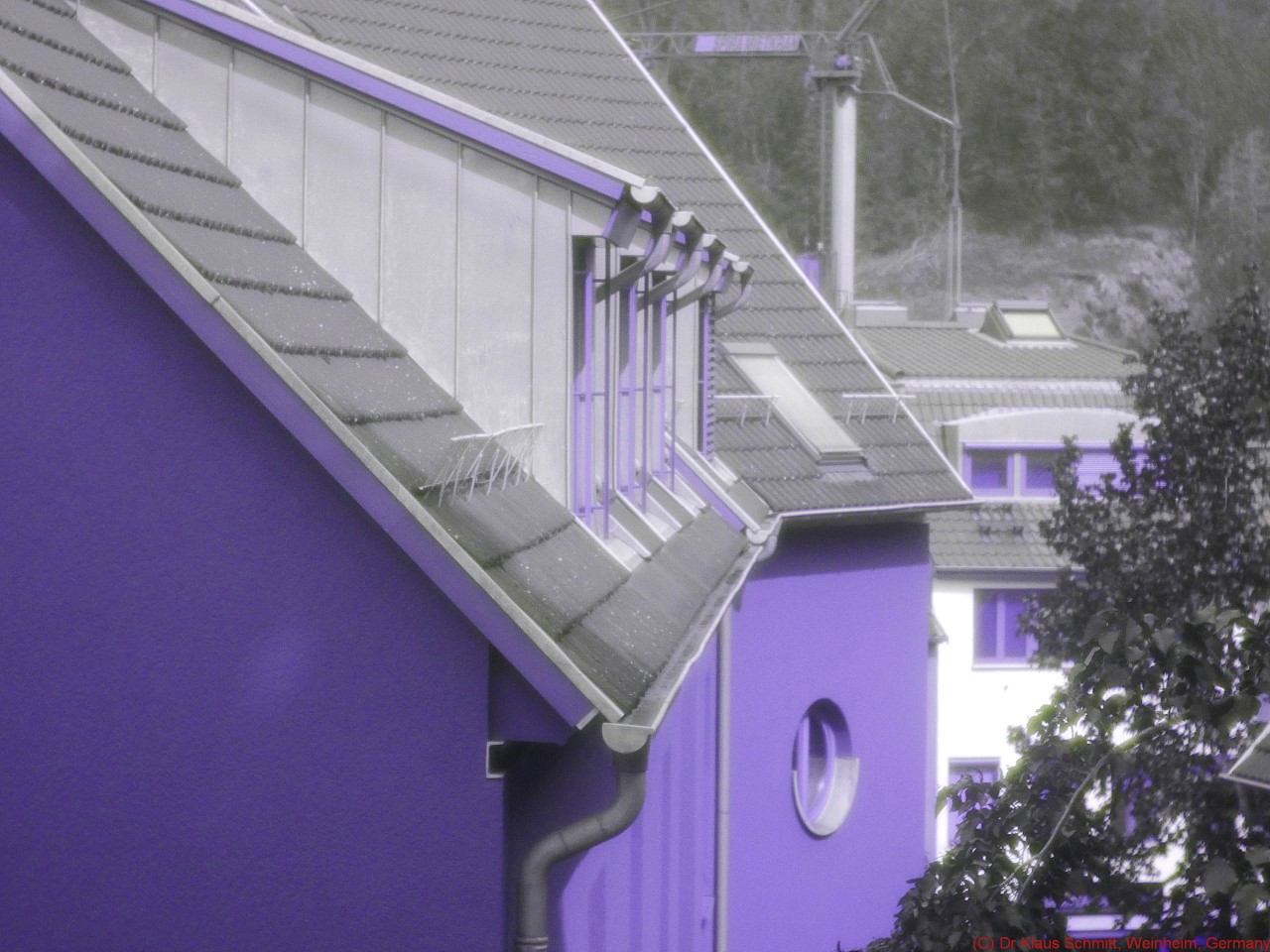
VIS and UV image side-by-side both at f8:
 

As I had mentioned before, it got pretty clear that this lens has a very high UV performance, at 365nm it transmits around 75%, very close to the Kuribayashi 35mm which has 80%. Its peak transmission with Baader-U filter attached is around 68% at 360nm.

At f2.8 however the resulting images did not look as sharp as wished for, but stopping down has improved sharpness significantly, especially in reflected UV light, which by its shorter wavelength in theory resolves approx. 1.6x more. It gets quite obvious, that this lens is a clearly excellent and very useful lens for reflected UV at optimal f8/f11, especially since the image size deviation between visible and UV image is a bare 1.3% only.

I will in the next thread show the deep(er) UV performance of this lens...

I have written more about this lens HERE.

Stay tuned, more will follow on that fascinating subject...

More info on this very interesting field may be found on my site http://www.pbase.com/kds315/uv_photos

Surprising STEINHEIL f2.8/50mm lens for reflected UV photography II

I had previously mentioned that a few years ago I got an older lens, which was made decades ago by famous lens maker STEINHEIL. It is a possibly single coated, well made 2.8/50mm lens which attracted me, since it showed some seemingly good UV transmission when shining an 365nm UV LED through it. The surprise came when I had it in my spectrometer, revealing its high and deep reaching UV transmission, no other normal lens so far showed. Now some outdoor images taken with it, all at f2.8 to see if that lens speed could be used. Light was overcast sunlight.

[click on image gets you a larger image]

VIS image using UV/IR Cut filter:
 

UV image using Baader-U filter (approx. 320-395nm):
 

UV image using Baader-U filter (approx. 320-395nm) and 340nm shortpass filter stacked:
 

VIS image using UV/IR Cut filter:
 

UV image using Baader-U filter (approx. 320-395nm):
 

UV image using Baader-U filter (approx. 320-395nm) and 340nm shortpass filter stacked:
 

It got pretty clear that this lens has a very high UV performance, at 365nm it transmits around 75%, very close to the Kuribayashi 35mm which has 80%. Its peak transmission with Baader-U filter attached is around 68% at 360nm. Using that deeper 290-340nm UV filter which peaks at 334nm with 68% transmissing, it still has a 32% total transmission at its peak at 338nm.

At f2.8 however the resulting images do not look as sharp as wished for, so another test will have to reveal if stopping down will improve sharpness considerably.

I have written about this lens more HERE.

Stay tuned, more will follow on that fascinating subject...

More info on this very interesting field may be found on my site http://www.pbase.com/kds315/uv_photos

Surprising STEINHEIL f2.8/50mm lens for reflected UV photography I

Quite a few years ago I got an older lens, which was made many years ago by famous lens maker STEINHEIL. It is a possibly single coated, well made 2.8/50mm lens which attracted me, since it showed some seemingly good UV transmission when shining an 365nm UV LED through it. The surprise came when I had it under my spectrometer, revealing its high and deep reaching UV transmission, no other normal lens so far showed.

[click on image gets you a larger image]

Today now the spectrometric results as one of the best performing "normal" lenses for UV, slso showing the transmissing with the Baader-U filter, as well as a 290-340nm filter:


It gets pretty clear that this lens has a very high UV performance, at 365nm it transmits around 75%, very close to the Kuribayashi 35mm which has 80%. Its peak transmission with Baader-U filter attached is around 68% around 360nm. Using that deeper 290-340nm UV filter which peaks at 334nm with 68% transmission, it still has a 32% total transmission at its peak at 338nm.

 A very useful lens for reflected UV this seems to be, but photographic tests still needs to be done...

I have written about this lens more HERE.

Stay tuned, more will follow on that fascinating subject...

More info on this very interesting field may be found on my site http://www.pbase.com/kds315/uv_photos
Saturday, May 2, 2020

Steinheil Cassarit 105mm vs UV-Nikkor 105mm for reflected UV photography

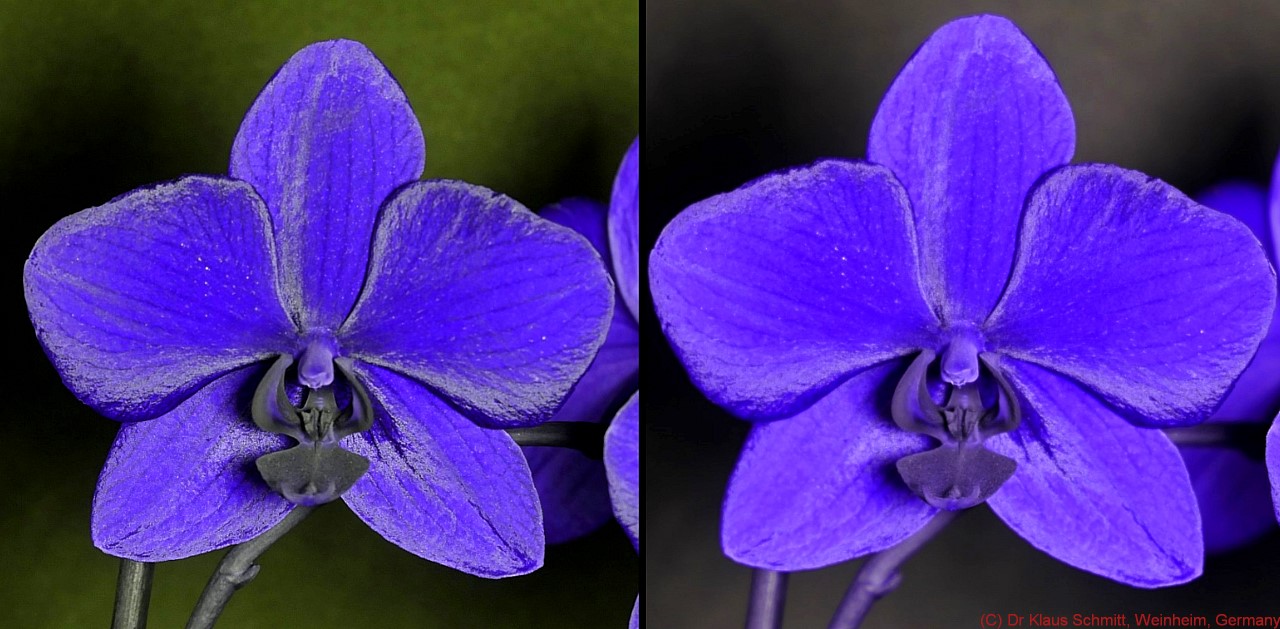
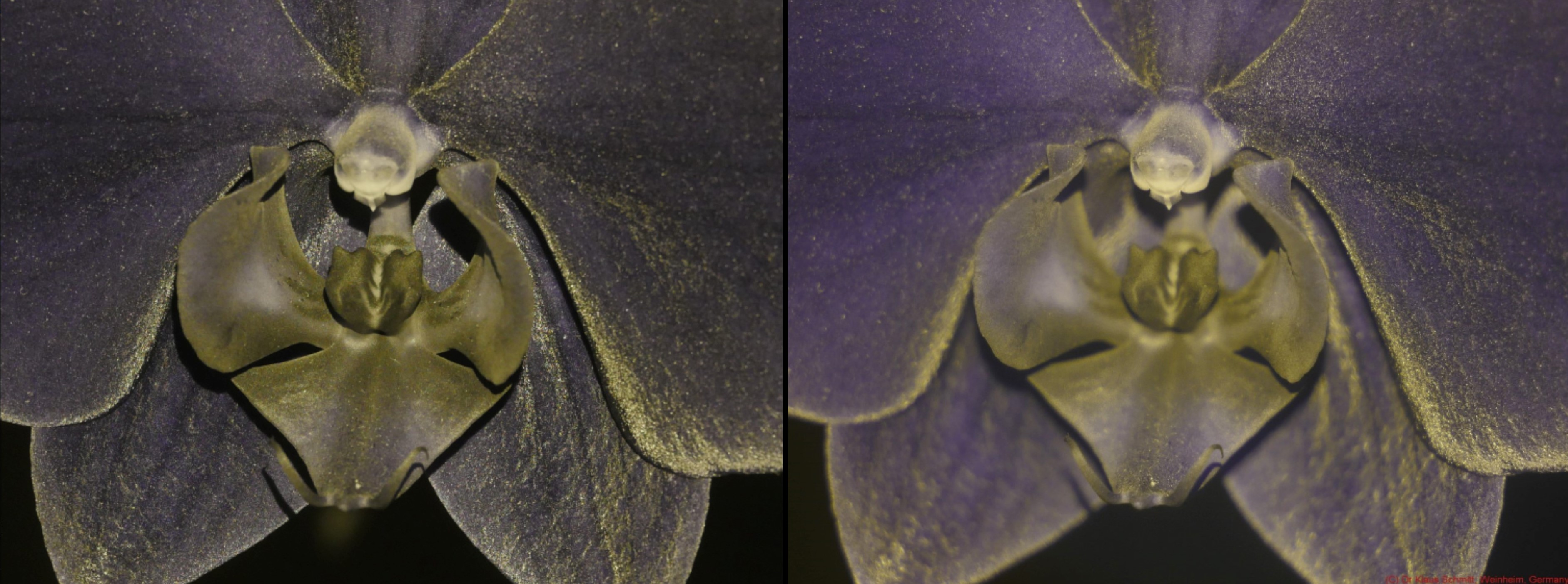
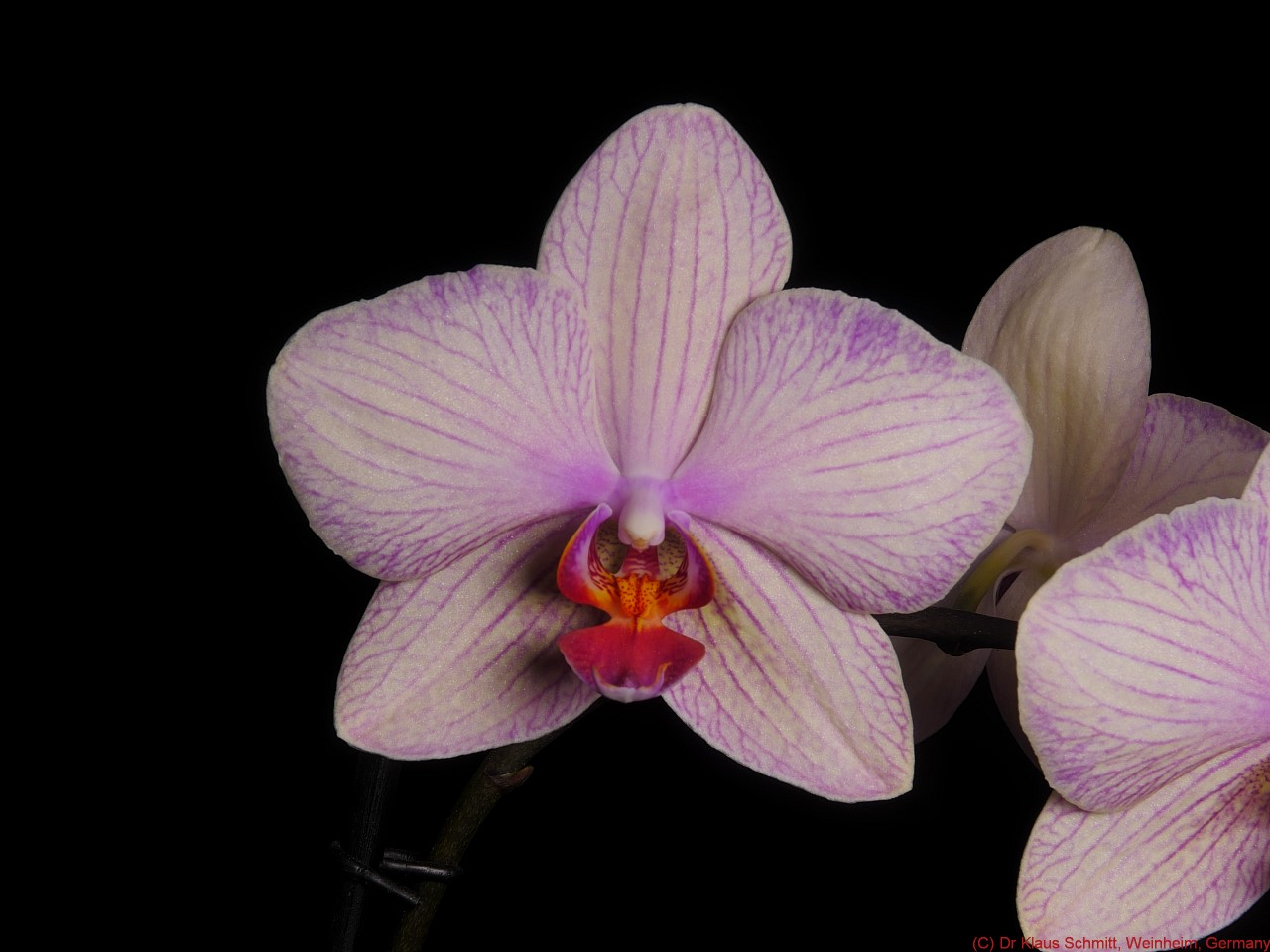
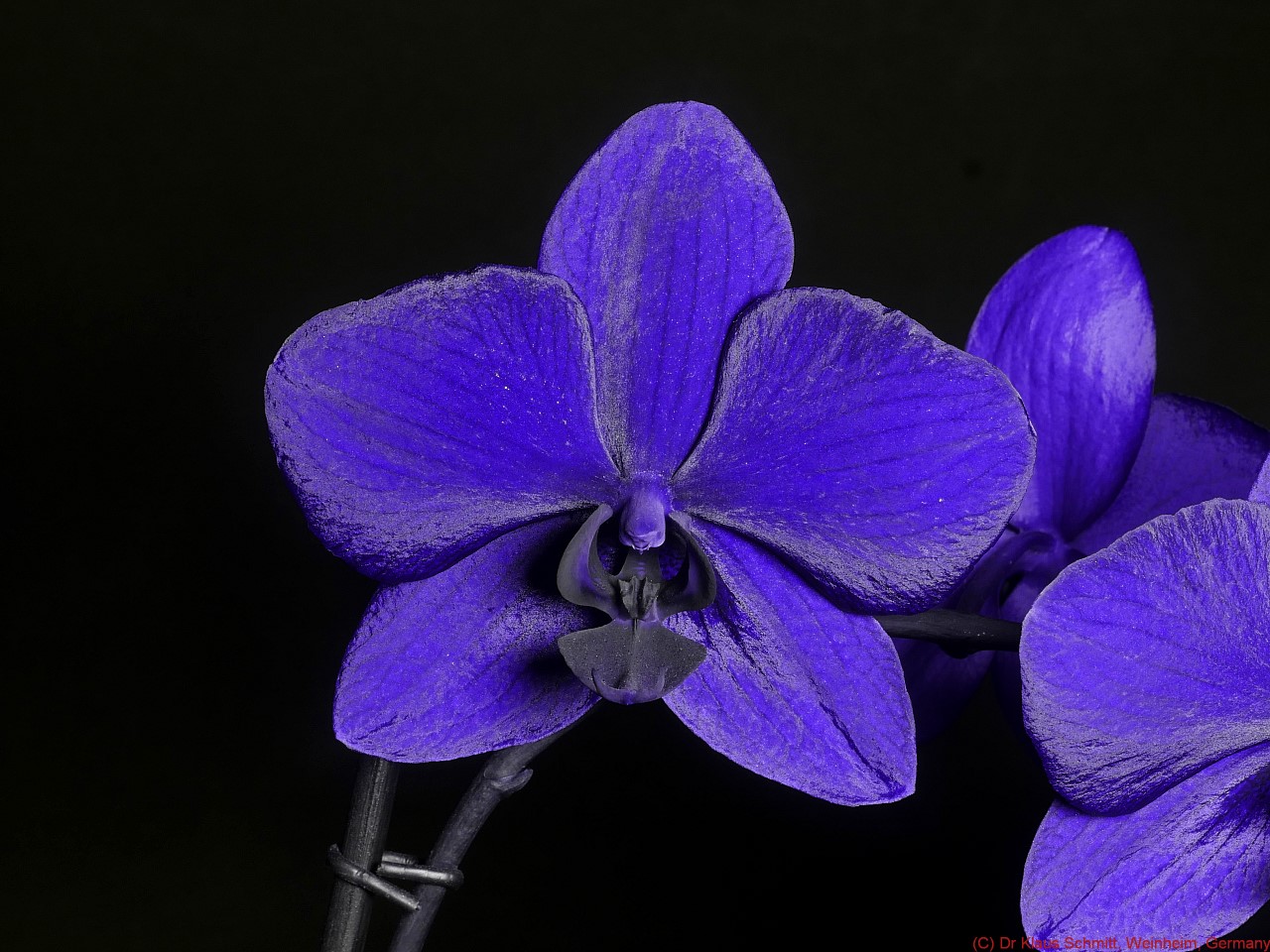
Today a comparison between the well known UV-Nikkor 105mm lens and the lesser known Steinheil Cassarit f4.5/105mm enlarger lens. I'm using a patterned Phalaenopsis flower for that comparison and my work horse UV filter, the Baader-U filter. Light source was an UV enhanced Xenon flash as well as a Nichia 365nm UV LED. All shots done at f8.

[click on image to see a larger one; UV-Nikkor is on the left, Steinheil Cassarir is on the right]

UV-Nikkor vs Steinheil 105mm: VIS image using UV/IR Cut filter and Xenon flash:
 

UV-Nikkor vs Steinheil 105mm: UV image using Baader-U filter (approx. 320-395nm) and Xenon flash:
 

UV-Nikkor vs Steinheil 105mm: UV image using Baader-U filter (approx. 320-395nm) and UV LED:


That Steinheil lens transmits down to about 330nm and at 365nm has about 65% transmission. It needs refocussing when used for UV and the focus difference VIS-UV is just 1.2%, which the corrected UV-Nikkor lens does not need.

This comparison shows, that the UV-Nikkor 105mm is very hard to beat, but this Steinheil lens does very well, especially when used with an UV LED, considering it being a simple triplet lens. Finding a longer focal length UV-capable lens is a hard thing to do, so that Steinheil seems to be rather useful!

I have written about other Steinheil lenses HERE.

Stay tuned, more will follow on that fascinating subject...

More info on this very interesting field may be found on my site http://www.pbase.com/kds315/uv_photos

Wednesday, April 29, 2020

Steinheil Quinon 152mm vs UV-Nikkor 105mm for reflected UV photography

Today a comparison between the well known UV-Nikkor 105mm lens and the hardly known Steinheil Quinon f2.8/152mm lens (this lens seems to be a prototype as a f2.8 Quinon is not known, not even in the Steinheil production list). I'm using a white Phalaenopsis flower for that comparison and my work horse UV filter, the Baader-U filter. Light source was an UV enhanced Xenon flash as well as a Nichia 365nm UV LED. All shots done at f11.

[click on image to see a larger one]

Steinheil 152mm: UV image using Baader-U filter (approx. 320-395nm) and Xenon flash:
 

UV-Nikkor 105mm: UV image using Baader-U filter (approx. 320-395nm) and Xenon flash:
 

Steinheil 152mm: UV image using Baader-U filter (approx. 320-395nm) and UV LED:
 

UV-Nikkor 105mm UV image using Baader-U filter (approx. 320-395nm) and UV LED:
 

Comparison, UV-Nikkor image scaled to fit Steinheil:


That Steinheil lens transmits down to about 340nm and at 365nm has about 35% transmission.

This comparison shows, that the UV-Nikkor 105mm is very hard to beat, but finding a longer focal length UV-capable lens is a hard thing to do, so that Steinheil seems to be rather useful!

I have written about other Steinheil lenses HERE.

Stay tuned, more will follow on that fascinating subject...

More info on this very interesting field may be found on my site http://www.pbase.com/kds315/uv_photos

Tuesday, April 28, 2020

Enhancing the visibility of fossil tissue structures using UV reflected and UV stimulated visible flourescence photography II

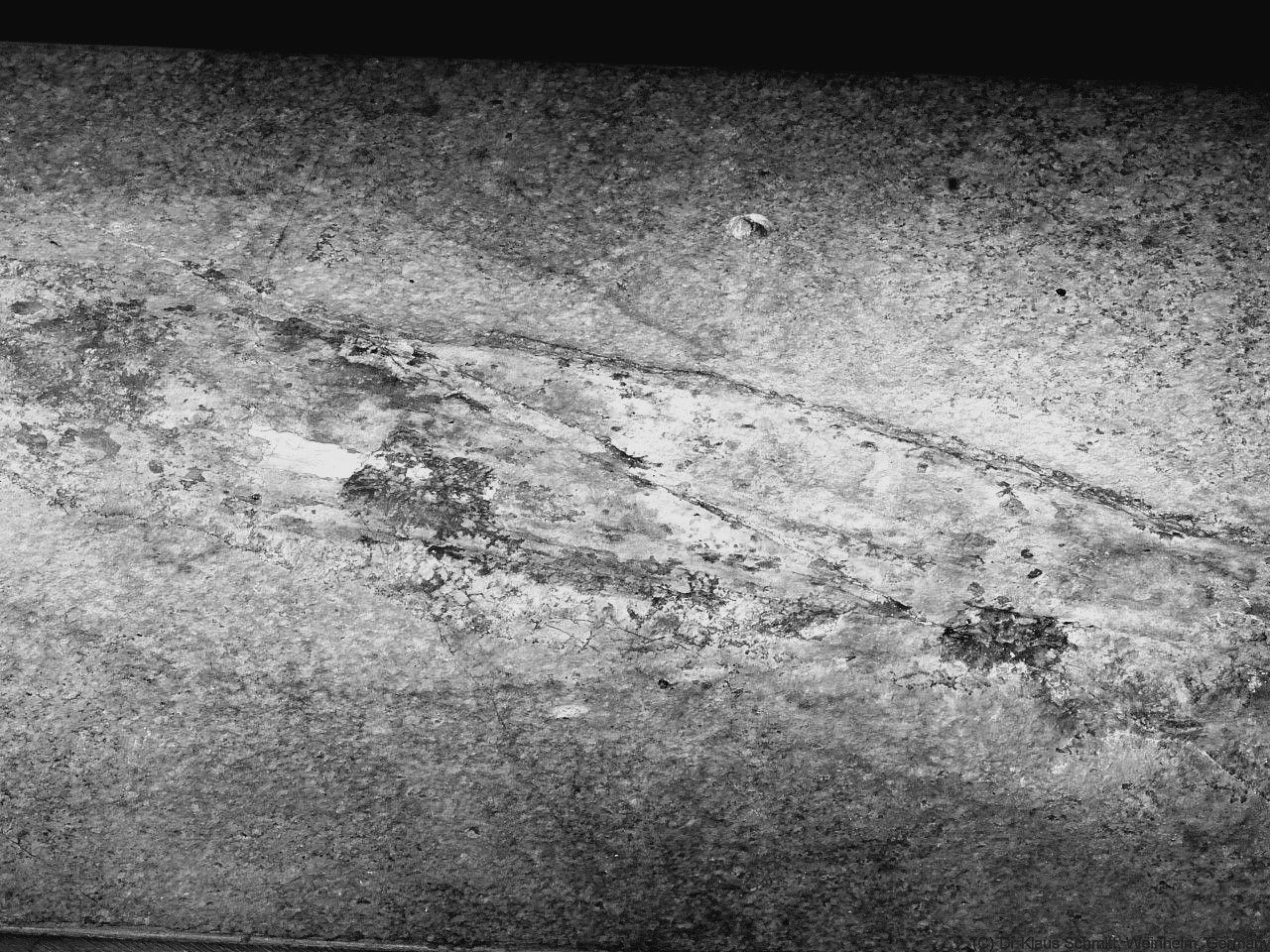
A while ago I had the honor to work with Neal Larson on a paper on fossilized cephalopods found in Hajoula, Lebanon. Today it is again about enhancing the visibility of fossil bone and tissue structures using reflected UV and UV stimulated visible fluorescence photography, but as it is some years later, using more modern equipment now. Lens used was my UV-Nikkor 105mm quartz fluorite lens, light sources were a modified high power Xenon flash, as well as a NICHIA 365nm LED. Filters used were the Baader-U filter as well as a 420nm Long Pass filter. Target was a fossilized squid from the Upper Cretaceous period, approx. 90 million years old.

[click on image to see a larger one]

Visible light image using UV/IR Cut filter:


Reflected UV image using Baader-U filter (310-390nm) with 365nm UV LED: 


Reflected UV image using Baader-U filter (310-390nm) with 365nm UV LED (in bw):


UV stimulated visible Fluorescence image with 420nm Longpass filter: 


UV stimulated visible Fluorescence image, 2nd version, with UV-IR Cut filter:


It gets nicely visible that using UV light photography brings out much more details than normal visible light photography and by doing so, enhances the visibility quite a bit.

I have written more about fossils HERE

Stay tuned, more will follow on that fascinating subject...

More info on this very interesting field may be found on my site http://www.pbase.com/kds315/uv_photos

Monday, April 27, 2020

Treasury flower - Gazania rigens in reflected ultraviolet photography and simulated bee and butterfly vision XXIX

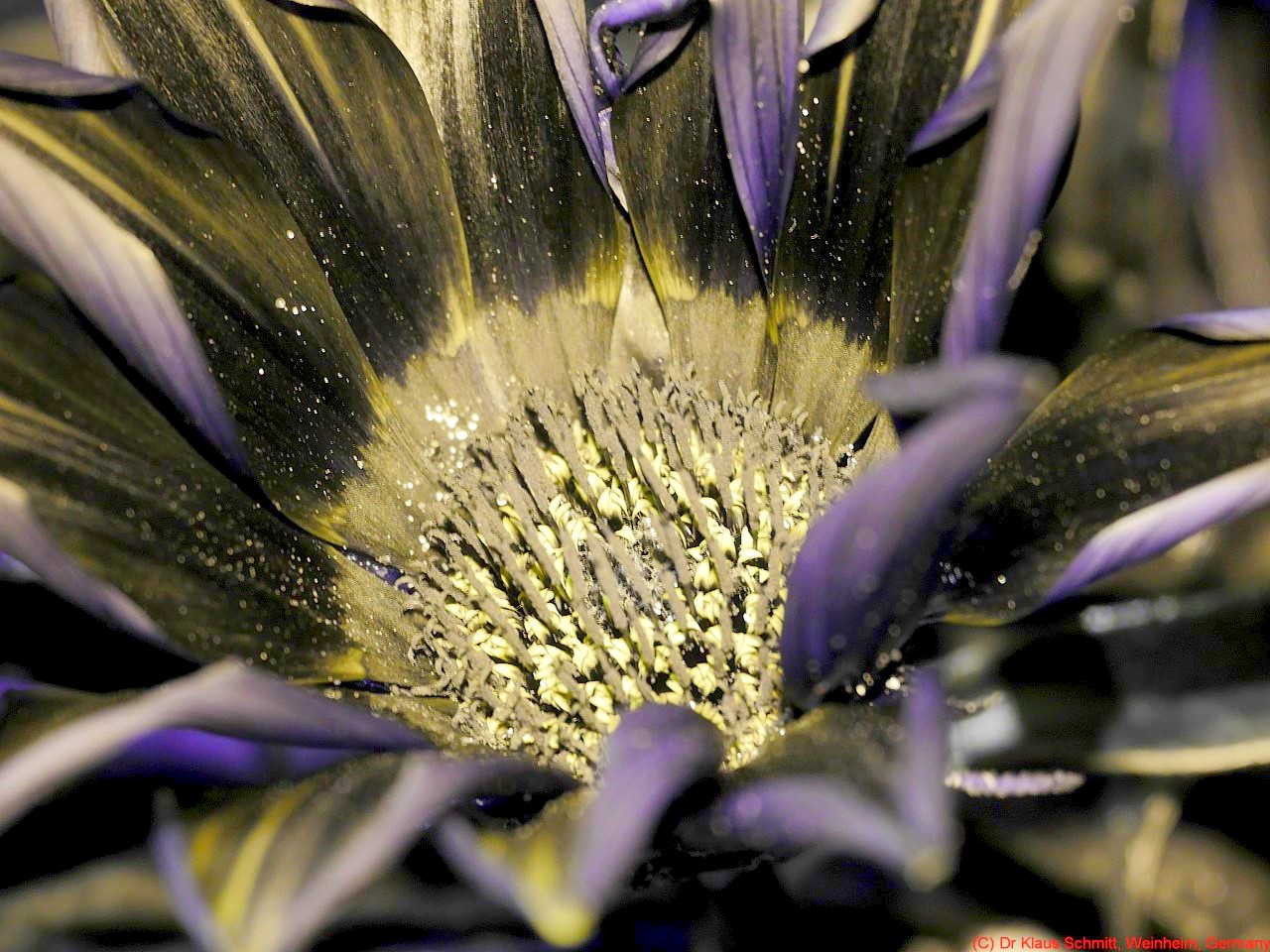
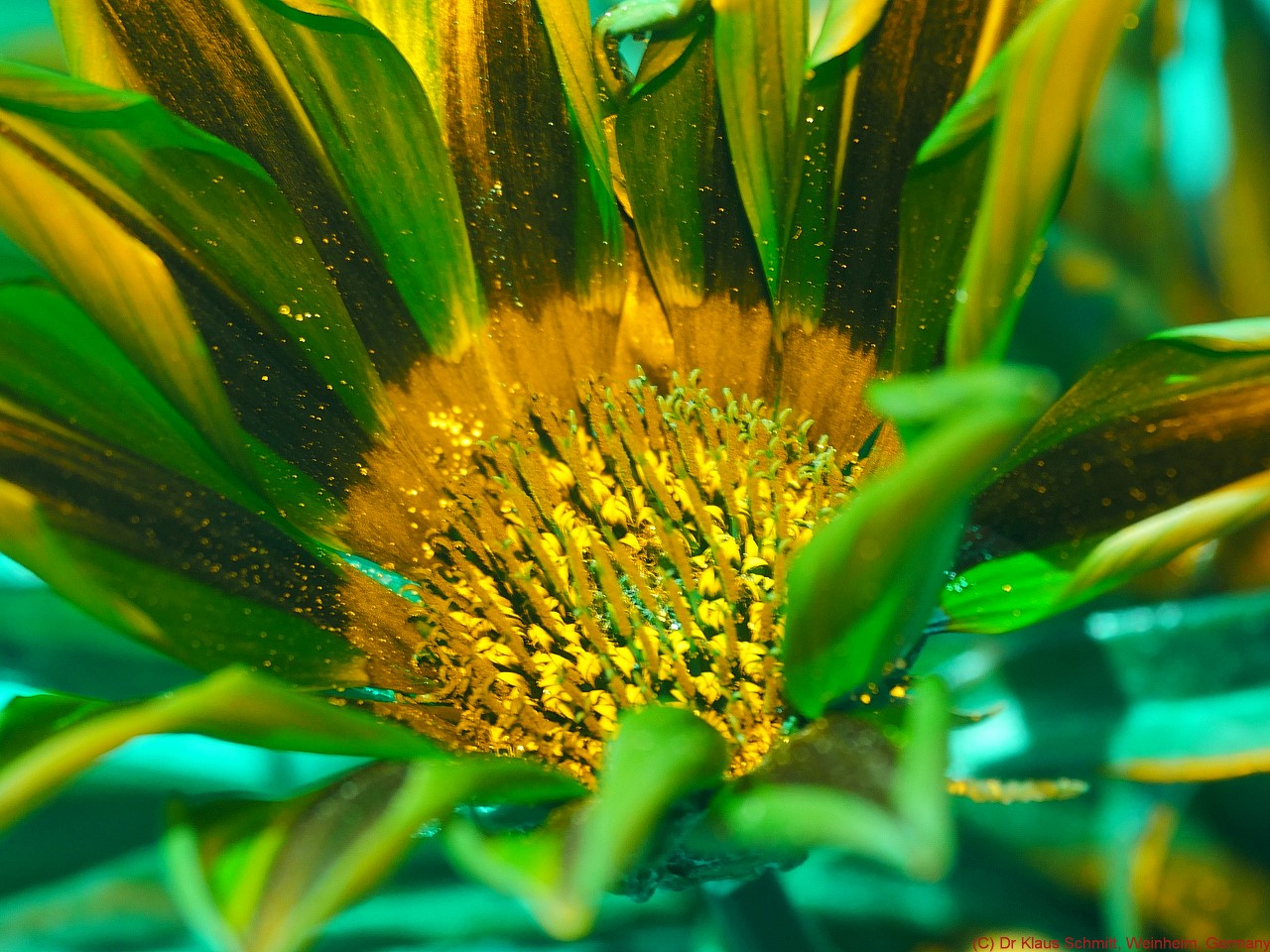
Today in 2020 some first outdoor shots of that long blooming flower, a orange-red Gazania flower, the Treasury flower - Gazania rigens shot in reflected ultraviolet photography, simulated bee and butterfly vision. All shots were done at f8 in reflected ultraviolet photography using my "work horse" UV filter, the Baader-U filter, as well as my XBV filters for simulated bee and butterfly vision. Lens was a UV-Nikkor 105mm quartz fluorite lens. Light source was sunlight with some Nichia 365nm UV-LED support.

[click on image to see a larger one]

Human vision:
 

Reflected UV:
 

Simulated butterfly vision:
 

Simulated bee vision:
 

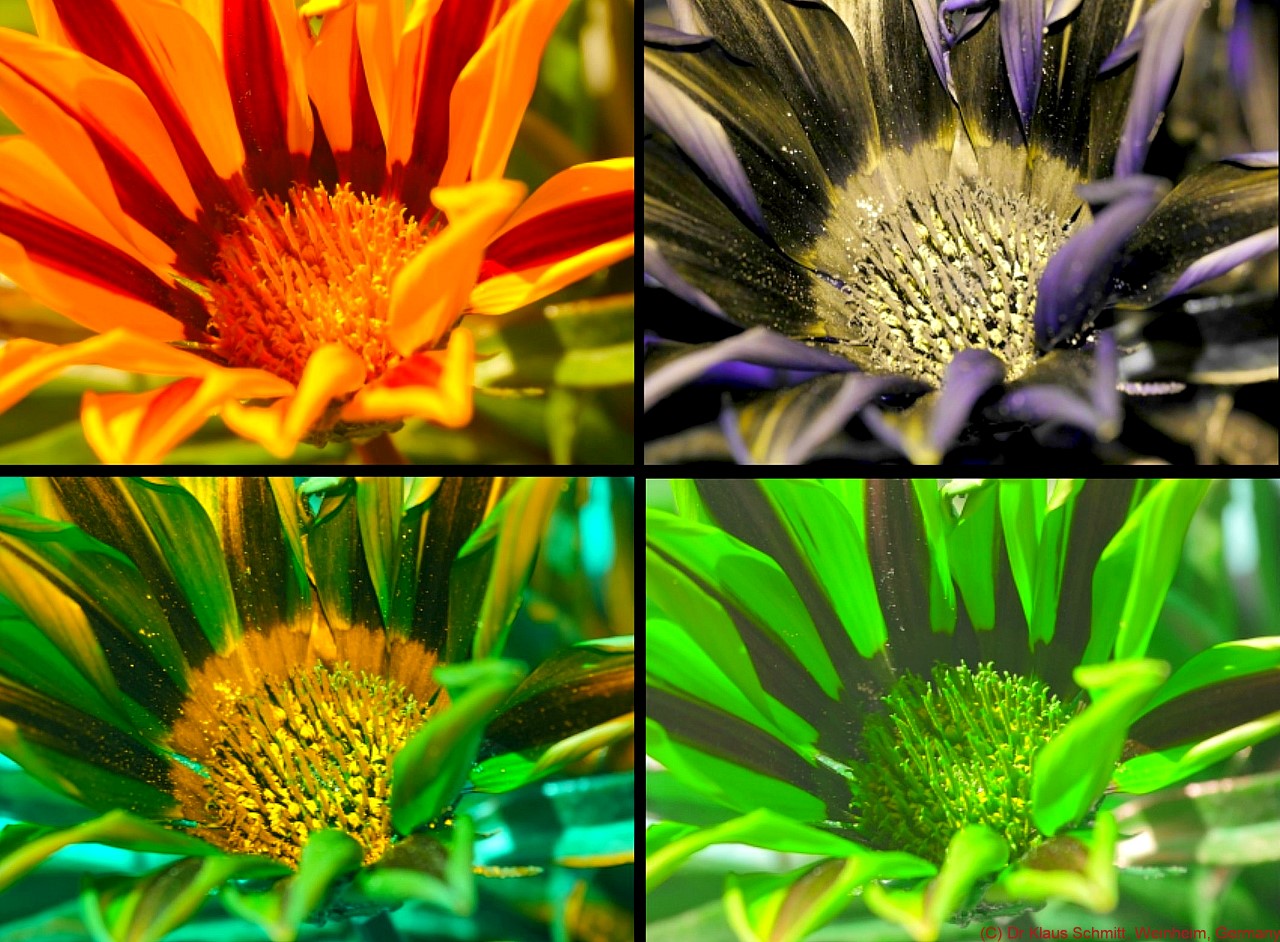
Quadriptych of human vision, UV, simulated butterfly and bee vision (left to right, top to bottom):
 

This Gazania's outer petals strongly reflect UV around 365nm, whereas the inner petal parts are quite darker, hence forming UV nectar guides for UV seeing insects. There are also some highly UV reflecting marks inside around a dark UV center, all invisible to us humans, but clearly visible to bees and butterflies, and all this gets nicely visible here, also in simulated bee and butterfly vision.

I have written about this Gazania previously HERE
 
Stay tuned, more will follow on that fascinating subject...

More info on this very interesting field may be found on my site http://www.pbase.com/kds315/uv_photos