Showing posts with label new simulated bee vision. Show all posts

Wednesday, June 2, 2021

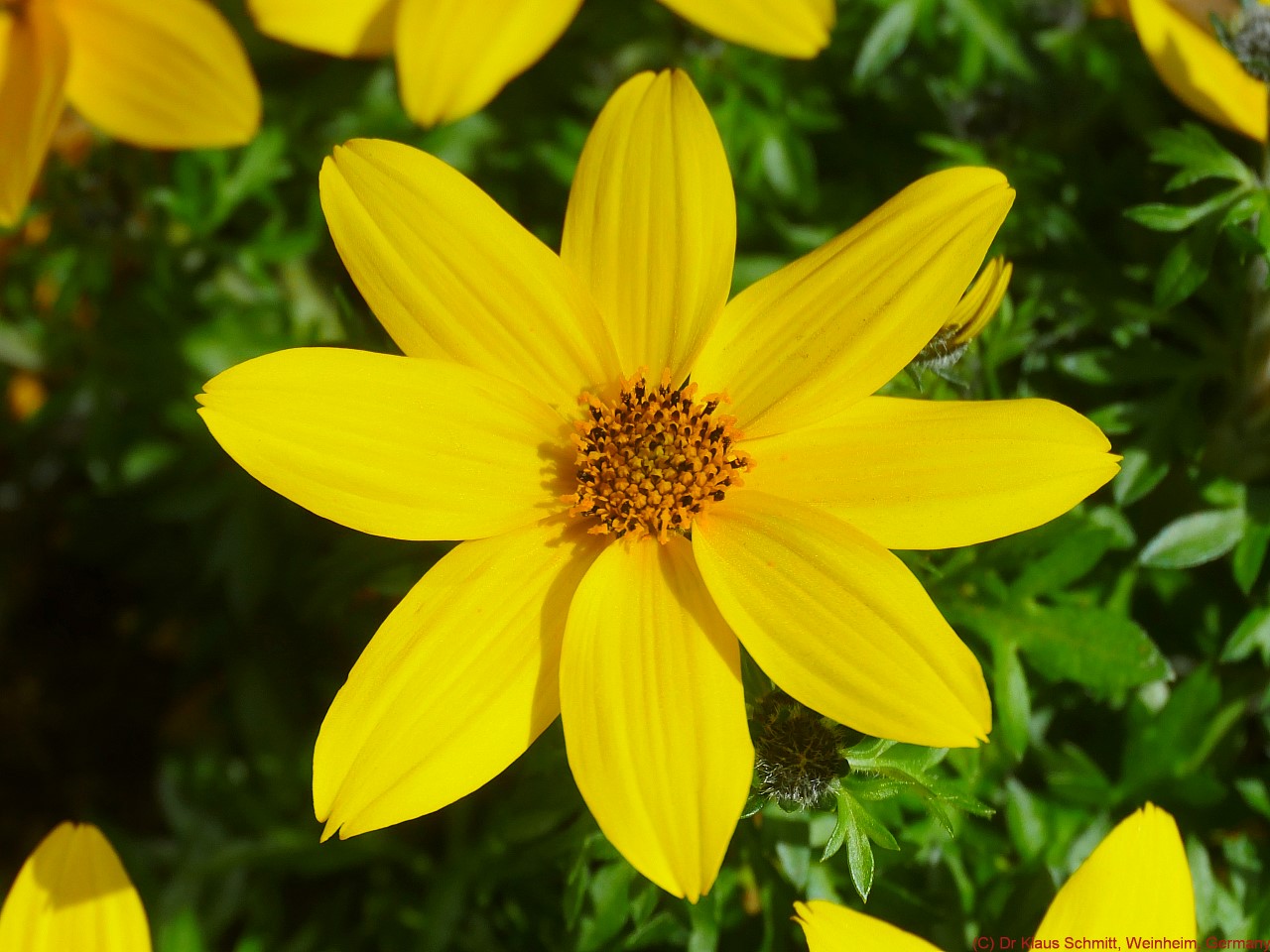
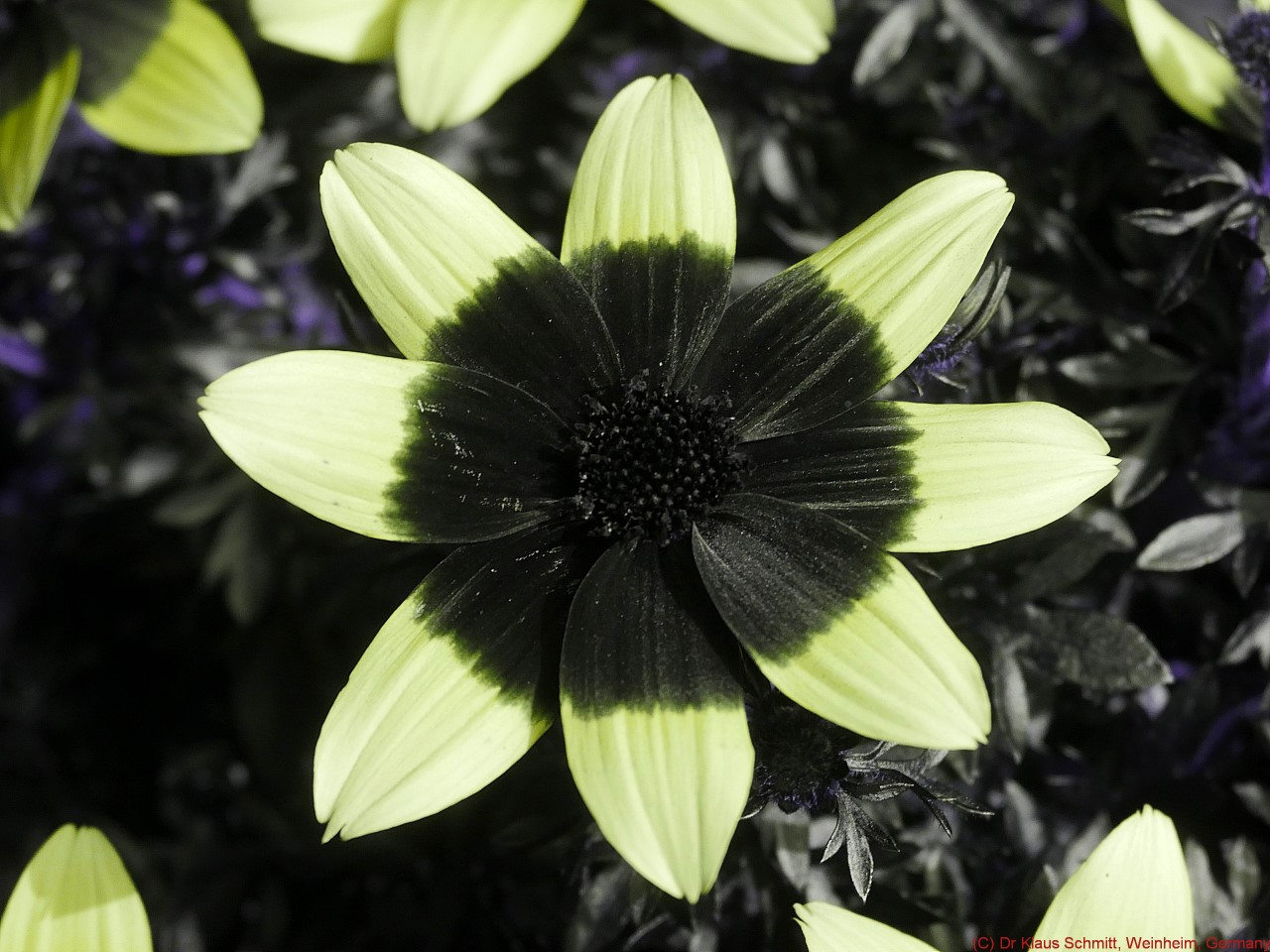
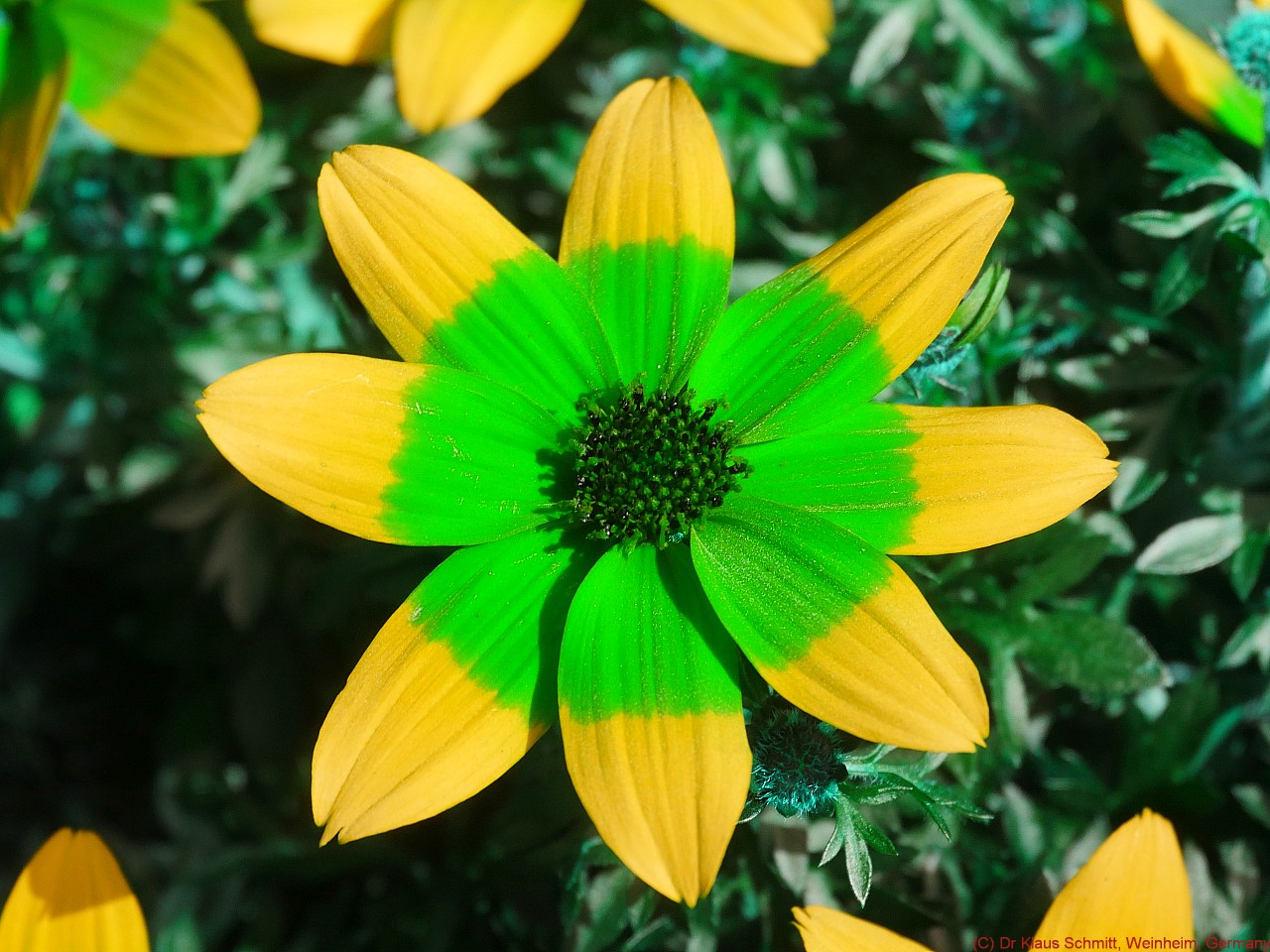
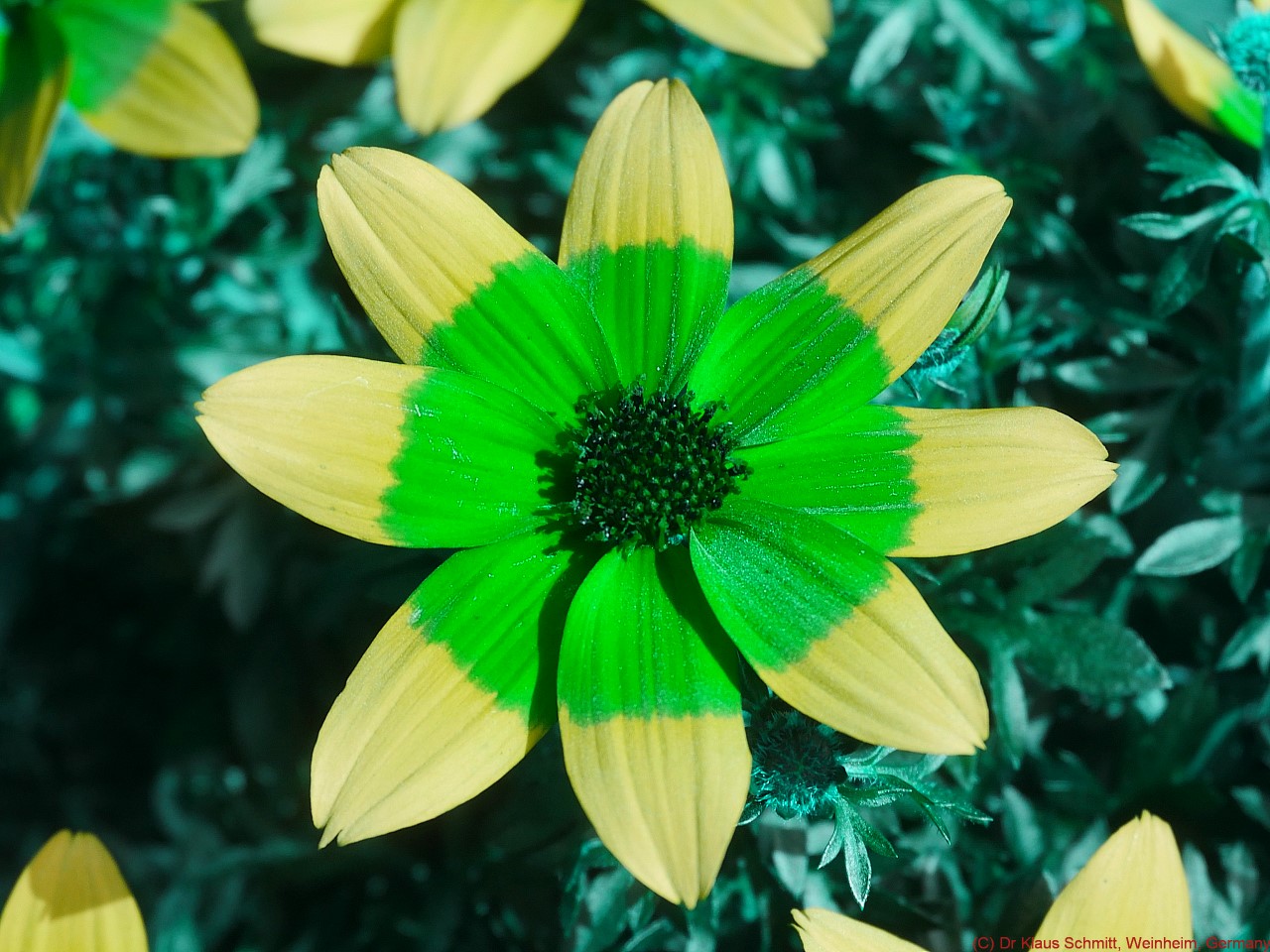
Apache beggarticks - Bidens ferulifolia in reflected ultraviolet photography, simulated bee and butterfly vision XIX

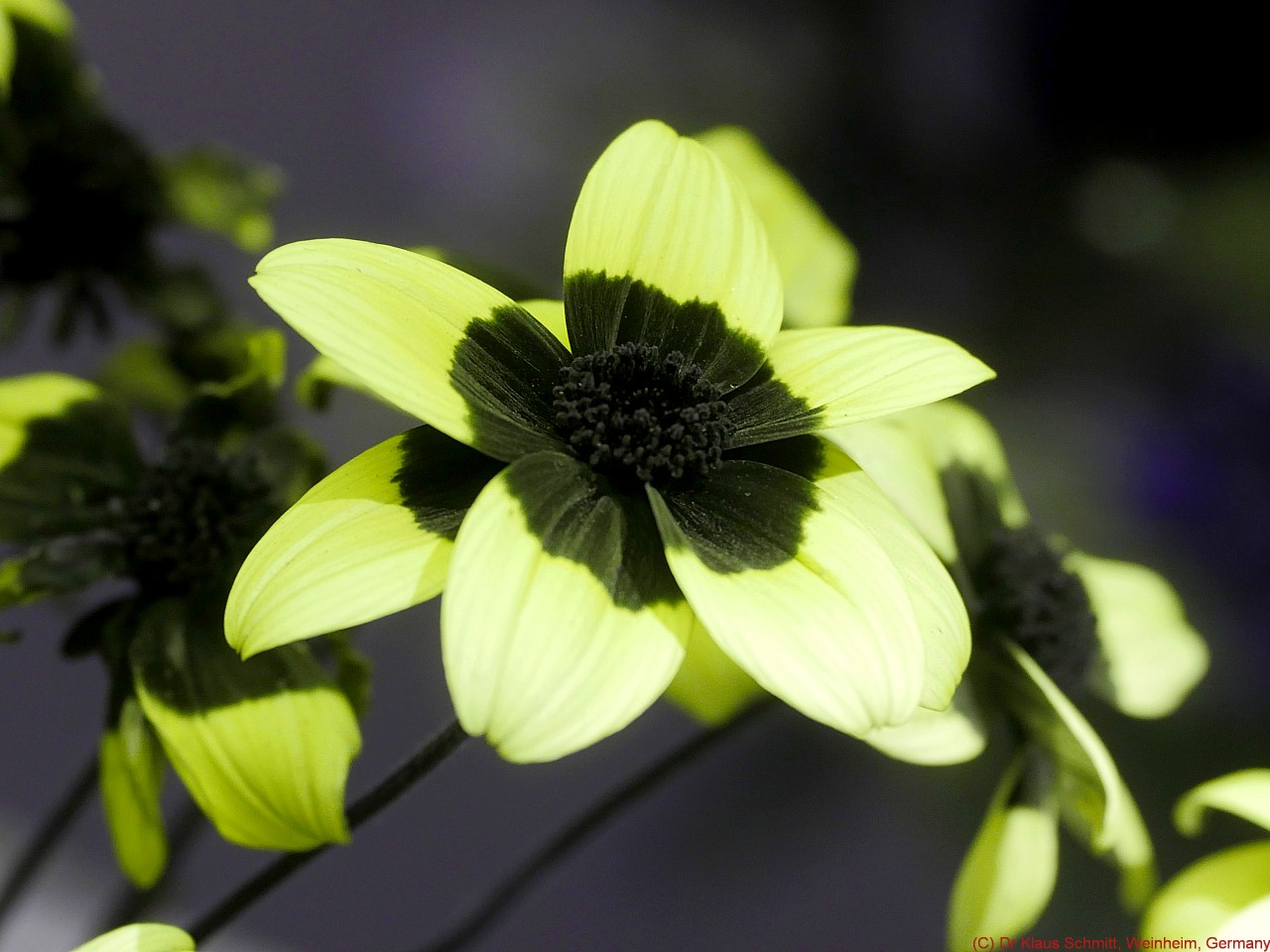
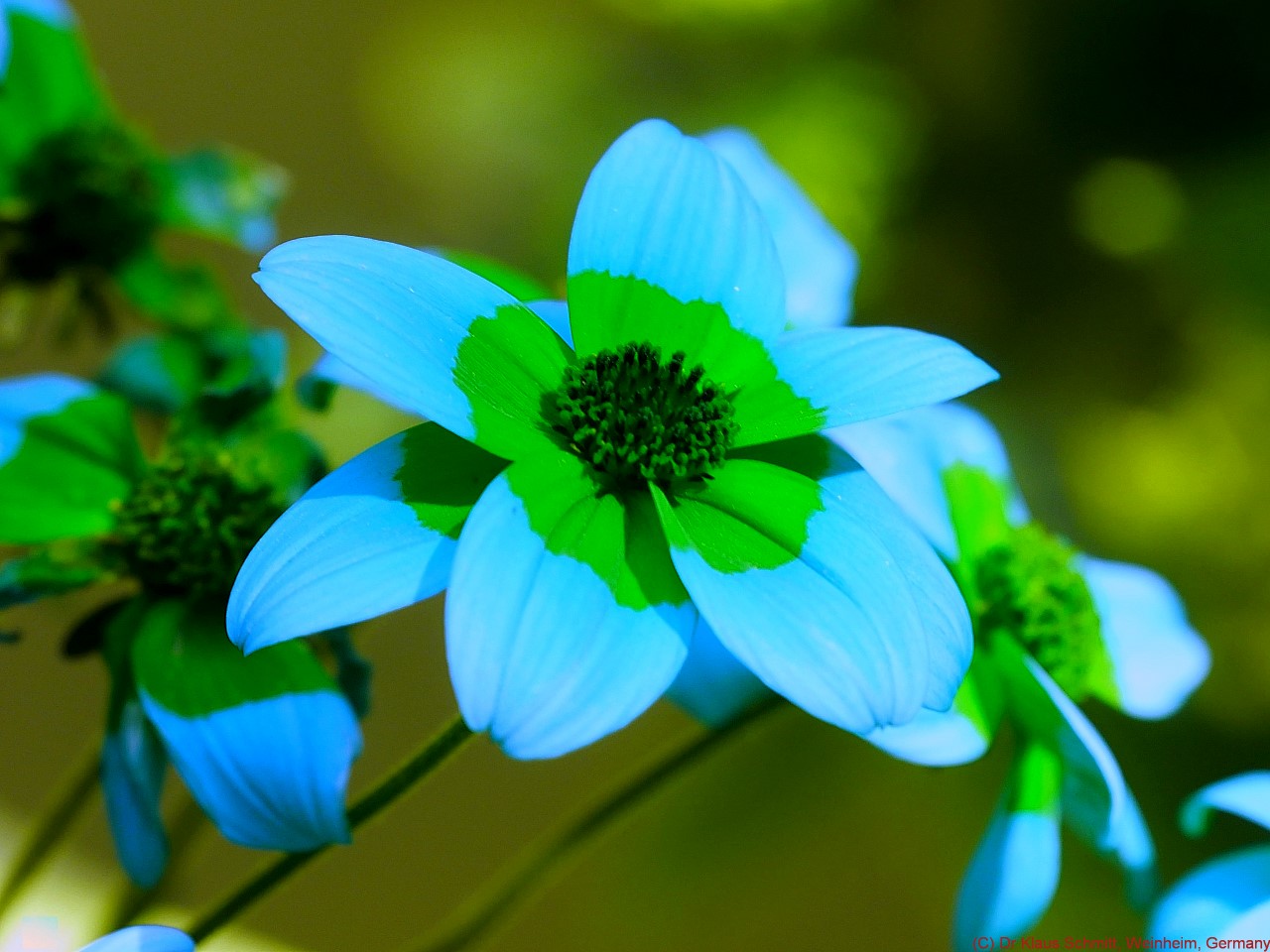
Today in 2021 more shots of a long blooming spring flower Apache beggarticks - Bidens ferulifolia in reflected ultraviolet photography and simulated bee and butterfly vision. All shots were done at f11 in reflected ultraviolet photography using my "work horse" UV filter, the Baader-U filter, as well as my XBV filters for simulated bee and butterfly vision. Lens was a UV-Nikkor 105mm quartz fluorite lens. Light source was a modified for high UV output Studio flash.

[click on image to see a larger one]

Human vision:
 

Reflected UV:
 

Simulated butterfly vision:
 

Simulated bee vision:
 

Quadriptych (details) of human vision, UV, simulated bee and butterfly vision (left to right, top to bottom):
 

Bidens has a strong visible UV "bullseye" pattern, its petal tips are UV bright around 365nm, its center is quite UV dark, so this gets quite nicely visible, also in simulated butterfly and bee vision.

Here I was testing a new black backdrop, as it is rather difficult to find materials which really are "UV black", but this Japanese material seems to work very well, with approx. 0.7% reflection from UV to IR!

I have written about Bidens previously HERE
 
Stay tuned, more will follow on that fascinating subject...

More info on this very interesting field may be found on my site http://www.pbase.com/kds315/uv_photos

Saturday, April 17, 2021

Apache beggarticks - Bidens ferulifolia in reflected ultraviolet photography, simulated bee and butterfly vision XVIII

Today in 2021 shots of a long blooming spring flower Apache beggarticks - Bidens ferulifolia in reflected ultraviolet photography and simulated bee and butterfly vision. All shots were done at f8 in reflected ultraviolet photography using my "work horse" UV filter, the Baader-U filter, as well as my XBV filters for simulated bee and butterfly vision. Lens was a UV-Nikkor 105mm quartz fluorite lens. Light source was sunlight.

[click on image to see a larger one]

Human vision:
 

Reflected UV:
 

Simulated butterfly vision:
 

Simulated bee vision (new version):
 

Quadriptych (details) of human vision, UV, new simulated bee and butterfly vision (left to right, top to bottom):
 

Bidens has a strong visible UV "bullseye" pattern, its petal tips are UV bright around 365nm, its center is quite UV dark, so this gets quite nicely visible, also in simulated butterfly and bee vision.

I have written about Bidens previously HERE
 
Stay tuned, more will follow on that fascinating subject...

More info on this very interesting field may be found on my site http://www.pbase.com/kds315/uv_photos
Tuesday, February 9, 2021

If you like to see some of my works on display in 2021

 So if you would like to see some of my work (updated March 2021)...

...and if you live in Europe, then you have a chance to see some here:

The artist Dr Andrea Daisy Ginsberg will give a talk about the Eden Project, Cornwall, UK in Rappertwil, Switzerland in March 2021 using some of my multispectral flower images to illustrate the difference in perception of colour by different pollinator species.

The Gallery Oldham in Oldham, UK (greater Manchester area) will in 2021 include some of my Caltha palustris (Marsh marigold) simulated bee vision images in a presenation about pollinators.

... and if you live in North America, then you have a chance to see some here:

The San Diego Botanic Garden will give in 2021 a presentation about the difference in our vision and pollinator vision and how this has helped orchids evolve into what they are, using some of my multispectral works on orchids.

The Witte Museum in San Antonio, Texas wil give a presentation on pollinators using some of my multispectral works.

The Butterfly Conservation Club of the Southeast Michigan Butterfly Association will in February 2021 have a presenation about butterfly and plant interactions using some of my simulated butterfly and human vision images.

... and if you live in Asia, then you have a chance to see some here : 

Jurong Lake Gardens' Therapeutic Garden - Butterfly Maze in Singapore's Jurong Lake Garden will show in 2021 some of my simulated butterfly vision images, to demonstrate the difference betwen what we see and what butterflies see.

An overview of my works on display may be found HERE

My work for Movies and TV may be found HERE

Stay tuned, more will follow on that fascinating subject...

More info on this very interesting field may be found on my site http://www.pbase.com/kds315/uv_photos 
Tuesday, June 2, 2020

Apache beggarticks - Bidens ferulifolia in reflected ultraviolet photography, simulated bee and butterfly vision XVII

Today in 2020 more shots of a long blooming spring flower Apache beggarticks - Bidens ferulifolia in reflected ultraviolet photography and simulated bee and butterfly vision. Today with a new bee vison filtering. All shots were done at f8 in reflected ultraviolet photography using my "work horse" UV filter, the Baader-U filter, as well as my XBV filters for simulated bee and butterfly vision. Lens was a UV-Nikkor 105mm quartz fluorite lens. Light source was sunlight.

[click on image to see a larger one]

Human vision:
 

Reflected UV:
 

Simulated butterfly vision:
 

Simulated bee vision (new version):
 

Quadriptych (details) of human vision, UV, new simulated bee and butterfly vision (left to right, top to bottom):
 

Bidens has a strong visible UV pattern, its petal tips are UV bright around 365nm, its center is quite UV dark, so this gets quite nicely visible, also in simulated butterfly and the new bee vision.

I have written about Bidens previously HERE
 
Stay tuned, more will follow on that fascinating subject...

More info on this very interesting field may be found on my site http://www.pbase.com/kds315/uv_photos
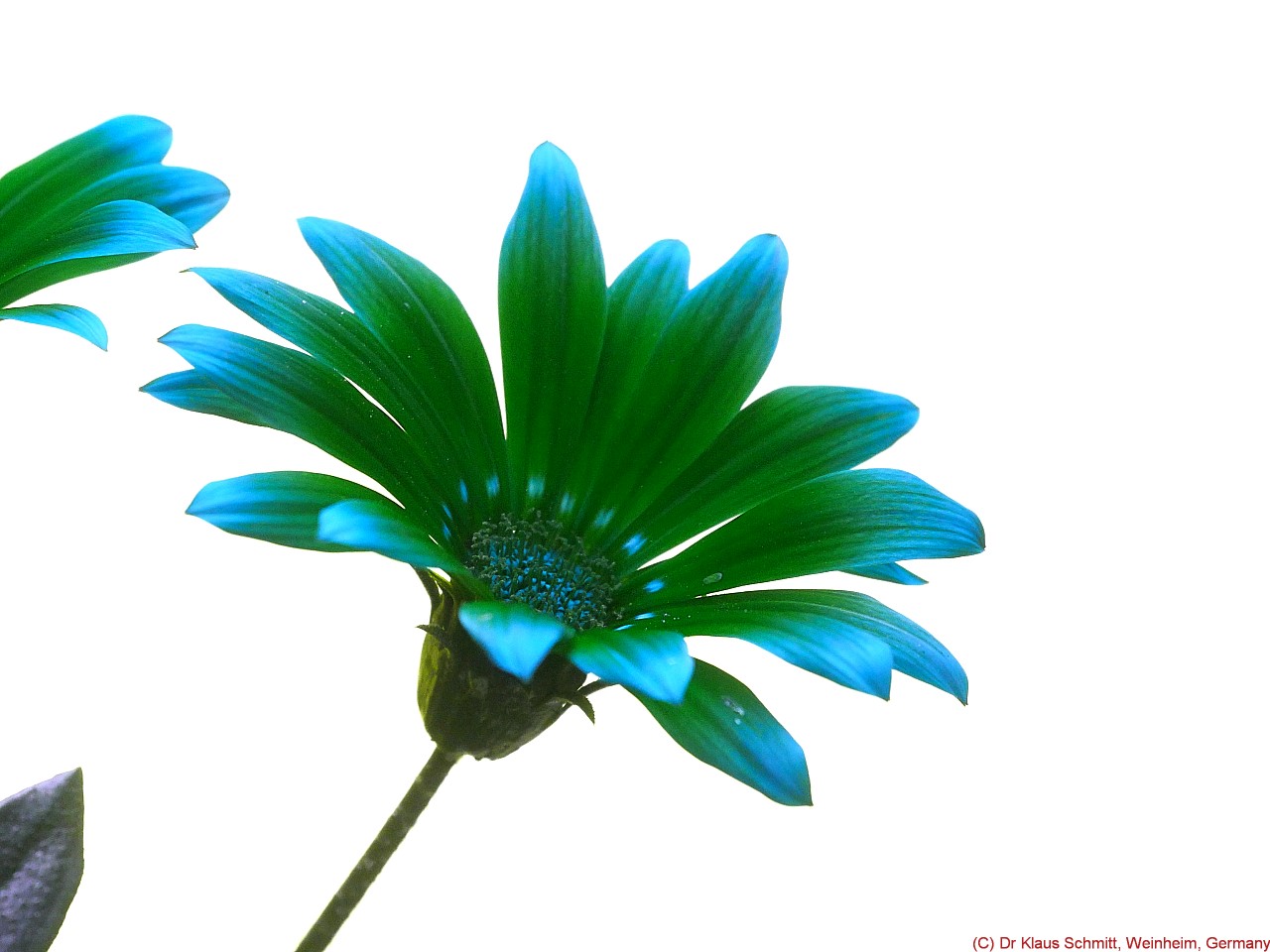
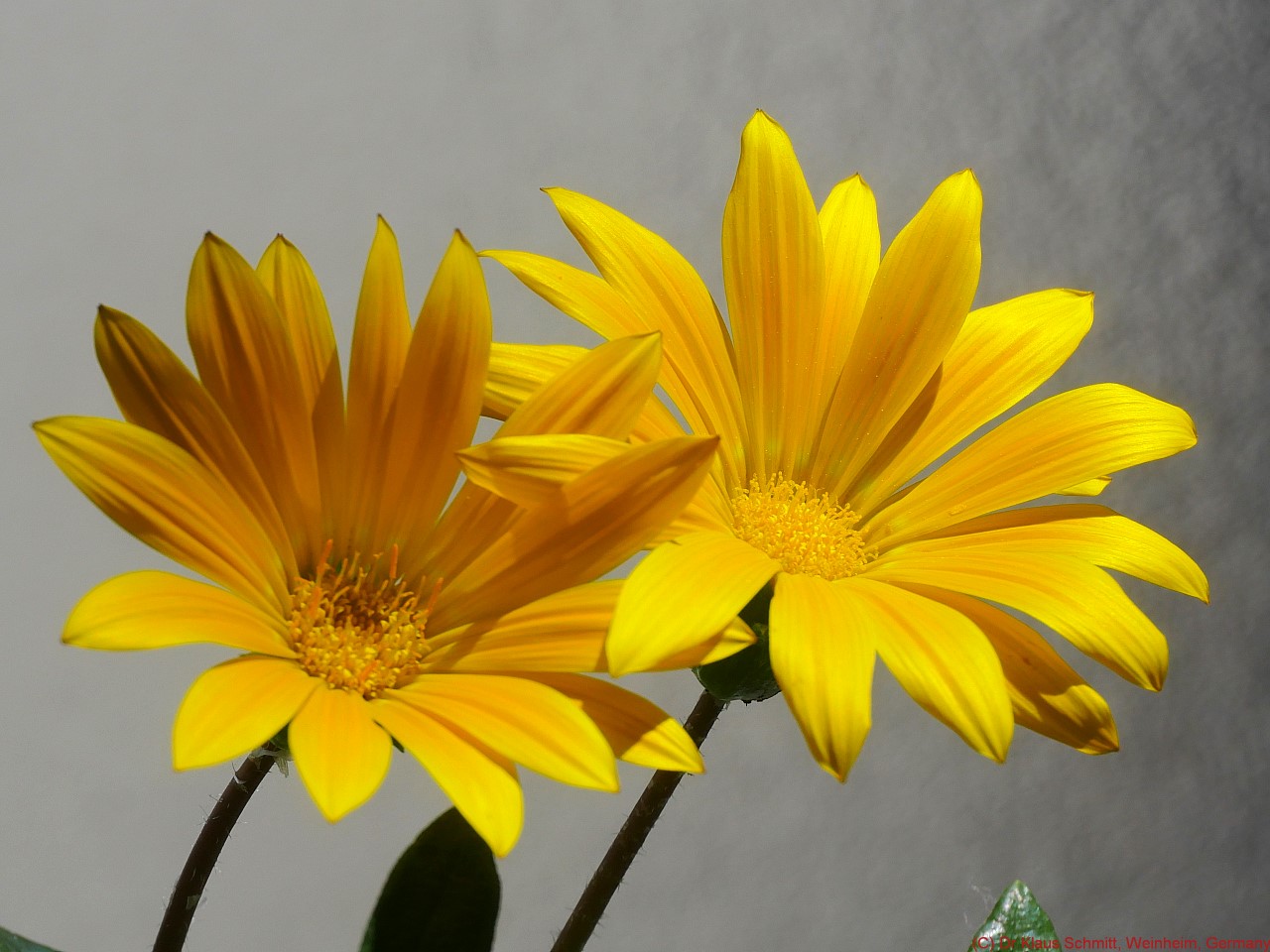
Treasury flower - Gazania rigens in reflected ultraviolet photography and simulated butterfly and new bee vision II

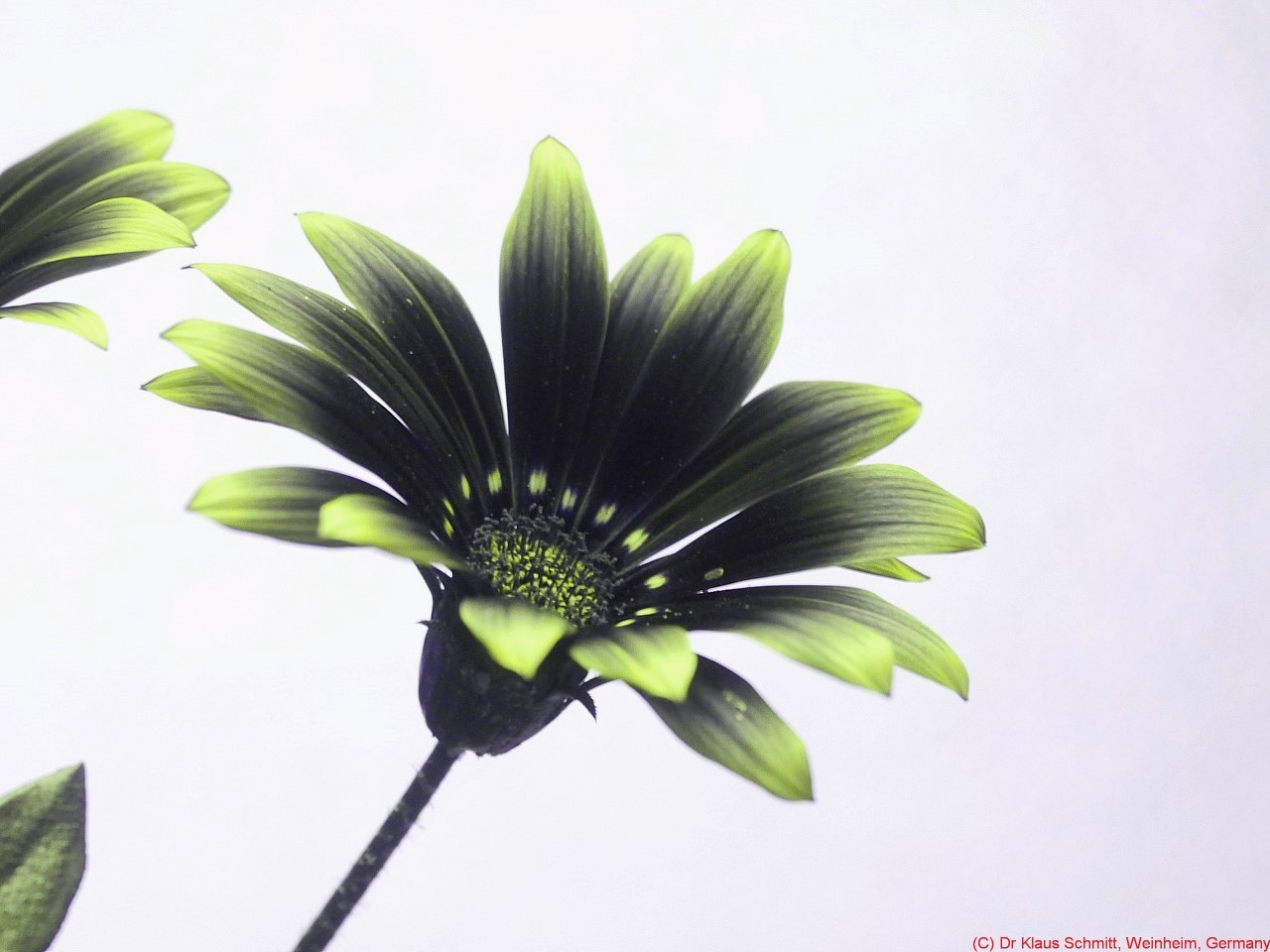
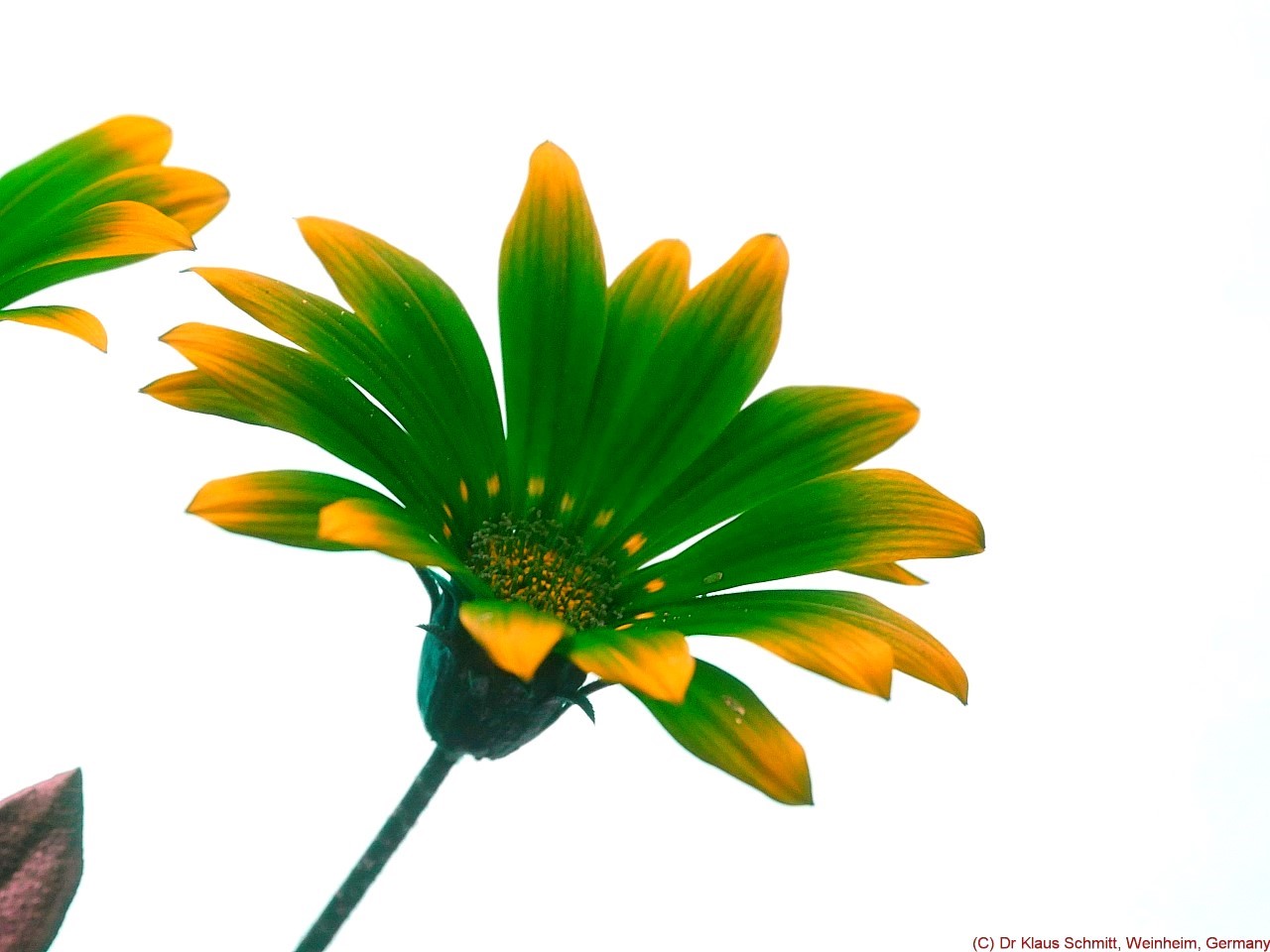
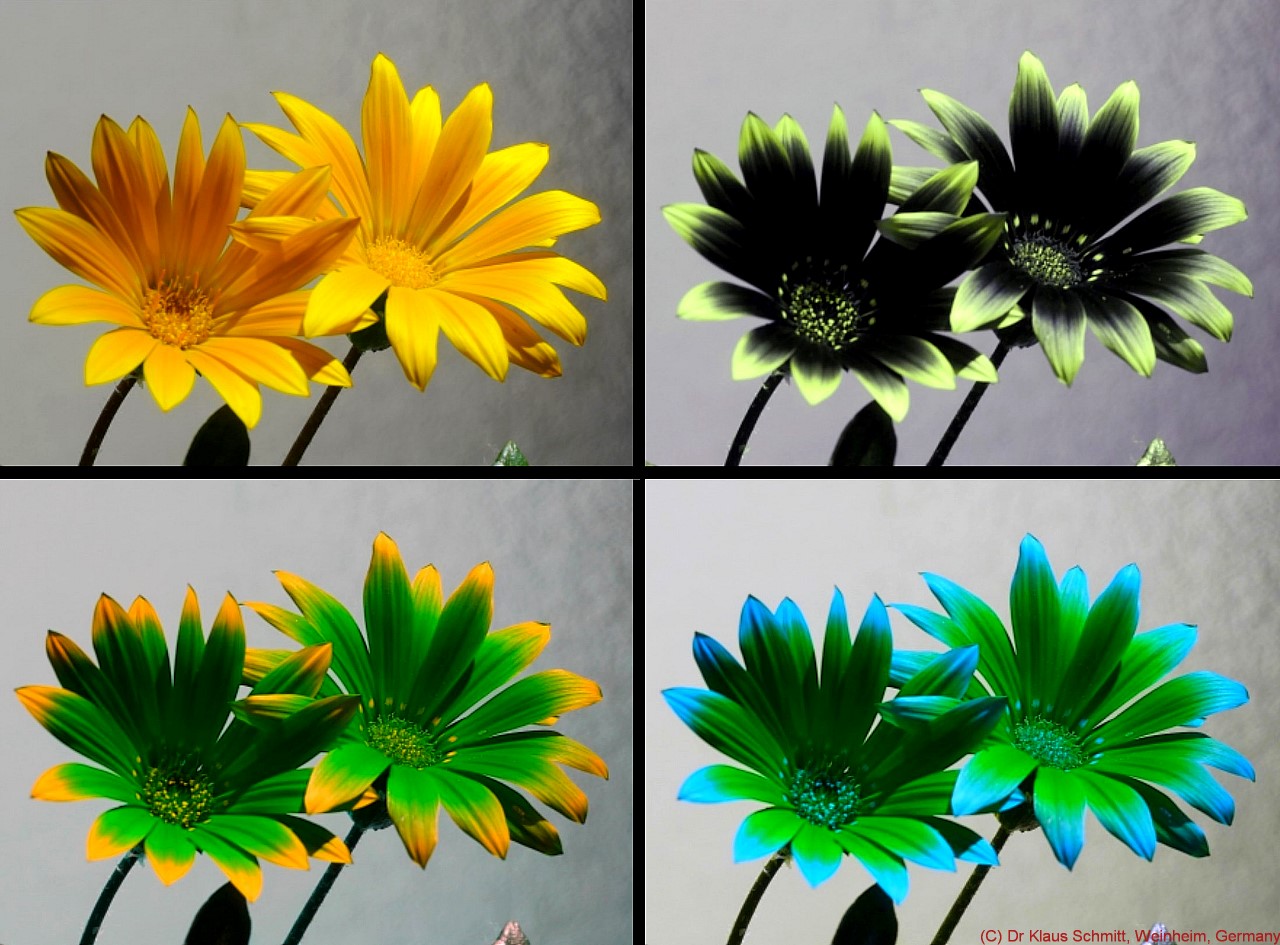
Today in 2020 more outdoor shots of that long blooming yelow Gazania flower, the Treasury flower - Gazania rigens shot in reflected ultraviolet photography, simulated bee and butterfly vision. But now also about a new way of showing the reflected UV in a different, new color scheme. All shots were done at f8 in reflected ultraviolet photography using my "work horse" UV filter, the Baader-U filter, as well as my XBV filters for simulated bee and butterfly vision. Lens was a UV-Nikkor 105mm quartz fluorite lens. Light source was sunlight.

[click on image to see a larger one]

Human vision:
 

Reflected UV:
 

Simulated butterfly vision:
 

Simulated bee vision (new version):
 

Quadriptych of human vision, UV, simulated butterfly and new bee vision (left to right, top to bottom):
 

This Gazania's outer petals strongly reflect UV around 365nm, whereas the inner petal parts are quite darker, hence forming UV nectar guides for UV seeing insects. There are also some highly UV reflecting marks inside around a dark UV center, all invisible to us humans, but clearly visible to bees and butterflies, and all this gets nicely visible here, also in simulated butterfly and the new bee vision.

I have written about this Gazania previously HERE
 
Stay tuned, more will follow on that fascinating subject...

More info on this very interesting field may be found on my site http://www.pbase.com/kds315/uv_photos
Treasury flower - Gazania rigens in reflected ultraviolet photography and simulated butterfly and new bee vision

Today in 2020 more outdoor shots of that long blooming yelow Gazania flower, the Treasury flower - Gazania rigens shot in reflected ultraviolet photography, simulated bee and butterfly vision. But now also about a new way of showing the reflected UV in a different, new color scheme. All shots were done at f8 in reflected ultraviolet photography using my "work horse" UV filter, the Baader-U filter, as well as my XBV filters for simulated bee and butterfly vision. Lens was a UV-Nikkor 105mm quartz fluorite lens. Light source was sunlight.

[click on image to see a larger one]

Human vision:
 

Reflected UV:
 

Simulated butterfly vision:
 

Simulated bee vision (new version):
 

Quadriptych of human vision, UV, simulated butterfly and new bee vision (left to right, top to bottom):
 

This Gazania's outer petals strongly reflect UV around 365nm, whereas the inner petal parts are quite darker, hence forming UV nectar guides for UV seeing insects. There are also some highly UV reflecting marks inside around a dark UV center, all invisible to us humans, but clearly visible to bees and butterflies, and all this gets nicely visible here, also in simulated butterfly and the new bee vision.

I have written about this Gazania previously HERE
 
Stay tuned, more will follow on that fascinating subject...

More info on this very interesting field may be found on my site http://www.pbase.com/kds315/uv_photos