Thursday, March 6, 2014

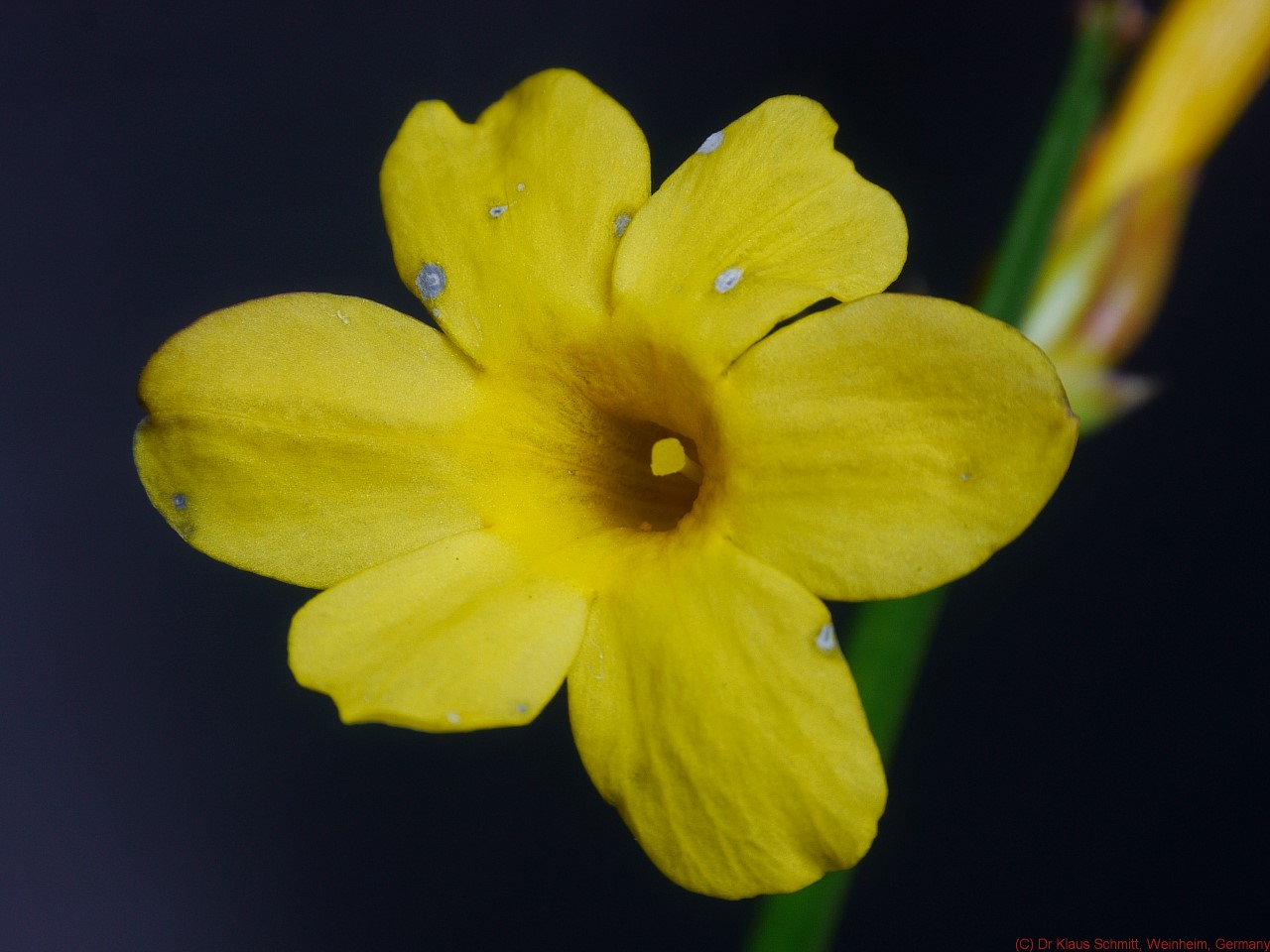
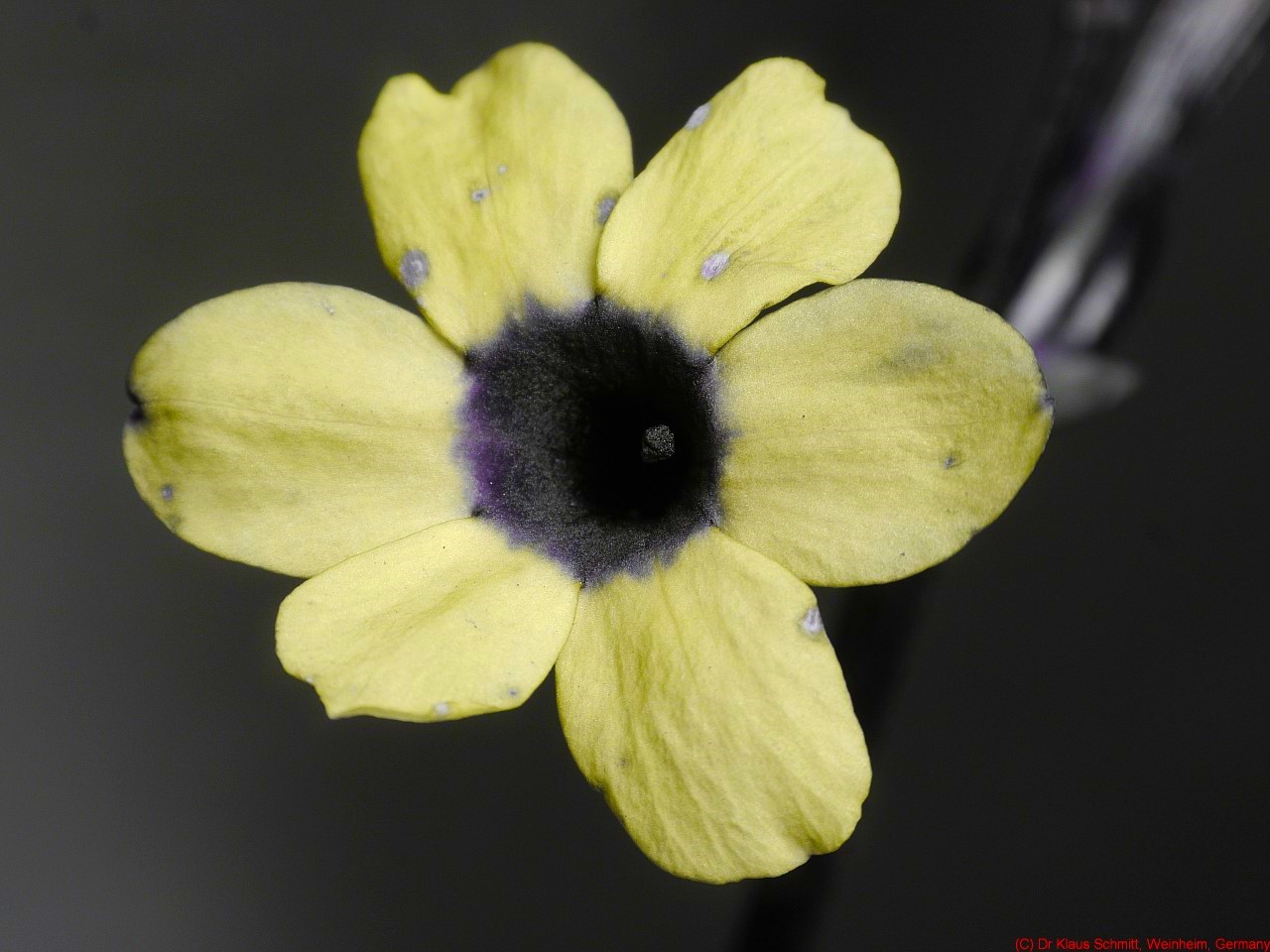
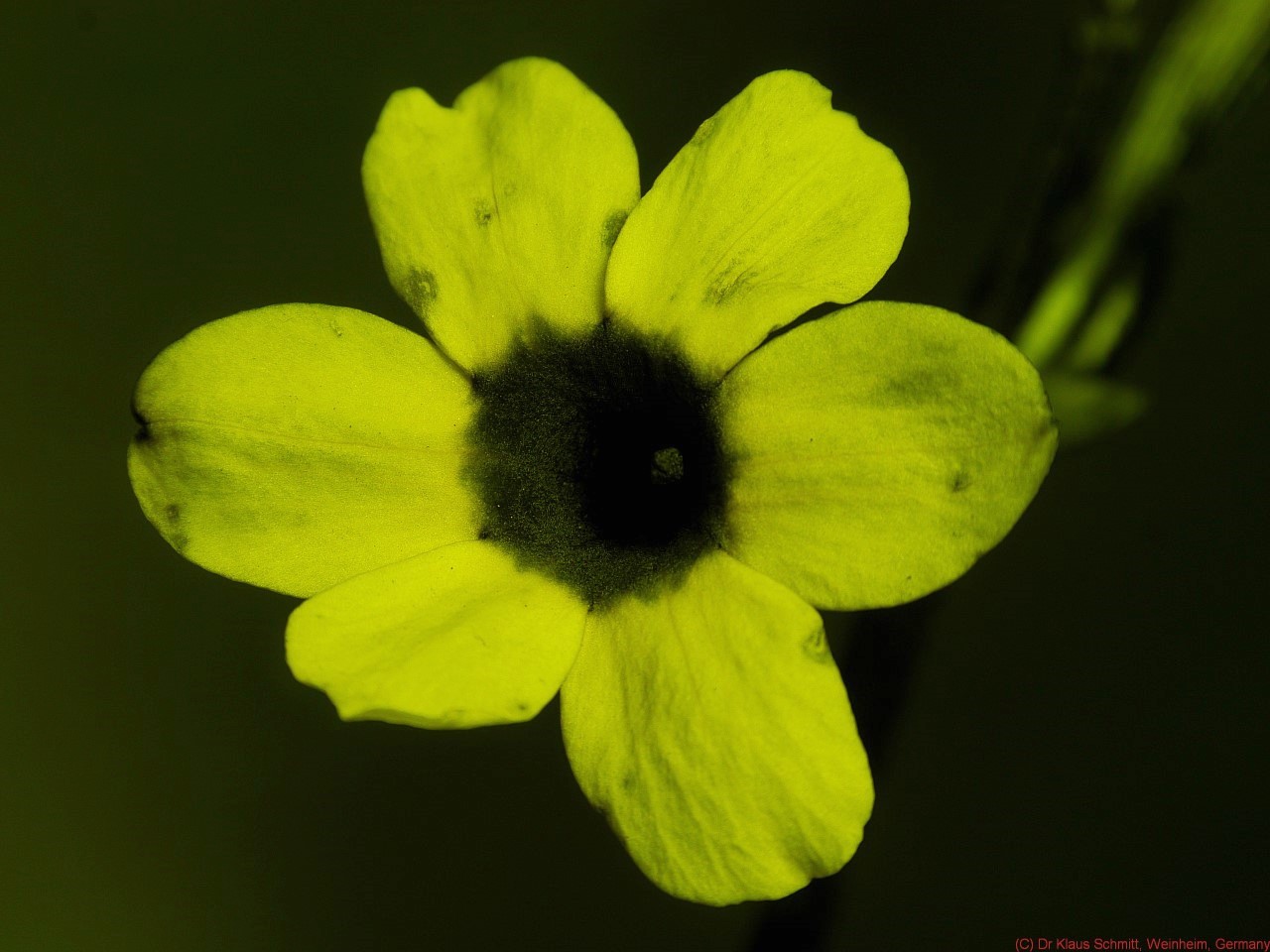
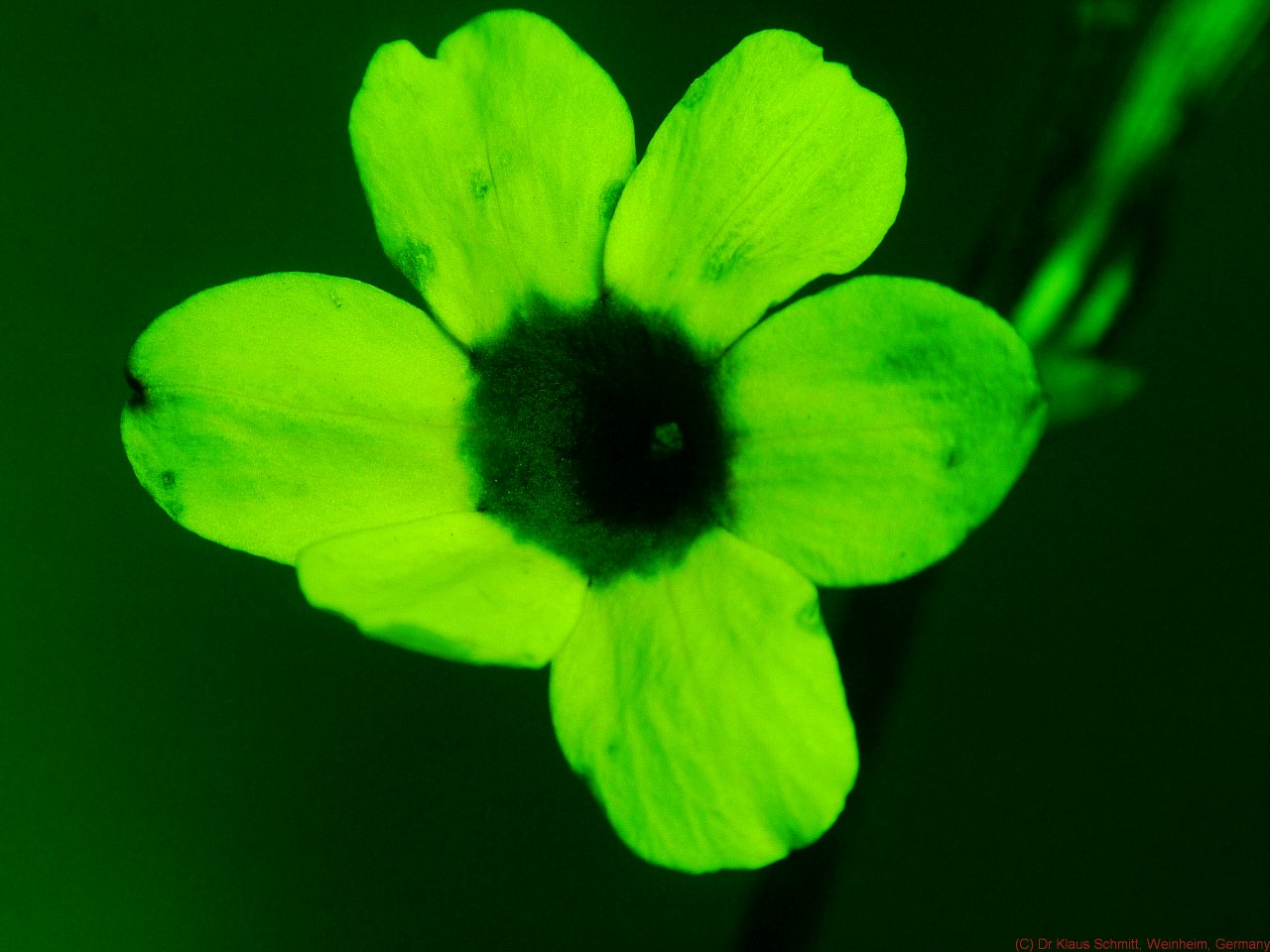
Spring Flowers 2014: Ranunculus ficaria - Lesser Celandine - 80mm Quartz Fluorite lens for reflected ultraviolet photography

Here today studio shots of the well known Ranunculus ficaria - Lesser Celandine early spring flower. Shots were done aside from visible photography in reflected ultraviolet using Baader-U filter and in simulated bee vision using my XBV6 filter. Lens used my X80QF f3.2 / 80mm Quartz Fluorite lens. Light source was a modified Xenon flash. All shots were done at approx. f11.

[click on image to see a larger one]

Visible light image:  

UV image using Baader-U filter (approx. 320-395nm, effective peak approx. 375nm):  

Simulated bee vision image using experimental XBV filter:  

Triptych of the above images:  


This Lesser Celandine flower has a well known bulls-eye UV pattern, its center is UV dark, whereas its petals strongly reflect around 365nm. The X80QF quartz fluorite lens is reproducing this quite well and all that gets nicely visible.

In situ shots of this flower are HERE.

Stay tuned, more will follow on that fascinating subject...

Saturday, March 1, 2014

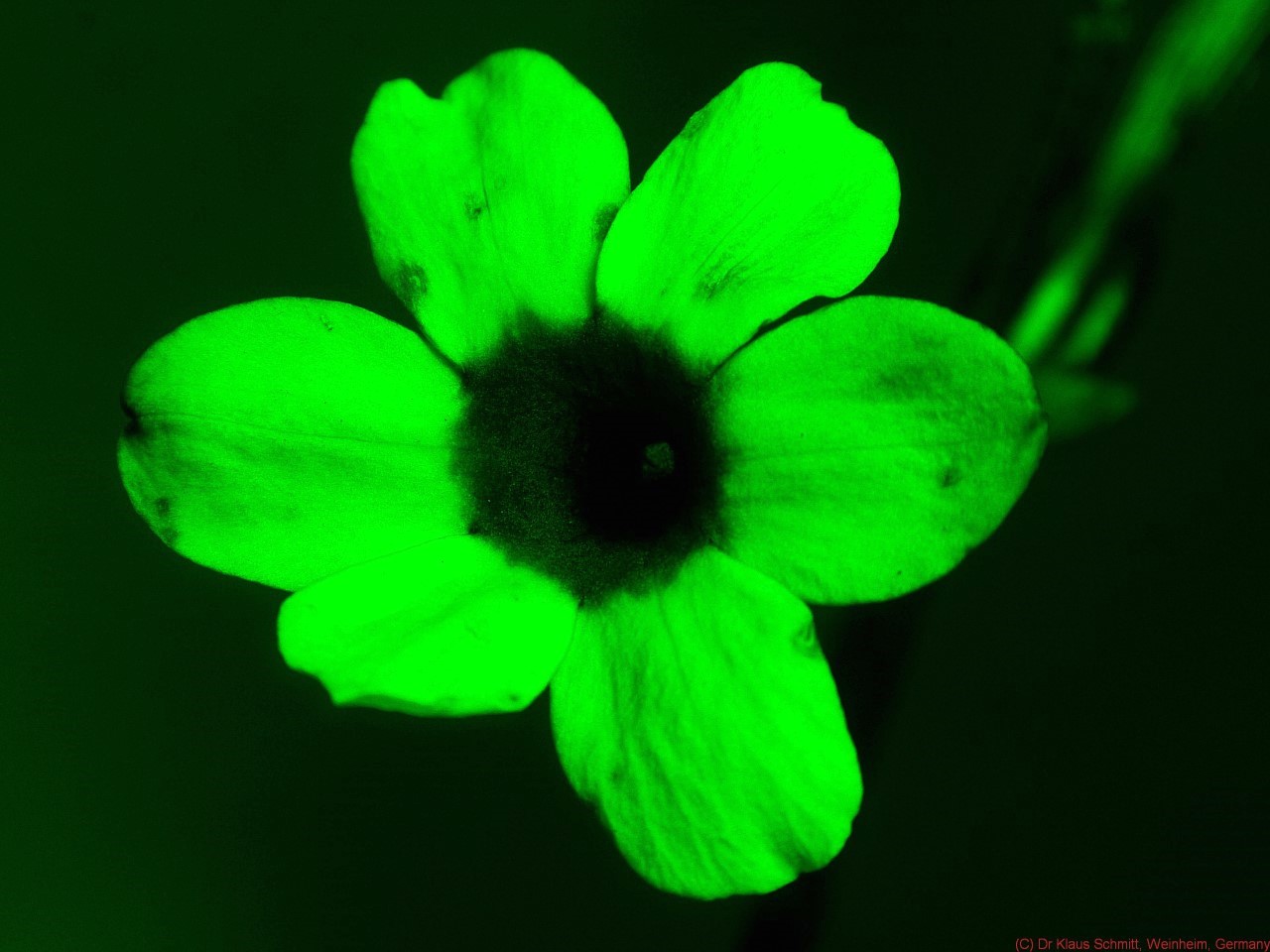
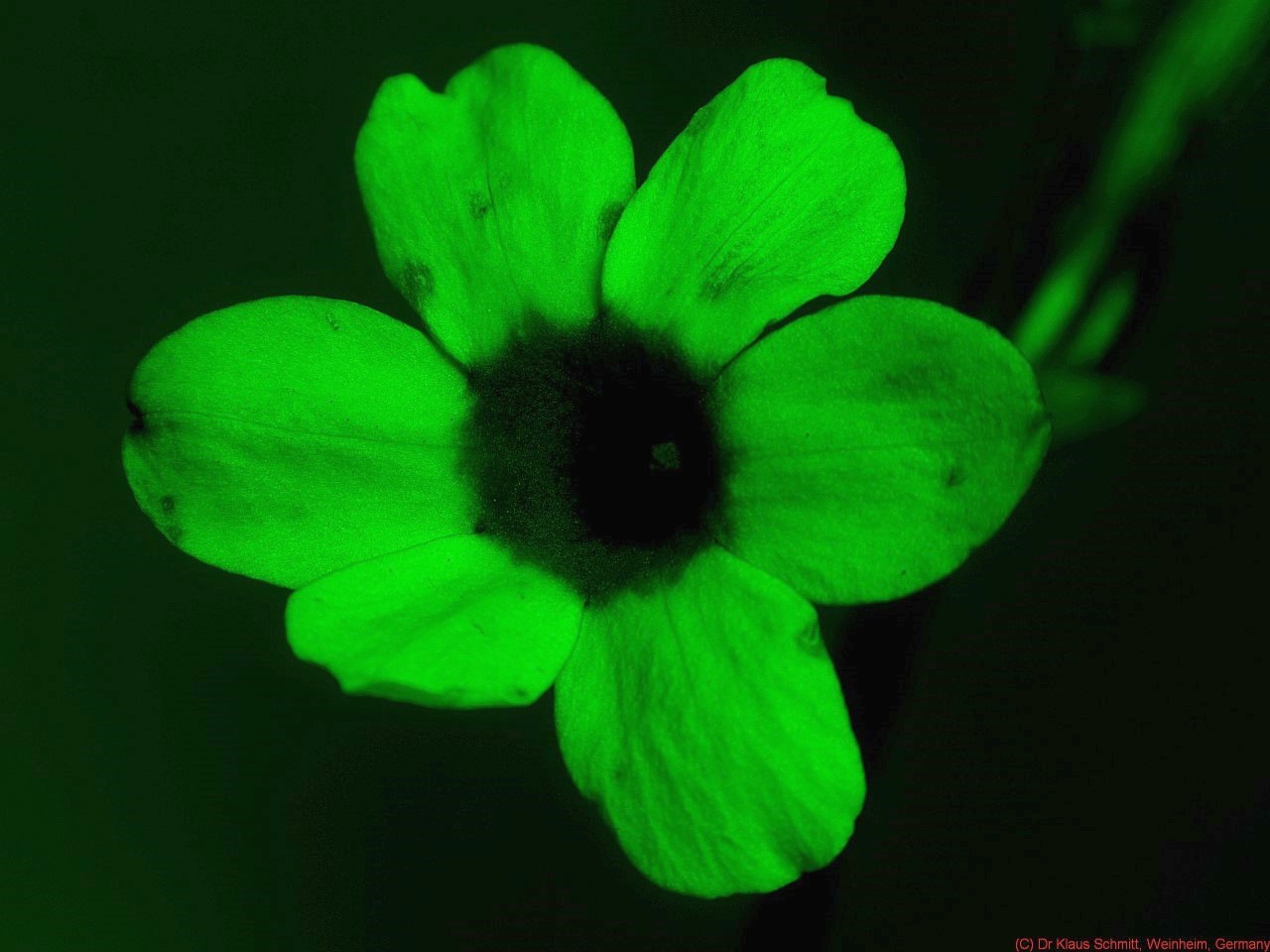
Winter Jasmine - Jasminum nudiflorum using X80QF for deep UV reflected ultraviolet photography

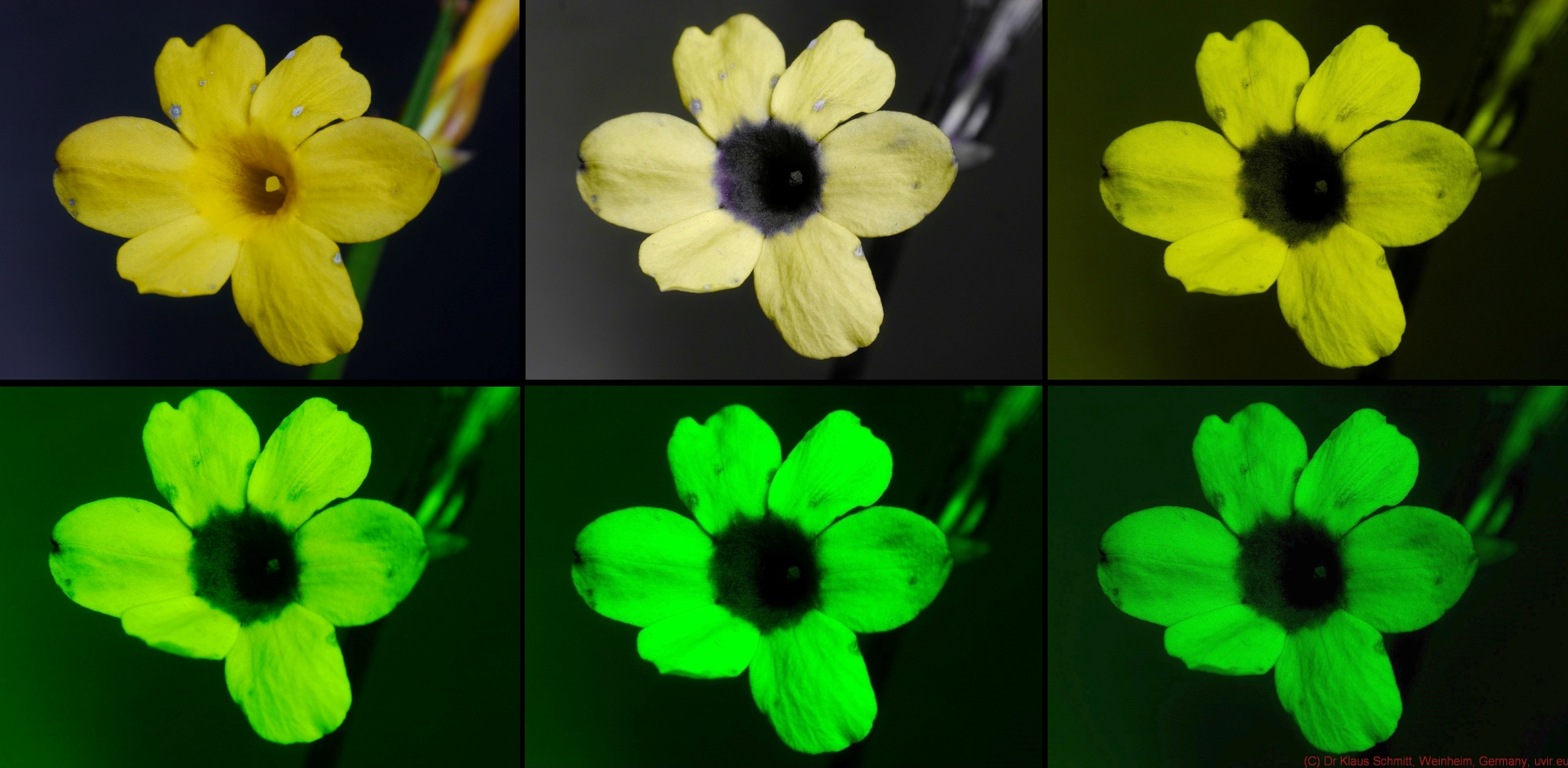
Today deep UV shots of that decorative winter flower Winter Jasmine - Jasminum nudiflorum in reflected ultraviolet using Baader-U filter as well as several UV only transmitting narrowband filters. Lens used was my X80QF f3.2 / 80mm quartz flourite lens. Light source was a modified Xenon flash. All shots were done at f11.

[click on image to see a larger one]

Visible light image:  

UV image using Baader-U filter (approx. 320-395nm, effective peak approx. 375nm):  

UV image using Jupiter-U filter (approx. 280-385nm, effective peak approx. 365nm):  

UV image using Saturn-U filter (approx. 300-350nm, effective peak approx. 325nm):  

UV image using Uranus-U filter (approx. 300-325nm, effective peak approx. 313nm):  

UV image using Neptun-U filter (approx. 290-330nm, effective peak approx. 310nm):  

Hexaptych of the above images:  


This attractive winter flower shows its very specific UV pattern, this time down to 300nm and beyond. Its center is UV dark, but its petals are strong UV reflective around 365nm, ie. UV bright, both invisible to us humans. The X80QF apo quartz fluorite lens makes all that nicely visible.


Stay tuned, more will follow on that fascinating subject...

X80QF - a made to order f3.2/80mm apo lens for reflected ultraviolet, visible, infrared and multispectral photography

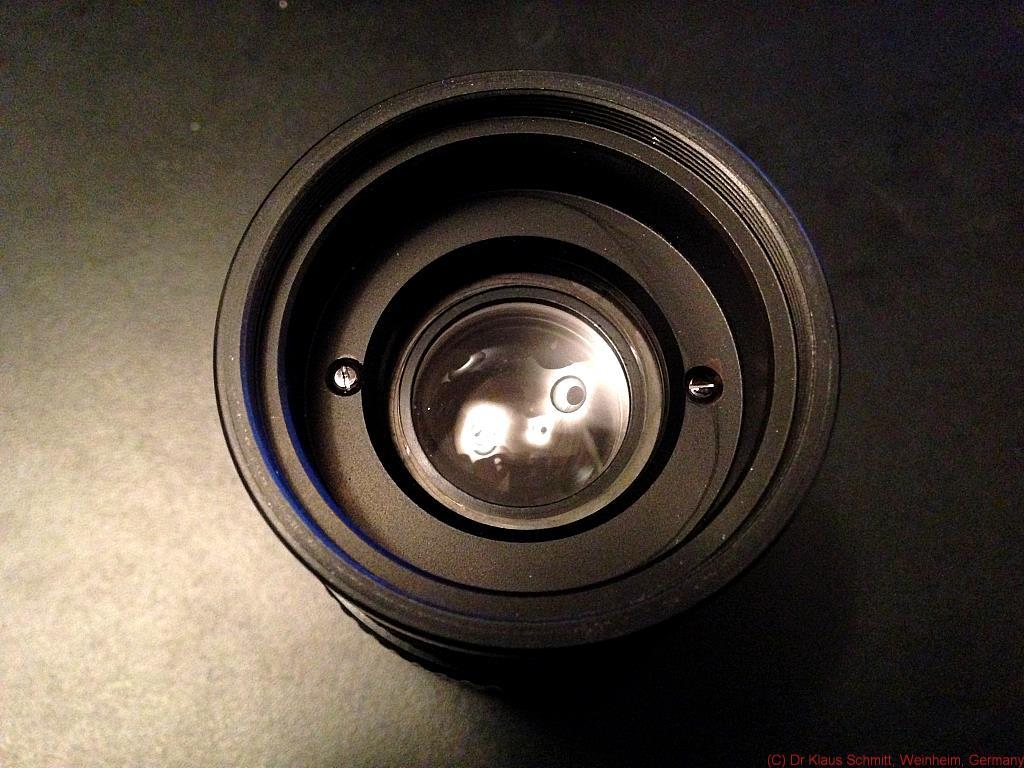
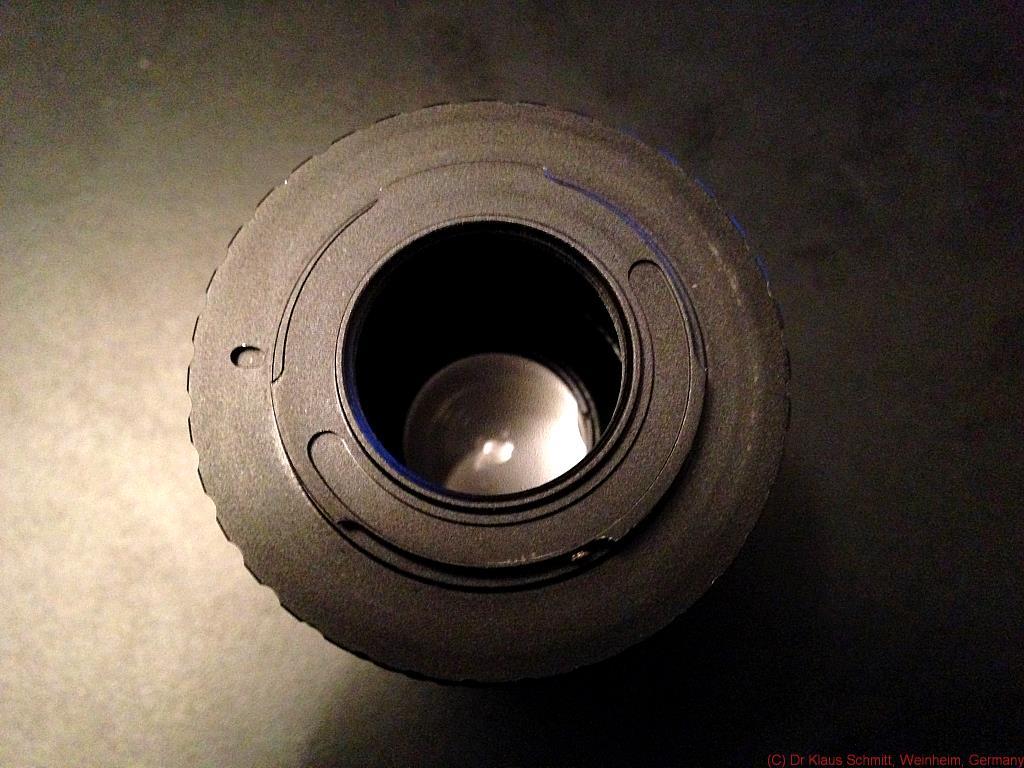
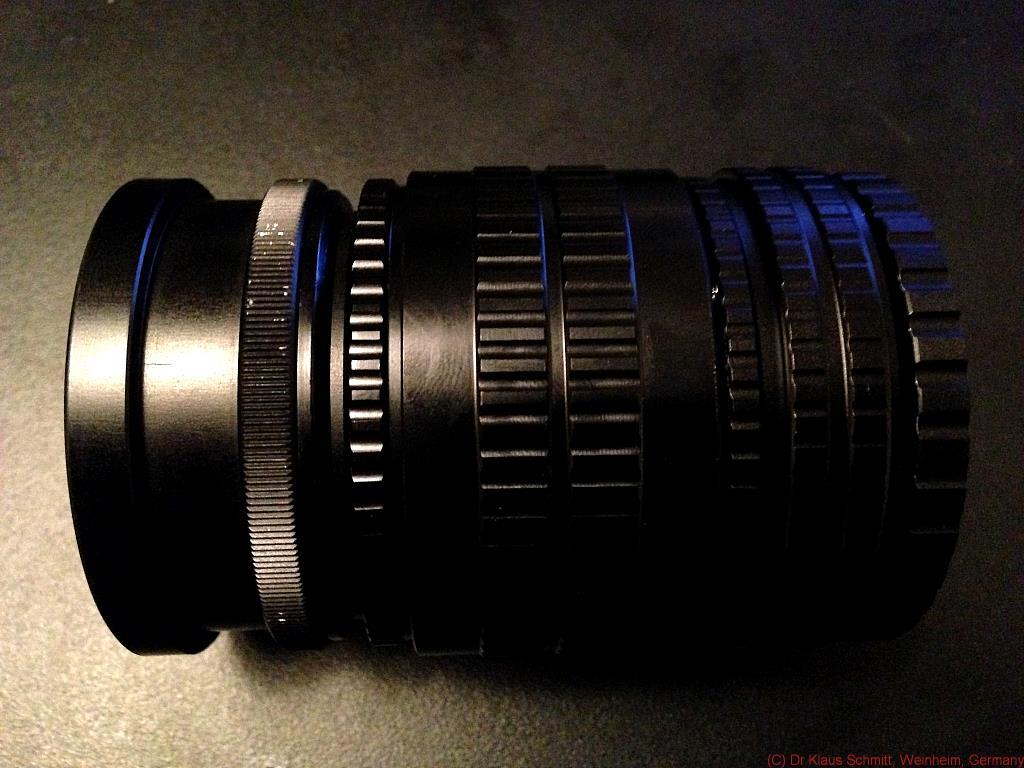
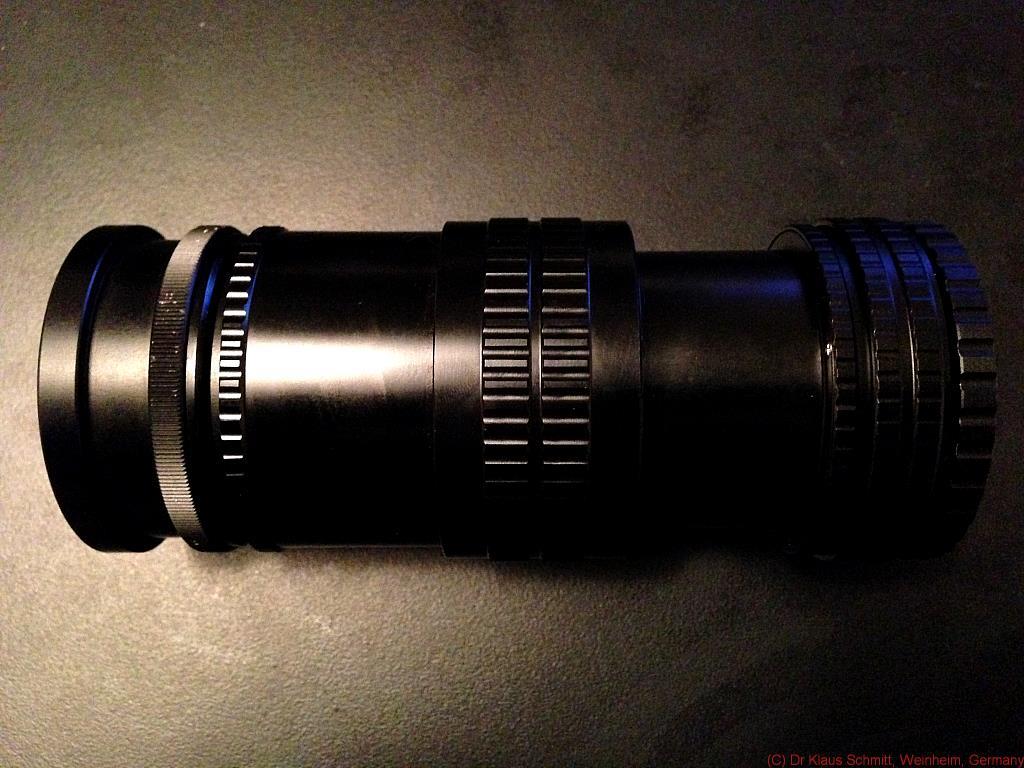
Today I will officially introduce my X80QF f3.2 / 80mm apo lens. I have previously shown here and here results using a prototype lens. This is a lens made to order in very limited quantity, camera mounts available are basically all DSLR and mirrorless camera types up to APS-C sensor format (FF needs optical modification, on request).

Apochromatic Quartz Fluorite lens system specs:
Lens data: f3.2 / 80mm
Useful spectral range: 200 - 1200nm (and beyond)
Focusing helicoid: infinity - macro (range as per request)
Mount: M42, on request: Nikon, Canon, Pentax, m4/3, Sony E
Aperture: variable, declicked f3.2 - f64 (click in on request)
Aperture calibration: on request, F-stops or T-stops
Weight: 290 grams (0.29 kg) in M42 mount version
Filter thread mount: 52mm standard

[click on image to see a larger one]

Lens front - open aperture, 52mm filter mount:

Lens rear - open aperture, micro 4/3 mount version:

Lens focusing helicoid infinity position, retracted:

Lens focusing helicoid macro position, extended:

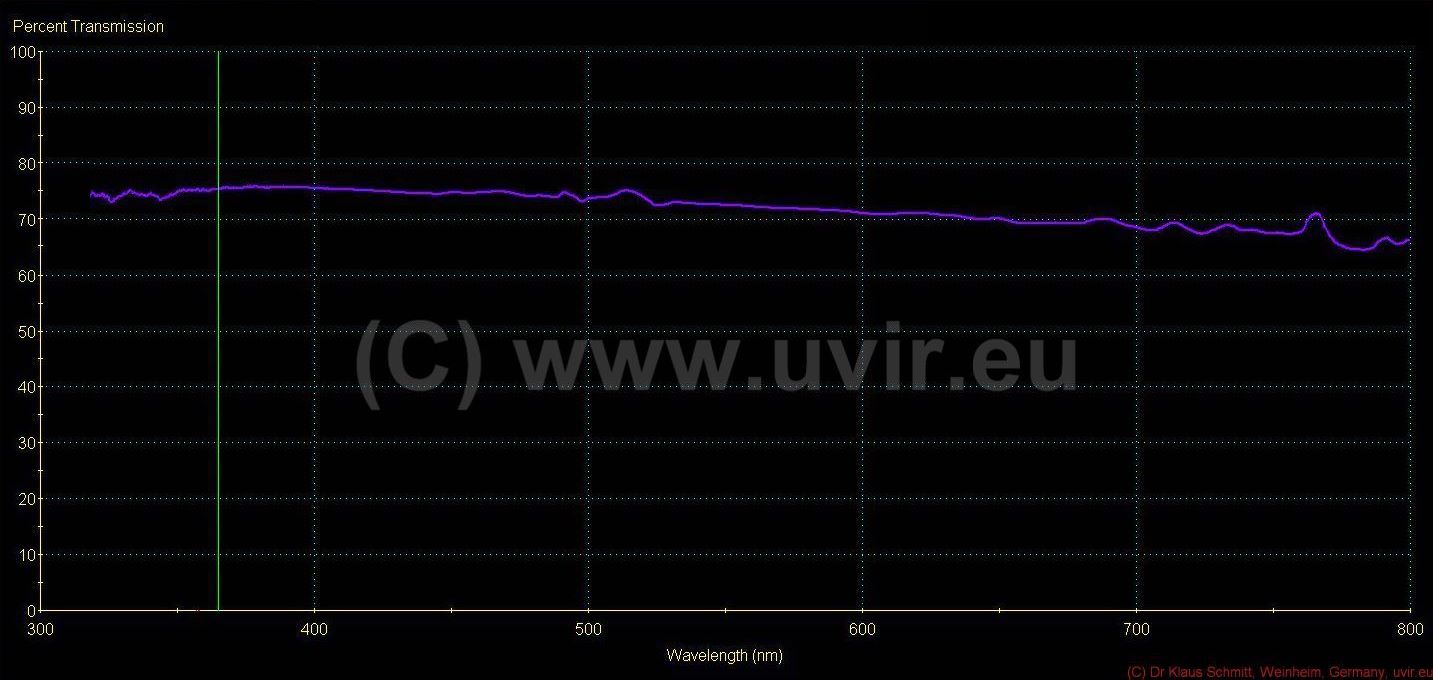
Spectral transmission (310-400nm: >75%, 400-800nm: >65%)

(Btw. there was a decline in transmission below some 310nm, caused by my current measurement setup, not the lens, which should transmit flat to 200nm, as it consists only of pure fused silica and calcium fluorite. I have therefore removed that part until I have more reliable data to show ...)

The following sample shots were done aside from visible photography in reflected ultraviolet using Baader-U filter and in sim. bee vision using my XBV6 filter. Light source was sun or a modified Xenon flash. All shots were done at f8 - f11.

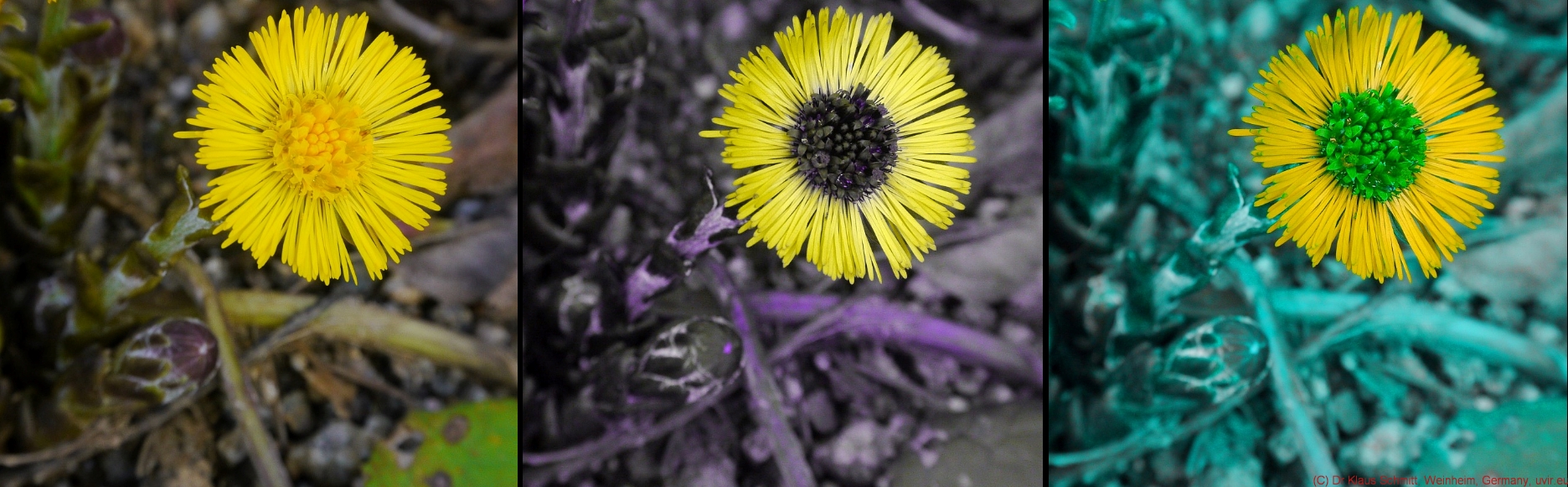
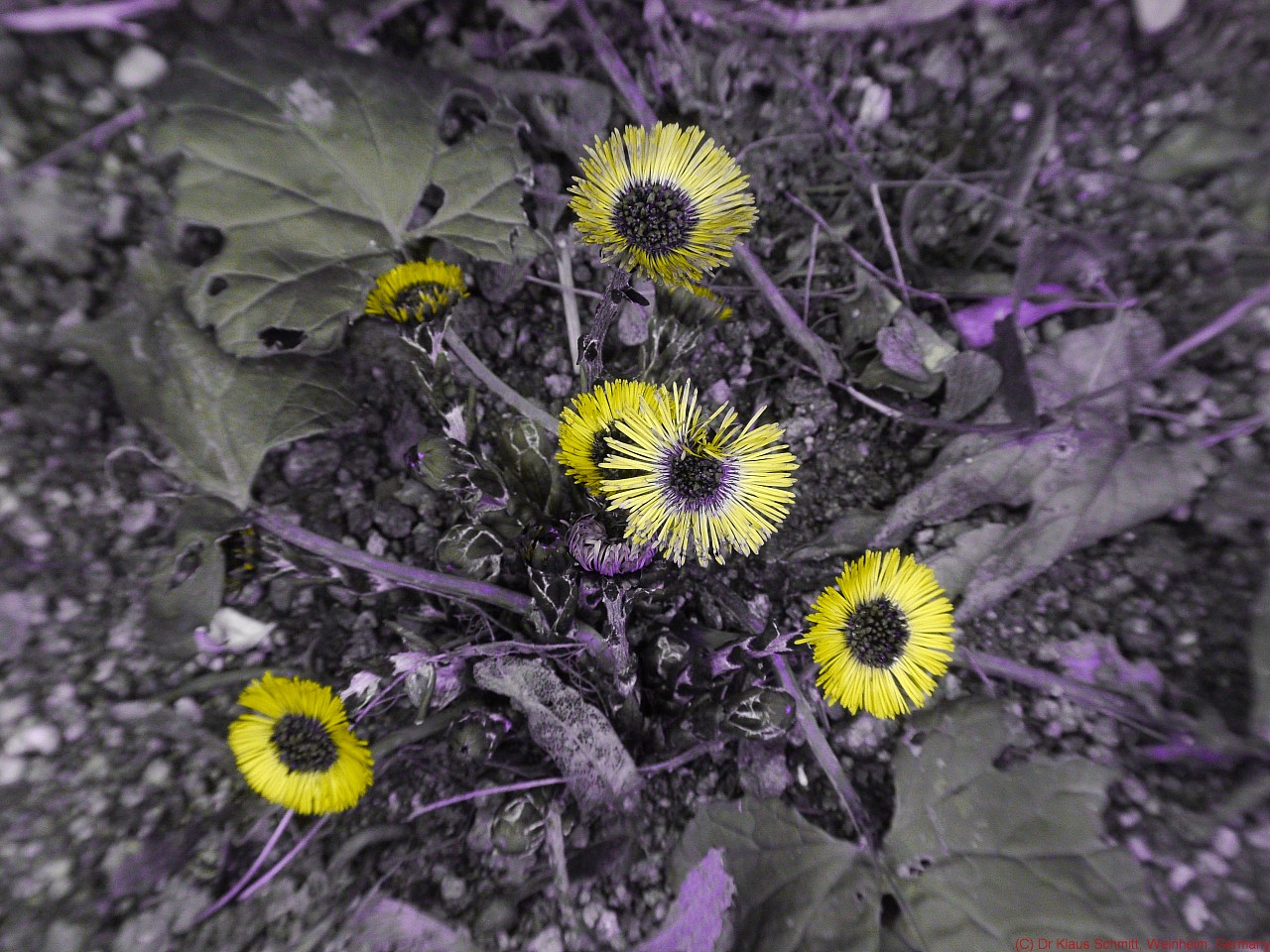
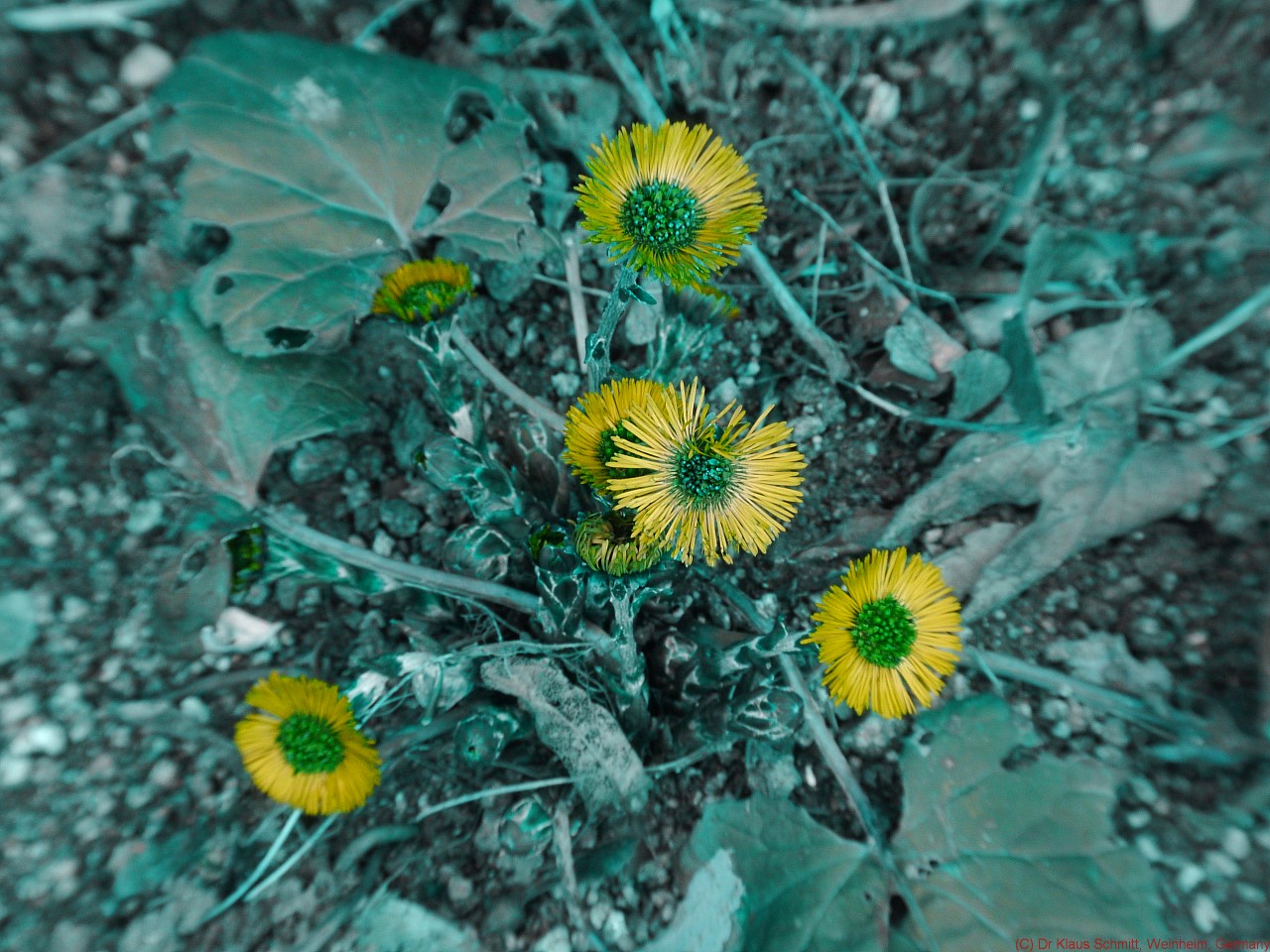
Triptych of Tussilago (in situ, light source sun), visible, reflected UV using Baader-U filter, sim. bee vision using XBV filter (left to right):  

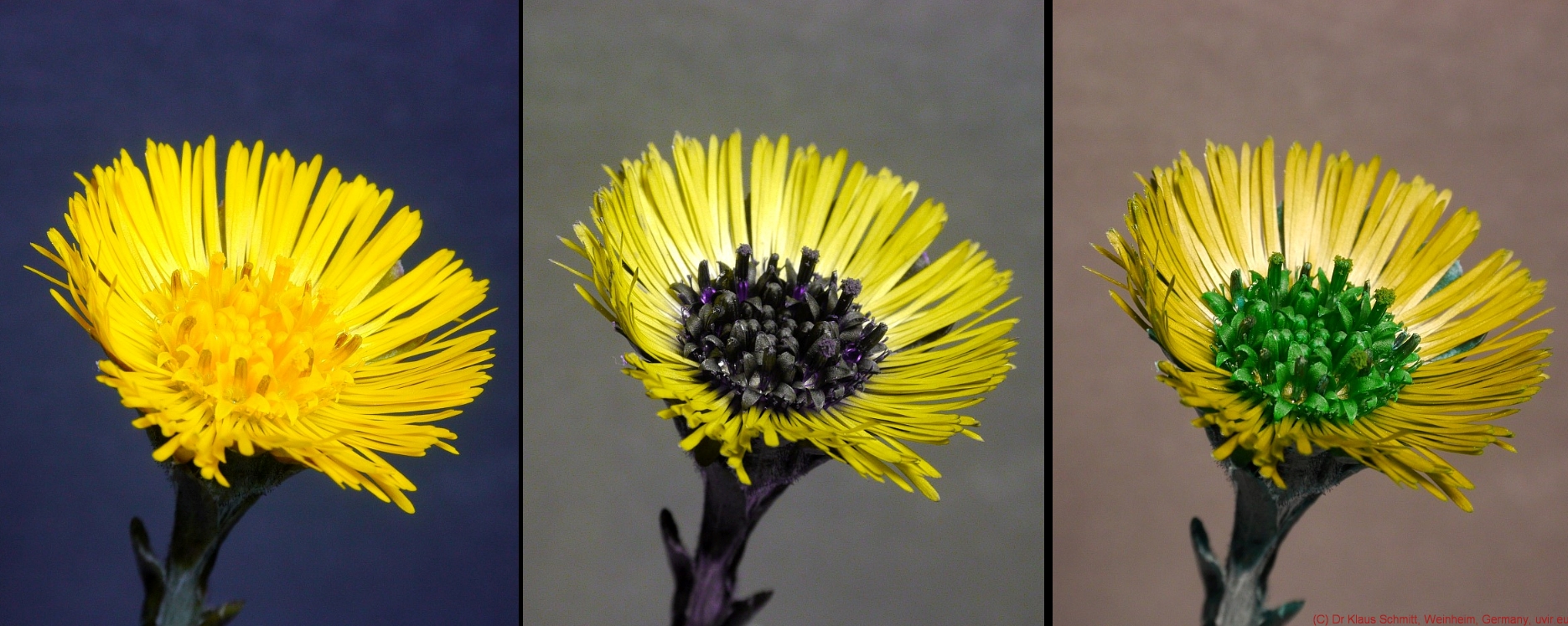
Triptych of Tussilago (lab, light source Xenon), visible, reflected UV using Baader-U filter, sim. bee vision using XBV filter (left to right):  


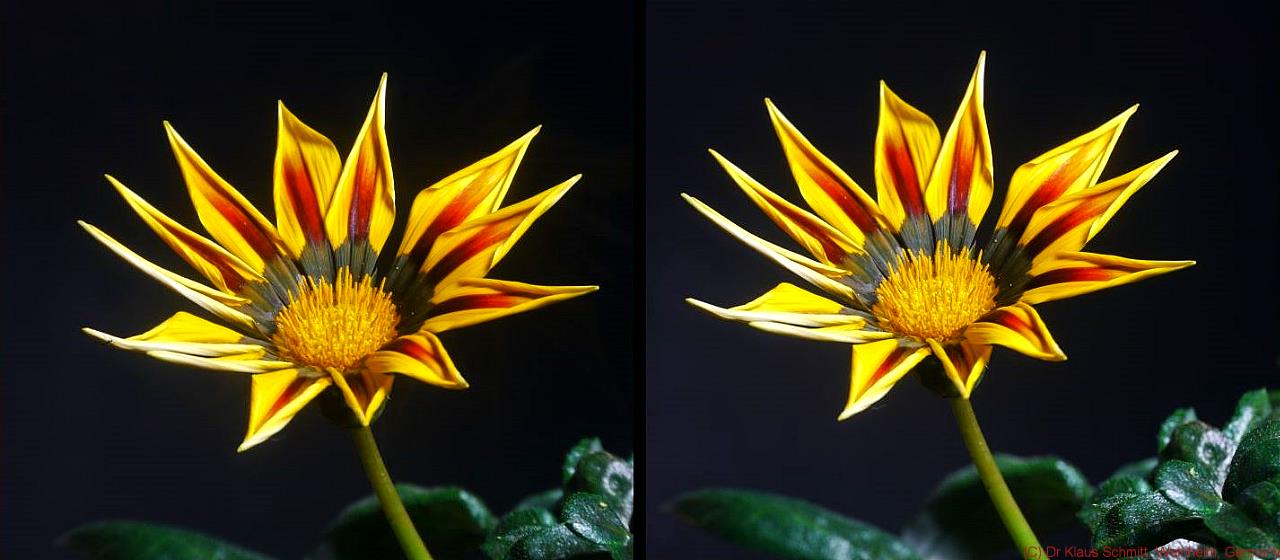
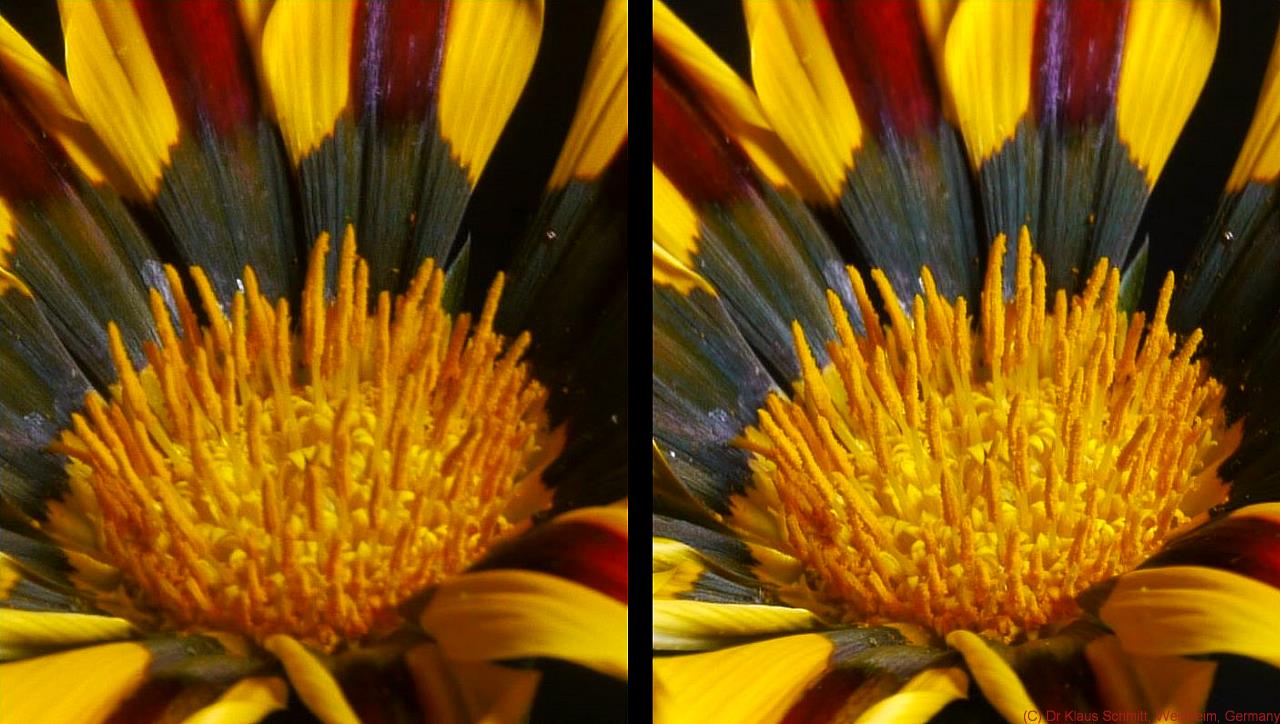
Diptych of Gazania (lab, light source Xenon) Visual image using UV/IR Cut filter - X80QF (left), Cerco 94mm (right):


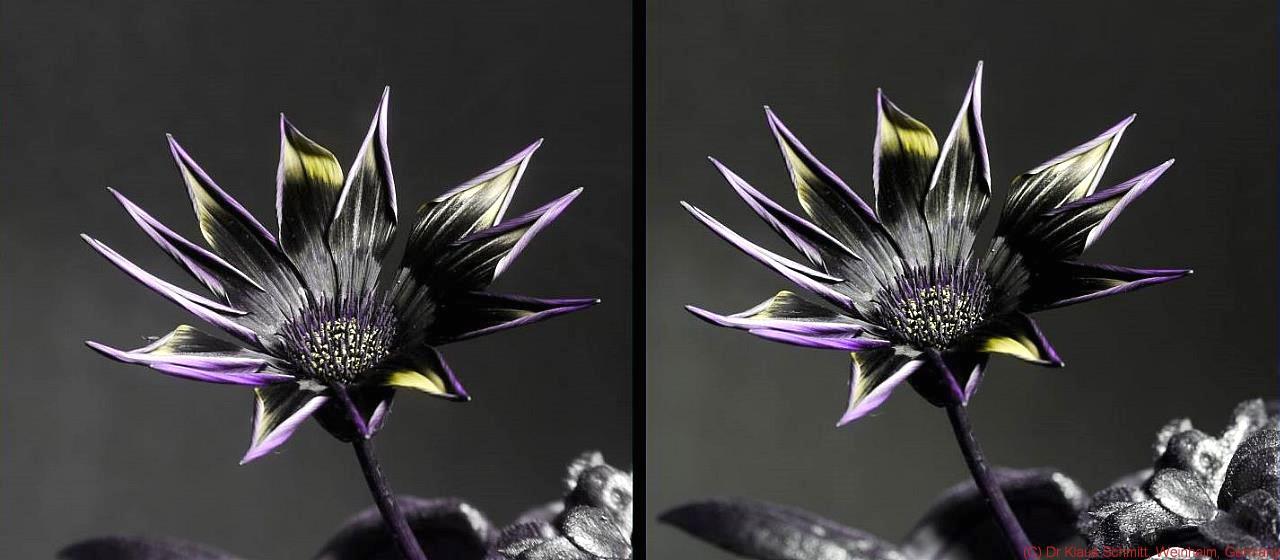
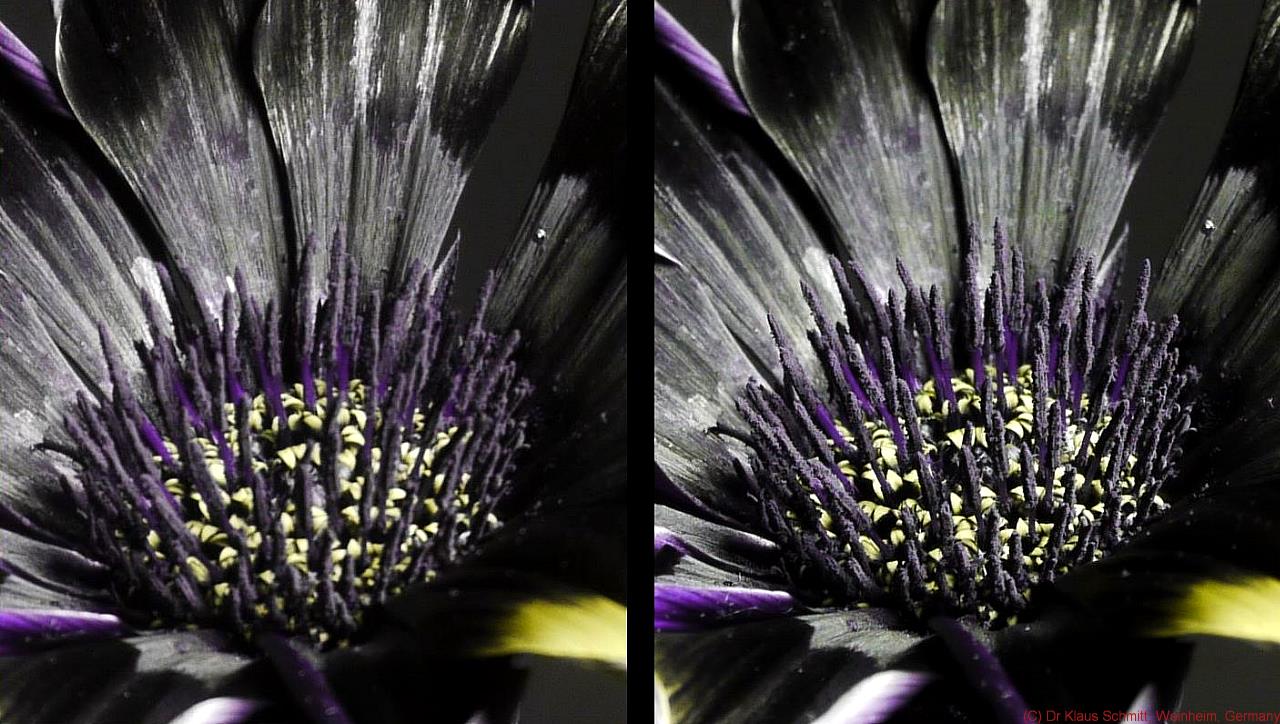
Diptych of Gazania (lab, light source Xenon) reflected UV image using Baader-U filter - X80QF (left), Cerco 94mm (right):


Diptych of Gazania Detail (lab, light source Xenon) Visual image using UV/IR Cut filter - X80QF (left), Cerco 94mm (right):


Diptych of Gazania detail (lab, light source Xenon) reflected UV image using Baader-U filter - X80QF (left), Cerco 94mm (right):


This X80QF lens is meant as a tool for the ambitioned amateur or researcher on a budget, who cannot allow to be restricted to the shortcomings of a lens based on optical glass, limited to around 350nm cut off (some very special ones reach a bit lower), but need a flat transmitting lens down to 300nm or even beyond that. It certainly should not be compared to such very pricey high performing quartz fluorite lenses such as the Coastal Optical Systems 60mm or 105mm Apo, the CERCO 94mm, the UV-Nikkor 105mm, the Pentax Ultra Achromatic 85mm or the Zeiss UV-Sonnar 105mm. It cannot reach those in terms of sharpness or contrast wide open, but stopped down to the usual working apertures f8 - f11, it delivers as shown acceptable sharp and useful VIS, UV, IR or multispectral images with acceptable contrast and very little focus shift for a reasonable price.

I will make only very of those, so should there be interest to purchase such a lens: Inquiries are welcome using my email on the top right corner of this site.

>>> THIS LENS IS NO LONGER AVAILABLE AS THE NEEDED LENS ELEMENTS ARE DEPLETED <<<


Stay tuned, more will follow on that fascinating subject...

Sunday, February 23, 2014

Spring Flowers 2014: Tussilago farfara - Coltsfoot - 80mm Quartz Fluorite lens for reflected ultraviolet photography II

Here now more studio shots of that well known Tussilago farfara - Coltsfoot early spring flower. Shots were done aside from visible photography in reflected ultraviolet using Baader-U filter and in simulated bee vision using my XBV6 filter. Lens used was my X80QF f3.2 / 80mm Quartz Fluorite lens. Light source was a modified Xenon flash. All shots were done at approx. f8.

[click on image to see a larger one]

Visible light image:  

UV image using Baader-U filter (approx. 320-395nm, effective peak approx. 375nm):  

Simulated bee vision image using experimental XBV filter:  

Triptych of the above images:  


This Coltsfoot flower has a well known bulls-eye UV pattern, its center is UV dark, whereas its petals strongly reflect around 365nm. This older quartz fluorite lens is reproducing this quite well also in the studio and all that gets nicely visible.

There are "in situ" shots of that flower HERE.

Stay tuned, more will follow on that fascinating subject...
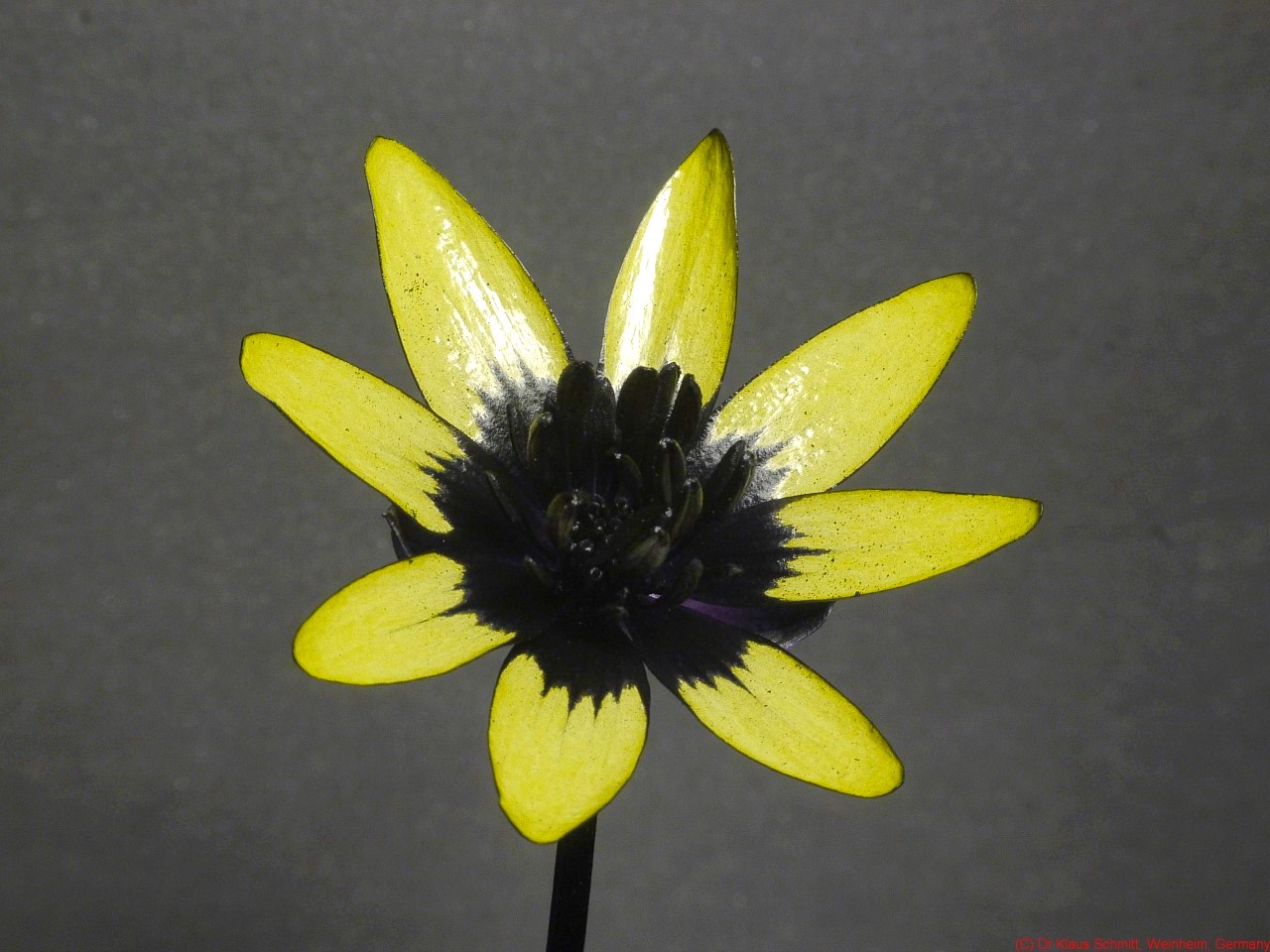
Spring Flowers 2014: Tussilago farfara - Coltsfoot - 80mm Quartz Fluorite lens for reflected ultraviolet photography

Well, spring finally seem to have arrived in Weinheim where I live, so here a few shots of some first spring flowers, the well known Tussilago farfara - Coltsfoot . Shots were done aside from visible photography in reflected ultraviolet using Baader-U filter and in simulated bee vision using my XBV6 filter. Lens used was my X80QF f3.2 / 80mm Quartz Fluorite lens. Light source was sun. All shots were done at approx. f8.

[click on image to see a larger one]

Visible light image:  

UV image using Baader-U filter (approx. 320-395nm, effective peak approx. 375nm):  

Simulated bee vision image using experimental XBV filter:  

And here shots of the whole plant:
Visible light image:  

UV image using Baader-U filter (approx. 320-395nm, effective peak approx. 375nm):  

Simulated bee vision image using experimental XBV filter:  


This Coltsfoot flower has a well known bulls-eye UV pattern, its center is UV dark, whereas its petals strongly reflect around 365nm, making it aan easy target for the first bees in spring. This older quartz fluorite lens is reproducing this quite well and all that gets nicely visible.

There is another thread with studio images of that flower HERE

Stay tuned, more will follow on that fascinating subject...

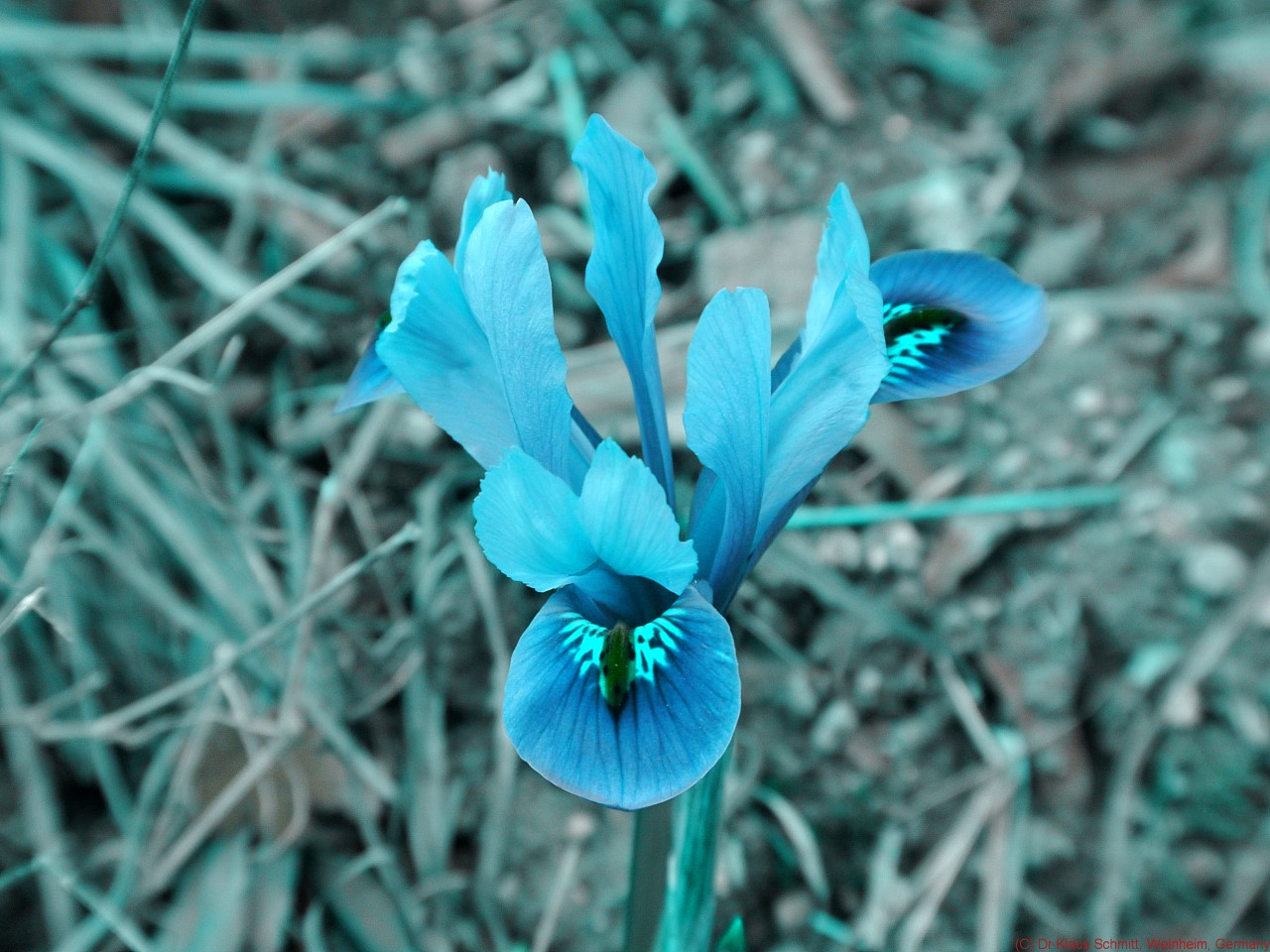
Spring Flowers 2014: Iris reticulata - 80mm Quartz Fluorite lens for reflected ultraviolet photography

Well, spring finally seem to have arrived in Weinheim where I live, so here a few shots of some first spring flowers, like that Iris reticulata . Shots were done aside from visible photography in reflected ultraviolet using Baader-U filter and in simulated bee vision using my XBV6 filter. Lens used was my X80QF f3.2 / 80mm Quartz Fluorite lens. Light source was sun. All shots were done at approx. f8.

[click on image to see a larger one]

Visible light image:  

UV image using Baader-U filter (approx. 320-395nm, effective peak approx. 375nm):  

Simulated bee vision image using experimental XBV filter:  


This iris has a UV pattern, its petal "lips" are UV dark, wheras the rest of the petals reflect stronger around 380nm. This older quartz fluorite lens is reproducing this quite well and all that gets nicely visible.


Stay tuned, more will follow on that fascinating subject...

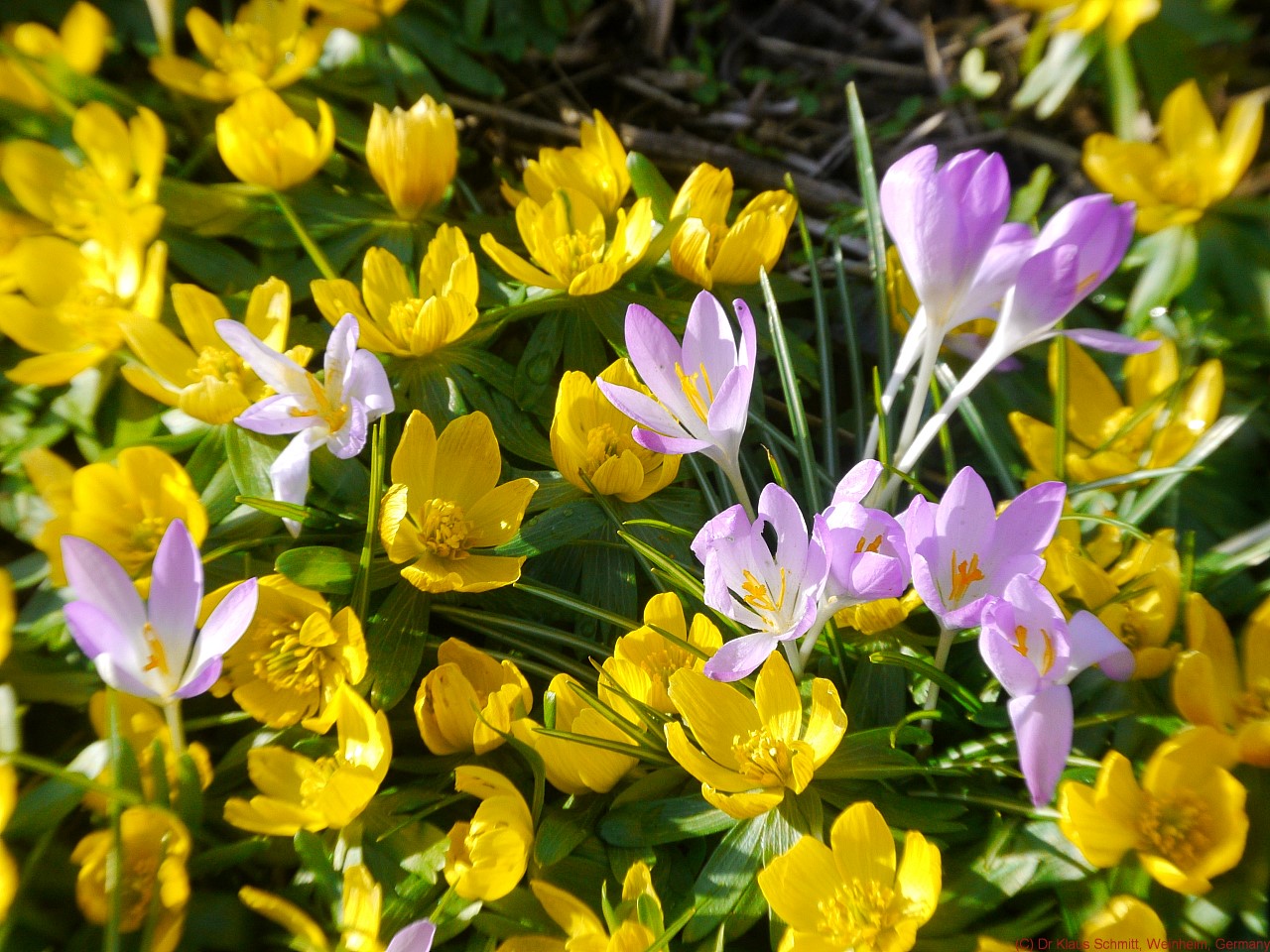
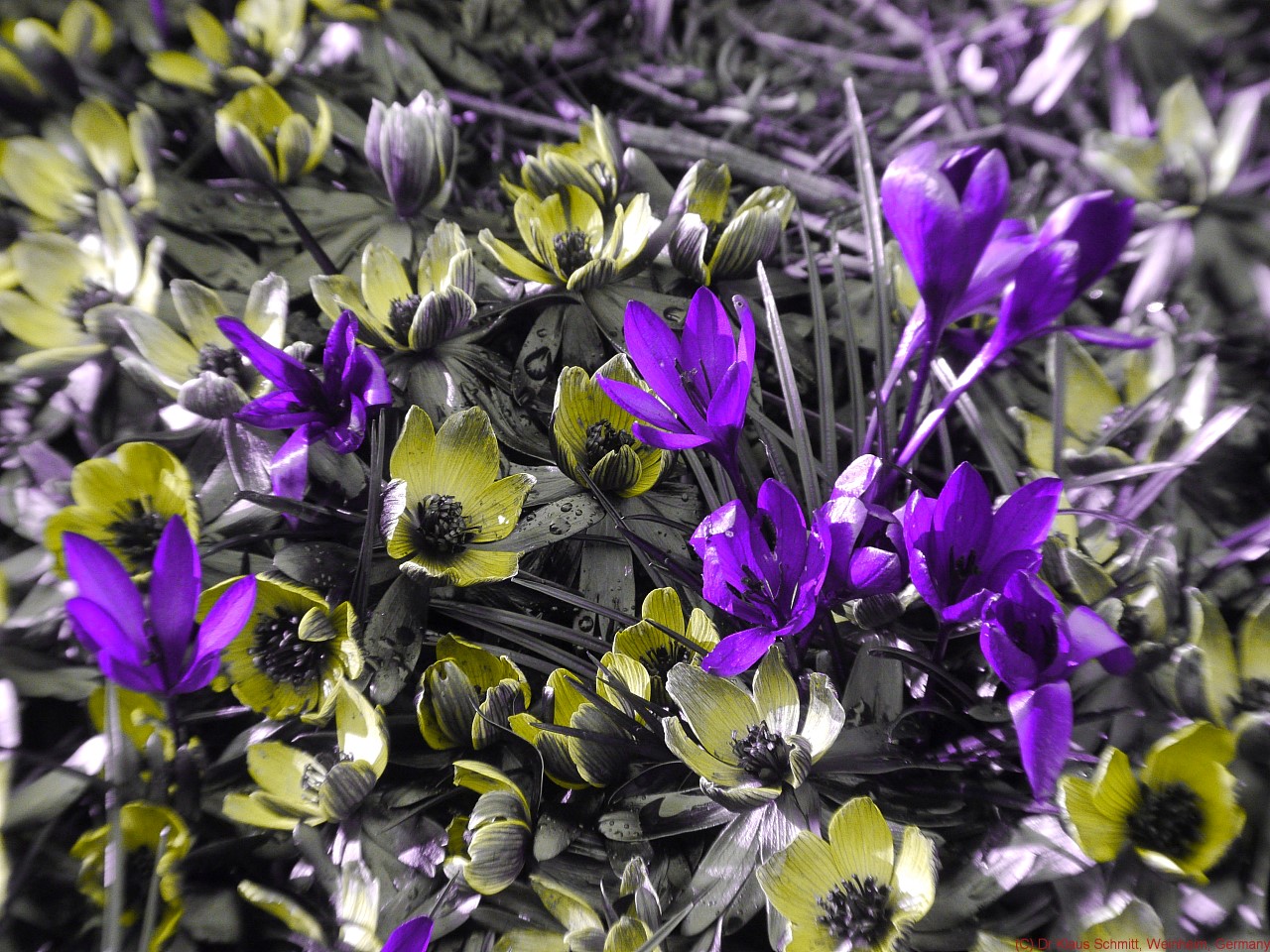
Spring Flowers 2014: Competing for bee attention - 80mm Quartz Fluorite lens for reflected ultraviolet photography

Well, spring finally seem to have arrived in Weinheim where I live, so here a few shots of some first spring flowers, Crocus and Winter Aconite, obviously competing for bee's attention. Shots were done aside from visible photography in reflected ultraviolet using Baader-U filter and in simulated bee vision using my XBV6 filter. Lens used was an older f3.2 / 80mm Quartz Fluorite lens. Light source was sun. All shots were done at approx. f8.

[click on image to see a larger one]

Visible light image:  

UV image using Baader-U filter (approx. 320-395nm, effective peak approx. 375nm):  

Simulated bee vision image using experimental XBV filter:  


It is quite interesting to notice that Winter Aconite with UV reflection around 365nm and Crocus reflecting UV around 380nm are competing for bee's attention. I wonder which one wins, there haven't been many bees aroudn, mainly bumble bees, but I guess the Crosus does. This older quartz fluorite lens is reproducing this quite well and all that gets nicely visible.


Stay tuned, more will follow on that fascinating subject...