Saturday, August 1, 2015

European Starling - Sturnus vulgaris in reflected ultraviolet photography

Today shots of a well known, attractive bird, an European Starling - Sturnus vulgaris in reflected ultraviolet photography using my "work horse" UV filter, the Baader-U filter. Lens was my Zeiss UV-Planar f2 62mm quartz flourite lens. Light source was a modified for high UV output Xenon flashlight. All shots were done at f8.

[click on image to see a larger one]

Diptych (left to right): Human vison, reflected UV (Baader-U filter):


This attractive bird has iridescent feathers with a metallic magenta shine around his throat, chest and back, which reflect at maximum under a 45 degree reflection angle, however it also reflects UV quite strongly, peaking at around 365nm (shown as yellow) and to a much lesser quantity around 385m (shown as purple), invisible to us humans (but made visible here using special photographic methods), and all this gets nicely visible.

HERE is more about bird vision and how to simulate what birds might see.

Stay tuned, more will follow on that fascinating subject...

Friday, July 31, 2015

Blue Moon over Castle in reflected ultraviolet (UV) photography

Today is a 2nd full moon within the same month, a "Blue Moon", which I have previously shot in reflected ultraviolet photography using my "work horse" UV filter, the Baader-U filter, and then superimposed to a normal night light shot of our castle here. Lens was my CERCO 94mm quartz flourite lens. All shots were done at about f5.6.

[click on image to see a larger one]


Indeed, the moon has UV reflectance and it can be recorded using proper equipment which makes that nicely visible.

I have written about photographing the Moon previously HERE
 
Stay tuned, more will follow on that fascinating subject...

Thursday, July 30, 2015

ZDFzeit August 25 20:15h CET - UV videography to show the effect of sun protection

The ZDF has contracted me and my UV cameras to contribute to their series ZDFzeit which will now be aired on August 25, 2015 at primetime 20:15 hours CET showing the effect of dangerous UV radiation on human skin and the effect of using proper suncreme to protect against that (in German language, with subtitles).

[click on image to see a larger one]
(C) ZDF, used with permission
Here is a LINK to the official announcement.


Quite impressive and graphic results have been obtained, worth watching to see what a human sees and how that same scene looks like in ultraviolet (UV) light!


There is a part II about it showing the video HERE

Stay tuned, more will follow on that fascinating subject...

Tuesday, July 28, 2015

European Magpie - Pica pica in reflected ultraviolet photography

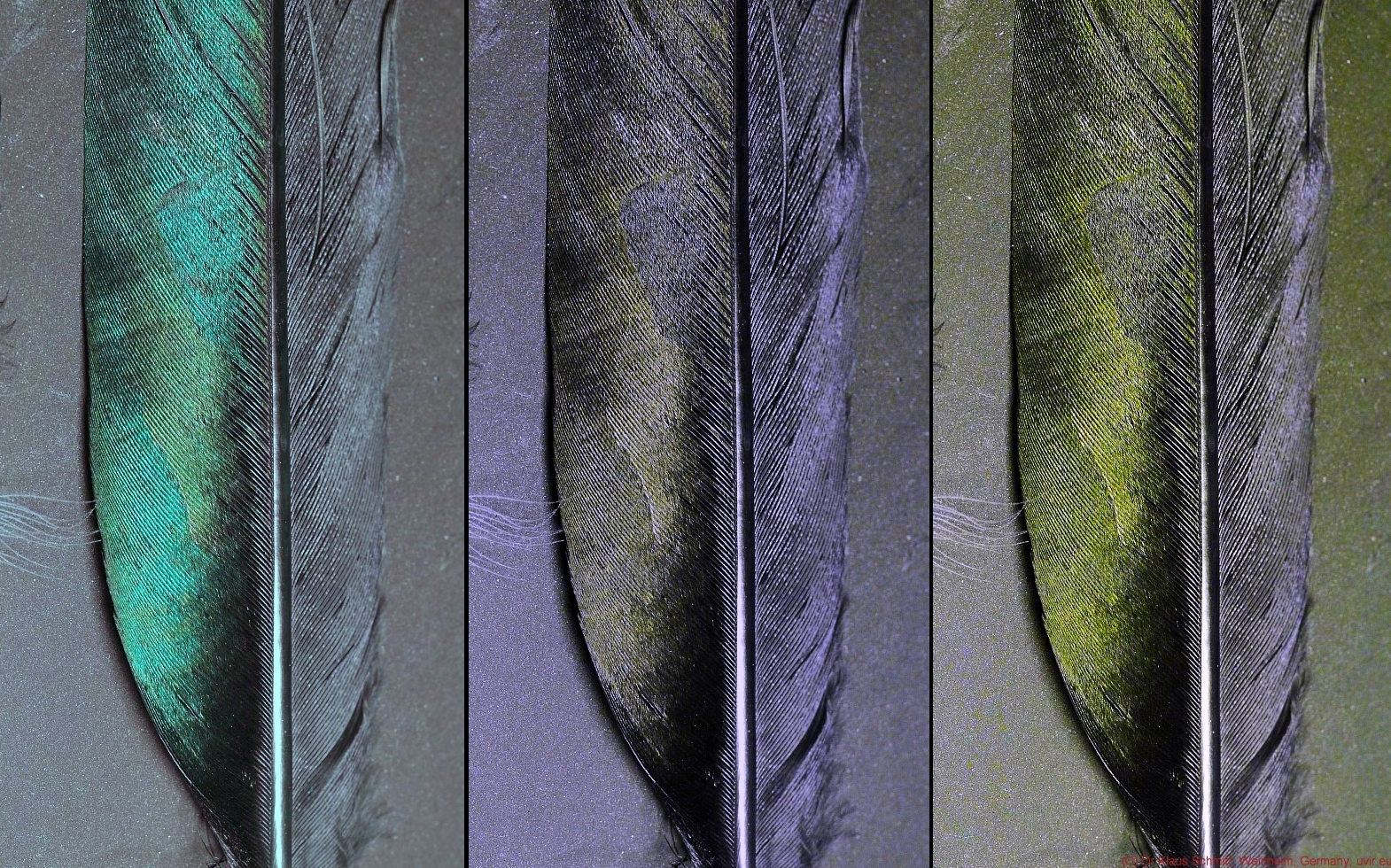
Today shots of quite pretty feathers of an European Magpie - Pica pica in reflected ultraviolet photography using my "work horse" UV filter, the Baader-U filter and a longer wave UV. Lens was my UV-Nikkor 105mm quartz flourite lens. Light source was a modified for high UV output Xenon flashlight. All shots were done at f8.

[click on image to see a larger one]

Triptych (left to right): Human vison, reflected UV (longer wave), reflected UV (Baader-U filter):


Diptych (left to right): closeup Human vison, reflected UV(Baader-U filter):


Triptych (left to right): Human vison polarization 0 degrees, rotated 45 degrees, 90 degrees:


This attractive bird has iridescent feathers with a metallic green and blue shine maximized under a 45 degree reflection angle, however it also reflects UV quite well peaking at around 365nm (left) and to some lesser amount 385nm (right), invisible to us humans, and all this gets nicely visible.

Stay tuned, more will follow on that fascinating subject...

Sunday, July 26, 2015

Snakeshead - Arum maculatum in reflected ultraviolet photography and simulated bee vision

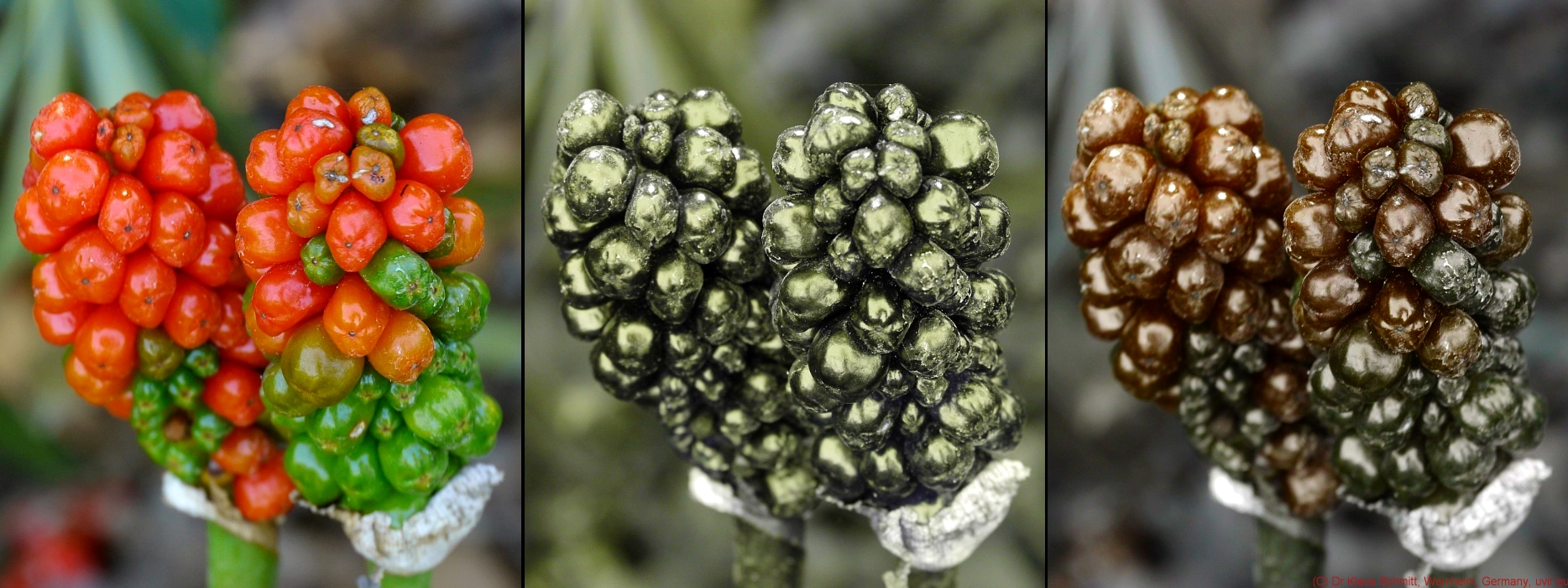
Today shots of the very decorative late summer berries of the Snakeshead - Arum maculatum in reflected ultraviolet photography using my "work horse" UV filter, the Baader-U filter, as well as in simulated bee vision using my proprietary XBV filter. Lens was my UV-Nikkor 105mm quartz flourite lens. Light source was sunlight. All shots were done at f8.

[click on image to see a larger one]

Triptych (left to right): Human vison, reflected UV, simulated bee vision:


This attractive berries shows no prominent UV pattern, but a metallic like shine, peaking at around 365nm, invisible to us humans, and all this gets nicely visible.

Stay tuned, more will follow on that fascinating subject...
Missouri Coneflower - Rudbeckia missouriensis in reflected ultraviolet photography, simulated butterfly and bee vision III

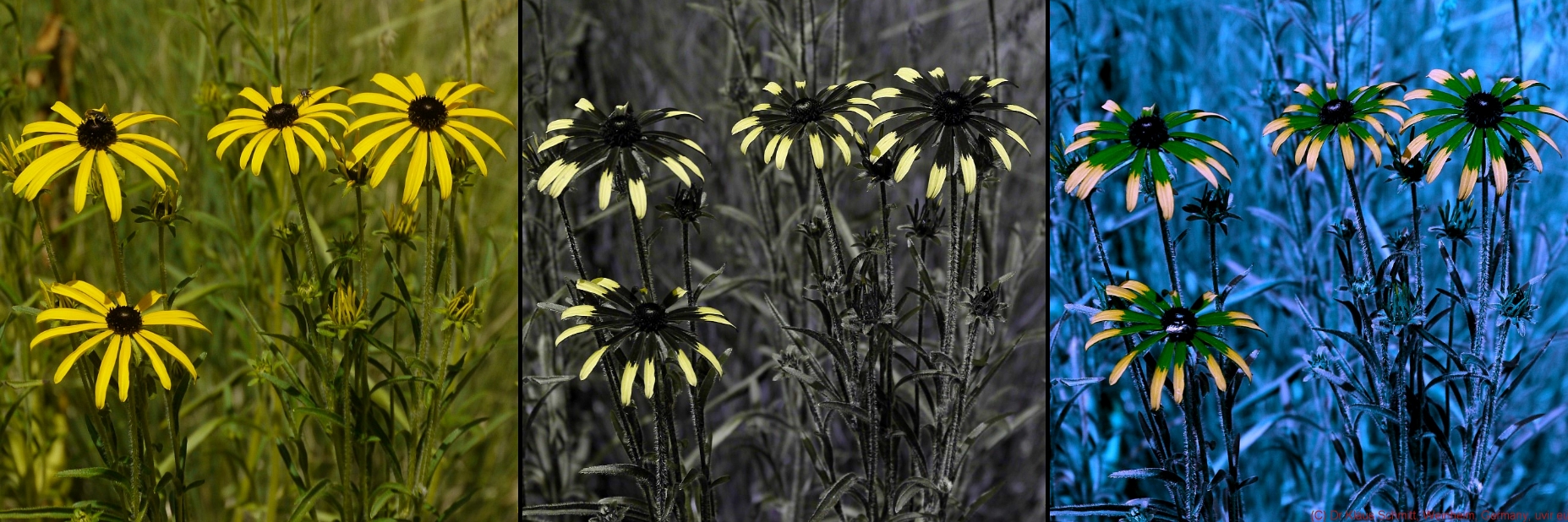
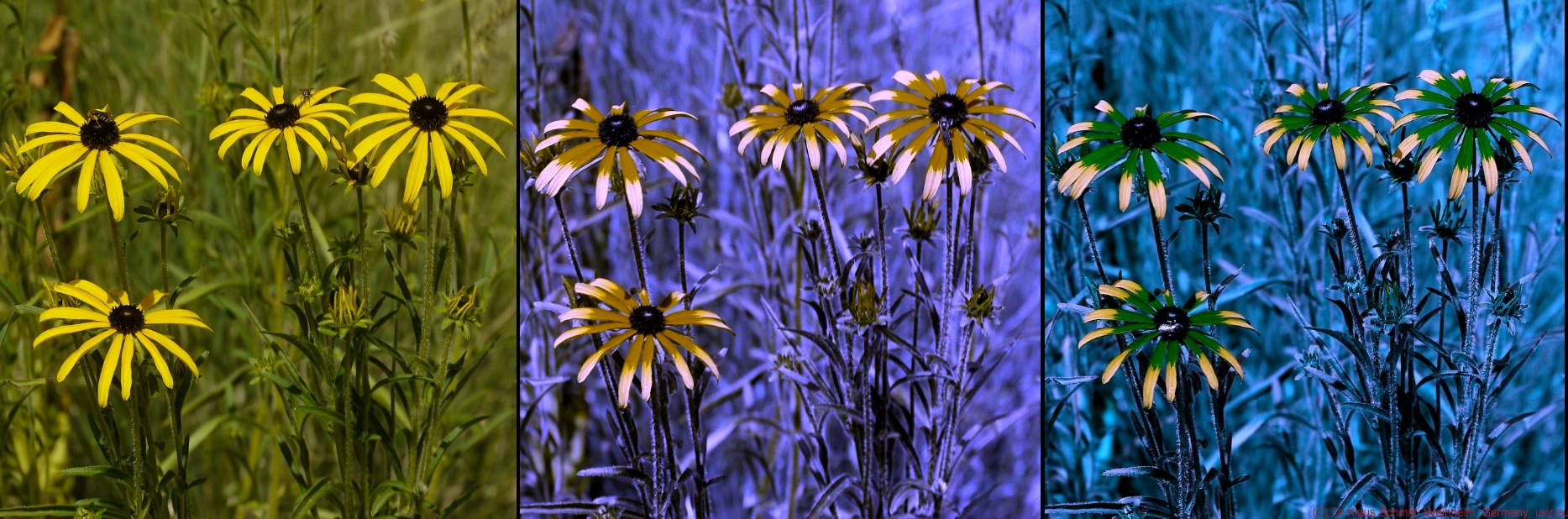
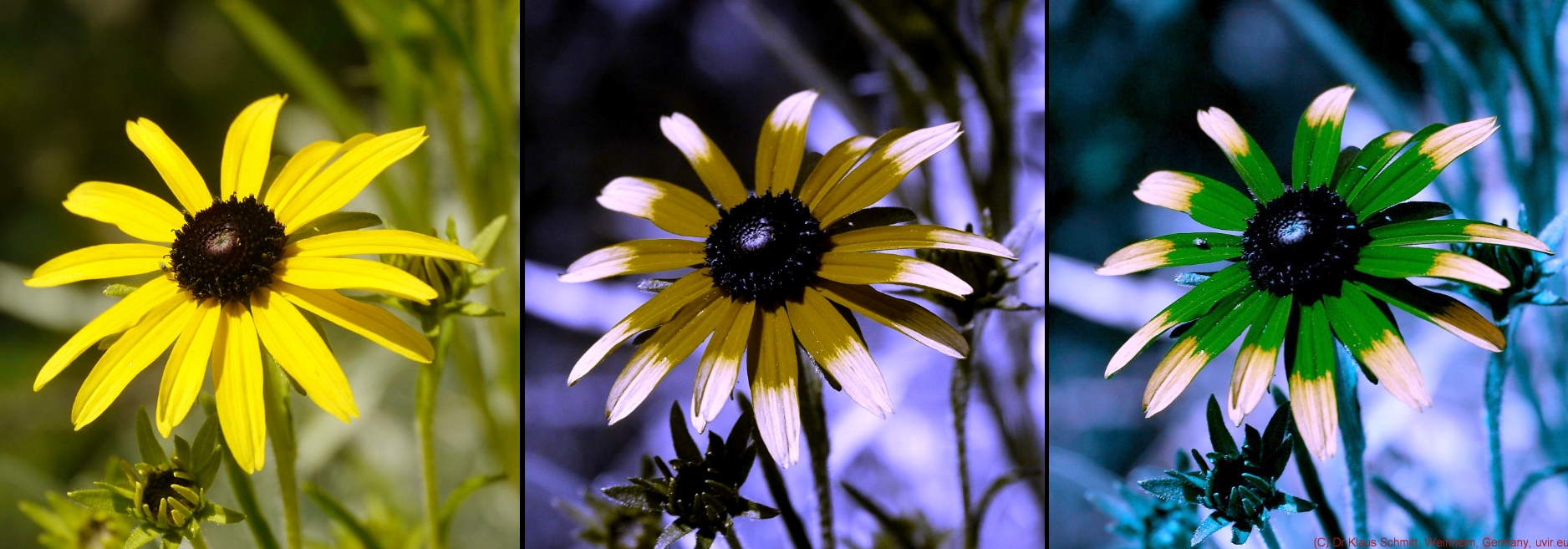
Today more shots of a group of decorative summer flowers Missouri Coneflower - Rudbeckia missouriensis in reflected ultraviolet photography using my "work horse" UV filter, the Baader-U filter, as well as in simulated butterfly and bee vision using my proprietary XBV filter. Lens was my UV-Nikkor 105mm quartz flourite lens. Light source was sunlight. All shots were done at f8.

[click on image to see a larger one]

Triptych (left to right): Human vison, reflected UV, simulated bee vision:


Triptych (left to right): Human vison, simulated butterfly vision, simulated bee vision:
 

This attractive flower shows its very prominent UV bullseye pattern, its petals have an UV dark bottom and very UV bright tips (around 365nm), invisible to us humans, and all this gets nicely visible in this group shot.

I have written about this flower previously HERE
 
Stay tuned, more will follow on that fascinating subject...

Missouri Coneflower - Rudbeckia missouriensis in reflected ultraviolet photography, simulated butterfly and bee vision II

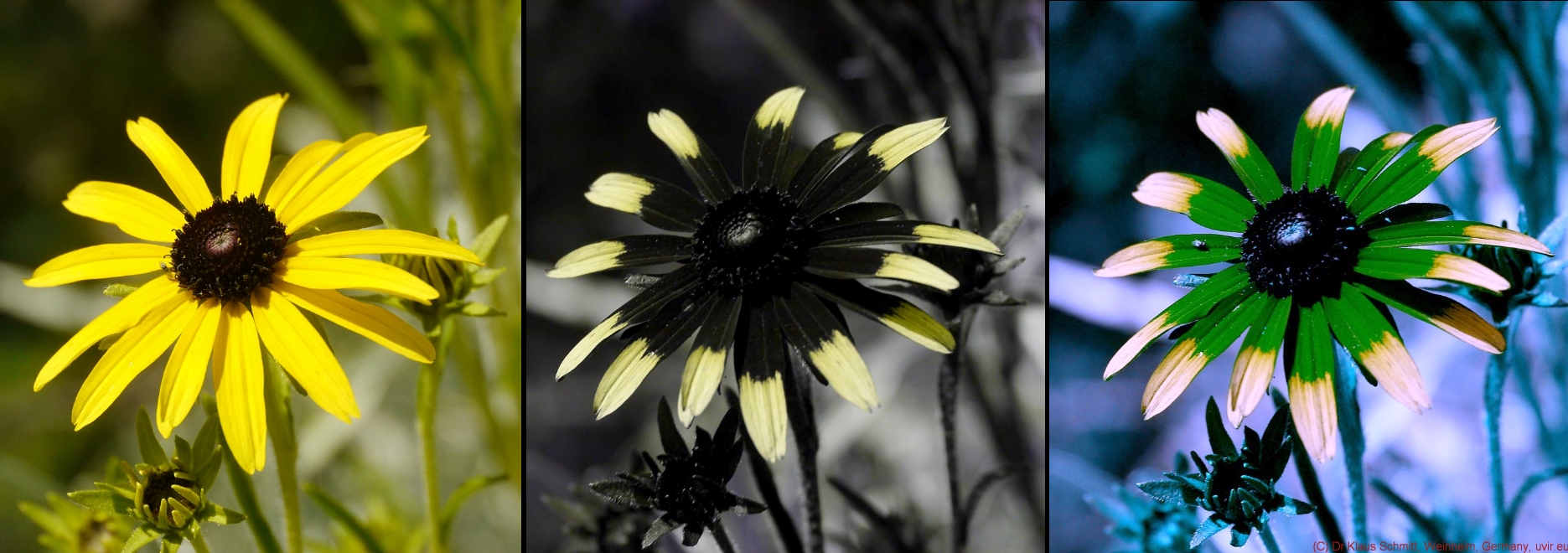
Today shots of a decorative summer flower Missouri Coneflower - Rudbeckia missouriensis in reflected ultraviolet photography using my "work horse" UV filter, the Baader-U filter, as well as in simulated butterfly and bee vision using my proprietary XBV filter. Lens was my UV-Nikkor 105mm quartz flourite lens. Light source was sunlight. All shots were done at f8.

[click on image to see a larger one]

Triptych (left to right): Human vison, reflected UV, simulated bee vision:


Triptych (left to right): Human vison, simulated butterfly vision, simulated bee vision:
 

This attractive flower shows its very prominent UV bullseye pattern, its petals have an UV dark bottom and very UV bright tips (around 365nm), invisible to us humans, and all this gets nicely visible.


Stay tuned, more will follow on that fascinating subject...