Saturday, May 5, 2018

Treasury flower - Gazania rigens in reflected ultraviolet photography and simulated bee vision XXII

Today shots of a new type, long blooming flower, a red-yellowish variant of a Treasury flower - Gazania rigens in reflected ultraviolet photography and simulated bee vision. All shots were done at f8 in reflected ultraviolet photography using my "work horse" UV filter, the Baader-U filter, as well as my XBV filters for simulated bee vision. Lens was a UV-Nikkor 105mm quartz fluorite lens. Light source was sunlight.

[click on image to see a larger one]

Human vision:
 

Reflected UV:
 

Simulated bee vision:
 

Triptych of human vision, UV, simulated bee vision (left to right):
 

This Gazania's outer petals reflect strongly UV around 372nm, wheras the inner parts are quite darker hence forming UV nectar guides for bees. There are also highly UV reflecting marks inside around a dark UV center, all invisible to us humans but clearly visible to bees, and all this gets nicely visible here, also in simulated bee vision.

I have written about this Gazania previously HERE
 
Stay tuned, more will follow on that fascinating subject...

More info on this very interesting field may be found on my site http://www.pbase.com/kds315/uv_photos

Wednesday, April 11, 2018

Dwarf Tulip - Tulipa pulchella violacea in reflected ultraviolet photography, simulated bee and butterfly vision IV

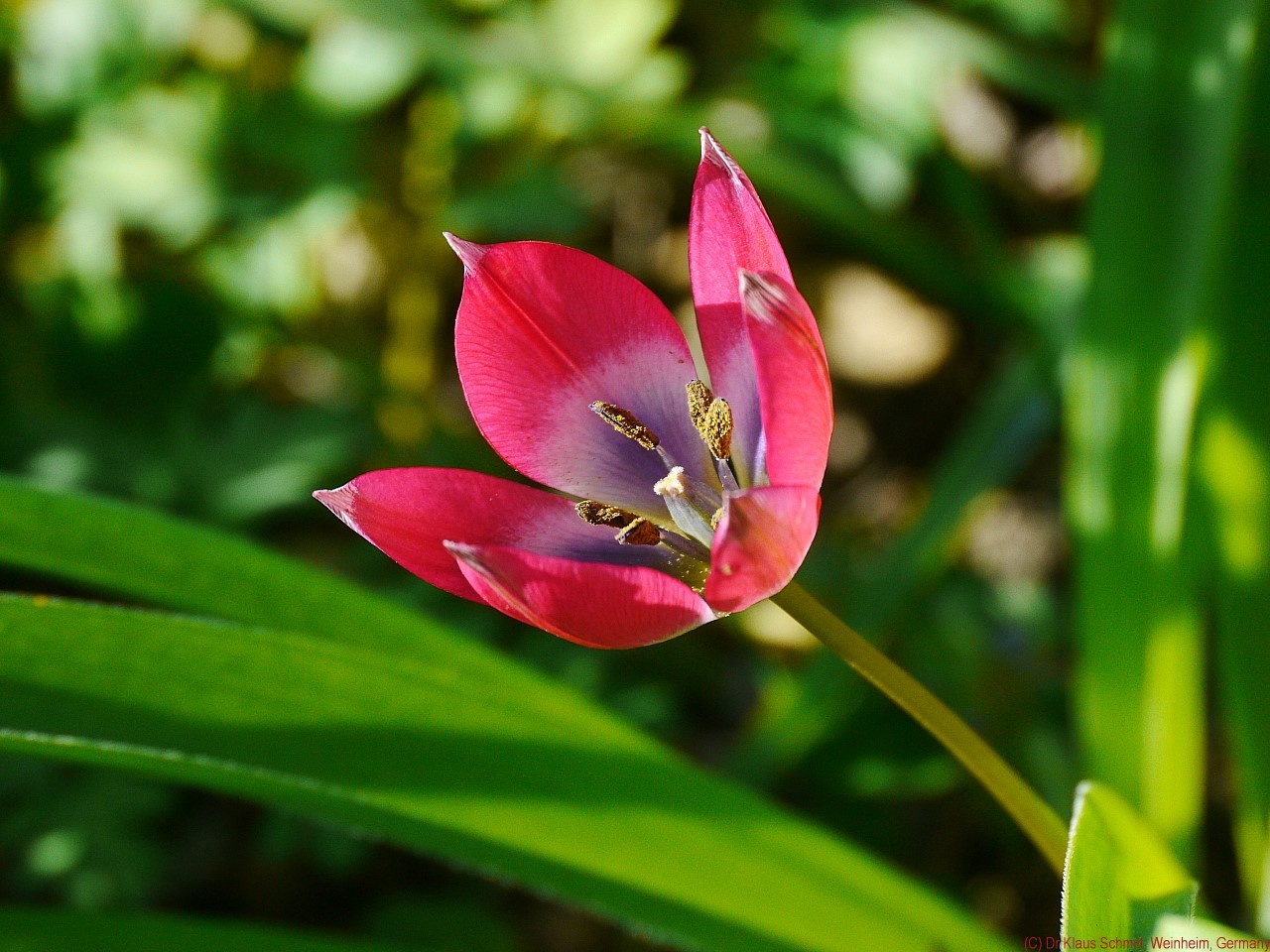
Today about an early spring flower, I have written about before HERE, a Dwarf Tulip (Tulipa pulchella violacea) in reflected ultraviolet photography using my "work horse" UV filter, the Baader-U filter as well as my XBV filters for simulating butterfly and bee vision. Lens was a UV-Nikkor 105mm quartz fluorite lens. Light source was sunlight. All shots were done at f8.

[click on image to see a larger one]

Human Vision:

UV vision:

Simulated Bee vision:

Simulated Butterfly vision:

Quadriptych in human vision, UV, and simulated butterfly and bee vision (left to right, top to bottom):
 

This dwarf tulip has an unusual pattern, its center is not UV bright, the inside petals reflect UV somewhat, but the bottom of the petals only in simulated bee and butterfly vision show an otherwise invisble pattern and all this gets quite nicely visible. First time ever that insects see more in the visible light part of the spectrum, than we do!

Stay tuned, more will follow on that fascinating subject...

More info on this very interesting field may be found on my site http://www.pbase.com/kds315/uv_photos

Tuesday, April 10, 2018

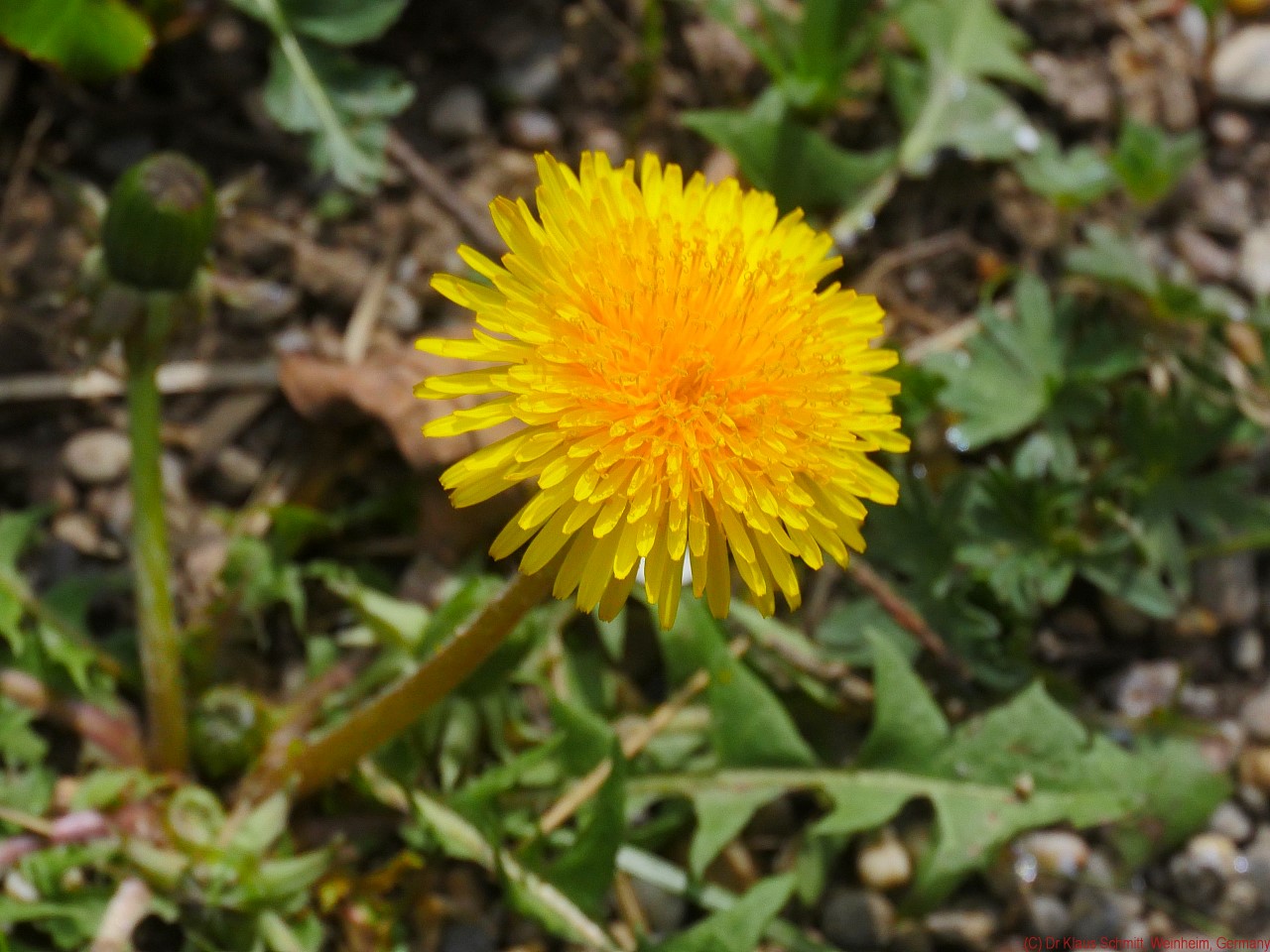
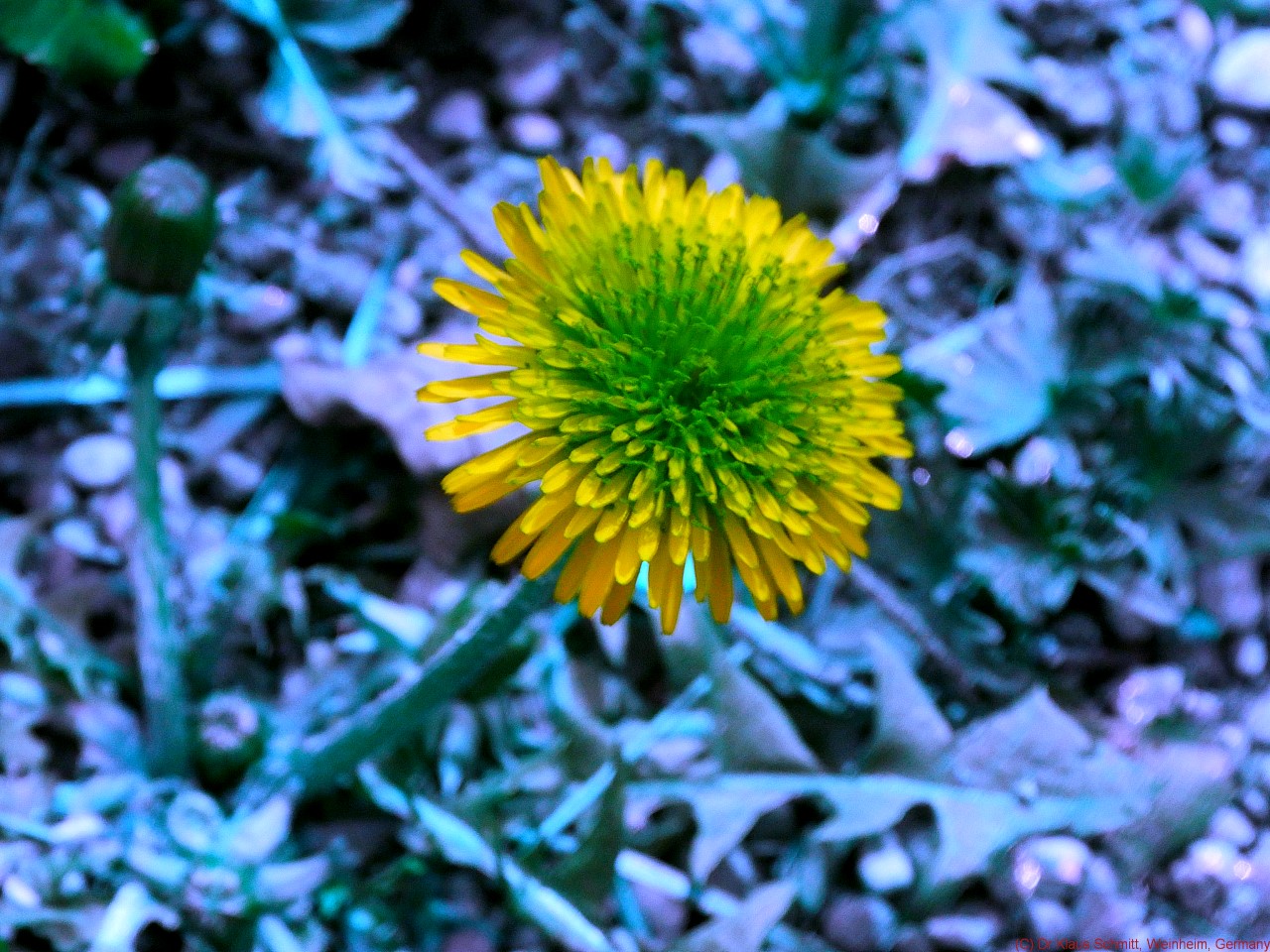
Dandelion - Taraxacum officinale flower in reflected ultraviolet photography and simulated bee and butterfly vision II

Today more about that common spring flower, Dandelion - Taraxacum officinale in reflected ultraviolet photography using my "work horse" UV filter, the Baader-U filter as well as my XBV filters for simulating butterfly and bee vision. Just another specimen. Lens was a UV Nikkor 105mm quartz fluorite lens. Light source was sunlight. All shots were done at f8.

[click on image to see a larger one]

Visible light image:
 

UV image:
 

Simulated bee vision:
 

Simulated butterfly vision:
 

Quadriptych of human vision, UV, and simulated butterfly and bee vision (left to right, top to bottom:
 

Also this different specimen of Dandelion flower has quite a prominent UV pattern, its petals are UV bright around 365nm, its center is UV dark, especially the anthers, and this gets quite nicely visible also in simulated bee and butterfly vision.

I have written about this flower HERE
 
Stay tuned, more will follow on that fascinating subject...

More info on this very interesting field may be found on my site http://www.pbase.com/kds315/uv_photos

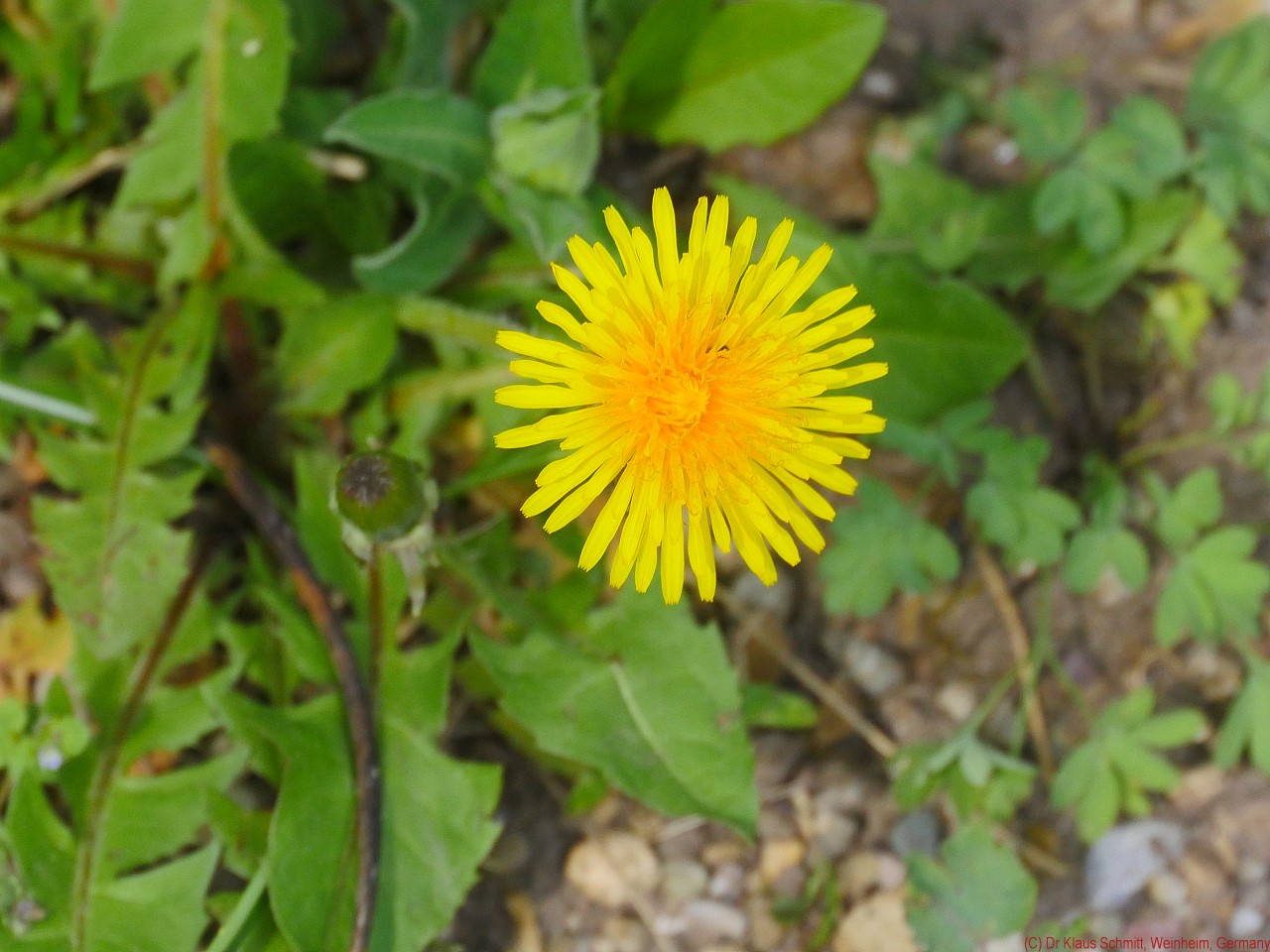
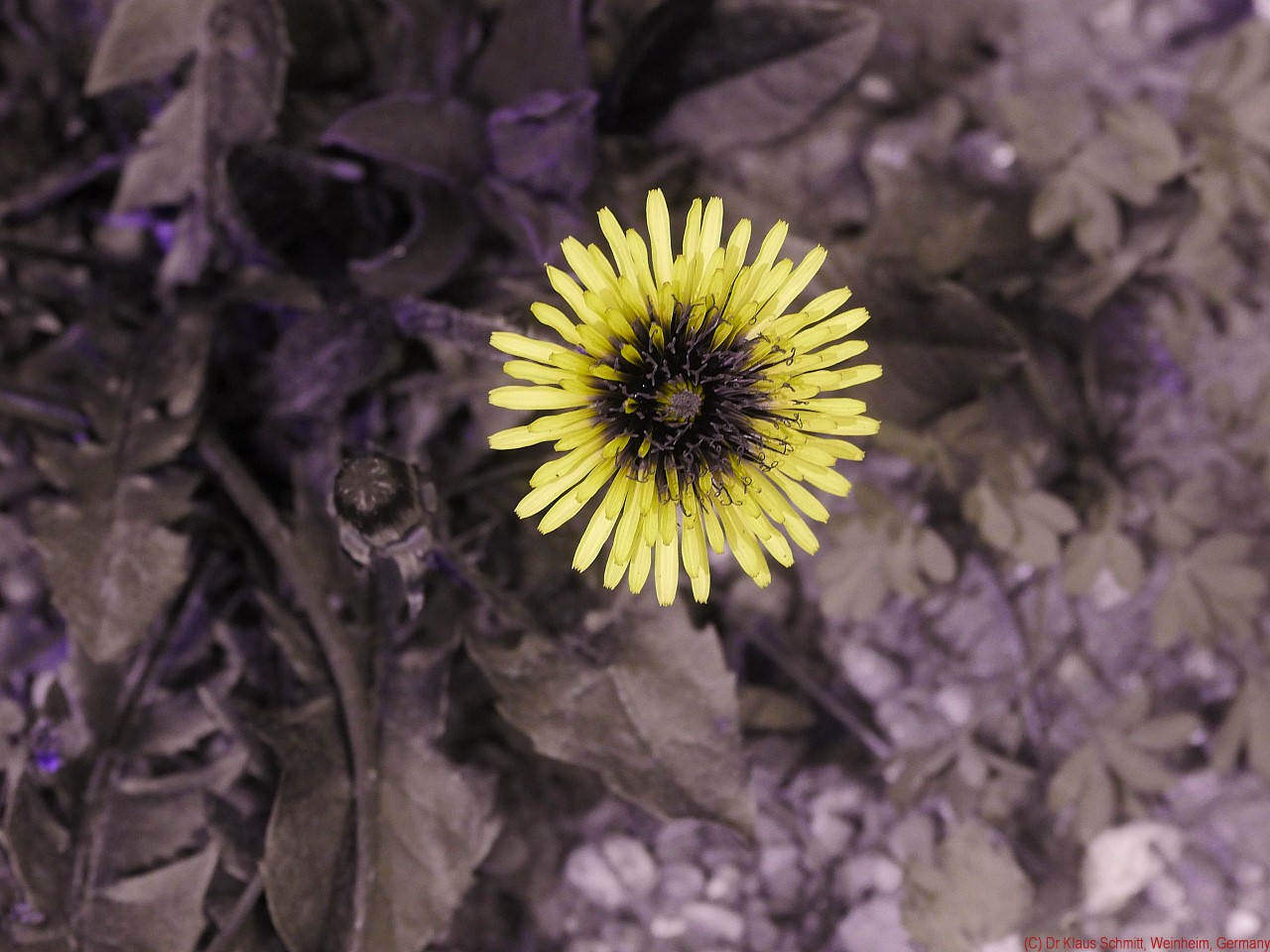
Dandelion - Taraxacum officinale flower in reflected ultraviolet photography and simulated bee and butterfly vision

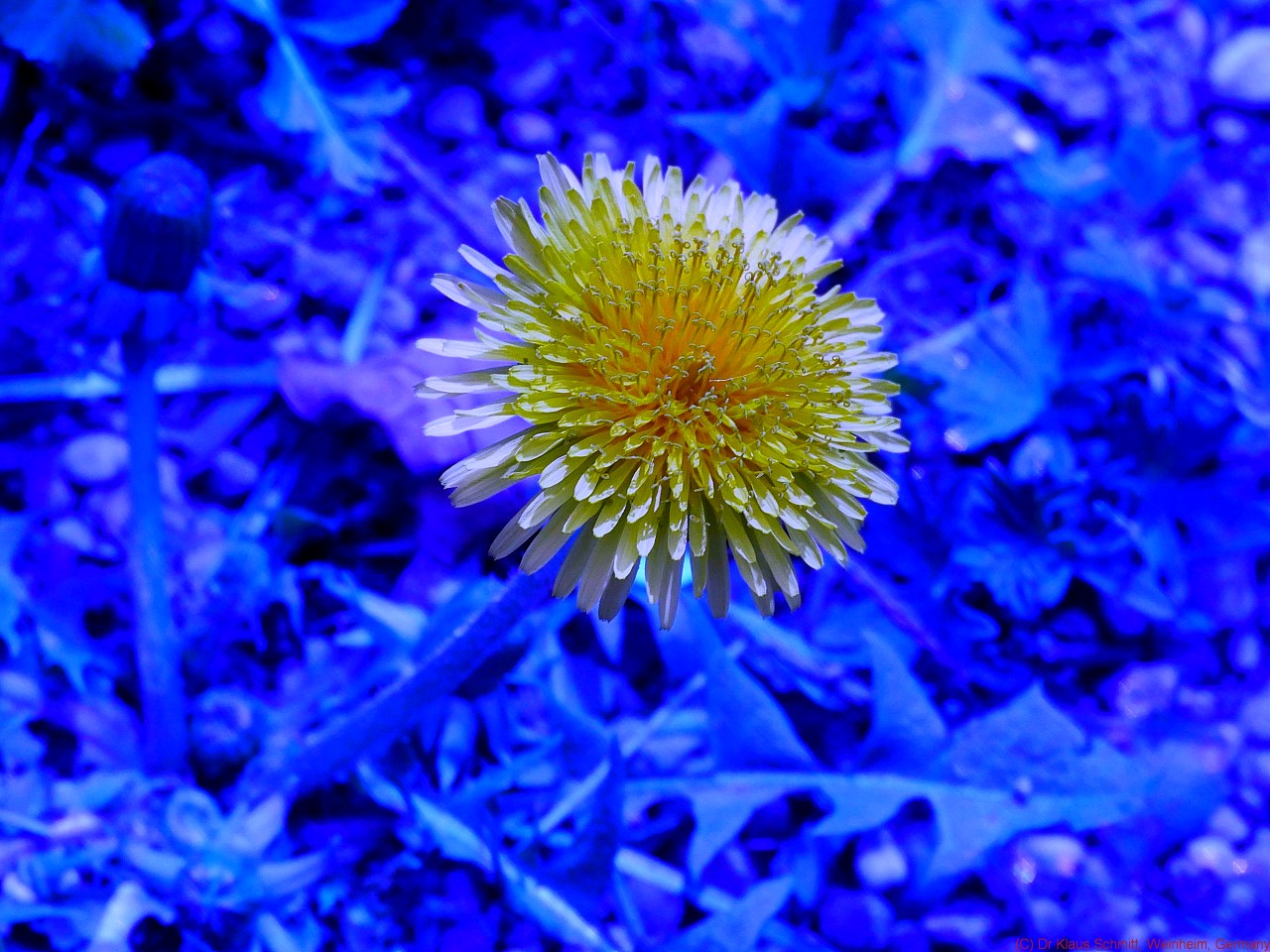
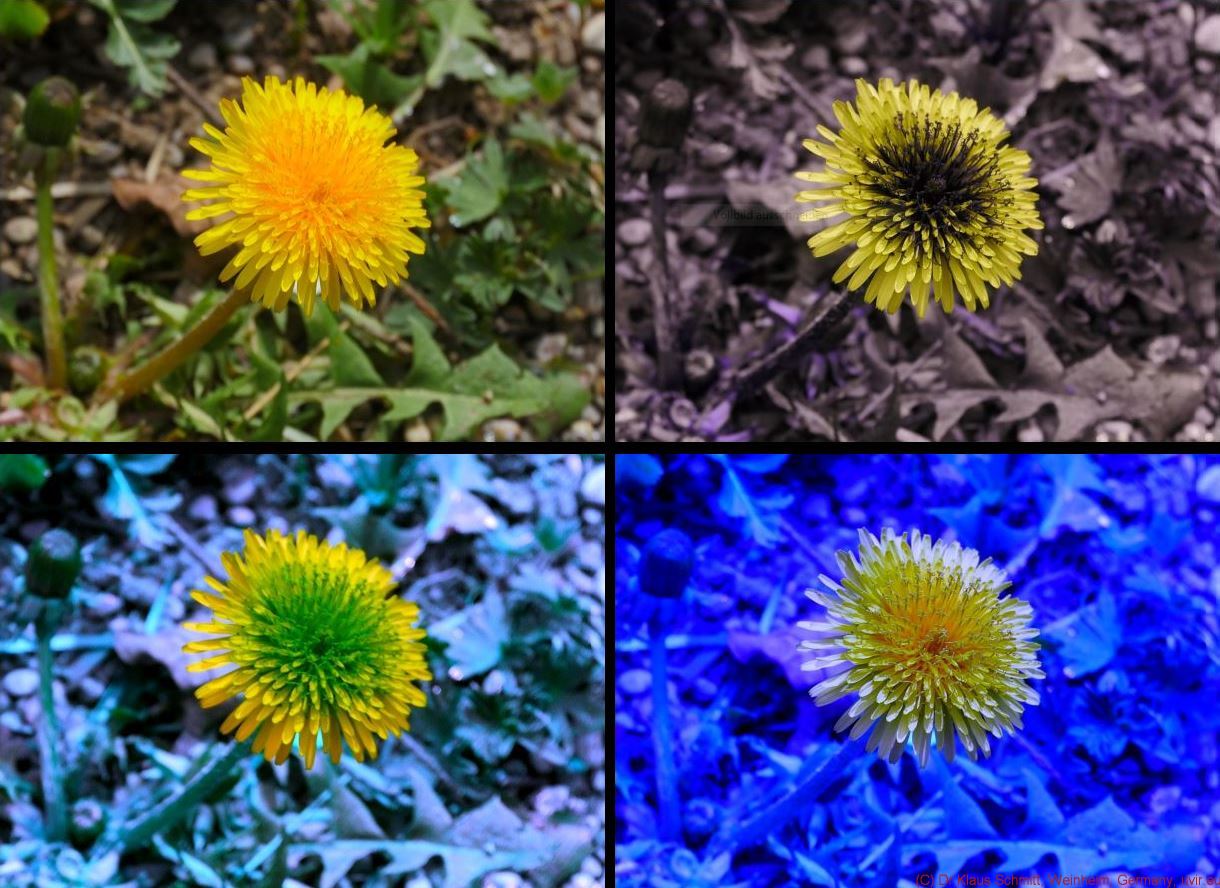
Today about a common spring flower, Dandelion - Taraxacum officinale in reflected ultraviolet photography using my "work horse" UV filter, the Baader-U filter as well as my XBV filters for simulating butterfly and bee vision. Lens was a UV Nikkor 105mm quartz fluorite lens. Light source was sunlight. All shots were done at f8.

[click on image to see a larger one]

Visible light image:
 

UV image:
 

Simulated bee vision:
 

Simulated butterfly vision:
 

Quadriptych of human vision, UV, and simulated butterfly and bee vision (left to right, top to bottom:
 

This Dandelion flower has quite a prominent UV pattern, its petals are UV bright around 365nm, its center is UV dark, especially the anthers, and this gets quite nicely visible also in simulated bee and butterfly vision.

I have written about this flower HERE
 
Stay tuned, more will follow on that fascinating subject...

More info on this very interesting field may be found on my site http://www.pbase.com/kds315/uv_photos

Friday, March 23, 2018

Denver Botanic Gardens 2018 pollination exhibit

The exhibition management of the Denver Botanic Gardens has contacted me about a forthcoming 2018 exhibut about pollinators. We have agreed that they will use some of my works to demonstrate how differently butterflies see the world compared to how we humans do.

These flowers will be on exhibit: Gaillardia, Linus, Rudbeckia, Crepis which are common in the Colorado wildlife area.

Gaillardia (top) and Rudbeckia (bottom) in human and simulated butterfly vision

Linus (top) and Crepis (bottom) in human and simulated butterfly vision


The exhibit will open in April 2018, so be sure to pay it and the Gardens a visit, certainly worth it!

Stay tuned, more will follow on that fascinating subject...

More info on this very interesting field may be found on my site http://www.pbase.com/kds315/uv_photos

Wednesday, March 21, 2018

Dwarf Tulip - Tulipa pulchella violacea in reflected ultraviolet photography, simulated bee and butterfly vision III

Today also about an early spring flower, I have written about before HERE, a Dwarf Tulip (Tulipa pulchella violacea) in reflected ultraviolet photography using my "work horse" UV filter, the Baader-U filter as well as my XBV filters for simulating butterfly and bee vision. Lens was a UV-Nikkor 105mm quartz fluorite lens. Light source was sunlight. All shots were done at f8.

[click on image to see a larger one]

Human Vision:

UV vision:

Simulated Butterfly vision:

Simulated Bee vision:

This dwarf tulip has a quite visible UV pattern, its center is UV bright, surrounded by long wave UV reflecting tips and all this gets quite nicely visible.

Stay tuned, more will follow on that fascinating subject...

More info on this very interesting field may be found on my site http://www.pbase.com/kds315/uv_photos

Monday, February 12, 2018

ZUFAR 4/350mm quartz fluorite catadioptric lens II

Today more about that Quartz Fluorite catadioptric ZUFAR-2CA f4/350mm anastigmat lens which took me over 10 years to find. It had been developed for the Soviet MARS 2 to 5 missions to planet Mars, was made of synthetic Quartz and Calcium Fluorite (CaF2) crystals to be able to work in UV and also visible light, thus allowing to take images 300-700nm without focus shift.


So today a few first test shots using this very special lens, due to lack of the mount which need to be designed and made, just some freelensing shots. "Freelensing" means holding the lens in front of the camera without any mount in between the two (!).

Here some visible light shots, showing how this lens performs. This first one is about 150 meters away:


and the following one about 15 meters:


The lack of chromatic aberration gets easily visible on that golden ball as well as on these shiny stainless steel exhaust pipes.

Now on to reflected UV images (300-400nm), here right out of camera:


and here with whitebalancing applied:


Being able to handheld a f4 350mm lens and shooting in reflected UV (300-400nm) is rather astonishing, a proof how much UV this lens is able to transmit. More about this lens will certainly follow here...

I have written about this lens before HERE


Stay tuned, more will follow on that fascinating subject...