Thursday, May 14, 2020

Surprising STEINHEIL f2.8/50mm lens for reflected UV photography VII - Focus Shift

This again is about this older 50mm lens, which was made decades ago by famous lens maker STEINHEIL which attracted me, since it showed some seemingly good UV transmission, which have already shown here. I have already shown that it performs quite well using the Baader-U filter, and using some even deeper reaching UV filters, using a 340nm shortpass and the IDAS 330nm filter (I have the 2" version, no longer made).

Now I wanted to show today how the focus shift of this, or any other lens can be easily made visible. All images shot at f8, using a modified Xenon flash.

[click on image gets you a larger image]

VIS image using UV/IR Cut filter:
 

UV image using Bader-U filter (approx. 320-390nm, peak 360nm):
 

UV image using IDAS UV filter (approx. 300-380nm, peak 330nm):
 

UV image using 340nm UV filter (approx. 320-340nm):
 

Now it is about to show how those images differ in size, using a method I call "differential", i.e. a subtraction of two images, one visible and one UV, where any focus shift will show as overlapping on the borders of the object. If you looks close you will see this around the object.

VIS-UV (Baader-U filter) differential image:
 

VIS-UV (IDAS UV filter) differential image:
 

VIS-UV (340nm UV filter) differential image:
 

It got quite obvious before, that this lens is also performing very well at even shorter wavelengths, making it a very useful lens for reflected UV down to 330-340nm at an optimal f8/f11 setting, especially since the image size deviation between visible and UV image is also only 1.3% , which can be easily seen (and measured) from those differential images.

I have written about that lens more HERE.

Stay tuned, more will follow on that fascinating subject...

More info on this very interesting field may be found on my site http://www.pbase.com/kds315/uv_photos

Tuesday, May 12, 2020

About White Balancing and Spectralon (R) Standards

Quite a while ago I had written about white balancing reflected UV images. This meant to use a standardized white or grey standard to balance images, here "white" means that its reflection in visible light, but also in UV and ideally NIR is about the same. A very well know material for that is SPECTRALON (R) made by company Labsphere. It is "the" industry standard in laboratories and is used for spectrometry very often. It is made of specially prepared and cleansed Tetrafluorethylen  (PFTE) or TEFLON (R) powder. It is a rather pricey material. I had previously presented possibilities of cheaper acceptable options for photographic use HERE for instance using virgin white Teflon.

So today it is about what can happen to Spectralon standards, and which influence this may have.

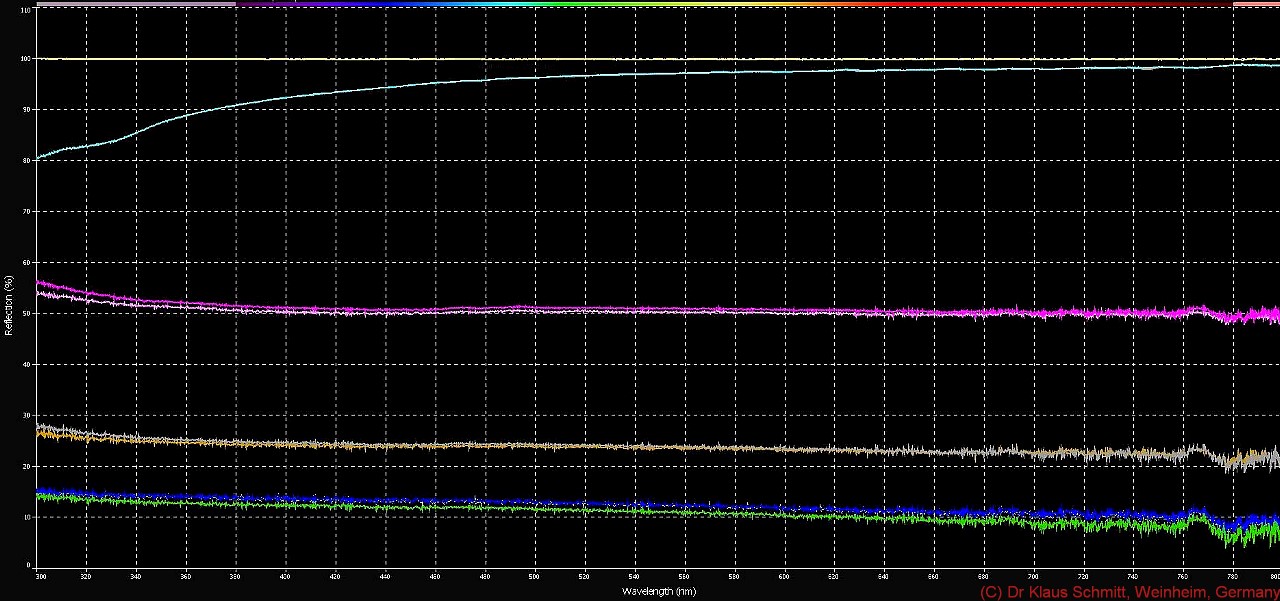
I have used a Spectralon multi-step target, which consists of four zebra-striped panels of 99, 50, 25 and 12% reflectance which are mounted side-by-side.

[click on image to see a larger one]

Measured reflection of Labsphere SPECTRALON multi-step target (the white one was used as a 100% reference):
 
It gets obvious, that this multi-step standard still works very well and that the 99, 50, 25 and 12% reflectance values are still working.


Now in comparison a white Spectralon 99% target I bought, which may have been used for quite a while. As it did not look that great, I had sanded it down and cleaned it (light blue line approaching the 100% line):
(double lines are repeated measurements using a different distance)


But it gets rather obvious now, that this used standard must have aged quite a bit or some substance had penetrated its once white surface, as it still looks a bit yellowish and the reflectance measuerement clearly shows that, especially in UV.

I may have to repeat the sanding down process, but this time I will have to take away much more from its surface, using clean sanding paper, ending with 240 and 480 grit, to keep it matted.

Never touch that surface with bare fingers, only rinse with clean alcohol and or purified water and let it dry, don't use pressured air as it often contains oil droplets.

Labsphere has some information on their products as well as about proper handling HERE.

I have written about white balancing before HERE

Stay tuned, more will follow on that fascinating subject...

More info on this very interesting field may be found on my site http://www.pbase.com/kds315/uv_photos

Sunday, May 10, 2020

St. John's Wort - Hypericum in reflected ultraviolet photography and simulated bee and butterfly vision II

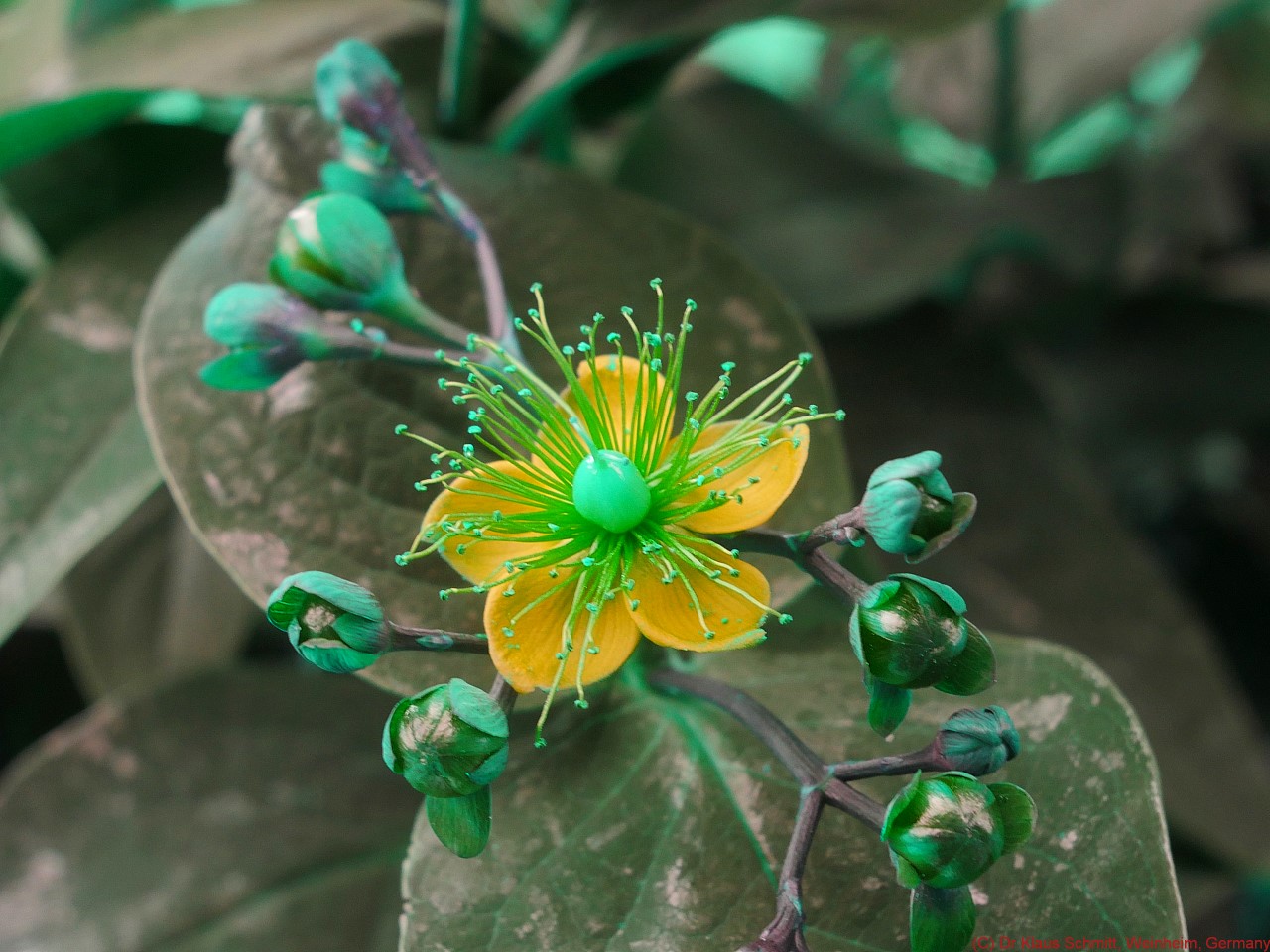
Today some outdoor shots of that attractive yellow flower, a St. John's Wort - Hypericum sp. shot in reflected ultraviolet photography, simulated bee and butterfly vision. All shots were done at f8 in reflected ultraviolet photography using my "work horse" UV filter, the Baader-U filter, as well as my XBV filters for simulated bee and butterfly vision. Lens used was an interesting STEINHEIL 50mm I recently found with rather high UV transmission. Light source was sunlight.

[click on image to see a larger one]

Human vision:
 

Reflected UV:
 

Simulated butterfly vision:
 

Simulated bee vision:
 

Quadriptych of human vision, UV, simulated butterfly and bee vision (left to right, top to bottom):
 

Hypericum's outer petals strongly reflect UV around 365nm, whereas its stamens and pistil are quite darker, reflecting around 385nm, hence forming UV nectar guides for UV seeing insects. This is all invisible to us humans, but clearly visible to bees and butterflies. And all this gets nicely visible here, also in simulated bee and butterfly vision, using this surprisingly well performing 50mm lens.

I have written more about this flower HERE 

I have written about that lens HERE.

Stay tuned, more will follow on that fascinating subject...

More info on this very interesting field may be found on my site http://www.pbase.com/kds315/uv_photos
Thursday, May 7, 2020

Flower Full Moon in reflected ultraviolet (UV) photography

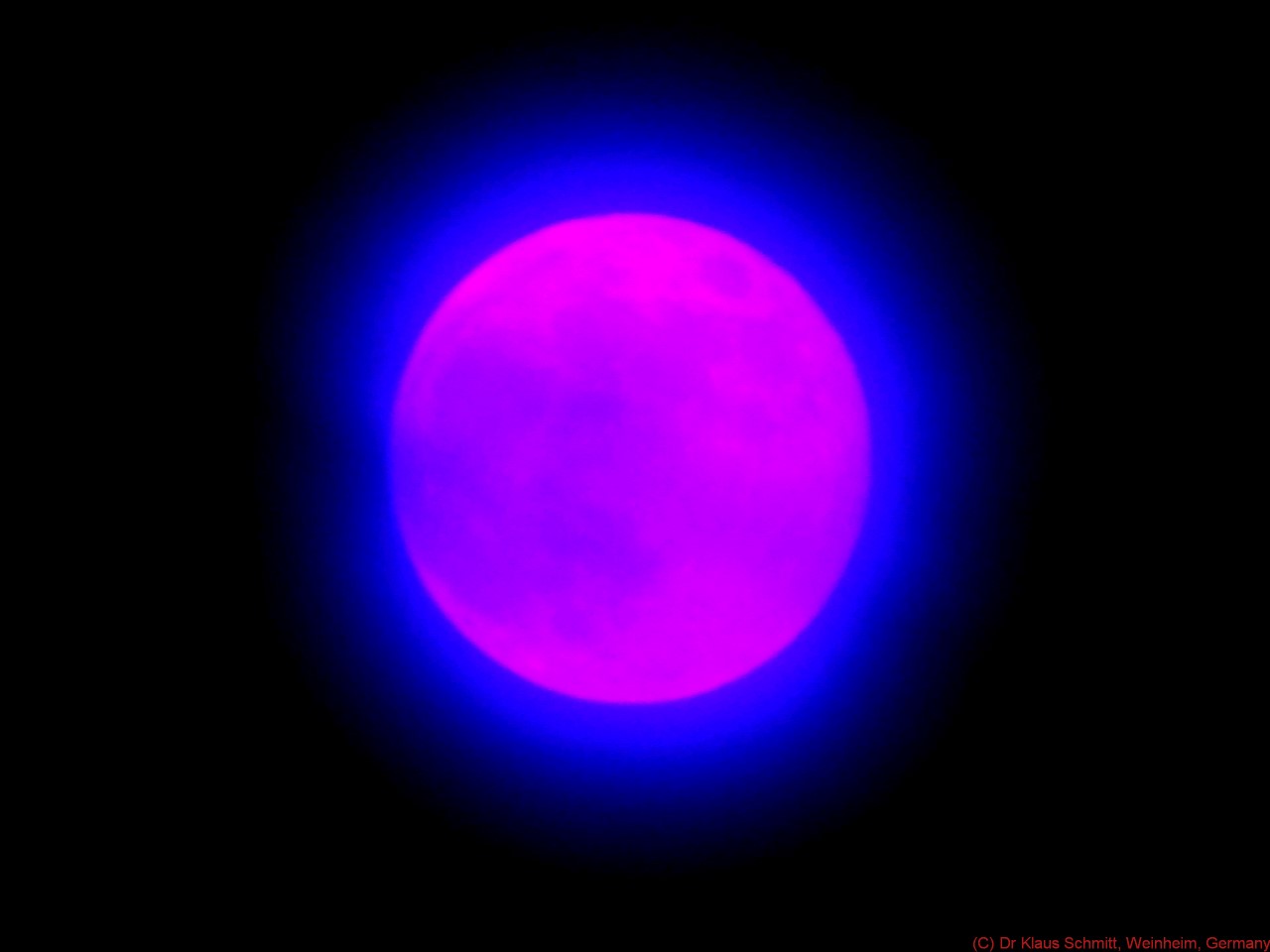
Today is the spring full Flower Moon, the last Supermoon in 2020, which I have shot today in some foggy conditions in reflected ultraviolet photography using a special XNUV and the Baader-U UV filter. Lens was my very special 800mm LDM-1 KATOPTARON mirror only lens on my multispectral camera.

[click on image to see a larger one]

XNUV Filter (fog was coming up...):


Baader-U Filter:


Baader-U filter (whitebalanced):


Indeed, the moon has UV reflectance and it can be recorded using proper equipment, which makes it nicely visible.

I have written about photographing the Moon previously HERE
 
Stay tuned, more will follow on that fascinating subject...

Tuesday, May 5, 2020

Surprising STEINHEIL f2.8/50mm lens for reflected UV photography VI - Lewisia differentials

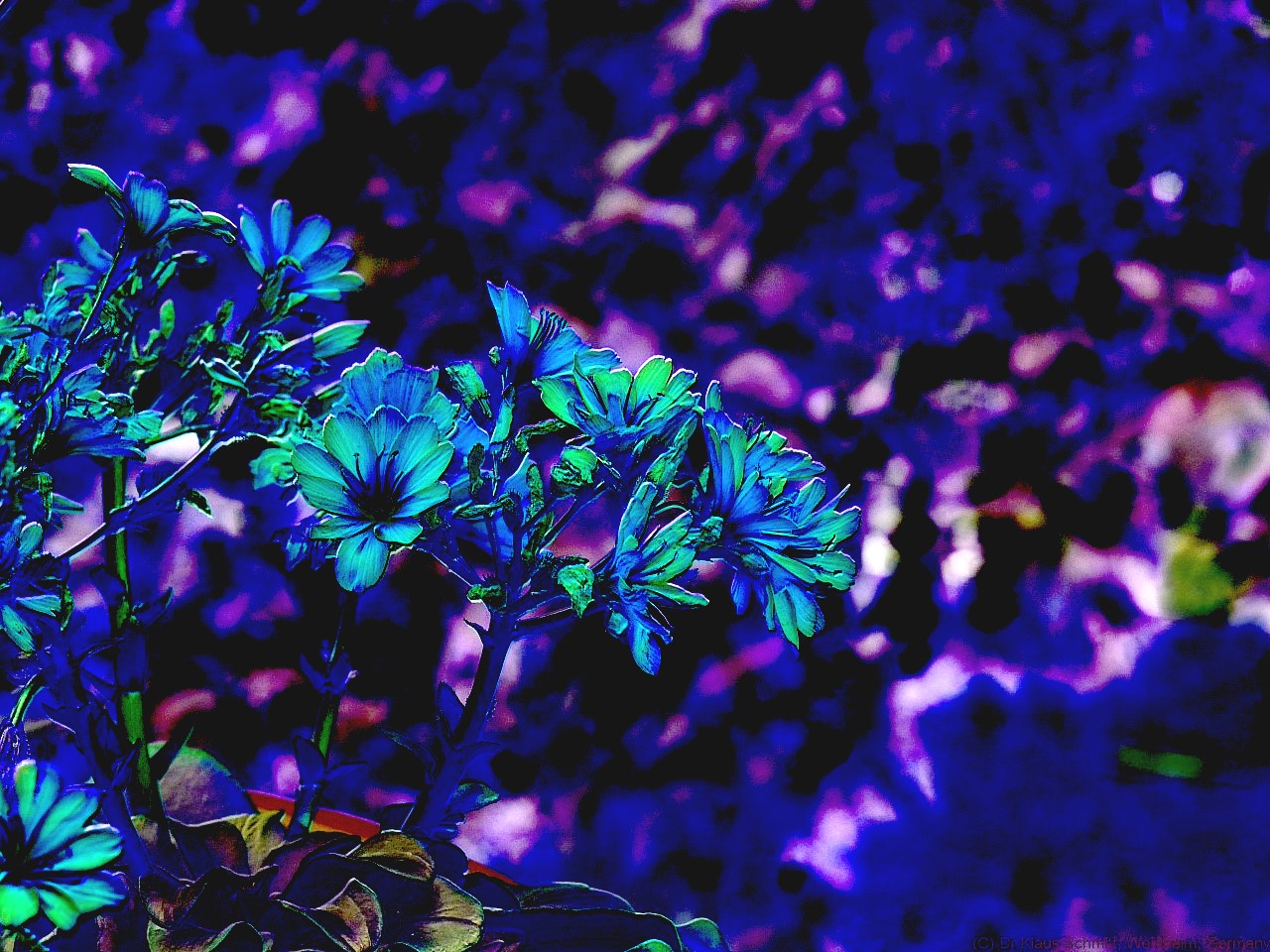
I got this mentioned older lens, which was made decades ago by famous lens maker STEINHEIL . It is a possibly single coated, well made 2.8/50mm lens which attracted me, since it showed some good UV transmission which I have previously shown here. Now today some outdoor shots at f11, light source was overcast sky. Target was a Lewisia cotylodon flower. But this time a bit different images - Differentials, which shows the difference of two images.

[click on image gets you a larger image]

VIS image using UV/IR Cut filter:
 

UV image using Baader-U filter:
 

Simulated butterfly vision:
 

Simulated bee vision:
 

VIS - UV differential image:
 

VIS - UV differential image, color swap:
 

VIS - Simulated butterfly vision differential:
 

VIS - Simulated bee vision differential:


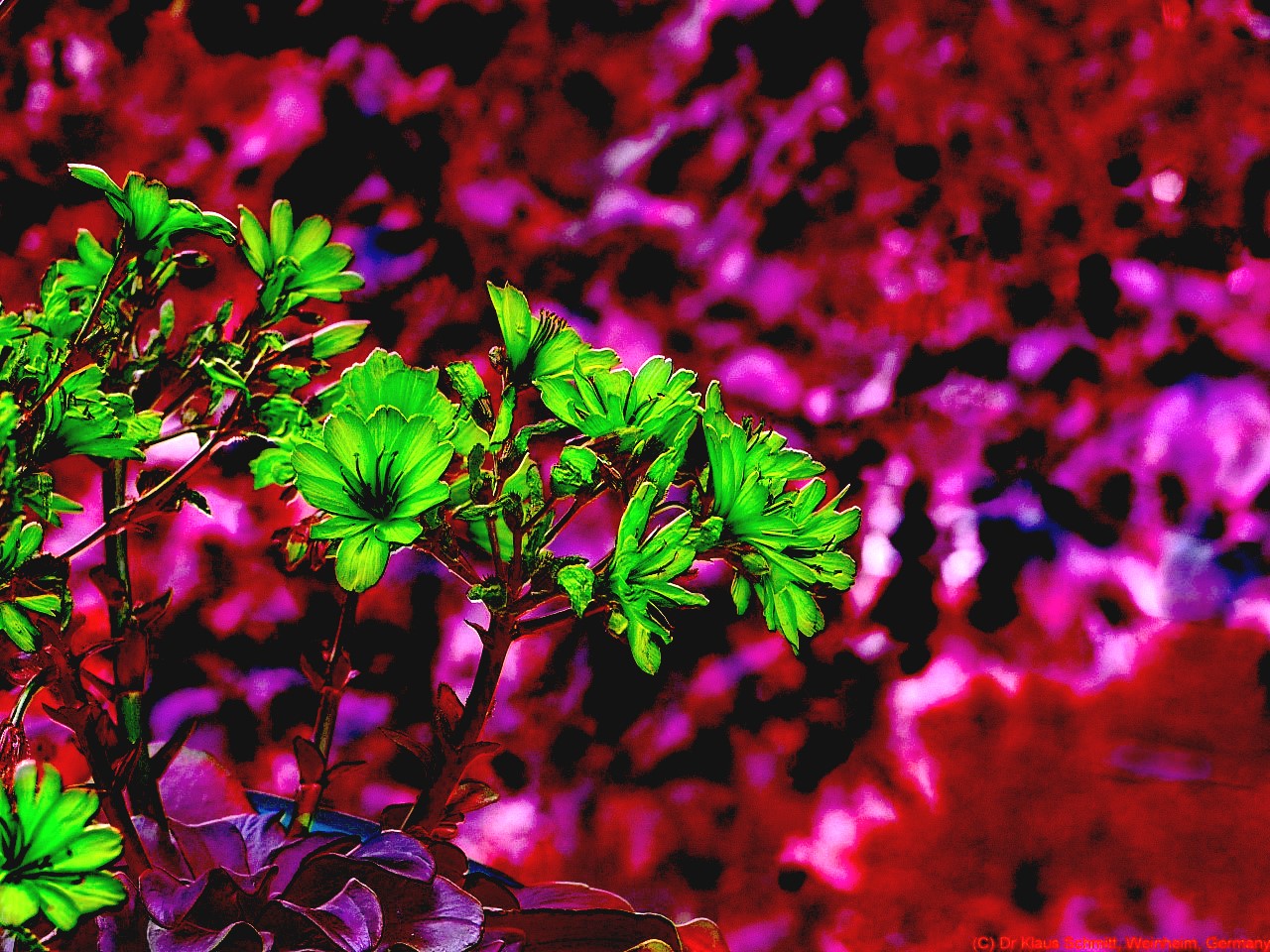
Lewisia has a visible UV pattern, its petal tips are UV bright around 385nm, its center is UV dark, so this gets quite nicely visible as differentials, also in simulated butterfly and bee vision using this astonishing lens.

I have written more about that flower HERE 

I have written about that used lens HERE.

Stay tuned, more will follow on that fascinating subject...

More info on this very interesting field may be found on my site http://www.pbase.com/kds315/uv_photos

Surprising STEINHEIL f2.8/50mm lens for reflected UV photography V - Lewisia

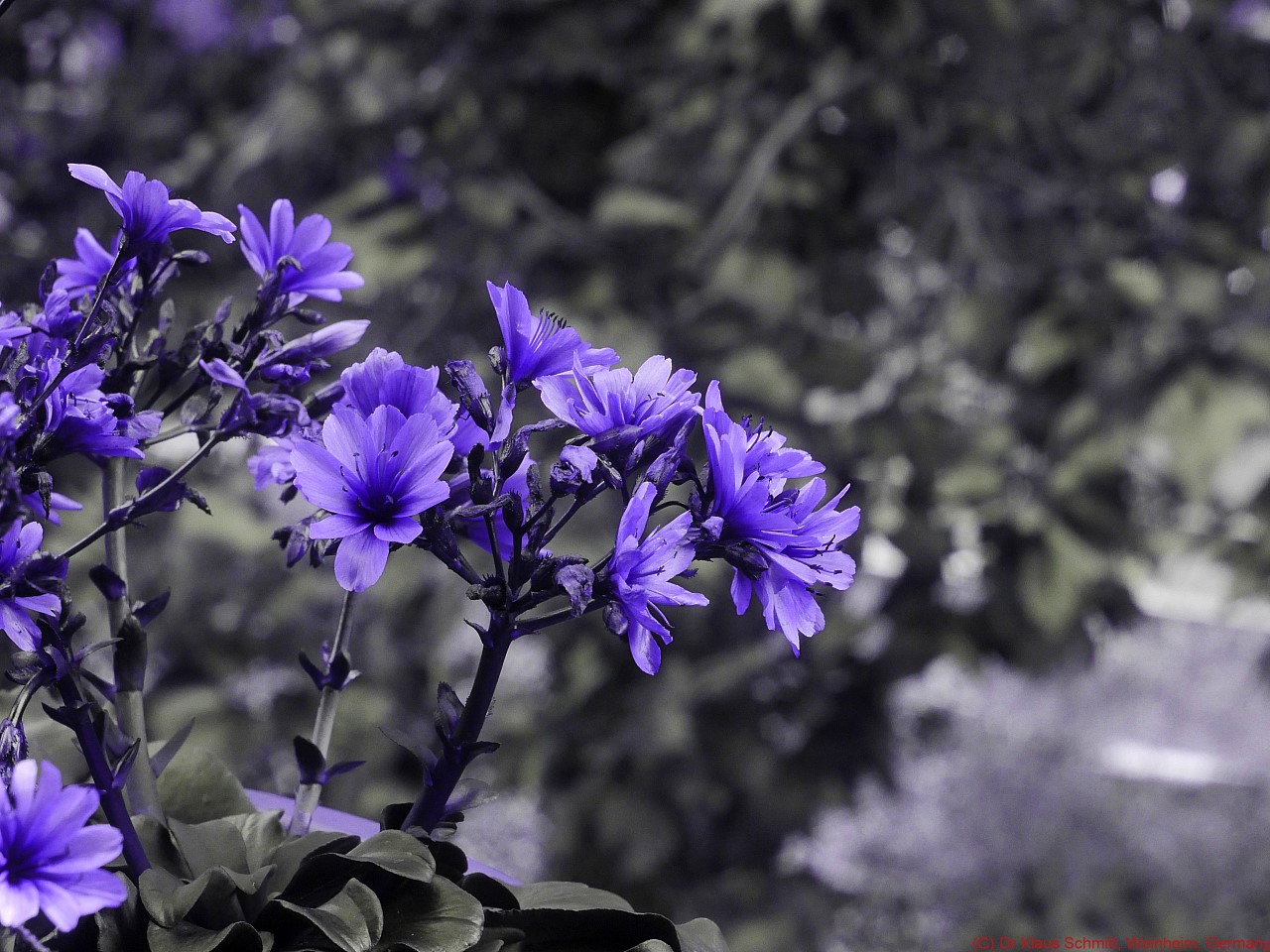
I got this mentioned older lens, which was made decades ago by famous lens maker STEINHEIL . It is a possibly single coated, well made 2.8/50mm lens which attracted me, since it showed some good UV transmission which I have previously shown. Now today some outdoor shots at f11, light source was overcast sky. Target was a Lewisia cotylodon flower.

[click on image gets you a larger image]

VIS image using UV/IR Cut filter:
 

UV image using Baader-U filter:
 

Simulated butterfly vision:
 

Simulated bee vision:
 

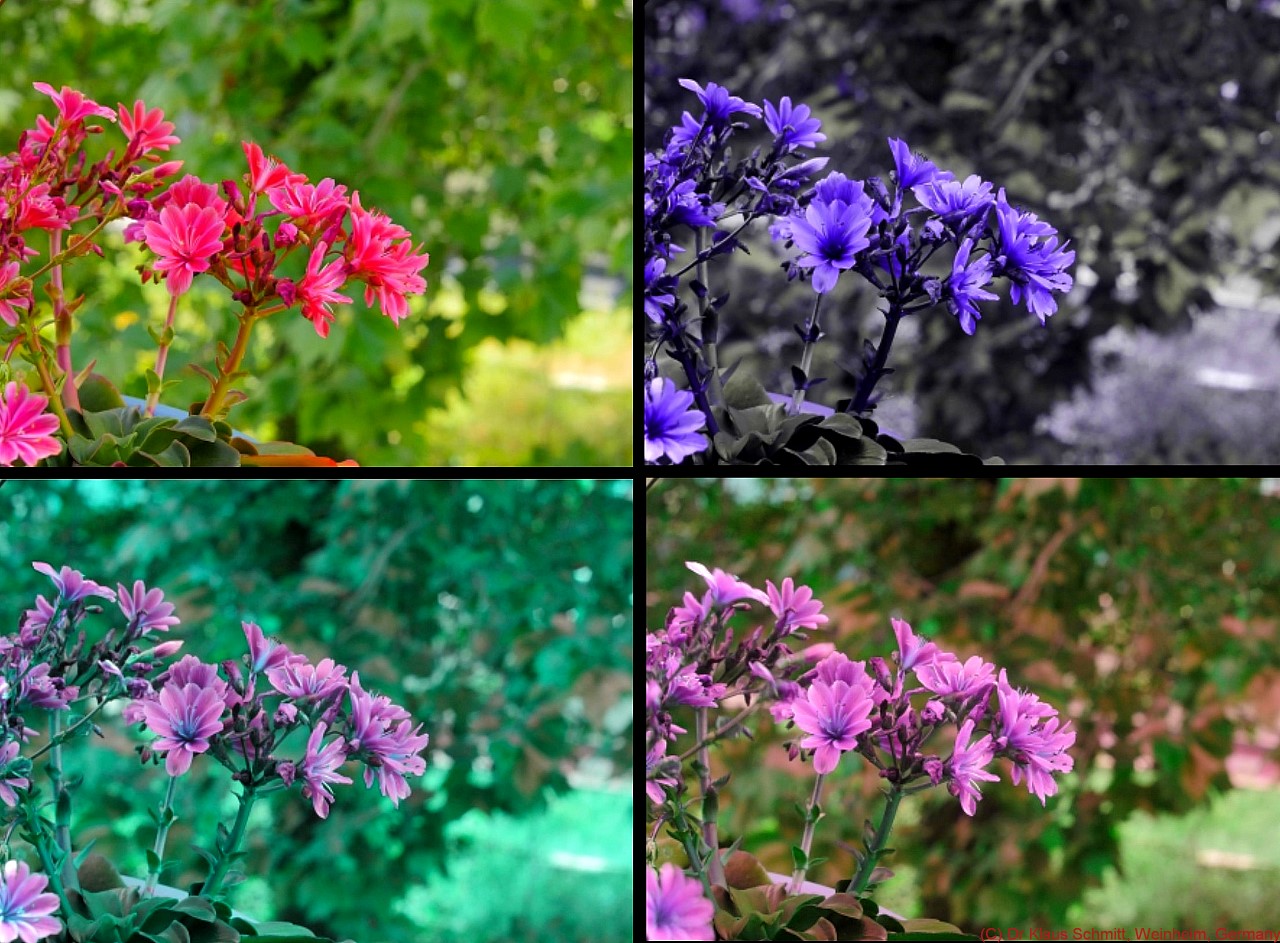
Quadryptich of human vision, reflected UV, simulated bee and butterfly vision (left to right, top to bottom):


Lewisia has a visible UV pattern, its petal tips are UV bright around 385nm, its center is UV dark, so this gets quite nicely visible, also in simulated butterfly and bee vision using this astonishing lens.

I have written more about that flower HERE 

I have written about that used lens HERE.

Stay tuned, more will follow on that fascinating subject...

More info on this very interesting field may be found on my site http://www.pbase.com/kds315/uv_photos

Monday, May 4, 2020

Surprising STEINHEIL f2.8/50mm lens for reflected UV photography IV

I had mentioned in my previous thread, that a few years ago I got an older lens, which was made decades ago by famous lens maker STEINHEIL . It is a possibly single coated, well made 2.8/50mm lens which attracted me, since it showed some seemingly good UV transmission when shining an 365nm UV LED beam through it. The surprise came when I had it under my spectrometer, revealing its high and deep reaching UV transmission.  I have already shown that it performs quite well using the Baader-U filter, and here now its performance using some even deeper reaching UV filters, using a 340nm shortpass and the IDAS 330nm filter.

[click on image gets you a larger image]

VIS image using UV/IR Cut filter:
 

UV image using IDAS UV filter (approx. 330-370nm) at f5.6:
 

UV image using IDAS UV filter (approx. 330-370nm) at f8:
 

UV image using IDAS UV filter (approx. 330-370nm) at f11:
 

UV image using IDAS UV filter (approx. 330-370nm) at f16:
 

UV image using 340nm UV filter (approx. 320-340nm) at f5.6:
 

UV image using 340nm UV filter (approx. 320-340nm) at f8:
 

UV image using 340nm UV filter (approx. 320-340nm) at f11:
 

UV image using 340nm UV filter (approx. 320-340nm) at f16:
 

VIS and UV (IDAS) image side-by-side both at f8:
 

VIS and UV (340nm) image side-by-side both at f8:
 

As I had mentioned before, it got pretty clear that this lens has a very high UV performance, as at 365nm it transmits around 75%. Its peak transmission with Baader-U filter attached is around 68% at 360nm. At shorter wavelengths it still has a very useful 56% transmission at 340nm and 22% at  320nm.

Before I had shown here, that stopping down has improved sharpness significantly, especially in reflected UV light using the Baader-U filter. Now it gets quite obvious, that this lens is also performing very well at even shorter wavelengths, making it a very useful lens for reflected UV down to 330-340nm at an optimal f8/f11 setting, especially since the image size deviation between visible and UV image is also only 1.3% there .

I have written about that lens more HERE.

Stay tuned, more will follow on that fascinating subject...

More info on this very interesting field may be found on my site http://www.pbase.com/kds315/uv_photos