Monday, April 9, 2012

[UV] Light Source - Flower - Filter - Lens - Sensor: a simulation of reflected UV photography

Well, just some ideas that came into my mind quite a while ago, when I was thinking about the chain:
Light Source -> Flower -> Filter -> Lens ->Sensor

To simplify things, let's assume

a) the light source being sunlight or Xenon light, as they are quite similar in the interesting UV region 300-400nm.
b) the lens being a quartz fluorite lens with flat transmittance in the interesting UV region 300-400nm

[click on image to see a larger one]

So here graphs (normalized to unity) showing in this example
1) flower (Mexican Zinnia, UV reflective flower tip): green line
2) filter (Baader U filter 2"): blue line
3) sensor (Nikon D200 mod. with quartz glass internal filter): red line


now lets add what that flower looks like after having passed the filter (pink line)


and finally what that sensor records of that (cyan line)


btw. if a normal, but UV transmitting glass lens (Noflexar 35mm - yellowish line) is used between filter and sensor, then the result looks like that:


The simple laymans terms summary: This is what the flowers reflects (green line) and what the camera records of it (cyan line) through a Baader U filter and Noflexar 35mm lens:


The bad news is, that it will only be a bit better if a quartz fluorite lens is being used, but not substantially.


So in the first case the 320-390nm Baader U filter appears like a 372BP15 bandpass filter and in the second, better example, like a 365BP16 bandpass filter. This has nothing to do with the type or quality of the Baader U filter, but is caused only by the process chain it is used within!


***THESE ARE VERY SIMPLIFIED SIMULATIONS BARE SCIENTIFIC ACCURRACY, SO NO DECISION, JUST INSIGHT SHOULD BE BASED ON THAT***


Stay tuned, more will follow on that fascinating subject...

More info on this very interesting field may be found on my site http://www.pbase.com/kds315/uv_photos

Saturday, April 7, 2012

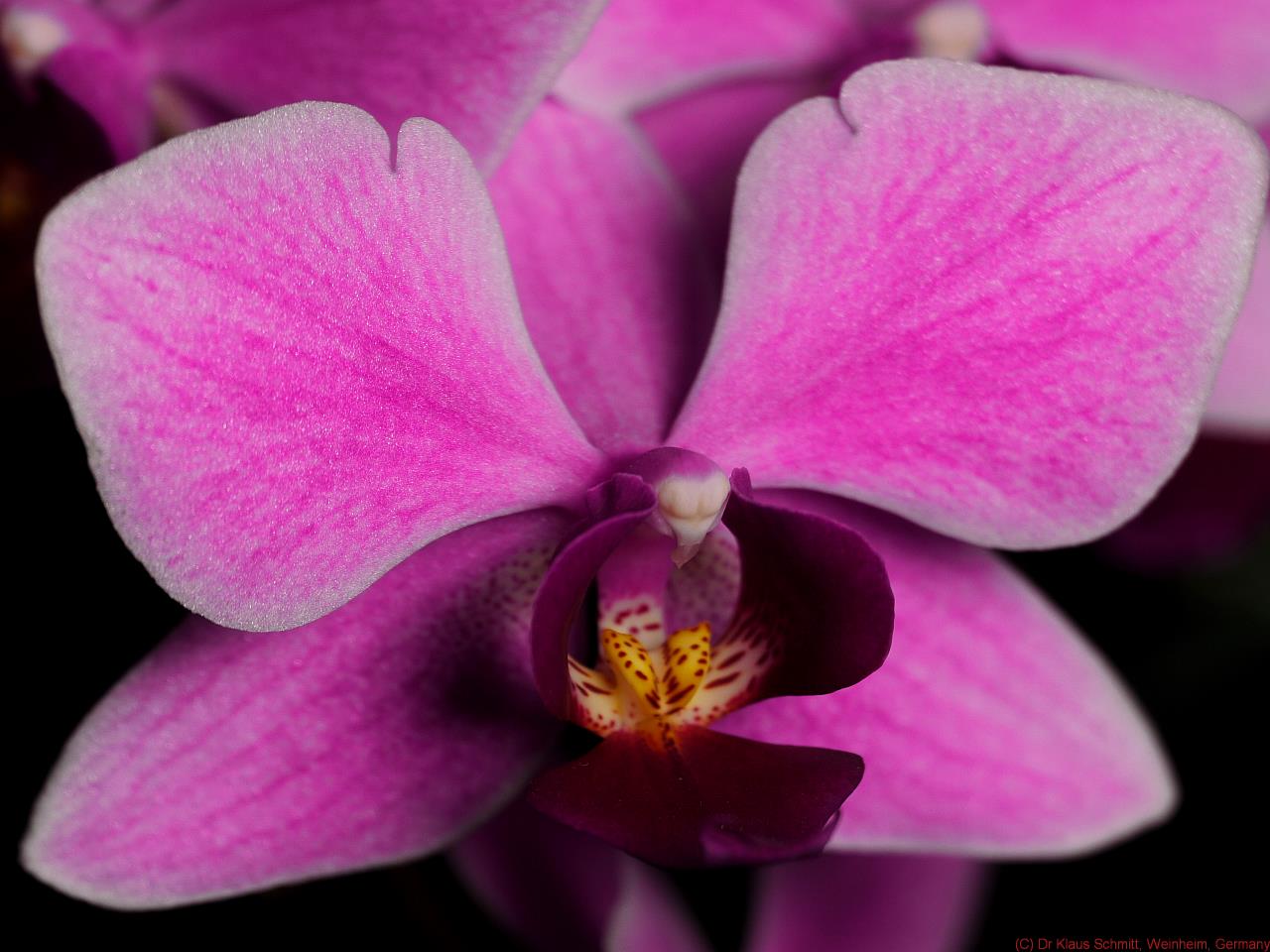
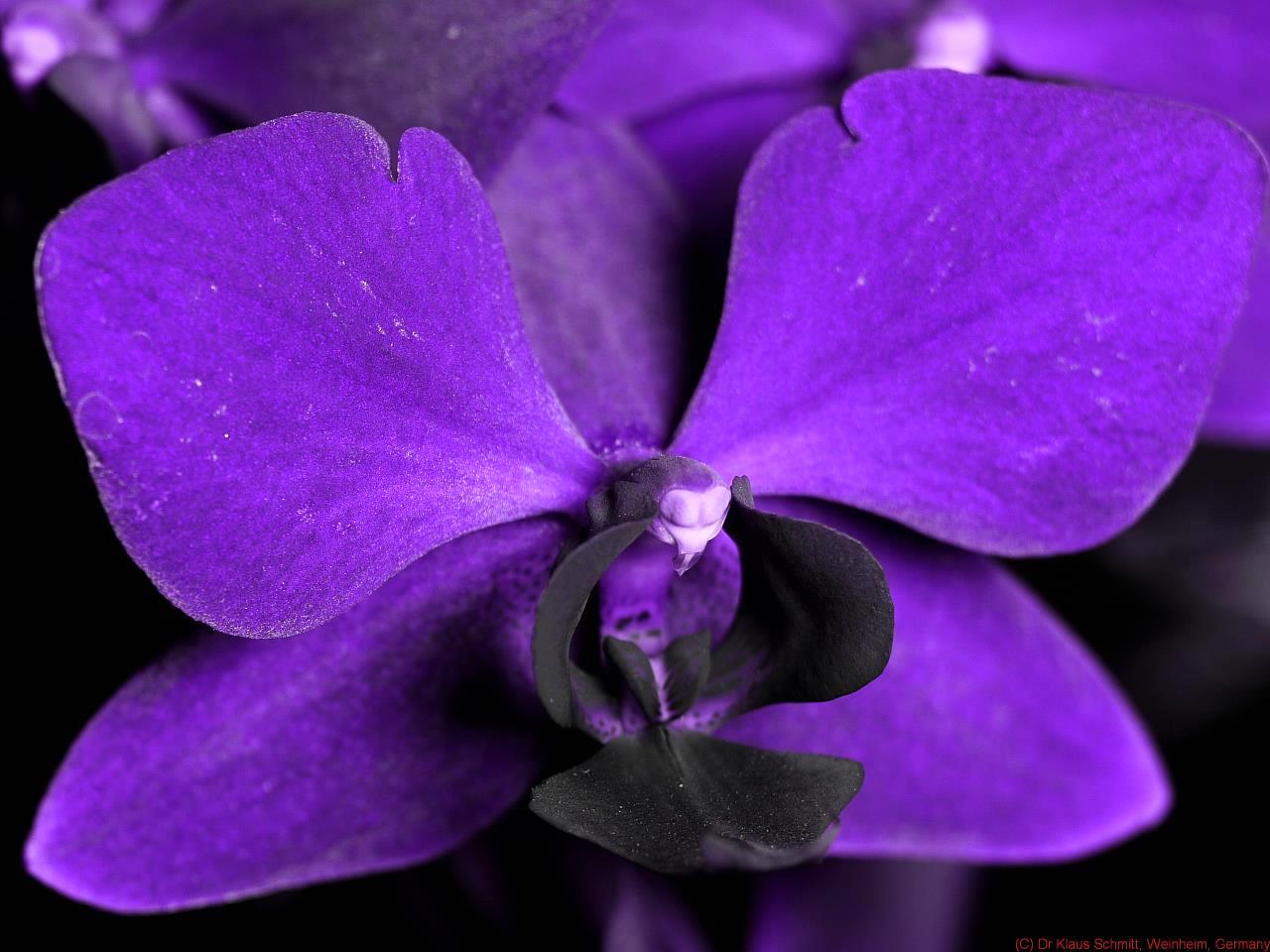
[UV] Phalaenopsis flower at 300-350nm reflected UV ultraviolet photography

I have previously shown here, how the world looks like at 300-350nm. Now more how a flower (Phalaenopsis in that case) looks like at 300-350nm in reflected UV photography in comparison to using a Baader U filter (320-390nm) and in normal visible light.

[click on image to see a larger one]

Visible light:


UV: Baader U filter:


UV: 330-370nm:


UV: 300-350nm:


In the last 300-350nm shot, the colors denote: yellowish green is 330-345nm, blue is <325nm.

These triptychs will show the differences side-a-side:


The shorter the waveband used gets, the more details the flowers reveals.


Stay tuned, more will follow on that fascinating subject...

More info on this very interesting field may be found on my site http://www.pbase.com/kds315/uv_photos
Friday, April 6, 2012

[UV] the world + flower at 300-350nm reflected UV ultraviolet photography

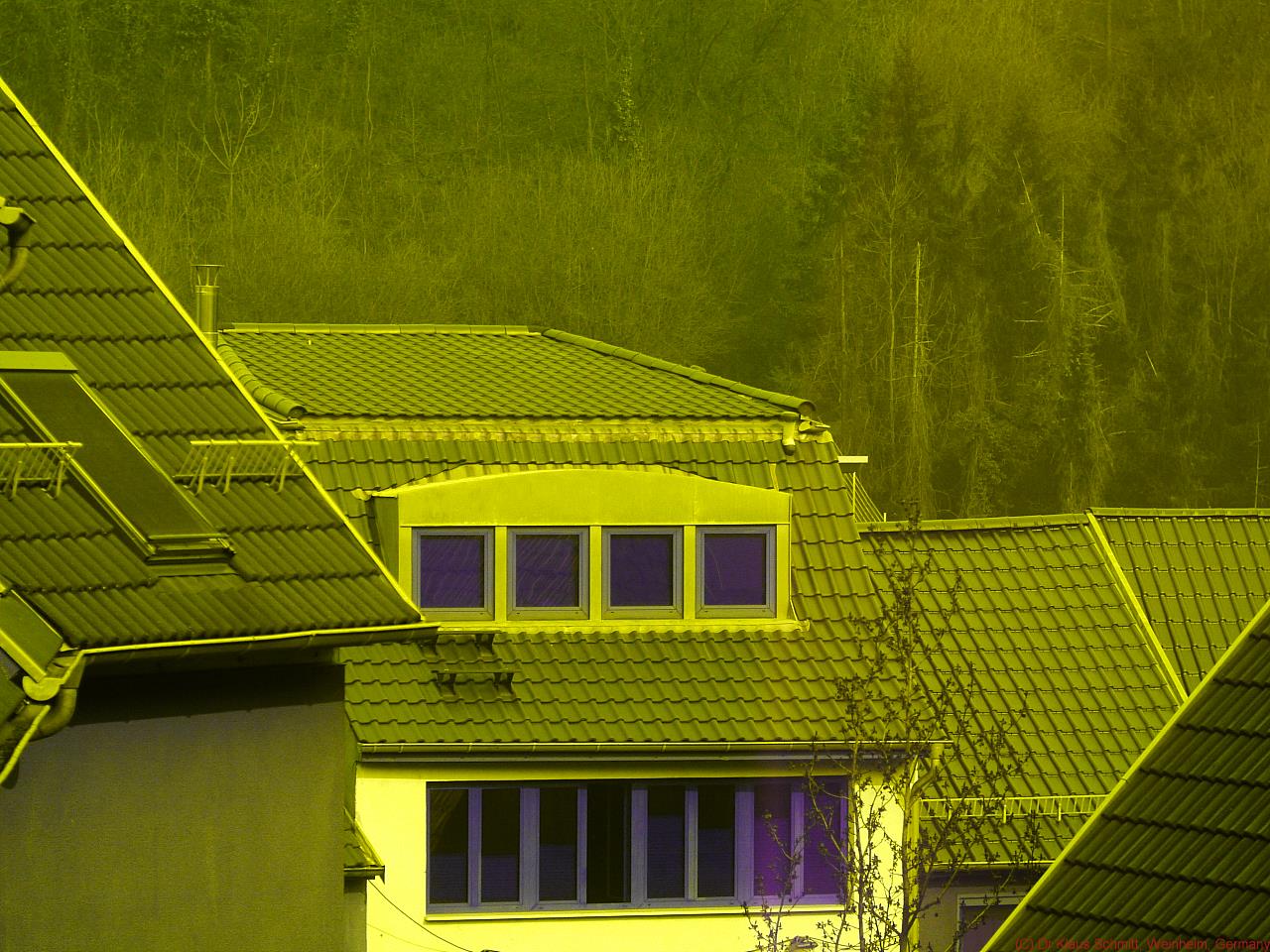
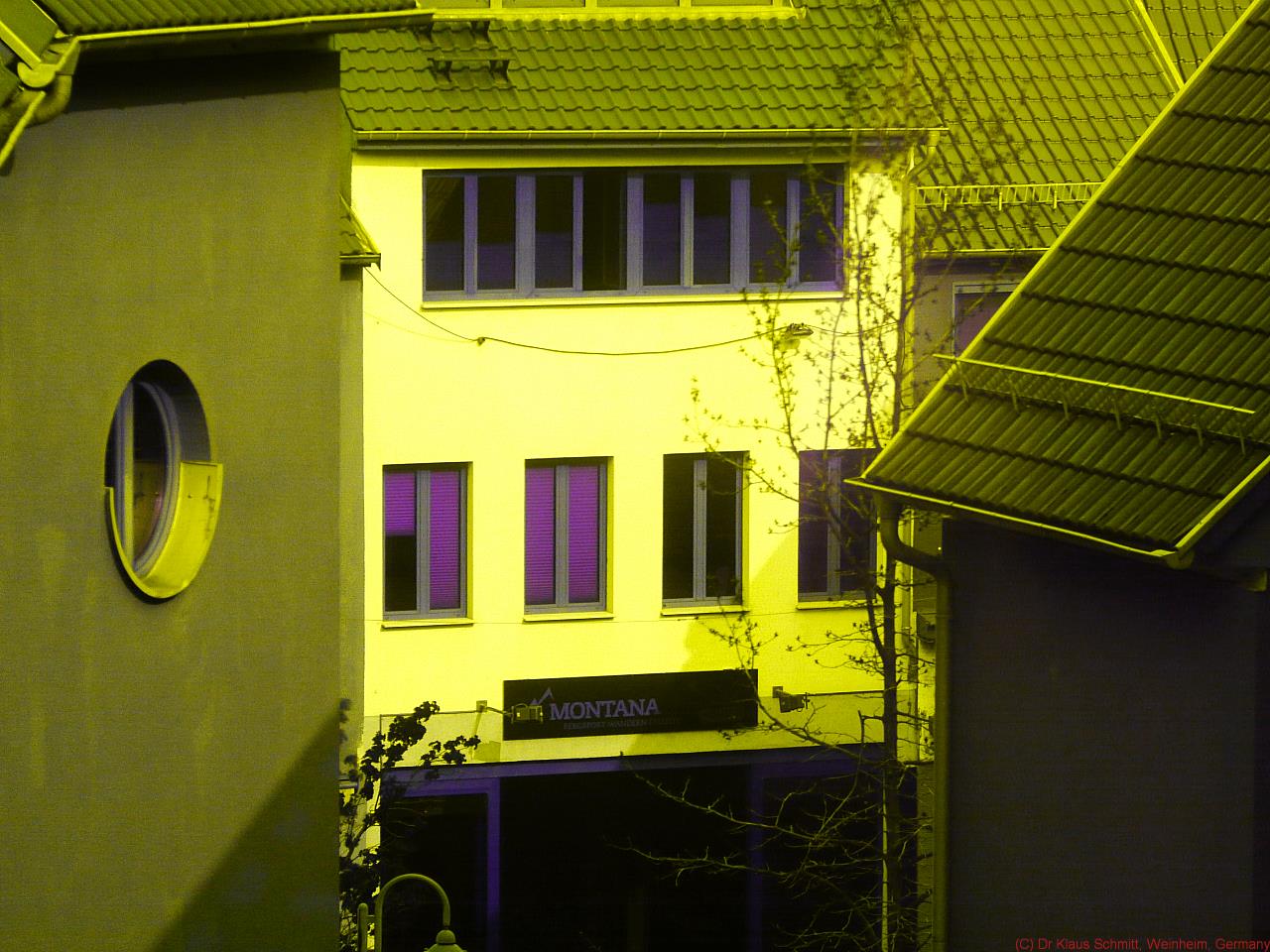
Well, just some first tests trying to have a look at the world at 300-350nm in reflected UV photography. There will be more about the "how, when, what" later here - just look...

[click on image to see a larger one]


and here how my white Clematis flower looks like:


Stay tuned, more will follow on that fascinating subject...

More info on this very interesting field may be found on my site http://www.pbase.com/kds315/uv_photos
Tuesday, April 3, 2012

[UV] Spring flowers in UV ultraviolet light - yellow overdose

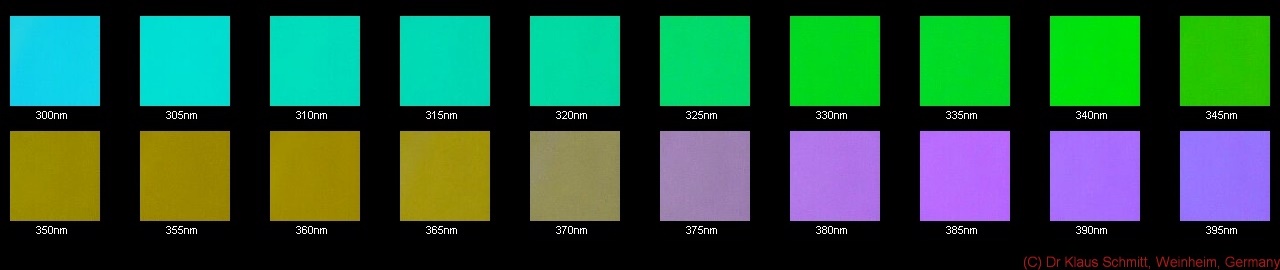
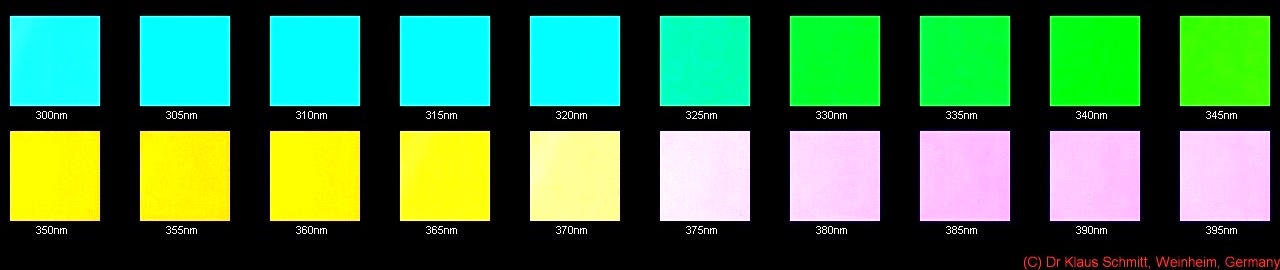
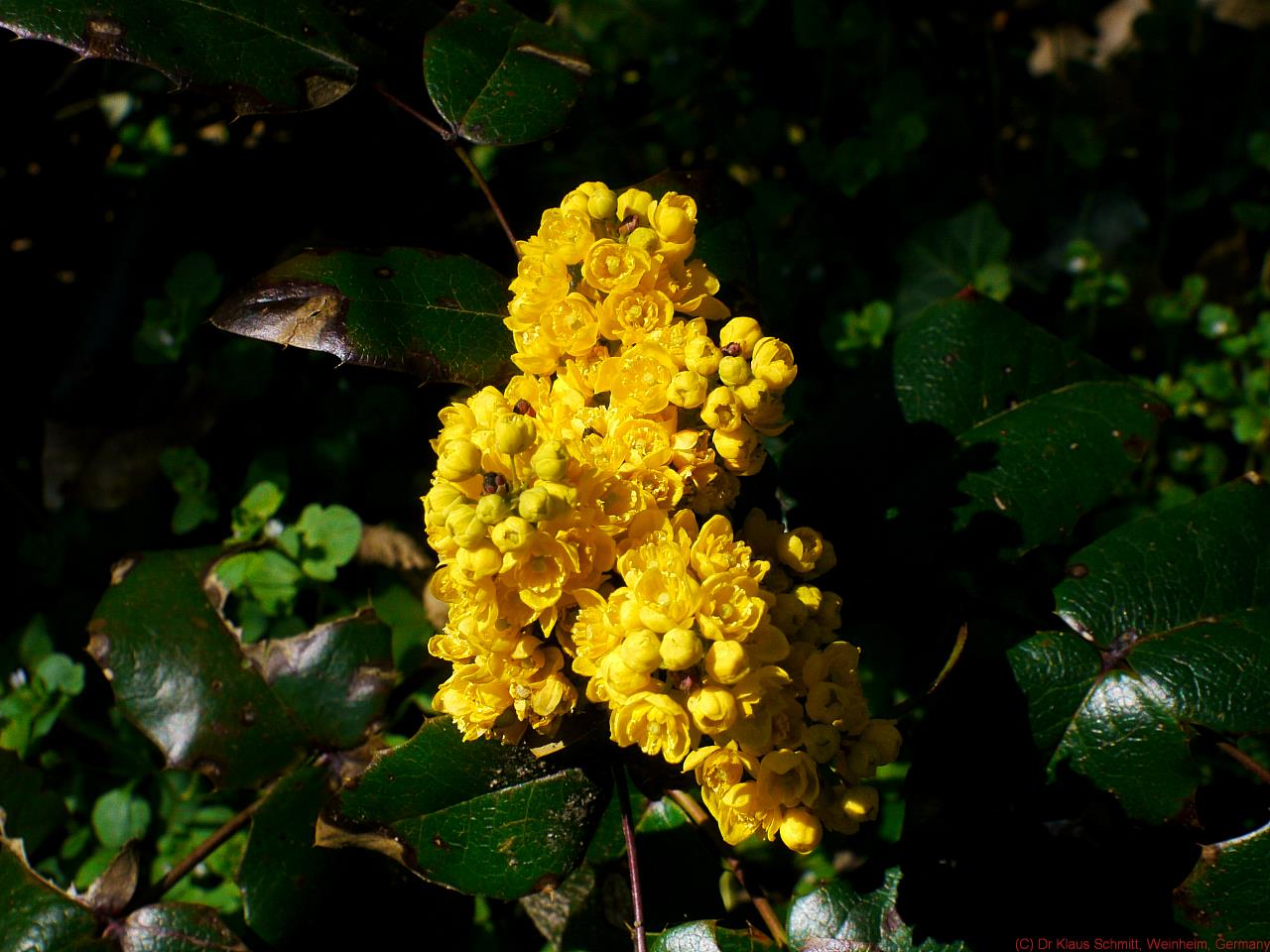
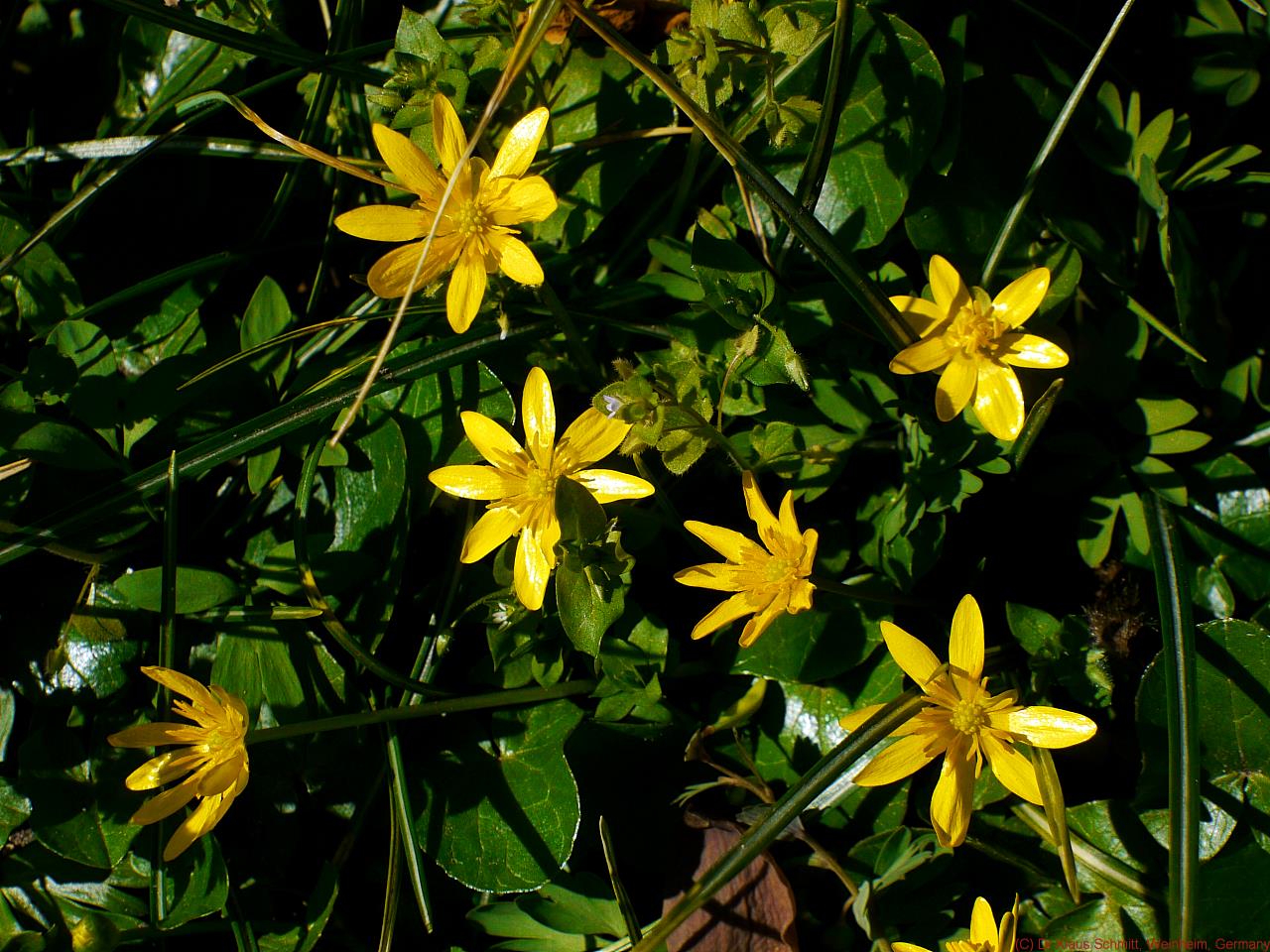
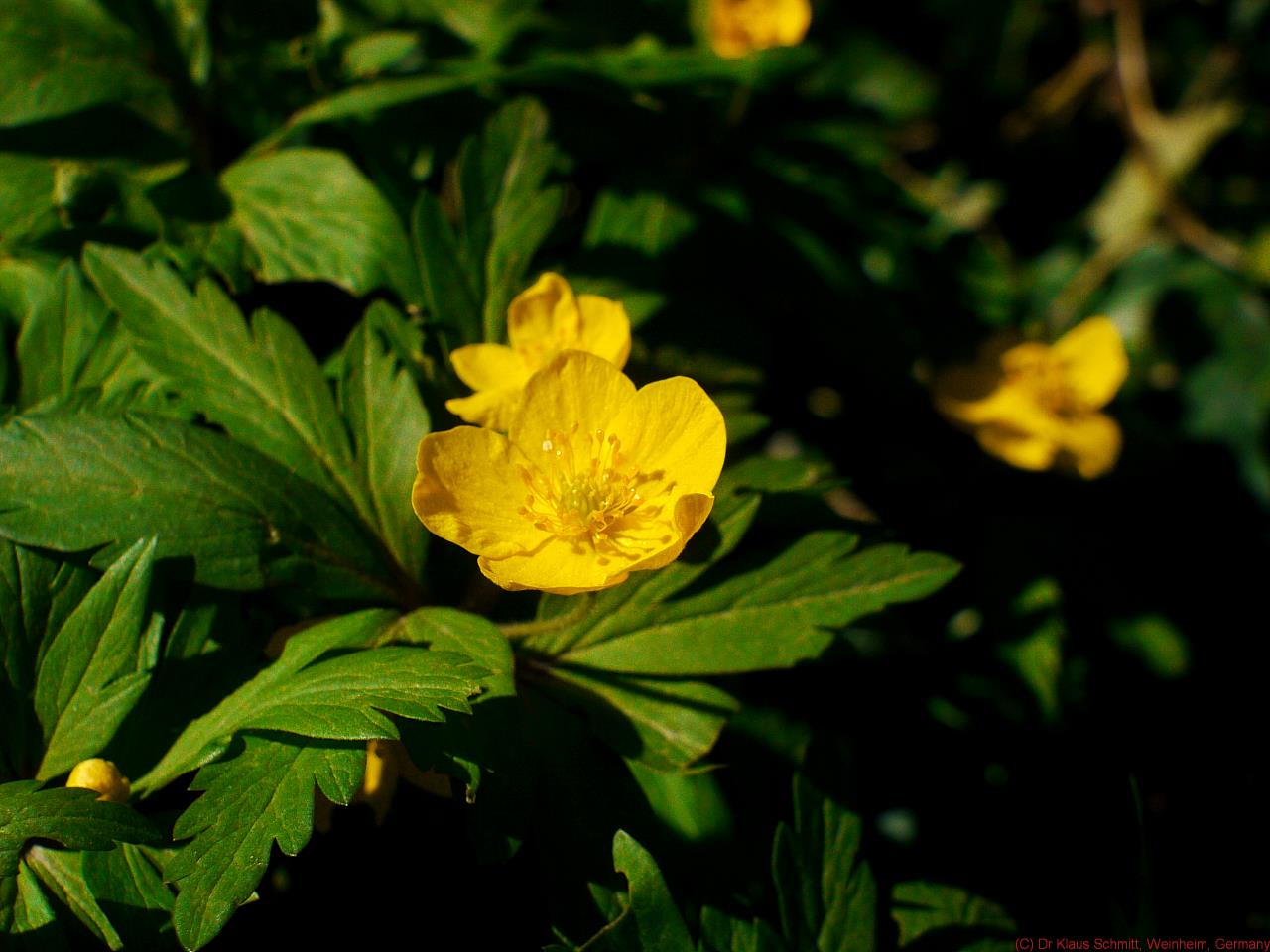
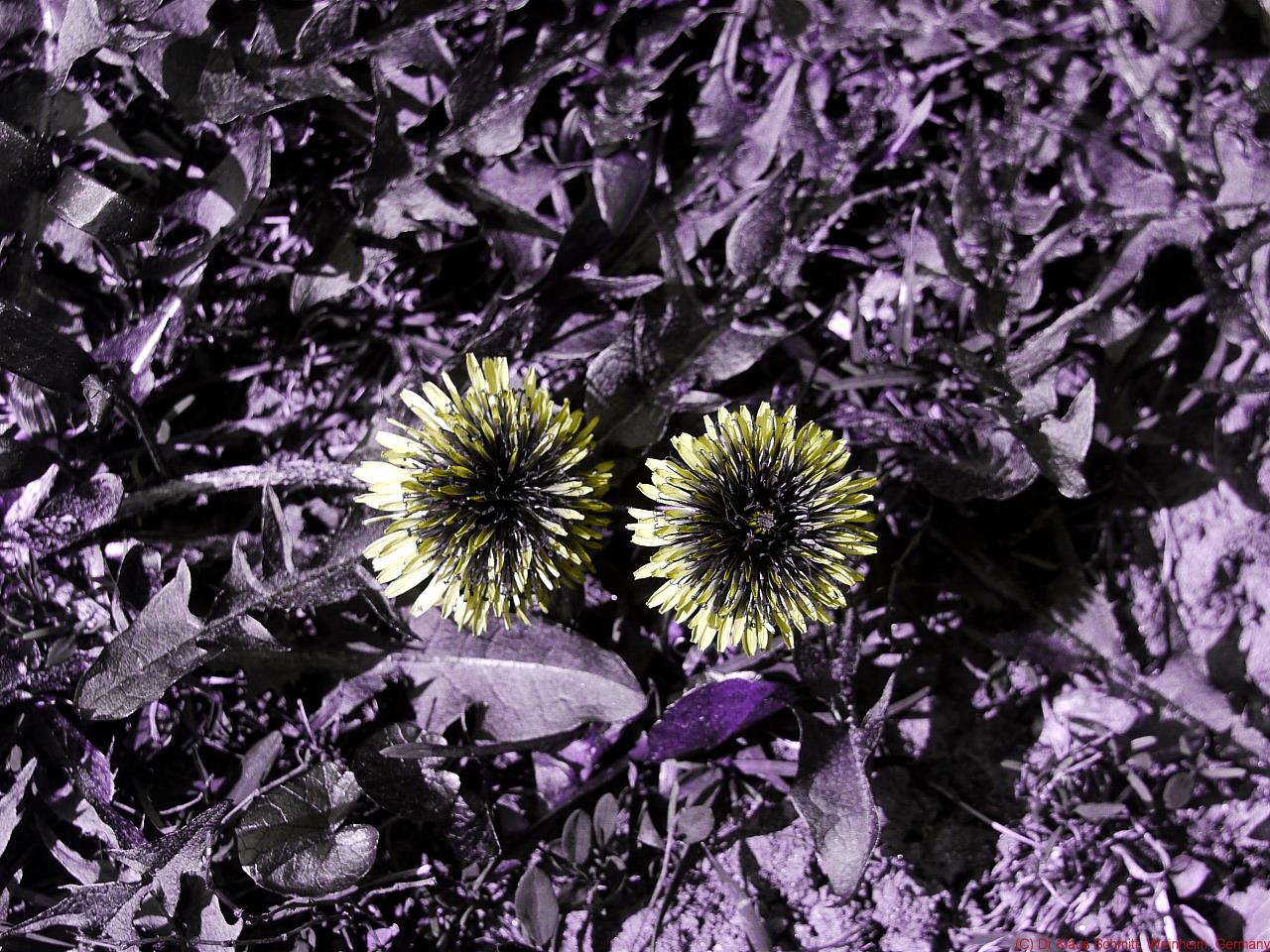
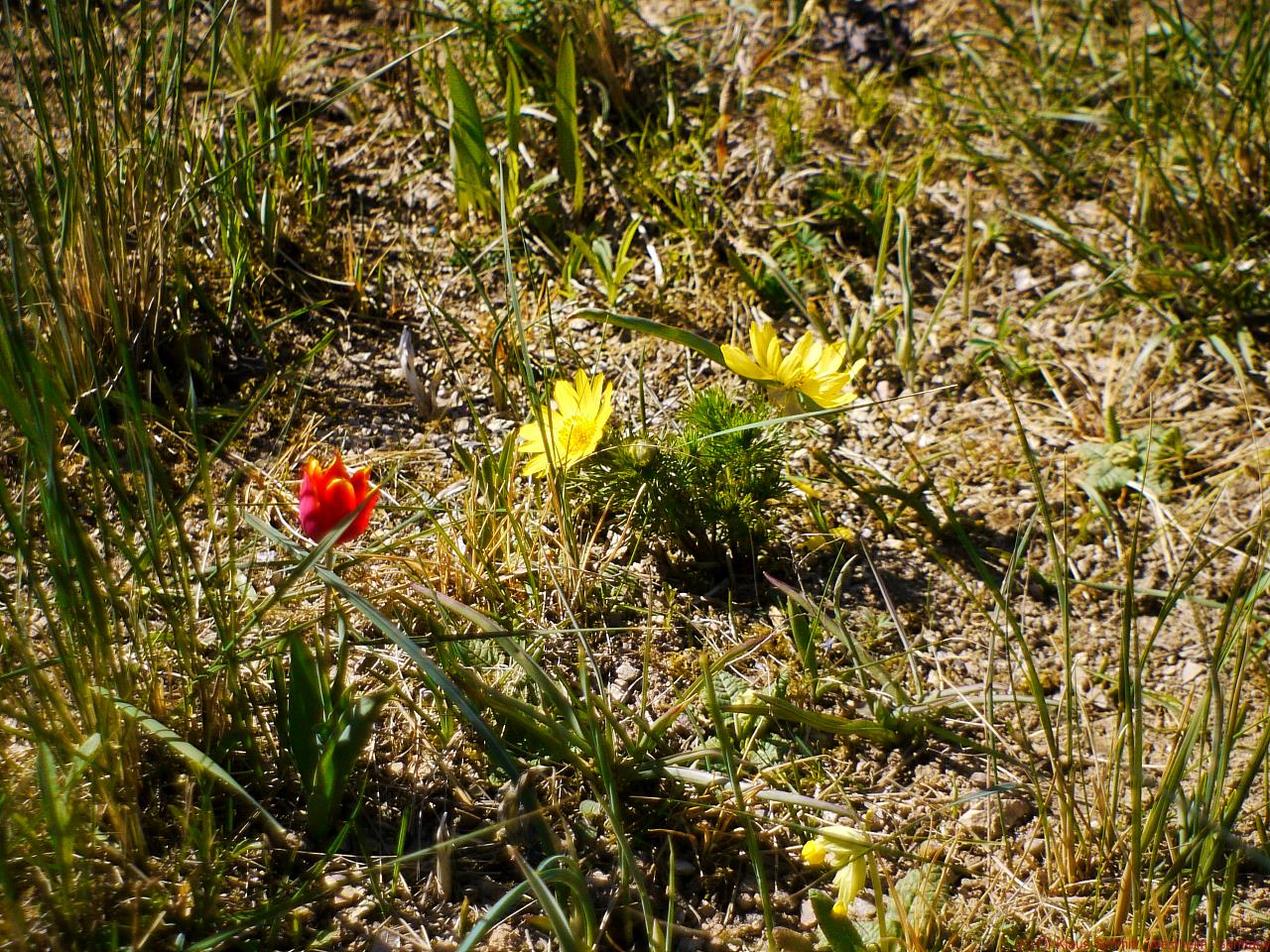
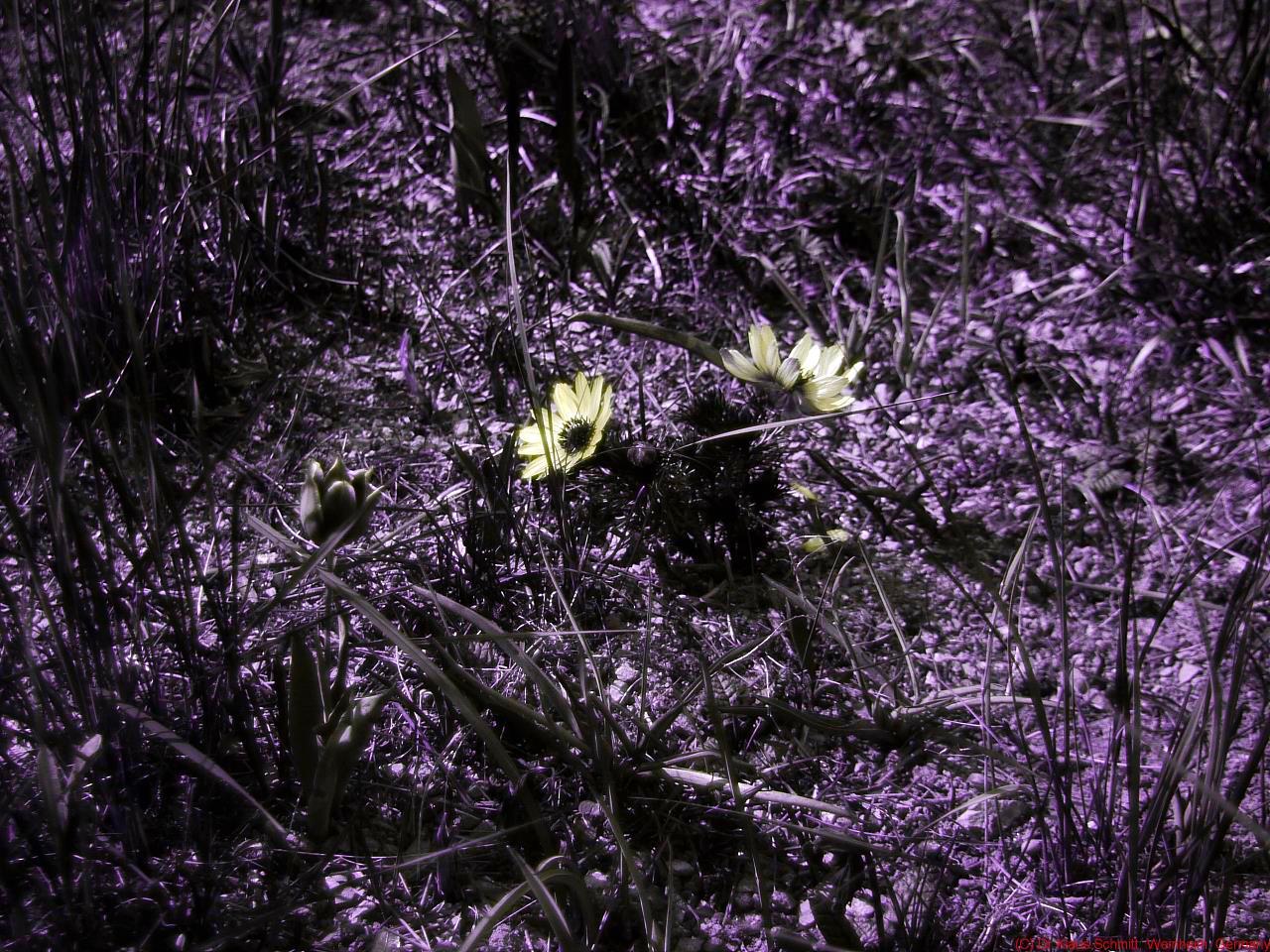
Just the perfect sunny spring day today and a chance to capture some yellow flowers, that also come out yellow in UV in my standardized false color scheme - as they reflect UV around 360nm. I'm showing matched image pairs (VIS, UV).

[click on image to see a larger one]

This UV image here also uses my standardized false UV color normal + high intensity palette:


1) Oregon grape (Mahonia aquifolium)


2) Dandelion (Taraxacum officinale) and Daisy (Bellis perennis) and Ground Ivy (Glechoma hederacea)


3)Lesser Celandine (Ranunculus ficaria)


4) Yellow Anemone (Anemone ranunculoides)


5) Dandelion (Taraxacum officinale)


6) Wild Tulip (Tulipa xx) and Pheasant's Eye (Adonis vernalis)


Pretty amazing what nature does to attract pollinators!


Stay tuned, more will follow on that fascinating subject...

More info on this very interesting field may be found on my site http://www.pbase.com/kds315/uv_photos
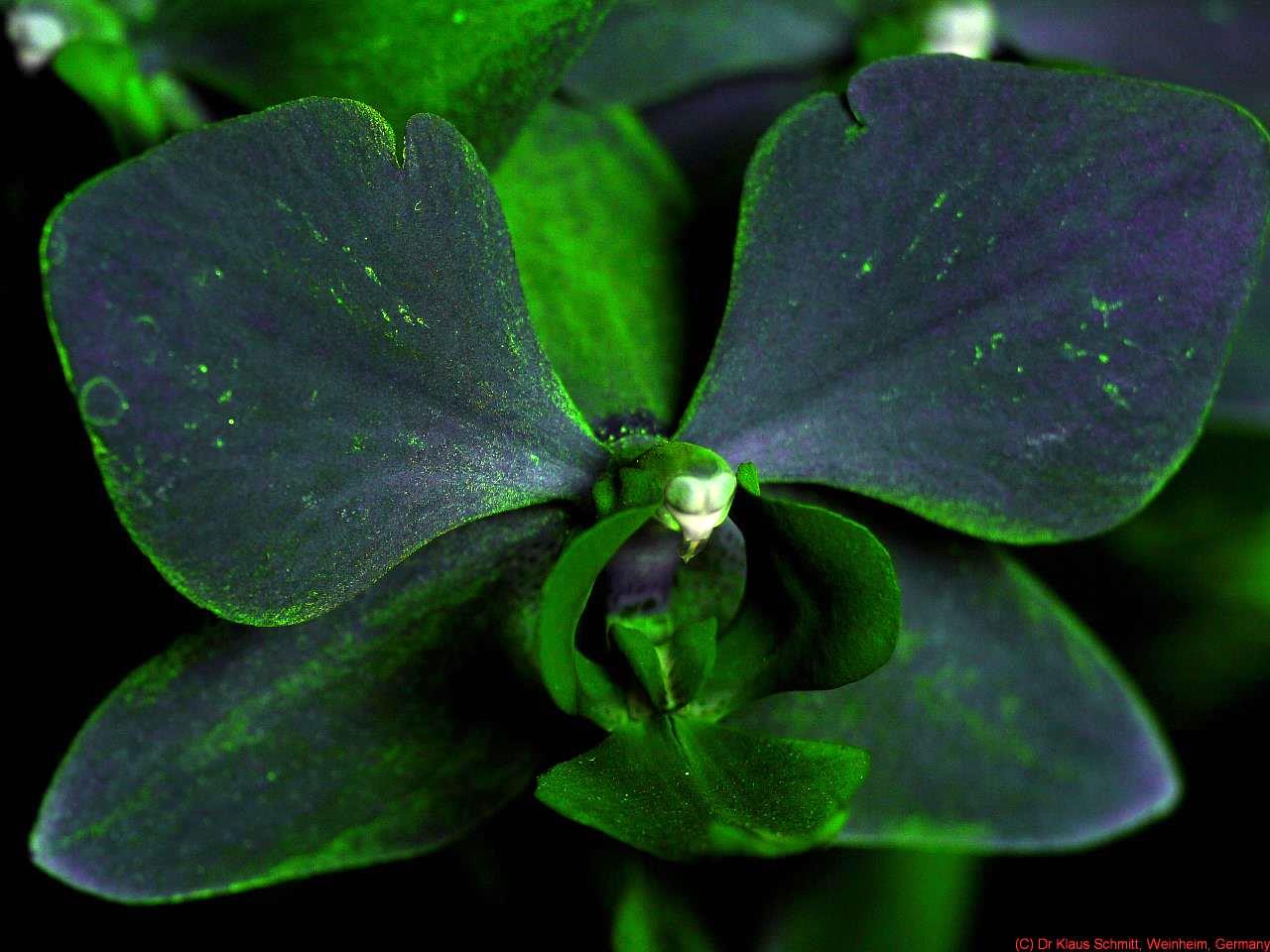
[UV] Succulent flower Carpobrotus edulis in UV ultraviolet light

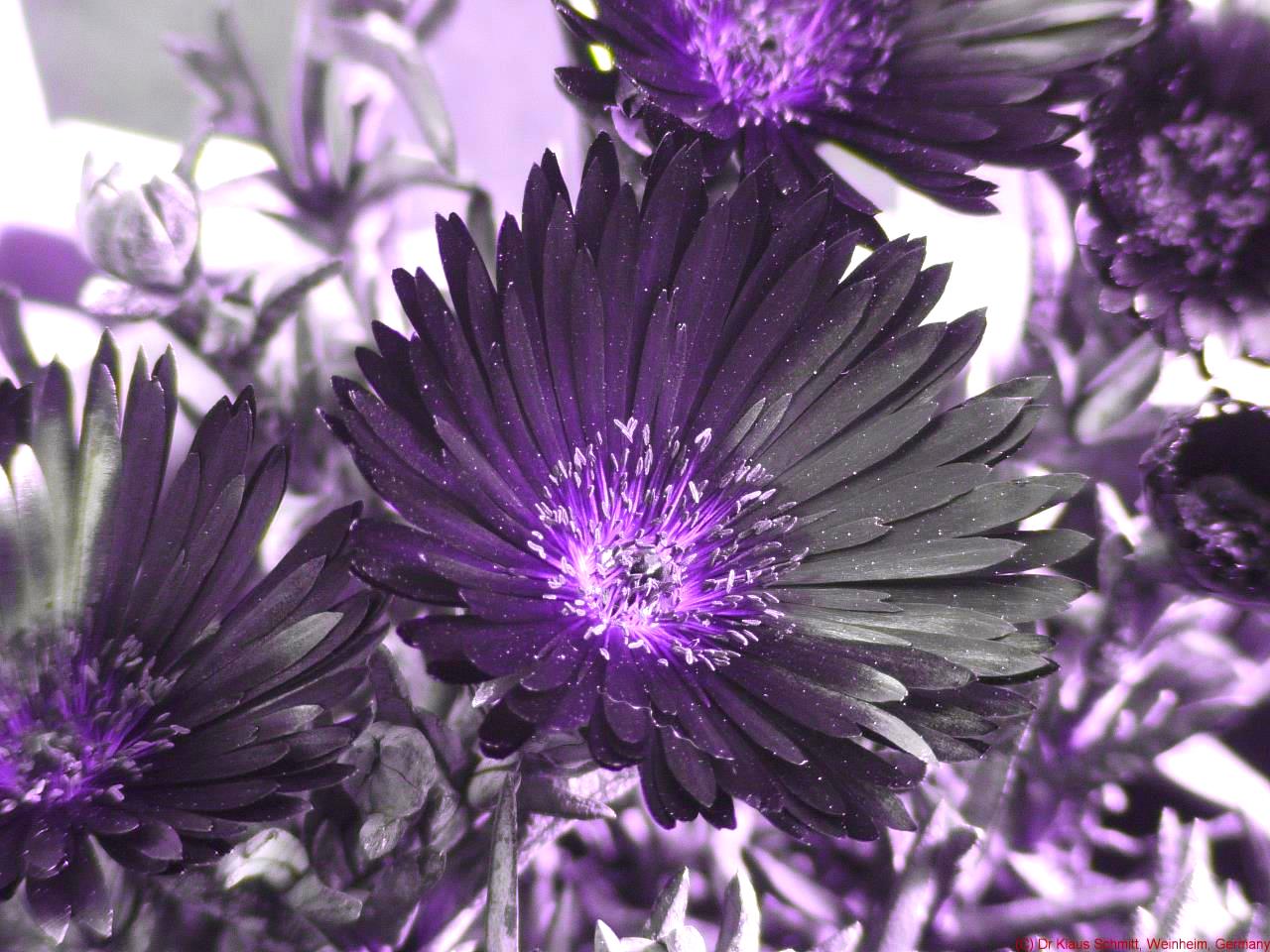
Here is a succulent flower (most likely Carpobrotus edulis) that was bought for our balcony. Shot in reflected ultraviolet light using the Baader U filter.

[click on image to see a larger one]
This UV image here also uses my standardized false UV color normal + high intensity palette:


UV image:


VIS image:


Pretty interesting to see the innards of that flower lit up very brightly in UV, surrounded by UV dark petals - that must make quite an attractive target for pollinators.

Stay tuned, more will follow on that fascinating subject...

More info on this very interesting field may be found on my site http://www.pbase.com/kds315/uv_photos

Tuesday, March 27, 2012

[UV] Barlow lens to eliminate vignetting when shooting in reflected UV

Today about using getting rid of vignetting when shooting reflected UV light and using older lenses. The rescue used here is a quartz Balow lens.

[click on image to see a larger one]
UV test image, left without and right with quartz Barlow lens:


White Clematis in UV:


That used Barlow lens enlarged the projected image by a factor of 1.4x, hence letting the vignetting disappear beyond the sensor borders.

Stay tuned, more will follow on that fascinating subject...

More info on this very interesting field may be found on my site http://www.pbase.com/kds315/uv_photos

Monday, March 26, 2012

[UV] White Clematis in ultraviolet light using a quartz Focal Reducer lens

More shots using my white Clematis hybride I recently got. Here now using that before presented Spectrometer Quartz Fluorite Achromat f4/84mm lens with a 0.42x quartz Focal Reducer lens to make it a f1.7/35mm lens.

[click on image to see a larger one]

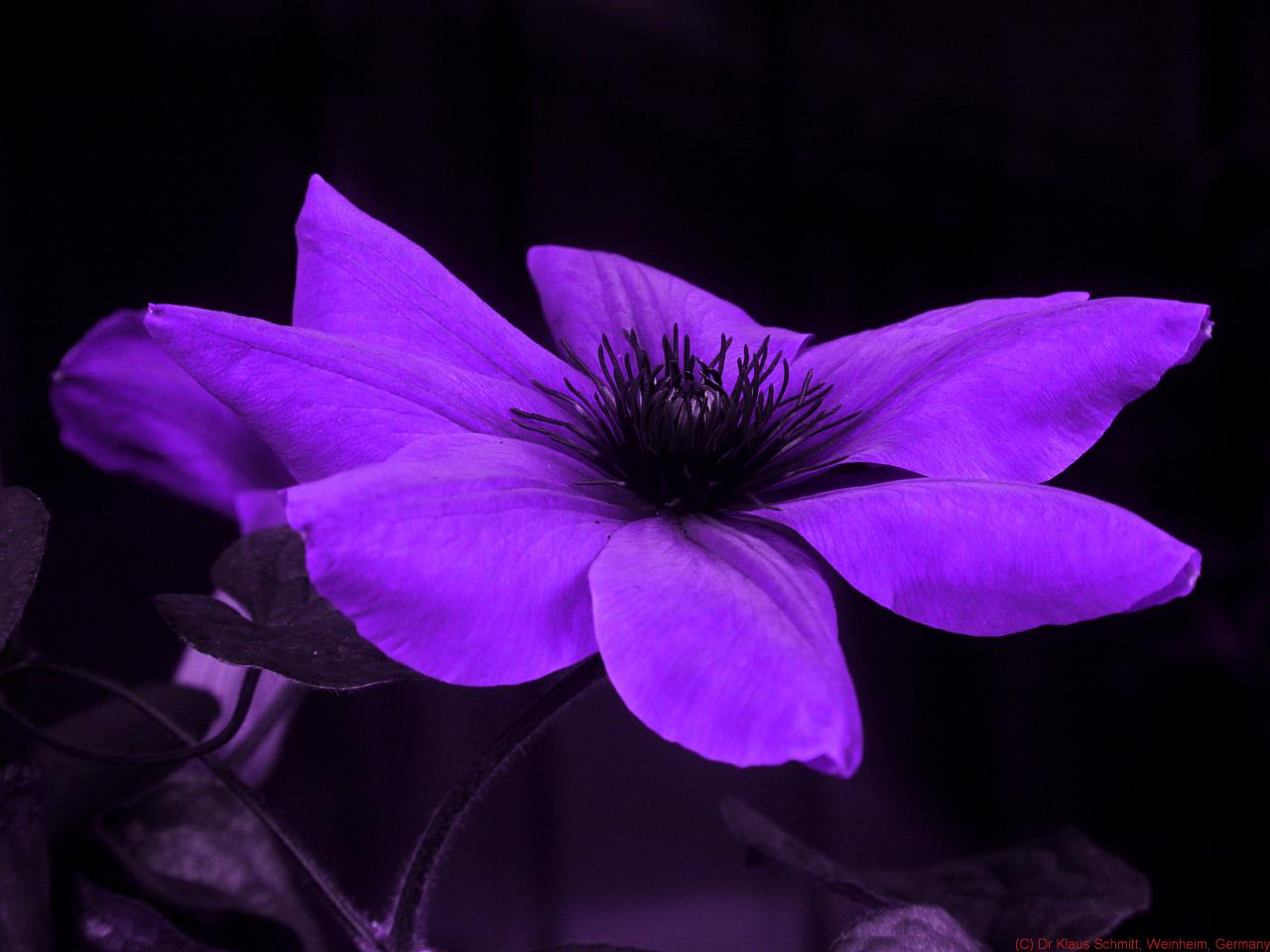
This UV image here also uses my standardized false UV color normal + high intensity palette:


White Clematis in UV:


and in visible light (VIS):


Differential VIS-UV:


The VIS-UV differential clearly shows, that despite the Focal Reducer, still hardly any focus shift is present.

Stay tuned, more will follow on that fascinating subject...

More info on this very interesting field may be found on my site http://www.pbase.com/kds315/uv_photos