Showing posts with label 190-650nm. Show all posts

Saturday, October 24, 2020

Reflected UV photography + videography using a MCP Amplified Camera System III

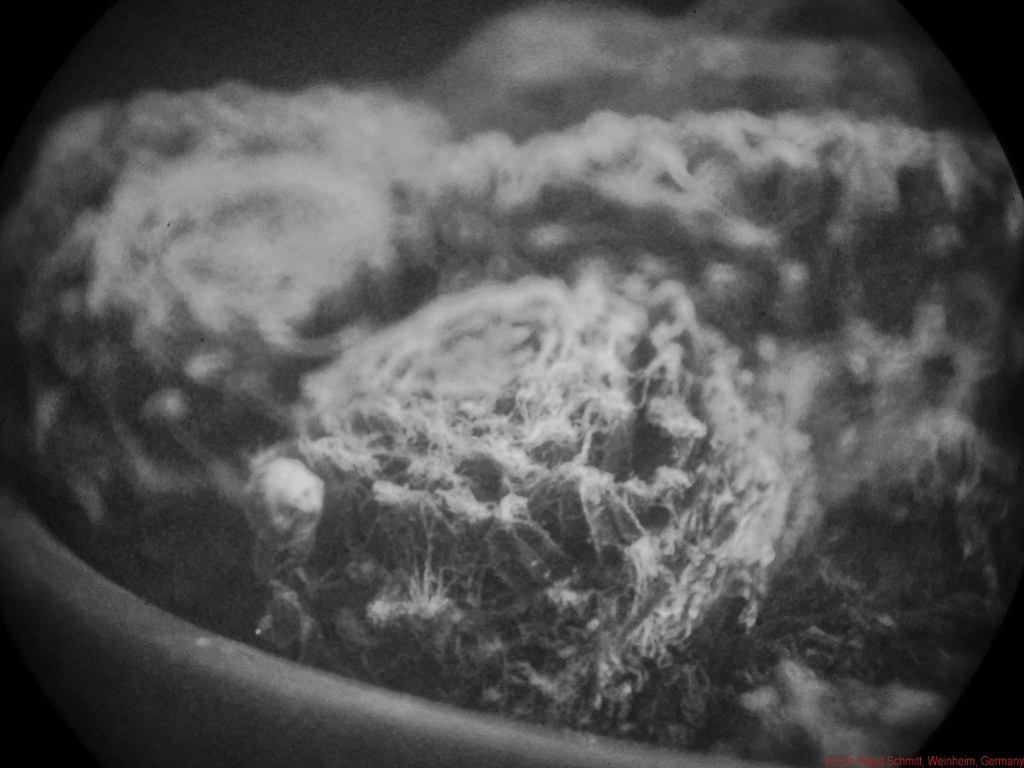
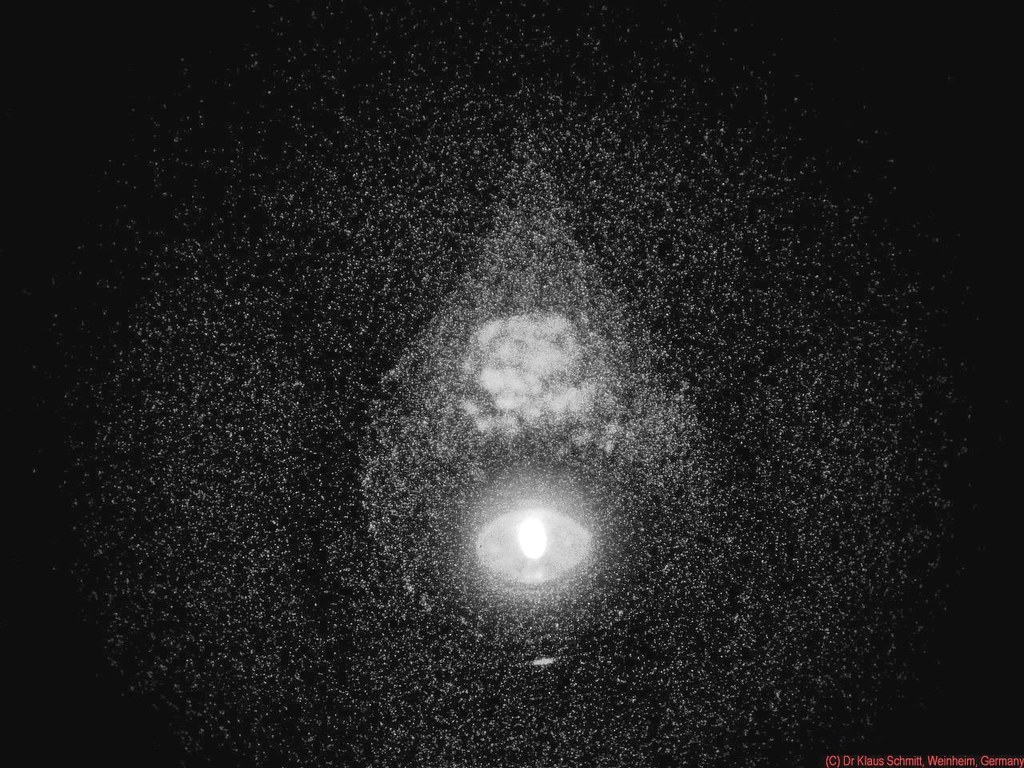
Today more about an experiment I have done, using a light amplification device in front of a normal visible light camera for recording reflected UV footage. This device uses a MCP (multi channel plate) with UV sensitive photocathode (approx. 190nm - 650nm), amplifies light by approx. 20-50.000 and shows the resulting image on a green phosphor screen. 

Using a suitable optical system, I relayed this image to my normal, visible light camera. UV filter used was a fully IR blocked (OD6) UV transmission filter (peak at 250nm). Target was a tea candle.

Using a f3.5/50mm quartz fluorite lens and an extension tube to get higher magnification.

1) Visible / IR light recorded w/o filter on full spectrum camera:


2) UV light recorded with a (fully blocked to 1100nm) 311nm filter on full spectrum camera: 

It gets rather obvious that the 311nm line is - as expected - quite intense on the visible left and right outsides of the candle, where the UV emission of the OH (hydroxyl) radicals happens.

3) UV light recorded with a (fully blocked to 1100nm) Baader-U (320-395nm) filter on full spectrum camera:

The reaction of the CH (hydrocarbon) radicals however emit UV around 385-395nm mostly on the top, which can be shown using the Baader-U UV transmitting filter (320-395nm).

I have written about this system doing still UV photography HERE.

I have done similar with a different amplified camera system before which did not allow to have an external camera attached, with just a TV output HERE

Stay tuned, more will follow on that fascinating subject...

More info on this very interesting field may be found on my site http://www.pbase.com/kds315/uv_photos

Friday, October 23, 2020

Reflected UV photography + videography using a MCP Amplified Camera System II

Today about an experiment I have done, using a light amplification device in front of a normal visible light camera for recording reflected UV footage. This device uses a MCP (multi channel plate) with UV sensitive photocathode (approx. 190nm - 650nm), amplifies light by approx. 20-50.000 and shows the resulting image on a green phosphor screen. 

Using a suitable optical system, I relayed this image to my normal, visible light camera. UV filter used was a fully IR blocked (OD6) UV transmission filter (peak at 250nm). Taget was a tea candle.

 Using a f3.5/50mm quartz fluorite lens:


This system shows quite some usefulness, especially under low light conditions, or when it is about recording deeper in UV where a normal full spectrum camera is not sensitive anymore.

I have written about this system doing still UV photography HERE.

I have done similar with a different amplified camera system before which did not allow to have an external camera attached, with just a TV output HERE

Stay tuned, more will follow on that fascinating subject...

More info on this very interesting field may be found on my site http://www.pbase.com/kds315/uv_photos
Monday, December 9, 2019

Reflected UV photography using a MCP Amplified Camera System

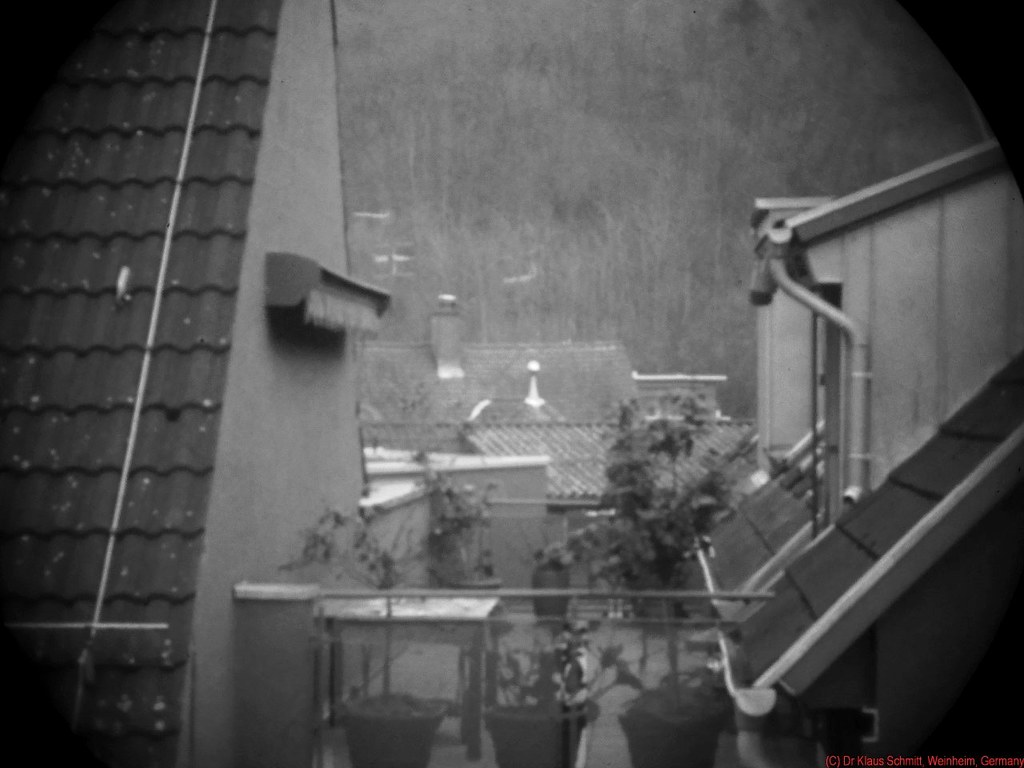
Today about an experiment I have done, using a light amplification device in front of a normal visible light camera for recording reflected UV images. This device uses a MCP (multi channel plate) with UV sensitive photocathode (approx. 190nm - 650nm), amplifies the light by approx. 20-50.000 and shows that image then on a green phosphor screen. Using a suitable optical system, I relayed this image to my normal, visible light camera. UV filter used was a fully IR blocked (OD6) UV transmission filter (peak 350nm).

[click on image gets you a larger image]

Some of the UV images which I recorded just for a few tests...

Using a 50mm quartz fluorite lens:


Using a 300mm catadioptric lens:


Rudbeckia close-up showing its prominent UV pattern:


Sedum close-up:


Tea candle inside showing how sensitive this system is:


It took a bit of experimenting to get this right, but now I have a range of useful lenses for this, working from far away up to close-up.

This system shows quite some usefulness, especially under low light conditions, or when it is about recording deeper in UV where a normal full spectrum camera is not sensitive anymore.

I have done similar with a different amplified camera system before which did not allow to have an external camera attached, with just a TV output HERE

Stay tuned, more will follow on that fascinating subject...

More info on this very interesting field may be found on my site http://www.pbase.com/kds315/uv_photos