Showing posts with label Helianthus tuberosus. Show all posts

Thursday, August 2, 2018

Jerusalem artichoke - Helianthus tuberosus in reflected ultraviolet photography and simulated bee and butterfly vision

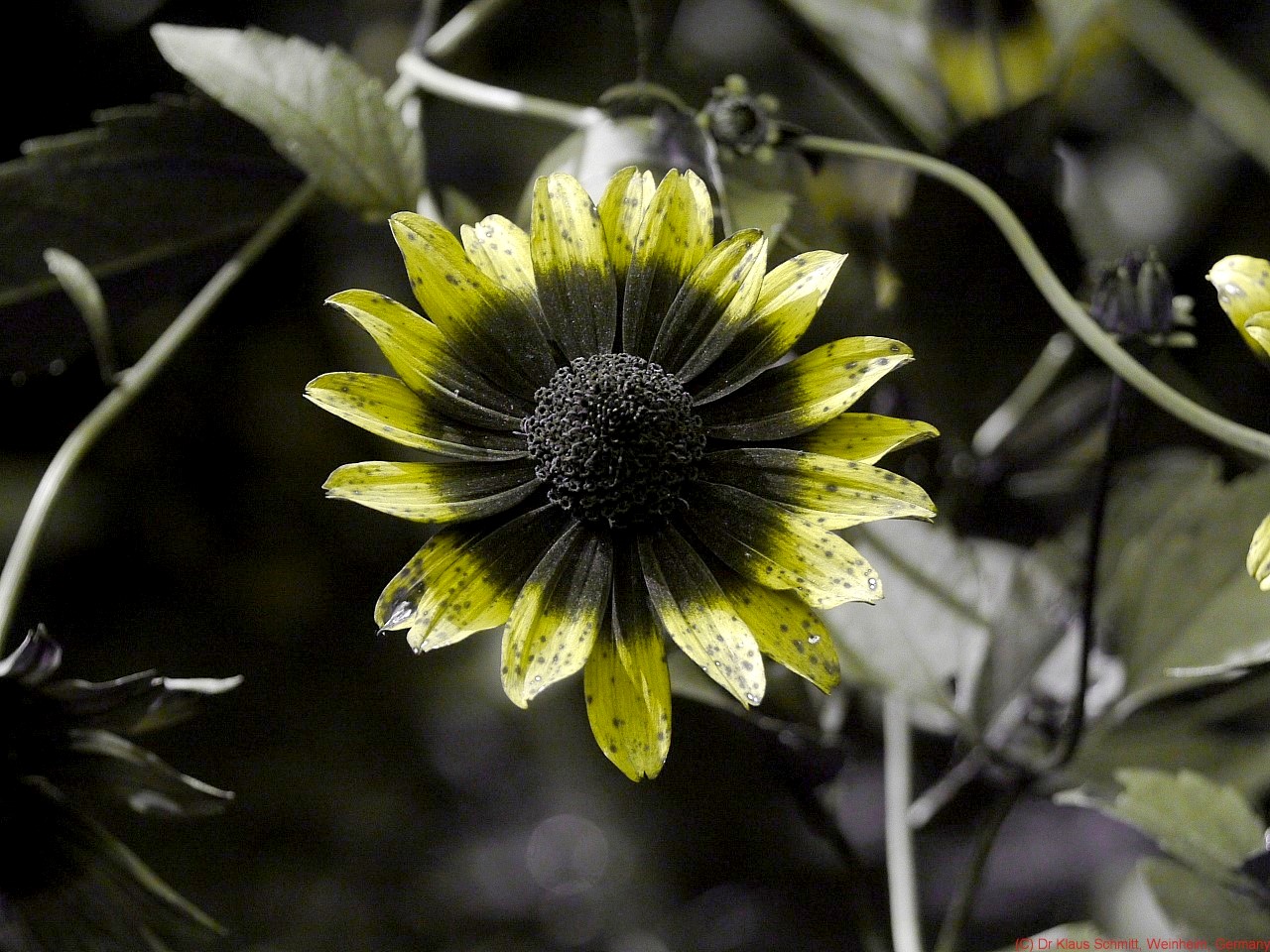
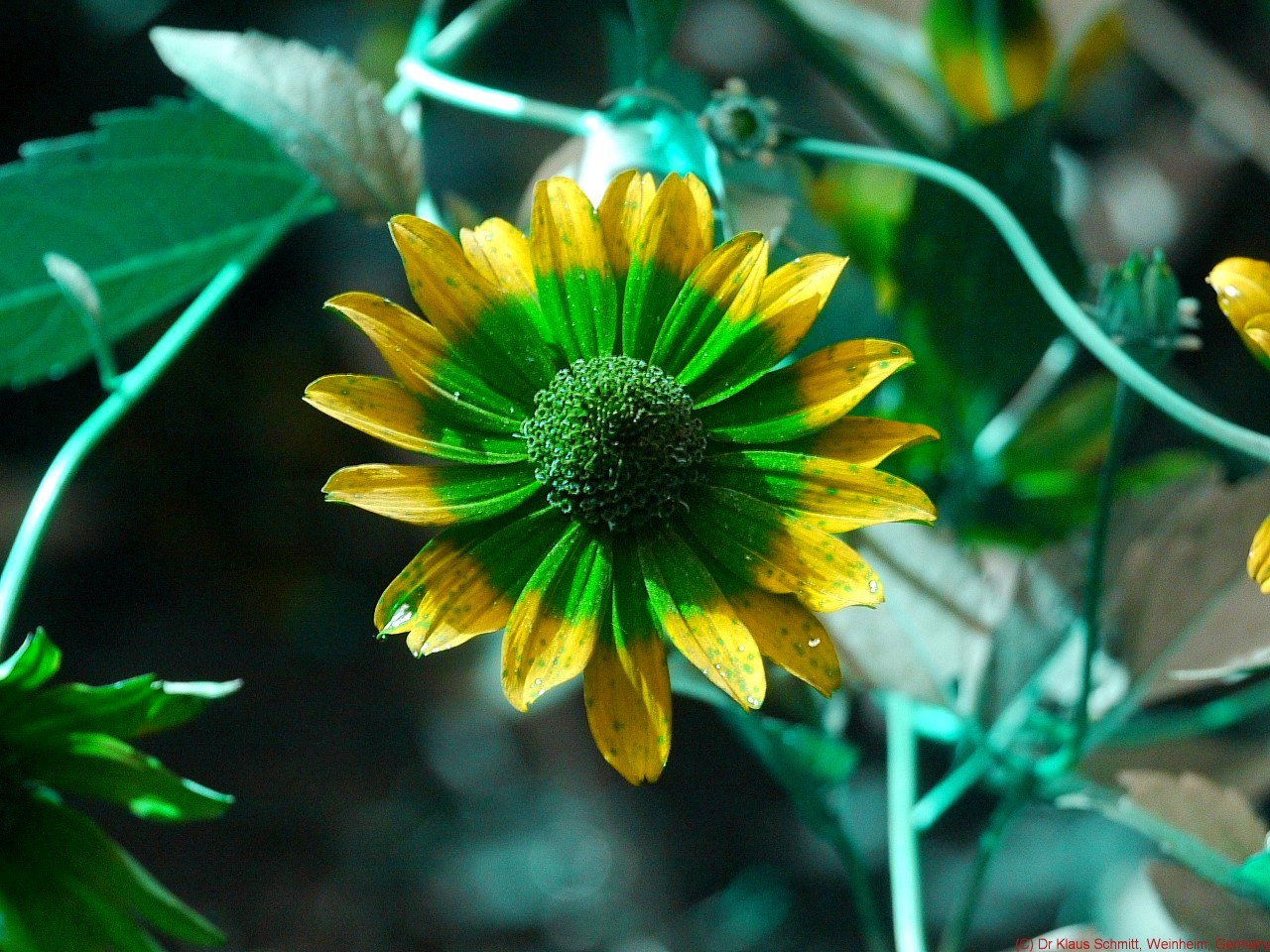
Today shots of a lesser known "UV-flower" Jerusalem artichoke - Helianthus tuberosus in reflected ultraviolet photography and simulated bee and butterfly vision. All shots were done at f5.6 in reflected ultraviolet photography using my "work horse" UV filter, the Baader-U filter, as well as my XBV filters for simulated bee and butterfly vision. Lens was a UV-Nikkor 105mm quartz fluorite lens. Light source was sunlight.

[click on image to see a larger one]

Human vision:
 

Reflected UV:
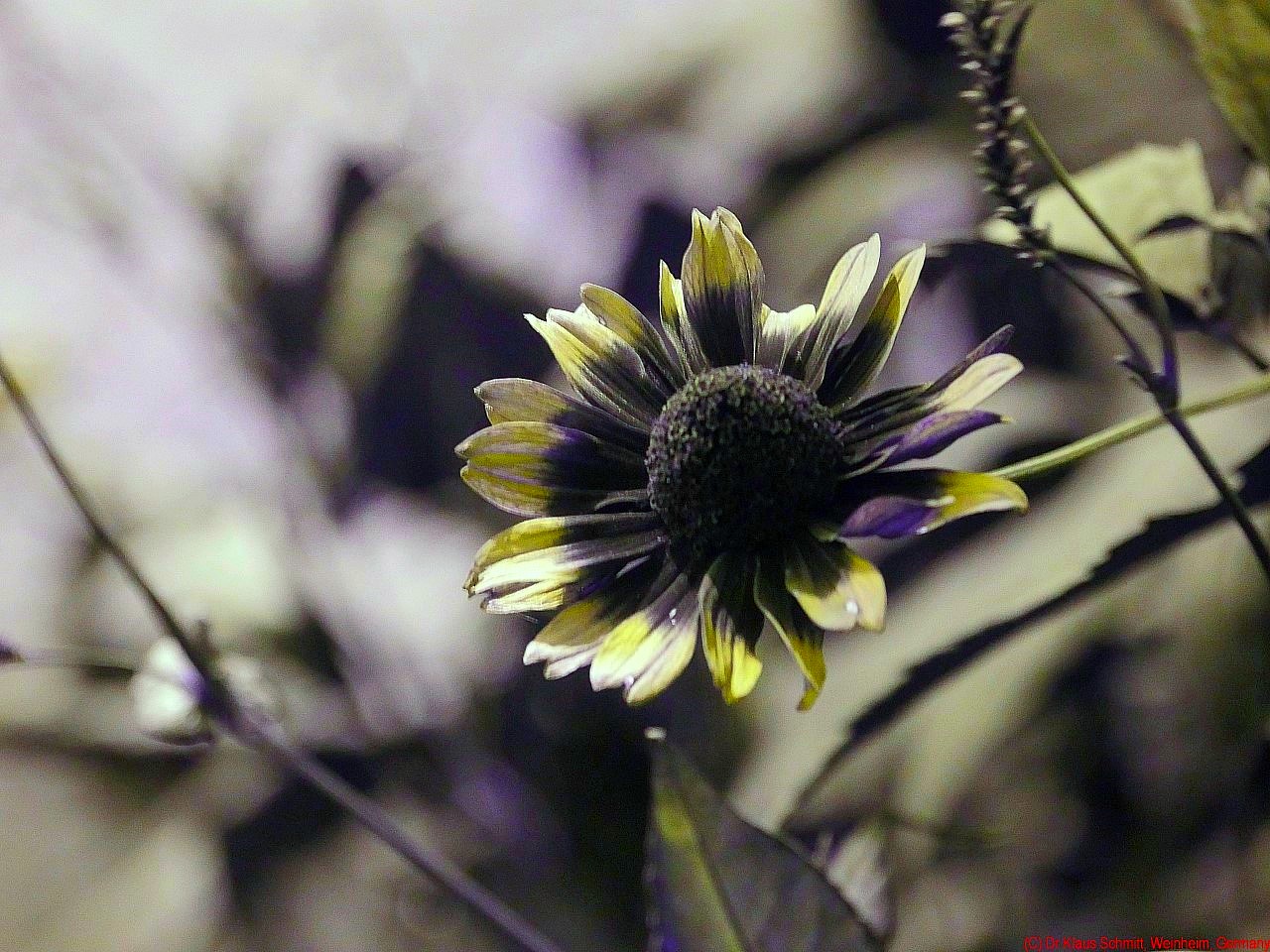
 

Simulated butterfly vision:
 

Simulated bee vision:
 

Quadriptych of human vision, UV, simulated butterfly and bee vision (left to right, top to bottom):
 

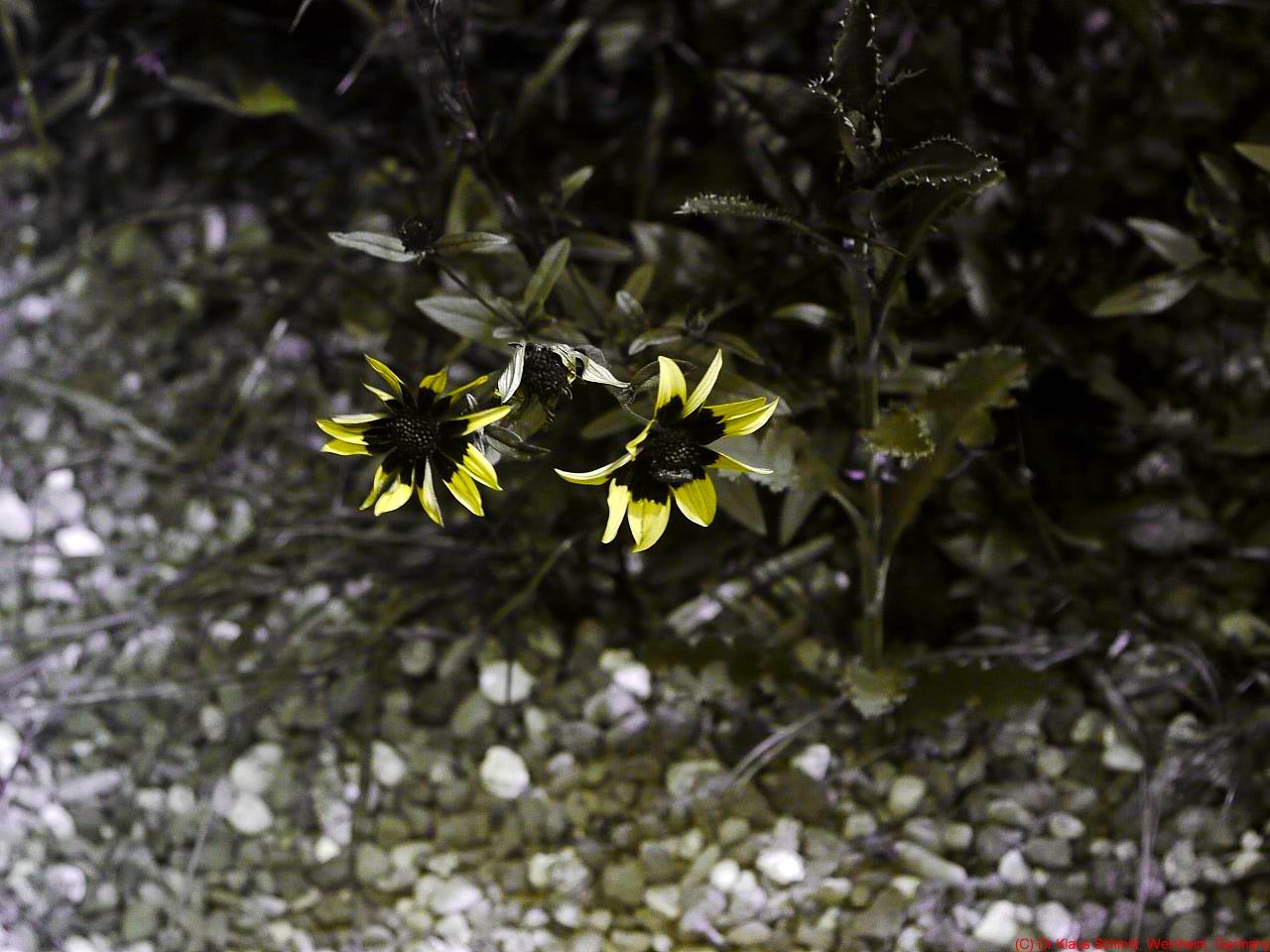
This attractive flower has a specific UV "bulls eye" pattern, its petals and its center are UV dark, the flower outer petals are UV bright (around 365nm), all invisible to us humans and all this gets nicely visible, also in simulated bee and butterfly vision.

I have written about that flower before HERE
 
Stay tuned, more will follow on that fascinating subject...

More info on this very interesting field may be found on my site http://www.pbase.com/kds315/uv_photos

Tuesday, June 30, 2015

Jerusalem artichoke - Helianthus tuberosus in reflected ultraviolet photography and simulated bee vision II

Today shots of an attractive summer flower, Jerusalem artichoke - Helianthus tuberosus in reflected ultraviolet photography using my "work horse" UV filter, the Baader-U filter as well as in simulated bee vision using my proprietary XBV filter. Lens was my CERCO 94mm quartz flourite lens. Light source was sunlight. All shots were done at about f5.6.

[click on image to see a larger one]

Triptych (left to right): Human vision, reflected UV and simulated bee vision:  

This attractive flower has a specific UV "bulls eye" pattern, its petals and its center are UV dark, invisible to us humans and the flower outer petals are UV bright (around 365nm), and all this gets nicely visible, also in simulated bee vision.

I have previously written about that flower HERE

Stay tuned, more will follow on that fascinating subject...

Saturday, August 31, 2013

Jerusalem artichoke - Helianthus tuberosus in reflected ultraviolet photography and simulated bee vision

Today shots of an attractive flower, Jerusalem artichoke - Helianthus tuberosus in reflected ultraviolet photography using my "work horse" UV filter, the Baader-U filter as well as in simulated bee vision using my XBV6 filter. Lens was my CERCO 94mm quartz flourite lens. Light source was sunlight. All shots were done at about f5.6.

[click on image to see a larger one]

Visible light image  

UV image using Baader-U filter (approx. 320-395nm, effective peak approx. 375nm):  

Simulated bee vision image using experimental XBV filter:  

Triptych of the above images:  


This attractive flower has a specific UV pattern, its petals are UV dark inside, but UV bright on the outside and the flower center is also quite UV dark, both invisible to us humans, forming an UV bullseye pattern and all this gets nicely visible as well as the aging spots only visible in UV and BV.

I have previously written about that flower HERE

Stay tuned, more will follow on that fascinating subject...

Saturday, July 28, 2012

Flower decay made visible using reflected UV ultraviolet photography II

While I was shooting flowers at Hermahnshof, Weinheim park, I noticed that in UV the wilting / ageing / decay of a flower can be easily detected, wheras in visible light this is not visible to us humans. I have written about that effect earlier here.

A UV sensitive camera, Cerco 94mm lens, Baader-U resp. UV/IR Cut filter was used; standardized UV palette using my ReflectionDisc

[click on image to see a larger one]

VIS (left) - UV (right):


The larger, yellow Helianthus tuberosus flower on the right side clearly shows that it has aged and will be wilting soon. In reflcted UV things get much easier to see immediately. So I'm sure pollinators (bees) knew that way before us...


Stay tuned, more will follow on that fascinating subject...

More info on this very interesting field may be found on my site http://www.pbase.com/kds315/uv_photos

Friday, September 2, 2011

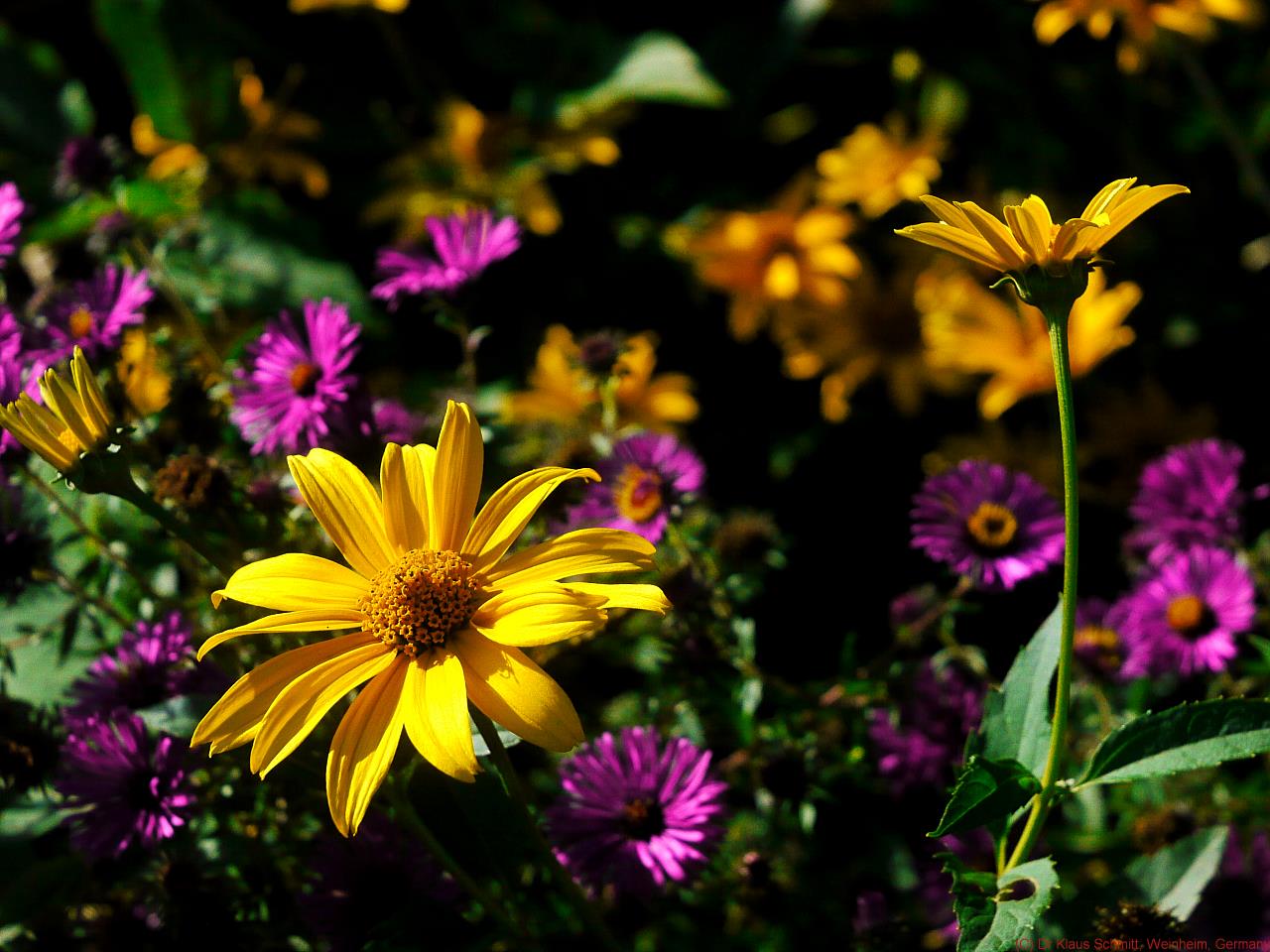
[VIS, UV] Late Summer's "Grand Finale" - Zeiss UV-Planar 60mm

Today summer came back and flashed his intensive golden rays over our wonderful Hermanshof Park here in Weinheim, so I grabbed my system and took a few shots. Without more ado, have a look in VIS and UV...

[click on image to see a larger one]


[the yellow flower is Helianthus tuberosus and the violet flower is an Aster type]


Stay tuned, more will follow on that fascinating subject...

More info on this very interesting field may be found on my site http://www.pbase.com/kds315/uv_photos

Wednesday, July 27, 2011

[UV] Helianthus tuberosus and foraging bee - ultraviolet video

Today more about UV videos, here shots from Hermannshof park of a Helianthus tuberosus flower. These flowers exhibit a quite prominent bullseye pattern, in yellow colors corresponding to a 360nm UV reflection (cf my false color UV palette), which gets nicely visible in this HDTV video.

This video here also uses my Standardized false UV color normal + high intensity palette:


UV video of Helianthus tuberosus:


Stay tuned, more will follow on that fascinating subject...

More info on this very interesting field may be found on my site http://www.pbase.com/kds315/uv_photos
Wednesday, June 22, 2011

[VIS, UV] Helianthus: new vs old flower made visible using ultraviolet light

While I was shooting flowers at Herrmanshof, Weinheim park, I noticed that in UV the ageing of a flower can be easily detected, wheras in visible light, they look alike.

UV sensitive camera, Cerco 94mm lens, Baader-U resp. UV/IR Cut filter; standardized UV palette using my ReflectionDisc

[click on images to see larger ones]

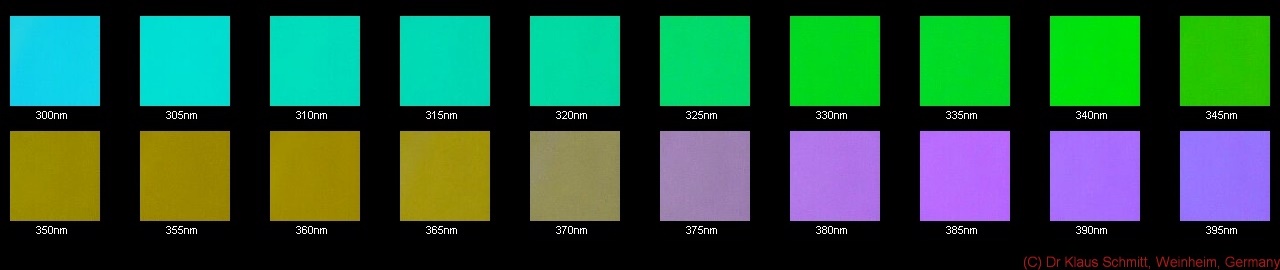
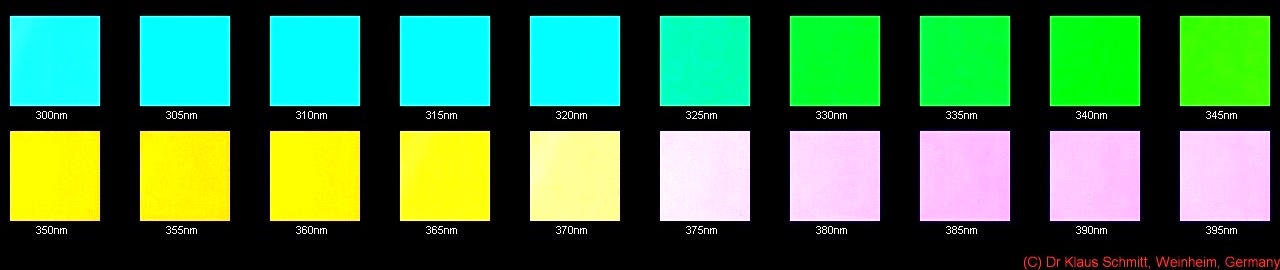
Standardized reflected false UV "colors" according to the previously described "UV color palette" related to wavelength:


VIS:


UV:


These yellow Helianthus tuberosus flowers on teh left side, clearly show age differences: top is in male stage (early), bottom is in female stage (late) but in UV things get much clearer! So I'm sure our beesies knew that way before us...


Stay tuned, more will follow on that fascinating subject...

More info on this very interesting field may be found on my site http://www.pbase.com/kds315/uv_photos
Tuesday, May 31, 2011

Reflected UV shots in the park today - decoding UV colors

Just preparing and testing for a field trip, so some output here for your - hopefully - viewing pleasure...

UV camera, Baader-U filter, my ReflectionDisc for in-camera whitebalancind, leading to the following UV "color" palette:


[click on image to see a larger one]

The 375-390nm group (violet UV reflection):


The 350-370nm group (yellow UV reflection):


That last shot, a Helianthus tuberosus (in female state) image is quite interesting, as the full blooming flower shows a 350-370nm reflection, whereas the younger buds show some in the 375-390nm range. Obviously there are development stages in UV reflections, I would assume .

[excuse the little motion blur in some images, it was quite windy today...]

Stay tuned, more will follow on that fascinating subject...

More info on this very interesting field may be found on my site http://www.pbase.com/kds315/uv_photos