Showing posts with label 40mm. Show all posts

Tuesday, September 17, 2013

Orange coneflower - Rudbeckia fulgida in reflected ultraviolet photography and simulated bee vision VII

Today more shots of that decorative flower Orange coneflower - Rudbeckia fulgida var deamii in reflected ultraviolet using Baader-U filter and in simulated bee vision using my XBV6 filter. Lens used was an older f3.5/40mm enlarger lens. Light source was Xenon flash. All shots were done at f8.

[click on image to see a larger one]

Visible light image:  

UV image using Baader-U filter (approx. 320-395nm, effective peak approx. 375nm):  

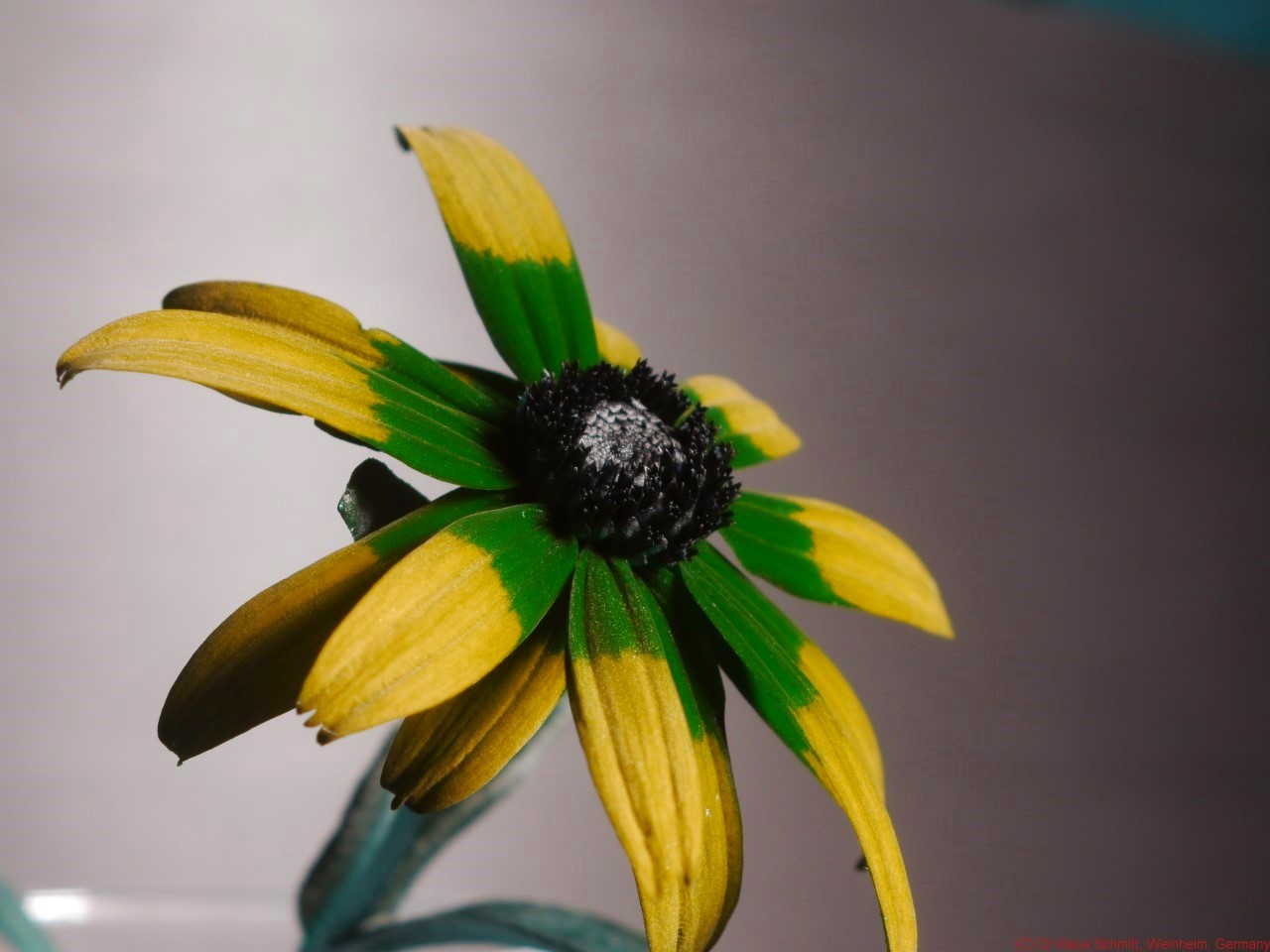
Simulated bee vision image using experimental XBV filter:  

Triptych of the above images:  


This attractive flower shows its very specific UV pattern, its petals have an UV dark pattern, invisible to us humans. The lens being just an older enlarger lens, it transmits a little less UV (up to 340nm) than a capable UV lens like the Dialyte lenses used previously, but quite enough to make the UV pattern visible.

I have previously written about this flower HERE.

Stay tuned, more will follow on that fascinating subject...

Tuesday, March 12, 2013

Three 40mm lenses for reflected UV photography

Today about a comparison of three lenses of 40mm focal length for reflected UV, one a Cooke Triplet (C40), one a Dialyte design (D40), one a complex Sonnar design (S40) whose makers will be revealed here later - or simply contact me about it. The best of the three will also compared against the Kuribayashi 35mm. I'm using a yellow/red Phalaenopsis flower for that and my "work horse" UV filter, the Baader-U filter. Light source was an UV enhanced Xenon flash. All shots were done at f8 and are presented in a side-a-side format for easier comparison.

[click on image to see a larger one]

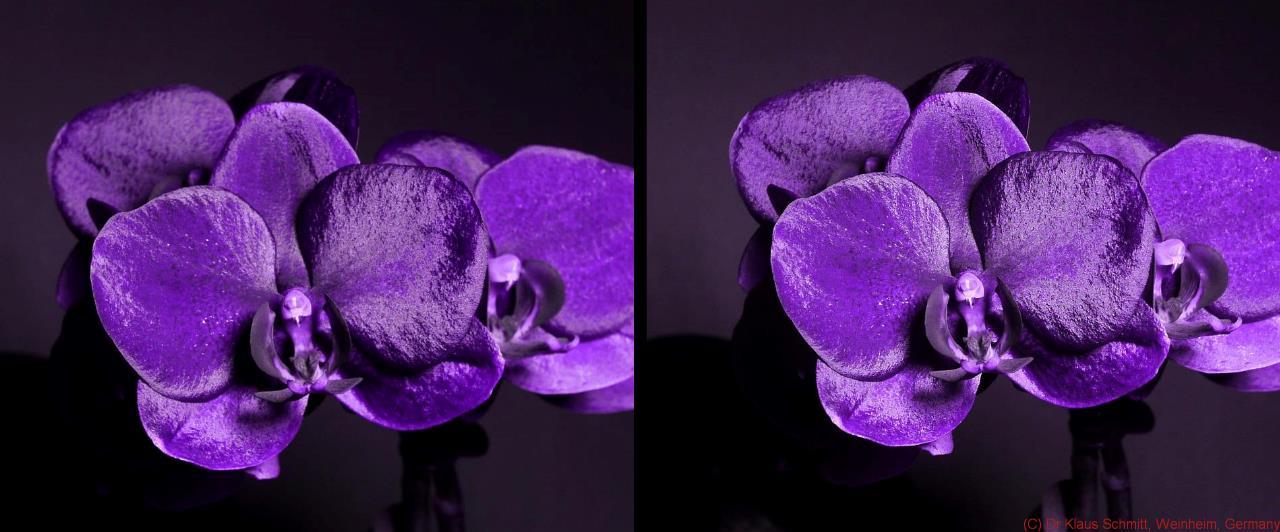
UV image using the Baader-U filter (approx. 320-395nm, effective peak approx. 375nm) - Cooke left, Dialyte middle, Sonnar right:
 

Here the three contestants present themselves side-a-side: It gets obvious, that the Sonnar is the softest of the three and has a bit less UV transmission (the latter had to be expected). The Cooke triplet lens and especially the Dialyte however show some respectable sharpness. So lets's have a closer look at the latter two.

UV image using the Baader-U filter - Cooke left, Dialyte right:
 

Here, the Dialyte has an edge over the Triplet, quite higher micro-contrast and higher detail reproduction, quite remarkable, considering it is an old prewar lens, and uncoated. So let's see how that Dialyte performs against the Kuribayashi 35mm.

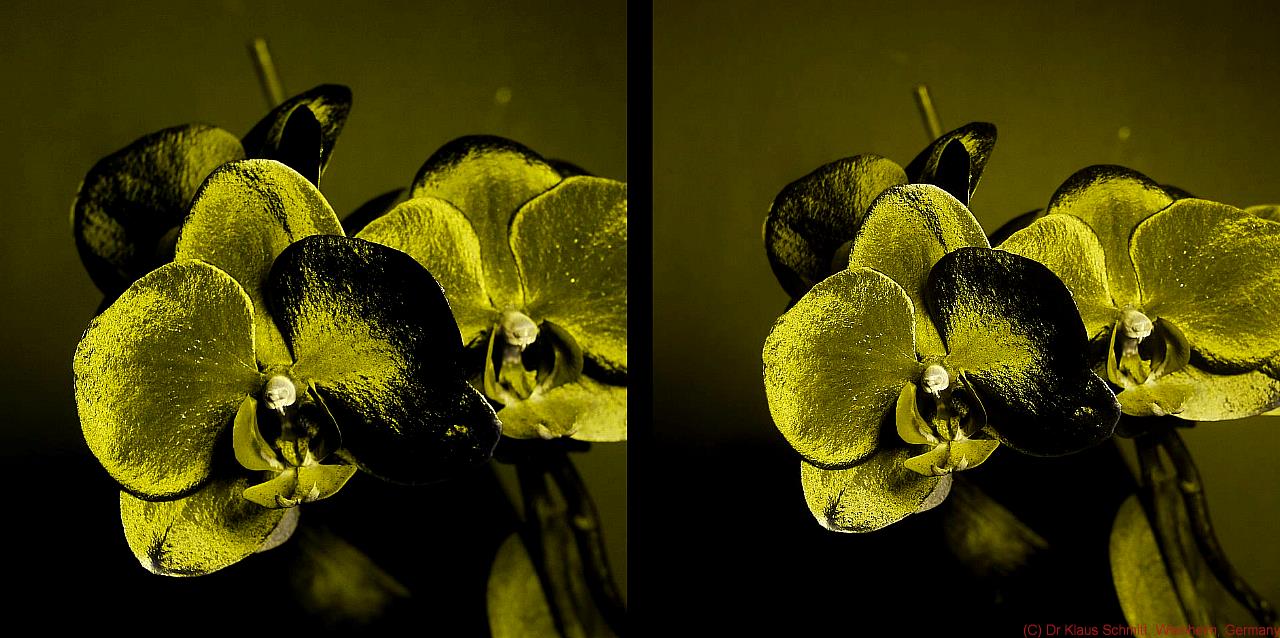
UV image using the Baader-U filter - Dialyte lft, Kuribayashi 35mm right:
 

Here now it is hard to choose a winner, as both have very high sharpness and contrast, quite remarkable considering their age difference. I'm undicided honestly.

Transmission graph:
 

The Triplet is represented by a yellow line, the Dialyte by a reddish brown line, the Sonnar by a blue line and finally the Kuribayashi by a pink line. Transmisson of all lenses is quite high, at 365nm Sonnar: 60%, Dialyte: 64%, Triplet: 70% and finally the Kuribayashi 77%. Their reach into UV is quite remarkable, the Kuribayashi and Dialyte having the deepest, Triplet surprisingly the least, maybe caused by its bluish coating. So overall, some remarkable lenses for reflected UV.

Stay tuned, more will follow on that fascinating subject...

More info on this very interesting field may be found on my site http://www.pbase.com/kds315/uv_photos

Sunday, February 24, 2013

Steinheil Cassaron 40mm vs Kuribayashi 35mm for reflected UV photography

Here today a comparison between the well known Kuribayashi f3.5/35mm lens and the lesser known Steinheil Cassron f3.5/40mm lens. I'm using a yellow/red Phalaenopsis flower for that and my "work horse" UV filter, the Baader-U filter plus the deeper reaching Jupiter-U filter. Light source was an UV enhanced Xenon flash. All shots done at f8 and presented on a side-a-side format for easier comparison, left the Cassaron, right the Kuribayashi lens.

[click on image to see a larger one]

Visible light image:
 

UV image using Baader-U filter (approx. 320-395nm, effective peak approx. 375nm):
 

UV image using Jupiter-U filter (approx. 280-385nm, effective peak approx. 365nm):
 

Transmission graph:


This comparison shows, that the Kuri 35mm is hard to beat, but the Cassaron does quite well for a simple triplet lens, especially reaching quite deep into UV when the Jupiter-U filter is being used. It has 1.9% focus shift, compared to 1.0% the Kuri 35mm has. A quite useful lens and maybe even easier to find than the Kuri.


Stay tuned, more will follow on that fascinating subject...

More info on this very interesting field may be found on my site http://www.pbase.com/kds315/uv_photos

Wednesday, February 20, 2013

c-mount lenses for reflected UV photography

Today about a find I made a while ago, when I wondered if those usually small c-mount lenses (originally used for video and cine) would be suitable for reflected UV photography. And indeed out of the many I have for normal photography, just a few turned out to be useful. I'm using a yellow/red Phalaenopsis flower for that and my "work horse" UV filter, the Baader-U filter. Light source was an UV enhanced Xenon flash. All shots were done at f8 and are presented side-a-side for easier comparison.

[click on image to see a larger one]

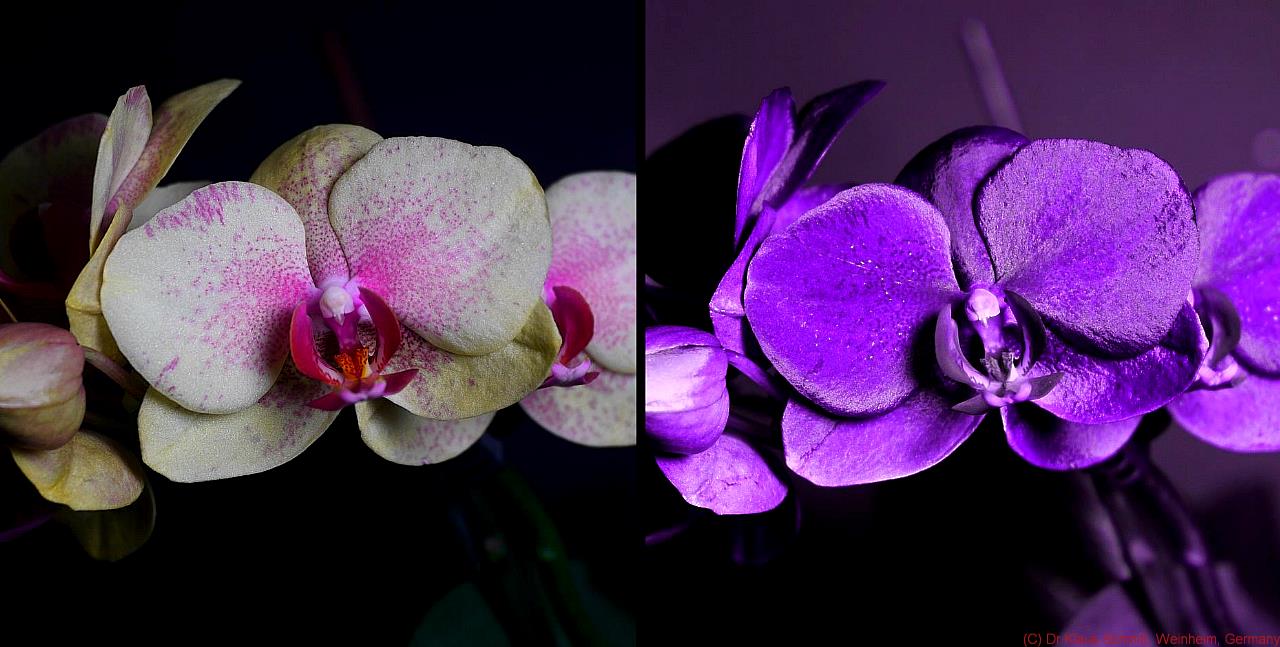
50mm - Visible and UV image using Baader-U filter (approx. 320-395nm, effective peak approx. 375nm):
 

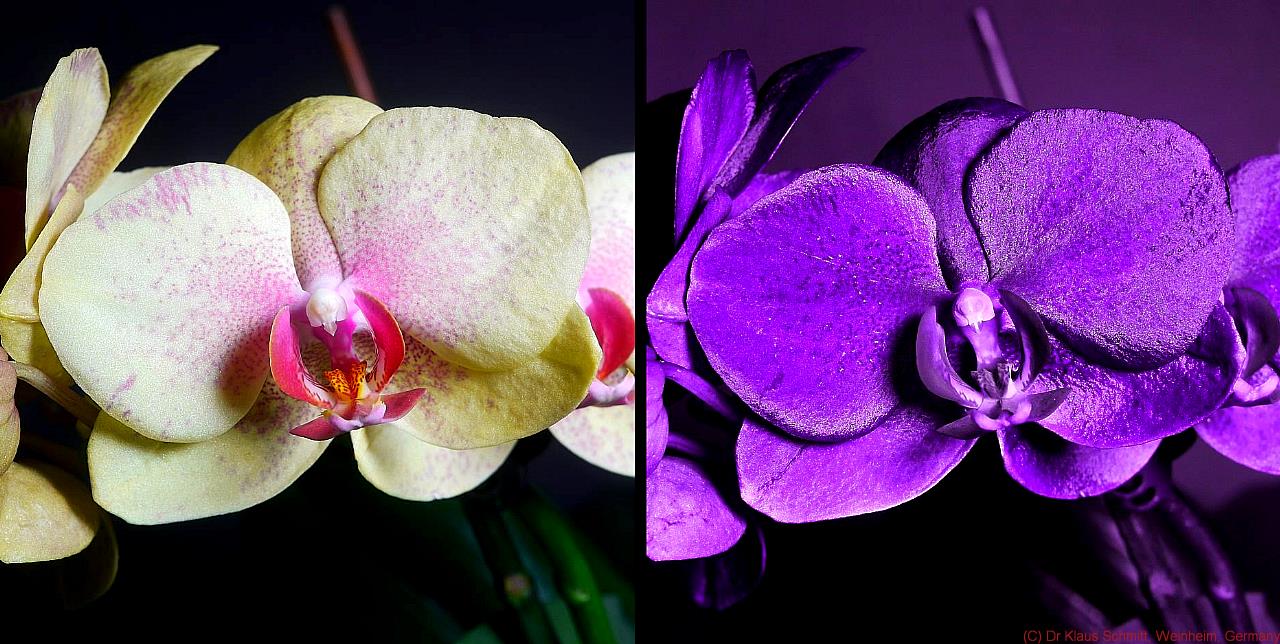
40mm - Visible and UV image using Baader-U filter (approx. 320-395nm, effective peak approx. 375nm):
 

40mm w. 1.4x Barlow lens - Visible and UV image using Baader-U filter (approx. 320-395nm, effective peak approx. 375nm):
 

That 50mm lens has 1.0% focus shift, whereas the 40mm (w/o) Barlow has 0.5%, with Barlow 1.0%. Of course those lenses do not reach that deep into UV, but seemingly deep enough to make them a suitable alternative and a small and lightweight one!


Stay tuned, more will follow on that fascinating subject...

More info on this very interesting field may be found on my site http://www.pbase.com/kds315/uv_photos