Showing posts with label Sanvitalia procumbens. Show all posts

Saturday, July 31, 2021

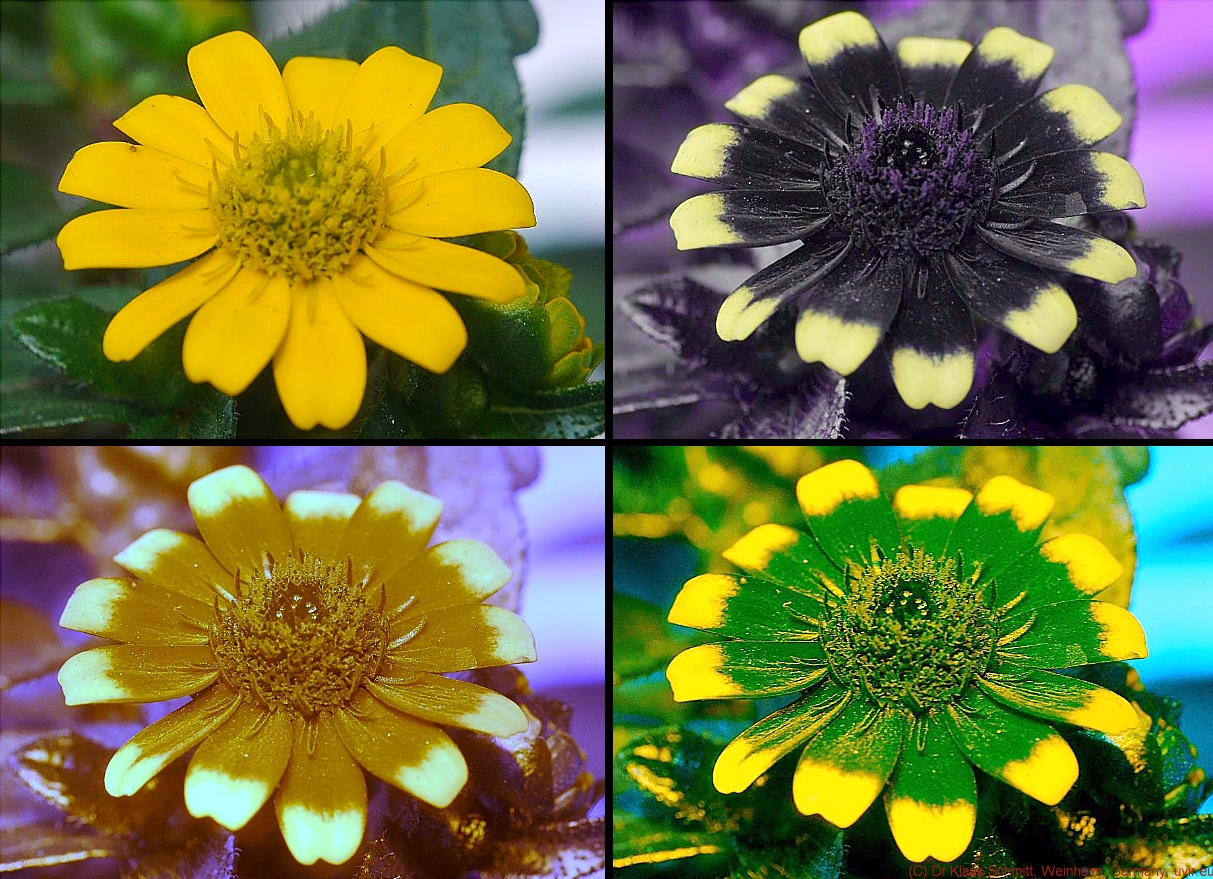
Creeping Zinnia - Sanvitalia procumbens in reflected ultraviolet photography, simulated bee and butterfly vision V

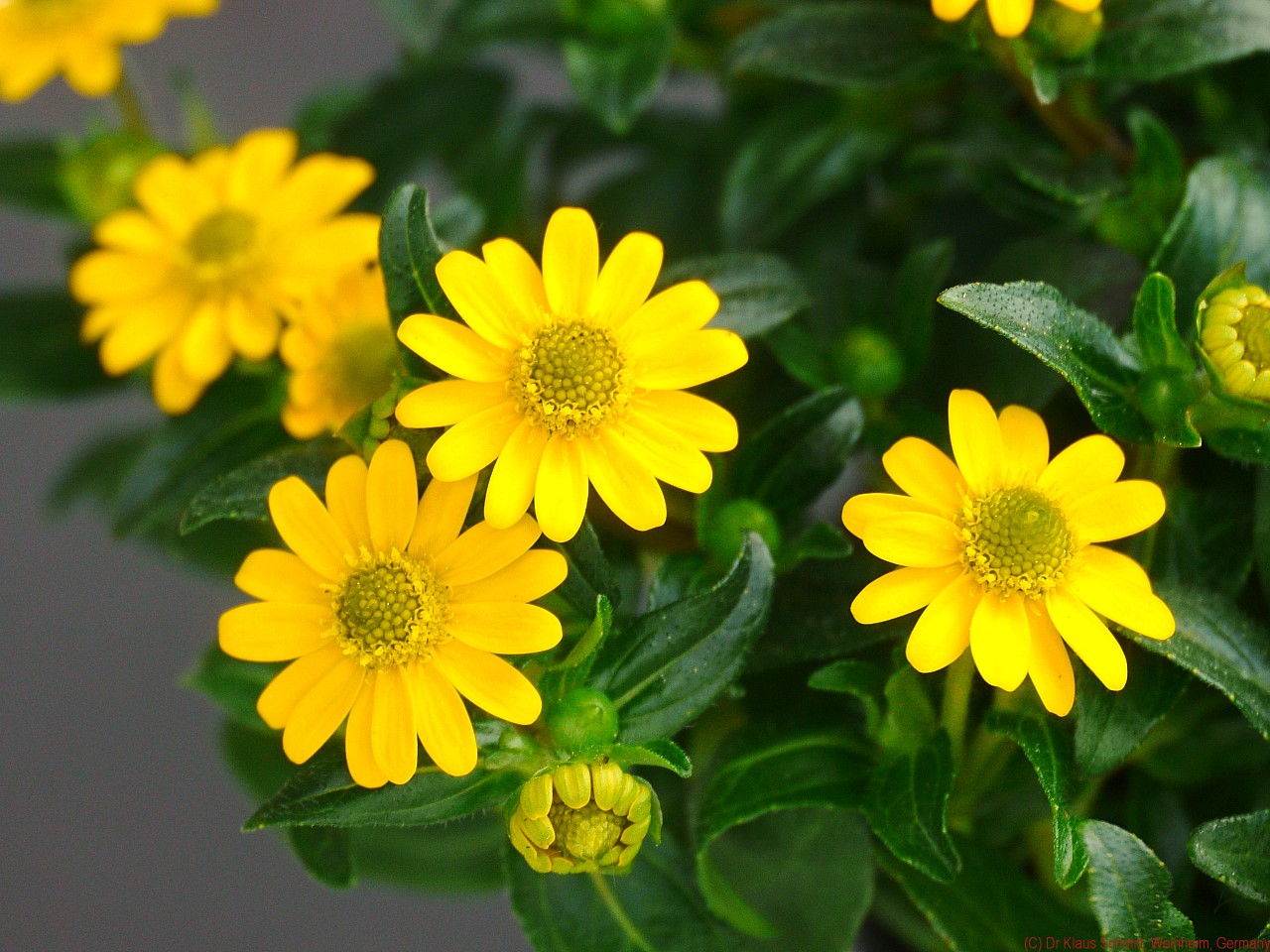
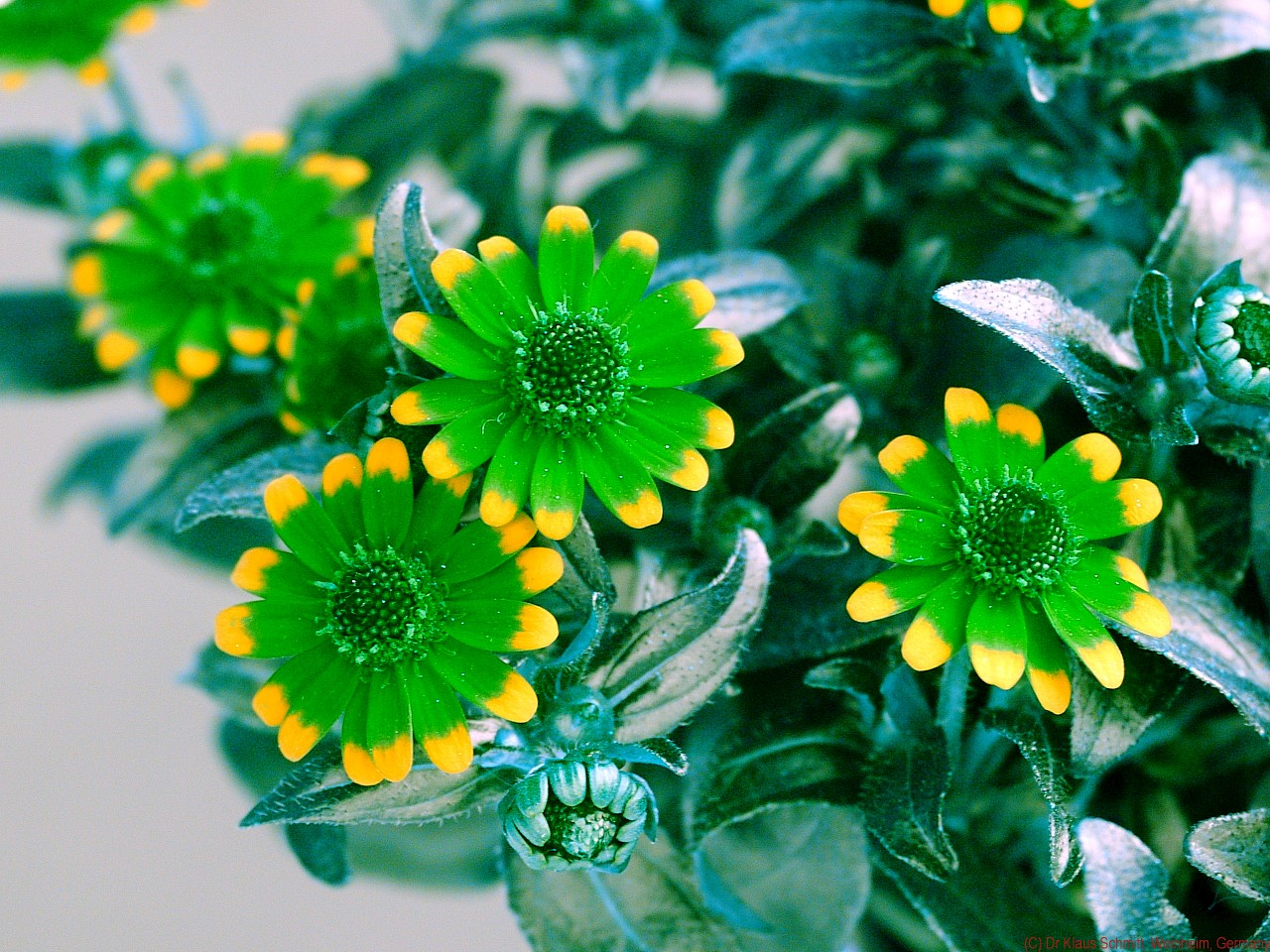
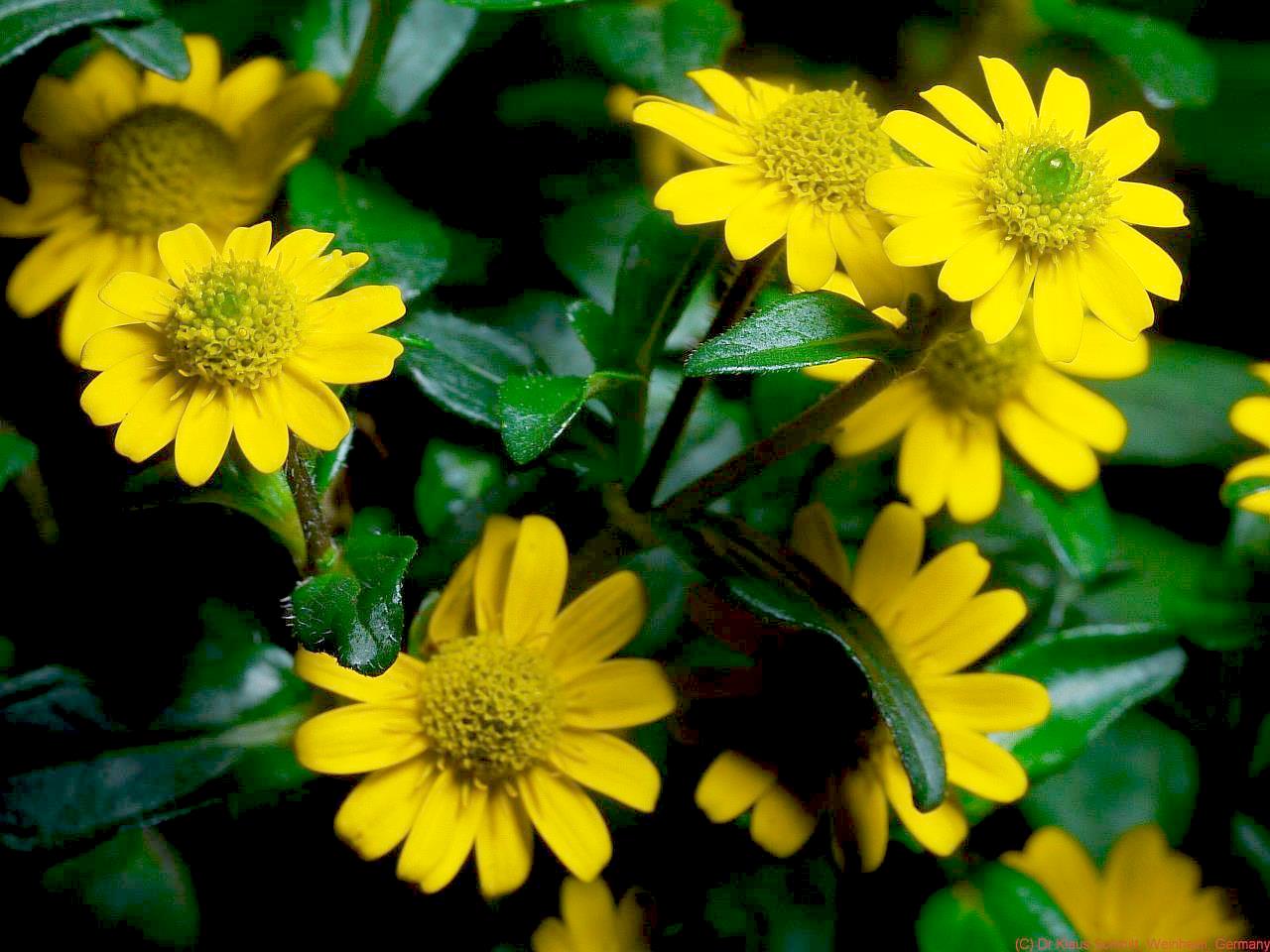
Today in Summer 2021 shots of a long blooming flower Creeping Zinnia - Sanvitalia procumbens in reflected ultraviolet photography and simulated bee and butterfly vision. All shots were done at f11 in reflected ultraviolet photography using my "work horse" UV filter, the Baader-U filter, as well as my XBV filters for simulated bee and butterfly vision. Lens was a UV-Nikkor 105mm quartz fluorite lens. Light source was a studio flash, modified for higher UV output.

[click on image to see a larger one]

Human vision:
 

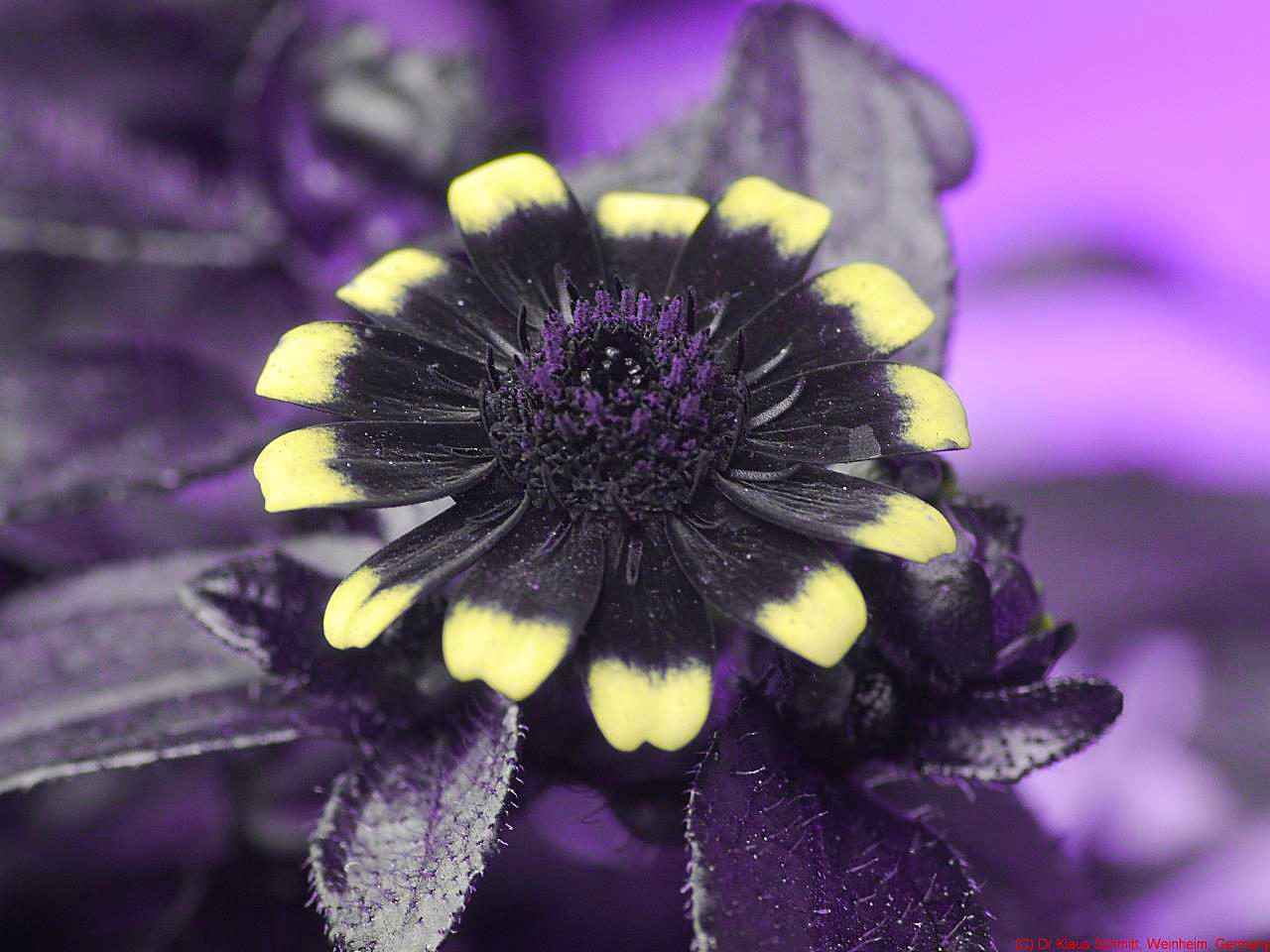
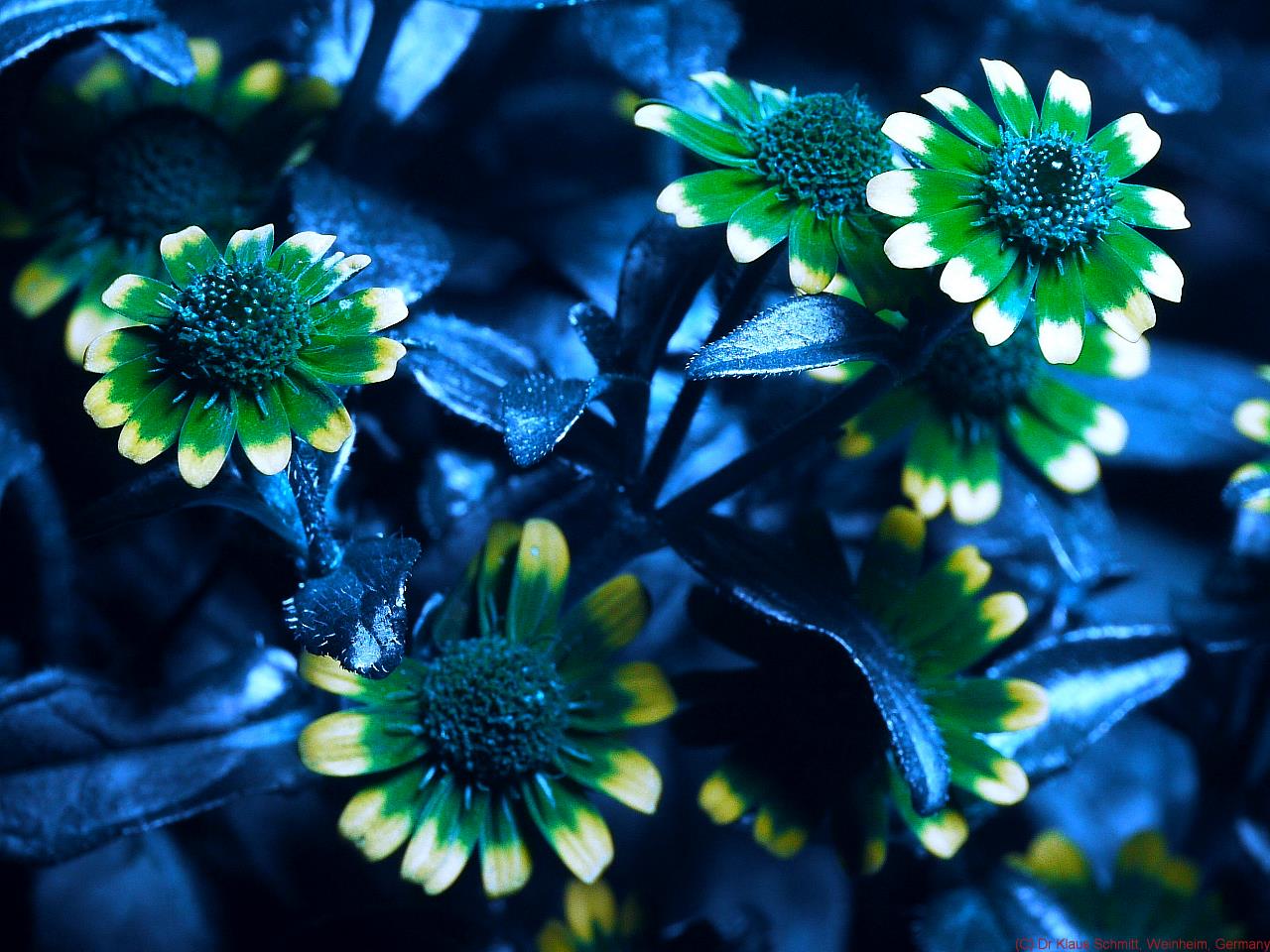
Reflected UV:
 

Simulated butterfly vision:
 

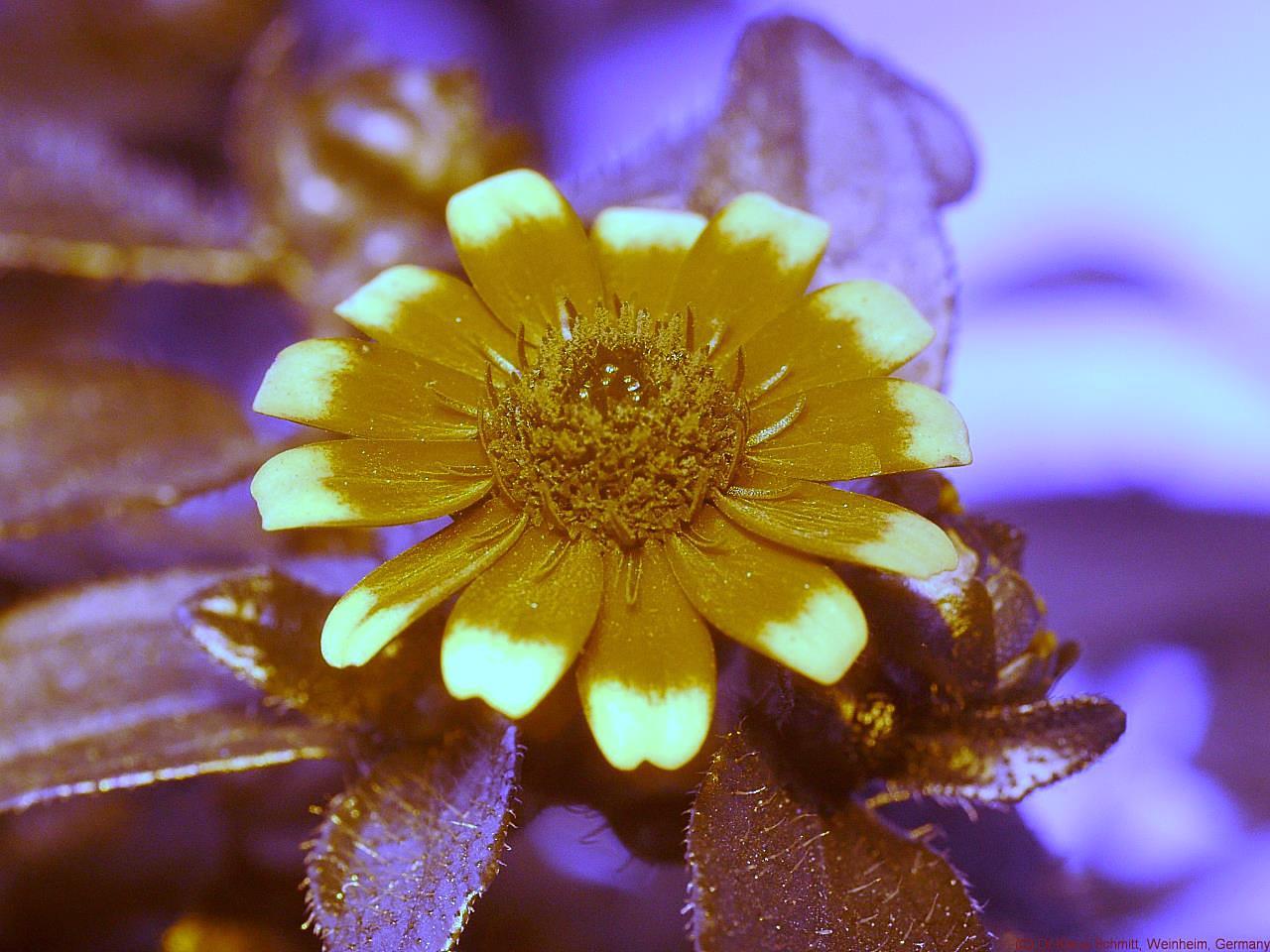
Simulated bee vision:
 

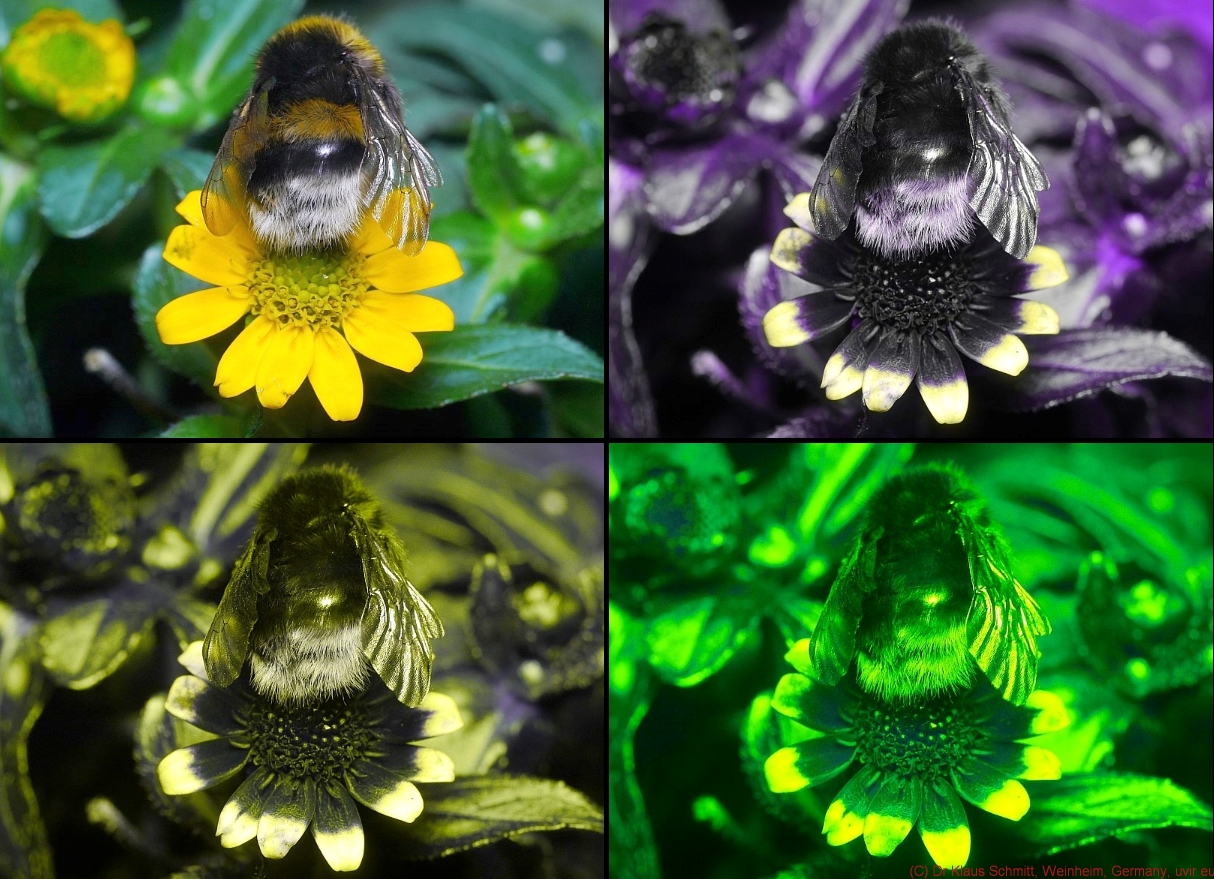
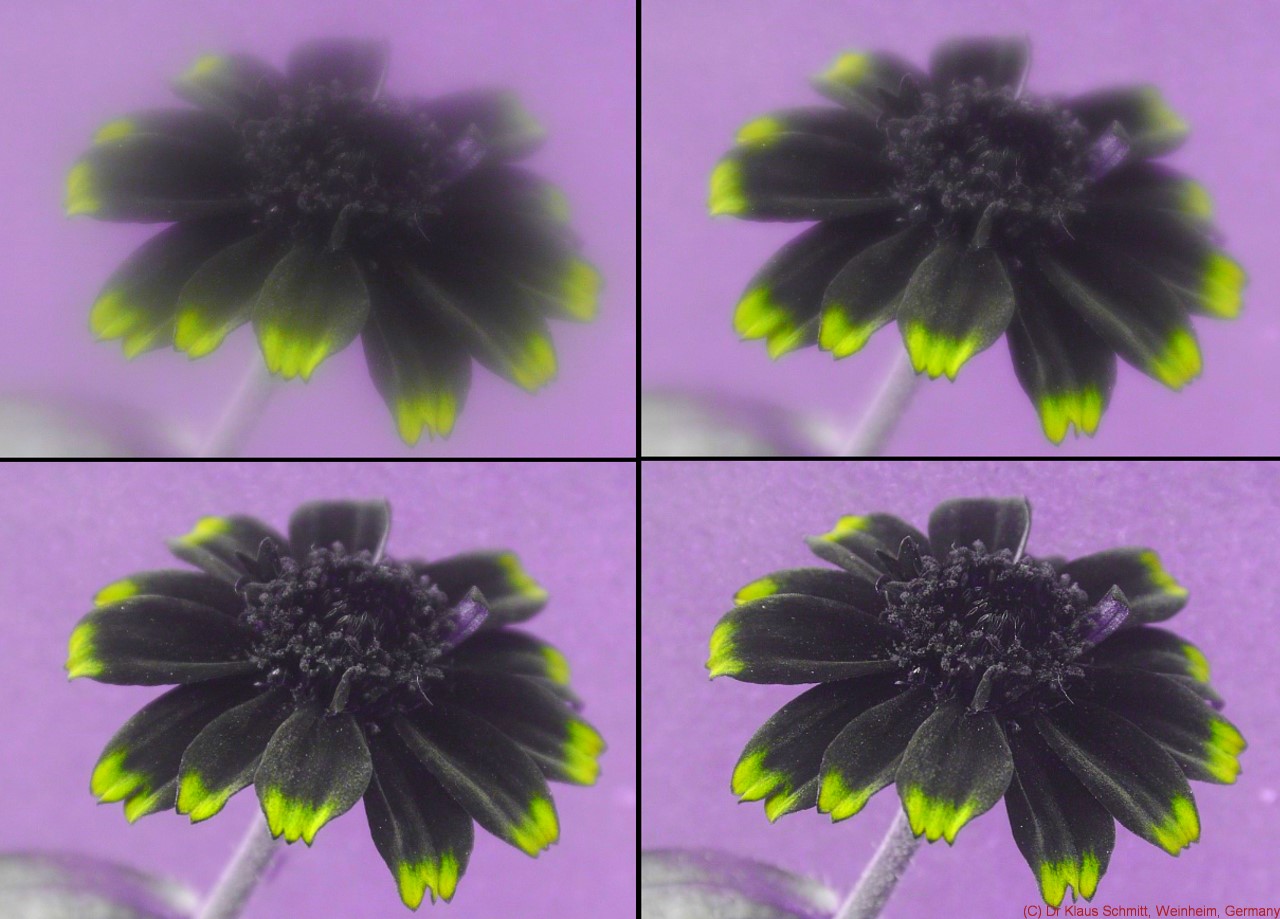
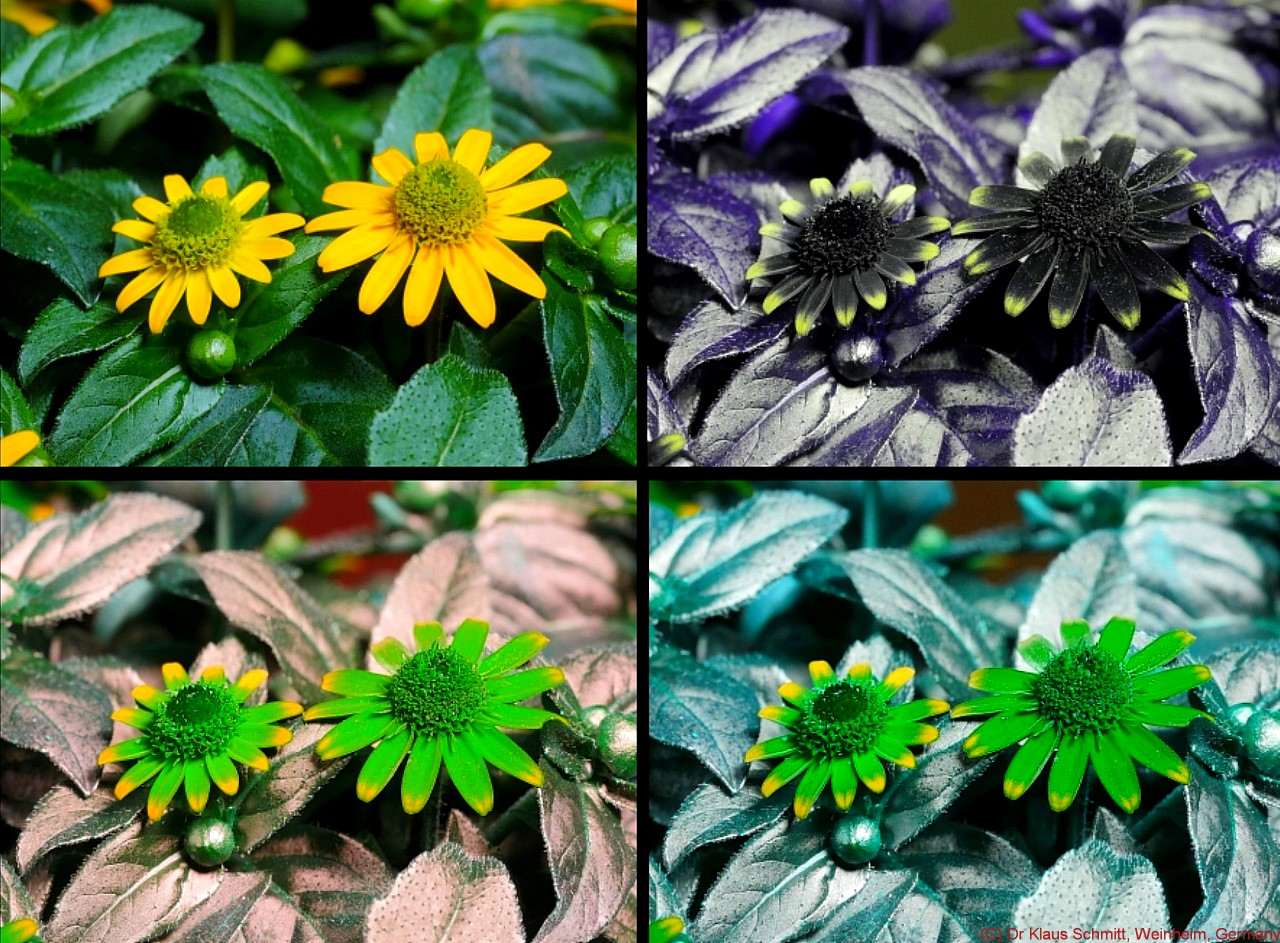
Quadriptych of human vision, UV, simulated butterfly and bee vision (left to right, top to bottom):
 

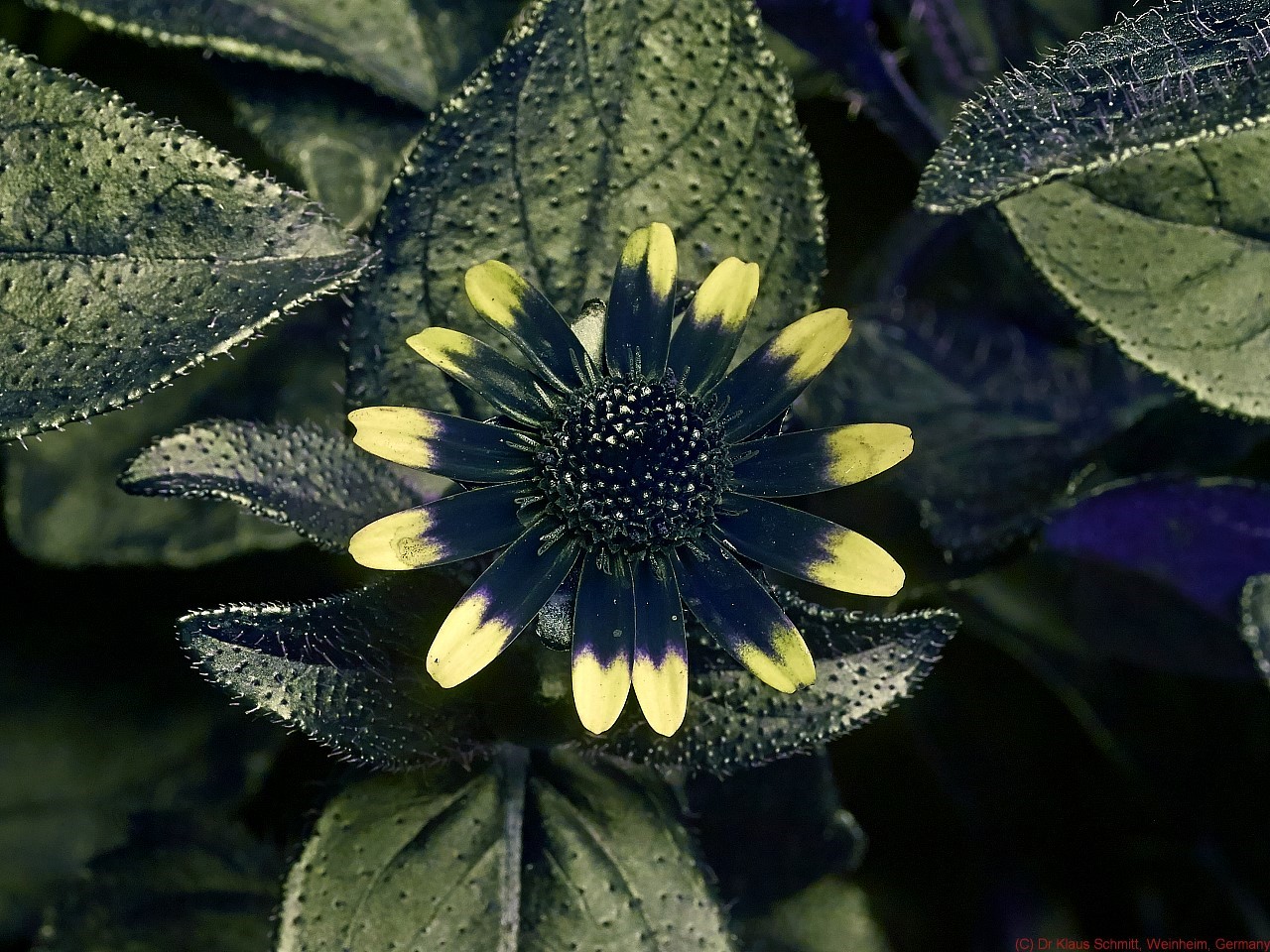
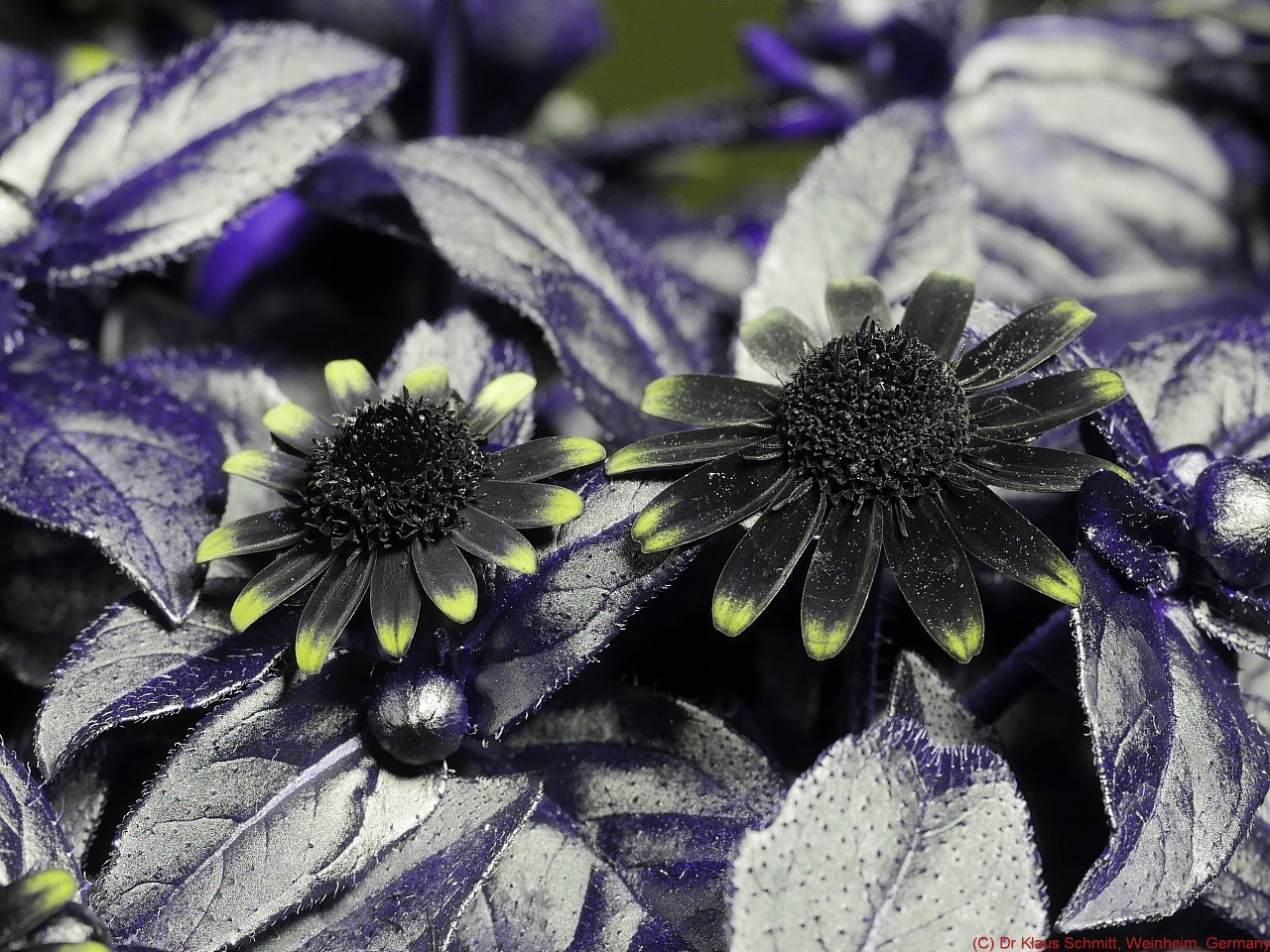
Sanvitalia has a strong visible UV pattern, its petal tips are UV bright around 365nm and its center is quite UV dark, and this gets quite nicely visible, also in simulated butterfly and bee vision.

I have written about Sanvitalia previously HERE
 
Stay tuned, more will follow on that fascinating subject...

More info on this very interesting field may be found on my site http://www.pbase.com/kds315/uv_photos

Tuesday, August 9, 2016

Summer UV flower potpourri in reflected ultraviolet photography and simulated bee vision

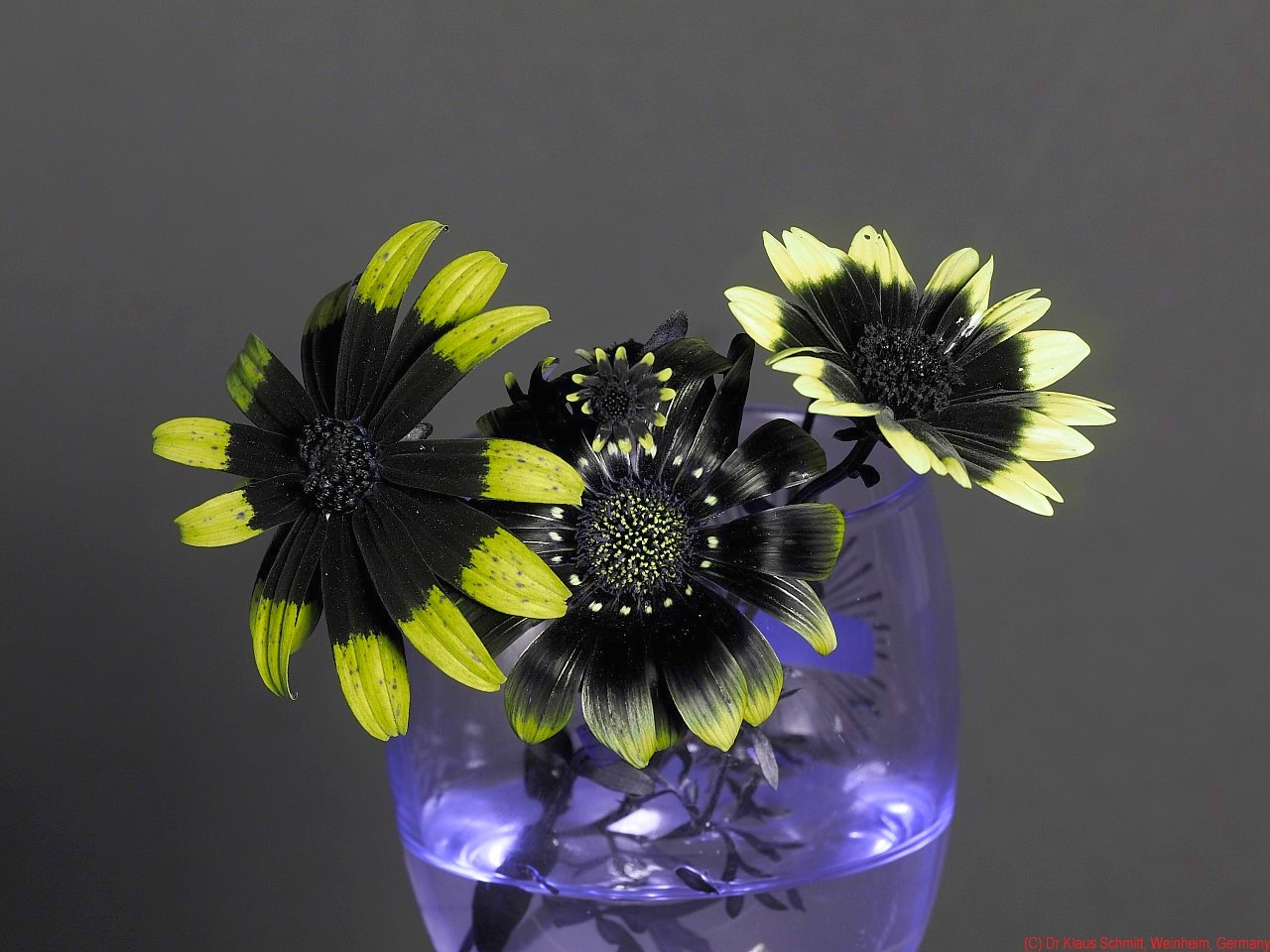
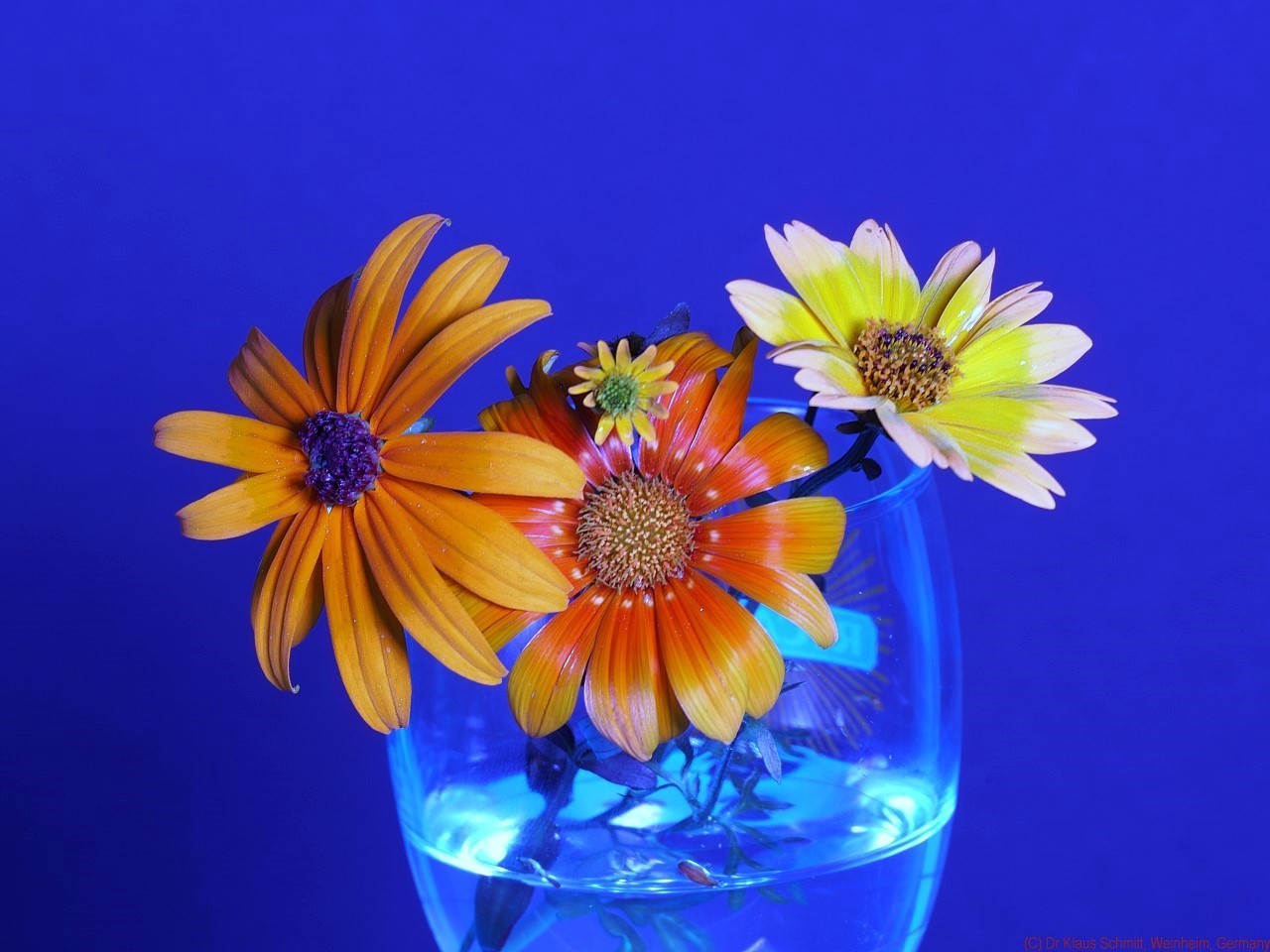
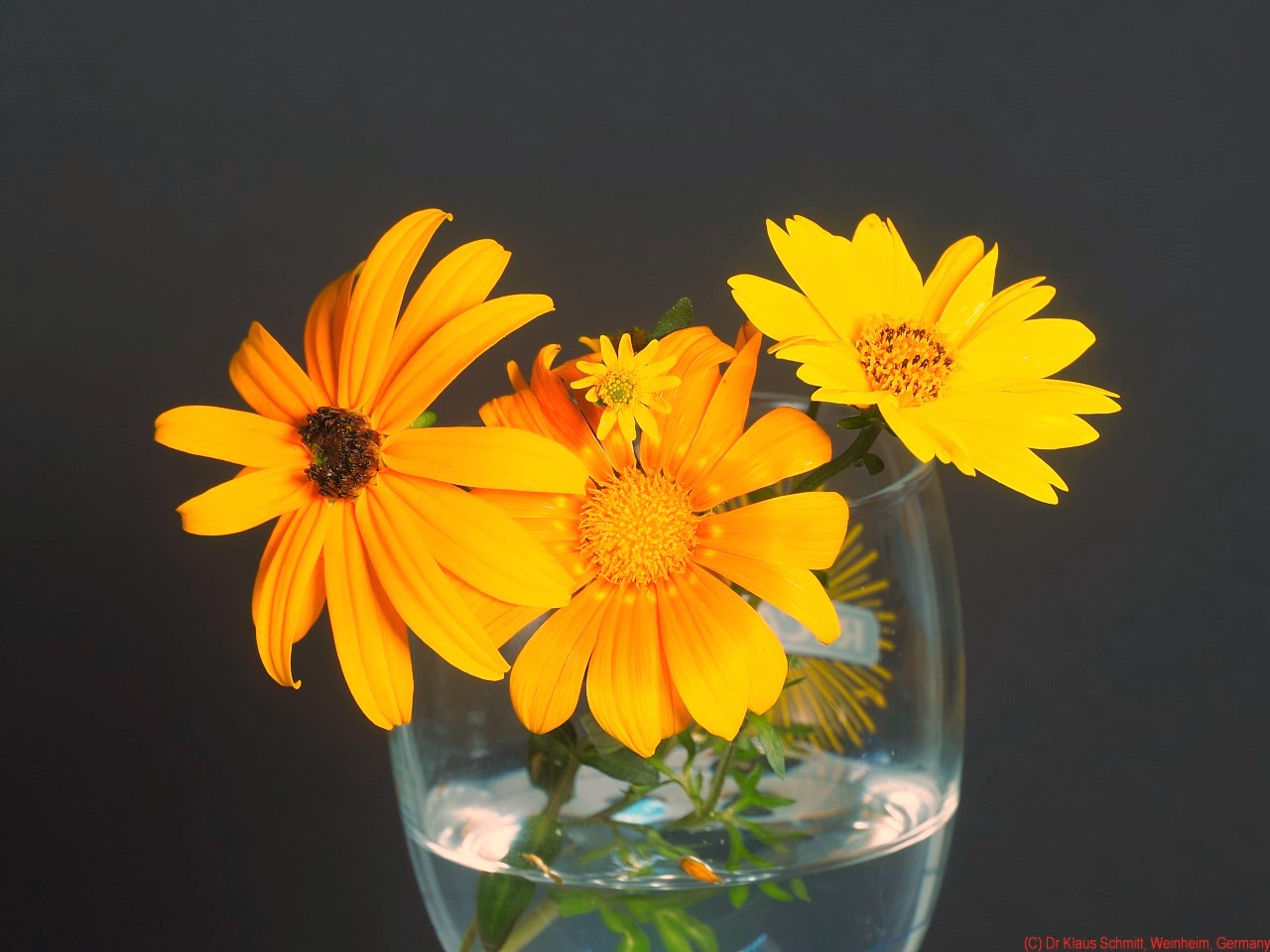
Today studio images of a summer flower potpourri, all exhibiting UV patterns, shot in reflected ultraviolet photography and simulated bee and butterfly vision. Flowers shown are: Rudbeckia fulgida, Gazania rigens, Sanvitalia procumbens and Bidens ferulifolia. All shots were done at f8 in reflected ultraviolet photography using my "work horse" UV filter, the Baader-U filter, as well as my XBV filters for simulated bee and butterfly vision. This used butterfly vision simulating filter is a new development of mine. Lens was a UV-Nikkor 105mm quartz fluorite lens. Light source was a modified Xenon flash, background was a dark gray. [These shots were done with a new camera system and are available on request in very high resolution (40 and 60 Mp)].

[click on image to see a larger one]

Human vision:
 

Reflected UV:
 

Simulated butterfly vision:
 

Simulated bee vision:
 

Quadriptych of human vision, UV, and simulated bee vision (left to right, top to bottom):
 

These flower outer petals reflect UV strongly, contrasting against its UV dark center, all invisible to us humans, but all this gets nicely visible, also in simulated bee and butterfly vision.


Stay tuned, more will follow on that fascinating subject...

More info on this very interesting field may be found on my site http://www.pbase.com/kds315/uv_photos

Tuesday, May 10, 2016

Creeping Zinnia - Sanvitalia procumbens in reflected ultraviolet photography, simulated bee and butterfly vision IV

Today shots of a long blooming spring flower Creeping Zinnia - Sanvitalia procumbens in reflected ultraviolet photography and simulated bee and butterfly vision. All shots were done at f8 in reflected ultraviolet photography using my "work horse" UV filter, the Baader-U filter, as well as my XBV filters for simulated bee and butterfly vision. Lens was a UV-Nikkor 105mm quartz fluorite lens. Light source was sunlight, background was the flower's own foliage.

[click on image to see a larger one]

Human vision:
 

Reflected UV:
 

Simulated butterfly vision:
 

Simulated bee vision:
 

Quadriptych of human vision, UV, simulated butterfly and bee vision (left to right, top to bottom):
 

Sanvitalia has a strong visible UV pattern, its petal tips are UV bright around 365nm and its center is quite UV dark, and this gets quite nicely visible, also in simulated butterfly and bee vision.

I have written about Sanvitalia previously HERE
 
Stay tuned, more will follow on that fascinating subject...

More info on this very interesting field may be found on my site http://www.pbase.com/kds315/uv_photos

Monday, July 7, 2014

Creeping Zinnia - Sanvitalia procumbens in reflected deep ultraviolet photography, simulated bee and butterfly vision III

Today shots of a spring flower, developed from RAW files, Creeping Zinnia - Sanvitalia procumbens in reflected ultraviolet photography using my "work horse" UV filter, the Baader-U filter, my Jupiter-U and Saturn-U deeper UV filters, as well as my XBV filters for simulating butterfly and bee vision. Lens was a CERCO 94mm quartz fluorite lens. Light source was a Xenon flash. All shots were done at about f8.

[click on image to see a larger one]

Visible light image:
 

UV image using Baader-U filter (approx. 320-395nm, effective peak approx. 375nm):
 

UV image using Jupiter-U filter (approx. 280-385nm, effective peak approx. 365nm):
 

UV image using Saturn-U filter (approx. 300-350nm, effective peak approx. 325nm):
 

Simulated butterfly vision (UV - VIS) using XBV3 filter:
 

Simulated bee vision (UV - VIS) using XBV4 filter:
 

Simulated bee vision (UV - VIS) using XBV6 filter:
 

Triptych of the above (with bee/butterfly vision):
 

Triptych of the above (with deep UV):


Sanvitalia has a strong UV pattern, its petal tips are UV bright around 365nm and its center is quite UV dark, and all this gets nicely visible.

Stay tuned, more will follow on that fascinating subject...

More info on this very interesting field may be found on my site http://www.pbase.com/kds315/uv_photos
Sunday, May 4, 2014

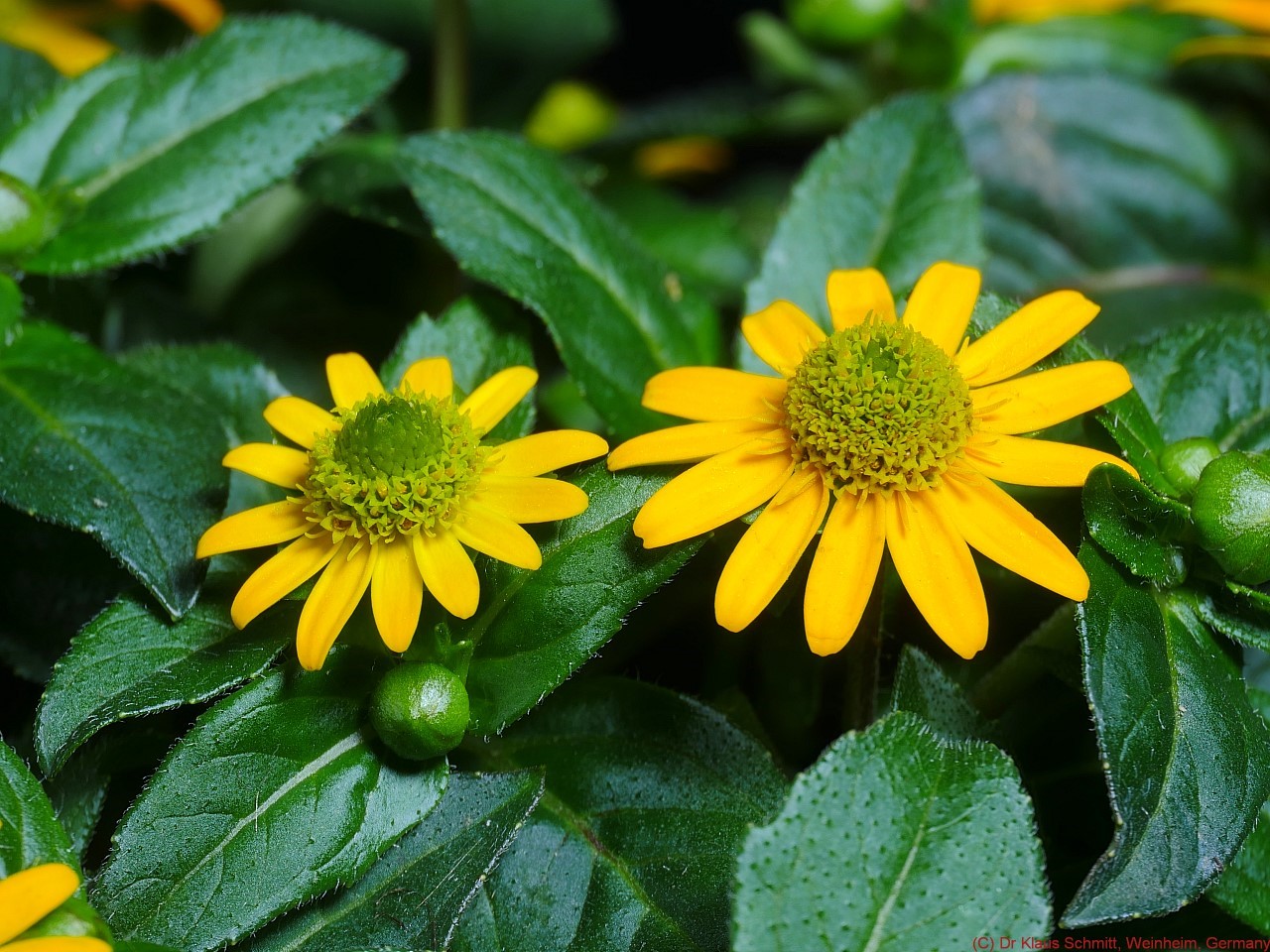
Creeping Zinnia - Sanvitalia procumbens with bumble bee in reflected ultraviolet photography, simulated bee and butterfly vision II

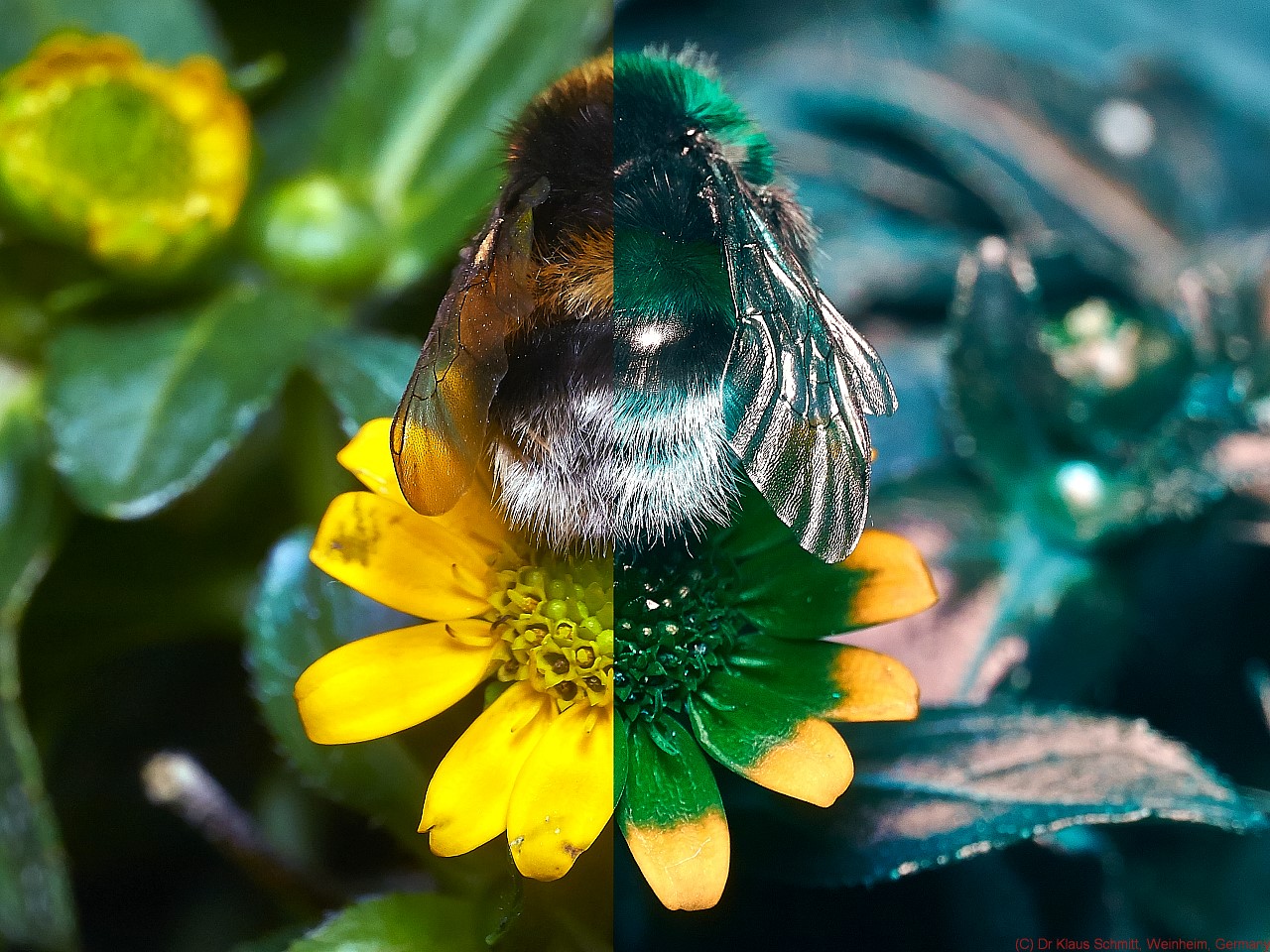
Today side-a-side staged shots of a bumble bee sitting on a spring flower, Creeping Zinnia - Sanvitalia procumbens in reflected ultraviolet photography using my "work horse" UV filter, the Baader-U filter as well as my XBV filters for simulating butterfly and bee vision. Lens was a CERCO 94mm quartz fluorite lens. Light source was a Xenon flash. All shots were done at about f8.

[click on image to see a larger one]

Diptych composite of Visual and UV image:
 

Diptych composite of Visual and simulated Bee Vision image:


Sanvitalia has a strong visible UV pattern, its petal tips are UV bright around 365nm and its center is quite UV dark, whereas the bumble bee is rather UV dark except its rear, which is UV bright around 375nm (as a signal to its colleagues that this flower is occupied?) and all this gets nicely visible also in this composite form.

More about that HERE

Stay tuned, more will follow on that fascinating subject...

More info on this very interesting field may be found on my site http://www.pbase.com/kds315/uv_photos
Saturday, May 3, 2014

Creeping Zinnia - Sanvitalia procumbens with bumble bee in deep reflected ultraviolet photography

Today staged shots of a bumble bee sitting on a spring flower, Creeping Zinnia - Sanvitalia procumbens in reflected ultraviolet photography using my "work horse" UV filter, the Baader-U filter as well as my deeper into UV reaching Jupiter-U and Saturn-U filters. Lens was a CERCO 94mm quartz fluorite lens. Light source was a Xenon flash. All shots were done at about f8.

[click on image to see a larger one]

Visible light image:
 

UV image using Baader-U filter (approx. 320-395nm, effective peak approx. 375nm):
 

UV image using Jupiter-U filter (approx. 280-385nm, effective peak approx. 365nm):
 

UV image using Saturn-U filter (approx. 300-350nm, effective peak approx. 325nm):
 

Quadtriptych of the above:


Sanvitalia has a strong visible UV pattern, its petal tips are UV bright around 365nm and its center is quite UV dark, whereas the bumble bee is rather UV dark except its rear, which is UV bright around 375nm (as a signal to its colleagues that this flower is occupied?) and all this gets nicely visible also iun deep UV.

I have shown that also in simulated butterfly and bee vision HERE

Stay tuned, more will follow on that fascinating subject...

More info on this very interesting field may be found on my site http://www.pbase.com/kds315/uv_photos

Thursday, December 12, 2013

EADS SODERN CERCO f4.1 94mm vs Coastal Optical Systems Inc. 105mm f/4 UV-Micro-Apo lens for reflected ultraviolet photography

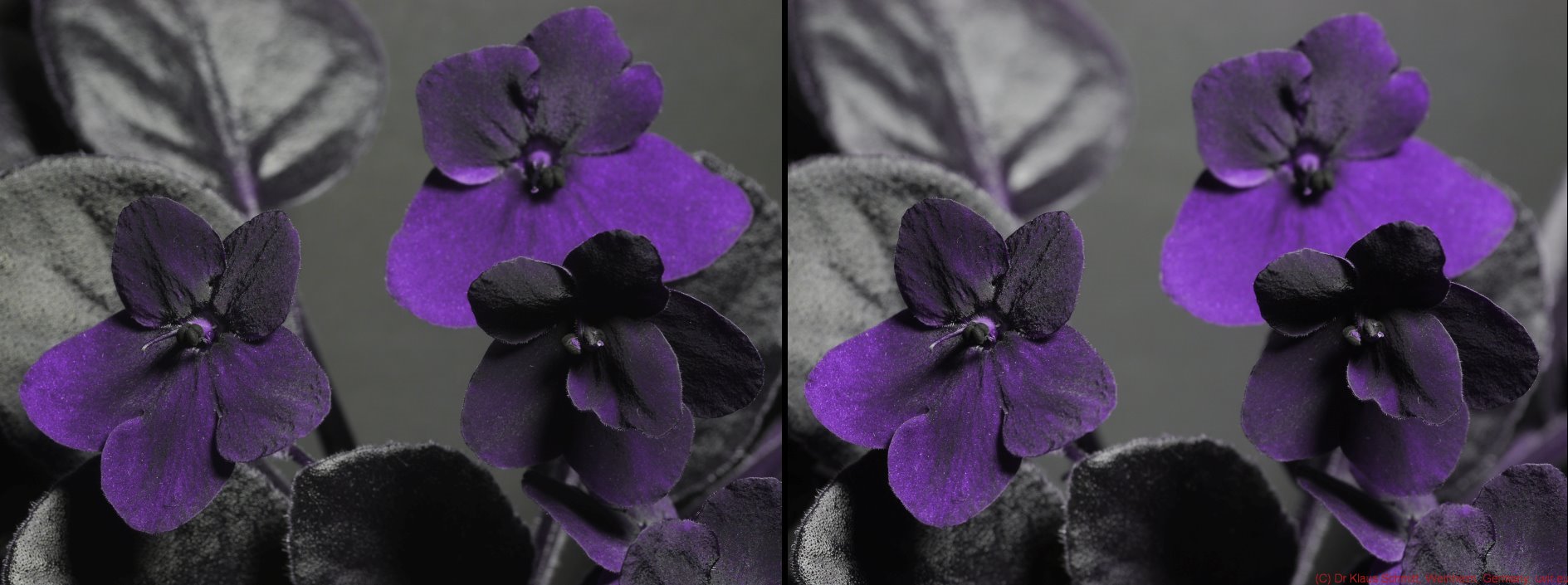
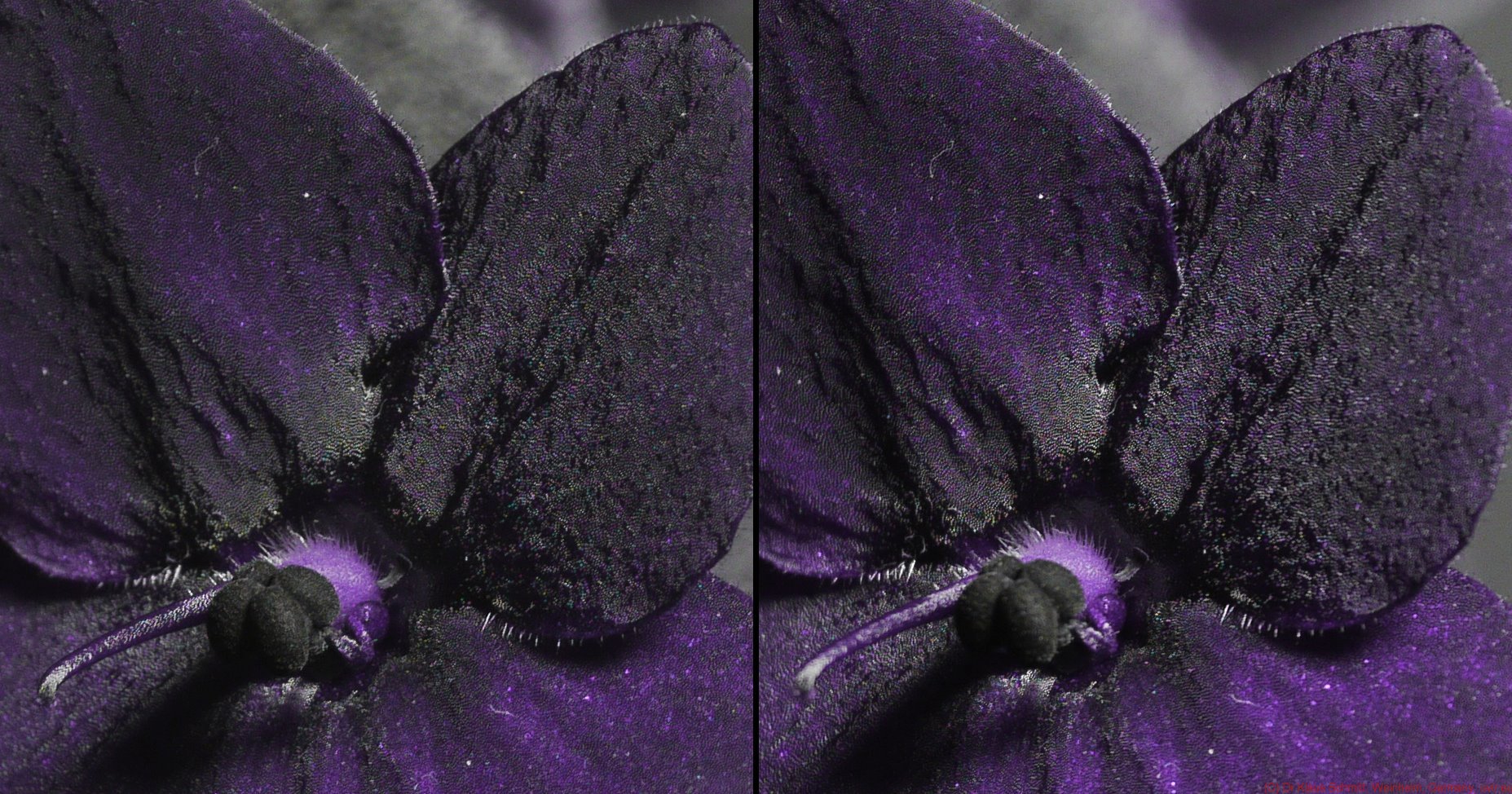
Today about two specialized UV lenses, the EADS SODERN CERCO type 2085 f4.1 94mm and the Coastal Optical Systems Inc. (COSI) 105mm f/4 UV-Micro-Apo apochromatic quartz fluorite lenses. In lack of a flower with UV pattern, I'm using a African violet hybride flower for that test as well as my "work horse" UV filter, the Baader-U filter. Light source was Xenon light. All shots were done at f5.6.

[click on image to see a larger one]

Diptych image CERCO 94mm (left) vs COSI 105mm lens (right), Visual light:
 

Diptych image CERCO 94mm (left) vs COSI 105mm lens (right), reflected UV using Baader-U filter (approx. 320-395nm, peak approx. 350nm):
 

Diptych detail image CERCO 94mm (left) vs COSI 105mm lens (right), reflected UV using Baader-U filter (approx. 320-395nm, peak approx. 350nm):
 

The comparison images clearly show that both lenses work exceptionally well for reflected UV as for visual photography and deliver sharp images rich in contrast and detail. I had to adjust the camera position to equalize the focal length differences, so this is not a scientific lens test, but the view of a user. Both come in Nikon-F mount, but the COSI lens covers full format sensors, the CERCO only about the smaller APS-C format (25mm image diameter).

P.S.: The images were not re-adjusted in focus between UV and VIS shots, to show that there is no focus shift between VIS and UV.

P.P.S.: those images accidentially work as 3D crosseye stereo images...

Stay tuned, more will follow on that fascinating subject...

More info on this very interesting field may be found on my site http://www.pbase.com/kds315/uv_photos

Tuesday, July 16, 2013

[UV] Old Achromatic Quartz Fluorite Lens for Ultraviolet Photography (III)

Today reflected ultraviolet photography shots using an old achromatic quartz fluorite lens, that I have rescued from an older spectrometer system also using my "work horse" UV filter, the Baader-U filter (approx. 320-395nm, peak approx. 350nm). Light source was sunlight. All shots were done with variated aperture settings (+1 stop difference per image) to show that influence.

[click on image to see a larger one]

Quadriptych form for better comparison.
Zinnia haageana flower:
 

Sanvitalia procumbens flower:
 

Not that bad, especially since it has a very small focus shift of only about 1/2mm when shooting macro. That added telecompressor CaF2 lens of about 100mm speeds it up considerably, still allowing a very convenient working distance. The variable aperture allows to control the amount of softness that lens has, allowing for "artsy" shots.And of course it transmits flat beyond 300nm.

More about that used quartz fluorite lens is  HERE.

Stay tuned, more will follow on that fascinating subject...

More info on this very interesting field may be found on my site http://www.pbase.com/kds315/uv_photos
Monday, April 29, 2013

Mexican Creeping Zinnia - Sanvitalia procumbens in reflected ultraviolet photography, simulated bee and butterfly vision

Today shots of a spring flower, a Mexican Creeping Zinnia - Sanvitalia procumbens in reflected ultraviolet photography using my "work horse" UV filter, the Baader-U filter as well as my XBV filters for simulating butterfly and bee vision. Lens was a CERCO 94mm quartz fluorite lens. Light source was sunlight. All shots were done at about f5.6.

[click on image to see a larger one]

Visible light image:
 

UV image using Baader-U filter (approx. 320-395nm, effective peak approx. 375nm):
 

Simulated butterfly vision (UV - VIS) using XBV3 filter:
 

Simulated bee vision (UV - VIS) using XBV5 filter:
 

Simulated bee vision (UV - VIS) using XBV6 filter:
 

Quadtriptych of some of the above:


This Mexican Zinna has a strongly visible, deep into UV reaching pattern. Its petal tips are UV bright, its center is quite UV dark, so this gets quite nicely visible.


Stay tuned, more will follow on that fascinating subject...

More info on this very interesting field may be found on my site http://www.pbase.com/kds315/uv_photos

Friday, July 27, 2012

Sanvitalia procumbens (Creeping Zinnia): human vision vs simulated bee vison; reflected UV ultraviolet photography II

Today again about Sanvitalia procumbens ("Creeping Zinnia"). So here it is in its multispectral representation with a focus on simulated bee vision; before I had shown it with a focus on UV using the Baader-U and Jupiter U filters. I took some shots in normal human vision VIS, in UV using the Baader-U filter, as well as in simulated bee vision using my XBV2 and XBV5 filter respectively.

[click on image to see a larger one]

Visual shot:


Simulated bee vison using XBV2 filter:


Simulated bee vison using XBV5 filter:


UV using Baader-U filter:


This flower has a prominent UV reflection (around 360nm) of its petals and is one of my "standard UV targets"

As you may have noticed, I'm still working on my bee vision (BV) filters; here again it shows, how well they are able to reproduce the UV patterns together with teh visible parts a bee is able to see.

More about these special new filters here later in a seperate entry.


Stay tuned, more will follow on that fascinating subject...

More info on this very interesting field may be found on my site http://www.pbase.com/kds315/uv_photos

Thursday, June 7, 2012

Sanvitalia procumbens: Simulated bee vison filter - improved version 3

So this is about tuning my proprietary Bee Vision Filter (that simulates the UV-Blue-Green vision of a bee in just one shot). Here again it is used on a Sanvitalia procumbens flower. As the greens were a bit underrepresented (take the green bud left for example) in my current XBV2 filter, I optimize my filter stack to get "better" greens in my new XBV3 filter.

[click on image to see a larger one]

Simulated bee vison using XBV2 filter:


Simulated bee vison using XBV3 filter:


For comparison, the normal vison:


So in my opinion, the new version XBV3 represents the leaf color better, yet still brings out the UV marks as white petal tips nicely.


Stay tuned, more will follow on that fascinating subject...

More info on this very interesting field may be found on my site http://www.pbase.com/kds315/uv_photos
Wednesday, June 6, 2012

Sanvitalia procumbens: Simulated bee vison vs Baader-U vs Jupiter-U filter for reflected UV ultraviolet photography

I got recently reminded to use my proprietary Bee Vision Filter XBV2 (that simulates the UV-Blue-Green vision of a bee in just one shot) more often, so here it is used on Sanvitalia procumbens (Creeping Zinnia) flowers plus I added the Baader-U2 and Jupiter-U2 filtered pure UV shots for comparison:

[click on image to see a larger one]

Sanvitalia, visual shot:


Simulated bee vison using XBV2 filter:


UV using Baader-U filter:


UV using Jupiter-U filter:


So and here you have the full comparison as a tryptich VIS-UV-BV:


Stay tuned, more will follow on that fascinating subject...

More info on this very interesting field may be found on my site http://www.pbase.com/kds315/uv_photos