Showing posts with label Black-eyed Susan. Show all posts

Wednesday, September 7, 2016

How to stand out in the crowd - Gazania rigens shows its ecologic advantage vs Rudbeckia fulgida and Rudbeckia hirta using intense UV reflection IV

Today about how even some UV reflecting flowers (Gazania rigens) have achieved a competitive edge over other UV reflecting flowers (Rudbeckia fulgida) by making use of a specific very intense UV reflection around 370nm. This will be shown in human vision, in reflected ultraviolet photography and also by using reflection spectrometry. I was using my "work horse" UV filter, the Baader-U filter for reflected UV and a calibrated UV-VIS USB2000 spectrometer with stabilized Xenon lightsource.

[click on image to see a larger one]

Rudbeckia fulgida + R. hirta vs white Gazania rigens, visible image:  

Rudbeckia fulgida + R. hirta vs white Gazania rigens, reflected UV image:  

Reflection spectrometry result of Rudbeckia fulgida vs white Gazania rigens (UV bright petal tip):  
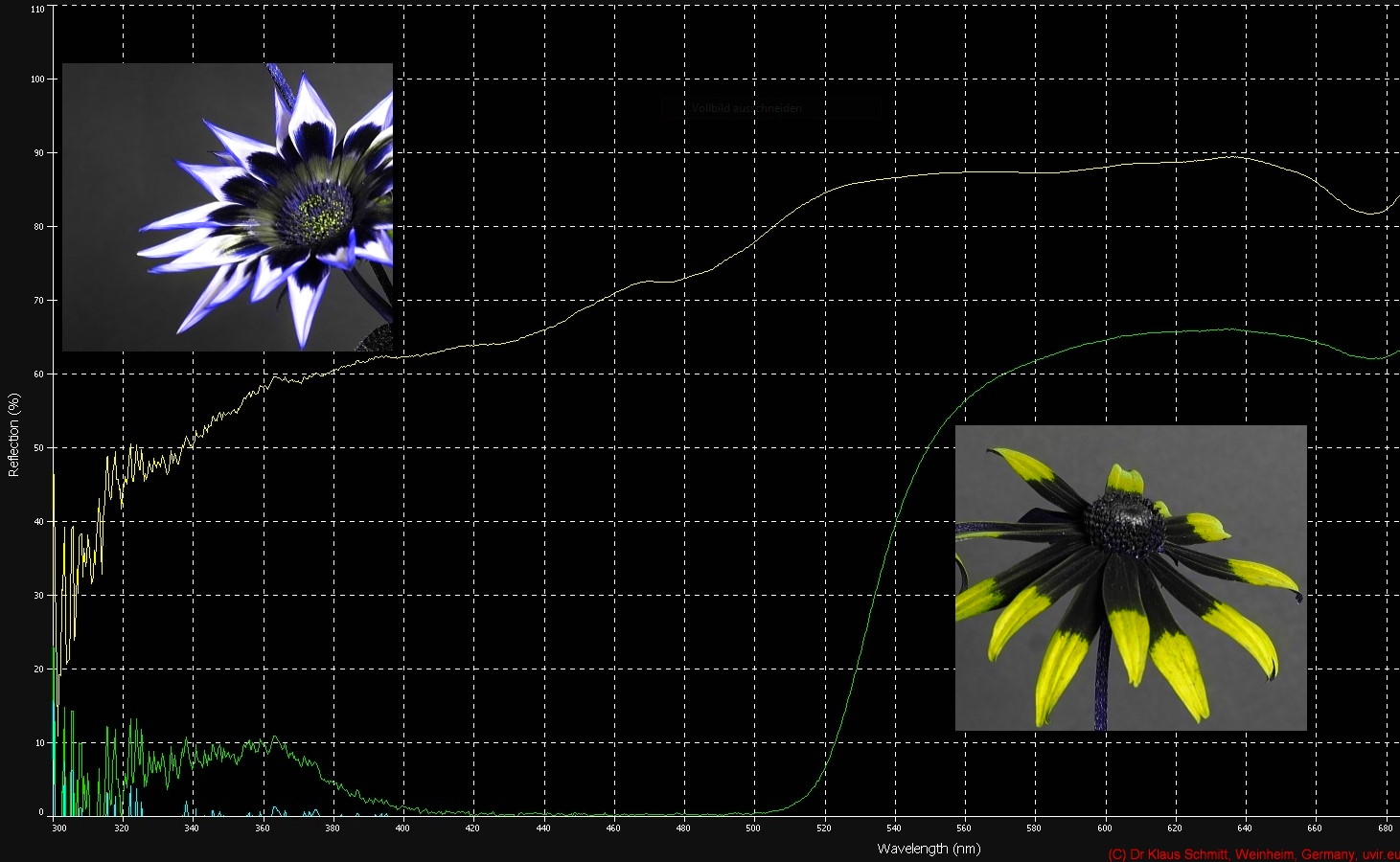
In visible light, all these flowers are rather bright yellow / orange (Rudbeckia) and white (Gazania) to our human eye. But the white Gazania rigens compared to the Rudbeckia fulgida flower shows an even more prominent and bright bullseye pattern in reflected UV (only visible to bees and butterflies), as its outer petals are very UV bright (around 370nm) with a UV reflection above 60%, compared to the other UV reflecting flower with only about 10% UV reflection of its petal tips, which makes this Gazania clearly even more visible in UV, hence creating an impressive competitive edge in terms of chances for getting pollinated even against those other flowers with UV bullseye pattern - and all this gets nicely visible.

I have written HERE about it before.

Stay tuned, more will follow on that fascinating subject...

Sunday, July 31, 2016

How to stand out in the crowd - Gazania rigens shows its ecologic advantage vs Rudbeckia fulgida and Rudbeckia hirta using intense UV reflection III

Today about how even some UV reflecting flowers (Gazania rigens) have achieved a competitive edge over other UV reflecting flowers (Rudbeckia fulgida and R. hirta) by making use of a specific very intense UV reflection around 370nm. This will be shown in human vision, in reflected ultraviolet photography and also in simulated bee vision. I was using my "work horse" UV filter, the Baader-U filter for reflected UV, my XBV filter for simulated bee vision aside from a visible light shot. Lens was my UV-Nikkor 105mm quartz flourite lens. Light source was a modified Xenon flash. All shots were done at f11. [These shots were done with a new camera system and are available on request in very high resolution (40 and 60 Mp)].

[click on image to see a larger one]

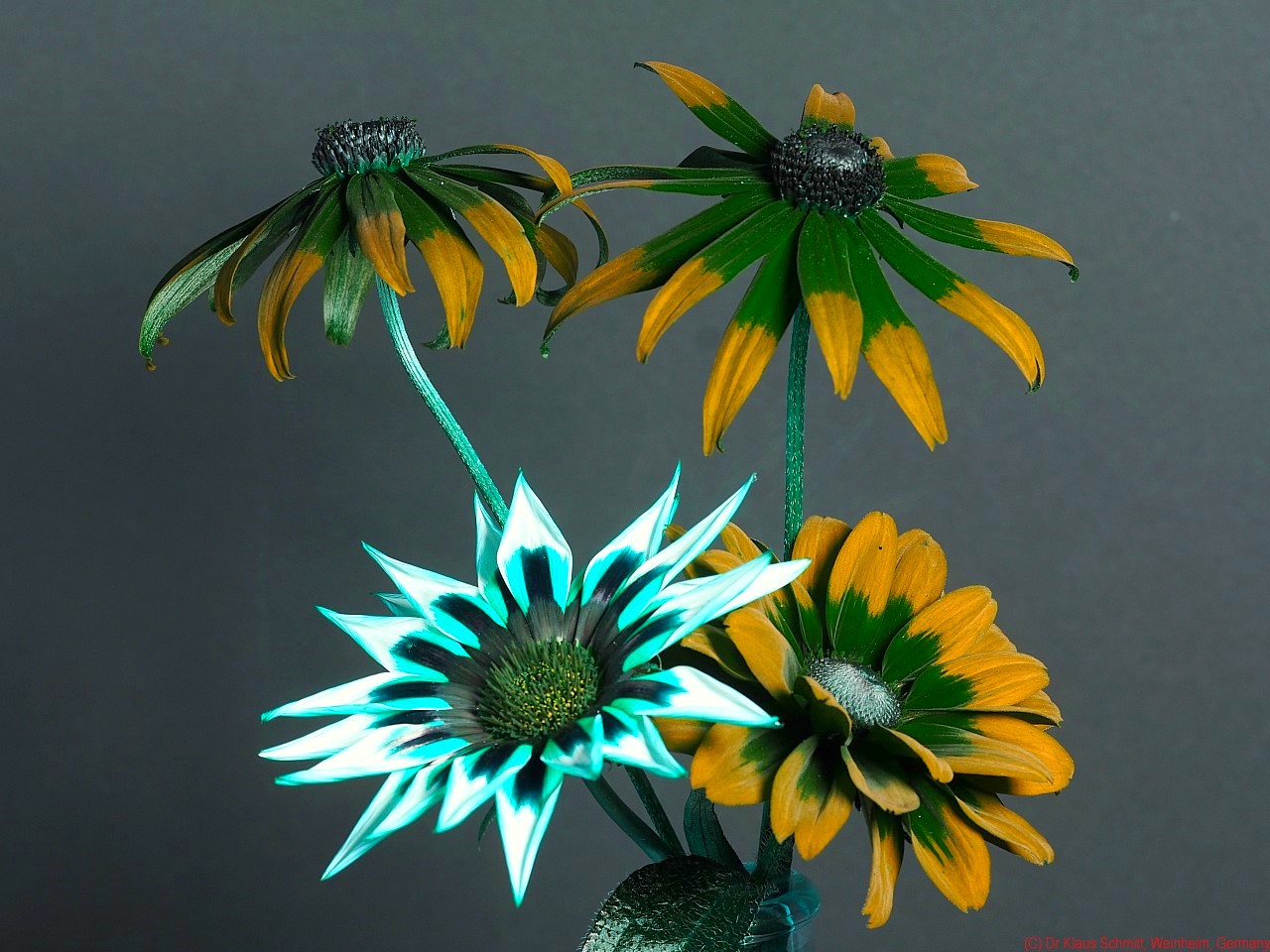
Rudbeckia fulgida + R. hirta vs white Gazania rigens, visible image:  

Rudbeckia fulgida + R. hirta vs white Gazania rigens, reflected UV image:  

Rudbeckia fulgida + R. hirta vs white Gazania rigens, simulated bee vision image:  

In visible light, all these flowers are rather bright yellow / orange (Rudbeckia) and white (Gazania) to our human eye. But the white Gazania rigens against the Rudbeckia fulgida and R. hirta flowers shows an even more prominent and bright bullseye pattern in reflected UV (only visible to bees and butterflies), as its petals are very, very UV bright (around 370nm) and its center is very UV dark, compared to the other UV reflecting flowers, which makes them clearly even more visible in UV, hence creating an impressive competitive edge in terms of chances for getting pollinated even against those other flowers with UV bullseye pattern - and all this gets nicely visible, also in simulated bee vision.

I have written HERE about it before.

Stay tuned, more will follow on that fascinating subject...

Thursday, July 21, 2016

How to stand out in the crowd - Rudbeckia fulgida and Zinnia haageana show its ecologic advantage using intense UV reflection II

Today more about how some yellow flowers (Rudbeckia fulgida and Zinnia haageana) have achieved a competitive edge over other yellow flowers (Coreopsis verticillata in this case) by making use of a specific intense UV reflection around 365nm, matched to the insect eyes UV sensitivity. This will be shown side-by-side in human vision and also in reflected ultraviolet photography. I was using my "work horse" UV filter, the Baader-U filter for reflected UV, aside from a visible light shot. Lens was my UV-Nikkor 105mm quartz flourite lens. Light source was sunlight. All shots were done at f8.

[click on image to see a larger one]

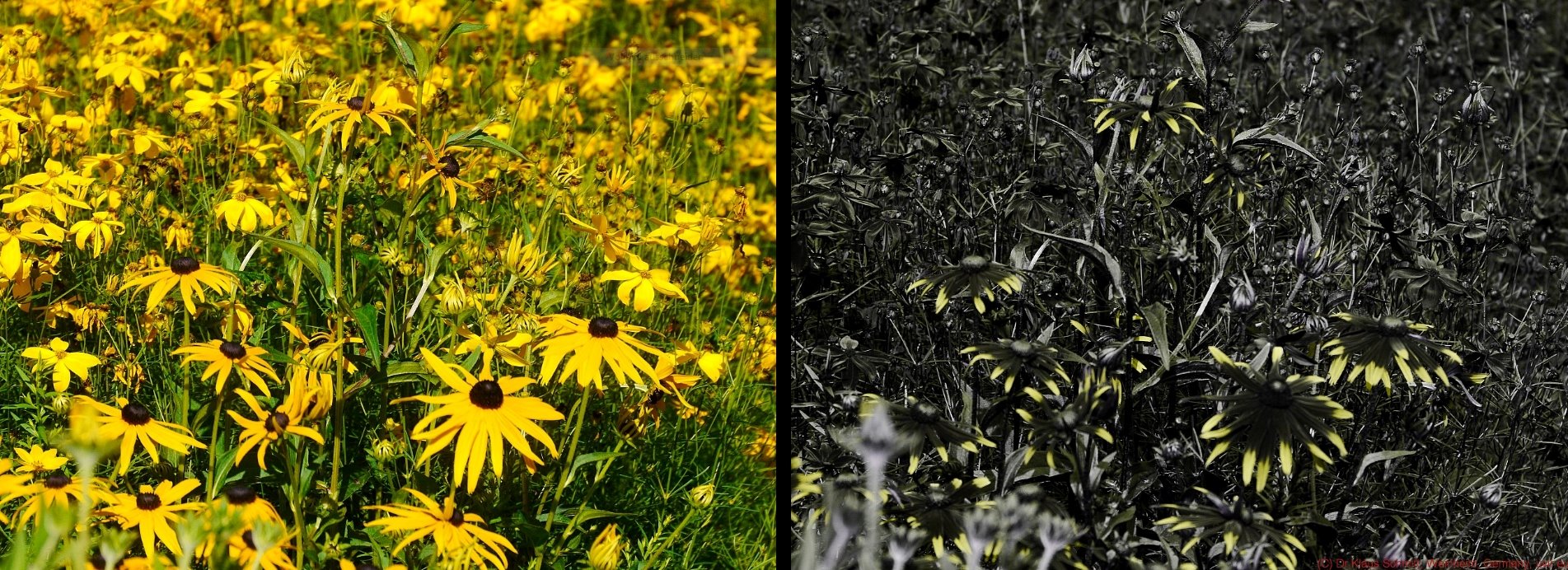
Diptych Rudbeckia fulgida vs Coreopsis verticillata overview, visible image (left) and reflected UV image (right):  

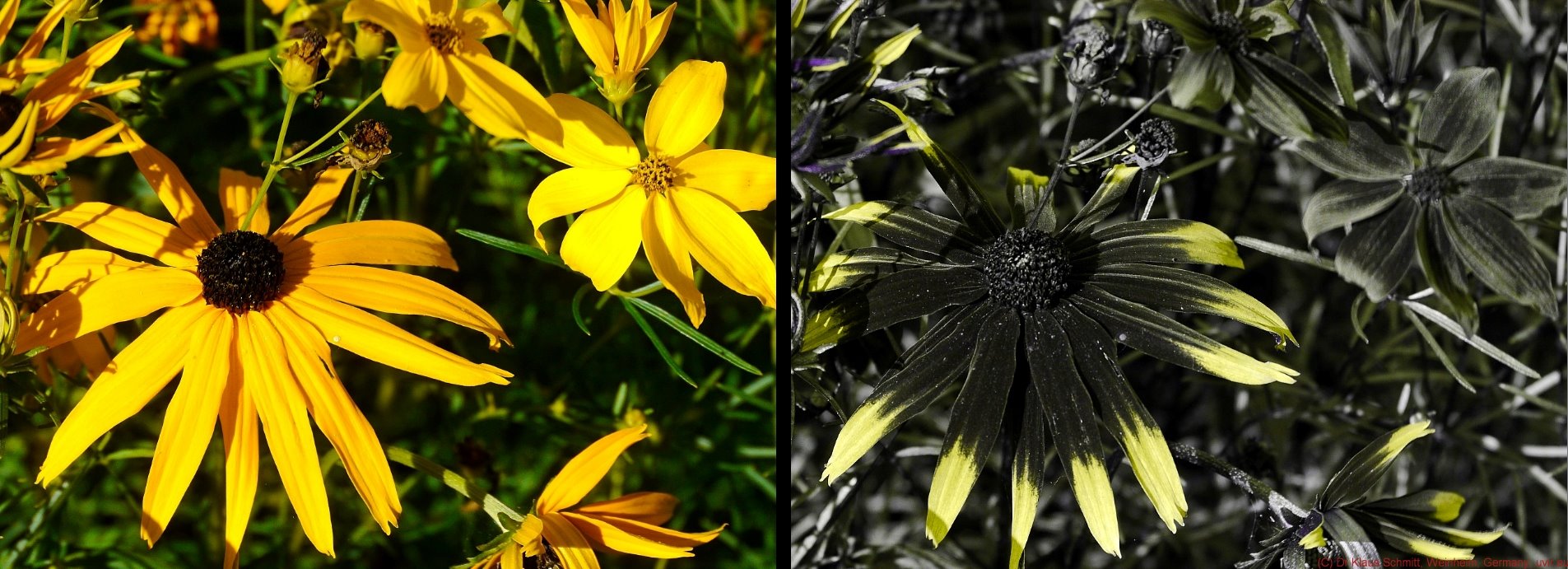
Diptych Rudbeckia fulgida vs Coreopsis verticillata detail, visible image (left) and reflected UV image (right):  

Diptych Zinnia haageana vs Coreopsis verticillata, visible image (left) and reflected UV image (right):  

Diptych Zinnia haageana vs Coreopsis verticillata, visible image (left) and reflected UV image (right):  

In visible light, all these flowers are rather bright yellow / orange to our human eye. But this Rudbeckia fulgida and Zinnia haageana flower shows a very prominent and bright bullseye pattern in reflected UV (only visible to bees and butterflies), as their petals are very UV bright (around 350-365nm) and their center is very UV dark, compared to the rather UV non-reflecting other flowers, which makes them nearly invisible in UV, hence creating an impressive competitive edge in terms of chances for getting pollinated - and all this gets nicely visible.

I have written HERE about it before.

Stay tuned, more will follow on that fascinating subject...
Friday, July 15, 2016

How to stand out in the crowd - R. Hirta shows its ecologic advantage using intense UV reflection

Today a little different topic: I would like to show, how a flower (R. hirta) achives a competitive edge over other flowers (Monardia, Echinacea) by making use of a specific intense UV reflection around 365nm, matched to the insect eyes sensitivity. This will be shown using a flower originating from the USA Prairie, a Black-eyed Susan - Rudbeckia hirta and it will be done in reflected ultraviolet photography using my "work horse" UV filter, the Baader-U filter aside from a visible light shot. Lens was my UV-Nikkor 105mm quartz flourite lens. Light source was sunlight. All shots were done at f8.

[click on image to see a larger one]

Visible light image (400-750nm):  

Reflected UV image using Baader-U filter (320-395nm):  

Diptych of visible image (left) and reflected UV image (right):  

In visible light, all flowers are rather bright to our human eye. But this R. hirta flower in UV (only visible to bees and butterflies) shows a very prominent and bright bullseye pattern, as its petals are very UV bright (around 365nm) and its center is very UV dark, compared to the rather dull UV reflecting Monardia and Echinacea flowers (around 380nm only), hence creating an impressive competitive edge in terms of chances for getting pollinated - and all this gets nicely visible.

Stay tuned, more will follow on that fascinating subject...
Thursday, June 30, 2016

Black-eyed Susan - Rudbeckia hirta in reflected ultraviolet photography and simulated bee vision II

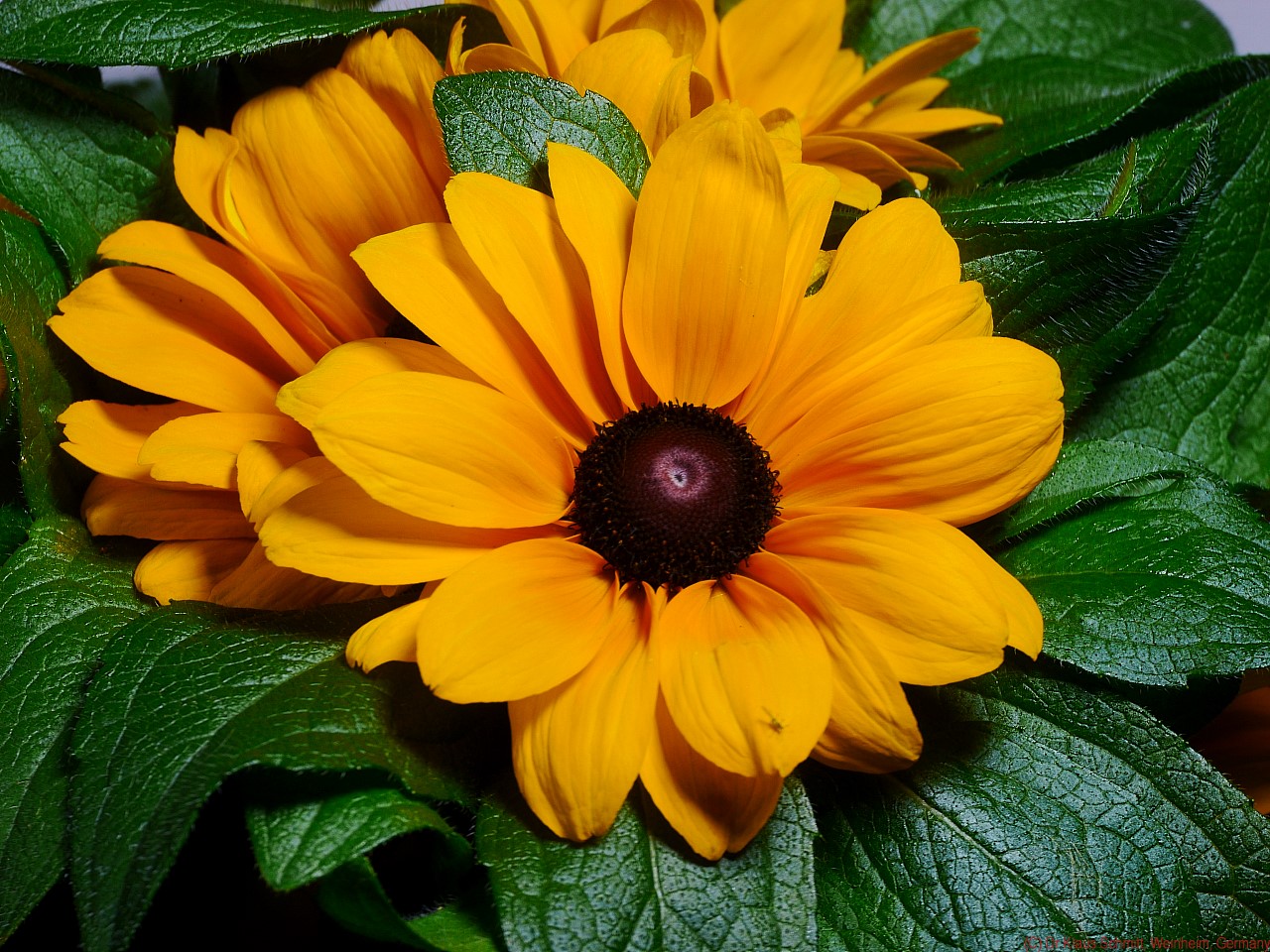
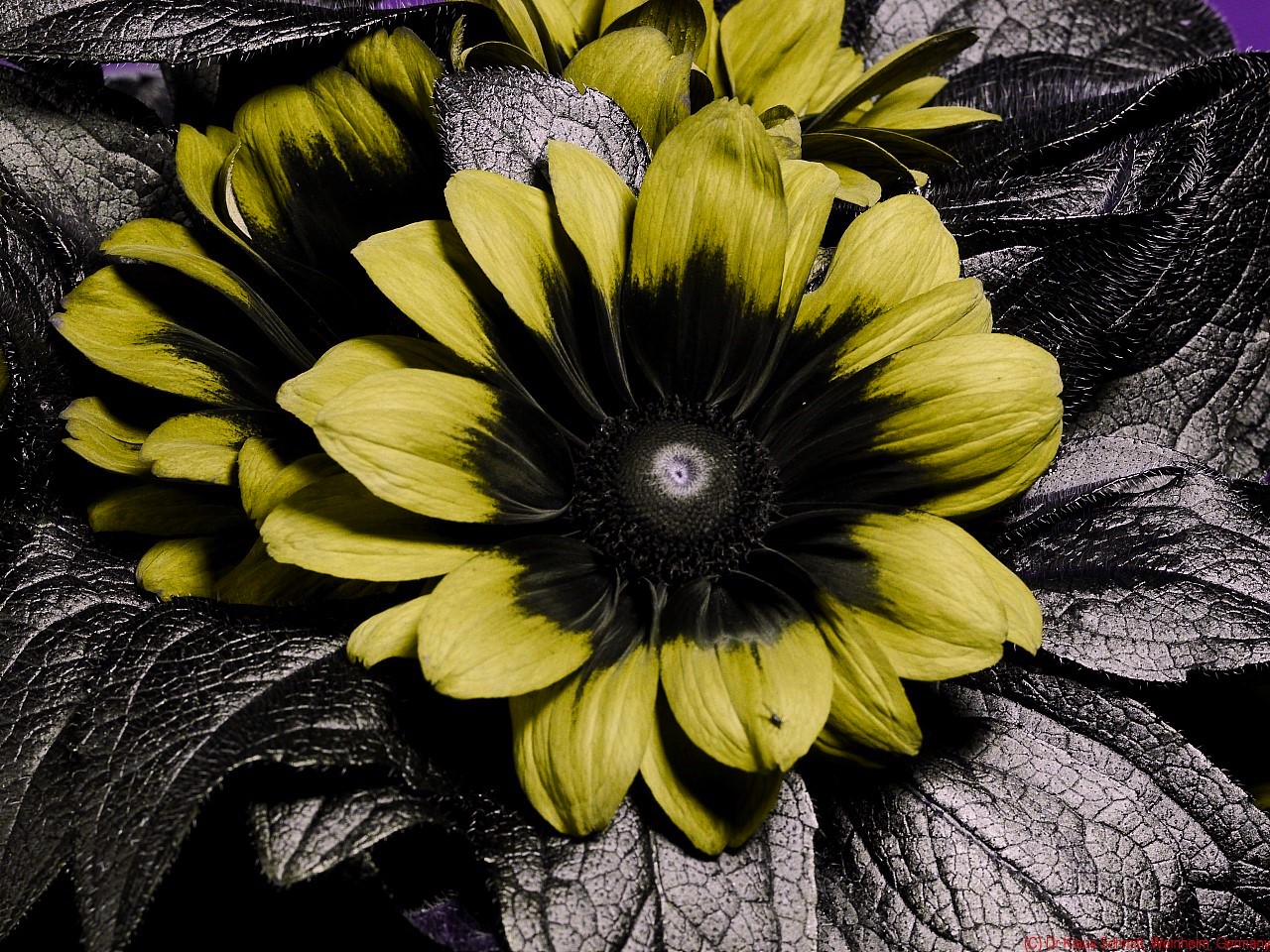
Today shots of a flower originating from the USA Prairie, a Black-eyed Susan - Rudbeckia hirta in reflected ultraviolet photography using my "work horse" UV filter, the Baader-U filter as well as in simulated bee vision using my XBV6 filter. Lens was my UV-Nikkor 105mm quartz flourite lens. Light source was a modified Xenon flash. All shots were done at f8.

[click on image to see a larger one]

Visible light image  

UV image using Baader-U filter (approx. 320-395nm, effective peak approx. 375nm):  

Simulated bee vision image using experimental XBV filter:  

Triptych of the above images:  


This flower shows a very prominent UV bullseye pattern, as its petals are very UV bright (around 365nm) to about the middle and its center is very UV dark, and all this gets nicely visible also in simulated bee vision.

I have previously written about that flower HERE.

Stay tuned, more will follow on that fascinating subject...
Friday, September 6, 2013

Black-eyed Susan - Rudbeckia hirta in reflected ultraviolet photography and simulated bee vision

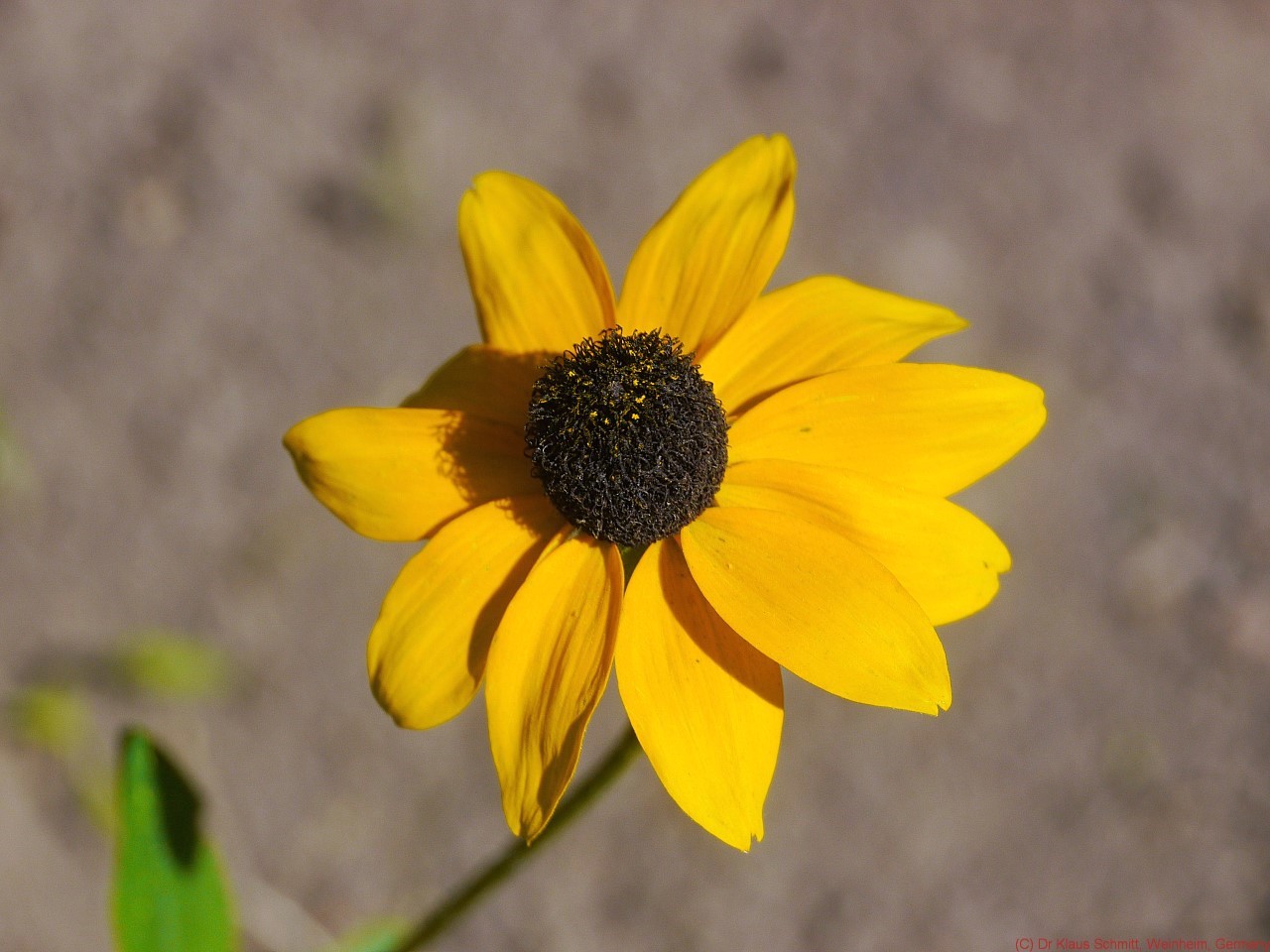
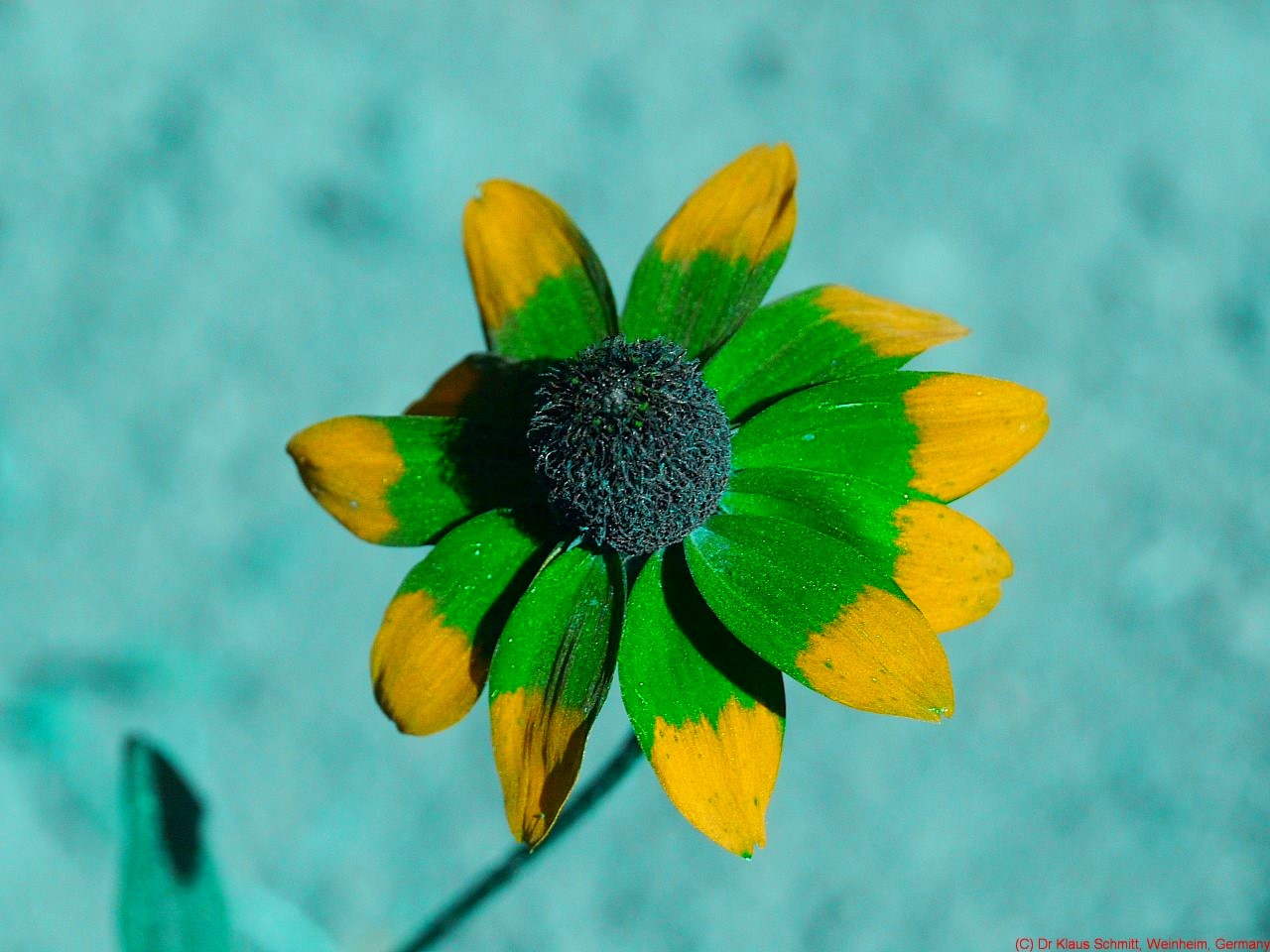
Today shots of a flower originating from the USA Prairie, black-eyed Susan - Rudbeckia hirta in reflected ultraviolet photography using my "work horse" UV filter, the Baader-U filter as well as in simulated bee vision using my XBV6 filter. Lens was my CERCO 94mm quartz flourite lens. Light source was sunlight. All shots were done at about f5.6.

[click on image to see a larger one]

Visible light image  

UV image using Baader-U filter (approx. 320-395nm, effective peak approx. 375nm):  

Simulated bee vision image using experimental XBV filter:  

Triptych of the above images:  


This flower shows a very prominent UV bullseye pattern, I would even say it is one of the most known flowers with UV pattern, as its petals are very UV bright (around 365nm) to about the middle and its center is UV dark (aging spots on this older flower can bee seen in UV+BV), and all this gets nicely visible.

I have previously written about that flower HERE.

Stay tuned, more will follow on that fascinating subject...