Showing posts with label Baader U. Show all posts

Friday, October 11, 2024

Rudbeckia hirta - Human vs simulated animal vision II: butterfly, bee, dog, horse, bat

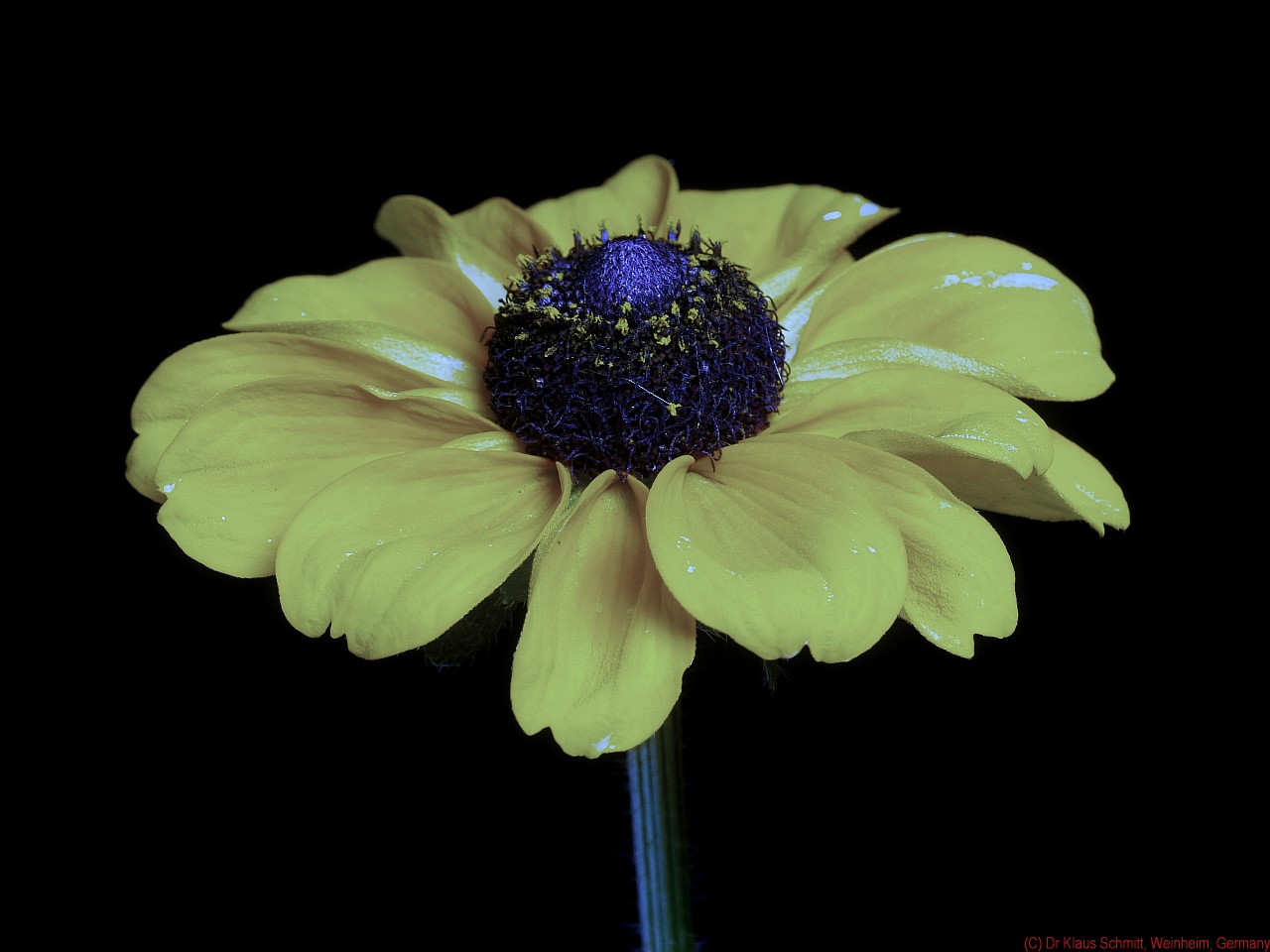
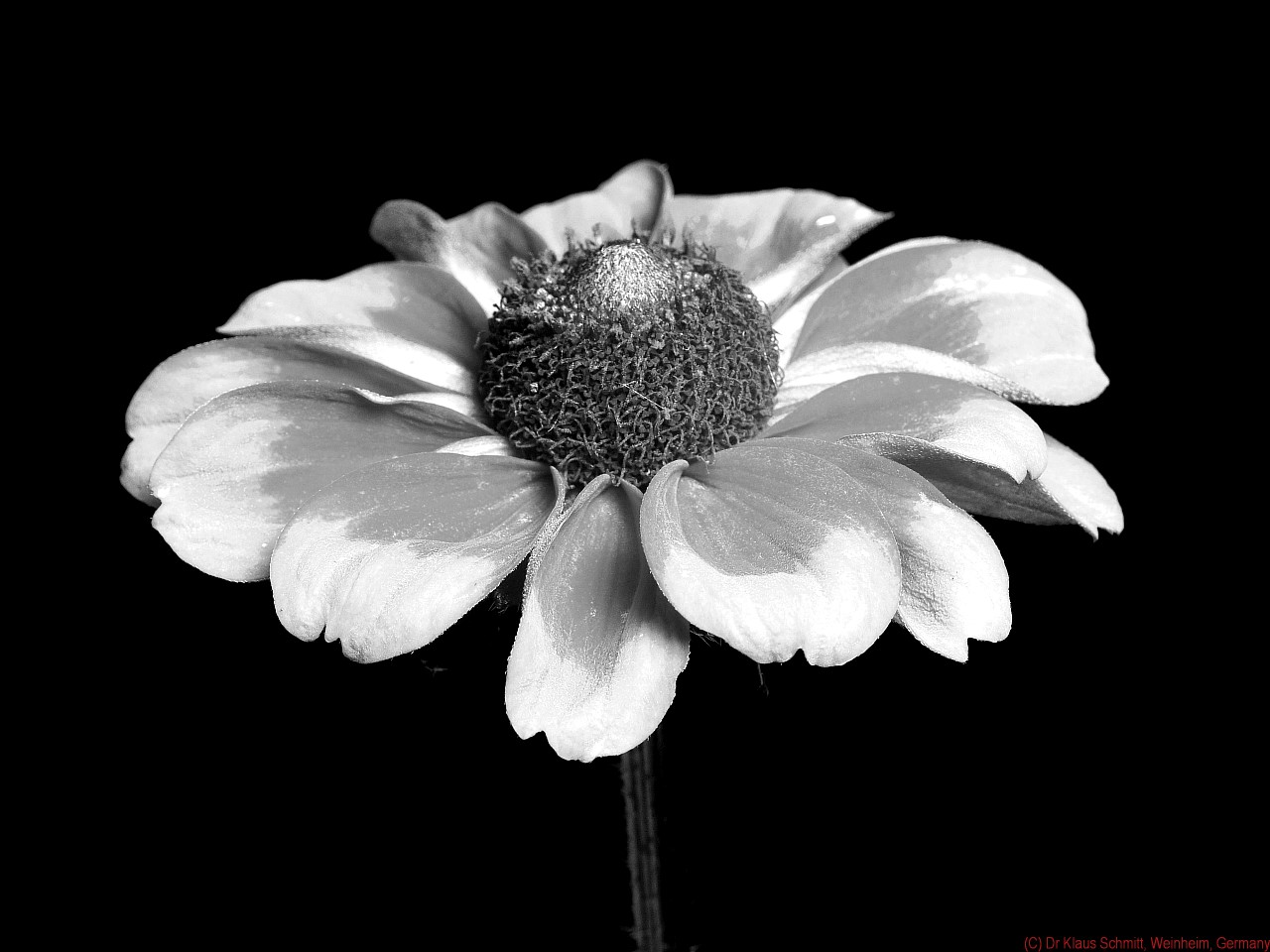
I was asked by a member working for their program Jeux Photoniques at the Université Laval in Québec, Canada for a series of images to simulate the vision of different animals. I used images of a Rudbeckia hirta flower Black Eyed Susan - Rudbeckia hirta which I had shot using visible and reflected ultraviolet photography. All shots were then done at f8 in reflected ultraviolet photography using my "work horse" UV filter, the Baader-U filter, as well as my XBV filters for simulated animal vision. Lens was a UV-Nikkor 105mm quartz fluorite lens. Light source was a modified Xenon flash.

[click on image to see a larger one]

Human vision:
 

Simulated butterfly vision:
 

Simulated bee vision:
 

Simulated dog vision:
 

Simulated horse vision:
 

Simulated bat vision:
 

Hexaptych of the above:
 

The idea behind these mappings is, to demonstrate the different forms of vision, including the ability to see UV and with this ability, to see patterns which only appear in ultraviolet light (UV) but invisible to us humans.
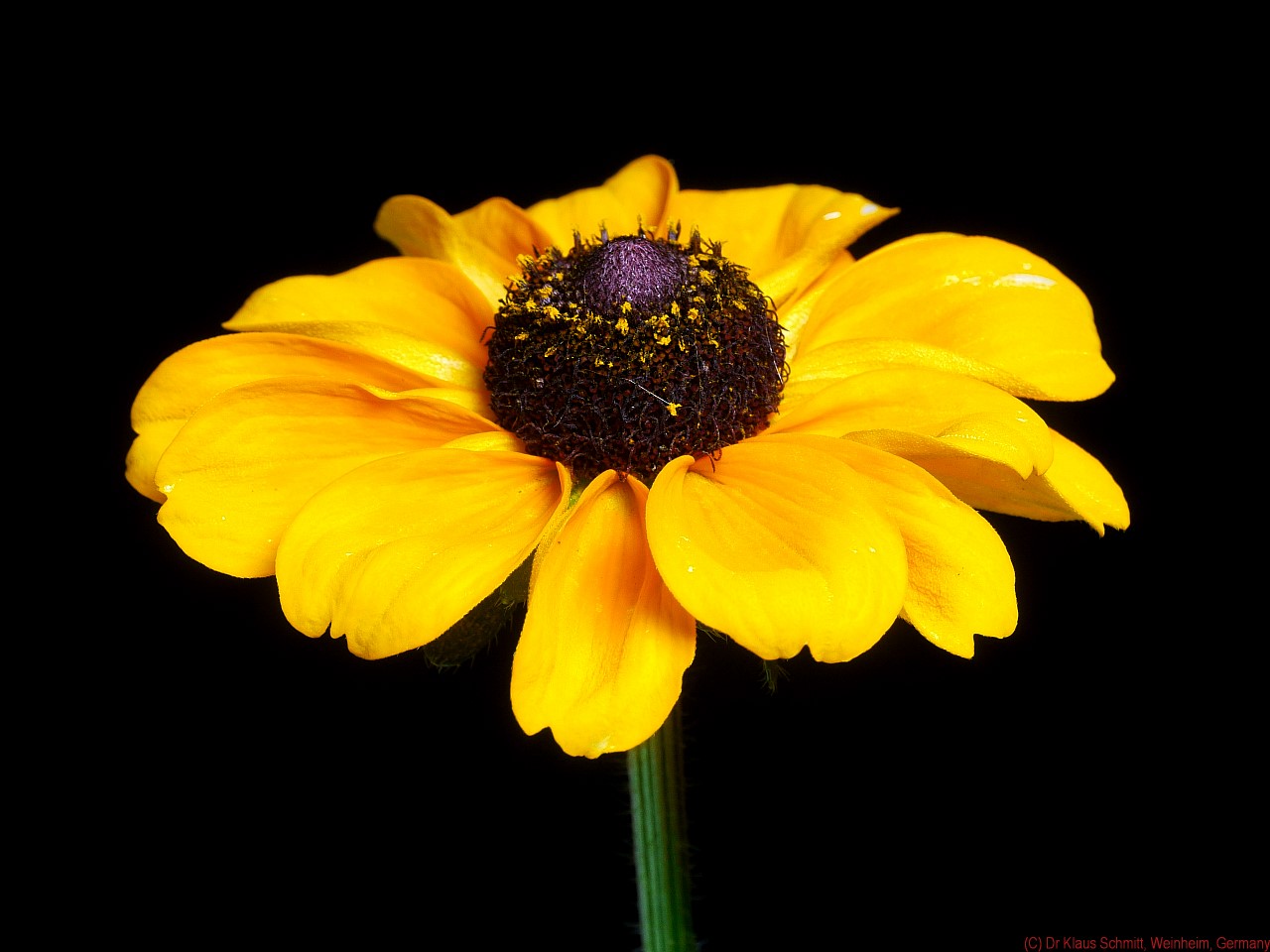
 I chose Rudbeckia hirts, as it has a strong UV pattern, its petal tips are UV bright around 365nm, but its center is quite UV dark, so this gets quite nicely visible, hence why I used this flower here to simuate the following visions:

  1. Humans have trichromatic vision, they see Blue, Green, Red
  2. Butterflies see UV, Blue, Green, Red, they are Tetrachromats
  3. Bees see UV, Blue, Green, they are Trichomats
  4. Dogs are Dichromats, see Blue and Yellow, but also some UV
  5. Horses are Dichromats, they see Blue and Yellow, but no UV
  6. Bats do not see color, but some are sensitive to UV also

 
Stay tuned, more will follow on that fascinating subject...

More info on this very interesting field may be found on my site http://www.pbase.com/kds315/uv_photos

Tuesday, April 28, 2020

Enhancing the visibility of fossil tissue structures using UV reflected and UV stimulated visible flourescence photography II

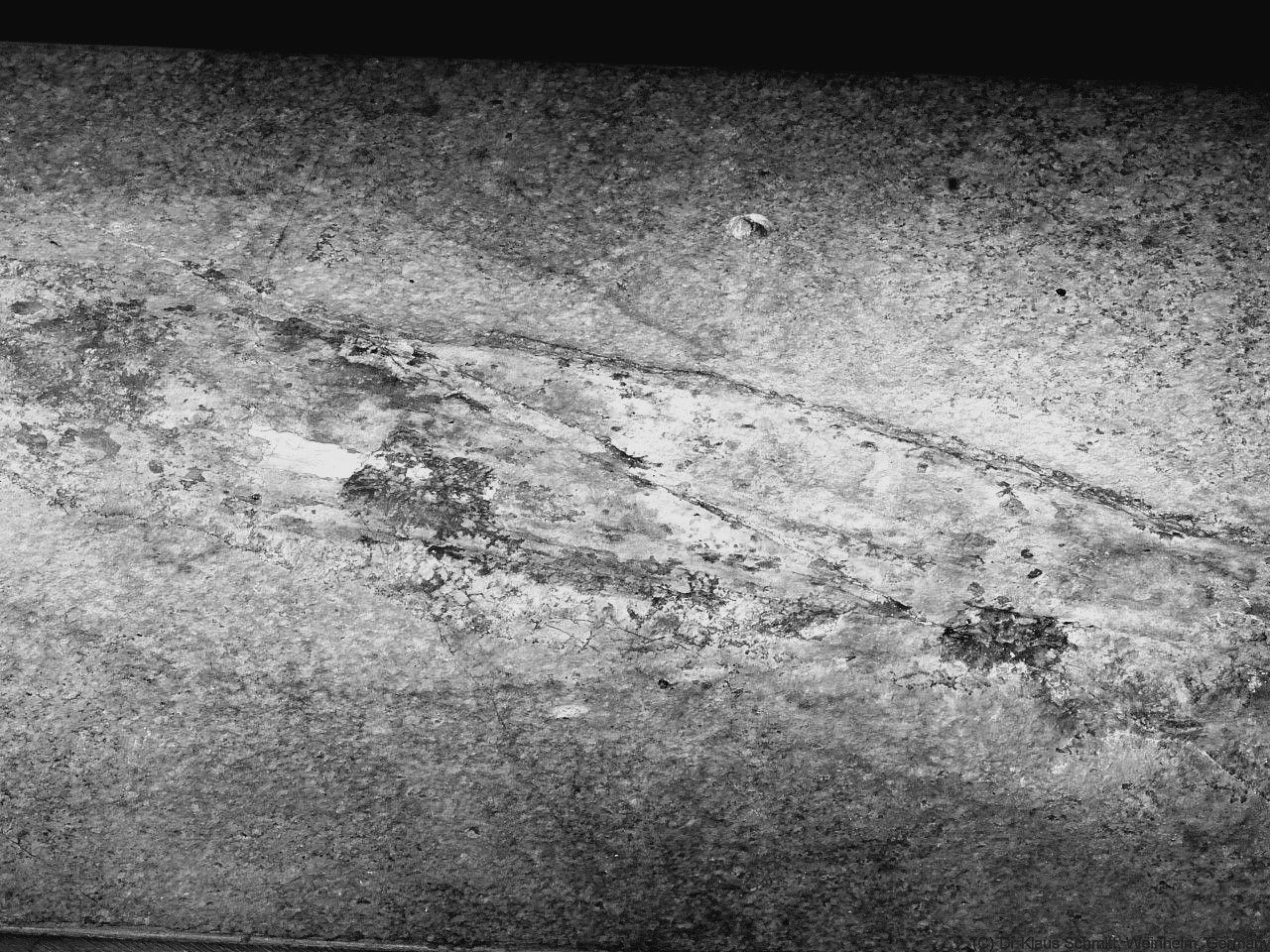
A while ago I had the honor to work with Neal Larson on a paper on fossilized cephalopods found in Hajoula, Lebanon. Today it is again about enhancing the visibility of fossil bone and tissue structures using reflected UV and UV stimulated visible fluorescence photography, but as it is some years later, using more modern equipment now. Lens used was my UV-Nikkor 105mm quartz fluorite lens, light sources were a modified high power Xenon flash, as well as a NICHIA 365nm LED. Filters used were the Baader-U filter as well as a 420nm Long Pass filter. Target was a fossilized squid from the Upper Cretaceous period, approx. 90 million years old.

[click on image to see a larger one]

Visible light image using UV/IR Cut filter:


Reflected UV image using Baader-U filter (310-390nm) with 365nm UV LED: 


Reflected UV image using Baader-U filter (310-390nm) with 365nm UV LED (in bw):


UV stimulated visible Fluorescence image with 420nm Longpass filter: 


UV stimulated visible Fluorescence image, 2nd version, with UV-IR Cut filter:


It gets nicely visible that using UV light photography brings out much more details than normal visible light photography and by doing so, enhances the visibility quite a bit.

I have written more about fossils HERE

Stay tuned, more will follow on that fascinating subject...

More info on this very interesting field may be found on my site http://www.pbase.com/kds315/uv_photos

Thursday, June 20, 2019

Rudbeckia hirta - Human vs simulated animal vision: butterfly, bee, dog, horse, bat

Today comparison shots of a Rudbeckia hirta flower Black Eyed Susan - Rudbeckia hirta using visible, reflected ultraviolet photography to create simulated animal vision images. All shots were done at f8 in reflected ultraviolet photography using my "work horse" UV filter, the Baader-U filter, as well as my XBV filters for simulated animal vision. Lens was a UV-Nikkor 105mm quartz fluorite lens. Light source was a modified Xenon flash.

[click on image to see a larger one]

Human vision:
 

Simulated butterfly vision:
 

Simulated bee vision:
 

Simulated dog vision:
 

Simulated horse vision:
 

Simulated bat vision:
 

Hexaptych of the above:


  1. Humans have trichromatic vision, they see Blue, Green, Red
  2. Butterflies see UV, Blue, Green, Red, they are Tetrachromats
  3. Bees see UV, Blue, Green, they are Trichomats
  4. Dogs are Dichromats, see Blue and Yellow, but also some UV
  5. Horses are Dichromats, they see Blue and Yellow, but no UV
  6. Bats do not see color, but some are sensitive to UV also
The idea behind these mappings is, to demonstrate the different forms of vision, including the ability to see UV and with this ability, to see patterns which only appear in ultraviolet light (UV) but invisible to us humans.

I chose Rudbeckia, as it has a strong UV pattern, its petal tips are UV bright around 365nm, buts its center is quite UV dark, so this gets quite nicely visible, hence why I used this flower here.
 
Stay tuned, more will follow on that fascinating subject...

More info on this very interesting field may be found on my site http://www.pbase.com/kds315/uv_photos

Tuesday, November 15, 2016

Scorpio Supermoon in reflected UV (ultraviolet) light photography

Today a shot of the Scorpion Supermoon as of 11-14-2016 in reflected ultraviolet photography using my "work horse" UV filter, the Baader-U filter. All shots were done at f8. Lens was a rather rare LDM-1 800mm mirror only lens.

[click on image to see a larger one]

Reflected UV light (using Baader-U filter):
 

I have written about the Moon in UV previously HERE
 
Stay tuned, more will follow on that fascinating subject...

More info on this very interesting field may be found on my site http://www.pbase.com/kds315/uv_photos

Sunday, November 16, 2014

Enhancing the visibility of fossil tissue structures using UV reflected and UV stimulated visible flourescence photography

A while ago I had the honor to work with Neal Larson on a paper on fossilized cephalopods found in Hajoula, Lebanon. Today it is again about enhancing the visibility of fossil bone and tissue structures using UV reflected and UV stimulated visible fluorescence photography, but as it is some years later, using more modern equipment now. I will also use my remapping technology consisting of a visible image, a reflected UV image and an UV stimulated visible fluorescence image and combine them into multispectral images.

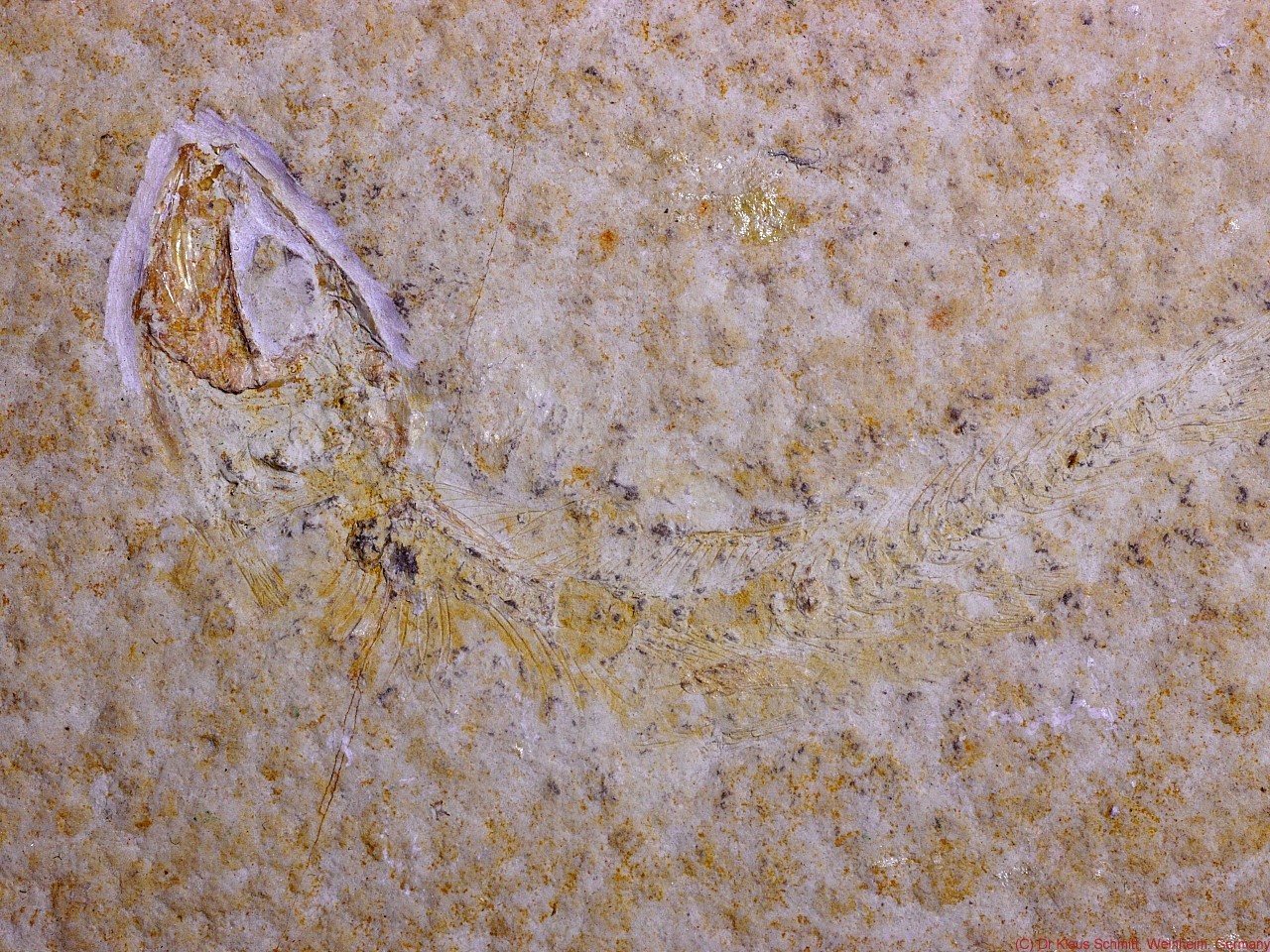
Lens used was my CERCO f4.1 / 94mm quartz fluorite lens, light sources were a modified high power Xenon flash, as well as a NICHIA 365nm Power LED. Target was a fossilized fish from Solnhofen, Germany, approx. 100 Mio years old.

[click on image to see a larger one]

Visible light image using UV/IR Cut filter:


Reflected UV image using Baader-U filter (310-390nm): 


UV stimulated visible fluorescence (FL) using Nichia 365nm UV LED:


Combined VIS - FL multispectral image: 


Combined VIS - UV multispectral image::


Combined FL - UV multispectral image::


It gets nicely visible that using UV light photography brings out much more details than normal visible light photography and by doing so, enhances the visibility of preserved bone and tissue structures quite a bit. Combining those different images into falso color multispectral images  enhances the structures even more.

Stay tuned, more will follow on that fascinating subject...

More info on this very interesting field may be found on my site http://www.pbase.com/kds315/uv_photos

Wednesday, August 13, 2014

150mm Micro reproduction lens for reflected UV photography

Today about a recent find for UV photography, a high resolution (approx. 150-200 lpm) 150mm micro documentation lens, which I have tested positively for UV use. Of course it shows quite some restrictions, but I'm happy about finding such lens in such longer focal length (150mm), which allows for better working distance in some circumstances. All shots were done it studio. Lens for comparision was my CERCO 94mm quartz fluorite lens. Light source was a Xenon flash. All shots were done at about f8.

[click on image to see a larger one]

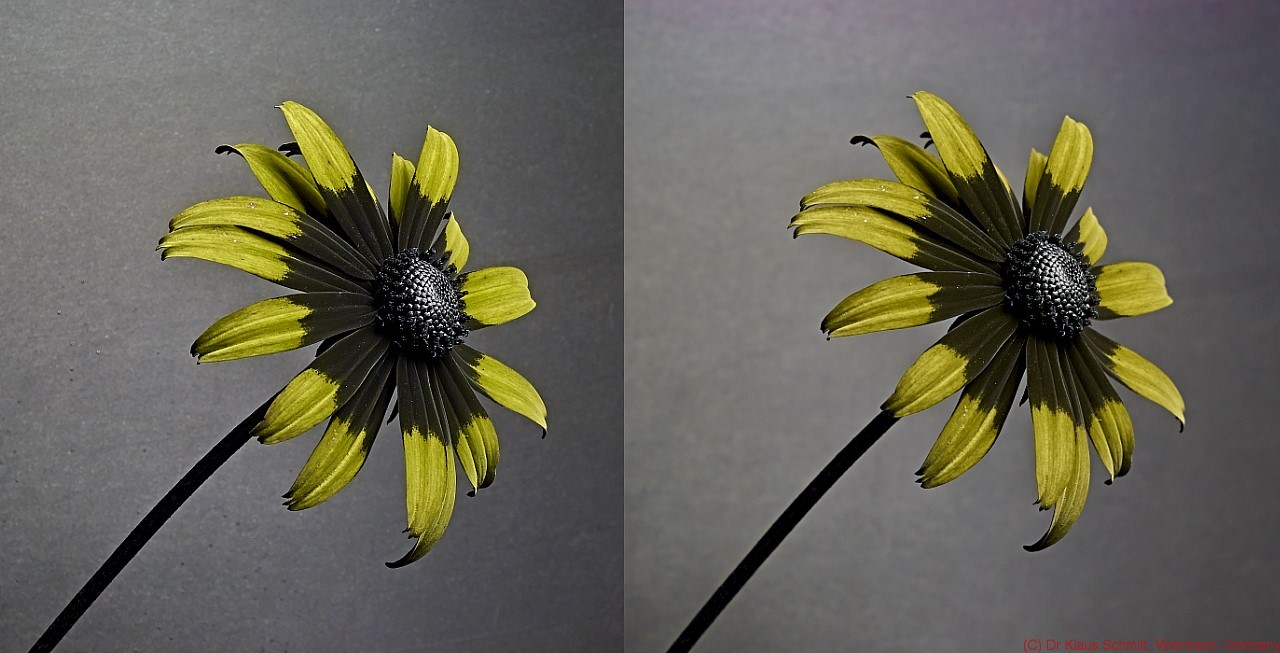
Test images using Baader-U filter for reflected UV photography and as a target a Rudbeckia fulgida flower. Adjusted for comparison to even out focal length differences. Individual white balance set per image.

Cerco 94mm (left), Micro Documentation lens (right)

The micro docu lens does quite well and seems to be quite a sharp lens, even when used for UV.

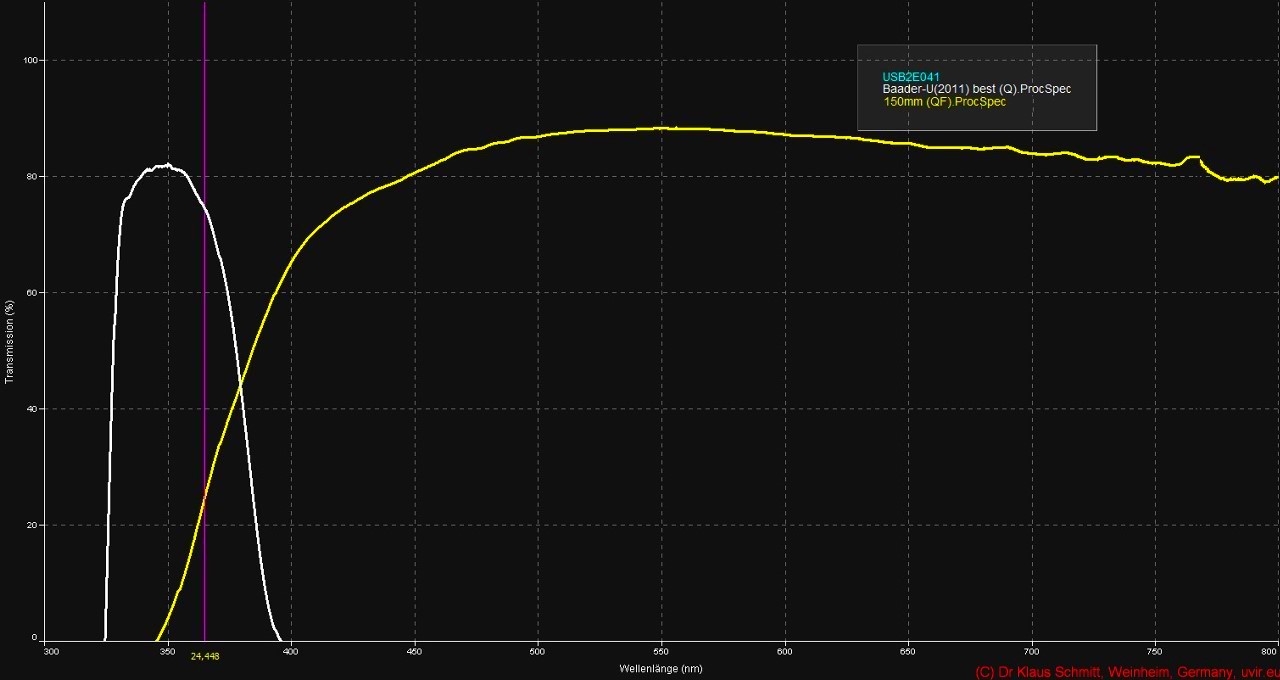
Now about the spectral transmission:

It gets obvious that this micro docu lens only transmits down to about 350nm, but has sufficient transmission around 360nm to make flower UV patterns visible.

So to summarize I would call that a nice find, which adds to the repertoire of suitable UV lenses, especially since it has very high resolution also in UV.


Stay tuned, more will follow on that fascinating subject...

More info on this very interesting field may be found on my site http://www.pbase.com/kds315/uv_photos
Tuesday, July 9, 2013

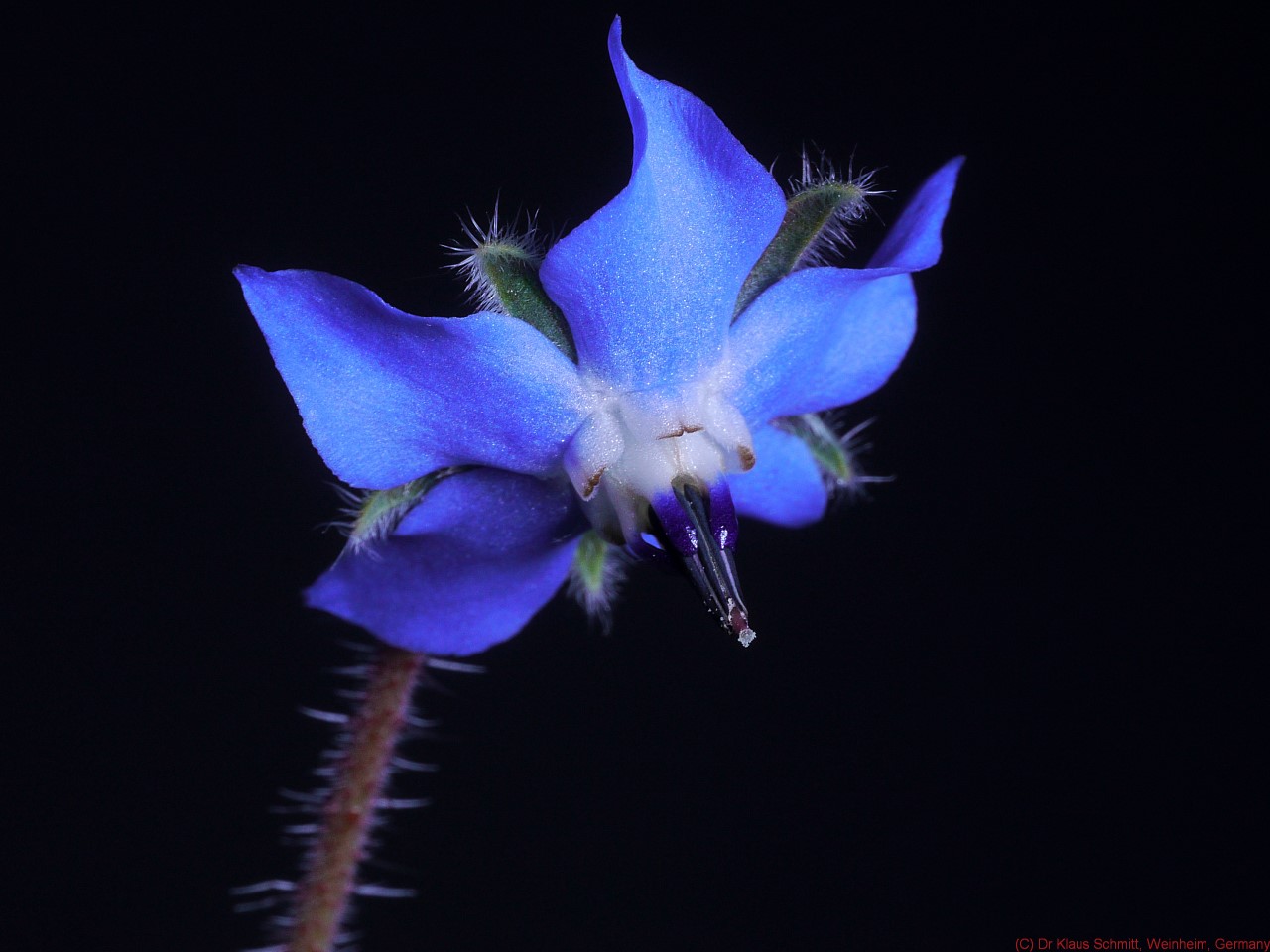
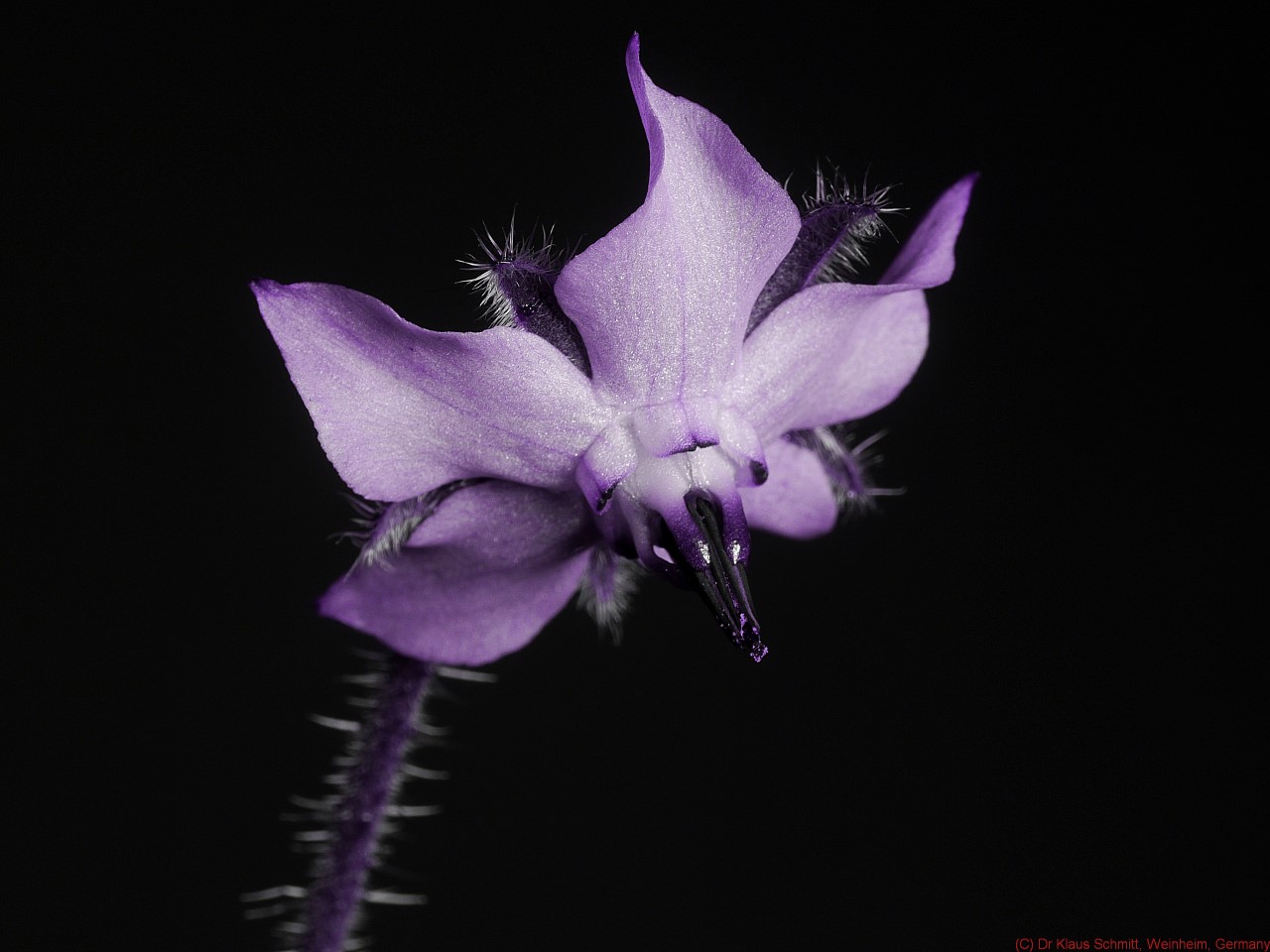
Borage - Borago officinalis in reflected ultraviolet photography

Today shots of a decorative flower of a common herb, Borage - Borago officinalis in reflected ultraviolet photography using my "work horse" UV filter, the Baader-U filter. Lens was my CERCO 94mm quartz flourite lens. Light source was a high power Xenon flash. All shots were done at about f8.

[click on image to see a larger one]

Visible light image  

UV image using Baader-U filter (approx. 320-395nm, effective peak approx. 375nm)  

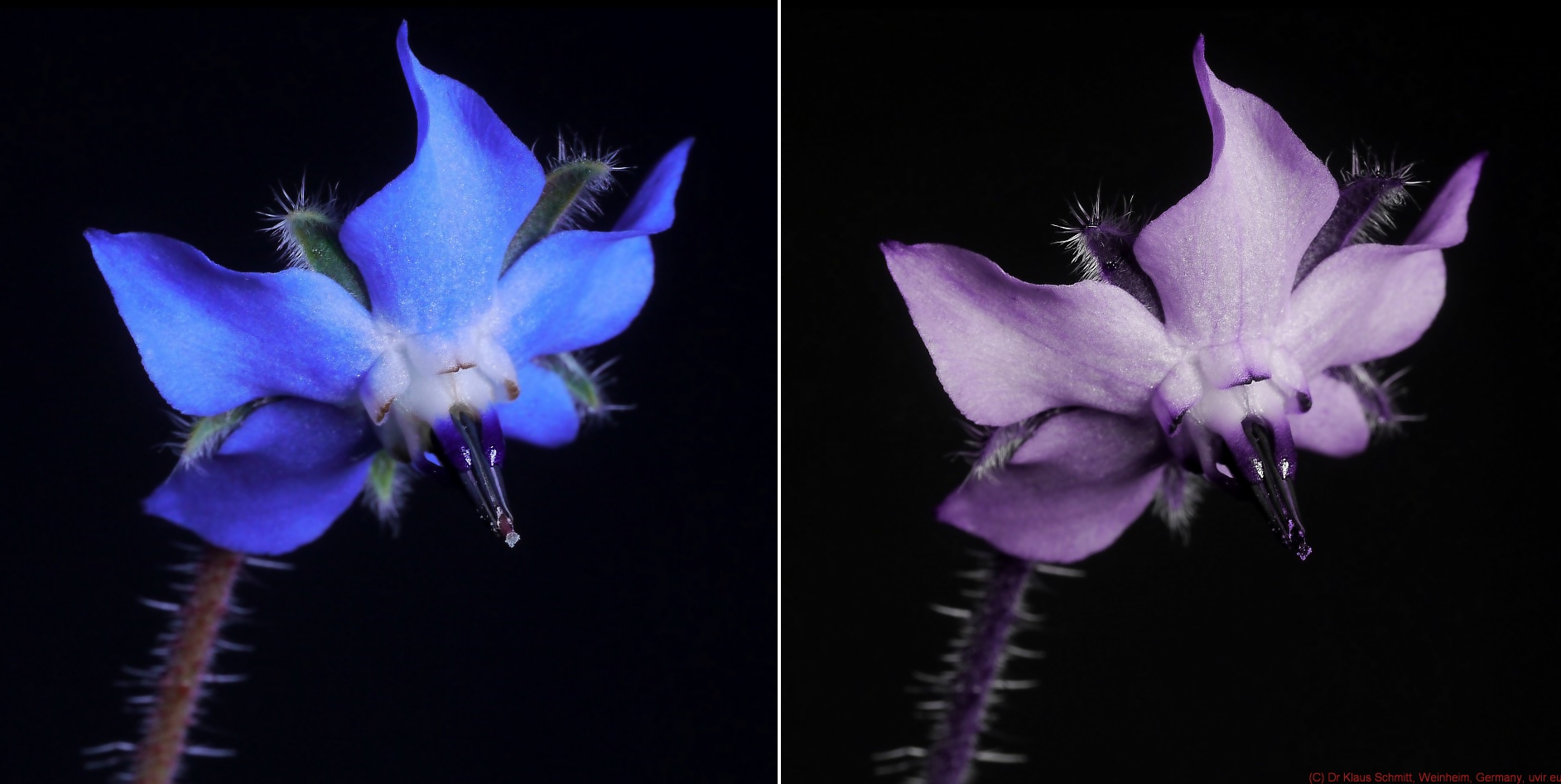
Diptych of the above:


This pretty blue Borage flower has no very specific UV pattern, its petals are UV dark on the middle and bottom, but its petal tips are quite UV bright around 380nm, and all this gets nicely visible.


Stay tuned, more will follow on that fascinating subject...

Wednesday, September 26, 2012

Lichen: human vision vs simulated bee vison; reflected UV ultraviolet photography

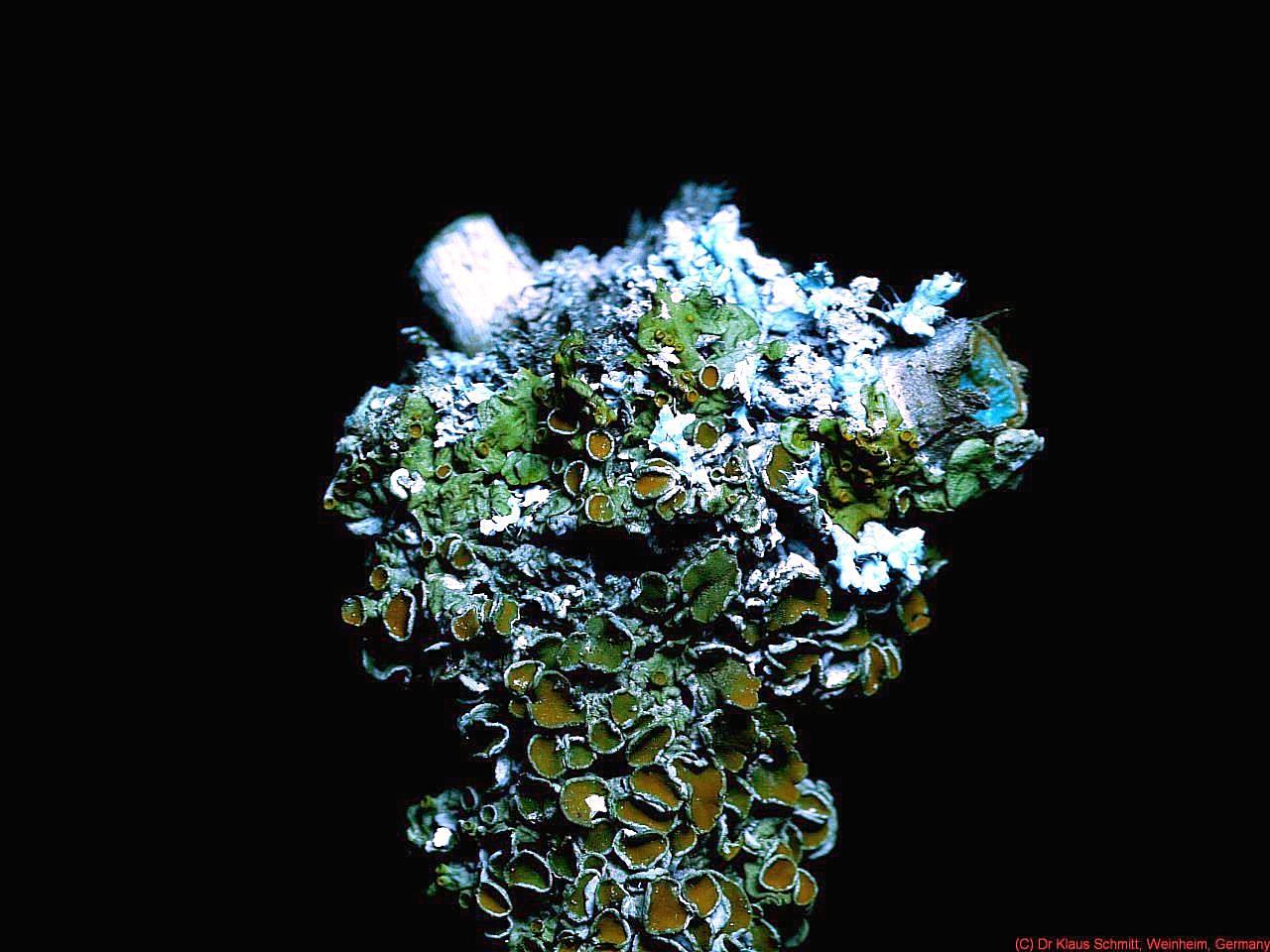
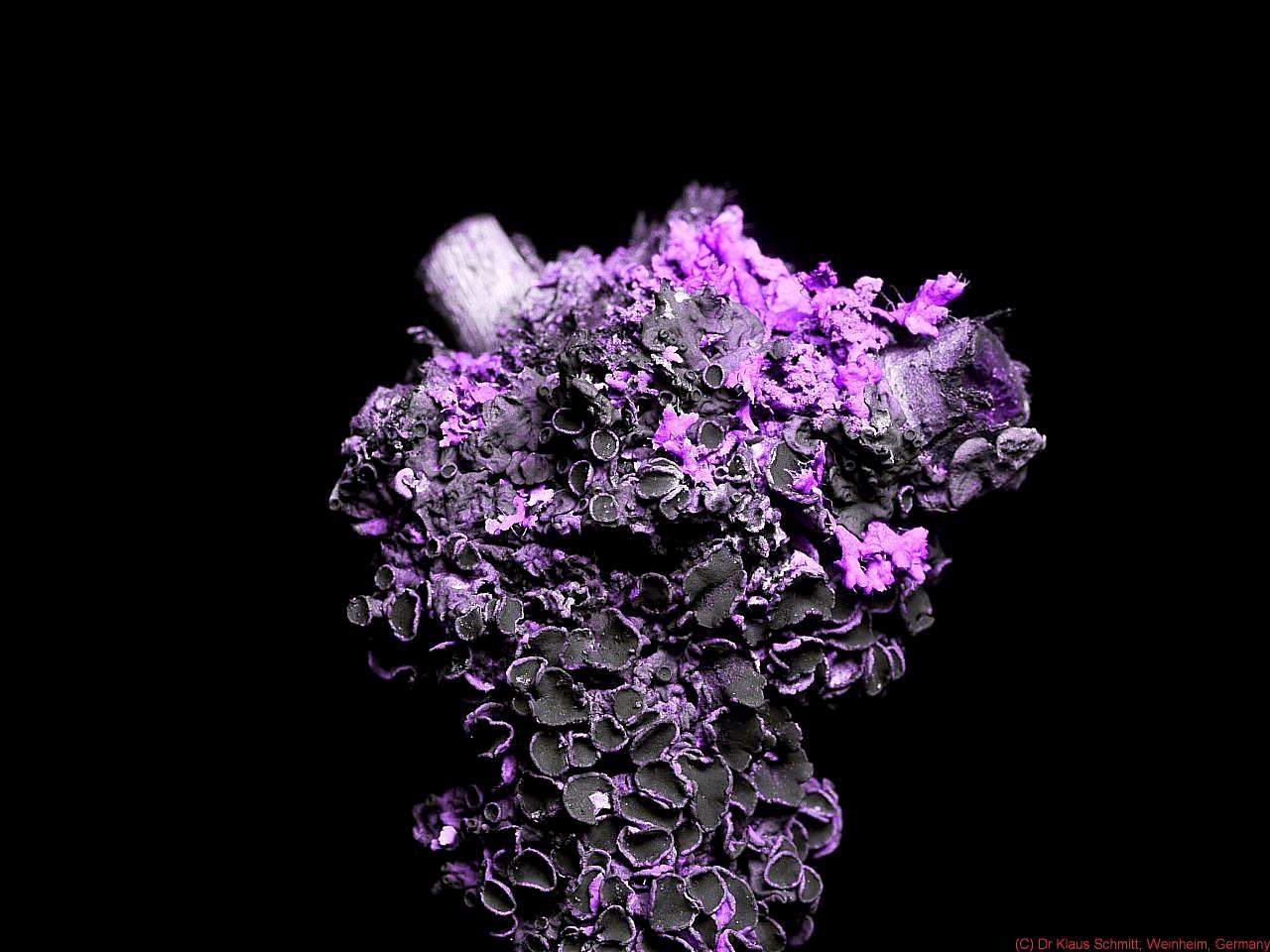
Today about some Lichen (most likely Xanthoria parietina and Physcia adscendens grown into each other), that I found growing on a broken branch. Shots in UV were done using my CERCO 94mm quartz/fluorite lens, the UV Baader-U and bee vision XB4 filter as well as a modified Xenon flash was used as light source.

[click on image to see a larger one]

Human vision image using UV/IR Cut filter:

Bee vision image using XBV4 filter:

UV image using Baader-U filter

Quite interesting, how Lichen reflects UV light in these differently colored sub-UV bands I have written earlier about. Nice to know a target for UV photography when flowers will be gone soon...

HERE it is in UV induced visible photography.

Stay tuned, more will follow on that fascinating subject...

More info on this very interesting field may be found on my site http://www.pbase.com/kds315/uv_photos

Friday, September 14, 2012

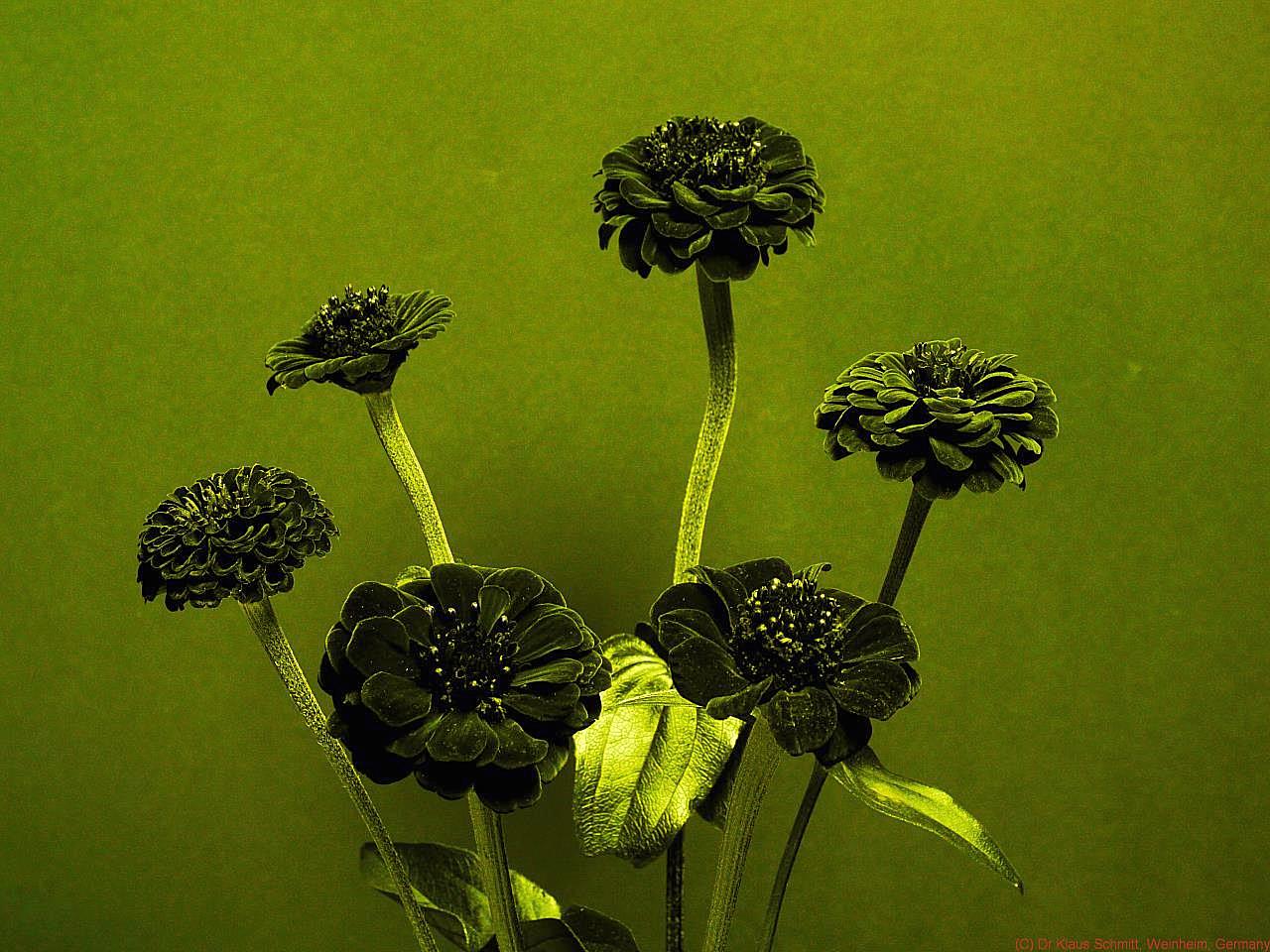
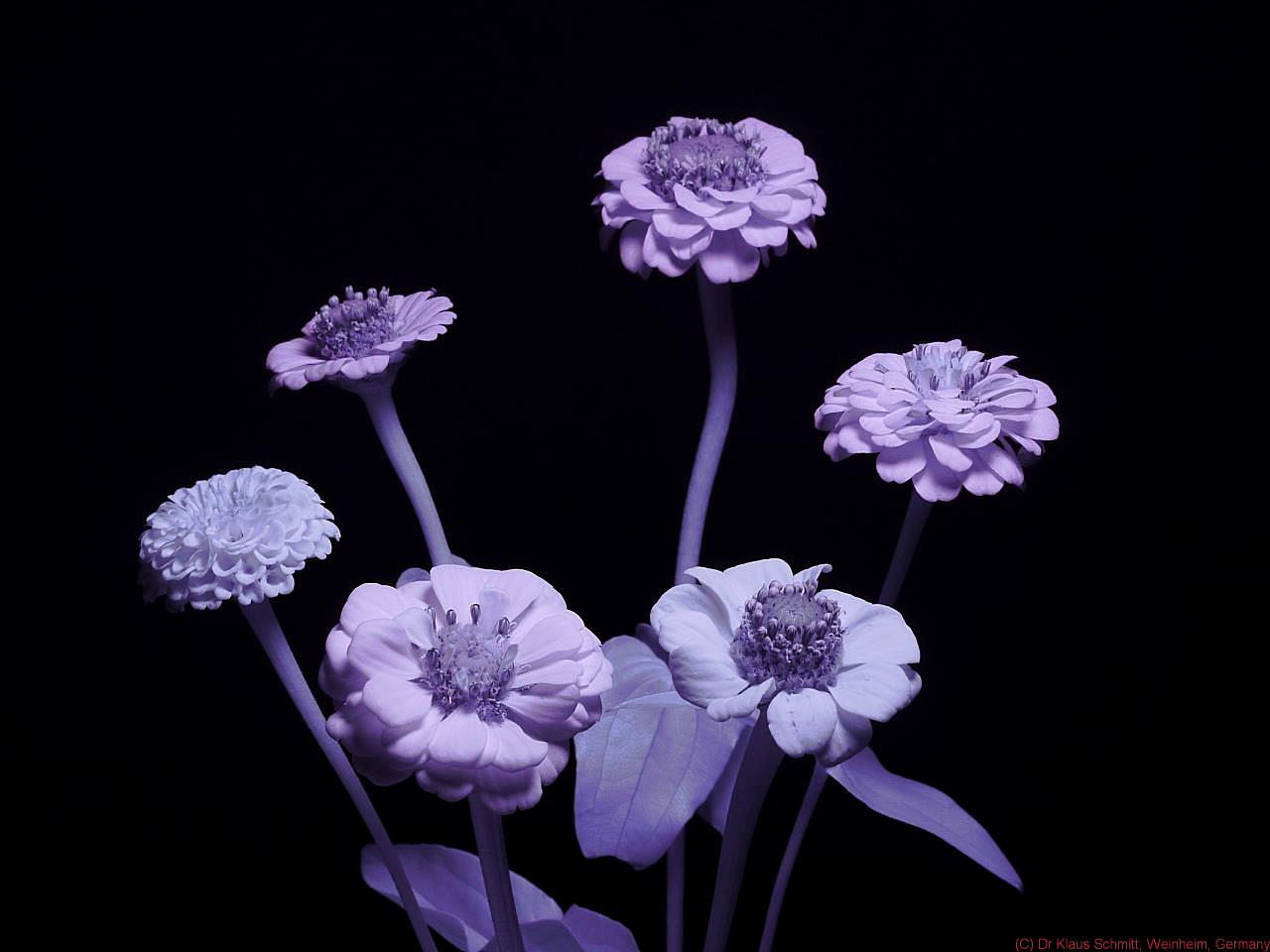
Zinnias: human vision vs simulated bee vison; reflected UV ultraviolet photography

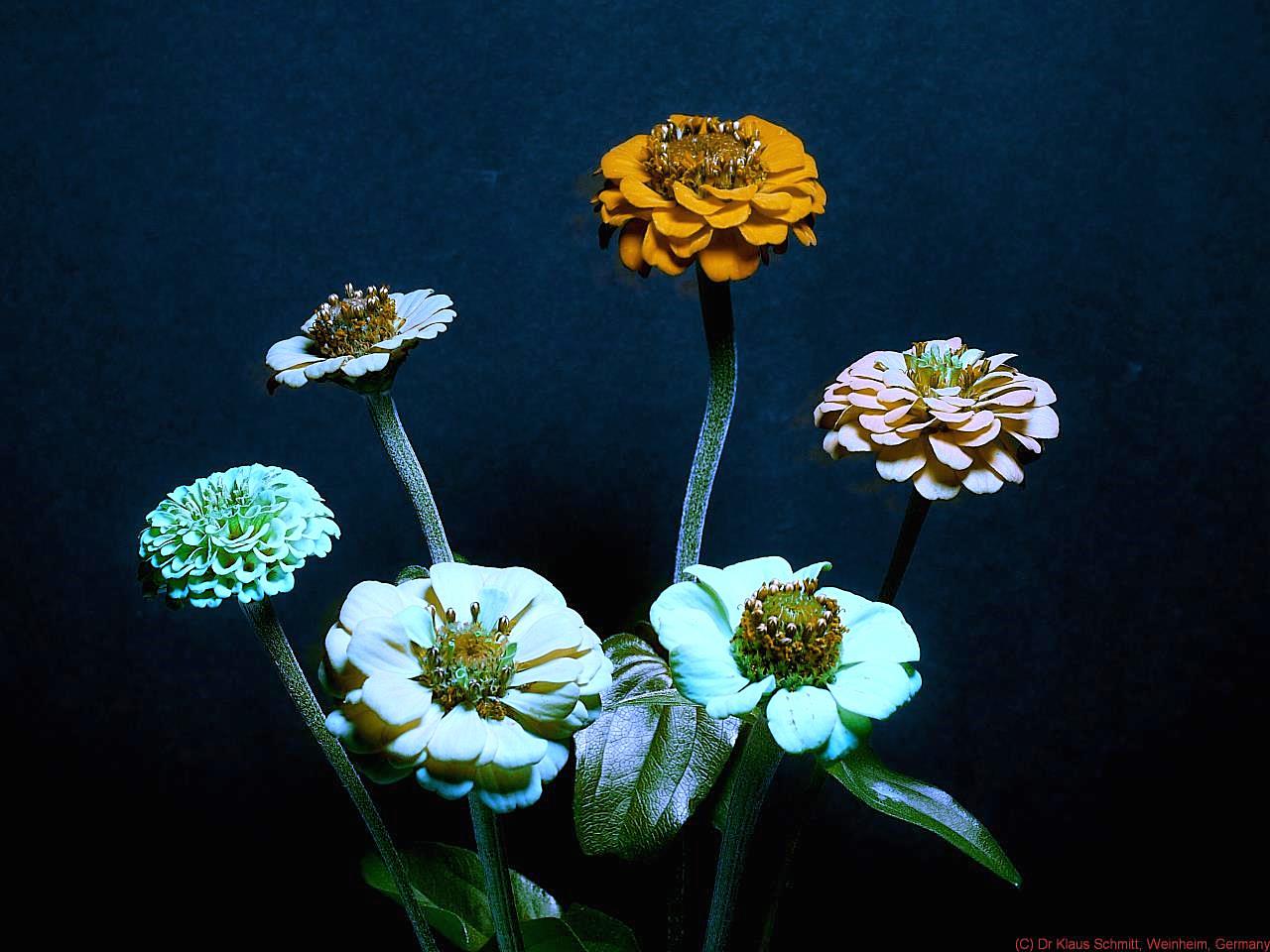
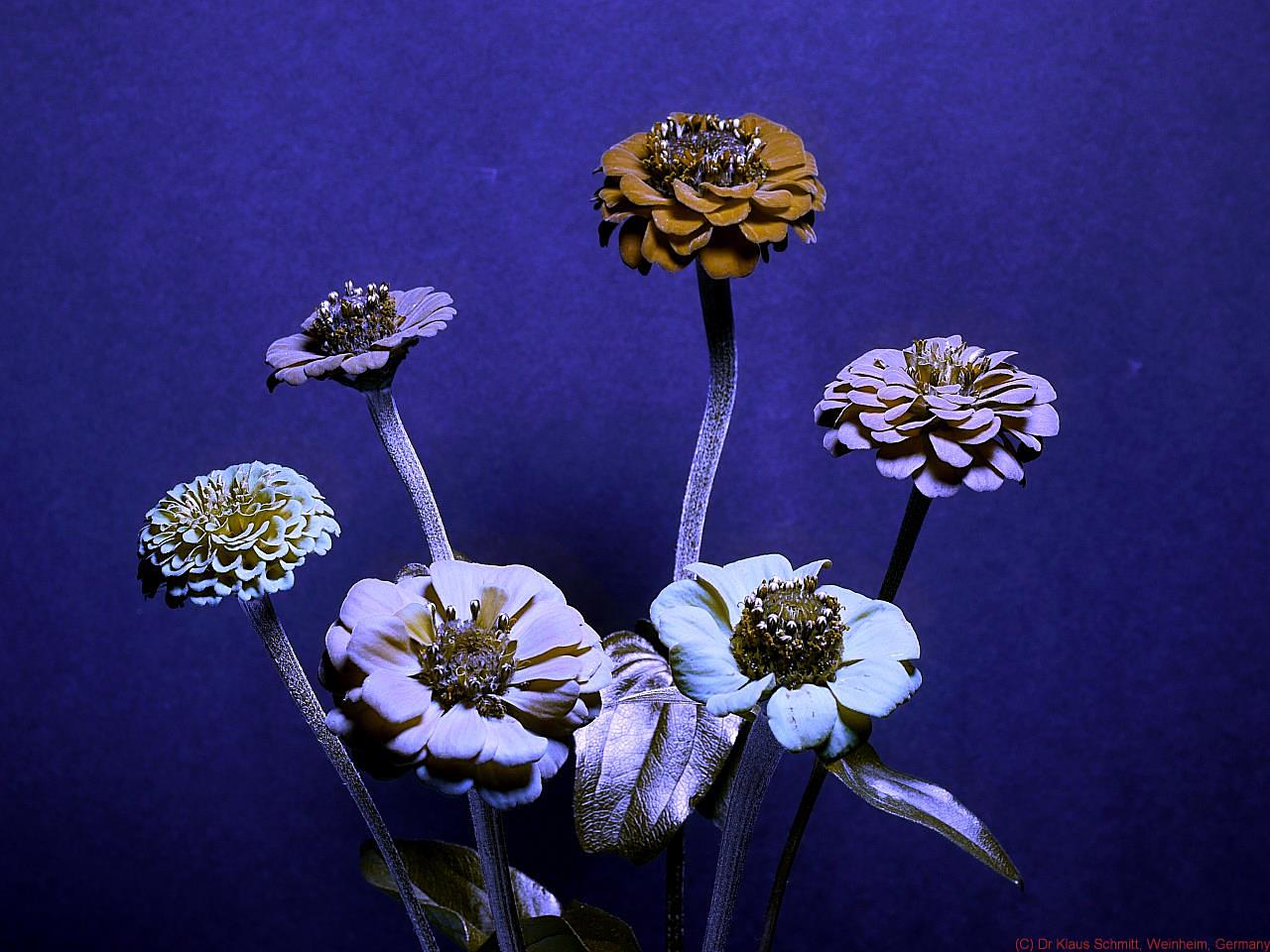
Bought a few Zinnias today from my friend Christian Mayer, a very creative florist here in Weinheim, Germany. I'll show this bouquet of various Zinnias in multispectral representation. These shots were taken using inside using my Xenon high power flower flash in normal human vision VIS, in UV using the Baader-U and Jupiter-U filter, as well as in simulated bee vision using my XBV2, XBV3, XBV4 and XBV6 filters respectively as well as the new XNUV filter.

[click on image to see a larger one]

Visual image using a BG40 filter:


Simulated bee vision using XBV3 filter:


Simulated bee vision using XBV2 filter


Simulated bee vision using XBV4 filter:


Simulated bee vision using XNUV filter :


 Simulated bee vision using XBV6 filter :


UV using Baader-U filter:


UV using Jupiter-U filter:


IR (basically) using a simple ND filter:


Unfortunately these bread Zinnias don't show that prominent deep UV patterns as the mexican Zinnia haagena do ... oh well, not all what artificial breedings does leads to pleasant results.


Stay tuned, more will follow on that fascinating subject...

More info on this very interesting field may be found on my site http://www.pbase.com/kds315/uv_photos

Thursday, May 3, 2012

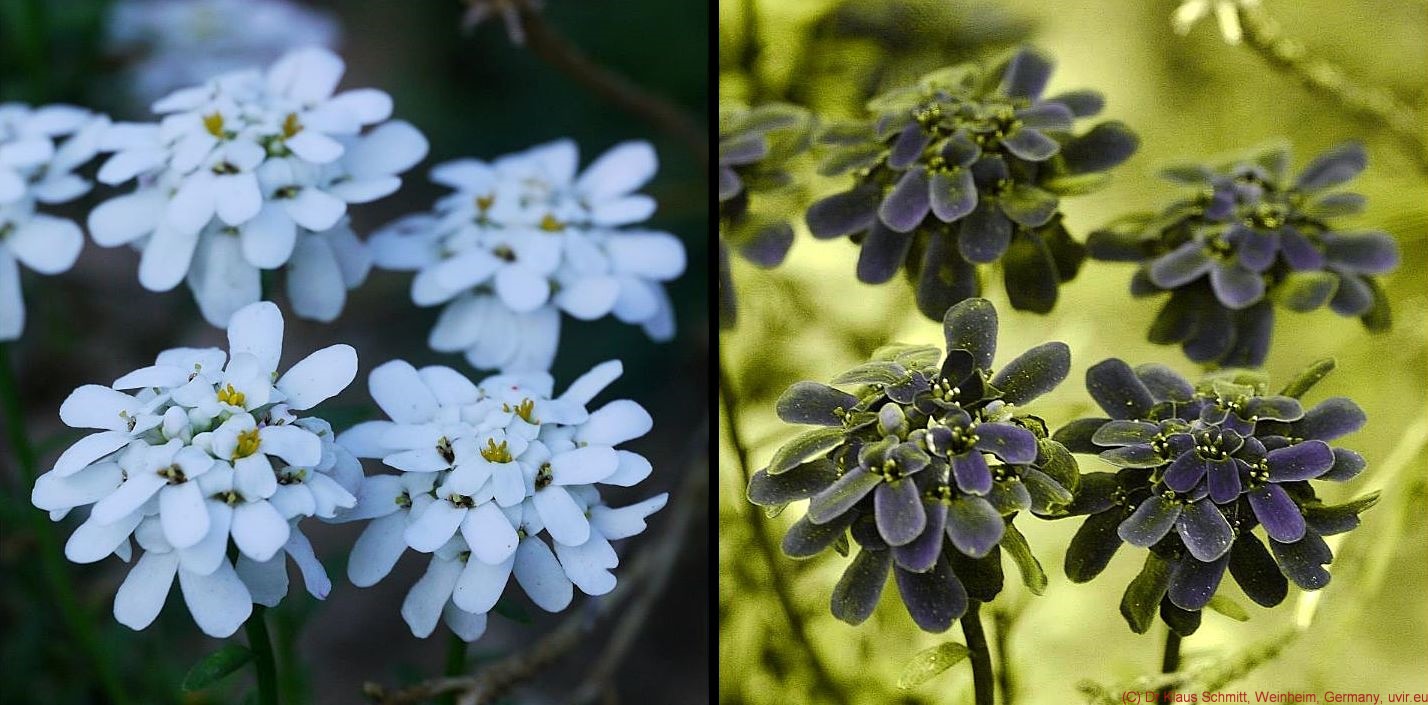
[UV] more on 340nm Jupiter-U vs Baader-U filter for short wave reflected UV

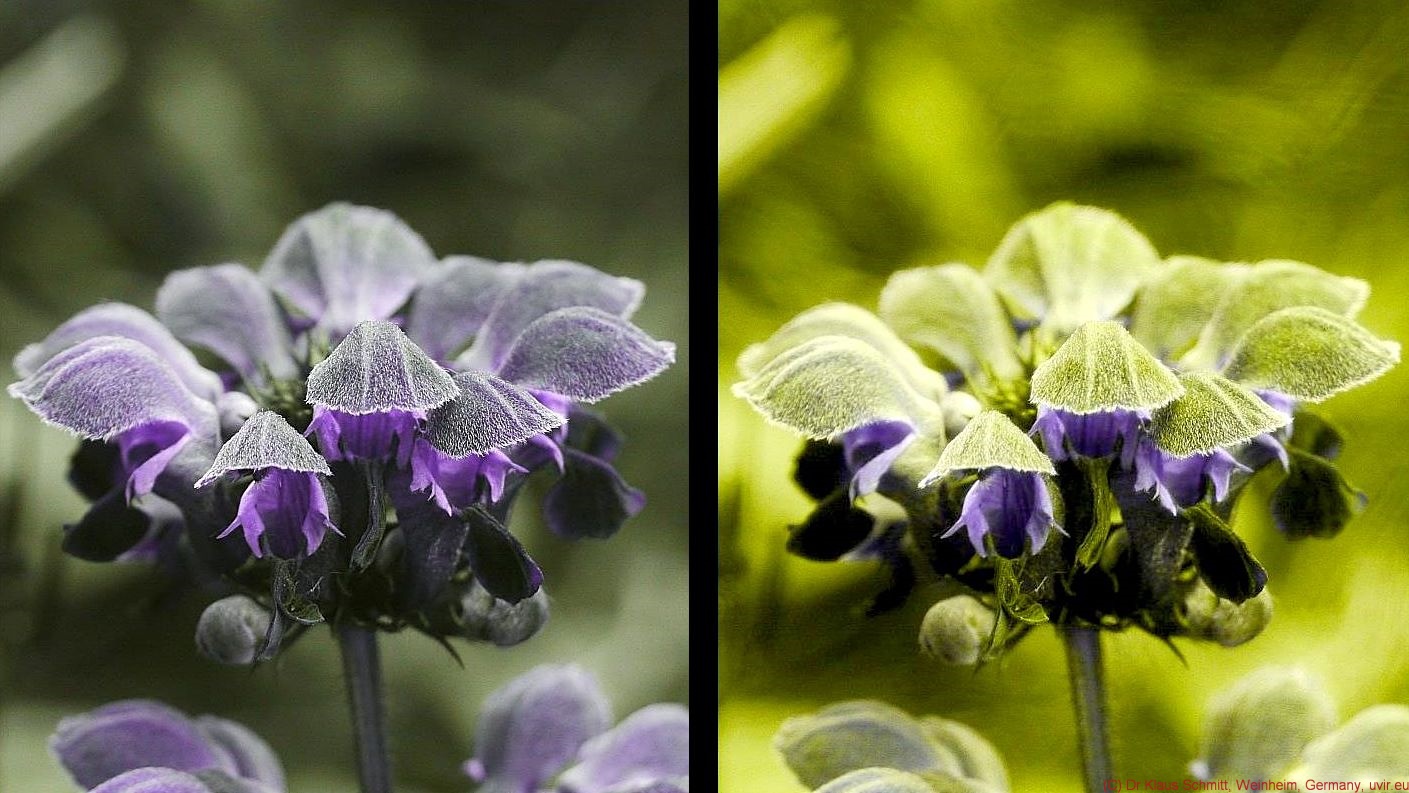
Today more about that new Jupiter-U filter of mine vs. the Baader U (Venus) filter. Shots taken today at the wonderfully blossoming Hermannshof, Weinheim, Germany.

[click on image to see a larger one]

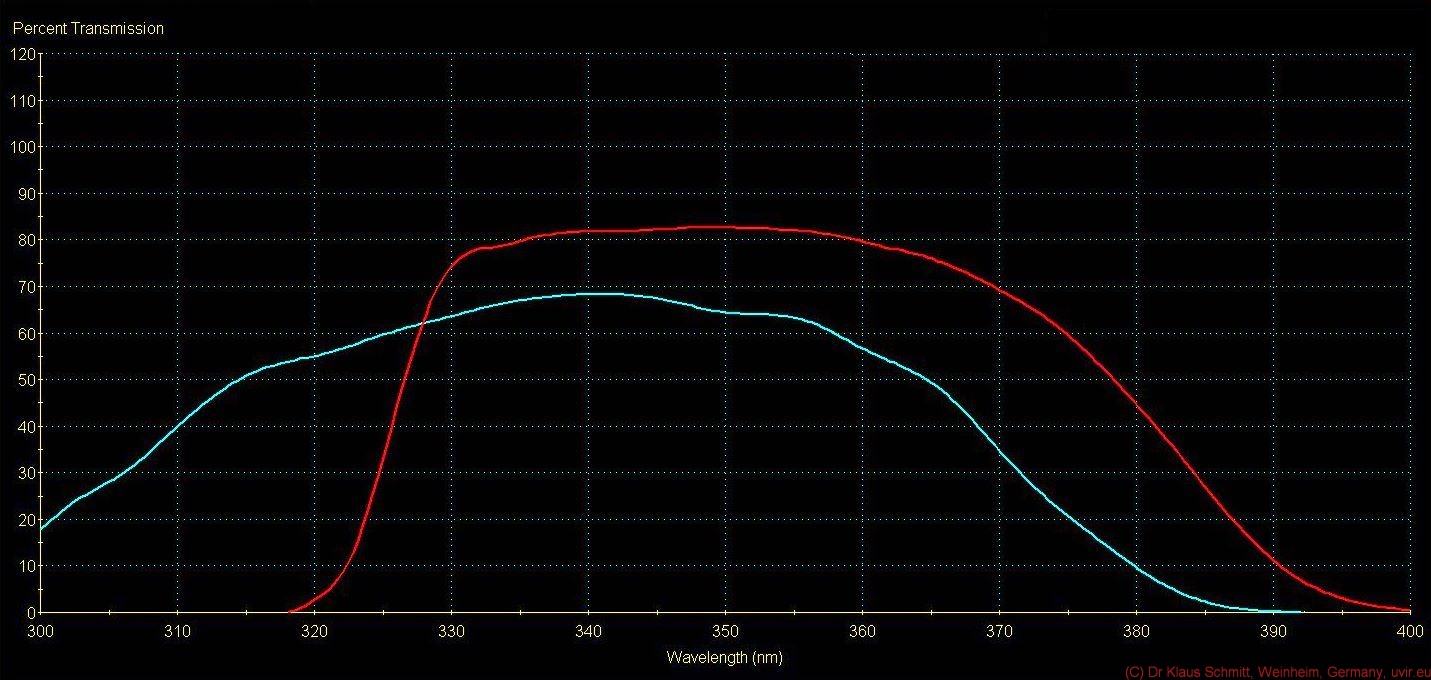
The Jupiter-U is a shorter wave filter (center is 340nm) and its transmission is this, as compared to the Baader (Venus) U filter (red line):


Here now some results of today:

Baader U2 left, Jupiter-U right:


VIS left, Baader U2 right:


VIS left, Jupiter-U right:


and another one:

Baader U2 left, Jupiter-U right:


VIS left, Baader U2 right:


VIS left, Jupiter-U right:


very subtle tone differences get visible in comparison to the Baader-U filter.


Stay tuned, more will follow on that fascinating subject...

More info on this very interesting field may be found on my site http://www.pbase.com/kds315/uv_photos