Showing posts with label Crepis sp. Show all posts

Friday, March 23, 2018

Denver Botanic Gardens 2018 pollination exhibit

The exhibition management of the Denver Botanic Gardens has contacted me about a forthcoming 2018 exhibut about pollinators. We have agreed that they will use some of my works to demonstrate how differently butterflies see the world compared to how we humans do.

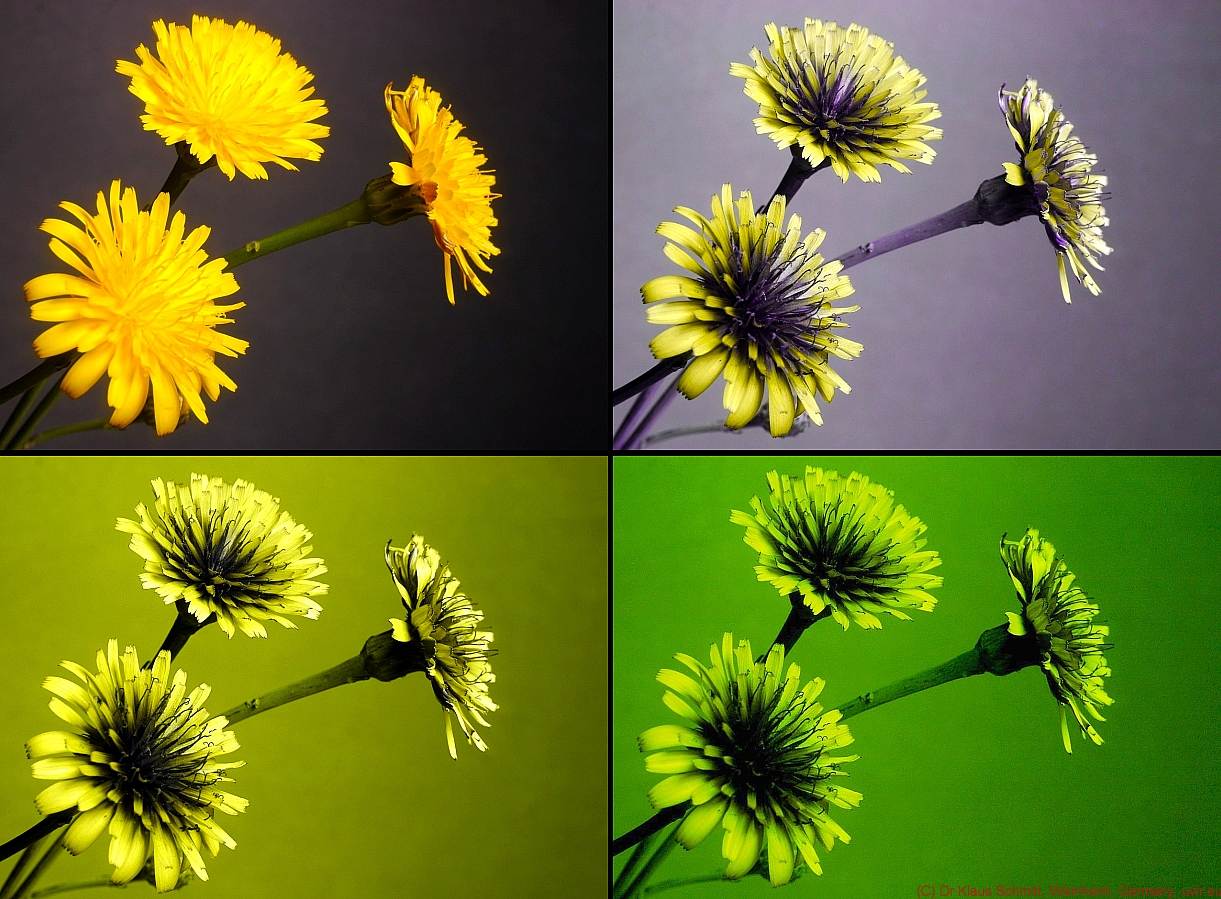
These flowers will be on exhibit: Gaillardia, Linus, Rudbeckia, Crepis which are common in the Colorado wildlife area.

Gaillardia (top) and Rudbeckia (bottom) in human and simulated butterfly vision

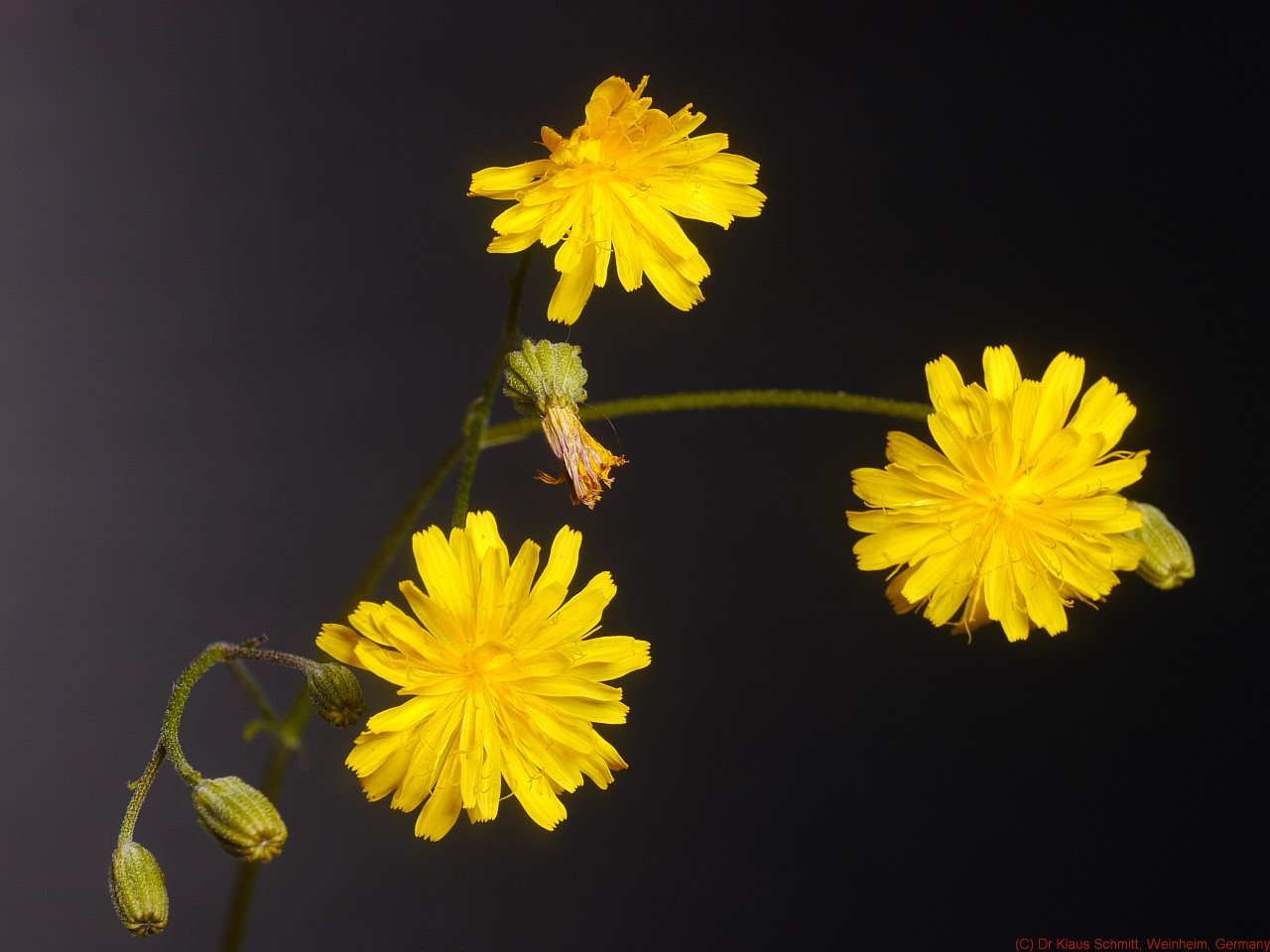
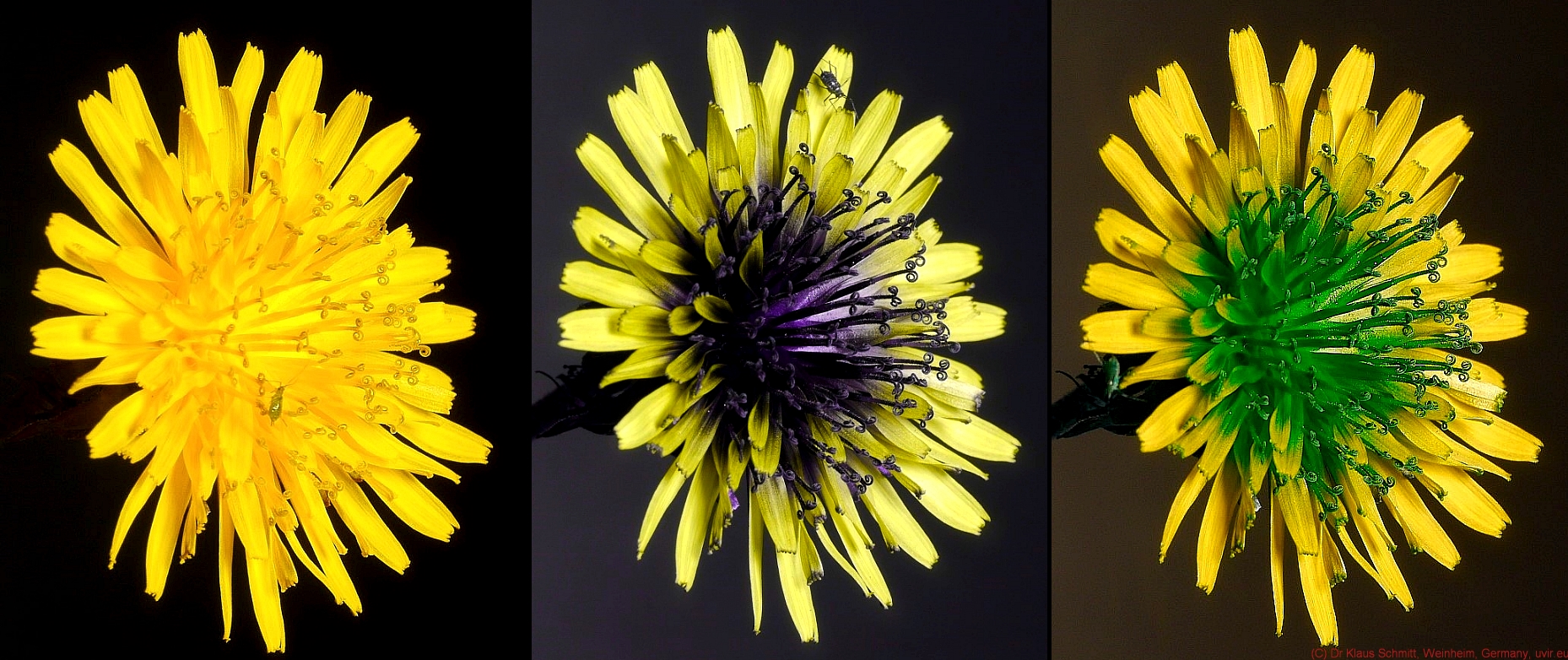
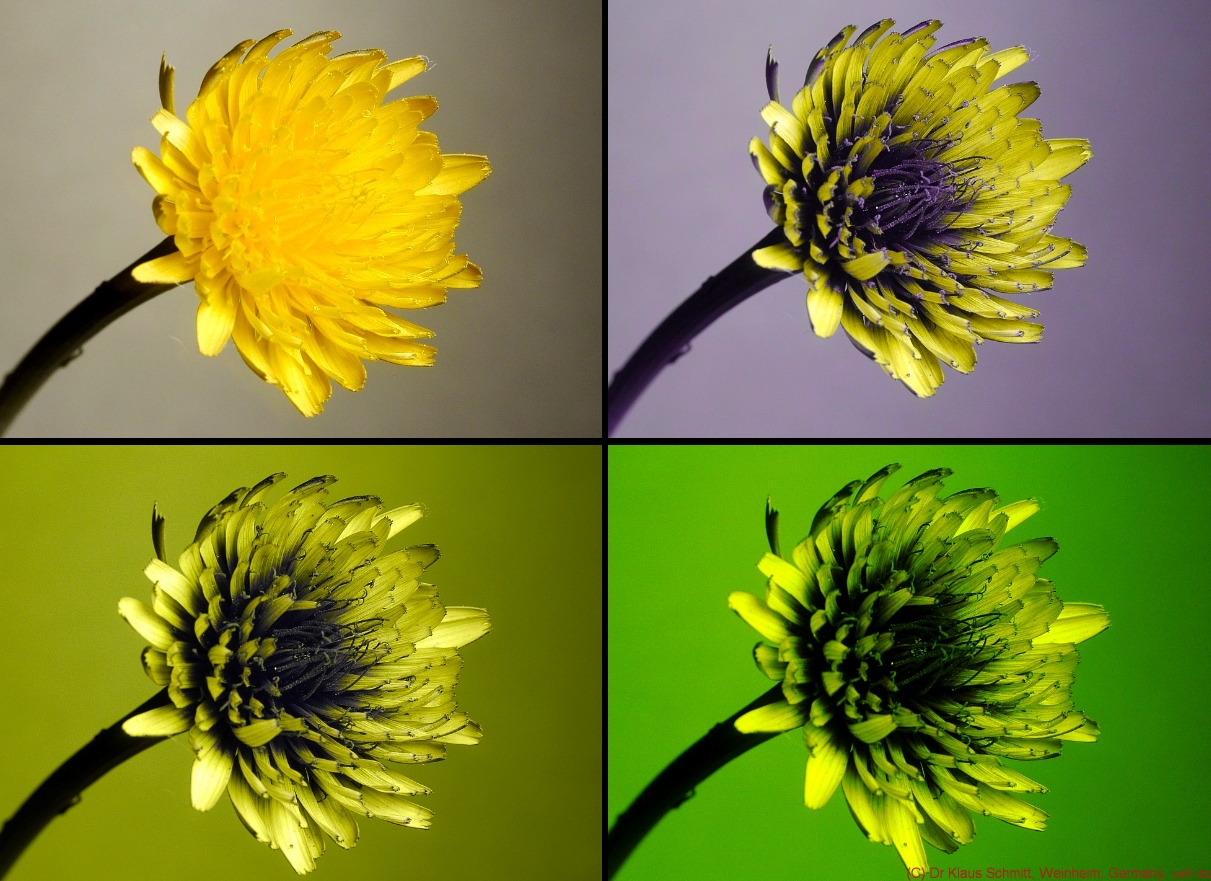
Linus (top) and Crepis (bottom) in human and simulated butterfly vision


The exhibit will open in April 2018, so be sure to pay it and the Gardens a visit, certainly worth it!

Stay tuned, more will follow on that fascinating subject...

More info on this very interesting field may be found on my site http://www.pbase.com/kds315/uv_photos

Tuesday, July 1, 2014

Hawksbeard - Crepis in reflected ultraviolet photography, simulated butterfly and bee vision VIII

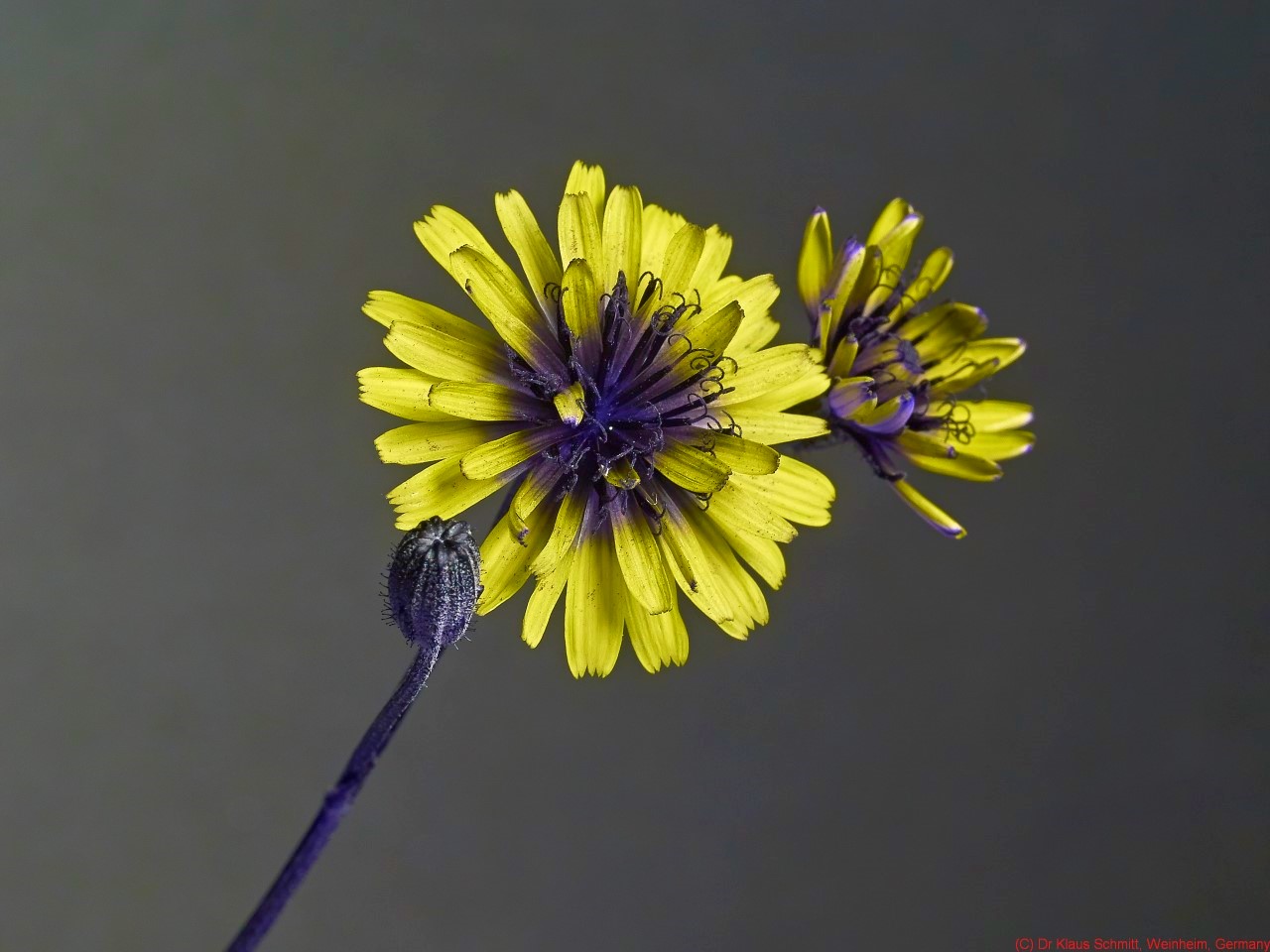
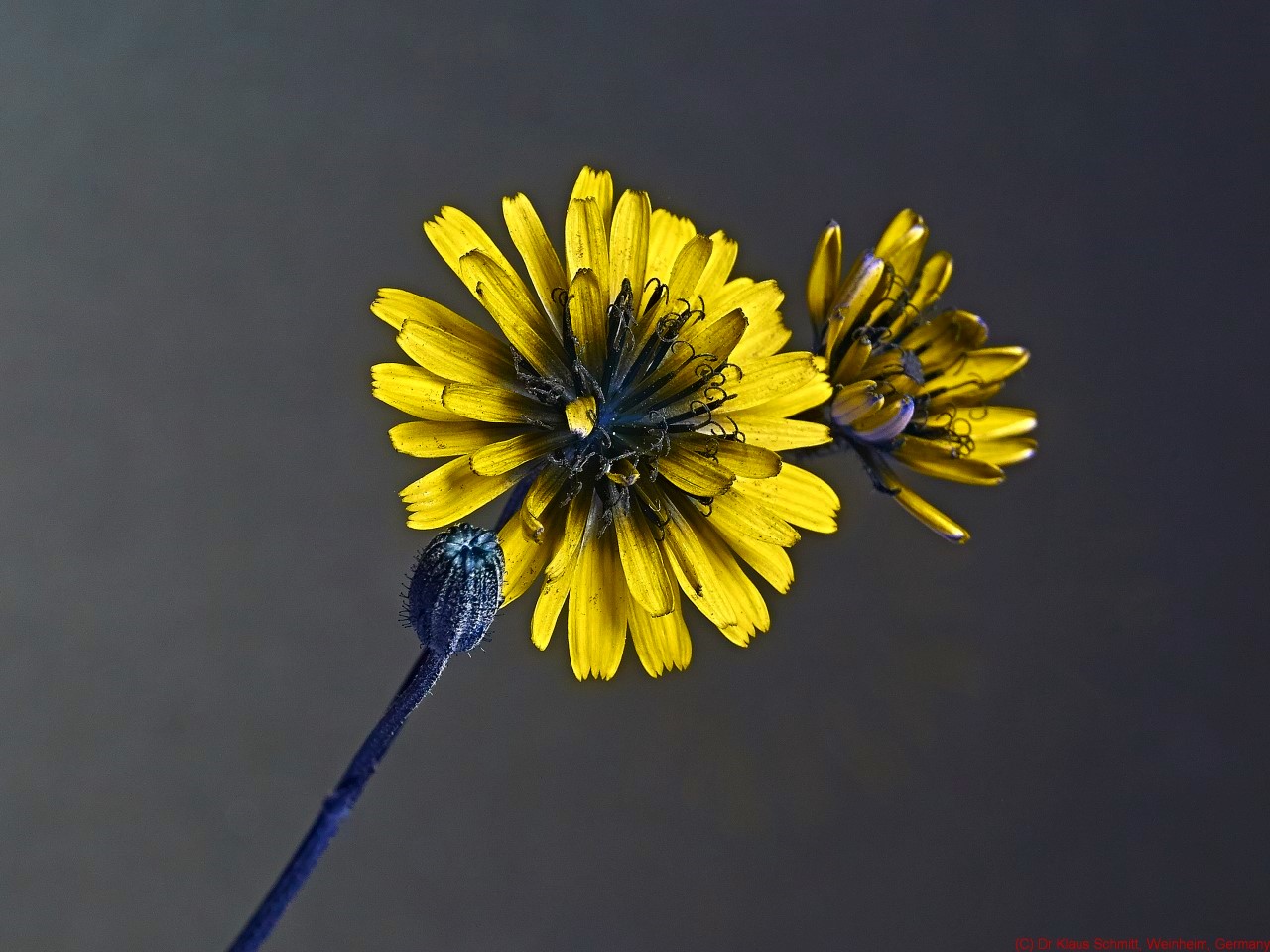
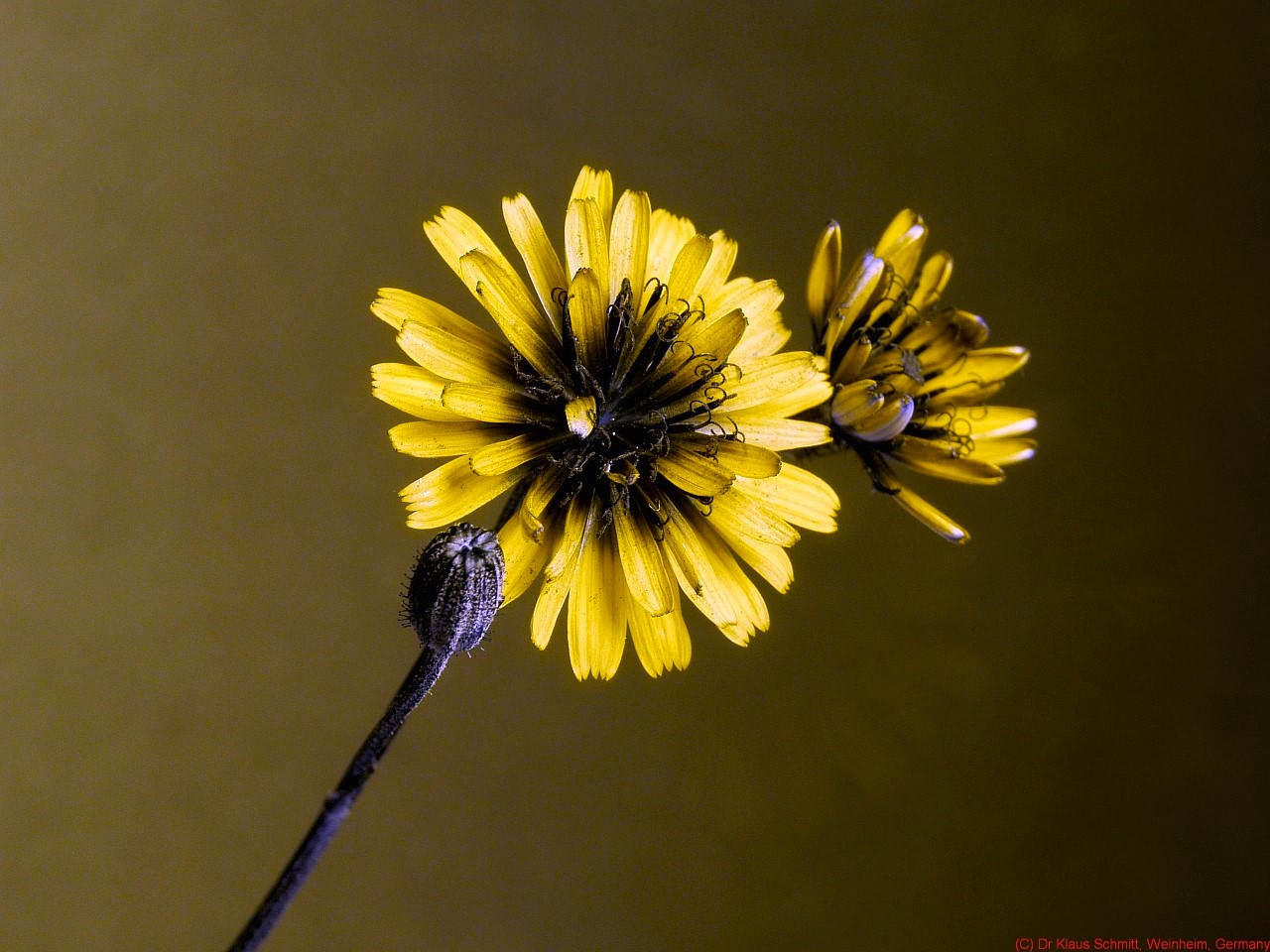
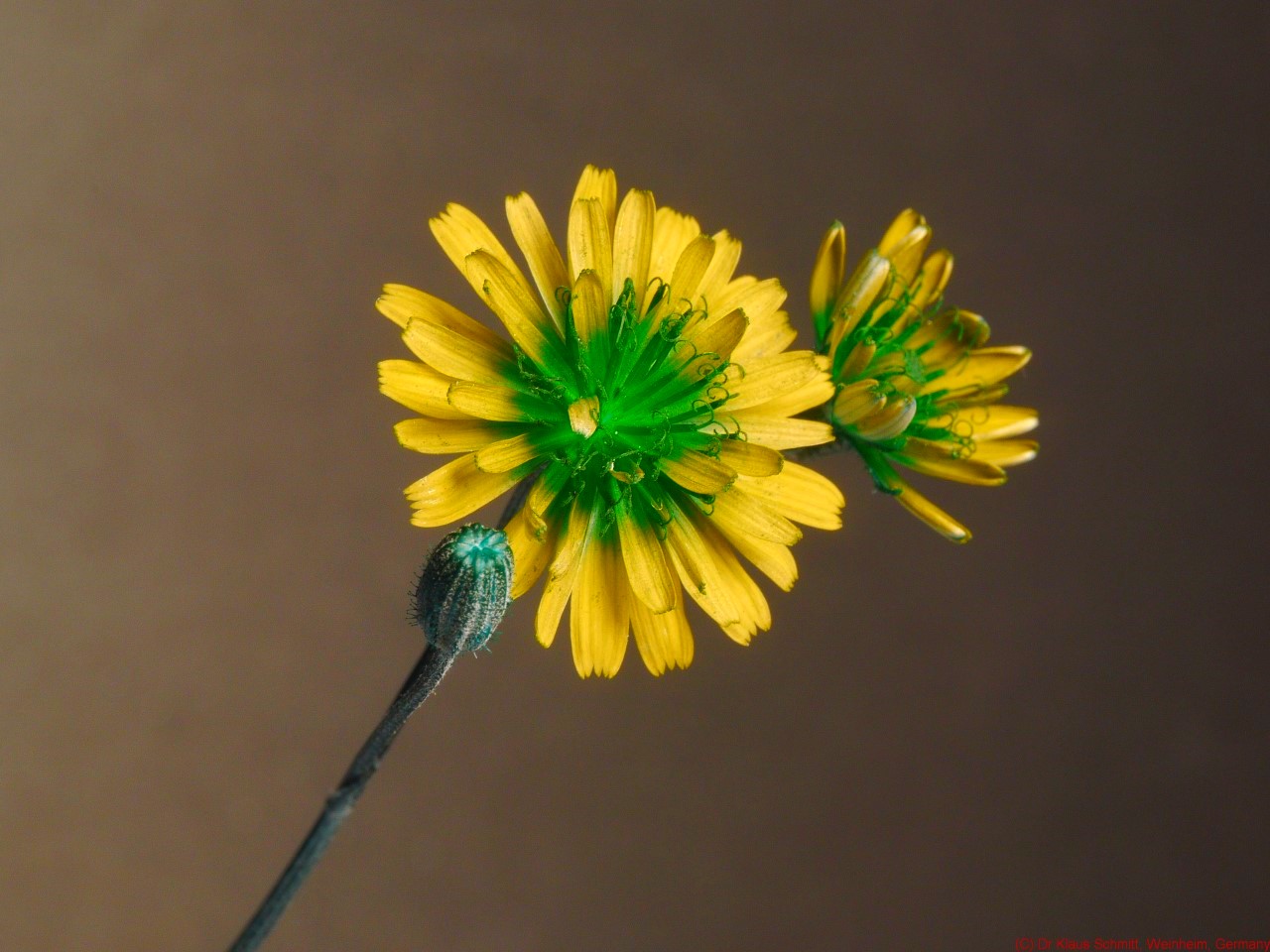
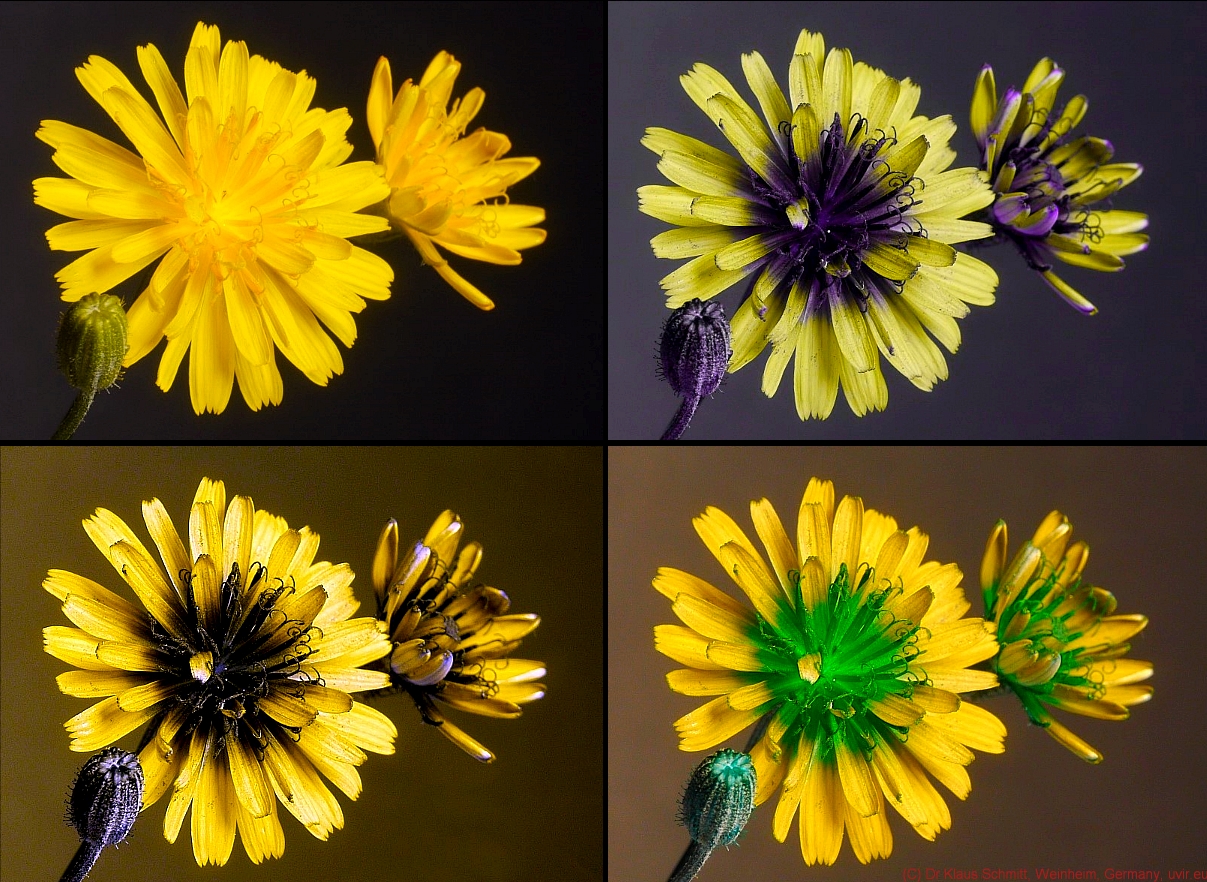
Today shots of another species of Hawksbeard - Crepis sp. in reflected ultraviolet photography using my "work horse" UV filter, the Baader-U filter, as well as my XBV filters for simulating butterfly and bee vision, today now also using the reworked XBV4 filter. Lens was a CERCO 94mm quartz fluorite lens. Light source was a Xenon flash. All shots were done at about f8. Here now developed from RAW files.

[click on image to see a larger one]

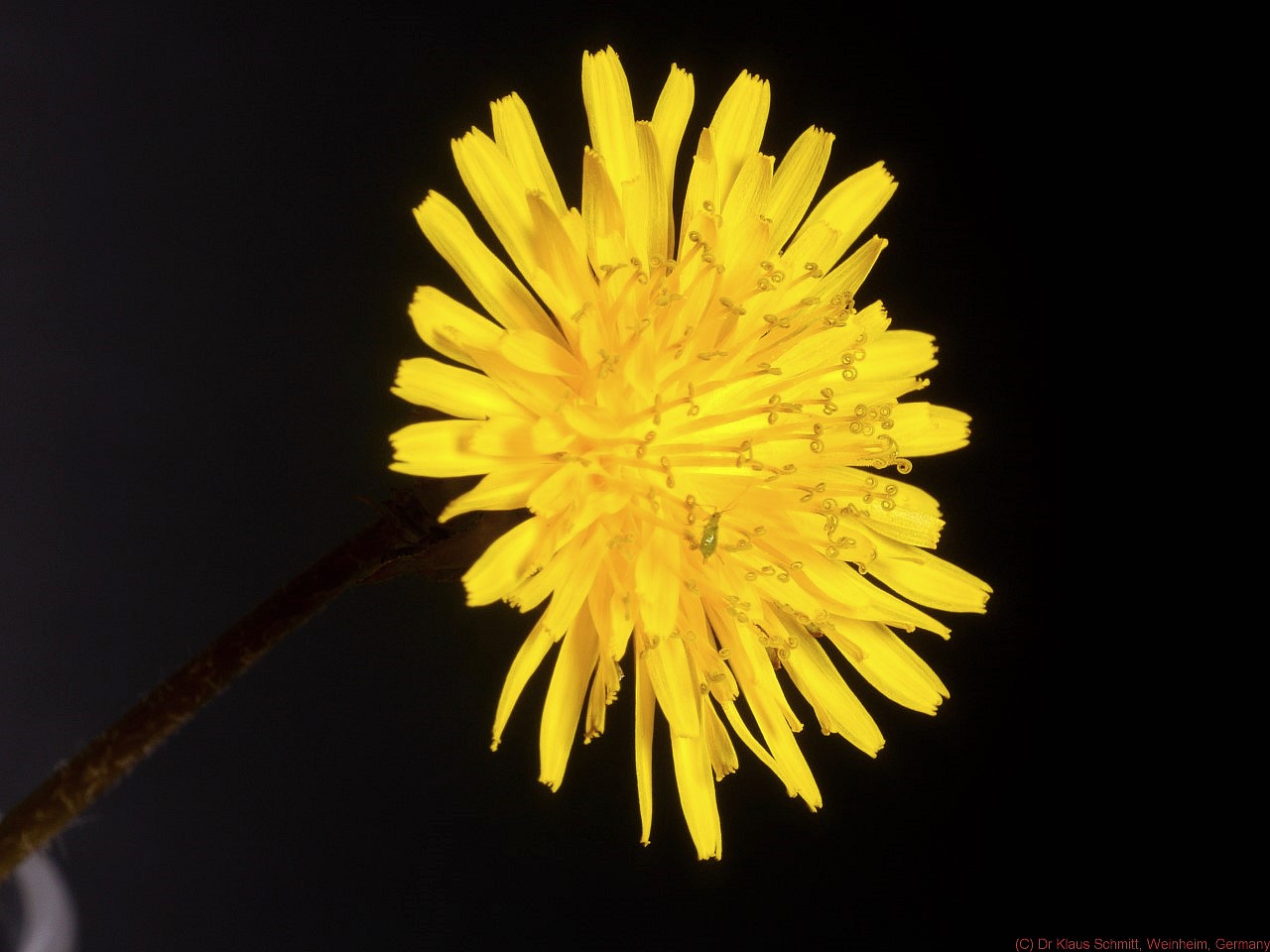
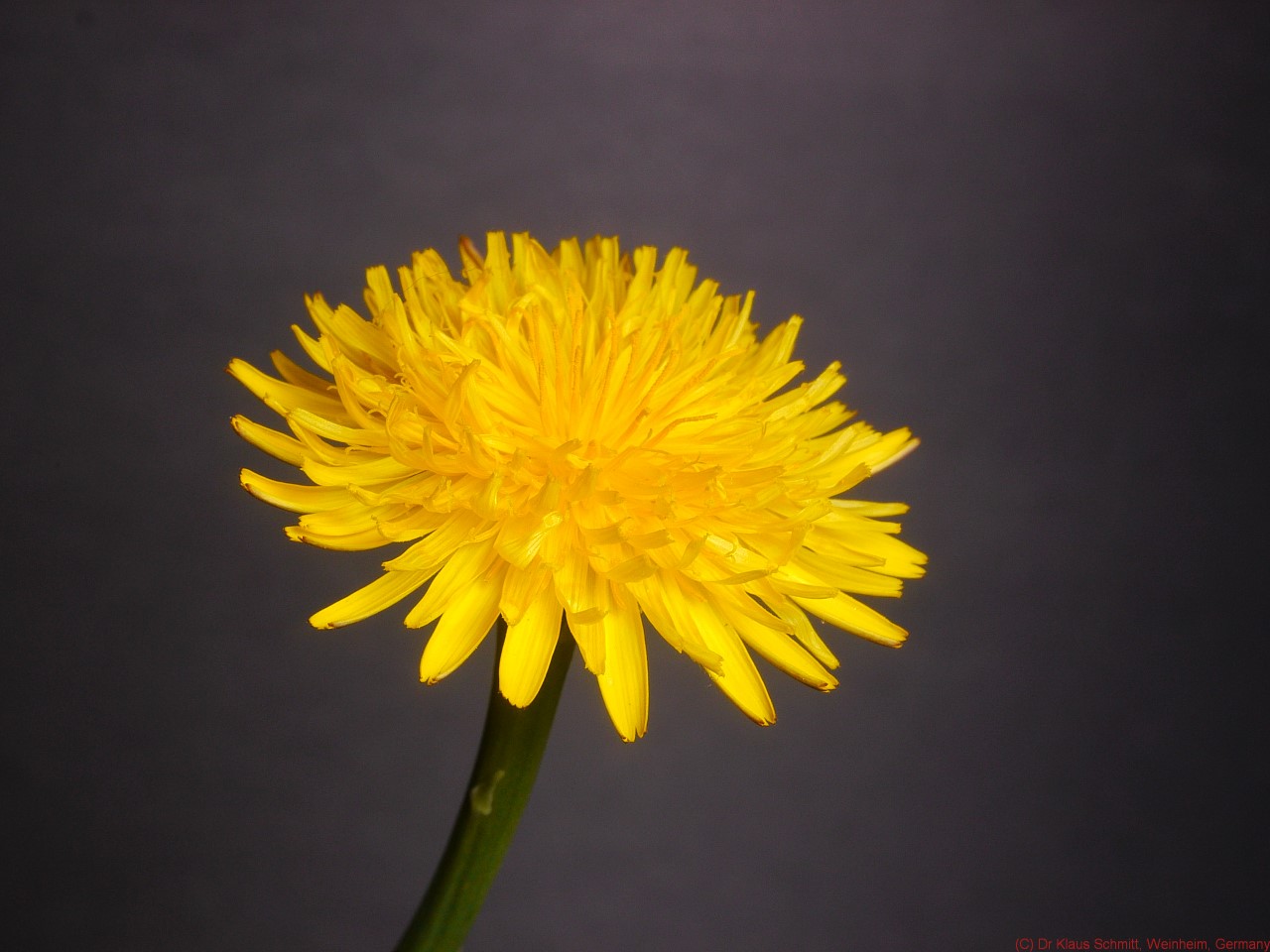
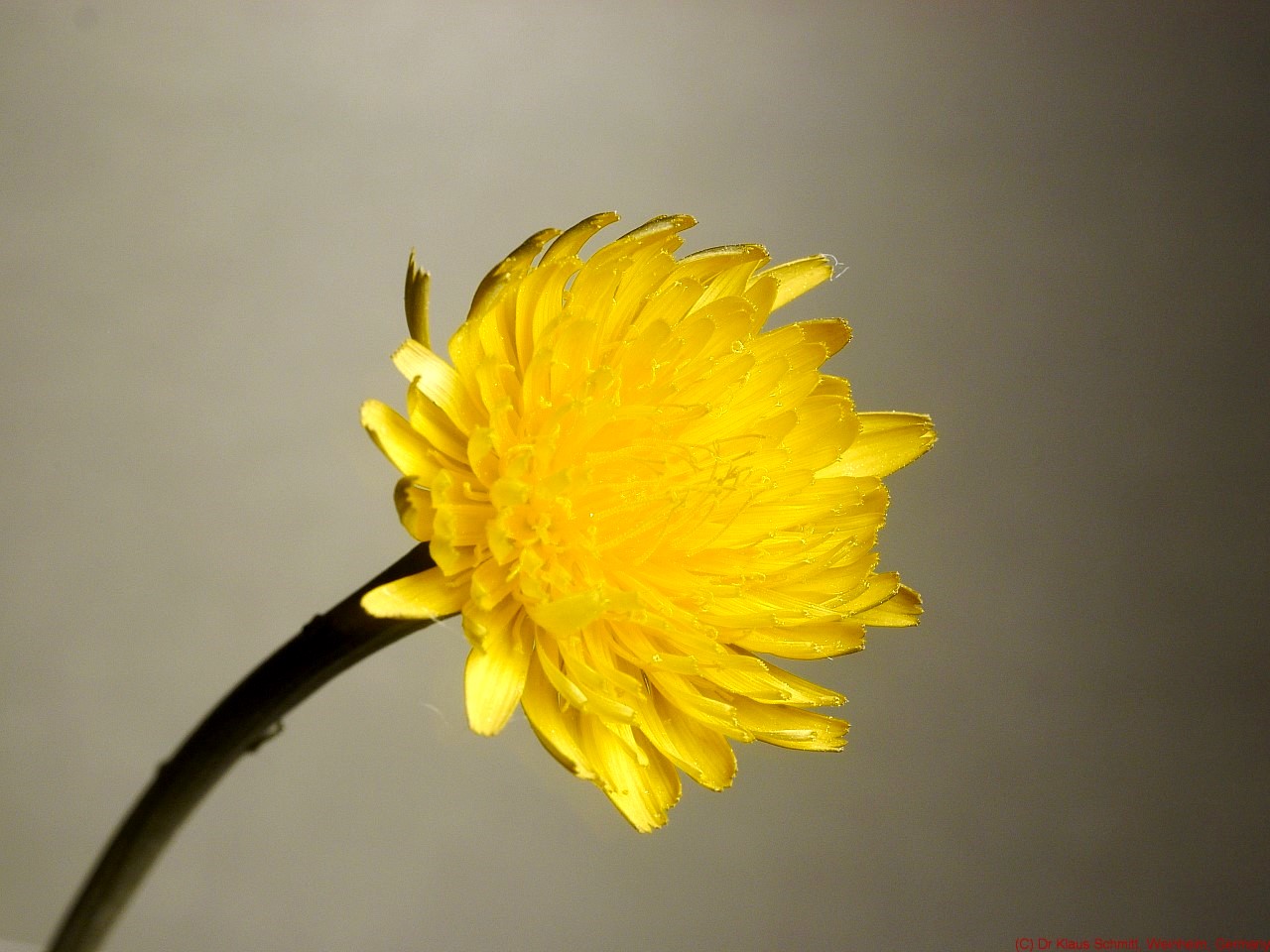
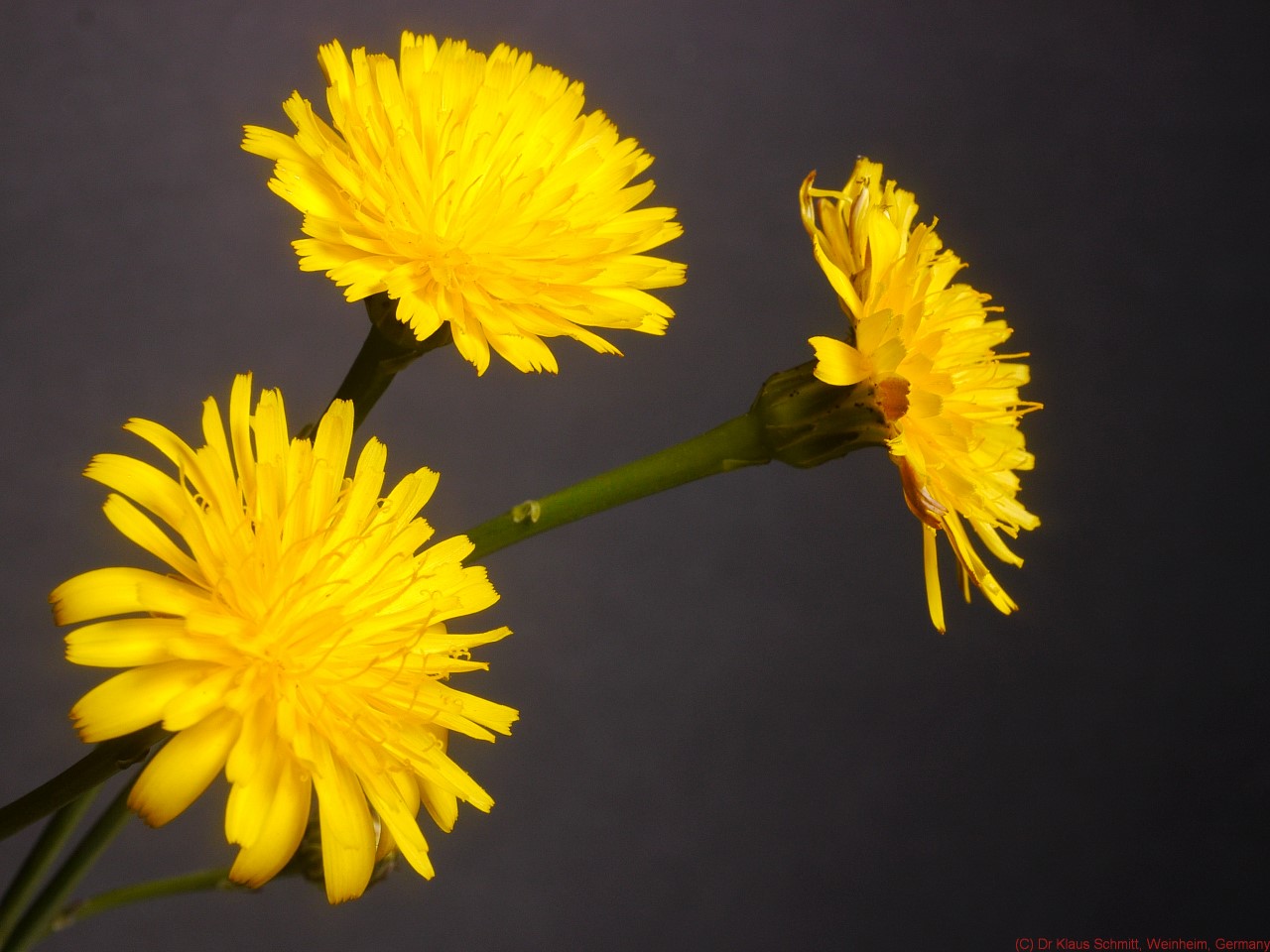
Visible light image:
 

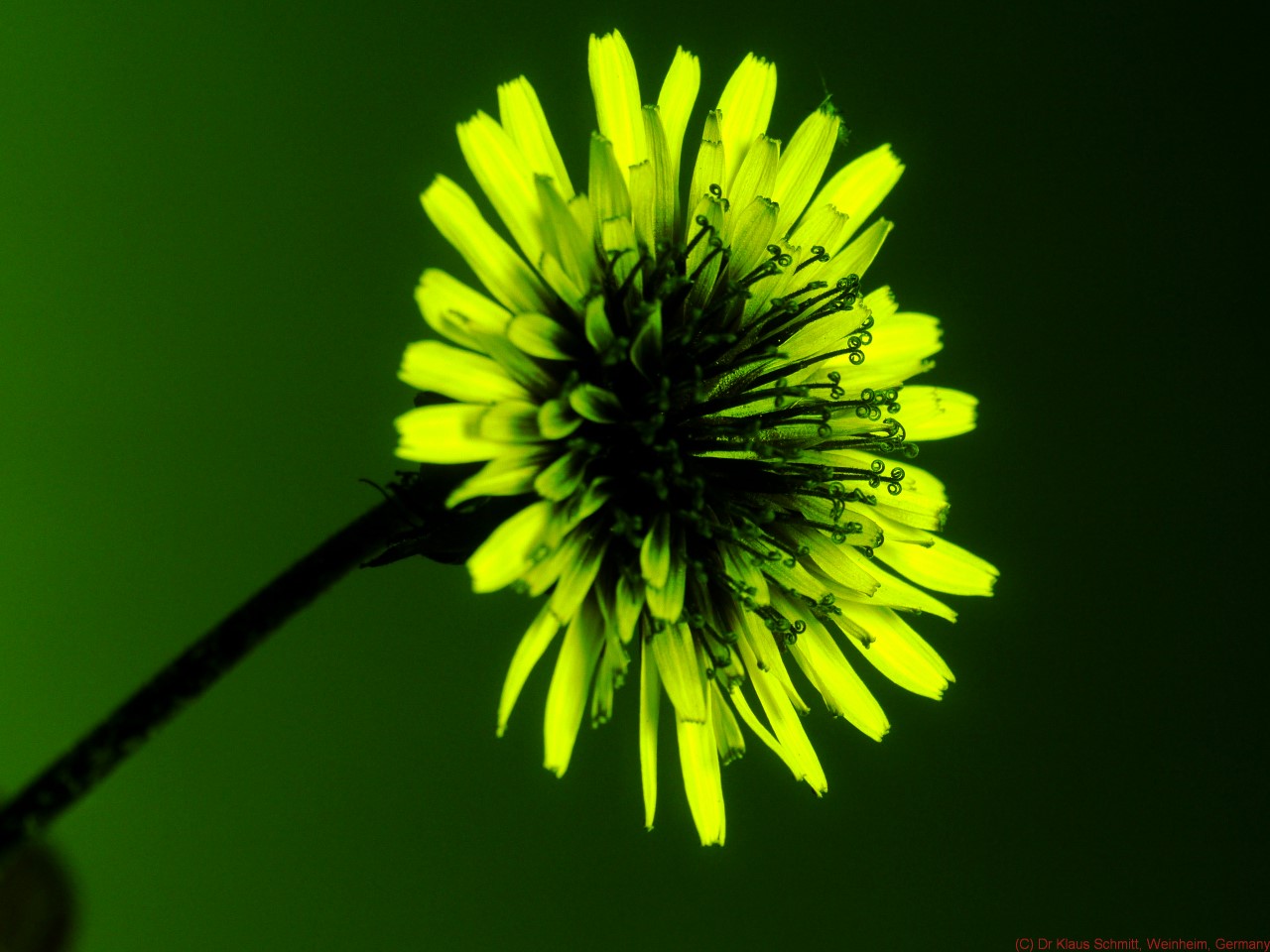
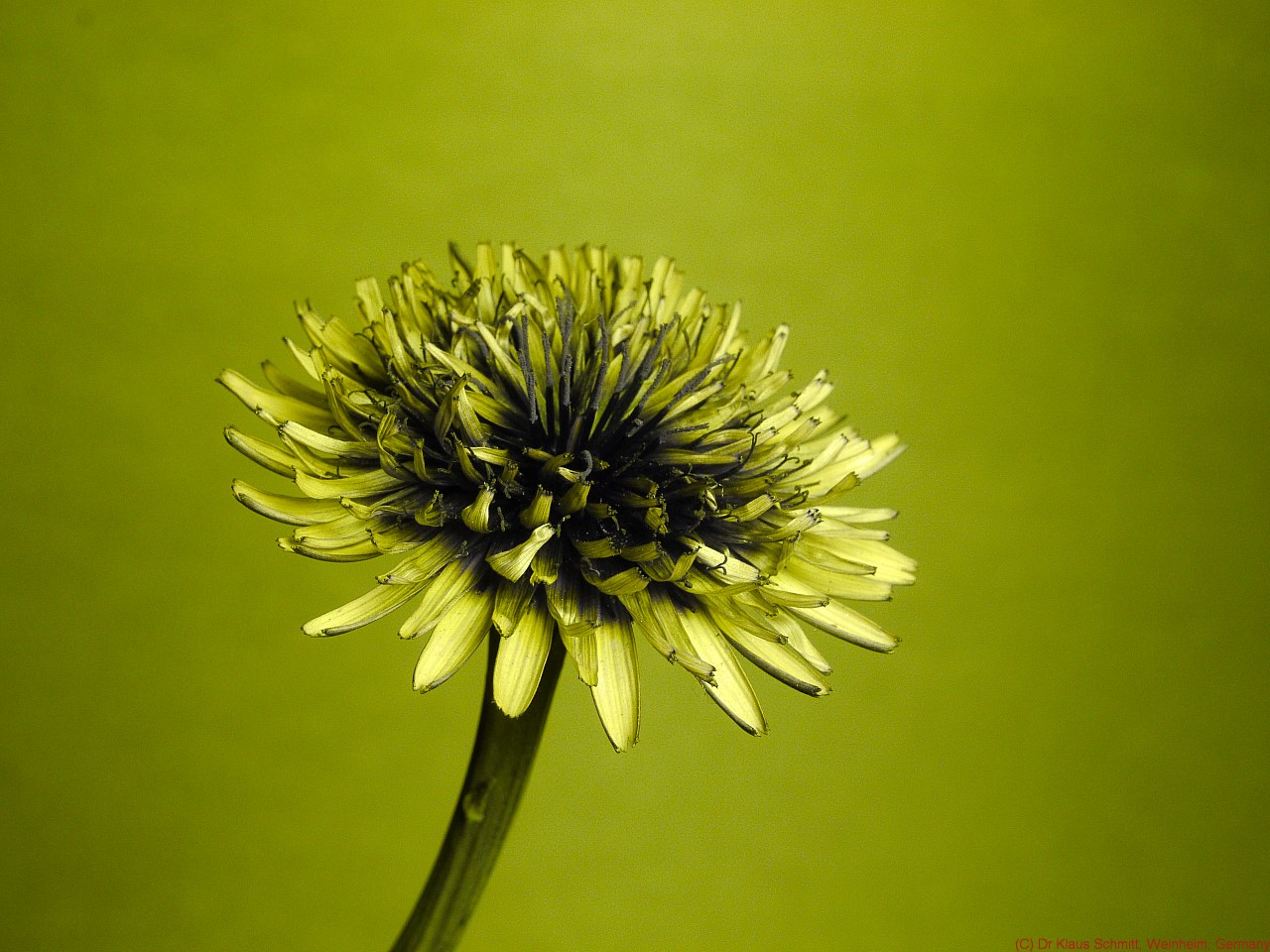
UV image using Baader-U filter (approx. 320-395nm, effective peak approx. 375nm):
 

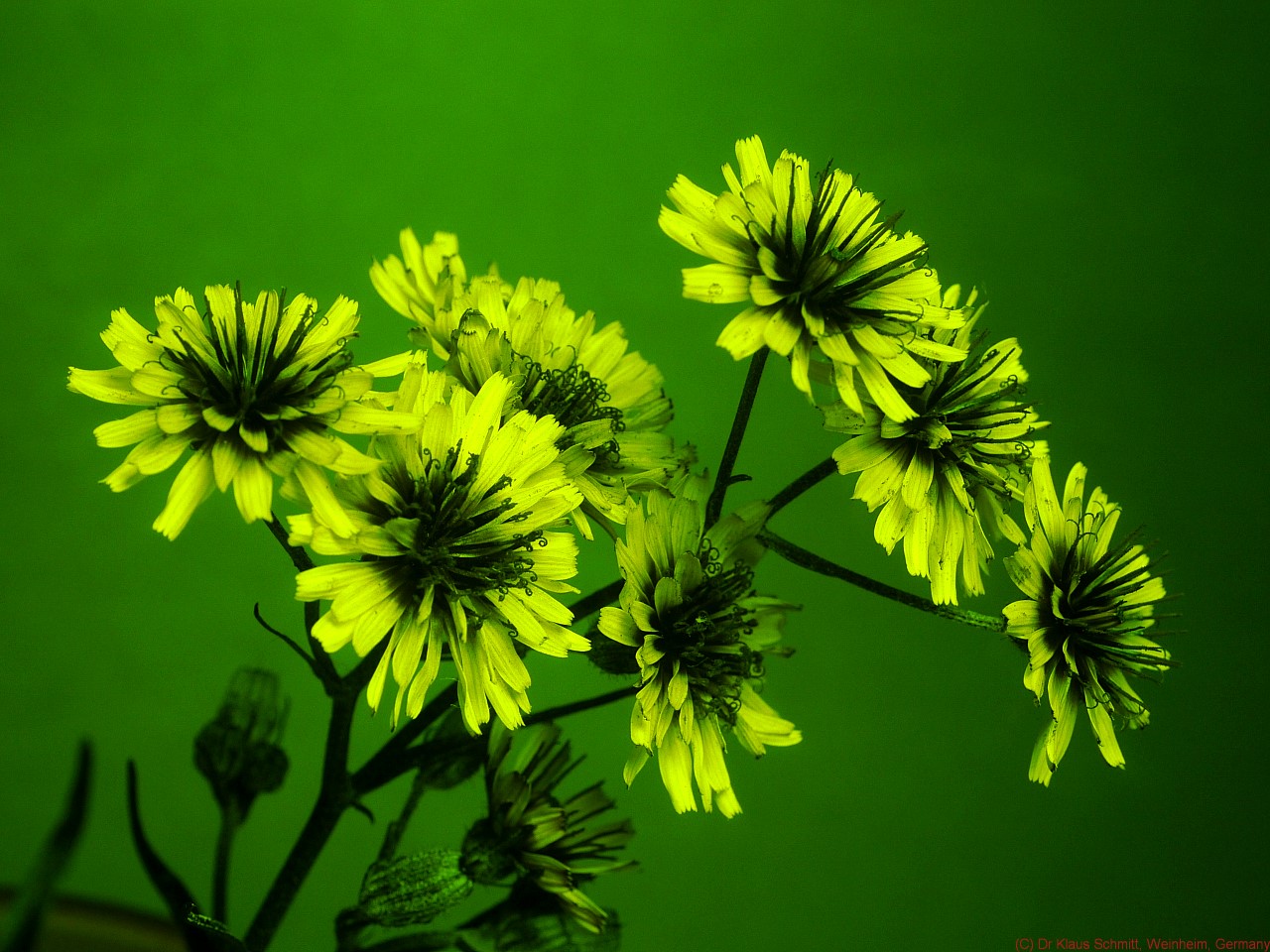
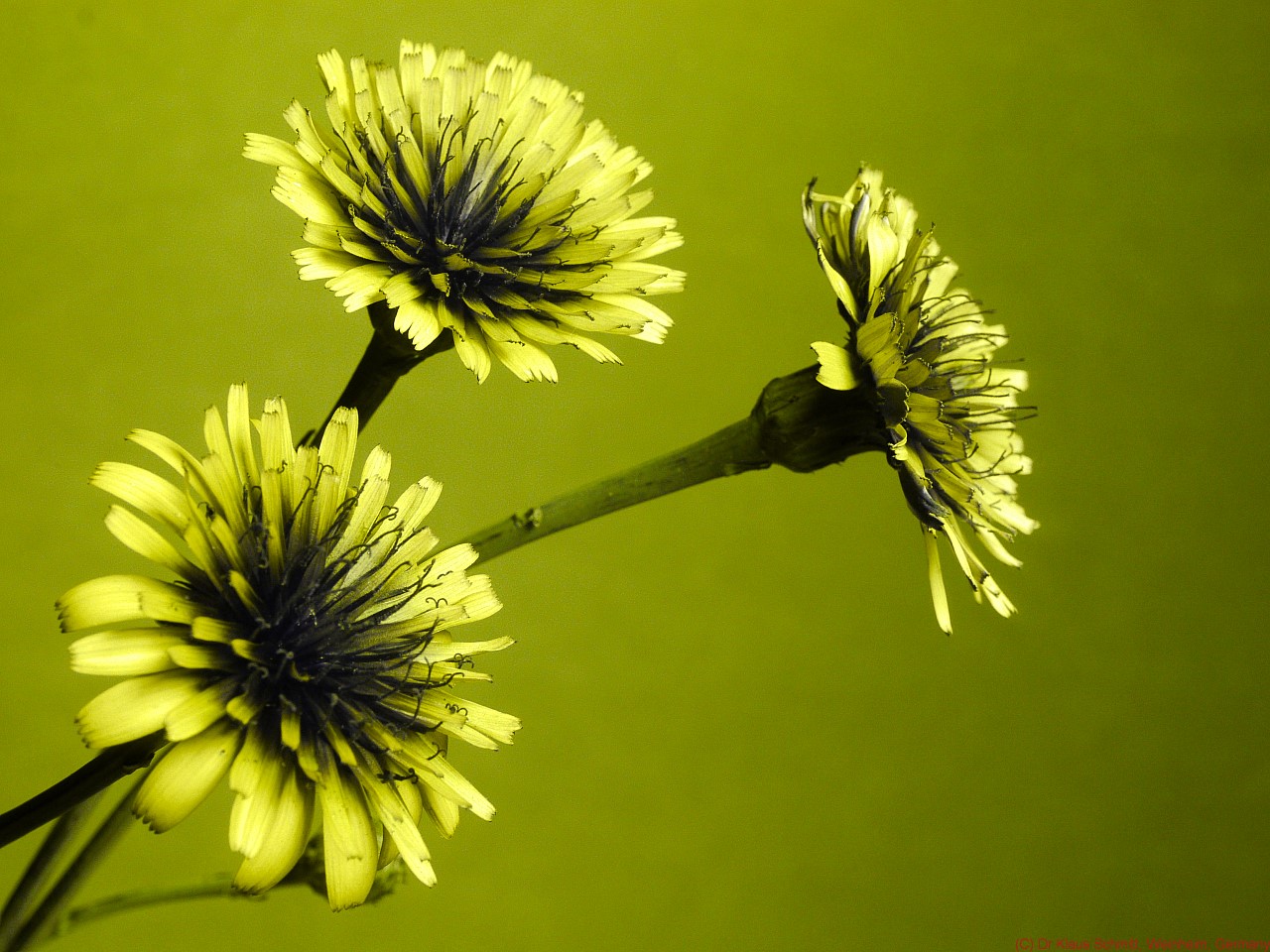
Simulated butterfly vision (UV - VIS) using XBV4 filter:
 

Simulated bee vision (UV - VIS) using XBV6 filter:
 

Quadriptych of the above (with bee/butterfly vision):
 

Hawksbeards outer petals reflect strongly UV around 365nm, there is a dark UV center and anthers, all invisible to us humans, and all that gets nicely visible from RAW files also using the new XBV4 filter.

The version from in-camera developed jpg files is HERE

Stay tuned, more will follow on that fascinating subject...

More info on this very interesting field may be found on my site http://www.pbase.com/kds315/uv_photos

Hawksbeard - Crepis in reflected ultraviolet photography, simulated butterfly and bee vision VII

Today shots of another species of Hawksbeard - Crepis sp. in reflected ultraviolet photography using my "work horse" UV filter, the Baader-U filter, as well as my XBV filters for simulating butterfly and bee vision, today now also using the reworked XBV4 filter. Lens was a CERCO 94mm quartz fluorite lens. Light source was a Xenon flash. All shots were done at about f8.

[click on image to see a larger one]

Visible light image:
 

UV image using Baader-U filter (approx. 320-395nm, effective peak approx. 375nm):
 

Simulated butterfly vision (UV - VIS) using XBV4 filter:
 

Simulated bee vision (UV - VIS) using XBV6 filter:
 

Quadriptych of the above (with bee/butterfly vision):
 

Hawksbeards outer petals reflect strongly UV around 365nm, there is a dark UV center and anthers, all invisible to us humans, and all that gets nicely visible also using the new XBV4 filter.

The version developed from RAW files is HERE

Stay tuned, more will follow on that fascinating subject...

More info on this very interesting field may be found on my site http://www.pbase.com/kds315/uv_photos

Wednesday, June 25, 2014

Hawksbeard - Crepis in deep reflected ultraviolet photography, simulated butterfly and bee vision VI

Today shots of even another species of Hawksbeard - Crepis sp. in reflected ultraviolet photography using my "work horse" UV filter, the Baader-U filter, as well as my XBV filters for simulating butterfly and bee vision. Lens was a CERCO 94mm quartz fluorite lens. Light source was a Xenon flash. All shots were done at about f8.

[click on image to see a larger one]

Visible light image:
 

UV image using Baader-U filter (approx. 320-395nm, effective peak approx. 375nm):
 

Simulated butterfly vision (UV - VIS) using XBV3 filter:
 

Simulated bee vision (UV - VIS) using XBV6 filter:
 

Quadriptych of the above (with bee/butterfly vision):


Hawksbeards outer petals reflect strongly UV around 365nm, there is a dark UV center and anthers, all invisible to us humans, and all that gets nicely visible.

Stay tuned, more will follow on that fascinating subject...

More info on this very interesting field may be found on my site http://www.pbase.com/kds315/uv_photos

Hawksbeard - Crepis in deep reflected ultraviolet photography, simulated butterfly and bee vision V

Today shots of another species of Hawksbeard - Crepis sp. in reflected ultraviolet photography using my "work horse" UV filter, the Baader-U filter, my Jupiter-U and Saturn-U deeper UV filters, as well as my XBV filters for simulating butterfly and bee vision. Lens was a CERCO 94mm quartz fluorite lens. Light source was a Xenon flash. All shots were done at about f8.

[click on image to see a larger one]

Visible light image:
 

UV image using Baader-U filter (approx. 320-395nm, effective peak approx. 375nm):
 

UV image using Jupiter-U filter (approx. 280-385nm, effective peak approx. 365nm):
 

UV image using Saturn-U filter (approx. 300-350nm, effective peak approx. 325nm):
 

Simulated bee vision (UV - VIS) using XBV6 filter:
 

Triptych of the above (with bee/butterfly vision):
 

Triptych of the above (with deep UV):


Hawksbeards outer petals reflect strongly UV around 365nm, there is a dark UV center and anthers, all invisible to us humans, and all that gets nicely visible.

Stay tuned, more will follow on that fascinating subject...

More info on this very interesting field may be found on my site http://www.pbase.com/kds315/uv_photos

Sunday, June 22, 2014

Hawksbeard - Crepis in deep reflected ultraviolet photography, simulated butterfly and bee vision IV

Today shots of another species of Hawksbeard - Crepis sp. in reflected ultraviolet photography using my "work horse" UV filter, the Baader-U filter, my Jupiter-U and Saturn-U deeper UV filters, as well as my XBV filters for simulating butterfly and bee vision. Lens was a CERCO 94mm quartz fluorite lens. Light source was a Xenon flash. All shots were done at about f8.

[click on image to see a larger one]

Visible light image:
 

UV image using Baader-U filter (approx. 320-395nm, effective peak approx. 375nm):
 

UV image using Jupiter-U filter (approx. 280-385nm, effective peak approx. 365nm):
 

UV image using Saturn-U filter (approx. 300-350nm, effective peak approx. 325nm):
 

Simulated bee vision (UV - VIS) using XBV6 filter:
 

Triptych of the above (with bee/butterfly vision):


Hawksbeards outer petals reflect strongly UV around 365nm, there is a dark UV center and anthers, all invisible to us humans, and all that gets nicely visible.

Stay tuned, more will follow on that fascinating subject...

More info on this very interesting field may be found on my site http://www.pbase.com/kds315/uv_photos

Saturday, June 21, 2014

Hawksbeard - Crepis in deep reflected ultraviolet photography, simulated butterfly and bee vision III

Today more shots of a different species of Hawksbeard - Crepis sp. in reflected ultraviolet photography using my "work horse" UV filter, the Baader-U filter, my Jupiter-U and Saturn-U deeper UV filters, as well as my XBV filters for simulating butterfly and bee vision. Lens was a CERCO 94mm quartz fluorite lens. Light source was a Xenon flash. All shots were done at about f8.

[click on image to see a larger one]

Visible light image:
 

UV image using Baader-U filter (approx. 320-395nm, effective peak approx. 375nm):
 

UV image using Jupiter-U filter (approx. 280-385nm, effective peak approx. 365nm):
 

UV image using Saturn-U filter (approx. 300-350nm, effective peak approx. 325nm):
 

Simulated butterfly vision (UV - VIS) using XBV3 filter:
 

Simulated bee vision (UV - VIS) using XBV6 filter:
 

Quadriptych of the above (with bee/butterfly vision):
 

Quadriptych of the above (with deep UV):


Hawksbeards outer petals reflect strongly UV around 365nm, there is a dark UV center and anthers, all invisible to us humans, and all that gets nicely visible.

Stay tuned, more will follow on that fascinating subject...

More info on this very interesting field may be found on my site http://www.pbase.com/kds315/uv_photos

Monday, June 16, 2014

Hawksbeard - Crepis in deep reflected ultraviolet photography, simulated butterfly and bee vision II

Today more shots of a different weed flower Hawksbeard - Crepis sp. in reflected ultraviolet photography using my "work horse" UV filter, the Baader-U filter, my Jupiter-U and Saturn-U deeper UV filters, as well as my XBV filters for simulating butterfly and bee vision. Lens was a CERCO 94mm quartz fluorite lens. Light source was a Xenon flash. All shots were done at about f8.

[click on image to see a larger one]

Visible light image:
 

UV image using Baader-U filter (approx. 320-395nm, effective peak approx. 375nm):
 

UV image using Jupiter-U filter (approx. 280-385nm, effective peak approx. 365nm):
 

UV image using Saturn-U filter (approx. 300-350nm, effective peak approx. 325nm):
 

Simulated butterfly vision (UV - VIS) using XBV3 filter:
 

Simulated butterfly vision (UV - VIS) using XBV2 filter:
 

Simulated bee vision (UV - VIS) using XBV6 filter:
 

Quadriptych of the above (with bee/butterfly vision):
 

Quadriptych of the above (with alt. bee/butterfly vision):
 

Quadriptych of the above (with deep UV):


Hawksbeards outer petals reflect strongly UV around 365nm, there is a dark UV center and anthers, all invisible to us humans, and all that gets nicely visible.

Stay tuned, more will follow on that fascinating subject...

More info on this very interesting field may be found on my site http://www.pbase.com/kds315/uv_photos

Hawksbeard - Crepis in deep reflected ultraviolet photography, simulated butterfly and bee vision

Today shots of a weed flower Hawksbeard - Crepis sp. in reflected ultraviolet photography using my "work horse" UV filter, the Baader-U filter, my Jupiter-U and Saturn-U deeper UV filters, as well as my XBV filters for simulating butterfly and bee vision. Lens was a CERCO 94mm quartz fluorite lens. Light source was a Xenon flash. All shots were done at about f8.

[click on image to see a larger one]

Visible light image:
 

UV image using Baader-U filter (approx. 320-395nm, effective peak approx. 375nm):
 

UV image using Jupiter-U filter (approx. 280-385nm, effective peak approx. 365nm):
 

UV image using Saturn-U filter (approx. 300-350nm, effective peak approx. 325nm):
 

Simulated butterfly vision (UV - VIS) using XBV3 filter:
 

Simulated bee vision (UV - VIS) using XBV6 filter:
 

Quadriptych of the above (with bee/butterfly vision):
 

Quadriptych of the above (with deep UV):


Hawksbeards outer petals reflect strongly UV around 365nm, there is a dark UV center and anthers, all invisible to us humans, and all that gets nicely visible.

Stay tuned, more will follow on that fascinating subject...

More info on this very interesting field may be found on my site http://www.pbase.com/kds315/uv_photos