Showing posts with label IDAS Filter. Show all posts

Sunday, May 17, 2020

Apache beggarticks - Bidens ferulifolia in deeper reflected ultraviolet photography, simulated bee and butterfly vision XVI

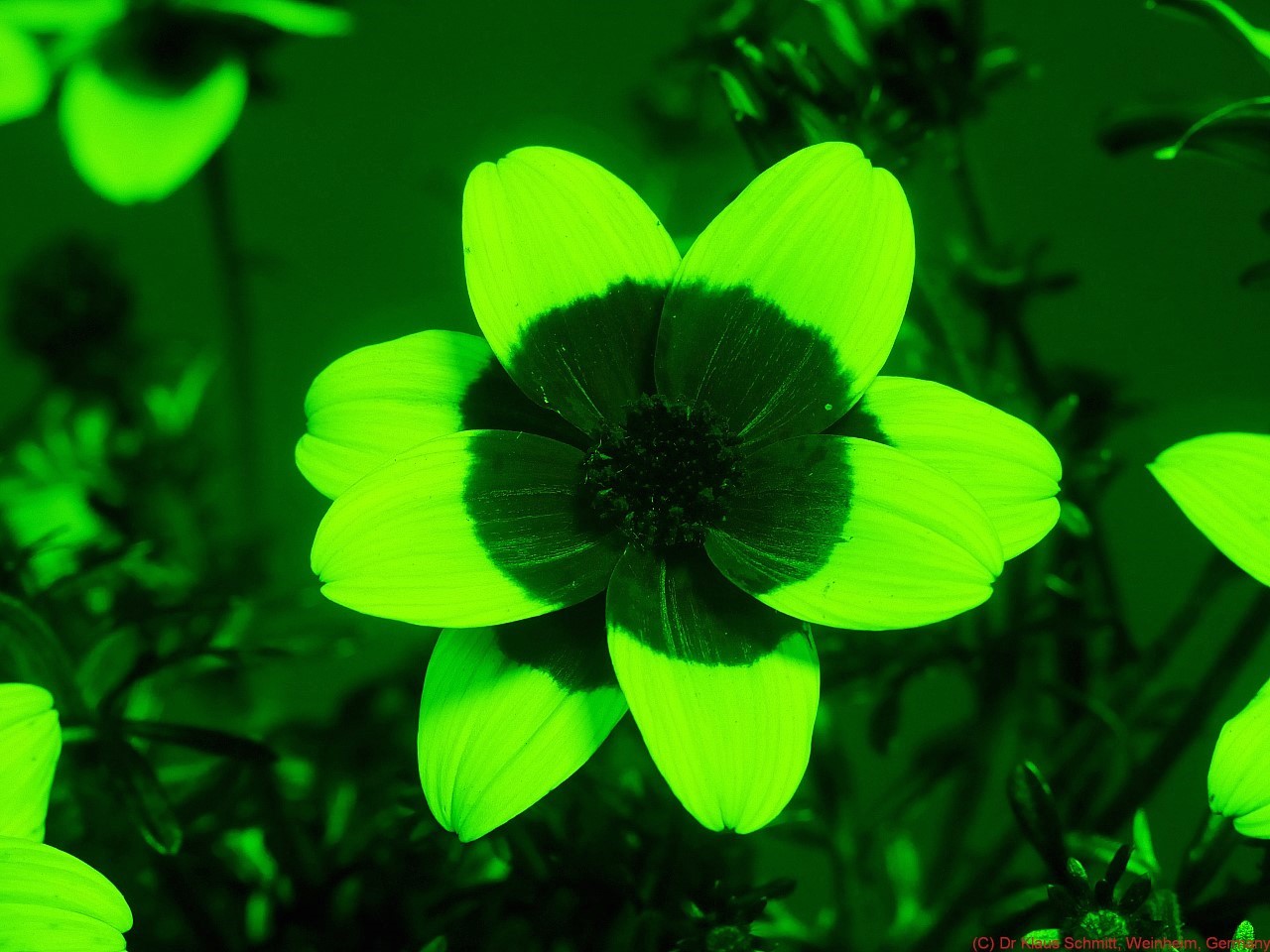
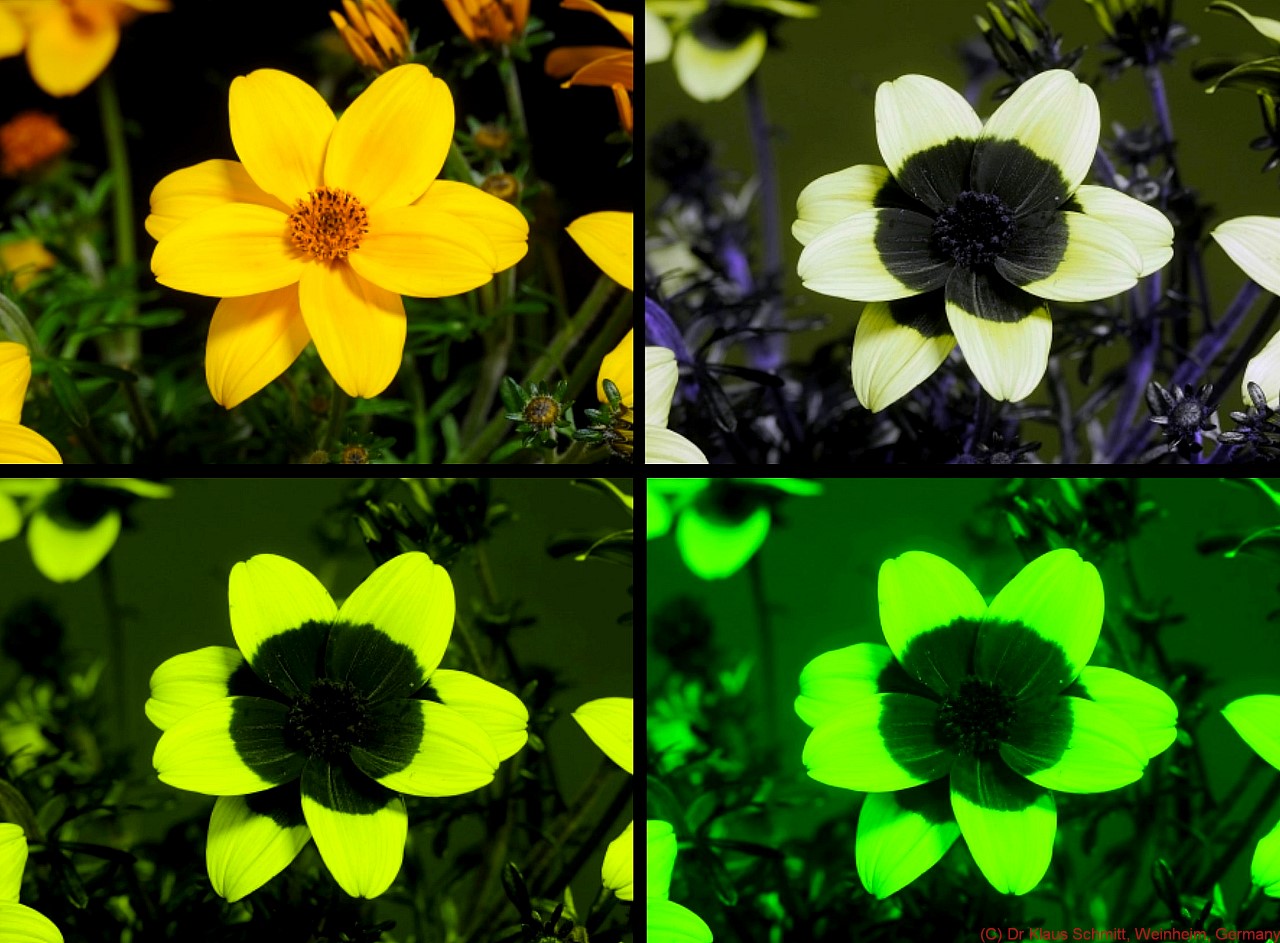
Today in 2020 more shots of that long blooming spring flower Apache beggarticks - Bidens ferulifolia in reflected ultraviolet photography. All shots were done at f8 in reflected ultraviolet photography using my "work horse" UV filter, the Baader-U filter, as well as my deeper UV filters and the IDAS 330nm filter. Lens was a UV-Nikkor 105mm quartz fluorite lens. Light source was my UV enhanced Xenon flash.

[click on image to see a larger one]

Human vision:
 

Reflected UV:
 

Reflected deep UV with IDAS fiter (300-380nm, peak 330nm):
 

Reflected deeper UV (290-340nm, peak approx. 320nm):
 

Quadriptych (details) of human vision, UV, deep and deeper UV (left to right, top to bottom):
 

Bidens has a strong visible UV pattern, its petal tips are UV bright around 365nm, its center is quite UV dark, so this gets quite nicely visible, also in deep and deeper reflected UV photography.

I have written about Bidens previously HERE
 
Stay tuned, more will follow on that fascinating subject...

More info on this very interesting field may be found on my site http://www.pbase.com/kds315/uv_photos

Thursday, May 14, 2020

Surprising STEINHEIL f2.8/50mm lens for reflected UV photography VII - Focus Shift

This again is about this older 50mm lens, which was made decades ago by famous lens maker STEINHEIL which attracted me, since it showed some seemingly good UV transmission, which have already shown here. I have already shown that it performs quite well using the Baader-U filter, and using some even deeper reaching UV filters, using a 340nm shortpass and the IDAS 330nm filter (I have the 2" version, no longer made).

Now I wanted to show today how the focus shift of this, or any other lens can be easily made visible. All images shot at f8, using a modified Xenon flash.

[click on image gets you a larger image]

VIS image using UV/IR Cut filter:
 

UV image using Bader-U filter (approx. 320-390nm, peak 360nm):
 

UV image using IDAS UV filter (approx. 300-380nm, peak 330nm):
 

UV image using 340nm UV filter (approx. 320-340nm):
 

Now it is about to show how those images differ in size, using a method I call "differential", i.e. a subtraction of two images, one visible and one UV, where any focus shift will show as overlapping on the borders of the object. If you looks close you will see this around the object.

VIS-UV (Baader-U filter) differential image:
 

VIS-UV (IDAS UV filter) differential image:
 

VIS-UV (340nm UV filter) differential image:
 

It got quite obvious before, that this lens is also performing very well at even shorter wavelengths, making it a very useful lens for reflected UV down to 330-340nm at an optimal f8/f11 setting, especially since the image size deviation between visible and UV image is also only 1.3% , which can be easily seen (and measured) from those differential images.

I have written about that lens more HERE.

Stay tuned, more will follow on that fascinating subject...

More info on this very interesting field may be found on my site http://www.pbase.com/kds315/uv_photos

Monday, May 4, 2020

Surprising STEINHEIL f2.8/50mm lens for reflected UV photography IV

I had mentioned in my previous thread, that a few years ago I got an older lens, which was made decades ago by famous lens maker STEINHEIL . It is a possibly single coated, well made 2.8/50mm lens which attracted me, since it showed some seemingly good UV transmission when shining an 365nm UV LED beam through it. The surprise came when I had it under my spectrometer, revealing its high and deep reaching UV transmission.  I have already shown that it performs quite well using the Baader-U filter, and here now its performance using some even deeper reaching UV filters, using a 340nm shortpass and the IDAS 330nm filter.

[click on image gets you a larger image]

VIS image using UV/IR Cut filter:
 

UV image using IDAS UV filter (approx. 330-370nm) at f5.6:
 

UV image using IDAS UV filter (approx. 330-370nm) at f8:
 

UV image using IDAS UV filter (approx. 330-370nm) at f11:
 

UV image using IDAS UV filter (approx. 330-370nm) at f16:
 

UV image using 340nm UV filter (approx. 320-340nm) at f5.6:
 

UV image using 340nm UV filter (approx. 320-340nm) at f8:
 

UV image using 340nm UV filter (approx. 320-340nm) at f11:
 

UV image using 340nm UV filter (approx. 320-340nm) at f16:
 

VIS and UV (IDAS) image side-by-side both at f8:
 

VIS and UV (340nm) image side-by-side both at f8:
 

As I had mentioned before, it got pretty clear that this lens has a very high UV performance, as at 365nm it transmits around 75%. Its peak transmission with Baader-U filter attached is around 68% at 360nm. At shorter wavelengths it still has a very useful 56% transmission at 340nm and 22% at  320nm.

Before I had shown here, that stopping down has improved sharpness significantly, especially in reflected UV light using the Baader-U filter. Now it gets quite obvious, that this lens is also performing very well at even shorter wavelengths, making it a very useful lens for reflected UV down to 330-340nm at an optimal f8/f11 setting, especially since the image size deviation between visible and UV image is also only 1.3% there .

I have written about that lens more HERE.

Stay tuned, more will follow on that fascinating subject...

More info on this very interesting field may be found on my site http://www.pbase.com/kds315/uv_photos

Saturday, December 1, 2018

[UV, VIS, IR] Lyman Alpha deep UV lenses V - Oncostele orchid

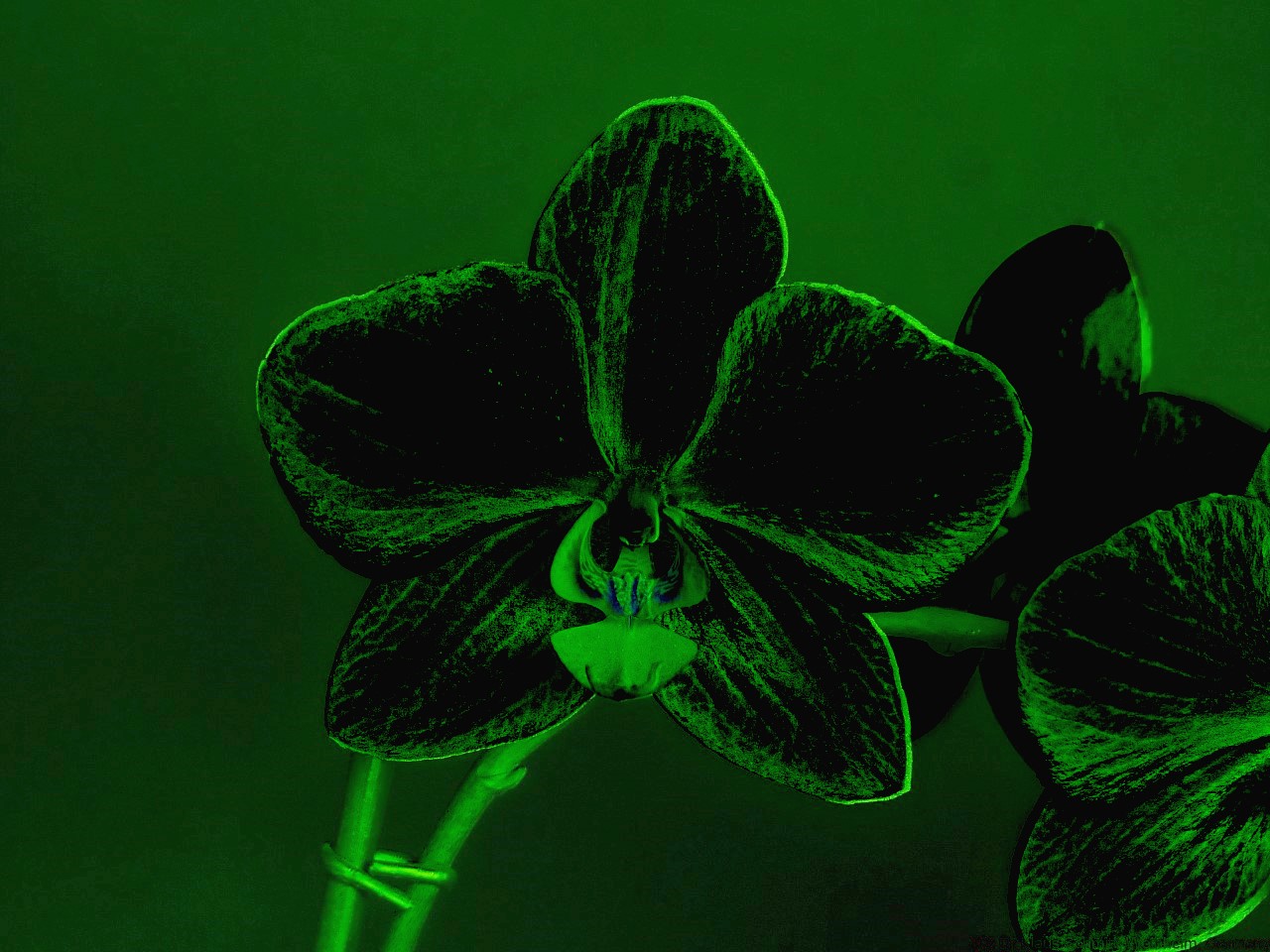
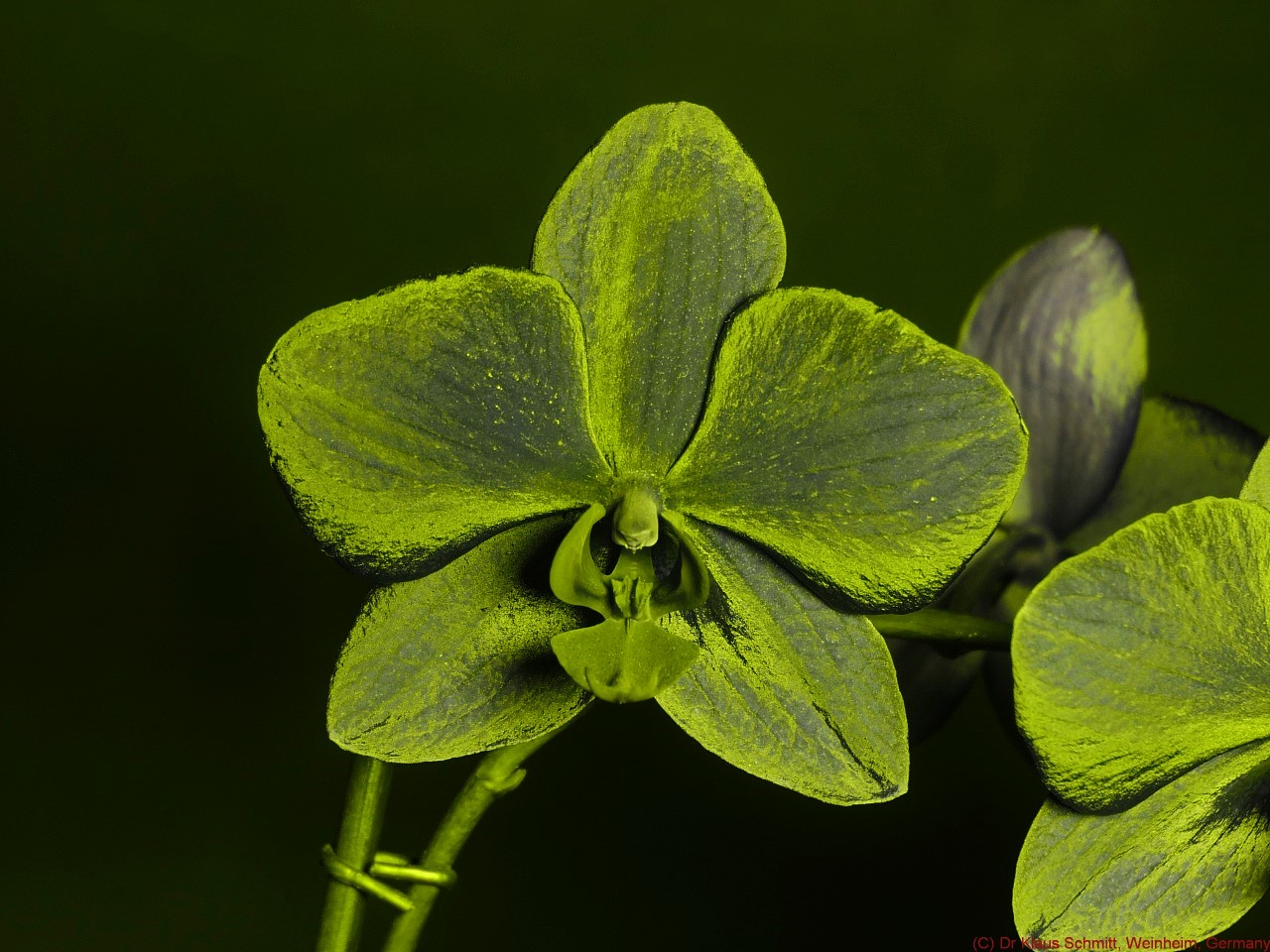
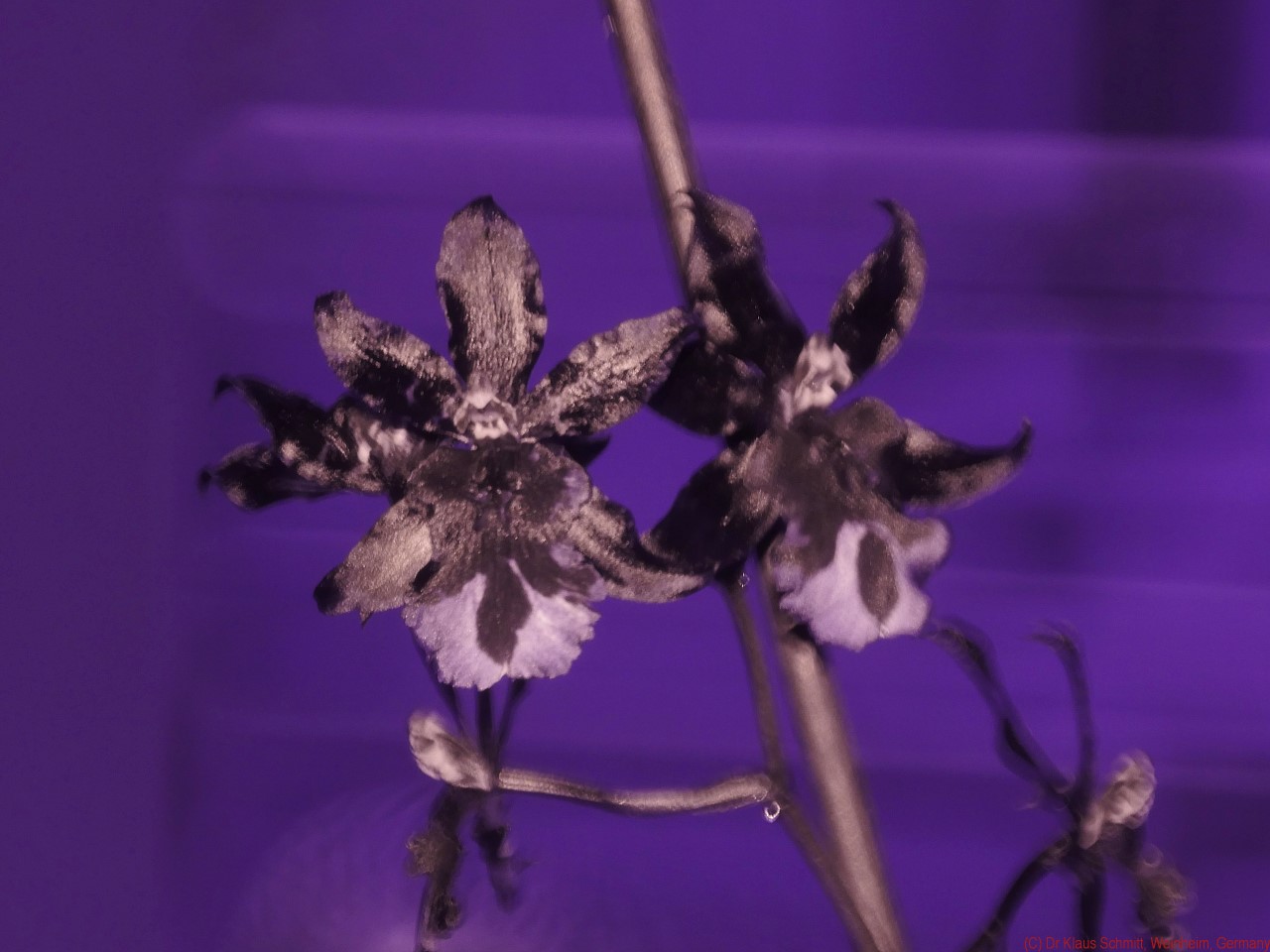
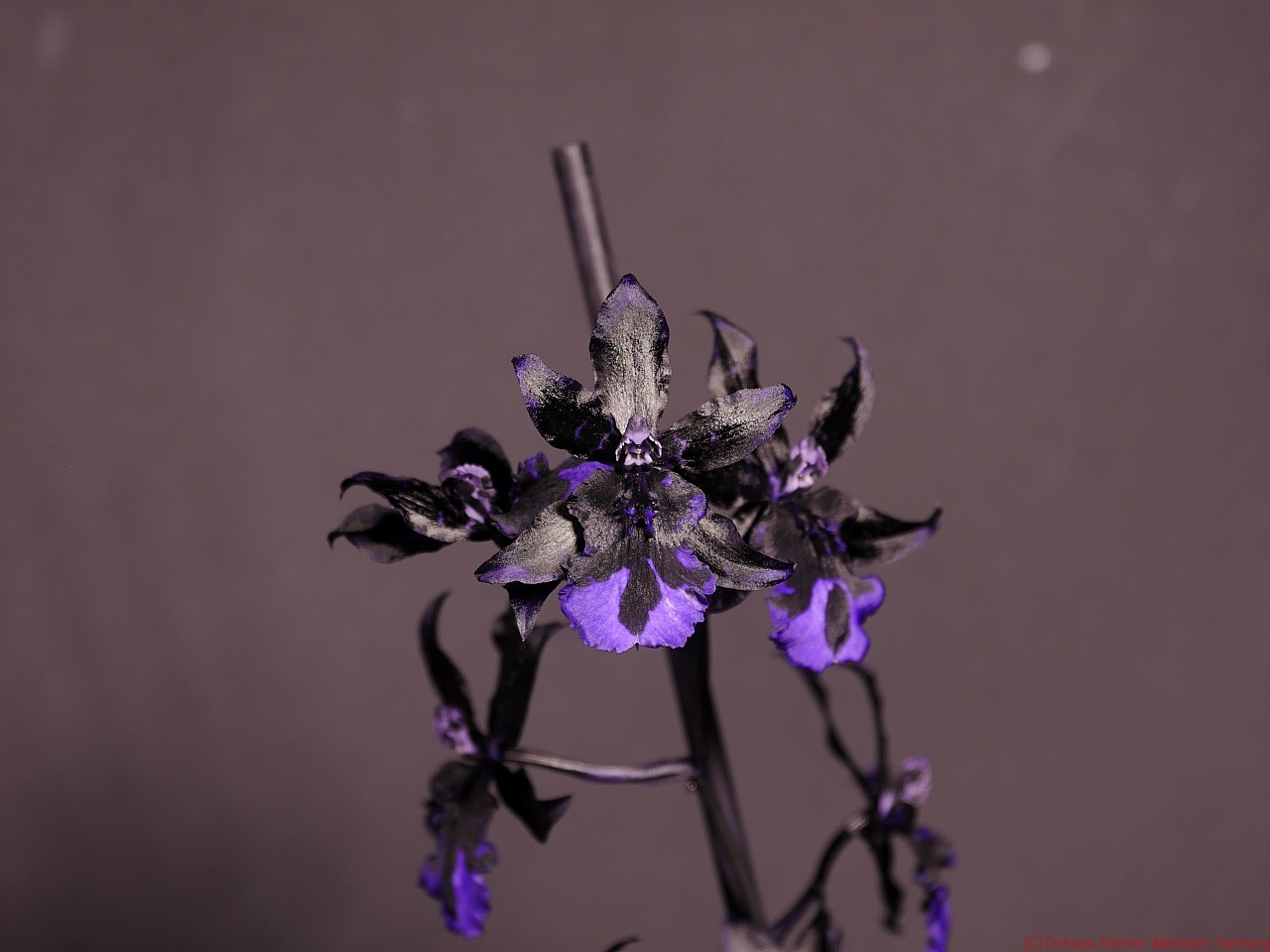
Today shots of a Orchid hybride (Oncostele Wildcat 'Golden Red Star') in reflected ultraviolet photography with a NYE OPTICAL Lyman-Alpha I f2.8/100mm UV-VIS-NIR lens. UV filters used was the Baader-U filter for the Lyman Alpha 100mm, rear mounted. All shots were done at f2.8 as the Lyman Alpha lens has no iris. Light source used was two different Nichia 365nm UV-LEDs, one a cheap Convoy S2 UV mini torch.

[click on image to see a larger one]

For reference, visible light shot (UV-Nikkor 105mm):
 

Lyman Alpha I lens UV using Baader-U filter and Convoy S2 UV LED:
 

Lyman Alpha I lens UV using Baader-U filter and Convoy S2 UV LED:
 

Lyman Alpha I lens UV using Baader-U filter and strong Nichia UV LED:
 

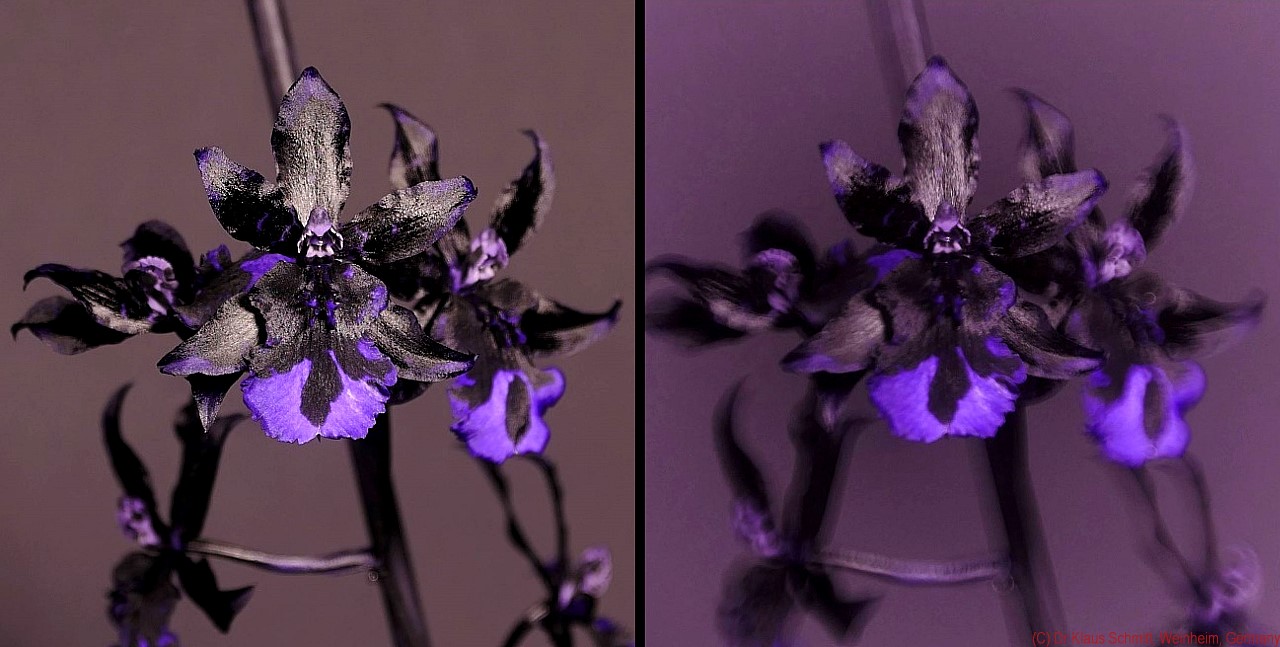
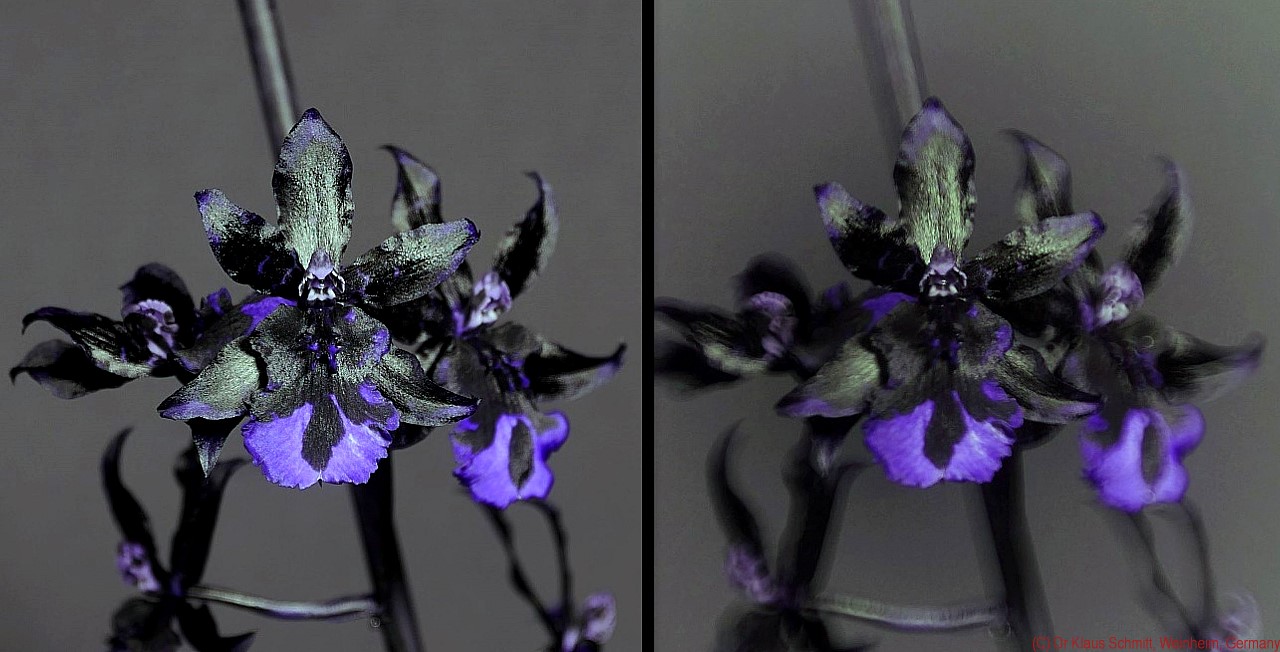
This orchid has a very specific UV pattern, its petals are very UV dark, but its lower petal lip has on the lower center a very UV bright spot as well as on its center "nose" formation an UV reflecting spot and all this gets nicely visible, also with this Lyman Alpha I f2.8/200mm mirror only lens.

I have written about the Nye Lyman-Alpha lenses previously HERE and about this Orchid HERE
 
Stay tuned, more will follow on that fascinating subject...

More info on this very interesting field may be found on my site http://www.pbase.com/kds315/uv_photos

Wednesday, November 28, 2018

[UV, VIS, IR] Lyman Alpha deep UV lenses IV - Oncostele orchid

Today tests shots of a Orchid hybride (Oncostele Wildcat 'Golden Red Star') in reflected ultraviolet photography with a NYE OPTICAL Lyman-Alpha II f1.1/90mm UV-VIS-NIR lens in comparisoon with my UV-Nikkor 105mm lens. UV filters used was the Baader-U and the IDAS 340nm filter for the UV-Nikkor and a UV transmitting stack of UG11+S8612 as well as a 340nm filter for the Lyman Alpha 90mm, both rear mounted. All shots were done at f4.5 for the UV-Nikkor resp. f1.1 as the Lyman Alpha lens has no iris. Light source used was Xenon flash.

[click on image to see a larger one]

UV-Nikkor 105mm Visible Light:
 

UV-Nikkor 105mm Baader-U filter:
 

UV-Nikkor 105mm Baader-U filter (whitebalanced):
 

UV-Nikkor 105mm 340nm IDAS filter:
 

Lyman Alpha II 90mm UG11+S8612 filter:
 

Lyman Alpha II 90mm UG11+S8612 filter (whitebalanced):
 

Lyman Alpha II 90mm 340nm filter:
 

UV-Nikkor vs Lyman Alpha II 90mm in UV:
 

UV-Nikkor vs Lyman Alpha II 90mm in UV (whitebalanced):
 

UV-Nikkor vs Lyman Alpha II 90mm in UV (340nm):
 
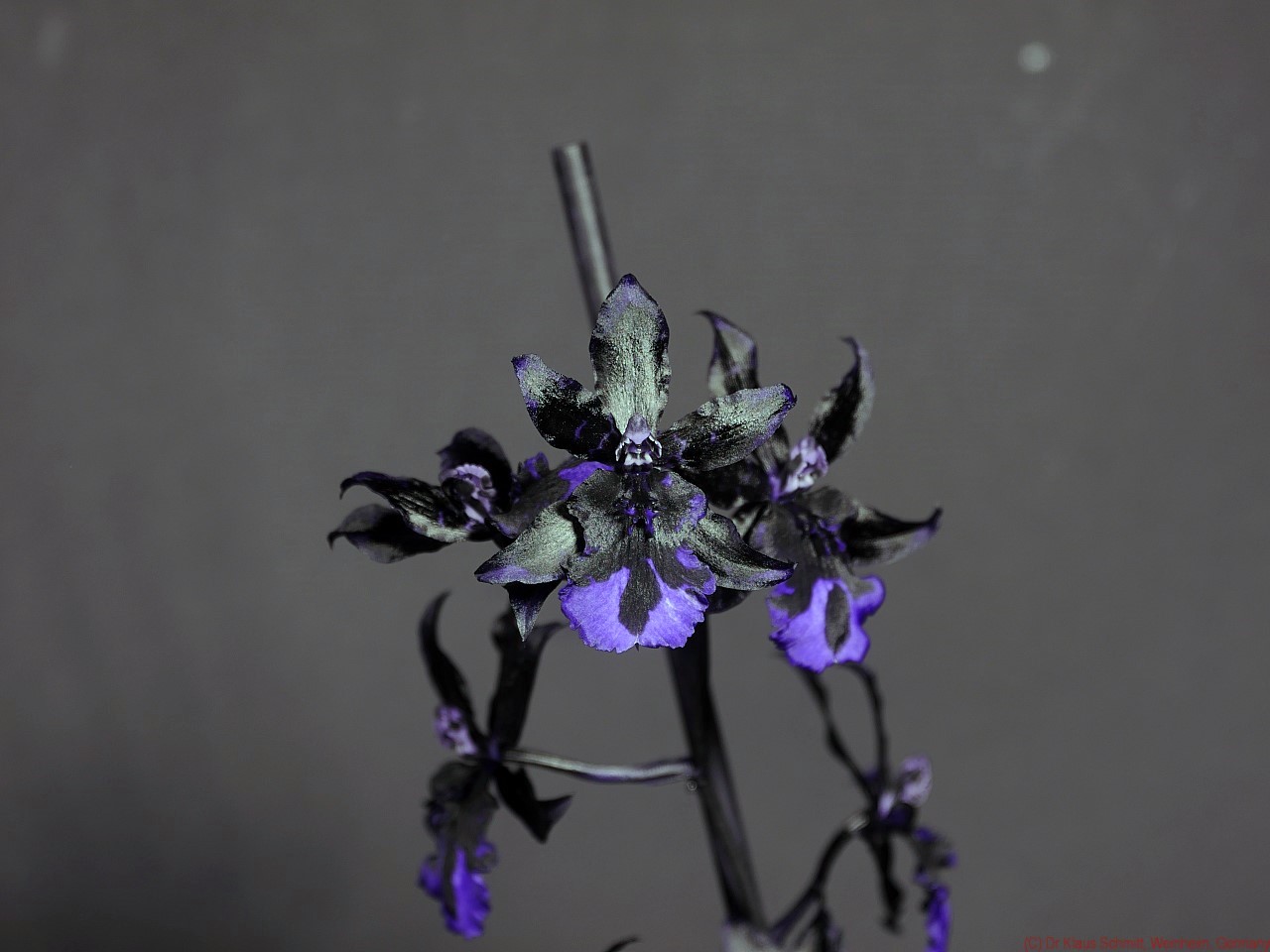
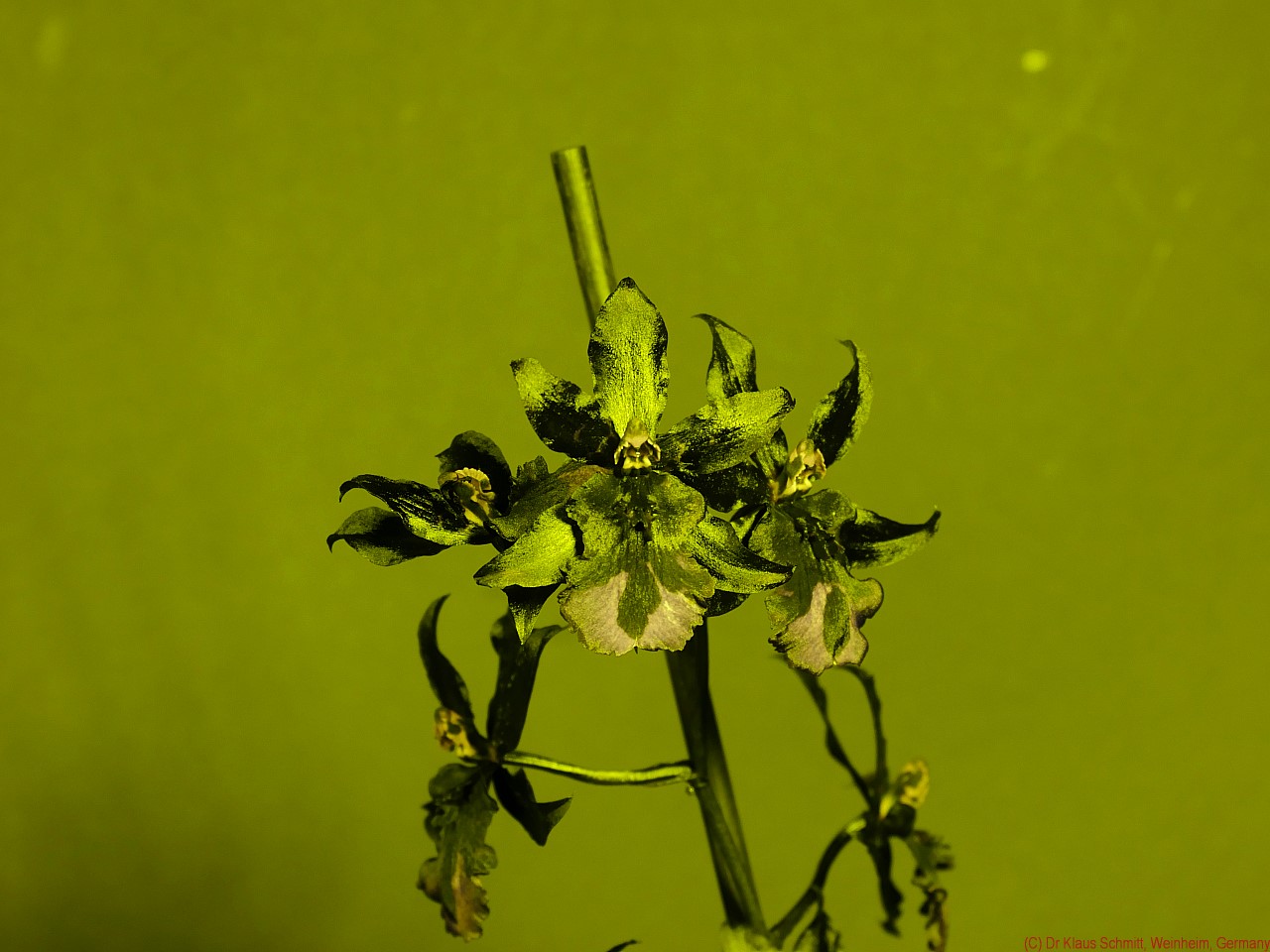
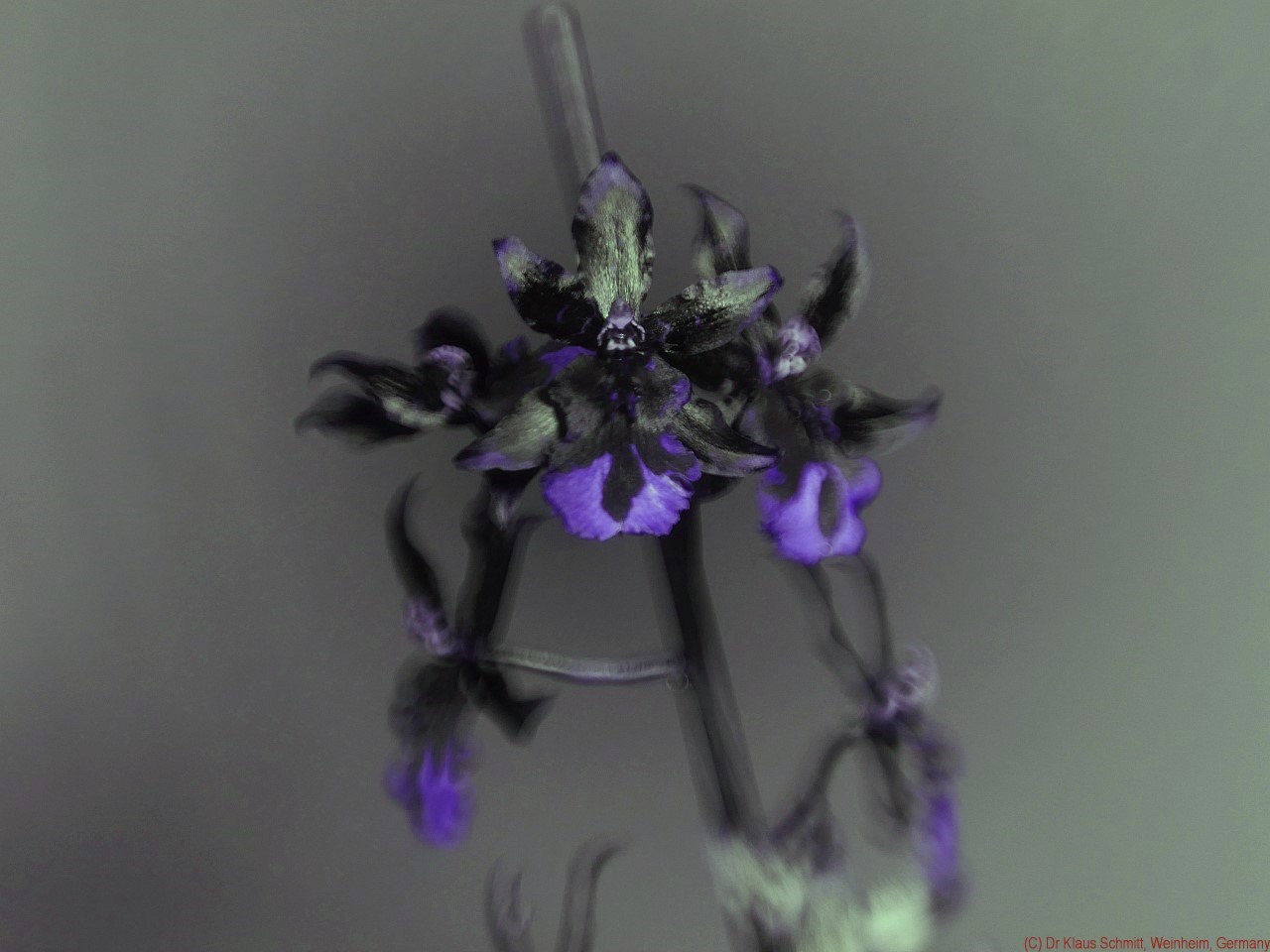
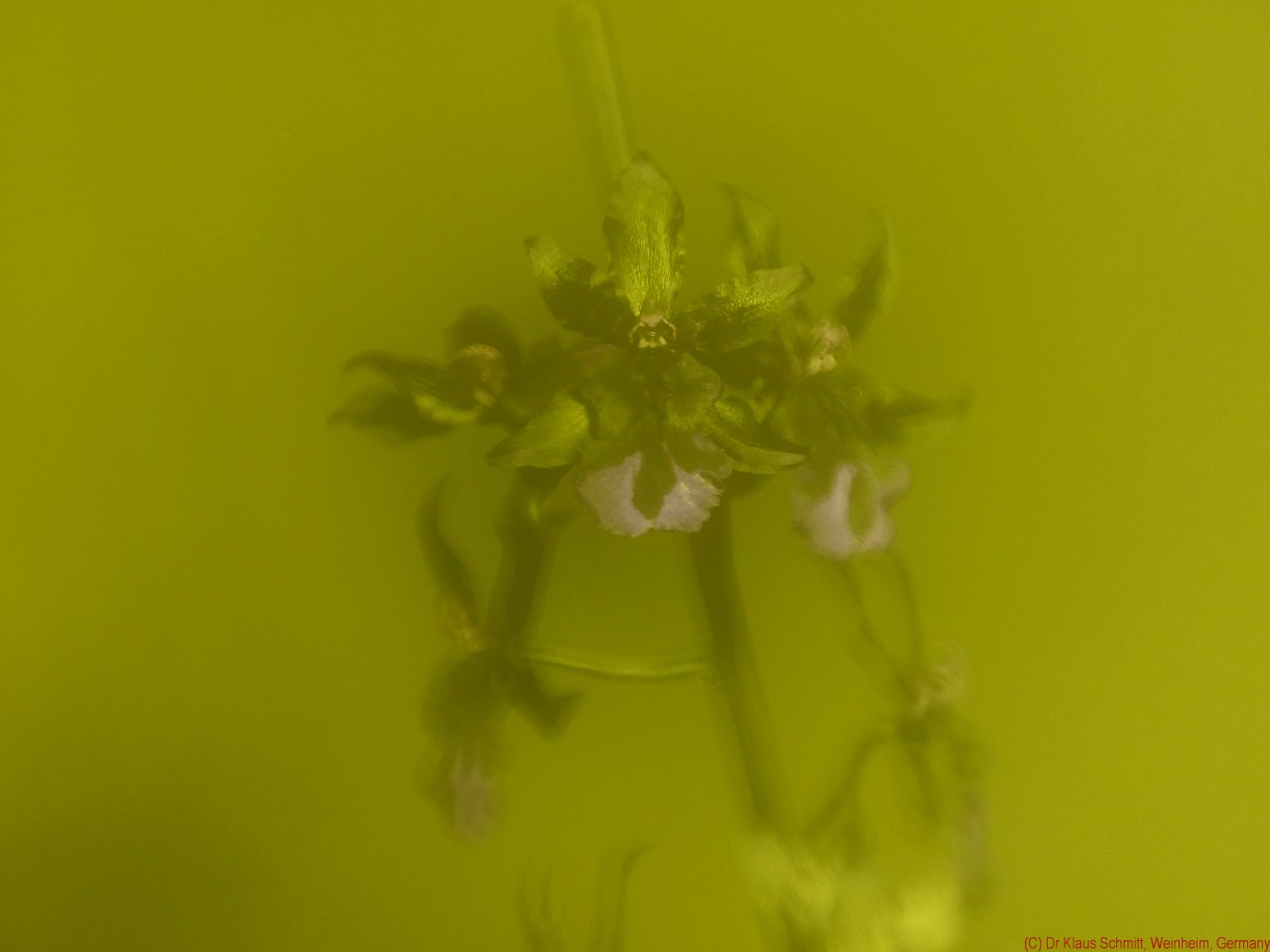
This orchid has a very specific UV pattern, its petals are very UV dark, but its lower petal lip has on the lower center a very UV bright spot as well as on its center "nose" formation an UV reflecting spot and all this gets nicely visible.

Both lenses are very different animals so to speak, that Lyman Alpha II f1.1/90mm has extremely shallow DOF as compared to the f4.5 / 105mm UV-Nikkor lens, as well as some bent field, but it shows a very useful UV transmission. That rear mounted 340nm seems not to be the clearest filter, as the resulting image was a bit cloudy, not the fault of the lens.

I have written about the Nye Lyman-Alpha lenses previously HERE and about this Orchid HERE
 
Stay tuned, more will follow on that fascinating subject...

More info on this very interesting field may be found on my site http://www.pbase.com/kds315/uv_photos