Showing posts with label quartz fluorite lens. Show all posts

Wednesday, June 10, 2026

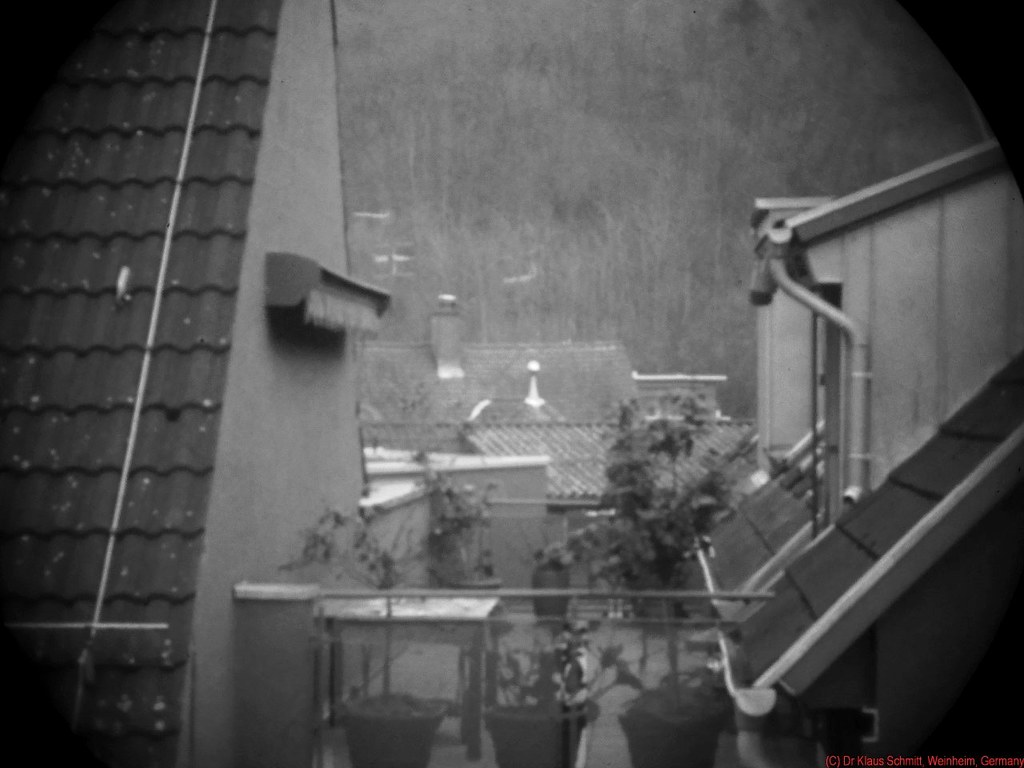
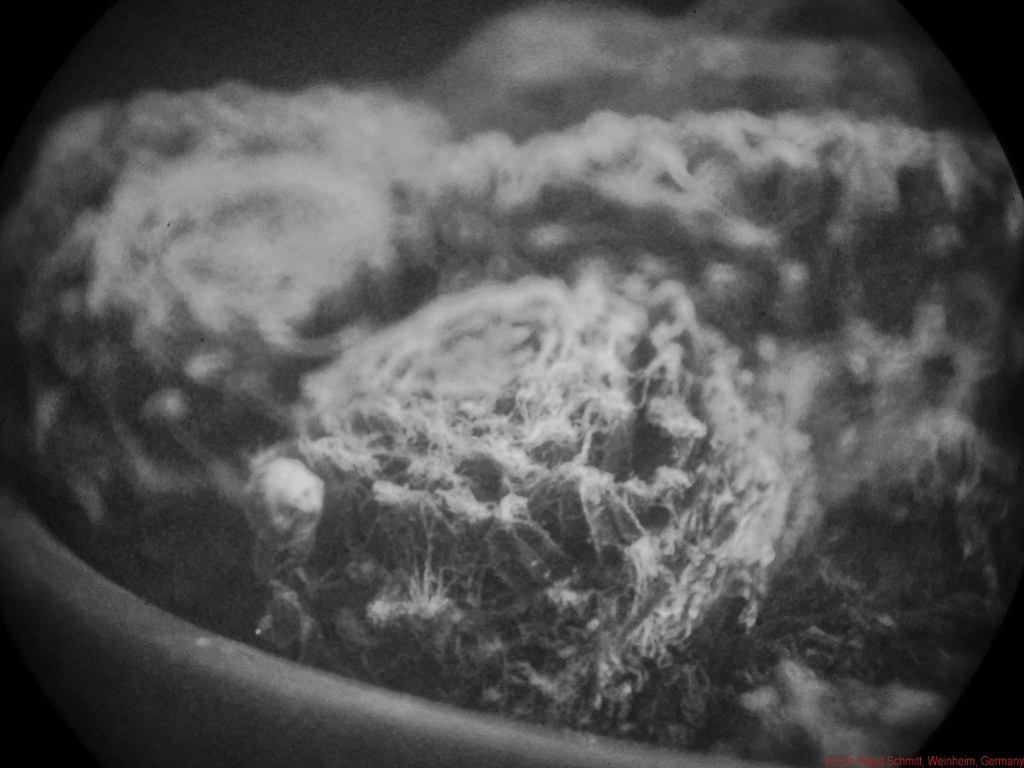
UFAR-12 41mm f/2.5 quartz fluorite lens does cobweb hens & chicks flowering

Well, some long time ago I had mentioned that I was able to "liberate" the two last survived multispectral quartz fluorite lenses UFAR-12 f2.5/41mm from the russian mission to Mars. Made by LOMO and designed by GOI, they represent (to me) a top result of the designers under Prof. Volossov who headed the optical design department of GOI in St Petersburg. Transmission of that lens is flat approx. 65% for 330...1000nm. Center resolution is approx. 80lpm

And today I took it out again and took some shots on my balcony, as there were some succulent Cobweb Hens & Chicks were starting to flower....

[click on image to see a larger one]

Human Vision (400-700nm):


Ultraviolet Vision (310-390nm):


Quite nice resolution this lens shows and it has a pretty good UV transmission, too which I have measured a while ago.


Stay tuned, more will follow on that fascinating subject...

More info on this very interesting field may be found on my site http://www.pbase.com/kds315/uv_photos

Wednesday, February 17, 2021

A few quartz flourite UV lenses on the bench for lens transmission measurements II

A few years ago I was taking transmission measurements of some special quartz-fluorite lenses for reflected UV photography. This included the then Coastal Optics UV-VIS-NIR Apo 60mm lens, after the merger now called Jenoptik CoastalOpt® UV-VIS-IR 60 mm 1:4 APO Macro. 

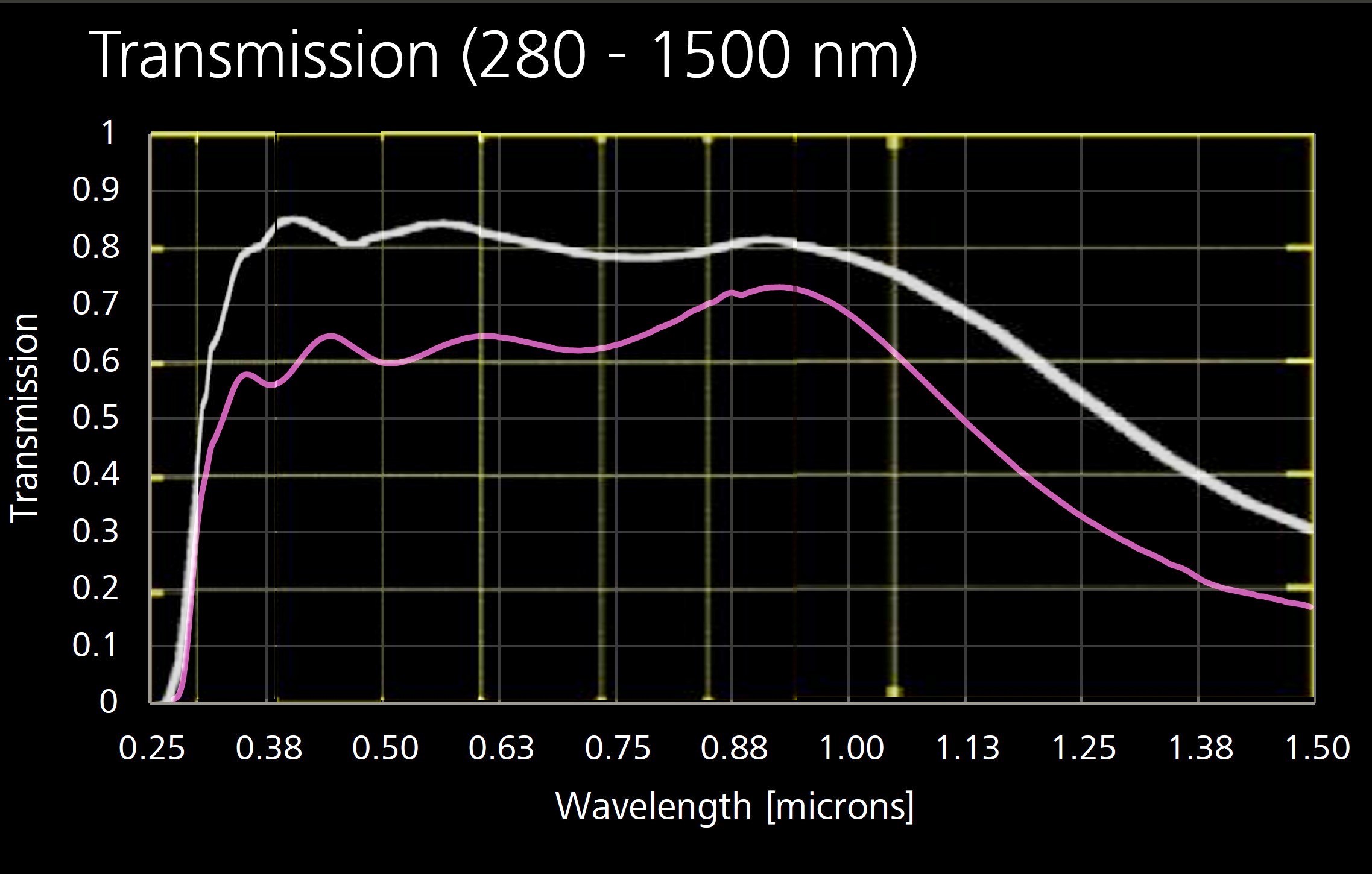
So since I just recently bought that CoastalOpt® lens, I measured it (amongst others) with my newer spectrometric setup and compared my results with their published data. Surprisingly enough, my older and newer measurements of that CoastalOpt® 60mm Apo lens correlate very well - but not with their now officially published data on their site which shows much lower transmission values. Their formerly published data however showed much better spectral transmission, which correlated well with my own measurements.

[click on image to see a larger one]

Here in comparison the former (white) and now published data (magenta) superimposed:

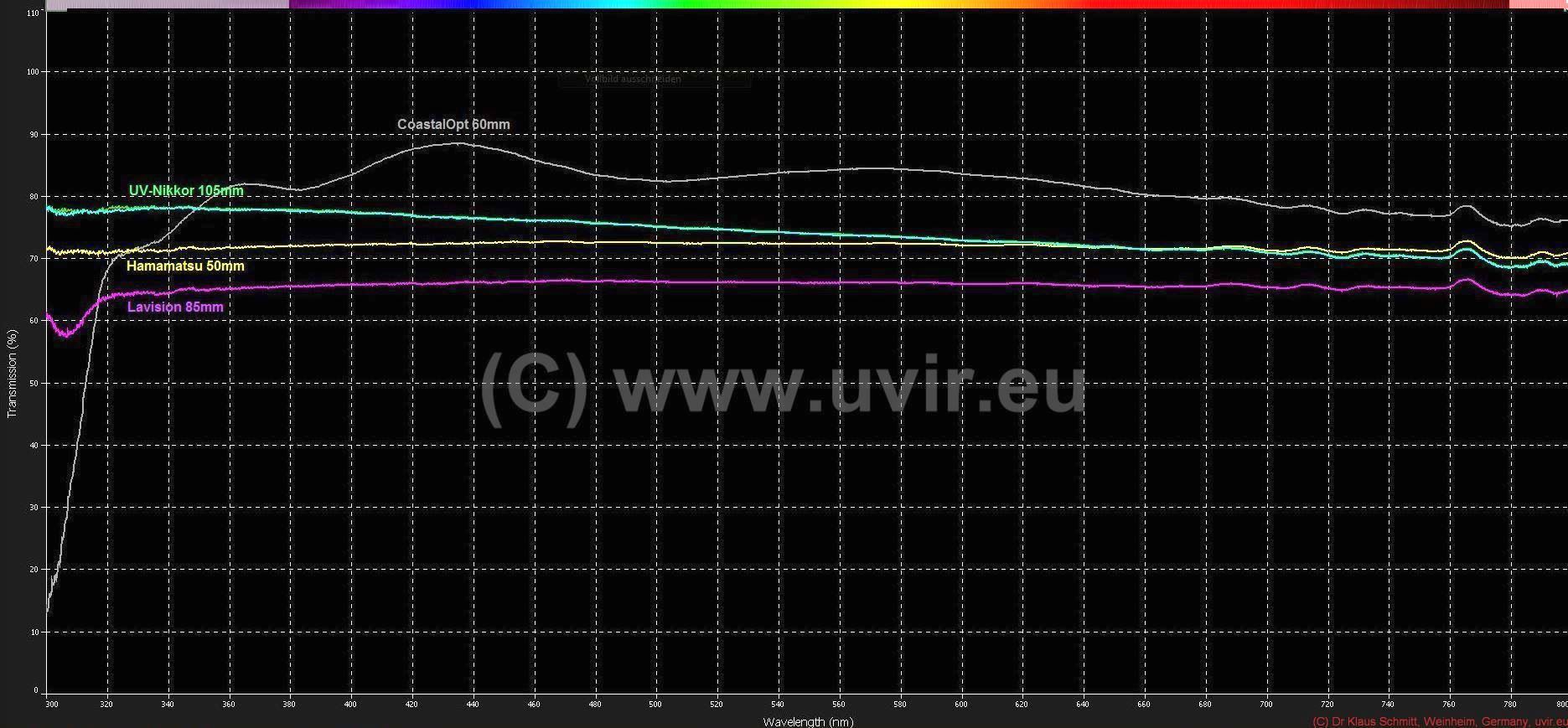
My own measurements back then were these (amongst some other lenses):


[validity: approx 310 - 750nm]

and my newer current measurements (reaching deeper into UV) are these:

[validity: approx 300 - 750nm]

The differences in transmission of both my measurements are rather small. It is beyond my understanding how these new and quite different measurements (about 20% less) happened; I am just wondering why such an excellent lens is not represented well enough....

I have written about this lens before HERE.

Stay tuned, more will follow on that fascinating subject...

More info on this very interesting field may be found on my site http://www.pbase.com/kds315/uv_photos


Saturday, October 24, 2020

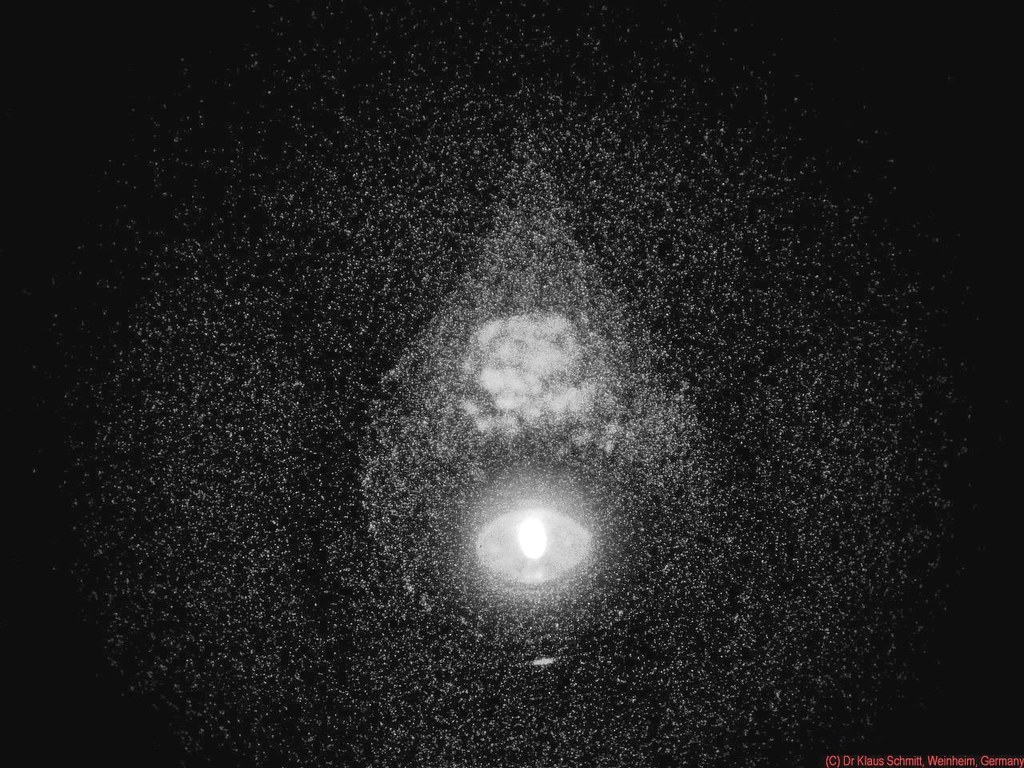
Reflected UV photography + videography using a MCP Amplified Camera System III

Today more about an experiment I have done, using a light amplification device in front of a normal visible light camera for recording reflected UV footage. This device uses a MCP (multi channel plate) with UV sensitive photocathode (approx. 190nm - 650nm), amplifies light by approx. 20-50.000 and shows the resulting image on a green phosphor screen. 

Using a suitable optical system, I relayed this image to my normal, visible light camera. UV filter used was a fully IR blocked (OD6) UV transmission filter (peak at 250nm). Target was a tea candle.

Using a f3.5/50mm quartz fluorite lens and an extension tube to get higher magnification.

1) Visible / IR light recorded w/o filter on full spectrum camera:


2) UV light recorded with a (fully blocked to 1100nm) 311nm filter on full spectrum camera: 

It gets rather obvious that the 311nm line is - as expected - quite intense on the visible left and right outsides of the candle, where the UV emission of the OH (hydroxyl) radicals happens.

3) UV light recorded with a (fully blocked to 1100nm) Baader-U (320-395nm) filter on full spectrum camera:

The reaction of the CH (hydrocarbon) radicals however emit UV around 385-395nm mostly on the top, which can be shown using the Baader-U UV transmitting filter (320-395nm).

I have written about this system doing still UV photography HERE.

I have done similar with a different amplified camera system before which did not allow to have an external camera attached, with just a TV output HERE

Stay tuned, more will follow on that fascinating subject...

More info on this very interesting field may be found on my site http://www.pbase.com/kds315/uv_photos
Friday, October 23, 2020

Reflected UV photography + videography using a MCP Amplified Camera System II

Today about an experiment I have done, using a light amplification device in front of a normal visible light camera for recording reflected UV footage. This device uses a MCP (multi channel plate) with UV sensitive photocathode (approx. 190nm - 650nm), amplifies light by approx. 20-50.000 and shows the resulting image on a green phosphor screen. 

Using a suitable optical system, I relayed this image to my normal, visible light camera. UV filter used was a fully IR blocked (OD6) UV transmission filter (peak at 250nm). Taget was a tea candle.

 Using a f3.5/50mm quartz fluorite lens:


This system shows quite some usefulness, especially under low light conditions, or when it is about recording deeper in UV where a normal full spectrum camera is not sensitive anymore.

I have written about this system doing still UV photography HERE.

I have done similar with a different amplified camera system before which did not allow to have an external camera attached, with just a TV output HERE

Stay tuned, more will follow on that fascinating subject...

More info on this very interesting field may be found on my site http://www.pbase.com/kds315/uv_photos
Sunday, October 4, 2020

Full Moon over Weinheim Castle: multispectral photography II

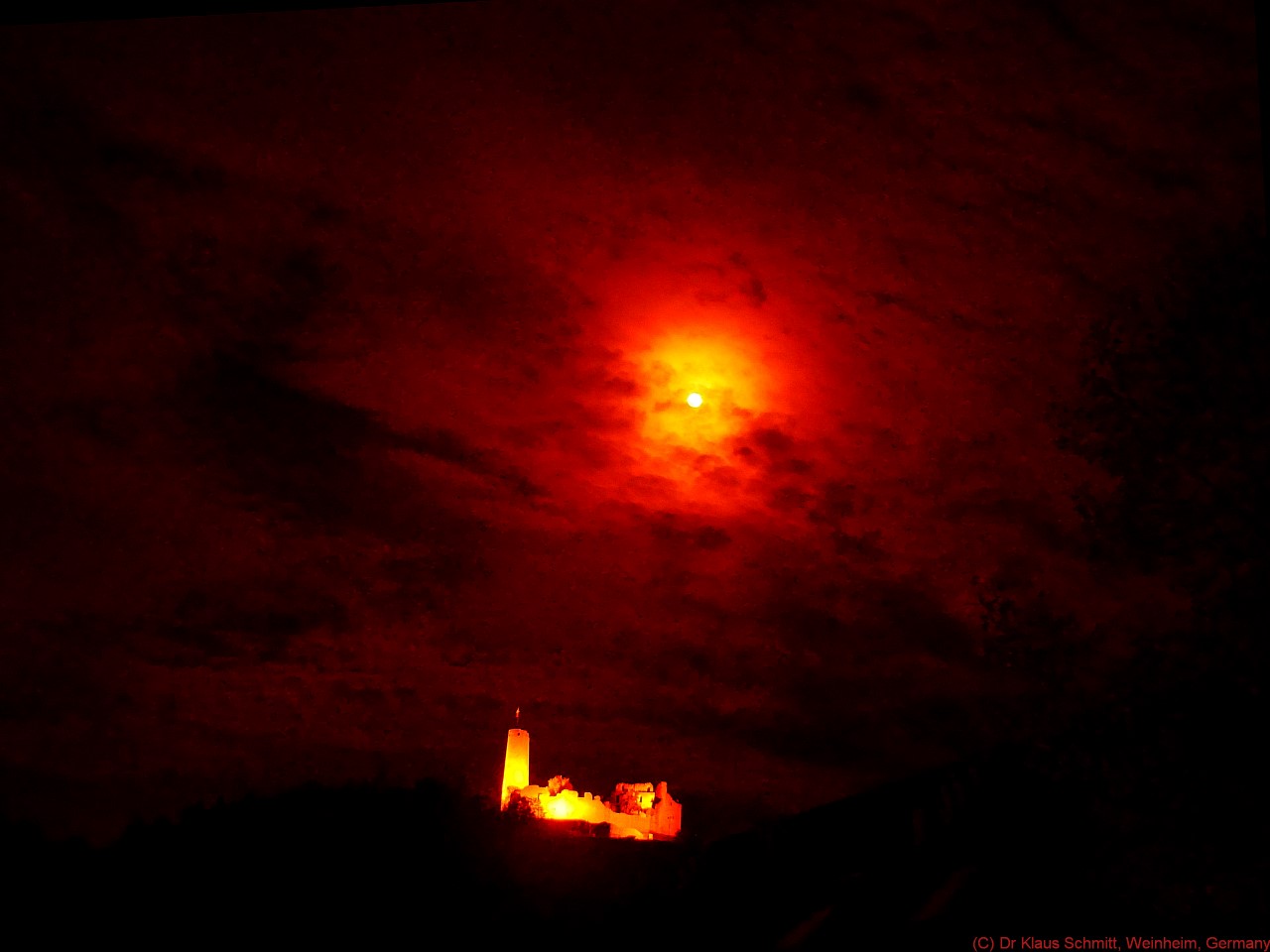
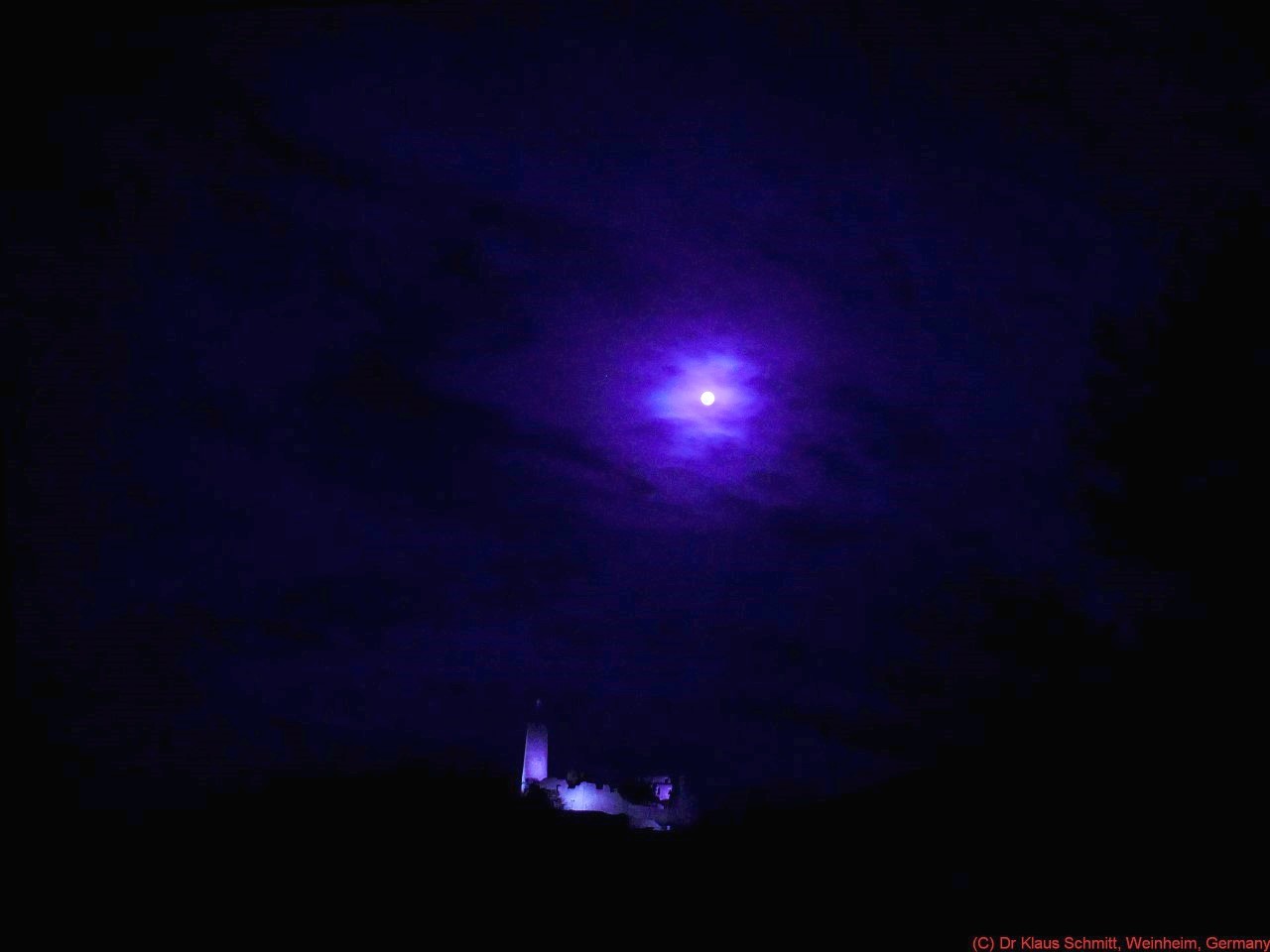
Here today shots of the full Harvest Moon over Windeck castle here in my hometown Weinheim Germany. Shots were done in full spectrum mode (i.e. mainly infrared) and in reflected ultraviolet using Baader-U filter. Lens used was my UV-Nikkor 105mm quartz fluorite lens. Light source was moonlight resp. the castle lighting system. All shots were done at approx. f8. No later whitebalancing was done, pictures straight out of the camera.

[click on image to see a larger one]

IR image: 


UV image: 


Full moon is always special and first I was sad to see all the clouds, but then it turned out quite nicely and all that drama got nicely visible.

I have more moon shots HERE.


Stay tuned, more will follow on that fascinating subject...

Tuesday, April 28, 2020

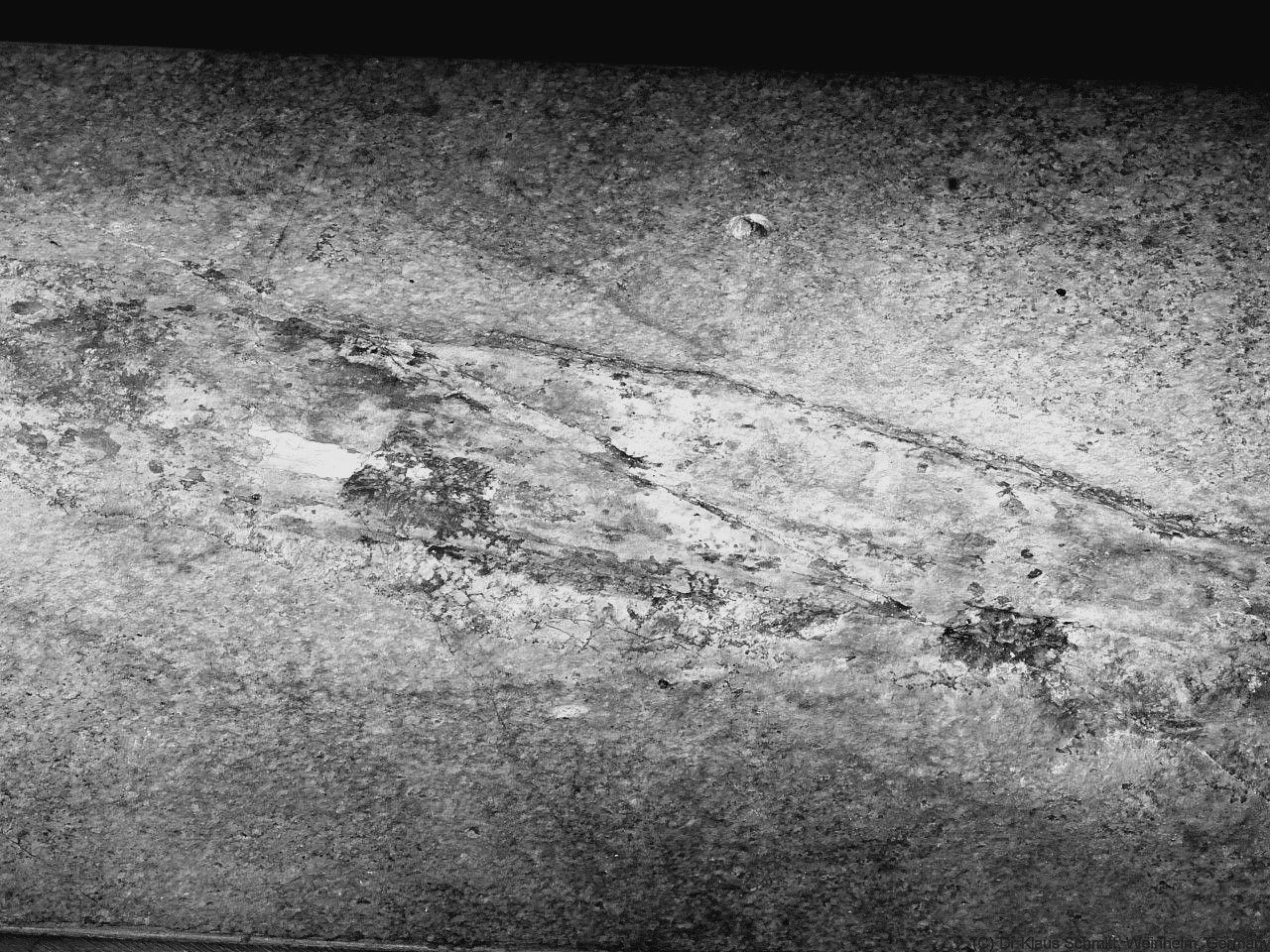
Enhancing the visibility of fossil tissue structures using UV reflected and UV stimulated visible flourescence photography II

A while ago I had the honor to work with Neal Larson on a paper on fossilized cephalopods found in Hajoula, Lebanon. Today it is again about enhancing the visibility of fossil bone and tissue structures using reflected UV and UV stimulated visible fluorescence photography, but as it is some years later, using more modern equipment now. Lens used was my UV-Nikkor 105mm quartz fluorite lens, light sources were a modified high power Xenon flash, as well as a NICHIA 365nm LED. Filters used were the Baader-U filter as well as a 420nm Long Pass filter. Target was a fossilized squid from the Upper Cretaceous period, approx. 90 million years old.

[click on image to see a larger one]

Visible light image using UV/IR Cut filter:


Reflected UV image using Baader-U filter (310-390nm) with 365nm UV LED: 


Reflected UV image using Baader-U filter (310-390nm) with 365nm UV LED (in bw):


UV stimulated visible Fluorescence image with 420nm Longpass filter: 


UV stimulated visible Fluorescence image, 2nd version, with UV-IR Cut filter:


It gets nicely visible that using UV light photography brings out much more details than normal visible light photography and by doing so, enhances the visibility quite a bit.

I have written more about fossils HERE

Stay tuned, more will follow on that fascinating subject...

More info on this very interesting field may be found on my site http://www.pbase.com/kds315/uv_photos
Monday, December 9, 2019

Reflected UV photography using a MCP Amplified Camera System

Today about an experiment I have done, using a light amplification device in front of a normal visible light camera for recording reflected UV images. This device uses a MCP (multi channel plate) with UV sensitive photocathode (approx. 190nm - 650nm), amplifies the light by approx. 20-50.000 and shows that image then on a green phosphor screen. Using a suitable optical system, I relayed this image to my normal, visible light camera. UV filter used was a fully IR blocked (OD6) UV transmission filter (peak 350nm).

[click on image gets you a larger image]

Some of the UV images which I recorded just for a few tests...

Using a 50mm quartz fluorite lens:


Using a 300mm catadioptric lens:


Rudbeckia close-up showing its prominent UV pattern:


Sedum close-up:


Tea candle inside showing how sensitive this system is:


It took a bit of experimenting to get this right, but now I have a range of useful lenses for this, working from far away up to close-up.

This system shows quite some usefulness, especially under low light conditions, or when it is about recording deeper in UV where a normal full spectrum camera is not sensitive anymore.

I have done similar with a different amplified camera system before which did not allow to have an external camera attached, with just a TV output HERE

Stay tuned, more will follow on that fascinating subject...

More info on this very interesting field may be found on my site http://www.pbase.com/kds315/uv_photos

Saturday, November 17, 2018

ZUFAR 4/350mm and its prototype quartz fluorite catadioptric lens III

Today again about that Quartz Fluorite catadioptric ZUFAR-2CA f4/350mm anastigmat lens which had been developed for the Soviet MARS 2 to 5 missions to planet Mars. I'm rather excited to report that I  found and bought the grandfather of this ZUFAR-2 space lens from planet Mars exploration, a prototype lens with a very different internal name Ob-512, but company data (LOMO) I was able to locate confirmed my suspicion, it is indeed one or even "the" factory prototype of it. 


Top Ob-512 prototype, Bottom: ZUFAR-2CAM lens

The prototype OB-512 also was made of synthetic Quartz and Calcium Fluorite (CaF2) crystals to be able to work in UV and also visible light, designed for 200-700nm without focus shift, so actually is an apochromatic (APO) f4.7/350mm catadioptric lens as per its lens passport. Lens transmission is >57%. Viewing angle is approx. 3 degrees (later 4 degrees). Image diameter 24.6mm. 51mm back focal length. Its weight is 2.2 kilograms, which was later changed in the final ZUFAR-2 CA lens to 1.8 kg using special alloys, as every gram counted then for space missions.

Those ZUFAR lenses have been designed in the 70s under the lead of Institute head and chief designer Prof. Volosov together with N. Khmelnikova, I. Driatskaya, K. Mikhailova at GOI, the russian state lens design institute in St. Petersburg / Leningrad. Details were published by Prof Volosov in 1974.

(Made for my use by my dear friend Marco Cavina)


Optical data of the Ob-512 prototxpe as per Volossov et al.

This lens was made to be used on a very elaborate camera system which could take multispectral images on film, develop that and scan it and send the scanned data back to Earth in selectable resolutions (up to 2000x2000 pix, which took over one hour to transmit).


NASA also wrote about this lens (quote):

Zufar objectives were used on the television cameras carried by the Mars-2, 3, 4, and 5 spacecraft. The compact catadioptric quartz-fluorite anastigmat was developed as a result of research on the possible optical arrangements of lens and mirror-lens systems meeting the rigid criteria for spaceborne operation. The system is characterized by precise correction of all aberrations over a broad spectral range, about 300-700 nm. The spectral transmission is about 60% over this range. The Zufar-2CA version of the objective has a geometric aperture ratio of 1:4 and a focal length of 350 mm. The image format is 24 x 24 mm. The housing is 164 mm long and 130 mm in diameter, and the mass of the objective is 1500 g.

Here one of the published images from Mars taken on Mars-5 mission:


The lens will be given a suitable adaption to fit my digital multispectral cameras and I will certainly take multispectral photos with it as soon as possible and report about here later on.

Data of this lens, as well as its normal (= non catadioptric) quartz fluorite sister lenses with shorter focal length may be found on my macrolenses database site HERE

There is more about this lens HERE.


Stay tuned, more will follow on that fascinating subject...
 

Monday, February 12, 2018

ZUFAR 4/350mm quartz fluorite catadioptric lens II

Today more about that Quartz Fluorite catadioptric ZUFAR-2CA f4/350mm anastigmat lens which took me over 10 years to find. It had been developed for the Soviet MARS 2 to 5 missions to planet Mars, was made of synthetic Quartz and Calcium Fluorite (CaF2) crystals to be able to work in UV and also visible light, thus allowing to take images 300-700nm without focus shift.


So today a few first test shots using this very special lens, due to lack of the mount which need to be designed and made, just some freelensing shots. "Freelensing" means holding the lens in front of the camera without any mount in between the two (!).

Here some visible light shots, showing how this lens performs. This first one is about 150 meters away:


and the following one about 15 meters:


The lack of chromatic aberration gets easily visible on that golden ball as well as on these shiny stainless steel exhaust pipes.

Now on to reflected UV images (300-400nm), here right out of camera:


and here with whitebalancing applied:


Being able to handheld a f4 350mm lens and shooting in reflected UV (300-400nm) is rather astonishing, a proof how much UV this lens is able to transmit. More about this lens will certainly follow here...

I have written about this lens before HERE


Stay tuned, more will follow on that fascinating subject...
 

Monday, February 5, 2018

ZUFAR 4/350mm quartz fluorite catadioptric lens

Today about a Quartz Fluorite catadioptric ZUFAR-2CA f4/350mm anastigmat lens which took me over 10 years to locate. It had been developed for the Soviet MARS 2 to 5 missions to planet Mars.


It was made of synthetic Quartz and Calcium Fluorite (CaF2) crystals to be able to work in UV and also visible light, 300-700nm without focus shift, so actually is an apochromatic (APO) f4/350mm catadioptric lens. The whole useful wavelength range is 230-700nm. Lens transmission is 60-65% and the lens resolution is 57 lpm in its center, 47 lpm in corners. Viewing angle is approx. 6 degrees. There has also been made a ZUFAR-1 lens with f4 / 500mm and 4 degrees viewing angle.

ZUFAR lenses have been designed in the 70s under the lead of Institute head and chief designer Prof. Volosov together with N. Khmelnikova, I. Driatskaya, K. Mikhailova at GOI, the russian state lens design institute in St. Petersburg / Leningrad. Details were published by Prof Volosov in 1974.

(Made for my use by my dear friend Marco Cavina)

Data of this lens, as well as its normal (= non catadioptric) quartz fluorite sister lenses
with shorter focal lengths may be found on my macrolenses database site HERE


This lens was made to be used on a very elaborate camera system which could take multispectral images on film, develop that and scan it and send the scanned data back to Earth in selectable resolutions (up to 2000x2000 pix, which took over one hour to transmit).


NASA also wrote about this lens (quote):

Zufar objectives were used on the television cameras carried by the Mars-2, 3, 4, and 5 spacecraft. The compact catadioptric quartz-fluorite anastigmat was developed as a result of research on the possible optical arrangements of lens and mirror-lens systems meeting the rigid criteria for spaceborne operation. The system is characterized by precise correction of all aberrations over a broad spectral range, about 300-700 nm. The spectral transmission is about 60% over this range. The Zufar-2CA version of the objective has a geometric aperture ratio of 1:4 and a focal length of 350 mm. The image format is 24 x 24 mm. The housing is 164 mm long and 130 mm in diameter, and the mass of the objective is 1500 g.

Here one of the published images from Mars taken on Mars-5 mission:


The lens will be given a suitable adaption to fit my digital multispectral cameras and I will certainly take multispectral photos with it as soon as possible and report about here later on.
There is more about this lens HERE including some first images taken with it.


Stay tuned, more will follow on that fascinating subject...
 

Friday, March 4, 2016

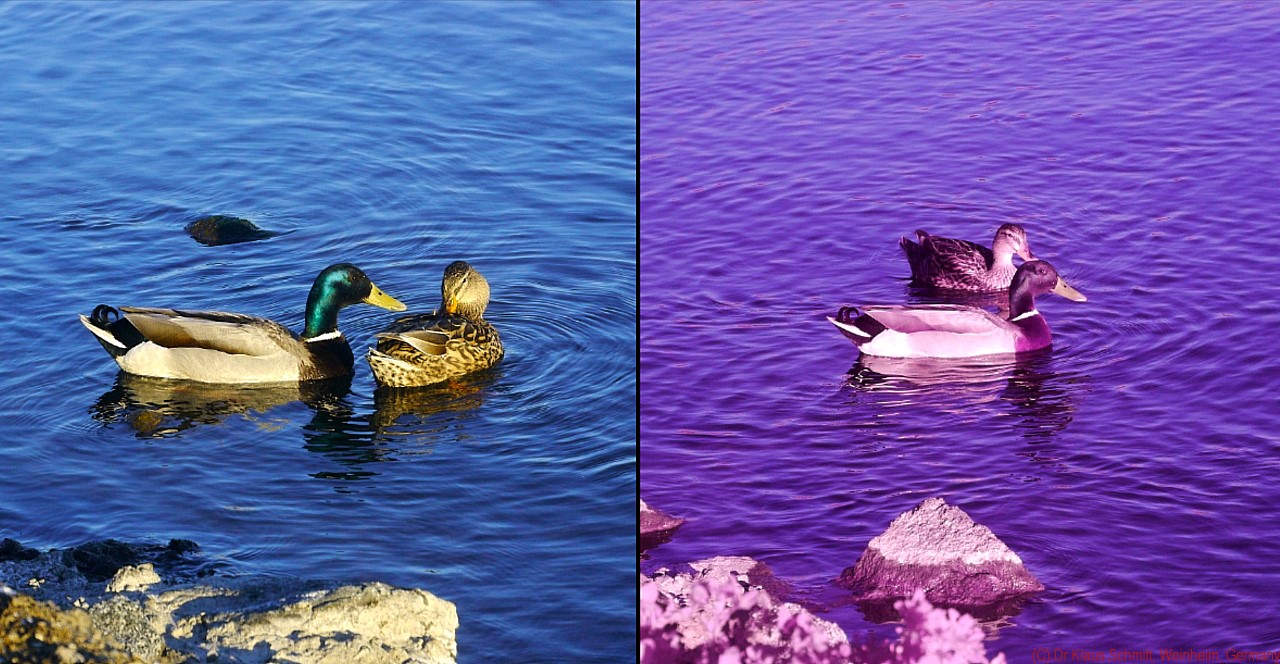
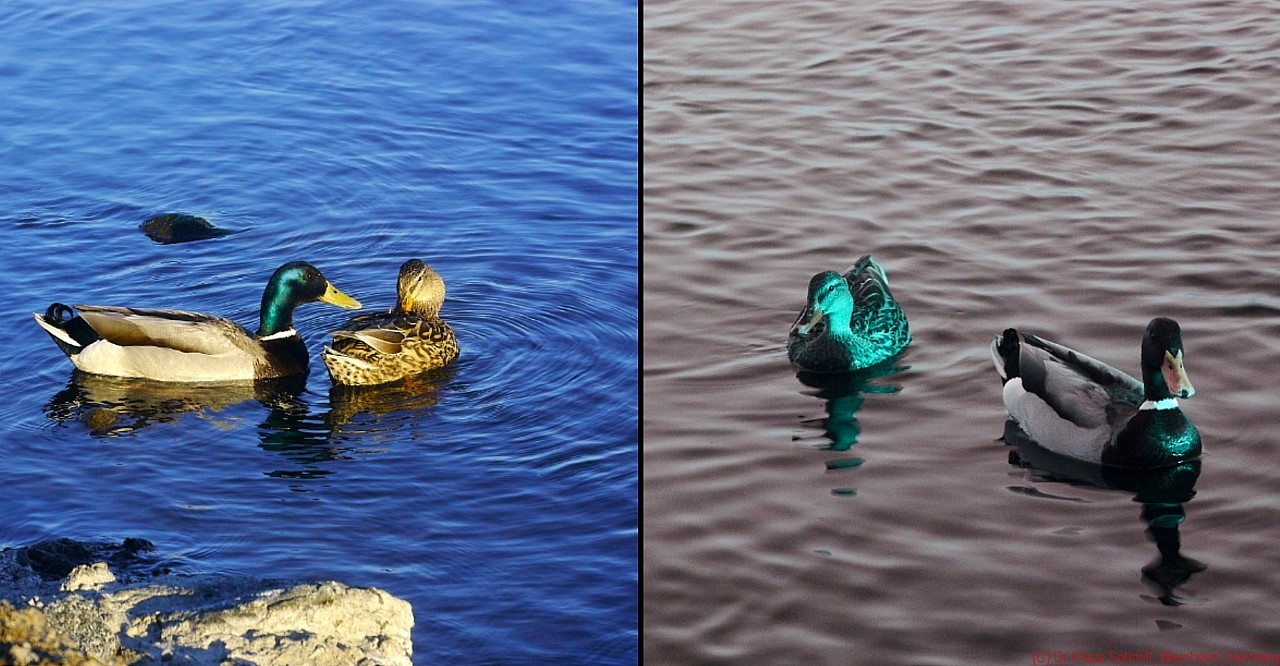
Ducks in visible, infrared and simulated bee vision photography

Today about some duck shots I took on my trip to California, shot at Shoreline Park in Mountain Vew, CA in visible light, infrared as well as in simulated bee vision using my XBV6 filter. Lens was my CERCO 94mm quartz fluorite lens. Light source was sun. All shots were done at f8.

[click on image to see a larger one]

Diptych: Human vision and infrared (left to right):


Diptych: Human vision and simulated bee vision (left to right):


These attractive birds shows some prominent patterns, also visible to bees, and all this gets nicely visible.

Stay tuned, more will follow on that fascinating subject...

Bermuda Buttercup - Oxalis pes-caprae in reflected ultraviolet (UV) and photography and simulated bee vision

Today about a very common weed flower Bermuda Buttercup - Oxalis pes-caprae I shot shot at Mountain Vew, CA in reflected ultraviolet photography using my "work horse" UV filter, the Baader-U filter as well as in simulated bee vision using my XBV6 filter. Lens was my CERCO 94mm quartz fluorite lens. Light source was sun. All shots were done at f8.

[click on image to see a larger one]

Bermuda Buttercup - Oxalis pes-caprae in Human vision, reflected UV, simulated bee vision (left to right):


This attractive yellow weed flower shows quite a tricky UV pattern, as shown in the following enhanced reflected UV image, a UV bright ring set on a negative space around the dark in UV petals, hence massively increasing contrast. Plus you also see the pyramidal cells in this enhanced resolution image (UV gives approx. 1.6x higher resolution) , which allows pollinators a much better grip while being at the flower.
 

All this invisible to us humans, but visible to bees and butterflies, and all this gets nicely visible here.

Stay tuned, more will follow on that fascinating subject...

Thursday, March 3, 2016

Californian flowers in visible, reflected UV and simulated bee vision photography

Today about some flower shots I took on my trip to California, shot at Shoreline Park in Mountain Vew, CA in reflected ultraviolet photography using my "work horse" UV filter, the Baader-U filter as well as in simulated bee vision using my XBV6 filter. Lens was my CERCO 94mm quartz fluorite lens. Light source was sun. All shots were done at f8.

[click on image to see a larger one]

Triptych: Hibiscus sp in Human vision, reflected UV, simulated bee vision (left to right):


Triptych: Mexican bush sage (Salvia leucantha) in Human vision, reflected UV, simulated bee vision (left to right):


Triptych: Brassica sp in Human vision, reflected UV, simulated bee vision (left to right):


These attractive flowers shows their prominent UV patterns, invisible to us humans, but very visible to bees and butterflies and also hummingbirds which were feeding on them, and all this gets nicely visible.

Stay tuned, more will follow on that fascinating subject...

Friday, February 26, 2016

San Francisco Science Museum - Color of Life Exhibit with Rudbeckia fulgida in reflected ultraviolet (UV) photography II

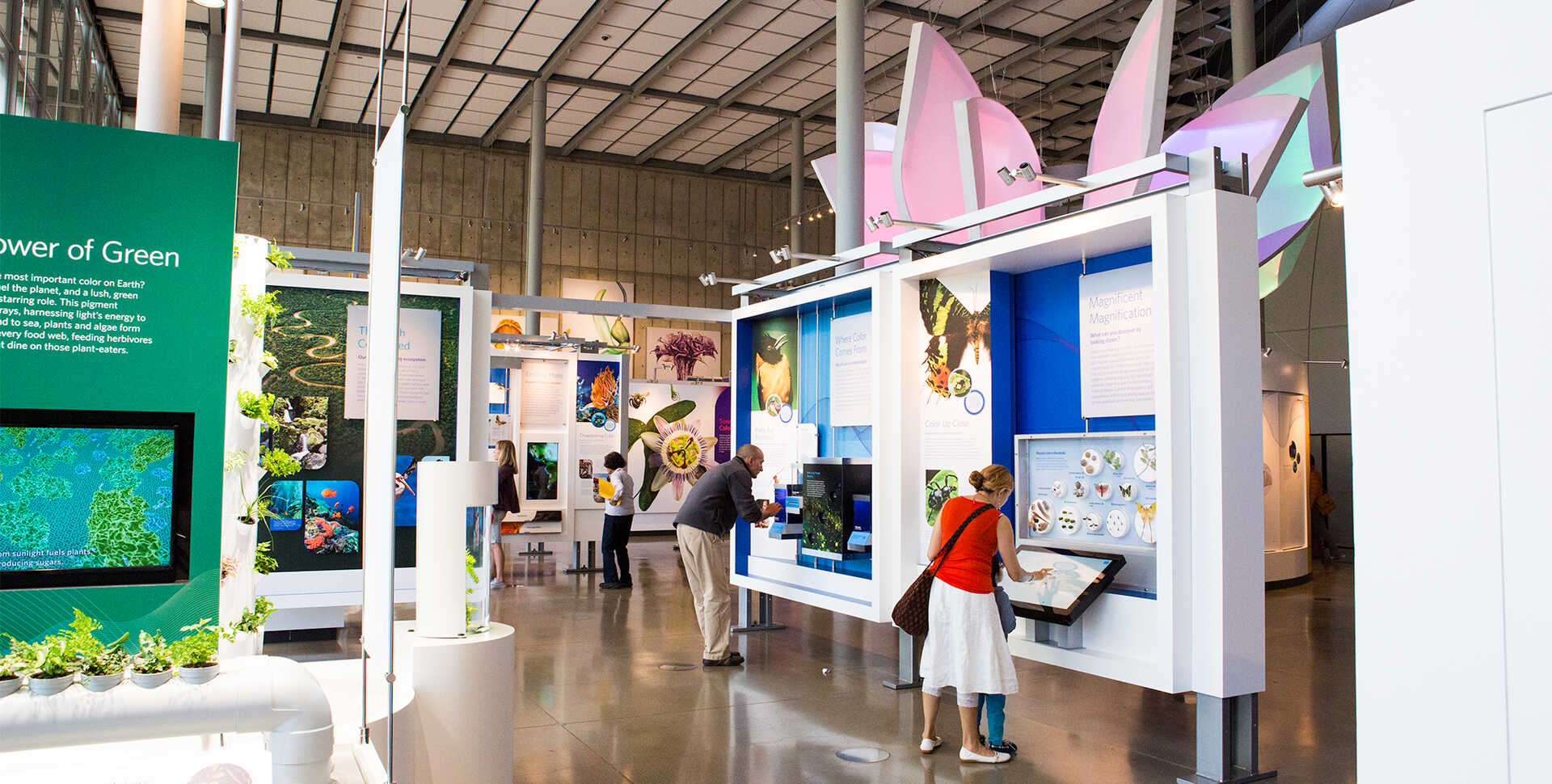
Today more about that soectacular exhibit at the San Francisco Science Museum which has opened in June 2015 and which has some of my work in it. They included my Rudbeckia fulgida var. deamii outside shots in visible and ultraviolet light.

San Francisco - California Academy of Science exhibit "Color if Life", a great honor to be part of it with my works!

Posted by Klaus Schmitt on Friday, February 26, 2016

The Science Museum has chosen my work, as UV photography reveals the very prominent "bullseye" UV patterns, visible to bees and butterflies, but invisible to us humans.

If you find time to, pay it a visit, certainly worth going, especially their new Thursday evenings (6-10pm) Nighlife events!!

I have written about this previously HERE
 
Stay tuned, more will follow on that fascinating subject...

Sunday, December 20, 2015

Amber Tree autumn leaf in reflected ultraviolet photography

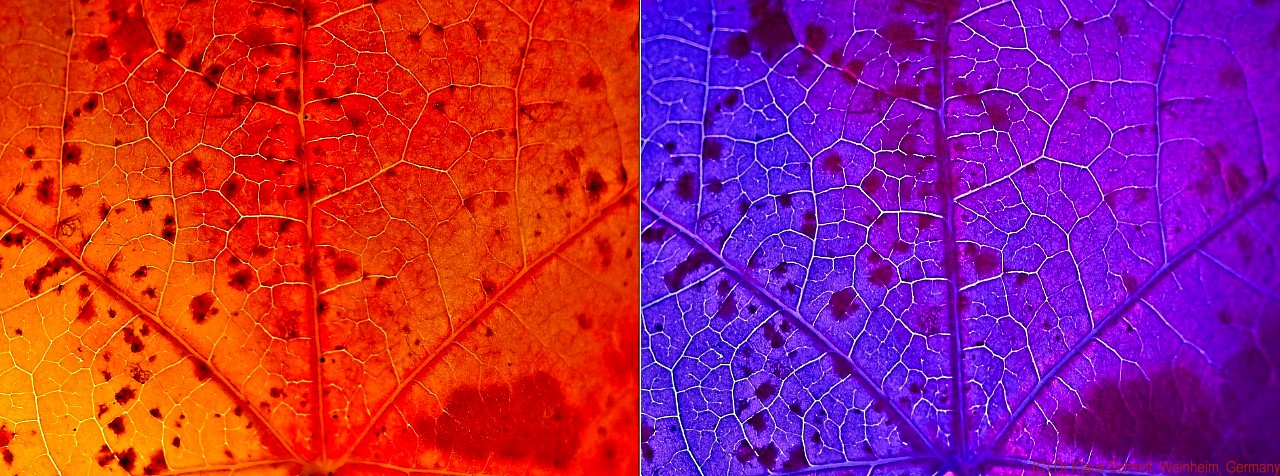
Today about a fallen to the ground colorful autumn leaf of an American Sweetgum - Liquidambar styraciflua tree in reflected ultraviolet photography using my "work horse" UV filter, the Baader-U. Lens was my UV-Nikkor 105mm quartz flourite lens. Light source was sunlight. All shots were done at f8.

[click on image to see a larger one]

 This how it looks like usually (different leaf)

Diptych: Human vison (left side), reflected UV (right side):


This amber tree leaf shows fine leaf structures in VIS and reflected UV, but in UV larger dark patches get visible, where this leaf shows damage and decay, and all this gets nicely visible.


Stay tuned, more will follow on that fascinating subject...

Friday, November 20, 2015

Orange coneflower - Rudbeckia fulgida in reflected ultraviolet photography, simulated butterfly and bee vision XIII

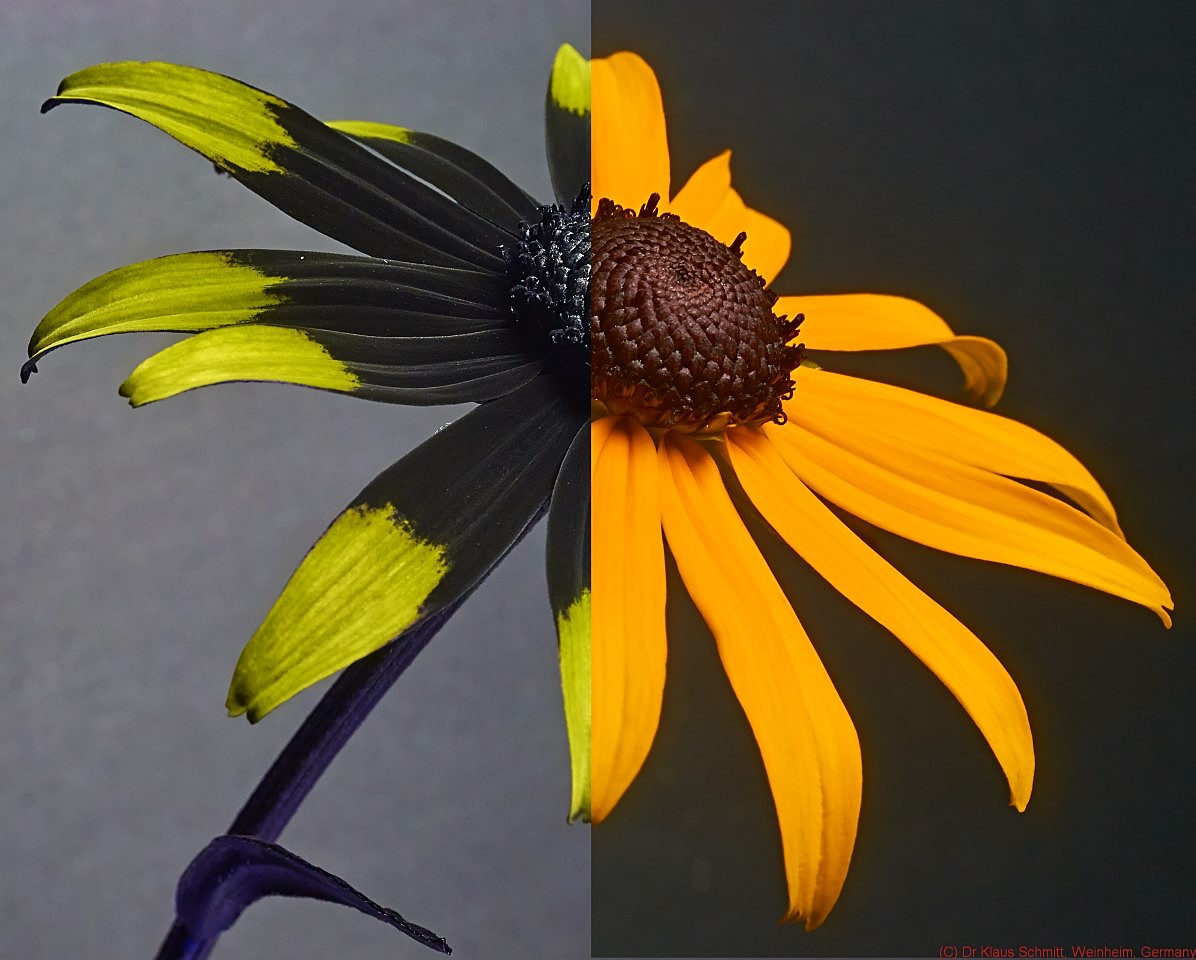
Today about composite shot of a decorative summer flower Orange coneflower - Rudbeckia fulgida in reflected ultraviolet photography using my "work horse" UV filter, the Baader-U filter. Lens was my CERCO 94mm quartz flourite lens. Light source was a modified for high UV output Xenon flash. All shots were done at f8.

[click on image to see a larger one]

Composite image: Human vison (right side), reflected UV (left side):


This attractive flower shows its very prominent UV bullseye pattern, its petals have an UV dark bottom and very UV bright tips (around 365nm), invisible to us humans, but very visible to bees and butterflies, and all this gets nicely visible.

I have previously written about this flower HERE

Stay tuned, more will follow on that fascinating subject...

Saturday, August 1, 2015

San Francisco Science Museum - Color of Life Exhibit with Rudbeckia fulgida in reflected ultraviolet (UV) photography

Today about a new exhibit at the San Francisco Science Museum - Color of Life which has opened in June this year and which has some of my work in it. They included my Rudbeckia fulgida var. deamii outside shots in visible and ultraviolet light.

A glipse of the exhibit, located in several areas totalling an impressive 8.000sqft:
(C) California Science Museum

The Science Museum has chosen my work, as the petals of this R. fulgida exhibit a very prominent "bullseye" UV pattern, visible to bees and butterflies, but invisible to us humans.

Diptych of R. fulgida var deamii (left to right): Human vison, reflected UV:


This flower is reflecting UV strongly around 365nm at its petal tips (shown in yellow) with otherwise dark parts and hence creates a very distinct UV "bullseye pattern" nectar guide for its pollinators and all this gets nicely visible here.

If you find time to, pay it a visit, certainly worth going!!

I have written about this flower previously HERE
 
Stay tuned, more will follow on that fascinating subject...

Sunday, November 16, 2014

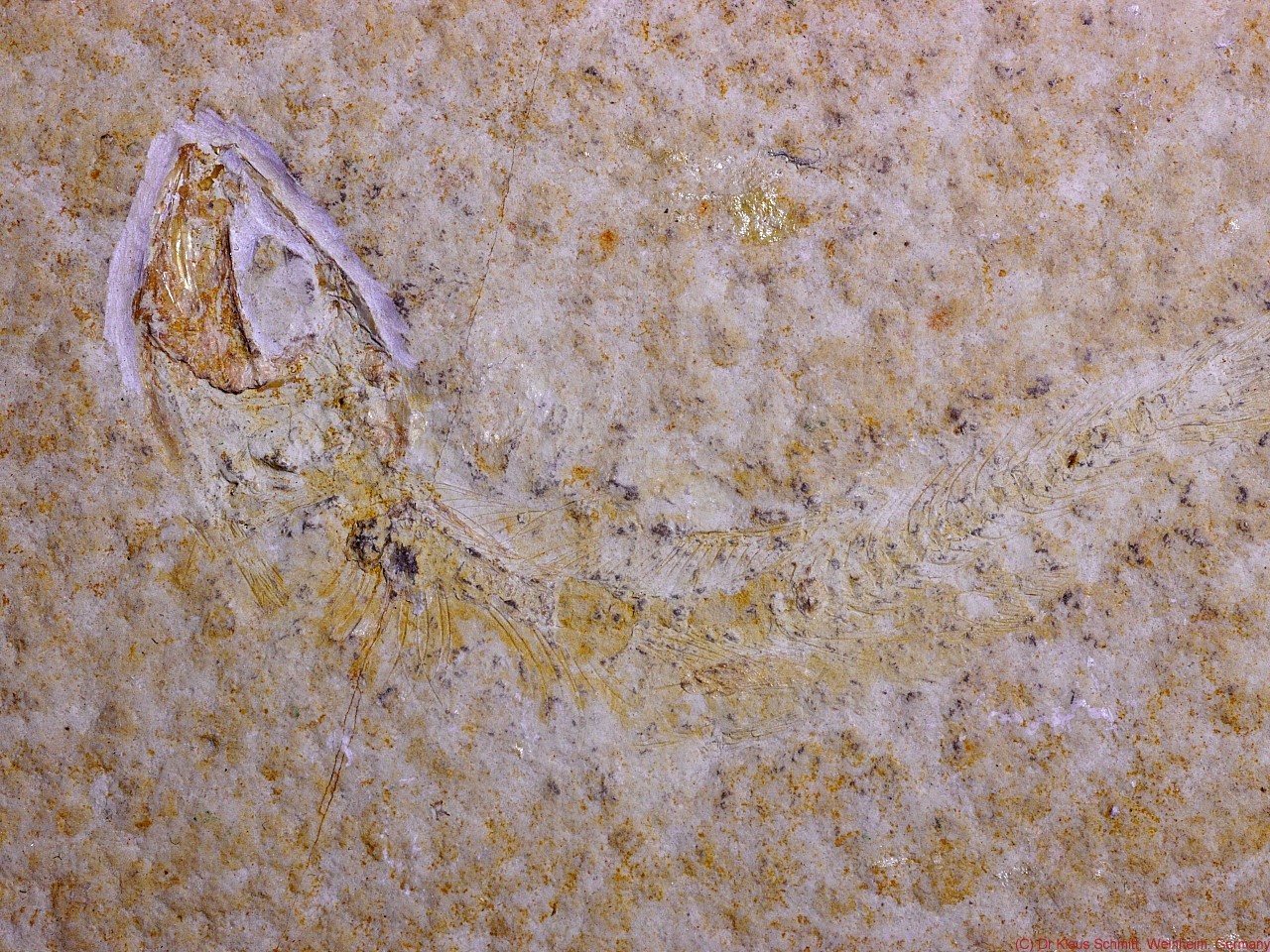
Enhancing the visibility of fossil tissue structures using UV reflected and UV stimulated visible flourescence photography

A while ago I had the honor to work with Neal Larson on a paper on fossilized cephalopods found in Hajoula, Lebanon. Today it is again about enhancing the visibility of fossil bone and tissue structures using UV reflected and UV stimulated visible fluorescence photography, but as it is some years later, using more modern equipment now. I will also use my remapping technology consisting of a visible image, a reflected UV image and an UV stimulated visible fluorescence image and combine them into multispectral images.

Lens used was my CERCO f4.1 / 94mm quartz fluorite lens, light sources were a modified high power Xenon flash, as well as a NICHIA 365nm Power LED. Target was a fossilized fish from Solnhofen, Germany, approx. 100 Mio years old.

[click on image to see a larger one]

Visible light image using UV/IR Cut filter:


Reflected UV image using Baader-U filter (310-390nm): 


UV stimulated visible fluorescence (FL) using Nichia 365nm UV LED:


Combined VIS - FL multispectral image: 


Combined VIS - UV multispectral image::


Combined FL - UV multispectral image::


It gets nicely visible that using UV light photography brings out much more details than normal visible light photography and by doing so, enhances the visibility of preserved bone and tissue structures quite a bit. Combining those different images into falso color multispectral images  enhances the structures even more.

Stay tuned, more will follow on that fascinating subject...

More info on this very interesting field may be found on my site http://www.pbase.com/kds315/uv_photos