Showing posts with label spring flowers. Show all posts

Thursday, March 7, 2013

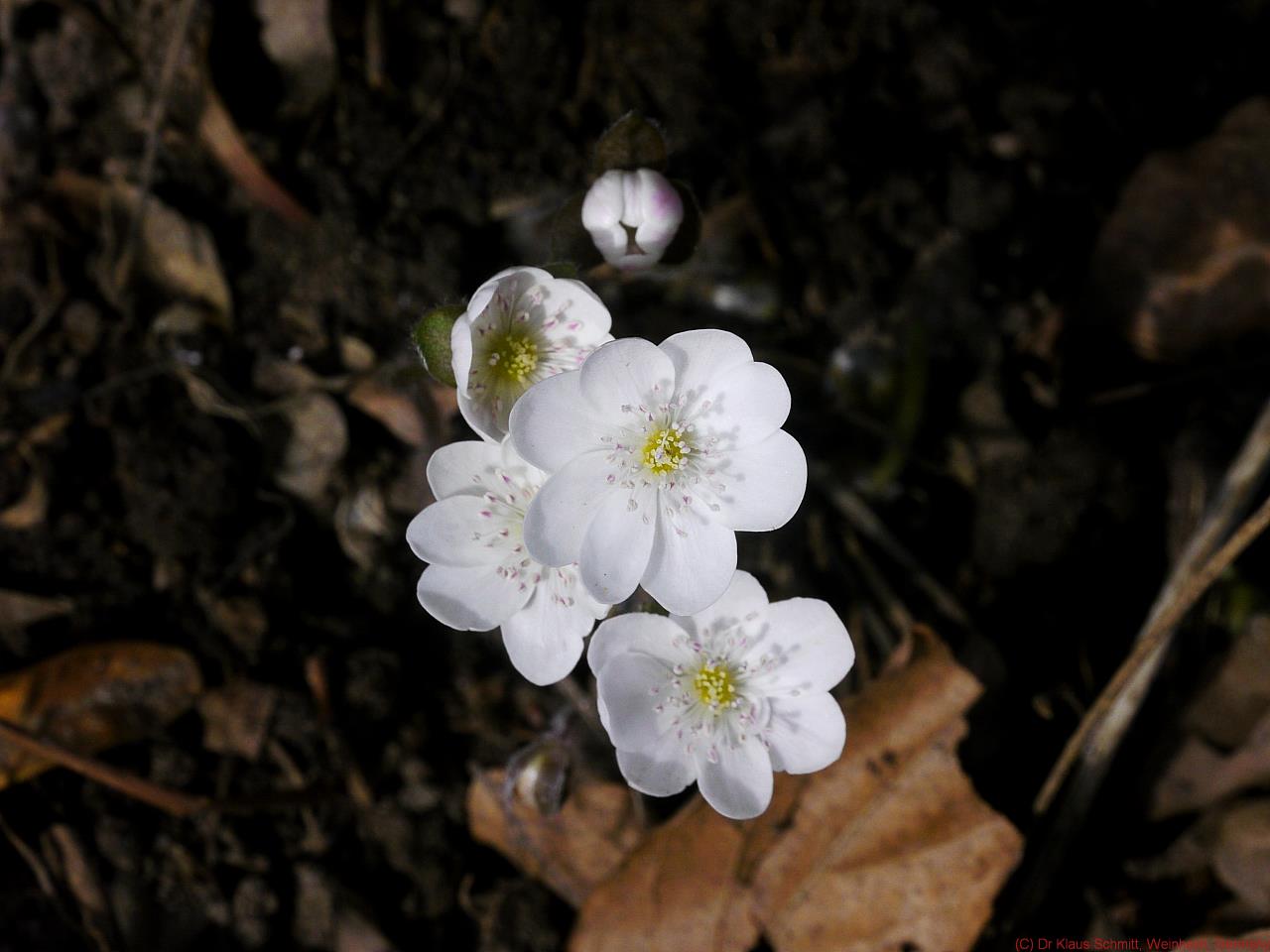
Anemone narcissiflora - Cerco 94mm Quartz Fluorite lens for reflected ultraviolet photography

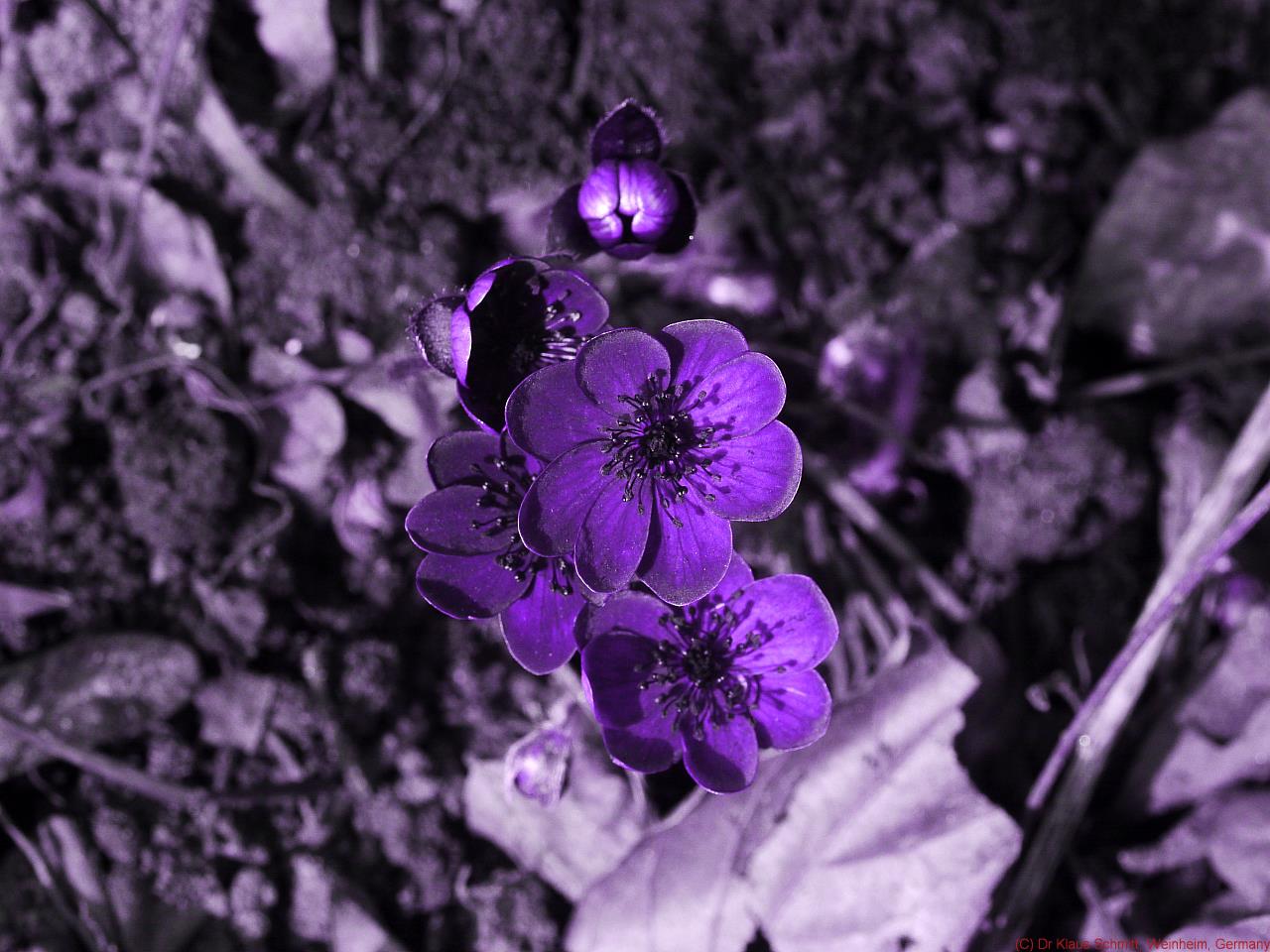
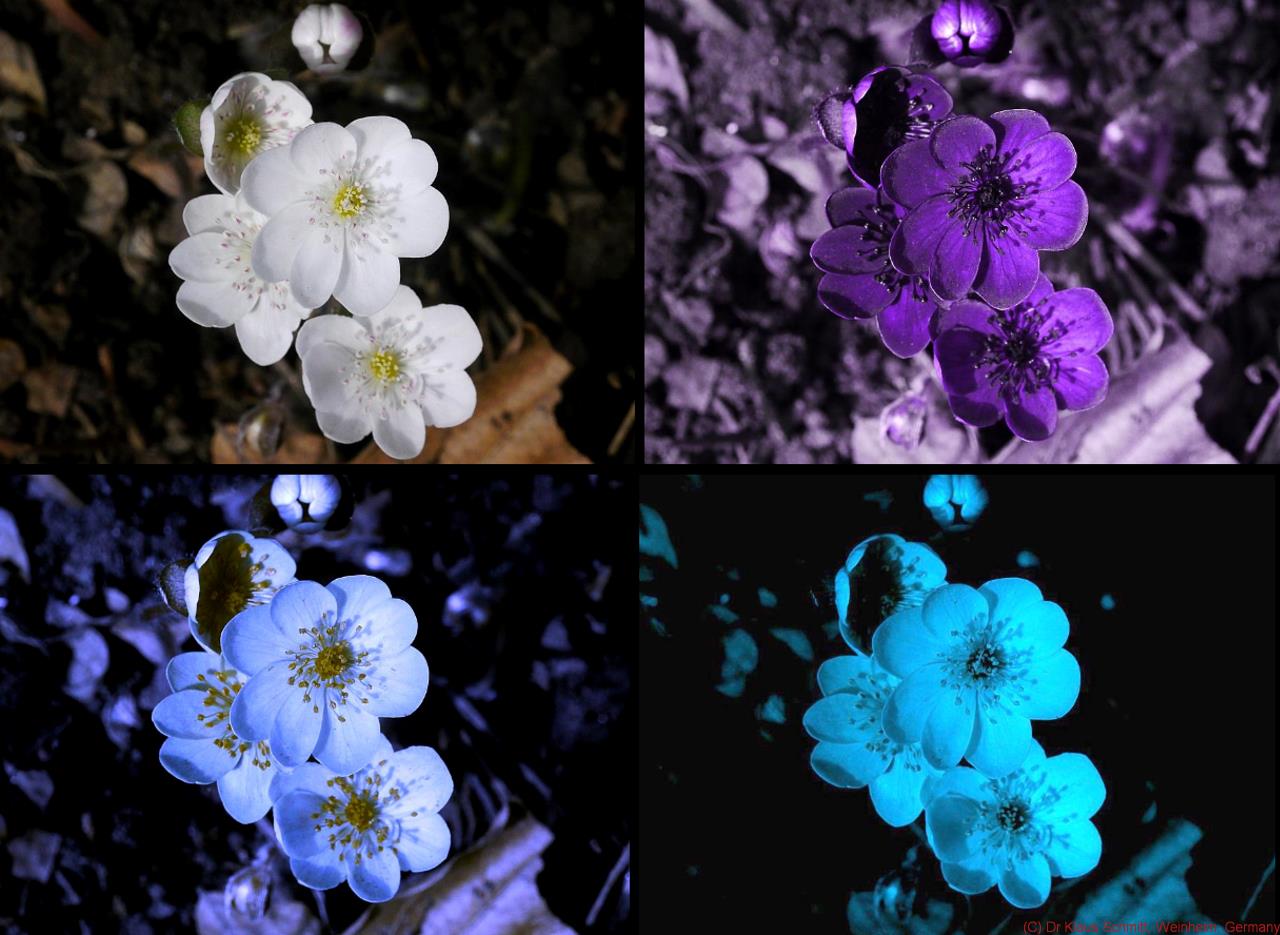
Today about some early spring flowers, here Anemone narcissiflora (most likely, but looks like a white variant of Liverwort "Anemone hepatica") in reflected ultraviolet photography using my "work horse" UV filter, the Baader-U filter as well as my XBV filters for simulating butterfly and bee vision. Lens was a CERCO 94mm quartz fluorite lens. Light source was sunlight. All shots were done at about f5.6. So, on to the results now...

[click on image to see a larger one]

Visible light image:
 

UV image using Baader-U filter (approx. 320-395nm, effective peak approx. 375nm):
 

Simulated butterfly vision (UV - VIS) using XBV3 filter:
 

Simulated bee vision (UV - VIS) using XBV6 filter:
 

Quadtryptich of the above:


This Anemone has only a very slight UV pattern, its center is UV dark and this gets nicely visible.


Stay tuned, more will follow on that fascinating subject...

More info on this very interesting field may be found on my site http://www.pbase.com/kds315/uv_photos

Wednesday, March 6, 2013

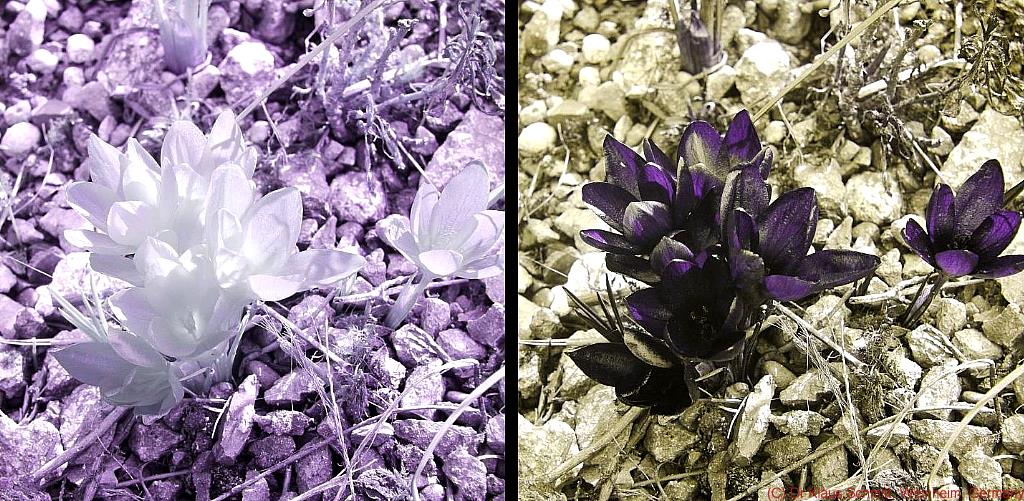
Spring Crocus - Cerco 94mm Quartz Fluorite lens for reflected ultraviolet photography

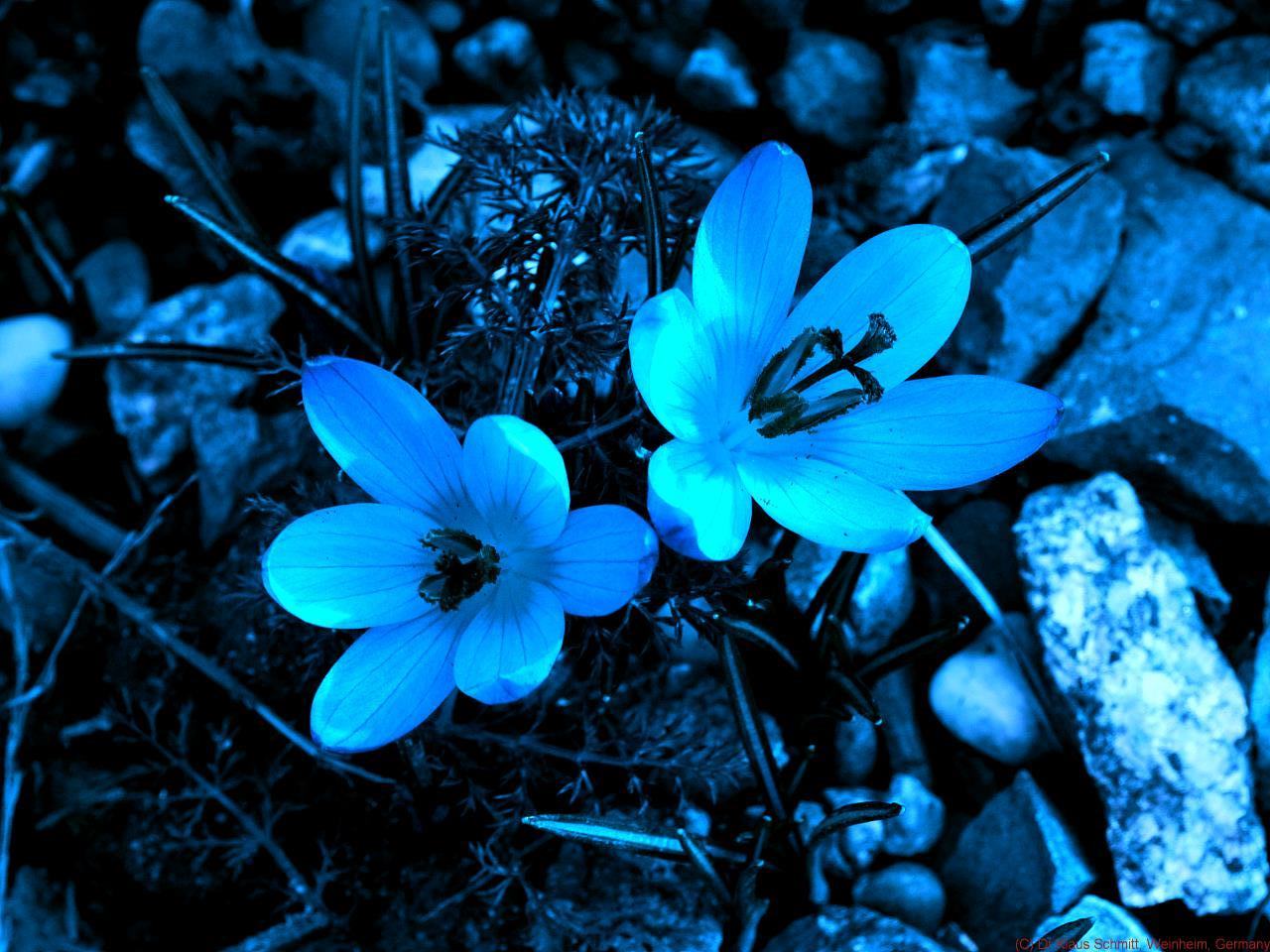
Today about some early spring flowers, here Crocus (Crocus sp.) in reflected ultraviolet photography using my "work horse" UV filter, the Baader-U filter. Lens was a CERCO 94mm quartz fluorite lens. Light source was sunlight. All shots were done at about f5.6. So, on to the results now...

[click on image to see a larger one]

Visible light image:
 

UV image using Baader-U filter (approx. 320-395nm, effective peak approx. 375nm):
 

Simulated butterfly vision (UV - VIS) using XBV3 filter:
 

Simulated bee vision (UV - VIS) using XBV6 filter:
 

Quadtryptich of the above:


Crocus usually is reflecting only in long wave UV around 380nm, visible as a bluish violet and its center (anthers, stamen) is UV dark, which gets nicely visible here.


Stay tuned, more will follow on that fascinating subject...

More info on this very interesting field may be found on my site http://www.pbase.com/kds315/uv_photos

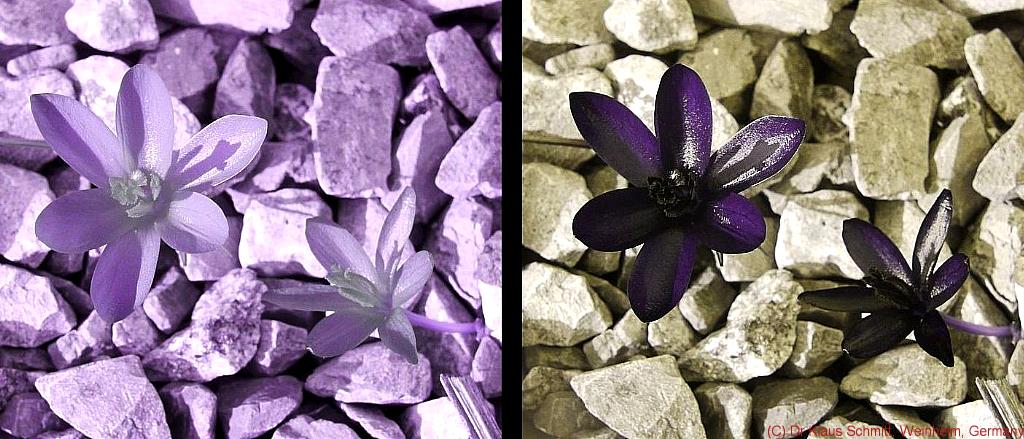
Winter Aconite - Cerco 94mm Quartz Fluorite lens for reflected ultraviolet photography

Today about some early spring flowers, here Winter Aconite (Eranthis hyemalis) in reflected ultraviolet photography using my "work horse" UV filter, the Baader-U filter as well as my XBV filters for simulating butterfly and bee vision. Lens was a CERCO 94mm quartz fluorite lens. Light source was sunlight. All shots were done at about f5.6. So, on to the results now...

[click on image to see a larger one]

Visible light image:
 

UV image using Baader-U filter (approx. 320-395nm, effective peak approx. 375nm):
 

Simulated butterfly vision (UV - VIS) using XBV3 filter:
 

Simulated bee vision (UV - VIS) using XBV6 filter:
 

Quadtryptich of the above:


Winter Aconite has a prominent UV pattern, its center (anthers, stamen) is UV dark, and the petal ground seems to have some highly reflecting spots radially centered around the stamen which gets nicely visible.


Stay tuned, more will follow on that fascinating subject...

More info on this very interesting field may be found on my site http://www.pbase.com/kds315/uv_photos

Tuesday, March 5, 2013

Spring Flowers 2013 - 100mm Focotar enlarger lens for reflected ultraviolet photography

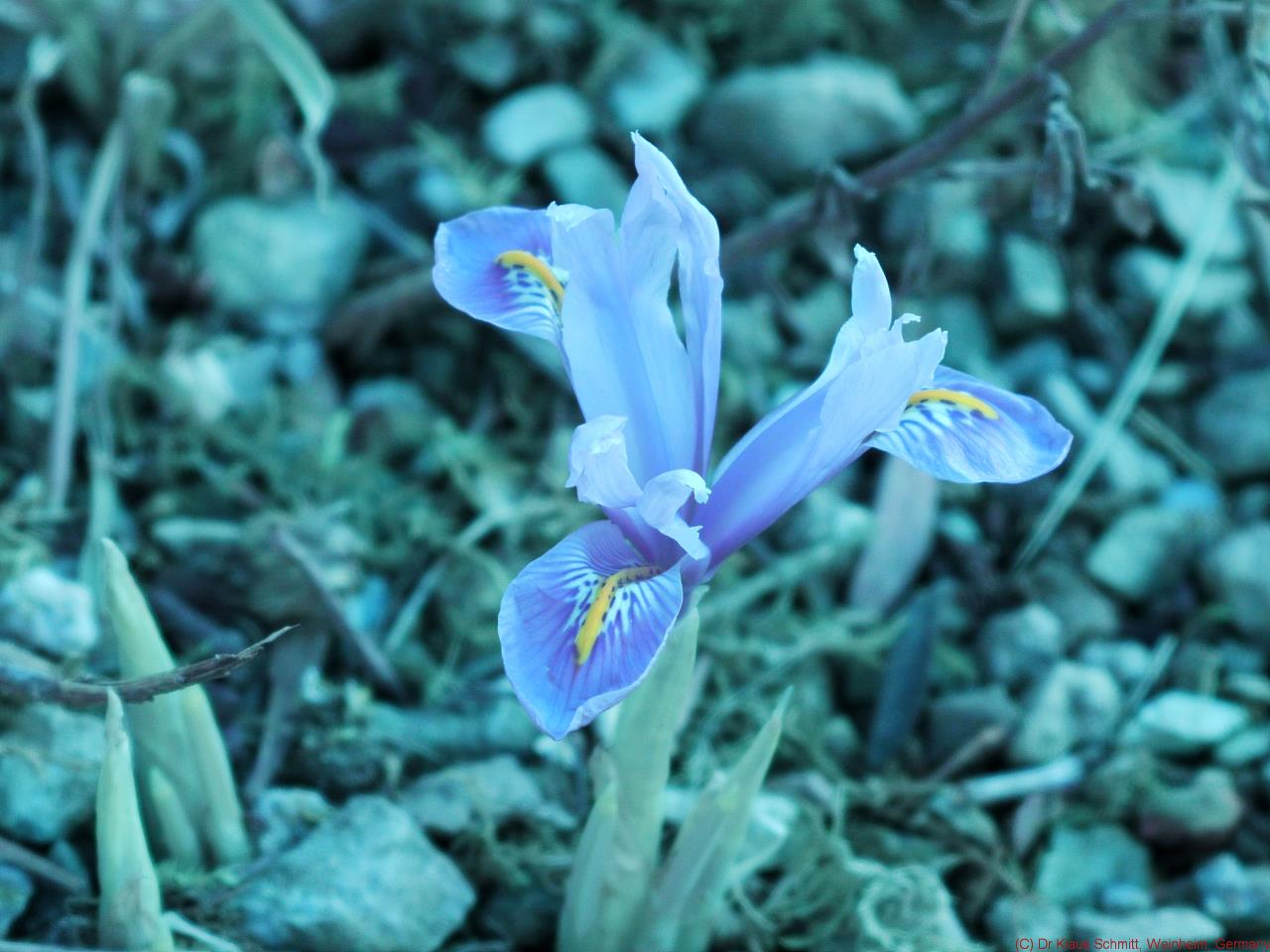
Today about the same early spring Irises shot in reflected ultraviolet photography that I had shown before when shot with the Cerco quartz fluorite lens. Filter used was my "work horse" UV filter, the Baader-U filter. Lens used was an old 100mm Focotar enlarger lens. Light source was the last sunrays of that wonderful spring Sunday. All shots were done at about f8. So, on to the results now...

[click on image to see a larger one]


Visible light image:
 

UV image using Baader-U filter (approx. 320-395nm, effective peak approx. 375nm):
 

VIS-IR image using no filter:


Visible light image:
 

UV image using Baader-U filter (approx. 320-395nm, effective peak approx. 375nm):
 

VIS-IR image using no filter:


Visible light image:
 

UV image using Baader-U filter (approx. 320-395nm, effective peak approx. 375nm):
 

VIS-IR image using no filter:
 

So, I hope you enjoy seeing some early spring flowering Irises!


Stay tuned, more will follow on that fascinating subject...

More info on this very interesting field may be found on my site http://www.pbase.com/kds315/uv_photos

Sunday, March 3, 2013

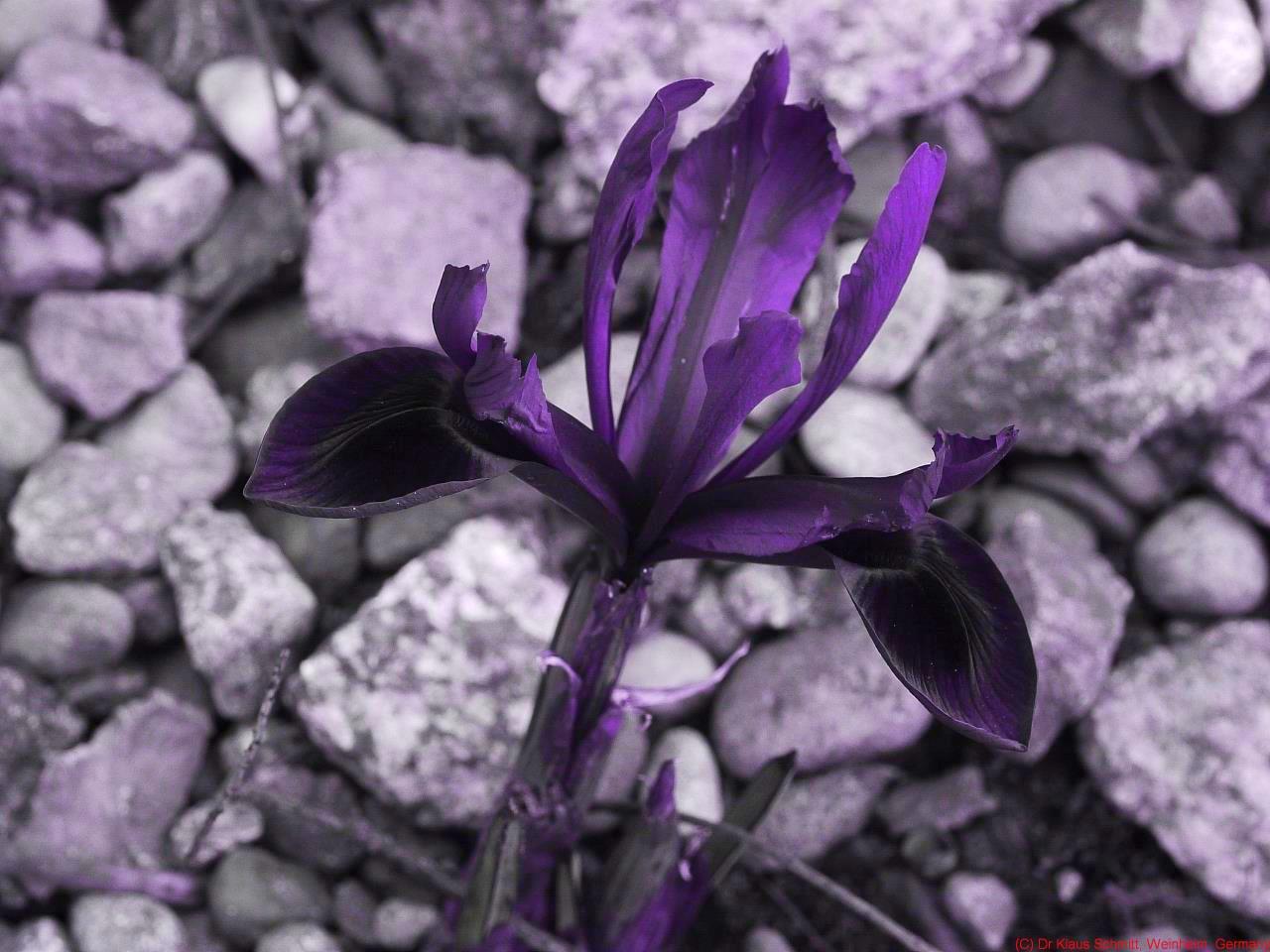
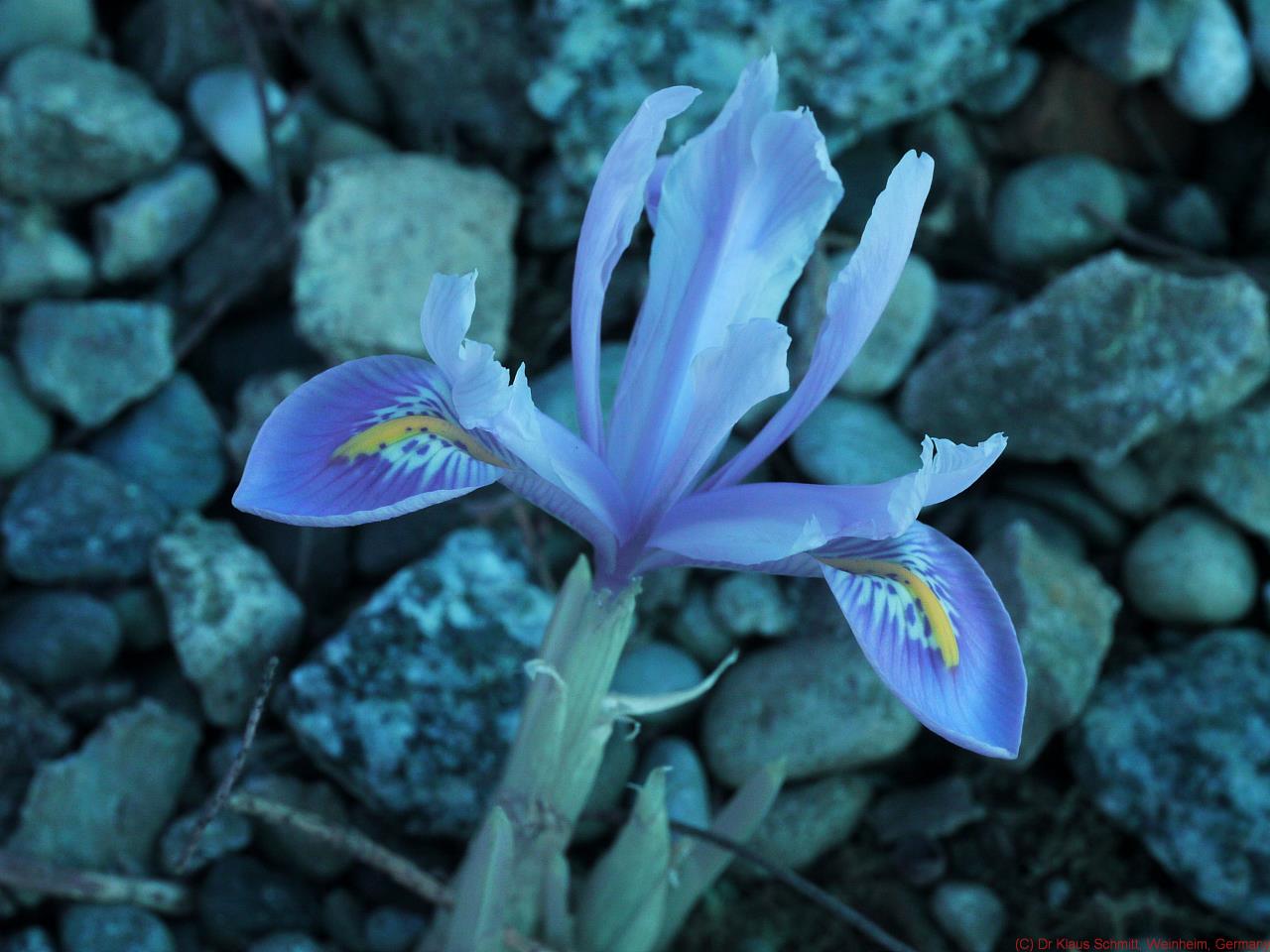
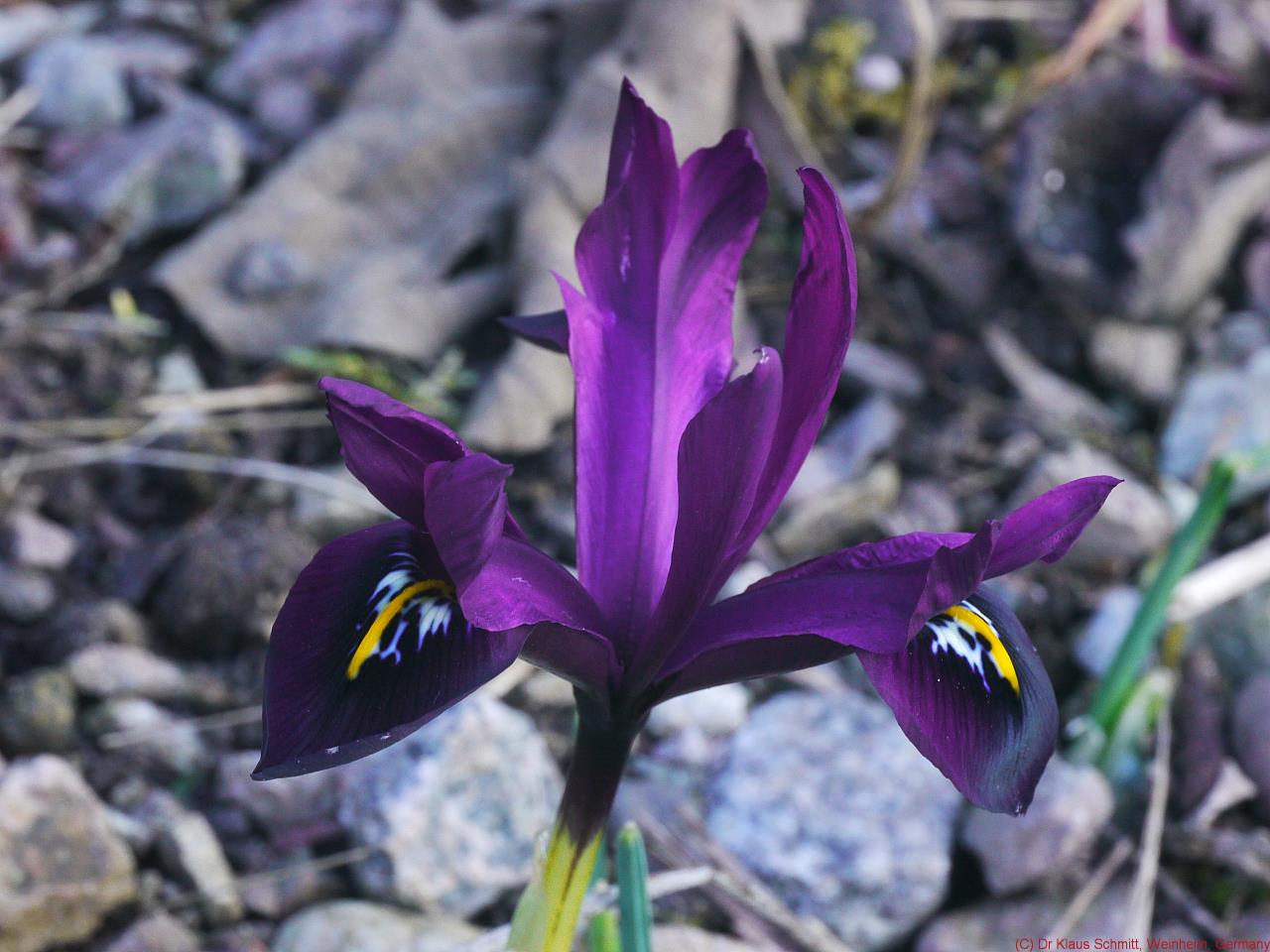
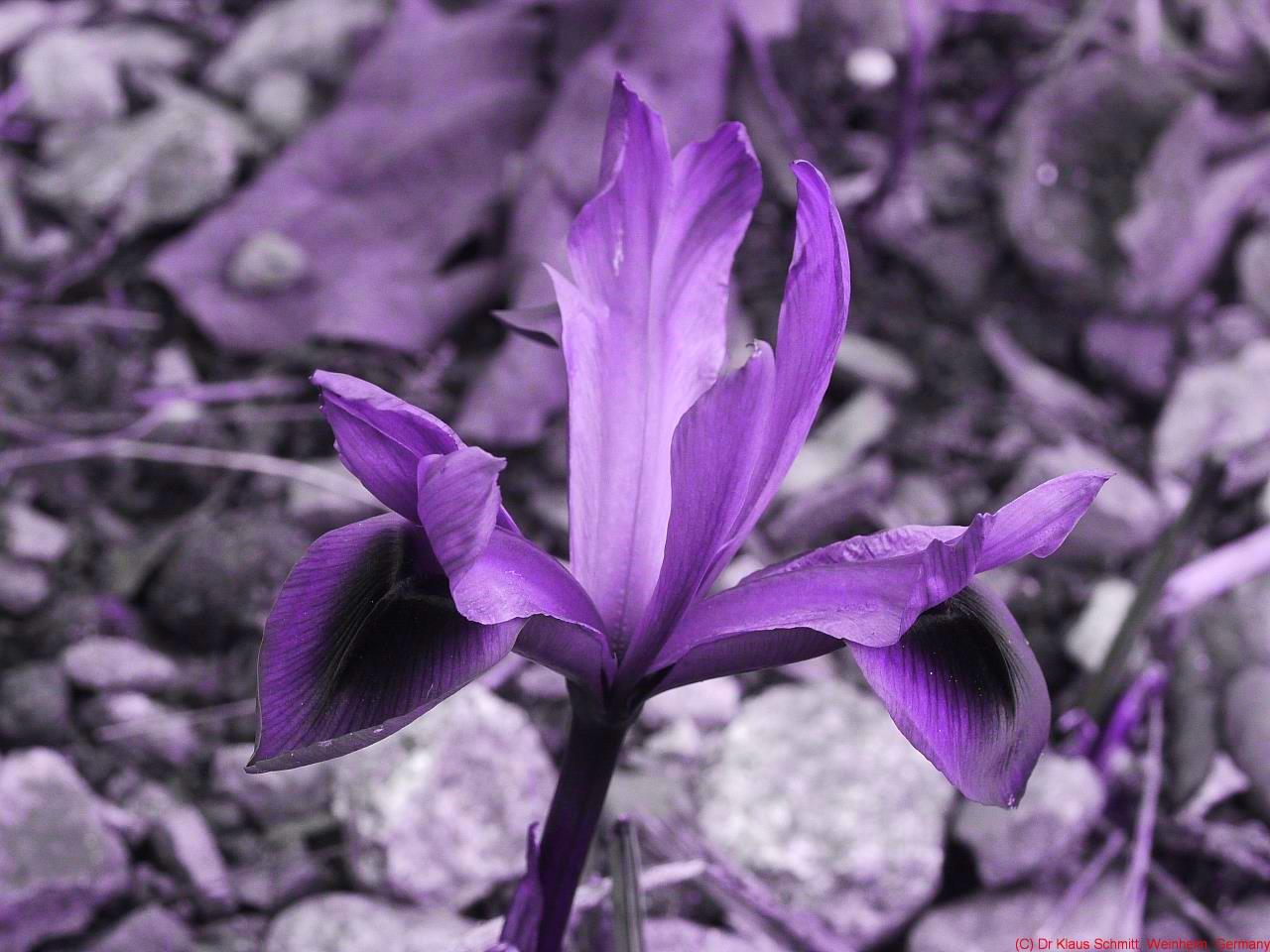
Spring Flowers 2013 - Cerco 94mm Quartz Fluorite lens for reflected ultraviolet photography II

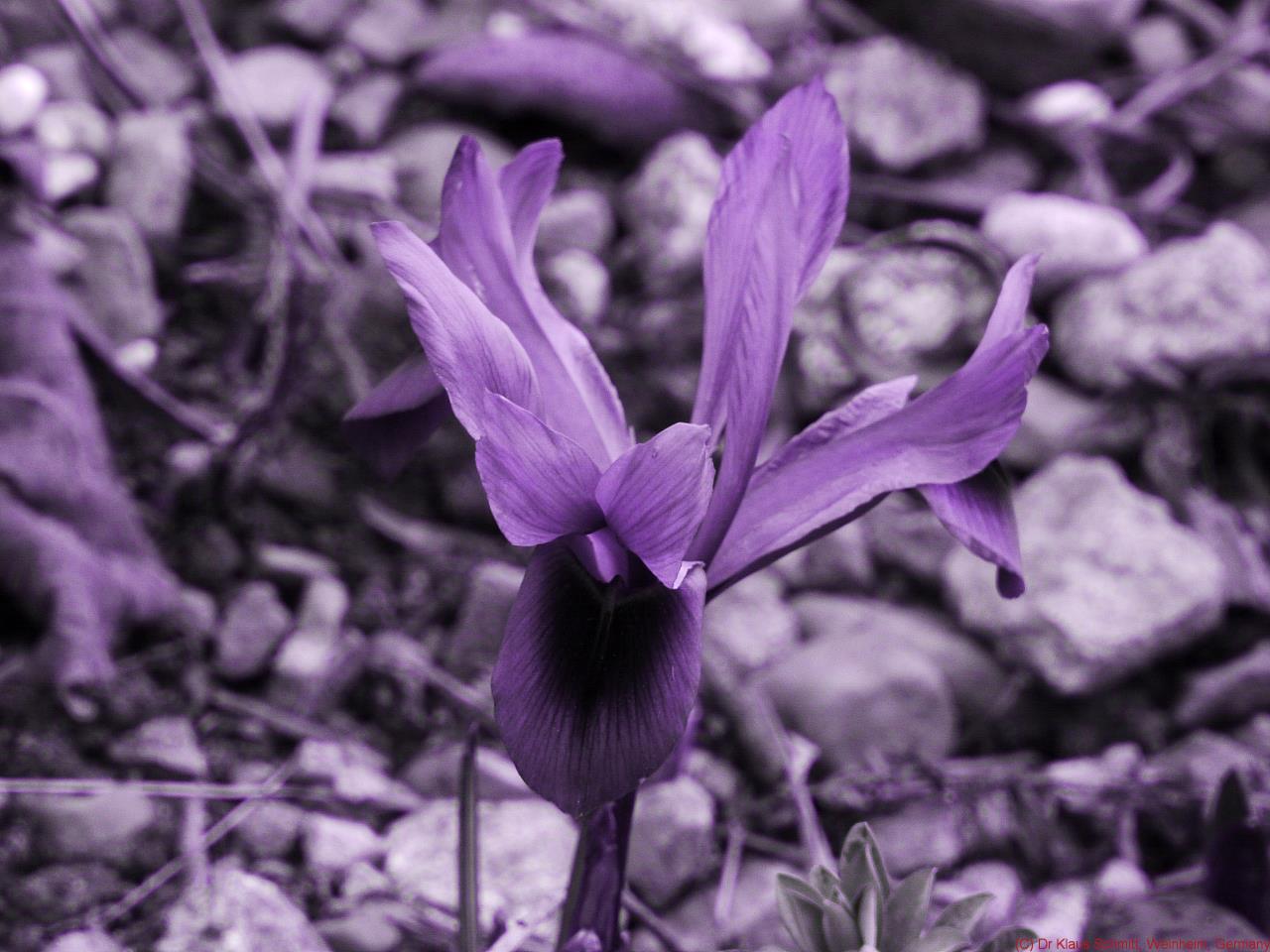
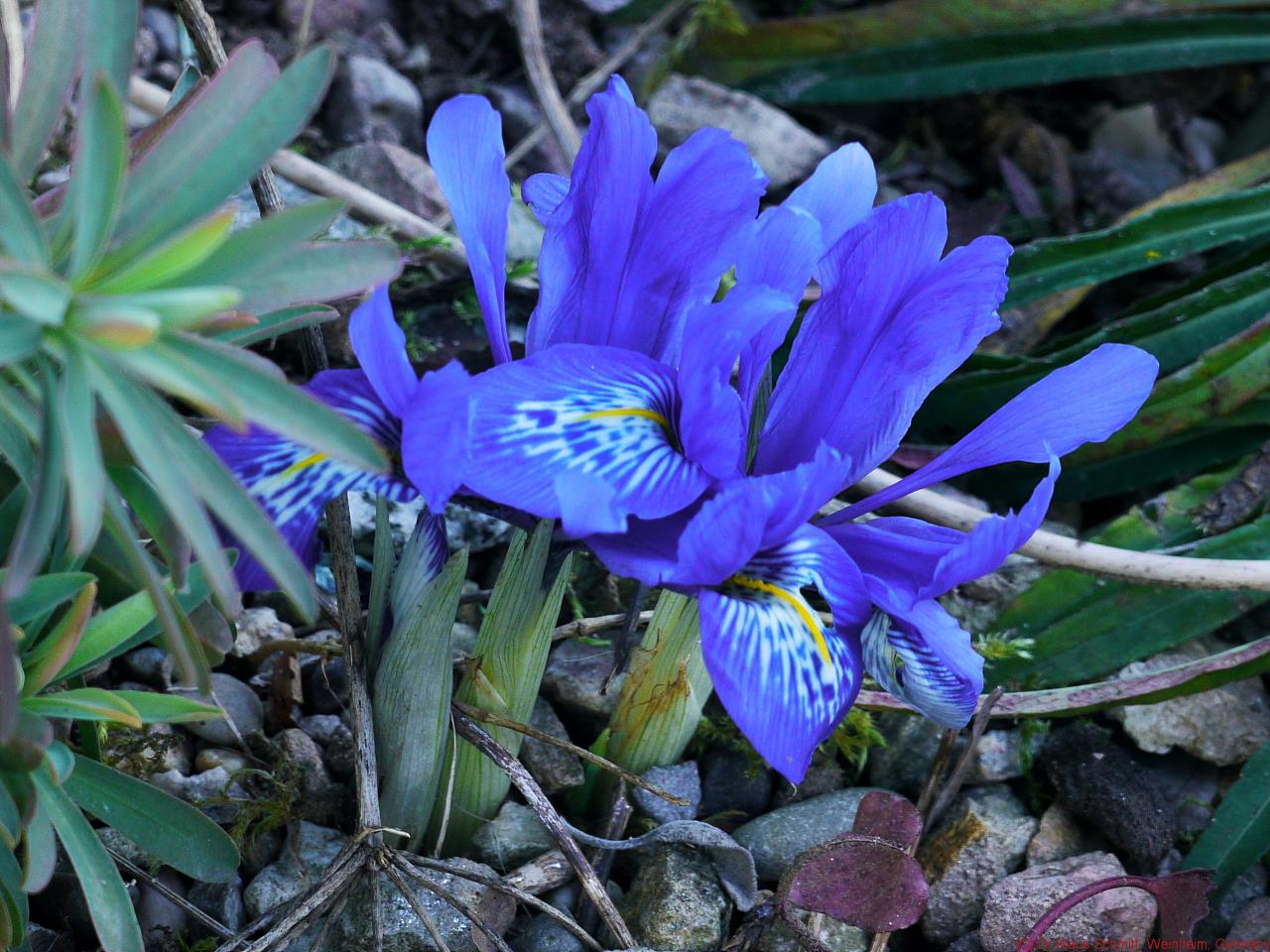
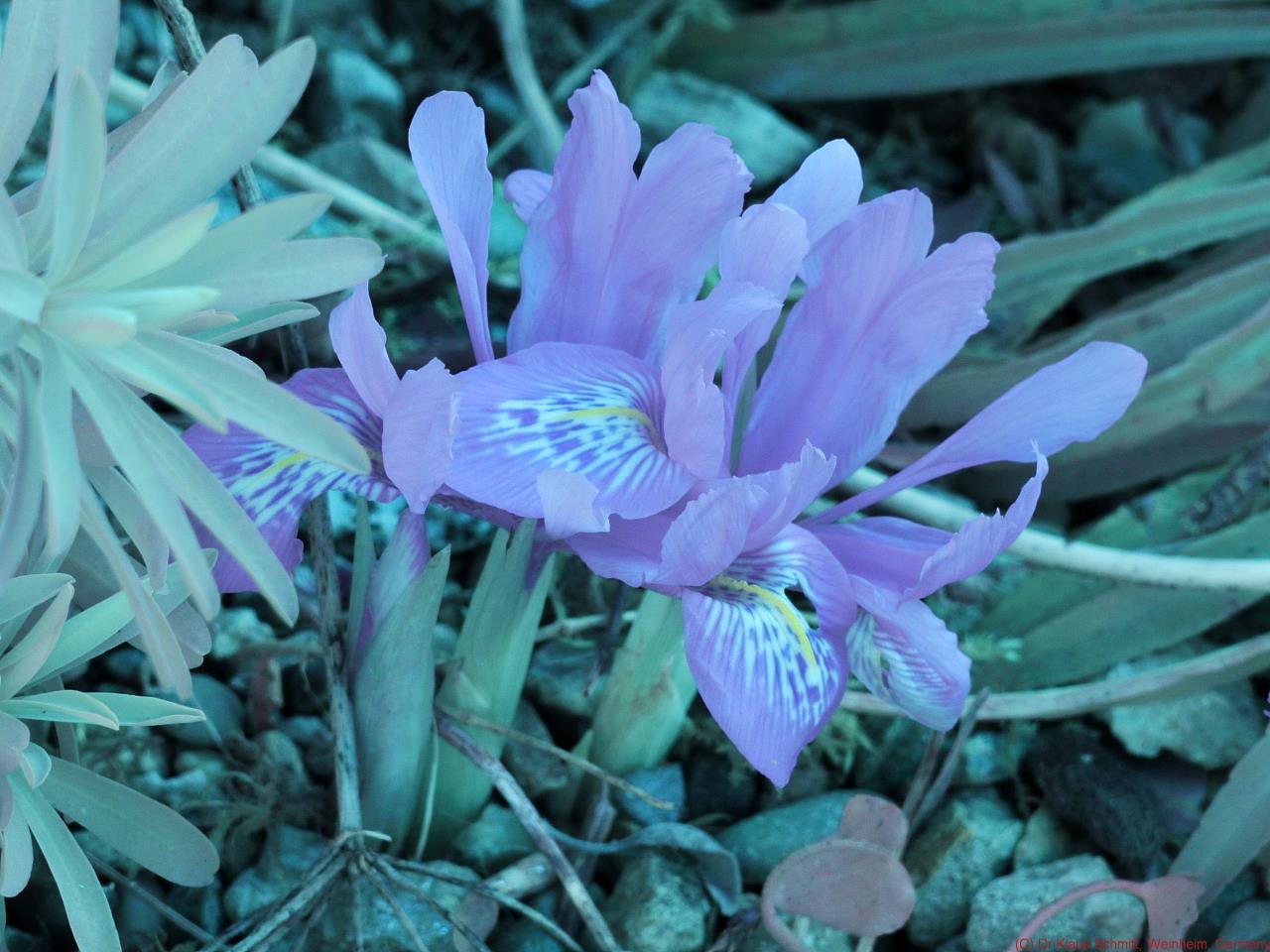
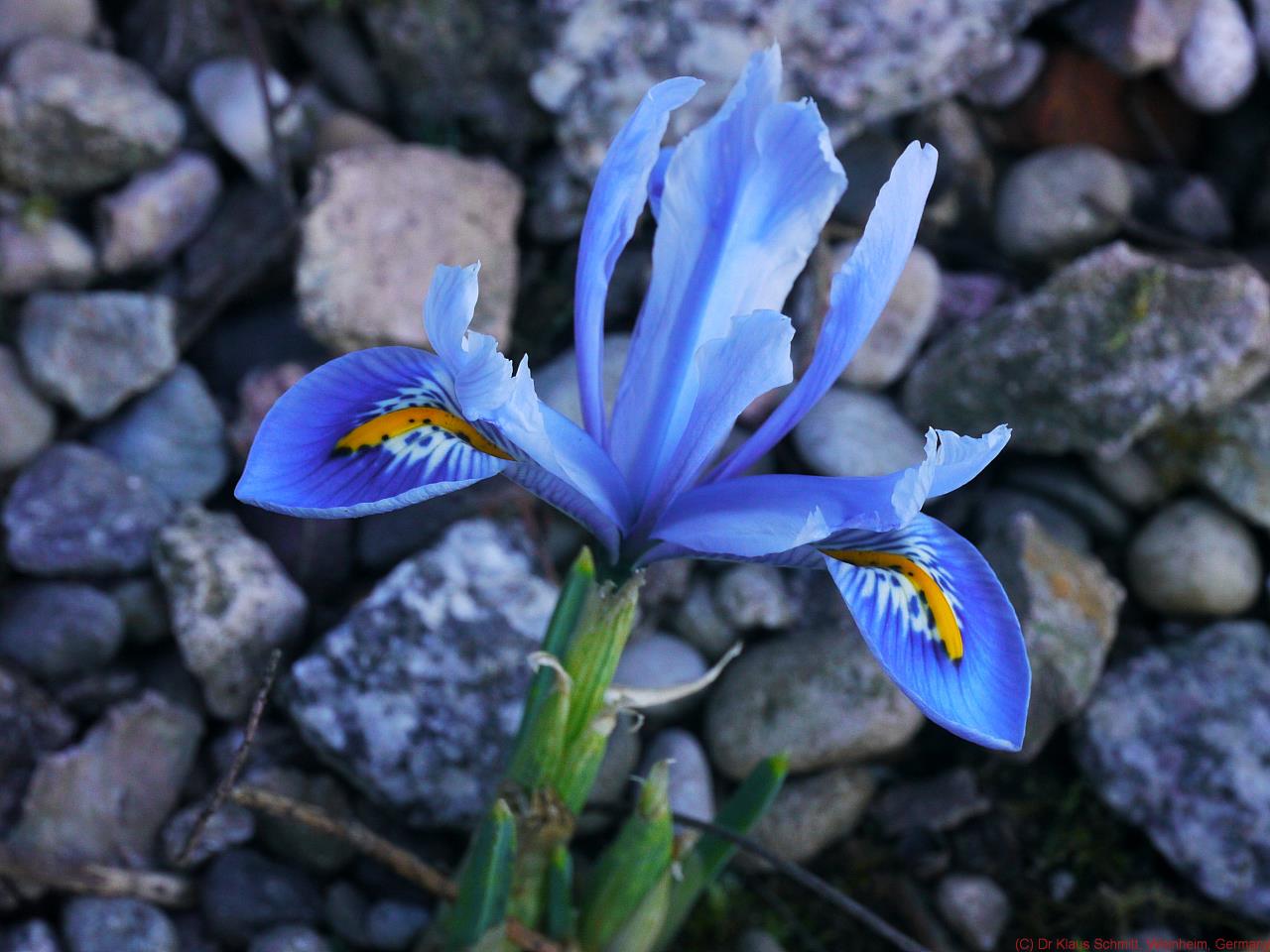
Today about some early spring Irises in reflected ultraviolet photography using my "work horse" UV filter, the Baader-U filter. Lens was a CERCO 94mm quartz fluorite lens. Light source was the last sunrays of that wonderful spring Sunday. All shots were done at about f5.6. So, on to the results now...

[click on image to see a larger one]


Visible light image:
 

UV image using Baader-U filter (approx. 320-395nm, effective peak approx. 375nm):
 

VIS-IR image using no filter:


Visible light image:
 

UV image using Baader-U filter (approx. 320-395nm, effective peak approx. 375nm):
 

VIS-IR image using no filter:


Visible light image:
 

UV image using Baader-U filter (approx. 320-395nm, effective peak approx. 375nm):
 

VIS-IR image using no filter:
 

So, I hope you enjoy seeing some early spring flowering Irises!


There is a comparative series using teh same flowers shot with an old 100mm Focotar enlarger lens HERE.

Stay tuned, more will follow on that fascinating subject...

More info on this very interesting field may be found on my site http://www.pbase.com/kds315/uv_photos

Spring Flowers 2013 - Cerco 94mm Quartz Fluorite lens for reflected ultraviolet photography

Today about some early spring flowers, Winter Aconite and Bellis perennis in reflected ultraviolet photography using my "work horse" UV filter, the Baader-U filter, plus a new filter, consisting of a Schott UG1 + S8612 stack. Lens was a CERCO 94mm quartz fluorite lens. Light source was the last sunrays of that wonderful spring Sunday. All shots were done at about f5.6. So, on to the results now...

[click on image to see a larger one]

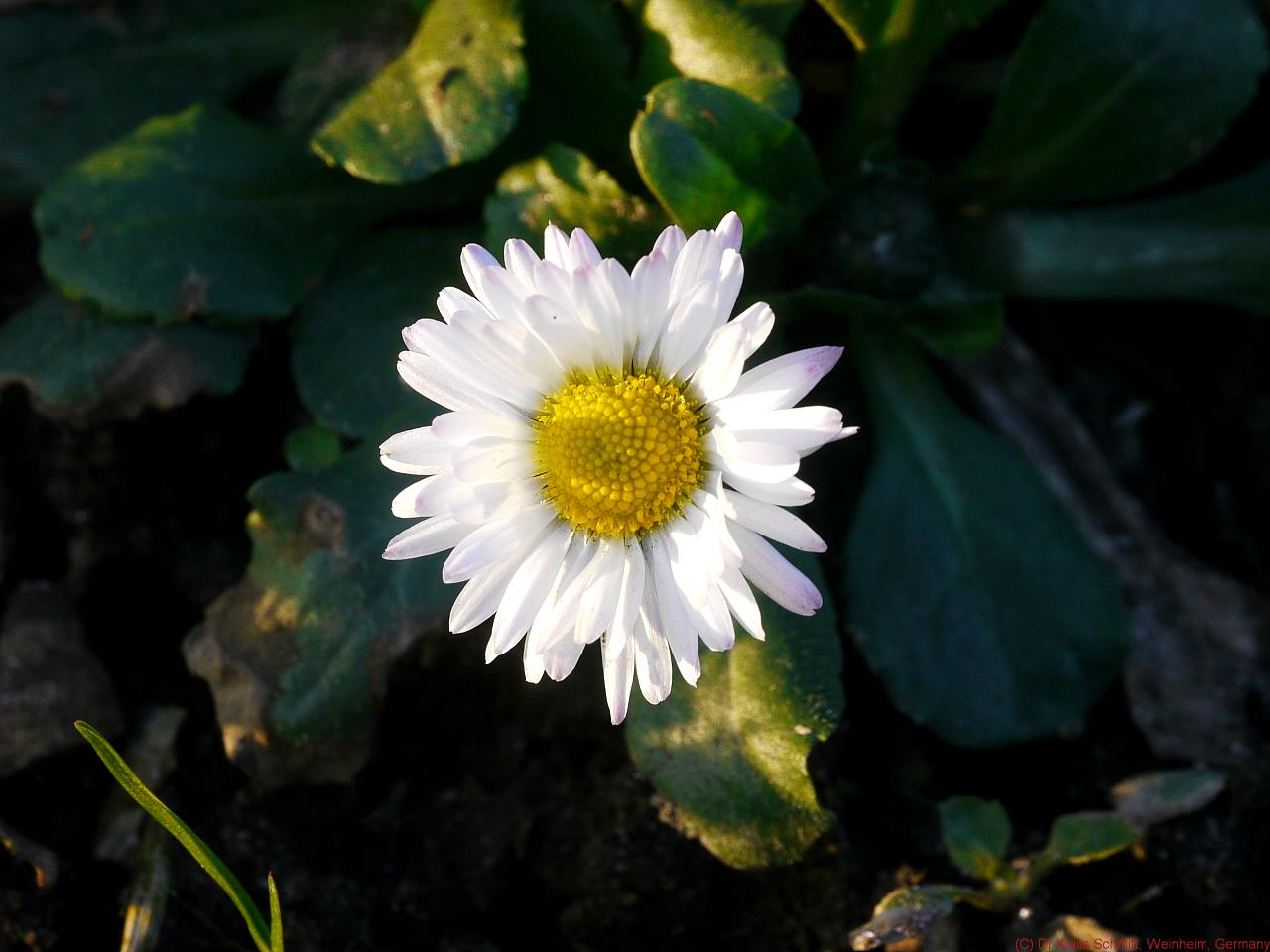
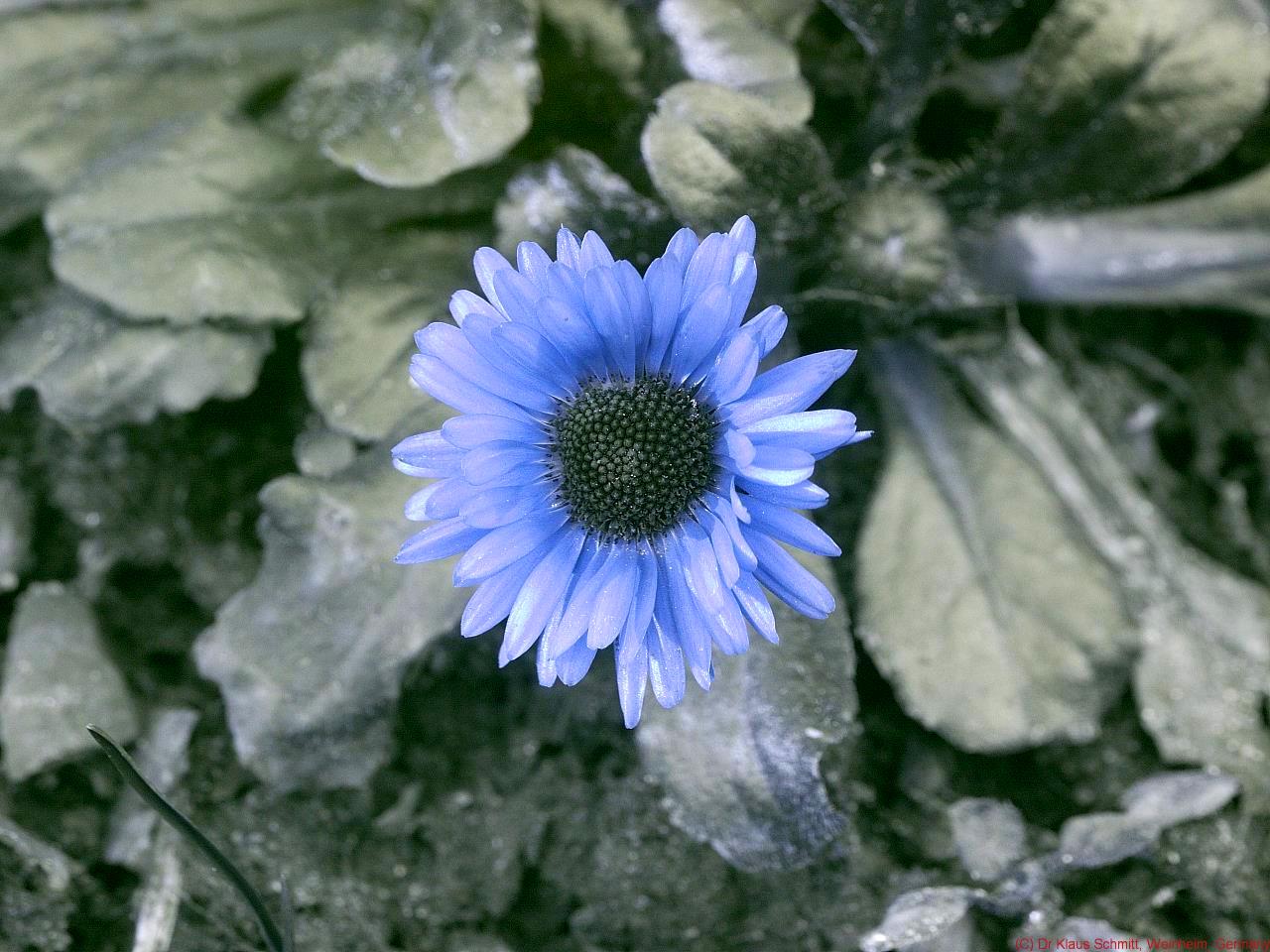
*** Bellis perennis ***

Visible light image:
 

UV image using Baader-U filter (approx. 320-395nm, effective peak approx. 375nm):
 

UV image using Schott filter stack (approx. 320-400nm, effective peak approx. 375nm) but showing some bluish leak which the Baader filter does not have :
 

VIS-IR image using no filter:
 

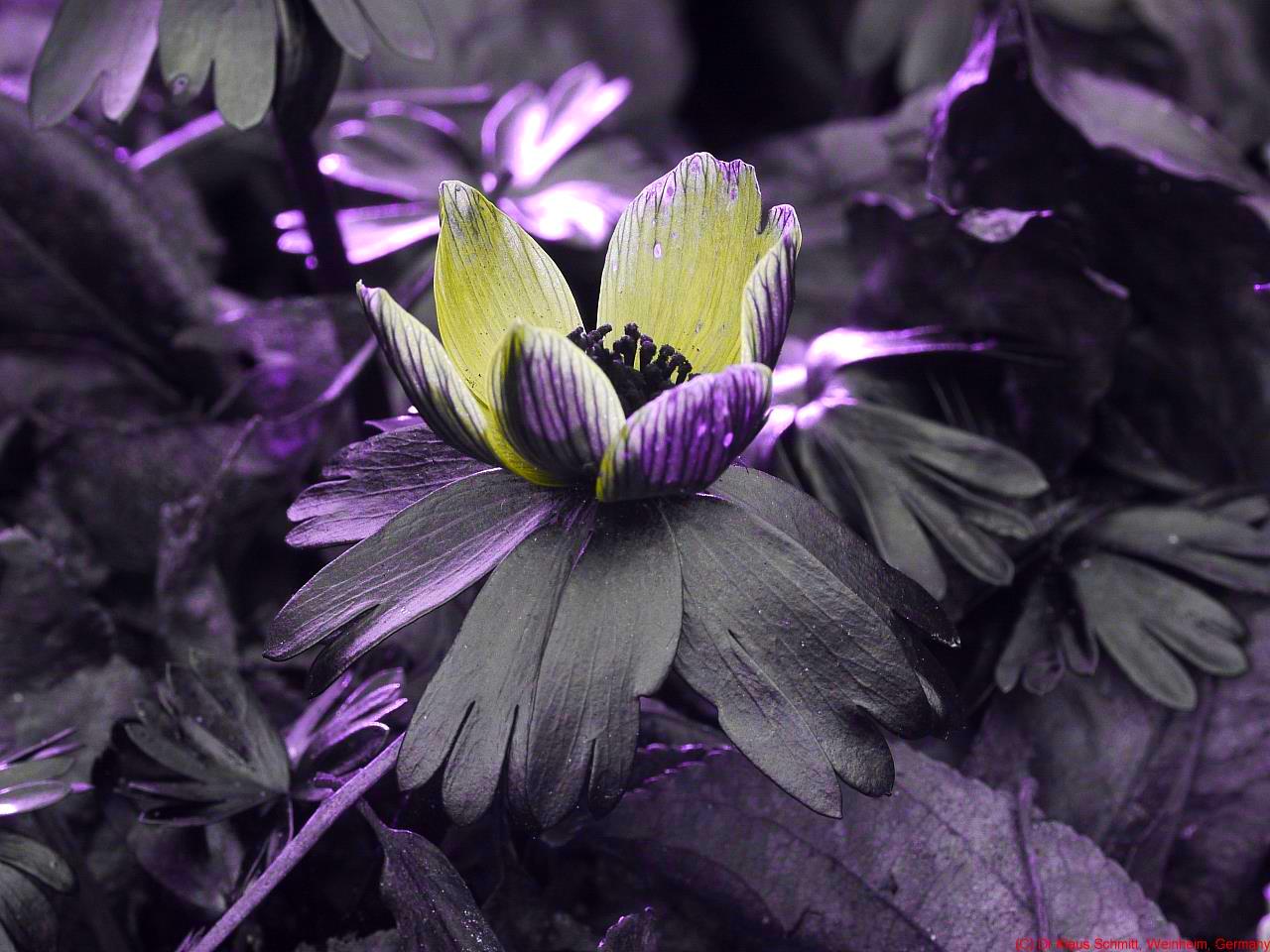
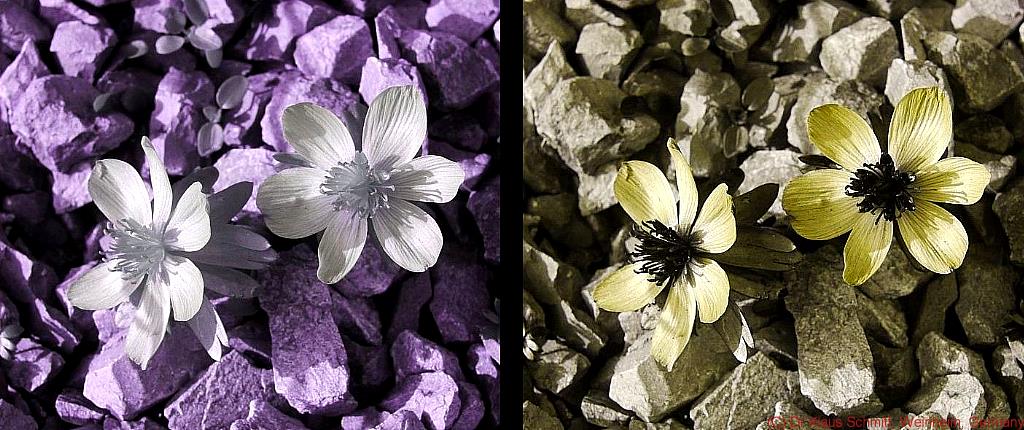
*** Winter Aconite ***

Visible light image:
 

UV image using Baader-U filter (approx. 320-395nm, effective peak approx. 375nm):
 

UV image using Schott filter stack (approx. 320-400nm, effective peak approx. 375nm) but showing some bluish leak which the Baader filter does not have:
 

VIS-IR image using no filter:
 

So, I hope you enjoy seeing some early spring flowers!


Stay tuned, more will follow on that fascinating subject...

More info on this very interesting field may be found on my site http://www.pbase.com/kds315/uv_photos

Saturday, March 2, 2013

Filter leakage in reflected UV ultraviolet photography - unsuitable UV vs Baader-U filter III

Today again about IR leakage in reflected UV photography and how to deal with it. I have posted about that before here.

So what I wanted to show to today is, how different reflected UV images look like with and without IR leakage, so to enable a potential UV shooter to detect that. Images are presented in a side-a-side waqy, to make comparisons easier.

[click on image to see a larger one]

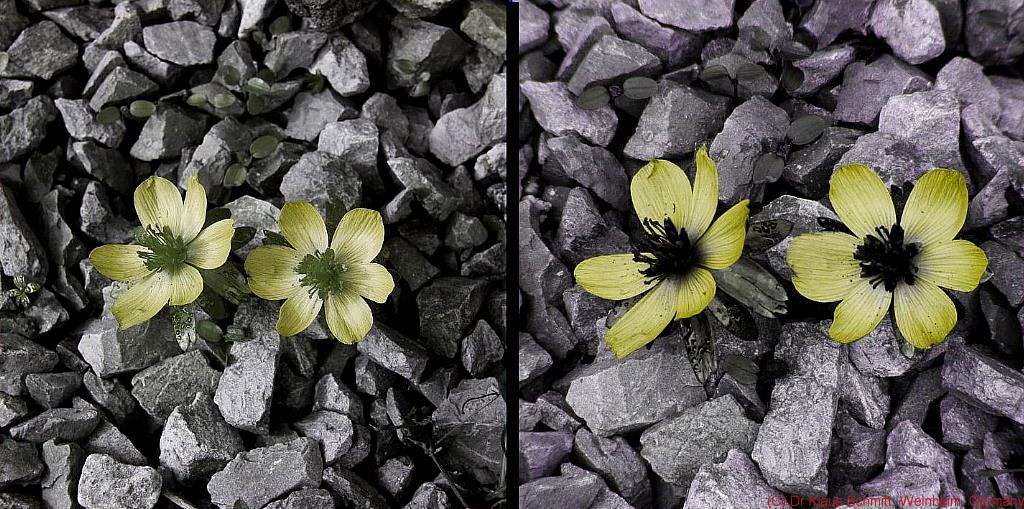
Here now the comparison with a commercially available UV filter, that not only leaks IR but also some blue vs the Baader-U 2" filter, Winter Aconite as target:

So here another example for very strong IR leakage (left), vs correct UV recording using a Baader-U 2" filter (right) using a strongly IR reflecting spring crocus as a target:


Same situation, but different angle and different crocus:

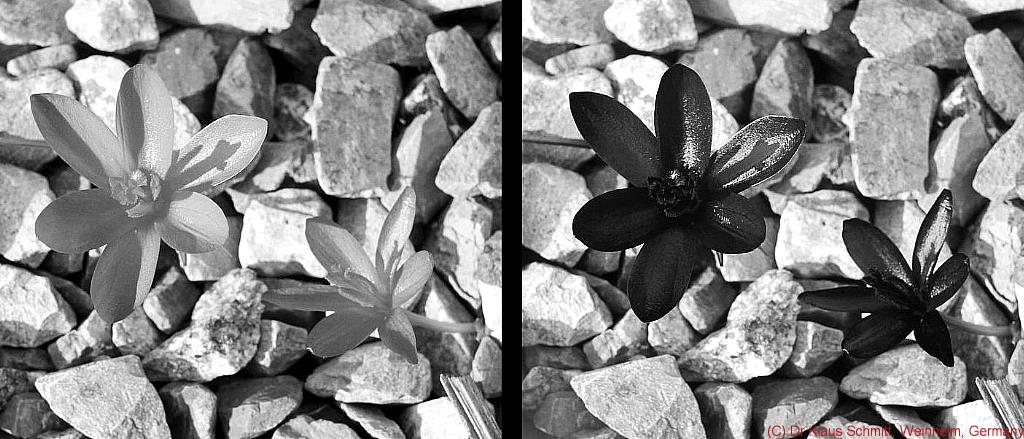
here in bw version, that shows that exposure was identical, but the pattern and structure is completely washed away by that IR leakage::

This following last example now shows the results of two different UV transmitting astro filters, left one with just a little IR leakage, but still enough to render the result useless, right the currently best filter for reflected UV in my opinion, the Baader-U 2", again using Winter Aconite as target:


Well, it was my goal to bring the attention to an often overlooked, but very important fact: IR leakage in reflected UV photography. Often beginners try to experiment with cheap UV transmitting filters, hoping to get some useful results. Unfortunately due to the very high IR sensitivity of modern sensors, just the tiny fraction of 0.1% leakage leads to useless results. So there is no way other than using highest quality UV transmission filters to secure useful results. Demand at least a IR suppression of OD3 from any UV transmitting filter, better even OD4!

Stay tuned, more will follow on that fascinating subject...

More info on this very interesting field may be found on my site http://www.pbase.com/kds315/uv_photos
Tuesday, April 3, 2012

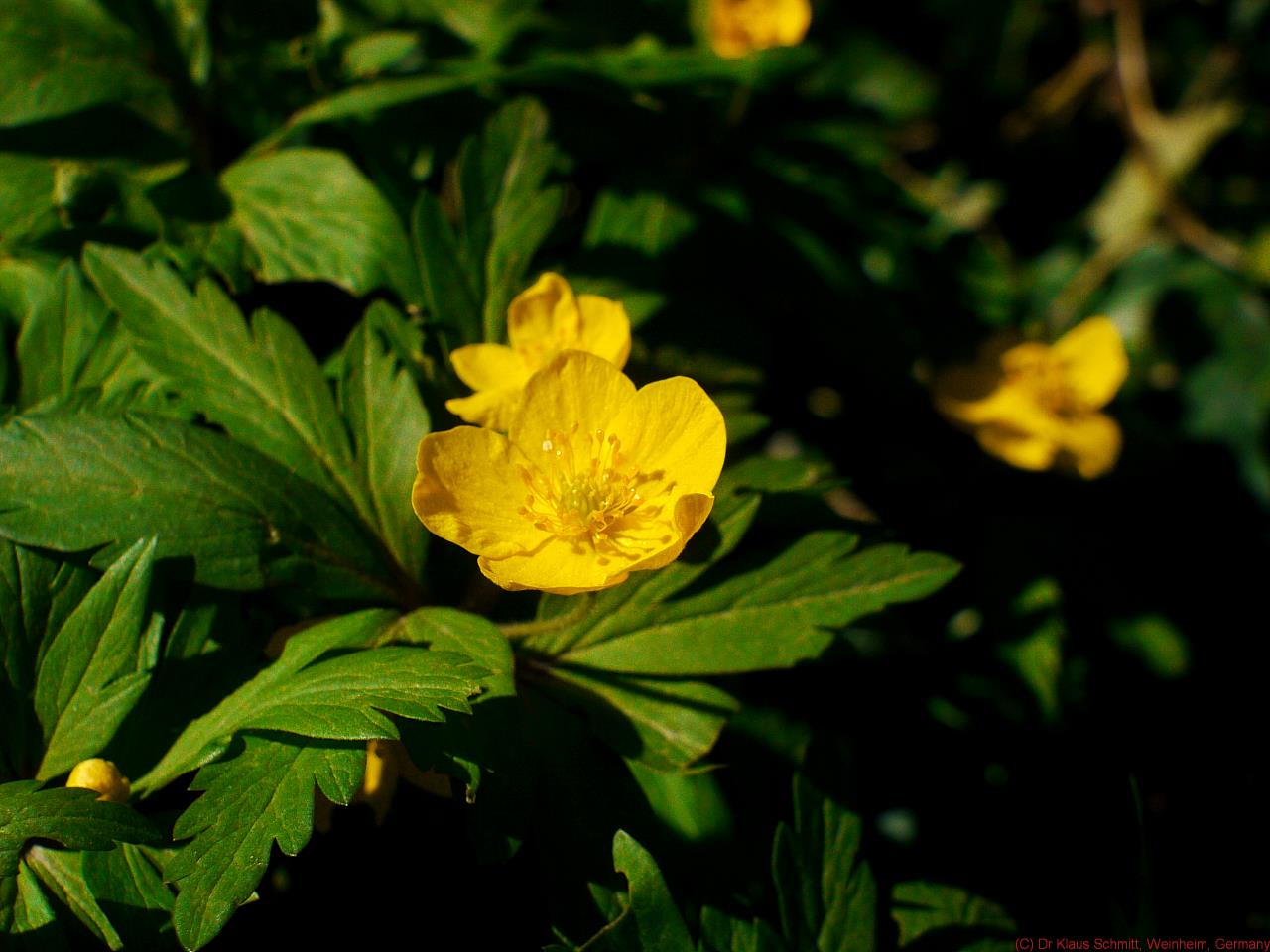
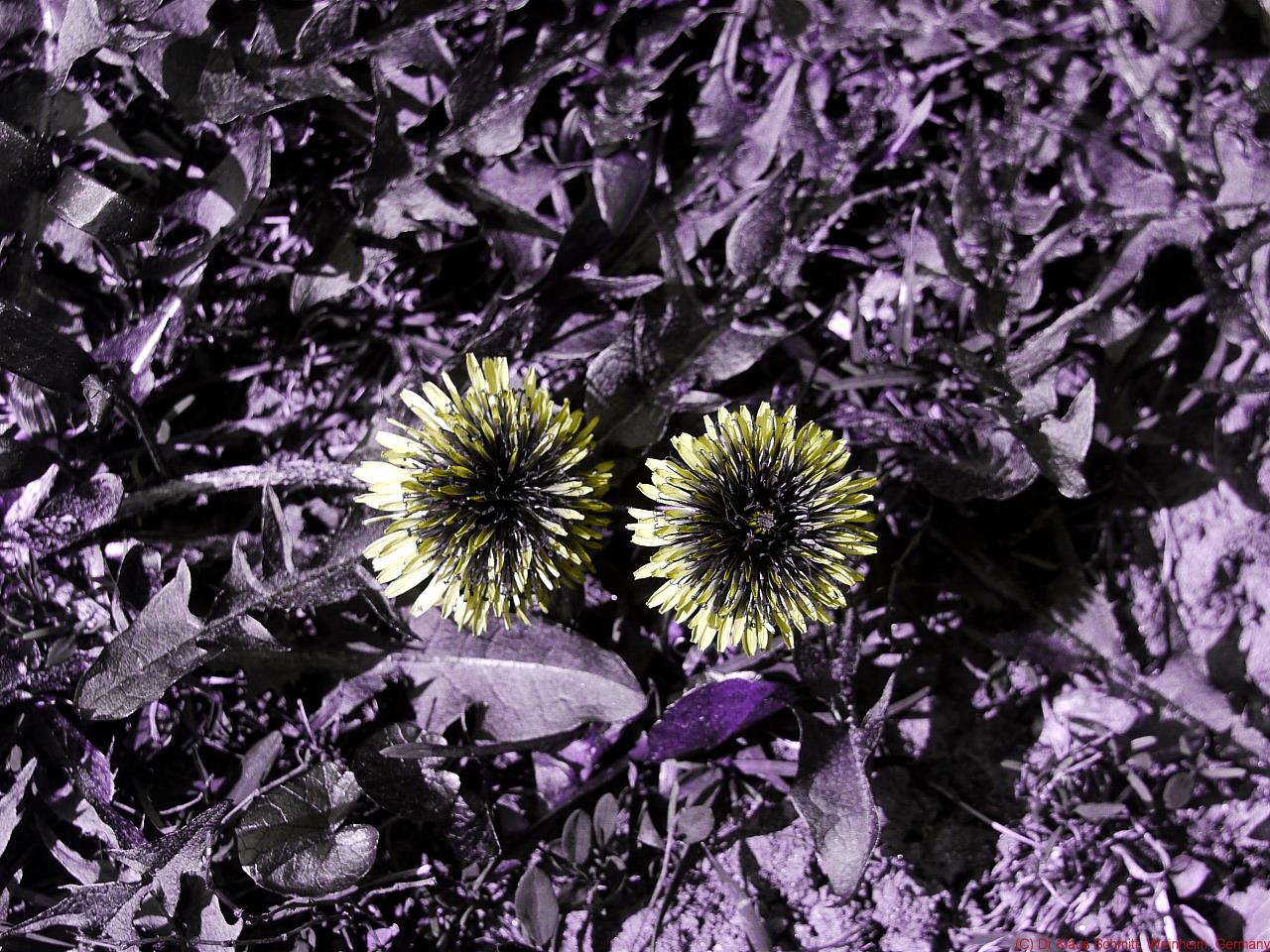
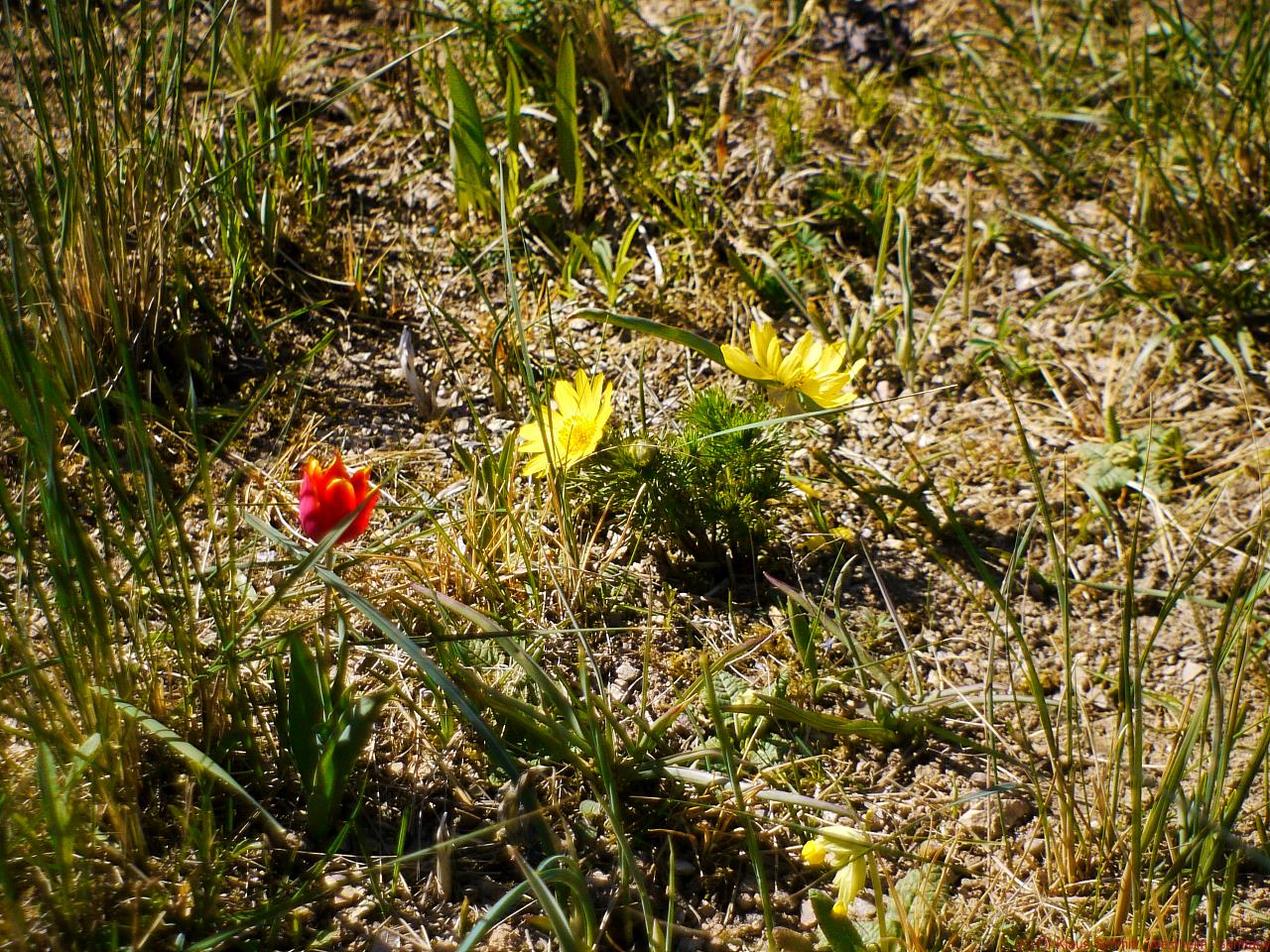
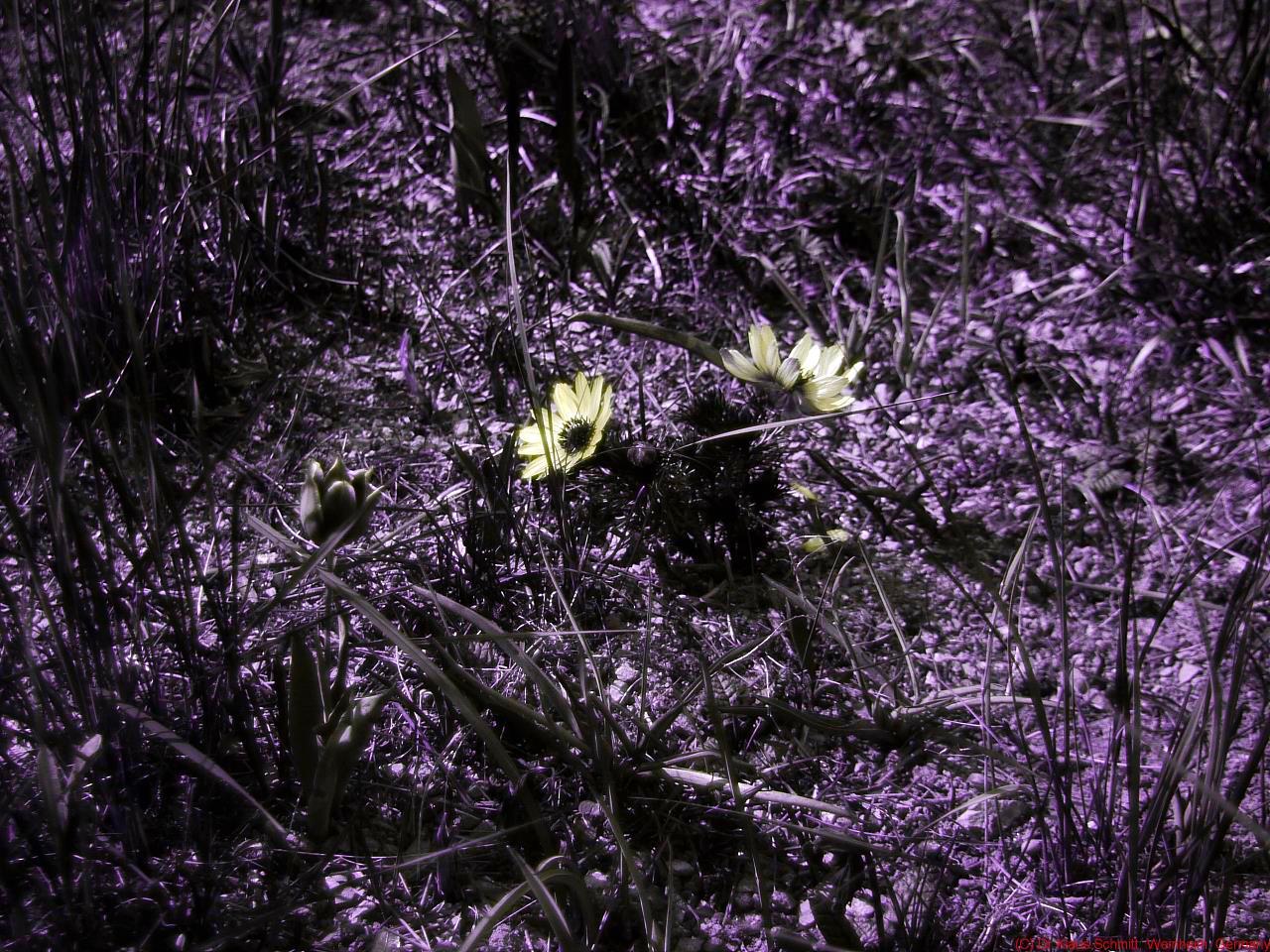
[UV] Spring flowers in UV ultraviolet light - yellow overdose

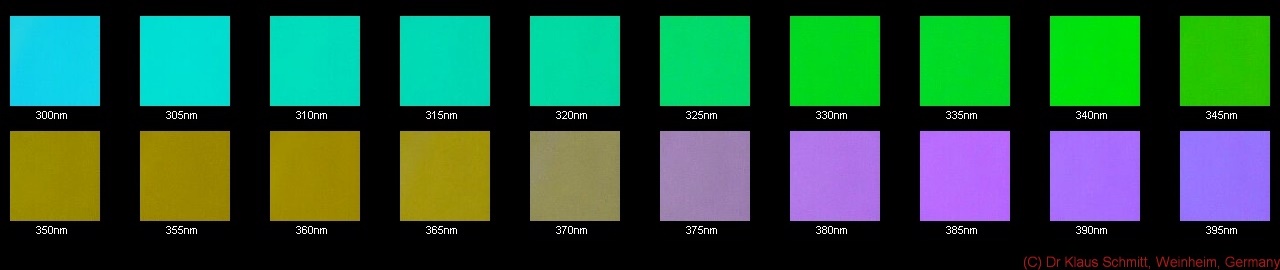
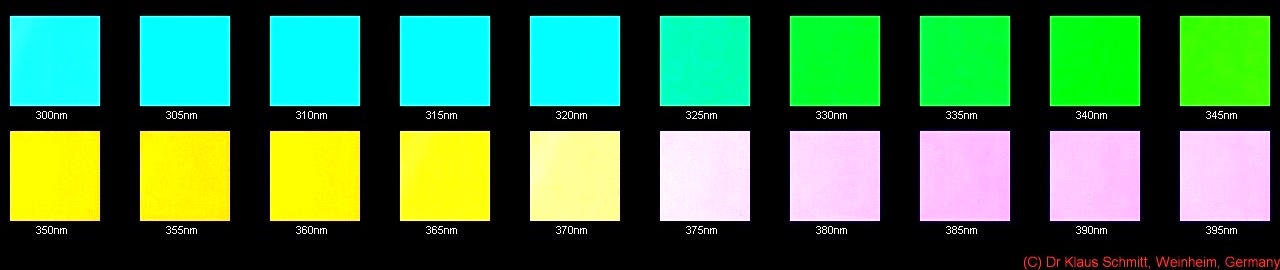
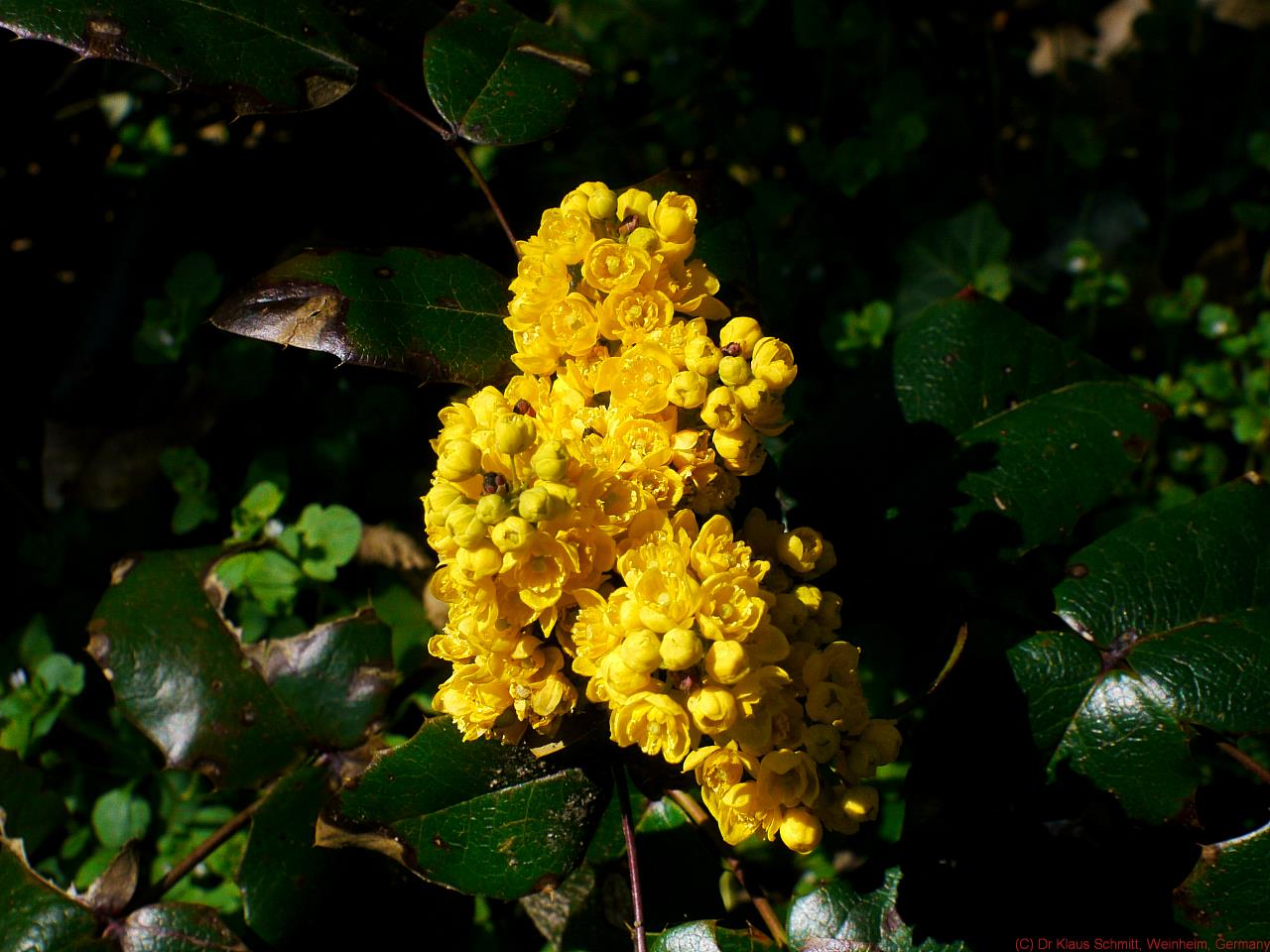
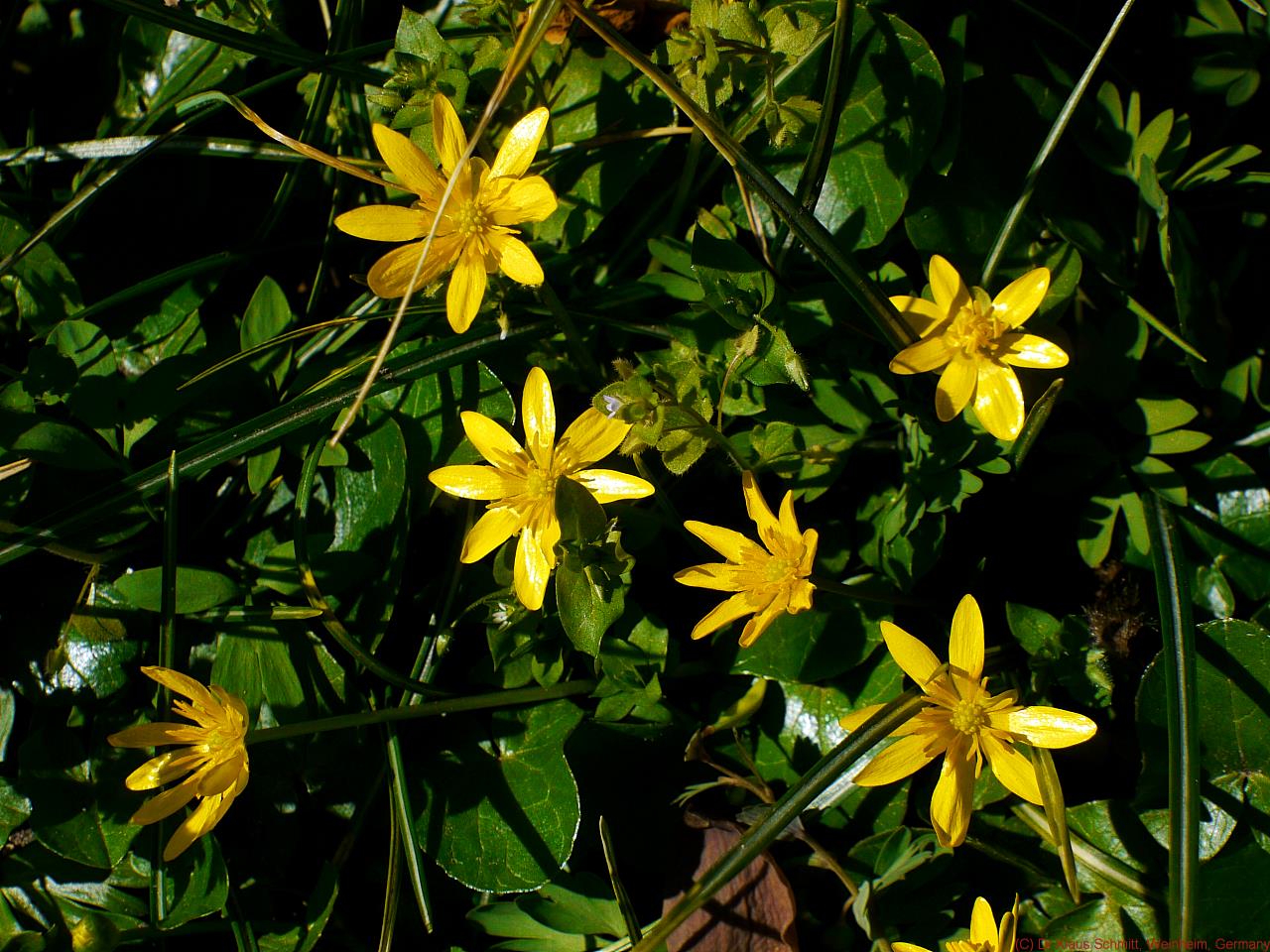
Just the perfect sunny spring day today and a chance to capture some yellow flowers, that also come out yellow in UV in my standardized false color scheme - as they reflect UV around 360nm. I'm showing matched image pairs (VIS, UV).

[click on image to see a larger one]

This UV image here also uses my standardized false UV color normal + high intensity palette:


1) Oregon grape (Mahonia aquifolium)


2) Dandelion (Taraxacum officinale) and Daisy (Bellis perennis) and Ground Ivy (Glechoma hederacea)


3)Lesser Celandine (Ranunculus ficaria)


4) Yellow Anemone (Anemone ranunculoides)


5) Dandelion (Taraxacum officinale)


6) Wild Tulip (Tulipa xx) and Pheasant's Eye (Adonis vernalis)


Pretty amazing what nature does to attract pollinators!


Stay tuned, more will follow on that fascinating subject...

More info on this very interesting field may be found on my site http://www.pbase.com/kds315/uv_photos