Today a proof that reflected UV photography is doable at
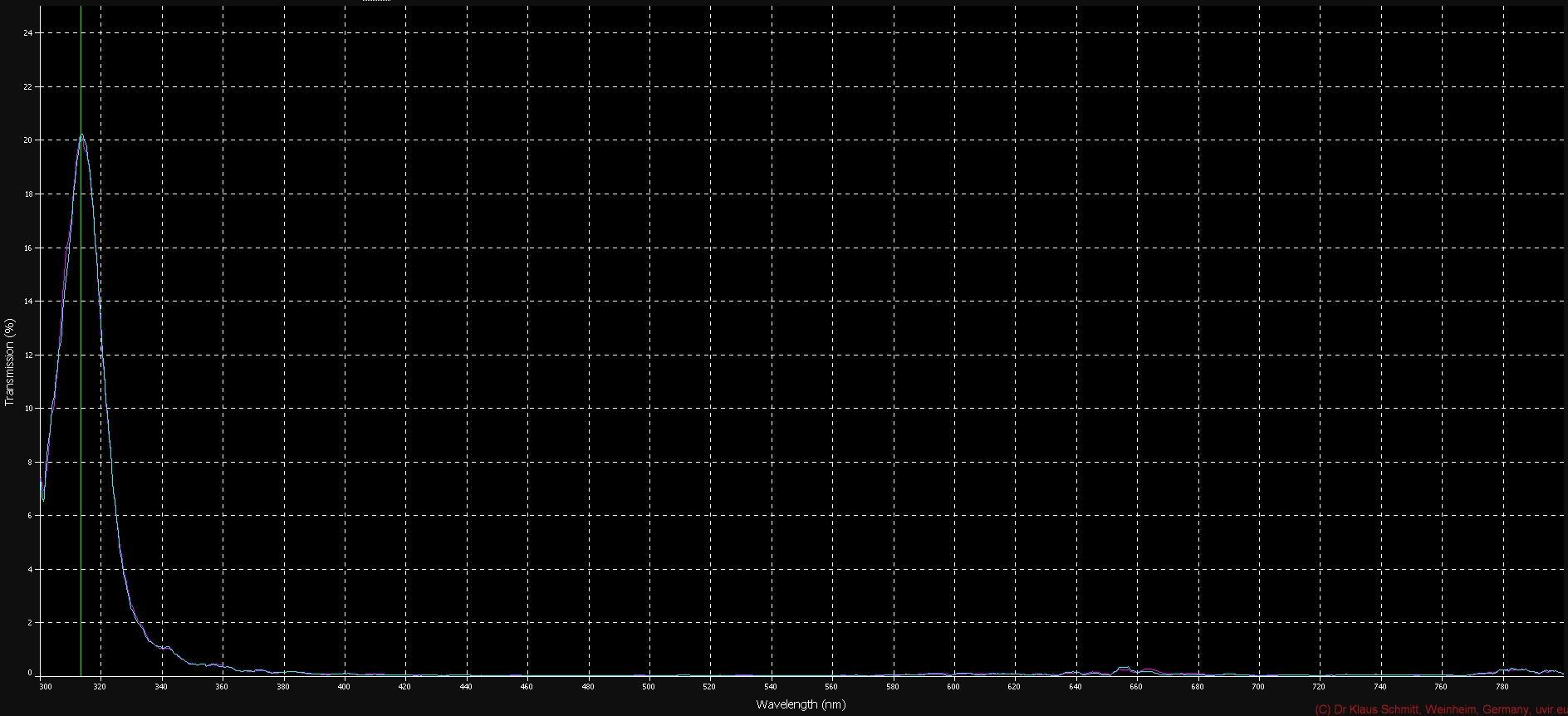
UV-B using a special, up to NIR blocked, peak 313nm, FWHM 9nm narrowband filter and my special UV camera. Lens used was my UV-Nikkor 105mm quartz flourite lens. All shots were done at f4.5.
[click on image to see a larger one]
313nm FWHM 9nm Filter transmission spectra:

Reflected UV-B image at 313nm, 0.8 sec exposure:

This was just a proof of concept that reflected UV imaging can be successfully done even at such deep UV-B wavelengths (OH* 313nm) showing the stainless steel combustion emission valves of a central heating system.
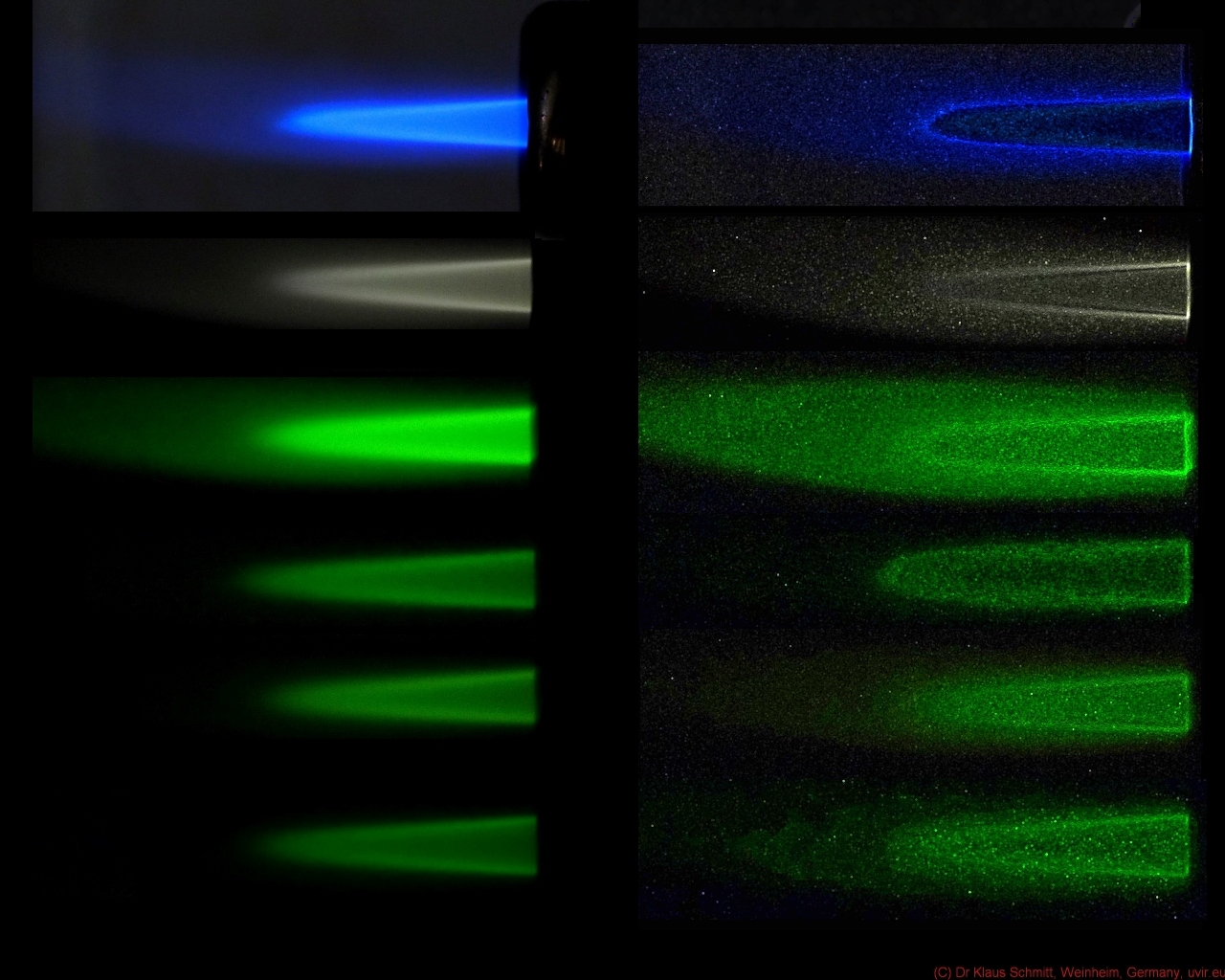
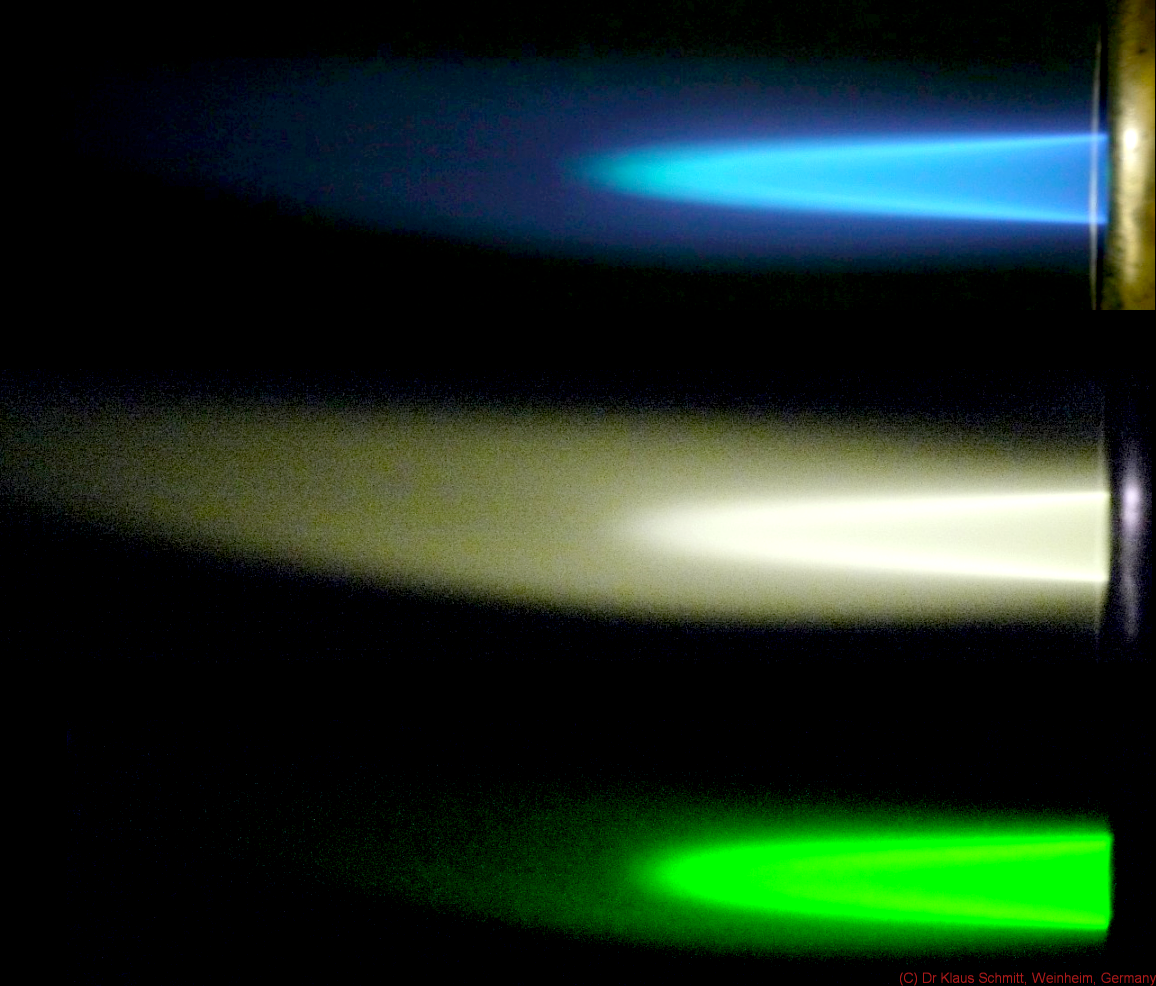
In case you were wondering how a flame of a gas torch would look like in UV...
Triptych (top to bottom) Visual light, emitted UV (320-390nm, Baader-U), emitted UV-B (313nm):

Triptych (top to bottom) Visual light, emitted UV (320-390nm, Baader-U), emitted UV-B (313nm) - morph. Gradient:

Diptych (black/white, top to bottom) emitted UV (320-390nm, Baader-U) vs emitted UV-B (313nm):

This reveals, that the broadband UV image shows a much broader, but less detailed gas flame, the 313nm image however, 313nm being the emission peak wavelength of the OH radical, shows a much more
detailed flame image and is useful to judge how efficient the gas combustion process is.
Stay tuned, more will follow on that fascinating subject...