Today another proof that reflected UV photography is doable at UV-B and UV-C using several special, up to NIR blocked, narrowband filters and a very different UV camera, an amplified 190-650nm MCP equipped video camera. Lens used was a CERCO f1.8/45mm quartz flourite lens. Light source was a candle flame.
[click on image to see a larger one]
This reveals, that the deeper one looks into UV, the area where the candle flame emits that UV moves from the top of the flame down to the sides of the flame. Pretty amazing how sensitive this type of camera is, as the needed amplification was still just in the lower 30% of the total available range.
I have a newer system HERE with a normal camera attached to the MCP amplification device.
I have previously written more about combustion and UV HERE.
Btw. Michael Faraday has in 1848 given six famous lectures about the chemical history of the candle, which may be read about HERE
Stay tuned, more will follow on that fascinating subject...
Showing posts with label OH. Show all posts
Showing posts with label OH. Show all posts
Friday, December 23, 2016
Sunday, September 4, 2016
Deep UV Ultraviolet Reflected Light Photography at UV-B 313nm II
Today another proof that reflected UV photography is doable at UV-B using several special, up to NIR blocked, narrowband filters and a different than before UV camera. Lens used was my UV-Nikkor 105mm quartz flourite lens. All shots were done at f11. Light source was a gas torch flame.
[click on image to see a larger one]
Double hexaptych (top to bottom) of Visual light; emitted UV 320-390nm, 310-350nm, 290-340nm, 280-315nm, 304-322nm. Right side is morphological gradient filtering of left side:

This reveals, that the broadband UV image shows a much broader, but less detailed gas flame, the images shot with narrow(er) filters however, shows a much more detailed flame image and is useful to judge how efficient the gas combustion process is, 313nm being the emission peak wavelength of the OH radical.
I have previously written about that HERE.
Stay tuned, more will follow on that fascinating subject...
[click on image to see a larger one]
Double hexaptych (top to bottom) of Visual light; emitted UV 320-390nm, 310-350nm, 290-340nm, 280-315nm, 304-322nm. Right side is morphological gradient filtering of left side:
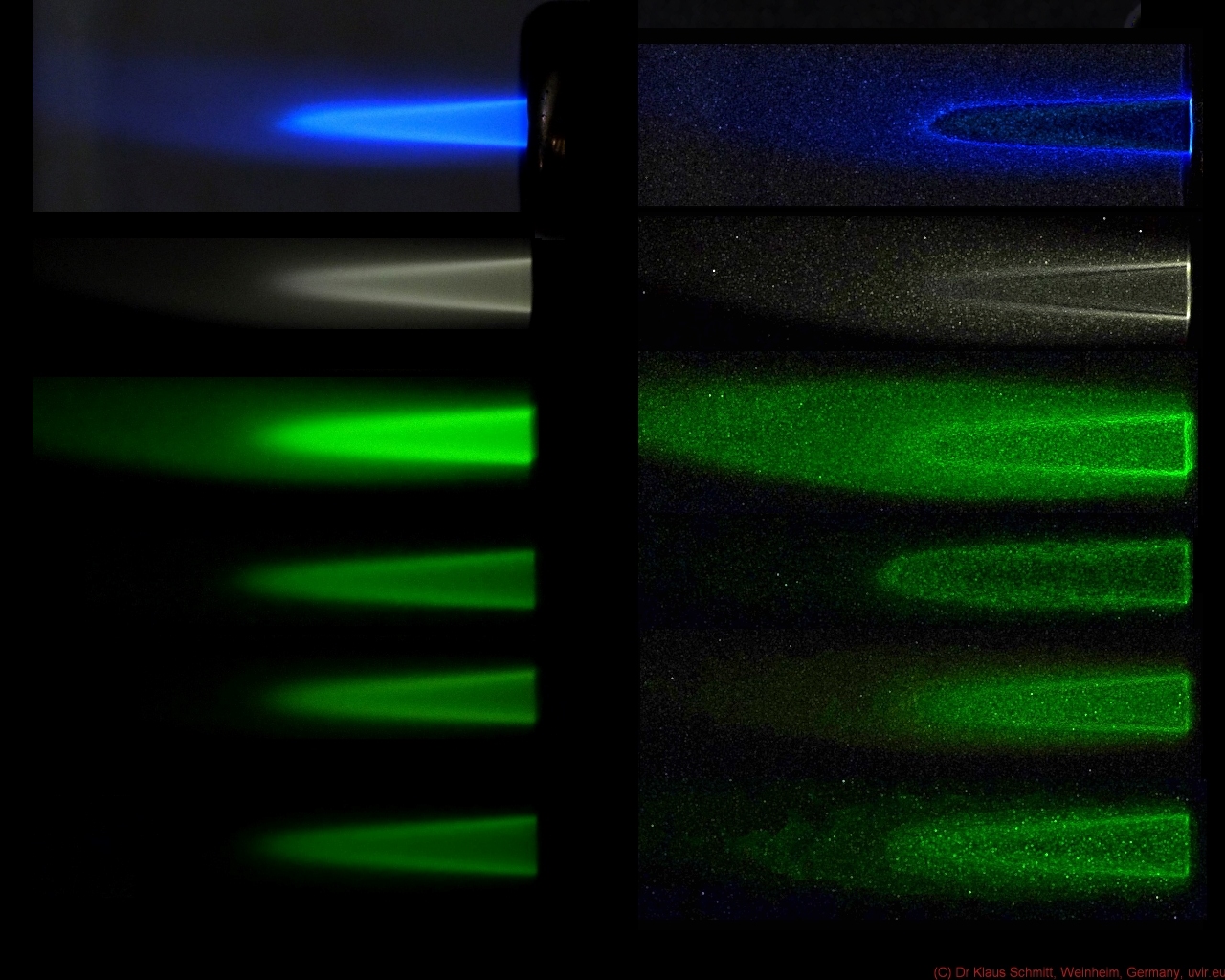
This reveals, that the broadband UV image shows a much broader, but less detailed gas flame, the images shot with narrow(er) filters however, shows a much more detailed flame image and is useful to judge how efficient the gas combustion process is, 313nm being the emission peak wavelength of the OH radical.
I have previously written about that HERE.
Stay tuned, more will follow on that fascinating subject...


Tuesday, August 4, 2015
Deep UV Ultraviolet Reflected Light Photography at UV-B 313nm
Today a proof that reflected UV photography is doable at UV-B using a special, up to NIR blocked, peak 313nm, FWHM 9nm narrowband filter and my special UV camera. Lens used was my UV-Nikkor 105mm quartz flourite lens. All shots were done at f4.5.
[click on image to see a larger one]
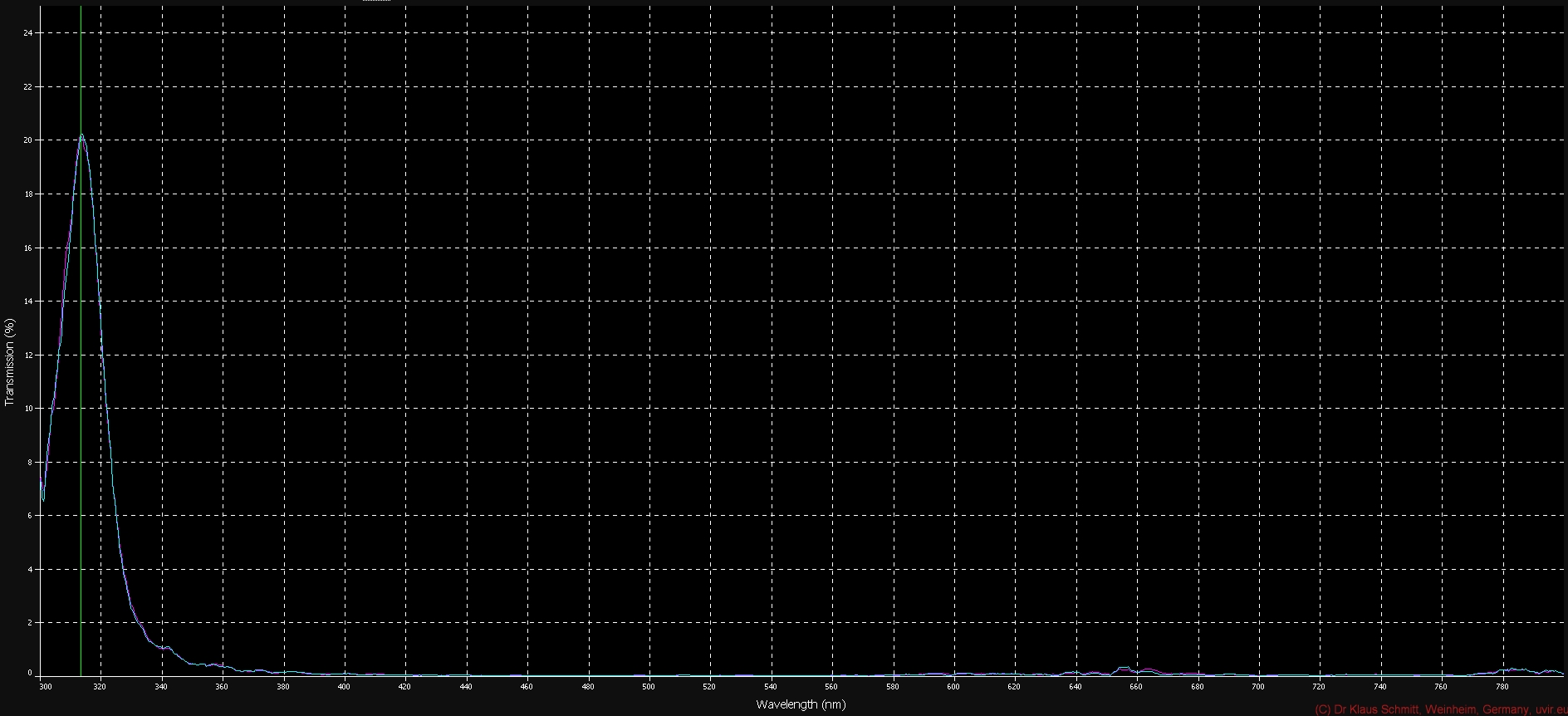
313nm FWHM 9nm Filter transmission spectra:

Reflected UV-B image at 313nm, 0.8 sec exposure:

This was just a proof of concept that reflected UV imaging can be successfully done even at such deep UV-B wavelengths (OH* 313nm) showing the stainless steel combustion emission valves of a central heating system.
In case you were wondering how a flame of a gas torch would look like in UV...
Triptych (top to bottom) Visual light, emitted UV (320-390nm, Baader-U), emitted UV-B (313nm):

Triptych (top to bottom) Visual light, emitted UV (320-390nm, Baader-U), emitted UV-B (313nm) - morph. Gradient:

Diptych (black/white, top to bottom) emitted UV (320-390nm, Baader-U) vs emitted UV-B (313nm):

This reveals, that the broadband UV image shows a much broader, but less detailed gas flame, the 313nm image however, 313nm being the emission peak wavelength of the OH radical, shows a much more detailed flame image and is useful to judge how efficient the gas combustion process is.
Stay tuned, more will follow on that fascinating subject...
[click on image to see a larger one]
313nm FWHM 9nm Filter transmission spectra:
Reflected UV-B image at 313nm, 0.8 sec exposure:

This was just a proof of concept that reflected UV imaging can be successfully done even at such deep UV-B wavelengths (OH* 313nm) showing the stainless steel combustion emission valves of a central heating system.
In case you were wondering how a flame of a gas torch would look like in UV...
Triptych (top to bottom) Visual light, emitted UV (320-390nm, Baader-U), emitted UV-B (313nm):
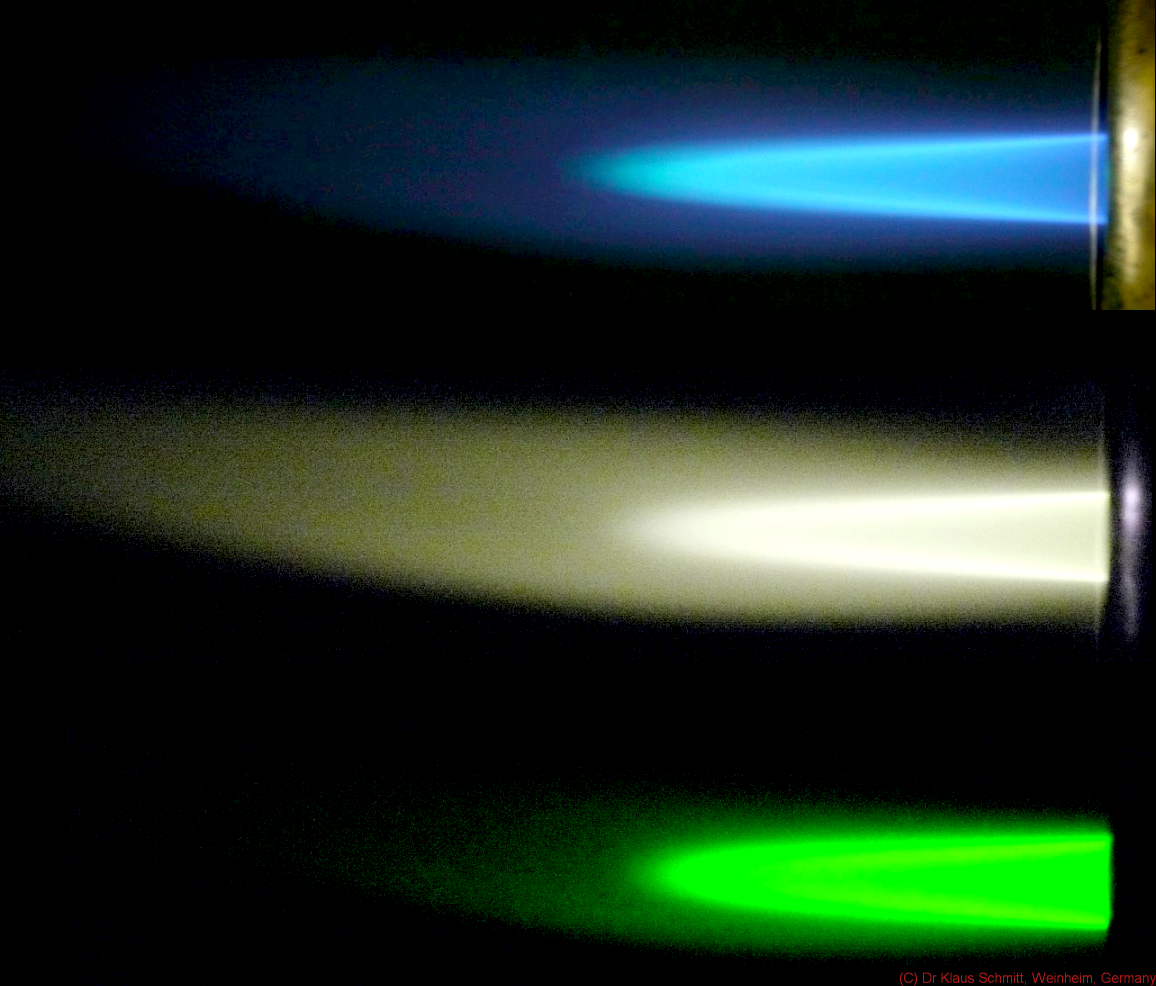
Triptych (top to bottom) Visual light, emitted UV (320-390nm, Baader-U), emitted UV-B (313nm) - morph. Gradient:

Diptych (black/white, top to bottom) emitted UV (320-390nm, Baader-U) vs emitted UV-B (313nm):

This reveals, that the broadband UV image shows a much broader, but less detailed gas flame, the 313nm image however, 313nm being the emission peak wavelength of the OH radical, shows a much more detailed flame image and is useful to judge how efficient the gas combustion process is.
Stay tuned, more will follow on that fascinating subject...
Subscribe to:
Posts (Atom)

