Showing posts with label Rudbeckia missouriensis. Show all posts

Tuesday, June 26, 2018

Missouri Coneflower - Rudbeckia missouriensis in reflected ultraviolet photography and simulated bee and butterfly vision III

Today shots of another Missouri Coneflower - Rudbeckia missouriensis hybride in reflected ultraviolet photography and simulated bee and butterfly vision. All shots were done at f8 in reflected ultraviolet photography using my "work horse" UV filter, the Baader-U filter, as well as my XBV filters for simulated bee and butterfly vision. Lens was a UV-Nikkor 105mm quartz fluorite lens. Light source was sunlight.

[click on image to see a larger one]

Human vision:
 

Reflected UV:
 

Simulated butterfly vision:
 

Simulated bee vision:
 

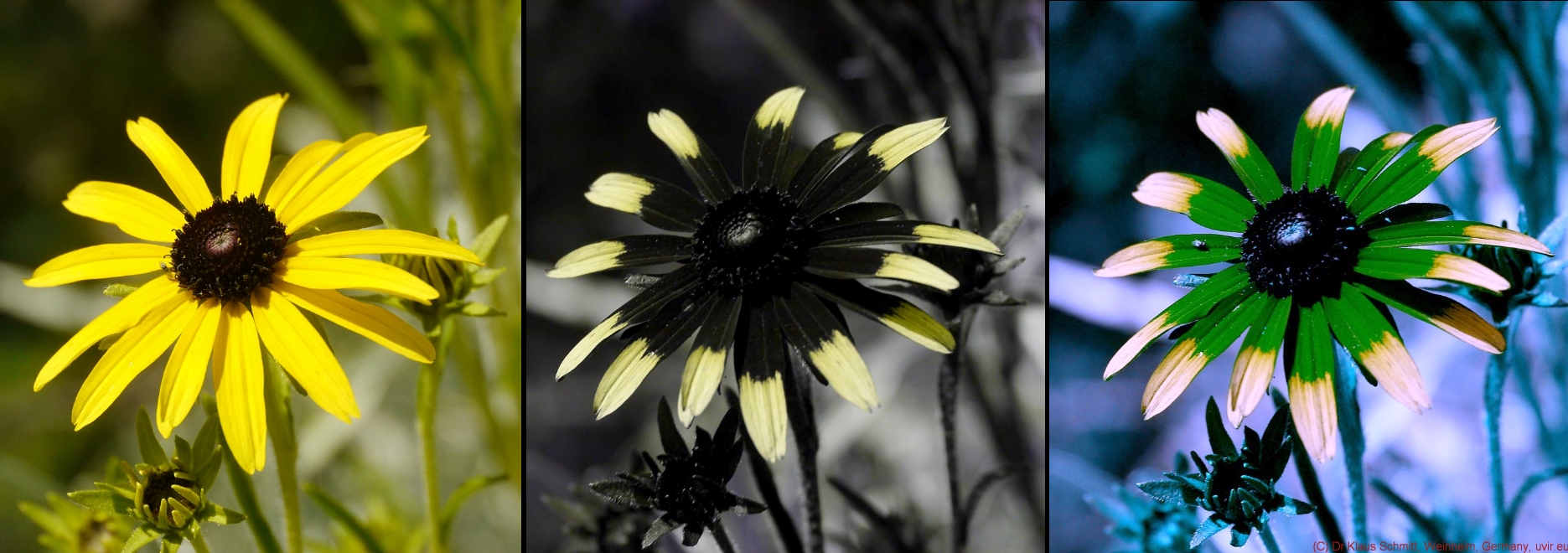
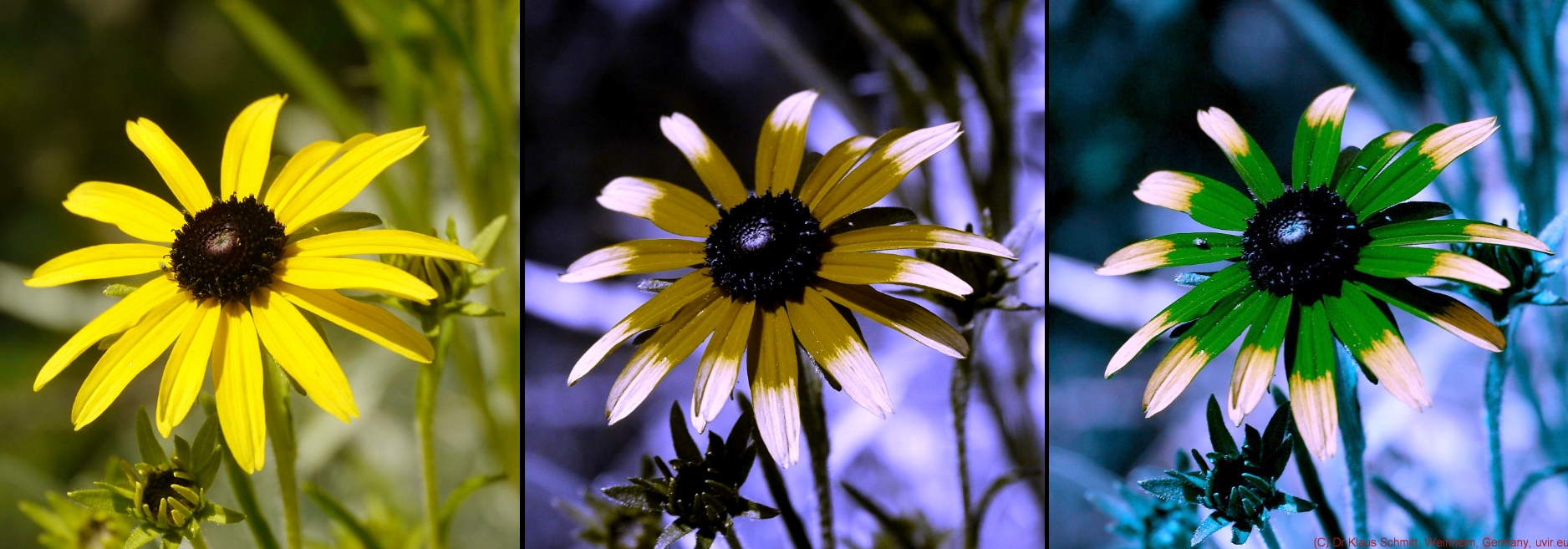
Quadriptych of human vision, UV, simulated butterfly and bee vision (left to right, top to bottom):
 

Missouri Coneflowers have a distinct UV reflection "bulls eye" pattern, its petals have a quite UV dark center and the outside part is quite UV bright around 365nm and all this gets nicely visible, also in simulated bee and butterfly vision.

I have written about that flower before HERE
 
Stay tuned, more will follow on that fascinating subject...

More info on this very interesting field may be found on my site http://www.pbase.com/kds315/uv_photos

Wednesday, June 20, 2018

Missouri Coneflower - Rudbeckia missouriensis in reflected ultraviolet photography and simulated bee and butterfly vision II

Today more shots of a Missouri Coneflower - Rudbeckia missouriensis hybride in reflected ultraviolet photography and simulated bee and butterfly vision. All shots were done at f8 in reflected ultraviolet photography using my "work horse" UV filter, the Baader-U filter, as well as my XBV filters for simulated bee and butterfly vision. Lens was a UV-Nikkor 105mm quartz fluorite lens. Light source was sunlight.

[click on image to see a larger one]

Human vision:
 

Reflected UV:
 

Simulated butterfly vision:
 

Simulated bee vision:
 

Quadriptych of human vision, UV, simulated butterfly and bee vision (left to right, top to bottom):
 

Missouri Coneflowers have a distinct UV reflection "bulls eye" pattern, its petals have a quite UV dark center and the outside part is quite UV bright around 365nm and all this gets nicely visible, also in simulated bee and butterfly vision.

I have written about that flower before HERE
 
Stay tuned, more will follow on that fascinating subject...

More info on this very interesting field may be found on my site http://www.pbase.com/kds315/uv_photos

Missouri Coneflower - Rudbeckia missouriensis in reflected ultraviolet photography and simulated bee and butterfly vision

Today shots of a Missouri Coneflower - Rudbeckia missouriensis hybride in reflected ultraviolet photography and simulated bee and butterfly vision. All shots were done at f8 in reflected ultraviolet photography using my "work horse" UV filter, the Baader-U filter, as well as my XBV filters for simulated bee and butterfly vision. Lens was a UV-Nikkor 105mm quartz fluorite lens. Light source was sunlight.

[click on image to see a larger one]

Human vision:
 

Reflected UV:
 

Simulated butterfly vision:
 

Simulated bee vision:
 

Quadriptych of human vision, UV, simulated butterfly and bee vision (left to right, top to bottom):
 

Missouri Coneflowers have a distinct UV reflection "bulls eye" pattern, its petals have a quite UV dark center and the outside part is quite UV bright around 365nm and all this gets nicely visible, also in simulated bee and butterfly vision.

I have written about that flower before HERE
 
Stay tuned, more will follow on that fascinating subject...

More info on this very interesting field may be found on my site http://www.pbase.com/kds315/uv_photos

Sunday, July 26, 2015

Missouri Coneflower - Rudbeckia missouriensis in reflected ultraviolet photography, simulated butterfly and bee vision III

Today more shots of a group of decorative summer flowers Missouri Coneflower - Rudbeckia missouriensis in reflected ultraviolet photography using my "work horse" UV filter, the Baader-U filter, as well as in simulated butterfly and bee vision using my proprietary XBV filter. Lens was my UV-Nikkor 105mm quartz flourite lens. Light source was sunlight. All shots were done at f8.

[click on image to see a larger one]

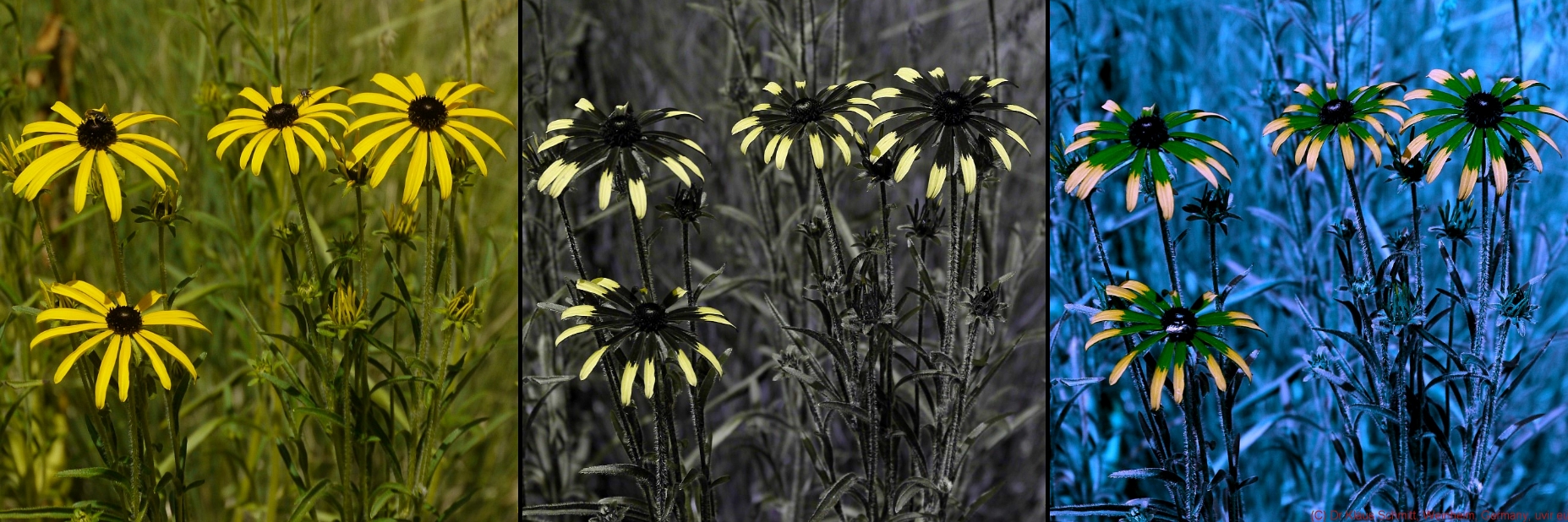
Triptych (left to right): Human vison, reflected UV, simulated bee vision:


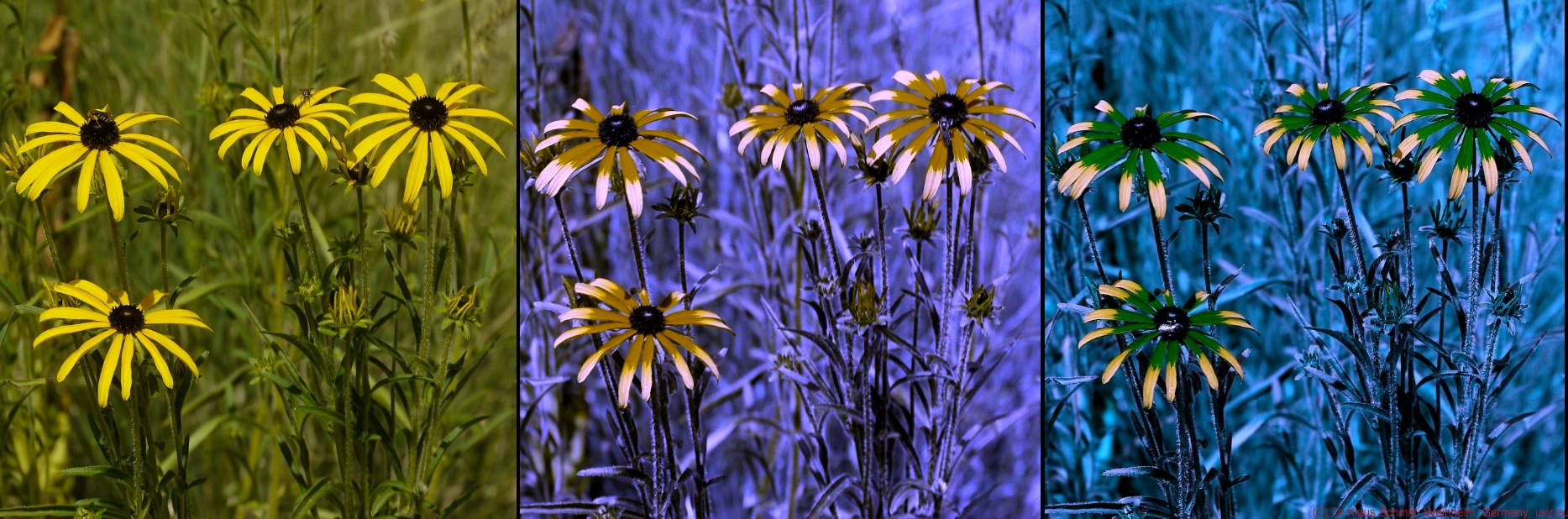
Triptych (left to right): Human vison, simulated butterfly vision, simulated bee vision:
 

This attractive flower shows its very prominent UV bullseye pattern, its petals have an UV dark bottom and very UV bright tips (around 365nm), invisible to us humans, and all this gets nicely visible in this group shot.

I have written about this flower previously HERE
 
Stay tuned, more will follow on that fascinating subject...

Missouri Coneflower - Rudbeckia missouriensis in reflected ultraviolet photography, simulated butterfly and bee vision II

Today shots of a decorative summer flower Missouri Coneflower - Rudbeckia missouriensis in reflected ultraviolet photography using my "work horse" UV filter, the Baader-U filter, as well as in simulated butterfly and bee vision using my proprietary XBV filter. Lens was my UV-Nikkor 105mm quartz flourite lens. Light source was sunlight. All shots were done at f8.

[click on image to see a larger one]

Triptych (left to right): Human vison, reflected UV, simulated bee vision:


Triptych (left to right): Human vison, simulated butterfly vision, simulated bee vision:
 

This attractive flower shows its very prominent UV bullseye pattern, its petals have an UV dark bottom and very UV bright tips (around 365nm), invisible to us humans, and all this gets nicely visible.


Stay tuned, more will follow on that fascinating subject...

Saturday, June 30, 2012

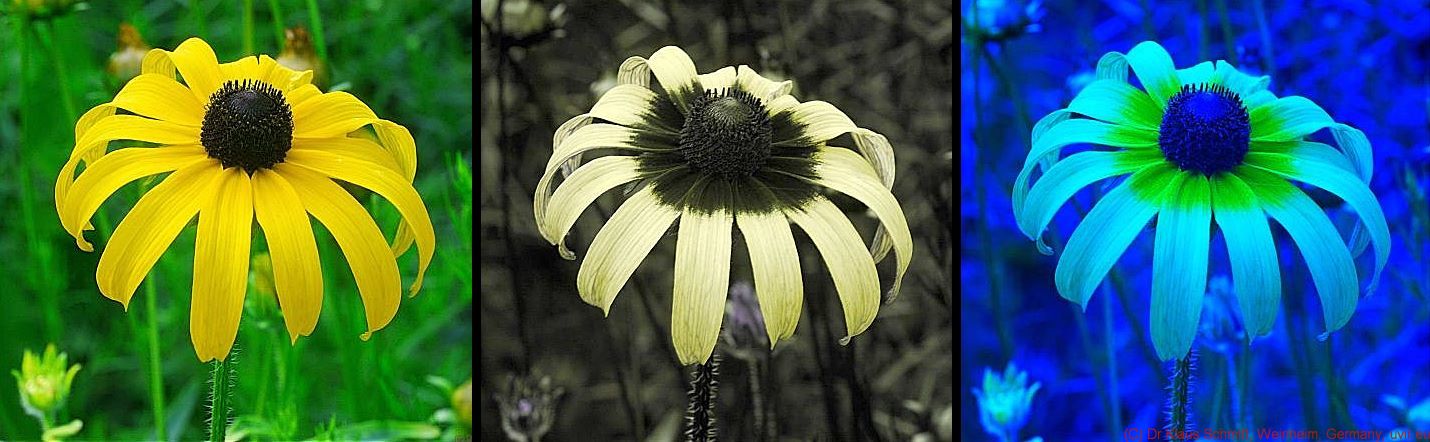
Rudbeckia missouriensis: human vision vs simulated bee vison; reflected UV ultraviolet photography

A walk today in the beautiful Hermanshof Park, Weinheim let me discover some flowering Rudbeckias. So here comes R. missouriensis in its multispectral representation. I took some shots in normal human vision VIS, in UV using the Baader-U filter, as well as in simulated bee vision using my new XBV6 filter respectively.

[click on image to see a larger one]

Visual shot:


UV using Baader-U filter:


Simulated bee vison using XBV6 filter:


VIS-UV-BV triptych:


This Rudbeckia shows its well known "UV bullseye pattern" very nicely.

As you may have noticed, I'm still working on my bee vision (BV) filters; BV6 is one with very intensive colors and much shorter exposure time, due to new filter glass combinations.

Studio shots of R. missouriensis and trichromatic vs tetrachromatic vision is HERE
 
Stay tuned, more will follow on that fascinating subject...

More info on this very interesting field may be found on my site http://www.pbase.com/kds315/uv_photos

Friday, August 7, 2009

Rudbeckia missouriensis - simulated tri- and tetrachromatic vision

Today from my evolving Rudbeckia series a Rudbeckia missouriensis flower portrait in simulated trichromatic and tetrachromatic vision. Birds and butterflies are Tetrachromats, so are able to see UV, blue, green and red, wheras we and bees are trichomats; we see blue, green and red, bees however see UV, blue and green. This is what I have tried here to simulate using specilized filtering techniques.

[click on image to see a larger one]

Simulated tetrachromatic vision (i.e. UV=blue, Blue, Green, Red):


Simulated trichromatic vision (i.e. UV=blue, Blue, Green):


For comparison, this is the normal, human vision version (i.e. Blue, Green, Red):


and here also the pure UV (300-400nm) response showing that prominent UV pattern:


Also here for that flower both simulated tri- and tetrachromatic vision images include that UV pattern plus also the other channels bees (trichromatic) resp. birds/butterflies (tetrachromatic) can see.

And in situ shot example of this flower is HERE

Stay tuned, more will follow on that fascinating subject...

More info on this very interesting field may be found on my site http://www.pbase.com/kds315/uv_photos