Showing posts with label telecompressor. Show all posts

Sunday, July 21, 2013

[UV] Old Achromatic Quartz Fluorite Lens for Ultraviolet Photography (VI)

Today a bit different reflected ultraviolet photography shots, as I tried to work with more open aperture, using that old achromatic quartz fluorite lens, that I have rescued from an older spectrometer system also using my "work horse" UV filter, the Baader-U filter (approx. 320-395nm, peak approx. 350nm) with some Zinnia haageana flowers. Light source was afternoon sunlight.

[click on image to see a larger one]

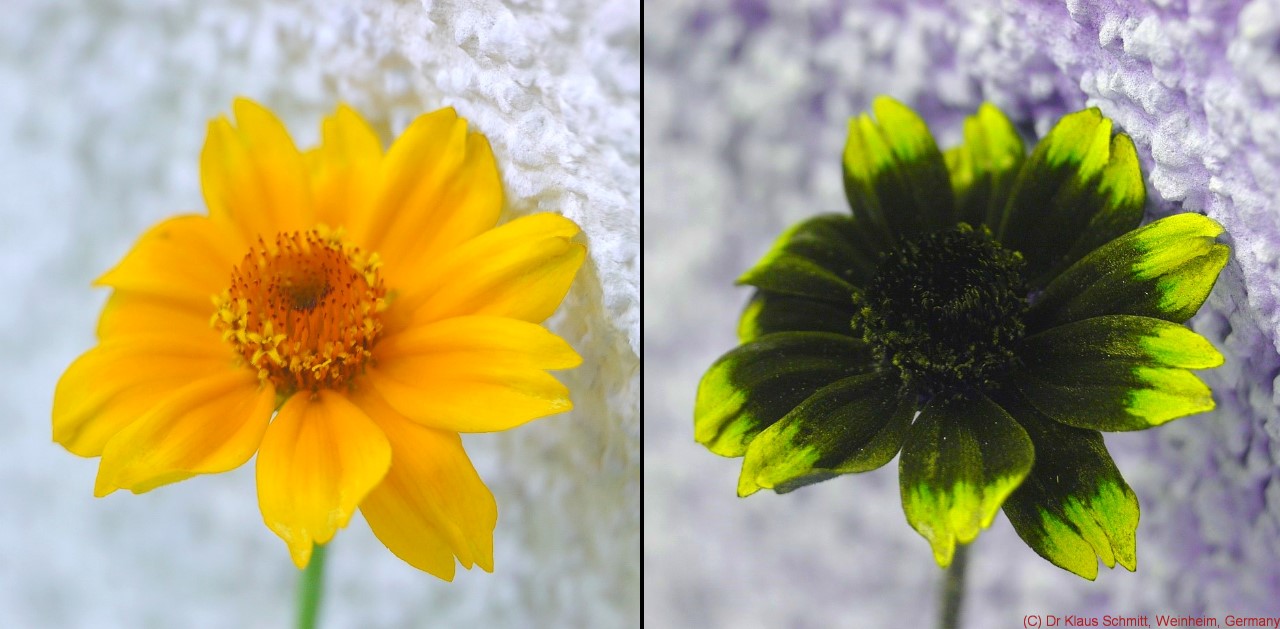
Diptych form VIS , UV for comparison.


Here, the idea was to show not only that unique UV pattern this flower has, contrary to what we see (or don't see) in visible light, but this time with a bit "artsy" touch using wider open aperture and playing with DOF. All that gets nicely visible I think.

More about that used quartz fluorite lens is  HERE.

Stay tuned, more will follow on that fascinating subject...

More info on this very interesting field may be found on my site http://www.pbase.com/kds315/uv_photos

Wednesday, July 17, 2013

[UV] Old Achromatic Quartz Fluorite Lens for Ultraviolet Photography (V)

Today even more reflected ultraviolet photography shots using that old achromatic quartz fluorite lens, that I have rescued from an older spectrometer system also using my "work horse" UV filter, the Baader-U filter (approx. 320-395nm, peak approx. 350nm) with a Zinnia haageana flower. Light source was a Xenon flash system.

[click on image to see a larger one]

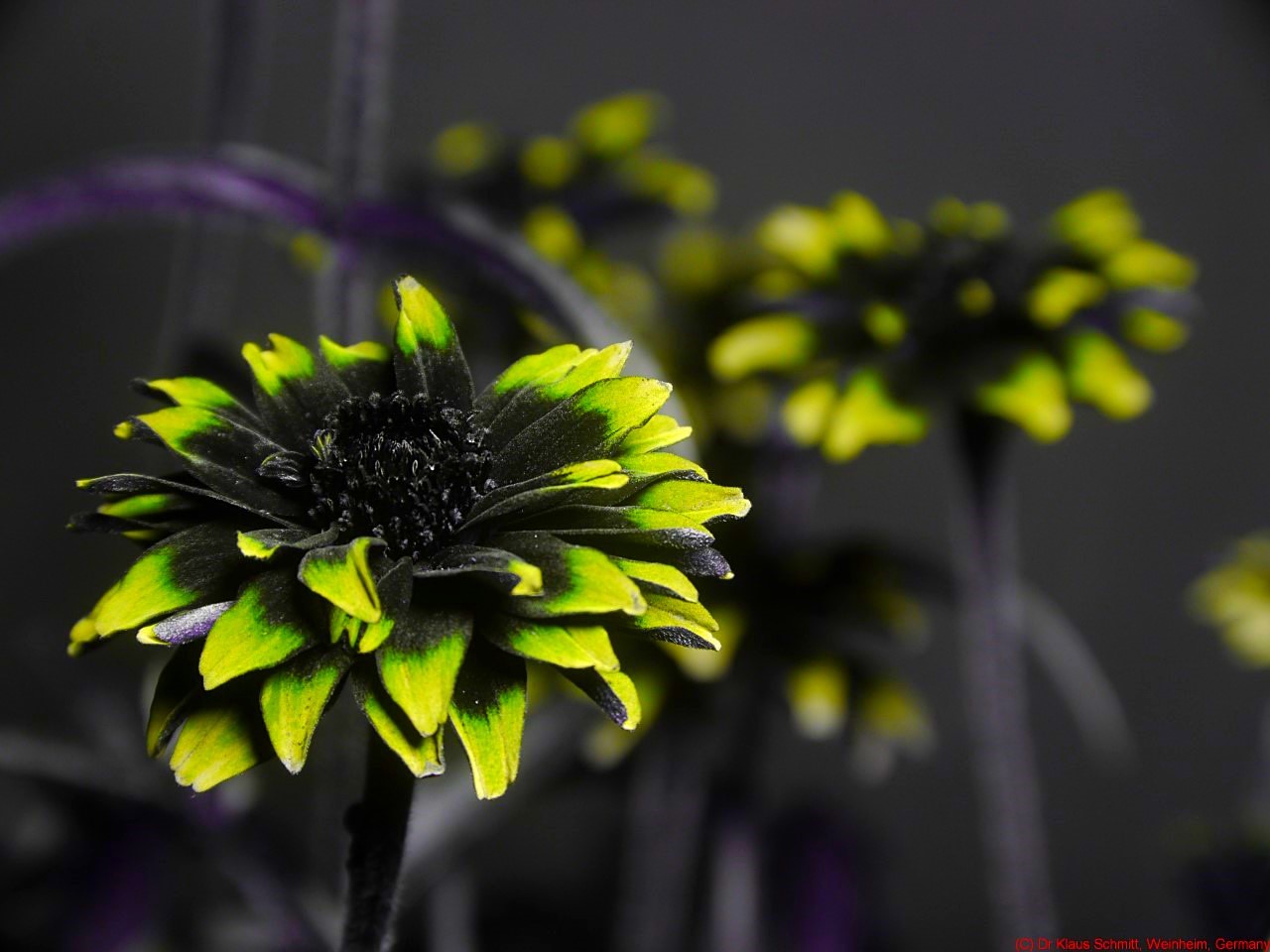
Visible light image using UV/IR Cut filter:
 

UV image using Baader-U filter (approx. 320-395nm, peak approx. 350nm):
 

Diptych form for better comparison:
 

Here, the idea was to show not only that unique UV pattern this flower has, but to also show how that might look like for the somewhat blurry vision a bee has for flowers in further distance (flower in the background). Still the background flowers are noticeable through their unique UV pattern, albeit not as sharp as the one closeup. All that gets nicely visible here.

More about that used quartz fluorite lens is  HERE.

Stay tuned, more will follow on that fascinating subject...

More info on this very interesting field may be found on my site http://www.pbase.com/kds315/uv_photos

[UV] Old Achromatic Quartz Fluorite Lens for Ultraviolet Photography (IV)

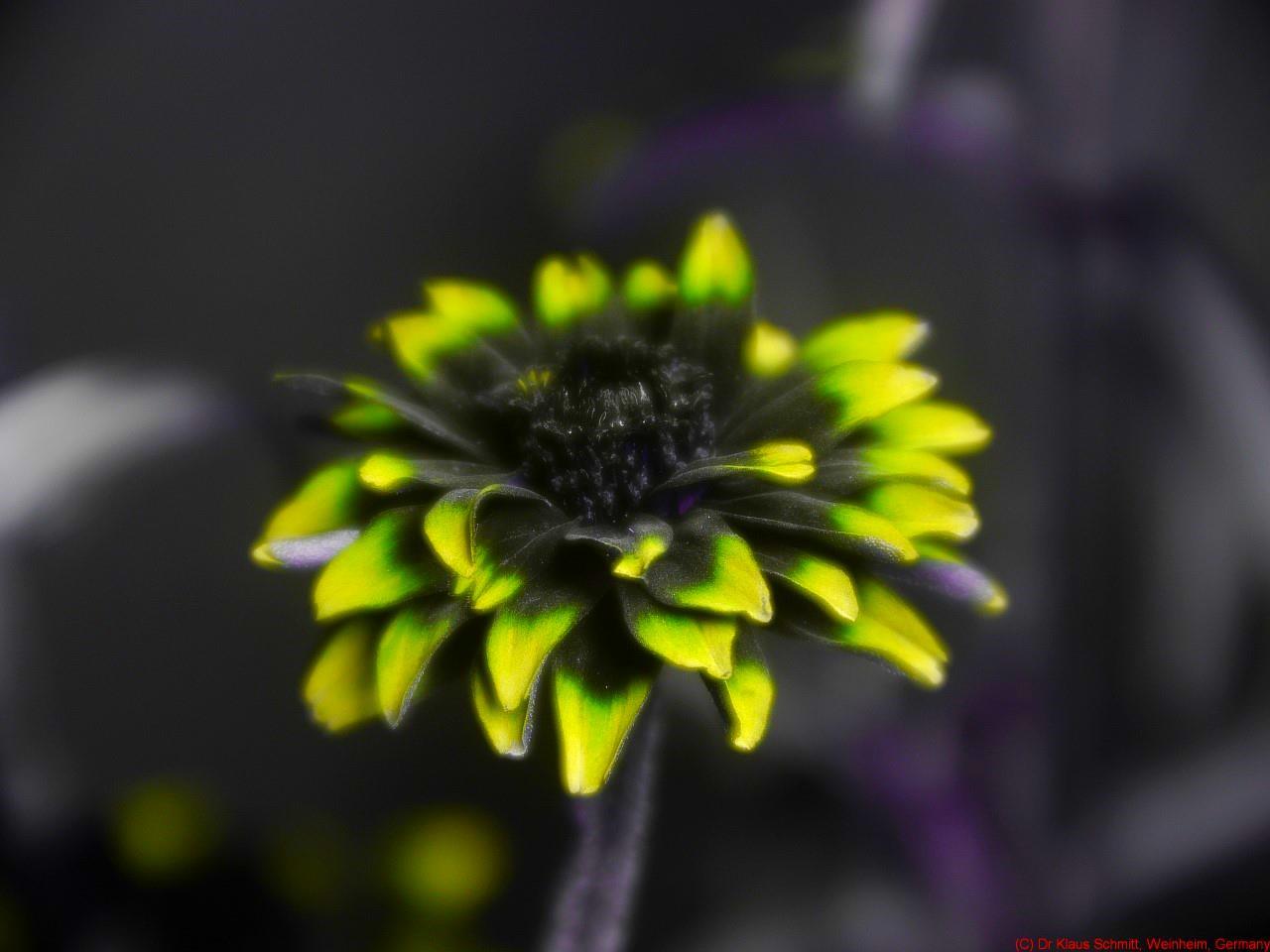
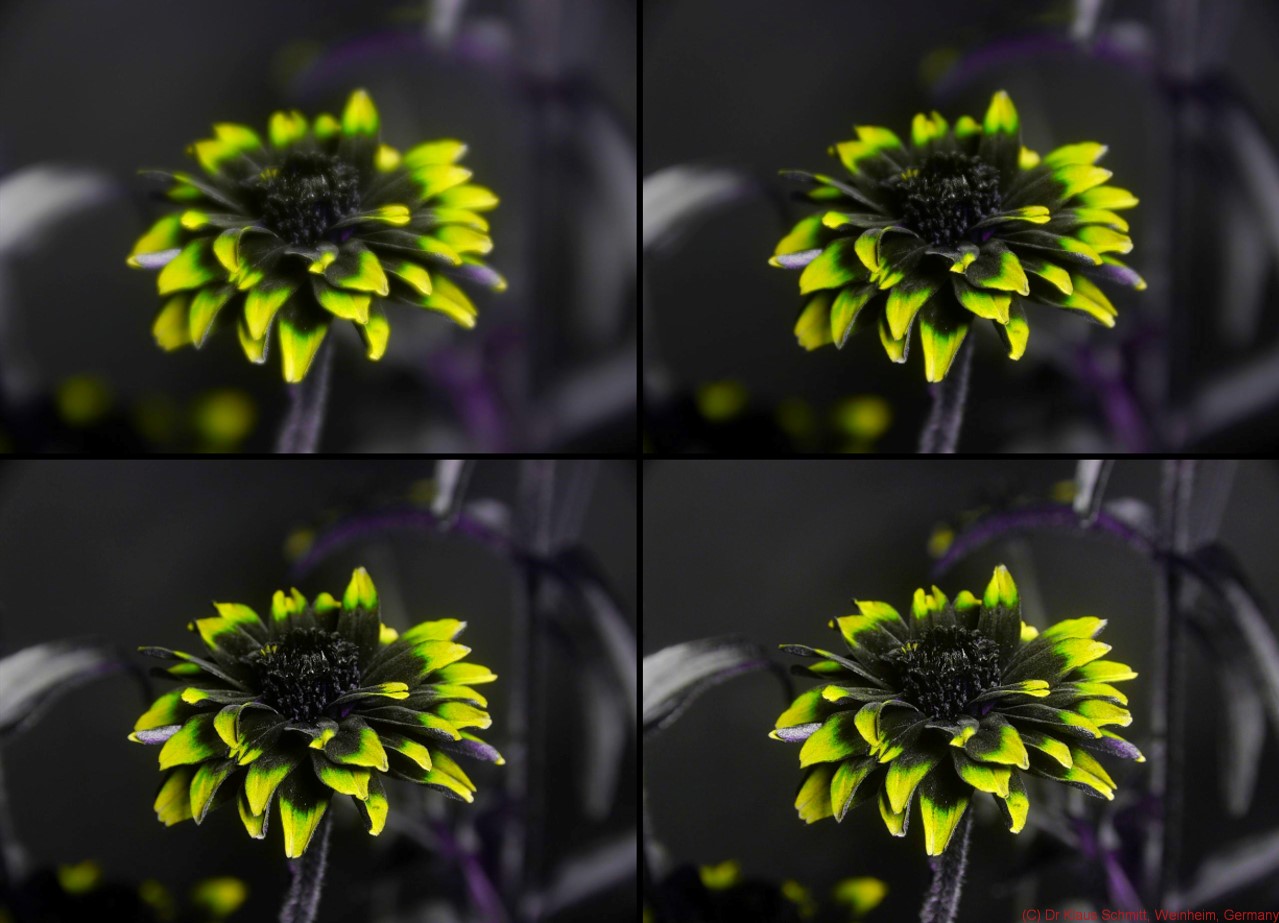
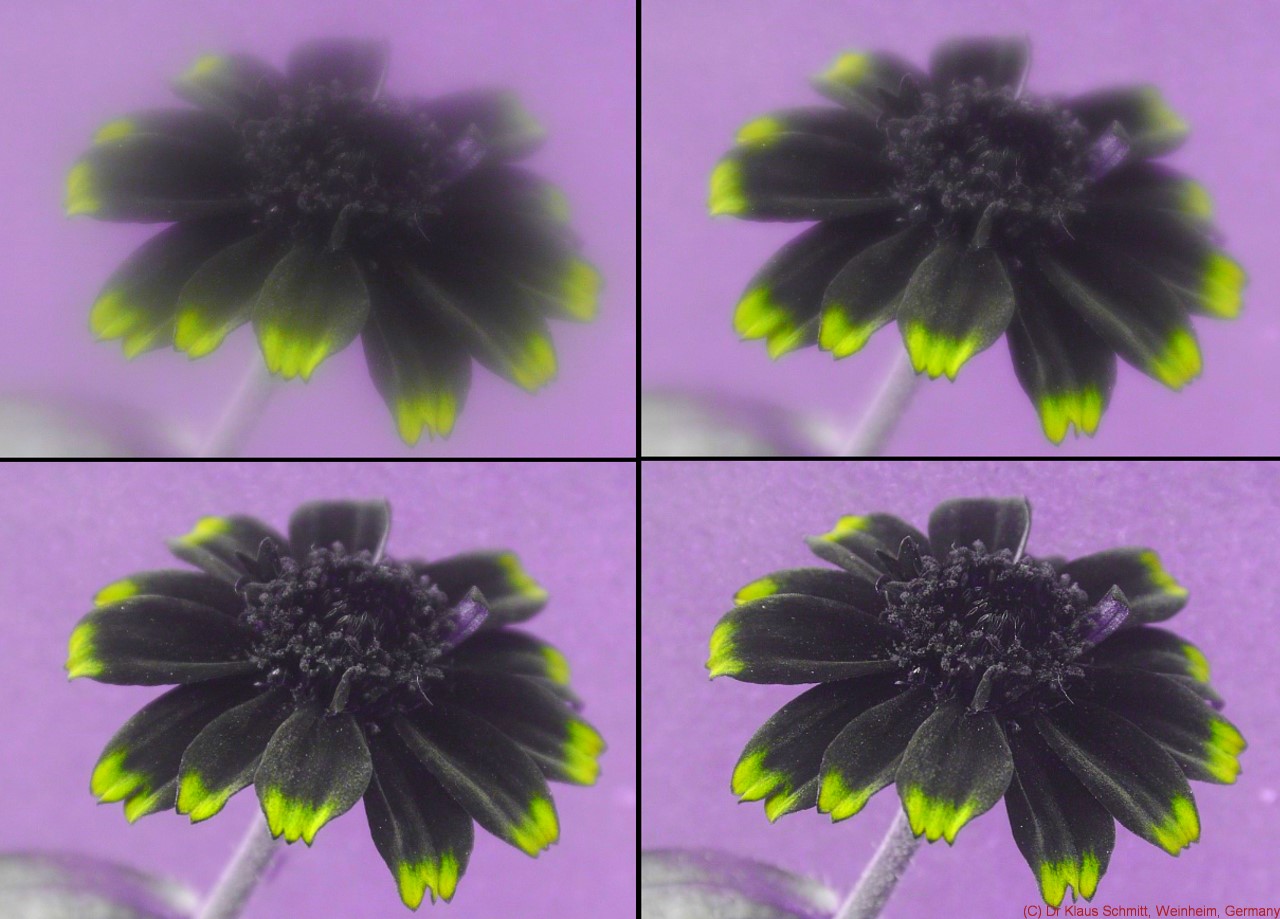
Today more reflected ultraviolet photography shots using that old achromatic quartz fluorite lens, that I have rescued from an older spectrometer system also using my "work horse" UV filter, the Baader-U filter (approx. 320-395nm, peak approx. 350nm) with a Zinnia haageana flower. Light source was a Xenon flash system. All shots were done with variated aperture settings (+1 stop difference per image) to show that influence.

[click on image to see a larger one]


Quadriptych form for better comparison:
 

So, I guess the idea gets clear to get some softness into the image, yet preserve the structure of the flower and especially its unique UV pattern. And that gets nicely visible here.

More about that used quartz fluorite lens is  HERE.

Stay tuned, more will follow on that fascinating subject...

More info on this very interesting field may be found on my site http://www.pbase.com/kds315/uv_photos

Tuesday, July 16, 2013

[UV] Old Achromatic Quartz Fluorite Lens for Ultraviolet Photography (III)

Today reflected ultraviolet photography shots using an old achromatic quartz fluorite lens, that I have rescued from an older spectrometer system also using my "work horse" UV filter, the Baader-U filter (approx. 320-395nm, peak approx. 350nm). Light source was sunlight. All shots were done with variated aperture settings (+1 stop difference per image) to show that influence.

[click on image to see a larger one]

Quadriptych form for better comparison.
Zinnia haageana flower:
 

Sanvitalia procumbens flower:
 

Not that bad, especially since it has a very small focus shift of only about 1/2mm when shooting macro. That added telecompressor CaF2 lens of about 100mm speeds it up considerably, still allowing a very convenient working distance. The variable aperture allows to control the amount of softness that lens has, allowing for "artsy" shots.And of course it transmits flat beyond 300nm.

More about that used quartz fluorite lens is  HERE.

Stay tuned, more will follow on that fascinating subject...

More info on this very interesting field may be found on my site http://www.pbase.com/kds315/uv_photos