Showing posts with label Zinnia angustifolia. Show all posts

Tuesday, August 5, 2014

City of Manchester "Dig the City" focusing on Honey Bee - UV and simulated bee vision photography

The city of Manchester is having their "Dig the City" urban gardening festival again this year 2014 (2-10 August 2014) supported by the National Trust. The Honey Bee is the sign of the city and it may bee seen all over the city of Manchester. Actually the festival is going on right now as I type this!

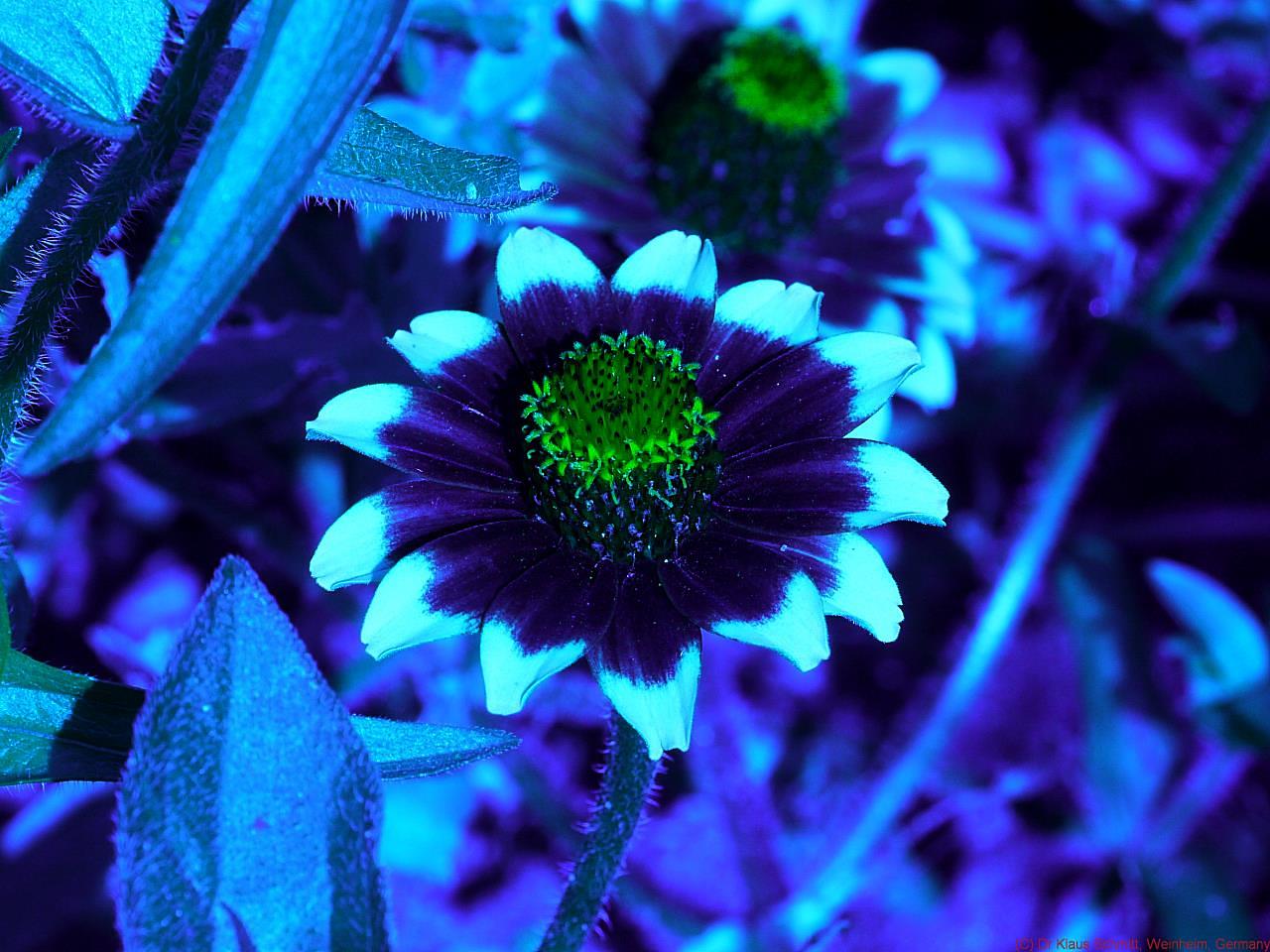
This years focus lies on the rapidly decreasing honey bee populations in the UK and worldwide and what each person can do to help. I have contributed some of my work to that, still photography in VIS and UV, as well as in simulated bee vision, which may be seen in use on the following twitter picture which has just been published:
That flower shown is Zinnia angustifolia, which I have written about it before HERE.
 

So if you are close, consider a visit, it's quite worth it!

Stay tuned, more will follow on that fascinating subject...

More info on this very interesting field may be found on my site http://www.pbase.com/kds315/uv_photos

Tuesday, March 26, 2013

Invisible World Photography - some best of reflected ultraviolet, bee + butterfly vision II

Here a few of my works as shown before, today presented in quadriptych form, which will be on exhibit, also available as large format prints, just for enjoyment for the nice readers here I thought. Please be fair, respect my work and do not download or distribute those around. I don't mind linking, if proper credit is given to me as is visible in each image, but do ask me first please.

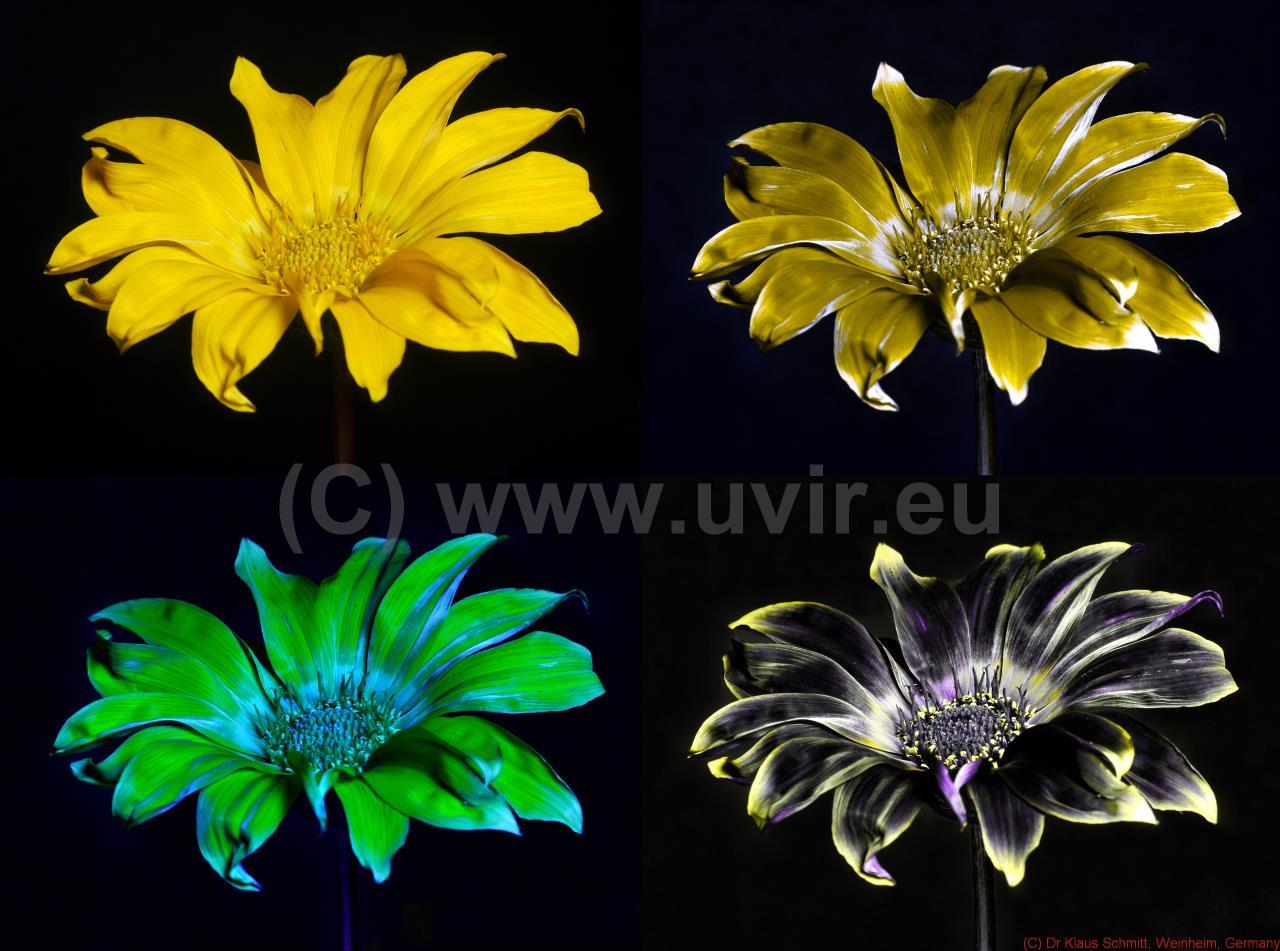
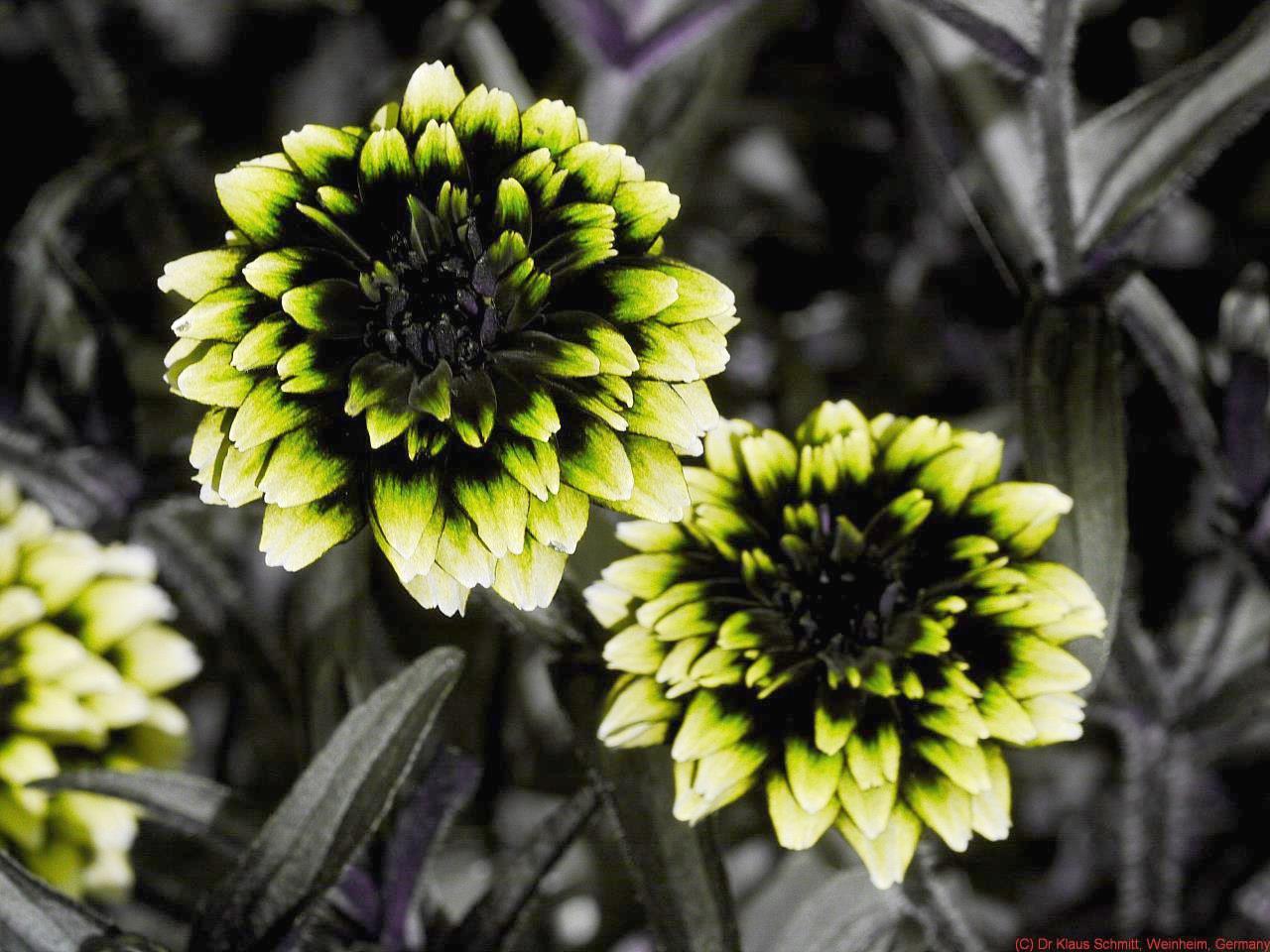
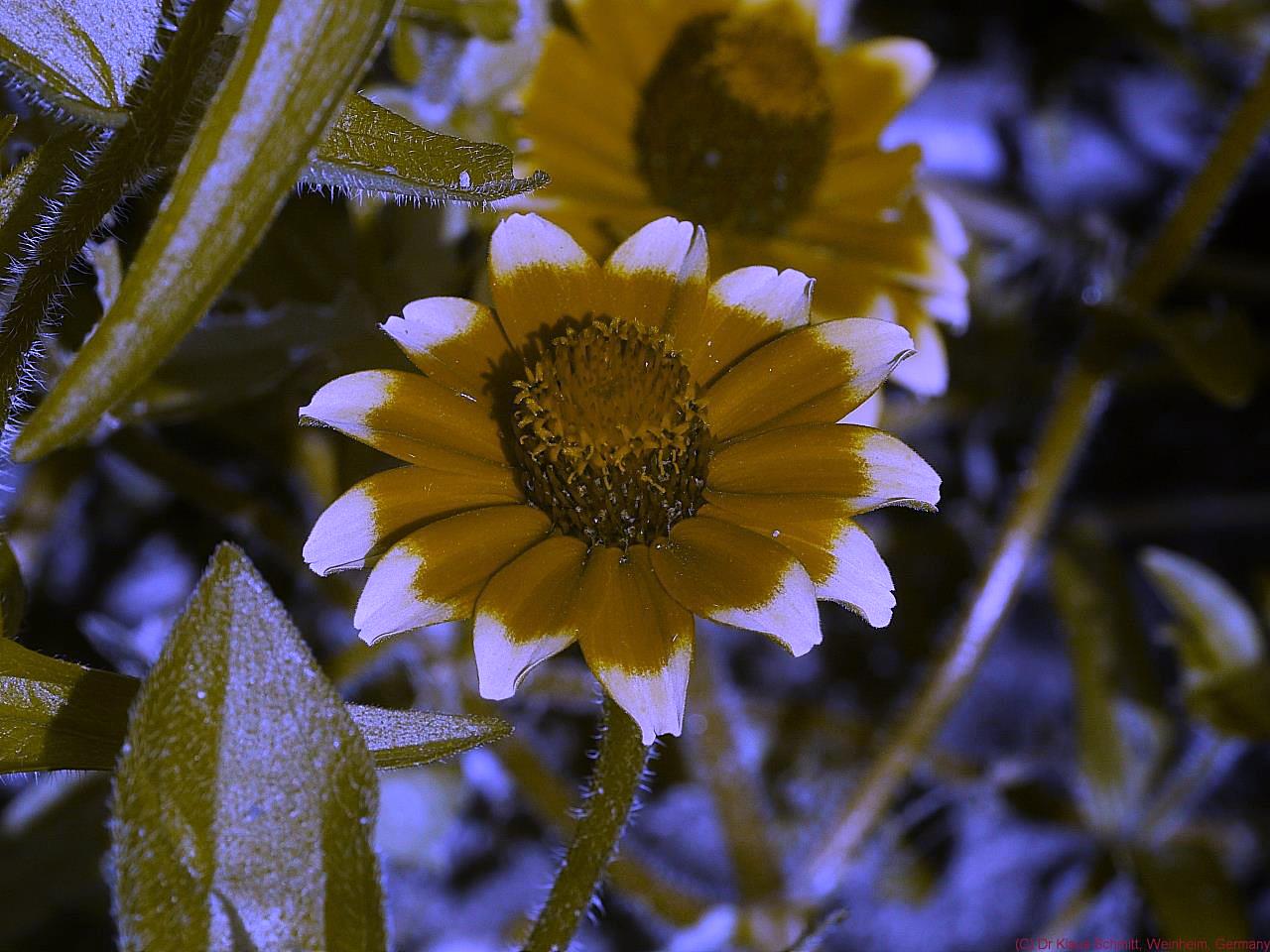
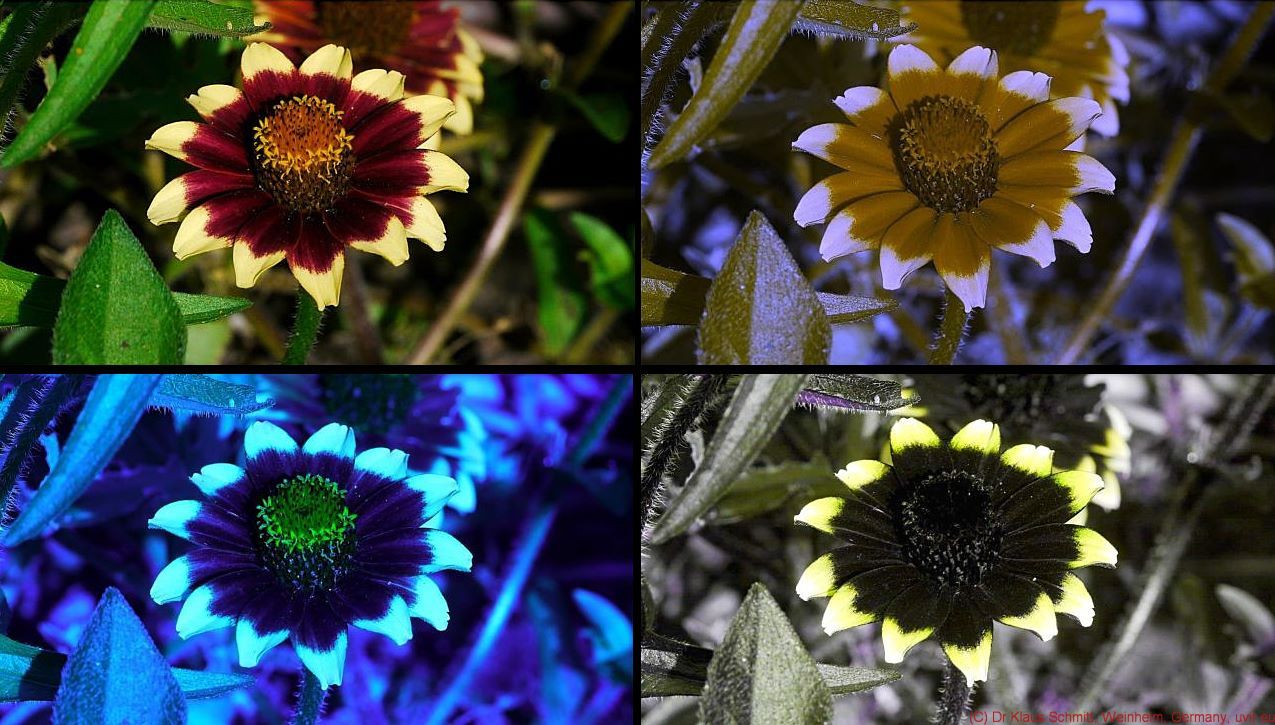
Also those comprise some 10 years of intense work to make visible the beauty around us, even if it is invisible to our human eyes. All colors shown are real, there when I pressed the trigger, no photoshopping done except fine adjustments, using specialized cameras, special filters, special lightsources and very special lenses. The differences in colors visiblem results from the different UV reflection of those flowers, some do not reflect at all, or differently in different parts of the flower.

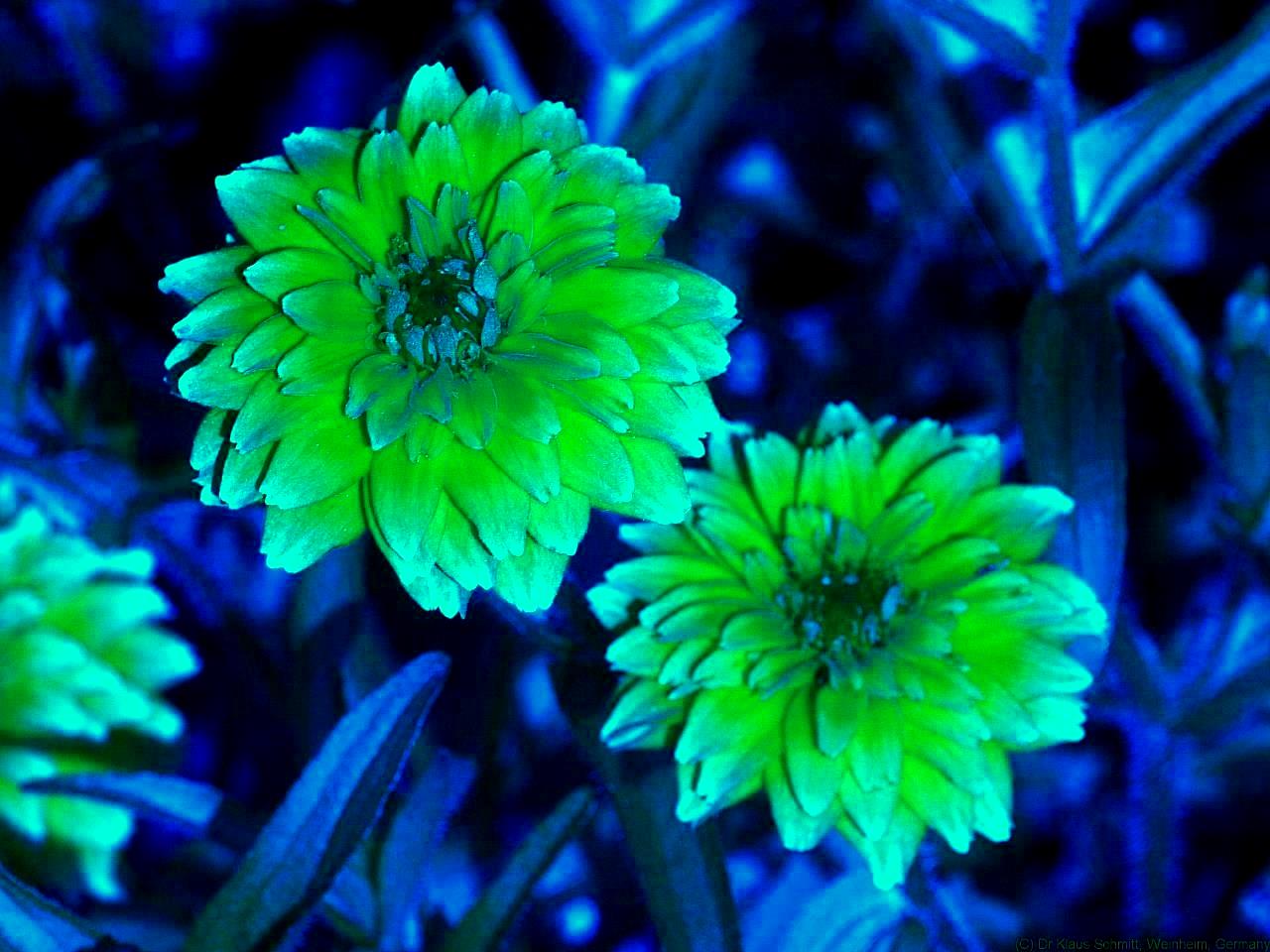
Some insects (butterflies, Bees, ...) and animals (birds, fish, degus,..) can see ultraviolet (UV) light, bees for instance can see Green and Blue and UV, but no RED but butterflies and birds can see Red, Green and Blue and UV, so both can see what we humans cannot see, so I developed an optical mapping method, which allows to simulate, how we would see the world, if we had such special receptive eyes.

Some of my technique is described in my BLOG uvir.eu and I also teach and lecture about that. Ask me if there is some interest, I'm happy to come by!

[click on image to see a larger one]

Zinnia hybride (visible, simulated butterfly, bee vision and ultraviolet UV):


Rudbeckia hirta (visible, simulated butterfly, bee vision and ultraviolet UV):


Gazania sp. (visible, simulated butterfly, bee vision and ultraviolet UV):


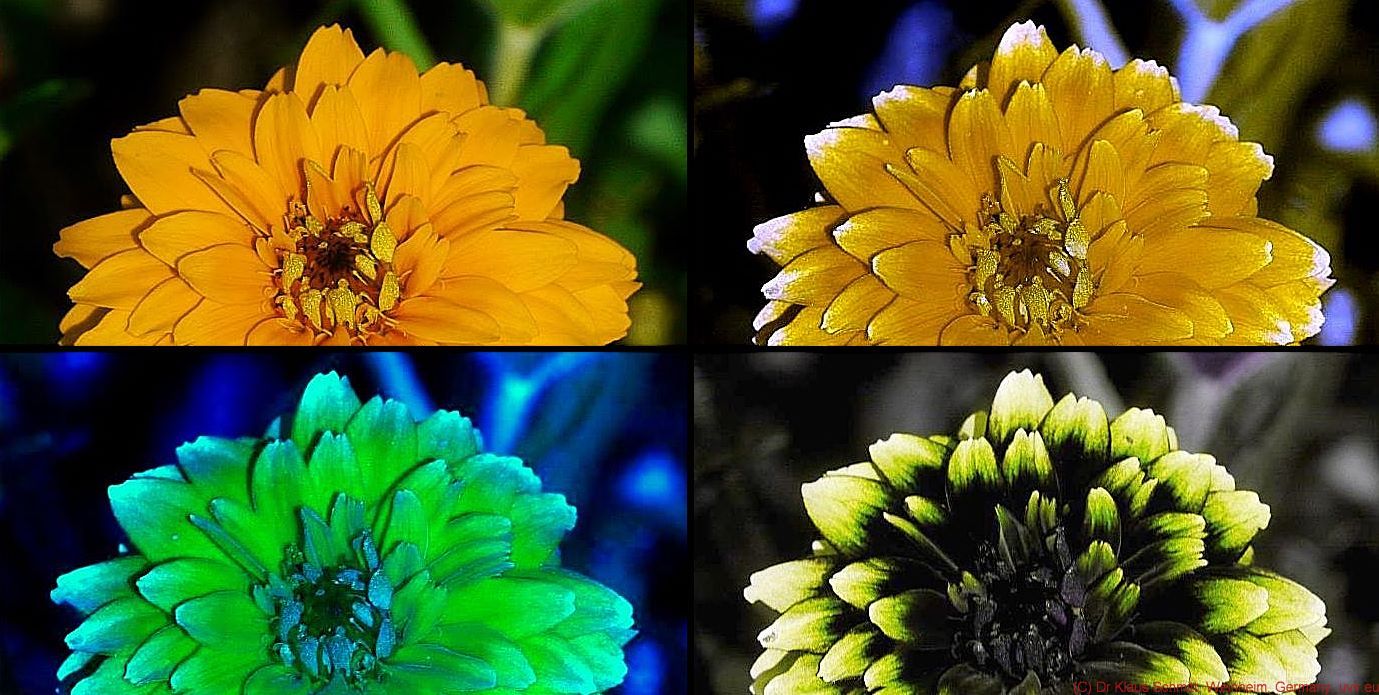
Zinnia angustifolia (1st: visible, bee vision, long wave ultraviolet UV, ultraviolet UV stimulated visible fluorescence; 2nd: short wave ultraviolet UV, shorter wave ultraviolet UV, ultraviolet UV stimulated visible fluorescence, near infrared IR):


watch here, there will be more to come...

I hope you enjoy the beauty!

Stay tuned, more will follow on that fascinating subject...

More info on this very interesting field may be found on my site http://www.pbase.com/kds315/uv_photos

Saturday, July 28, 2012

Zinnia angustifolia mix: human vision vs simulated bee vison; reflected UV ultraviolet photography

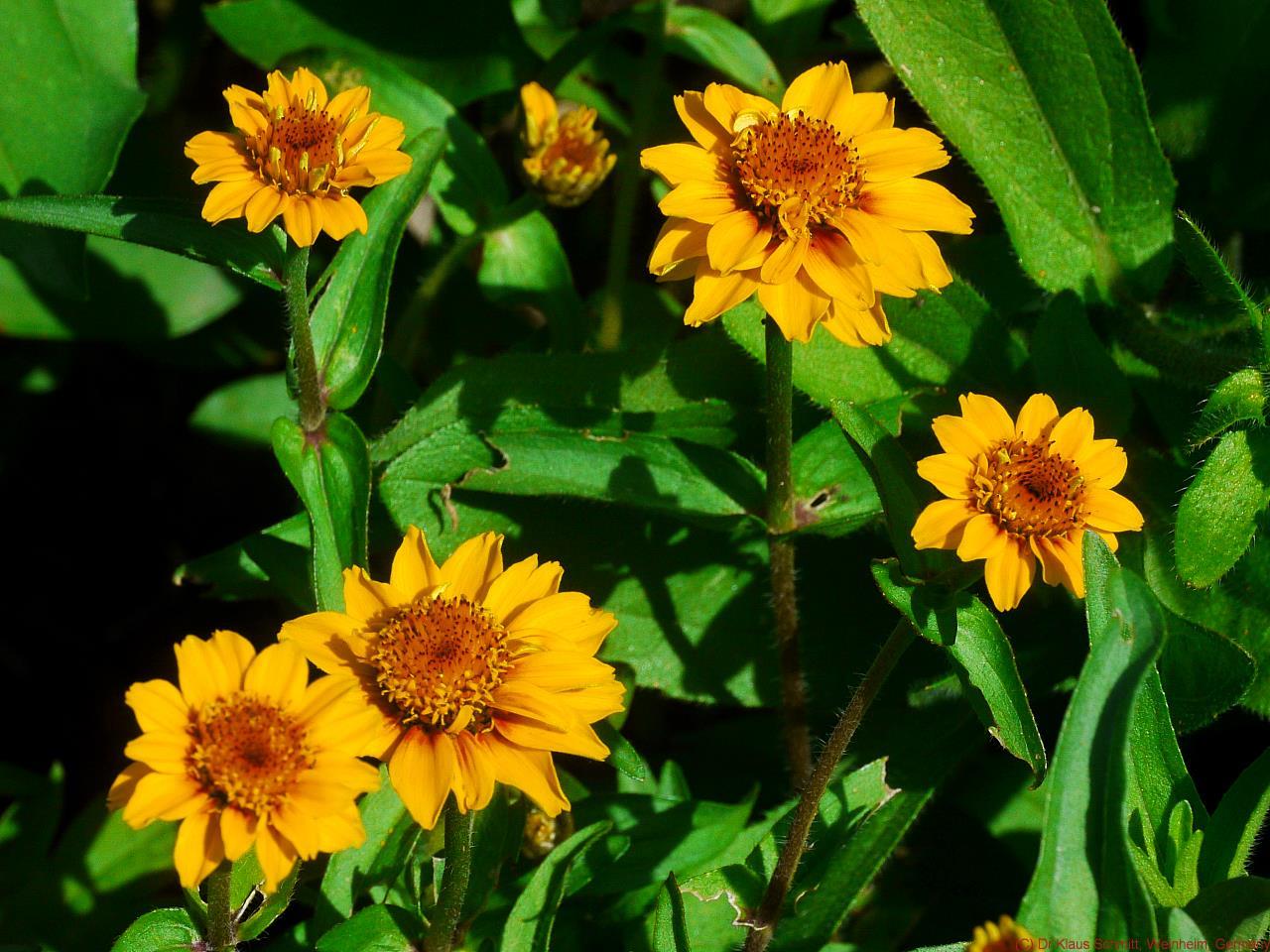
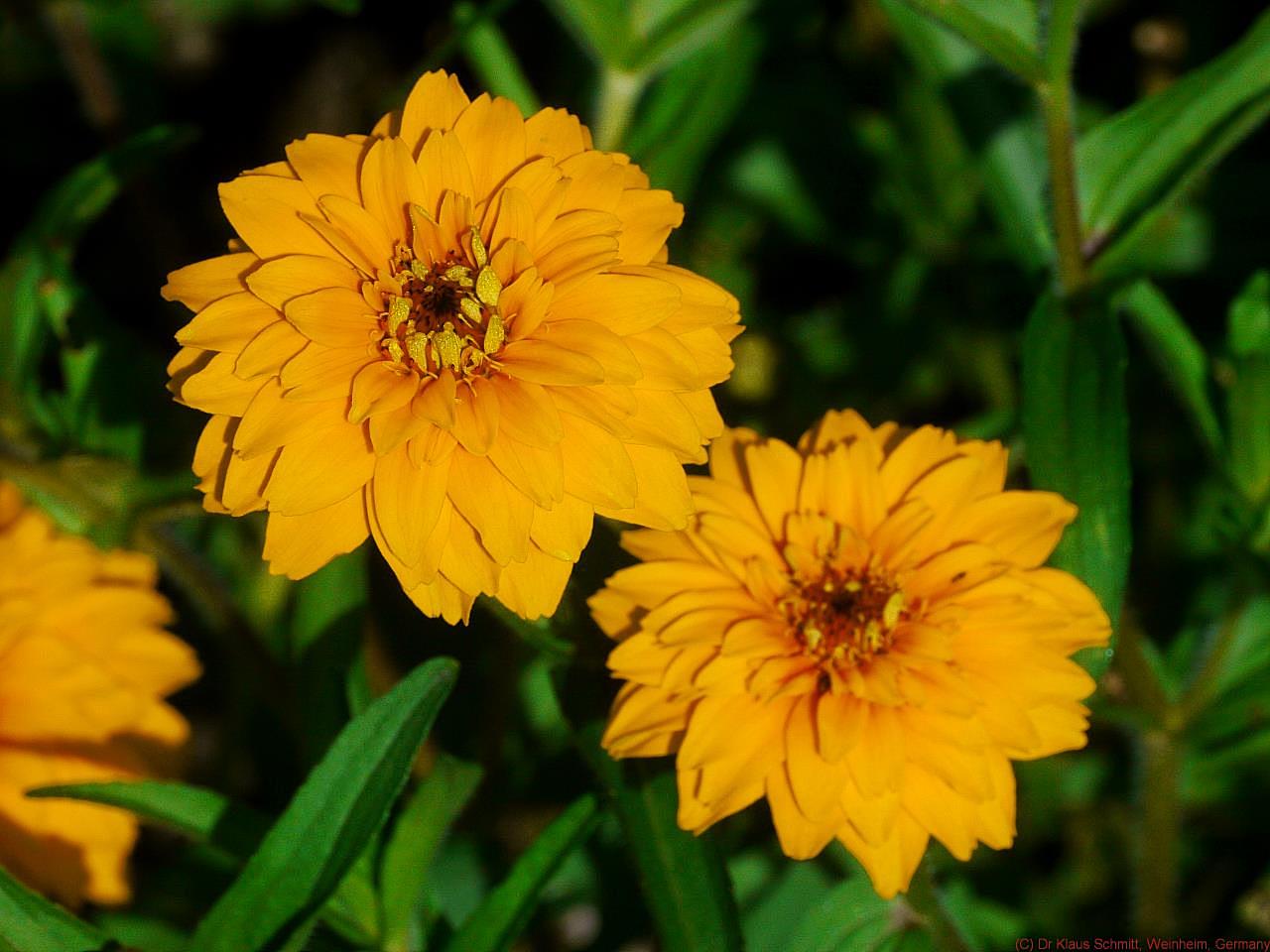
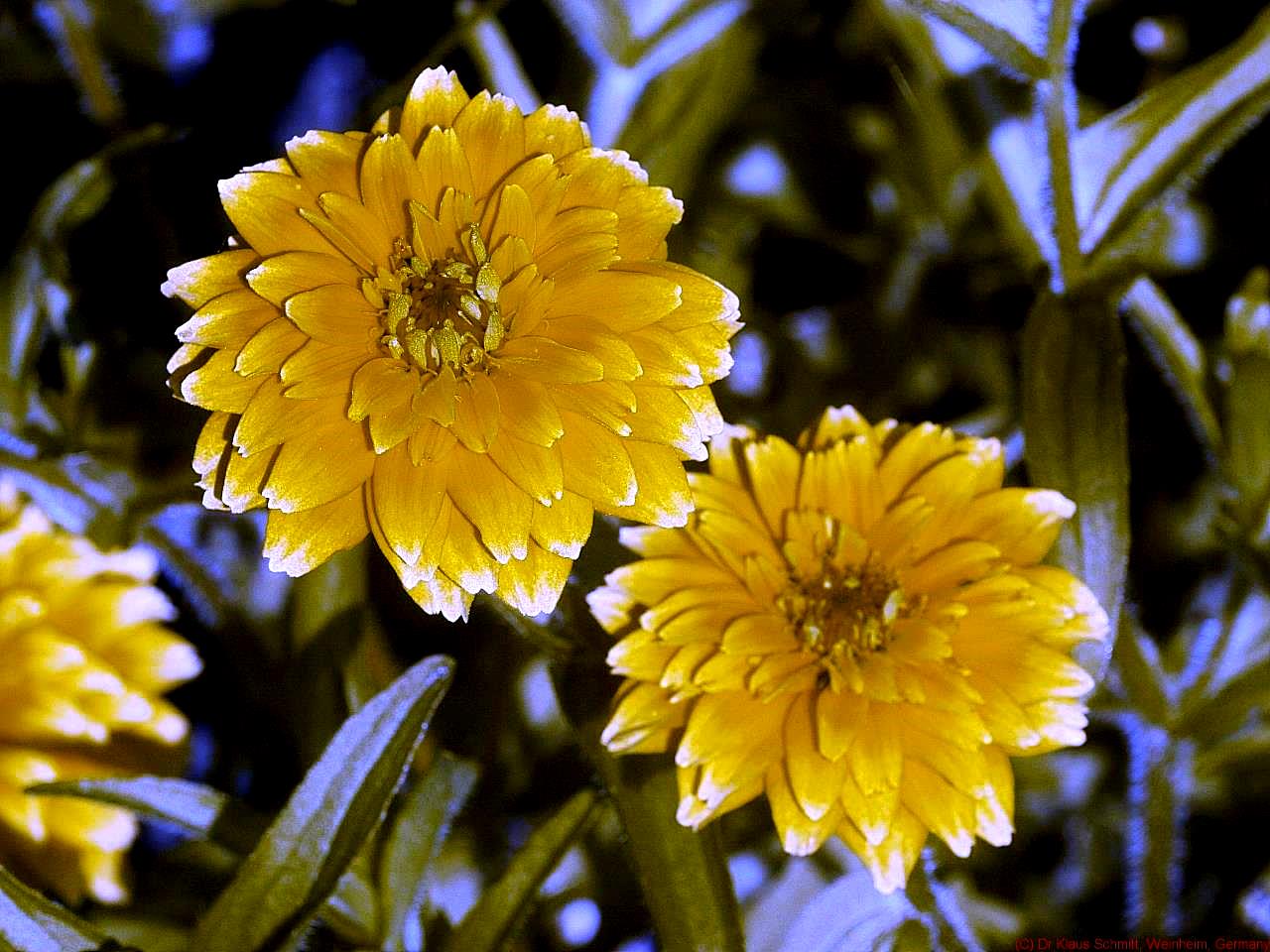
From a walk through the beautiful Hermannshof, Weinheim, Germany I brought home these shots of a mix of flowering Zinnia angustifolia, that special mexican variety. I took some shots in normal human vision VIS, in UV using the Baader-U filter, as well as in simulated bee vision using my XBV2 and new XBV6 filters respectively. So here comes Z. angustifolia in its multispectral representation.

[click on image to see a larger one]

Visual shot:


Simulated bee vison using XBV2 filter:


Simulated bee vison using XBV6 filter:


UV using Baader-U filter:


VIS-BV-UV quadriptych:


These Zinnia specimens expose their well known deep into reaching UV (<360nm) tip pattern very nicely, on some there even is no visible pattern at all.

As you may have noticed, I'm still working on my bee vision (BV) filters; BV6 is one with very intensive colors and much shorter exposure time, due to new filter glass combinations.

Stay tuned, more will follow on that fascinating subject...

More info on this very interesting field may be found on my site http://www.pbase.com/kds315/uv_photos

Sunday, July 1, 2012

Zinnia angustifolia: human vision vs simulated bee vison; reflected UV ultraviolet photography III

Again about Zinnia angustifolia, that special mexican variety. So here a Z. angustifolia flower specimen which has no visible patterns actually shown in its multispectral representation (with patterns). I took some shots at Hermannshof, Weinheim, Germany in normal human vision VIS, in UV using the Baader-U filter, as well as in simulated bee vision using my XBV2 and new XBV6 filters respectively.

[click on image to see a larger one]

Visual shot:


Simulated bee vison using XBV2 filter:


Simulated bee vison using XBV6 filter:


UV using Baader-U filter:


VIS-UV-BV quadriptych:


This Zinnia specimen exposes very nicely its well known deep into reaching UV tip pattern, that is completely invisible in human vision. To map that into a bee vision representation is rather tricky as it reacher quite deep into UV.

As you may have noticed, I'm still working on my bee vision (BV) filters; BV6 is one with very intensive colors and much shorter exposure time, due to new filter glass combinations.

More about these special new filters here later in a seperate entry.


Stay tuned, more will follow on that fascinating subject...

More info on this very interesting field may be found on my site http://www.pbase.com/kds315/uv_photos

Zinnia angustifolia: human vision vs simulated bee vison; reflected UV ultraviolet photography II

Today on my walk in the beautiful Hermanshof Park, Weinheim I discovered more flowering Zinnia angustifolia, that special mexican variety. So here comes another Z. angustifolia, an orange colored variant in its multispectral representation. I took some shots at Hermannshof, Weinheim, Germany in normal human vision VIS, in UV using the Baader-U filter, as well as in simulated bee vision using my new XBV2 and XBV6 filters respectively.

[click on image to see a larger one]

Visual shot:


Simulated bee vison using XBV2 filter:


Simulated bee vison using XBV6 filter:


UV using Baader-U filter:


Here a quadriptych of these:


This Zinnia specimen exposes its well know deep into reaching UV tip pattern very nicely and in teh visible, do not show anything of it at all.

As you may have noticed, I'm still working on my bee vision (BV) filters; BV6 is one with very intensive colors and much shorter exposure time, due to new filter glass combinations.

More about these special new filters here later in a seperate entry.


Stay tuned, more will follow on that fascinating subject...

More info on this very interesting field may be found on my site http://www.pbase.com/kds315/uv_photos

Zinnia angustifolia: human vision vs simulated bee vison; reflected UV ultraviolet photography

A walk today in the beautiful Hermanshof Park, Weinheim let me discover some flowering Zinnia angustifolia, that special mexican variety. So here comes Z. angustifolia in its multispectral representation. I took some shots at Hermannshof, Weinheim, Germany in normal human vision VIS, in UV using the Baader-U filter, as well as in simulated bee vision using my XBV2 and new XBV6 filters respectively.

[click on image to see a larger one]

Visual shot:


Simulated bee vison using XBV2 filter:


Simulated bee vison using XBV6 filter:


UV using Baader-U filter:


VIS-UV-BV quadriptych:


This Zinnia specimen exposes its well known deep into reaching UV tip pattern very nicely.

As you may have noticed, I'm still working on my bee vision (BV) filters; BV6 is one with very intensive colors and much shorter exposure time, due to new filter glass combinations.

More about these special new filters here later in a seperate entry.


Stay tuned, more will follow on that fascinating subject...

More info on this very interesting field may be found on my site http://www.pbase.com/kds315/uv_photos