Showing posts with label Gonepteryx cleopatra. Show all posts

Thursday, December 7, 2023

My multispectral works in High Energy Physics presentation

Well, I never would have expected to see my work in a scientists presentation about most modern high energy particle theories in physics: The German Physicist Dr Michael Weinert has recently been using (with my permission of course) some of my multispectral works in his presentation on high energy particle physics! Source:  "Weinert COMEX7 2023".

Those shown multispectral images of mine where shot in my studio with my "work horse" UV-Nikkor f4.5/105mm quartz fluorite lens using the Baader UV/IR Cut filter and my proprietary XBV filters for simulated bee + butterfly vision. Light source in studio used was a Xenon flash modified for high UV output outside.

[click on image to see a larger one]

Visual image:


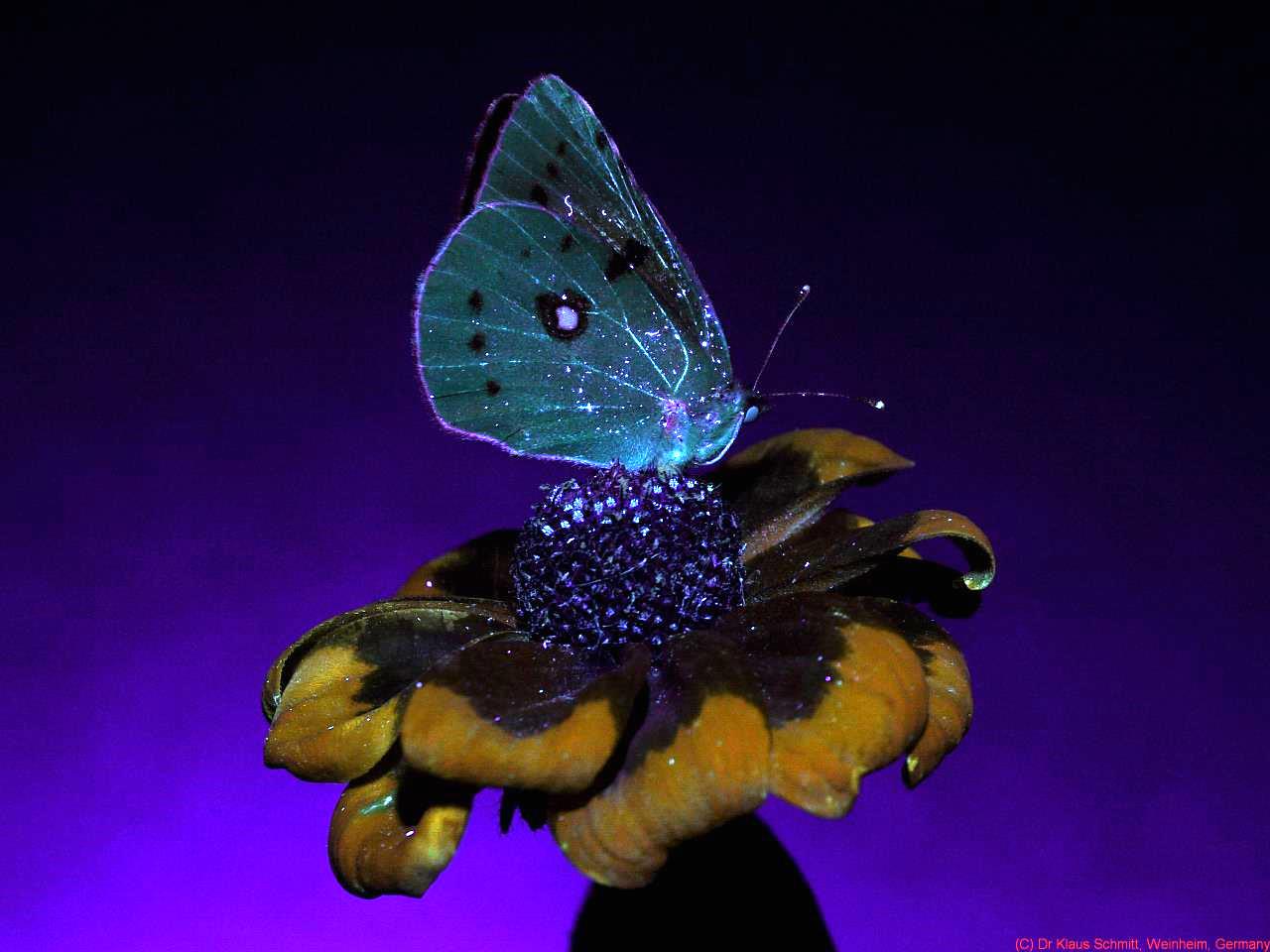
UV induced visible fluorescence using unfiltered commercial 365nm UV torch, no UV blocking:


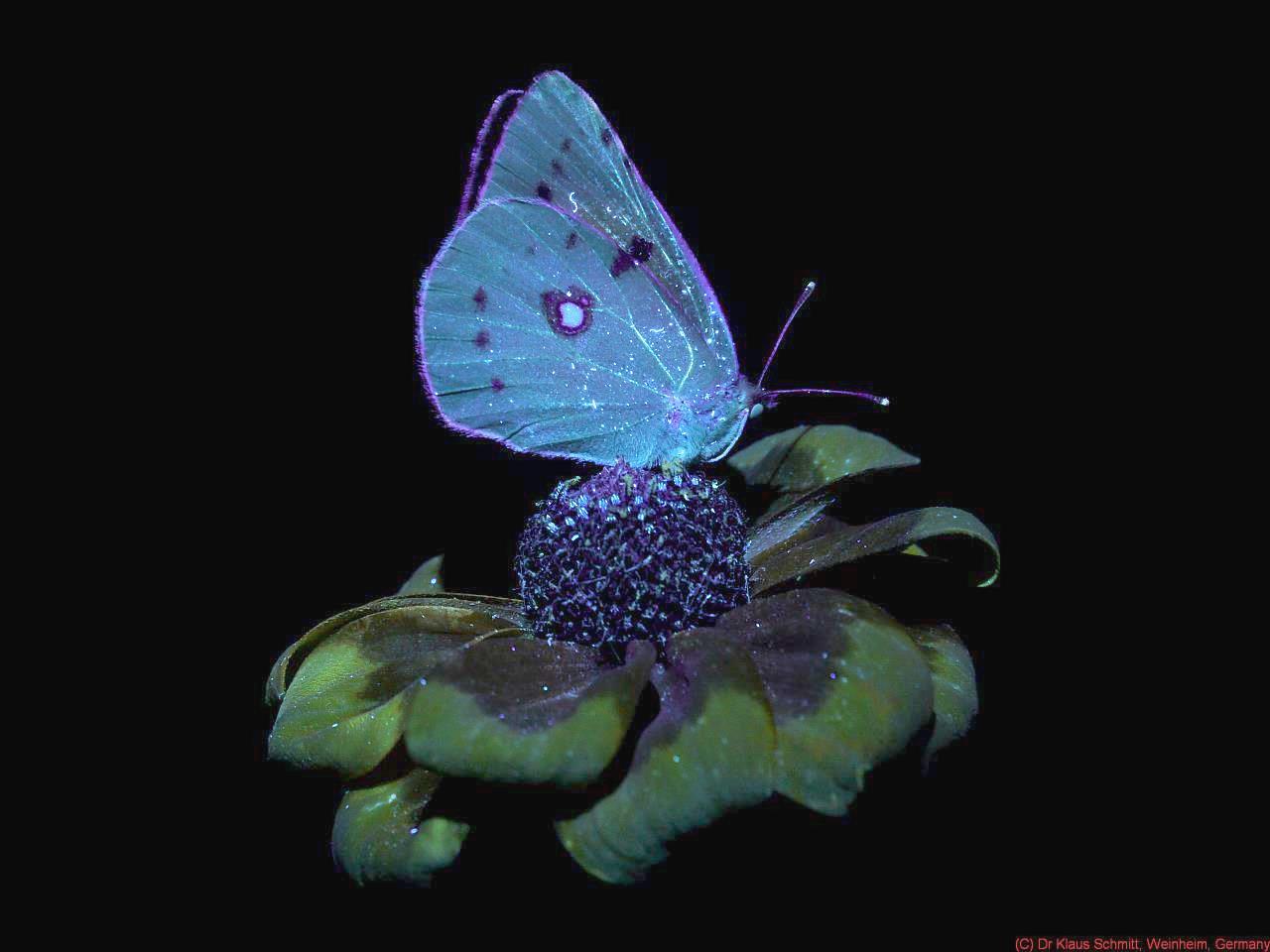
UV induced visible fluorescence commercial 365nm UV torch, UV blocking:


UV induced visible fluorescence using Nichia 365nm UV torch, UV blocking:

Stay tuned, more will follow on that fascinating subject...

More info on this very interesting field may be found on my site http://www.pbase.com/kds315/uv_photos

Friday, July 20, 2012

Gonepteryx cleopatra "Cleo" butterfly on Rudbeckia hirta: human vision; UV ultraviolet stimulated visible fluorescence photography

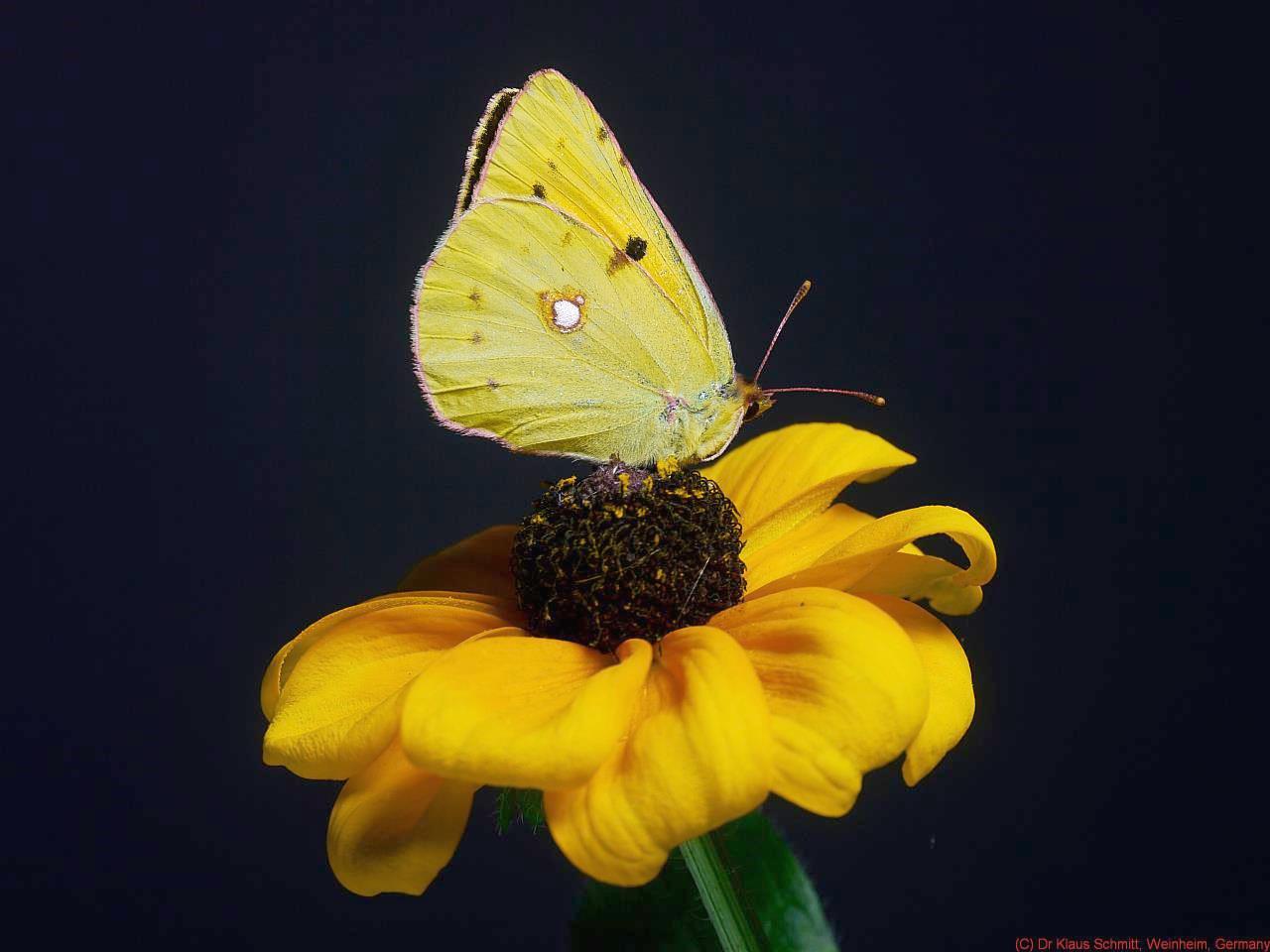
Here now after having shown it in bee vision and reflected ultraviolet photography that Cleo butterfly Gonepteryx cleopatra or Cleopatra, resting on a Rudbeckia hirta flower. Now here shown in normal visible as well as UV induced stimulated visible fluorescence, using various UV sources as well as blocking filters (BG38, Baader UV/IR CUT filter).

[click on image to see a larger one]

Visual image:


UV induced visible fluorescence using unfiltered commercial 365nm UV torch, no UV blocking:


UV induced visible fluorescence commercial 365nm UV torch, UV blocking:


UV induced visible fluorescence using Nichia 365nm UV torch, UV blocking:
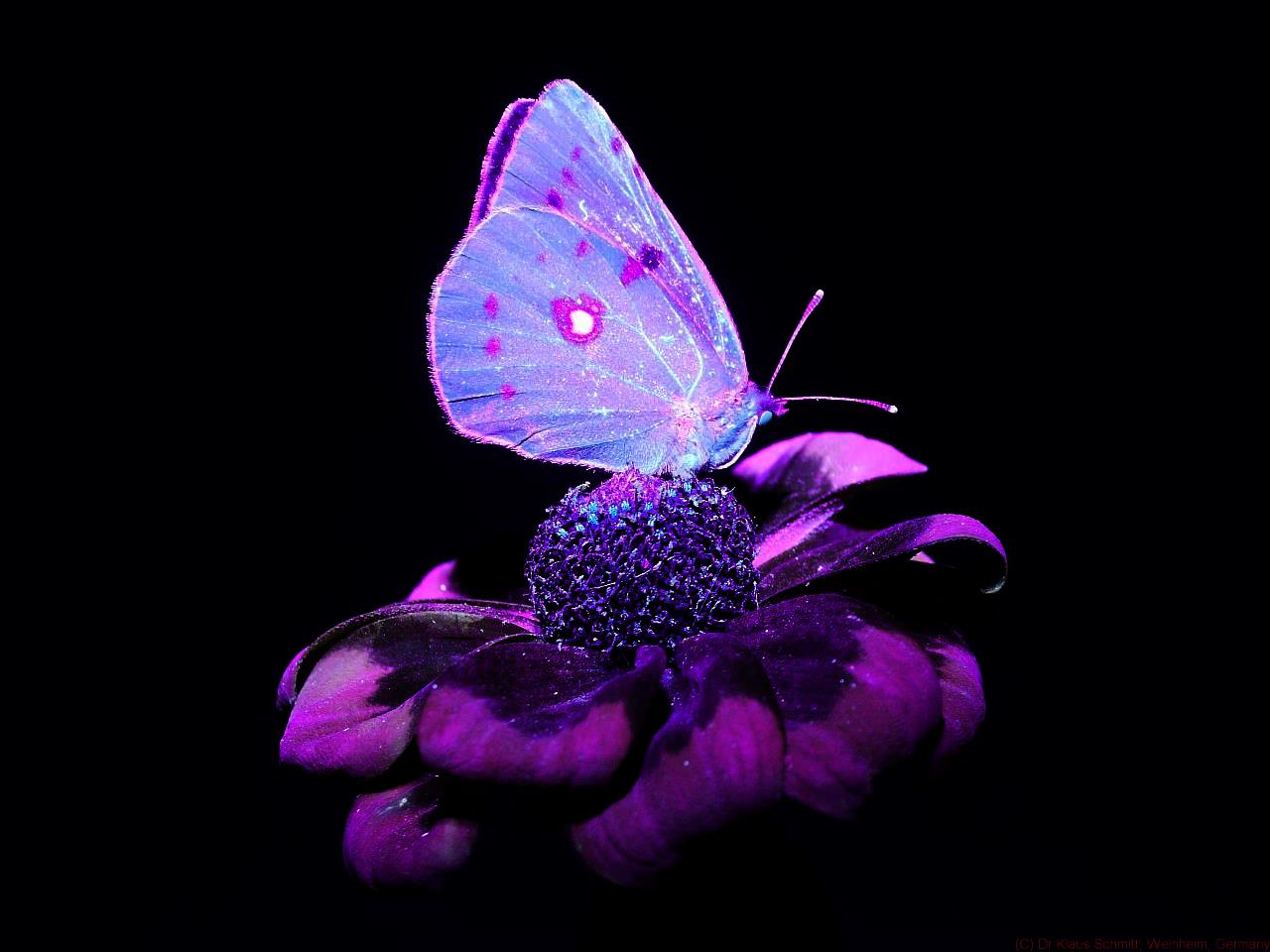

UV induced visible fluorescence using UV filtered Nichia 365nm UV torch, UV blocking:
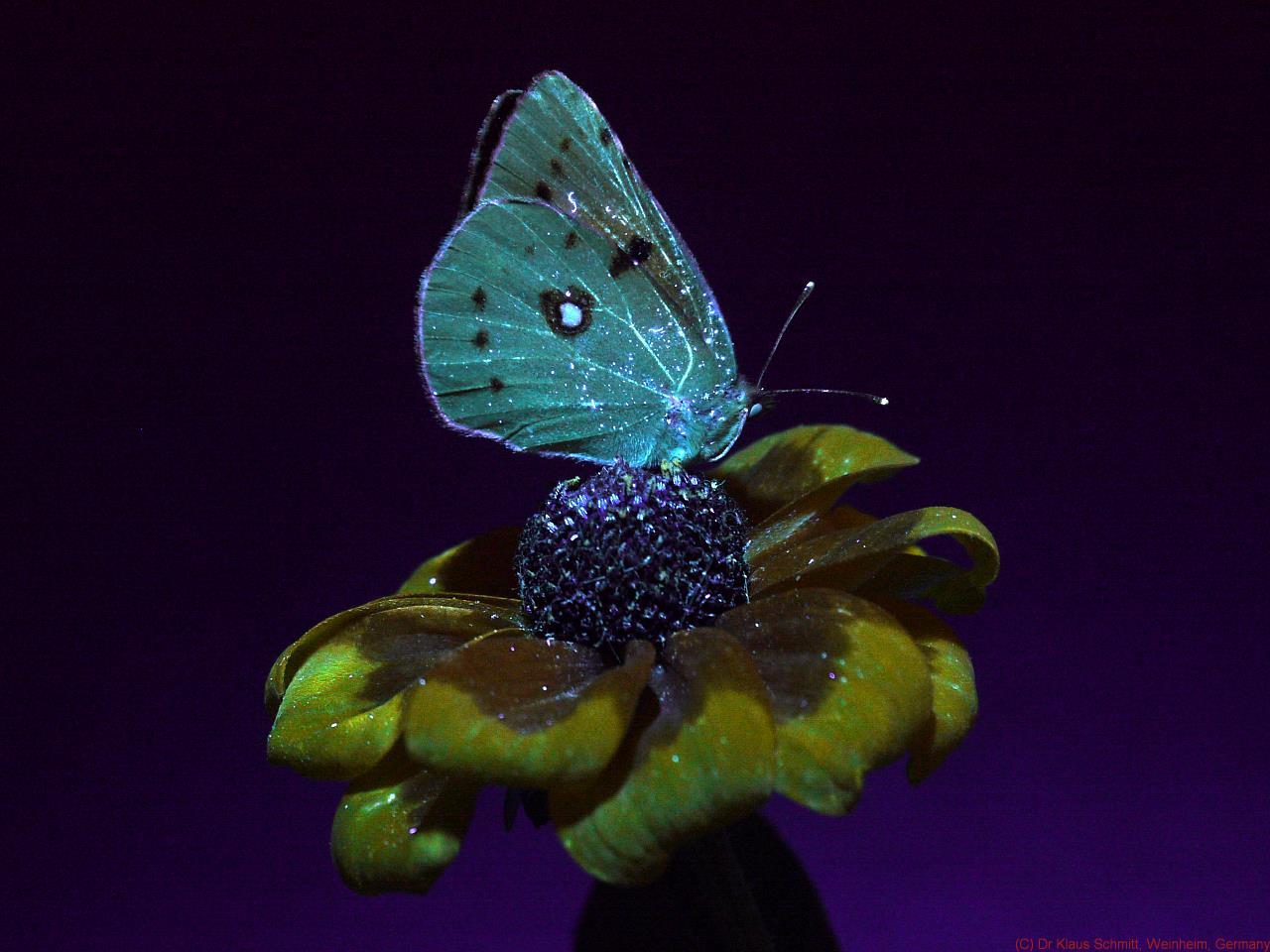


Nice results and a a lot of details on the wings gets visible using fluorescence method, yet personally I prefer reflected UV photography.


Stay tuned, more will follow on that fascinating subject...

More info on this very interesting field may be found on my site http://www.pbase.com/kds315/uv_photos

Gonepteryx cleopatra "Cleo" butterfly on Rudbeckia hirta: human vision vs simulated bee and butterfly vison; reflected UV ultraviolet photography

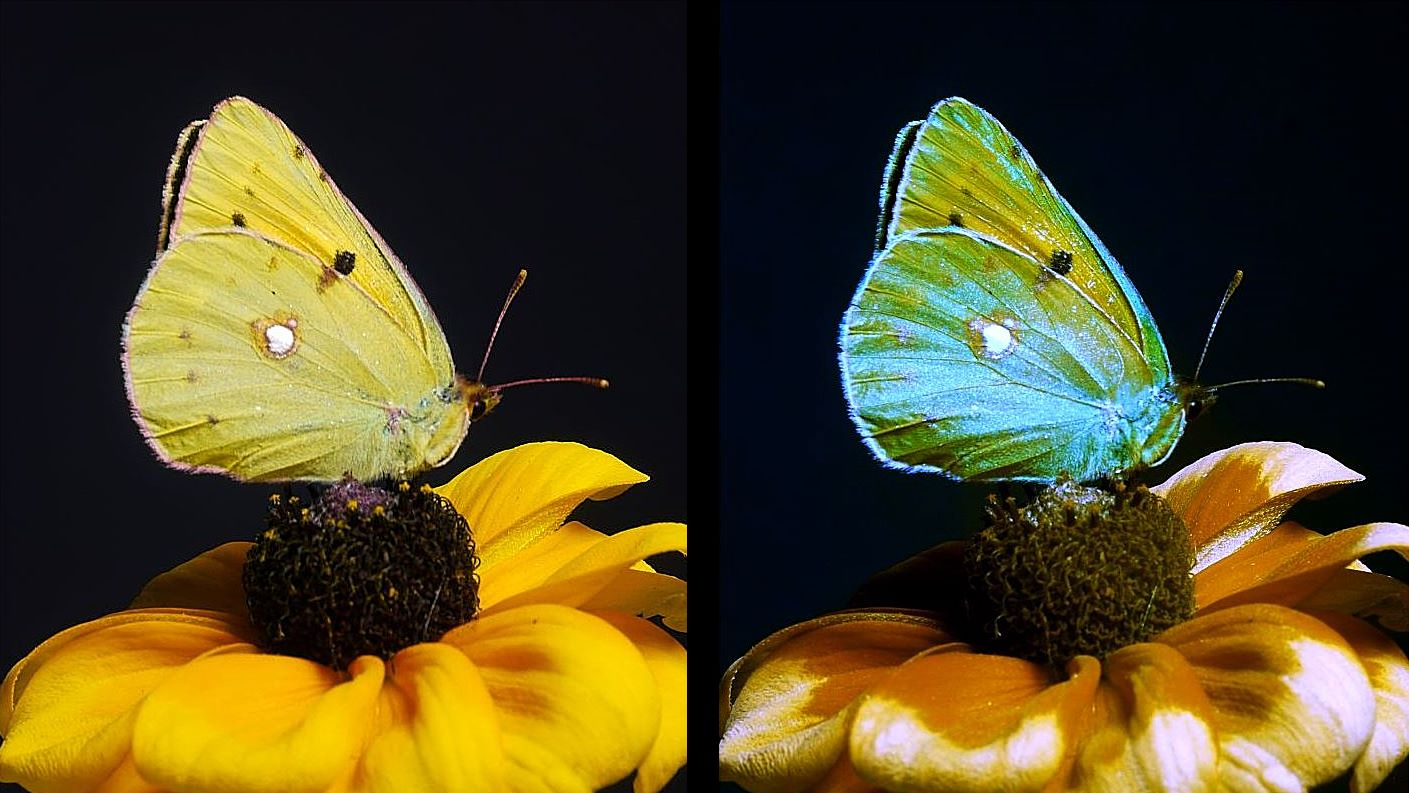
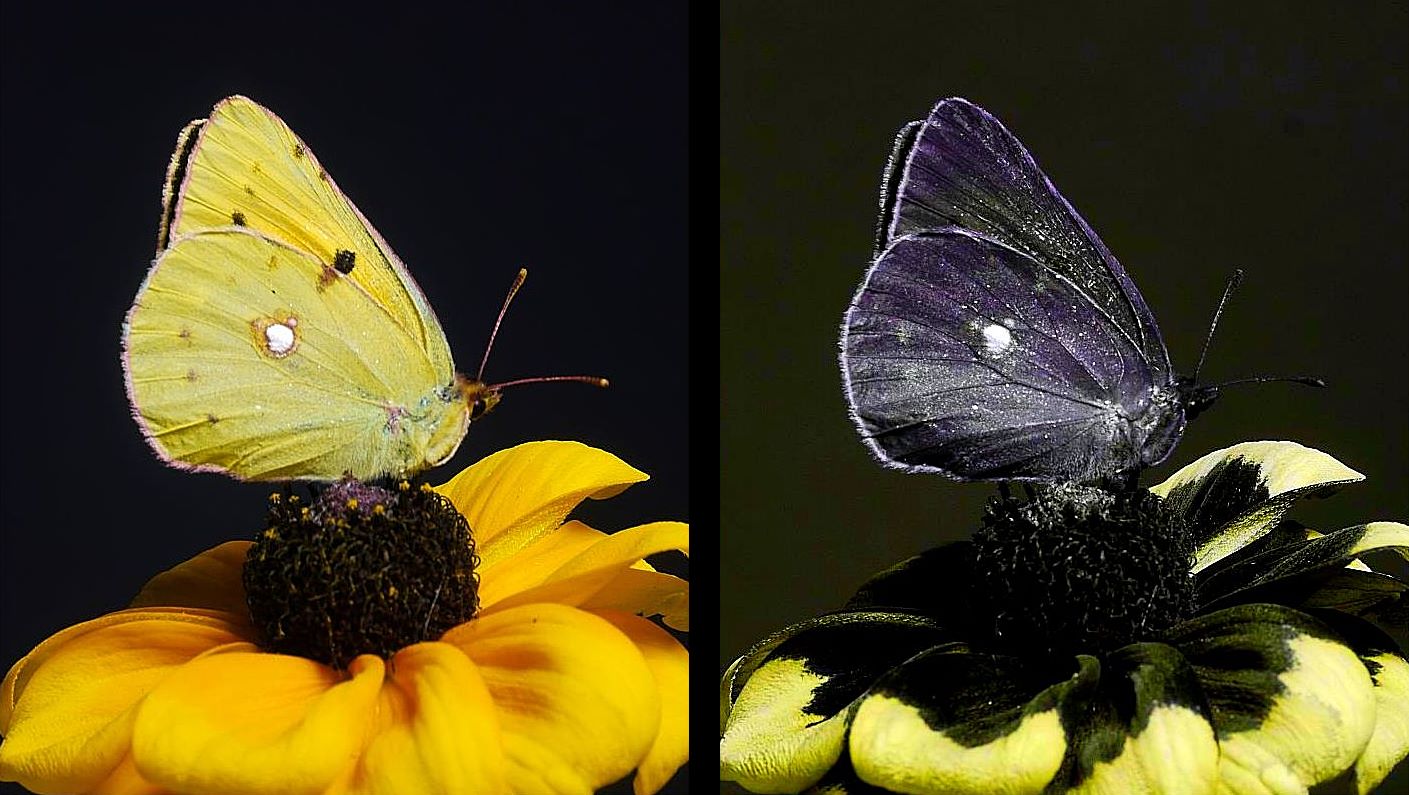
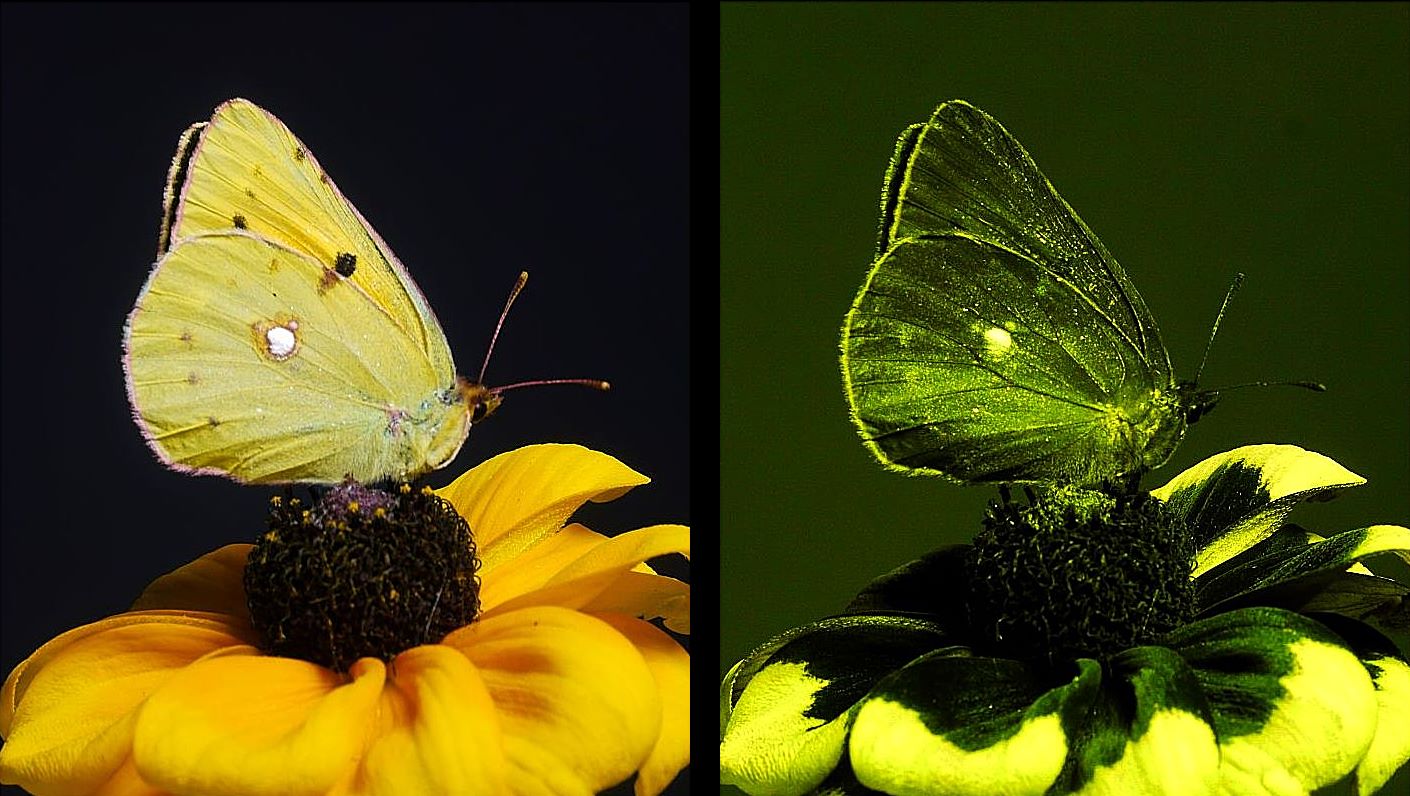
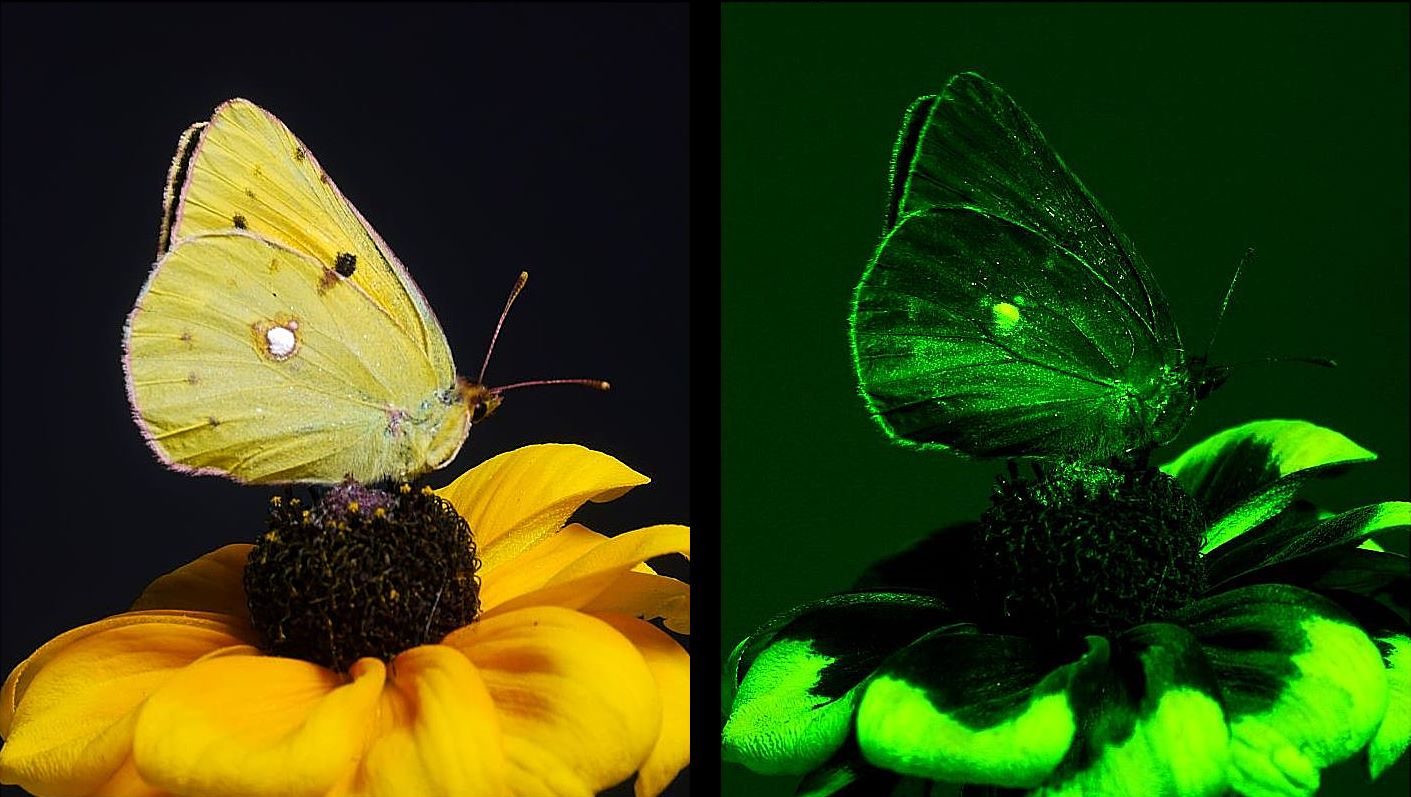
Today about a butterfly Gonepteryx cleopatra or Cleopatra, short "Cleo". So here it is in its multispectral representation, resting on a Rudbeckia hirta flower. I took some shots in normal human vision VIS, in UV using the Baader-U (eff. 375nm) and my Jupiter-U (eff. 365nm) and Saturn-U (eff. 325nm) filter, as well as in simulated bee and butterly vision using my XBV2 and XBV3 filters respectively.

I'm presenting all of them in diptych form, VIS image (left) vs filtered image (right)

[click on image to see a larger one]

VIS vs simulated insect vison using XBV2 filter:


VIS vs simulated insect vison using XBV3 filter:


VIS vs Baader-U (eff. 375nm):


VIS vs Jupiter-U (eff. 365nm):


VIS vs Saturn-U (eff. 325nm):


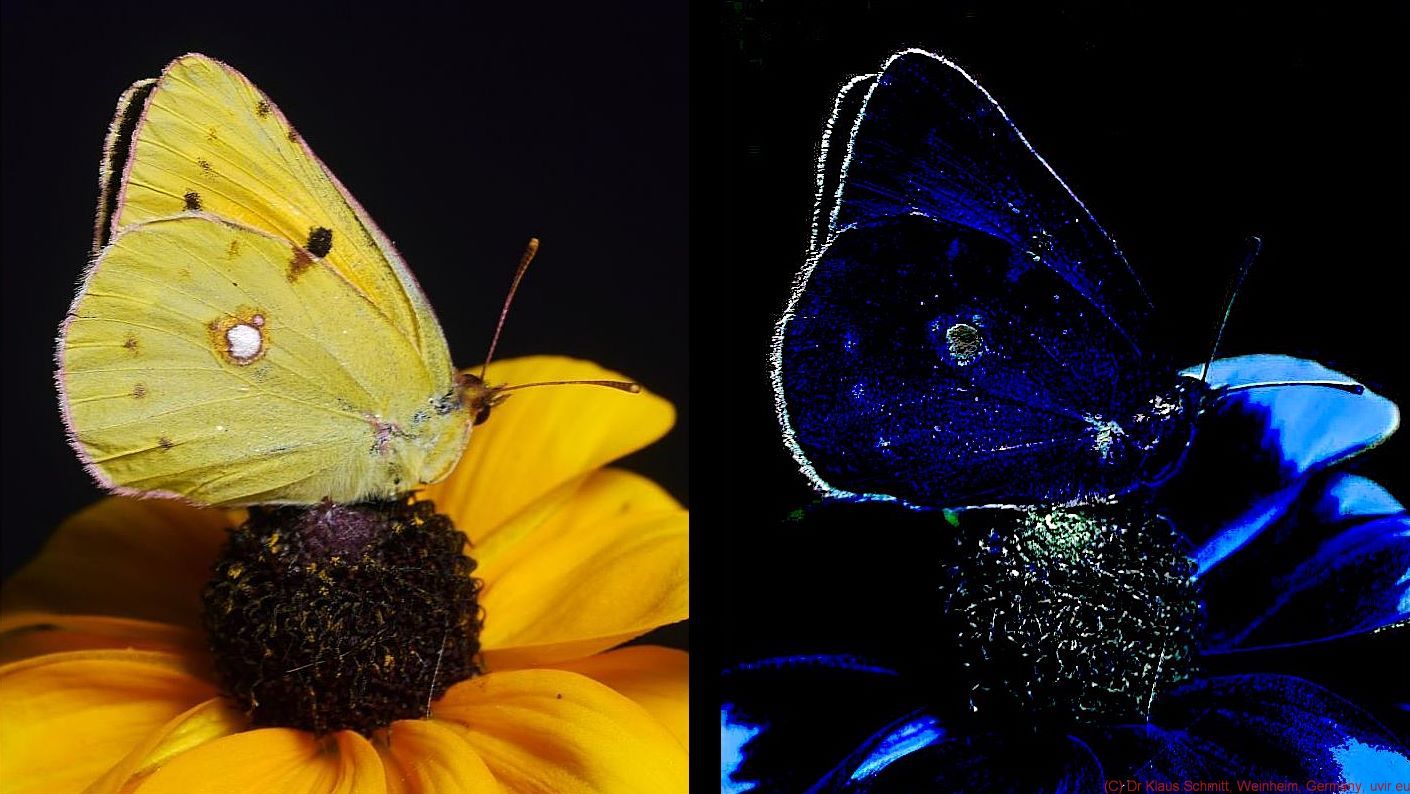
Quite interesting how that butterfly appears is different spectral representations. Obviously that spot as well as its UV bright rim around its wings is made to attract, which I made visible using my differential method (right):


As you may have noticed, I'm still working on my bee and butterfly vision (BV) filters. More about these special filters here later and in a seperate entry.


Stay tuned, more will follow on that fascinating subject...

More info on this very interesting field may be found on my site http://www.pbase.com/kds315/uv_photos