Showing posts with label IR. Show all posts

Sunday, October 4, 2020

Full Moon over Weinheim Castle: multispectral photography II

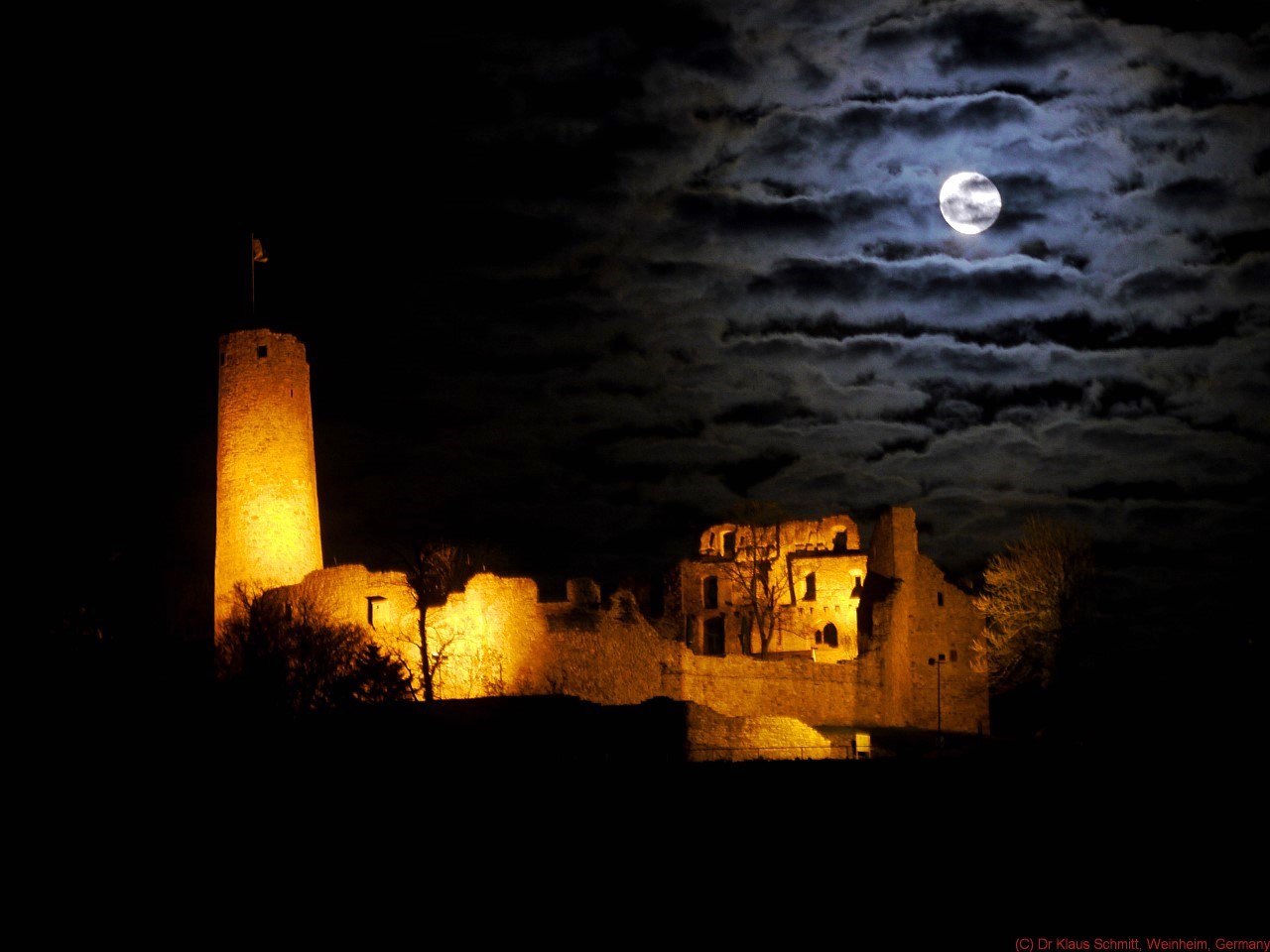
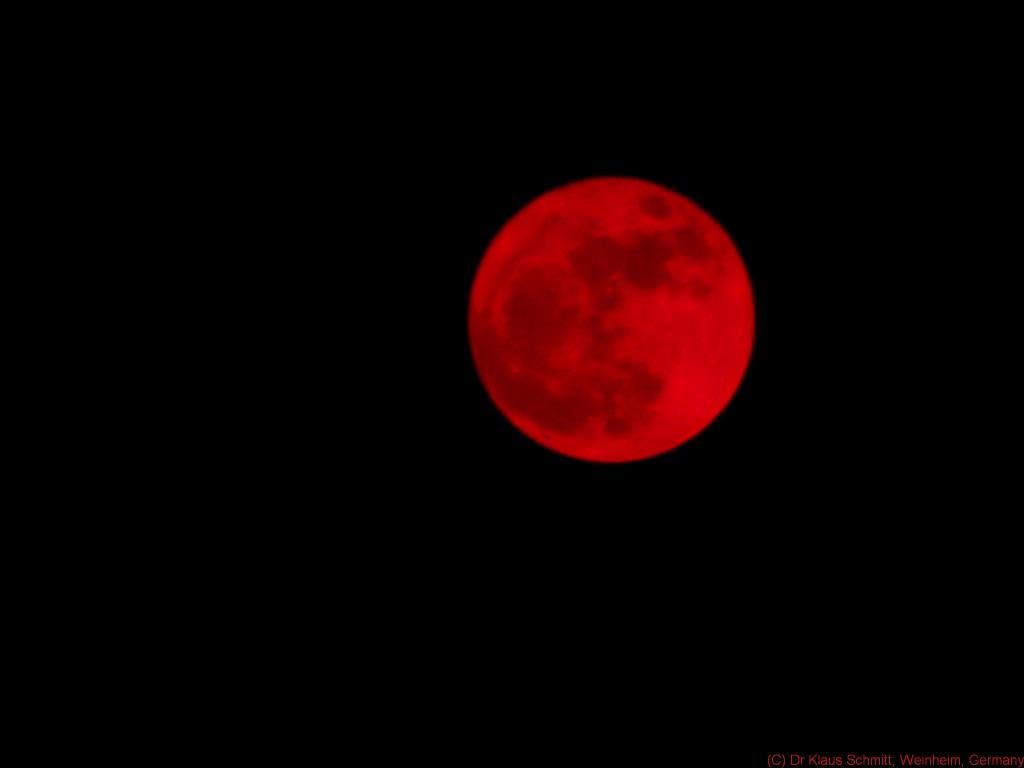
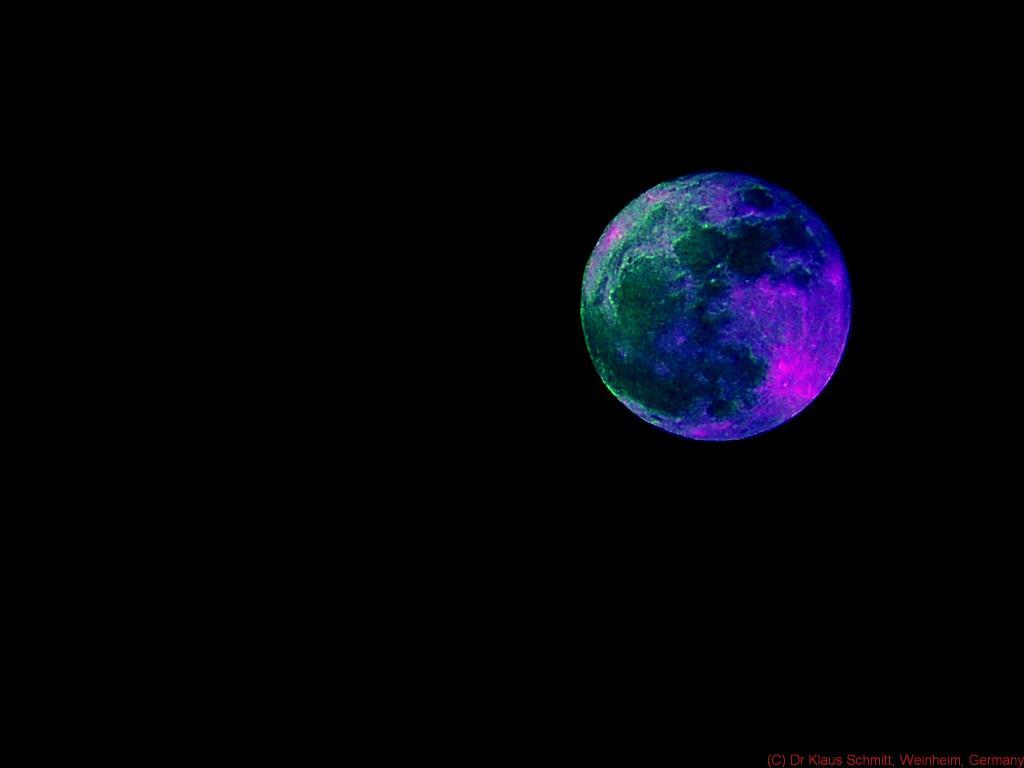
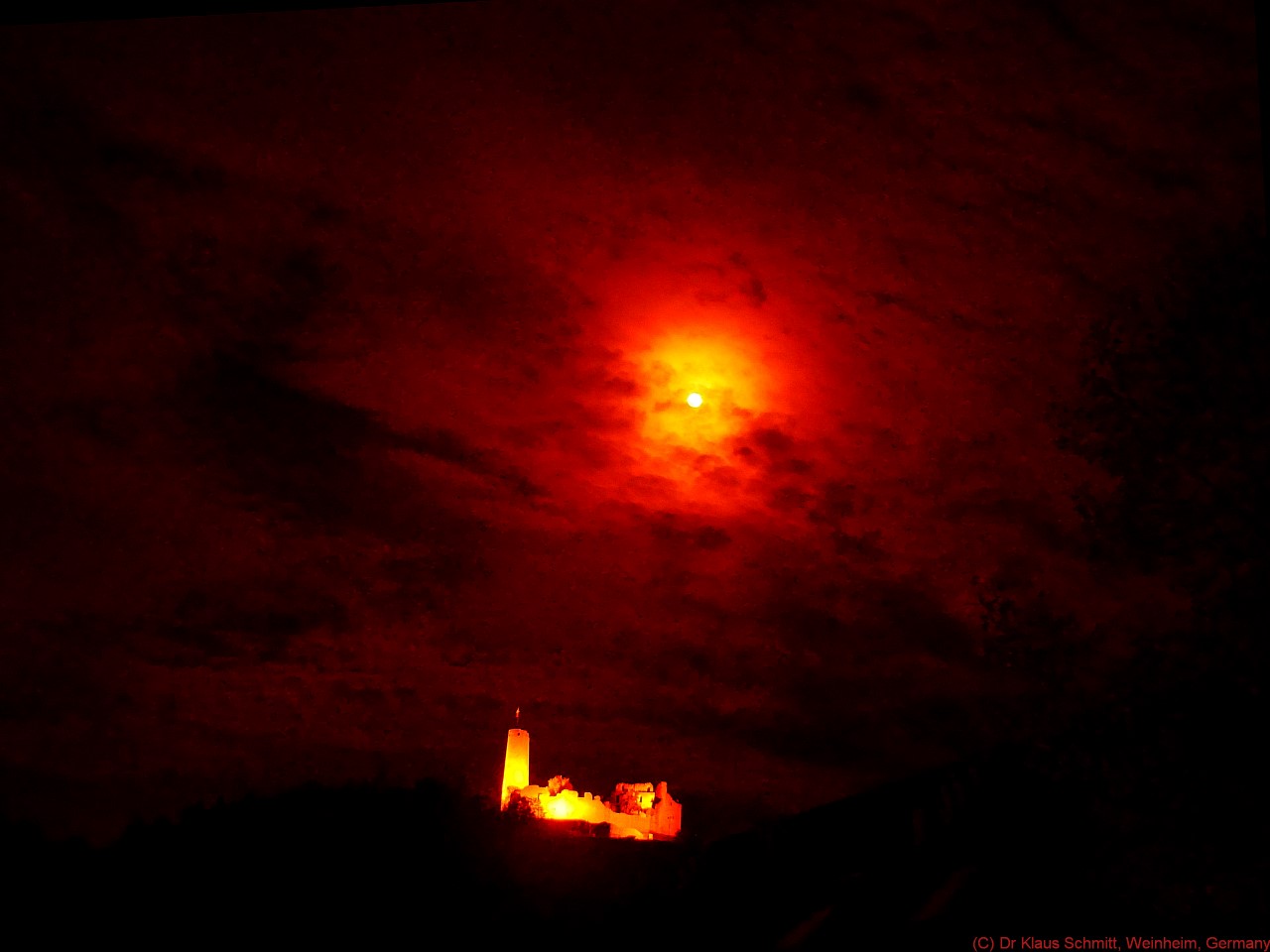
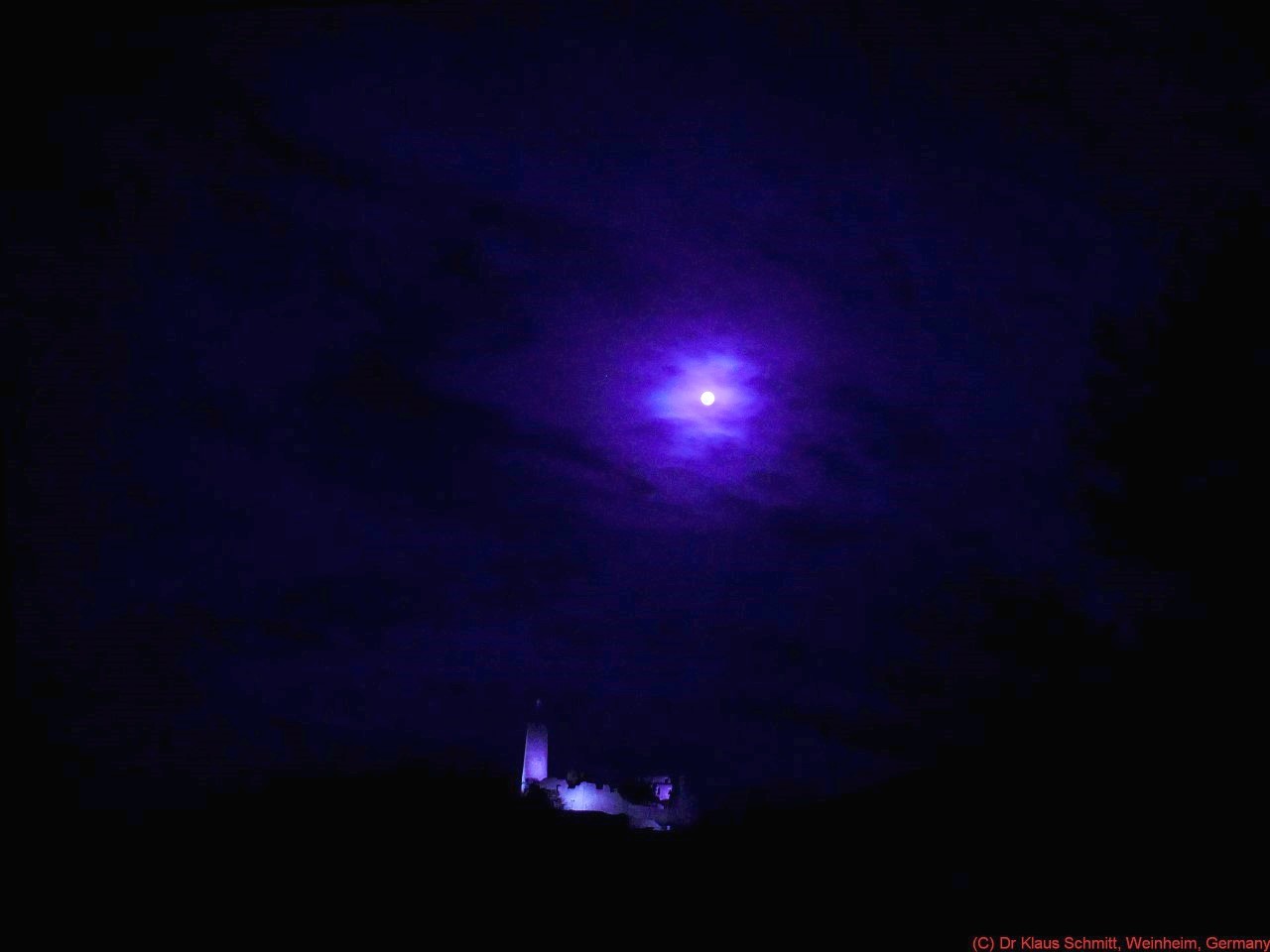
Here today shots of the full Harvest Moon over Windeck castle here in my hometown Weinheim Germany. Shots were done in full spectrum mode (i.e. mainly infrared) and in reflected ultraviolet using Baader-U filter. Lens used was my UV-Nikkor 105mm quartz fluorite lens. Light source was moonlight resp. the castle lighting system. All shots were done at approx. f8. No later whitebalancing was done, pictures straight out of the camera.

[click on image to see a larger one]

IR image: 


UV image: 


Full moon is always special and first I was sad to see all the clouds, but then it turned out quite nicely and all that drama got nicely visible.

I have more moon shots HERE.


Stay tuned, more will follow on that fascinating subject...

Wednesday, April 2, 2014

Full Moon over Weinheim Castle: multispectral photography

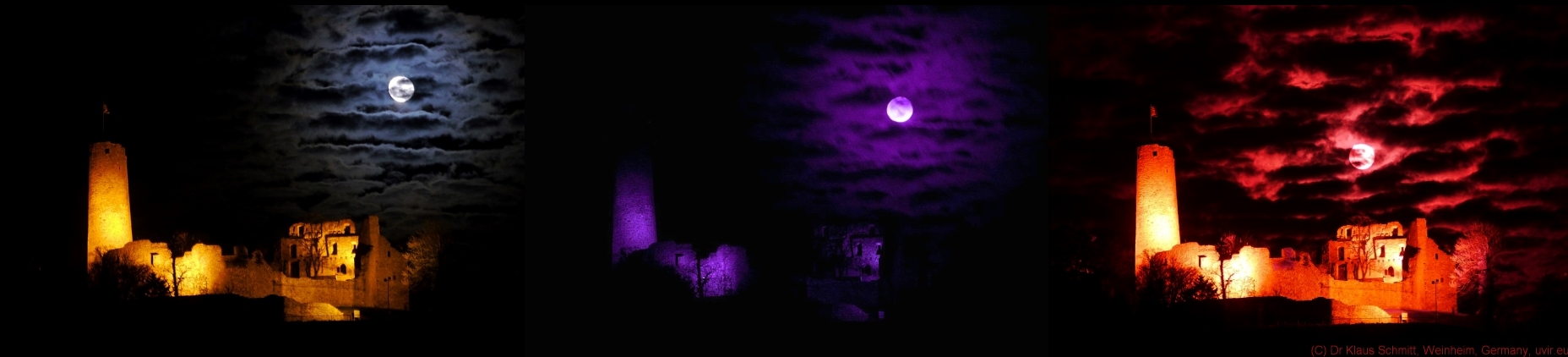
Here today shots of the full moon over Windeck castle here in my hometown Weinheim Germany. Shots were done aside from visible photography in reflected ultraviolet using Baader-U filter. Lens used was my CERCO 94mm quartz fluorite lens. Light source was moonlight resp. the castle lighting system. All shots were done at approx. f8. No later whitebalancing was done, pictures straight out of the camera.

[click on image to see a larger one]

Visible light image:  

UV image:  

IR image:  

Triptych of the above images:  


Full moon is always special and first I was sad to see all teh clouds, but then it turned out quite nicely and all that gets nicely visible.


Stay tuned, more will follow on that fascinating subject...

Friday, May 31, 2013

Oncostele Wildcat 'Golden Red Star' orchid in reflected ultraviolet photography, simulated butterfly and bee vision

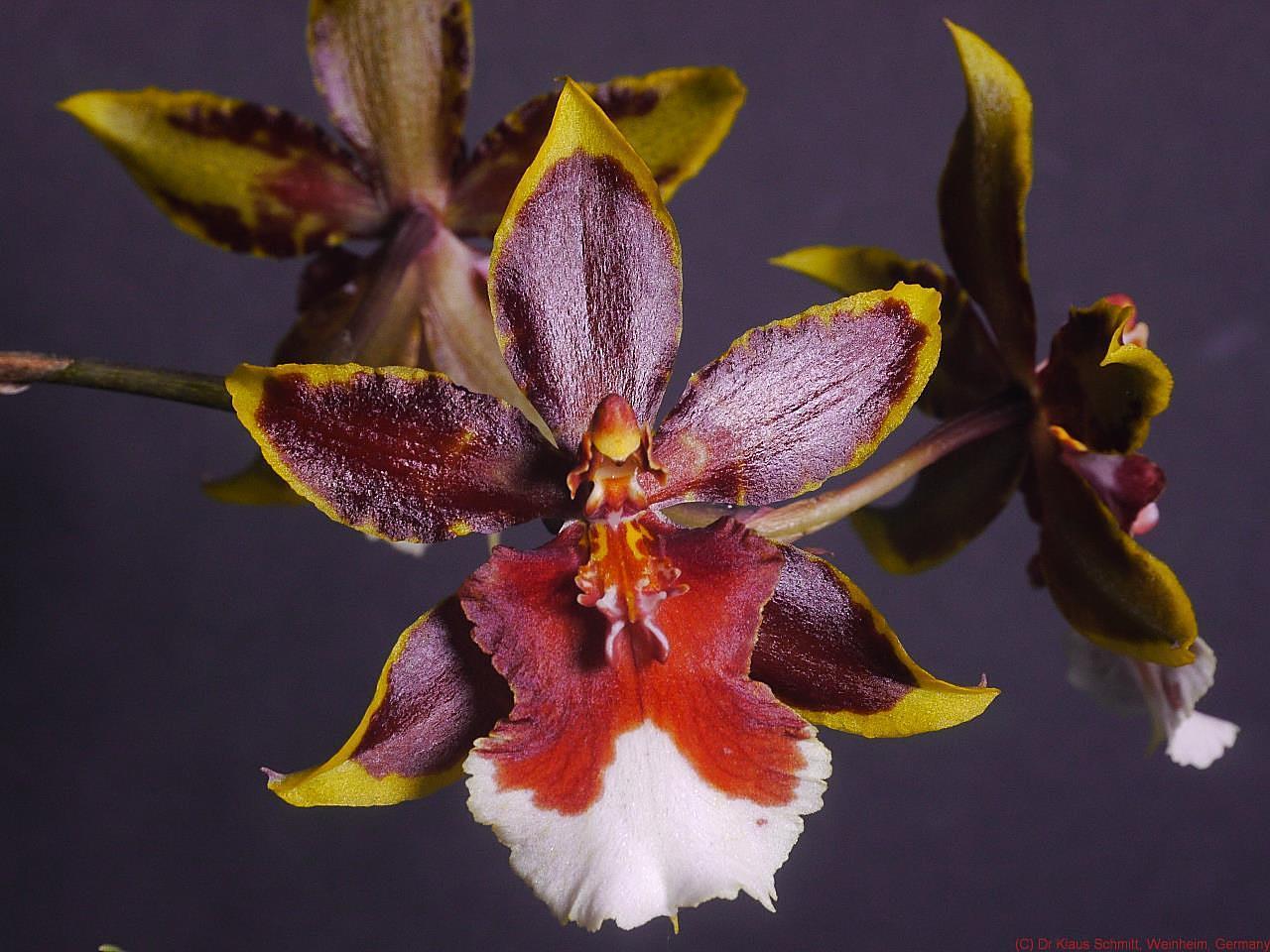
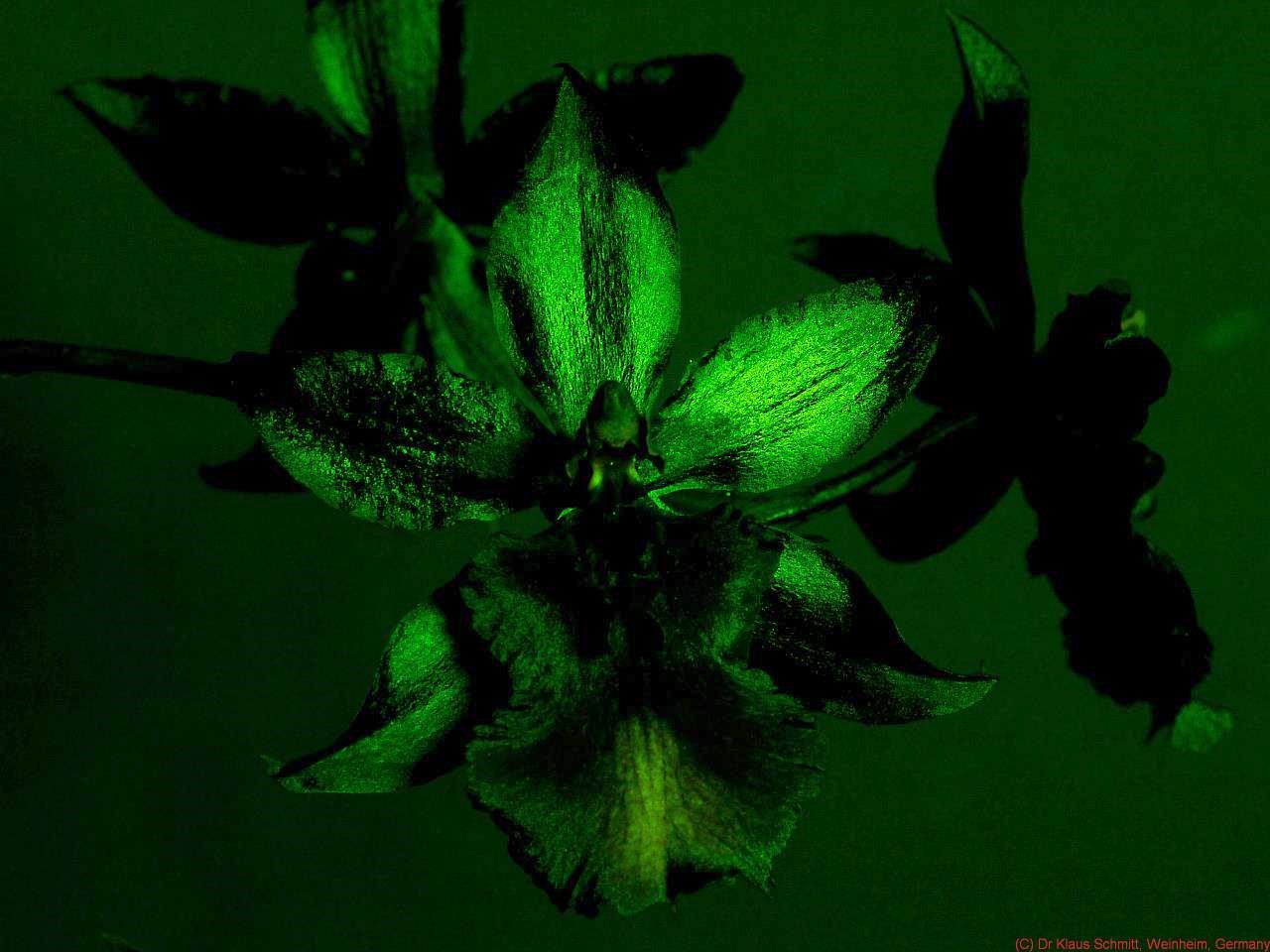
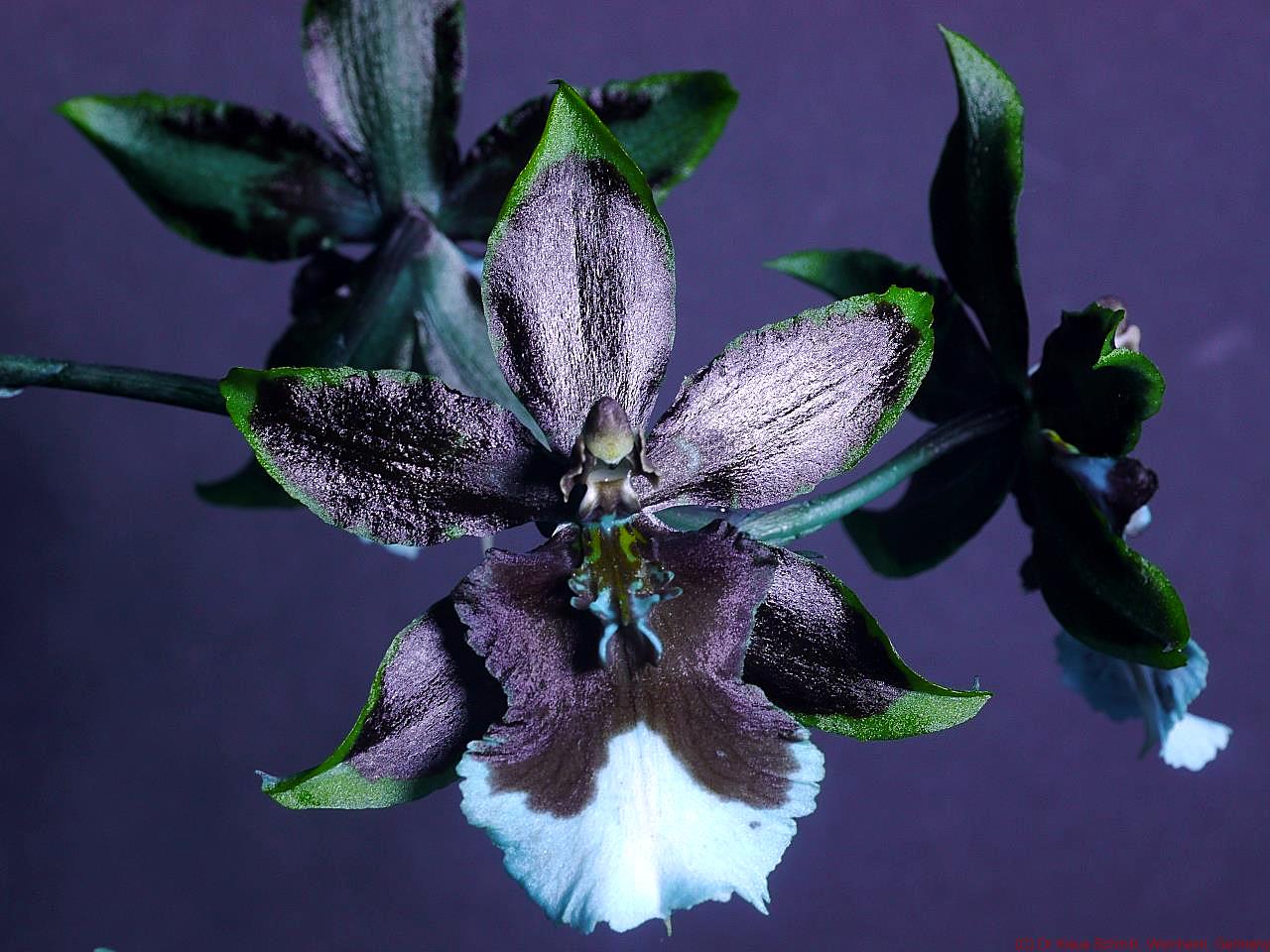
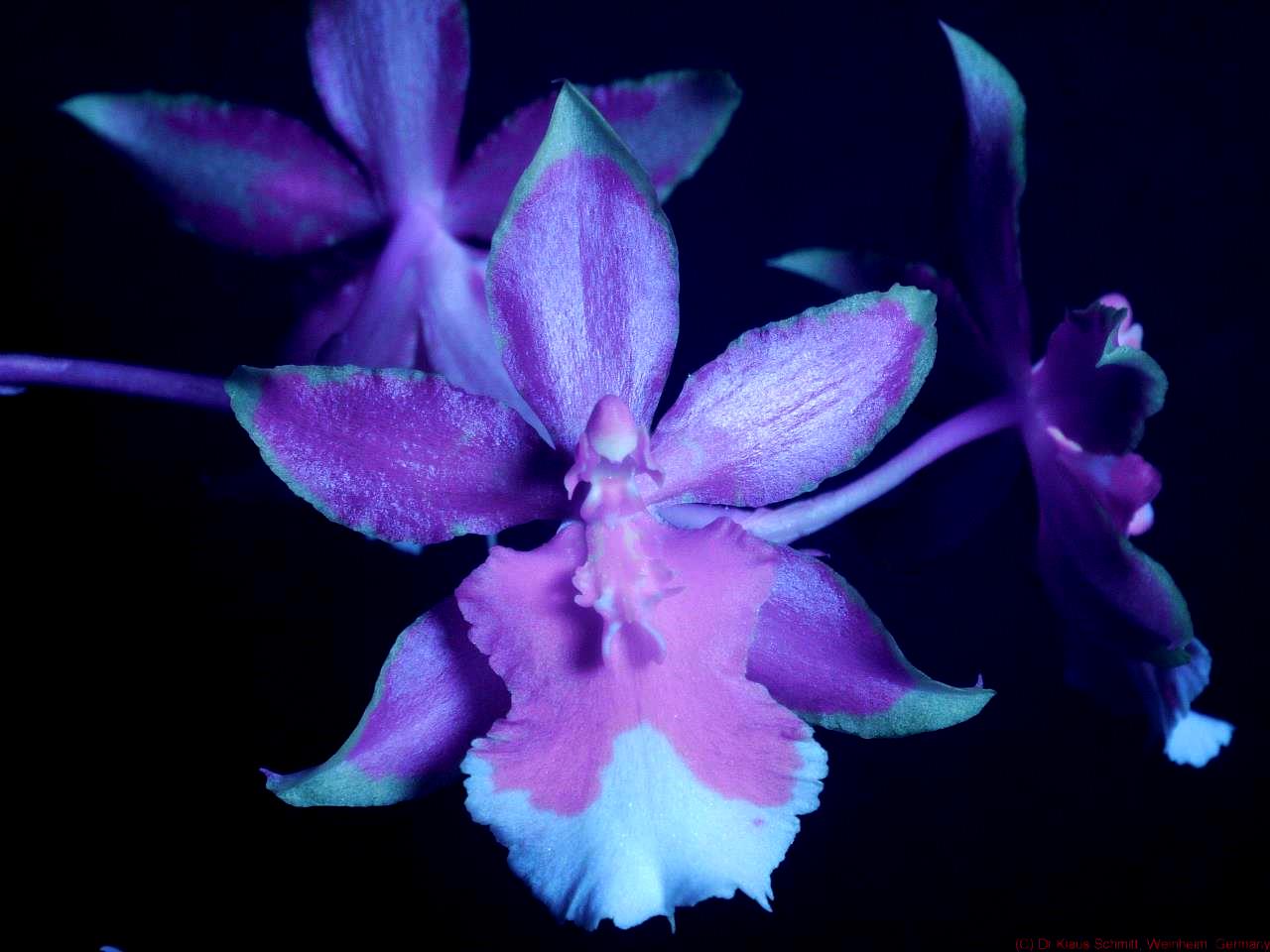
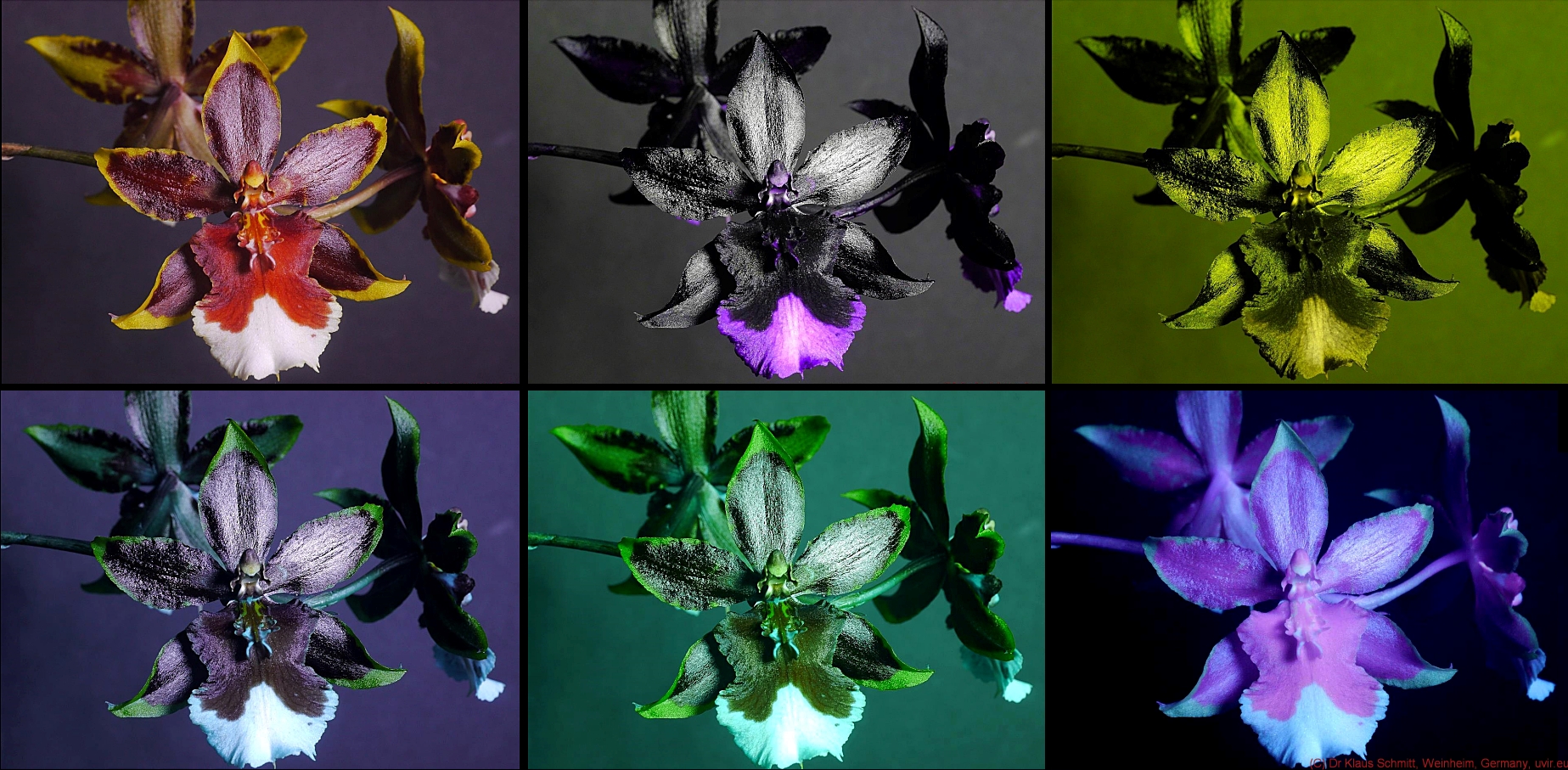
Today shots of a decorative cultivated orchid, a Oncostele Wildcat 'Golden Red Star' in reflected ultraviolet photography using my "work horse" UV filter, the Baader-U filter as well as my XBV filters for simulating bee and butterfly vision. Lens was a CERCO 94mm quartz fluorite lens. Light source was a modified Xenon flash. All shots were done at about f5.6.

[click on image to see a larger one]

Visible light image:
 

UV image using Baader-U filter (approx. 320-395nm, effective peak approx. 375nm):
 

UV image using Jupiter-U filter (approx. 280-385nm, effective peak approx. 365nm):
 

UV image using Saturn-U filter (approx. 300-350nm, effective peak approx. 325nm):
 

Simulated butterfly vision (UV - VIS) using XBV3 filter:
 

Simulated bee vision (UV - VIS) using XBV6 filter:
 

Simulated bee vision (UV - VIS) using XBV5 filter:
 

IR image (mainly) using ND filter:
 

Hexaptych of some of the above:


This orchid has a very specific UV pattern, its petals are very UV dark, but its lower petal lip has on the lower center a very UV bright spot as well as on its center "nose" formation reflecting around 385nm and all this gets nicely visible.

There is more about this orchid HERE


Stay tuned, more will follow on that fascinating subject...

More info on this very interesting field may be found on my site http://www.pbase.com/kds315/uv_photos

Monday, November 5, 2012

Bidens ferulifolia: Colorful reflected UV ultraviolet photography III

Today, as has been previously shown,  some more recent results with a bit more colorful images using various UV lights and filtering, when shooting in reflected UV light. I was using my "work horse" UV filter, the Baader-U filter and my CERCO quartz fluorite lens. Light source was an UV enhanced Xenon flash, except otherwise mentioned. Target was one of my last Bidens ferulifolia flowers, as the first snow has already been here...

[click on image to see a larger one]

visible light image:
 

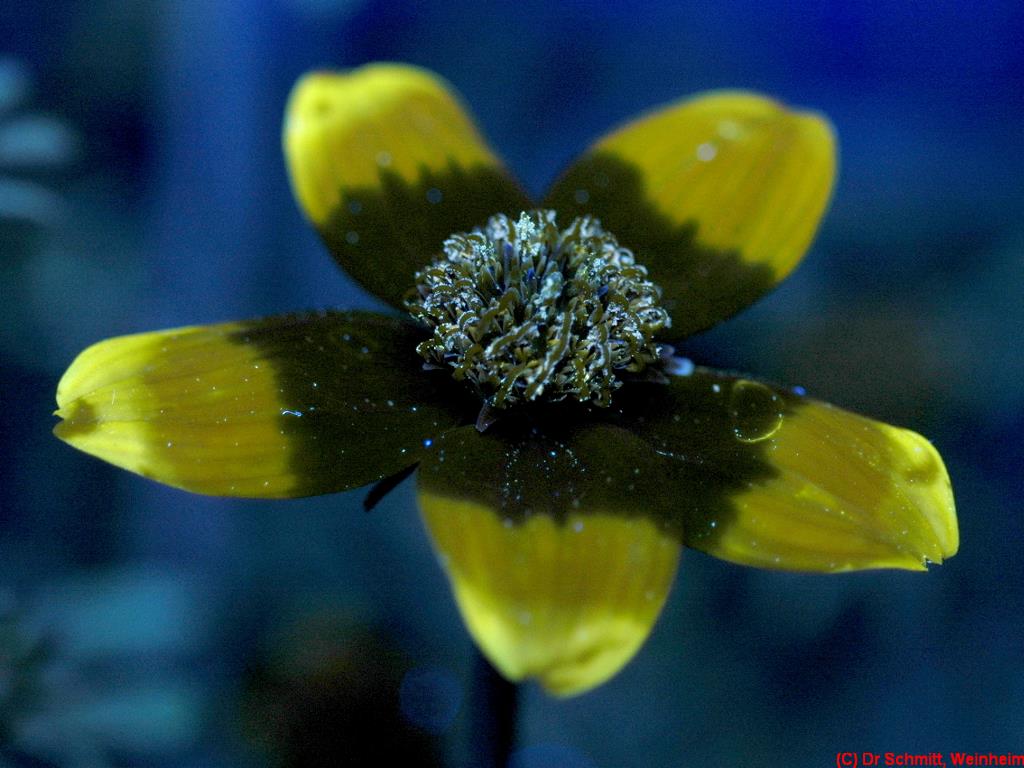
"standard" UV image using Baader-U filter:
 

pure 365nm UV LED:
 

UG11 + IR blocking filter:
 

XBV2 filter:
 

XBV4 filter:
 

XNUV (highspeed UV) filter:
 

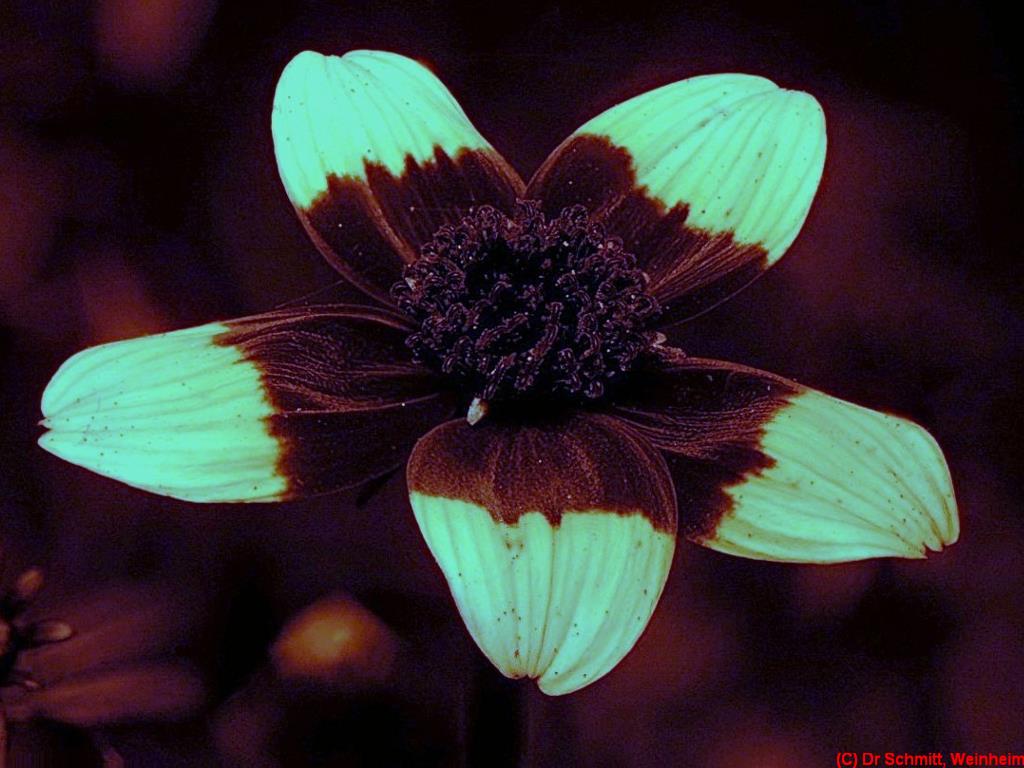
IR filter >750nm:
 

Now this is "artsy" playing with light, but it still documents very well the prominent UV pattern this flower has. HERE is the same flower in 3D Stereo representation.


Stay tuned, more will follow on that fascinating subject...

More info on this very interesting field may be found on my site http://www.pbase.com/kds315/uv_photos

Saturday, March 3, 2012

[UV] IR leakage and how to avoid it

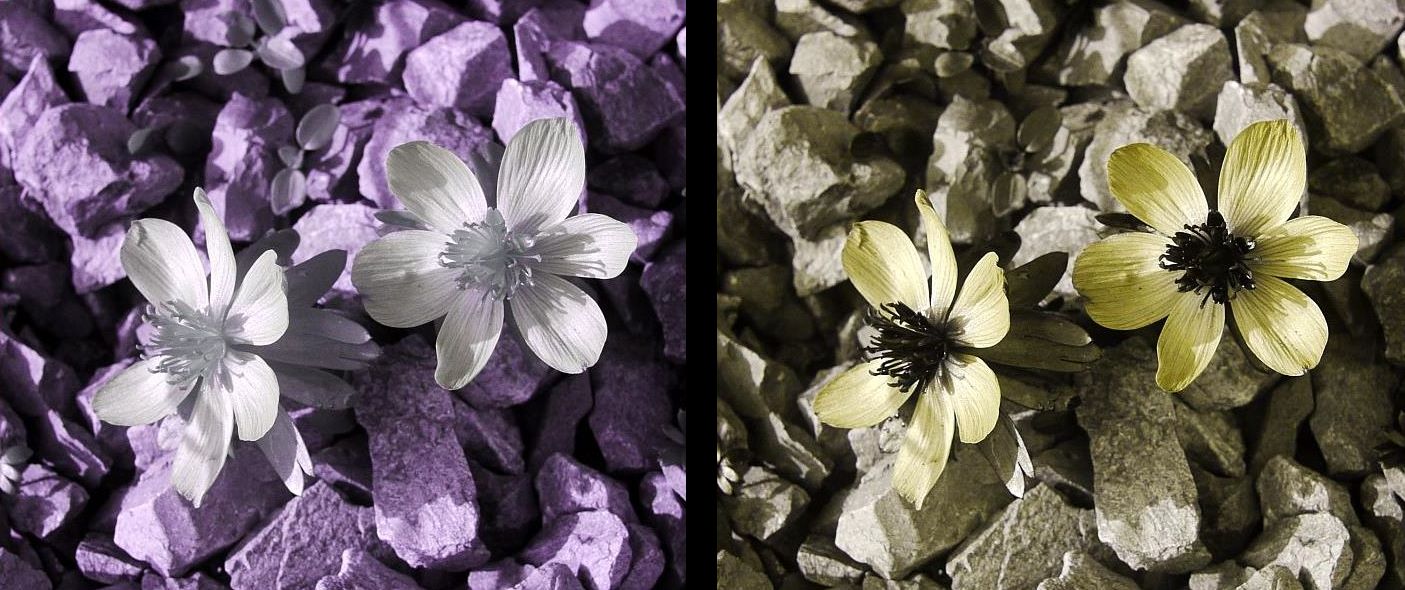
One of the most important issues to take care of in reflected UV photography is to avoid IR leakage. Here and example why this is the case.

[click on image to see a larger one]

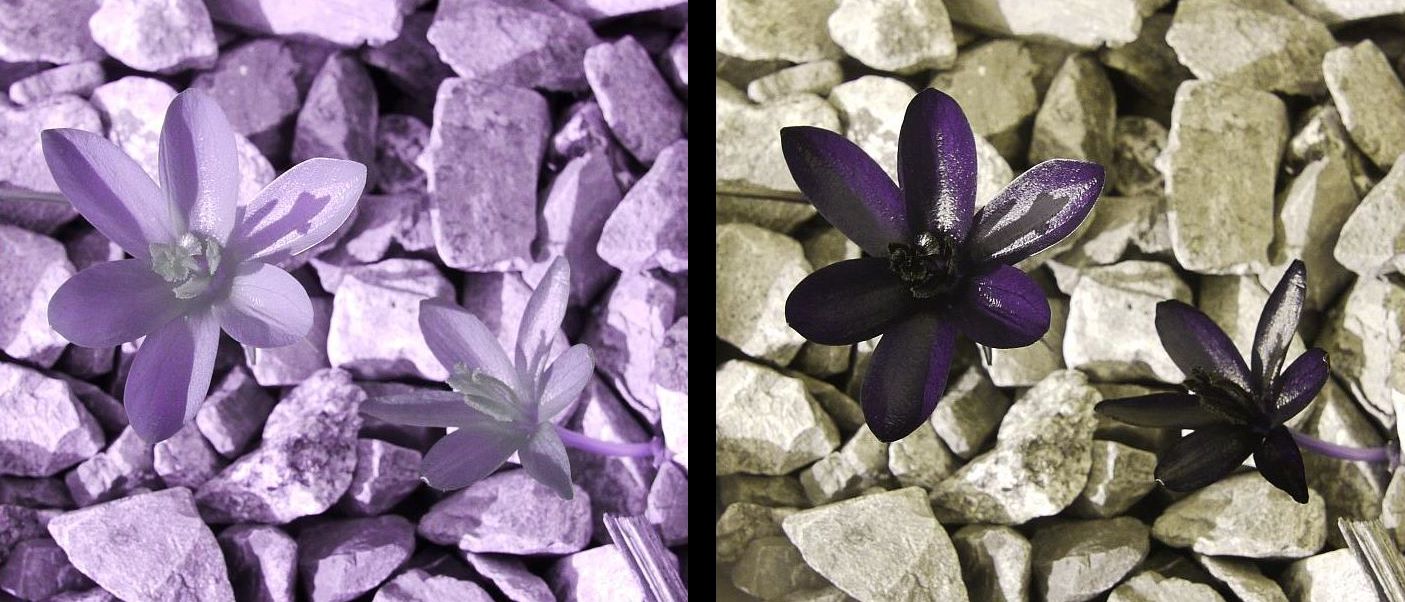
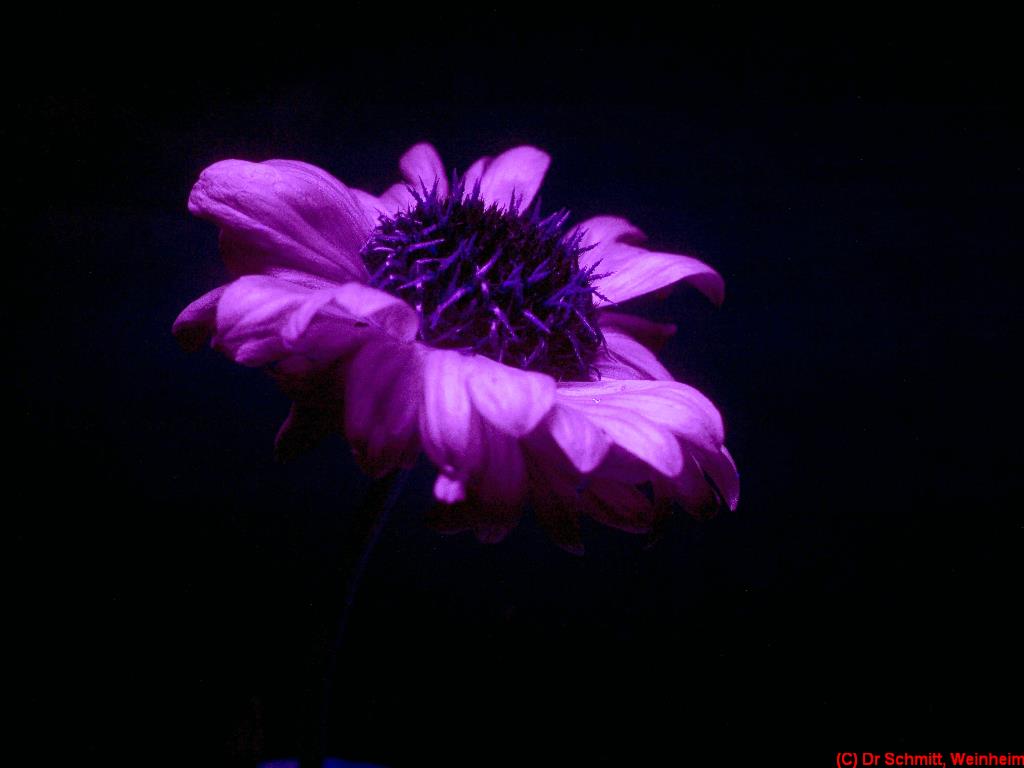
This left image shows massive IR leakage, whereas the one on the right has none and properly shows the black flower center on this Winter Aconite.


and crocus (which is highly IR reflective) here:


The key is avoiding situations with strong sunlight, using a suitable sunhood and especially using the right UV transmission filter, the new 2" Baader U filter in this case, which has a very good IR suppression up to 1100nm. I had already written about that fact in my article: Principle Thoughts about Lenses + Filters for UV


Stay tuned, more will follow on that fascinating subject...

More info on this very interesting field may be found on my site http://www.pbase.com/kds315/uv_photos

Monday, March 21, 2011

Cerco lens does Perigee Moon UV-VIS-IR

Well on March 19th, the moon was at its Perigee, closest to earth until 2029 and very bright, so I took a few shots using that CERCO 94mm lens here on my BLOG .

[click on image to see a larger one]

UV image:


VIS image:


IR image:


And after some multispectral processing using the images of above, one gets that "false color" image:


NASA and other agencies are using these types of false color images to display results of their satellite imaging.

Some better processing even gives it a more 3D appearance:


Here now a simulation, how an UV-Moon would look like as seen from Earth (Weinheim Castle "Windeck"):


Stay tuned, more will follow on that fascinating subject...

More info on this very interesting field may be found on my site http://www.pbase.com/kds315/uv_photos

Friday, January 7, 2011

Carl Zeiss Jena "Spy" lenses for VIS + IR

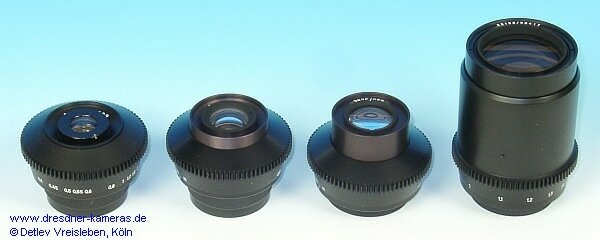
Well, many years ago in times of the cold war, Zeiss Jena had to developed special lenses for a very special ministry of the former east German GDR (dig you guess which one I mean - STASI, also called MfS), which are hardly known to the public, but are available. These are corrected for focusing in visible light, but also for shooting in (deeper) invisible NIR. There were also special noiseless cameras (GSK also called SR899) developed for these lenses.

To make things clear, I distance myself from that former purpose, but am interested in the performance of those special lenses!

The lenses were designed in such a way that the aperture location (more precisie the entrance pupil) was in front of the lenses, which allowed taking photos through small holes in walls, through button holes in bags etc. - I guess the purpose gets clearer now. A set of fixed apertures and also a variable iris usually comes which each lens. All these lenses cover the full 24x36mm format.

I was able to get a set of these very special lenses thanks to the contact to and the efforts of Detlev Vreisleben, a german engineer who, after his retirement has concentrated to shed some light onto these.

Here a list of these lenses (SO = "Spezial Objektiv"):

- SO-3.1 f2,8/35mm a FLEKTOGON wide angle
- SO-3.2 f2,8/50mm a BIOTAR normal angle
- SO-3.3 f3,5/75mm a TESSAR short tele
- SO-3.4 f3,5/135mm a SONNAR tele lens

They have a special M36 camera thread mount, but are easily adaptable.

First tests have shown very good to excellent sharpness in VIS as well as NIR. More about that later...

[click on image to see a larger one]


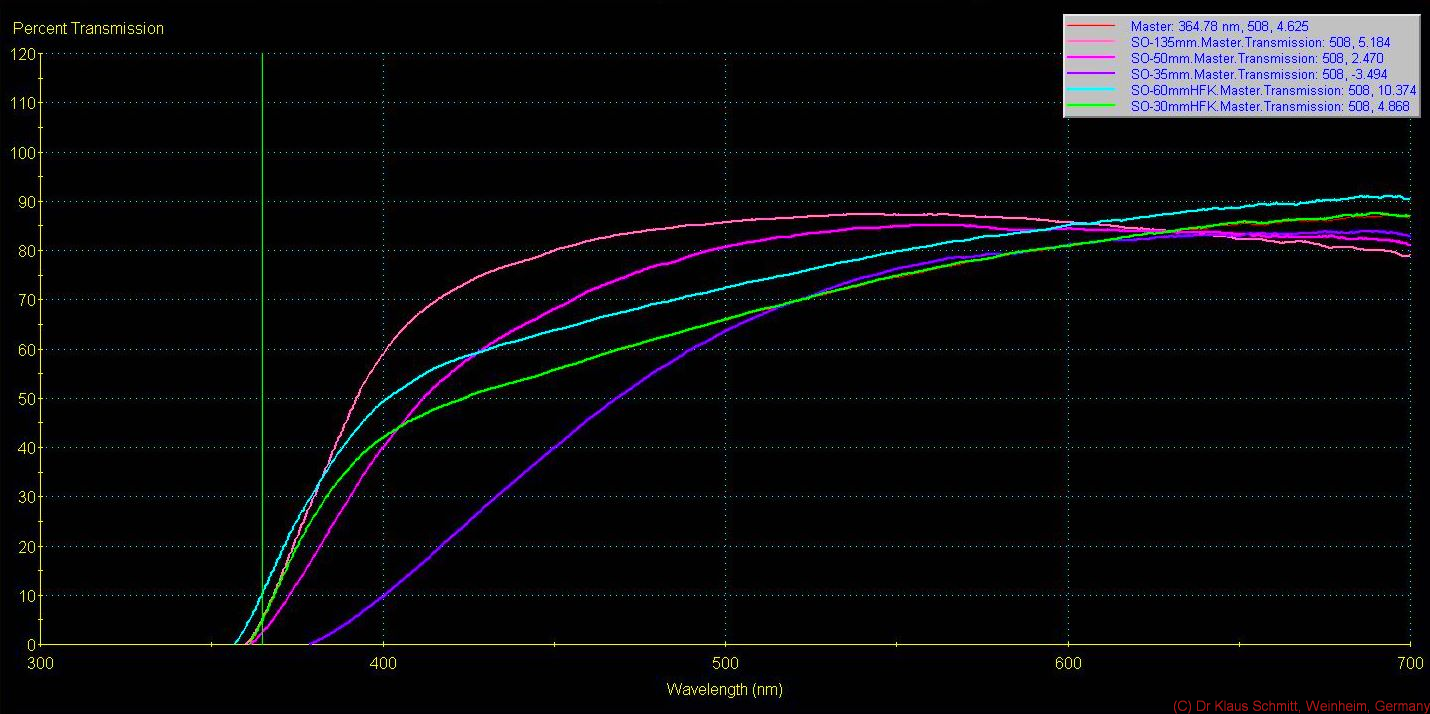
And no, they don't transmit UV at all, since designed for the other end of the spectrum incl. the special NIR coating.

Transmission graph:


(The 75mm Tessar is missing in that graph; two further lenses are included for the HFK "half format" camera)

Stay tuned, more will follow on that fascinating subject...

More info on this very interesting field may be found on my site http://www.pbase.com/kds315/uv_photos
Wednesday, November 17, 2010

Aster hybride meets Noflexar 35mm lens

Today few shots of an Aster hybride using the Noflexar 3.5/35mm lens and various filters.
No noticeable patterns, as expected though.

[click on image to see a larger one]

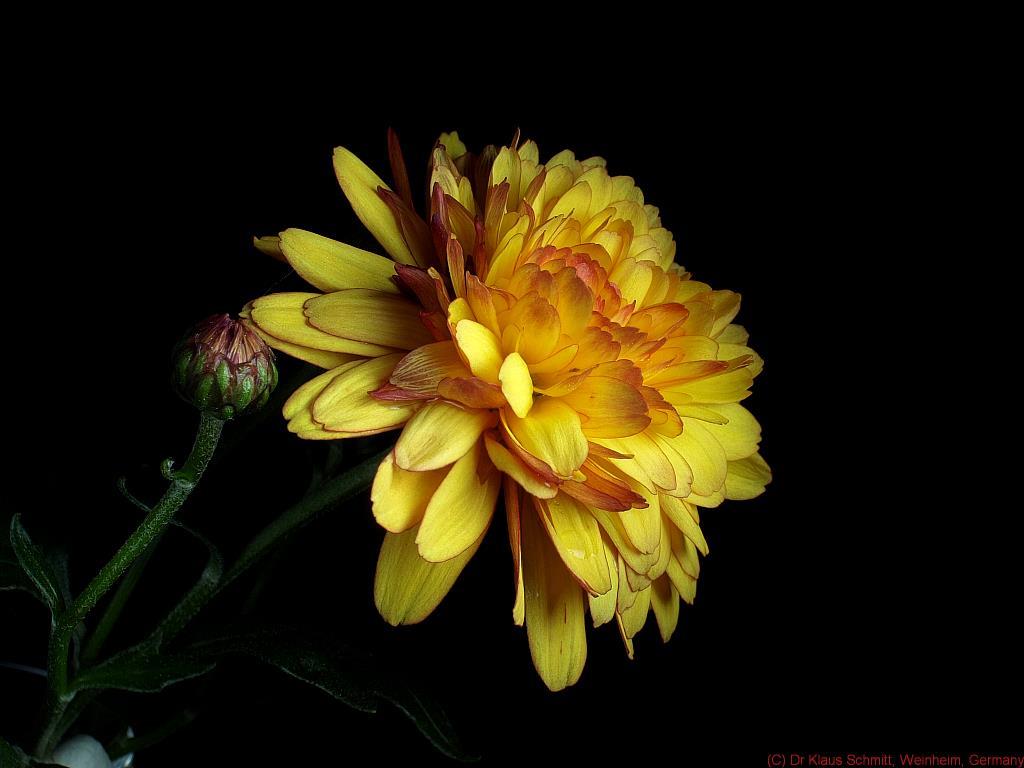
visible light shot: 


UV shot (using Baader U-filter and Xenon flash): 


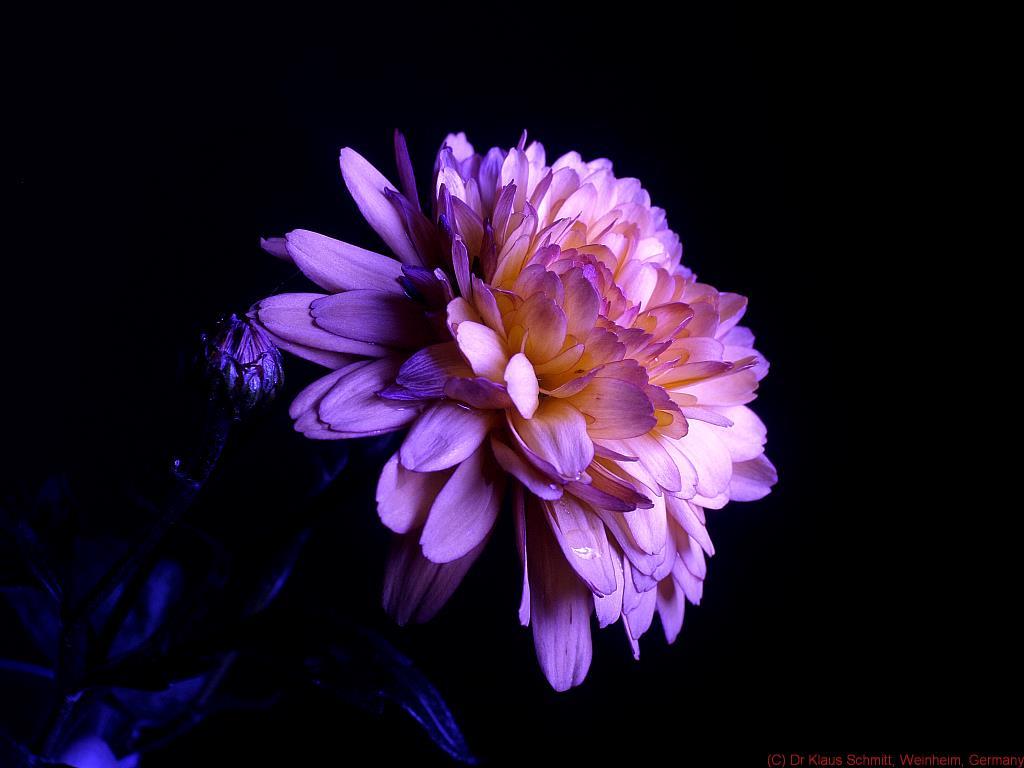
Butterfly vision shot (using my XBV2 filter): 


UV induced visible flourescence shot (using Baader UV/IR Cut filter and Nichia 365nm UV light): 


As boring as it might look like, this now is quite interesting (to me) as it shows UV induced IR fluorescence. Lights were all Nichia UV LED sources I could get hold of (to make sure not a bit of IR would be present), a B+W 092 cut filter (>65nm) in front of the lens and 30sec exposure in total darkness:


With the naked (but UV protected!!) eye quite a bit deep red fluorescence gets visible, but hard to ban that on a photo....

Same experiment but using a dark orange filter and same UV lighting setup in darkness (Nichia 4x 365nm LED using a front attached Baader U-filter to block any visible light!):


I have now found a reliable method to professionally infinity convert Noflexar 35mm lenses to Nikon mount - ask me if you need one!

Stay tuned, more will follow on that fascinating subject...

More info on this very interesting field may be found on my site http://www.pbase.com/kds315/uv_photos
Friday, July 10, 2009

Gaillardia "Summerwind"

Well, I found a previously unknown (to me), pure yellow species of Gaillardia. Since that type of flower showed so many surprising aspects, I wanted to see what this new one hides from the human eye....

[click on image yields a larger one]

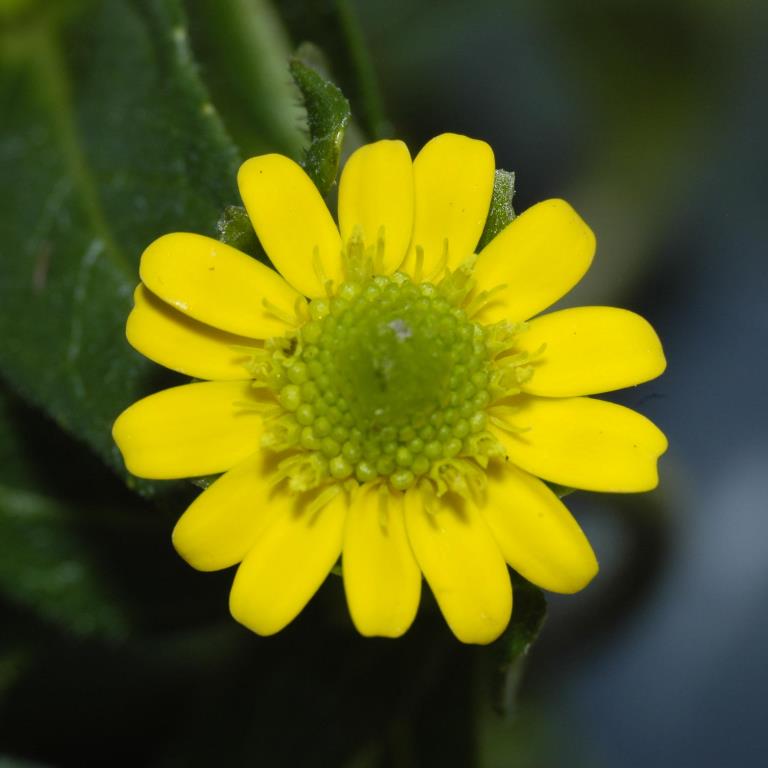
This now is the visual appearance as we humans are used to see:


The tetrachromatic image ("butterfly" shot) (UV+B+G+R) using XBV2 filter:


The trichromatic image ("bee vision" shot) (UV+B+G) using XBV2 filter:


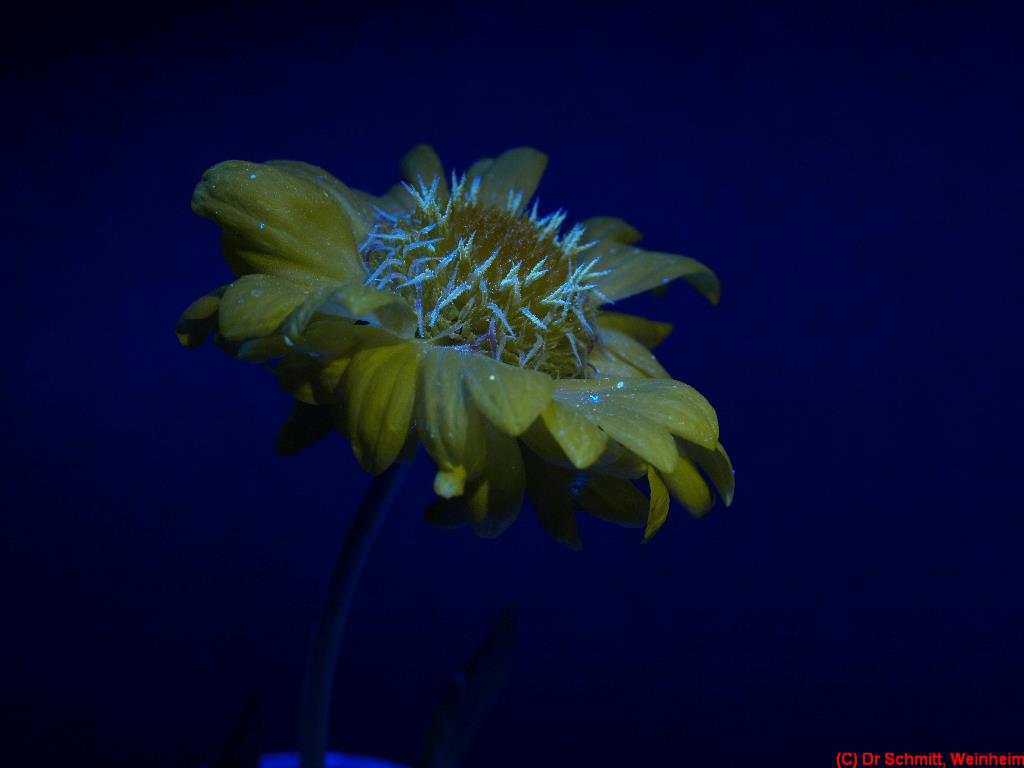
This is the UV induced fluorescence shot using XCUT2 filter:


and this the reflected UV shot using XUVIR filter:


Well, also that flower shows some surprising properties ...

Stay tuned, more will follow on that fascinating subject...

More info on this very interesting field may be found on my site http://www.pbase.com/kds315/uv_photos

Monday, April 20, 2009

Bidens ferulifolia, various filters + light sources

Well, another nice target for UV photographic experiments is Bidens ferulifolia, the variety "Peters's Surprise".

Equipment used was: Nikon D70 (unmodified), ISO400, f5.6-8, 1/160sec, old 100mm enlarger lens.

[click on image to see a larger one]

VIS using XCUT2 filter (400-650nm):


UV using Baader U-filter (310-390nm) - synthetic DOF:


XUVIR multispectral filter (300-1000nm), UV Flash:


UV induced fluorescence using XCUT2 filter (400-650nm), UV flash:

So, as you may see, a variety of results also that flower shows us.

P.S.: if you wonder what "synthetic DOF" means, I used "stacking" to increase the DOF artificially.


Stay tuned, more will follow on that fascinating subject...

More info on this very interesting field may be found on my site http://www.pbase.com/kds315/uv_photos

Thursday, April 16, 2009

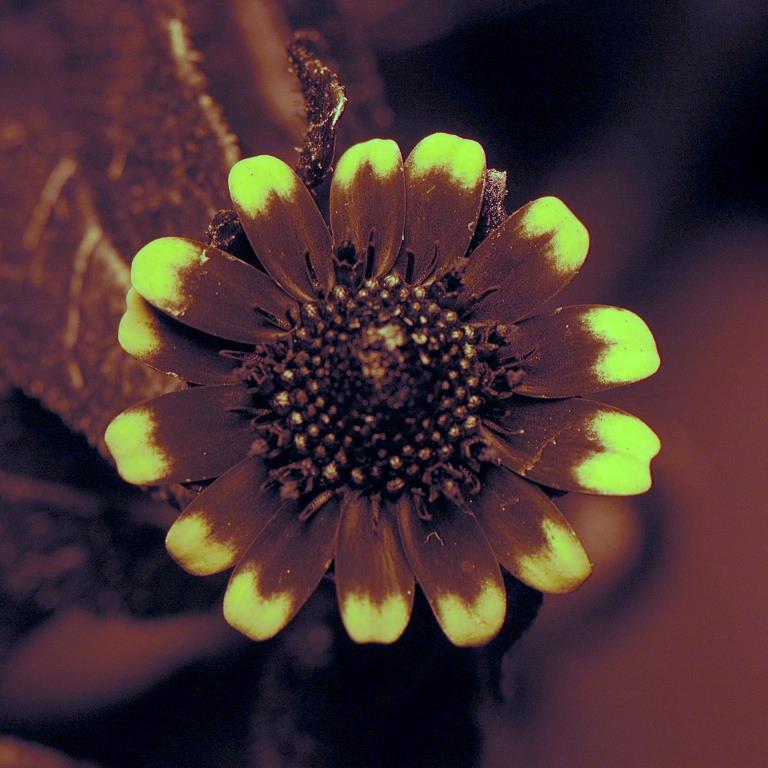
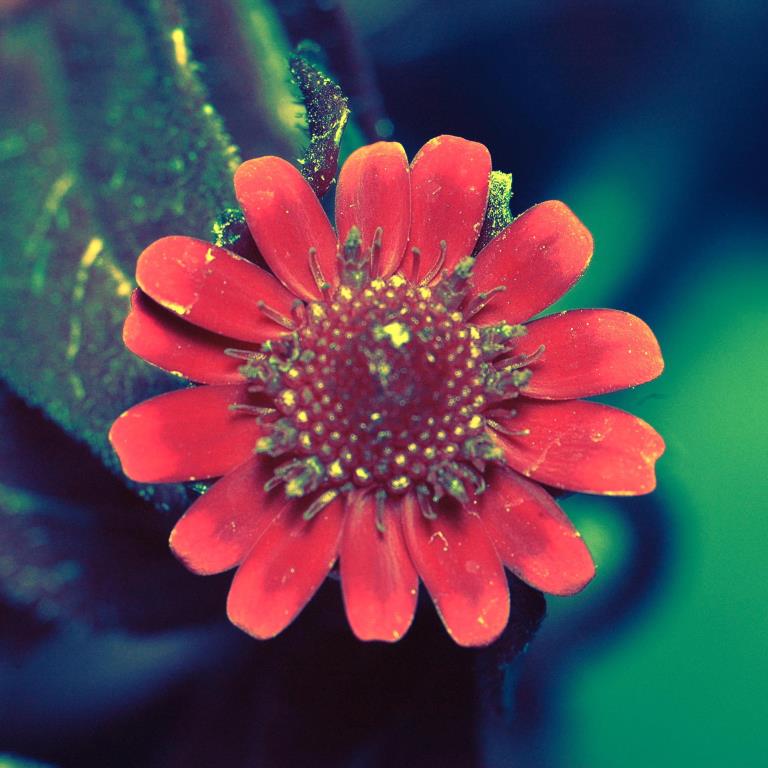
Creeping Zinna, multispectral, UV induced fluorescence, reflected UV etc.

A walk over the local market not only brought some nice white "Lambertheimer" asperagus and new "Galatiner" potatoes home, nope, also a nice "Creeping Zinna" (Sanvitalia procumbens) plant made it to my balcony.

An ideal target to test out the UV enhanced High Power Xenon, the XUVIR "one shot" filter, the Xcut2 filter as well as the well known Baader U filter.

Equipment used was: Nikon D70 (unmodified), UV Nikkor 105mm lens @ ISO400, f11, 1/180sec.

[click on image to see a larger one]

VIS using XCUT2 filter (400-650nm):


UV using Baader U-filter (310-390nm):


XUVIR multispectral filter (300-1000nm), UV Flash:


XUVIR filter (300-1000nm), unfiltered flash for multispectral recording


UV induced fluorescence using XCUT2 filter (400-650nm), UV flash:


Sanvitalias UV pattern is actually not that easy to shoot. That may been seen if you have a look at the reflection spectra which I took, since the UV reflection of the petal tip (white line) is less than 10%, just a little bit more than the rest of the petal (teal line) which has hardly any UV reflection. At the same time the IR reflection is very high. So very careful filtering and a strong UV source is needed :


So, as you may see, a variety of results may be produced....and yes, the asparagus was delicious...

Stay tuned, more will follow on that fascinating subject...

More info on this very interesting field may be found on my site http://www.pbase.com/kds315/uv_photos