Showing posts with label multispectral. Show all posts

Sunday, October 4, 2020

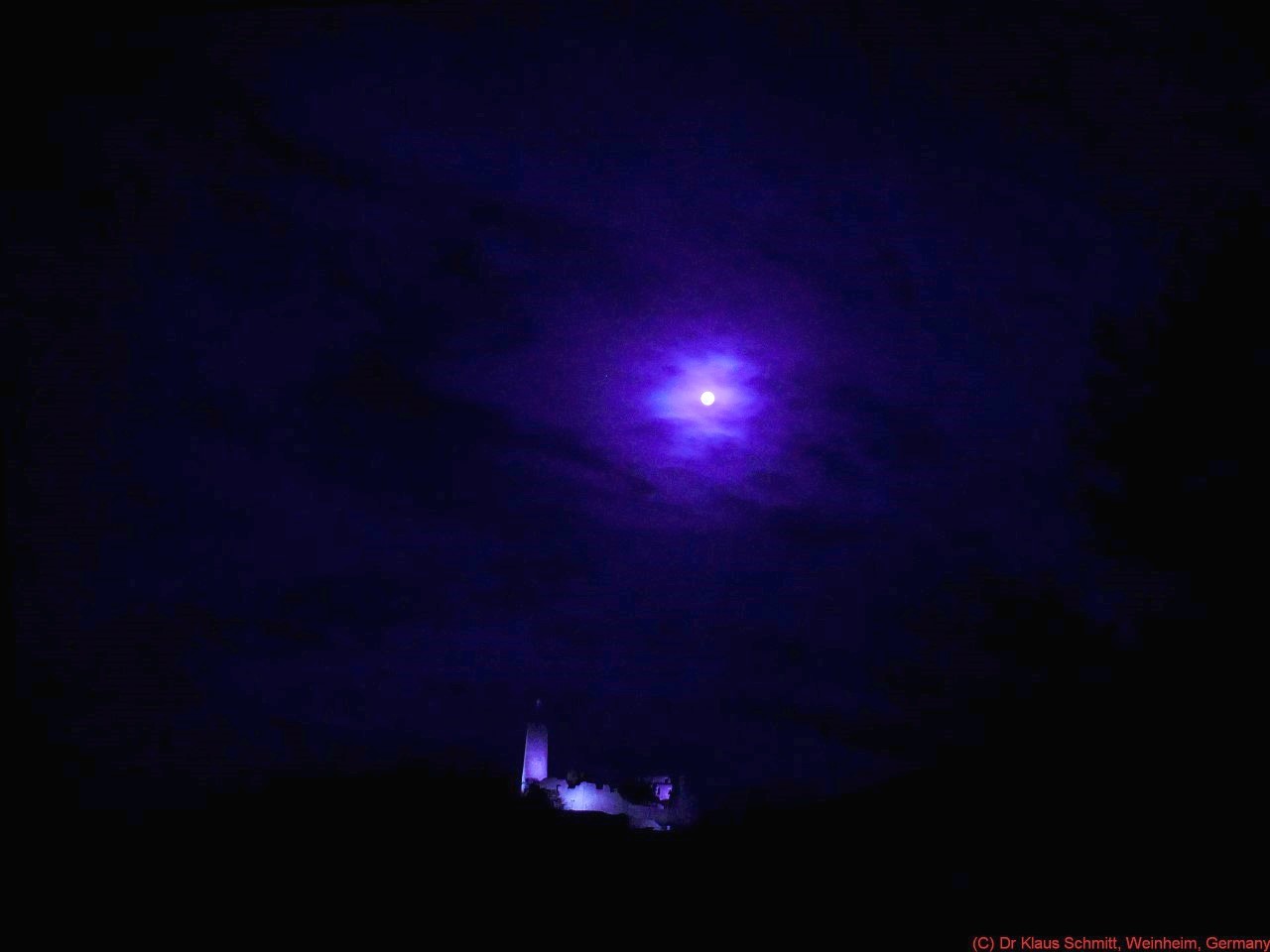
Full Moon over Weinheim Castle: multispectral photography II

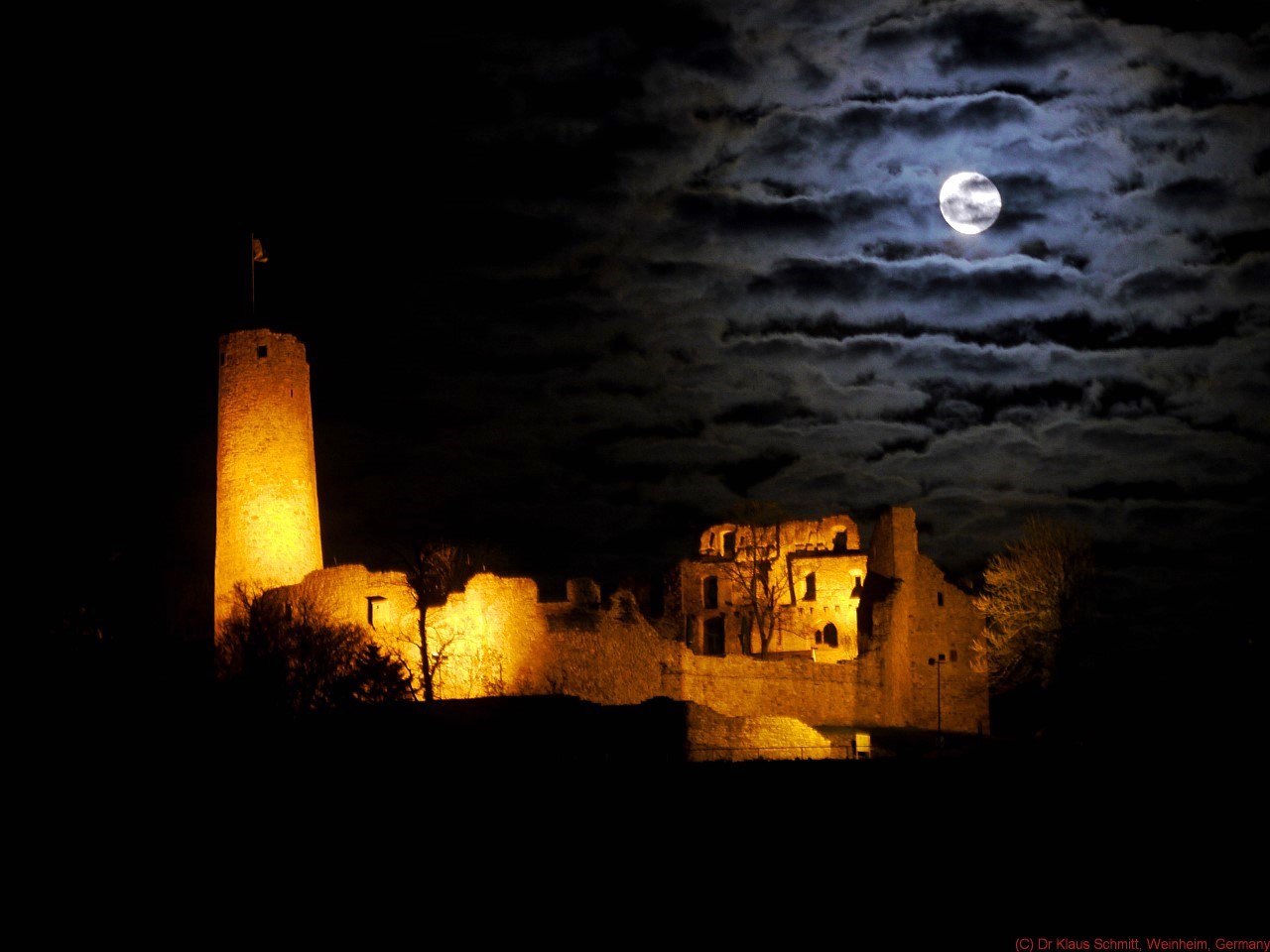
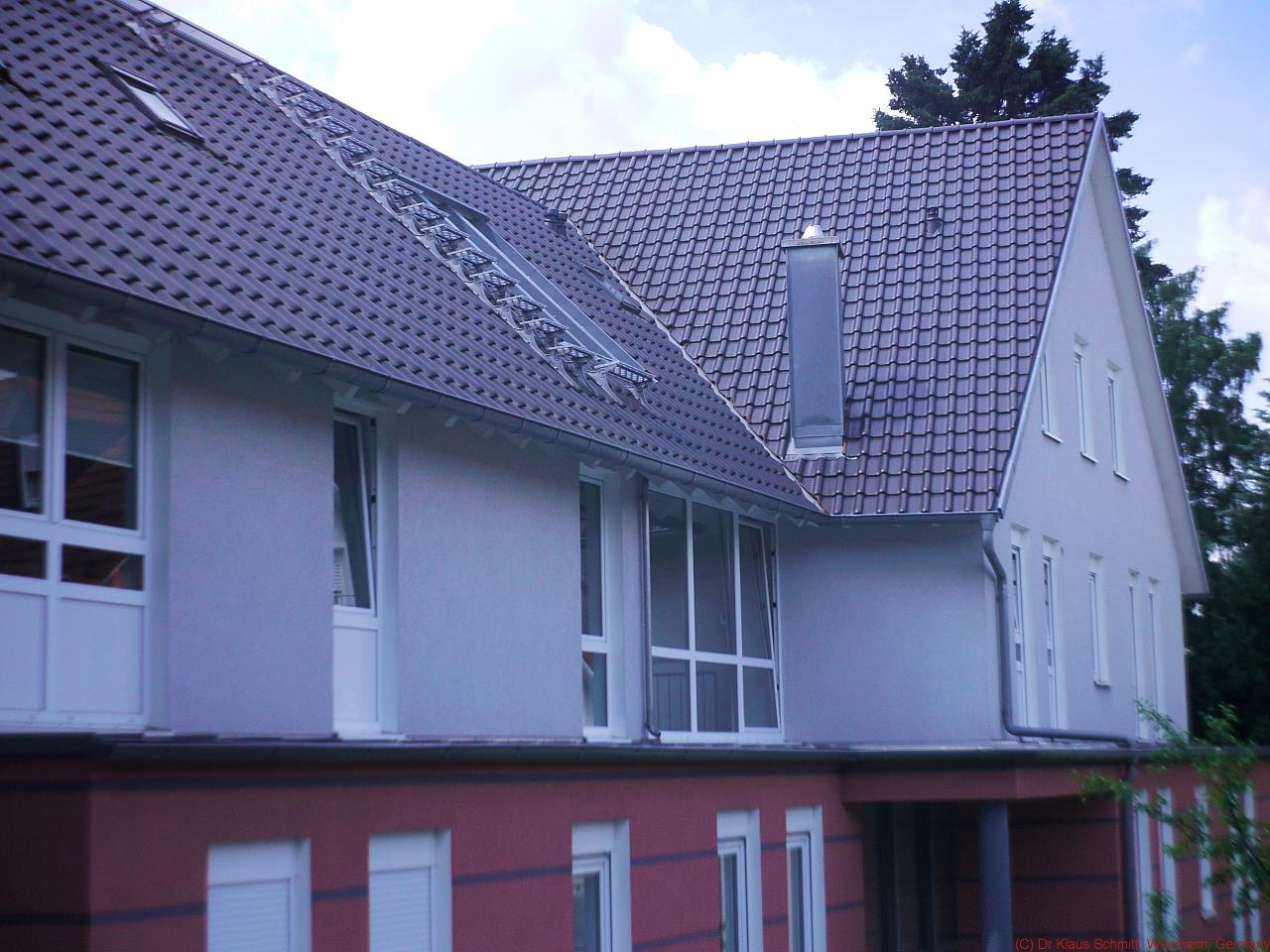
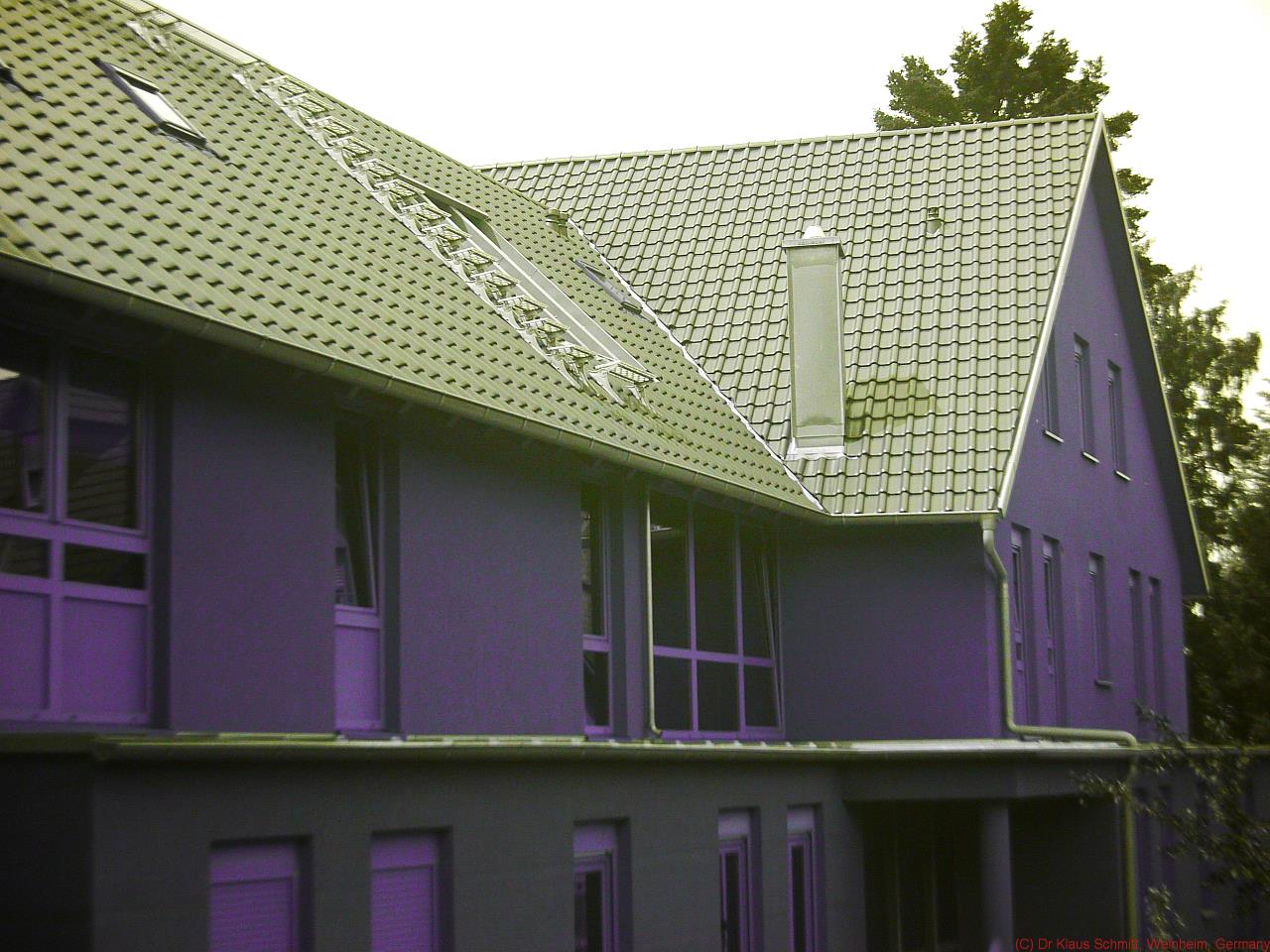
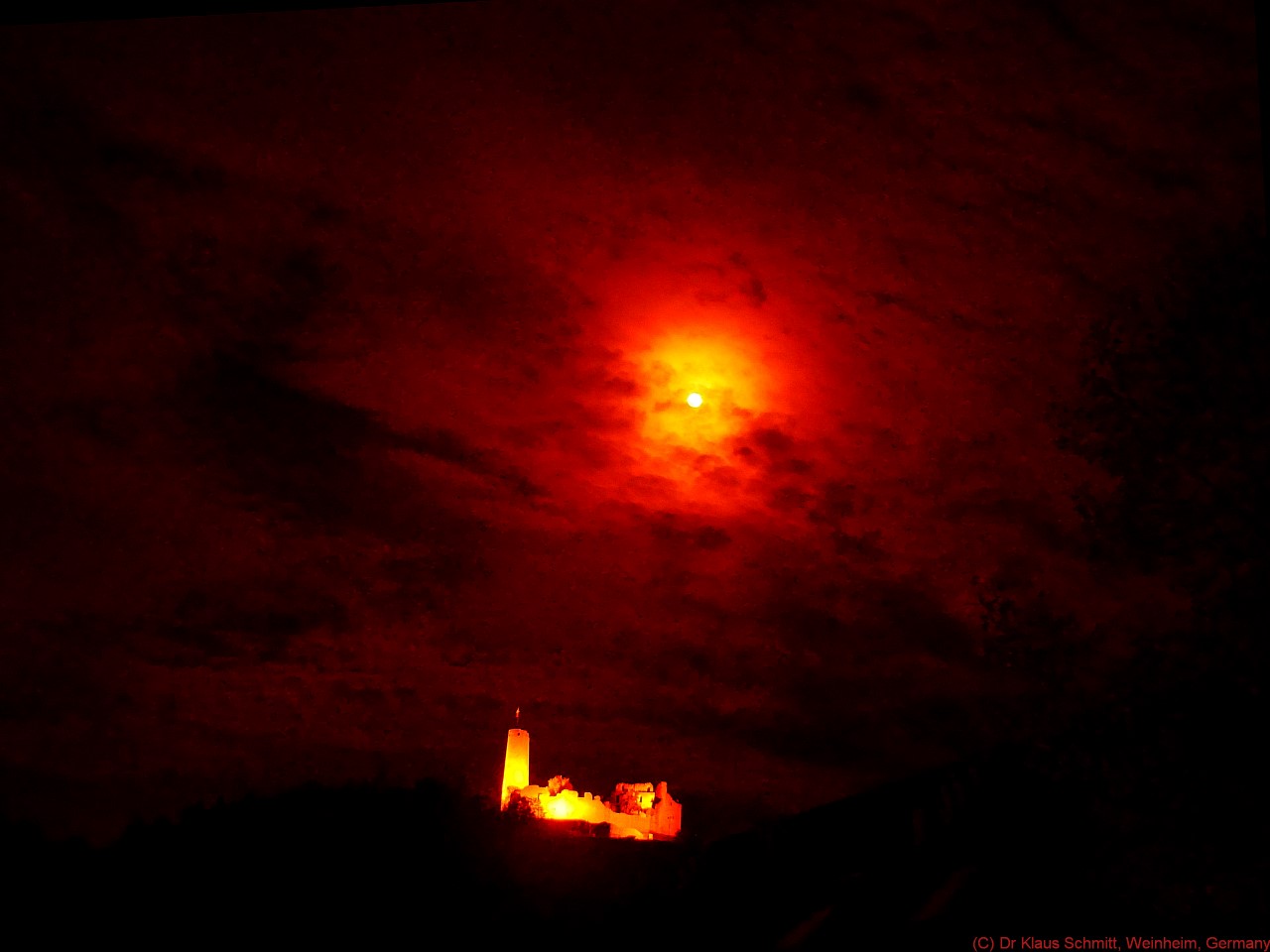
Here today shots of the full Harvest Moon over Windeck castle here in my hometown Weinheim Germany. Shots were done in full spectrum mode (i.e. mainly infrared) and in reflected ultraviolet using Baader-U filter. Lens used was my UV-Nikkor 105mm quartz fluorite lens. Light source was moonlight resp. the castle lighting system. All shots were done at approx. f8. No later whitebalancing was done, pictures straight out of the camera.

[click on image to see a larger one]

IR image: 


UV image: 


Full moon is always special and first I was sad to see all the clouds, but then it turned out quite nicely and all that drama got nicely visible.

I have more moon shots HERE.


Stay tuned, more will follow on that fascinating subject...

Tuesday, December 11, 2018

University of Zurich Zoological Museum exhibit «Insects - essential to life!»

The Zoological Museum of the University of Zurich, Switzerland has just opened the doors of a new special exhibit "Insects - essential to life!". It will be on display December 11, 2018 - June 30, 2019.

Included in this is a video with some of my best multispectral works, which my partner for this, animation artist Robin Noorda, has converted into a video presentation, named "Insecta Spectra".

Some insects (butterflies, Bees, ...) and also some animals (birds, fish, degus,..) are able to see ultraviolet (UV) light. Bees for instance can see Green and Blue and UV, but no RED, but butterflies and birds can see Red, Green and Blue and UV, so both can see what we humans cannot see - UV. To make that visible for us humans, I developed a special filtering and optical mapping method, which allows to simulate, how we would see the world, if we had such special UV receptive eyes.

Have a look at the preview video clip [click]:

Certainly and exhibit worth visiting with the whole family!

Stay tuned, more will follow on that fascinating subject...

More info on this very interesting field may be found on my site http://www.pbase.com/kds315/uv_photos

Wednesday, April 2, 2014

Full Moon over Weinheim Castle: multispectral photography

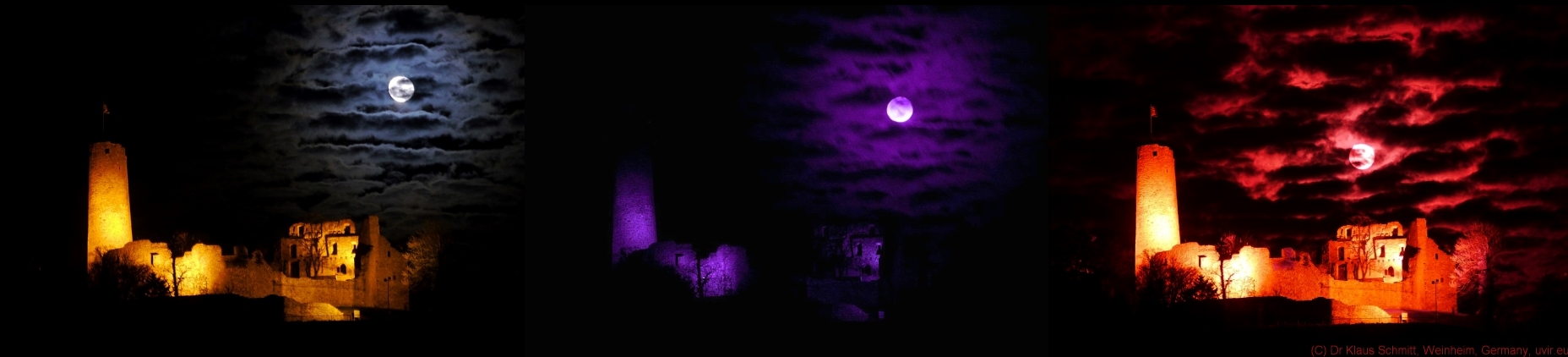
Here today shots of the full moon over Windeck castle here in my hometown Weinheim Germany. Shots were done aside from visible photography in reflected ultraviolet using Baader-U filter. Lens used was my CERCO 94mm quartz fluorite lens. Light source was moonlight resp. the castle lighting system. All shots were done at approx. f8. No later whitebalancing was done, pictures straight out of the camera.

[click on image to see a larger one]

Visible light image:  

UV image:  

IR image:  

Triptych of the above images:  


Full moon is always special and first I was sad to see all teh clouds, but then it turned out quite nicely and all that gets nicely visible.


Stay tuned, more will follow on that fascinating subject...

Friday, June 17, 2011

[UV, VIS] Cerco 28mm multispectral lens

Today about a CERCO 3.5/28mm multispectral lens, made of fluorite / quartz and a big CAVEAT upfront, as I'm using this lens way outside its defined range, which has been made to serve as a lens for an image intensifier system originally with a 18mm image diameter - I'm using 21.6mm, because that's the sensor diameter of my UV sensitive camera. So what has to be expected is a sharp and contrasty center, but most likely quite some fall-off outside that central area.

Mechanically this lens is very tiny, about half the size of my thumb, c-mount and has a rare front filter thread. Register is quite short due to its defined use for an image intensifier, but meets c-mount lens standards and even focuses from beyond infinity to about 0.5m (so it cannot be used on Nikon bodies, to make it clear).

[click on image to see a larger one]

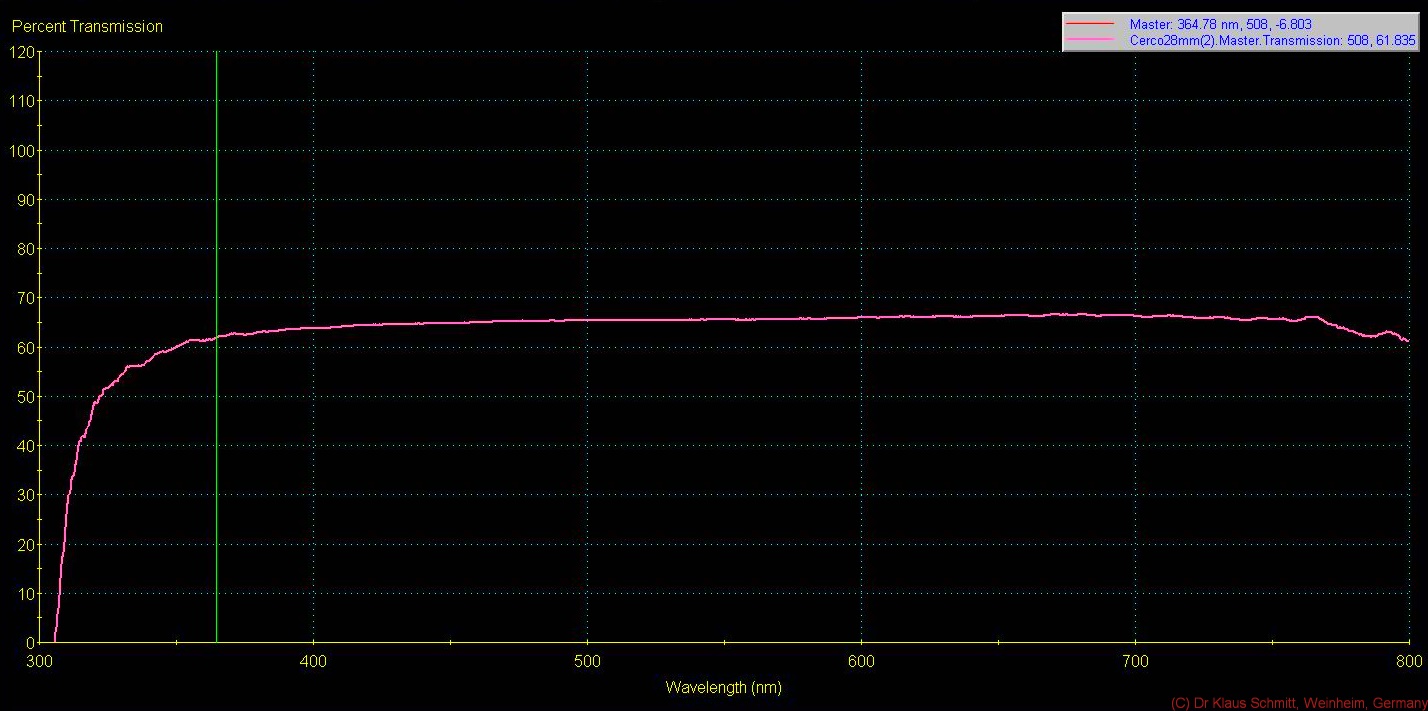
Transmission is quite good and as expected:

[measurement valid from about 315 - 750nm]

That said, now to the UV and VIS test results. All shots done in sunlight, ISO640, f5.6, focus set in visible light, no focus adjustments done. ReflectionDisc in camera whitebalance, reduced to 1280pix, sharpened for web, contrast enhanced (UV).

1) Rudbeckia fulgida flower close-up (same camera position as in my shots shown in other thread here)

VIS:


UV:


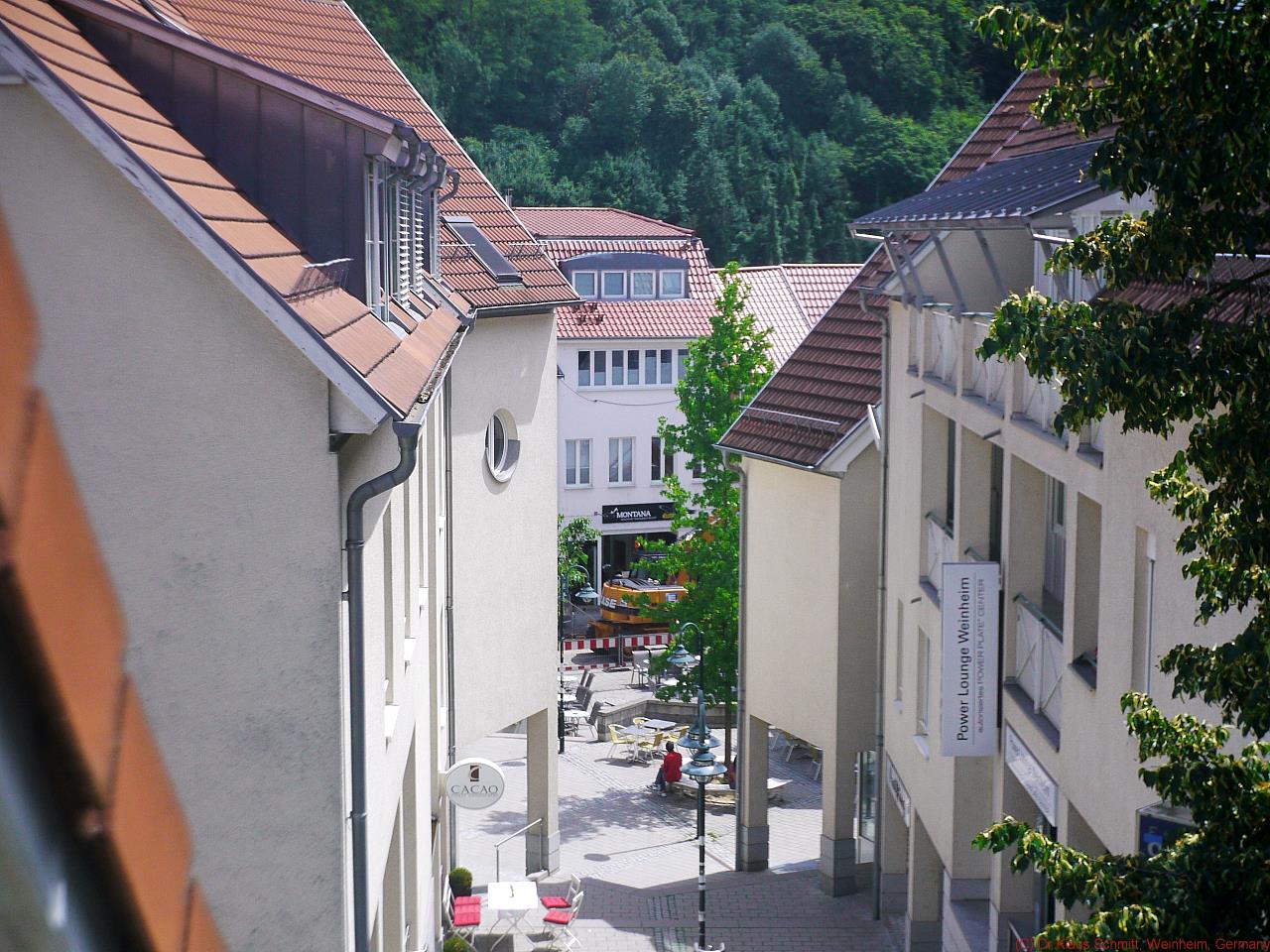
2) Shot down to the city (infinity):

VIS:


UV:


3) Shot of our neighbors house (ca 30m):

VIS:


UV:


Especially from the last two shots it gets quite clear, that this lens was used outside its defined image circle and the loss of sharpness is evident. The close-up shots are much better (as could have been expected due to the much larger projected image circle). The image center is actually quite sharp and contrasty for such a lens and esp. when compared with a Noflexar 35mm, which it certainly beats in resolution and transmission (but the Noflexar 35mm has the benefit to cover a FF sensor). This lens was made for very faint light intensities, so no wonder that it shows some signs of flare if used at high light intensities (although proper shading was used), but I could not detect a prominent hotspot (which its brother, the Cerco 94mm has).

Overall a nicely performing lens for UV-VIS (I haven't tested it for IR) if used inside the specified range, but also quite an expensive one (UV-Nikkor range).


Stay tuned, more will follow on that fascinating subject...

More info on this very interesting field may be found on my site http://www.pbase.com/kds315/uv_photos
Sunday, April 18, 2010

Potentilla multispectral

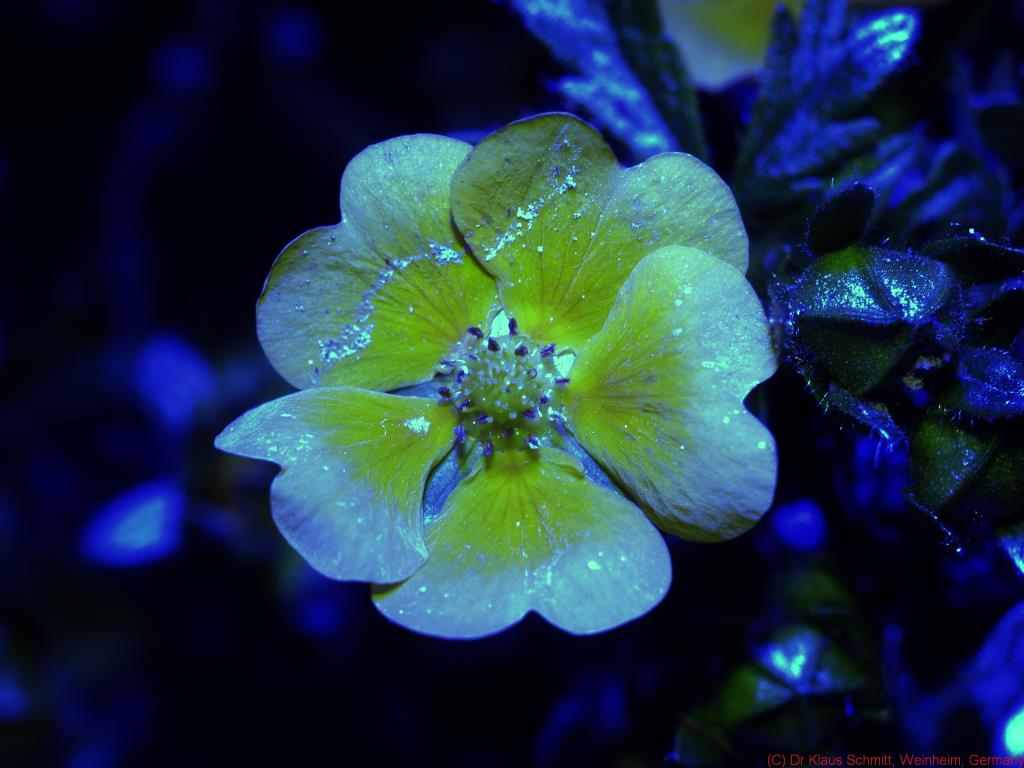
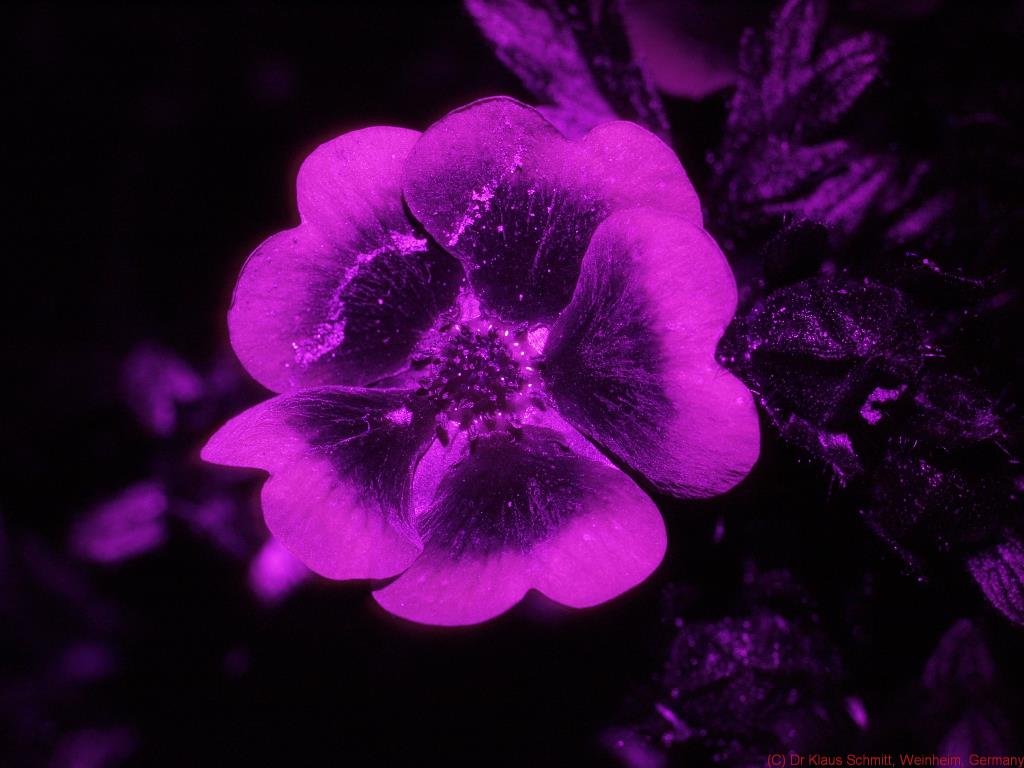
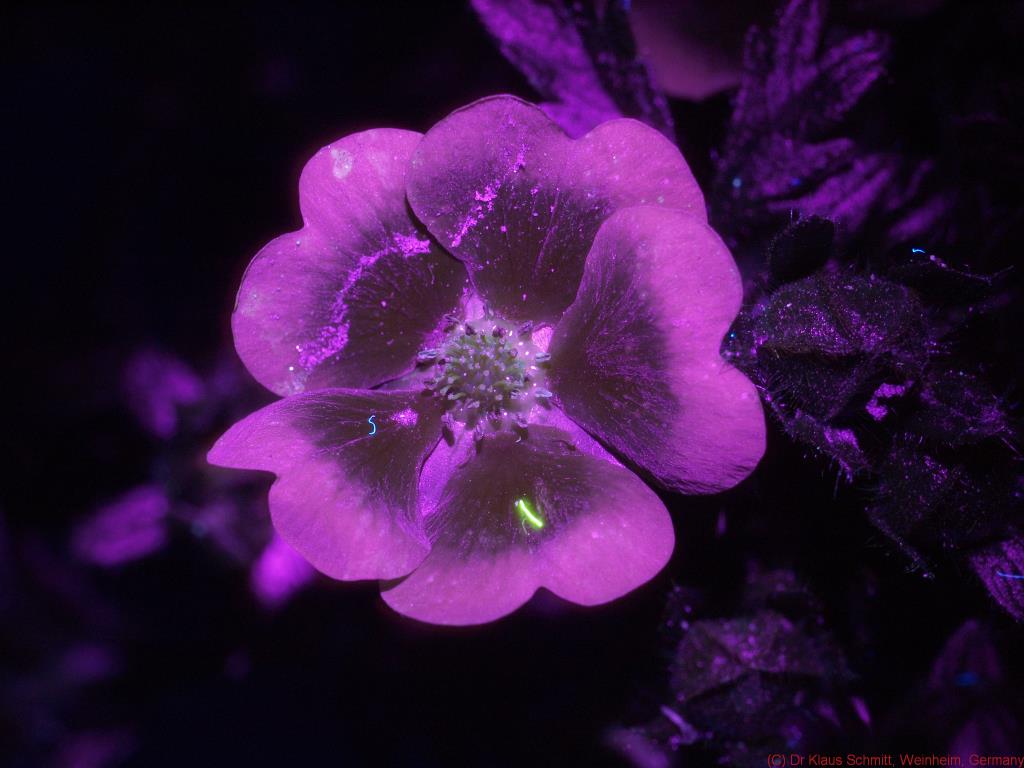
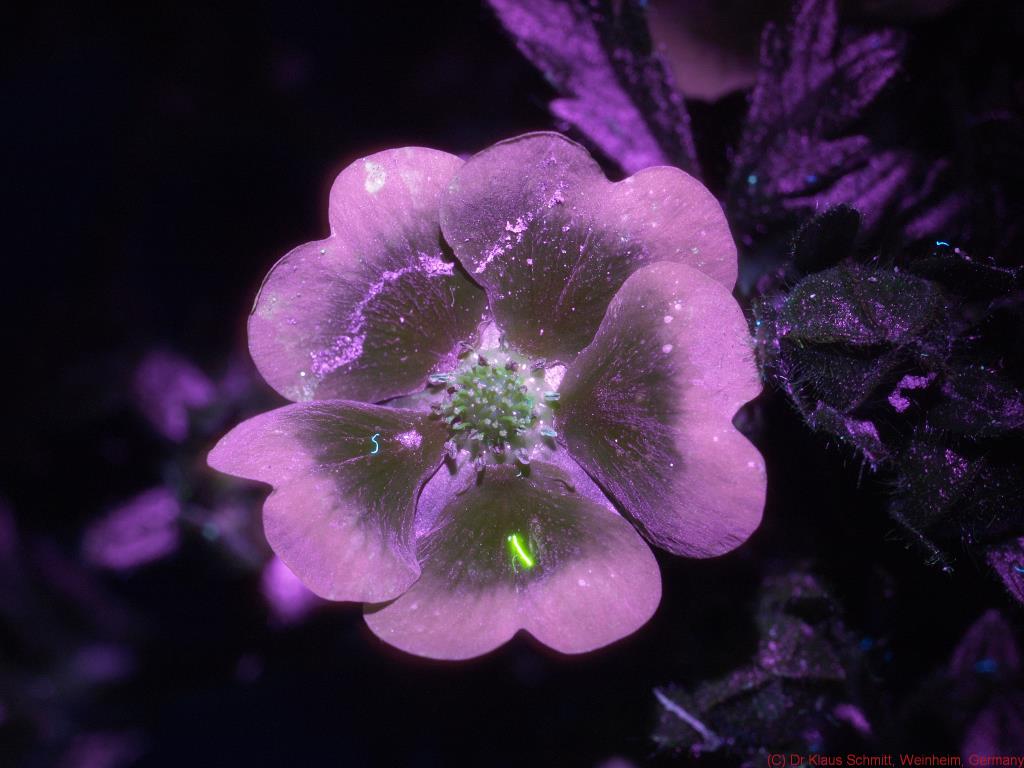
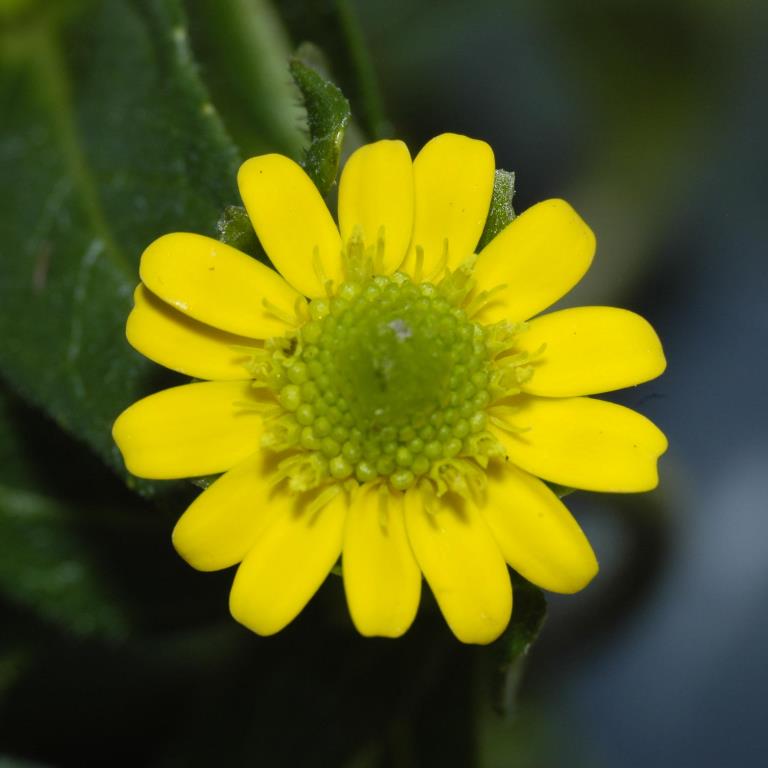
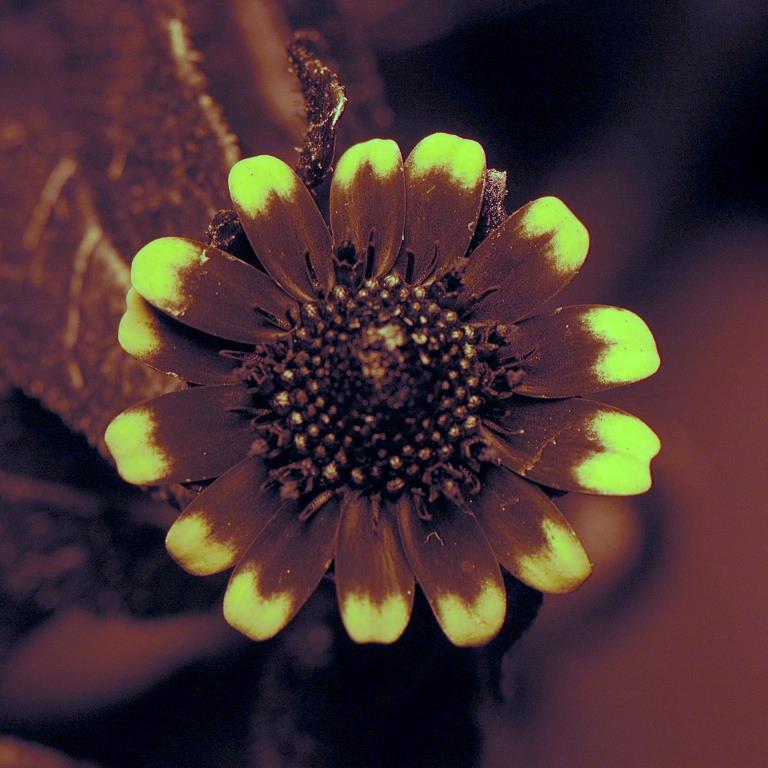
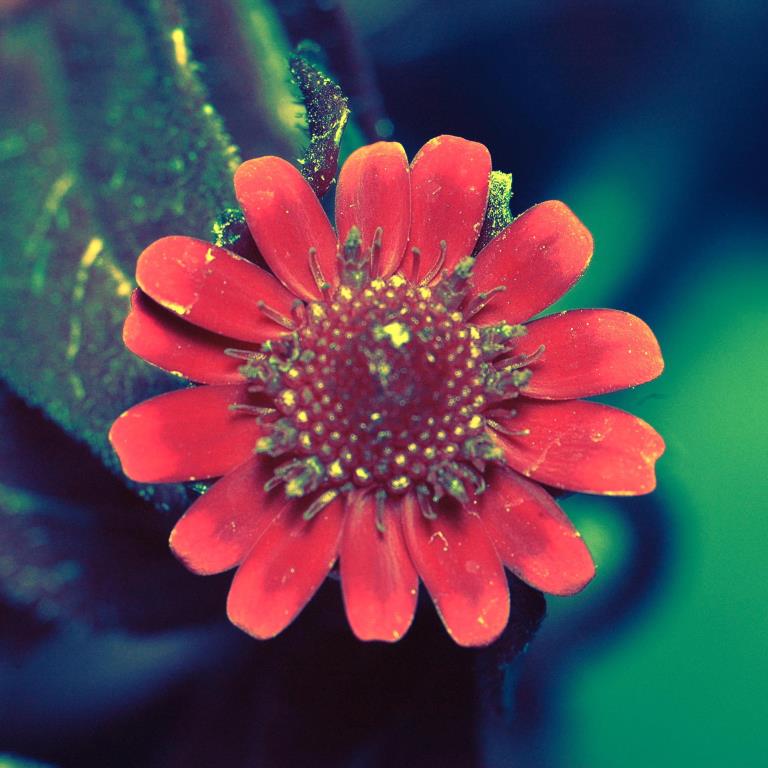
Well, also some flowers of the genus Potentilla (Sulfur Cinquefoil) has a very interesting pattern which only shows in ultraviolet, so I took a chance to shoot that interesting little flower using a UV-Planar 4/60mm lens and various filters /  lightsources.

[click on image to see a larger one]

Visual shot 


BV (simulated bee vision) shot 


UV (300-400nm) shot 


UV+FL shot 


FL (UV induced visilble fluorescence) shot 


Stay tuned, more will follow on that fascinating subject...

More info on this very interesting field may be found on my site http://www.pbase.com/kds315/uv_photos
Monday, April 20, 2009

Bidens ferulifolia, various filters + light sources

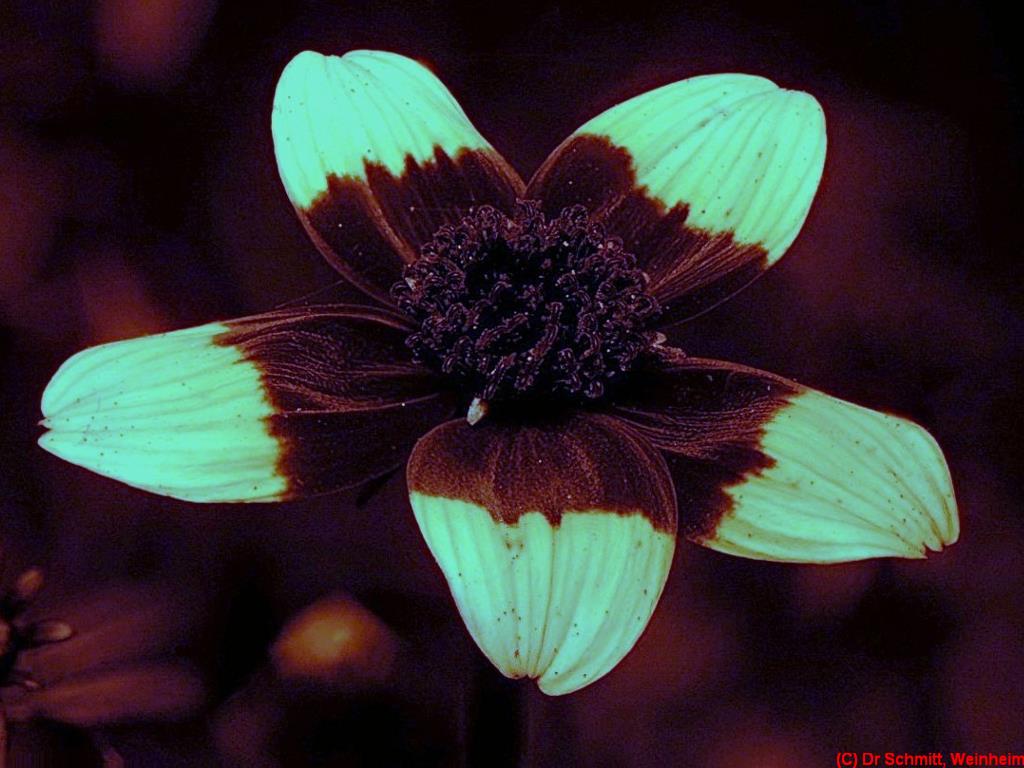
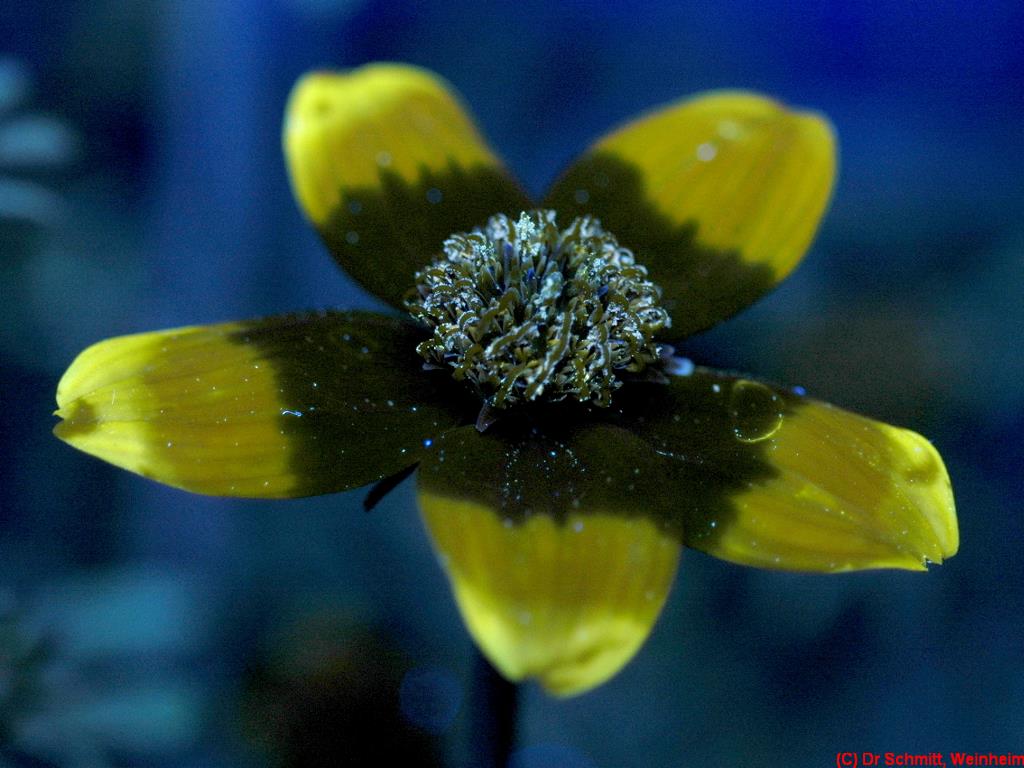
Well, another nice target for UV photographic experiments is Bidens ferulifolia, the variety "Peters's Surprise".

Equipment used was: Nikon D70 (unmodified), ISO400, f5.6-8, 1/160sec, old 100mm enlarger lens.

[click on image to see a larger one]

VIS using XCUT2 filter (400-650nm):


UV using Baader U-filter (310-390nm) - synthetic DOF:


XUVIR multispectral filter (300-1000nm), UV Flash:


UV induced fluorescence using XCUT2 filter (400-650nm), UV flash:

So, as you may see, a variety of results also that flower shows us.

P.S.: if you wonder what "synthetic DOF" means, I used "stacking" to increase the DOF artificially.


Stay tuned, more will follow on that fascinating subject...

More info on this very interesting field may be found on my site http://www.pbase.com/kds315/uv_photos

Thursday, April 16, 2009

Creeping Zinna, multispectral, UV induced fluorescence, reflected UV etc.

A walk over the local market not only brought some nice white "Lambertheimer" asperagus and new "Galatiner" potatoes home, nope, also a nice "Creeping Zinna" (Sanvitalia procumbens) plant made it to my balcony.

An ideal target to test out the UV enhanced High Power Xenon, the XUVIR "one shot" filter, the Xcut2 filter as well as the well known Baader U filter.

Equipment used was: Nikon D70 (unmodified), UV Nikkor 105mm lens @ ISO400, f11, 1/180sec.

[click on image to see a larger one]

VIS using XCUT2 filter (400-650nm):


UV using Baader U-filter (310-390nm):


XUVIR multispectral filter (300-1000nm), UV Flash:


XUVIR filter (300-1000nm), unfiltered flash for multispectral recording


UV induced fluorescence using XCUT2 filter (400-650nm), UV flash:


Sanvitalias UV pattern is actually not that easy to shoot. That may been seen if you have a look at the reflection spectra which I took, since the UV reflection of the petal tip (white line) is less than 10%, just a little bit more than the rest of the petal (teal line) which has hardly any UV reflection. At the same time the IR reflection is very high. So very careful filtering and a strong UV source is needed :


So, as you may see, a variety of results may be produced....and yes, the asparagus was delicious...

Stay tuned, more will follow on that fascinating subject...

More info on this very interesting field may be found on my site http://www.pbase.com/kds315/uv_photos

Tuesday, July 24, 2007

A multispectral example using Mexican Zinnia

Just a few quick shots today using the UV Rodagon 60mm for multispectral analysis in visual light, UV, UV fluorescence and IR. As usual I used a Nikon D70, SB-140 flash w. SW-5UV filter, UV Rodagon 60mm, Baader 2" U- and UV/IR Cut- filter (for UV and UV fluorescence), B+W 092 filter (for IR).

Target was a Mexican Zinna; the little flower head is about 12mm in diameter, i.e. magnification was about 0.5x which still is within the 
design range of that lens. Here now the visual shot:


The UV shot reveals that special pattern this flower shows:


UV fluorescence shows the intensive light of the pollen:


IR finally looks quite transparent:


Quite interesting how the very same flower appears in different wavebands!

Stay tuned, more will follow on that fascinating subject...

More info on this very interesting field may be found on my site http://www.pbase.com/kds315/uv_photos>