Showing posts with label Rudbeckia triloba. Show all posts

Friday, August 3, 2018

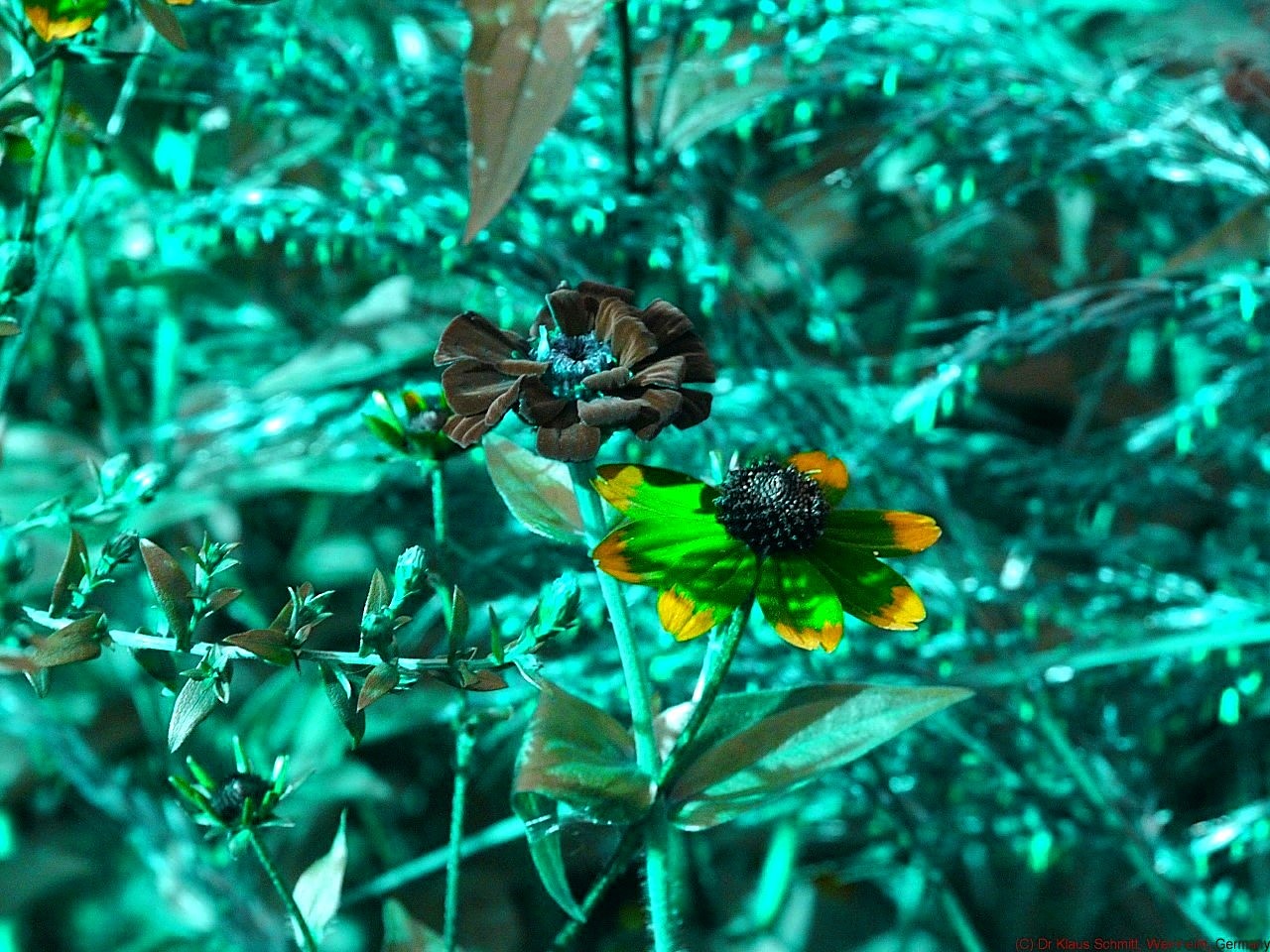
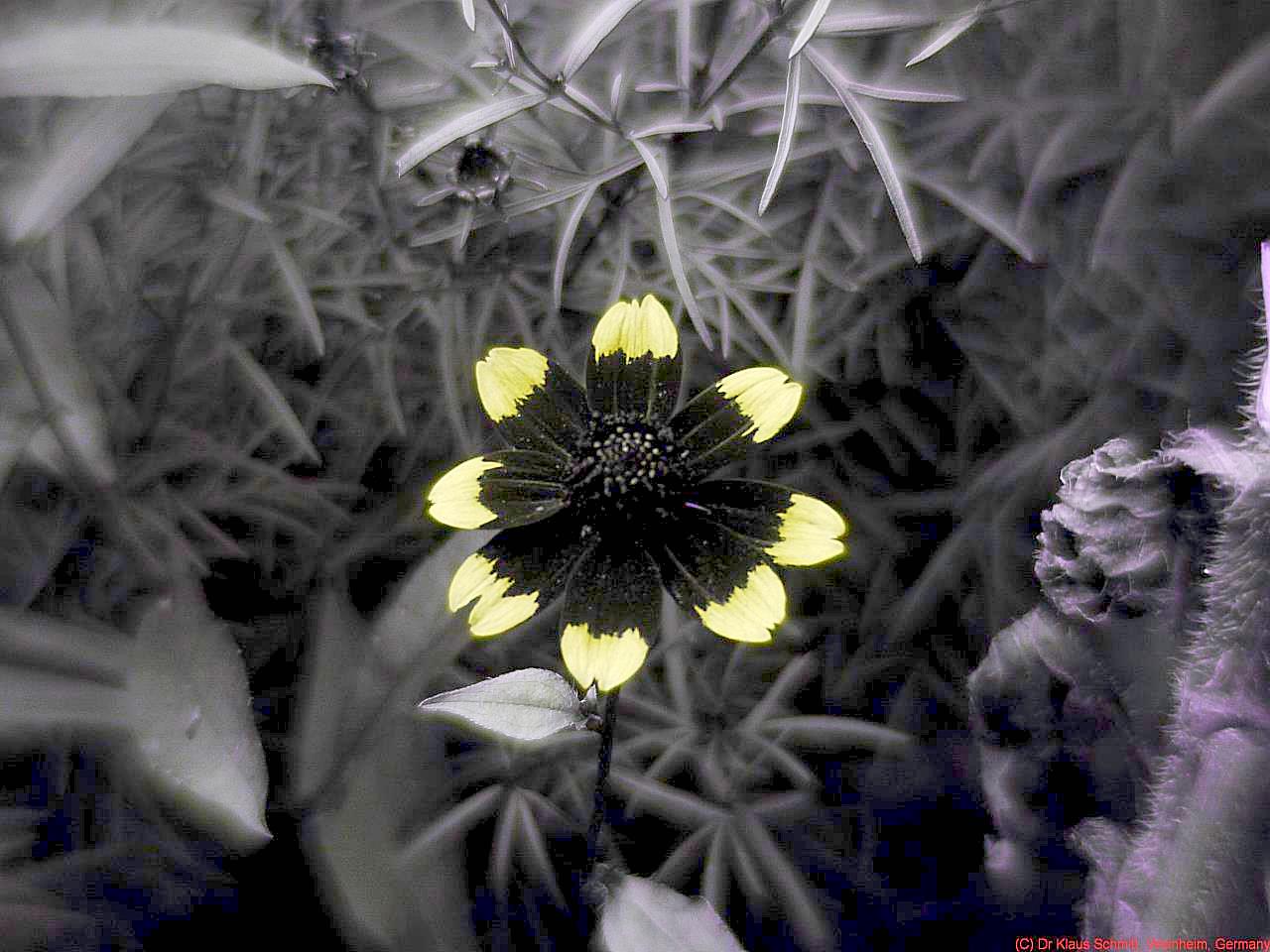
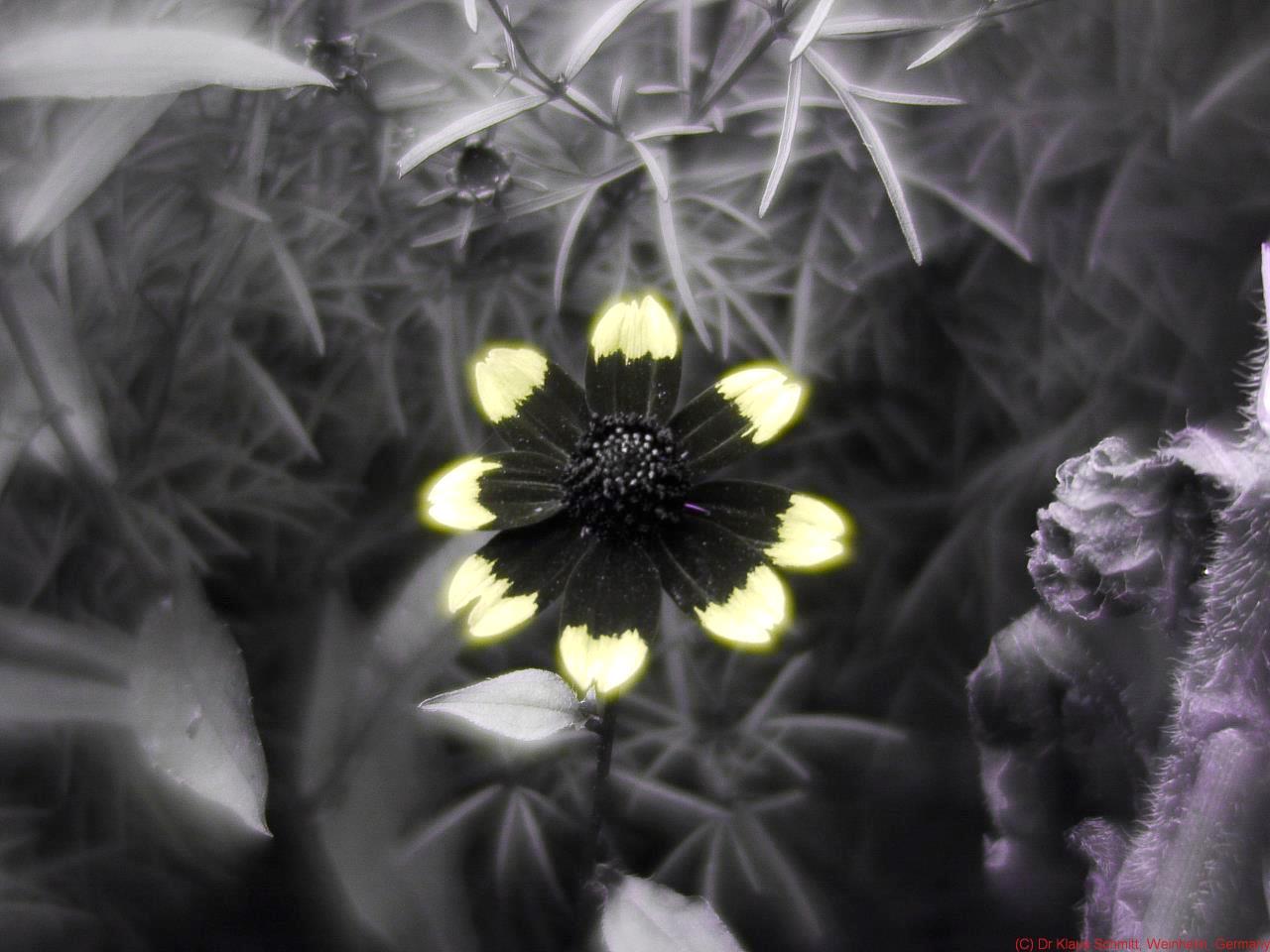
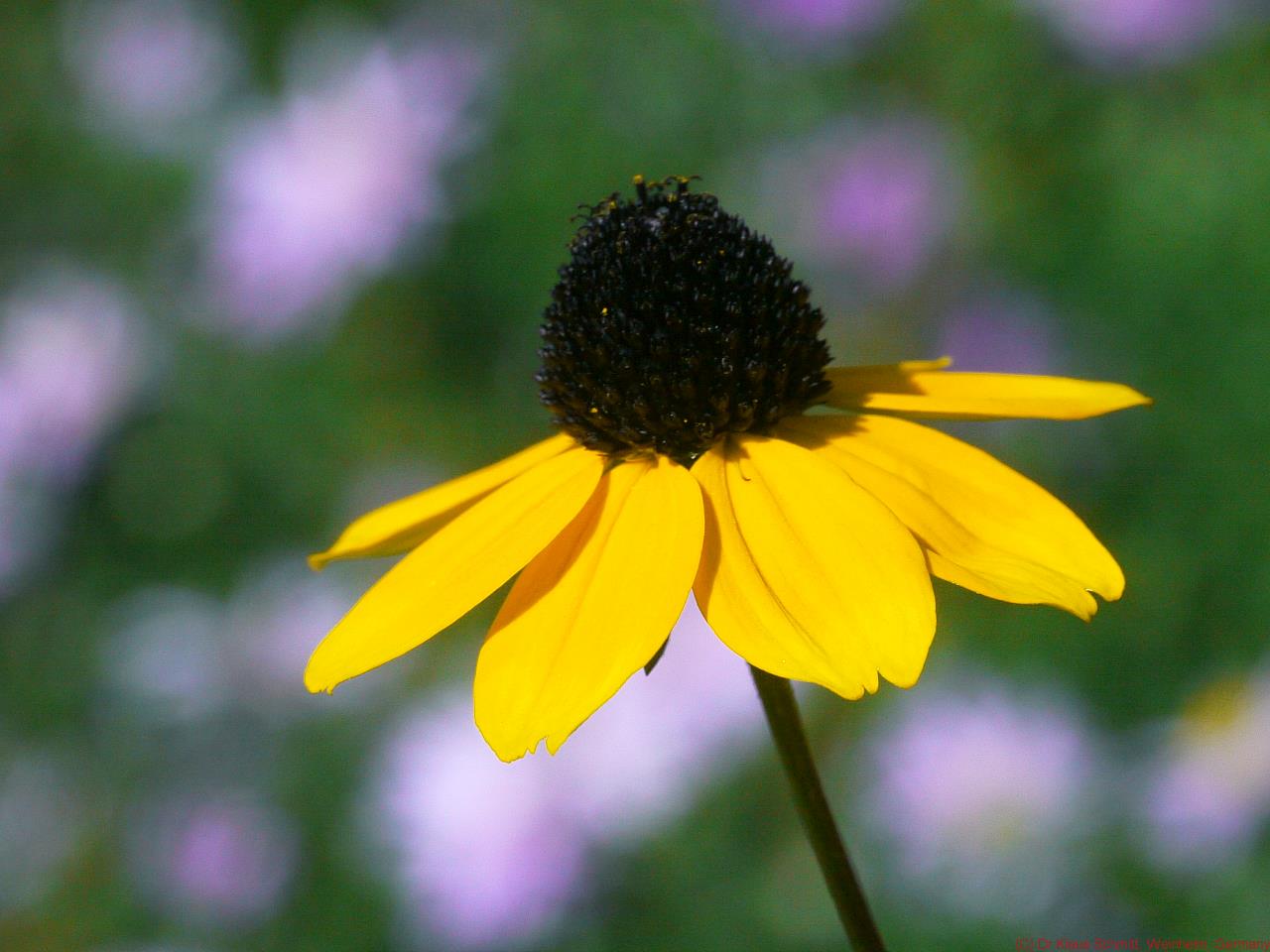
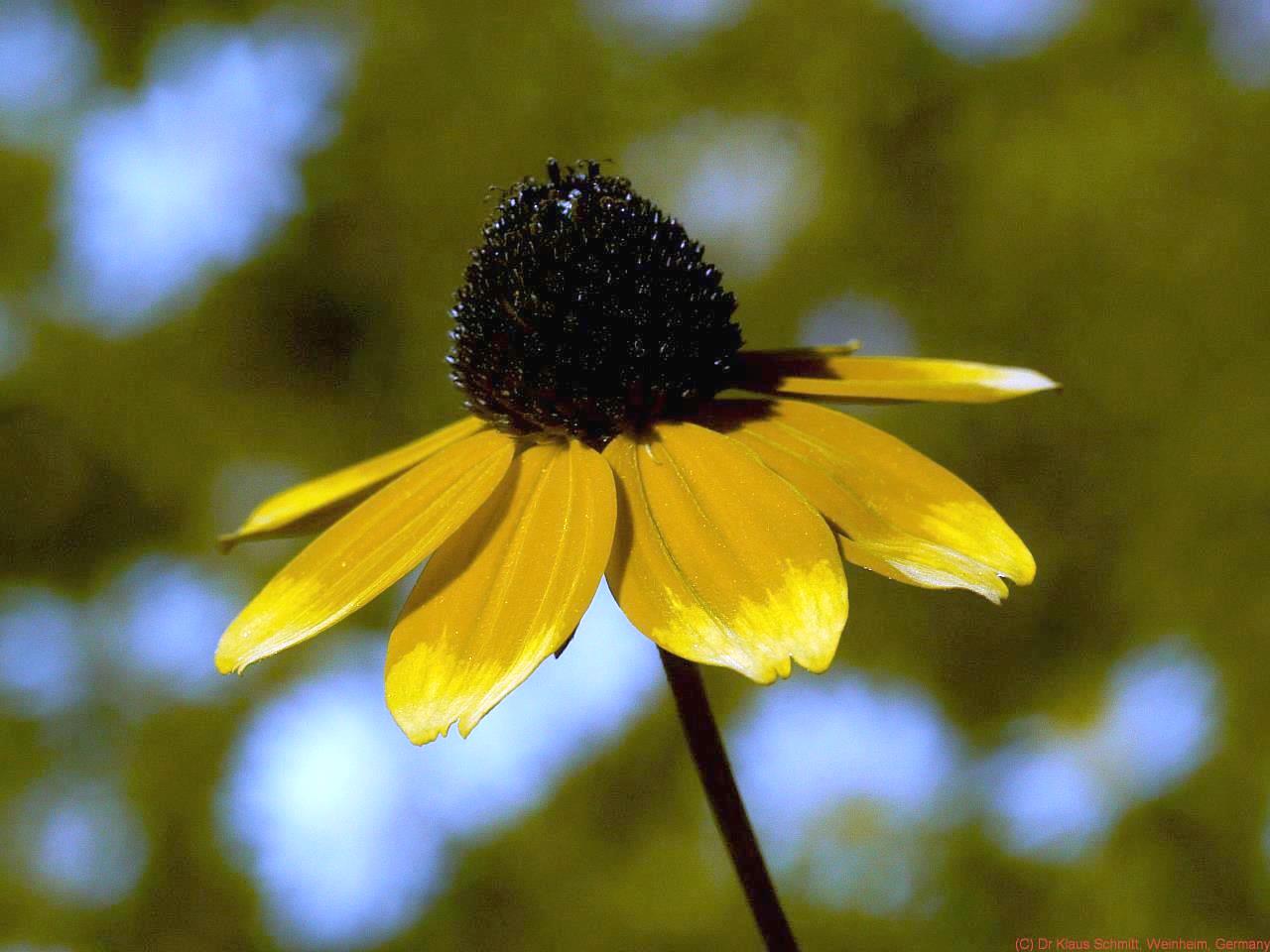
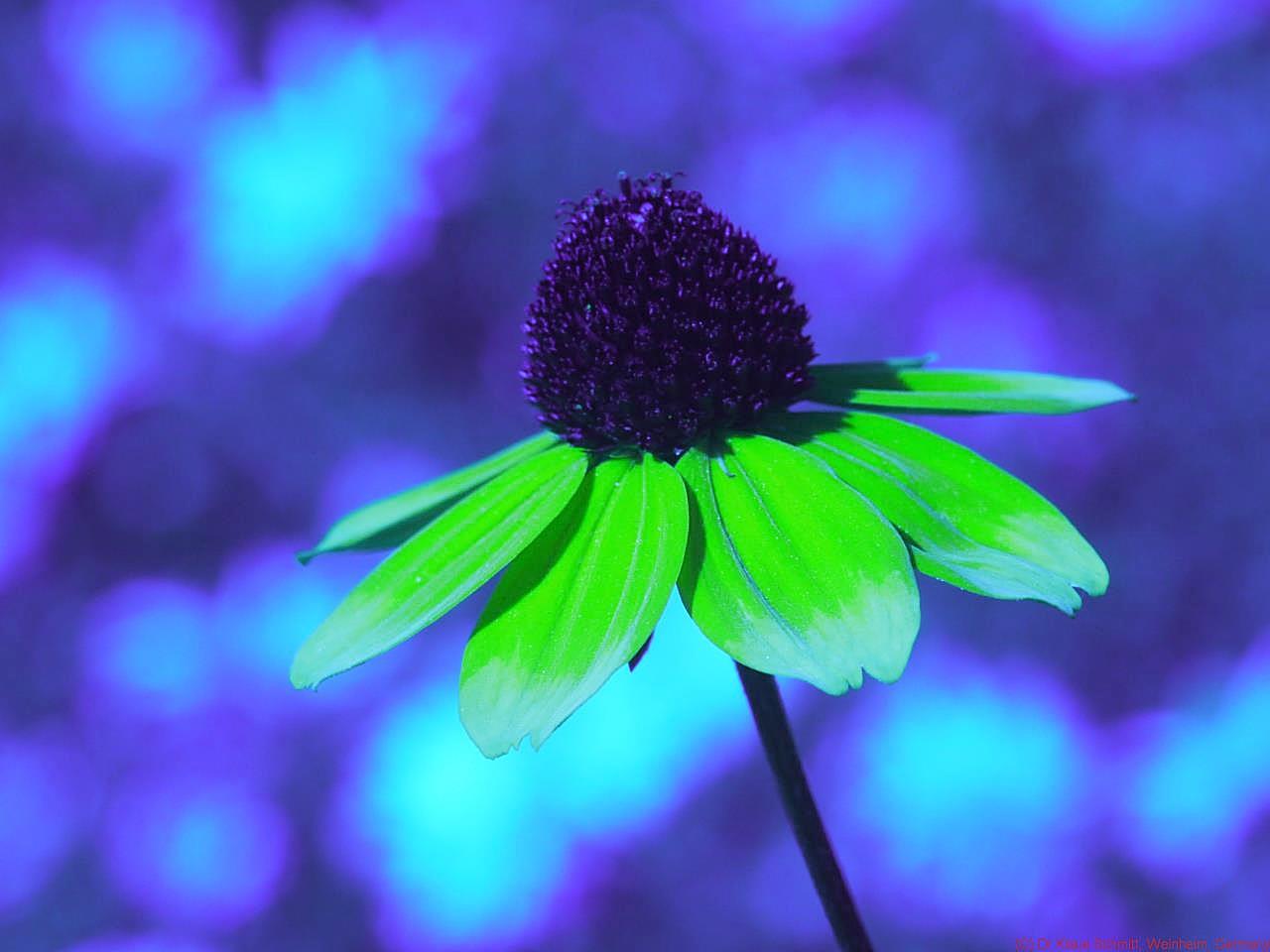
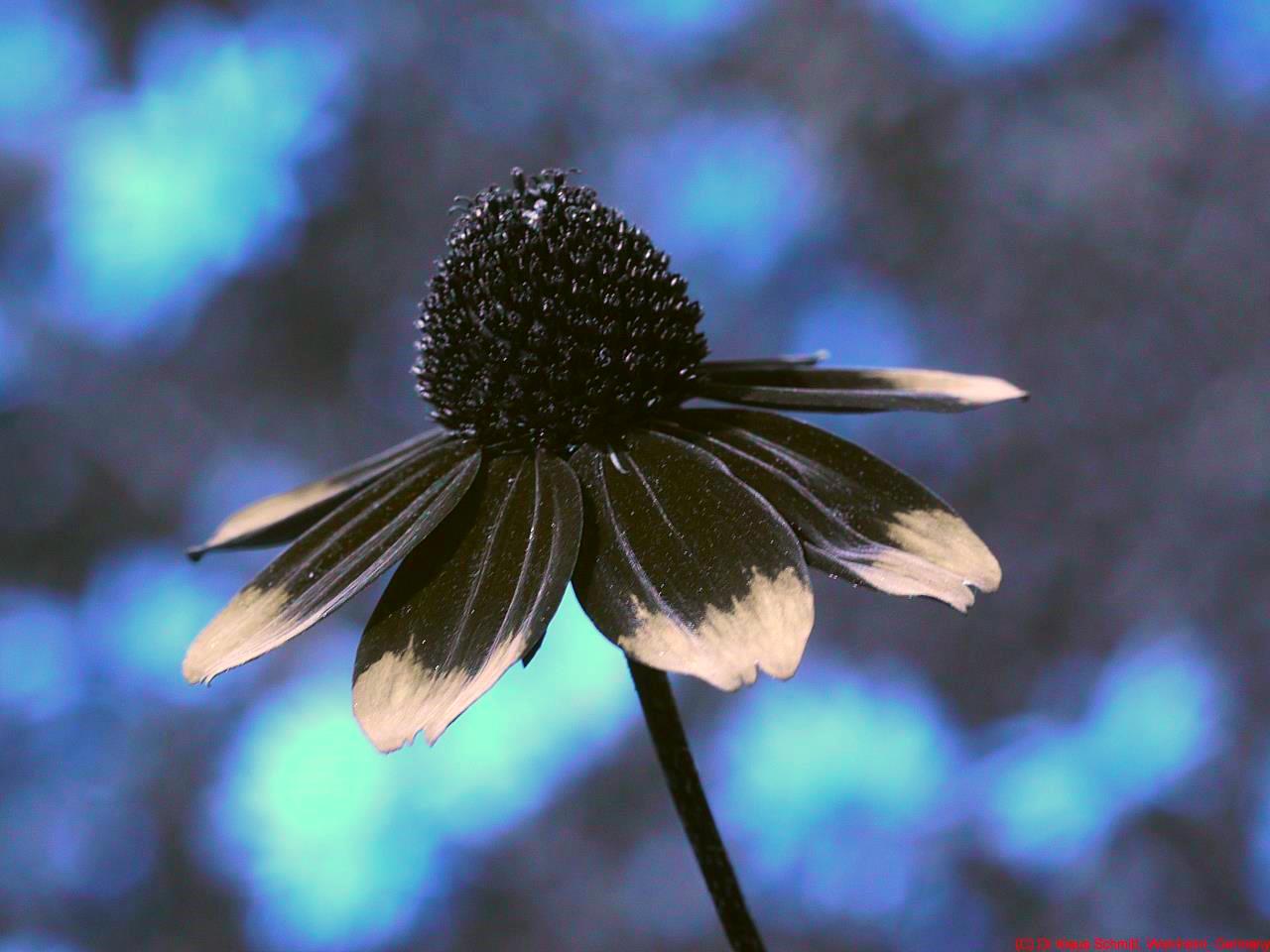
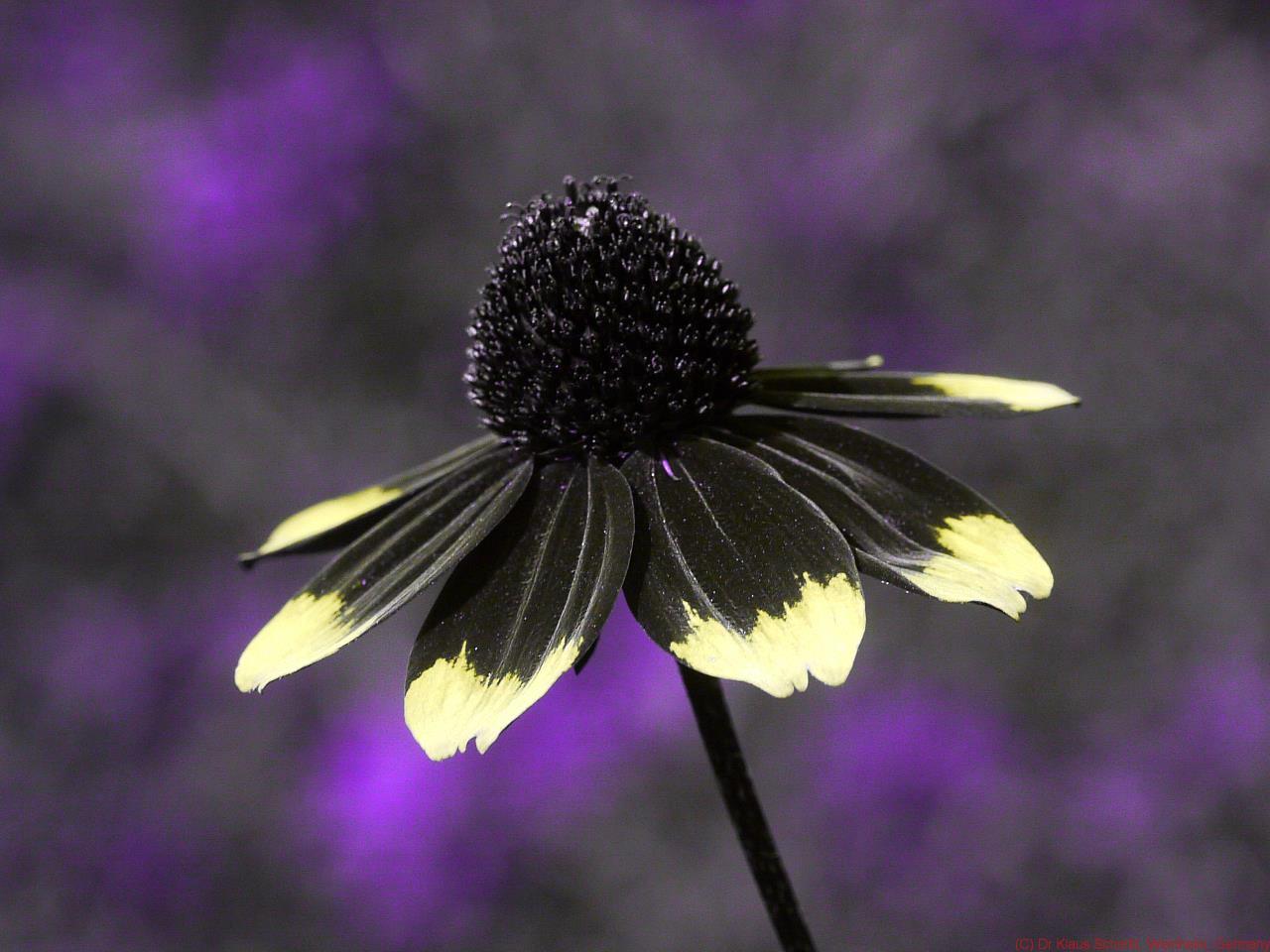
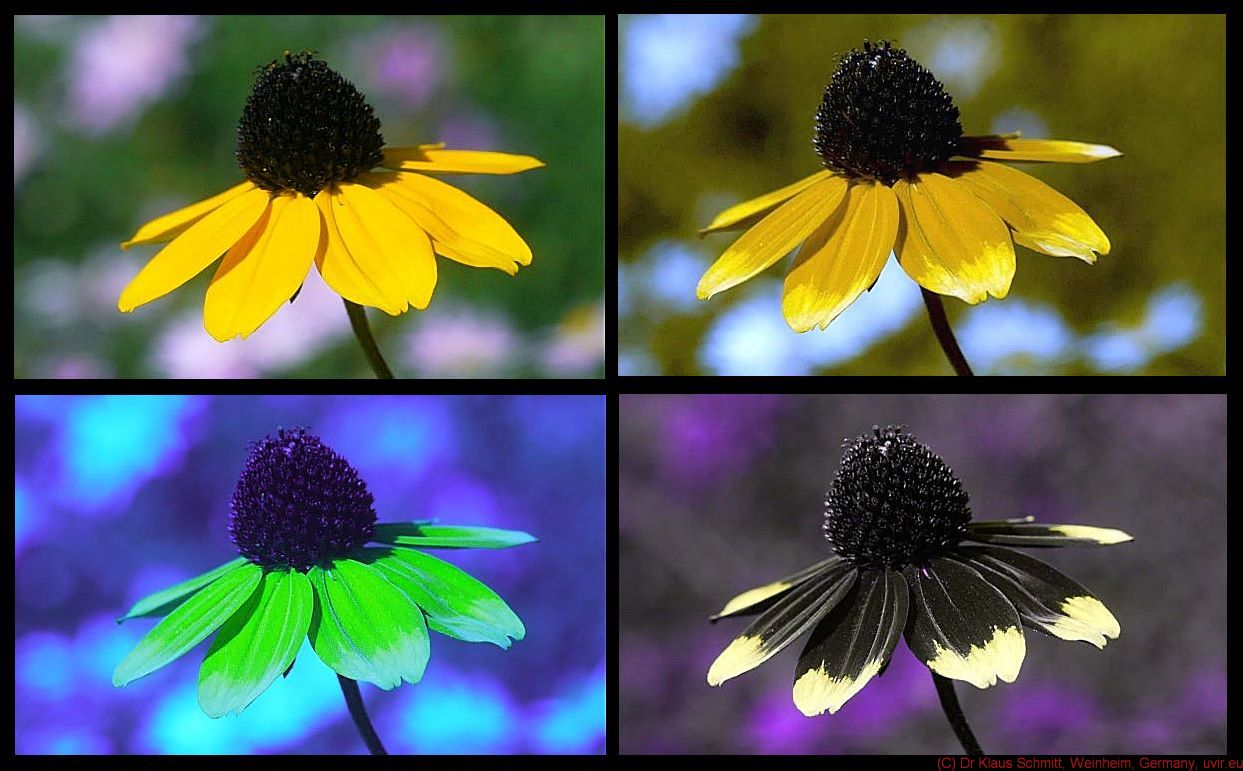
Brown-Eyed-Susan - Rudbeckia triloba in reflected ultraviolet photography and simulated bee and butterfly vision

Today about another "UV-flower" Brown-Eyed-Susan - Rudbeckia triloba in reflected ultraviolet photography and simulated bee and butterfly vision. All shots were done at f5.6 in reflected ultraviolet photography using my "work horse" UV filter, the Baader-U filter, as well as my XBV filters for simulated bee and butterfly vision. Lens was a UV-Nikkor 105mm quartz fluorite lens. Light source was sunlight.

[click on image to see a larger one]

Human vision:
 

Reflected UV:
 

Simulated butterfly vision:
 

Simulated bee vision:
 

Quadriptych of human vision, UV, simulated butterfly and bee vision (left to right, top to bottom):
 

Black-Eyed-Susans have a distinct UV reflection "bulls eye" pattern, its petals have a quite UV dark center and the outside part is quite UV bright around 365nm and all this gets nicely visible, also in simulated bee and butterfly vision.

I have written about that flower before HERE
 
Stay tuned, more will follow on that fascinating subject...

More info on this very interesting field may be found on my site http://www.pbase.com/kds315/uv_photos

Tuesday, September 24, 2013

Three-leaved Coneflower - Rudbeckia triloba and Zinnia in reflected ultraviolet photography and simulated bee vision III

Here comparative shots of that decorative Three-leaved Coneflower - Rudbeckia triloba and a red Zinnia flower in reflected ultraviolet using Baader-U filter and in simulated bee vision using my XBV6 filter. Lens was my CERCO 94mm quartz flourite lens. Light source was sunlight. All shots were done at about f5.6.

[click on image to see a larger one]

Visible light image  

UV image using Baader-U filter (approx. 320-395nm, effective peak approx. 375nm):  

Simulated bee vision image using experimental XBV filter:  

Triptych of the above images:  


This attractive R. triloba flower has a very specific UV pattern, its petals are bright on the petal tips (reflecting around 365nm), have a UV dark bullseye pattern invisible to us humans and also the flower center is quite UV dark. Compared to that that bright red Zinnia flower (to us humans), looks rather dull and dark in UV, except some central parts, so all this gets nicely visible.

I have previously written about that flower HERE.

Stay tuned, more will follow on that fascinating subject...

Wednesday, September 4, 2013

Three-leaved Coneflower - Rudbeckia triloba in reflected ultraviolet photography and simulated bee vision II

Here more shots of that decorative Three-leaved Coneflower - Rudbeckia triloba in reflected ultraviolet using Baader-U filter and in simulated bee vision using my XBV6 filter. Lens was a 55mm Dialyte lens. Light source was sunlight. All shots were done at about f8.

[click on image to see a larger one]

Visible light image  

UV image using Baader-U filter (approx. 320-395nm, effective peak approx. 375nm):  

Simulated bee vision image using experimental XBV filter:  

Triptych of the above images:  


This attractive flower has a very specific UV pattern, its petals are bright on the petal tips (reflecting around 365nm), have a UV dark bullseye pattern invisible to us humans and also the flower center is quite UV dark, and all this gets nicely visible.

I have previously written about that flower HERE.

Stay tuned, more will follow on that fascinating subject...

Saturday, August 31, 2013

Three-leaved Coneflower - Rudbeckia triloba in reflected ultraviolet photography and simulated bee vision

Today shots of a decorative flower, Three-leaved Coneflower - Rudbeckia triloba in reflected ultraviolet photography using my "work horse" UV filter, the Baader-U filter as well as in simulated bee vision using my XBV6 filter (In the background are some R.fulgida I have previosly written about). Lens was my CERCO 94mm quartz flourite lens. Light source was sunlight. All shots were done at about f5.6.

[click on image to see a larger one]

Visible light image  

UV image using Baader-U filter (approx. 320-395nm, effective peak approx. 375nm):  

Simulated bee vision image using experimental XBV filter:  

Triptych of the above images:  


This attractive flower has a specific UV pattern, its petals have a UV dark bullseye pattern invisible to us humans and the flower center is quite UV dark, and all this gets nicely visible.


Stay tuned, more will follow on that fascinating subject...

Tuesday, September 18, 2012

Rudbeckia triloba: Quartz Singlet Lens for Soft Focus Reflected UV Ultraviolet Photography

Today a set of shots with a Rudbeckia triloba flower using a custom made up UV lens from a simple quartz singlet that I used before, stopped down mildly to various degrees to control a wanted soft focus effect. Shots in UV were done using the Baader-U filter and sunlight was used as light source.

[click on image to see a larger one]


So, I'm sure this is not to everyones taste, but on my way to explore other possibilities then just "scientific" shots, it is a welcome new style.


Stay tuned, more will follow on that fascinating subject...

More info on this very interesting field may be found on my site http://www.pbase.com/kds315/uv_photos

Friday, September 14, 2012

Rudbeckia triloba: human vision vs simulated bee vison; reflected UV ultraviolet photography

Today about a Rudbeckia triloba in its multispectral representation, shot in Herrmanshof Park, Weinheim, Germany. I took the shots on a very windy and cloudy day using sunlight in normal human vision VIS, in UV using the Baader-U filter, as well as in simulated bee vision using my XBV2, XBV6 and XNUV filters respectively.

[click on image to see a larger one]

Visual shot:


Simulated bee vision using XBV2 filter:


Simulated bee vision using XBV6 filter:


Simulated bee vision using XNUV filter:


UV using Baader-U filter:


And here a polyptych of them all:


The new filtering technique makes the very prominent UV reflectance of the petals clearly visible.

Stay tuned, more will follow on that fascinating subject...

More info on this very interesting field may be found on my site http://www.pbase.com/kds315/uv_photos