Showing posts with label Mirabilis jalapa. Show all posts

Friday, October 2, 2015

ZDF TerraX Series "The Magic of Colors" Oct 18 2015 19:30h CET

TerraX has contracted me to supply them with Vis + UV stills and a reflected UV HD video for their forthcoming two-part series "The Magic of Colors" which will air Oct 18 (part I) and Oct 25 (part II), 2015 19:30 hours CET on TV channel ZDF - my work will be shown in part I on Oct 18.

Quote TerraX: "Whether ocher, red, yellow, green or blue: Behind every color shade are hidden stories and amazing facts. Why do they have such a great importance for us people and why has that always been that way? Only those who could recognize whether a fruit is ripe or toxic, could survive. All colors in nature serve a biological purpose and every living being has specialized his perception towards that. But man alone manufactures colors and gives them symbolic power."

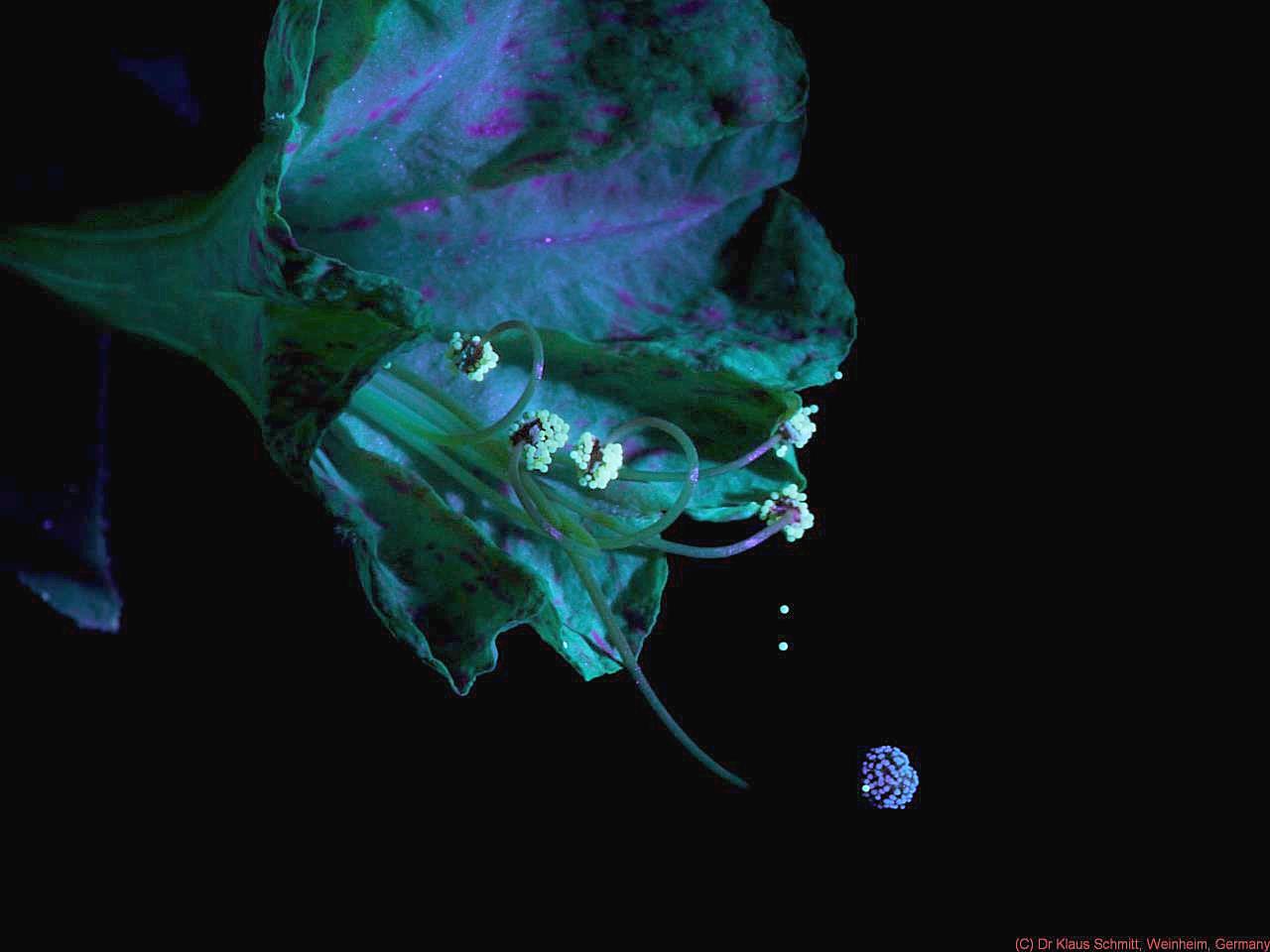
That also applies also to animals and flowers, and evlolution found amazing ways of plant-animal interaction, benefitting them both. However not all animals and insects have the very same color perception we humans have, some of them can see what we cannot see, ultraviolet (UV) light for instance, or the very faint UV induced visible fluorescence some flowers emit to attract night active moths, like this four o'clock flower (Mirabilis jalapa) for instance shown in human vision and fluorescence with its glowing pollen:

Here now some examples what pollinating bees are able to see and what we humans see, Brown Eyed Susan (Rudbeckia fulgida) to start with (1st visible light and 2nd reflected UV)
There will also be a video showing a bee pollinating a Rubbeckia flower in reflected ultraviolet light:  

I'm pretty sure this whole series will be quite exciting to watch as there is so much more in it. Be sure to watch it of you can!

Stay tuned, more will follow on that fascinating subject...

Tuesday, April 10, 2012

[UV] Mirablis jalapa in reflected ultraviolet light and deep UV

The astonishing Mirabilis jalapa in various wavebands, broadband UV using Baader U filter (320-390nm) and a special 300-350nm filter. Shots from last autumn.

VIS:


UV: Baader U2


UV: 300-350nm


The shorter the UV waveband used gets, the more details the flower reveals.


Stay tuned, more will follow on that fascinating subject...

More info on this very interesting field may be found on my site http://www.pbase.com/kds315/uv_photos

Saturday, March 24, 2012

[UV] Mirabilis jalapa UV ultraviolet fluorescence - from "Kingdom of Plants"

Today about some earlier work I have done on Mirabilis jalapa flowers, that have some very special abilities - their pollens and flower petals are fluorescent when seen under ultraviolet light. This may also bee seen in the forthcoming new series about Kew Gardens by Sir David Attenborough called "Kingdom of Plants 3D".

[click on image to see a larger one]

Visible light:


UV induced visible fluorescence:


Mirabilis' pollen emits a strong blue greenish fluorescent light and some scientists believe that the special night active moths that pollinate them, might be able to see this.

Stay tuned, more will follow on that fascinating subject...

More info on this very interesting field may be found on my site http://www.pbase.com/kds315/uv_photos

Thursday, August 11, 2011

[UV] Mirabilis jalapa in reflected ultraviolet

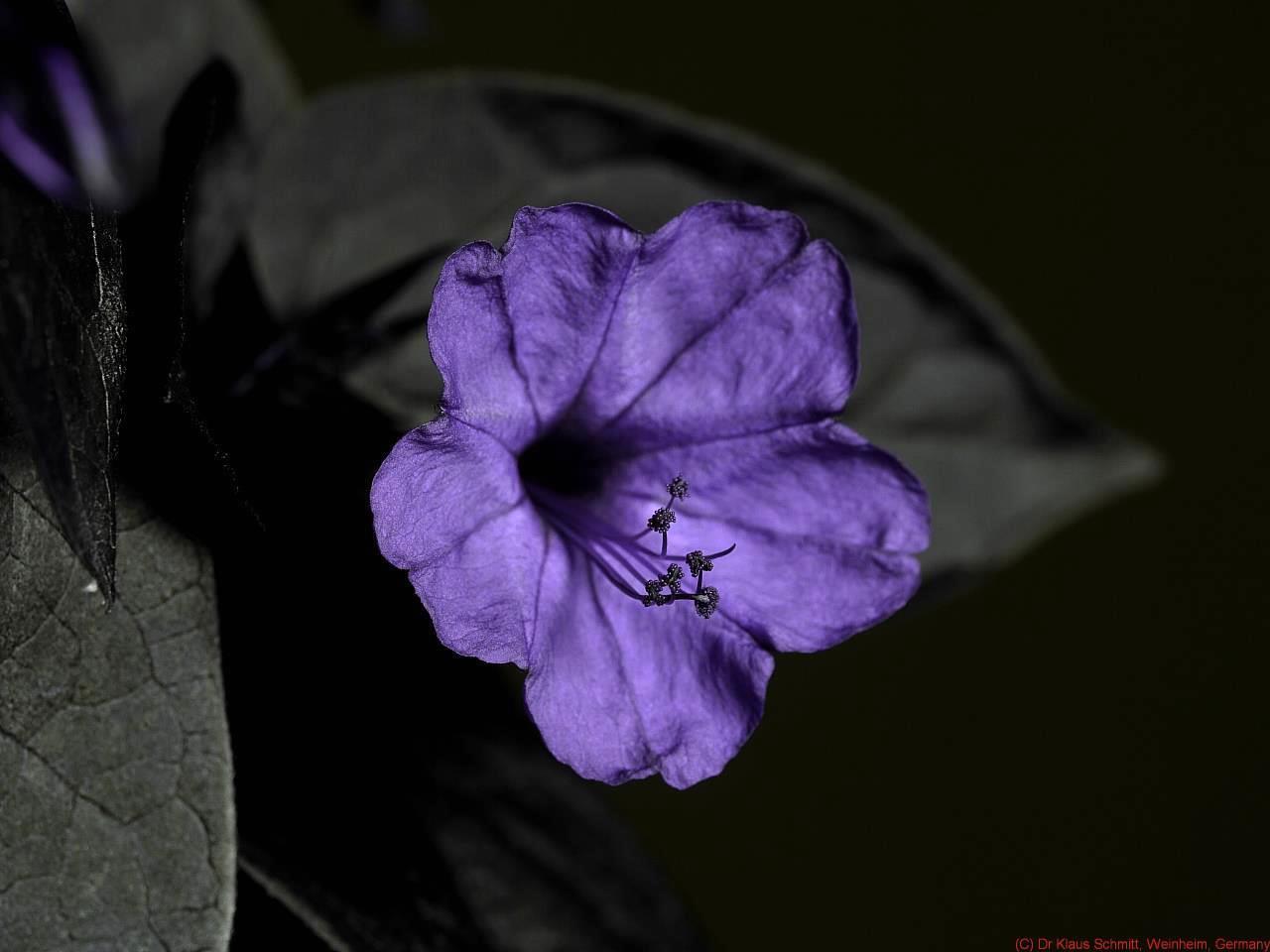
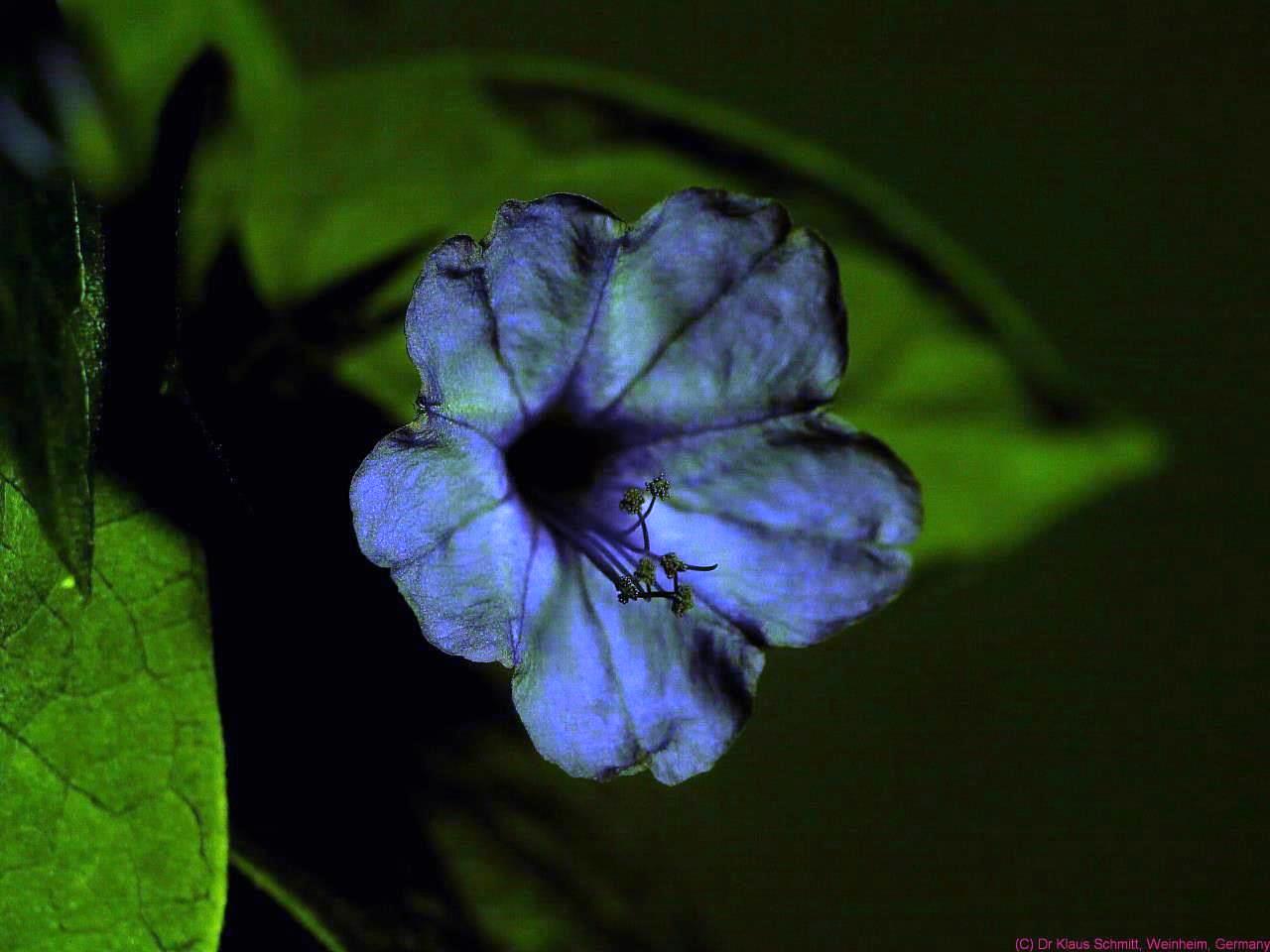
Today about a very interesting flower, Mirabilis jalapa. This flower, also called "four-a-clock" uses a very special technique to enhance the visibility to its pollinators, in that case hawkmoths, that are active when the light gets dimmer, i.e. in the late afternoon and evening hours (hence that name). I have presented that here on my BLOG already. Here now how this flower looks like in reflected UV to other insects, able to see UV.

[click on image to see a larger one]

Reflected UV image (320 - 390nm):


Reflected UV image (mainly at 333nm):


Stay tuned, more will follow on that fascinating subject...
More info on this very interesting field may be found on my site http://www.pbase.com/kds315/uv_photos

Wednesday, August 10, 2011

Mirabilis jalapa UV induced fluorescent pollen

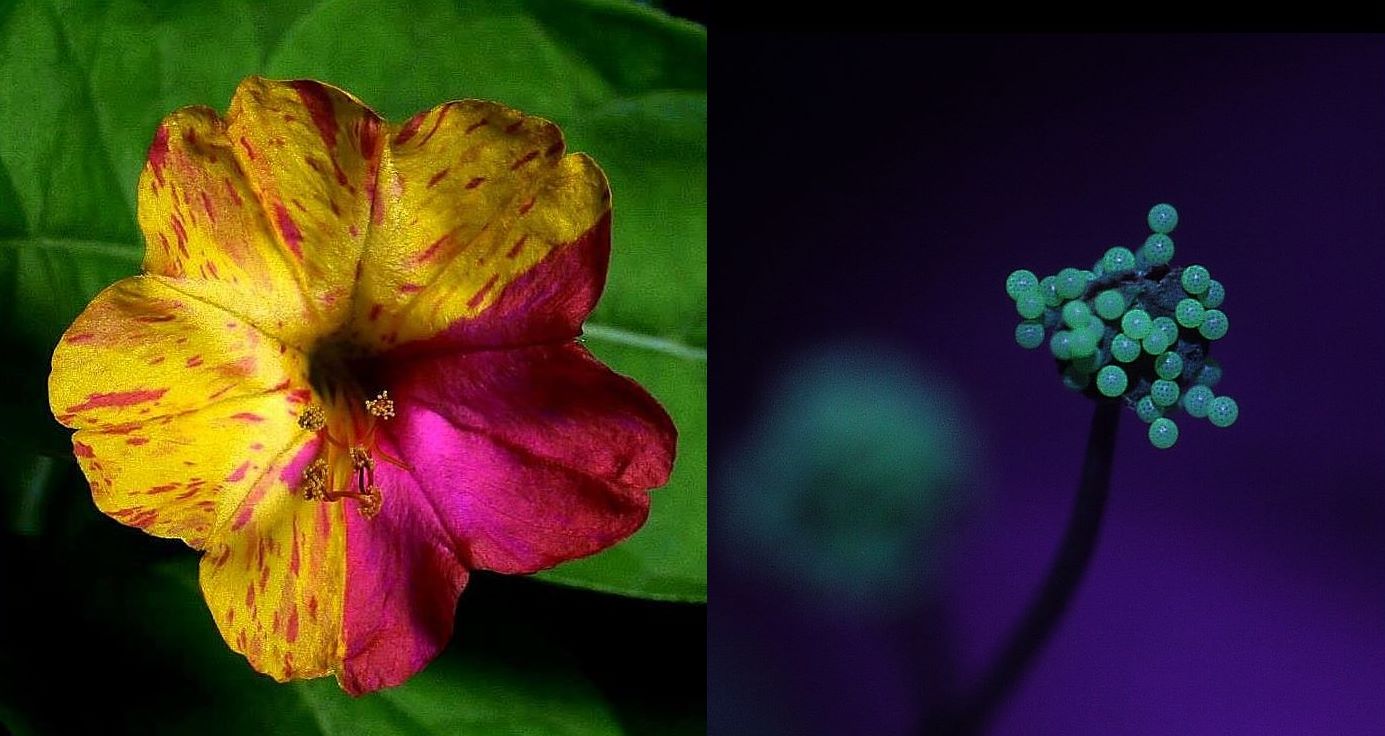
Today about a very interesting flower, Mirabilis jalapa. This flower, also called "four-a-clock" uses a very special technique to enhance the visibility to its pollinators, in that case hawkmoths, that are active when the light gets dimmer, i.e. in the late afternoon and evening hours (hence that name). Scientists have found out, that the pollen of this flower is highly fluorescent i.e. ultraviolet light, which is proportionally more present in early morning and later afternoon hours, is "used" and downconverted to visible light (i.e. fluorescence light) according to Stokes Law. So this down converted light overlays the visible light present and so enhances the visibility to its pollinators. The yellow parts of the flower petals also exhibit green fluorescence, but to lesser extent and in green light. Now let's see how that looks like...

[click on image to see a larger one]

Left: visible image; right: UV induced visible light pollen image:


It gets strikingly visible, how intense this effect actually is!

Stay tuned, more will follow on that fascinating subject...
More info on this very interesting field may be found on my site http://www.pbase.com/kds315/uv_photos