Showing posts with label negative space. Show all posts

Sunday, August 5, 2018

Dahlia using Negative Space in reflected ultraviolet photography and simulated butterfly and bee vision

Today shots of a decorative flower of the Asteraceae family, Dahlia sp in reflected ultraviolet photography and simulated bee and butterfly vision. All shots were done at f5.6 in reflected ultraviolet photography using my "work horse" UV filter, the Baader-U filter, as well as my XBV filters for simulated bee and butterfly vision. Lens was a UV-Nikkor 105mm quartz fluorite lens. Light source was sunlight.

[click on image to see a larger one]

Human vision:
 

Reflected UV:
 

Simulated butterfly vision:
 

Simulated bee vision:
 

Quadriptych of human vision, UV, simulated butterfly and bee vision (left to right, top to bottom):
 

This pretty flower has no specific UV pattern, its flower petals are UV dark, whereas the flower center is UV reflective, but this actually creates a negative space where the UV reflective center stands out against by massively increasing contrast - and all this gets nicely visible, also in simulated bee and butterfly vision.

I have written about that negative space concept HERE, California poppy and Bermuda buttercup uses that too! 
 
Stay tuned, more will follow on that fascinating subject...

More info on this very interesting field may be found on my site http://www.pbase.com/kds315/uv_photos

Friday, March 4, 2016

Bermuda Buttercup - Oxalis pes-caprae in reflected ultraviolet (UV) and photography and simulated bee vision

Today about a very common weed flower Bermuda Buttercup - Oxalis pes-caprae I shot shot at Mountain Vew, CA in reflected ultraviolet photography using my "work horse" UV filter, the Baader-U filter as well as in simulated bee vision using my XBV6 filter. Lens was my CERCO 94mm quartz fluorite lens. Light source was sun. All shots were done at f8.

[click on image to see a larger one]

Bermuda Buttercup - Oxalis pes-caprae in Human vision, reflected UV, simulated bee vision (left to right):


This attractive yellow weed flower shows quite a tricky UV pattern, as shown in the following enhanced reflected UV image, a UV bright ring set on a negative space around the dark in UV petals, hence massively increasing contrast. Plus you also see the pyramidal cells in this enhanced resolution image (UV gives approx. 1.6x higher resolution) , which allows pollinators a much better grip while being at the flower.
 

All this invisible to us humans, but visible to bees and butterflies, and all this gets nicely visible here.

Stay tuned, more will follow on that fascinating subject...

Tuesday, September 25, 2012

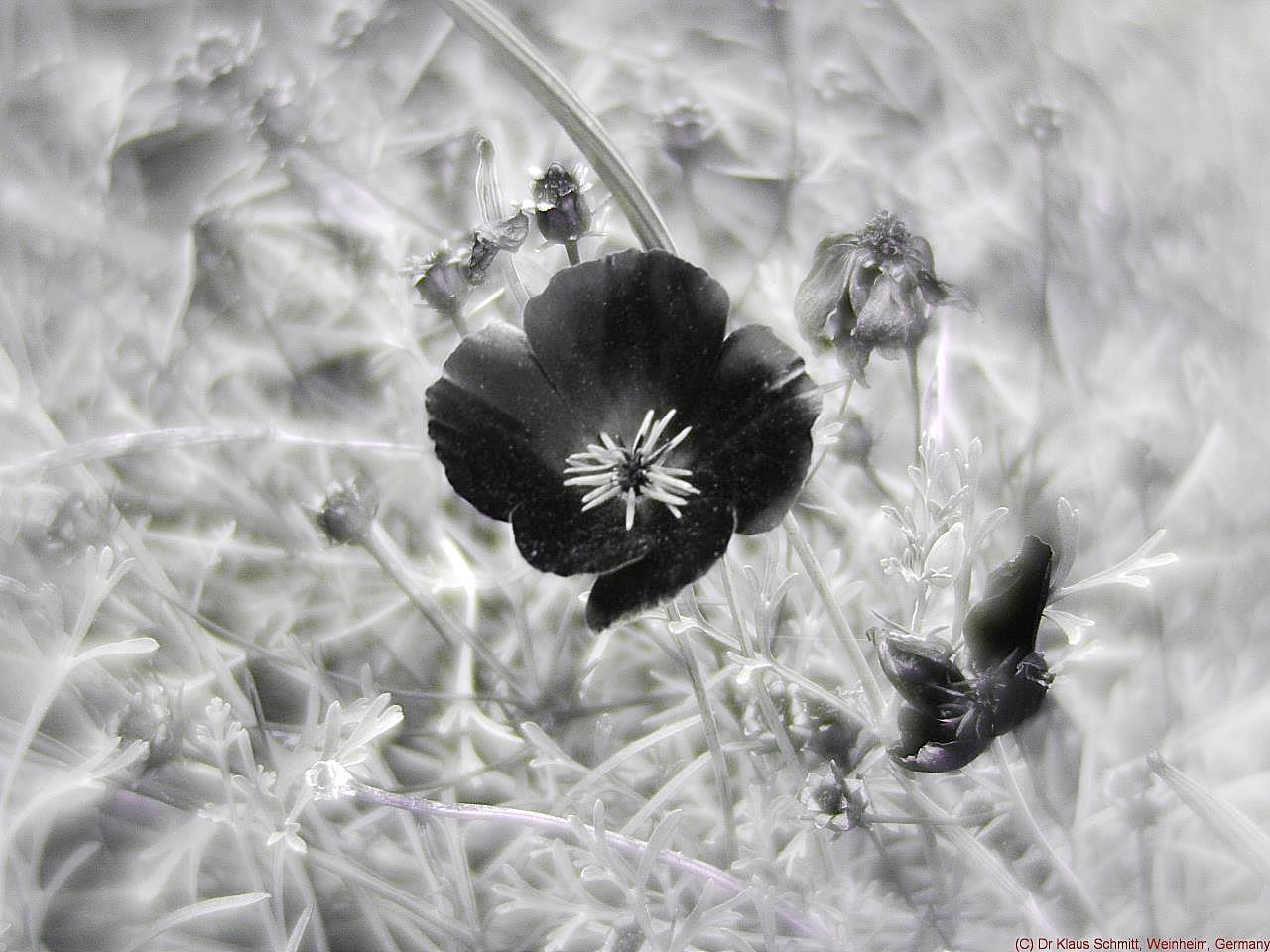
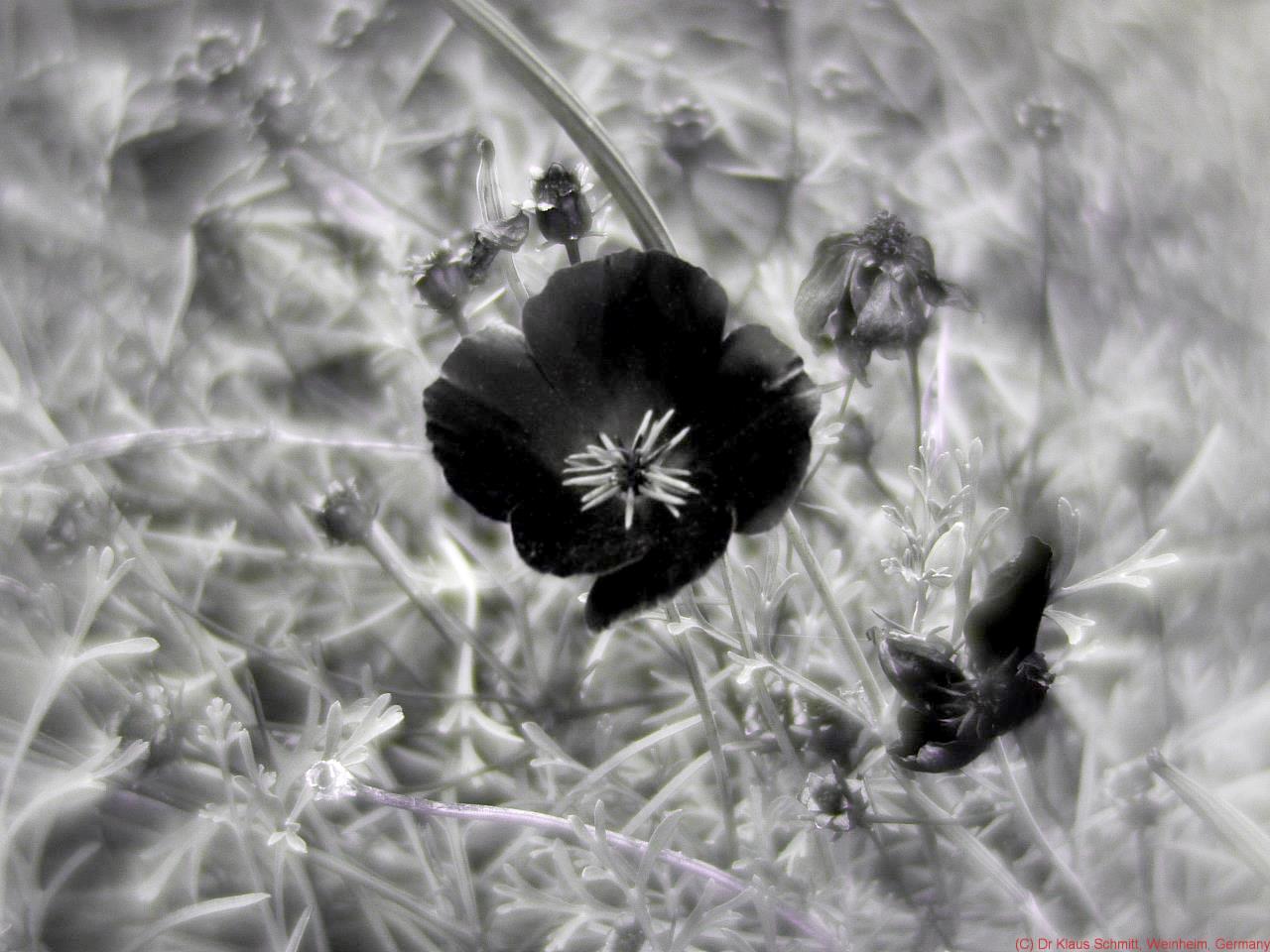
Negative Space used by Eschscholzia californica (California Poppy): UV ultraviolet photography

Today about Eschscholzia californica (California Poppy), which makes use of a very interesting concept: Negative Space. I made those shots at Herrmashof Park, Weinheim, Germany using a custom made up UV lens from a simple quartz singlet that I used before, stopped down mildly to various degrees to control a wanted soft focus effect. Shots in UV were done using the Baader-U filter and sunlight was used as light source.

[click on image to see a larger one]


The most interesting part, aside that soft focus effect was for me, how this California Poppy uses its pitch black petals (in UV) to make its anthers stand out brightly against that dark background by massively increasing contrast. To help attract pollinators? I would guess so...


Stay tuned, more will follow on that fascinating subject...

More info on this very interesting field may be found on my site http://www.pbase.com/kds315/uv_photos