Showing posts with label quartz fluorite condensor. Show all posts

Wednesday, January 30, 2019

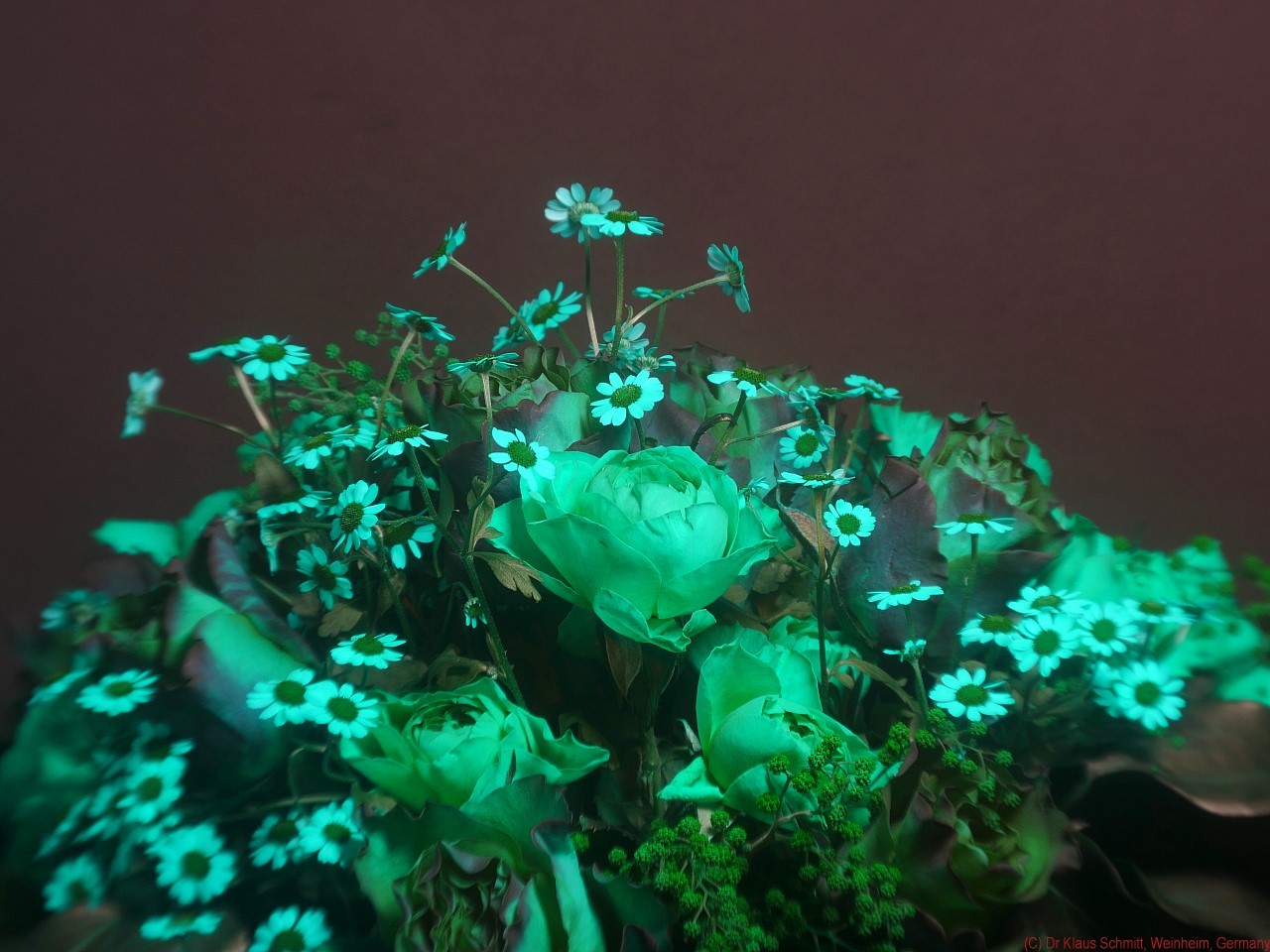
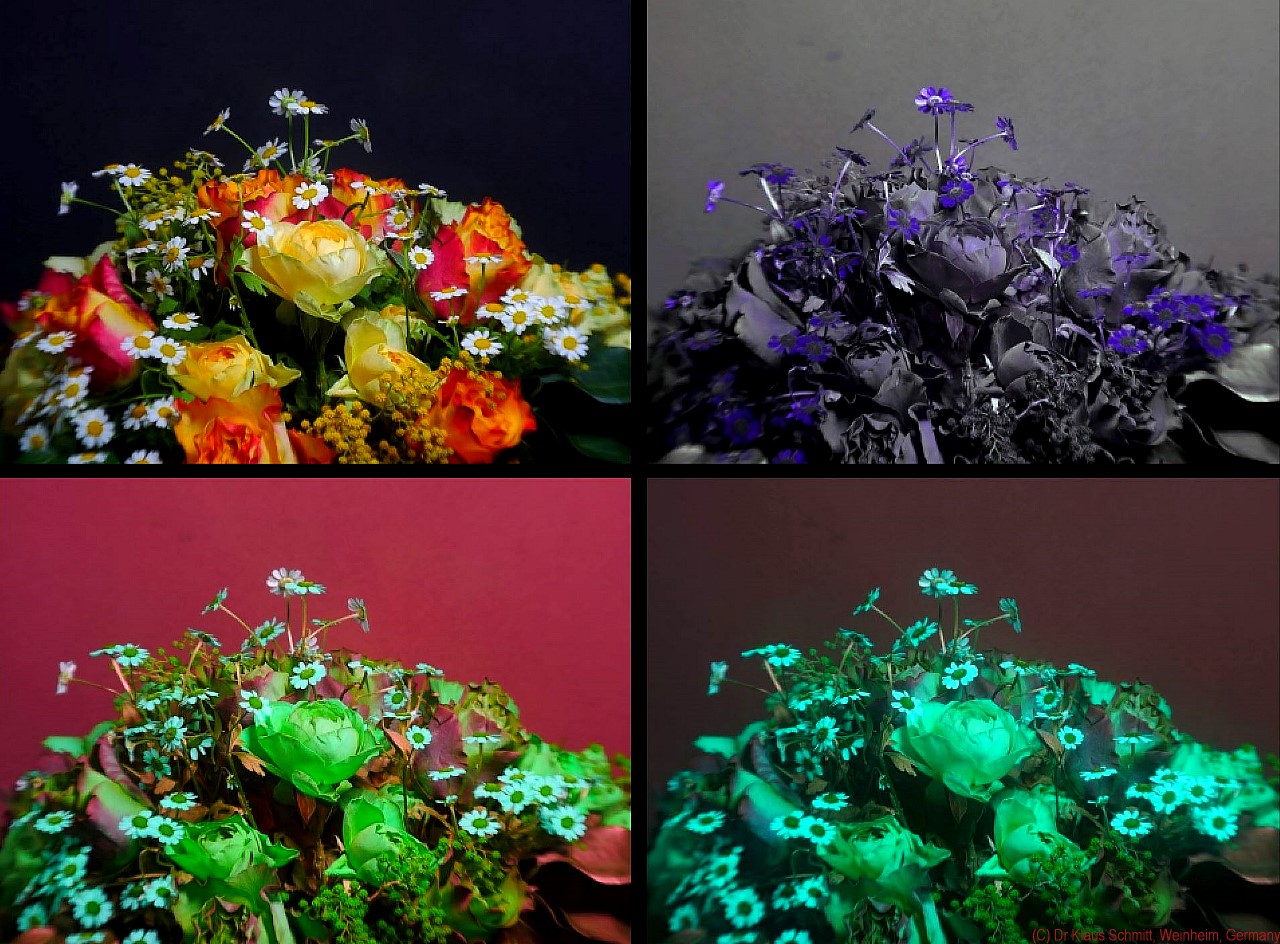
Bouquet of flowers in visible, reflected UV, simulated bee and butterfly vision using a Quartz Fluoride condensor lens

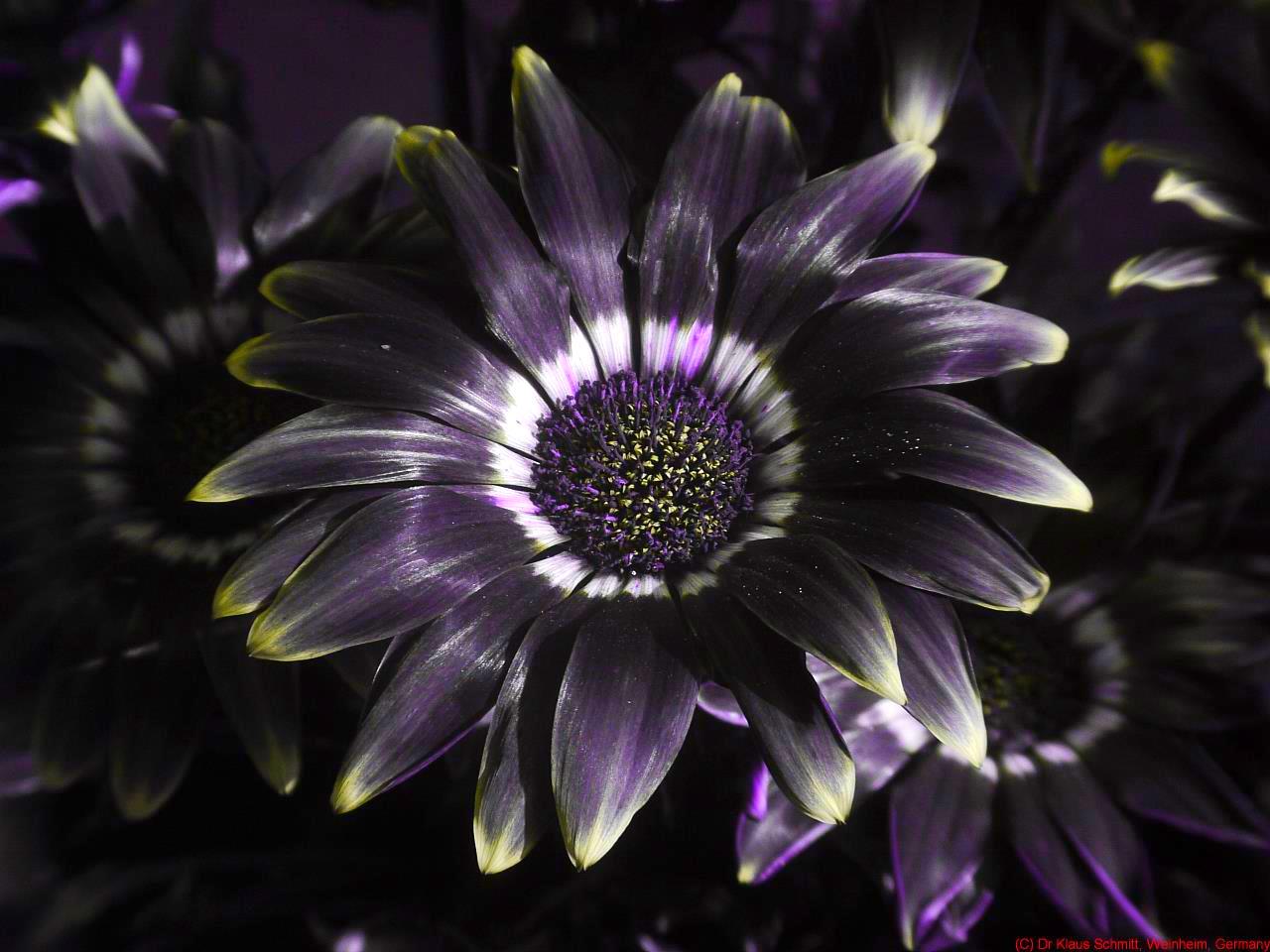
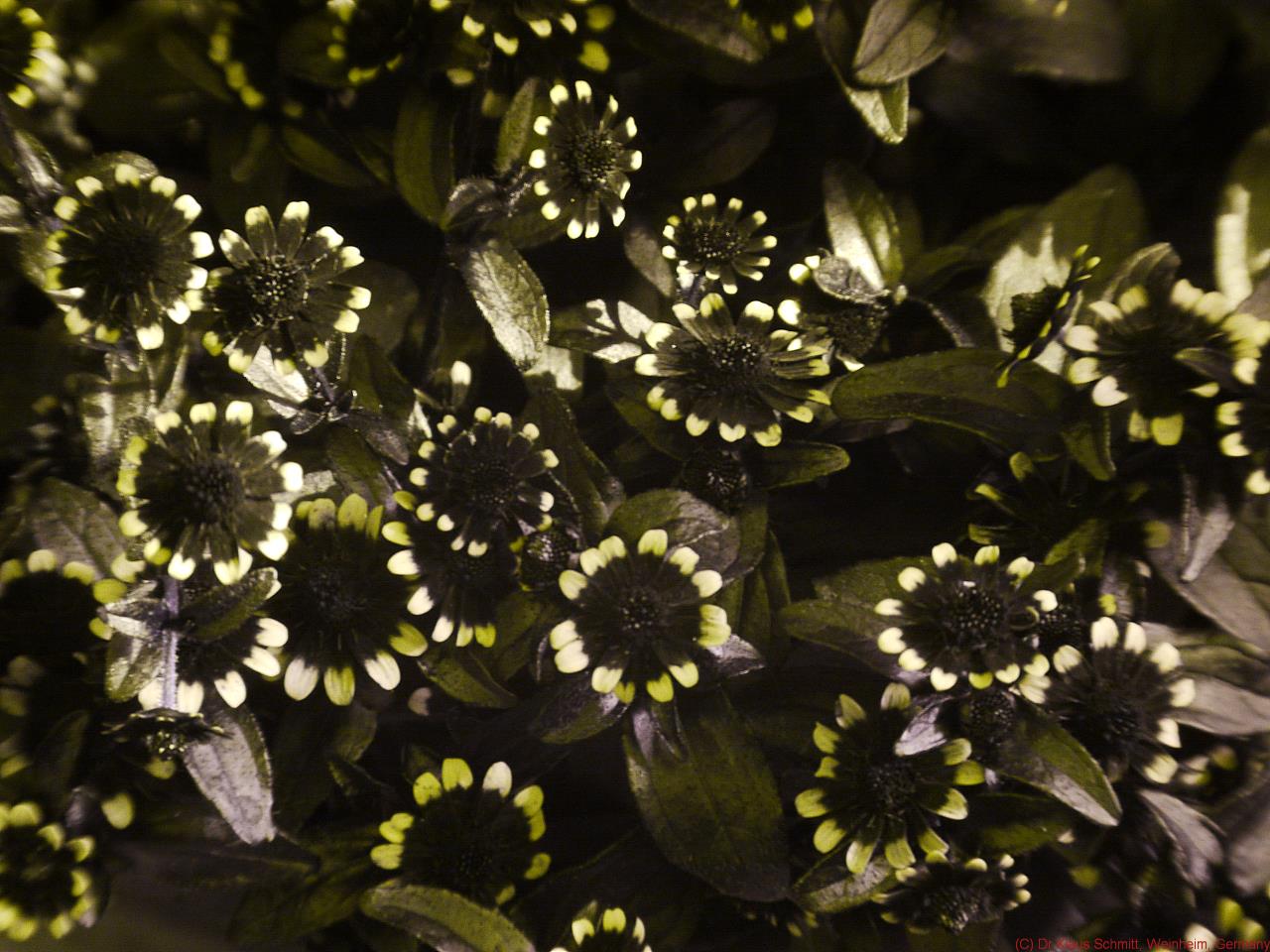
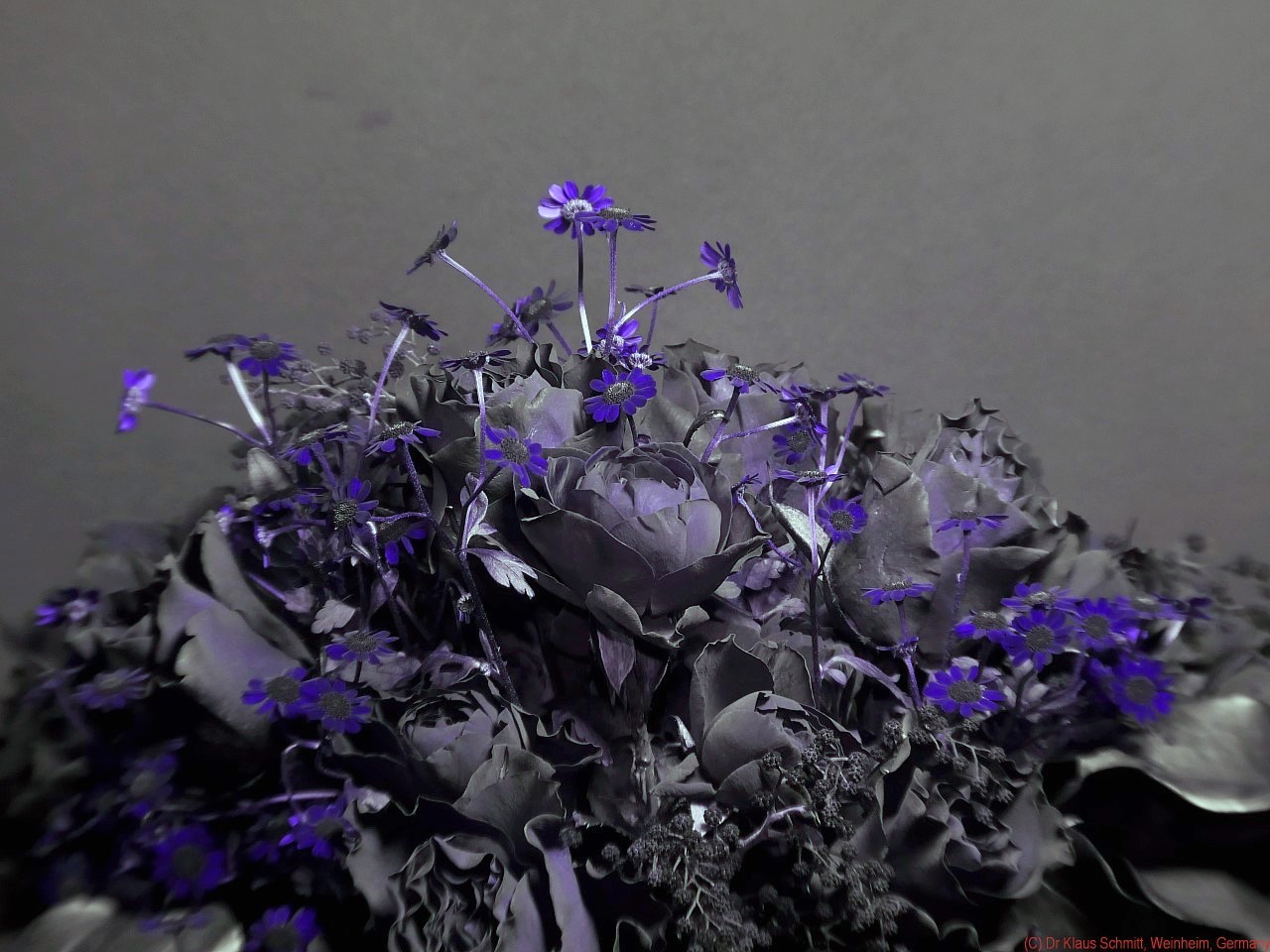
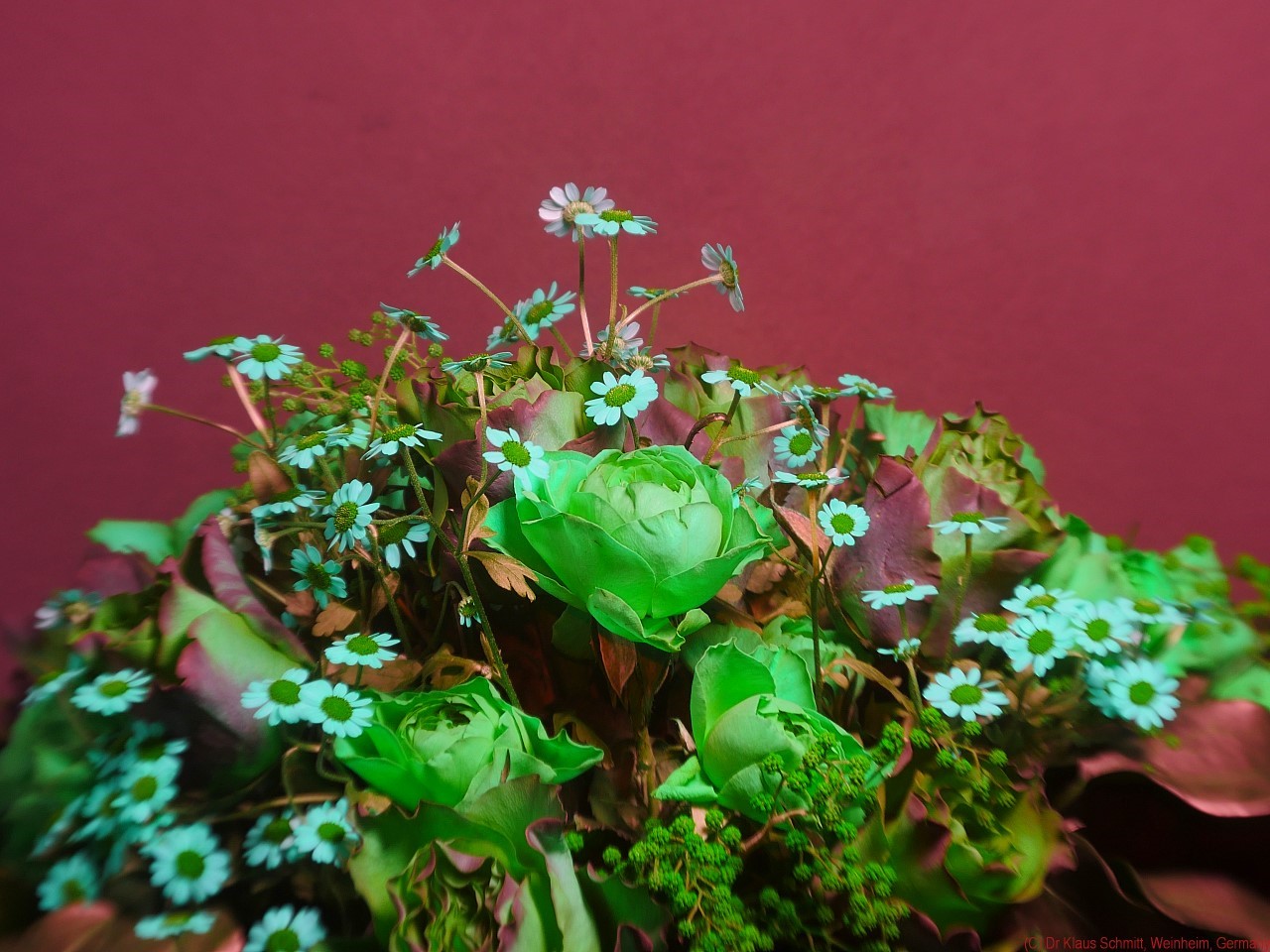
Today shots of a flower bouquet in reflected ultraviolet photography as well as simulated bee and butterfly vision using a f3.2 / 81mm Quartz Fluoride Condensor lens from an older UV-VIS spectrometer system. A variable aperture was added to the Quartz Fluoride Condensor lens to allow stopping down. UV filter used was the Baader-U filter, my "work horse" filter for reflected UV as well as my proprietary XBV filters for simulated bee and butterfly vision. All shots were done at approx. f5.6. Light source used was a modified for high UV output Xenon flash.

[click on image to see a larger one]

Human Vision (VIS):
 

Reflected UV (Baader-U):
 

Simulated Butterfly Vision:
 

Simulated Bee Vision:
 

Quadriptych of VIS, UV, sim. Butterfly and Bee vision (left to right, top to bottom):
 

This bouquet of flowers has mainly yellow and orange roses in it, which hardly have any UV reflection, but those white Camilla flowers do have long wave (around 385nm) UV reflection and all this gets nicely visible, also in simulated Bee and Butterfly vision, on both used lenses.

This older Quartz Fluoride Condensor lens does rather well in UV, but it only covers mft sensor format, possibly APS-C (with another modification).

I have written more about that old quartz fluoride condensor lens HERE

Stay tuned, more will follow on that fascinating subject...

More info on this very interesting field may be found on my site http://www.pbase.com/kds315/uv_photos

Saturday, December 29, 2018

Oncostele orchid in visible, reflected UV, UV-Nikkor vs Quartz Fluoride lens - psychedelic

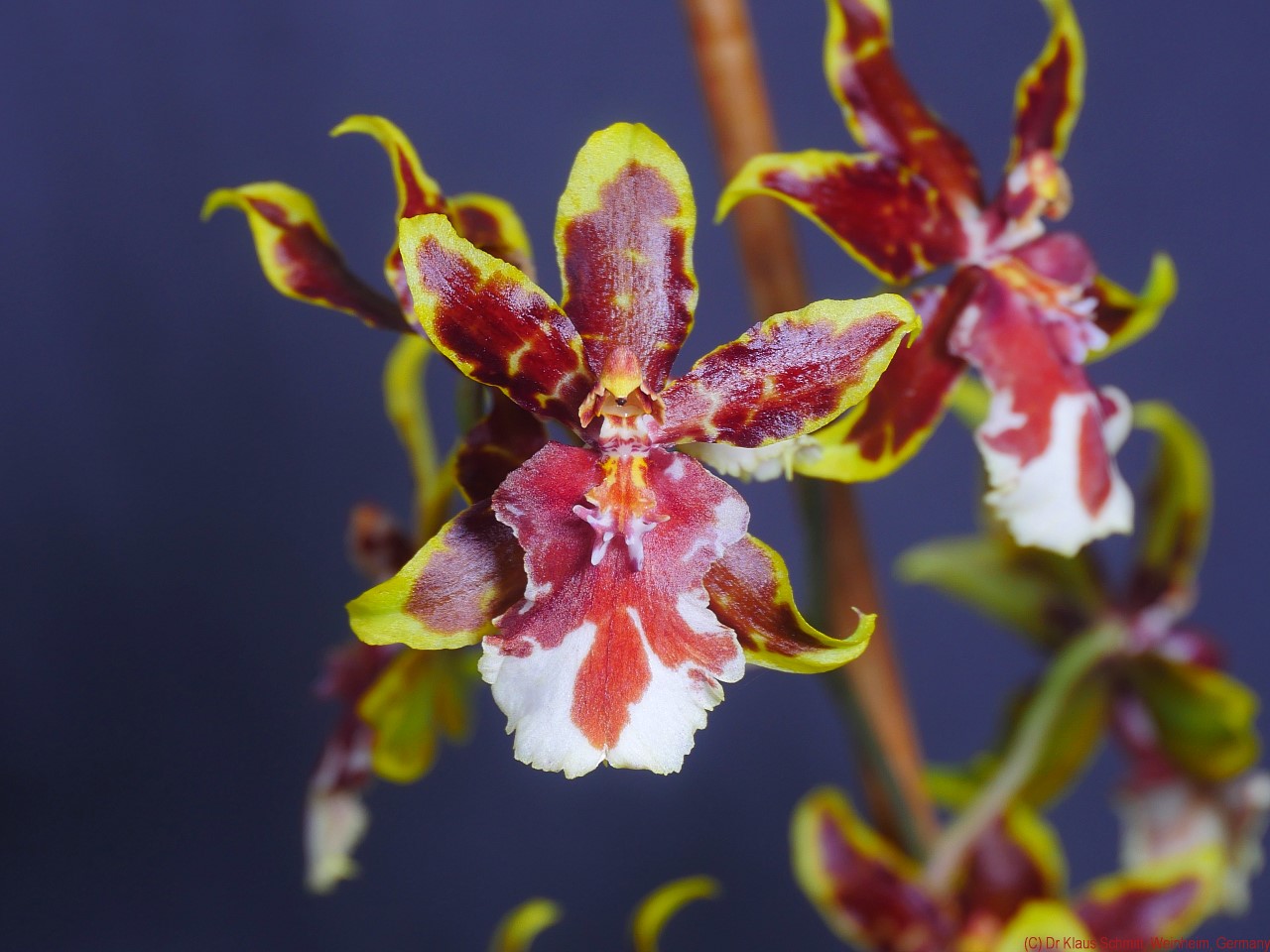
I have done shots of an Orchid hybride, Oncostele Wildcat 'Golden Red Star' in reflected ultraviolet photography using an UV-Nikkor f4.5 / 105mm lens in comparison to an older f3.2 / 81mm Quartz Fluoride Condensor lens from an older UV-VIS spectrometer system before here. UV filter used was the Baader-U filter, my "work horse" filter for reflected UV. All shots were done at approx. f8. Light source used was a modified for high UV output Xenon flash.

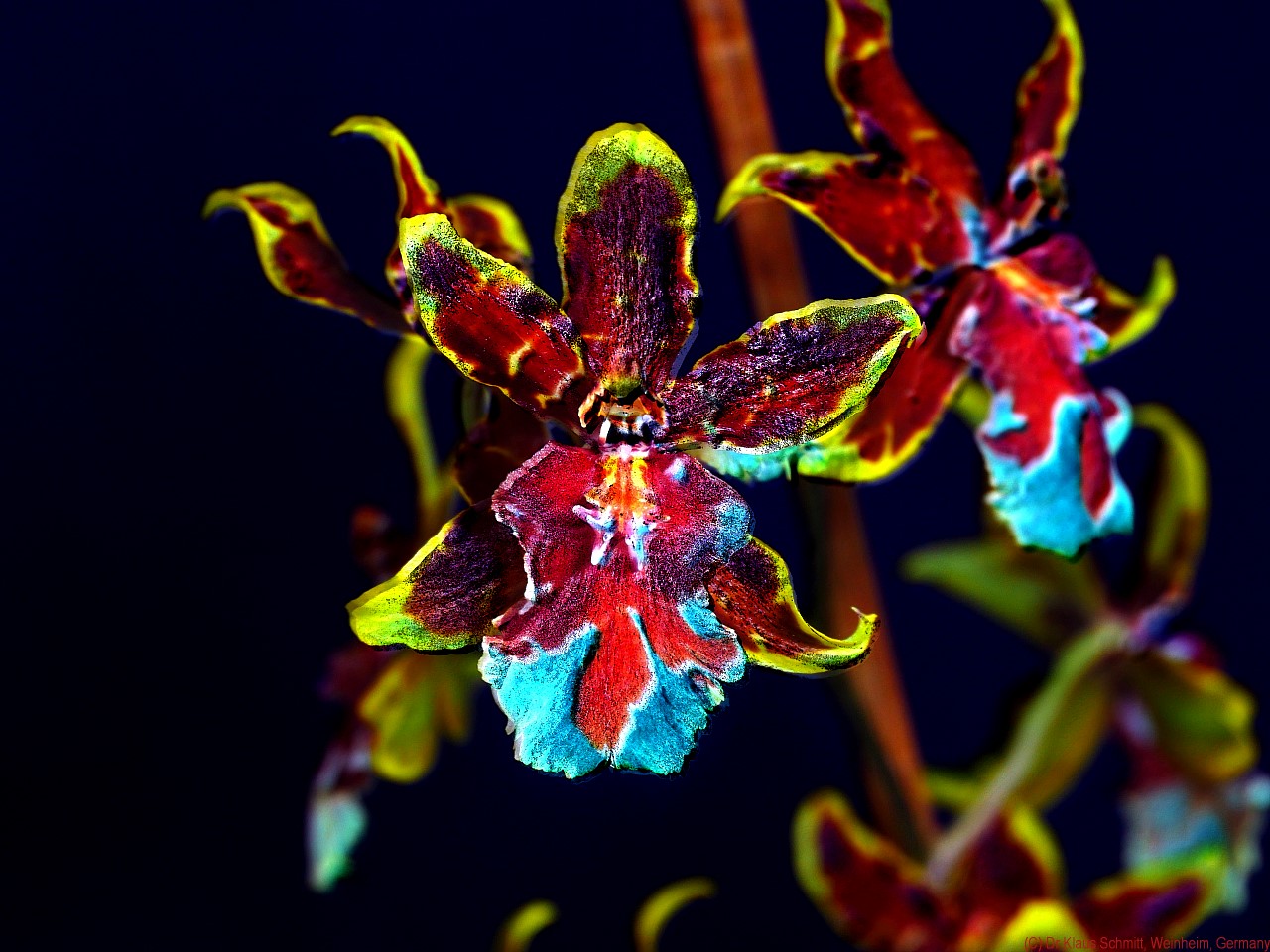
Now today I'd like to show differential of those VIS and UV images, making strinkingly visible the difference, hence why I call those images "psychedelic"....

[click on image to see a larger one]

UV-Nikkor 105mm Lens: 

Human Vision (VIS):
 

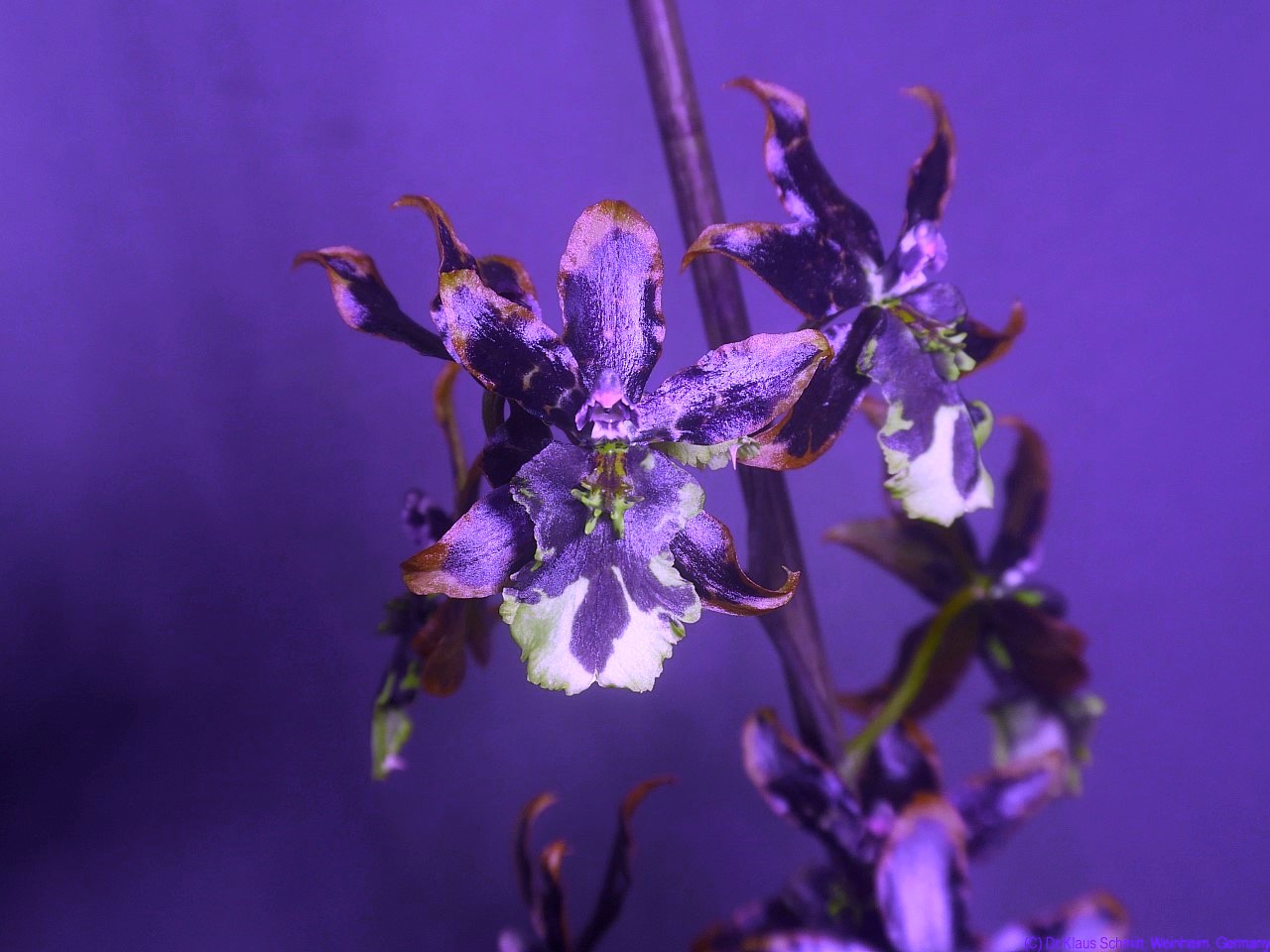
Reflected UV (Baader-U):
 

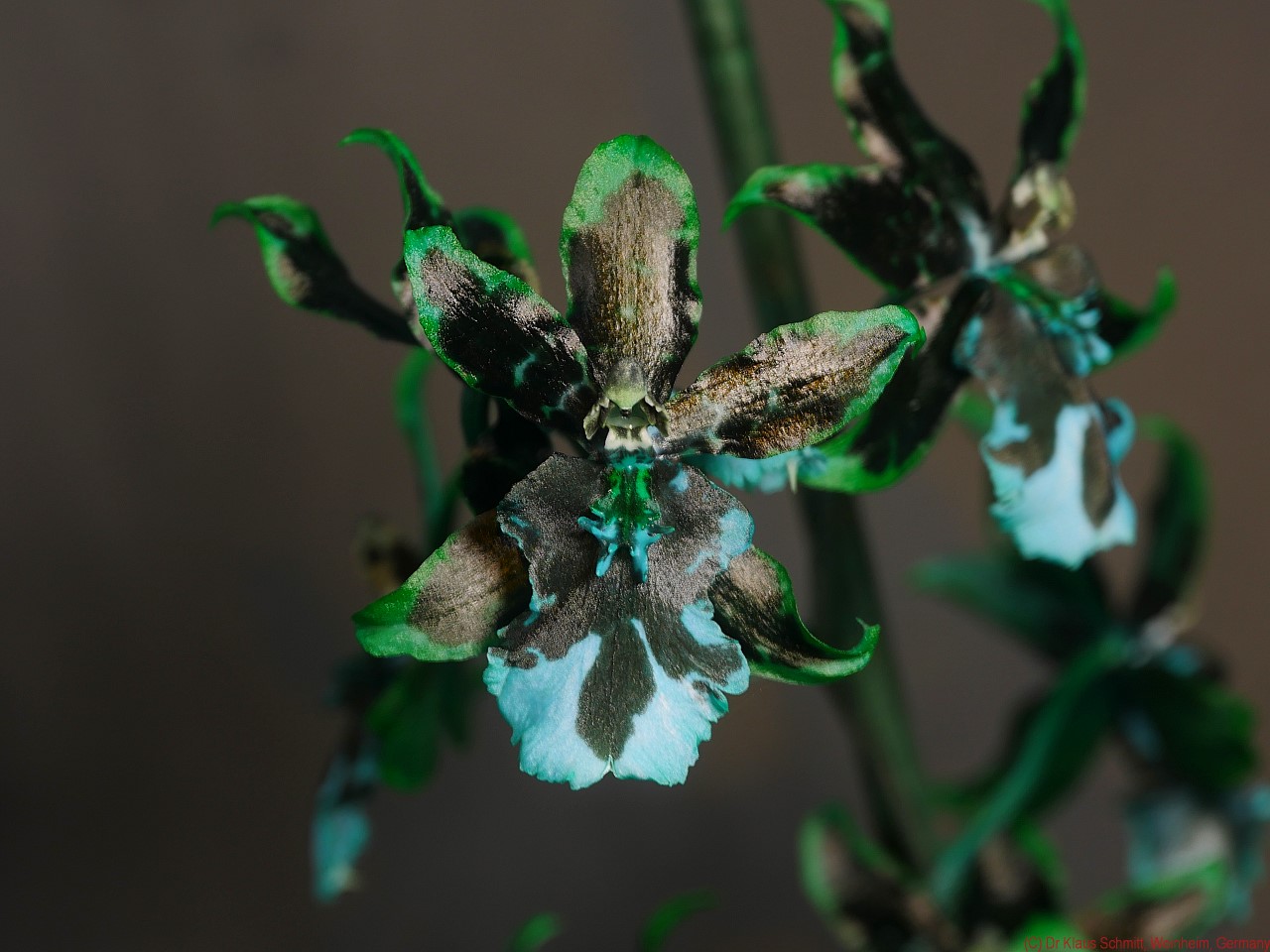
Psychedelic (Differential VIS-UV):


Quartz Fluoride Condensor Lens 81mm: 

Human Vision (VIS):
 

Reflected UV (Baader-U):


Psychedelic (Differential VIS-UV):
 

This orchid has a very specific UV pattern, its petals are very UV dark, but its lower petal lip has on the lower center a very UV bright spot as well as on its center "nose" formation an UV reflecting spot and all this gets nicely visible, also in this psychedelic differential presentation, on both used lenses.

I have written more about this orchid HERE  and more about that old quartz fluoride condensor lens HERE.

More such psychedelic differential images may be see HERE.

Stay tuned, more will follow on that fascinating subject...

More info on this very interesting field may be found on my site http://www.pbase.com/kds315/uv_photos

Thursday, December 27, 2018

Oncostele orchid in visible, reflected UV, simulated bee and butterfly vision UV-Nikkor vs Quartz Fluoride lens

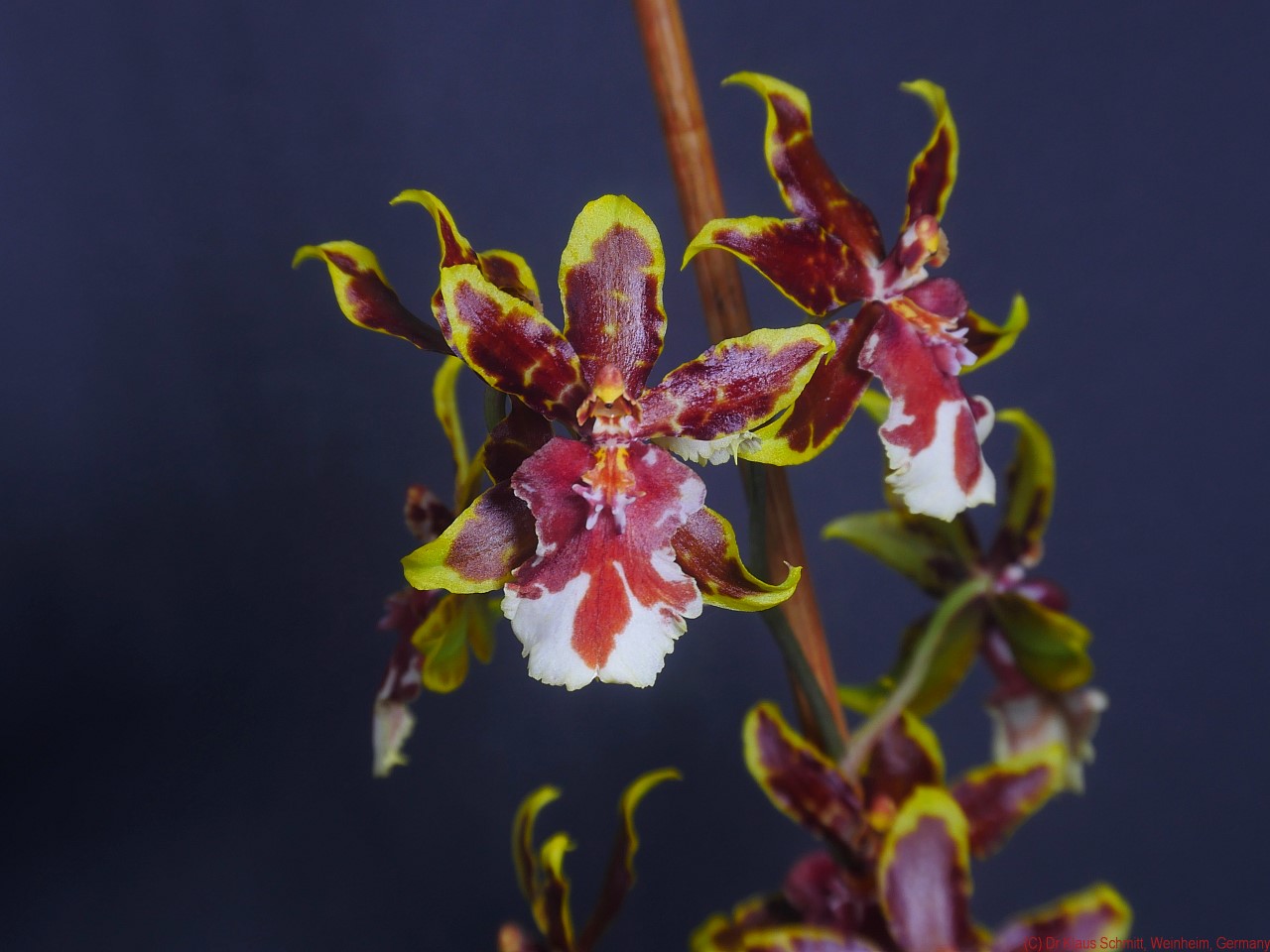
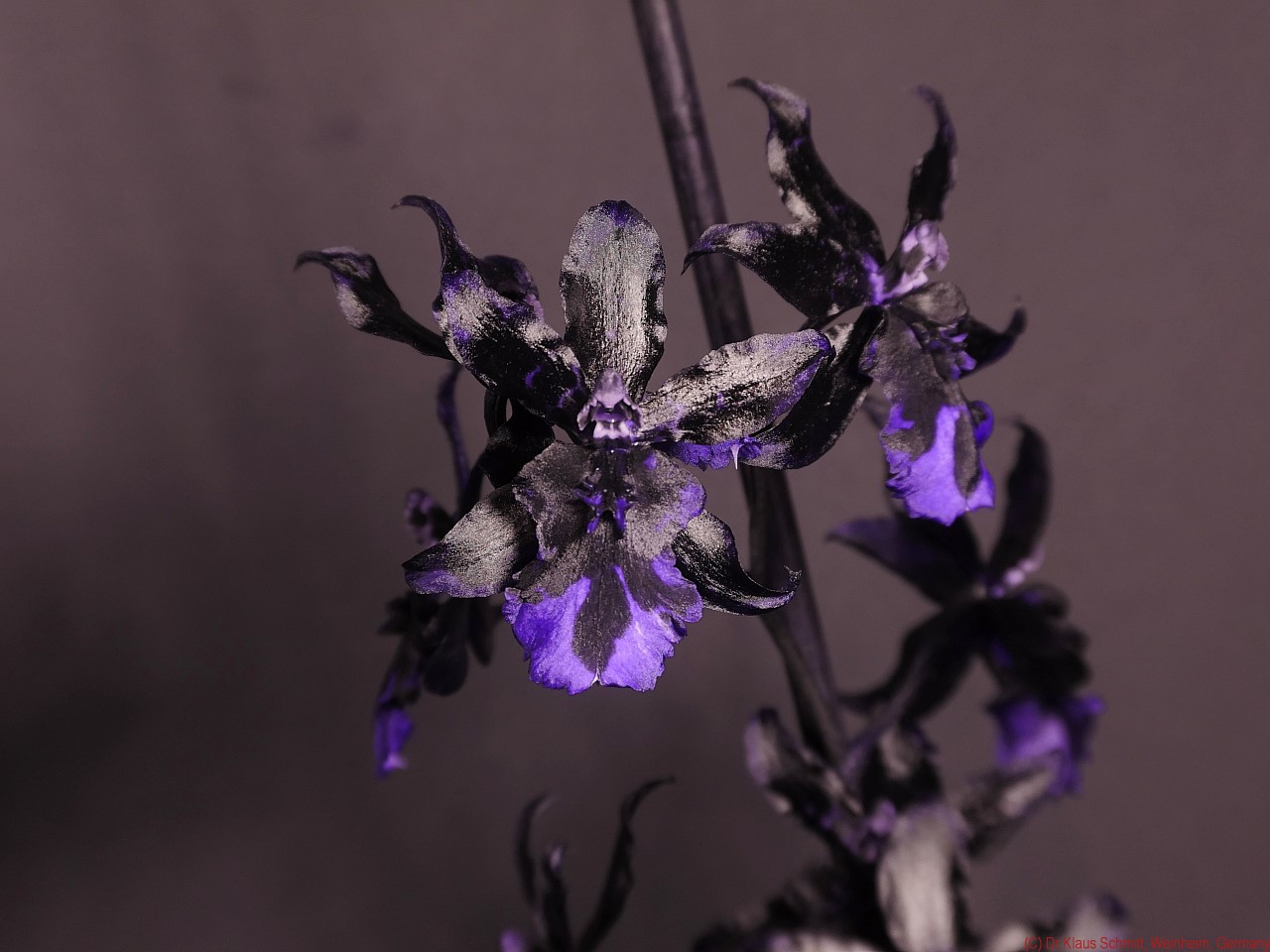
Today shots of an Orchid hybride, Oncostele Wildcat 'Golden Red Star' in reflected ultraviolet photography as well as simulated bee and butterfly vision using an UV-Nikkor f4.5 / 105mm lens in comparison to an older f3.2 / 81mm Quartz Fluoride Condensor lens from an older UV-VIS spectrometer system. A variable aperture was added to the Quartz Fluoride Condensor lens to allow stopping down. UV filter used was the Baader-U filter, my "work horse" filter for reflected UV as well as my proprietary XBV filters for simulated bee and butterfly vision. All shots were done at approx. f8. Light source used was a modified for high UV output Xenon flash.

[click on image to see a larger one]

UV-Nikkor 105mm Lens: 

Human Vision (VIS):
 

Reflected UV (Baader-U):
 

Simulated Butterfly Vision:
 

Simulated Bee Vision:
 

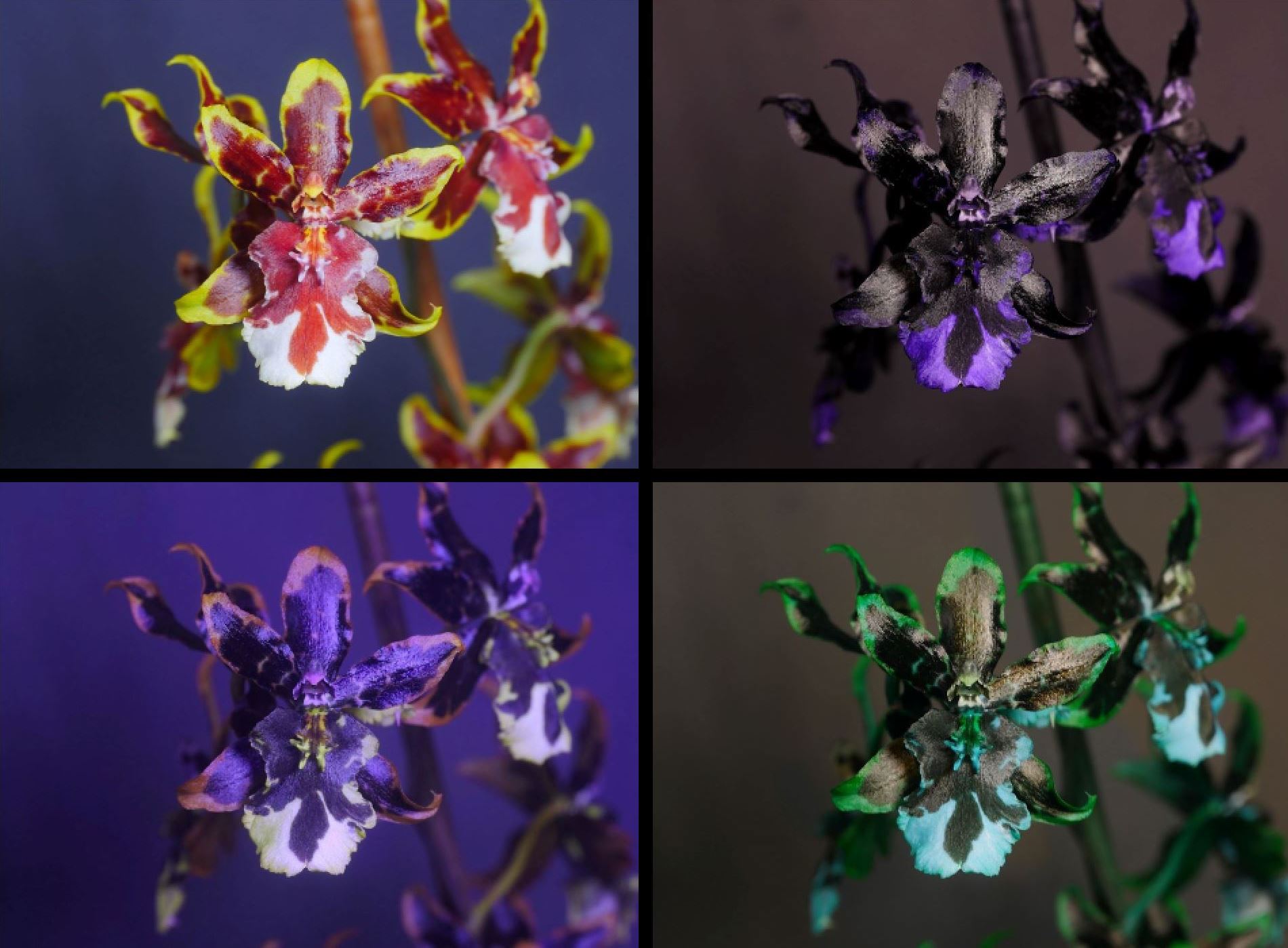
Quadriptych of VIS, UV, sim. Butterfly and Bee vision (left to right, top to bottom):


Quartz Fluoride Condensor Lens 81mm: 

Human Vision (VIS):
 

Reflected UV (Baader-U):


Simulated Butterfly Vision:
 

Simulated Bee Vision:
 

Quadriptych of VIS, UV, sim. Butterfly and Bee vision (left to right, top to bottom):
 

This orchid has a very specific UV pattern, its petals are very UV dark, but its lower petal lip has on the lower center a very UV bright spot as well as on its center "nose" formation an UV reflecting spot and all this gets nicely visible, also in simulated Bee and Butterfly vision, on both used lenses.

The lenses itself differ in focal length, 105mm for the UV-Nikkor vs 81mm for the Quartz Fluoride Condensor lens, and lens speed f4.5 vs f3.2 but other than that they are quite comparable: there is hardly any focus shift, just sharpness and contrast is higher with the rather expensive UV-Nikkor lens compared to the Quartz Fluoride Condensor lens, quite as expected. Other than that this old lens does very well, but it only covers mft sensor format, possibly APS-C (with another modification).

I have written more about this orchid HERE  and more about that old quartz fluoride condensor lens HERE

Stay tuned, more will follow on that fascinating subject...

More info on this very interesting field may be found on my site http://www.pbase.com/kds315/uv_photos

Saturday, February 8, 2014

[UV] Old Achromatic Quartz Fluorite Lens for Ultraviolet Photography (VII)

This is the time of the year where usually (new) equipment is tested or modified, and being prepared for the forthcoming "UV shooting season". And so today I would like to show more about that quartz fluorite lens from an older spectrometer system I have previously written about a few times.
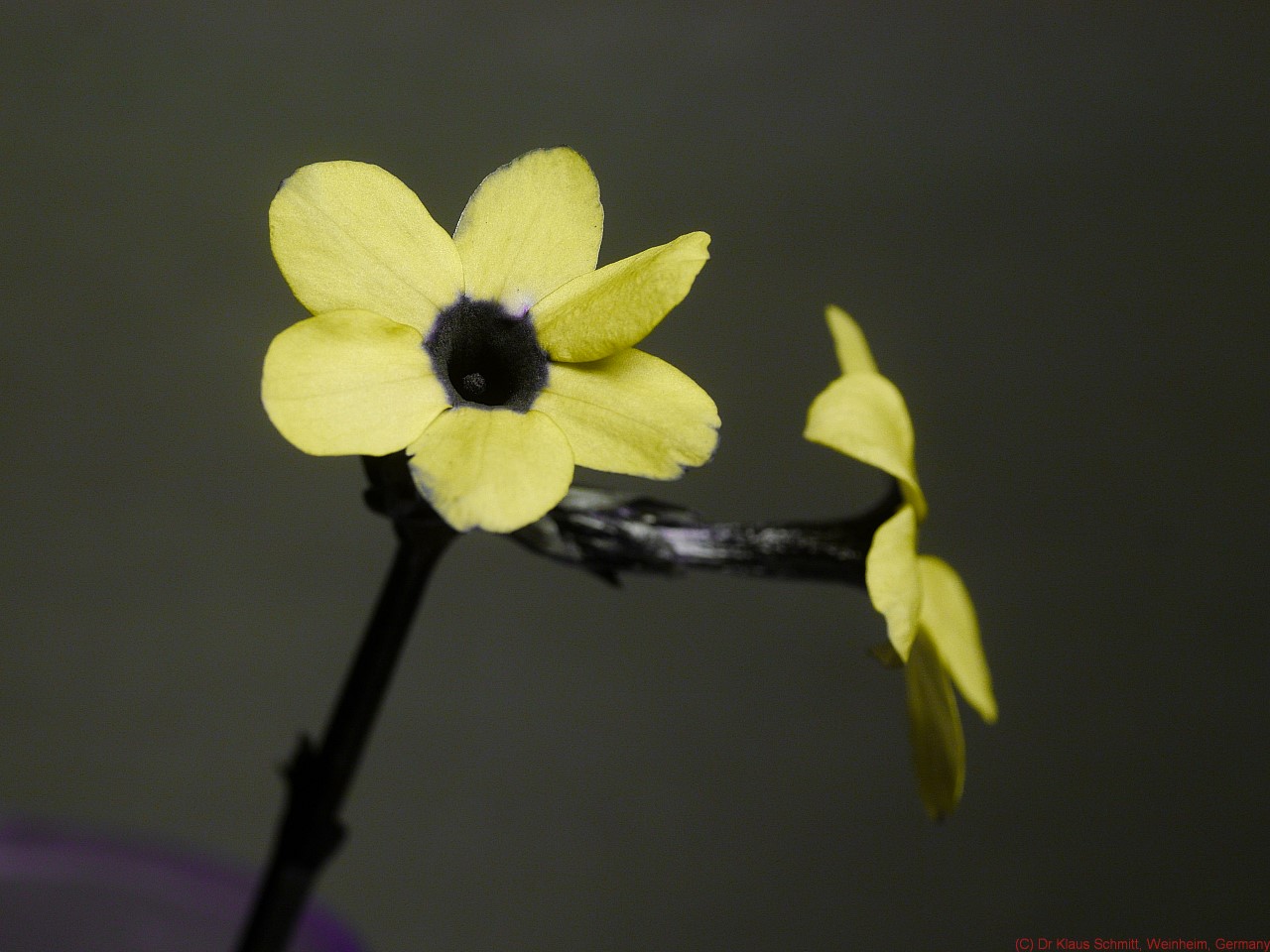
Today now shots of a decorative winter flower Winter Jasmine - Jasminum nudiflorum in reflected ultraviolet using Baader-U filter (approx. 320-395nm, peak approx. 350nm) as a test target. Lenses used were that adapted and modified f3.2 / 80mm (approx.) Quartz Fluorite Lens system (QF), as well as my CERCO f4.1 / 94mm lens for reference. Light source was a modified Xenon flash. All shots were done at approximately f8 and the difference in focal length has been compensated by adjusting the distance lens - flower. The UV images where whitebalanced using my preset for the CERCO lens to allow for a reliable comparison.

[click on image to see a larger one]

UV image using Baader-U filter and CERCO lens:  

UV image using Baader-U filter and QF lens:  

Diptych of the above images (QF left, Cerco right):  

Diptych of the above images (QF left, Cerco right) - details:  

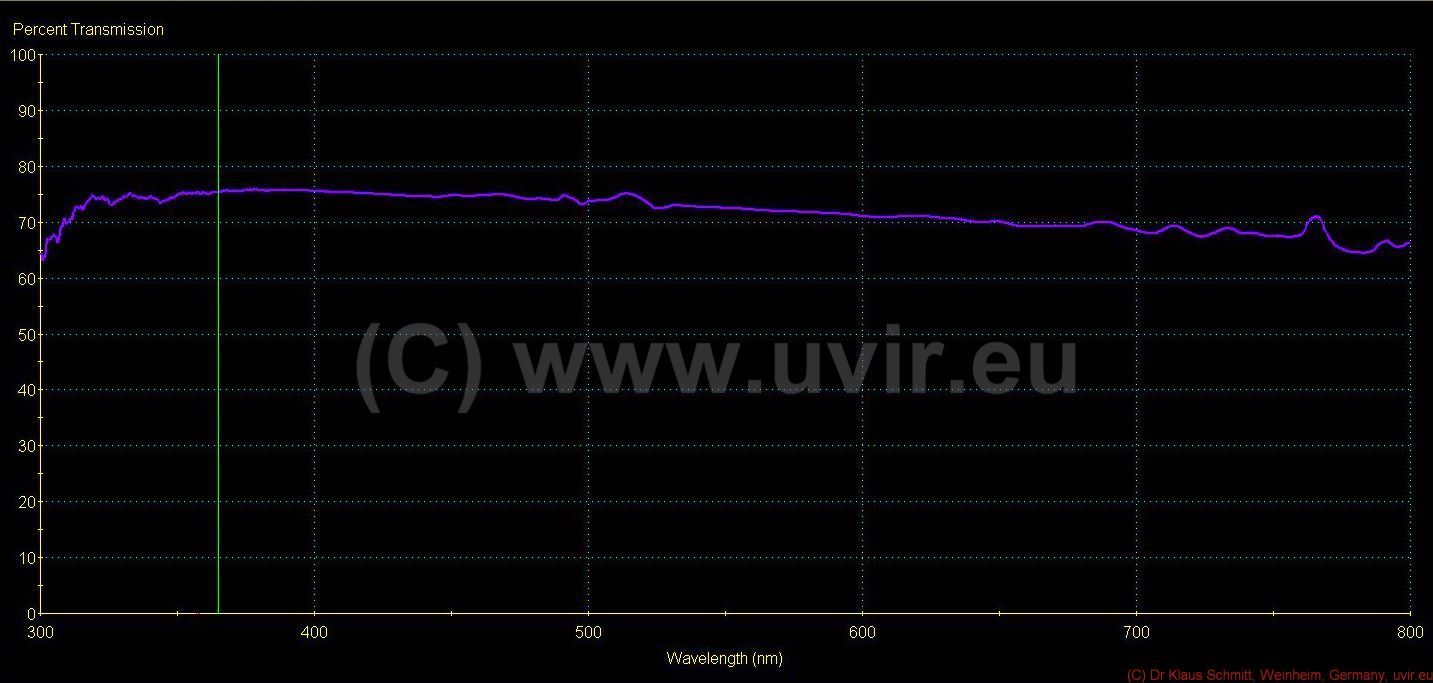
Measured spectral transmission of that f3.2 / 80mm Quartz Fluorite Lens system (uncoated obviously):  


Both lenses seem to reproduce the specific reflected UV pattern of that Winter Jasmine quite well, and as expected my Cerco lens has an edge over that older Quartz Flourite lens. The QF is about 0.7 stops slower compared to the Cerco, to achieve about the same sharpness level, but the QF overall does quite well for such type of UV photography. So it is one of the very few known lenses which are able to break the 300nm transmission barrier, as even the best suitable lenses for UV I found in years of search (non quartz fluorite ones) stop transmitting around 320nm.

(I have re-evaluted the focal length of the quartz fluorite lens system (QF) and it is about f=80mm and its speed is about f3.2. It seems that the useful aperture settings for this lens are around f8 - f11 to achieve suitably sharp images.)

More about that used quartz fluorite lens is  HERE.

Stay tuned, more will follow on that fascinating subject...

Sunday, July 21, 2013

[UV] Old Achromatic Quartz Fluorite Lens for Ultraviolet Photography (VI)

Today a bit different reflected ultraviolet photography shots, as I tried to work with more open aperture, using that old achromatic quartz fluorite lens, that I have rescued from an older spectrometer system also using my "work horse" UV filter, the Baader-U filter (approx. 320-395nm, peak approx. 350nm) with some Zinnia haageana flowers. Light source was afternoon sunlight.

[click on image to see a larger one]

Diptych form VIS , UV for comparison.


Here, the idea was to show not only that unique UV pattern this flower has, contrary to what we see (or don't see) in visible light, but this time with a bit "artsy" touch using wider open aperture and playing with DOF. All that gets nicely visible I think.

More about that used quartz fluorite lens is  HERE.

Stay tuned, more will follow on that fascinating subject...

More info on this very interesting field may be found on my site http://www.pbase.com/kds315/uv_photos
Wednesday, July 17, 2013

[UV] Old Achromatic Quartz Fluorite Lens for Ultraviolet Photography (V)

Today even more reflected ultraviolet photography shots using that old achromatic quartz fluorite lens, that I have rescued from an older spectrometer system also using my "work horse" UV filter, the Baader-U filter (approx. 320-395nm, peak approx. 350nm) with a Zinnia haageana flower. Light source was a Xenon flash system.

[click on image to see a larger one]

Visible light image using UV/IR Cut filter:
 

UV image using Baader-U filter (approx. 320-395nm, peak approx. 350nm):
 

Diptych form for better comparison:
 

Here, the idea was to show not only that unique UV pattern this flower has, but to also show how that might look like for the somewhat blurry vision a bee has for flowers in further distance (flower in the background). Still the background flowers are noticeable through their unique UV pattern, albeit not as sharp as the one closeup. All that gets nicely visible here.

More about that used quartz fluorite lens is  HERE.

Stay tuned, more will follow on that fascinating subject...

More info on this very interesting field may be found on my site http://www.pbase.com/kds315/uv_photos
[UV] Old Achromatic Quartz Fluorite Lens for Ultraviolet Photography (IV)

Today more reflected ultraviolet photography shots using that old achromatic quartz fluorite lens, that I have rescued from an older spectrometer system also using my "work horse" UV filter, the Baader-U filter (approx. 320-395nm, peak approx. 350nm) with a Zinnia haageana flower. Light source was a Xenon flash system. All shots were done with variated aperture settings (+1 stop difference per image) to show that influence.

[click on image to see a larger one]


Quadriptych form for better comparison:
 

So, I guess the idea gets clear to get some softness into the image, yet preserve the structure of the flower and especially its unique UV pattern. And that gets nicely visible here.

More about that used quartz fluorite lens is  HERE.

Stay tuned, more will follow on that fascinating subject...

More info on this very interesting field may be found on my site http://www.pbase.com/kds315/uv_photos
Tuesday, July 16, 2013

[UV] Old Achromatic Quartz Fluorite Lens for Ultraviolet Photography (III)

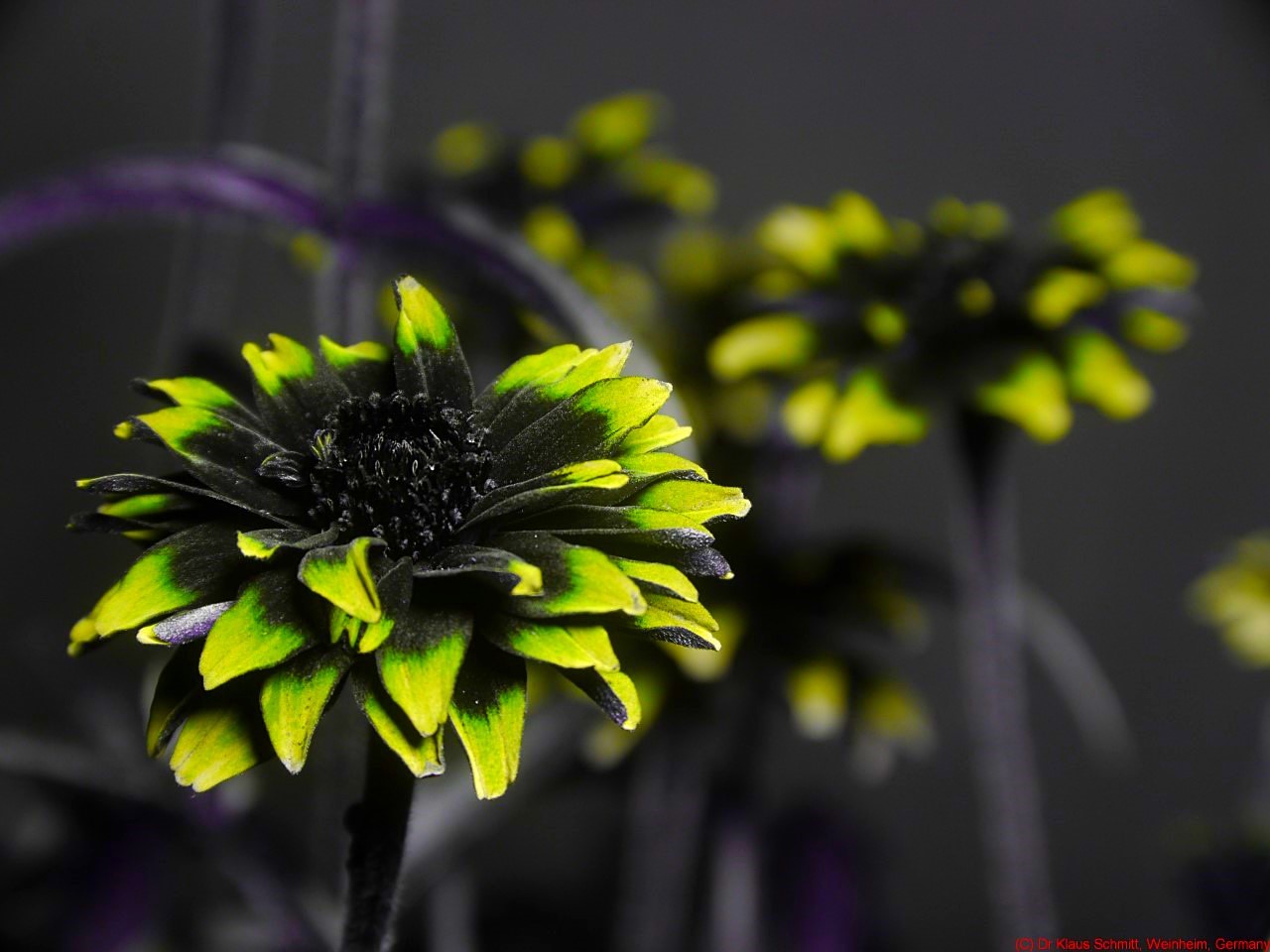
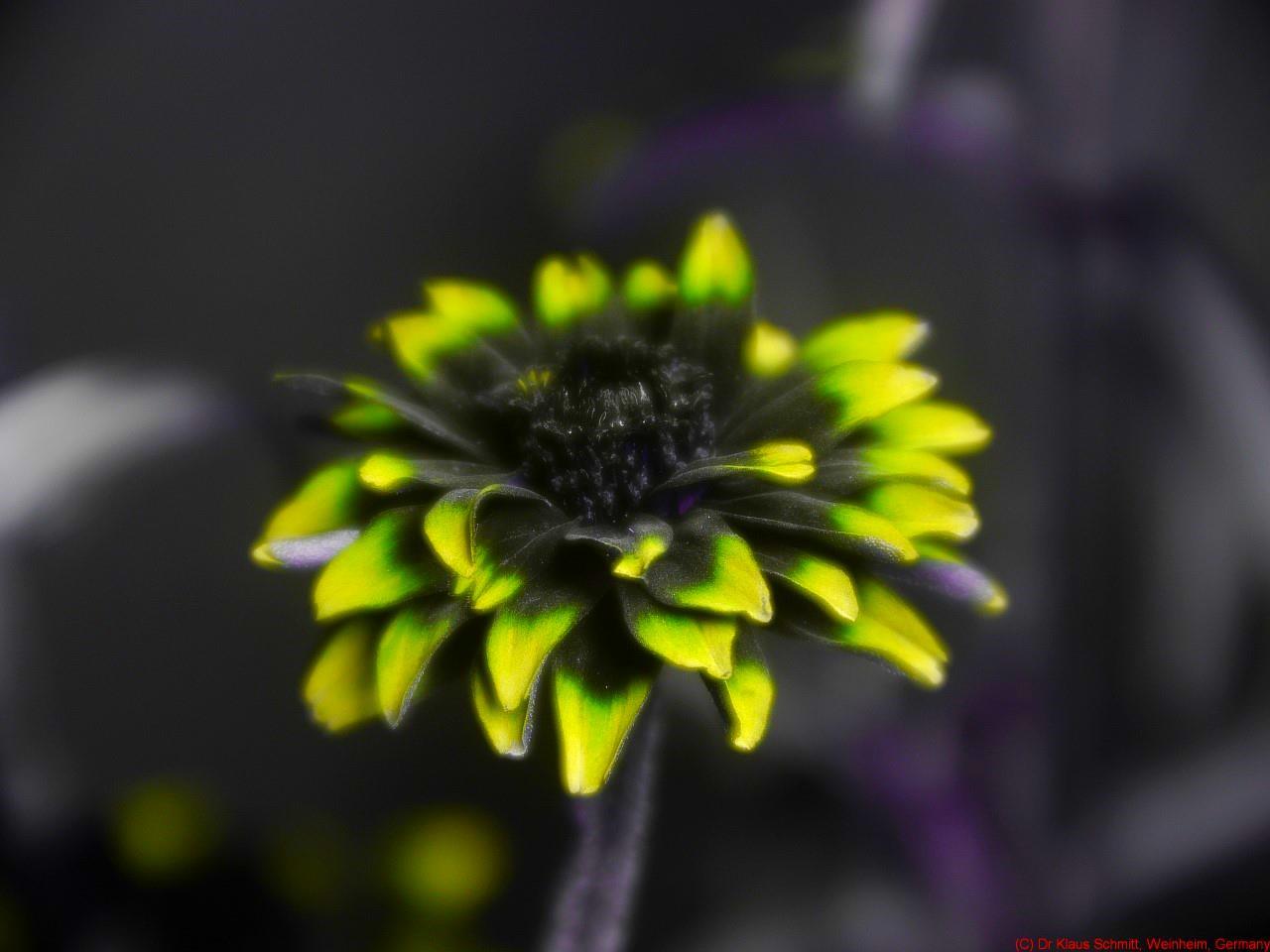
Today reflected ultraviolet photography shots using an old achromatic quartz fluorite lens, that I have rescued from an older spectrometer system also using my "work horse" UV filter, the Baader-U filter (approx. 320-395nm, peak approx. 350nm). Light source was sunlight. All shots were done with variated aperture settings (+1 stop difference per image) to show that influence.

[click on image to see a larger one]

Quadriptych form for better comparison.
Zinnia haageana flower:
 

Sanvitalia procumbens flower:
 

Not that bad, especially since it has a very small focus shift of only about 1/2mm when shooting macro. That added telecompressor CaF2 lens of about 100mm speeds it up considerably, still allowing a very convenient working distance. The variable aperture allows to control the amount of softness that lens has, allowing for "artsy" shots.And of course it transmits flat beyond 300nm.

More about that used quartz fluorite lens is  HERE.

Stay tuned, more will follow on that fascinating subject...

More info on this very interesting field may be found on my site http://www.pbase.com/kds315/uv_photos
Friday, September 14, 2012

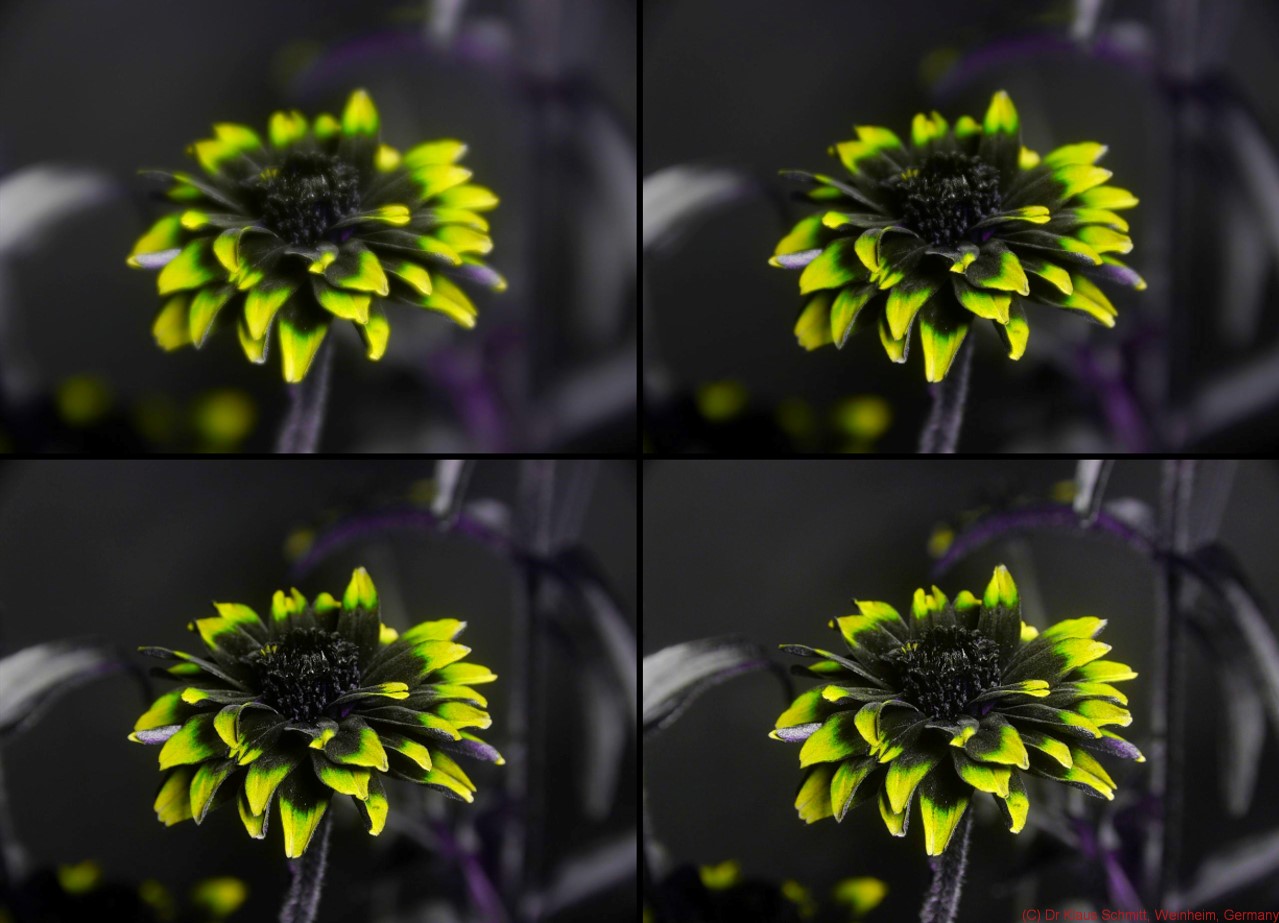
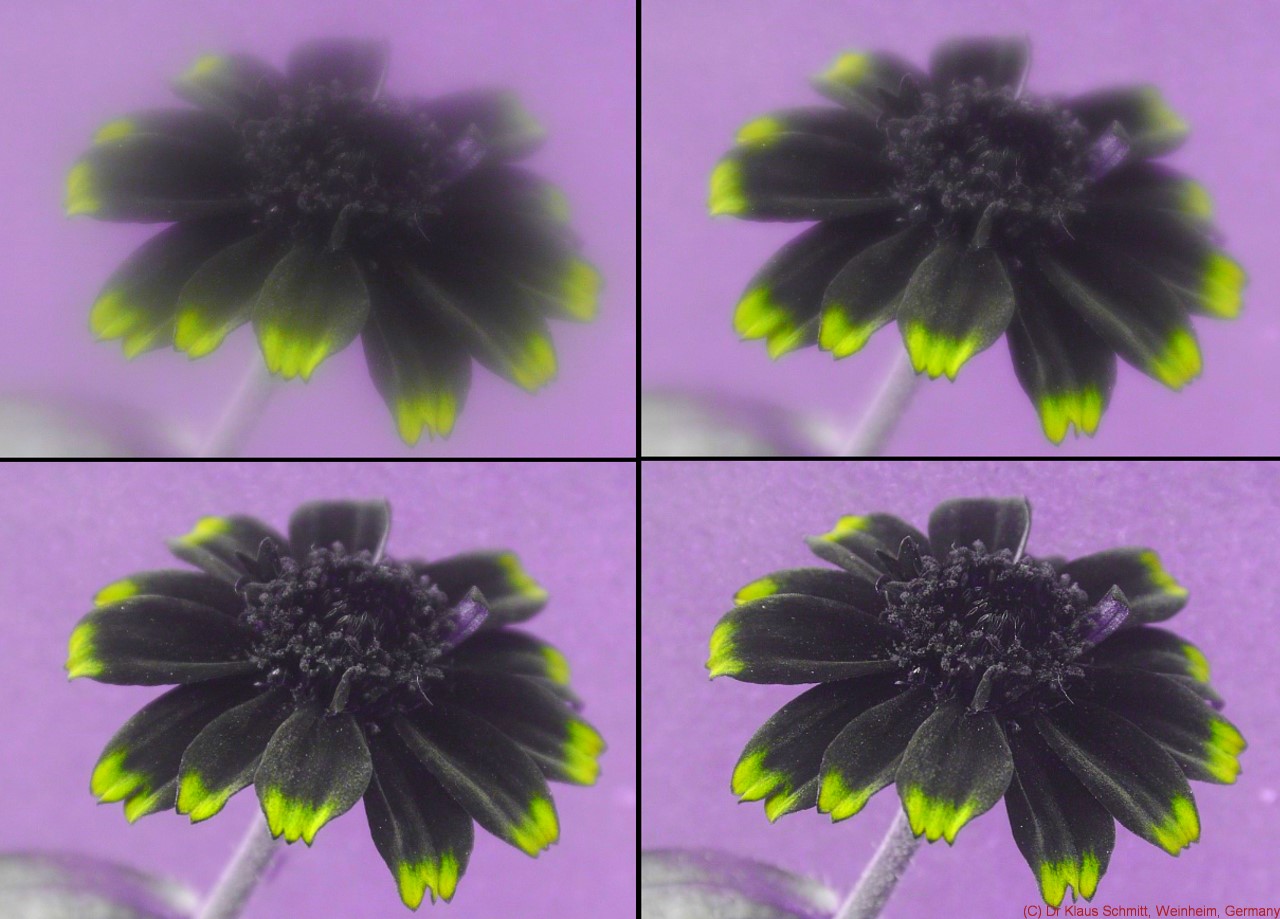
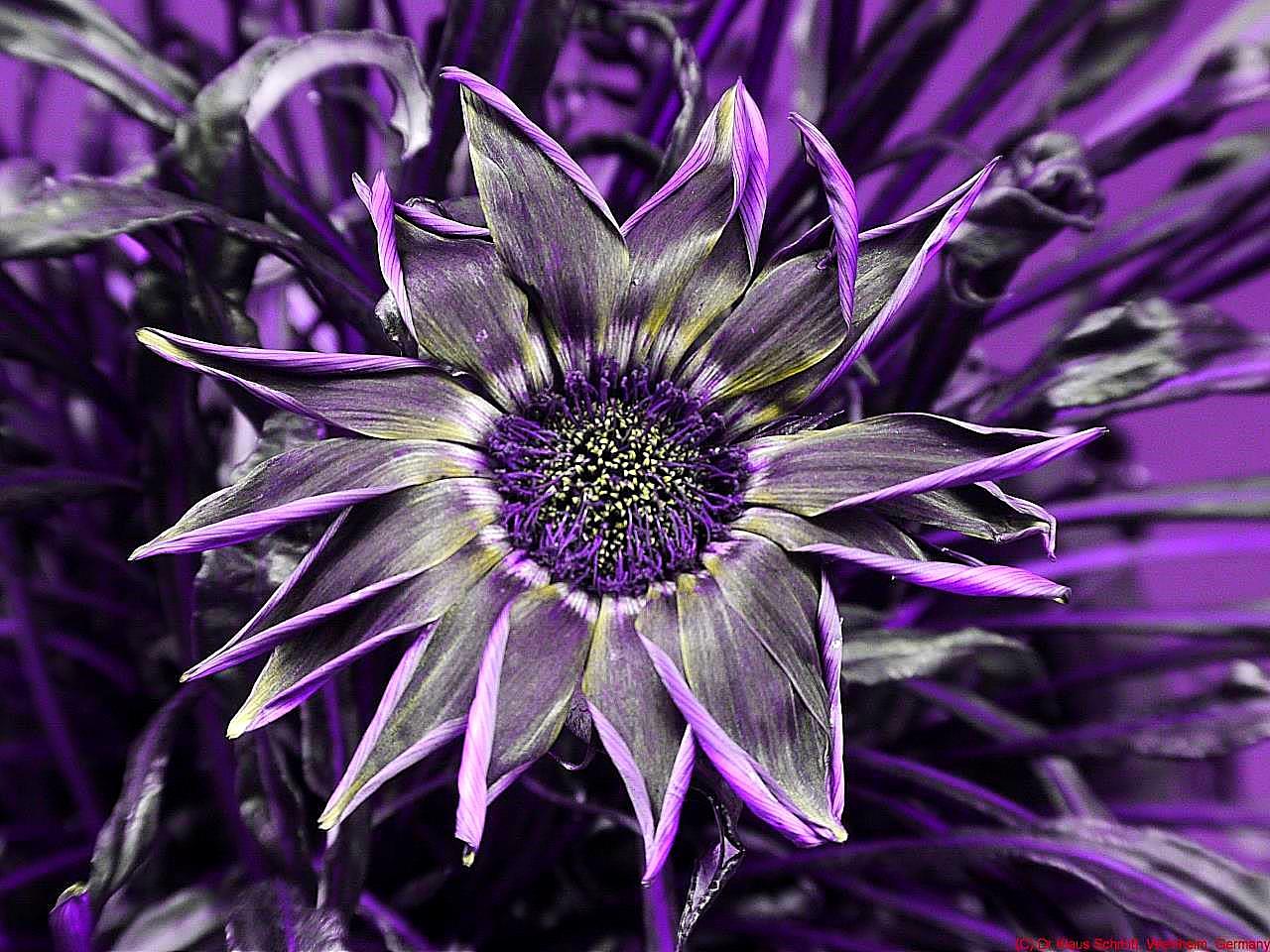
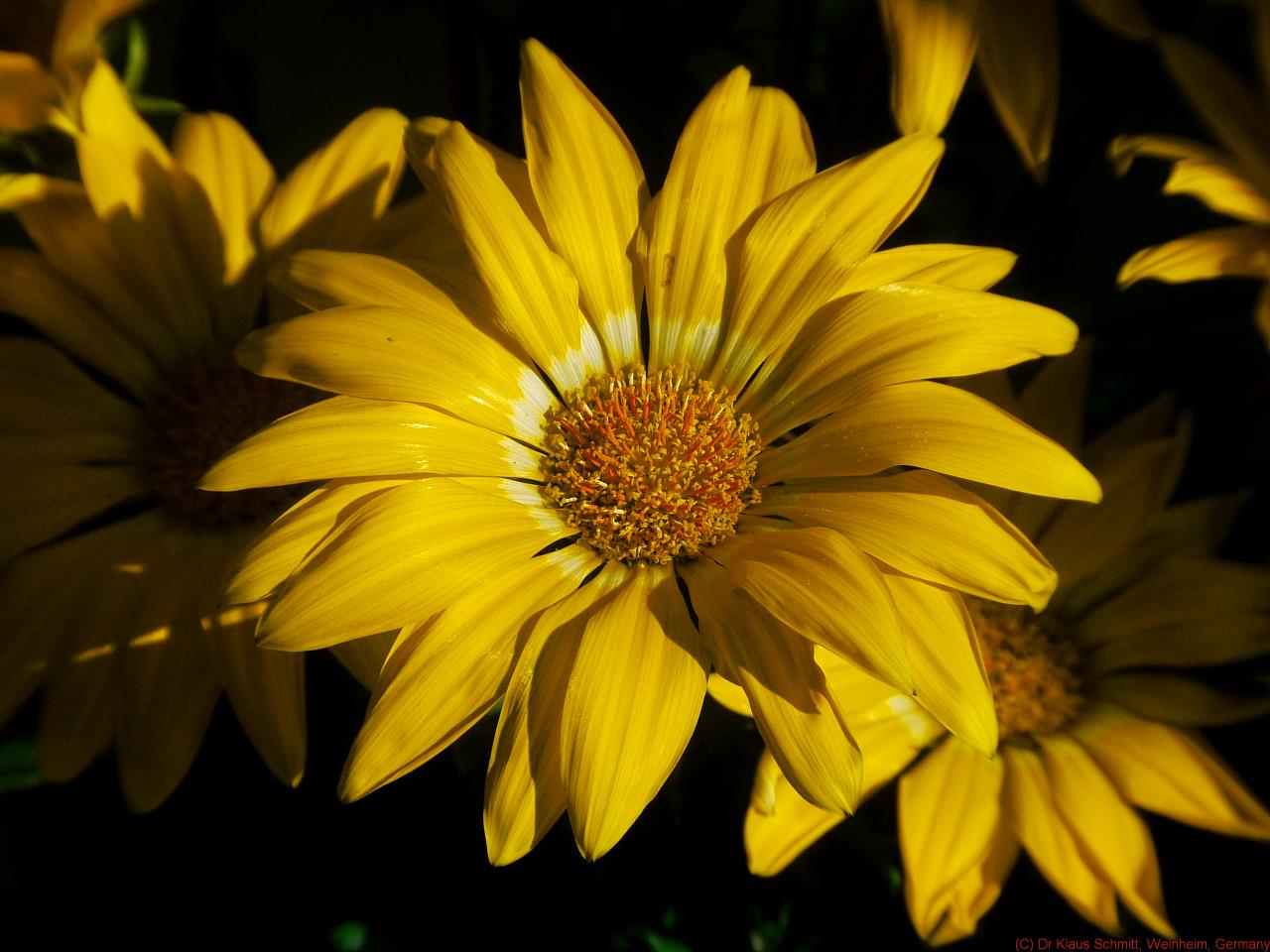
Achromatic Quartz Fluorite Lens: Ultraviolet Photography and Simulated Bee Vision

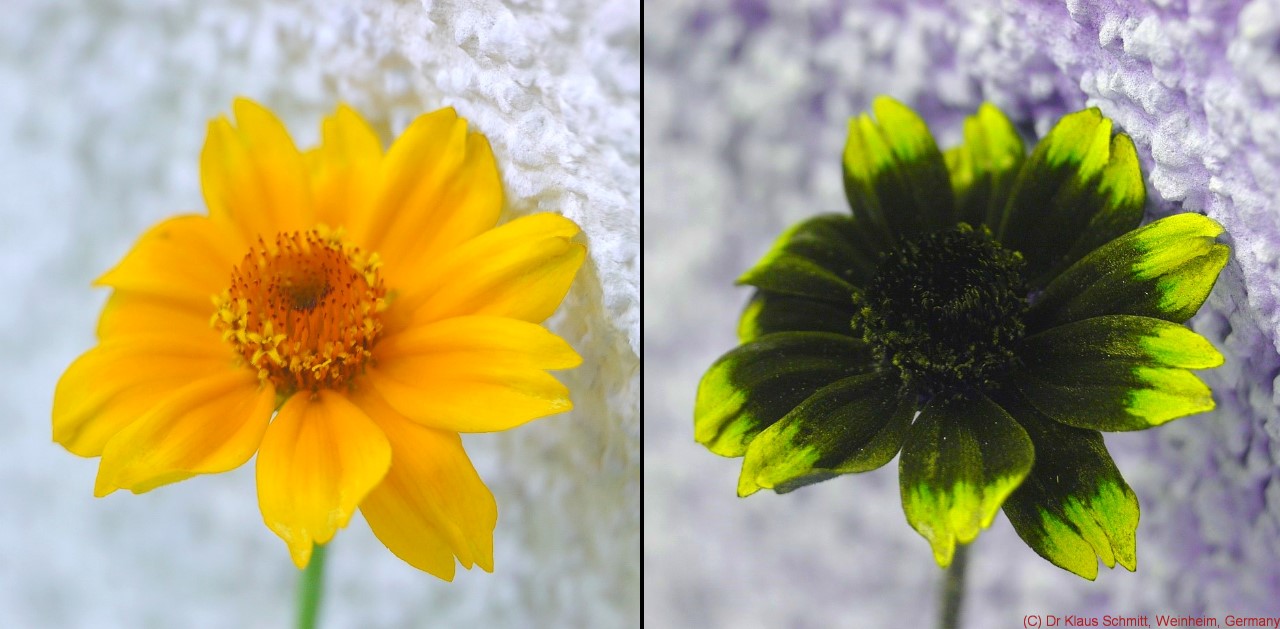
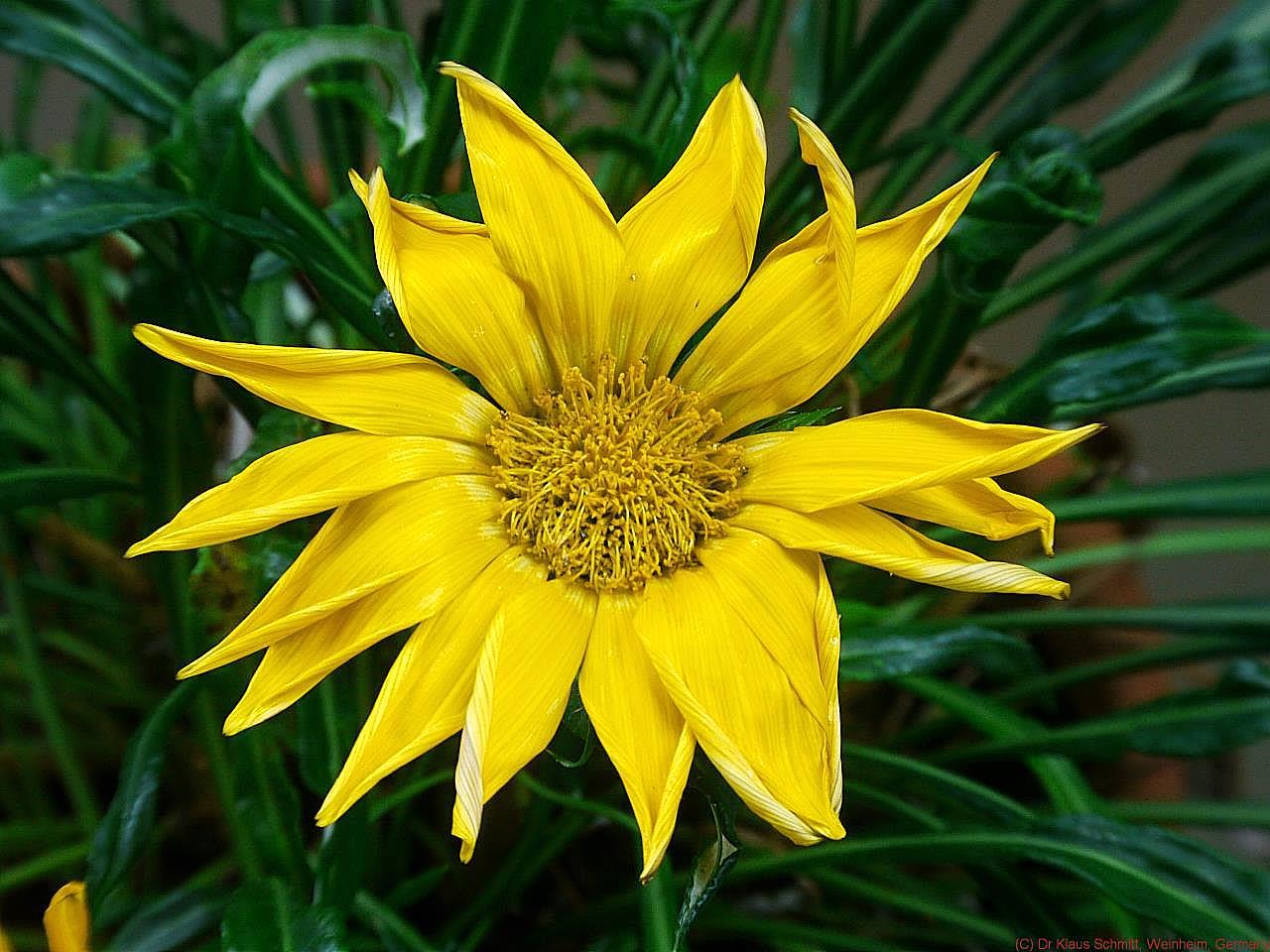
Well, I had taken apart some older equipment a while ago and have extracted the quartz fluorite optics that was hidden in it. I now have added some focusing helicoid, as well as I had some front and rear adapters made to mount it. Results of using it I had shown here and here and today will even show a few more results using it. A yellow Gazania flower in its last stages served as a model for some multispectral shots, all at approx f8-f11.

[click on image to see a larger one]

Visible light shot:


Simulated bee vision using XBV3 filter :


Simulated bee vision using XBV2 filter:


Simulated bee vision using XBV6 filter:


UV using Baader-U filter:


It only has a quite small focus shift of about 1/2mm when shooting macro, but that could have been expected from a well corrected quartz fluorite lens.


UV transmittance is also quite good, as was expected from a quartz-fluorite lens and stays rather flat even beyond 300nm.

More about that used quartz fluorite lens is  HERE.


Stay tuned, more will follow on that fascinating subject...

More info on this very interesting field may be found on my site http://www.pbase.com/kds315/uv_photos

Tuesday, May 29, 2012

[UV] Old Achromatic Quartz Fluorite Lens for Ultraviolet Photography (II)
I had mentione before, that I had taken apart some older equipment, as it had some quartz fluorite optics in it. Here now more pictures using it, all closeup shots were done at approx. f11.

[click on image to see a larger one]

Gazania, visual shot:


UV using Baader-U filter:


UV using Jupiter-U filter:


Sanvitalia, visual shot:


UV using Baader-U filter:


UV using Jupiter-U filter:


Not that bad, especially since it has a very small focus shift of only about 1/2mm when shooting macro. I am no having a professional mount made for it.

That Gazania flower I had shot earlier here, which may serve as a comparison.

More about that used quartz fluorite lens is  HERE.

Stay tuned, more will follow on that fascinating subject...

More info on this very interesting field may be found on my site http://www.pbase.com/kds315/uv_photos