Showing posts with label XBV. Show all posts

Thursday, July 23, 2026

Black-eyed Susan - Rudbeckia hirta in reflected ultraviolet photography and simulated bee and butterfly vision XIX

Today more shots of that beautiful flower, originating from the USA Prairie, here today again that commercially sold hybrid of a Black-eyed Susan - Rudbeckia hirta (possibly R. hirta x R. fulgida) in reflected ultraviolet photography using different filters aside from the Baader-U filter, but different ones today for simulated bee and butterfly vision but also part of my XBV filter set. All shots were done at f8-f11 on my balcony. Lens was a UV-Nikkor 105mm quartz fluorite lens. Light source was direct sunlight. 

PS: These other filters (filter stacks actually) I used have partially corroded over time, so I had to polish them using finest Cerium-Oxide powder. I made some slurry with that using filtered water, then polished the filter glasses with that using a very soft cloth and small circular movements, then rinsed them clean and dried them. So these images hopefully prove that this was successfully done....I think so.

[click on image to see a larger one]

Human vision:
 

Reflected ultraviolet (UV - false color):
 

Simulated butterfly vision:
 

Simulated bee vision:
 

Quadriptych of human vision, ultraviolet, simulated bee and butterfly vision (left to right, top to bottom):
 

This flower shows a very prominent UV bullseye pattern, as its petal tips are very UV bright (around 365nm) and its center is very UV dark, and all this gets nicely visible, also in simulated bee and butterfly vision.

I have previously written about that flower HERE  


Stay tuned, more will follow on that fascinating subject...

More info on this very interesting field may be found on my site http://www.pbase.com/kds315/uv_photos

Saturday, April 18, 2026

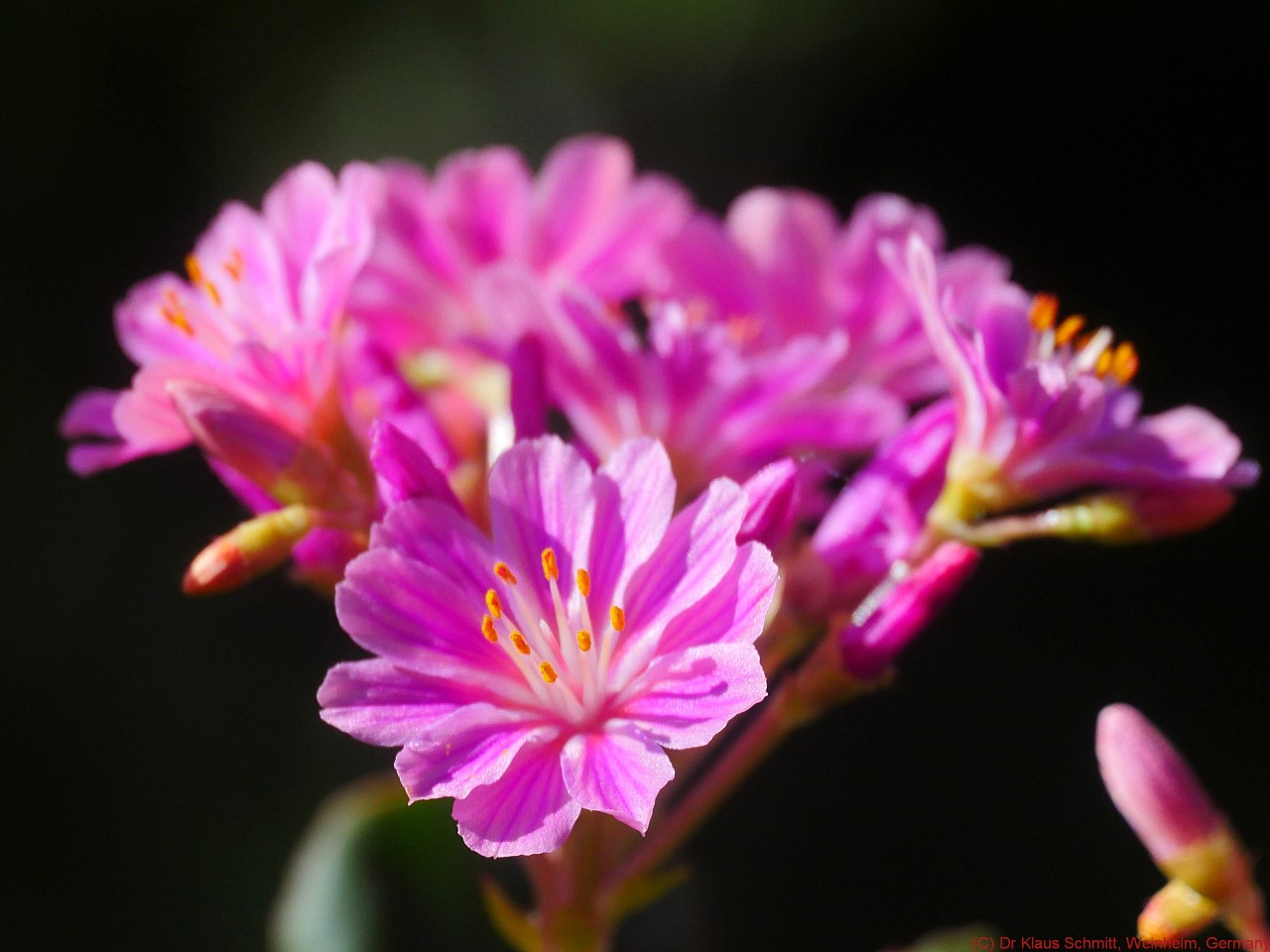
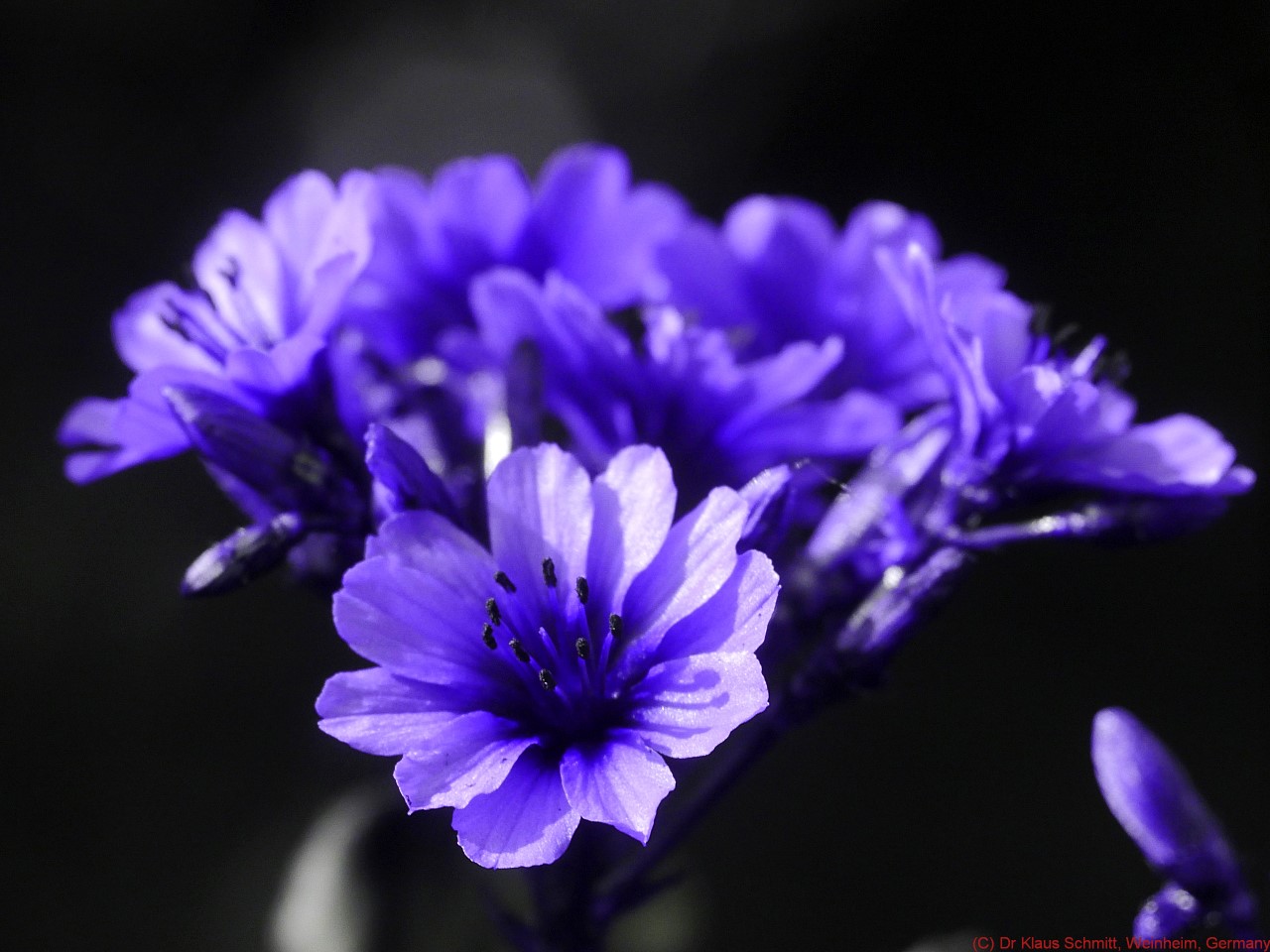
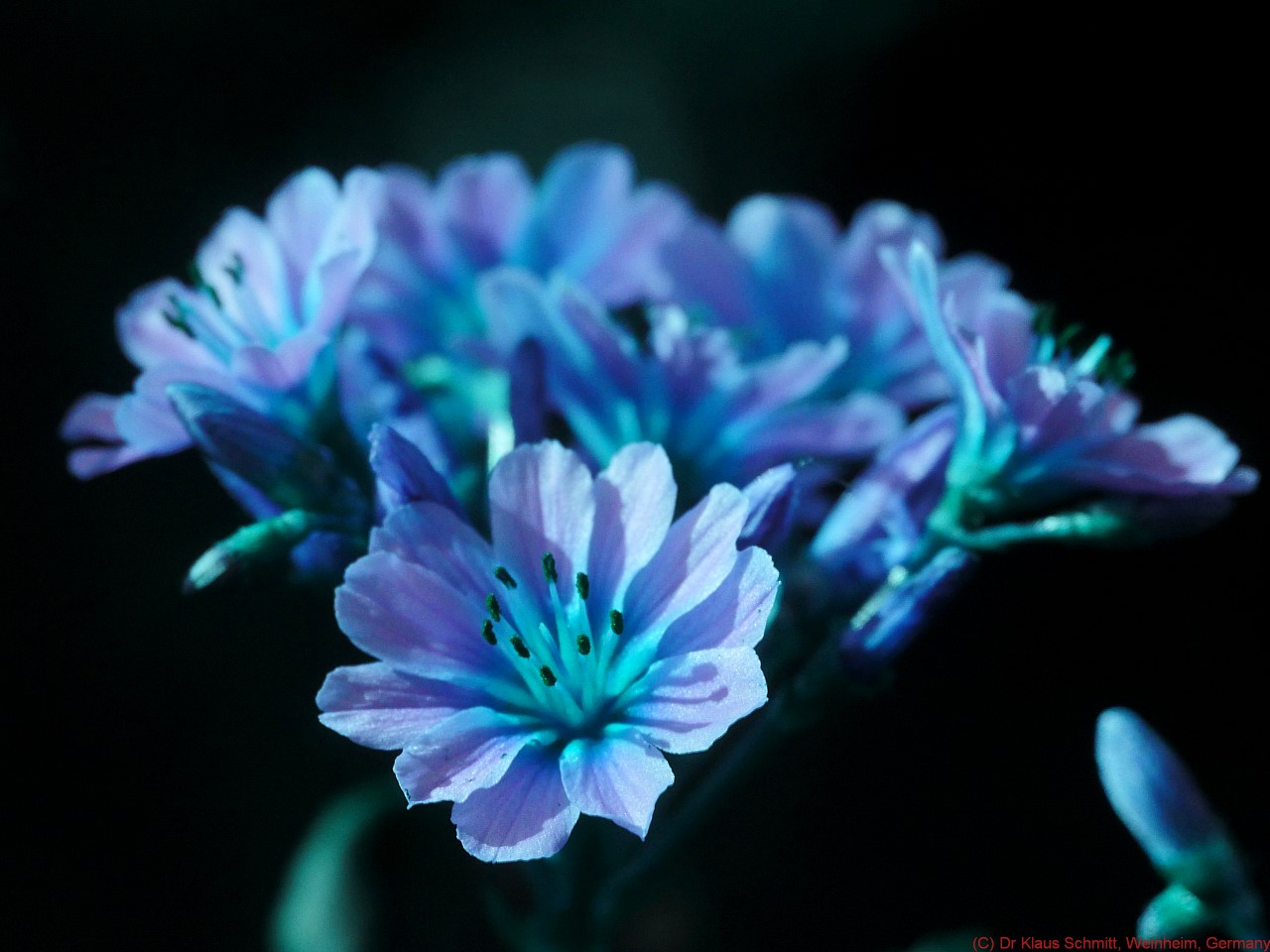
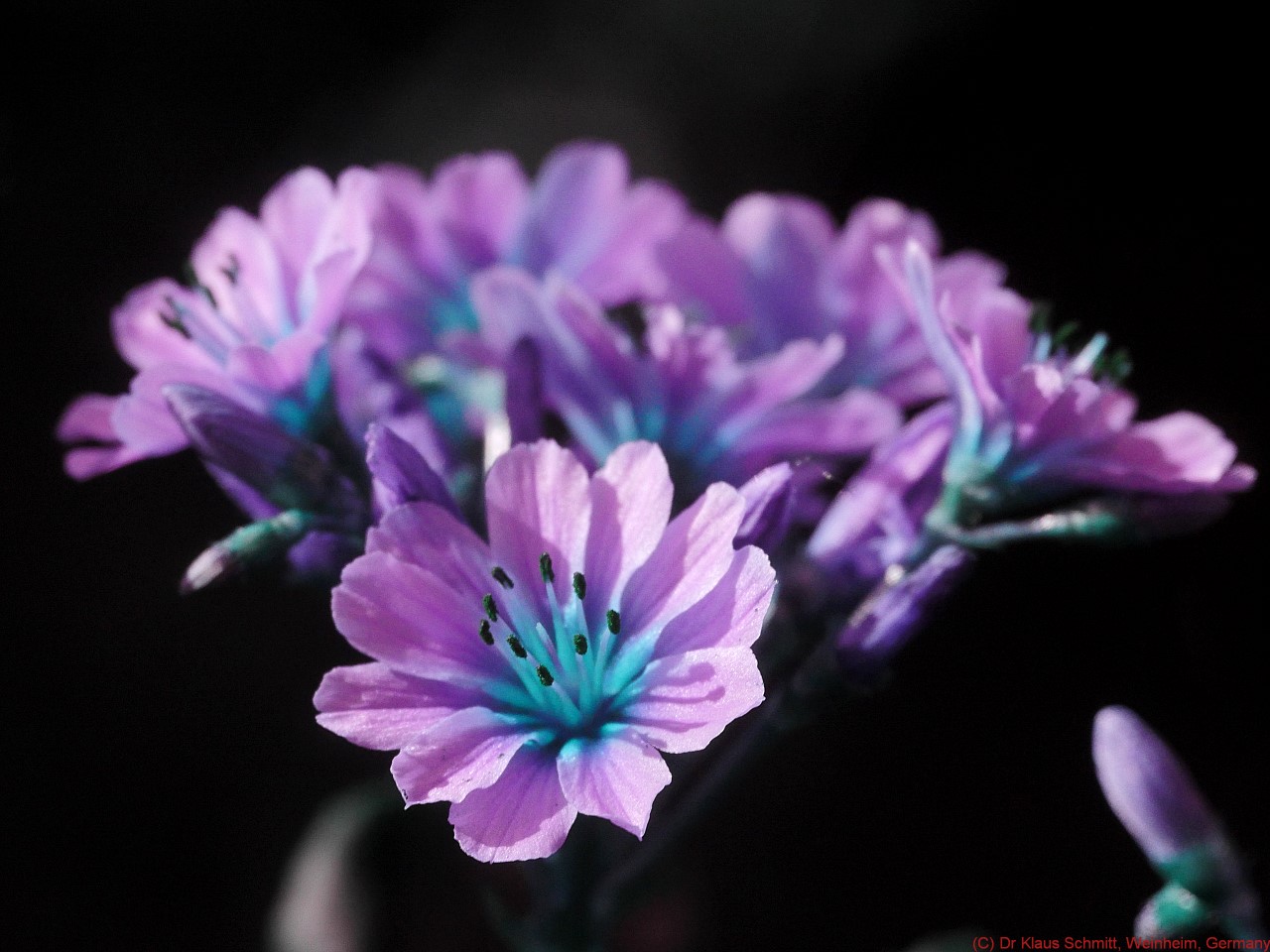
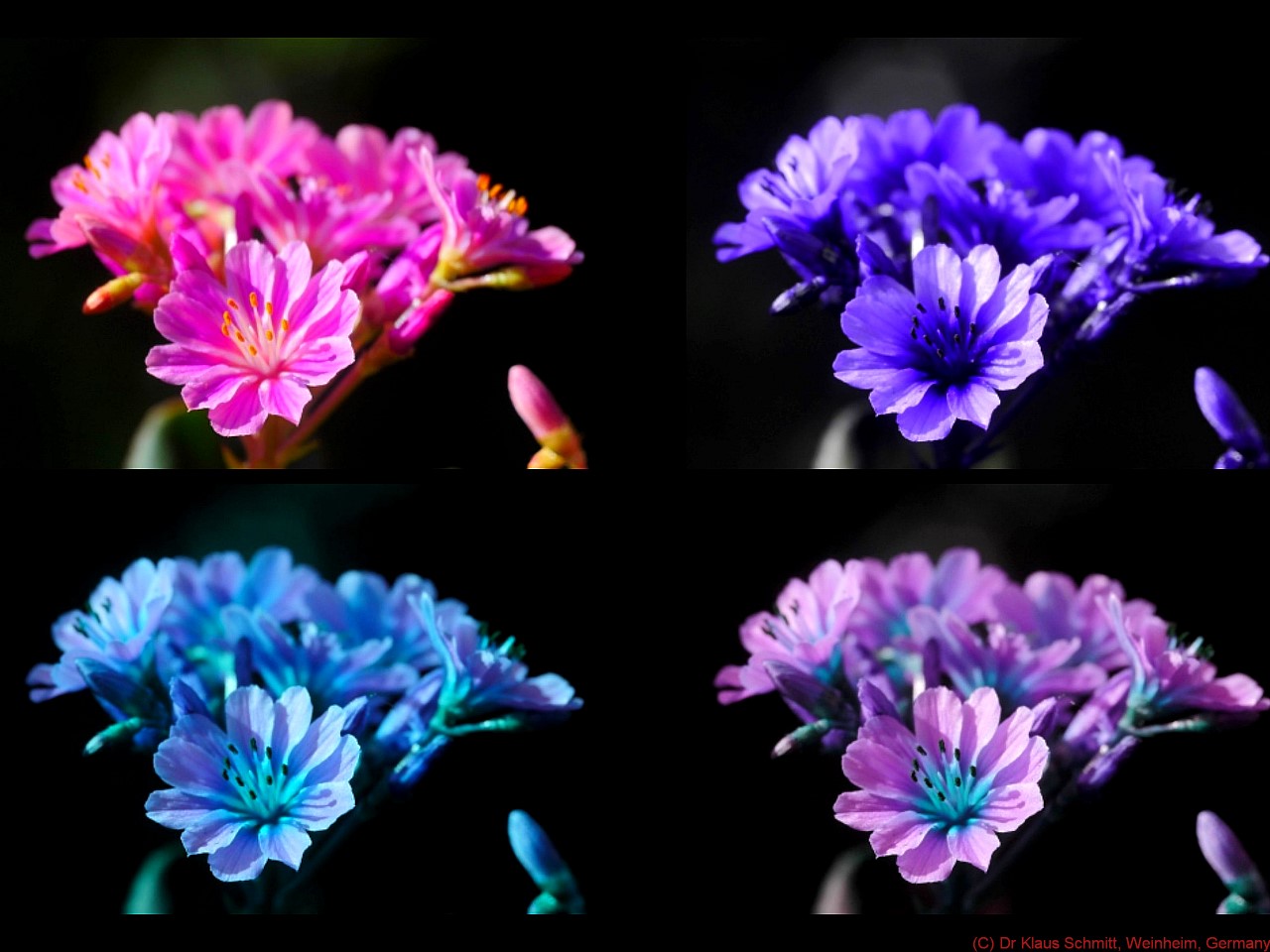
Cliff maids - Lewisia cotyledon in reflected ultraviolet photography, simulated bee and butterfly vision XI

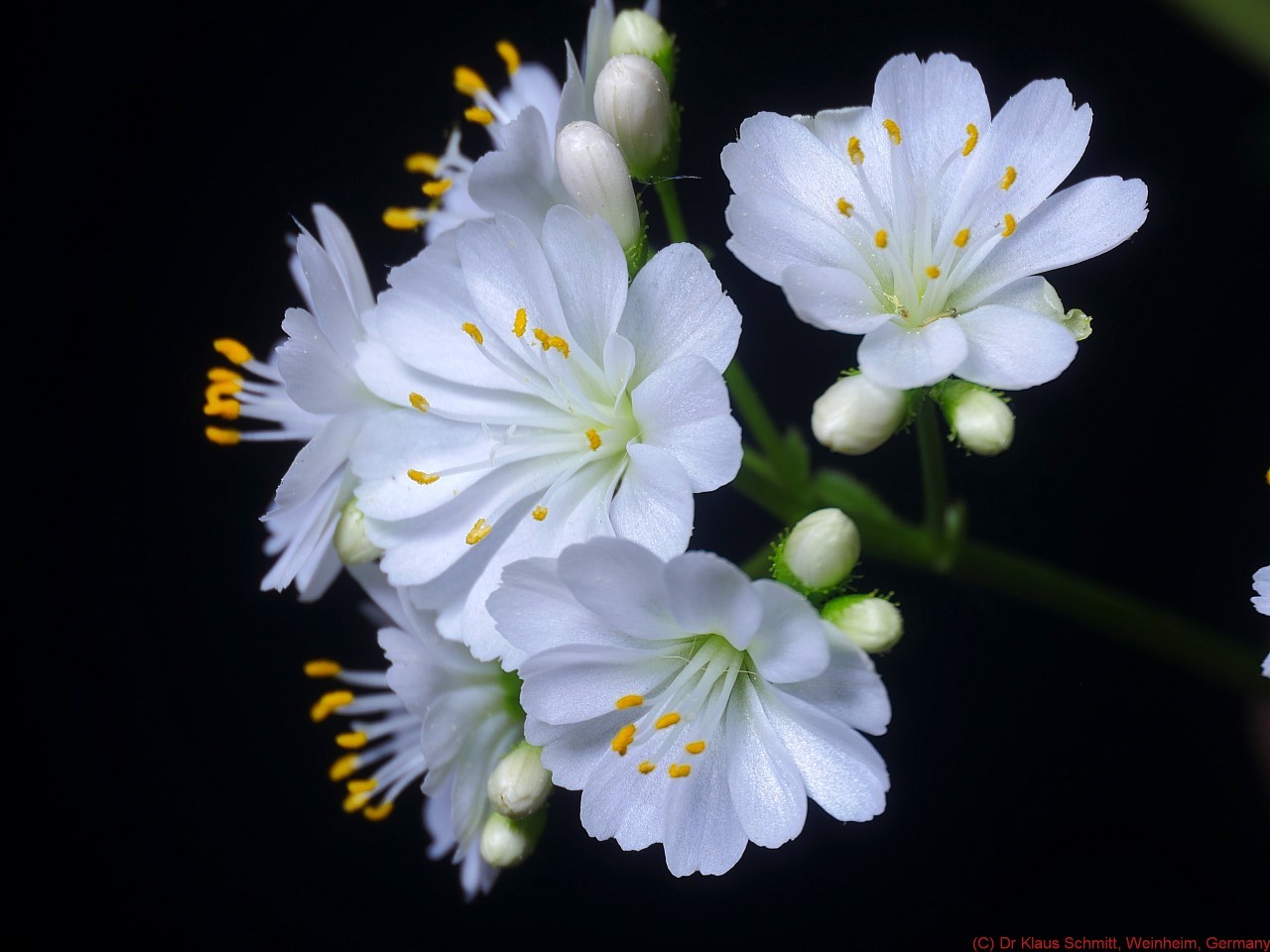
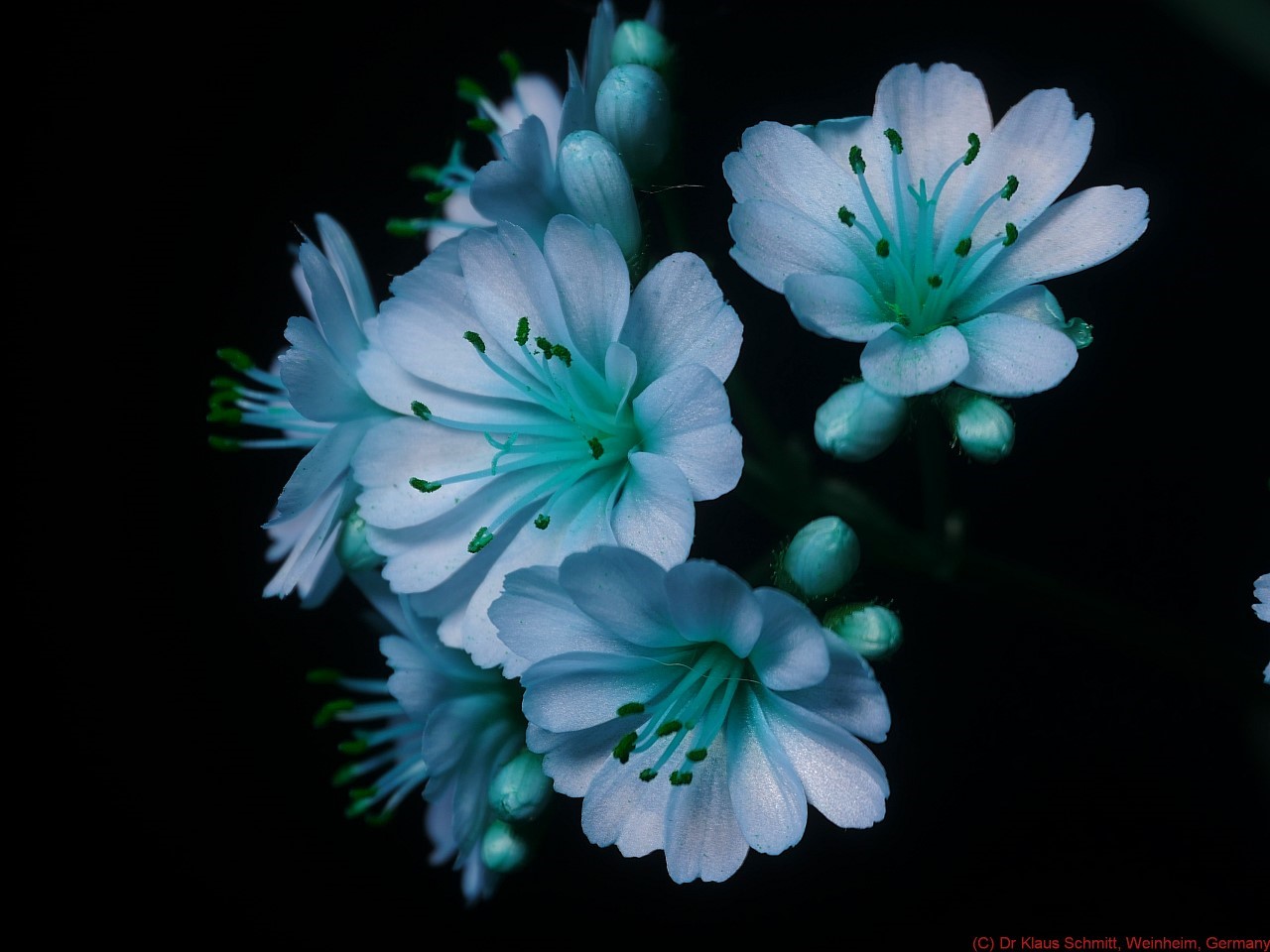
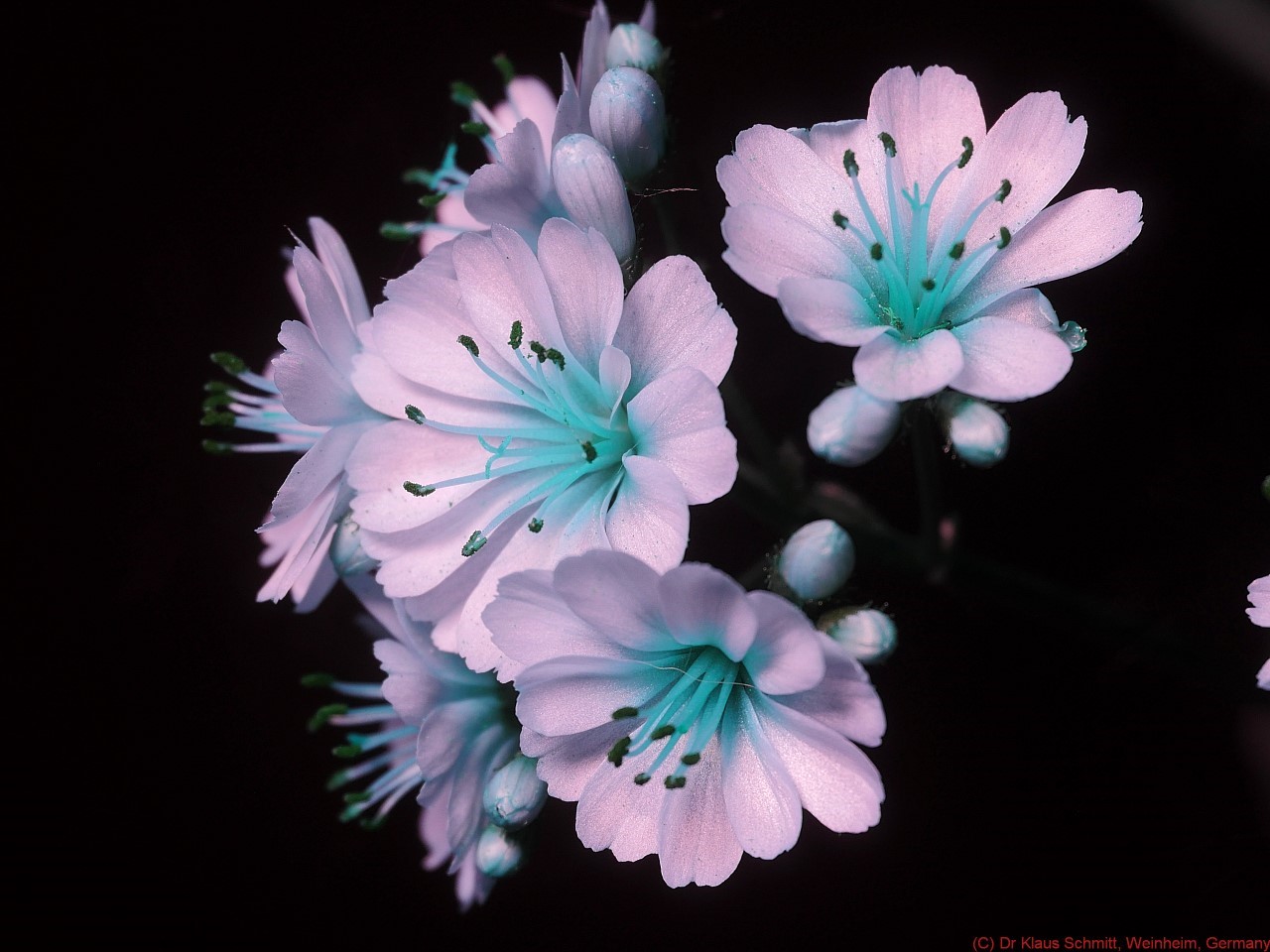
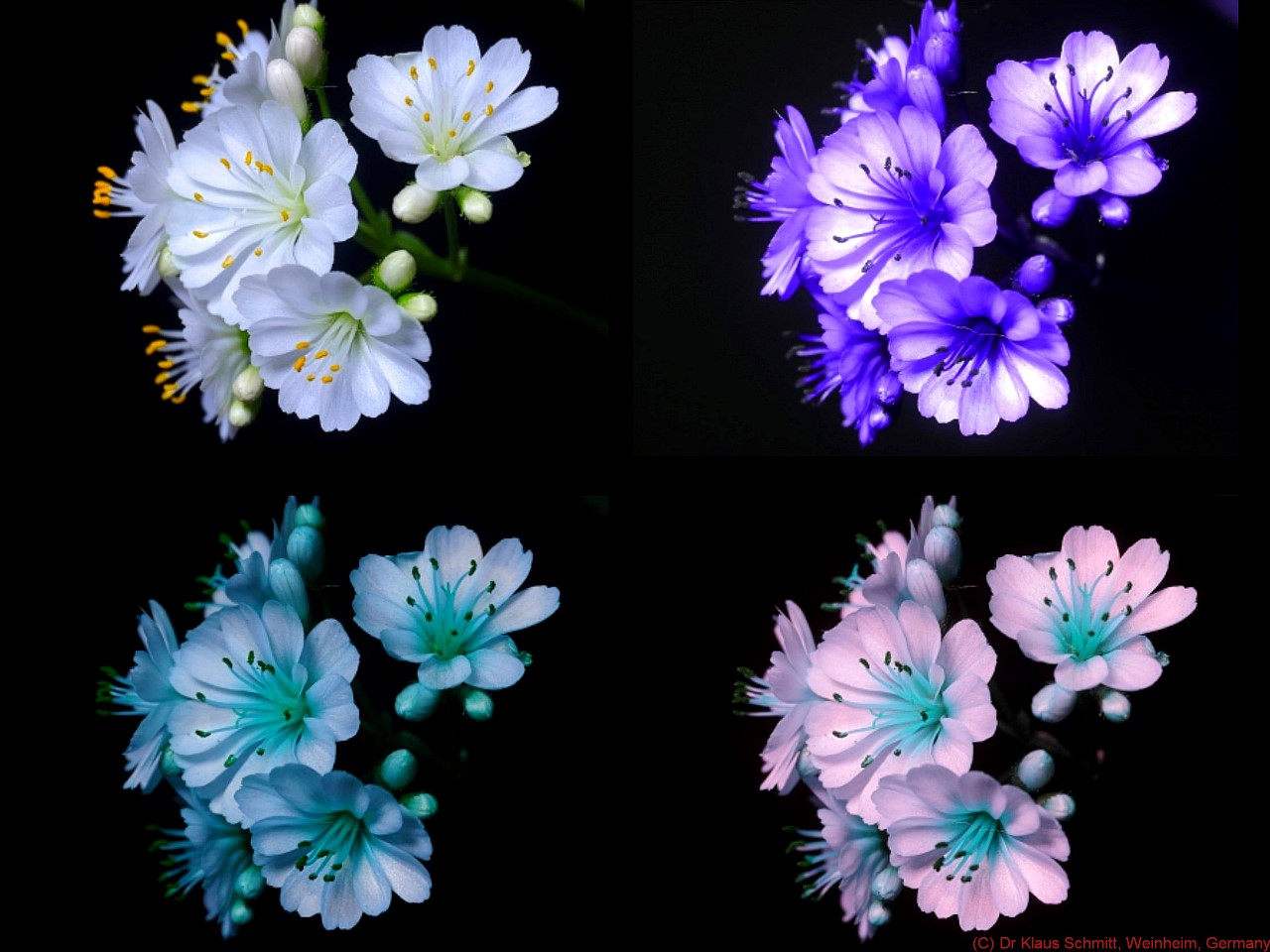
Today in Spring 2026 after some hiatus due to a move to the French border more shots of a white long blooming, perennial flower Cliff maids - Lewisia cotyledon in reflected ultraviolet photography and simulated bee and butterfly vision. All shots were done at f8 in reflected ultraviolet photography using my "work horse" UV filter, the Baader-U filter, as well as my XBV filters for simulated bee and butterfly vision. Lens was a UV-Nikkor 105mm quartz fluorite lens. Light source was sunlight and some UV LED help.

[click on image to see a larger one]

Human vision:
 

Reflected UV:
 

Simulated bee vision:
 

Simulated butterfly vision:
 

Quadriptych of human vision, UV, simulated bee and butterfly vision (left to right, top to bottom):
 

Lewisia has a visible UV pattern, its petal tips are UV bright around 385nm, its center is UV dark, so this gets quite nicely visible, also in simulated butterfly and bee vision. 

But there is also a highly UV reflective area visible, formed by those shiny petals which is especially quite visible in UV! 

 I have written more about that flower HERE
 
Stay tuned, more will follow on that fascinating subject...

More info on this very interesting field may be found on my site http://www.pbase.com/kds315/uv_photos

Saturday, December 21, 2024

Kaunergrat Nature Park Tyrol Austria shows St. John's wort - Hypericum in reflected ultraviolet photography and simulated bee and butterfly vision

Today about my works being used with my permission by the Naturpark Kaunergrat (Pitztal – Fließ – Kaunertal) in Tyrol / Austria. Their idea was to show visitors how bees and butterflies see the world including their ability to see reflected ultraviolet (UV) light. 

They chose to use an attractive yellow flower, a St. John's wort - Hypericum sp. which were shot by me in reflected ultraviolet photography, simulated bee and butterfly vision. All shots were done at f8 in reflected ultraviolet photography using my "work horse" UV filter, the Baader-U filter, as well as my XBV filters for simulated bee and butterfly vision. Lens was a UV-Nikkor 105mm quartz fluorite lens. Light source was sunlight.

[click on image to see a larger one]

Human vision:
 

Reflected UV:
 

Simulated butterfly vision:
 

Simulated bee vision:
 

Quadriptych of human vision, UV, simulated butterfly and bee vision (left to right, top to bottom):
 

Hypericum's outer petals strongly reflect UV around 365nm, whereas its stamens are quite darker, reflecting around 385nm, hence forming UV nectar guides for UV seeing insects. This is all invisible to us humans, but clearly visible to bees and butterflies, and all this will be nicely visible to the visitors at Kaunergrat nature park Tyrol, Austria.

I have written more about this flower HERE.

Stay tuned, more will follow on that fascinating subject...

More info on this very interesting field may be found on my site http://www.pbase.com/kds315/uv_photos Those shown multispectral images of mine where shot in my studio with my "work horse" UV-Nikkor f4.5/105mm quartz fluorite lens using the Baader UV/IR Cut filter and my proprietary XBV filters for simulated bee + butterfly vision. Light source in studio used was a Xenon flash modified for high UV output outside.

Stay tuned, more will follow on that fascinating subject...

More info on this very interesting field may be found on my site http://www.pbase.com/kds315/uv_photos

Wednesday, May 29, 2024

My multispectral works at the Tokyo Polytechnic University Color Science and Art Center

Today about my works being used with my permission by professor Yasushi Noguchi of the Tokyo Polytechnic University in Japan who is the director of their new Color Science and Art Center, which was created to educate about about color. There is now an exhibit about animal color and vision and the difference to human vision, hence why they liked to show my works there.

https://photos.app.goo.gl/p7GPvQENfwSDn2qX6 

Those shown multispectral images of mine where shot in my studio with my "work horse" UV-Nikkor f4.5/105mm quartz fluorite lens using the Baader UV/IR Cut filter and my proprietary XBV filters for simulated bee + butterfly vision. Light source in studio used was a Xenon flash modified for high UV output outside.

Stay tuned, more will follow on that fascinating subject...

More info on this very interesting field may be found on my site http://www.pbase.com/kds315/uv_photos

Monday, April 8, 2024

Cliff maids - Lewisia cotyledon in reflected ultraviolet photography, simulated bee and butterfly vision X

Today in Spring 2024 more shots of a white long blooming, perennial flower Cliff maids - Lewisia cotyledon in reflected ultraviolet photography and simulated bee and butterfly vision. All shots were done at f11 in reflected ultraviolet photography using my "work horse" UV filter, the Baader-U filter, as well as my XBV filters for simulated bee and butterfly vision. Lens was a UV-Nikkor 105mm quartz fluorite lens. Light source was a modified studio flash.

[click on image to see a larger one]

Human vision:
 

Reflected UV:
 

Simulated bee vision:
 

Simulated butterfly vision:
 

Quadriptych of human vision, UV, simulated bee and butterfly vision (left to right, top to bottom):
 

Lewisia has a visible UV pattern, its petal tips are UV bright around 385nm, its center is UV dark, so this gets quite nicely visible, also in simulated butterfly and bee vision. 

But there is also a highly UV reflective area visible, formed by those shiny petals which is especially quite visible in UV! This has recently been discovered by Prof. (em) Klaus Lunau of the University of Duesseldorf, Germany and he has published about that in NATURE 2020 here: Lunau, K., Ren, ZX., Fan, XQ. et al. Nectar mimicry: a new phenomenon. Sci Rep 10, 7039 (2020). https://www.nature.com/articles/s41598-020-63997-3

I have written more about that flower HERE
 
Stay tuned, more will follow on that fascinating subject...

More info on this very interesting field may be found on my site http://www.pbase.com/kds315/uv_photos

Thursday, January 25, 2024

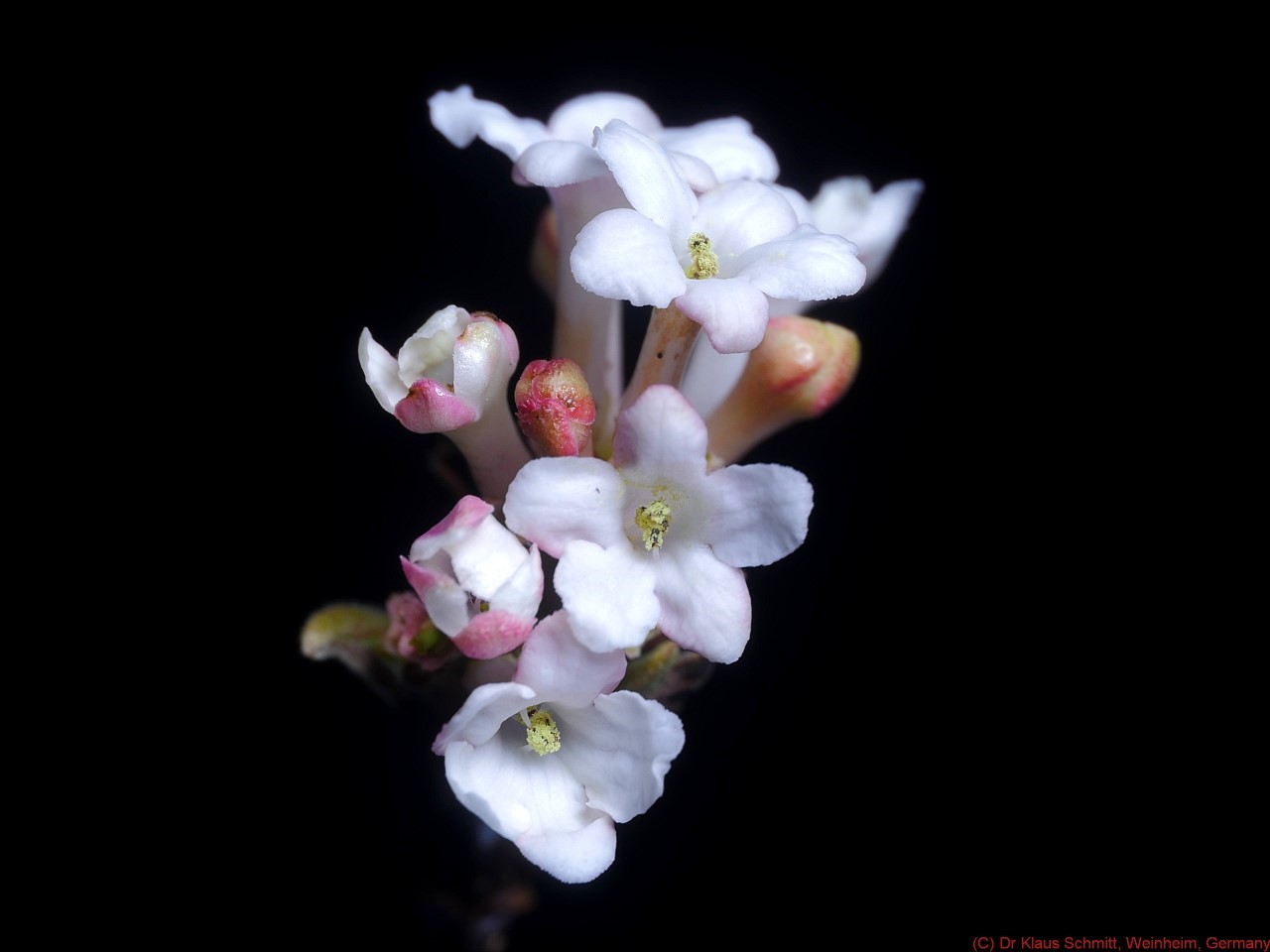
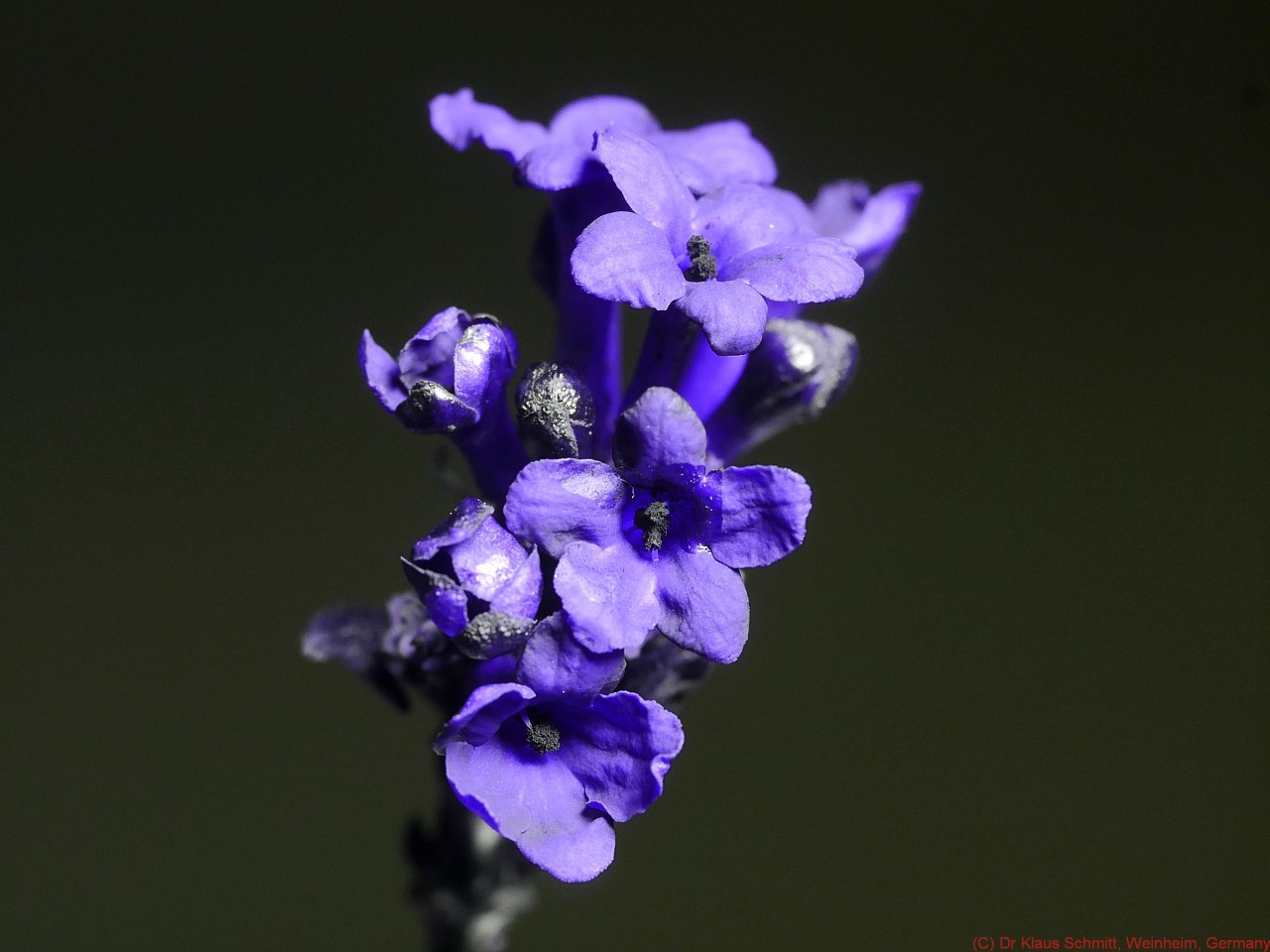
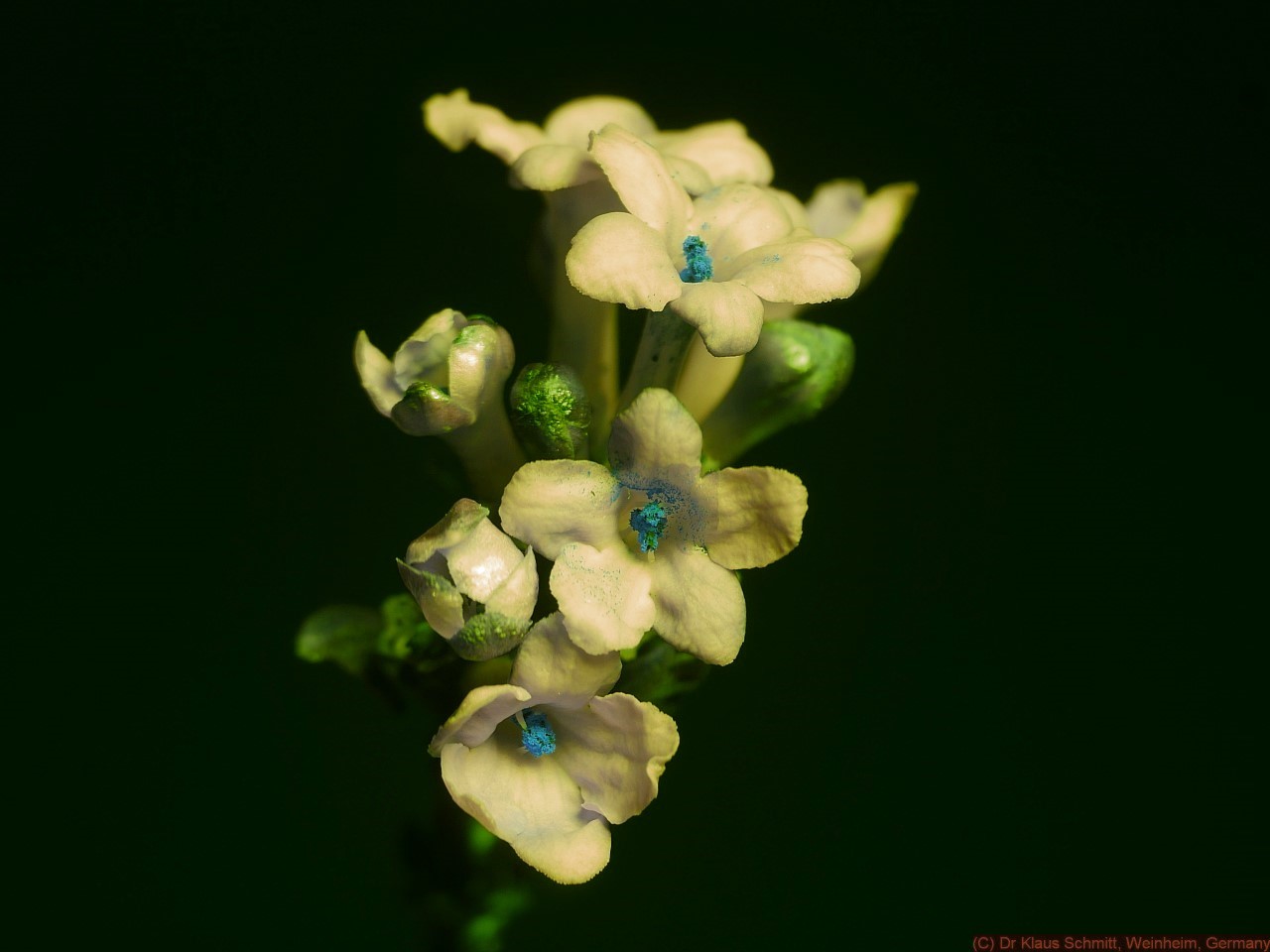
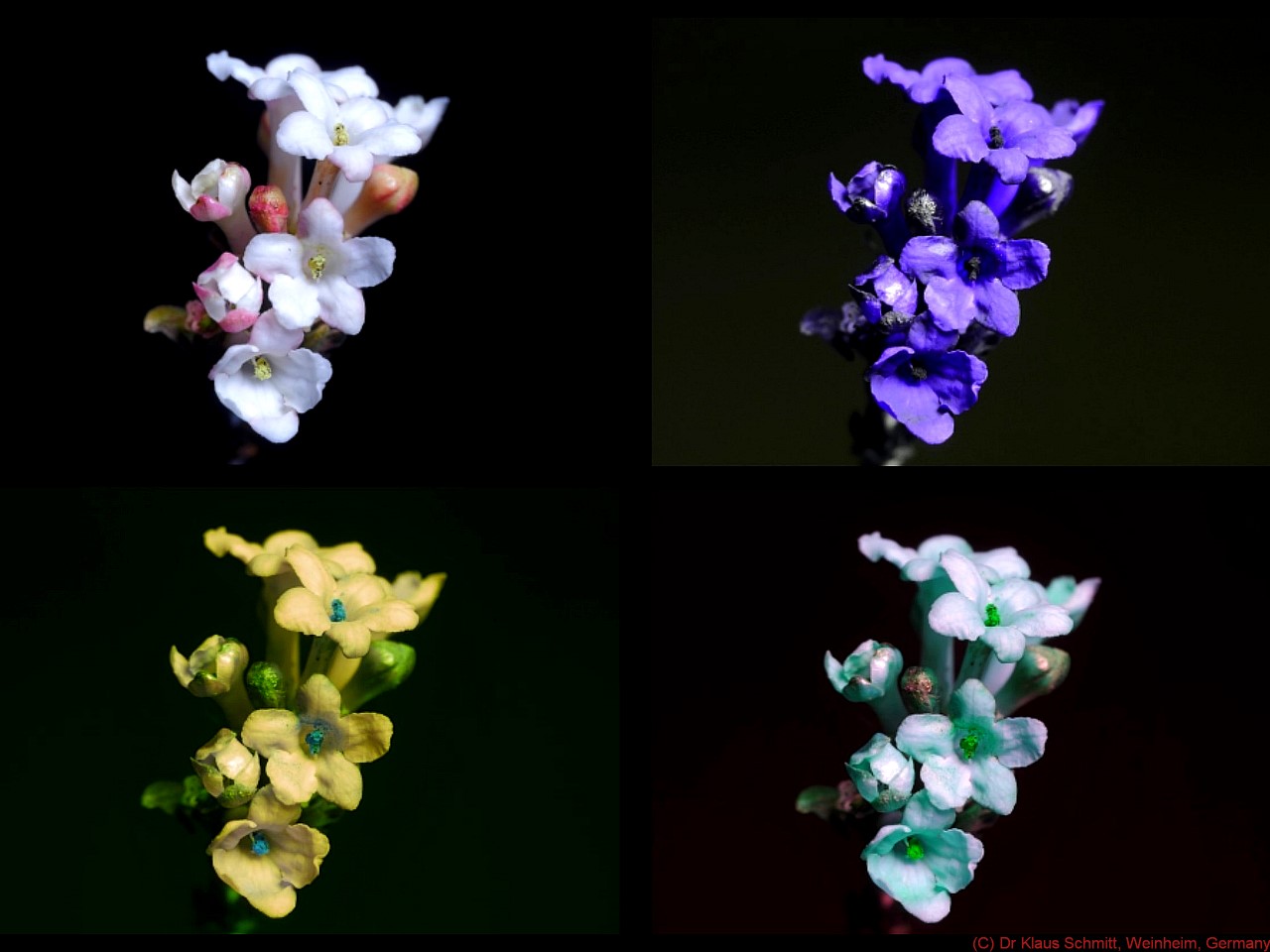
Arrowwood - Viburnum bodnantense in reflected ultraviolet photography, simulated bee and butterfly vision

Today still in cold January 2024 shots of a blossoming Arrowwood - Viburnum bodnantense bush in reflected ultraviolet photography and simulated bee and butterfly vision. All shots were done at f11 in reflected ultraviolet photography using my "work horse" UV filter, the Baader-U filter, as well as my XBV filters for simulated bee and butterfly vision. Lens was a UV-Nikkor 105mm quartz fluorite lens. Light source was a modified Xenon flash.

[click on image to see a larger one]

Human vision:
 

Reflected UV:
 

Simulated butterfly vision:
 

Simulated bee vision:
 

Quadriptych of human vision, UV, simulated butterfly and bee vision (left to right, top to bottom):
 

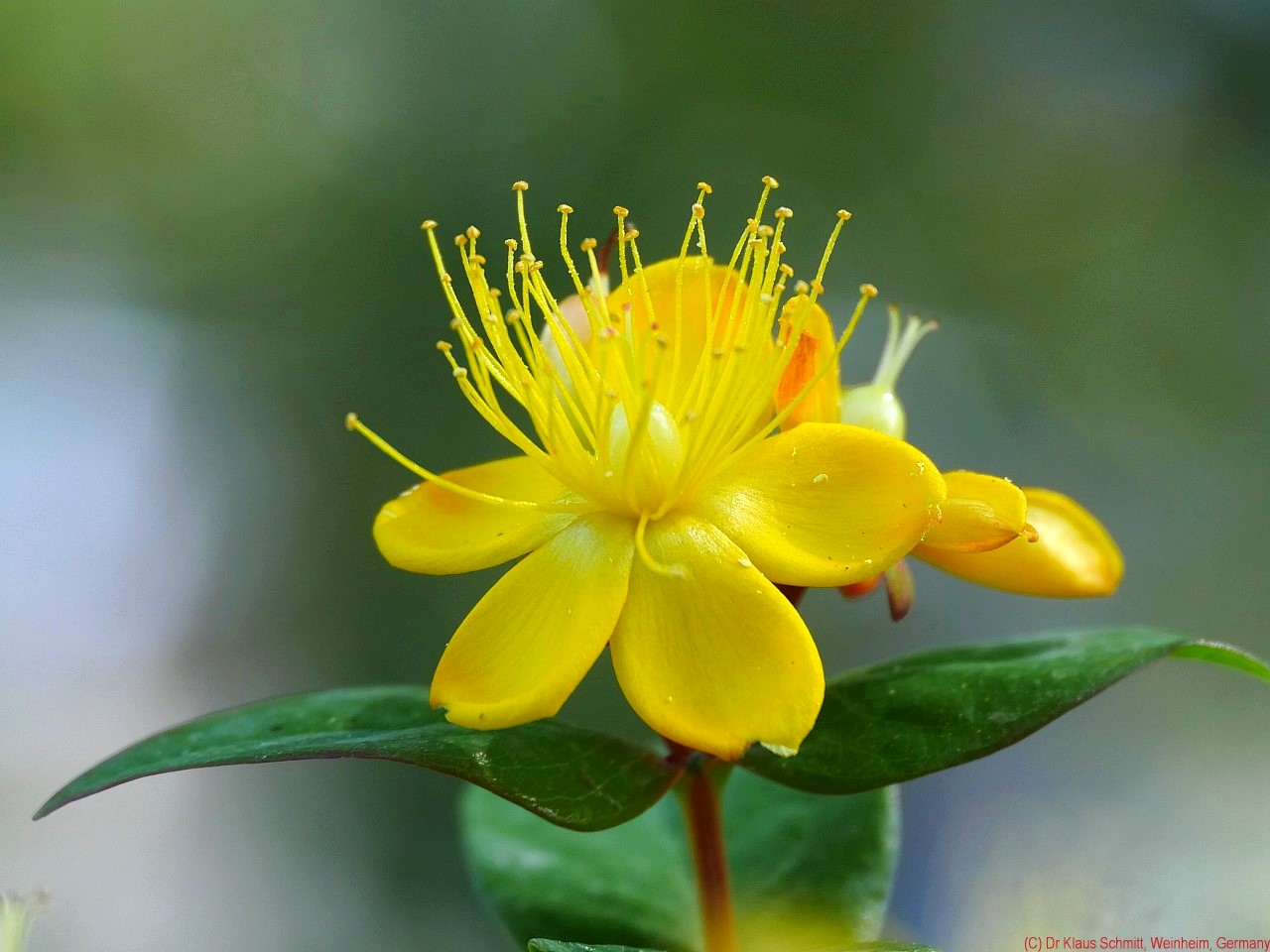
Arrowwood bush flowers have no distinct UV reflection pattern, but their stamen create a UV dark center important to attract UV seeing pollinators and this gets nicely visible here, also in simulated bee and butterfly vision.


More info on this very interesting field may be found on my site http://www.pbase.com/kds315/uv_photos
Friday, June 23, 2023

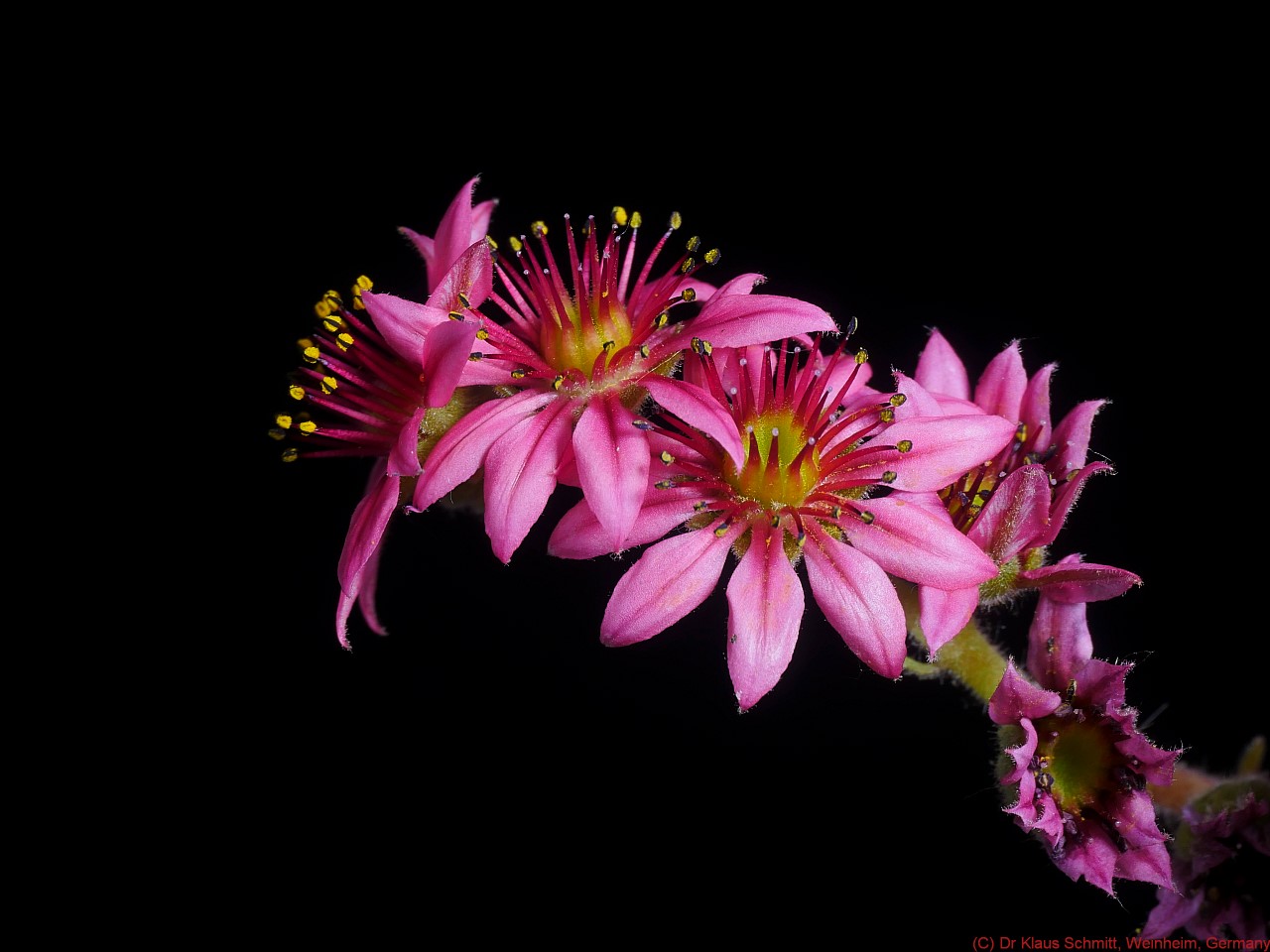
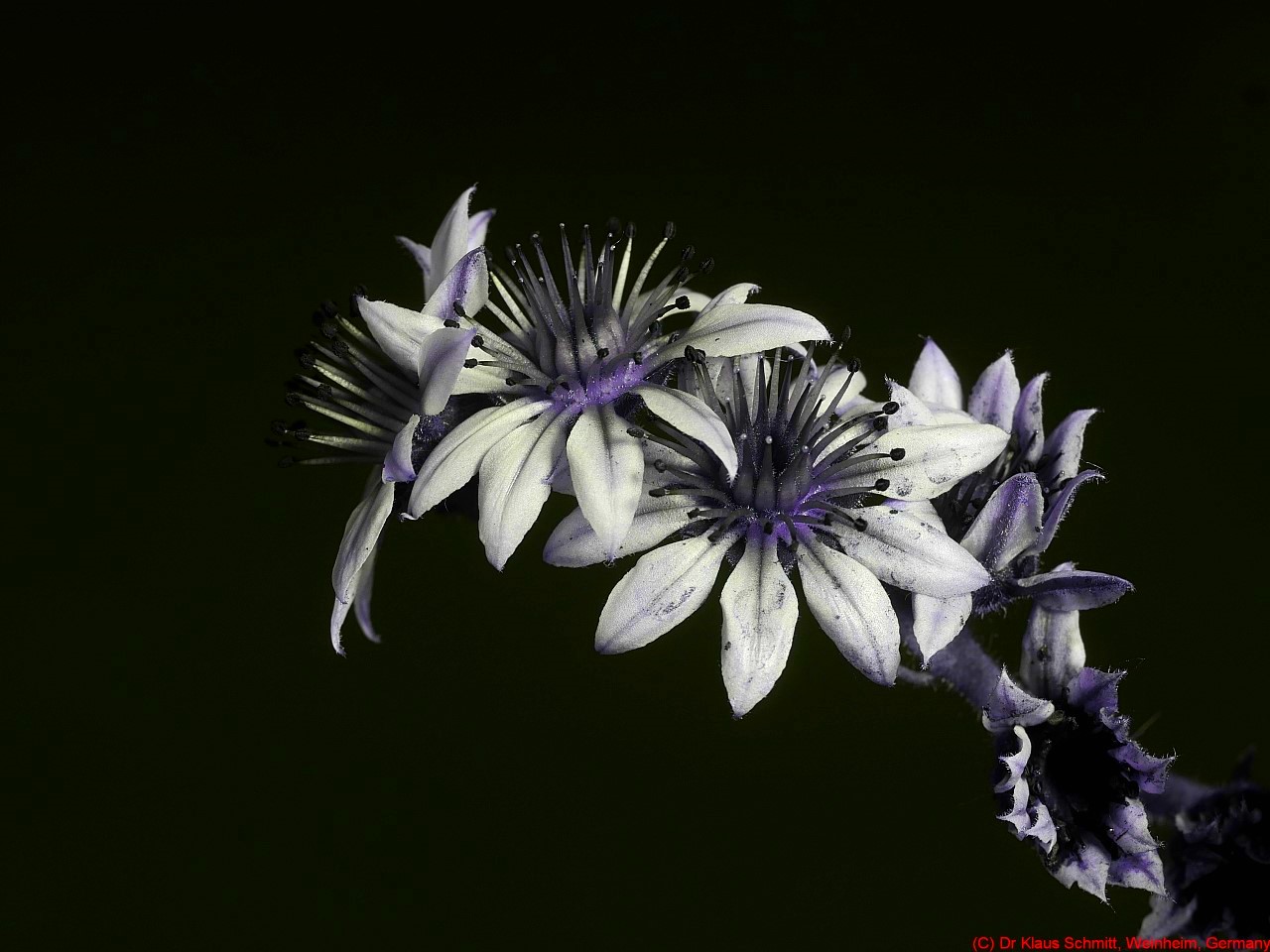
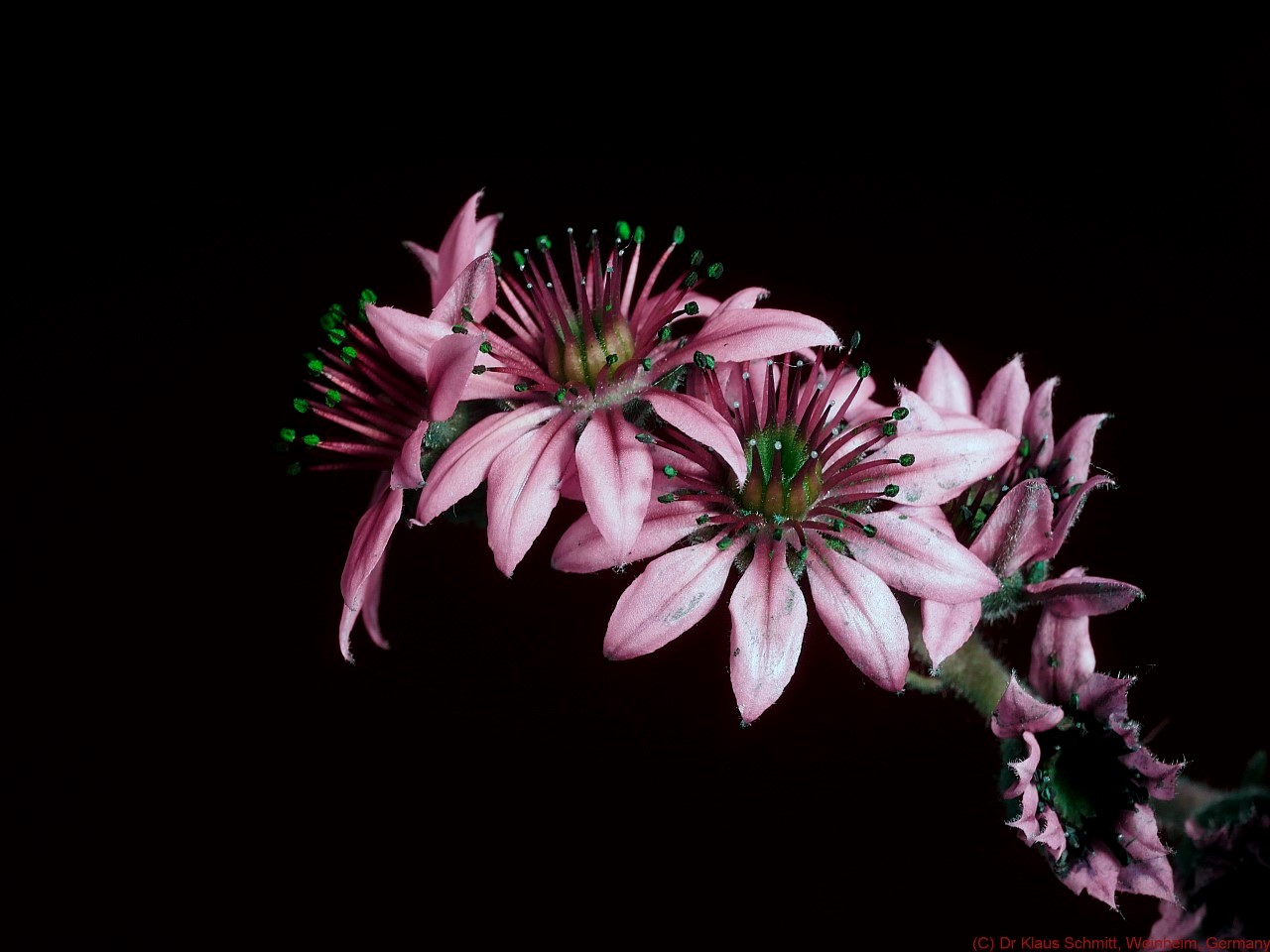
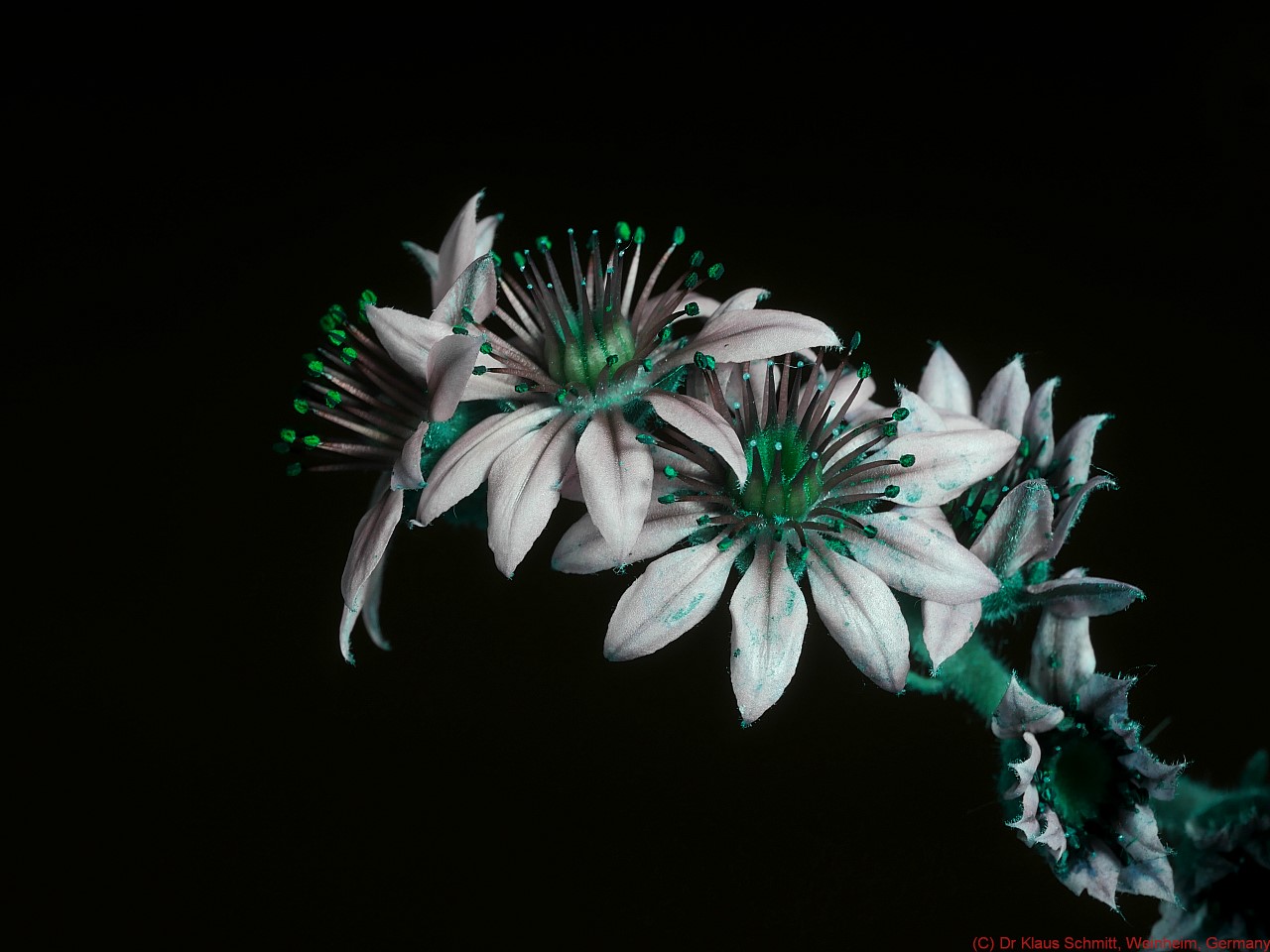
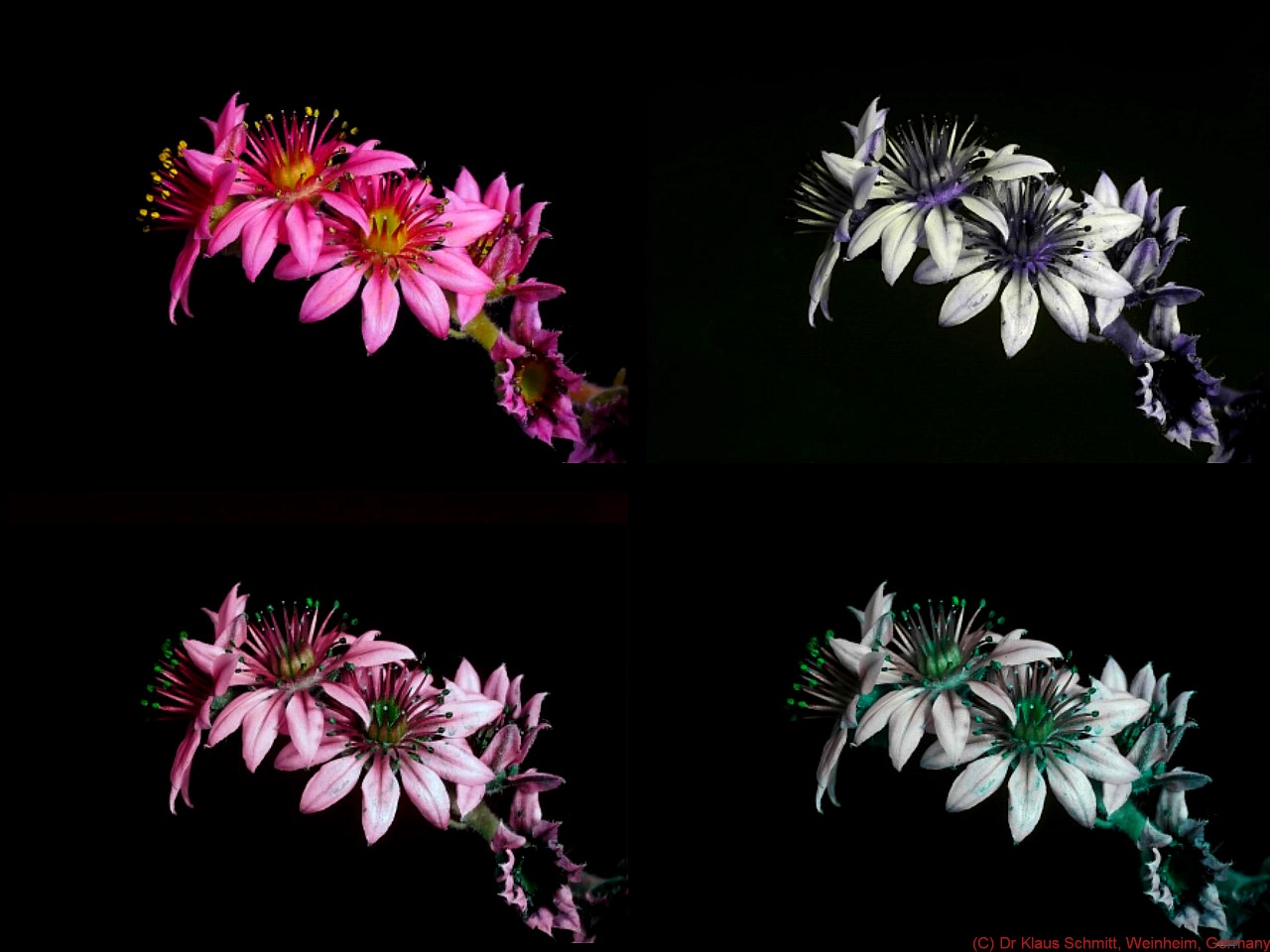
Cobweb house-leek flower - Sempervivum arachnoideum in reflected ultraviolet photography and simulated bee and butterfly vision III

Today in 2023 more shots of a Cobweb house-leek flower - Sempervivum arachnoideum in reflected ultraviolet photography and simulated bee and butterfly vision. All shots were done at f11 in reflected ultraviolet photography using my "work horse" UV filter, the Baader-U filter, as well as my XBV filters for simulated bee and butterfly vision. Lens was a UV-Nikkor 105mm quartz fluorite lens. Light source was a modified Xenon flash.

[click on image to see a larger one]

Human vision:
 

Reflected UV:
 

Simulated butterfly vision:
 

Simulated bee vision:
 

Quadriptych of human vision, UV, simulated butterfly and bee vision (left to right, top to bottom):
 

Sempervivum flowers have a distinct UV reflection, their petals have a dark center center line, the outside part is UV darker and all this gets nicely visible here, also in simulated bee and butterfly vision.

I have posted about this flower before HERE

More info on this very interesting field may be found on my site http://www.pbase.com/kds315/uv_photos

Tuesday, June 13, 2023

Cliff maids - Lewisia cotyledon in reflected ultraviolet photography, simulated bee and butterfly vision IX

Today in Spring 2023 more shots of an pink long blooming, perennial flower Cliff maids - Lewisia cotyledon in reflected ultraviolet photography and simulated bee and butterfly vision. All shots were done at f11 in reflected ultraviolet photography using my "work horse" UV filter, the Baader-U filter, as well as my XBV filters for simulated bee and butterfly vision. Lens was a UV-Nikkor 105mm quartz fluorite lens. Light source was sunlight.

[click on image to see a larger one]

Human vision:
 

Reflected UV:
 

Simulated butterfly vision:
 

Simulated bee vision:
 

Quadriptych of human vision, UV, simulated butterfly and bee vision (left to right, top to bottom):
 

Lewisia has a visible UV pattern, its petal tips are UV bright around 385nm, its center is UV dark, so this gets quite nicely visible, also in simulated butterfly and bee vision. 

But there is also a highly UV reflective area visible, formed by those shiny petals which is especially quite visible in UV! This has recently been discovered by Prof. (em) Klaus Lunau of the University of Duesseldorf, Germany and he has published about that in NATURE 2020 here: Lunau, K., Ren, ZX., Fan, XQ. et al. Nectar mimicry: a new phenomenon. Sci Rep 10, 7039 (2020). https://www.nature.com/articles/s41598-020-63997-3

I have written more about that flower HERE
 
Stay tuned, more will follow on that fascinating subject...

More info on this very interesting field may be found on my site http://www.pbase.com/kds315/uv_photos

Tuesday, February 7, 2023

My Work for NOVA PBS: Your Brain - Perception Deception

NOVA PBS will use some of my multispectral images in a forthcoming TV show, airing on May 18, 2023 3am in the US: Working title "Your Brain: Perception Deception”!

The following multispectral images of mine they used where shot in my studio and outside with my "work horse" UV-Nikkor f4.5/105mm quartz fluorite lens using the Baader UV/IR Cut filter and my proprietary XBV filters for simulated bee vision. Light source used was a Xenon flash modified for high UV output and sunlight outside.

[click on image to see a larger one]

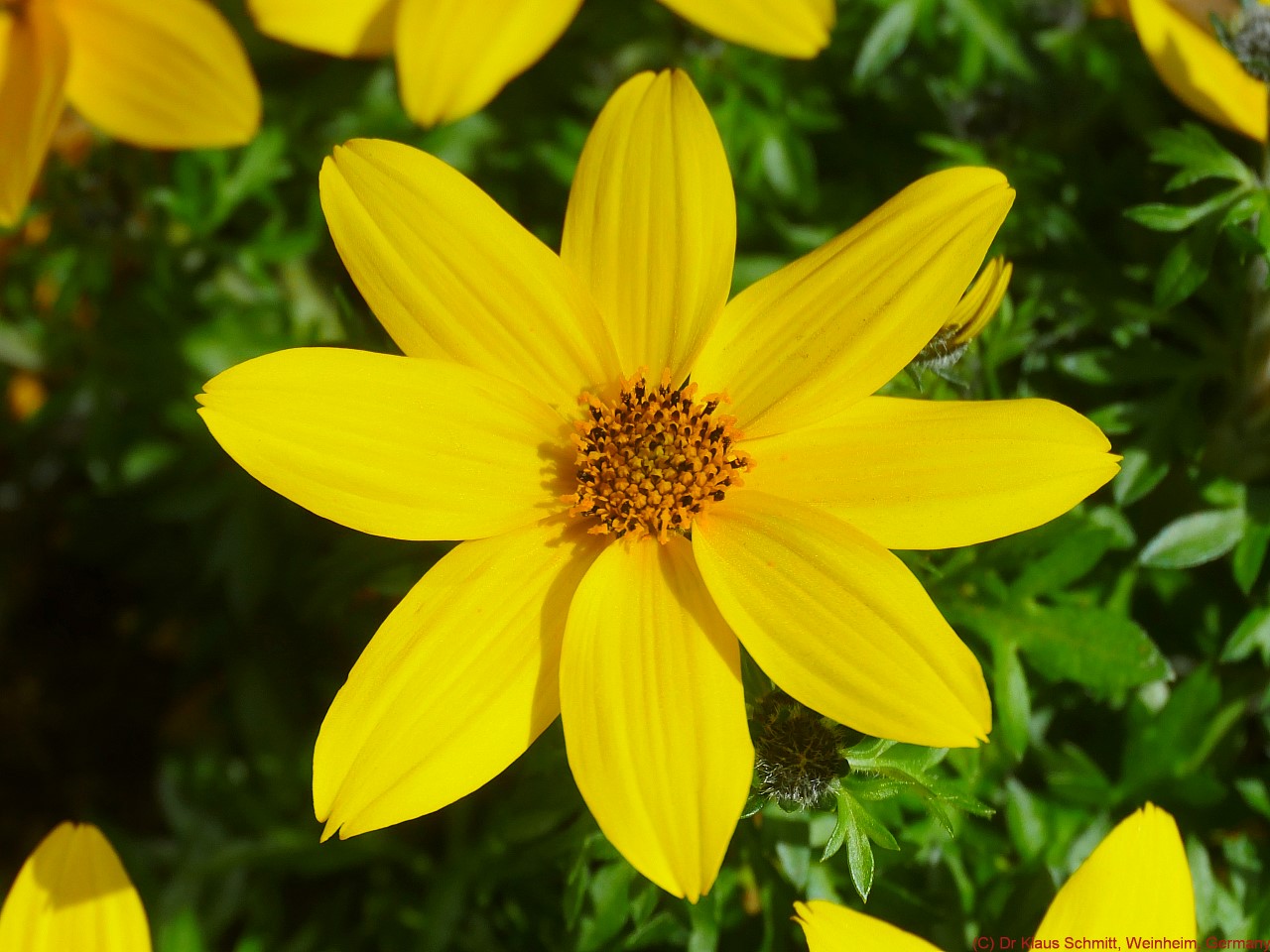
Bidens Human Vision (VIS):
 

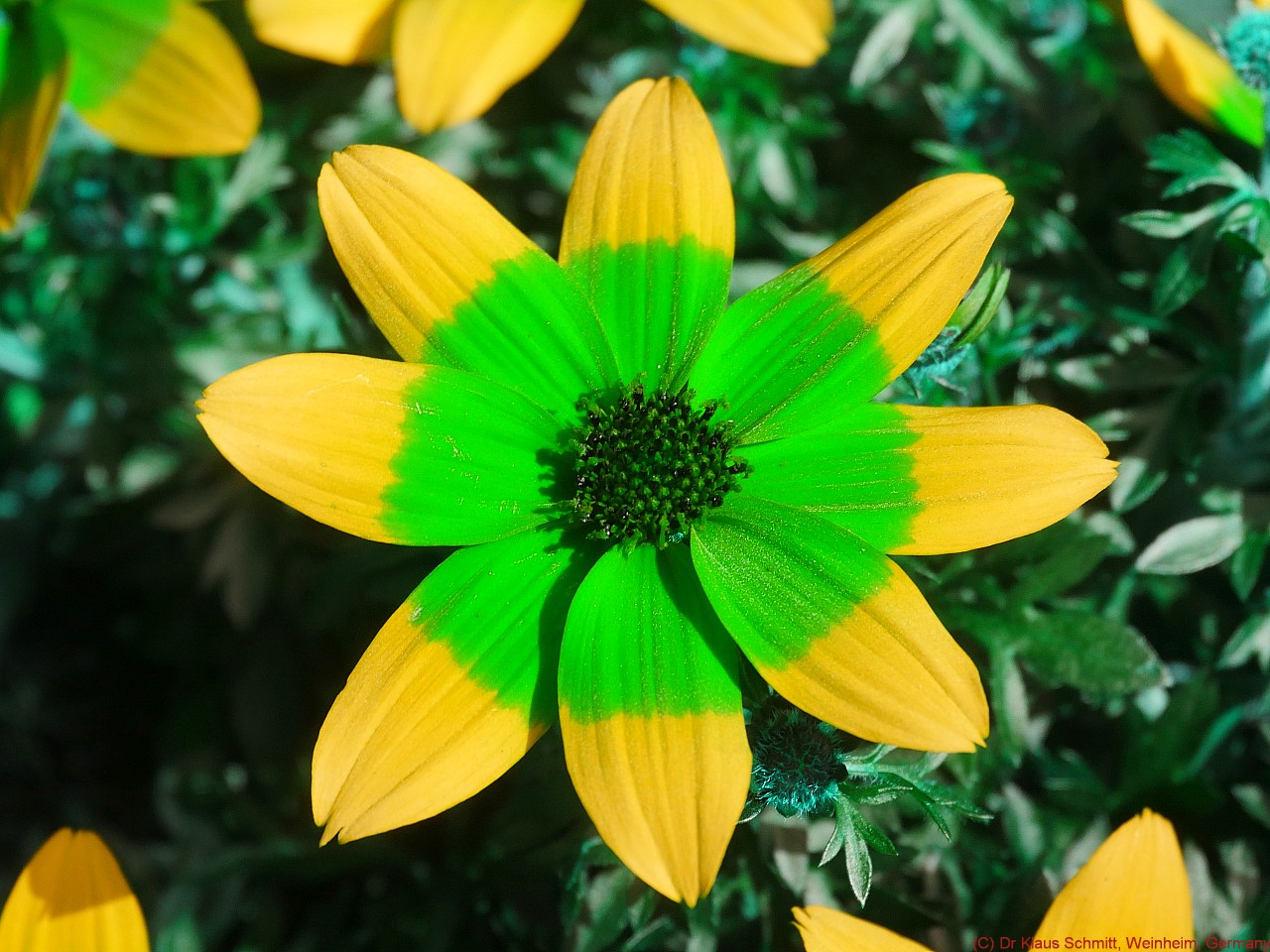
Bidens simulated Bee Vision:
 

Gazania Human Vision (VIS):
 

Gazania simulated Bee Vision:
 

Rudbeckia Human Vision (VIS):
 

Rudbeckia simulated Bee Vision:
 

All these flowers have very specific UV patterns; the outer part of their petals are UV reflective around 360nm, but their inner parts show a UV-dark area which gets nicely visible.

Stay tuned, more will follow on that fascinating subject...

More info on this very interesting field may be found on my site http://www.pbase.com/kds315/uv_photos

Wednesday, January 11, 2023

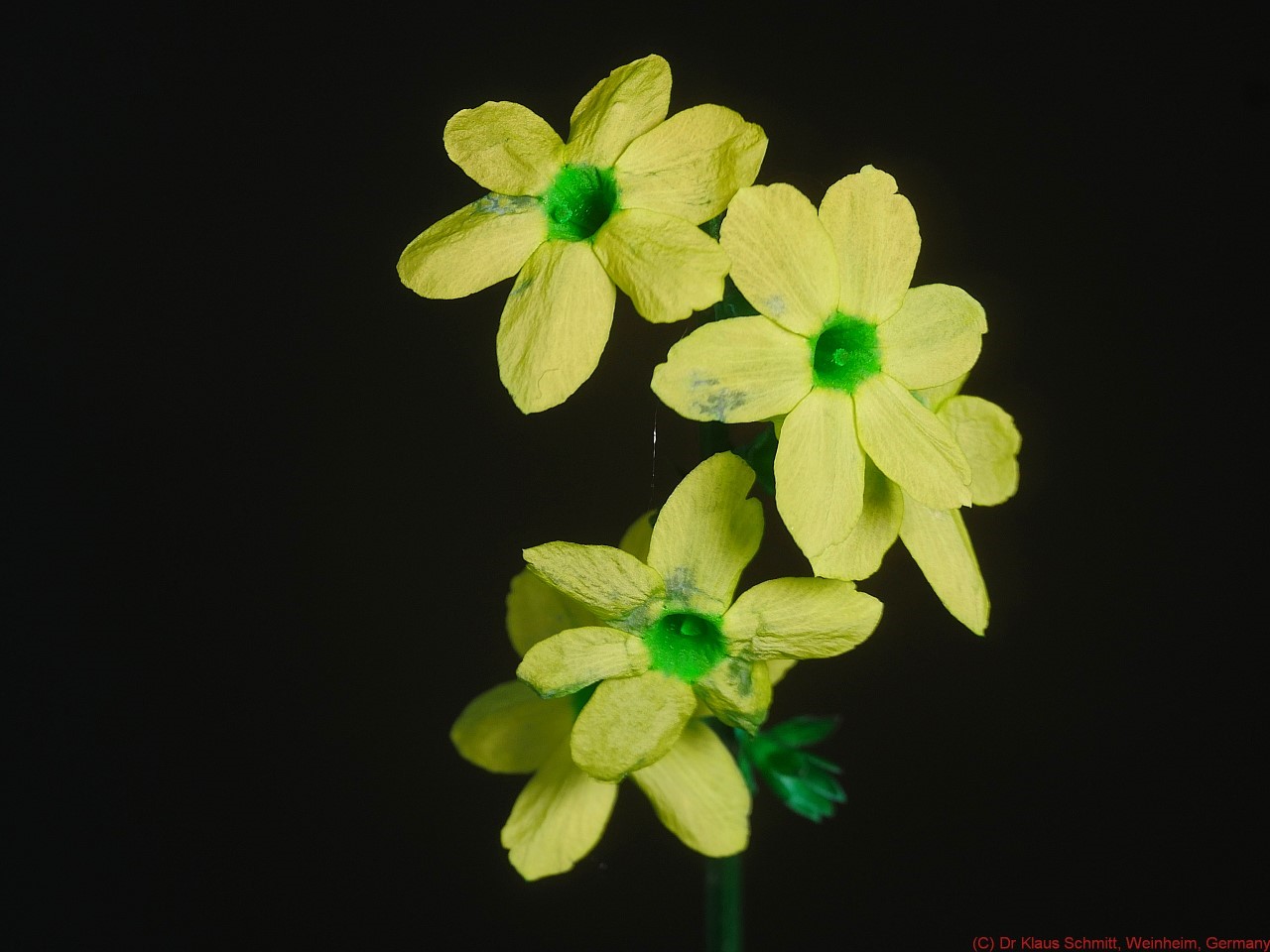
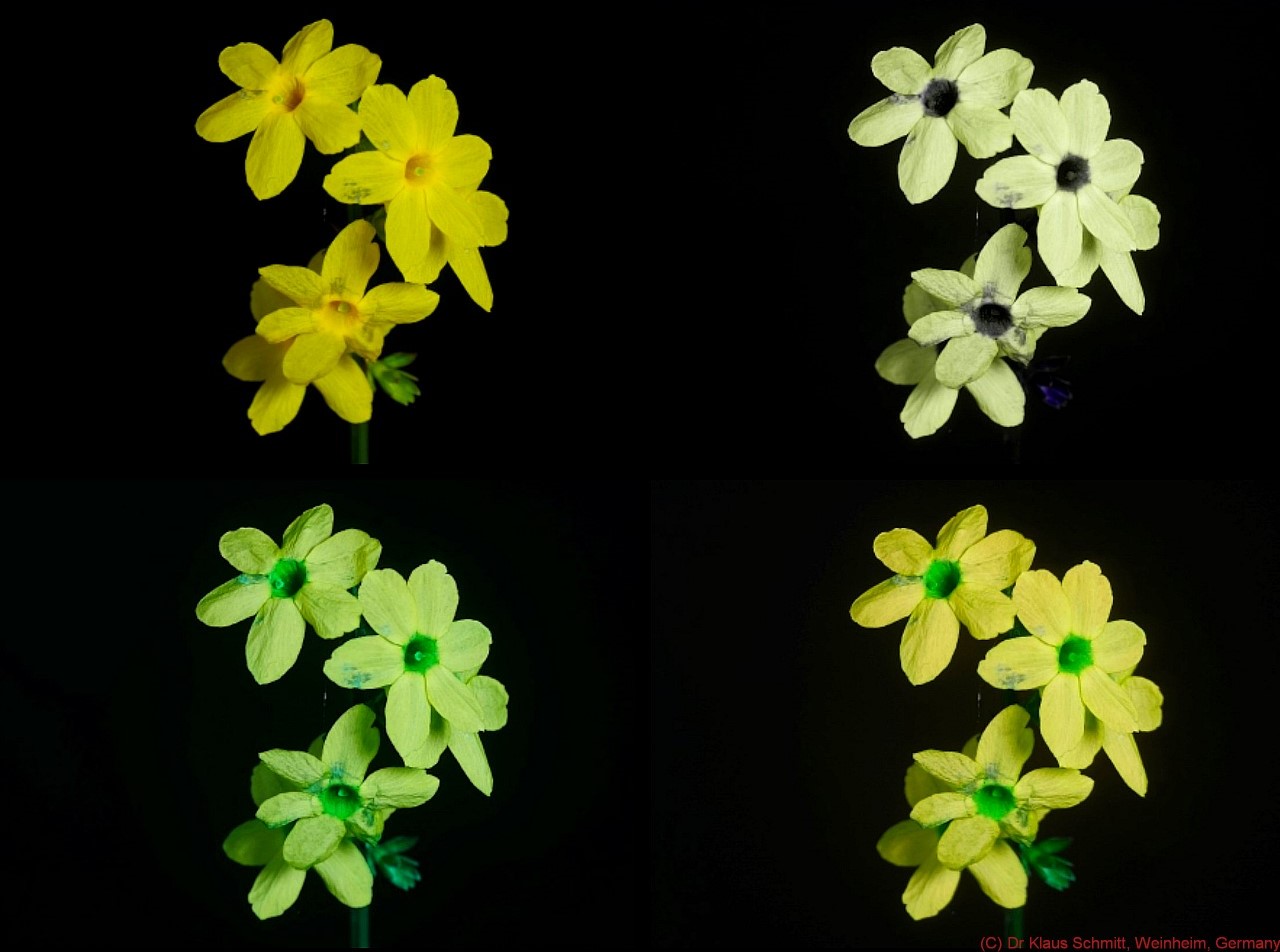
Winter Jasmine - Jasminum Nudiflorum in reflected ultraviolet photography and simulated bee and butterfly vision VI

Today in 2023 shots of a beautiful winter flower, a Winter Jasmine - Jasminum nudiflorum in reflected ultraviolet photography using my "work horse" UV filter, the Baader-U filter, as well as in simulated bee and butterfly vision using my propriatary XBV filters. All shots were done at f11. Lens was a UV-Nikkor 105mm quartz fluorite lens. Light source was a modified Xenon flash.

[click on image to see a larger one]

Human vision:
 

Reflected ultraviolet (UV):
 

Simulated bee vision:
 

Simulated butterfly vision:
 

Quadriptych of human vision, ultraviolet, simulated bee and butterfly vision (left to right, top to bottom):
 

This flower shows a very prominent and strong UV reflection around 365nm on its petals, but its center is UV-dark, and all this gets nicely visible, also in simulated bee and butterfly vision.
 
Stay tuned, more will follow on that fascinating subject...


I have previously written about this flower HERE

More info on this very interesting field may be found on my site http://www.pbase.com/kds315/uv_photos

Friday, July 22, 2022

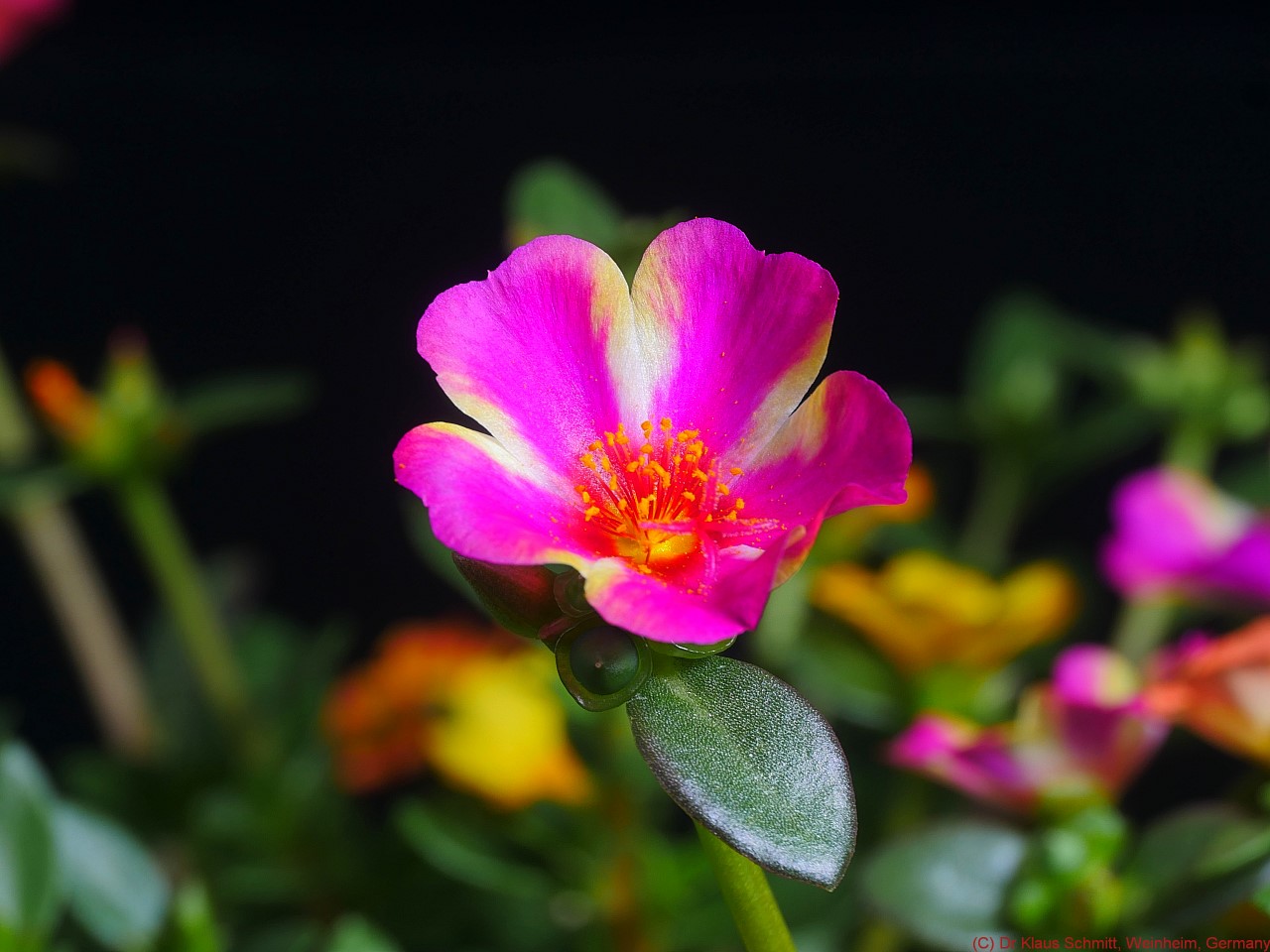
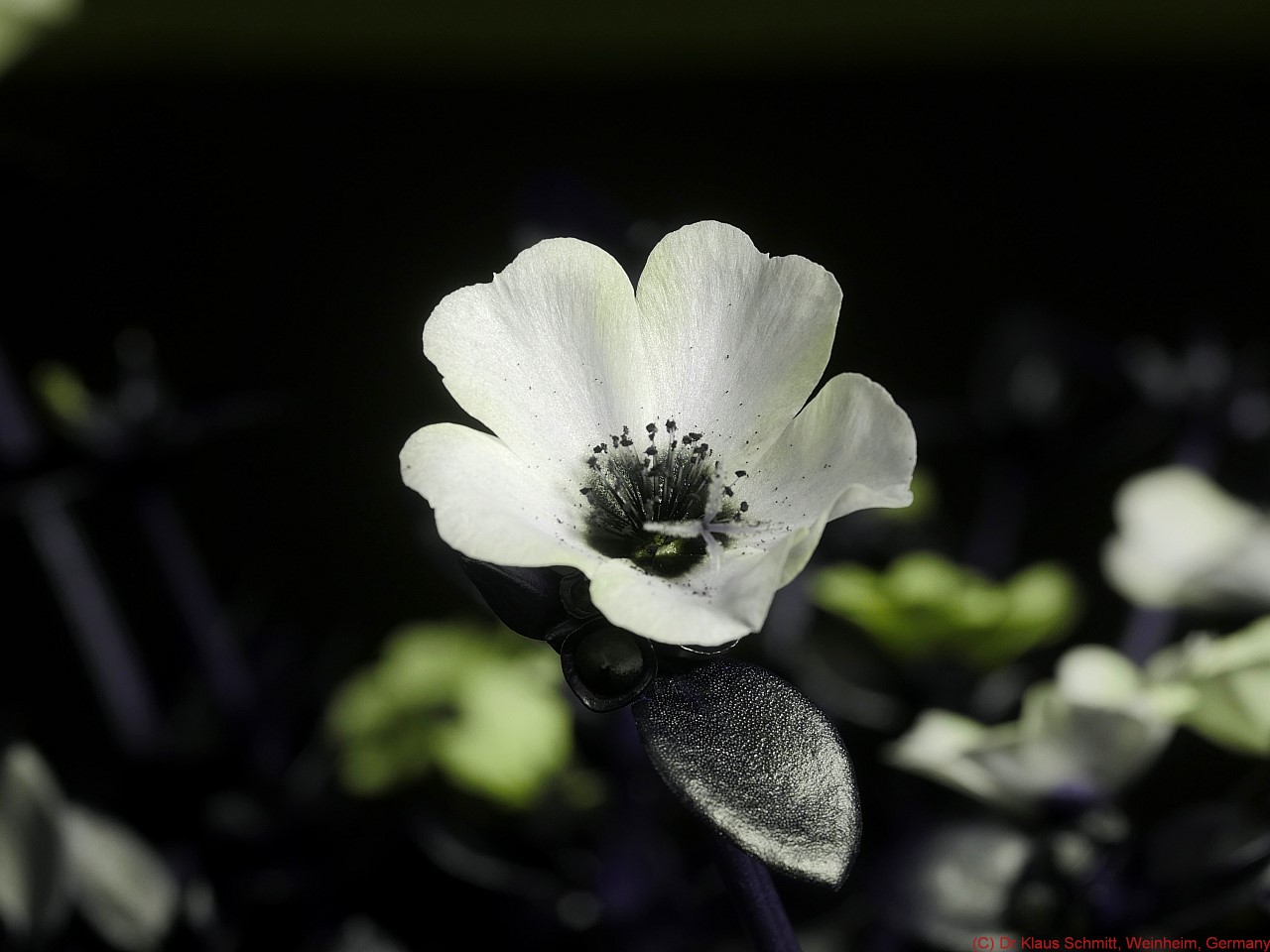
Common Purslane - Portulaca oleracea in reflected ultraviolet photography and simulated bee and butterfly vision

Today in 2022 shots of a beautiful flower, now offered as an ornamental + edible plant, a Common Purslane - Portulaca oleracea in reflected ultraviolet photography using my "work horse" UV filter, the Baader-U filter, as well as in simulated bee and butterfly vision using my XBV filters. All shots were done at f11. Lens was a UV-Nikkor 105mm quartz fluorite lens. Light source was a modified Xenon flash.
[click on image to see a larger one]

Human vision:
 

Reflected ultraviolet (UV):
 

Simulated butterfly vision:
 

Simulated bee vision:
 

Quadriptych of human vision, ultraviolet, simulated bee and butterfly vision (left to right, top to bottom):
 

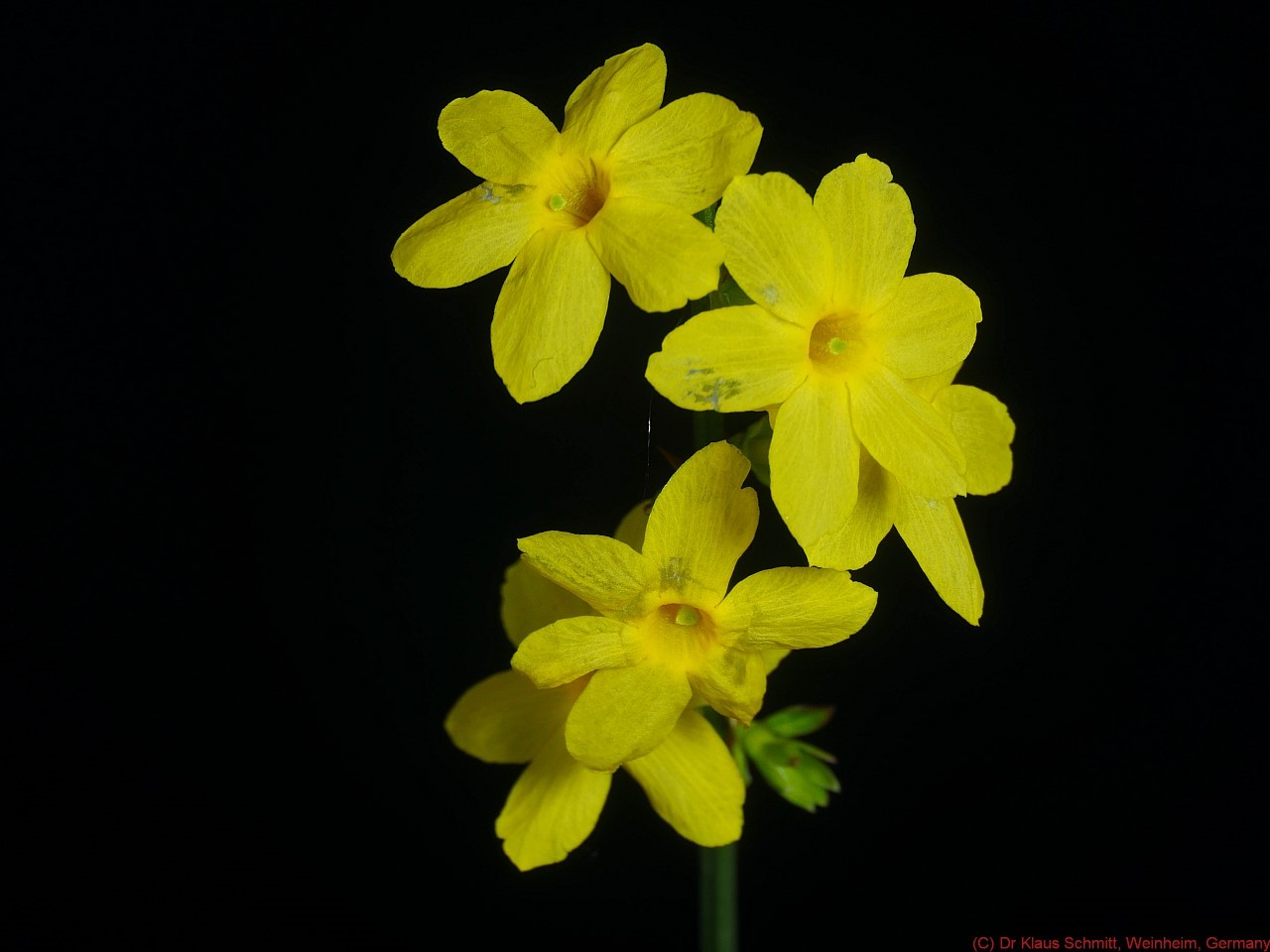
This flower shows a very prominent and strong UV reflection around 365nm, and all this gets nicely visible, also in simulated bee and butterfly vision.
 
Stay tuned, more will follow on that fascinating subject...

More info on this very interesting field may be found on my site http://www.pbase.com/kds315/uv_photos