Showing posts with label UG11. Show all posts

Monday, November 5, 2012

Bidens ferulifolia: Colorful reflected UV ultraviolet photography III

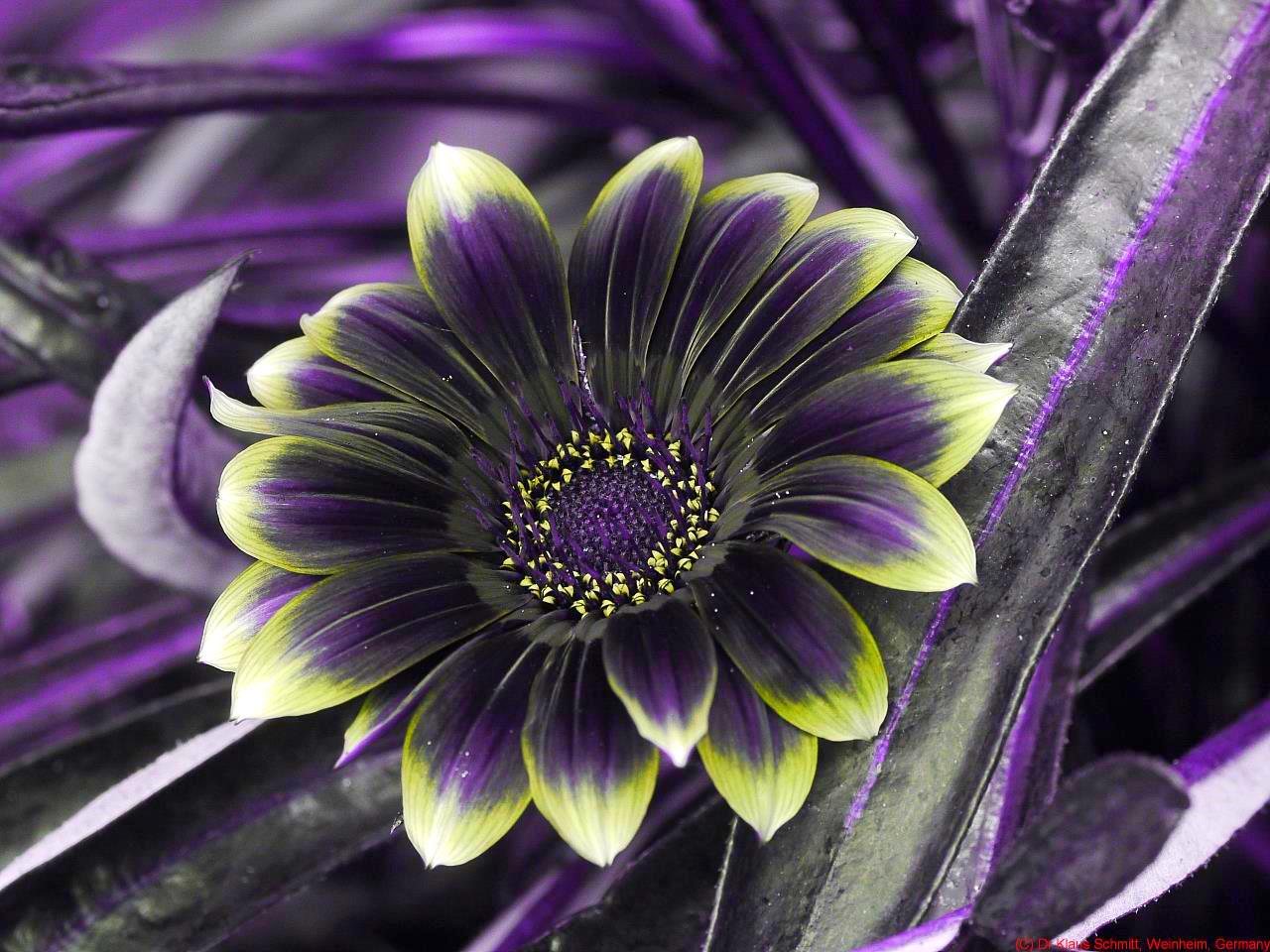
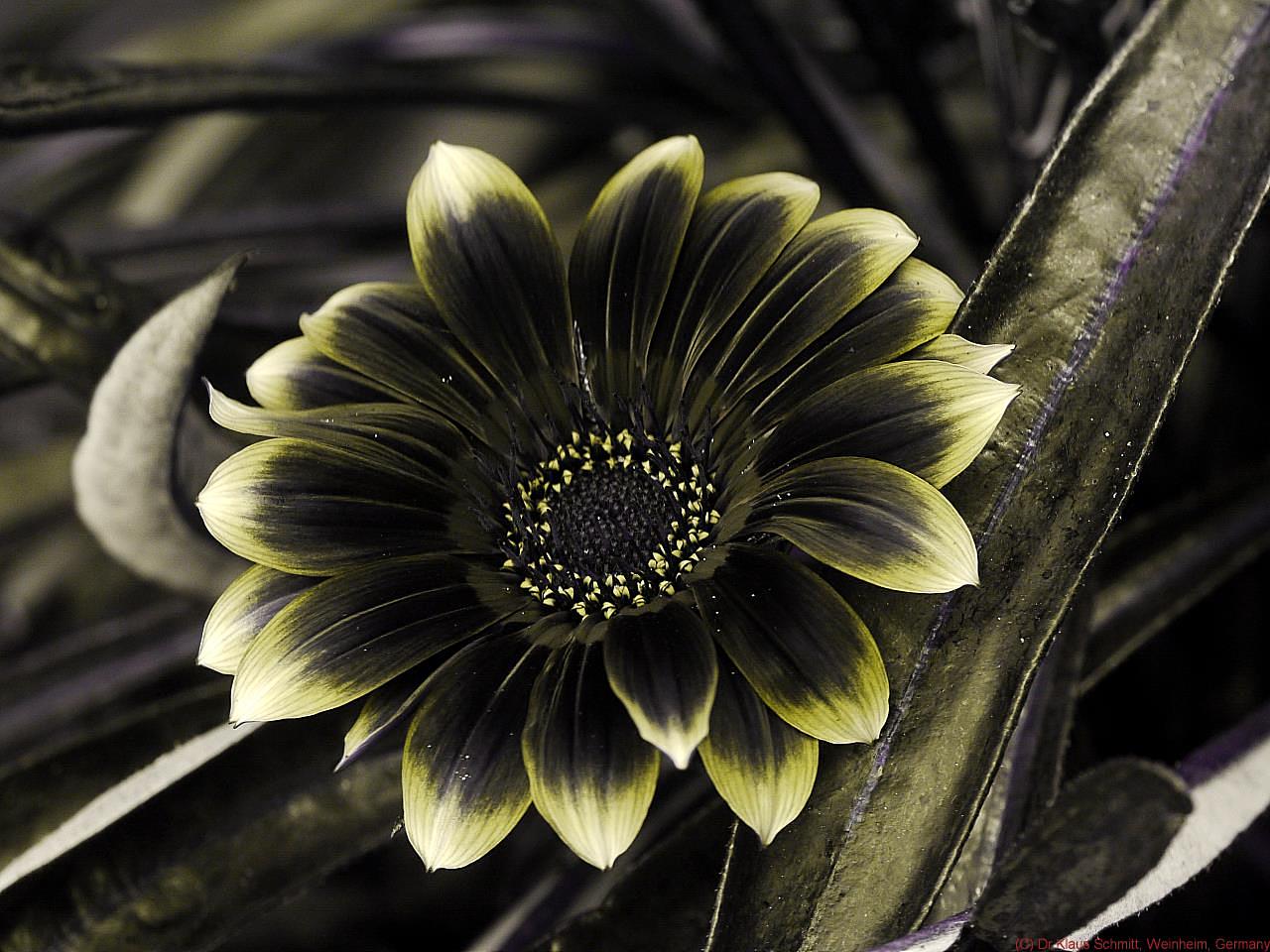
Today, as has been previously shown,  some more recent results with a bit more colorful images using various UV lights and filtering, when shooting in reflected UV light. I was using my "work horse" UV filter, the Baader-U filter and my CERCO quartz fluorite lens. Light source was an UV enhanced Xenon flash, except otherwise mentioned. Target was one of my last Bidens ferulifolia flowers, as the first snow has already been here...

[click on image to see a larger one]

visible light image:
 

"standard" UV image using Baader-U filter:
 

pure 365nm UV LED:
 

UG11 + IR blocking filter:
 

XBV2 filter:
 

XBV4 filter:
 

XNUV (highspeed UV) filter:
 

IR filter >750nm:
 

Now this is "artsy" playing with light, but it still documents very well the prominent UV pattern this flower has. HERE is the same flower in 3D Stereo representation.


Stay tuned, more will follow on that fascinating subject...

More info on this very interesting field may be found on my site http://www.pbase.com/kds315/uv_photos

Friday, September 28, 2012

Lichen: human vision vs simulated bee vison; reflected UV ultraviolet photography II

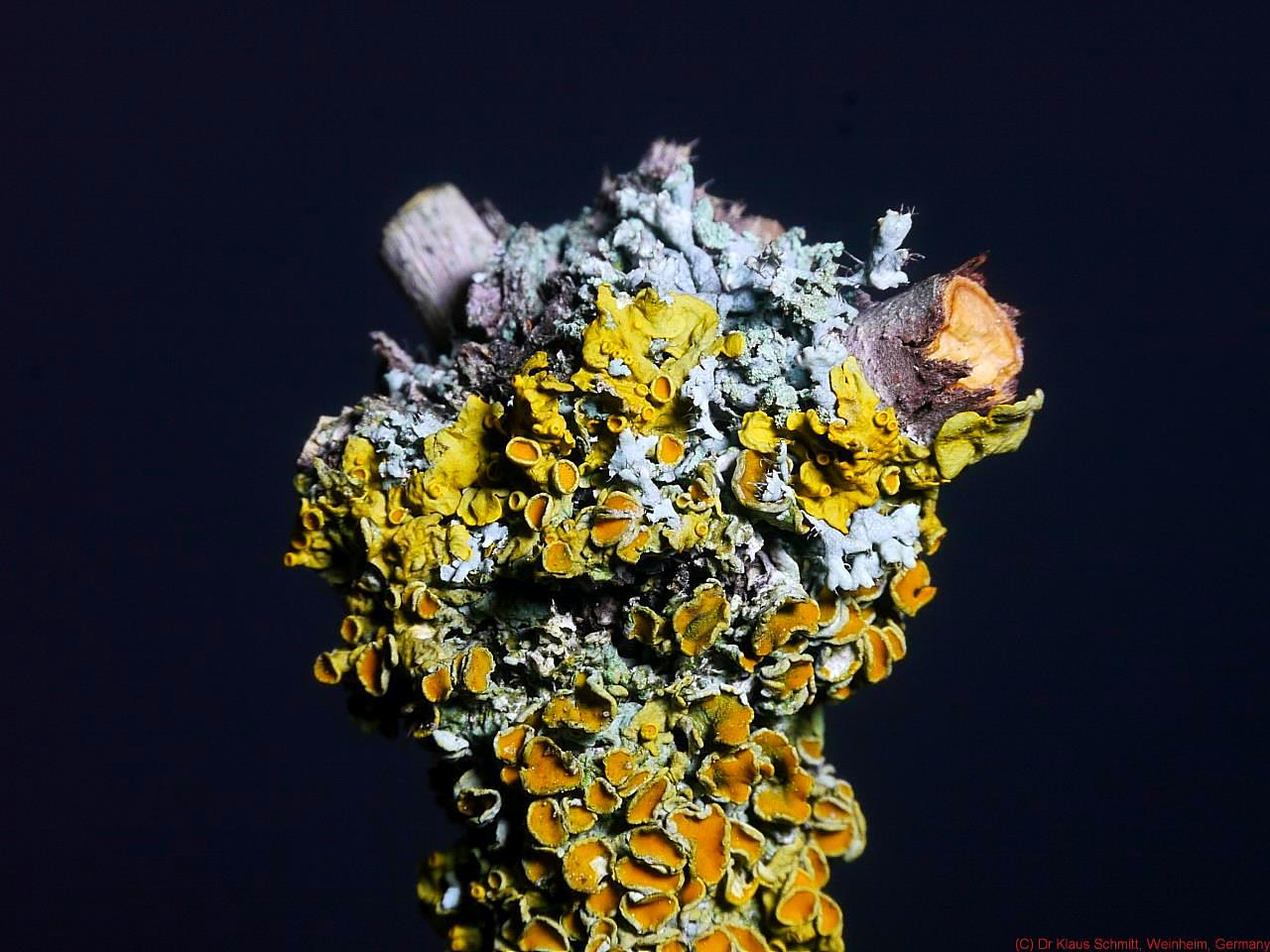
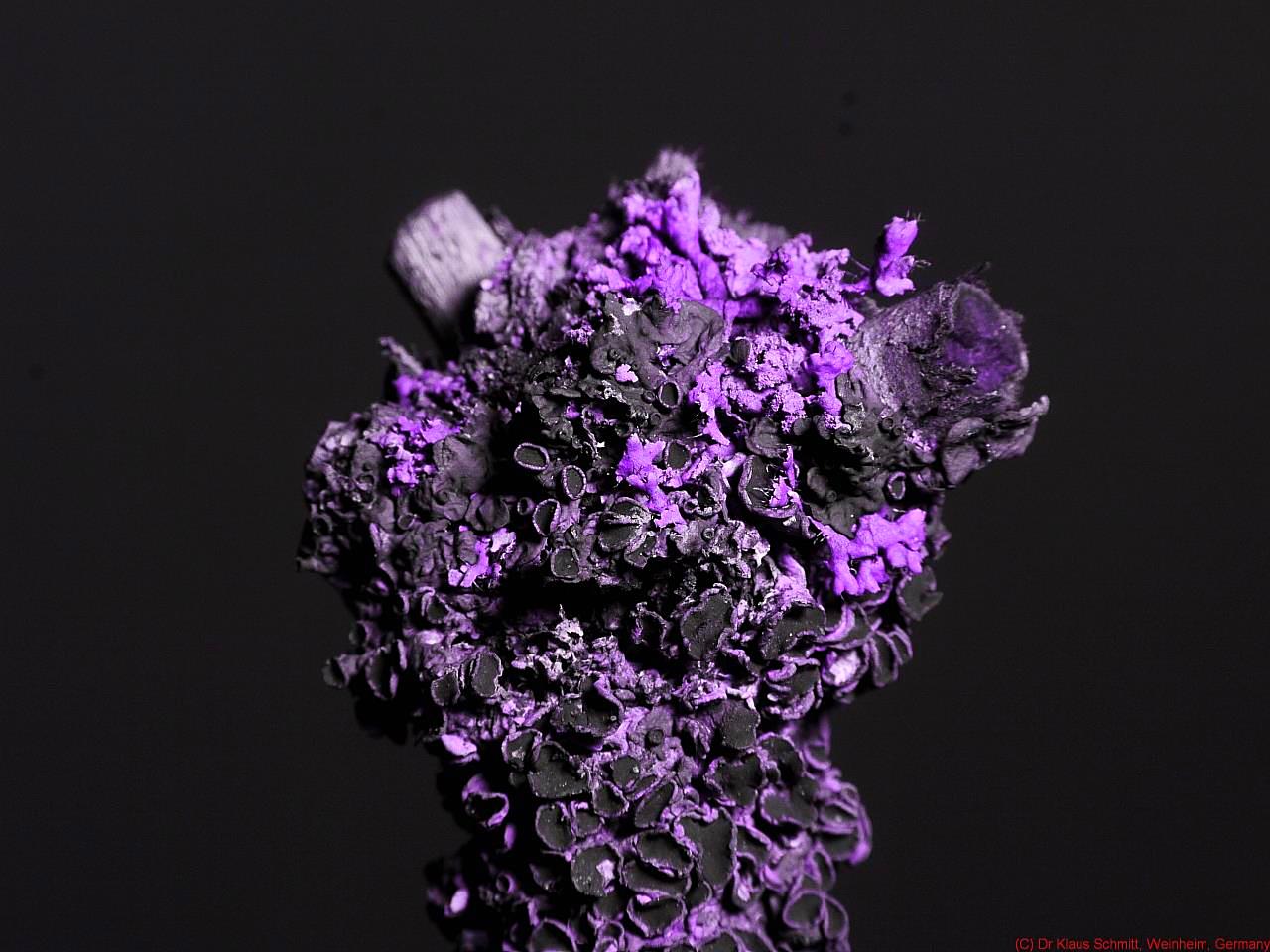
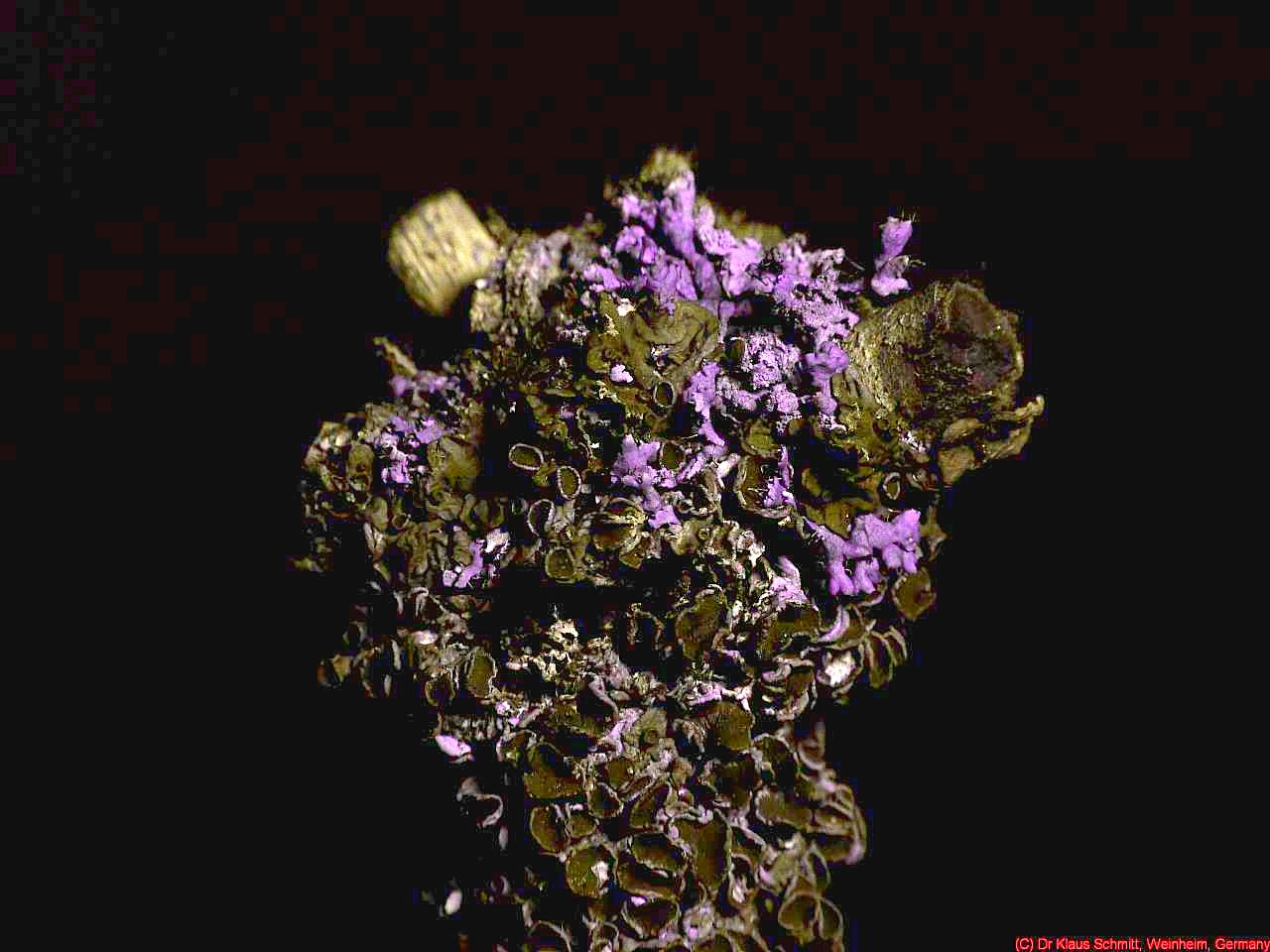
Today again about that same Lichen (most likely Xanthoria parietina and Physcia adscendens grown into each other), that I found growing on a broken branch. Shots in UV were done using an older approx 85mm quartz/fluorite lens, the UV Baader-U and XNUV filter, the bee vision simulating XB2 and XB4 filter as well as a UG11 + S8612 (cladded, 2mm) filter stack. My modified Xenon flash was used as a light source.

[click on image to see a larger one]

Human vision image using UV/IR Cut filter:


Bee vision image using XBV3 filter:


Bee vision image using XBV2 filter:


UV image using XNUV filter:


UV image using Baader-U filter:


 UV image using UG11 + S8612 (cladded, 2mm) filter stack:


Quite interesting to note that also this old quartz / fluorite lens nicely reproduces, how Lichen reflects UV light in these differently colored sub-UV bands I have written earlier about. Really nice to have that target for UV photography when flowers will be gone...

HERE it is shot using my CERCO 94mm quartz/fluorite lens and HERE in UV induced visible fluorescence..

Stay tuned, more will follow on that fascinating subject...

More info on this very interesting field may be found on my site http://www.pbase.com/kds315/uv_photos

Monday, September 10, 2012

Filter leakage in reflected UV ultraviolet photography - DIY filter vs Baader-U II

Today again about leakage in reflected UV photography and how to deal with it. I have posted about that before here.

I wanted to show here some examples using SCHOTT UG11 in comparison with using IR suppressing SCHOTT S8612 filter glass of different thickness and to show how such IR leakage can be efficiently cured - at least for most normal shooting conditions. In early morning or late evening sunlight, where IR is predominant or when shooting against the sun or when reflective elements are present in an image, that won't work then, sometimes not even when using the otherwise excellent Baader-U filter.

[click on image to see a larger one]

So here an example for strong IR leakage using only 2.5mm SCHOTT UG11:

So how does that picture should look like? Here what the Baader-U filtered result looks like:


And here the result of my shorter wave, IR leak proof Jupiter-U filter:


It is pretty obvious, that IR leakeage virtually destroys the importatnt aspect of that image, as well as it softens the image, i.e. a strong lack of contrast is caused.
So let's see if stacking 1mm of SCHOTT S8612 filter onto the UG11 filter solves the problem:


Nice, but was it enough? Let's see what 2mm of SCHOTT S8612 will bring us:


Much better now, as the contrast is strongly enhanced, the UV pattern on petals is quite nicely present. So what I can recommend is stacking 2mm of SCHOTT S8612 filter glass onto SCHOTT UG1, UG11 UV transmissive filter glass (also works with HOYA U-340), but unfortunately if total cost are taken into account, this is not really far from getting a Baader-U filter...

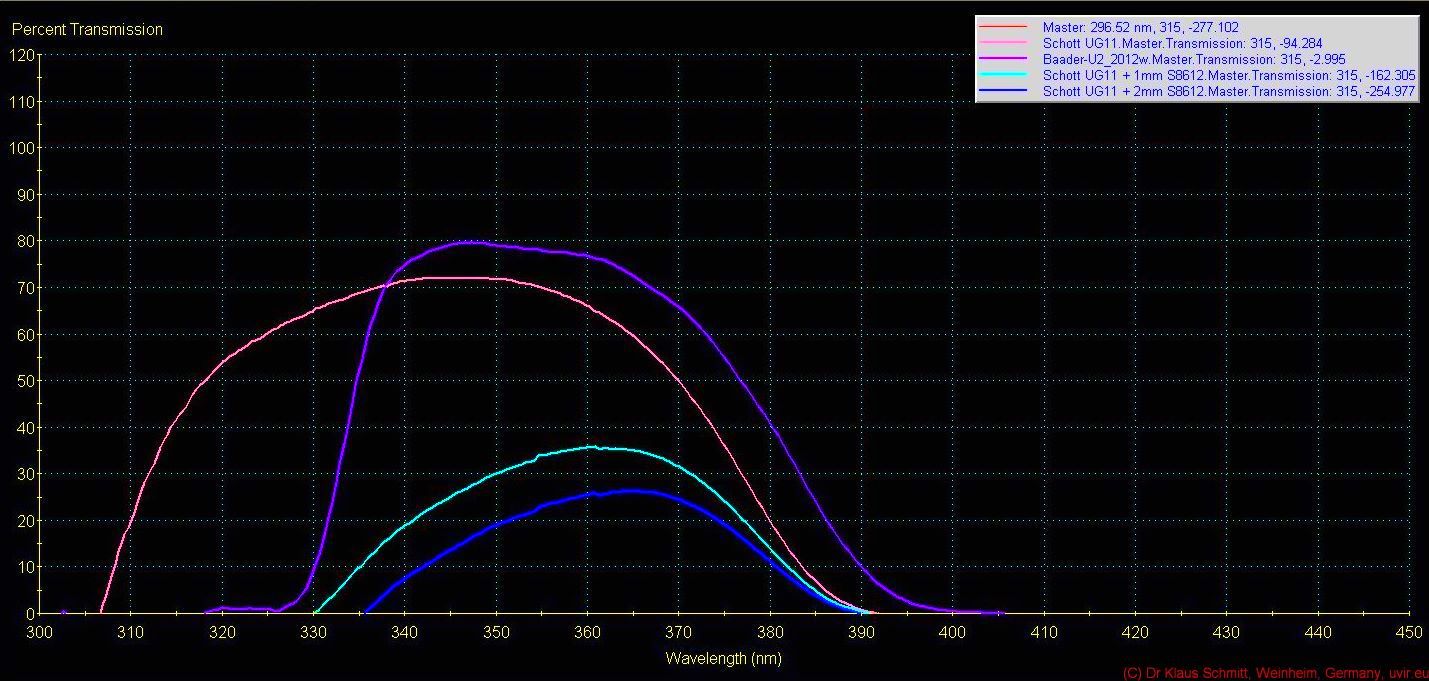
And there is another BUT, the lower overall transmission caused by stacking such filters. Have a look at my measurements here, which clearly shows, that controlling leakage using ionic colored filter glass comes at a considerable transmission loss:


In that case, one of about 1.7 stops mathematically; in real use due to the sensor sensitivity curve, it is less than that, but still a significant one. And I haven't even talked about ghost images when stacking uncoated filters or the reflectance loss of about 8% per filter glass. So company Baader obviously made her homework very well, if you compare the results of the graph above (Baader-U is denoted by the violet line, the SCHOTT UG11 stacked with 2mm SCHOTT S8612 is denoted by the blue line), showing the very high reached UV transmission, rather flat broadband. It does not reach very deep into UV, but most UV sensitive cameras will anyway not be able to reach that deep and/or when using normal glass based lenses, where even the best of those barely reach beyond 330nm.

CAVEAT: on 2nd thought there seems to be something wrong with these S8612 filters I got from a US filter making company, as the resulting UV transmission is much lower than expected when compared to results of the SCHOTT filter calculation software. In principle only the UV transmission seems to be affected, not the leakage suppressing part, so the made statements are all valid, except the possible 1.7 stop loss. I will update about that here, as soon as I have found out about it. Btw. SCHOTT BG40 may be used as a replacement for S8612, but needs about double the thickness.
UPDATE as of 09-2012: As it turns out, these S8612 filters were cladded on both sides using some optical glass (B270) to prevent them from graying (an oxidation process this S8612 filter glass type shows) and this cladding has been attached to the S8612 using some UV cured adhesive. Most likely that B270 glass used and/or the used adhesive absorb UV more than expected, hence leading to the results measured above. So if you would like to use S8612 filter glass, make sure you get uncladded filters (and have to accept the fact that it may over the years need repolishing).


There is a newer part III about IR leakage in UV photography here.

Stay tuned, more will follow on that fascinating subject...

More info on this very interesting field may be found on my site http://www.pbase.com/kds315/uv_photos

Thursday, August 2, 2012

Filter leakage in reflected UV ultraviolet photography - DIY filter vs Baader-U

Today about leakage in reflected UV photography and how to detect it. When I started many years ago, non-UV leakage effects in supposedly purely reflected UV photography was a big issue before the now "standard" UV transmission filter, the Baader-U filter was brought to the market by the company Baader-Planaterium, Germany based on intensive research of astronomer Mr Thomas Baader, who combined Schott filter glass with a multilayered, dichroic overcoating to suppress IR leakage. The method before was using for instance filter stacks consisting of a IR leaking UV filter, SCHOTT UG1 or UG11, plus IR suppressing SCHOTT S8612, BG38 or BG40 filter glass. The downside was, that the suppression was far from being optimal and under certain shooting conditions one could get massive IR leakage. It takes a bit of experience to see that though and even today one can see a lot of such supposedly "UV images", but basically it is a mix of UV and near IR (NIR), if not often nearly purely NIR.

So how does a contaminated UV image look like? A first indication is that non UV reflecting parts (of a flower), that should look very dark, appeared lightened up. A good example to test is Rudbeckia (R. hirta was used here), as it has nearly completely UV absorbing petals in its lower petal parts towards the center, wheras the petal tips are very UV bright. My spectrometric research has confirmed that many times for different Rudbeckia species. Here an example for that:
[click on image to see a larger one]


Its gets pretty obvious, that the petal mid and base have very low reflection (pink line), wheras the petal tip (lilac line) has quite a UV reflection peak around 365nm. Now have a look at the right side of the graph, the visible (VIS) and near infrared (NIR) part of that spectra, from approx. 520nm onwards the reflection rapidly gets quite high, approaching some 50-60%). So any filter, that does not perfectly block these non-UV parts will show leakage i.e. flower parts that should be (very) dark will appear lightened up. Here an example for that:


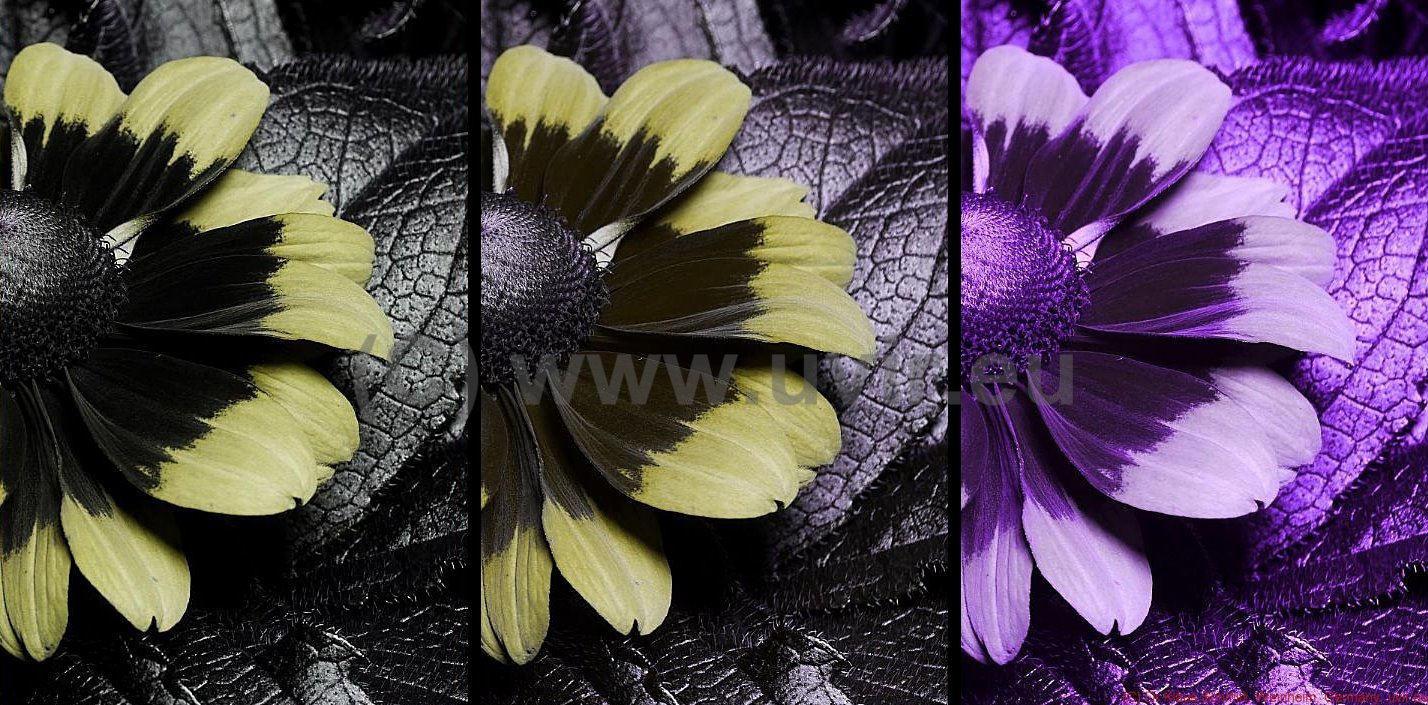
Left shows the Baader-U filter used, middle and right show the results of using more (right) or less (middle) leaking UV filter stacks, here based on SCHOTT UG11 filter glass and a S8612 blocking filter glass (two different thicknesses were used, 2mm for the middle and 1mm for the right image). The flower petal parts that should be very dark, appear in a brownish red. [btw. stacking the two 1mm + 2mm S8612 filters onto the UG11 filter solves the problem, another proof for the leakage]

Remark: the actual color is irrelevant, as based on the whitebalance used, it could be basically any color. Important only is the intensity of these petal parts, which should be quite low, but isn't. Here another example for that, again Baader-U was used on the left image, middle and right are filter stacks (it is the same image, just differently white balanced).


Here another example, this time a Hemerocallis (Day Lily), left Baader-U, right a leaking filter stack was used:


All these images were shot using my UV camera and a flat, beyond 300nm transmitting CERCO f4.1/94mm quartz fluorite lens.

These filter stacks work basically the following way, explained using SCHOTT's filter calculation program for a similar filter stack. The obvious weakness for that case is around 700nm:

[courtesy and (c) SCHOTT]

So, be aware of these effects when assembling your own filter, or buying commercially available filters, as you may end up with useless "UV images", but they may look interesting nevertheless ;)

A hint and a simple explanation: a classic transmission chart of a filter in 0-100% linear scale does not show possible leakage issues. The exposure difference between UV photography and VIS/NIR photography is in the range of 8-12 exposure stops more for UV, so if a filter transmits in the VIS or NIR region more than OD3 (1E-03 or 0.001) it will most likely leak, since 10 stops equal a factor of 1024 i.e. 2exp(10), so 1/1024 = 0.001 that means a normal exposed UV image at -10EV and one through a filter that transmits 0.001 will be about equally exposed. But 0.1% in a linear 0-100% chart is pretty impossible to see, or can you see it here?

[courtesy and (c) SCHOTT]

It is the same example as shown above, just in the usually presented linear graph, so be aware.

There is a continuation of this article HERE.

Stay tuned, more will follow on that fascinating subject...

More info on this very interesting field may be found on my site http://www.pbase.com/kds315/uv_photos