Showing posts with label UV Polarizer. Show all posts

Monday, April 27, 2020

Reflected UV photography in polarized light X - Gazania

Today more about UV polarizer experiments, using a special UV capable circular polarizer in front of my multispectral camera and UV-Nikkor 105mm lens, for recording polarized reflected UV images. Flower here was a long blooming, perennial flower Gazania . UV filter used was my classic Baader-U filter; sun was used as light source.

[click on image gets you a larger image]

Here photographic results I got (took multiple images while rotating the filter), presented as animated gif....

Gazania flower through a rotating circular polarizer in A-mode i.e. exposure compensated...

Reflected UV light - Sunlight:


This flower shows some interesting changes in the polarization angle especially on its anters.  Bees have sensors on the outer ring of their compound eyes which are able to detect polarized light, so that might give this flower an advantage.

Reflected UV photography in polarized light shows quite some usefulness, especially if there are (glossy) surfaces which change the polarization angle of light and which the polarizer filter makes visible. Downside is that one needs about 2 stops more exposure, due to the low approx. 25% transmission.

Some insects are able to see the polarization angle (and btw. we humans can also, but needs some traing: Haidinger's Brush) especially honeybees which navigate using the polarization angle of ultraviolet (UV) light.

I have written more about using UV polarizers HERE

I have written more about that Gazania flower HERE

Stay tuned, more will follow on that fascinating subject...

More info on this very interesting field may be found on my site http://www.pbase.com/kds315/uv_photos

Saturday, April 25, 2020

Reflected UV photography in polarized light IX - the Midas effect

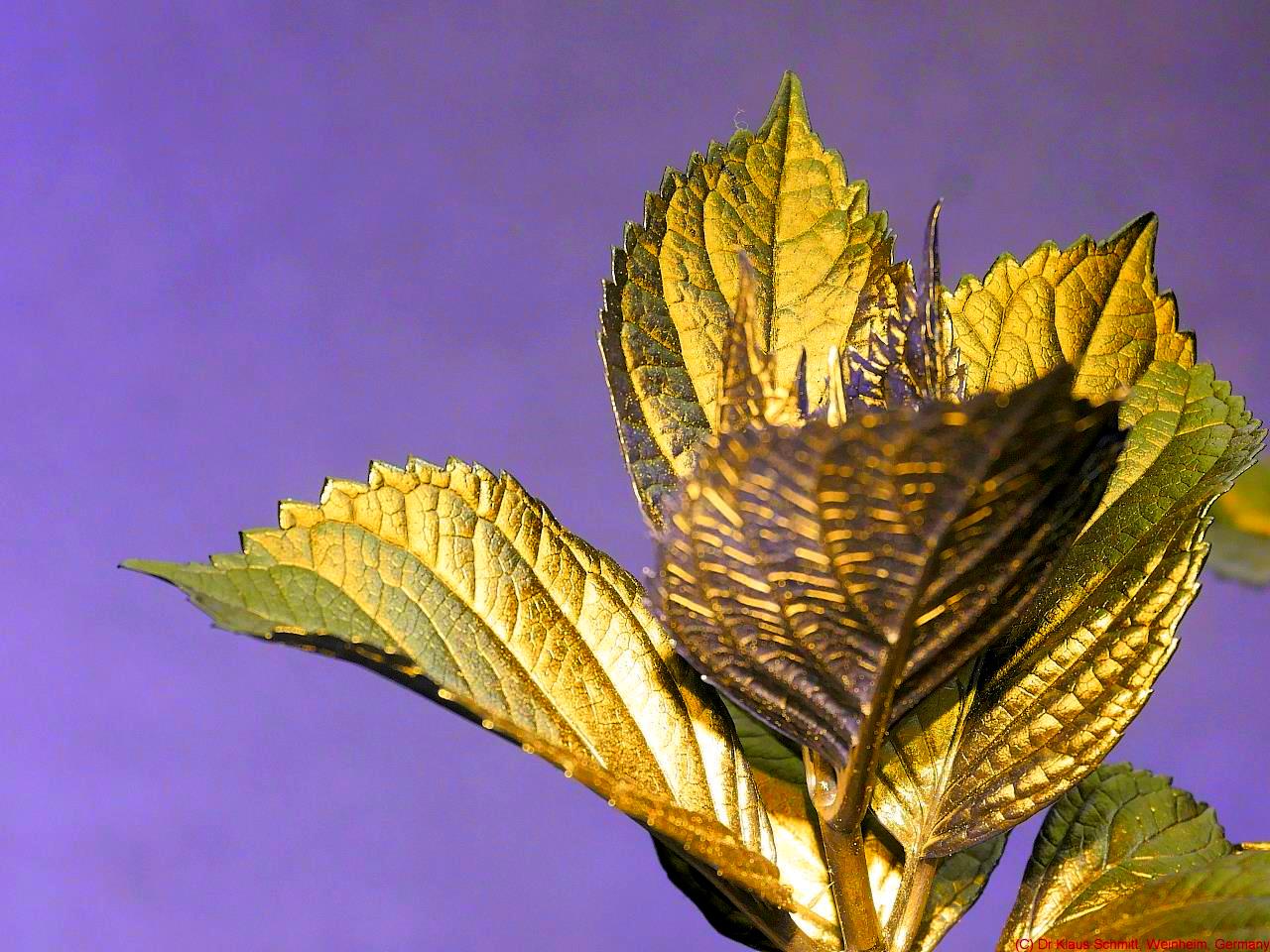
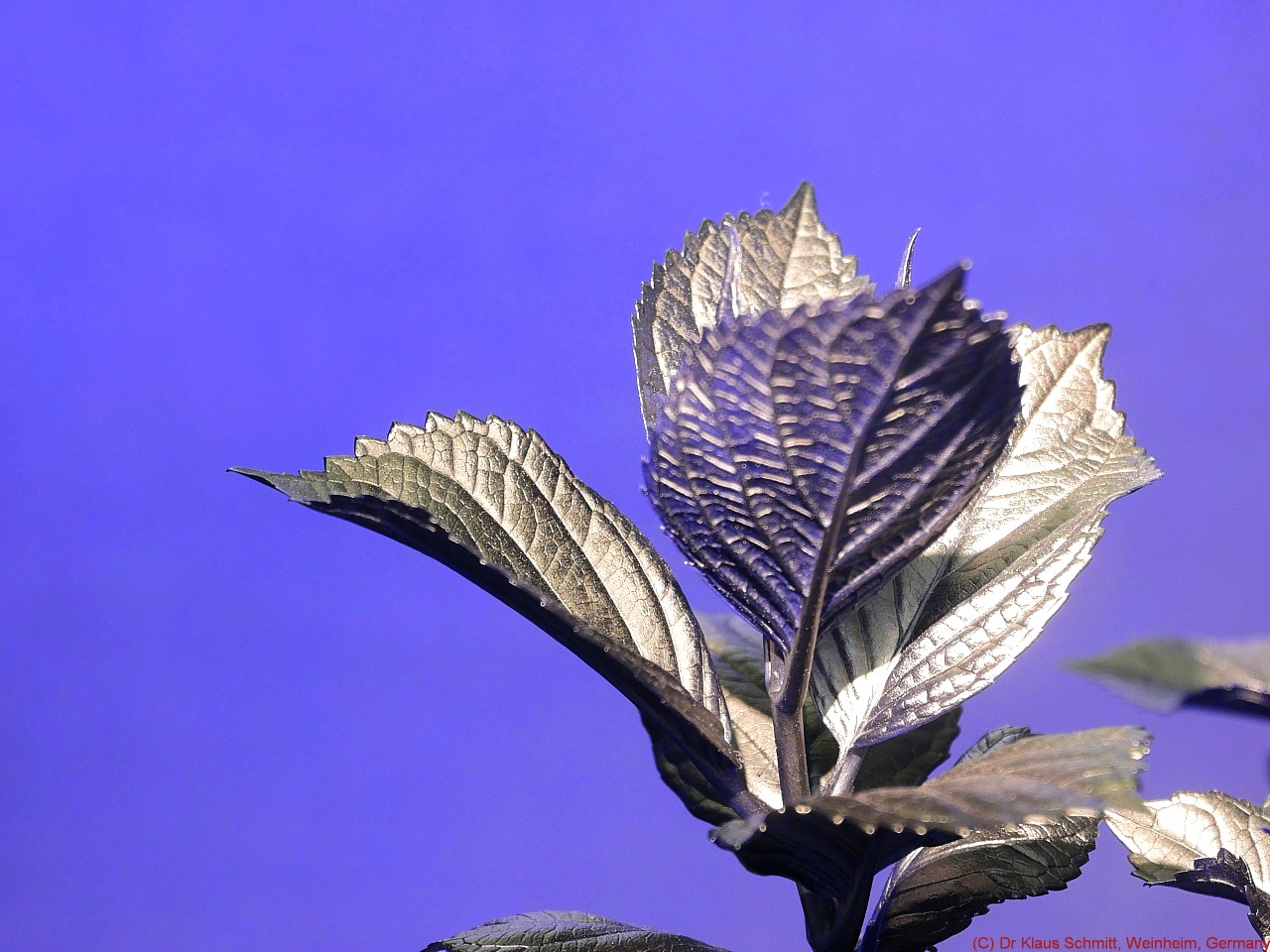
Today more about UV polarizer experiments, using a special UV capable circular polarizer in front of my multispectral camera and UV-Nikkor 105mm lens, for recording some polarized reflected UV images. Object used were some leaves of a shrub. UV filter used was my classic Baader-U filter; Sunlight was used as light source. And a secret was used - but no, not a spraycan ;-)

[click on image gets you a larger image]

Here photographic results I got today. I called it the "Midas effect", I'm sure you'll notice why...

First Gold:


Then Silver:


Reflected UV photography in polarized light shows quite some usefulness, especially if there are (glossy) surfaces which change the polarization angle of light and which the polarizer filter makes visible. Downside is that one needs about 2 stops more exposure, due to the low approx. 25% transmission.

Some insects are able to see the polarization angle (and btw. we humans can also, but needs some traing: Haidinger's Brush) especially honeybees which navigate using the polarization angle of ultraviolet (UV) light.

I have written more about using UV polarizers HERE

Stay tuned, more will follow on that fascinating subject...

More info on this very interesting field may be found on my site http://www.pbase.com/kds315/uv_photos
Tuesday, April 21, 2020

Reflected UV photography in polarized light VIII - Mica

Today more about UV polarizer experiments, using a special UV capable circular polarizer in front of my multispectral camera and UV-Nikkor 105mm lens, for recording some polarized reflected UV images plus some insect and human vision ones using my XBV filters. Object used was some slices of sheet Mica. UV filter used was my classic Baader-U filter; Xenon full spectrum light was used as light source.

[click on image gets you a larger image]

Here photographic results I got today (took multiple images while moving the Mica sheet), presented as animated gif.


This is more of scientific interest, and I like the different colors one gets. If interested I refer to the famous Michel-Levy Chart which explains that well. What you see here are 2nd order colors.

Reflected UV photography in polarized light shows quite some usefulness, especially if there are (glossy) surfaces which change the polarization angle of light and which the polarizer filter makes visible. Downside is that one needs about 2 stops more exposure, due to the low approx. 25% transmission.

Some insects are able to see the polarization angle (and btw. we humans can also, but needs some traing: Haidinger's Brush) especially honeybees which navigate using the polarization angle of ultraviolet (UV) light.

I have written more about using UV polarizers HERE

Stay tuned, more will follow on that fascinating subject...

More info on this very interesting field may be found on my site http://www.pbase.com/kds315/uv_photos
Sunday, April 19, 2020

Reflected UV photography in polarized light VII - Mica

Today more about UV polarizer experiments, using a special UV capable circular polarizer in front of my multispectral camera and UV-Nikkor 105mm lens, for recording polarized reflected UV images plus some insect and human vision ones using my XBV filters. Object used was some slices of sheet Mica. UV filter used was my classic Baader-U filter; Xenon full spectrum light was used as light source.

[click on image gets you a larger image]

Here photographic results I got (took multiple images while rotating the filter and changing filters), presented as animated gifs....


This is more of scientific interest, and I like the different colors one gets. If interested I refer to the famous Michel-Levy Chart which explains that well.

Reflected UV photography in polarized light shows quite some usefulness, especially if there are (glossy) surfaces which change the polarization angle of light and which the polarizer filter makes visible. Downside is that one needs about 2 stops more exposure, due to the low approx. 25% transmission.

Some insects are able to see the polarization angle (and btw. we humans can also, but needs some traing: Haidinger's Brush) especially honeybees which navigate using the polarization angle of ultraviolet (UV) light.

I have written more about using UV polarizers HERE

Stay tuned, more will follow on that fascinating subject...

More info on this very interesting field may be found on my site http://www.pbase.com/kds315/uv_photos

Wednesday, April 15, 2020

Reflected UV photography in polarized light VI - Lewisia

Today more about UV polarizer experiments, using a special UV capable circular polarizer in front of my multispectral camera and UV-Nikkor 105mm lens, for recording polarized reflected UV images. Flower here was a long blooming, perennial spring flower Cliff maids - Lewisia cotyledon. UV filter used was my classic Baader-U filter; sun was used as light source.

[click on image gets you a larger image]

Here photographic results I got (took multiple images while rotating the filter), presented as animated gifs....

Lewisia flowers through a rotating circular polarizer in A-mode i.e. exposure compensated...

Reflected UV light - Sunlight:


This flower shows some interesting small changes in the polarization angle on the petals, but especially there is some on its anters.  Bees have sensors on the outer ring of their compound eyes which are able to detect polarized light, so that might give this flower an advantage.

Reflected UV photography in polarized light shows quite some usefulness, especially if there are (glossy) surfaces which change the polarization angle of light and which the polarizer filter makes visible. Downside is that one needs about 2 stops more exposure, due to the low approx. 25% transmission.

Some insects are able to see the polarization angle (and btw. we humans can also, but needs some traing: Haidinger's Brush) especially honeybees which navigate using the polarization angle of ultraviolet (UV) light.

I have written more about using UV polarizers HERE

I have written more about that Lewisia flower HERE

Stay tuned, more will follow on that fascinating subject...

More info on this very interesting field may be found on my site http://www.pbase.com/kds315/uv_photos

Saturday, April 11, 2020

Reflected UV photography in polarized light V - Cross Polarization

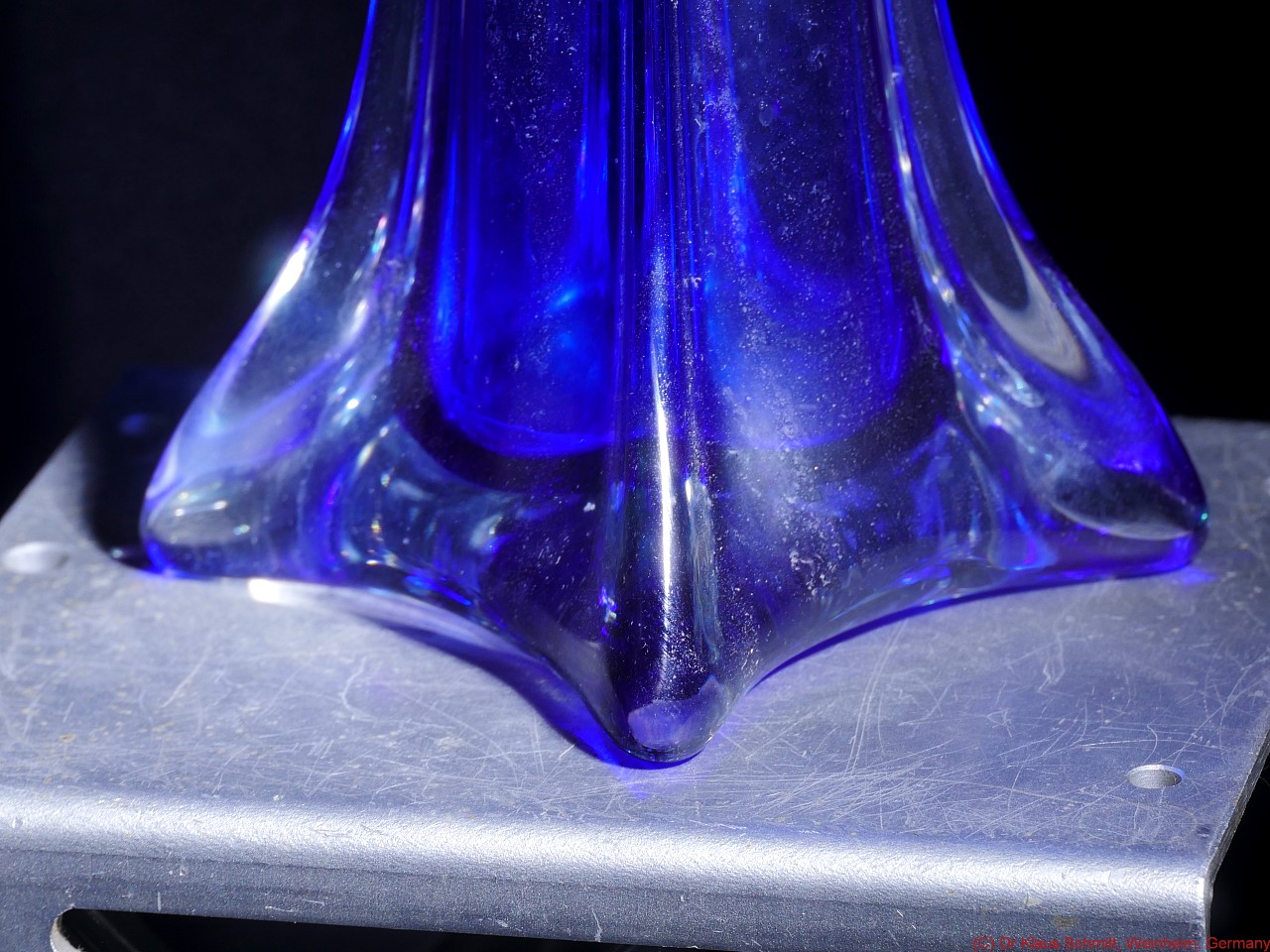
Today more about UV polarizer experiments, using a special UV capable circular polarizer reaching down to approx. 320nm in front of my multispectral camera and UV-Nikkor 105mm lens, for recording polarized reflected UV images. But this time also the light source, my Xenon studio flash, had a special UV capable circular polarizer mounted. Object was a blue glass vase set on an aluminum lab jack. UV filter used was my classic Baader-U filter; Light source used was a modified for high UV output Xenon studio flash.

This research about using cross polarization in utraviolet light was stimulated by discussions with my colleague Dr Jonathan Crowther of JMC Scientific Consulting

[click on image gets you a larger image]

Visible Light 0-degrees:


Visible Light 45-degrees:


Visible Light 90-degrees:


Reflected ultraviolet (UV) light through Baader-U filter (320-390nm:

Reflected UV 0-degrees:
 

Reflected UV 45-degrees:
 

Reflected UV 90-degrees:


Hexaptych Visible vs UV light at 0-45-90 degrees (left to right, top to bottom):
 

Reflected UV photography in polarized light shows quite some usefulness, especially if there are (glossy) surfaces which change the polarization angle of light and which the polarizer filter makes visible. This only works for UV light, if using the right polarizers, which allow sufficient UV to pass without loosing the ability to polarize.

Downside of using polarizers is that one needs about 2 stops more exposure, due to the low approx. 25% transmission. Cross-polarization now allows to suppress shine and reflections, which can prove very useful at times. But that requires even more light, as the light loss is much larger even, which for reflected UV photography working at 8-10 stops below normal visible light photography might be cumbersome at times, requiring high ISO values, longer exposure times and strong light sources.

Some insects are able to see the polarization angle (and btw. we humans can also, but needs some traing: Haidinger's Brush) especially honeybees which navigate using the polarization angle of ultraviolet (UV) light.

I have written more about using UV polarizers HERE

Stay tuned, more will follow on that fascinating subject...

More info on this very interesting field may be found on my site http://www.pbase.com/kds315/uv_photos

Tuesday, April 7, 2020

Reflected UV photography in polarized light IV - Saxifraga

Today more about UV polarizer experiments, using a special UV capable circular polarizer in front of my multispectral camera and UV-Nikkor 105mm lens, for recording polarized reflected UV images. Flower here was white Saxifraga - Rockfoil. UV filter used was my classic Baader-U filter; sun was used as light source.

[click on image gets you a larger image]

Here photographic results I got (took multiple images while rotating the filter), presented as animated gifs....

Saxifraga flowers through a rotating circular polarizer in A-mode i.e. exposure compensated...

Visible Light - Sunlight:


Reflected UV light - Sunlight:


Reflected UV light with 365nm UV LED:


Simulated bee vision - Sunlight:


This flower shows some interesting changes in polarization angle on the bottom of its flowers.  Bees have sensors on the outer ring of their compound eyes which are able to detect polarized light, so that might give this flower an advantage.

Reflected UV photography in polarized light shows quite some usefulness, especially if there are (glossy) surfaces which change the polarization angle of light and which the polarizer filter makes visible. Downside is that one needs about 2 stops more exposure, due to the low approx. 25% transmission.

Some insects are able to see the polarization angle (and btw. we humans can also, but needs some traing: Haidinger's Brush) especially honeybees which navigate using the polarization angle of ultraviolet (UV) light.

I have written more about using UV polarizers HERE

More about Saxifraga in multispectral photography is HERE

Stay tuned, more will follow on that fascinating subject...

More info on this very interesting field may be found on my site http://www.pbase.com/kds315/uv_photos
Sunday, April 5, 2020

Reflected UV photography in polarized light III - Phlox

Today even more about UV polarizer experiments, using a special UV capable circular polarizer in front of my multispectral camera and UV-Nikkor 105mm lens, for recording polarized reflected UV images. Flower here was Phlox - Rockfoil. UV filter used was my classic Baader-U filter; sun was used as light source.

[click on image gets you a larger image]

Here photographic results I got (took multiple images while rotating the filter), presented as animated gifs....


Phlox flower in M-mode i.e. non exposure compensated:


Phlox flower in A-mode i.e. exposure compensated:


Reflected UV photography in polarized light shows quite some usefulness, especially if there are (glossy) surfaces which change the polarization angle of light and which the polarizer filter makes visible. Downside is that one needs about 2 stops more exposure, due to the low approx. 25% transmission.

Some insects are able to see the polarization angle (and btw. we humans can also, but needs some traing: Haidinger's Brush) especially honeybees which navigate using the polarization angle of ultraviolet (UV) light.

I have written more about using UV polarizers HERE

More about Phlox in multispectral photography is HERE

Stay tuned, more will follow on that fascinating subject...

More info on this very interesting field may be found on my site http://www.pbase.com/kds315/uv_photos

Sunday, March 29, 2020

Reflected UV photography in polarized light II

Today more about those UV polarizers experiments I have done, using special UV polarizers in front of my multispectral camera and UV-Nikkor 105mm lens, for recording reflected UV images. This now uses a UV transmitting filter for circular polarized light. UV filter used was my classic Baader-U filter; sun was used as light source.

[click on image gets you a larger image]

Here now more photographic results I got (took multiple images while rotating the filter), presented as animated gifs....

Roofs of some neighbouring houses showing strong polarizing effect of glass windows and metal:


Butterfly orchid - Phalaenopsis showing only mild polarizing effects:


Succulent plant - Lewisia showing strong polarizing effects:


Reflected UV photography in polarized light shows quite some usefulness, especially if there are (glossy) surfaces which change the polarization angle of light and which the polarizer filter makes visible. Downside is that one needs about 2 stops more exposure, due to the low approx. 25% transmission.

I have now solved the change of focus issue which I previously had.

Some insects are able to see the polarization angle (and btw. we humans can also, but needs some traing: Haidinger's Brush) especially honeybees which navigate using the polarization angle of ultraviolet (UV) light.

I will continue to make more tests later using the other polarizers and also the special waveplates, which allow for circular polarized light.


Stay tuned, more will follow on that fascinating subject...

More info on this very interesting field may be found on my site http://www.pbase.com/kds315/uv_photos

Wednesday, March 18, 2020

Reflected UV photography in polarized light I

Today about an experiment I have done, using a special UV polarizer made by Zeiss in front of my multispectral camera and UV-Nikkor 105mm lens for recording reflected UV images. This UV-Polarizer was especially made to work down to 300nm with some rather flat transmission and a 99-100% polarizing effectiveness in the 300-700nm range. It was part of a laboratory set of several UV-VIS-IR polarizers and wave plates I luckily acquired recently from a retired head of development. UV filter used was my classic Baader-U filter; sun was used as light source.

[click on image gets you a larger image]

Here the  transmission (linear scale) and absorbance (log scale) spectra of these polarizers:


Here now some of the photographic results I got (took multiple images while rotating the filter), presented as animated gifs....

Roofs of some neighbouring houses:


Flowering succulent plant (Cliff maids - Lewisia cotyledon):


Butterfly orchid - Phalaenopsis:


Reflected UV photography in polarized light shows quite some usefulness, especially if there are (glossy) surfaces which change the polarization angle of light and which the polarizer filter makes visible. Downside is that one needs about 2 stops more exposure, due to the low approx. 25% transmission.

Some may have noticed the change of focus, which might be caused by some unevenness of that special polarizing filter foil; it will be investigated later.

Some insects are able to see the polarization angle (and btw. we humans can also, but needs some traing: Haidinger's Brush) especially honeybees which navigate using the polarization angle of ultraviolet (UV) light.

I will make further tests later using the other polarizers and also the special waveplates, which allow for circular polarized light.


Stay tuned, more will follow on that fascinating subject...

More info on this very interesting field may be found on my site http://www.pbase.com/kds315/uv_photos