Showing posts sorted by relevance for query gazania. Sort by date Show all posts

Wednesday, September 7, 2016

How to stand out in the crowd - Gazania rigens shows its ecologic advantage vs Rudbeckia fulgida and Rudbeckia hirta using intense UV reflection IV

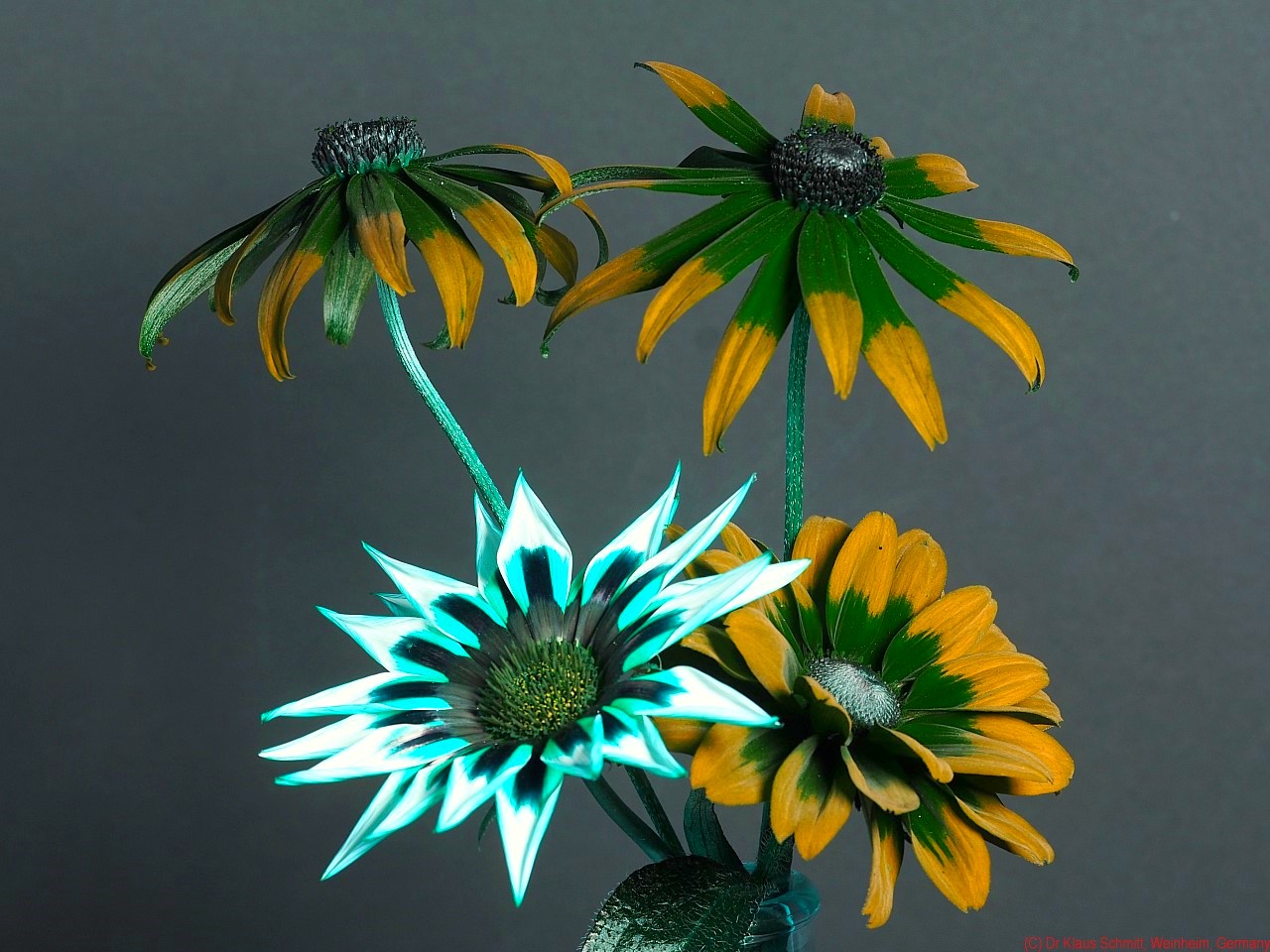
Today about how even some UV reflecting flowers (Gazania rigens) have achieved a competitive edge over other UV reflecting flowers (Rudbeckia fulgida) by making use of a specific very intense UV reflection around 370nm. This will be shown in human vision, in reflected ultraviolet photography and also by using reflection spectrometry. I was using my "work horse" UV filter, the Baader-U filter for reflected UV and a calibrated UV-VIS USB2000 spectrometer with stabilized Xenon lightsource.

[click on image to see a larger one]

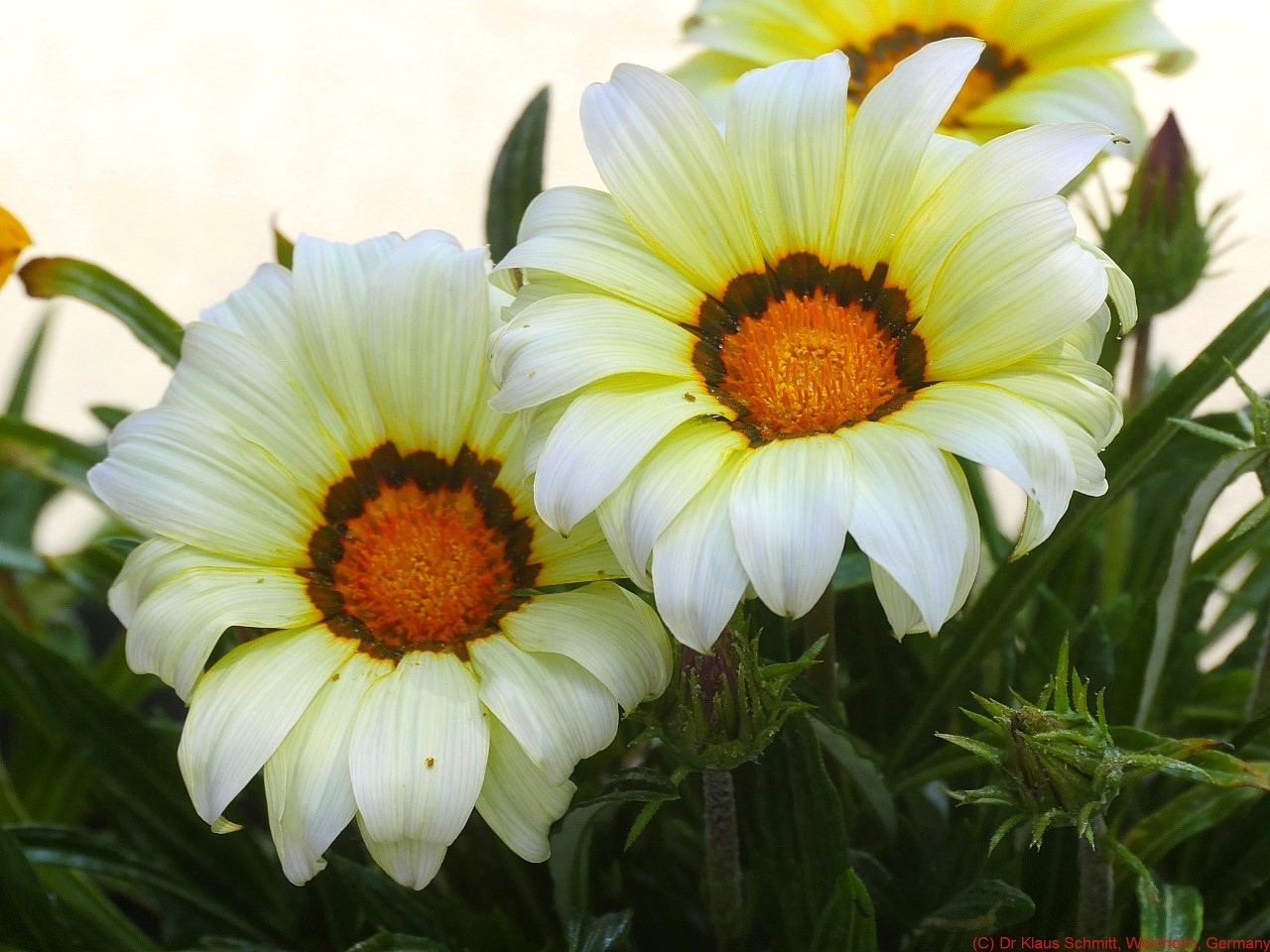
Rudbeckia fulgida + R. hirta vs white Gazania rigens, visible image:  

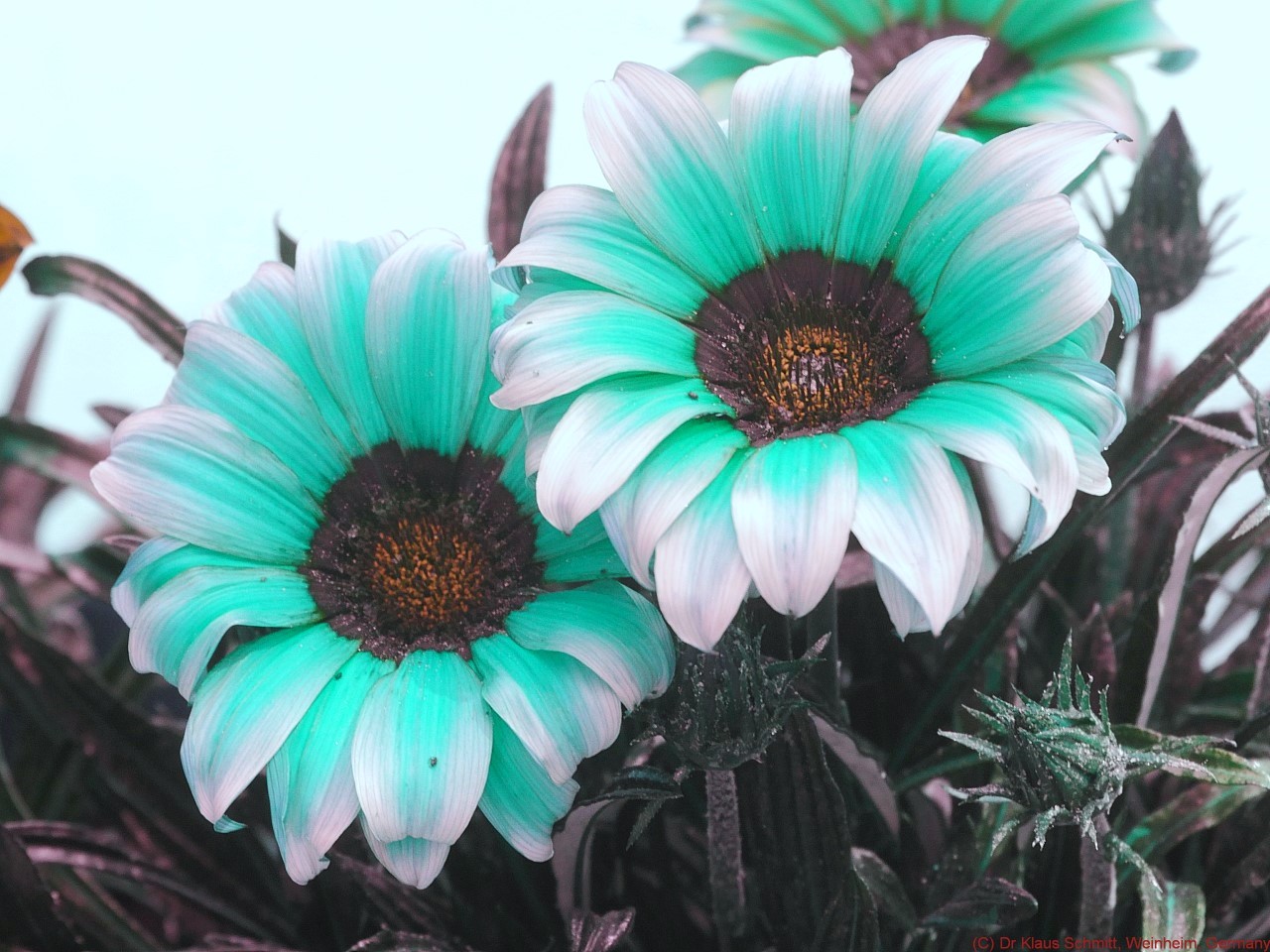
Rudbeckia fulgida + R. hirta vs white Gazania rigens, reflected UV image:  

Reflection spectrometry result of Rudbeckia fulgida vs white Gazania rigens (UV bright petal tip):  
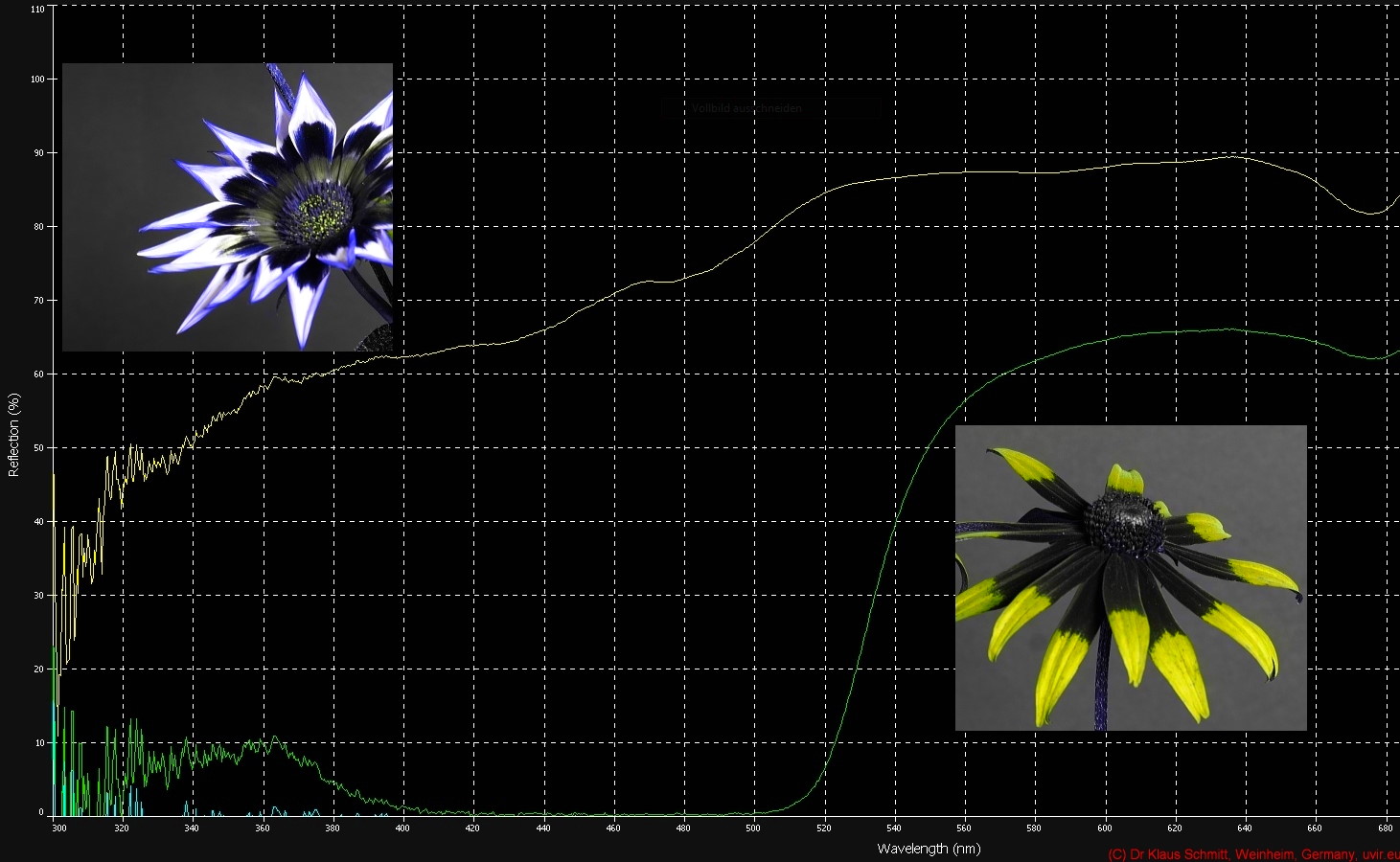
In visible light, all these flowers are rather bright yellow / orange (Rudbeckia) and white (Gazania) to our human eye. But the white Gazania rigens compared to the Rudbeckia fulgida flower shows an even more prominent and bright bullseye pattern in reflected UV (only visible to bees and butterflies), as its outer petals are very UV bright (around 370nm) with a UV reflection above 60%, compared to the other UV reflecting flower with only about 10% UV reflection of its petal tips, which makes this Gazania clearly even more visible in UV, hence creating an impressive competitive edge in terms of chances for getting pollinated even against those other flowers with UV bullseye pattern - and all this gets nicely visible.

I have written HERE about it before.

Stay tuned, more will follow on that fascinating subject...

Sunday, July 31, 2016

How to stand out in the crowd - Gazania rigens shows its ecologic advantage vs Rudbeckia fulgida and Rudbeckia hirta using intense UV reflection III

Today about how even some UV reflecting flowers (Gazania rigens) have achieved a competitive edge over other UV reflecting flowers (Rudbeckia fulgida and R. hirta) by making use of a specific very intense UV reflection around 370nm. This will be shown in human vision, in reflected ultraviolet photography and also in simulated bee vision. I was using my "work horse" UV filter, the Baader-U filter for reflected UV, my XBV filter for simulated bee vision aside from a visible light shot. Lens was my UV-Nikkor 105mm quartz flourite lens. Light source was a modified Xenon flash. All shots were done at f11. [These shots were done with a new camera system and are available on request in very high resolution (40 and 60 Mp)].

[click on image to see a larger one]

Rudbeckia fulgida + R. hirta vs white Gazania rigens, visible image:  

Rudbeckia fulgida + R. hirta vs white Gazania rigens, reflected UV image:  

Rudbeckia fulgida + R. hirta vs white Gazania rigens, simulated bee vision image:  

In visible light, all these flowers are rather bright yellow / orange (Rudbeckia) and white (Gazania) to our human eye. But the white Gazania rigens against the Rudbeckia fulgida and R. hirta flowers shows an even more prominent and bright bullseye pattern in reflected UV (only visible to bees and butterflies), as its petals are very, very UV bright (around 370nm) and its center is very UV dark, compared to the other UV reflecting flowers, which makes them clearly even more visible in UV, hence creating an impressive competitive edge in terms of chances for getting pollinated even against those other flowers with UV bullseye pattern - and all this gets nicely visible, also in simulated bee vision.

I have written HERE about it before.

Stay tuned, more will follow on that fascinating subject...

Tuesday, May 19, 2020

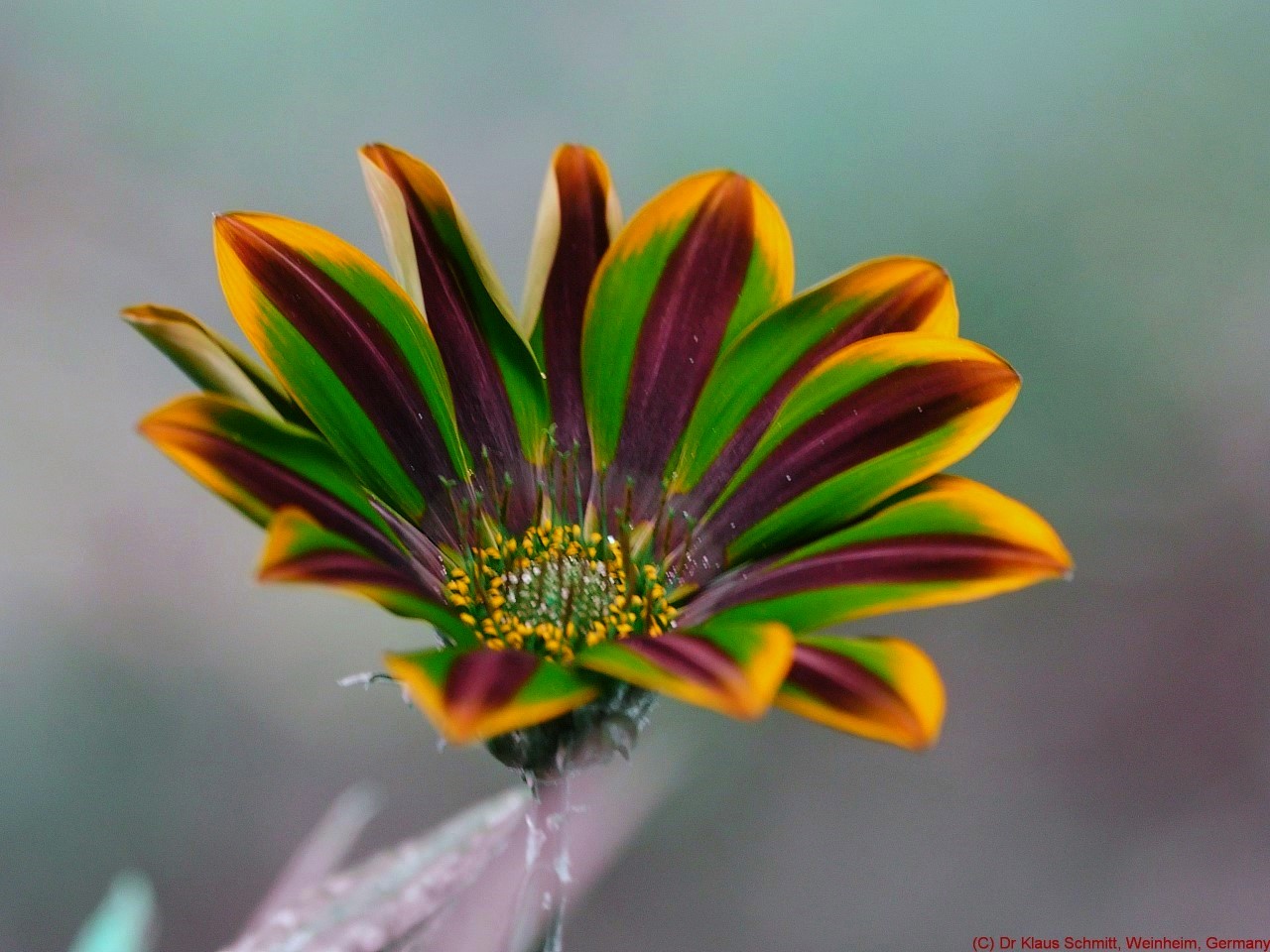
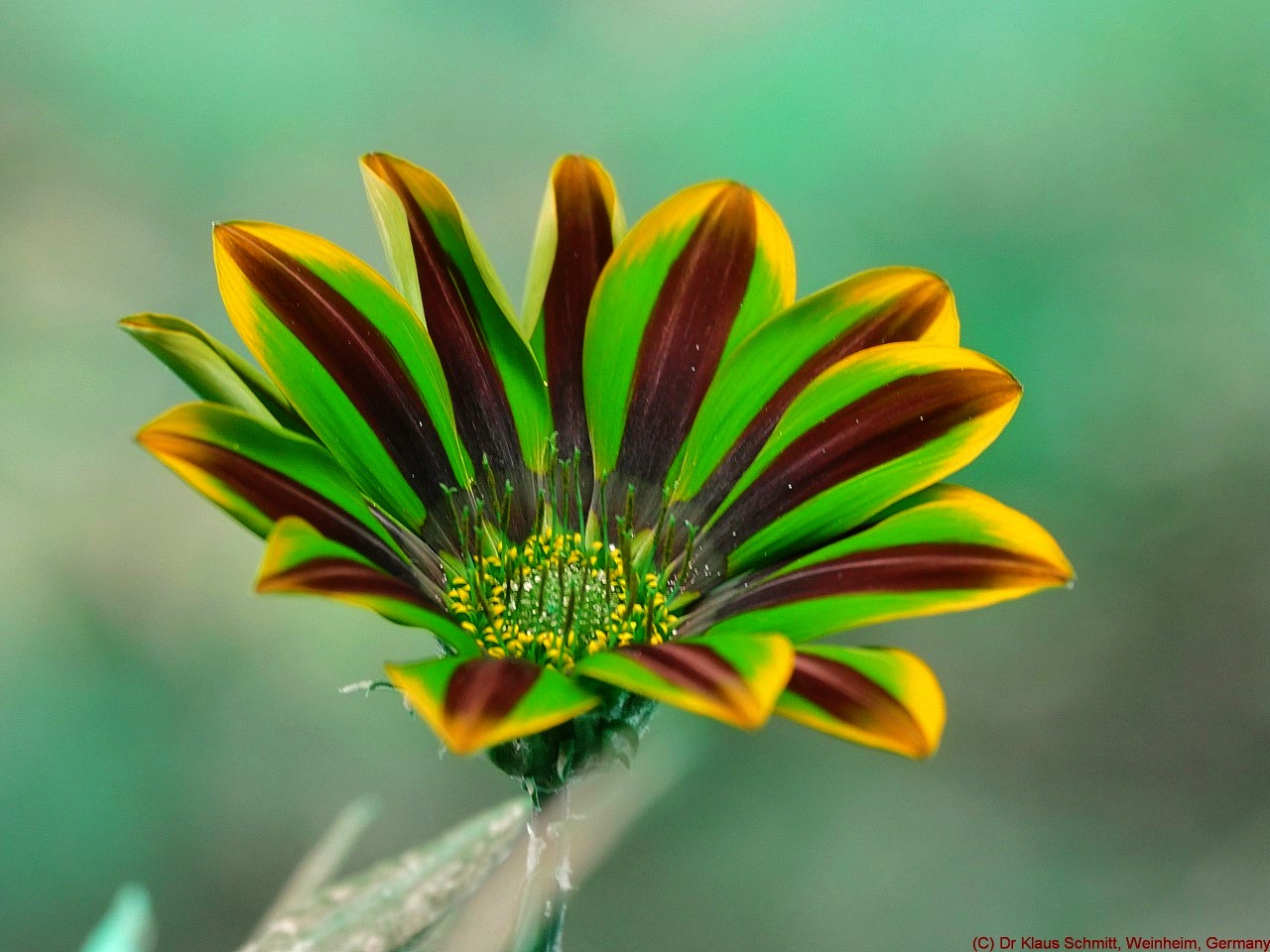
Treasury flower - Gazania rigens in reflected ultraviolet photography and simulated bee and butterfly vision XXXII

Today in 2020 more outdoor shots of that long blooming yellow Gazania flower, the Treasury flower - Gazania rigens shot in reflected ultraviolet photography, simulated bee and butterfly vision. All shots were done at f8 in reflected ultraviolet photography using my "work horse" UV filter, the Baader-U filter, as well as my XBV filters for simulated bee and butterfly vision. Lens was a UV-Nikkor 105mm quartz fluorite lens. Light source was sunlight.

[click on image to see a larger one]

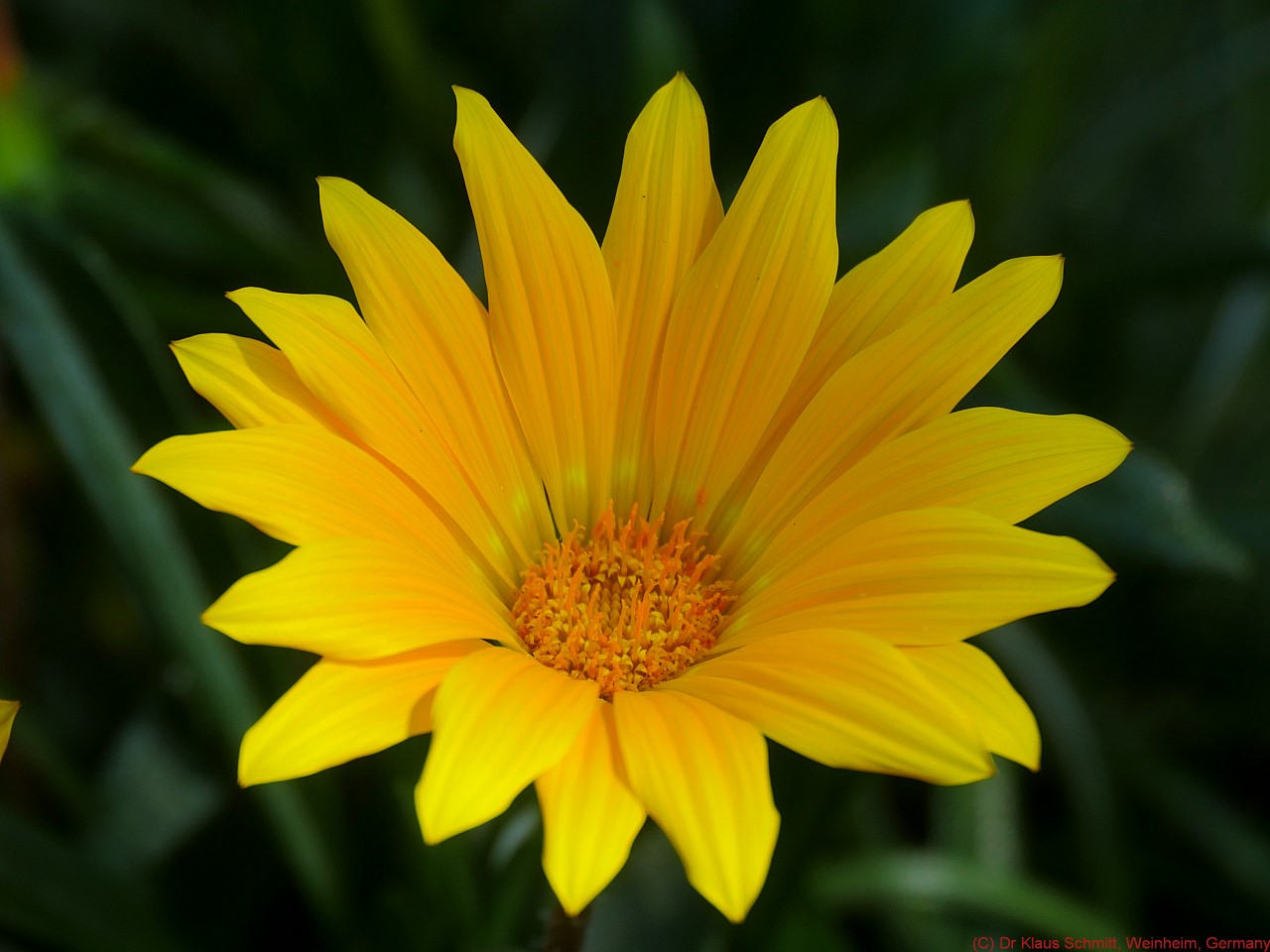
Human vision:
 

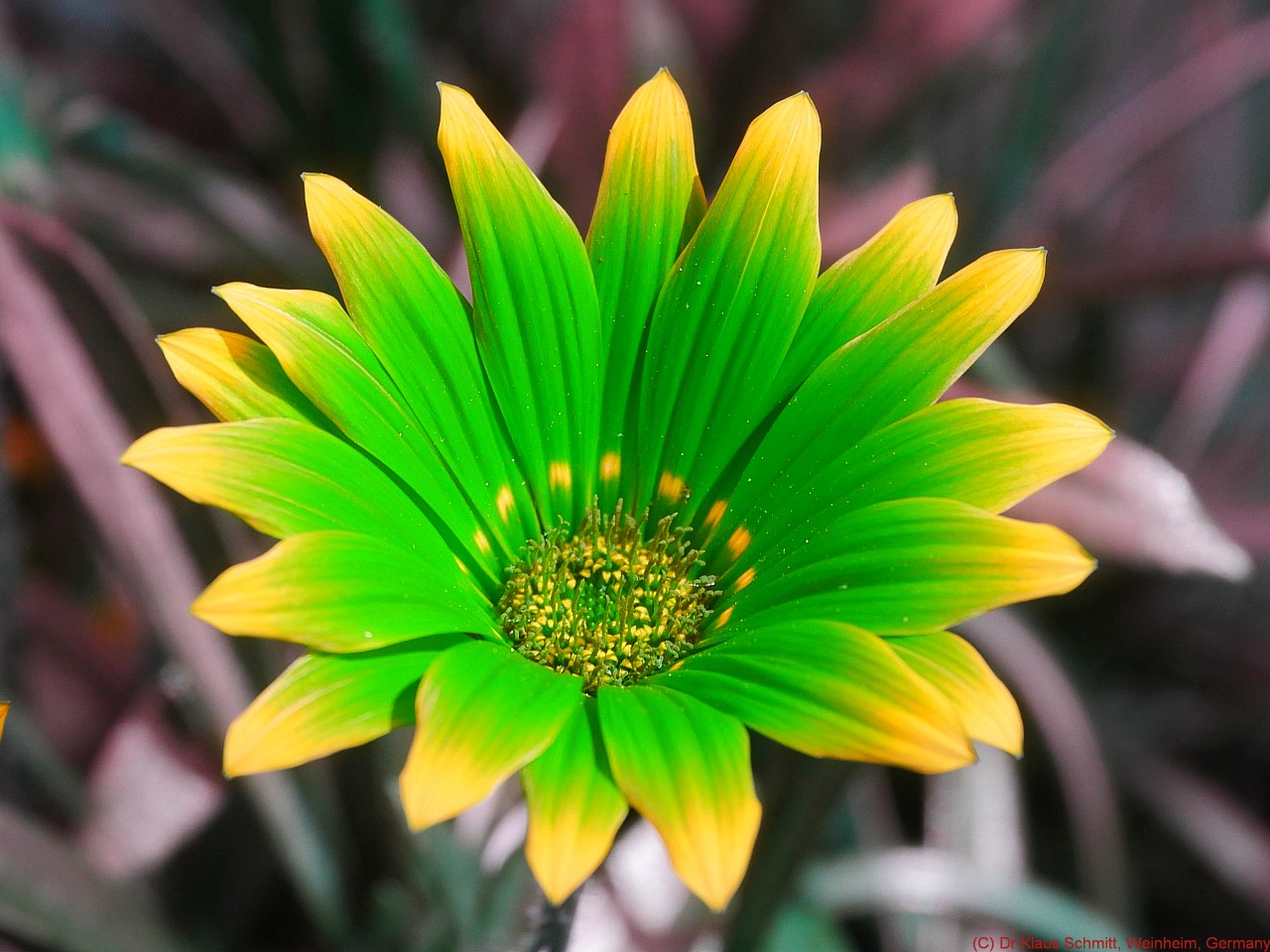
Reflected UV:
 

Simulated butterfly vision:
 

Simulated bee vision (alt. version):
 

Quadriptych of human vision, UV, simulated bee and butterfly vision (left to right, top to bottom):
 

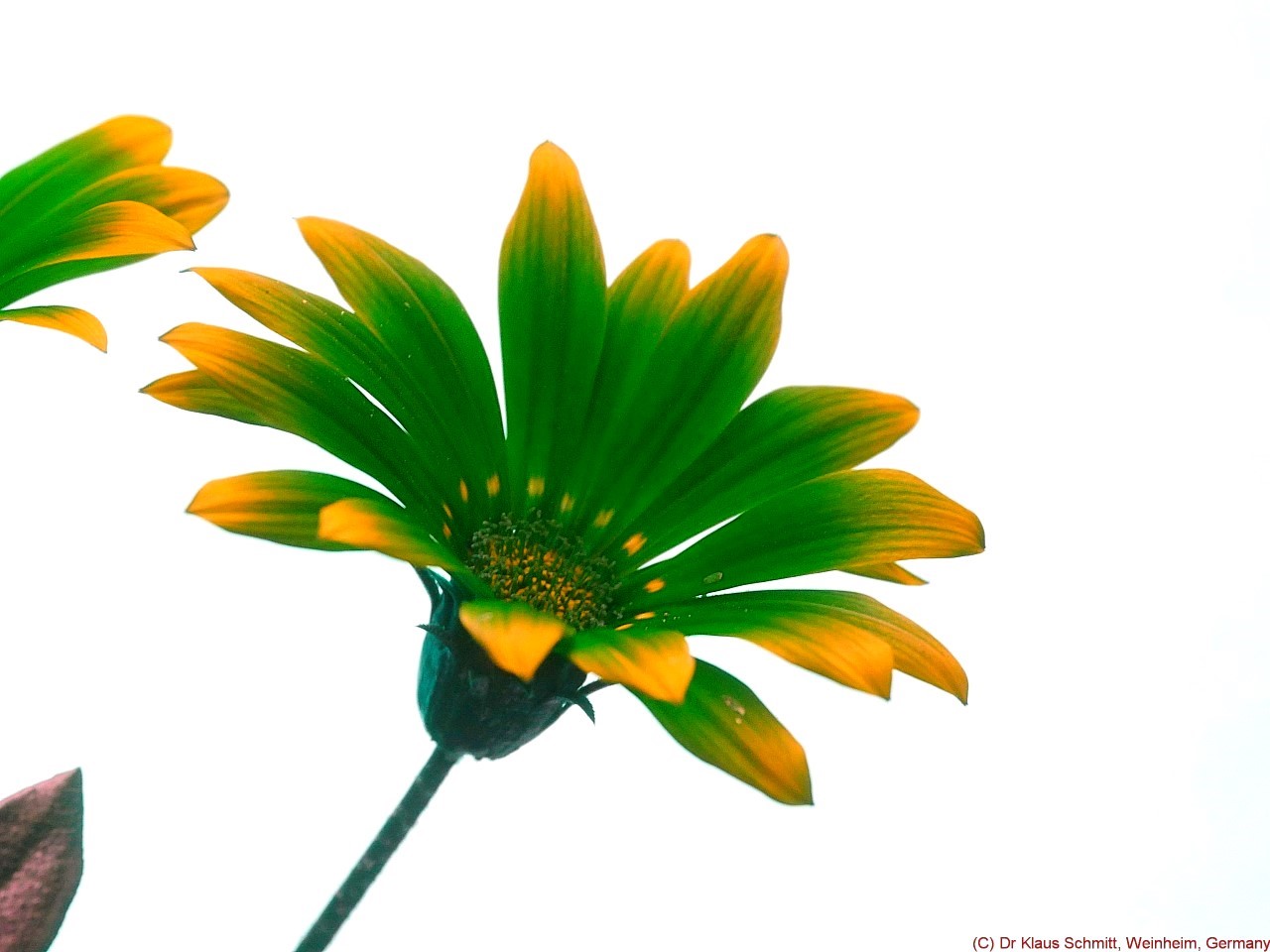
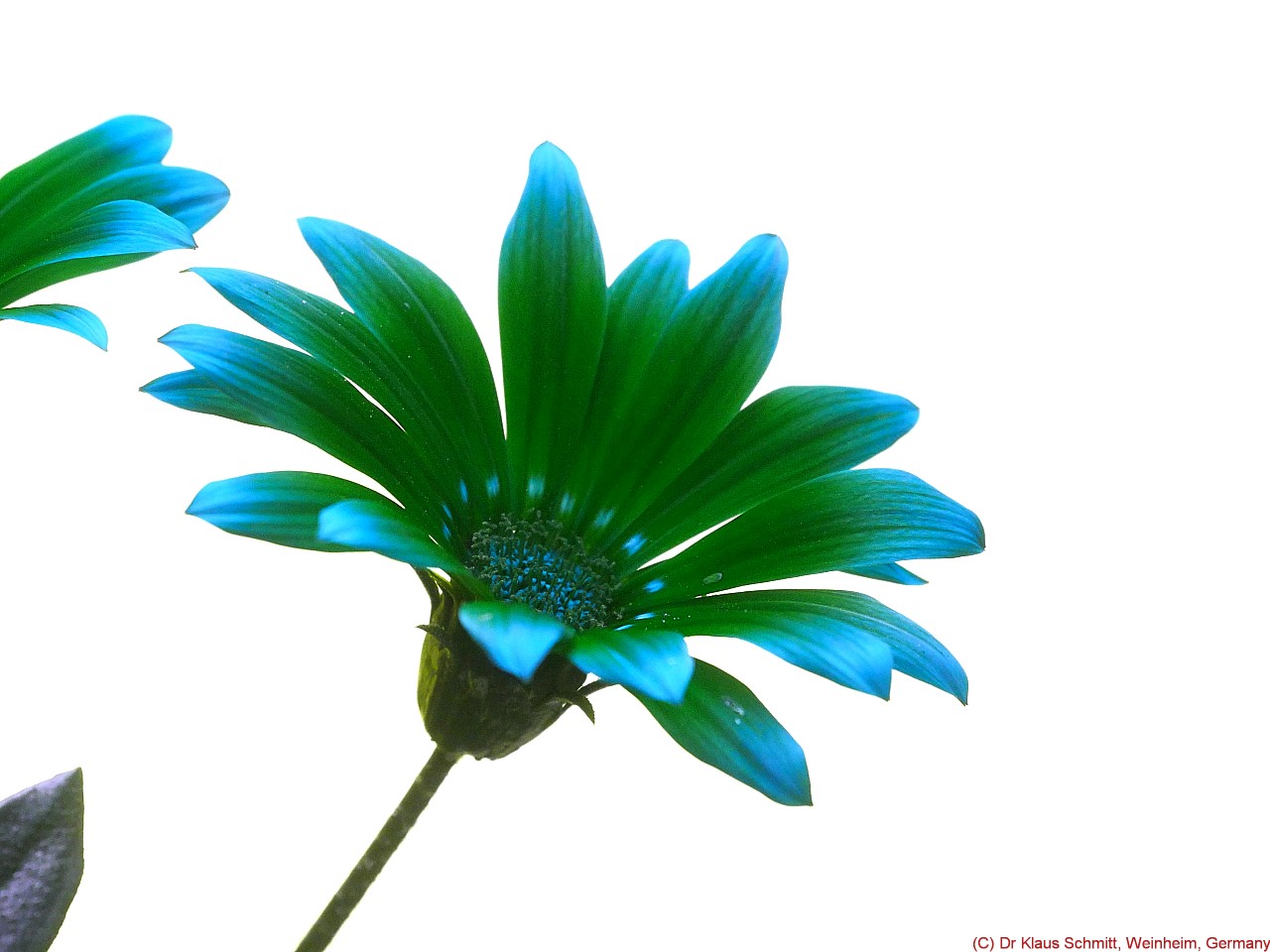
This Gazania's outer petals strongly reflect UV around 365nm, whereas the inner petal parts are quite darker, hence forming UV nectar guides for UV seeing insects. There are also some highly UV reflecting marks inside around a dark UV center, all invisible to us humans, but clearly visible to bees and butterflies, and all this gets nicely visible here, also in simulated bee and butterfly vision.

I have written about this Gazania previously HERE
 
Stay tuned, more will follow on that fascinating subject...
More info on this very interesting field may be found on my site http://www.pbase.com/kds315/uv_photos

Sunday, September 13, 2020

Treasury flower - Gazania rigens in reflected ultraviolet photography and simulated bee and butterfly vision XXXVII

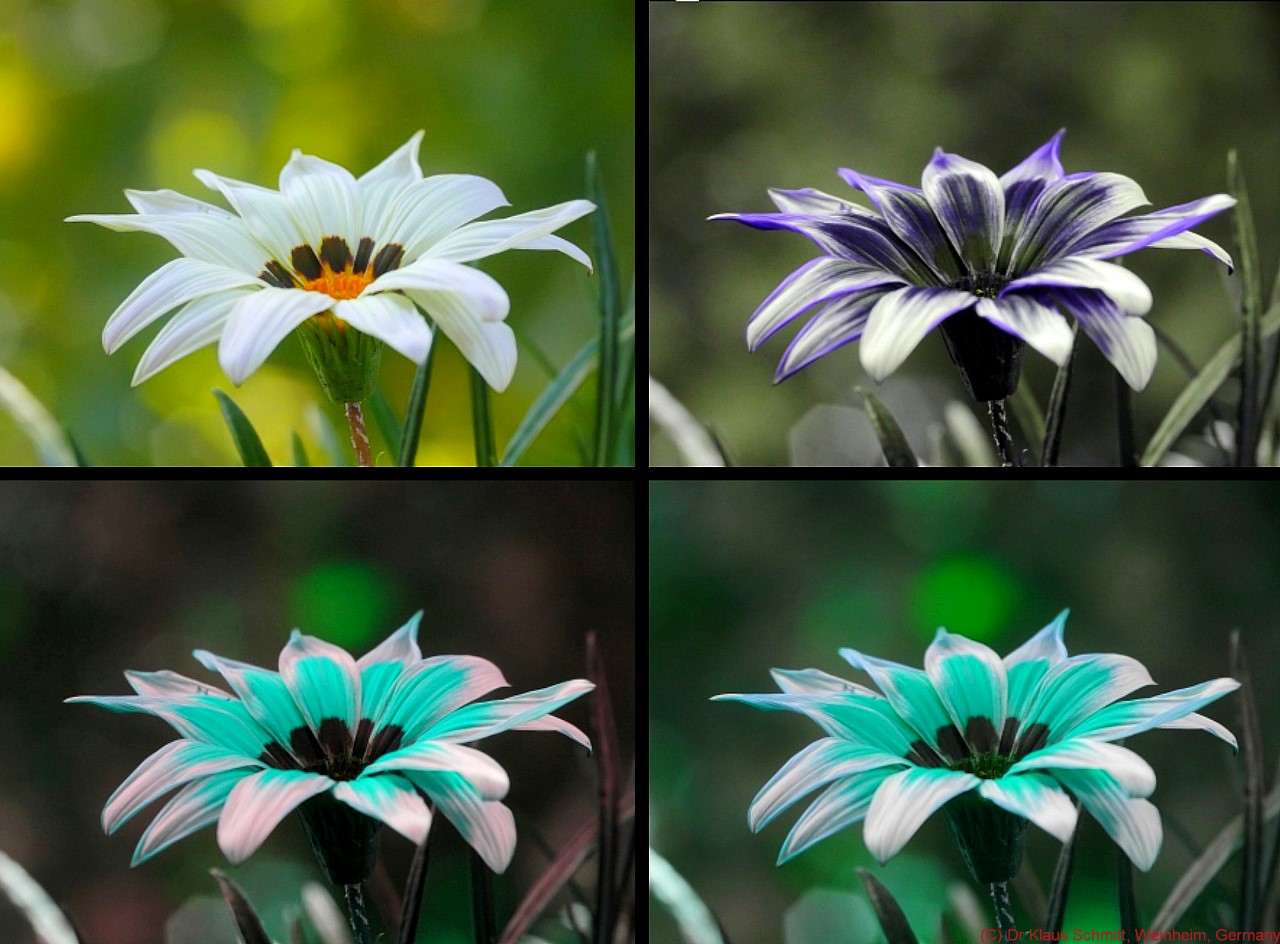
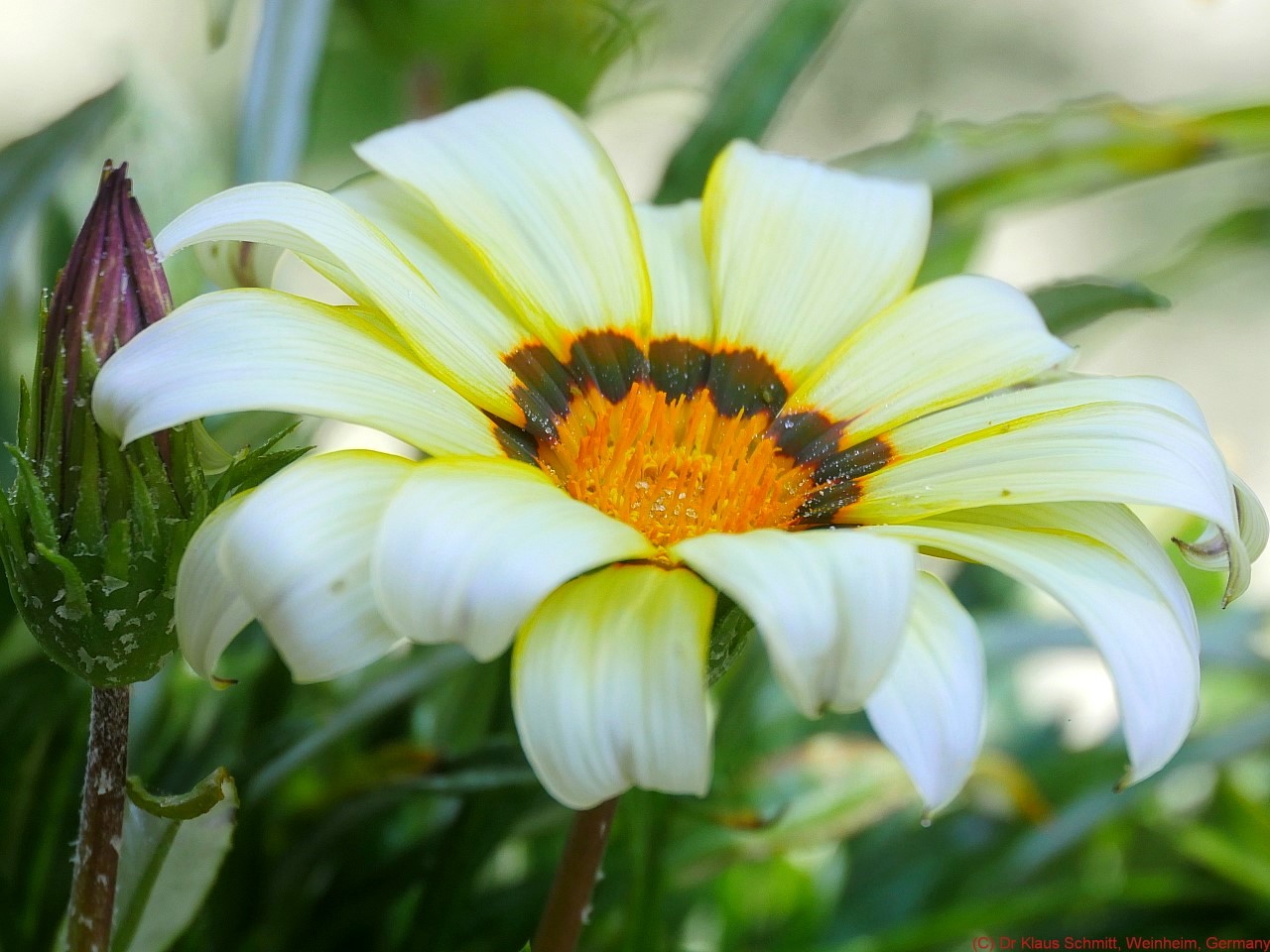
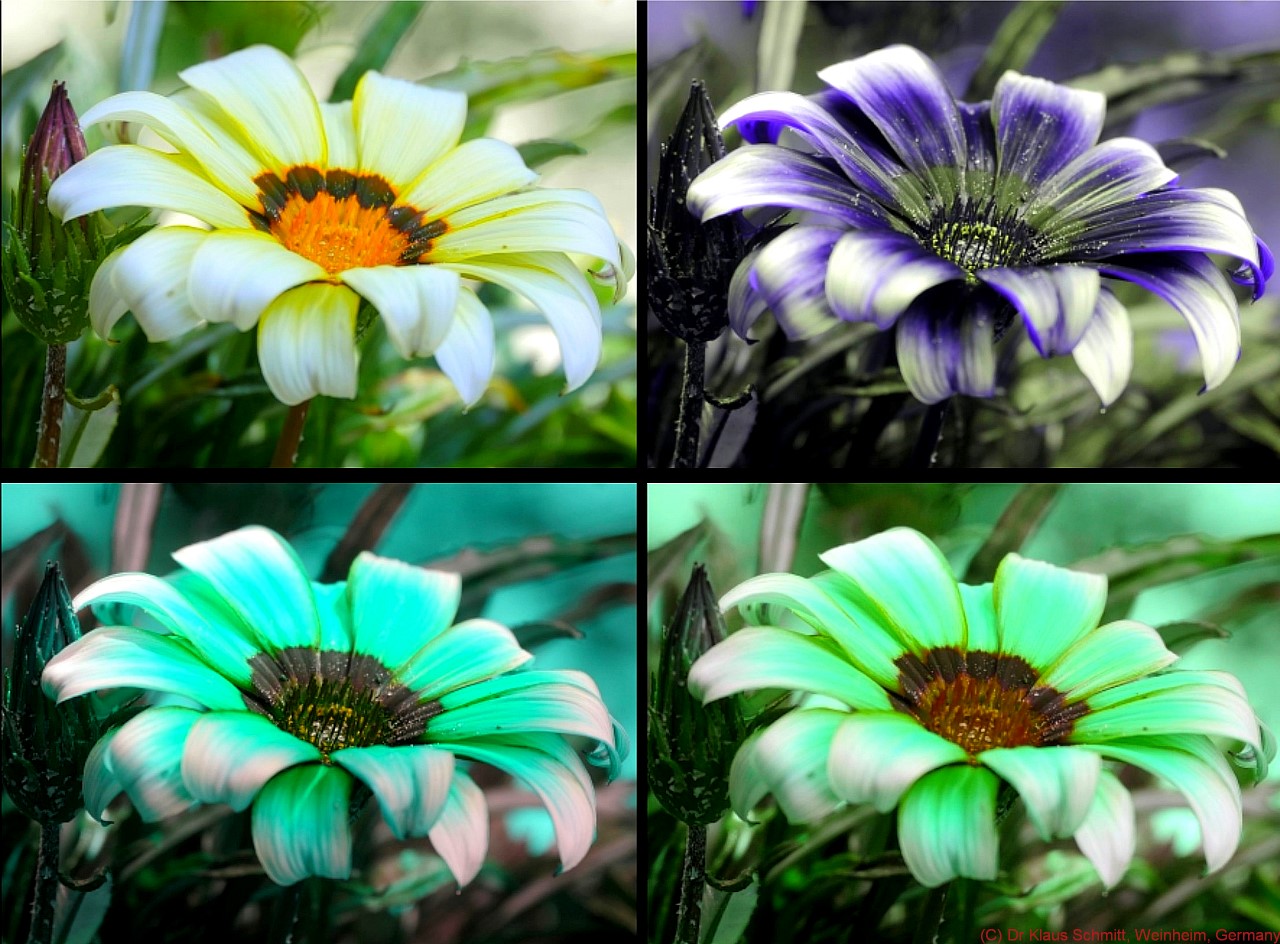
Today in late Summer 2020 some outdoor shots of that long blooming white Gazania flower, the Treasury flower - Gazania rigens shot in reflected ultraviolet photography, simulated bee and butterfly vision. All shots were done at f8 in reflected ultraviolet photography using my "work horse" UV filter, the Baader-U filter, as well as my XBV filters for simulated bee and butterfly vision. Lens was a UV-Nikkor 105mm quartz fluorite lens. Light source was sunlight (shade).

[click on image to see a larger one]

Human vision:
 

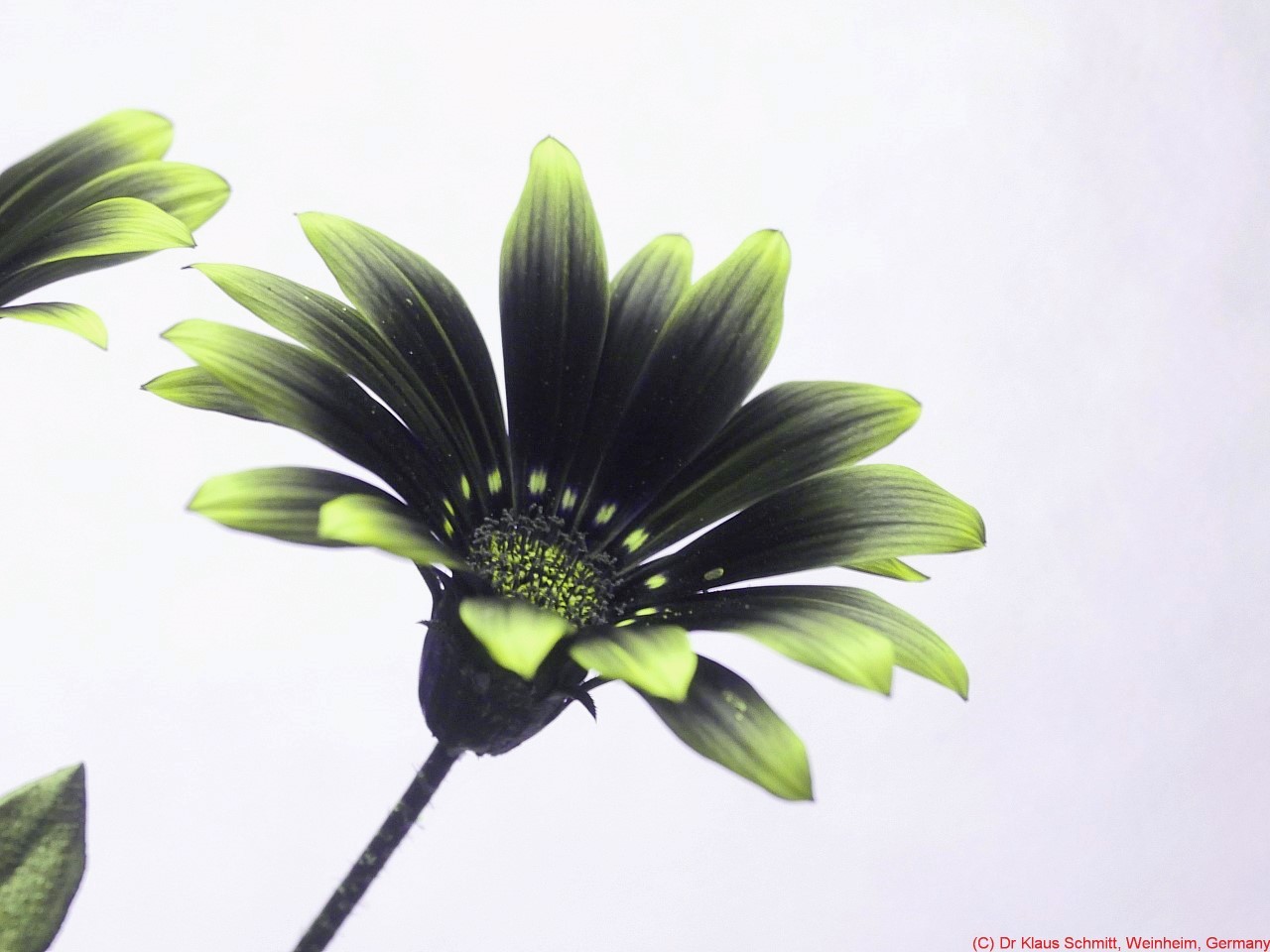
Reflected UV:
 

Simulated butterfly vision:
 

Simulated bee vision:
 

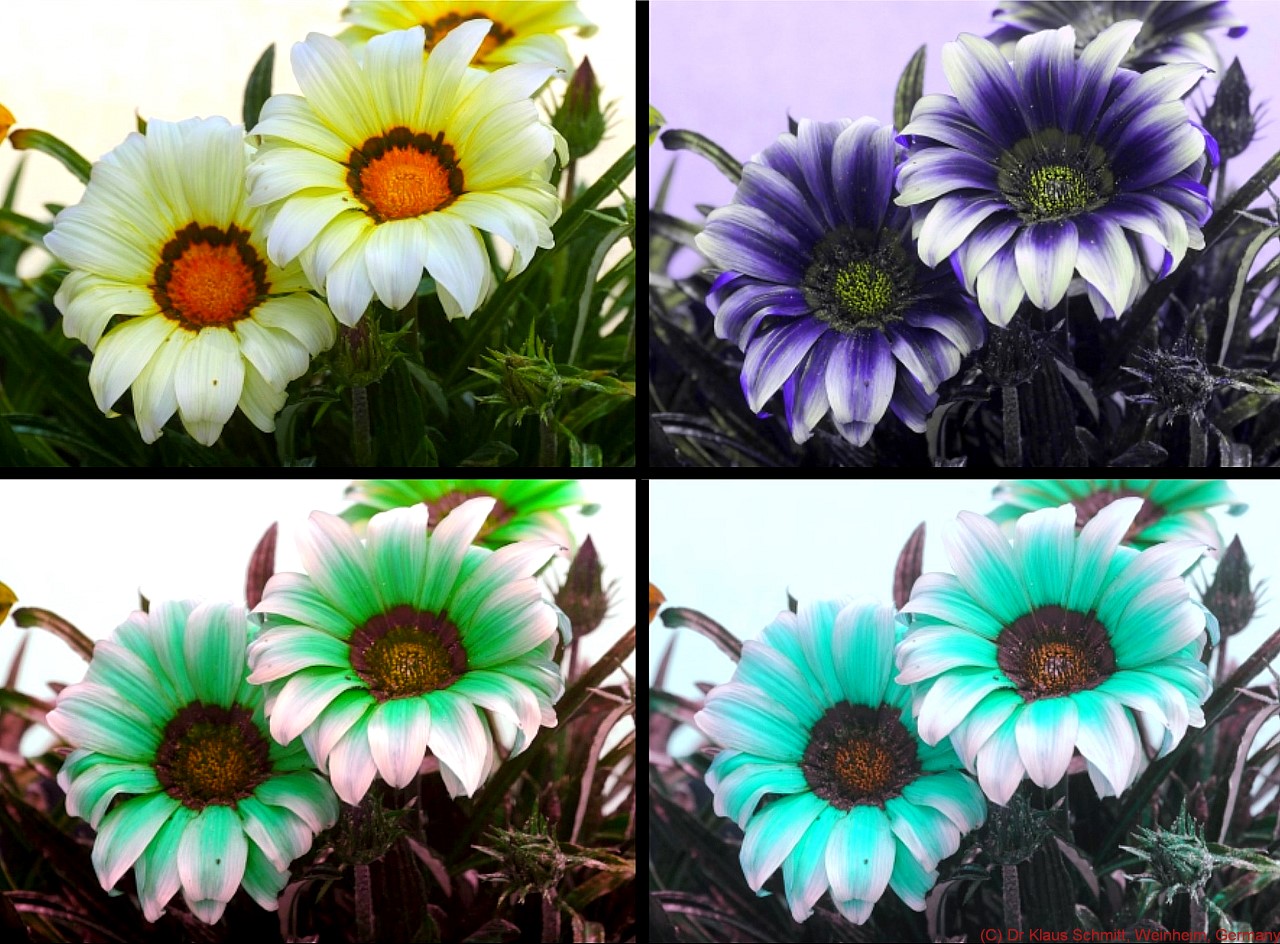
Quadriptych of human vision, UV, simulated butterfly and bee vision (left to right, top to bottom):
 

This Gazania's outer petals strongly reflect UV around 370nm, whereas the inner petal parts are quite darker, hence forming UV nectar guides for UV seeing insects. There are also some highly UV reflecting marks inside around a dark UV center, all invisible to us humans, but clearly visible to bees and butterflies, and all this gets nicely visible here, also in simulated bee and butterfly vision.

I have written about this Gazania previously HERE
 
Stay tuned, more will follow on that fascinating subject...
More info on this very interesting field may be found on my site http://www.pbase.com/kds315/uv_photos

Tuesday, May 19, 2020

Treasury flower - Gazania rigens in reflected ultraviolet photography and simulated bee and butterfly vision XXXI

Today in 2020 more outdoor shots of that long blooming yellow Gazania flower, the Treasury flower - Gazania rigens shot in reflected ultraviolet photography, simulated bee and butterfly vision. All shots were done at f8 in reflected ultraviolet photography using my "work horse" UV filter, the Baader-U filter, as well as my XBV filters for simulated bee and butterfly vision. Lens was a UV-Nikkor 105mm quartz fluorite lens. Light source was sunlight, background was frosted glass.

[click on image to see a larger one]

Human vision:
 

Reflected UV:
 

Simulated butterfly vision:
 

Simulated bee vision:
 

Quadriptych of human vision, UV, simulated bee and butterfly vision (left to right, top to bottom):
 

This Gazania's outer petals strongly reflect UV around 365nm, whereas the inner petal parts are quite darker, hence forming UV nectar guides for UV seeing insects. There are also some highly UV reflecting marks inside around a dark UV center, all invisible to us humans, but clearly visible to bees and butterflies, and all this gets nicely visible here, also in simulated bee and butterfly vision.

I have written about this Gazania previously HERE
 
Stay tuned, more will follow on that fascinating subject...

More info on this very interesting field may be found on my site http://www.pbase.com/kds315/uv_photos

Tuesday, June 2, 2020

Treasury flower - Gazania rigens in reflected ultraviolet photography and simulated bee and butterfly vision XXXIV

Today in 2020 more outdoor shots of that long blooming whiteish Gazania flower, the Treasury flower - Gazania rigens shot in reflected ultraviolet photography, simulated bee and butterfly vision. All shots were done at f8 in reflected ultraviolet photography using my "work horse" UV filter, the Baader-U filter, as well as my XBV filters for simulated bee and butterfly vision. Lens was a UV-Nikkor 105mm quartz fluorite lens. Light source was sunlight.

[click on image to see a larger one]

Human vision:
 

Reflected UV:
 

Simulated butterfly vision:
 

Simulated bee vision (version):
 

Quadriptych of human vision, UV, simulated bee and butterfly vision (left to right, top to bottom):
 

This Gazania's outer petals strongly reflect UV around 365nm, whereas the inner petal parts are quite darker, hence forming UV nectar guides for UV seeing insects. There are also some highly UV reflecting marks inside around a dark UV center, all invisible to us humans, but clearly visible to bees and butterflies, and all this gets nicely visible here, also in simulated bee and butterfly vision.

I have written about this Gazania previously HERE
 
Stay tuned, more will follow on that fascinating subject...
More info on this very interesting field may be found on my site http://www.pbase.com/kds315/uv_photos

Treasury flower - Gazania rigens in reflected ultraviolet photography and simulated butterfly and new bee vision II

Today in 2020 more outdoor shots of that long blooming yelow Gazania flower, the Treasury flower - Gazania rigens shot in reflected ultraviolet photography, simulated bee and butterfly vision. But now also about a new way of showing the reflected UV in a different, new color scheme. All shots were done at f8 in reflected ultraviolet photography using my "work horse" UV filter, the Baader-U filter, as well as my XBV filters for simulated bee and butterfly vision. Lens was a UV-Nikkor 105mm quartz fluorite lens. Light source was sunlight.

[click on image to see a larger one]

Human vision:
 

Reflected UV:
 

Simulated butterfly vision:
 

Simulated bee vision (new version):
 

Quadriptych of human vision, UV, simulated butterfly and new bee vision (left to right, top to bottom):
 

This Gazania's outer petals strongly reflect UV around 365nm, whereas the inner petal parts are quite darker, hence forming UV nectar guides for UV seeing insects. There are also some highly UV reflecting marks inside around a dark UV center, all invisible to us humans, but clearly visible to bees and butterflies, and all this gets nicely visible here, also in simulated butterfly and the new bee vision.

I have written about this Gazania previously HERE
 
Stay tuned, more will follow on that fascinating subject...

More info on this very interesting field may be found on my site http://www.pbase.com/kds315/uv_photos

Tuesday, July 14, 2020

Treasury flower - Gazania rigens in reflected ultraviolet photography and simulated bee and butterfly vision XXXVI

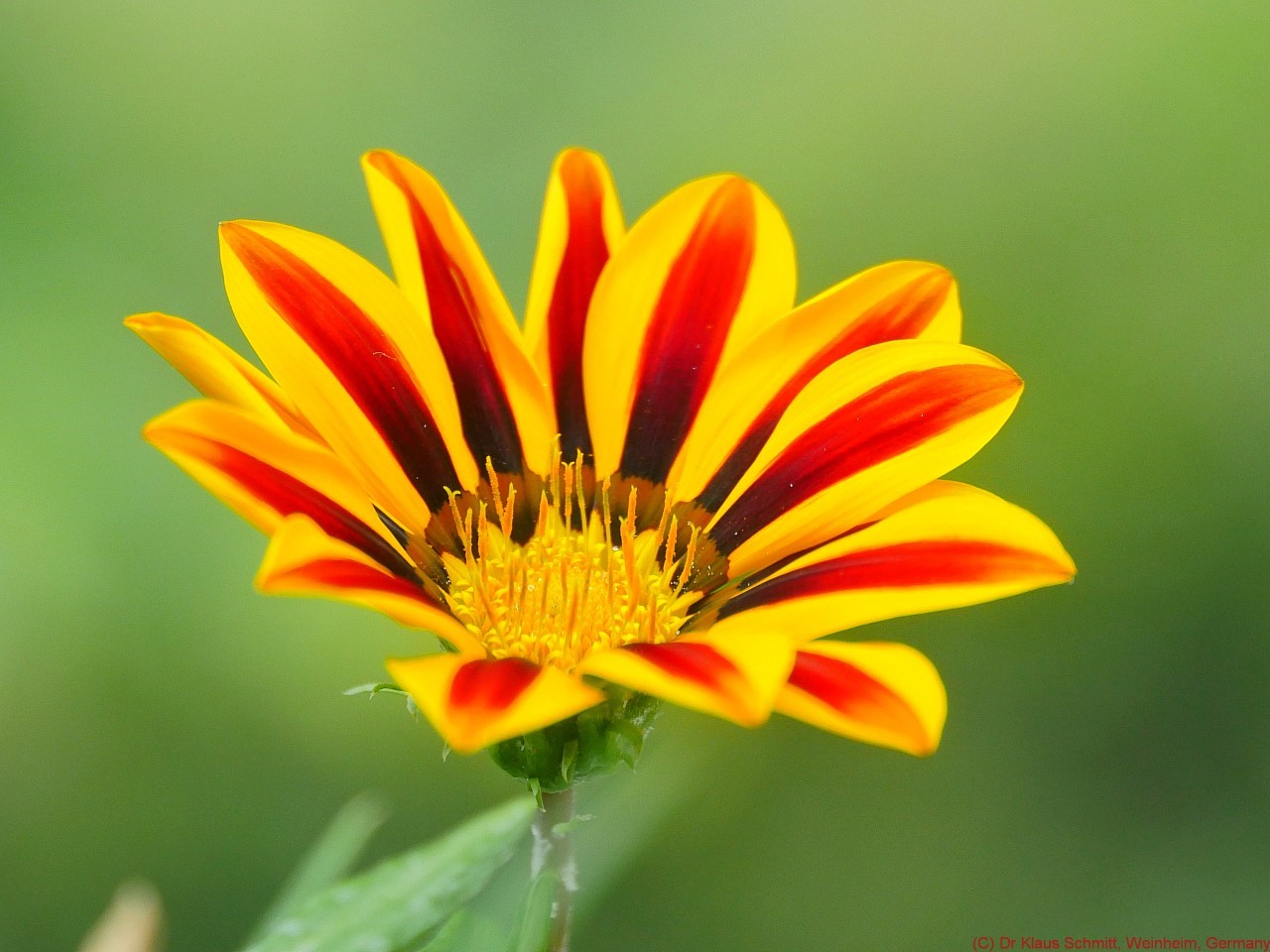
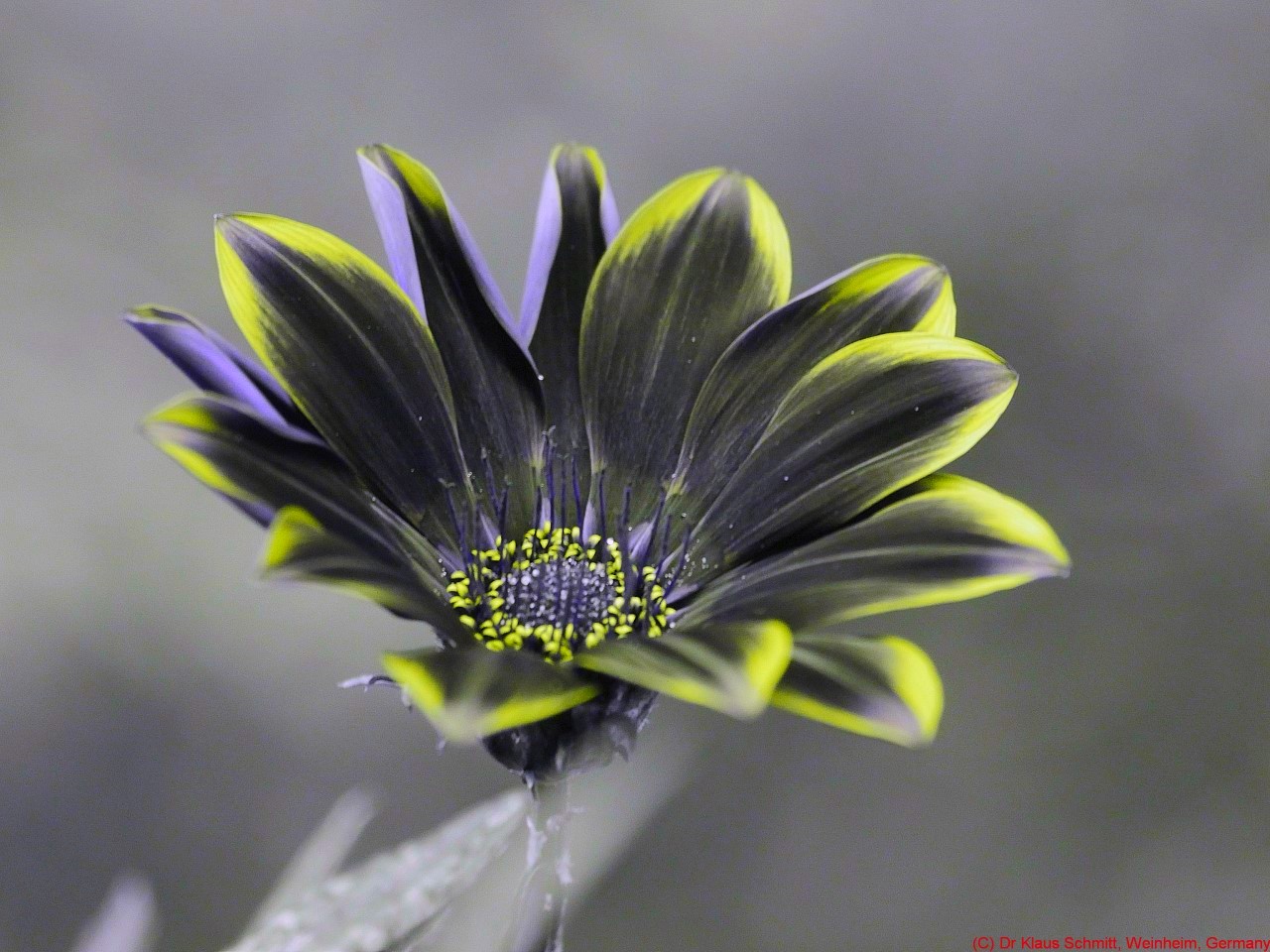
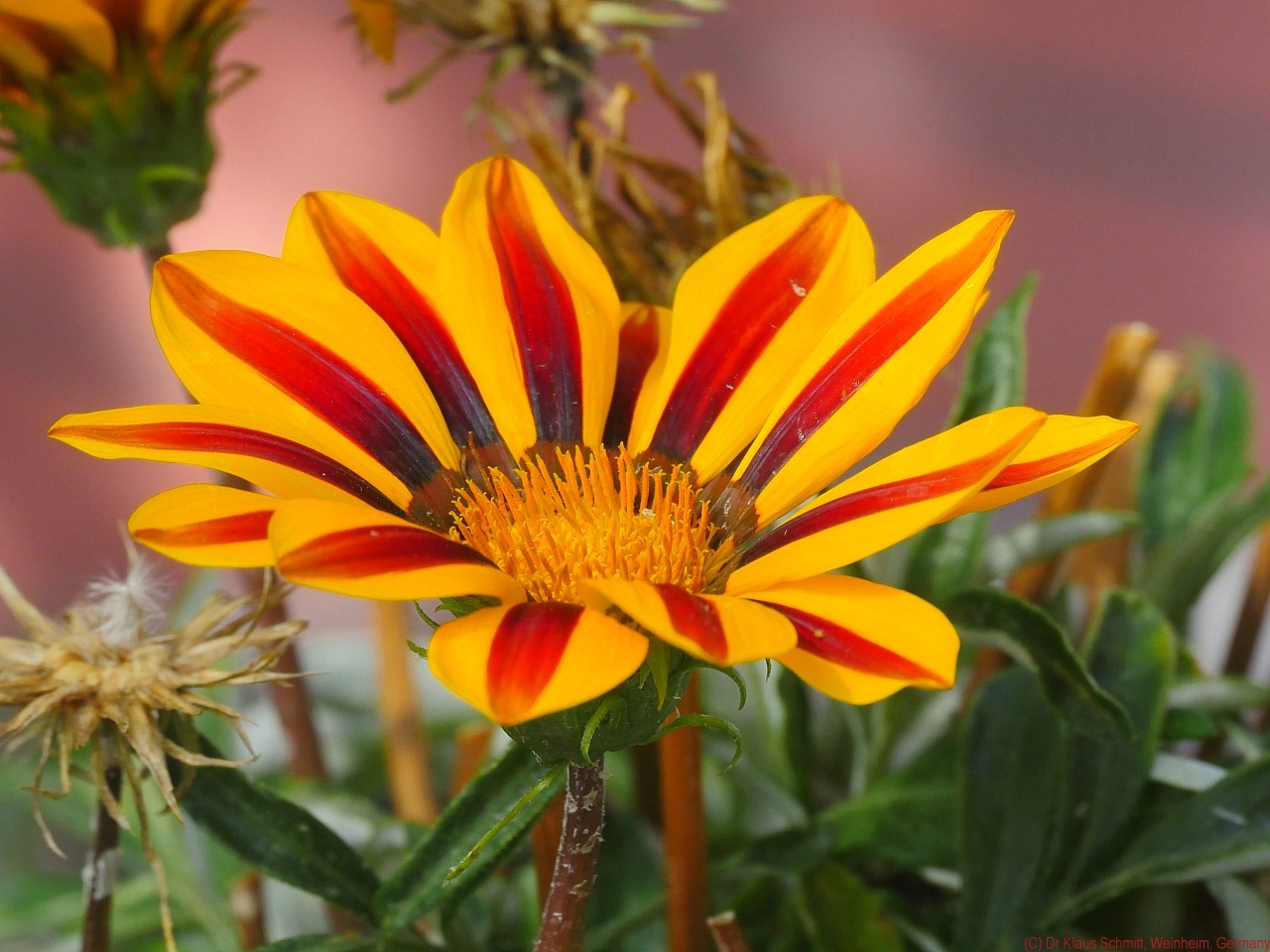
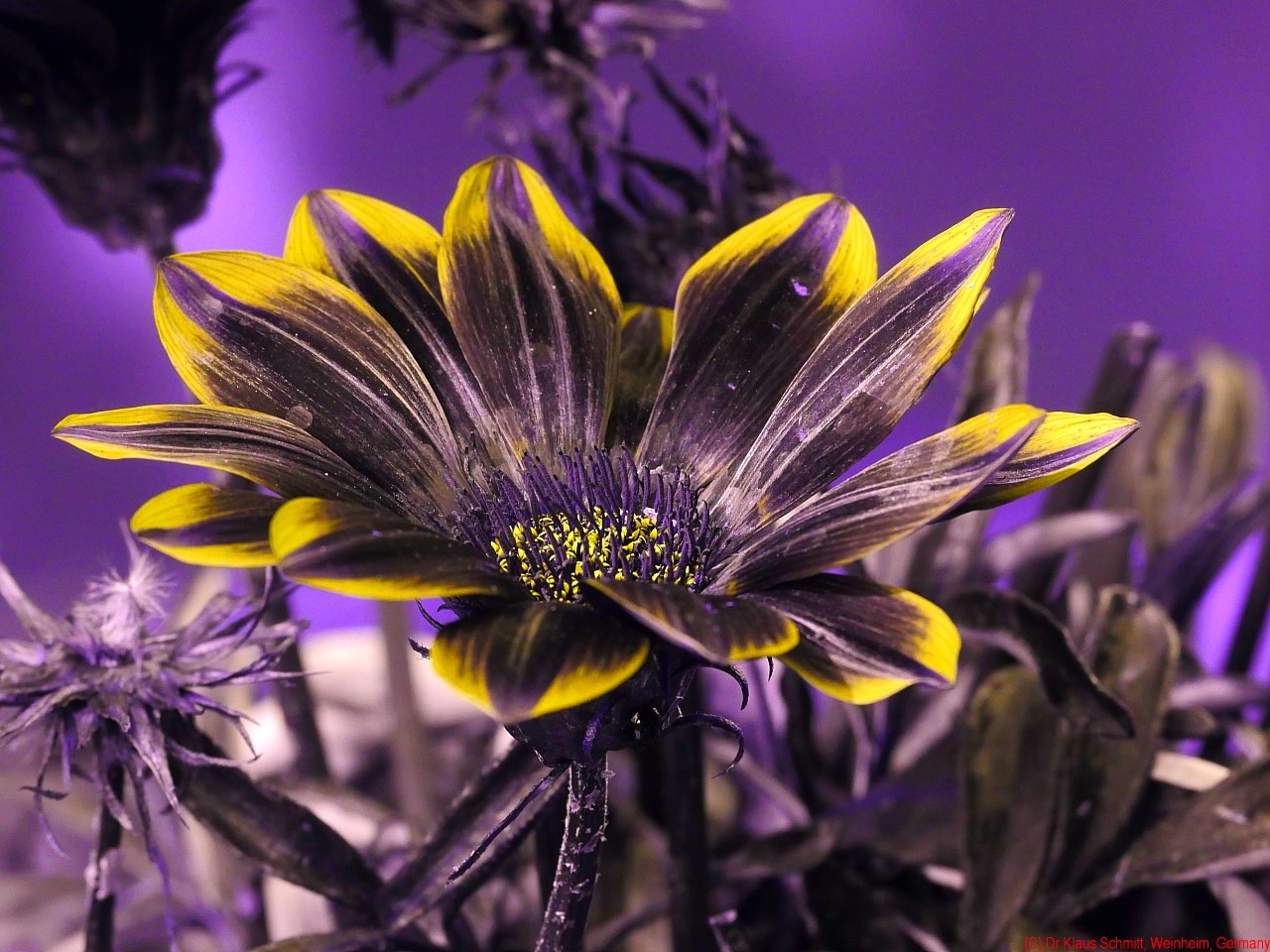
Today in Summer 2020 more outdoor shots of that long blooming orange-red Gazania flower, the Treasury flower - Gazania rigens shot in reflected ultraviolet photography, simulated bee and butterfly vision. All shots were done at f8 in reflected ultraviolet photography using my "work horse" UV filter, the Baader-U filter, as well as my XBV filters for simulated bee and butterfly vision. Lens was a UV-Nikkor 105mm quartz fluorite lens. Light source was sunlight (overcast).

[click on image to see a larger one]

Human vision:
 

Reflected UV:
 

Simulated butterfly vision:
 

Simulated bee vision:
 

Quadriptych of human vision, UV, simulated butterfly and bee vision (left to right, top to bottom):
 

This Gazania's outer petals strongly reflect UV around 365nm, whereas the inner petal parts are quite darker, hence forming UV nectar guides for UV seeing insects. There are also some highly UV reflecting marks inside around a dark UV center, all invisible to us humans, but clearly visible to bees and butterflies, and all this gets nicely visible here, also in simulated bee and butterfly vision.

I have written about this Gazania previously HERE
 
Stay tuned, more will follow on that fascinating subject...

More info on this very interesting field may be found on my site http://www.pbase.com/kds315/uv_photos

Monday, July 22, 2019

Treasury flower - Gazania rigens in reflected ultraviolet photography and simulated bee and butterfly vision XXVII

Today some outdoor shots of that long blooming flower, a orange-red Gazania flower, the Treasury flower - Gazania rigens shot in reflected ultraviolet photography, simulated bee and butterfly vision. All shots were done at f8 in reflected ultraviolet photography using my "work horse" UV filter, the Baader-U filter, as well as my XBV filters for simulated bee and butterfly vision. Lens was a UV-Nikkor 105mm quartz fluorite lens. Light source was sunlight.

[click on image to see a larger one]

Human vision:
 

Reflected UV:
 

Simulated butterfly vision:
 

Simulated bee vision:
 

Quadriptych of human vision, UV, simulated butterfly and bee vision (left to right, top to bottom):
 

This Gazania's outer petals strongly reflect UV around 365nm, whereas the inner petal parts are quite darker, hence forming UV nectar guides for UV seeing insects. There are also some highly UV reflecting marks inside around a dark UV center, all invisible to us humans, but clearly visible to bees and butterflies, and all this gets nicely visible here, also in simulated bee and butterfly vision.

I have written about this Gazania previously HERE
 
Stay tuned, more will follow on that fascinating subject...

More info on this very interesting field may be found on my site http://www.pbase.com/kds315/uv_photos

Monday, June 1, 2020

Treasury flower - Gazania rigens in reflected ultraviolet photography and simulated bee and butterfly vision XXXIII

Today in 2020 more outdoor shots of that long blooming whiteish Gazania flower, the Treasury flower - Gazania rigens shot in reflected ultraviolet photography, simulated bee and butterfly vision. All shots were done at f8 in reflected ultraviolet photography using my "work horse" UV filter, the Baader-U filter, as well as my XBV filters for simulated bee and butterfly vision. Lens was a UV-Nikkor 105mm quartz fluorite lens. Light source was sunlight (shade).

[click on image to see a larger one]

Human vision:
 

Reflected UV:
 

Simulated butterfly vision:
 

Simulated bee vision (version):
 

Quadriptych of human vision, UV, simulated butterfly and bee vision (left to right, top to bottom):
 

This Gazania's outer petals strongly reflect UV around 365nm, whereas the inner petal parts are quite darker, hence forming UV nectar guides for UV seeing insects. There are also some highly UV reflecting marks inside around a dark UV center, all invisible to us humans, but clearly visible to bees and butterflies, and all this gets nicely visible here, also in simulated bee and butterfly vision.

I have written about this Gazania previously HERE
 
Stay tuned, more will follow on that fascinating subject...

More info on this very interesting field may be found on my site http://www.pbase.com/kds315/uv_photos

Monday, May 7, 2018

Treasury flower - Gazania rigens in reflected ultraviolet photography and simulated bee and butterfly vision XXIV

Today studio shots of that new type, long blooming flower, an all yellow filled Gazania flower with small red dots at its petals inner end, a variant of a Treasury flower - Gazania rigens shot in reflected ultraviolet photography and simulated bee and butterfly vision. All shots were done at f11 in reflected ultraviolet photography using my "work horse" UV filter, the Baader-U filter, as well as my XBV filters for simulated bee and butterfly vision. Lens was a UV-Nikkor 105mm quartz fluorite lens. Light source was a modified Xenon flash.

[click on image to see a larger one]

Human vision:
 

Reflected UV:
 

Simulated butterfly vision:
 

Simulated bee vision:
 

Quadriptych of human vision, UV, simulated bee and butterfly vision (left to right, top to bottom):
 

This Gazania's outer petals reflect UV around 365nm, whereas the inner parts are quite darker, hence forming UV nectar guides for UV seeing insects. There are also highly UV reflecting marks inside around a dark UV center, all invisible to us humans but clearly visible to bees and butterflies, and all this gets nicely visible here, also in simulated bee and butterfly vision.

I have written about this Gazania previously HERE
 
Stay tuned, more will follow on that fascinating subject...

More info on this very interesting field may be found on my site http://www.pbase.com/kds315/uv_photos