Showing posts with label butterfly. Show all posts

Thursday, December 7, 2023

My multispectral works in High Energy Physics presentation

Well, I never would have expected to see my work in a scientists presentation about most modern high energy particle theories in physics: The German Physicist Dr Michael Weinert has recently been using (with my permission of course) some of my multispectral works in his presentation on high energy particle physics! Source:  "Weinert COMEX7 2023".

Those shown multispectral images of mine where shot in my studio with my "work horse" UV-Nikkor f4.5/105mm quartz fluorite lens using the Baader UV/IR Cut filter and my proprietary XBV filters for simulated bee + butterfly vision. Light source in studio used was a Xenon flash modified for high UV output outside.

[click on image to see a larger one]

Visual image:


UV induced visible fluorescence using unfiltered commercial 365nm UV torch, no UV blocking:


UV induced visible fluorescence commercial 365nm UV torch, UV blocking:


UV induced visible fluorescence using Nichia 365nm UV torch, UV blocking:

Stay tuned, more will follow on that fascinating subject...

More info on this very interesting field may be found on my site http://www.pbase.com/kds315/uv_photos

Friday, August 17, 2018

Exhibit at Museum Mensch und Natur, Nymphenburg Palace, Munich, Bavaria Germany II

Today more about that German Museum, Mensch und Natur (Museum of Man and Nature) located at the famous Nymphenburg Palace in Munich, Bavaria, Germany which I support with my images for a now open exhibit about insects named "Knallbunt und unsichtbar" ("extremely colorful and invisible") which will be shown July 6 - November 4, 2018. It includes works of mine about (simulated) butterfly and bee vision.

[click on image to see a larger one]

Here now a few shots I got from the Museum about this exhibit:


all images (C) Museum Mensch und Natur

The exhibits shows the difference of our human vision and the vision of butterflies and bees (simulated) using special viewers under each image.

I'm wishing the museum and its visitors a successful exhibit, certainly worth going to with family and friends!

I have written about that previously HERE

Stay tuned, more will follow on that fascinating subject...

More info on this very interesting field may be found on my site http://www.pbase.com/kds315/uv_photos

Tuesday, July 10, 2018

Exhibit at Museum Mensch und Natur, Nymphenburg Palace, Munich, Bavaria Germany

Today about a German Museum, Mensch und Natur ("Human and Nature") located in the famous Nymphenburg Palace in Munich, Bavaria, Germany which I support with my images for a forthcoming exhibit about insects named "Knallbunt und unsichtbar" ("extremely colorful and invisible") which will be shown July 6 - November 4, 2018. It will include works of mine about (simulated) butterfly and bee vision.

[click on image to see a larger one]

Here showing some of the images which will be on display, a Gazania rigens flower, in a Quadriptych of human vision, UV, and simulated bee and butterfly vision (left to right, top to bottom):


This flowers outer petals reflect UV around 365nm, whereas the inner parts are quite darker, hence forming UV nectar guides for UV seeing insects. There are also highly UV reflecting marks inside around a dark UV center, all invisible to us humans but clearly visible to bees and butterflies, and all this gets nicely visible here, especially in simulated bee and butterfly vision.

I'm wishing the museum and its visitors a successful exhibit, certainly worth going to with family and friends!

Stay tuned, more will follow on that fascinating subject...

More info on this very interesting field may be found on my site http://www.pbase.com/kds315/uv_photos

Friday, July 20, 2012

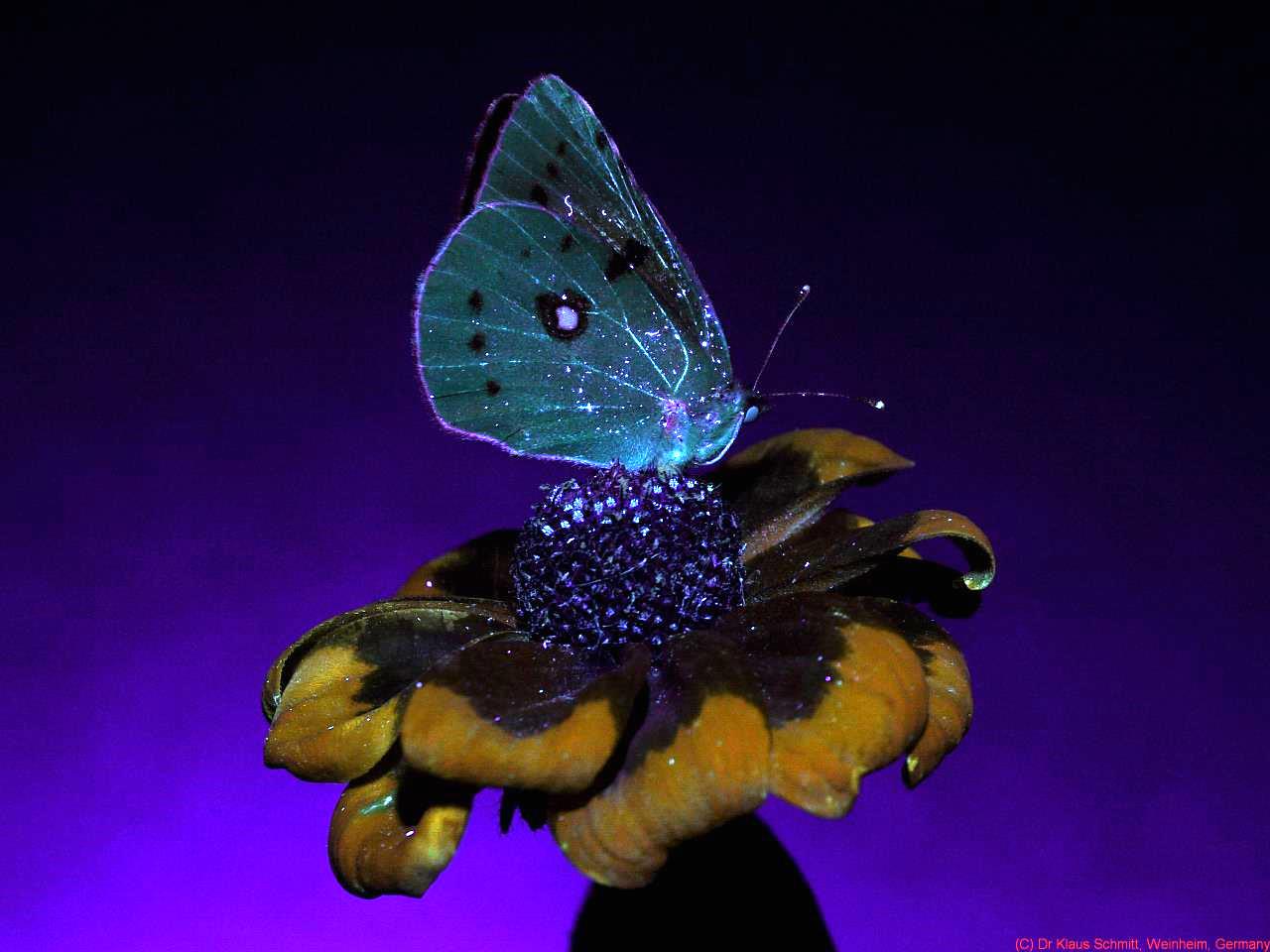
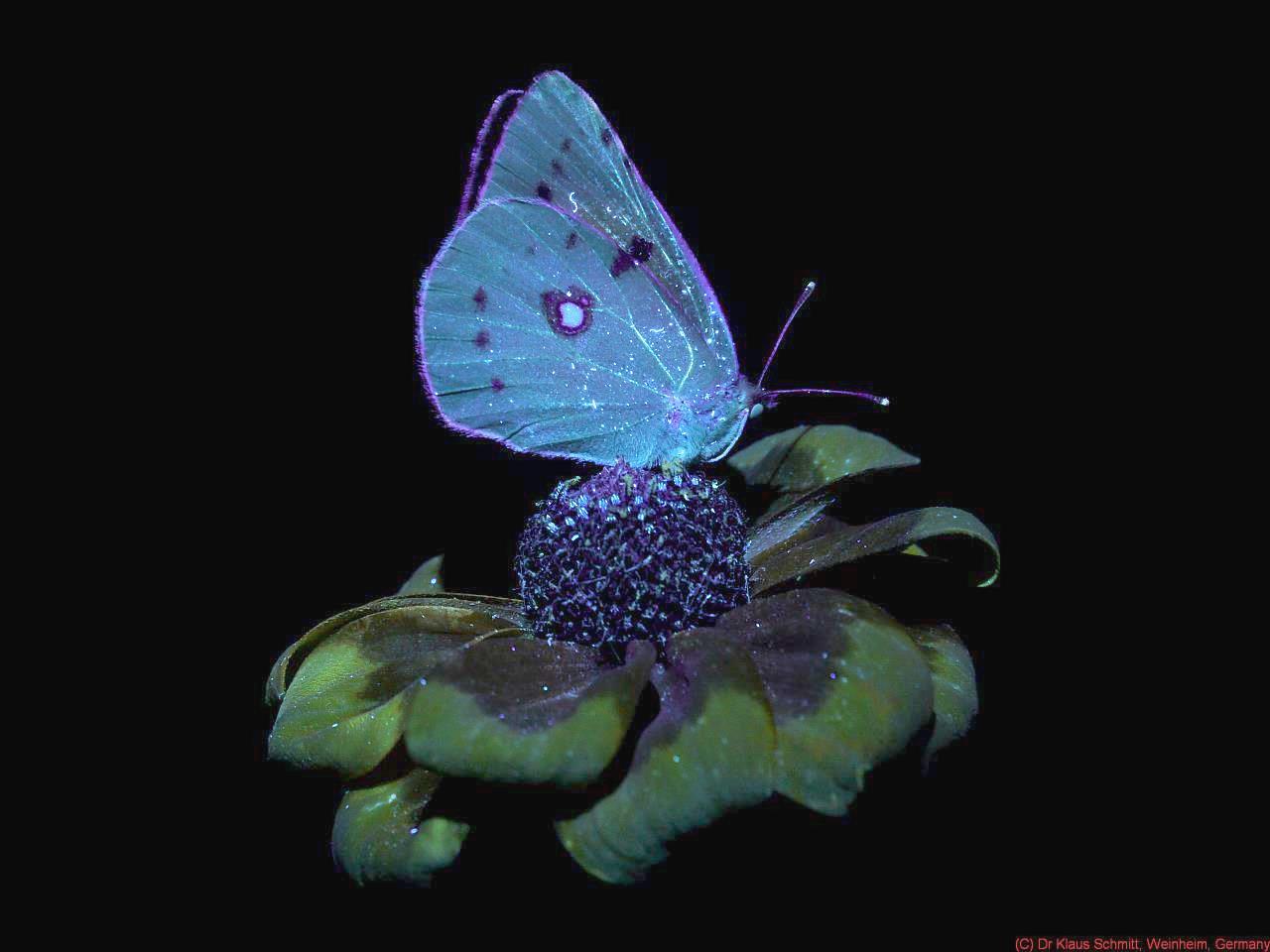
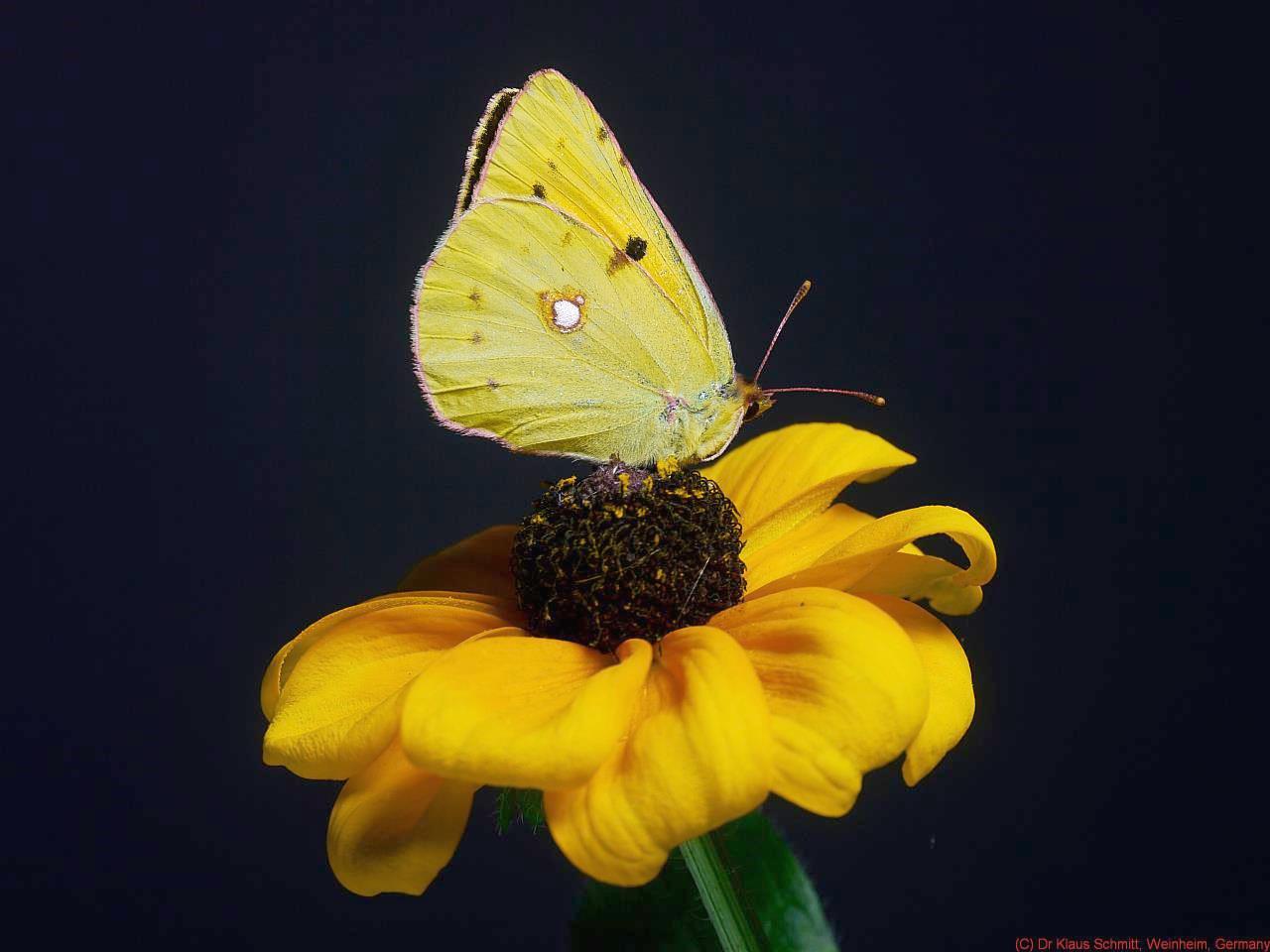
Gonepteryx cleopatra "Cleo" butterfly on Rudbeckia hirta: human vision; UV ultraviolet stimulated visible fluorescence photography

Here now after having shown it in bee vision and reflected ultraviolet photography that Cleo butterfly Gonepteryx cleopatra or Cleopatra, resting on a Rudbeckia hirta flower. Now here shown in normal visible as well as UV induced stimulated visible fluorescence, using various UV sources as well as blocking filters (BG38, Baader UV/IR CUT filter).

[click on image to see a larger one]

Visual image:


UV induced visible fluorescence using unfiltered commercial 365nm UV torch, no UV blocking:


UV induced visible fluorescence commercial 365nm UV torch, UV blocking:


UV induced visible fluorescence using Nichia 365nm UV torch, UV blocking:
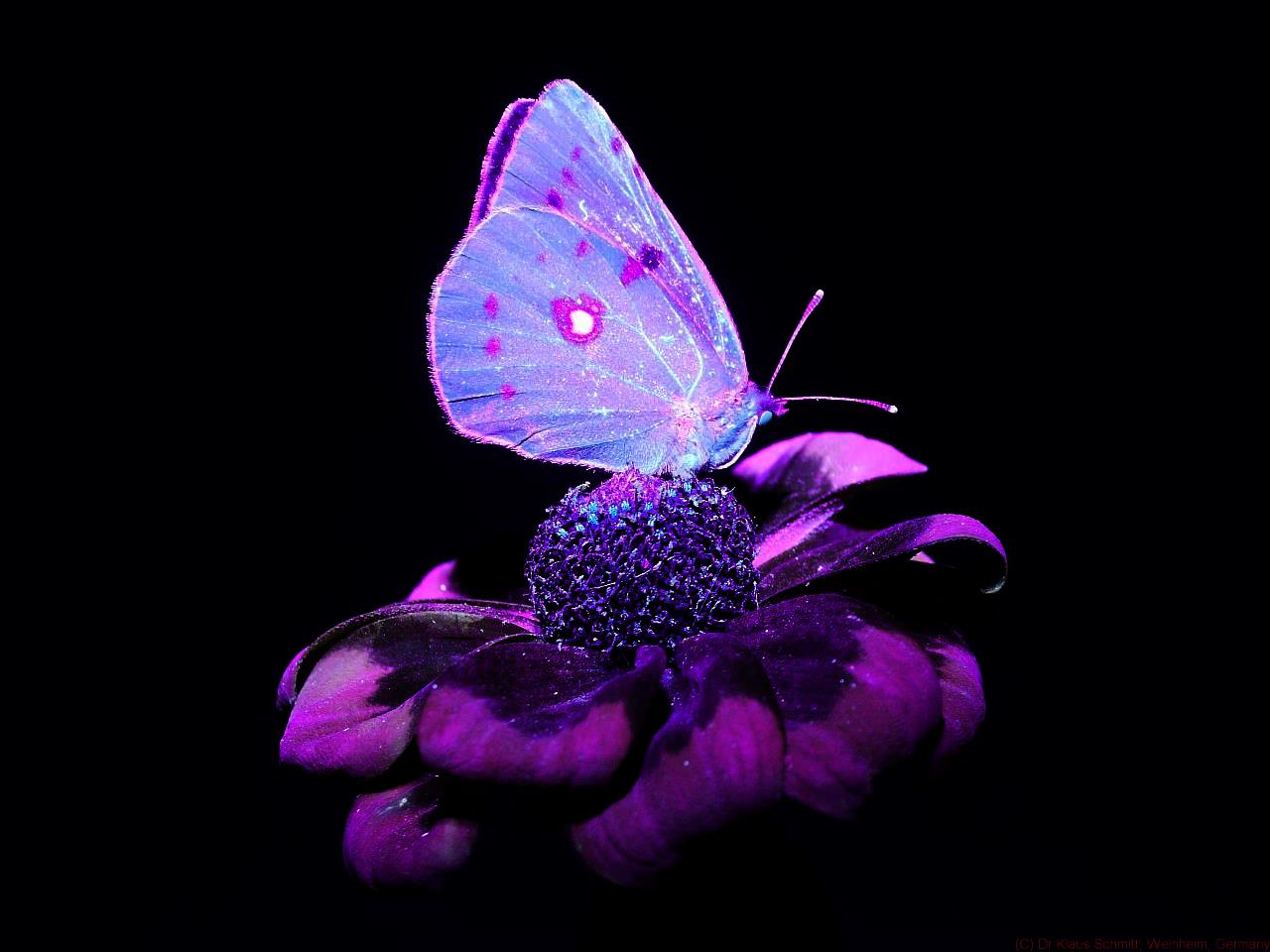

UV induced visible fluorescence using UV filtered Nichia 365nm UV torch, UV blocking:
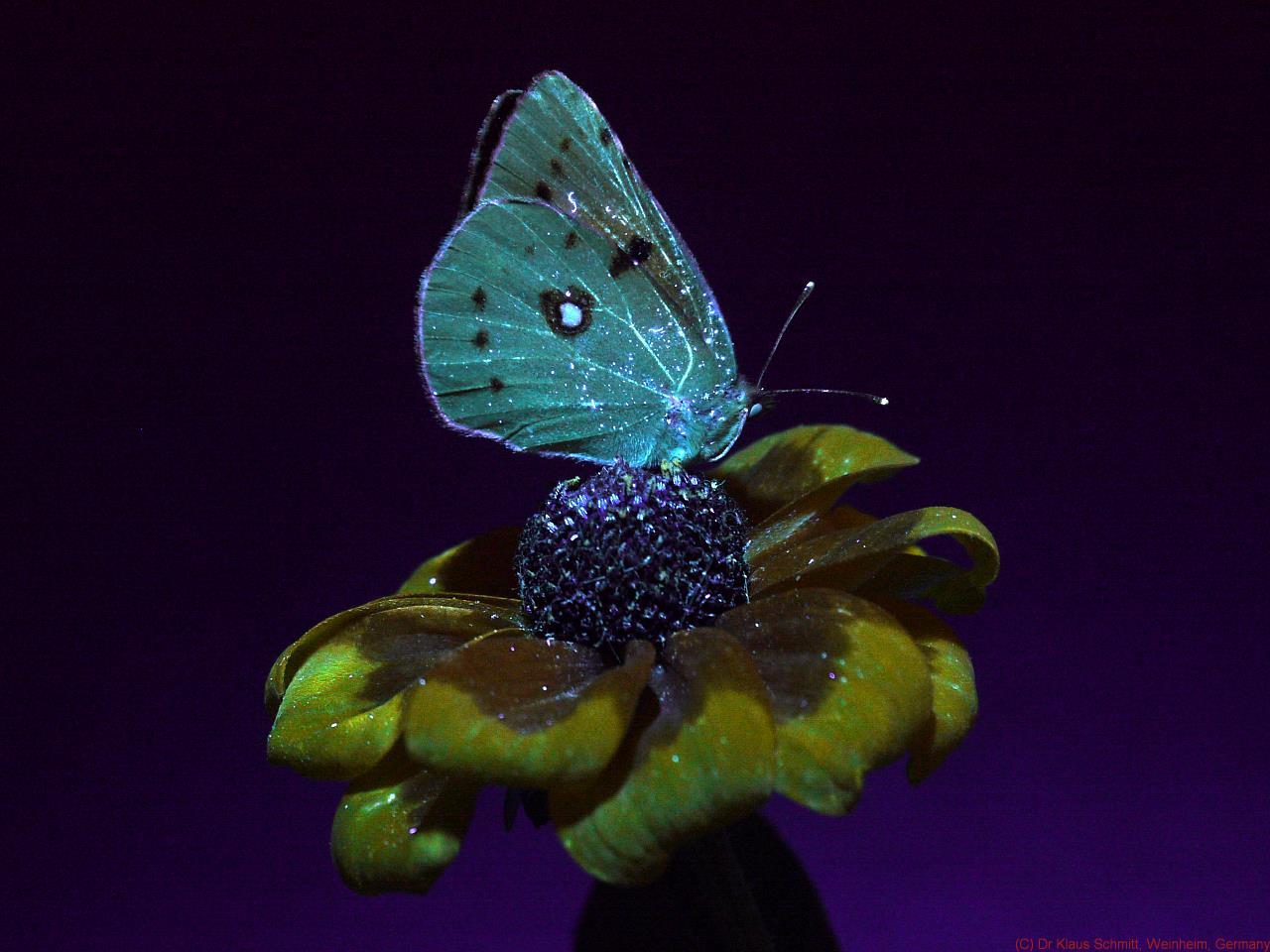


Nice results and a a lot of details on the wings gets visible using fluorescence method, yet personally I prefer reflected UV photography.


Stay tuned, more will follow on that fascinating subject...

More info on this very interesting field may be found on my site http://www.pbase.com/kds315/uv_photos

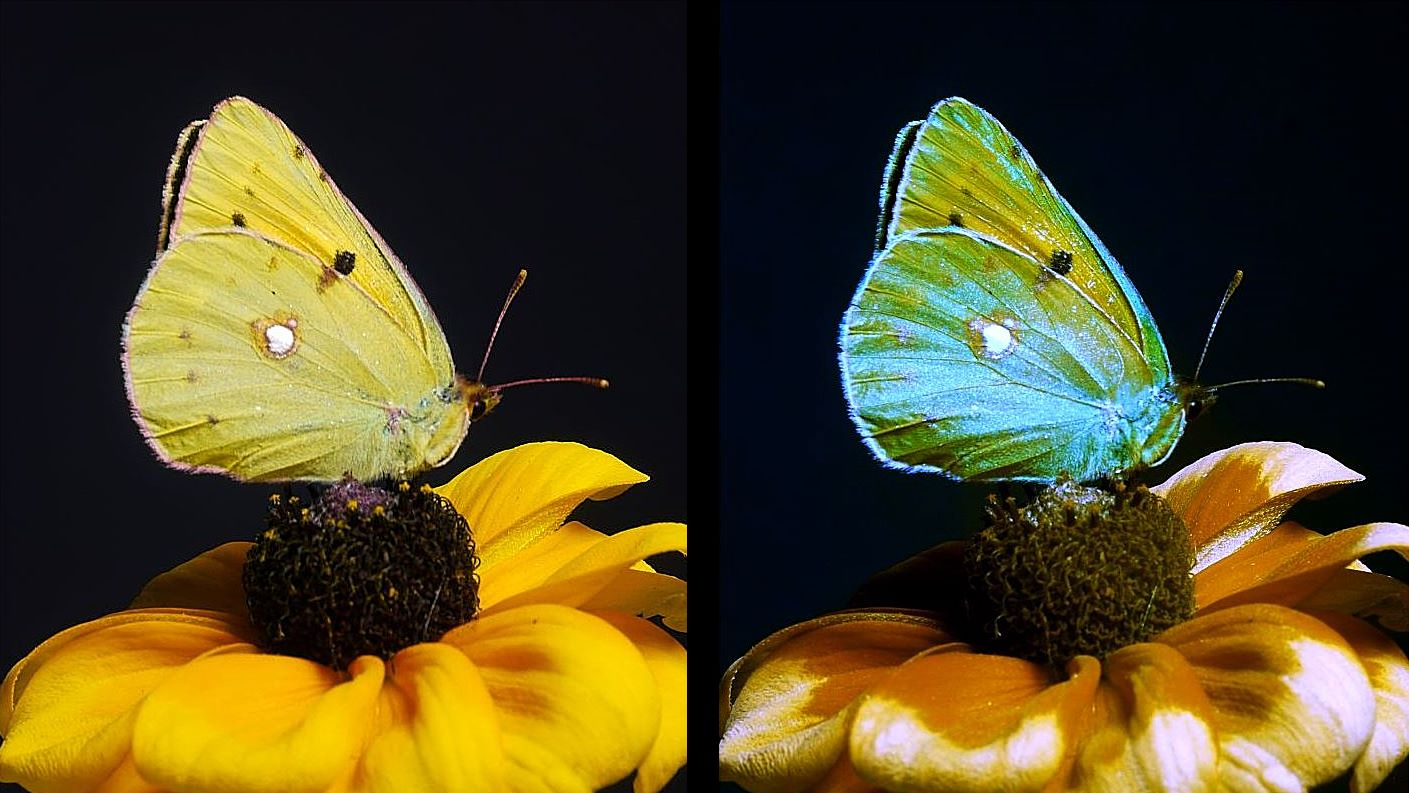
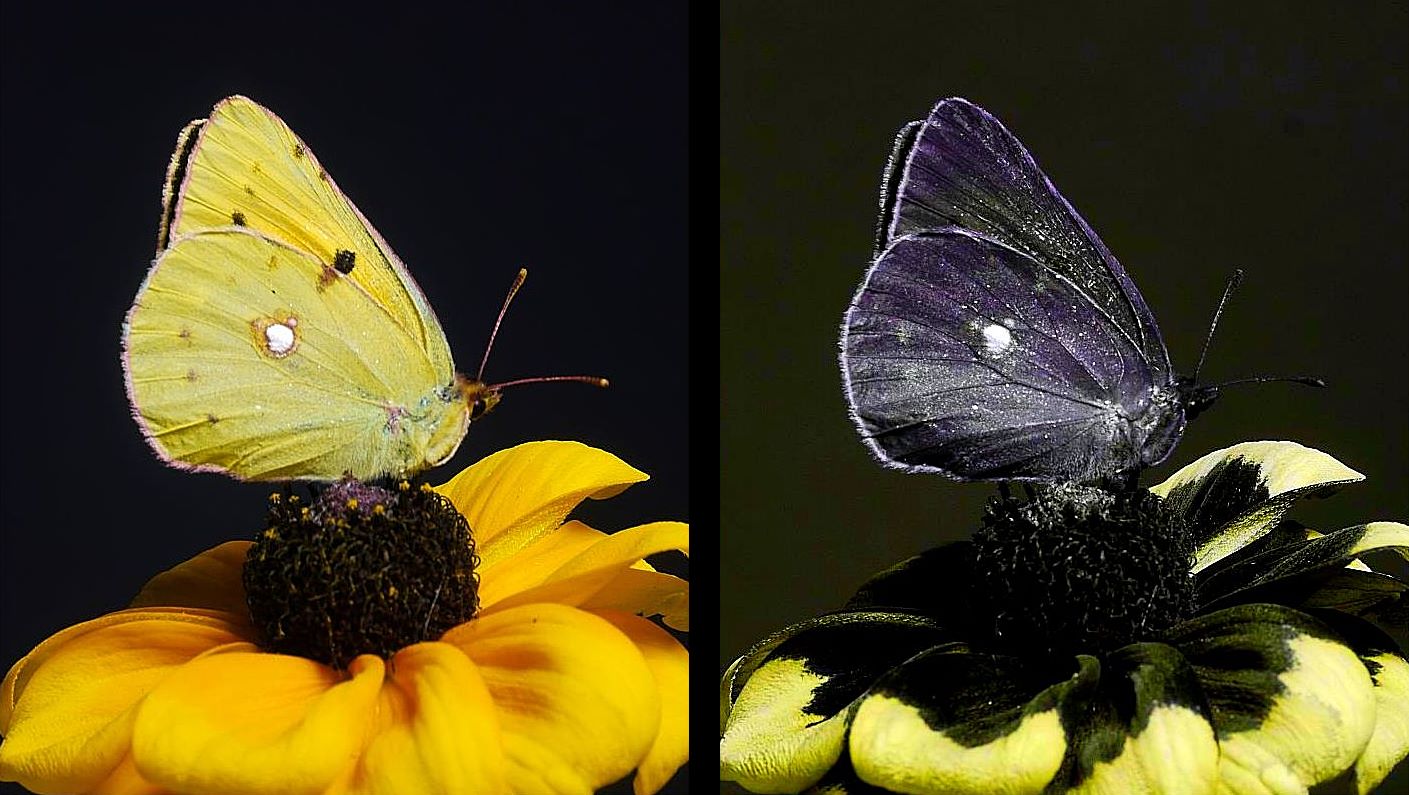
Gonepteryx cleopatra "Cleo" butterfly on Rudbeckia hirta: human vision vs simulated bee and butterfly vison; reflected UV ultraviolet photography

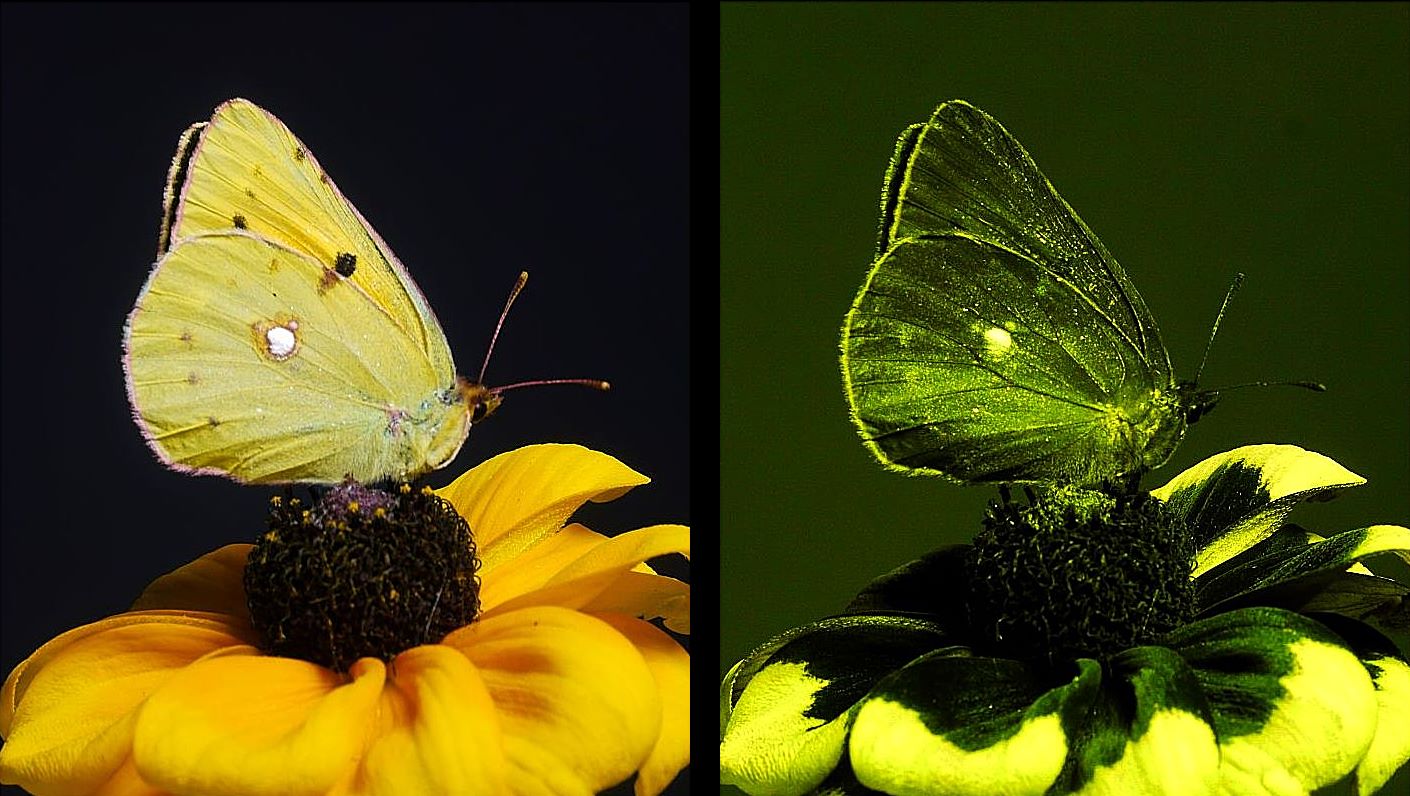
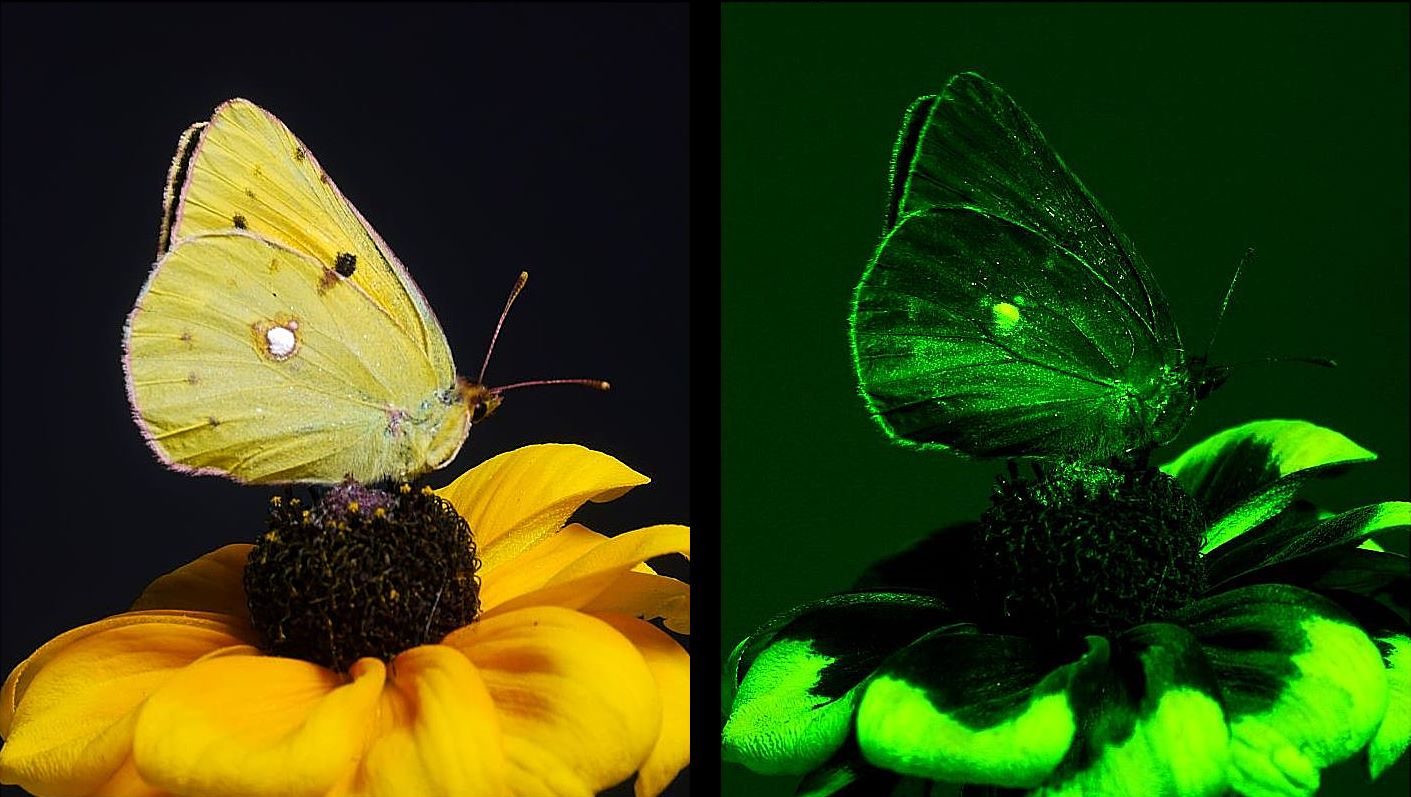
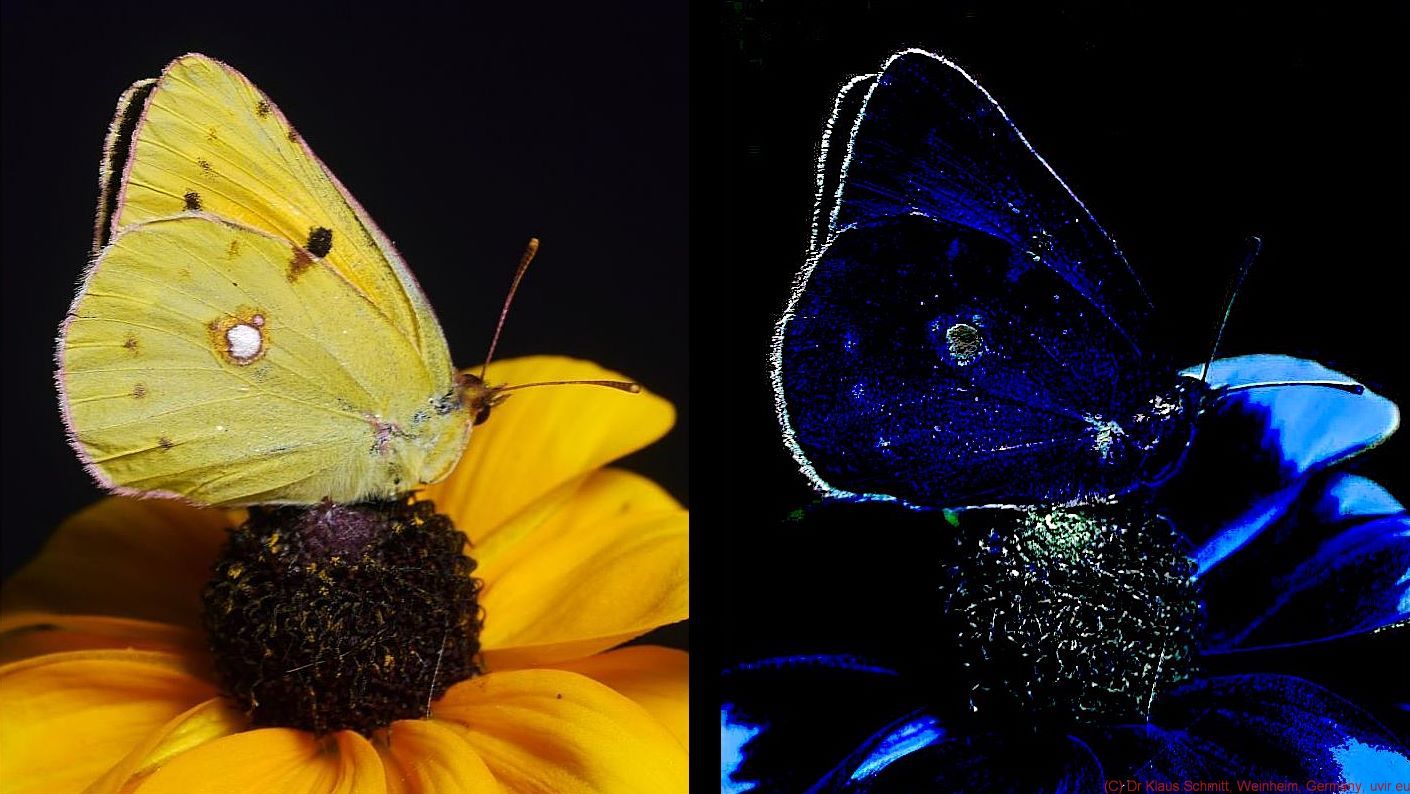
Today about a butterfly Gonepteryx cleopatra or Cleopatra, short "Cleo". So here it is in its multispectral representation, resting on a Rudbeckia hirta flower. I took some shots in normal human vision VIS, in UV using the Baader-U (eff. 375nm) and my Jupiter-U (eff. 365nm) and Saturn-U (eff. 325nm) filter, as well as in simulated bee and butterly vision using my XBV2 and XBV3 filters respectively.

I'm presenting all of them in diptych form, VIS image (left) vs filtered image (right)

[click on image to see a larger one]

VIS vs simulated insect vison using XBV2 filter:


VIS vs simulated insect vison using XBV3 filter:


VIS vs Baader-U (eff. 375nm):


VIS vs Jupiter-U (eff. 365nm):


VIS vs Saturn-U (eff. 325nm):


Quite interesting how that butterfly appears is different spectral representations. Obviously that spot as well as its UV bright rim around its wings is made to attract, which I made visible using my differential method (right):


As you may have noticed, I'm still working on my bee and butterfly vision (BV) filters. More about these special filters here later and in a seperate entry.


Stay tuned, more will follow on that fascinating subject...

More info on this very interesting field may be found on my site http://www.pbase.com/kds315/uv_photos

Thursday, July 15, 2010

Rudbeckia hirta flower bottom up

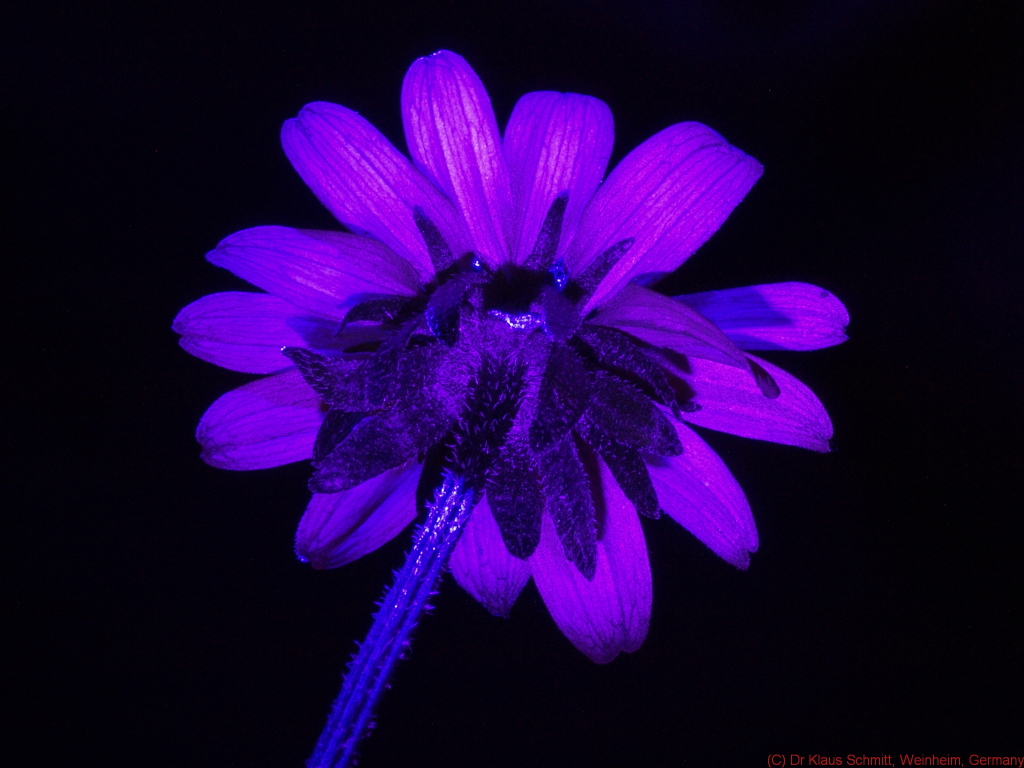
This is again about a Rudbeckia hirta a flower but this time shot bottum up.

[click on image to see a large image]

UV LED lit showing visible NIR fluorescence 


butterfly vision image shot using Xenon light:


Visible image shot using Xenon light 


Visible stereo image (for crosseyed viewing)


Stay tuned, more will follow on that fascinating subject...

More info on this very interesting field may be found on my site http://www.pbase.com/kds315/uv_photos

Sunday, June 6, 2010

Sanvitalia (Creeping Zinnia) 3D Stereoscopic Butterfly Vision

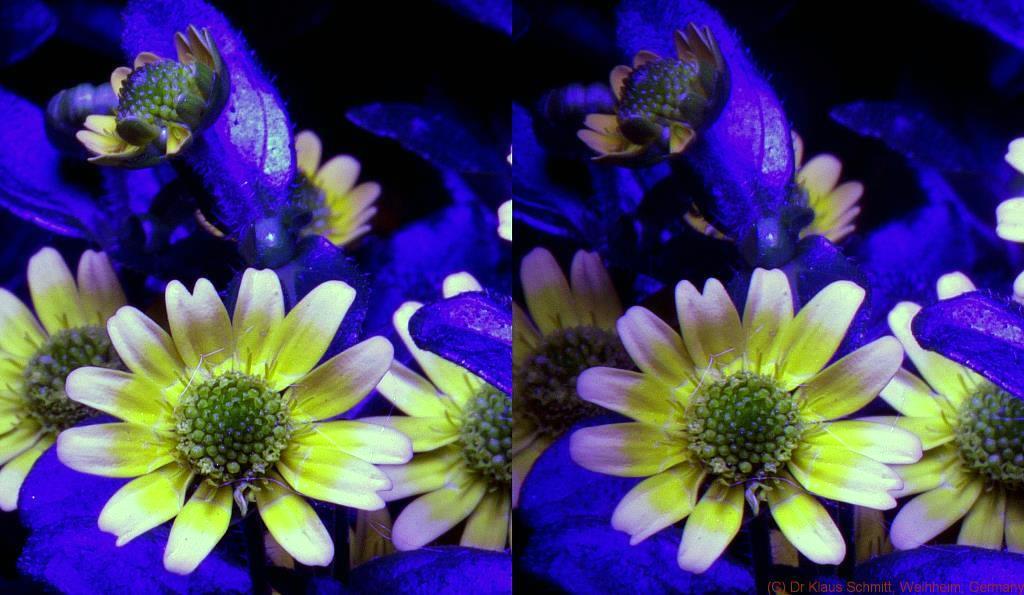
Here a test shot of a Creeping Zinnia "Sanvitalia procumbens" flower, using a 2 shot stereo method with my UV-Rodagon 5.6/105mm lens. This is for cross eye viewing.

[click on image to see a larger one]

First some visible light shot (actually that was filtered out using the Baader UV/IR Cut filter and the rest setup was the same, to make sure I'm not seeing UV induced visible fluorescence):


Simulated Butterfly Vision (UV=blue) using my XBV2 filter: 


and another one: 


Sanvitalia is difficult to bring out the UV pattern, as that one happens much deeper in the UV region as with other flowers having that.


Stay tuned, more will follow on that fascinating subject...

More info on this very interesting field may be found on my site http://www.pbase.com/kds315/uv_photos

Friday, July 10, 2009

Gaillardia "Summerwind"

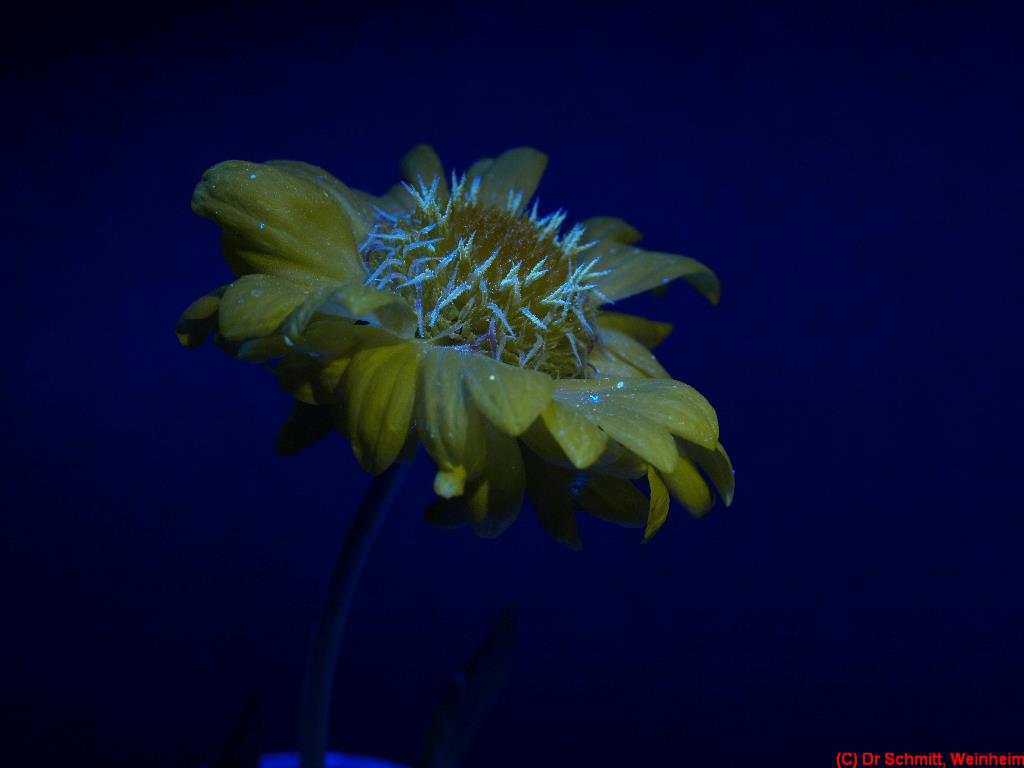
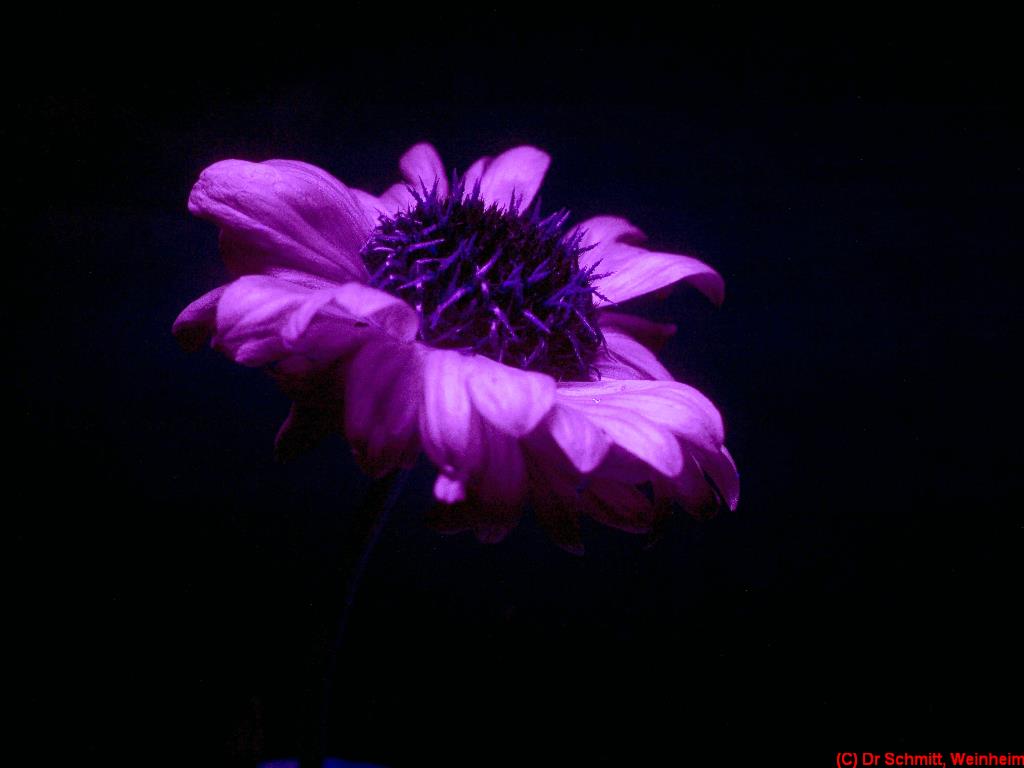
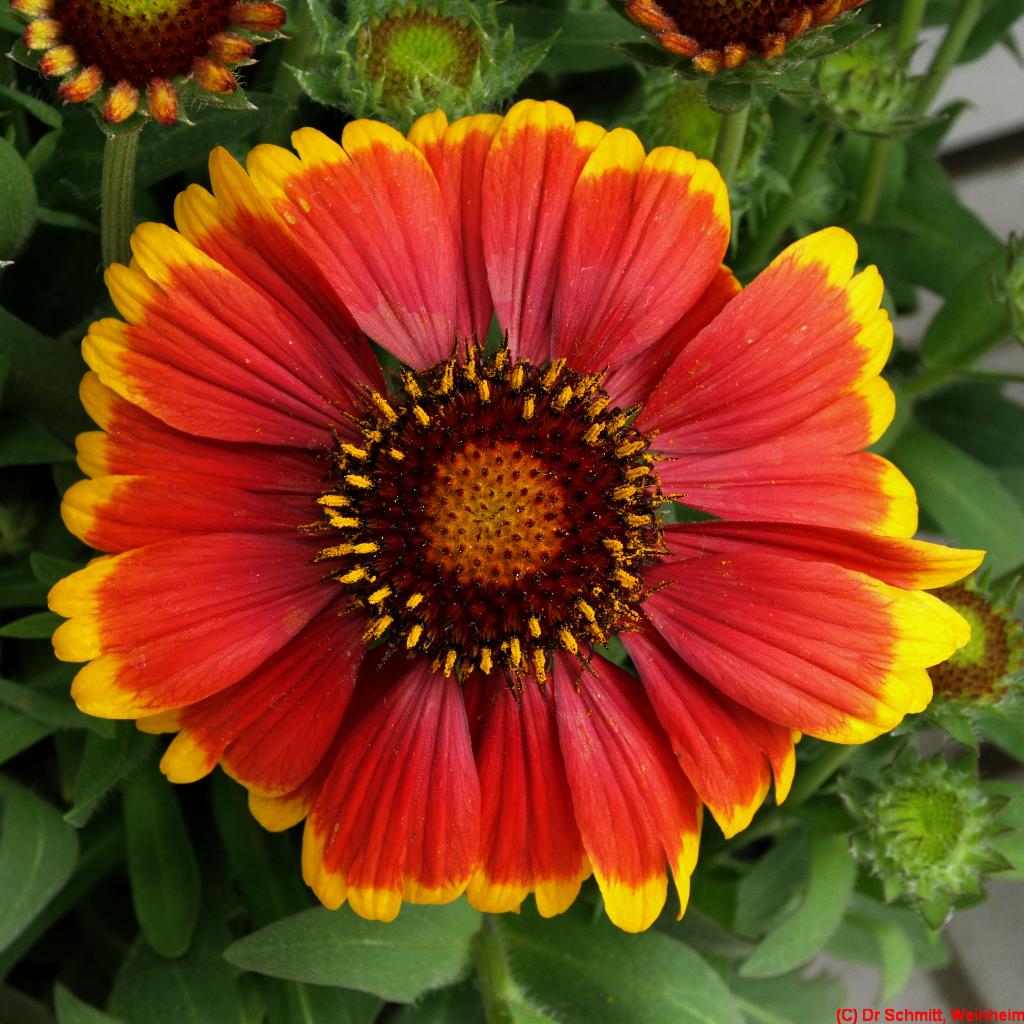
Well, I found a previously unknown (to me), pure yellow species of Gaillardia. Since that type of flower showed so many surprising aspects, I wanted to see what this new one hides from the human eye....

[click on image yields a larger one]

This now is the visual appearance as we humans are used to see:


The tetrachromatic image ("butterfly" shot) (UV+B+G+R) using XBV2 filter:


The trichromatic image ("bee vision" shot) (UV+B+G) using XBV2 filter:


This is the UV induced fluorescence shot using XCUT2 filter:


and this the reflected UV shot using XUVIR filter:


Well, also that flower shows some surprising properties ...

Stay tuned, more will follow on that fascinating subject...

More info on this very interesting field may be found on my site http://www.pbase.com/kds315/uv_photos

Wednesday, June 10, 2009

Gaillardia - trichromatic bee vision

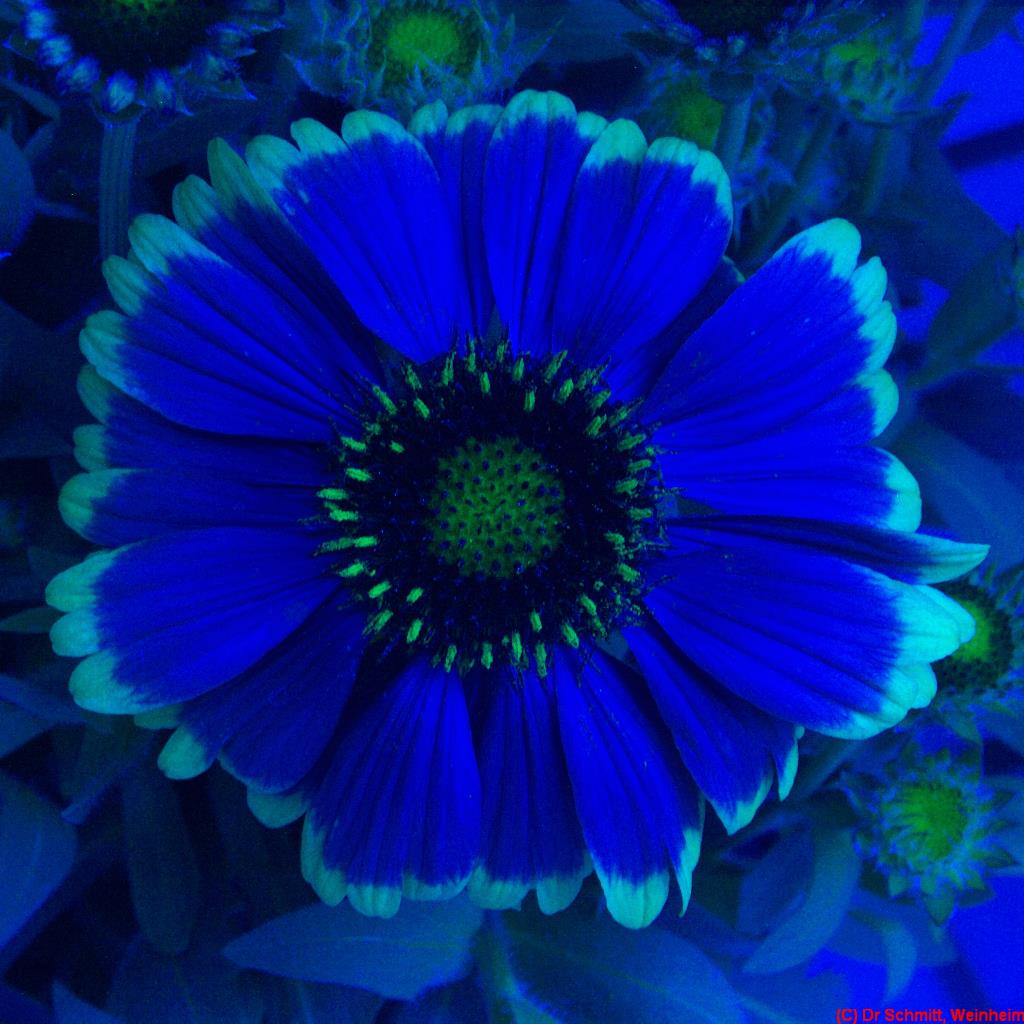
This is about an interesting find, when I was wondering around in parks taking shots using my "bee vision" filter XBV2. I know that prominent "Gaillardia" flower since I was a kid, but I never thought that it would exhibit some prominent UV pattern - but it does! Have alook at my results, before we discuss that:

[click on image yields a larger one]

VIS shot:


simulated tetrachromatic vision ("butterfly vision" shot) (UV+B+G+R) using XBV2 filter:


simulated trichromatic vision ("bee vision" shot) (UV+B+G) using XBV2 filter:


I found it especially fascinating, that the red part of that prominent Gaillardia pattern has a very strong UV reflectance, accompanied by a prominent pattern the petal tips exhibits (UV+Green) so as to generate that "heliport landing spot" pattern. Is it just a coincidence that the pollen exhibits the very same color (and do I see some fluorescence there - to make the pollen look even brighter??)

Stay tuned, more will follow on that fascinating subject...

More info on this very interesting field may be found on my site http://www.pbase.com/kds315/uv_photos