Showing posts with label Lewisia. Show all posts

Tuesday, May 5, 2020

Surprising STEINHEIL f2.8/50mm lens for reflected UV photography VI - Lewisia differentials

I got this mentioned older lens, which was made decades ago by famous lens maker STEINHEIL . It is a possibly single coated, well made 2.8/50mm lens which attracted me, since it showed some good UV transmission which I have previously shown here. Now today some outdoor shots at f11, light source was overcast sky. Target was a Lewisia cotylodon flower. But this time a bit different images - Differentials, which shows the difference of two images.

[click on image gets you a larger image]

VIS image using UV/IR Cut filter:
 

UV image using Baader-U filter:
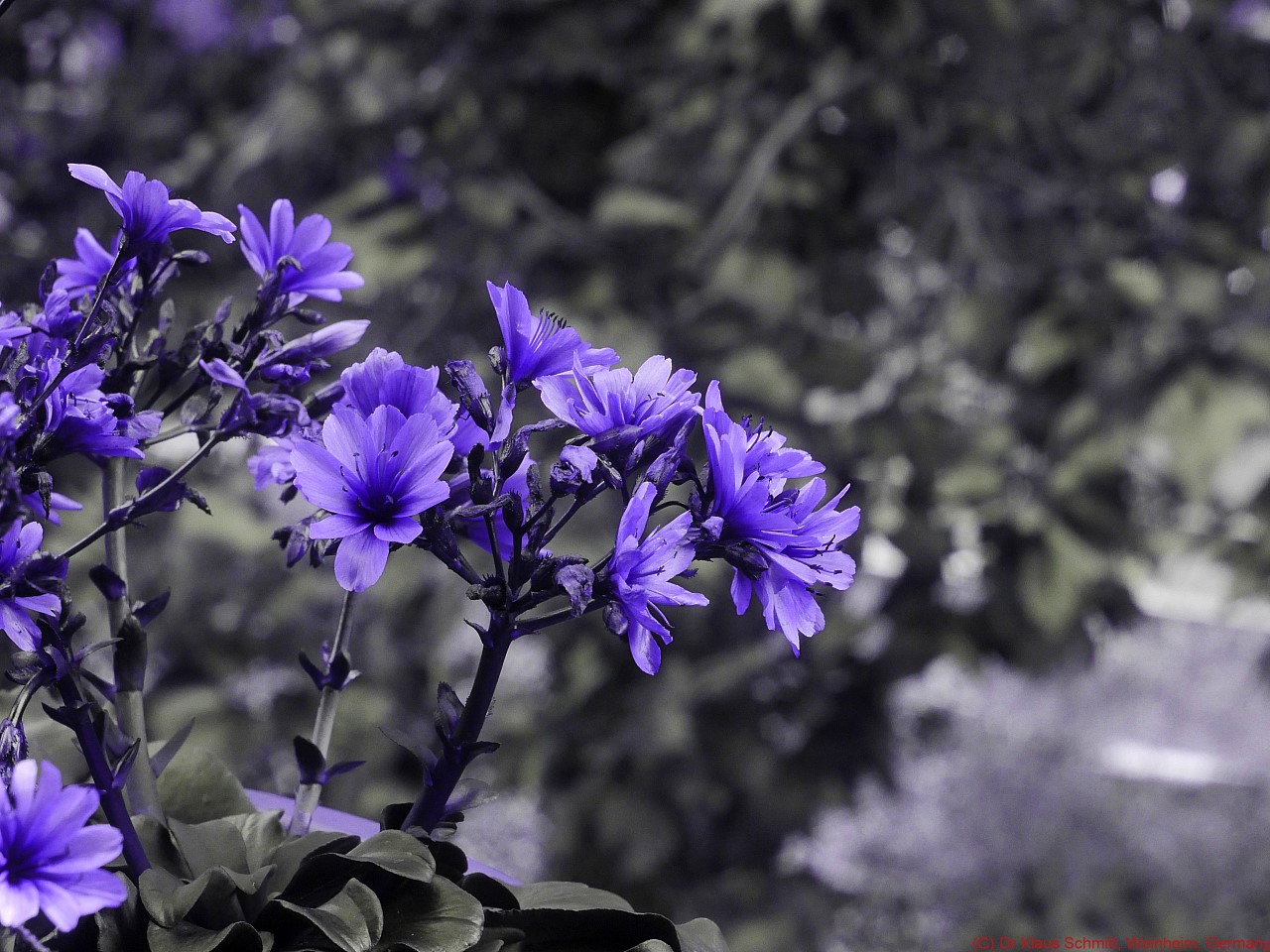
 

Simulated butterfly vision:
 

Simulated bee vision:
 

VIS - UV differential image:
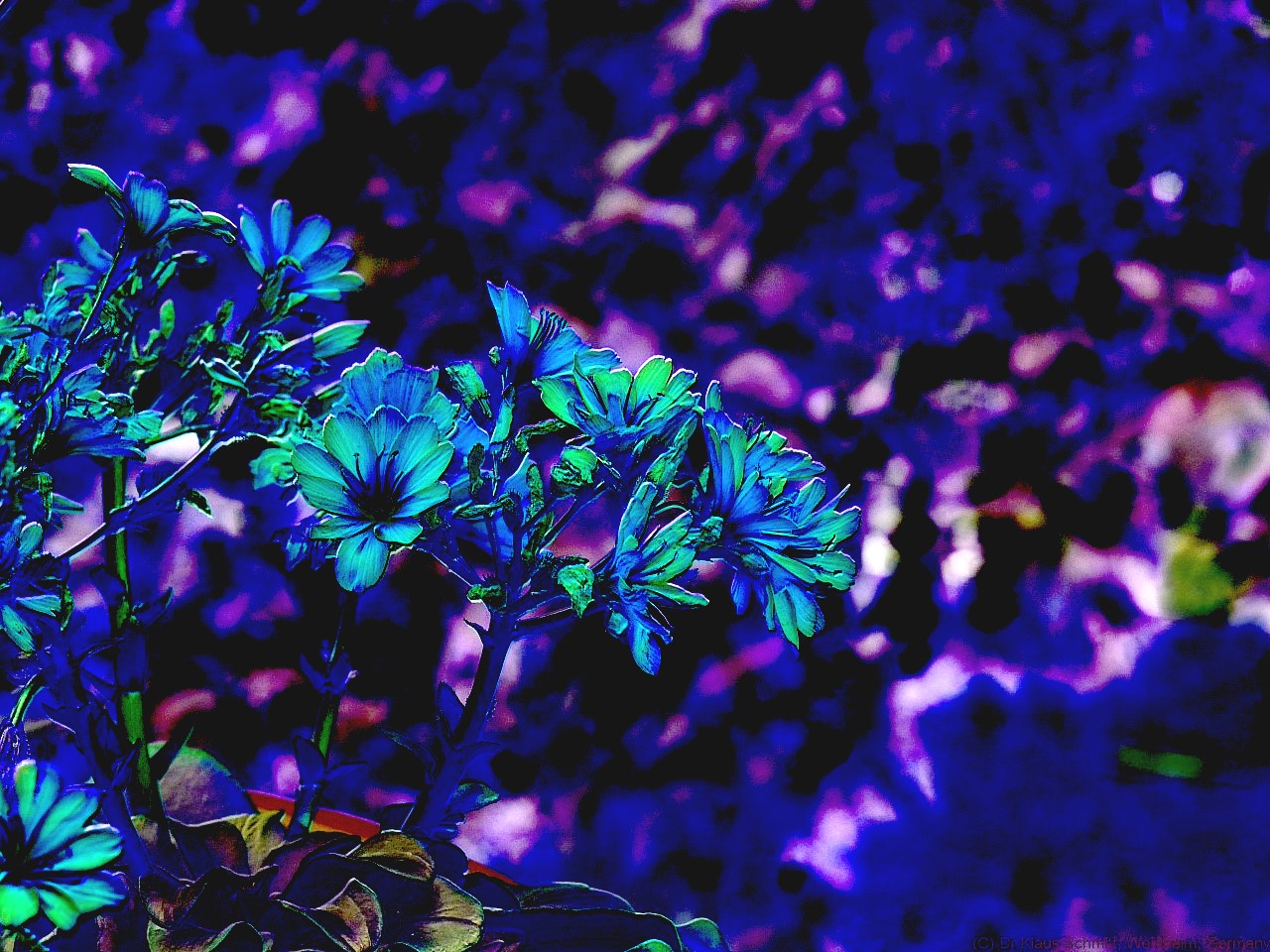
 

VIS - UV differential image, color swap:
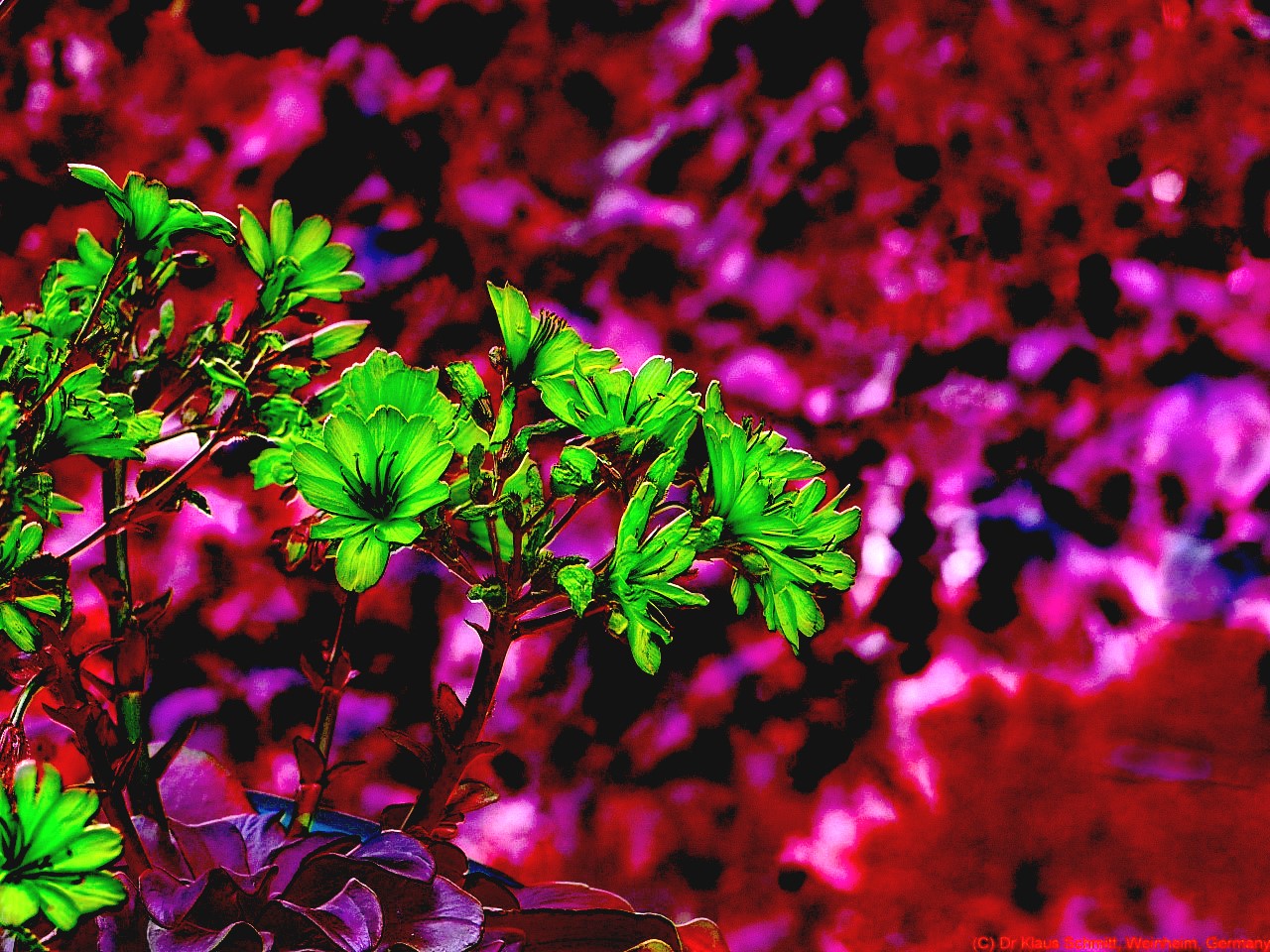
 

VIS - Simulated butterfly vision differential:
 

VIS - Simulated bee vision differential:


Lewisia has a visible UV pattern, its petal tips are UV bright around 385nm, its center is UV dark, so this gets quite nicely visible as differentials, also in simulated butterfly and bee vision using this astonishing lens.

I have written more about that flower HERE 

I have written about that used lens HERE.

Stay tuned, more will follow on that fascinating subject...

More info on this very interesting field may be found on my site http://www.pbase.com/kds315/uv_photos

Surprising STEINHEIL f2.8/50mm lens for reflected UV photography V - Lewisia

I got this mentioned older lens, which was made decades ago by famous lens maker STEINHEIL . It is a possibly single coated, well made 2.8/50mm lens which attracted me, since it showed some good UV transmission which I have previously shown. Now today some outdoor shots at f11, light source was overcast sky. Target was a Lewisia cotylodon flower.

[click on image gets you a larger image]

VIS image using UV/IR Cut filter:
 

UV image using Baader-U filter:
 

Simulated butterfly vision:
 

Simulated bee vision:
 

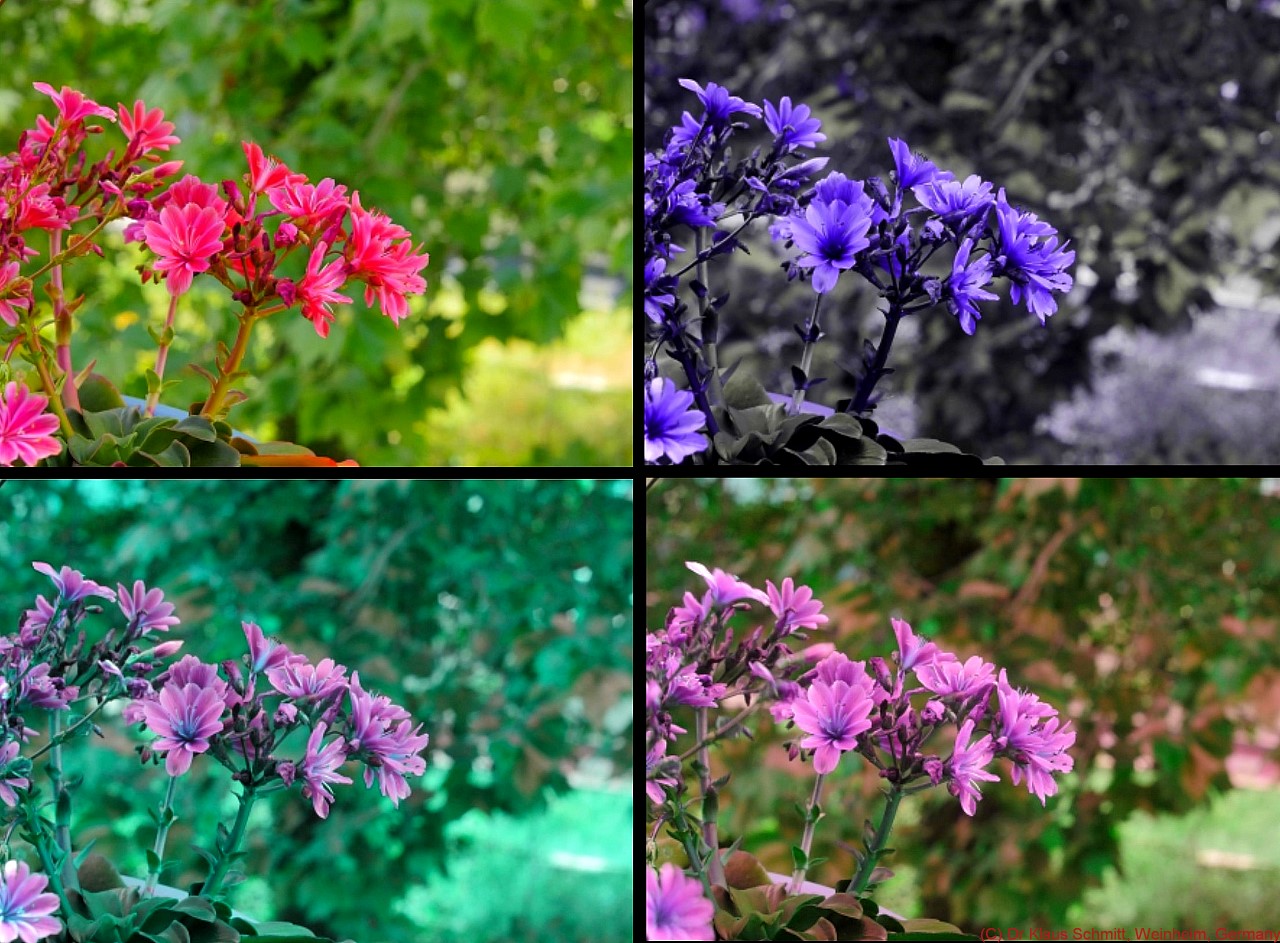
Quadryptich of human vision, reflected UV, simulated bee and butterfly vision (left to right, top to bottom):


Lewisia has a visible UV pattern, its petal tips are UV bright around 385nm, its center is UV dark, so this gets quite nicely visible, also in simulated butterfly and bee vision using this astonishing lens.

I have written more about that flower HERE 

I have written about that used lens HERE.

Stay tuned, more will follow on that fascinating subject...

More info on this very interesting field may be found on my site http://www.pbase.com/kds315/uv_photos
Wednesday, April 15, 2020

Reflected UV photography in polarized light VI - Lewisia

Today more about UV polarizer experiments, using a special UV capable circular polarizer in front of my multispectral camera and UV-Nikkor 105mm lens, for recording polarized reflected UV images. Flower here was a long blooming, perennial spring flower Cliff maids - Lewisia cotyledon. UV filter used was my classic Baader-U filter; sun was used as light source.

[click on image gets you a larger image]

Here photographic results I got (took multiple images while rotating the filter), presented as animated gifs....

Lewisia flowers through a rotating circular polarizer in A-mode i.e. exposure compensated...

Reflected UV light - Sunlight:


This flower shows some interesting small changes in the polarization angle on the petals, but especially there is some on its anters.  Bees have sensors on the outer ring of their compound eyes which are able to detect polarized light, so that might give this flower an advantage.

Reflected UV photography in polarized light shows quite some usefulness, especially if there are (glossy) surfaces which change the polarization angle of light and which the polarizer filter makes visible. Downside is that one needs about 2 stops more exposure, due to the low approx. 25% transmission.

Some insects are able to see the polarization angle (and btw. we humans can also, but needs some traing: Haidinger's Brush) especially honeybees which navigate using the polarization angle of ultraviolet (UV) light.

I have written more about using UV polarizers HERE

I have written more about that Lewisia flower HERE

Stay tuned, more will follow on that fascinating subject...

More info on this very interesting field may be found on my site http://www.pbase.com/kds315/uv_photos