Showing posts with label reflected UV photography. Show all posts

Friday, August 14, 2026

Partial Eclipse 2026 recorded in Germany in reflected ultraviolet light

A partial eclipse has happened August 12, 2026 visible in Germany - and on my new location in south-west Germany with around 86% visibilty I had decided last minute to try and record that. So I prepared a setup consisting of my modified Lumix GH4 plus a lens I found a while ago which surprisingly does transmit UV light: a f4/250mm catadioptric lens. A bit tricky is using a suitable UV transmitting filter with that lens, as it has to be mounted into the rear lens mount, which worked using a 25mm diameter UV filter stack (centered at 370nm) I found at a US seller years ago with rather good VIS/IR suppression.  


[click on image to see a larger one]

Reflected UV (370nm):

 
Surroundings in reflected UV (370nm):


Trying to white balance this last image lead to some interesting, bit eery effect:  

So this went rather well, even a sunspot got visible (click on the first image to see a larger one), so I was rather happy to have captured such a rare event, the last one visible here in Germany was 1999.
  
Stay tuned, more will follow on that fascinating subject...

More info on this very interesting field may be found on my site http://www.pbase.com/kds315/uv_photos

Monday, January 26, 2026

Spider Web reflects UV to attract prey III

I have written a while ago about spider webs which would actually reflect ultraviolet (UV) light, so as to attract prey (insects like bees etc).

Now it just happened that National Geographic Learning (Cengage) asked me for permission to use my works for their teaching materials.

These were shot in reflected UV and visible light. Lens used was my UV-Nikkor 105mm, for reflected ultraviolet light I used my "work horse" UV filter, the Baader-U filter. Light source was available light and a UV LED light with Nichia UV LED emitting at 365nm.

[click on image yields a larger one]

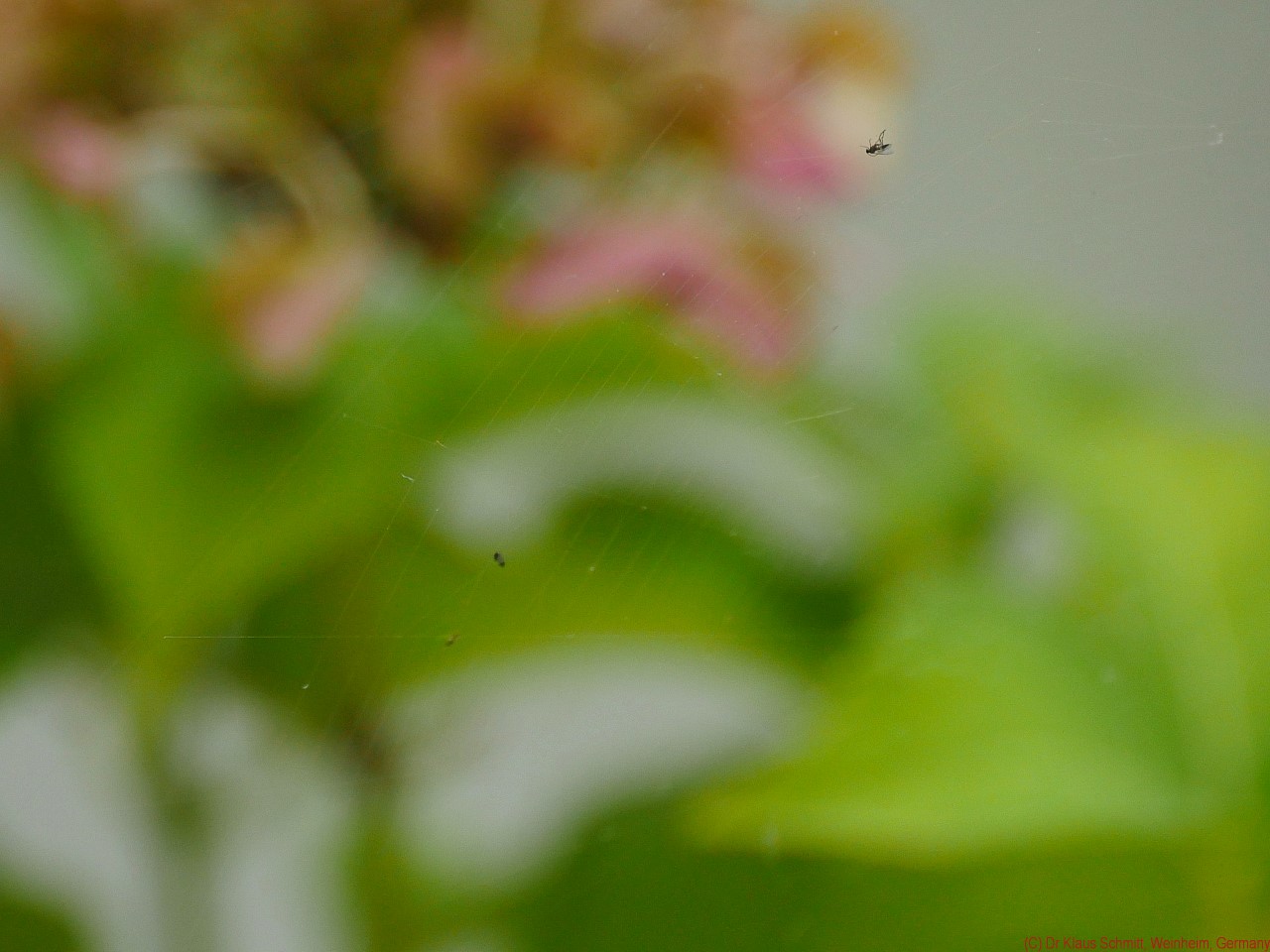
Spider web in visible light (hardly visible at all) with some prey:


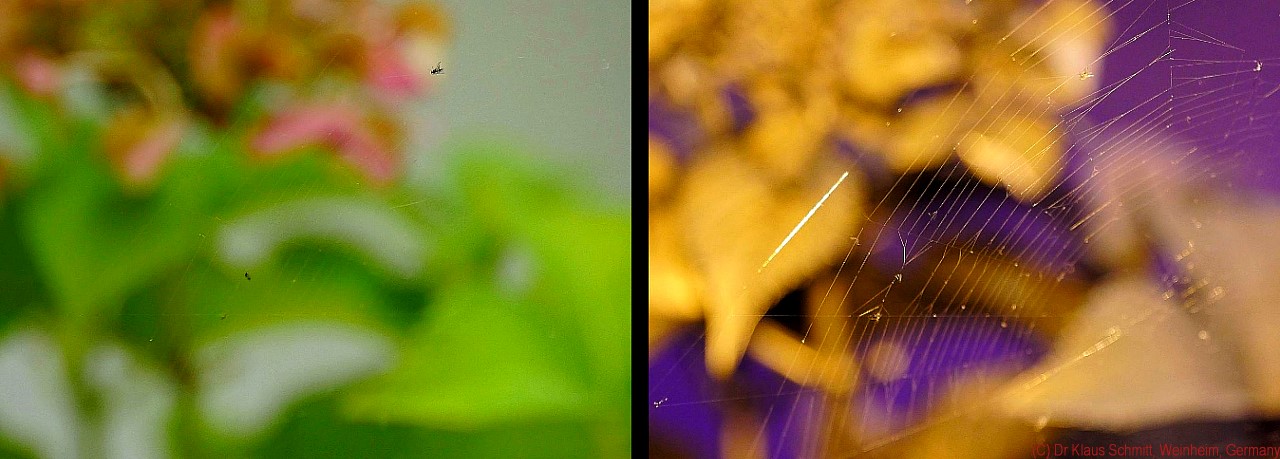
and now the proof that the web actually reflects UV light strongly:


Here two diptychs showing this side-a-side (visible light is left, reflected UV on the right):


Detail of the above:


Quite amazing what happens in nature, if you take a closer look...also in wavelengths that we humans cannot see, but animals and insects can!

I have previously written about that HERE

Stay tuned, more will follow on that fascinating subject...

More info on this very interesting field may be found on my site http://www.pbase.com/kds315/uv_photos

Tuesday, May 27, 2025

Exhibition on Floral Seduction Strategies at Montreal Botanical Garden

Today about some of my works being used with my permission by the Montreal Botanical Garden. Their idea was to have an exhibition on floral seduction strategies, showing how flowers invisible to us interact with bees and butterflies using reflected ultraviolet (UV) light at the Montreal Botanical Garden, Canada.

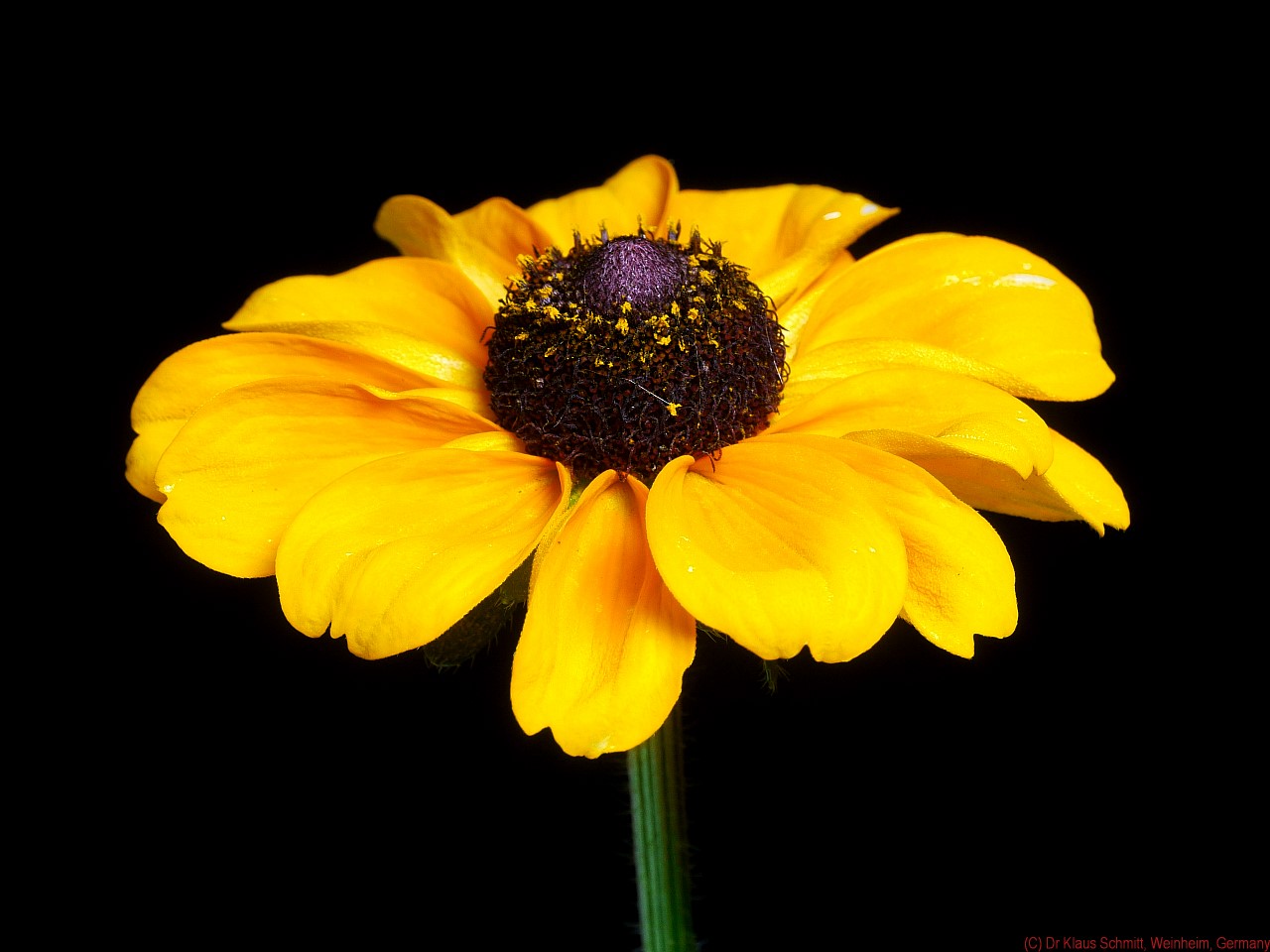
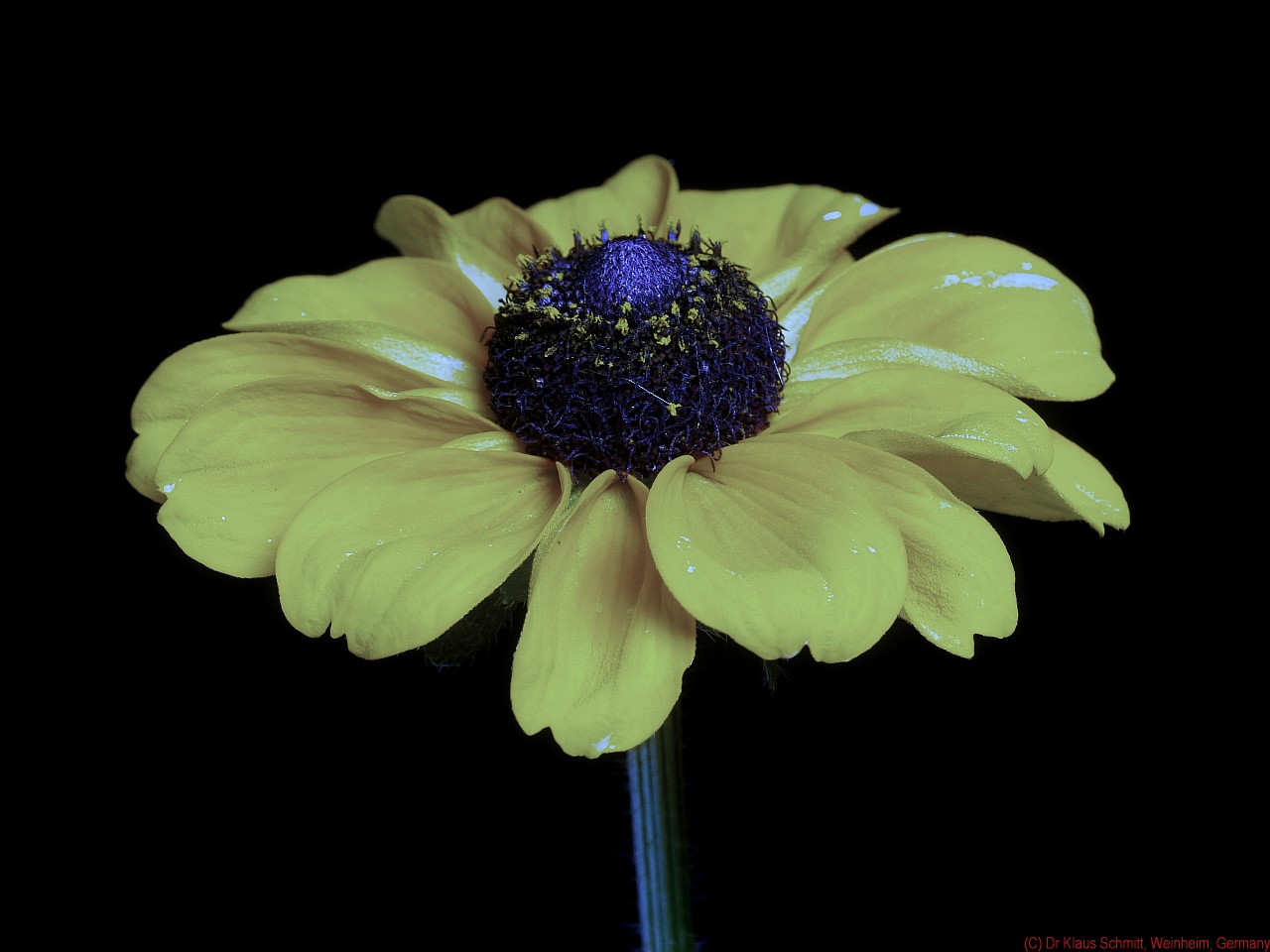
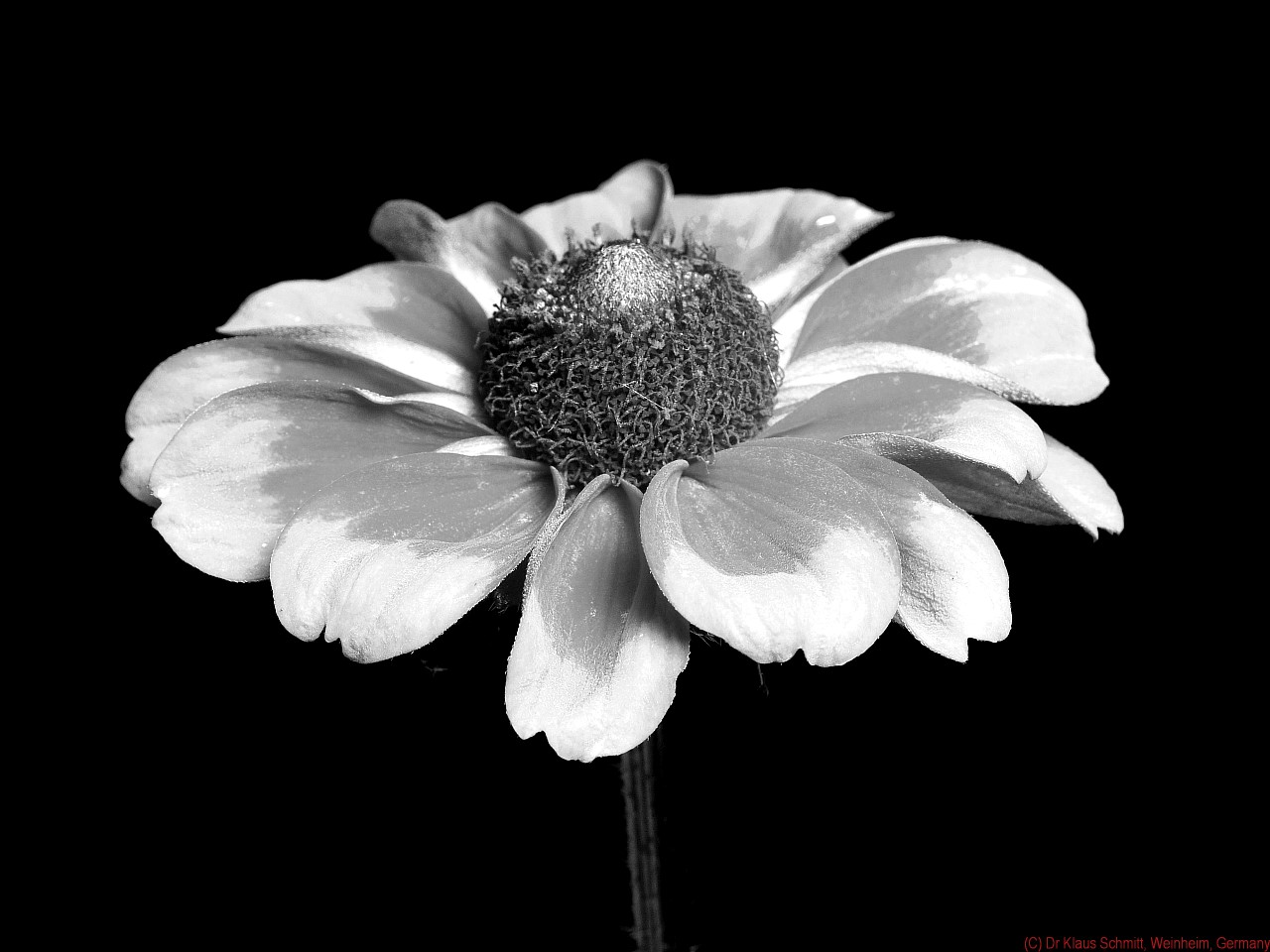
They chose to use an attractive yellow flower, a Rudbeckia hirta, which were shot by me in reflected ultraviolet photography, simulated bee and butterfly vision. All shots were done at f8 in reflected ultraviolet photography using my "work horse" UV filter, the Baader-U filter, as well as my XBV filters for simulated bee and butterfly vision. Lens was a UV-Nikkor 105mm quartz fluorite lens. Light source was a modified Xenon studio flash, modified for high UV output.

[click on image to see a larger one]

Human vision:
 

Reflected UV:
 

Simulated butterfly vision:
 

Simulated bee vision:
 

Quadriptych of human vision, UV, simulated bee and butterfly vision (left to right, top to bottom):
 

Rudbeckia hirta's outer petals strongly reflect UV around 365nm, whereas its center parts are quite darker, reflecting around 365nm, hence forming invisible to us humans UV nectar guides for UV seeing insects. This is all invisible to us humans, but clearly visible to bees and butterflies, and all this will be nicely visible to the visitors at the Montreal Botanical Garden from June 27 to August 17, 2025.

I have written more about this flower HERE.

Stay tuned, more will follow on that fascinating subject...

More info on this very interesting field may be found on my site http://www.pbase.com/kds315/uv_photos 

Stay tuned, more will follow on that fascinating subject...

Friday, October 11, 2024

Rudbeckia hirta - Human vs simulated animal vision II: butterfly, bee, dog, horse, bat

I was asked by a member working for their program Jeux Photoniques at the Université Laval in Québec, Canada for a series of images to simulate the vision of different animals. I used images of a Rudbeckia hirta flower Black Eyed Susan - Rudbeckia hirta which I had shot using visible and reflected ultraviolet photography. All shots were then done at f8 in reflected ultraviolet photography using my "work horse" UV filter, the Baader-U filter, as well as my XBV filters for simulated animal vision. Lens was a UV-Nikkor 105mm quartz fluorite lens. Light source was a modified Xenon flash.

[click on image to see a larger one]

Human vision:
 

Simulated butterfly vision:
 

Simulated bee vision:
 

Simulated dog vision:
 

Simulated horse vision:
 

Simulated bat vision:
 

Hexaptych of the above:
 

The idea behind these mappings is, to demonstrate the different forms of vision, including the ability to see UV and with this ability, to see patterns which only appear in ultraviolet light (UV) but invisible to us humans.

 I chose Rudbeckia hirts, as it has a strong UV pattern, its petal tips are UV bright around 365nm, but its center is quite UV dark, so this gets quite nicely visible, hence why I used this flower here to simuate the following visions:

  1. Humans have trichromatic vision, they see Blue, Green, Red
  2. Butterflies see UV, Blue, Green, Red, they are Tetrachromats
  3. Bees see UV, Blue, Green, they are Trichomats
  4. Dogs are Dichromats, see Blue and Yellow, but also some UV
  5. Horses are Dichromats, they see Blue and Yellow, but no UV
  6. Bats do not see color, but some are sensitive to UV also

 
Stay tuned, more will follow on that fascinating subject...

More info on this very interesting field may be found on my site http://www.pbase.com/kds315/uv_photos
Saturday, October 24, 2020

Reflected UV photography + videography using a MCP Amplified Camera System III

Today more about an experiment I have done, using a light amplification device in front of a normal visible light camera for recording reflected UV footage. This device uses a MCP (multi channel plate) with UV sensitive photocathode (approx. 190nm - 650nm), amplifies light by approx. 20-50.000 and shows the resulting image on a green phosphor screen. 

Using a suitable optical system, I relayed this image to my normal, visible light camera. UV filter used was a fully IR blocked (OD6) UV transmission filter (peak at 250nm). Target was a tea candle.

Using a f3.5/50mm quartz fluorite lens and an extension tube to get higher magnification.

1) Visible / IR light recorded w/o filter on full spectrum camera:


2) UV light recorded with a (fully blocked to 1100nm) 311nm filter on full spectrum camera: 

It gets rather obvious that the 311nm line is - as expected - quite intense on the visible left and right outsides of the candle, where the UV emission of the OH (hydroxyl) radicals happens.

3) UV light recorded with a (fully blocked to 1100nm) Baader-U (320-395nm) filter on full spectrum camera:

The reaction of the CH (hydrocarbon) radicals however emit UV around 385-395nm mostly on the top, which can be shown using the Baader-U UV transmitting filter (320-395nm).

I have written about this system doing still UV photography HERE.

I have done similar with a different amplified camera system before which did not allow to have an external camera attached, with just a TV output HERE

Stay tuned, more will follow on that fascinating subject...

More info on this very interesting field may be found on my site http://www.pbase.com/kds315/uv_photos

Friday, October 23, 2020

Reflected UV photography + videography using a MCP Amplified Camera System II

Today about an experiment I have done, using a light amplification device in front of a normal visible light camera for recording reflected UV footage. This device uses a MCP (multi channel plate) with UV sensitive photocathode (approx. 190nm - 650nm), amplifies light by approx. 20-50.000 and shows the resulting image on a green phosphor screen. 

Using a suitable optical system, I relayed this image to my normal, visible light camera. UV filter used was a fully IR blocked (OD6) UV transmission filter (peak at 250nm). Taget was a tea candle.

 Using a f3.5/50mm quartz fluorite lens:


This system shows quite some usefulness, especially under low light conditions, or when it is about recording deeper in UV where a normal full spectrum camera is not sensitive anymore.

I have written about this system doing still UV photography HERE.

I have done similar with a different amplified camera system before which did not allow to have an external camera attached, with just a TV output HERE

Stay tuned, more will follow on that fascinating subject...

More info on this very interesting field may be found on my site http://www.pbase.com/kds315/uv_photos
Wednesday, July 22, 2020

Got a rare U.V. lens donated

Well, sometimes something really special happens! As I am into special optics and filters, as you may know by now, a member of some forum I am in informed me, that he found a special lens while cleaning up his house. He told me that it was labeled "U.V. Lens", so he thought of me and my UV and multispectral work and offered me that U.V. f4.3 lens with approx. 172mm focal length for just postage, which certainly was very kind of him!

So now on to the lens, which has a built in blue filter in its rear [these are not my images, but from the donating member here...]

U.V. Lens, pictures from the Donor

Now these are some quick test shots hand-holding filters in front of the lens: blue image is what seemingly it was made for (projecting images to a fluorescent screen I'm guessing), then I took that internal filter out and did an UV shot using a 365nm UV LED (quite sharp image) using the Baader-U filter and then a visible light image with suitable VIS-filter (which shows the lens was not computed for that) - all shot wide open at approx f4.


Here now the transmission of that lens: The RED line is the filter alone, the GREEN the lens alone, the BLUE as it came assembled with filter inside. Most likely it was designed to project images onto a fluorescent screen. That built in short pass filter makes me believe that. It is not really UV, but short wave blue, enough to stimulate visible fluorescence.


So it has to be seen what this lens can be used for, guess it will work well for reflected UV!

My thanks and well wishes go out to the donor!

Stay tuned, more will follow on that fascinating subject...

More info on this very interesting field may be found on my site http://www.pbase.com/kds315/uv_photos

Monday, June 8, 2020

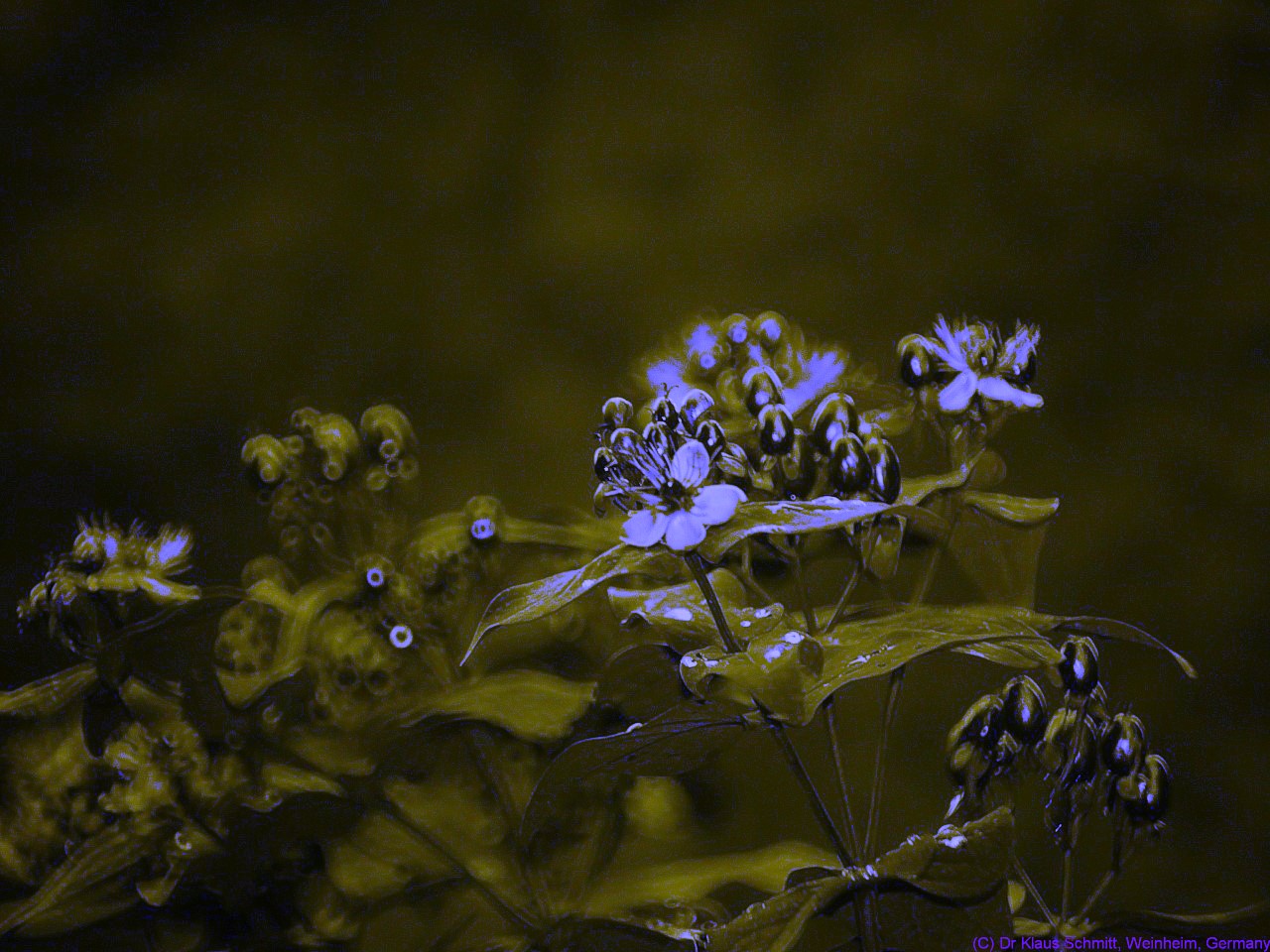
Mirror lens for reflected UV photography pictorialism style II

Today more about using an older, rather overlooked 250mm mirror lens for reflected UV photography. The lens had been modified to accept a filter in its rear mount and also modified to M42 threads mount due to its orgiginal special mount for cine use. The lens focuses now from infinity to very close, a pleasure to use but due to is long focal length of 250mm still tricky to nail focus.

DOF at one (1) meter (3ft) is as thin as a razor blade when using this 250mm mirror lens and that doughnut shaped bokeh etc. makes it fun to use. Here now shots, quite reminds me of 19th century pictorialism.

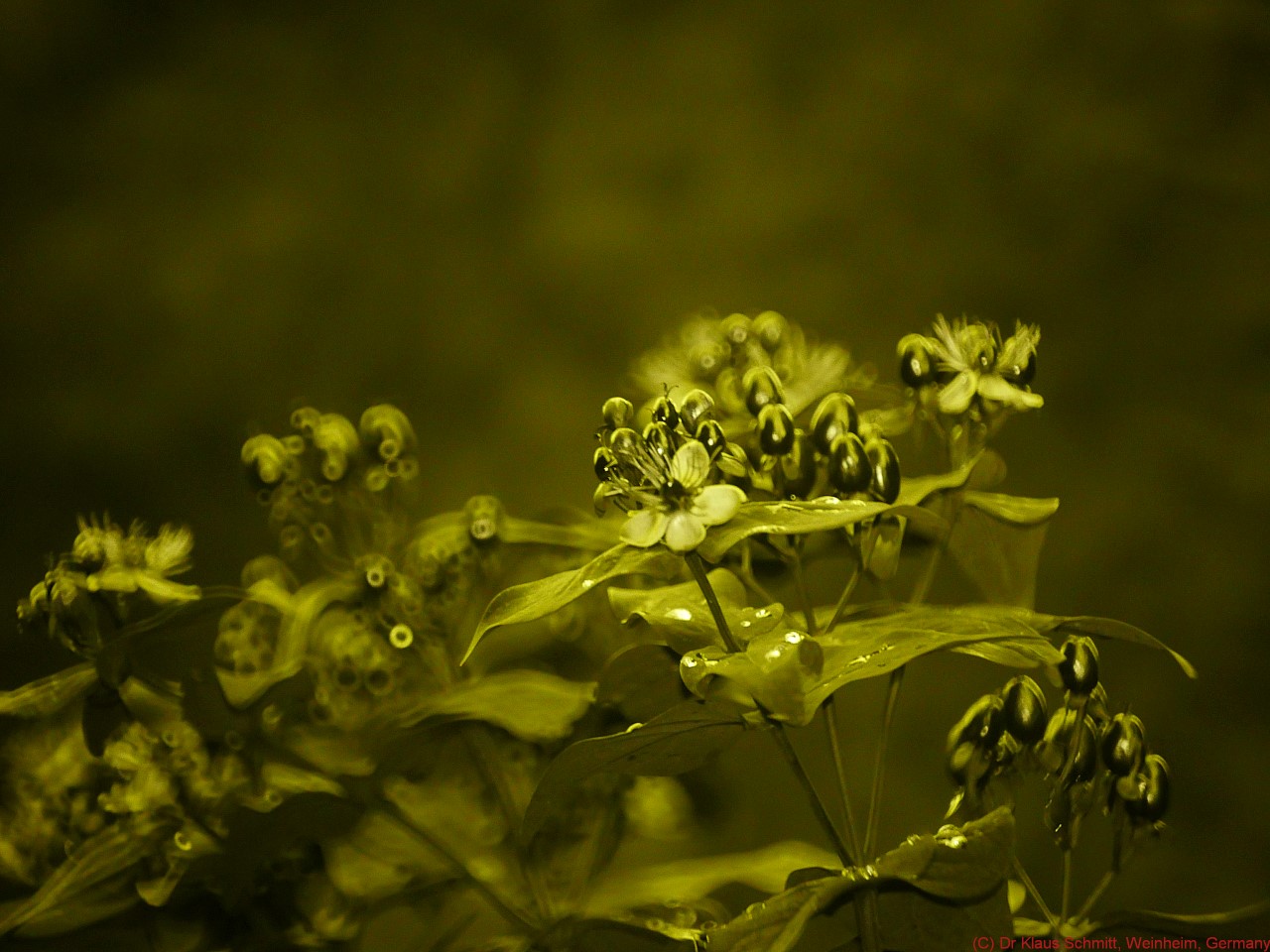
Here I used Hypericum and Bidens as targets. Light was sunlight (shade after rain) plus some 365nm Nichia UV LED light .

[click on image to see a larger one]

Hypericum:


whitebalanced it looks like that:


Bidens:


whitebalanced it looks like that:


which shows its dreamlike/surreal/ethereal rendering of images and of course the famous doughnut bubbles mirror lenses produce...

More about using mirror lenses for UV photography HERE

Stay tuned, more will follow on that fascinating subject...

More info on this very interesting field may be found on my site http://www.pbase.com/kds315/uv_photos

Saturday, June 6, 2020

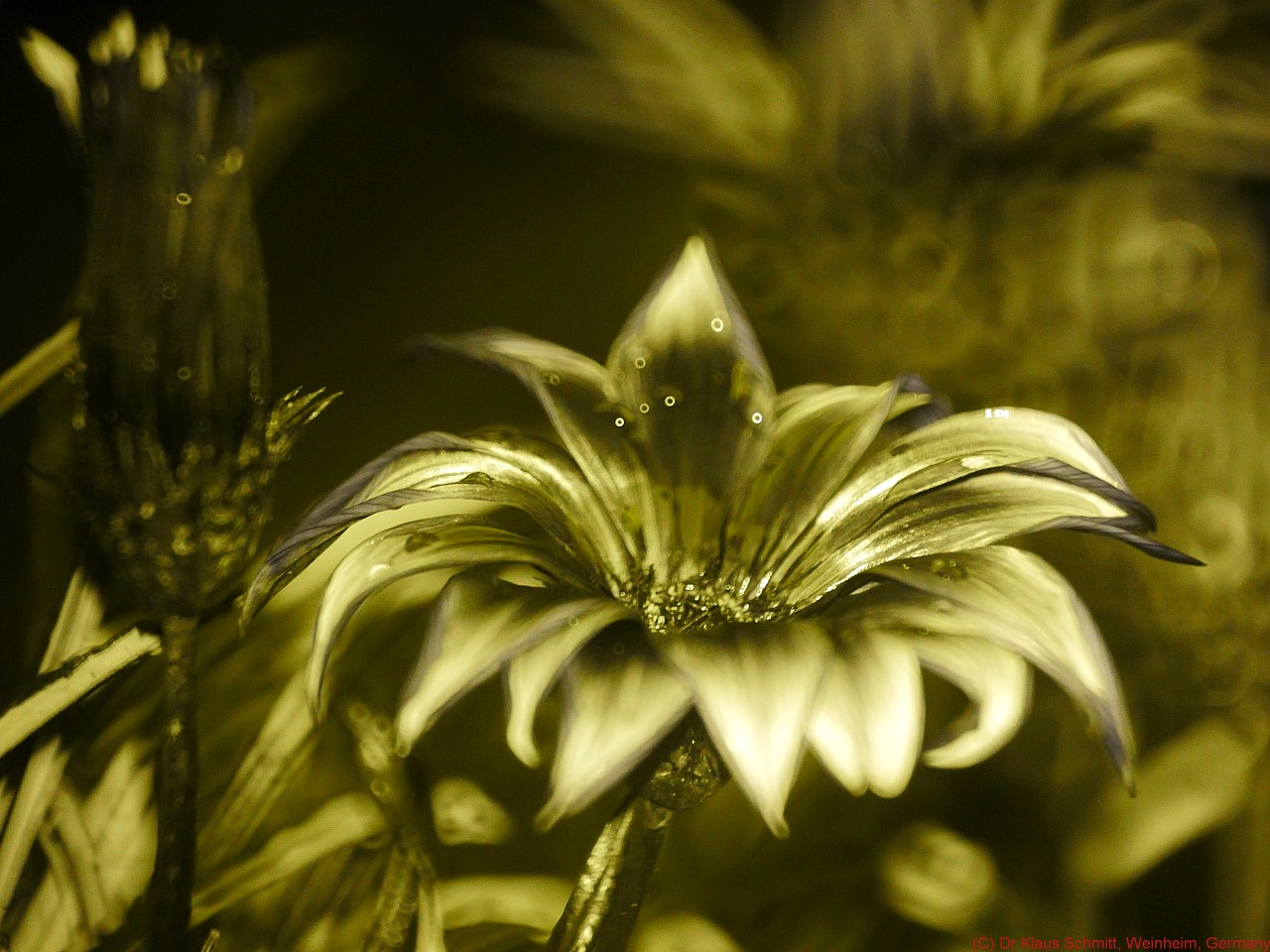
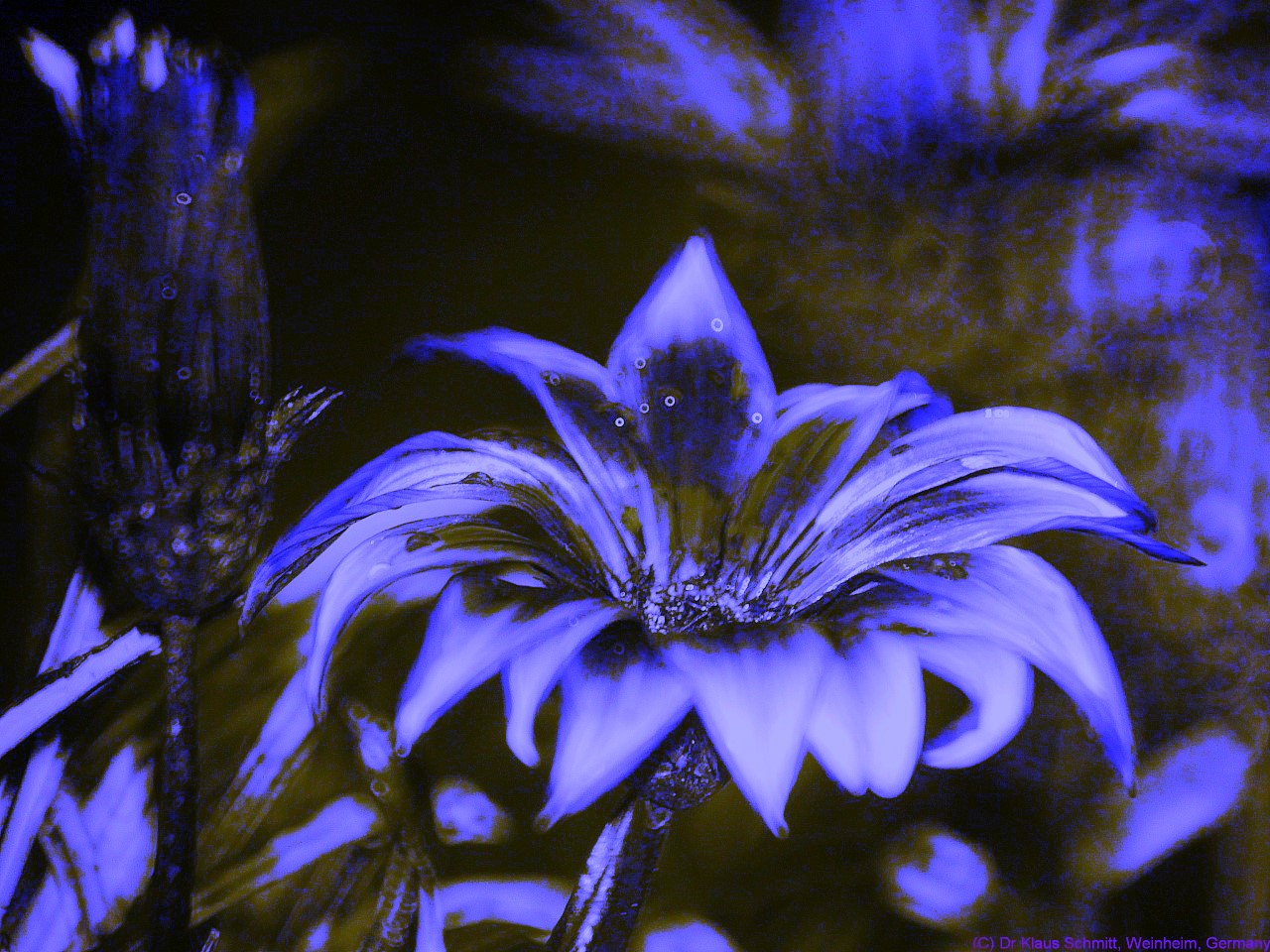
Mirror lens for reflected UV photography pictorialism style

Today about using an older, rather overlooked 250mm mirror lens for reflected UV photography. The lens had been modified to accept a filter in its rear mount and also modified to M42 threads mount due to its orgiginal special mount for cine use. The lens focuses now from infinity to very close, a pleasure to use but due to is long focal length of 250mm still tricky to nail focus.

A whiteish flower, a Treasury flower - Gazania rigens was used for that. Light was sunlight (shade after rain) plus some 365nm Nichia UV LED light .

[click on image to see a larger one]

DOF at one (1) meter (3ft) is as thin as a razor blade when using this 250mm mirror lens and that doughnut shaped bokeh etc. makes it fun to use. Here now shots, quite reminds me of 19th century pictorialism....


whitebalanced it looks like that:


which shows its dreamlike/surreal/ethereal rendering of images and of course the famous doughnut bubbles mirror lenses produce...

More about using mirror lenses for UV photography HERE

Stay tuned, more will follow on that fascinating subject...

More info on this very interesting field may be found on my site http://www.pbase.com/kds315/uv_photos

Thursday, May 14, 2020

Surprising STEINHEIL f2.8/50mm lens for reflected UV photography VII - Focus Shift

This again is about this older 50mm lens, which was made decades ago by famous lens maker STEINHEIL which attracted me, since it showed some seemingly good UV transmission, which have already shown here. I have already shown that it performs quite well using the Baader-U filter, and using some even deeper reaching UV filters, using a 340nm shortpass and the IDAS 330nm filter (I have the 2" version, no longer made).

Now I wanted to show today how the focus shift of this, or any other lens can be easily made visible. All images shot at f8, using a modified Xenon flash.

[click on image gets you a larger image]

VIS image using UV/IR Cut filter:
 

UV image using Bader-U filter (approx. 320-390nm, peak 360nm):
 

UV image using IDAS UV filter (approx. 300-380nm, peak 330nm):
 

UV image using 340nm UV filter (approx. 320-340nm):
 

Now it is about to show how those images differ in size, using a method I call "differential", i.e. a subtraction of two images, one visible and one UV, where any focus shift will show as overlapping on the borders of the object. If you looks close you will see this around the object.

VIS-UV (Baader-U filter) differential image:
 

VIS-UV (IDAS UV filter) differential image:
 

VIS-UV (340nm UV filter) differential image:
 

It got quite obvious before, that this lens is also performing very well at even shorter wavelengths, making it a very useful lens for reflected UV down to 330-340nm at an optimal f8/f11 setting, especially since the image size deviation between visible and UV image is also only 1.3% , which can be easily seen (and measured) from those differential images.

I have written about that lens more HERE.

Stay tuned, more will follow on that fascinating subject...

More info on this very interesting field may be found on my site http://www.pbase.com/kds315/uv_photos

Tuesday, May 5, 2020

Surprising STEINHEIL f2.8/50mm lens for reflected UV photography VI - Lewisia differentials

I got this mentioned older lens, which was made decades ago by famous lens maker STEINHEIL . It is a possibly single coated, well made 2.8/50mm lens which attracted me, since it showed some good UV transmission which I have previously shown here. Now today some outdoor shots at f11, light source was overcast sky. Target was a Lewisia cotylodon flower. But this time a bit different images - Differentials, which shows the difference of two images.

[click on image gets you a larger image]

VIS image using UV/IR Cut filter:
 

UV image using Baader-U filter:
 

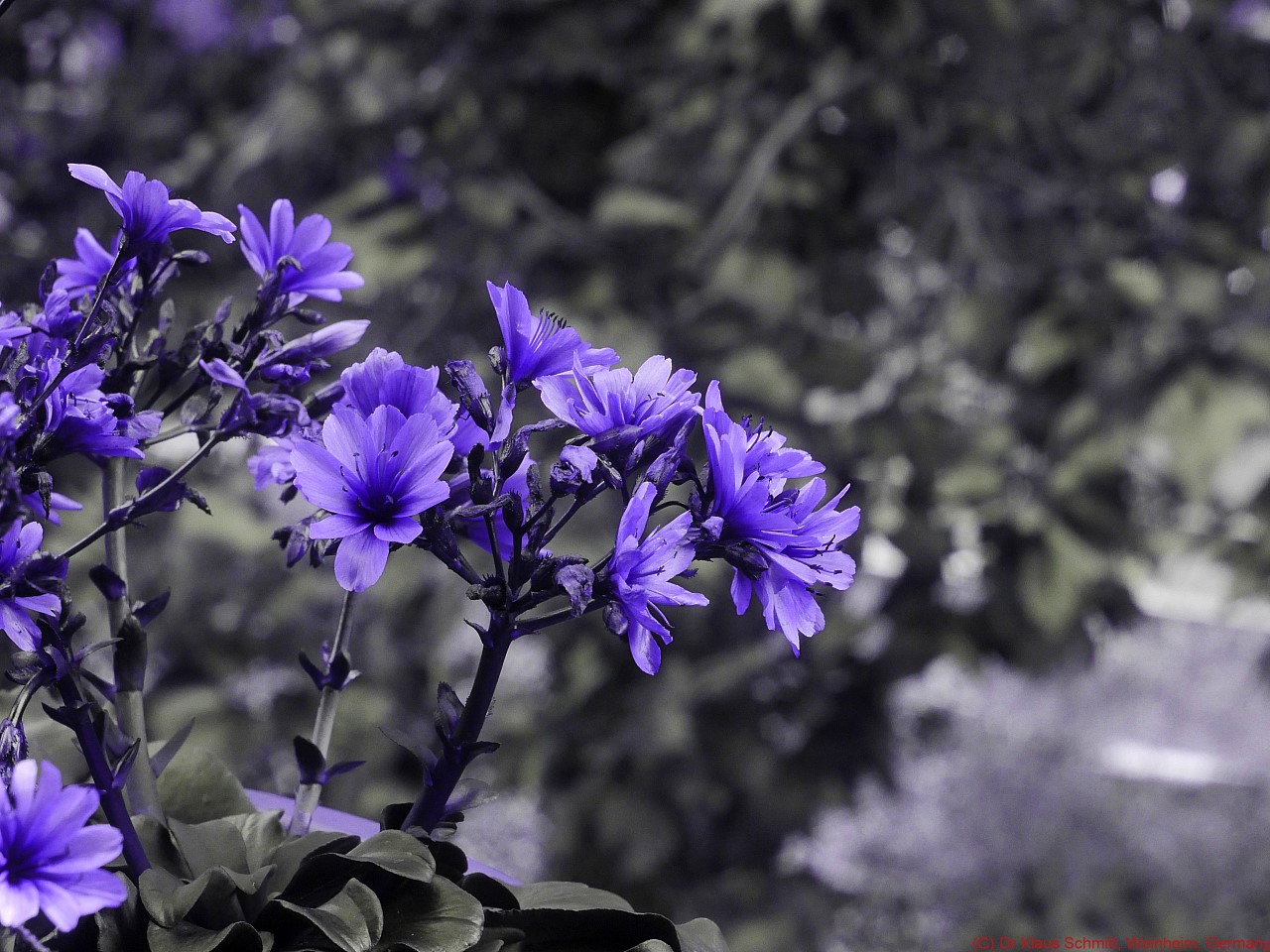
Simulated butterfly vision:
 

Simulated bee vision:
 

VIS - UV differential image:
 

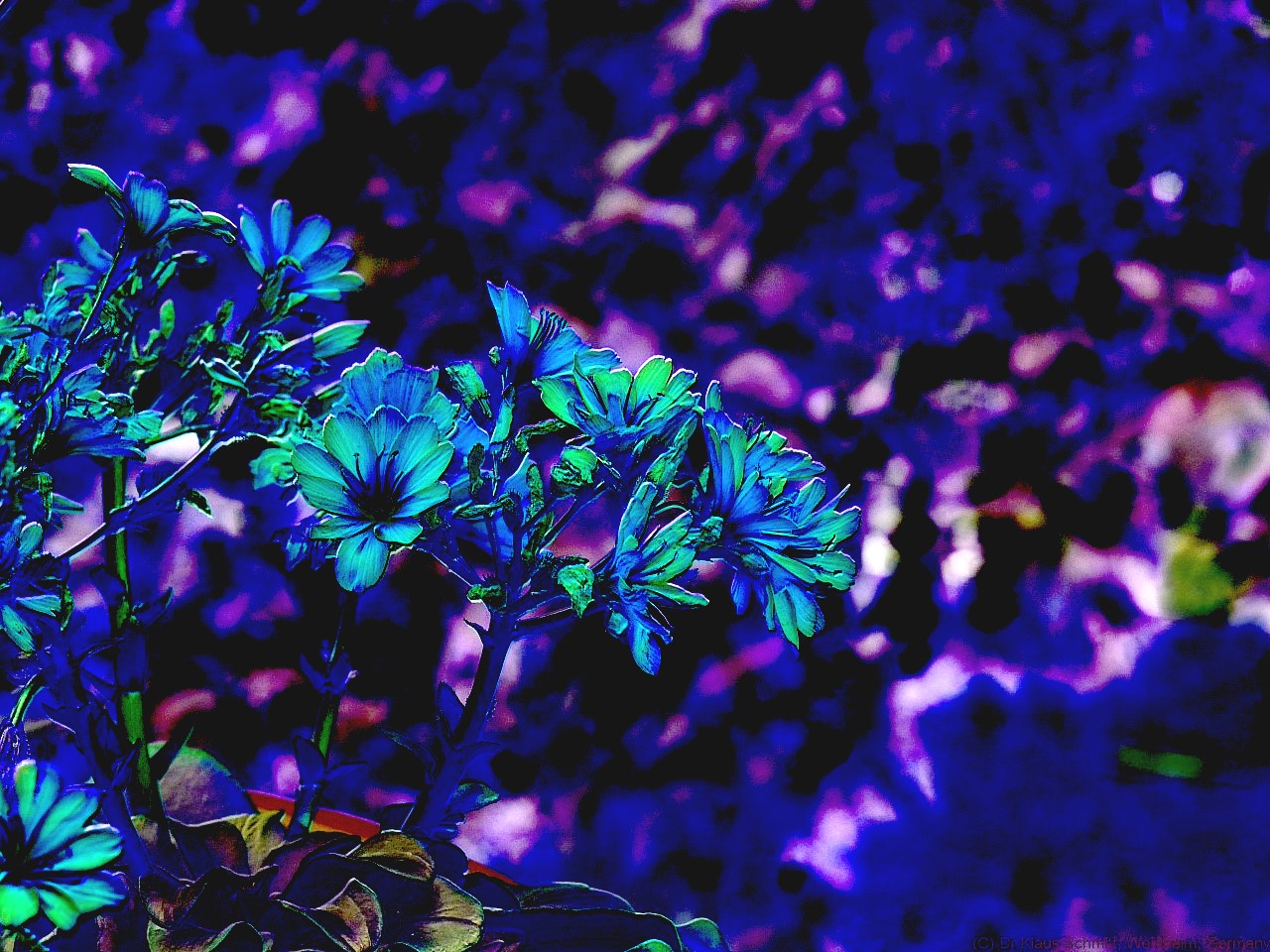
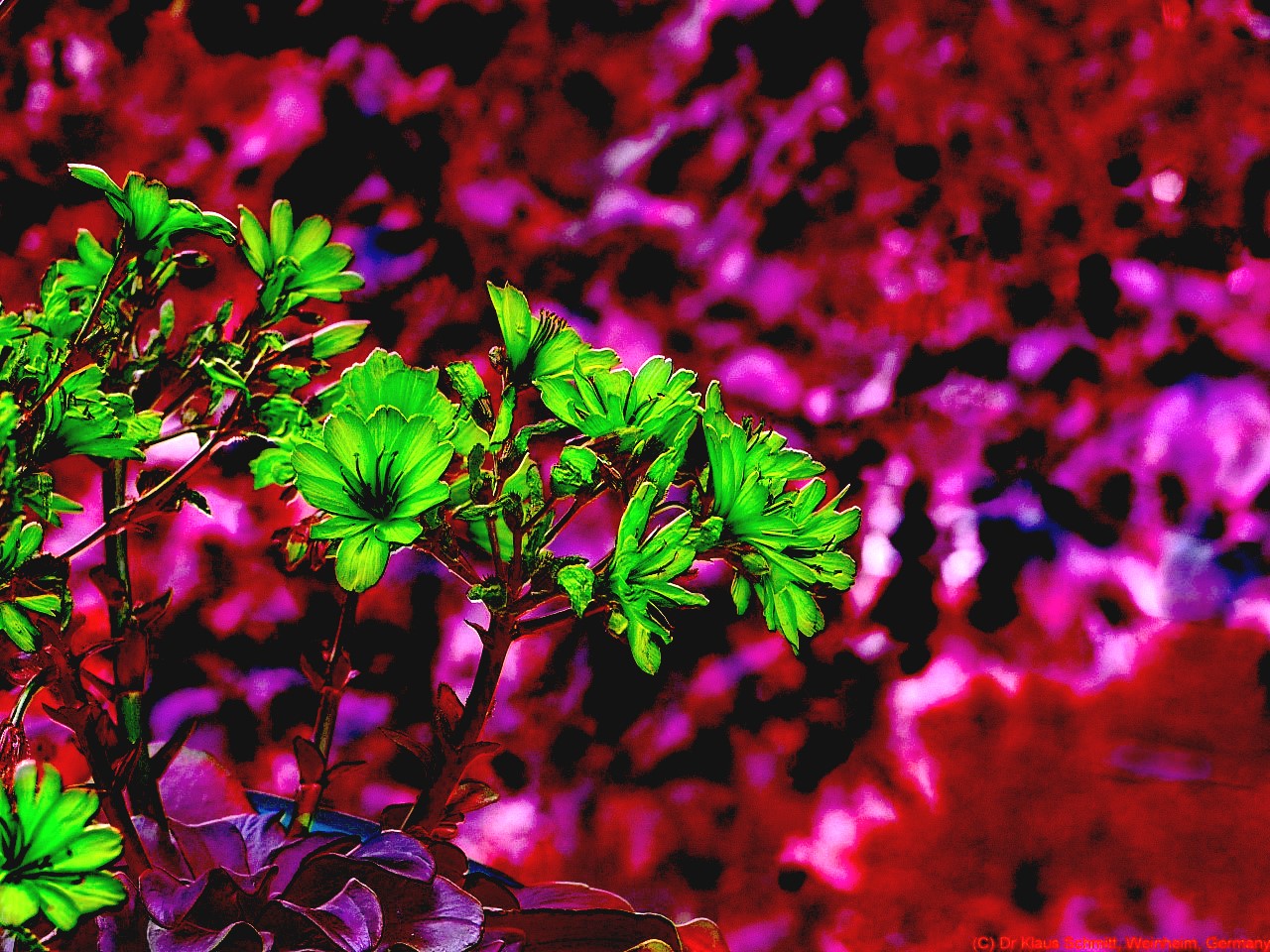
VIS - UV differential image, color swap:
 

VIS - Simulated butterfly vision differential:
 

VIS - Simulated bee vision differential:


Lewisia has a visible UV pattern, its petal tips are UV bright around 385nm, its center is UV dark, so this gets quite nicely visible as differentials, also in simulated butterfly and bee vision using this astonishing lens.

I have written more about that flower HERE 

I have written about that used lens HERE.

Stay tuned, more will follow on that fascinating subject...

More info on this very interesting field may be found on my site http://www.pbase.com/kds315/uv_photos

Surprising STEINHEIL f2.8/50mm lens for reflected UV photography V - Lewisia

I got this mentioned older lens, which was made decades ago by famous lens maker STEINHEIL . It is a possibly single coated, well made 2.8/50mm lens which attracted me, since it showed some good UV transmission which I have previously shown. Now today some outdoor shots at f11, light source was overcast sky. Target was a Lewisia cotylodon flower.

[click on image gets you a larger image]

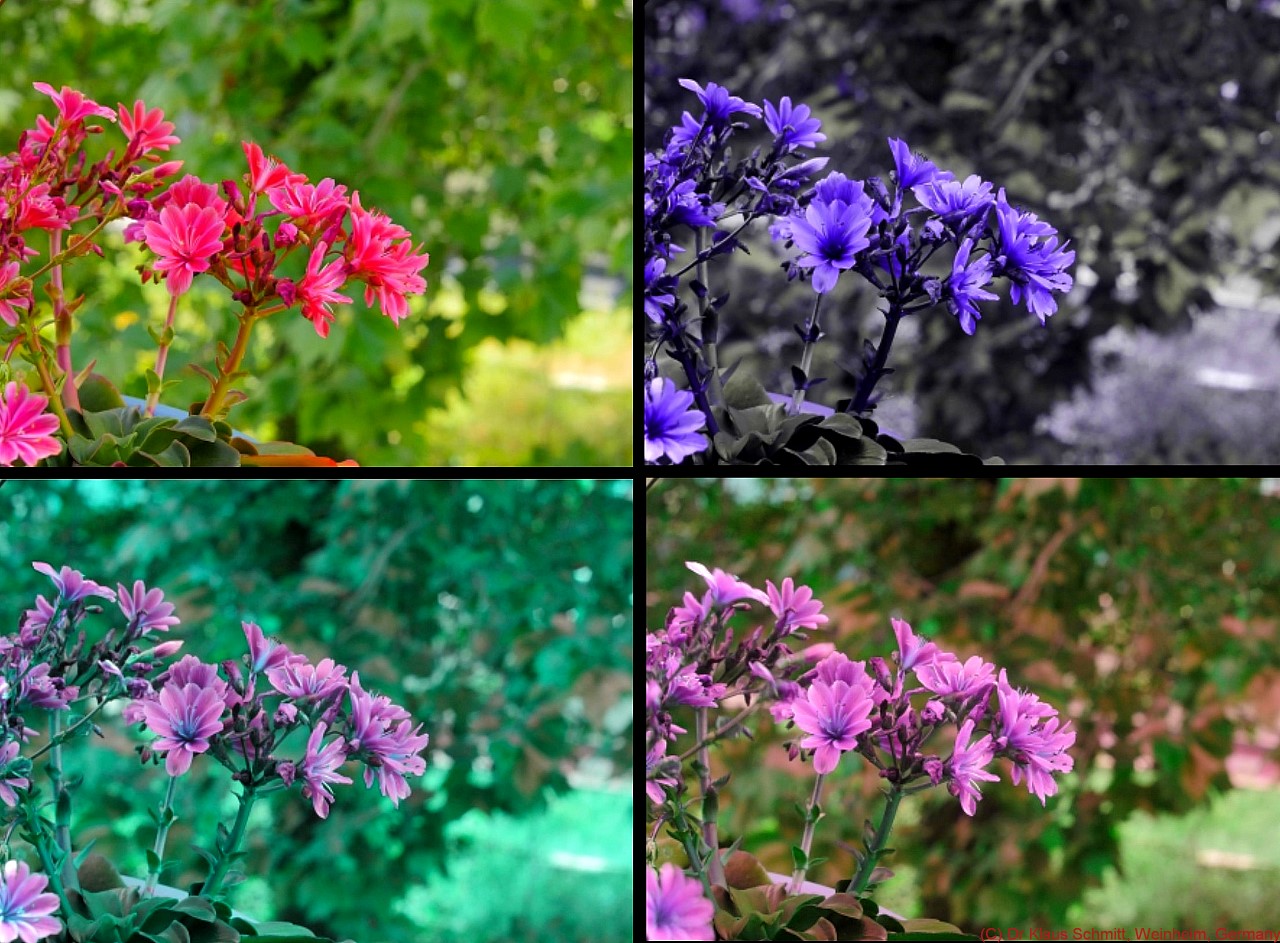
VIS image using UV/IR Cut filter:
 

UV image using Baader-U filter:
 

Simulated butterfly vision:
 

Simulated bee vision:
 

Quadryptich of human vision, reflected UV, simulated bee and butterfly vision (left to right, top to bottom):


Lewisia has a visible UV pattern, its petal tips are UV bright around 385nm, its center is UV dark, so this gets quite nicely visible, also in simulated butterfly and bee vision using this astonishing lens.

I have written more about that flower HERE 

I have written about that used lens HERE.

Stay tuned, more will follow on that fascinating subject...

More info on this very interesting field may be found on my site http://www.pbase.com/kds315/uv_photos