Showing posts with label rose. Show all posts

Thursday, June 21, 2018

Rose hybrid - Rosa sp. in reflected ultraviolet photography and simulated bee and butterfly vision

Today shots of a Rose hybrid - Rosa sp. in reflected ultraviolet photography and simulated bee and butterfly vision. All shots were done at f8 in reflected ultraviolet photography using my "work horse" UV filter, the Baader-U filter, as well as my XBV filters for simulated bee and butterfly vision. Lens was a UV-Nikkor 105mm quartz fluorite lens. Light source was sunlight.

[click on image to see a larger one]

Human vision:
 

Reflected UV:
 

Simulated butterfly vision:
 

Simulated bee vision:
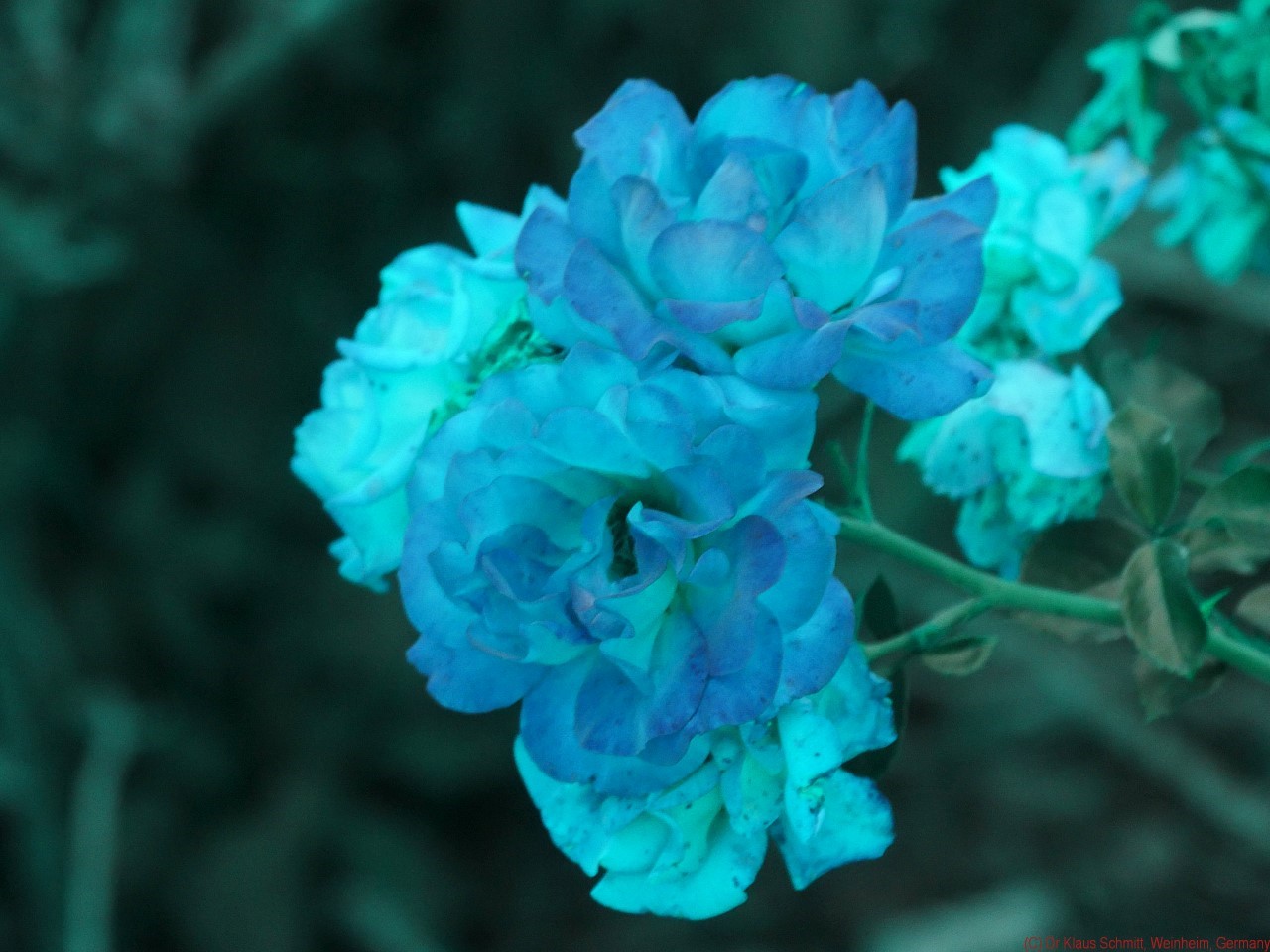
 

Quadriptych of human vision, UV, simulated butterfly and bee vision (left to right, top to bottom):
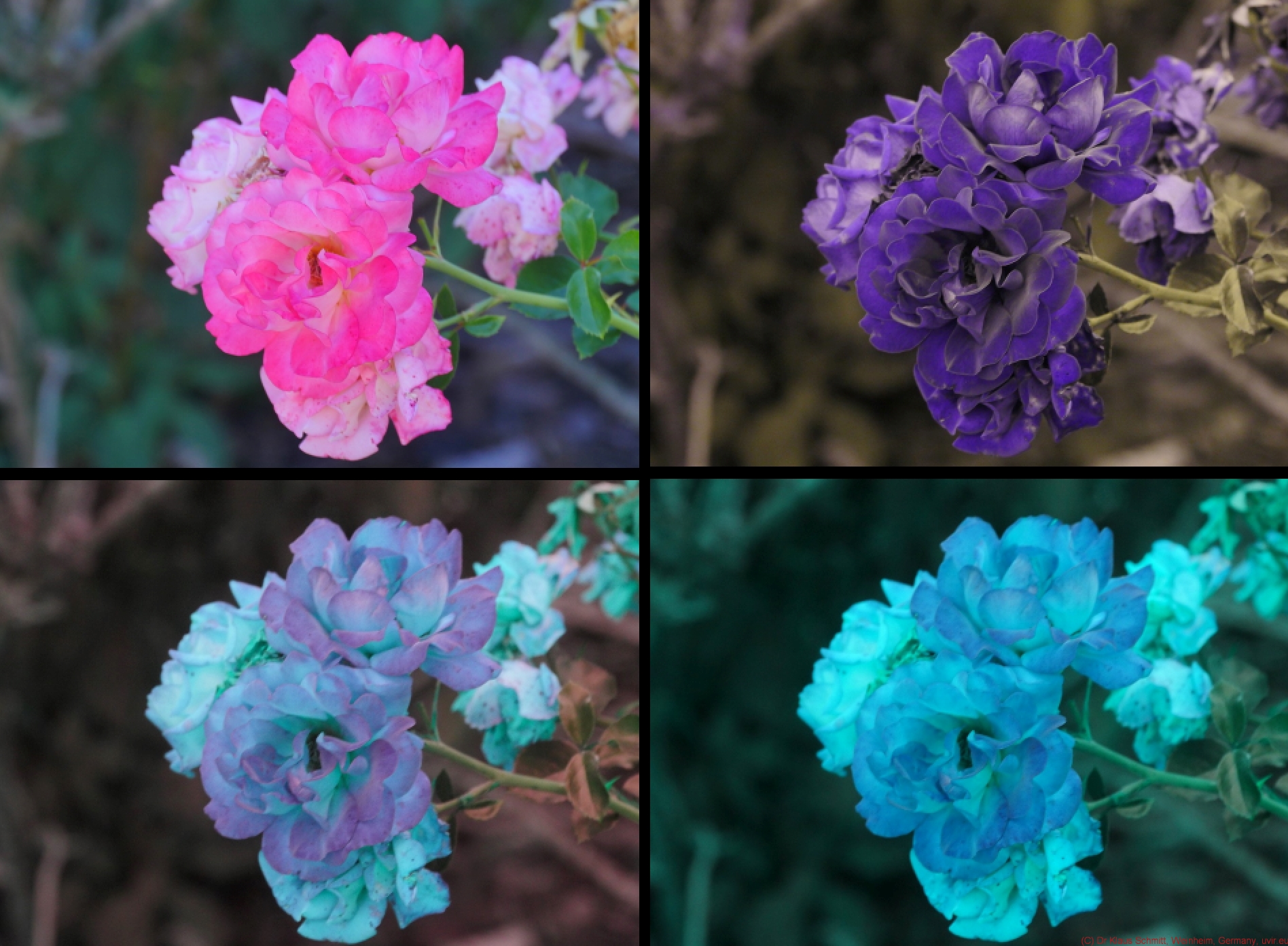
 

This rose has just a little UV reflection around 380nm, its petals have some UV dark center and the outside part is a bit UV brighter around 380nm and all this gets nicely visible, also in simulated bee and butterfly vision.


Stay tuned, more will follow on that fascinating subject...

More info on this very interesting field may be found on my site http://www.pbase.com/kds315/uv_photos

Sunday, February 17, 2013

100mm Focotar Enlarger Lens vs CERCO 94mm quartz fluorite lens for reflected UV photography

Today another comparison between a special UV lens and a conventional, but UV capable enlarger lens, a f5.6/100mm Focotar. I have done a similar comparison here and here as well as here. I'm using beautiful Valentine Day's roses for that and my "work horse" UV filter, the Baader-U filter plus the deeper reaching Jupiter-U filter. Lenses used are a CERCO 94mm quartz fluorite lebs as well as a capable for UV 100mm Focotar enlarger lens. Light source was an UV enhanced Xenon flash. All shots done at f8 and presented on a side-a-side format for easier comparison, right: enlarger lens, left CERCO quartz fluorite lens.

[click on image to see a larger one]

Visible light image:
 

UV image using Baader-U filter (approx. 320-395nm, effective peak approx. 375nm):
 

UV image using Jupiter-U filter (approx. 280-385nm, effective peak approx. 365nm):
 

It gets pretty obvious that this enlarger lens reaches surprisingly close to the CERCO quartz flourite lens! The difference is there, yet quite small. Quite a useful lens!


Stay tuned, more will follow on that fascinating subject...

More info on this very interesting field may be found on my site http://www.pbase.com/kds315/uv_photos