Friday, October 19, 2007

Simulated Bee Vision II

Today it is about simulated Bee Vision which I find quite fascinating. Bees and some other insects do see ultraviolet (UV) light, what we humans cannot (with the exception of some people, but that is another story...). So I wondered how that would look like if I could see with bee eyes.

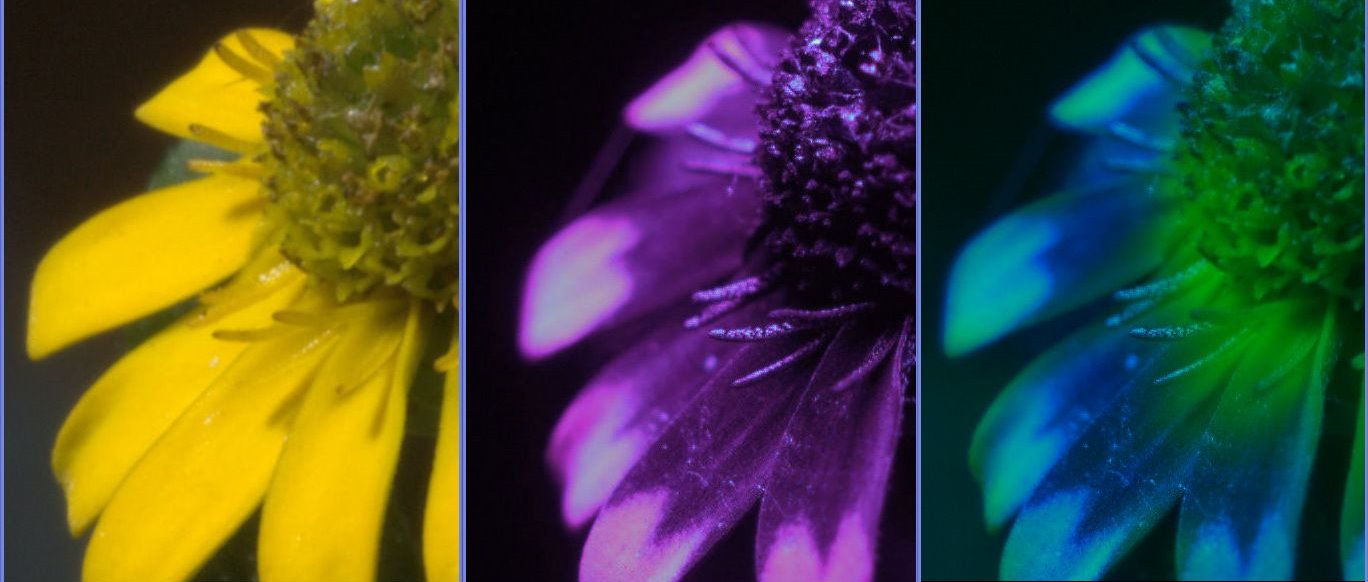
I tried to simulate that by adding an ultraviolet and visual picture together after some tricky aligning plus I suppressed the red channel which bees don't have. Here now the results, UV is mapped into the resulting picture as blue.


The leftmost shot is the visible one, the center is the UV shot and the one on the right the simulated Bee Vision. Some other examples:


So what would we humans see, had we UV receptors? That I guess...


Stay tuned, more will follow on that fascinating subject...

More info on this very interesting field may be found on my site http://www.pbase.com/kds315/uv_photos

Friday, October 12, 2007

Nichia 365nm UV LED based UV lamp ... first results

[update: there is a much more powerful system available now based on the new Nichia 4 dice chips NC4U133 (365nm) and NC4U134 (385nm), which has about 3.5x the power]

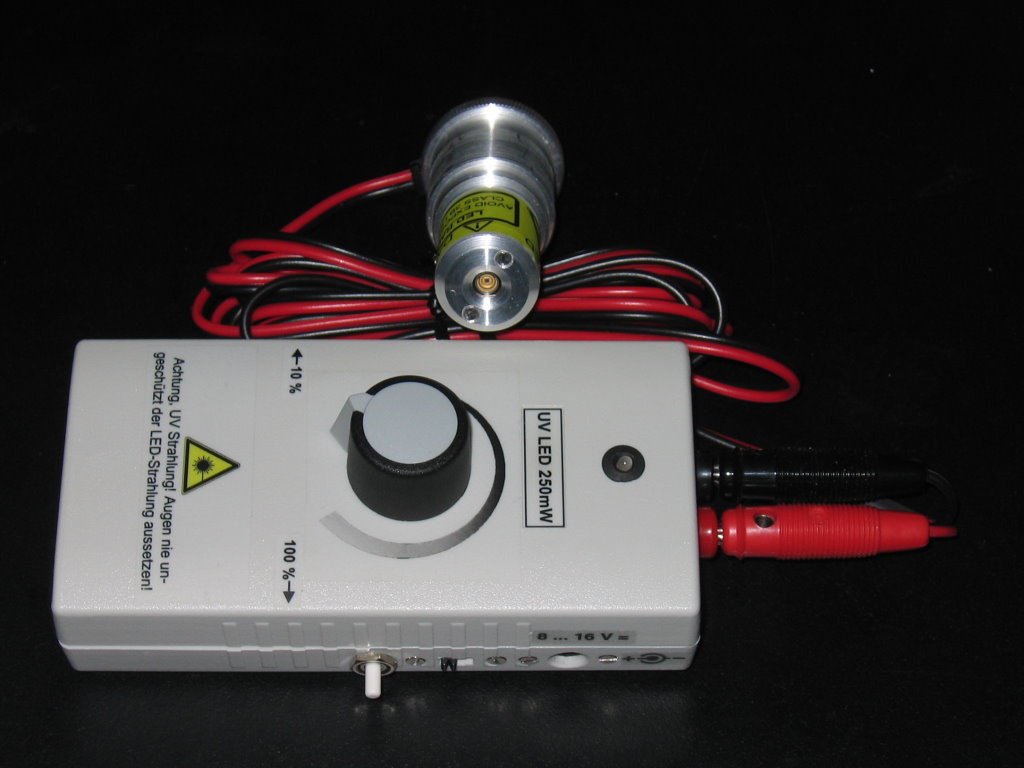
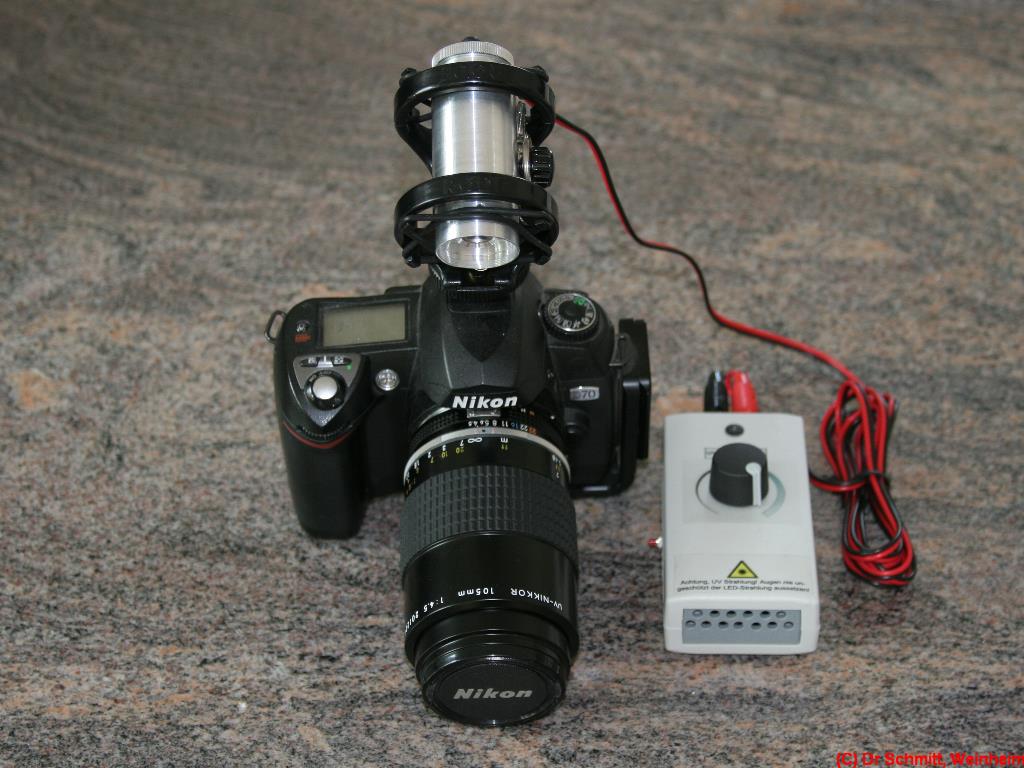
I just got an UV lamp/flash based on the powerful 250mW Nichia NCSU033A 365nm UV LED which was specifically made for my photographic goals.

Here now the first pre-production sample and some results. It is made to operate from mains but also from battery (8..16Volts) so would also allow portable operation for many hours. The LED is built into a cooling cylindrical housing and will also be equipped with an adaptor for an UV light guide (quartz or liquid). Power is adjustable from 0...100% and I have also foreseen a 10% and 100% switch. To trigger that via the camera is the next thing to work on.

This is how the first sample looks like, nice I would say:
[click on image yields a larger version].


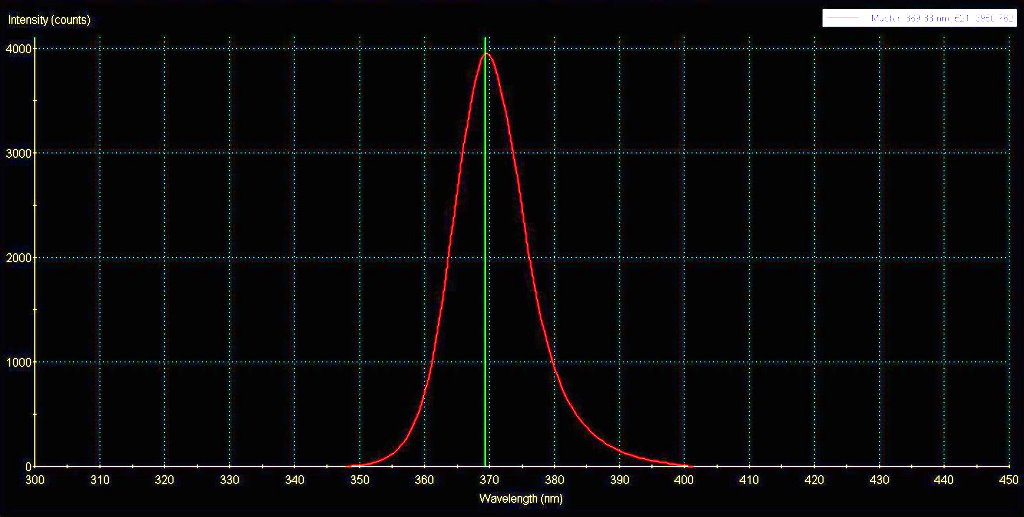
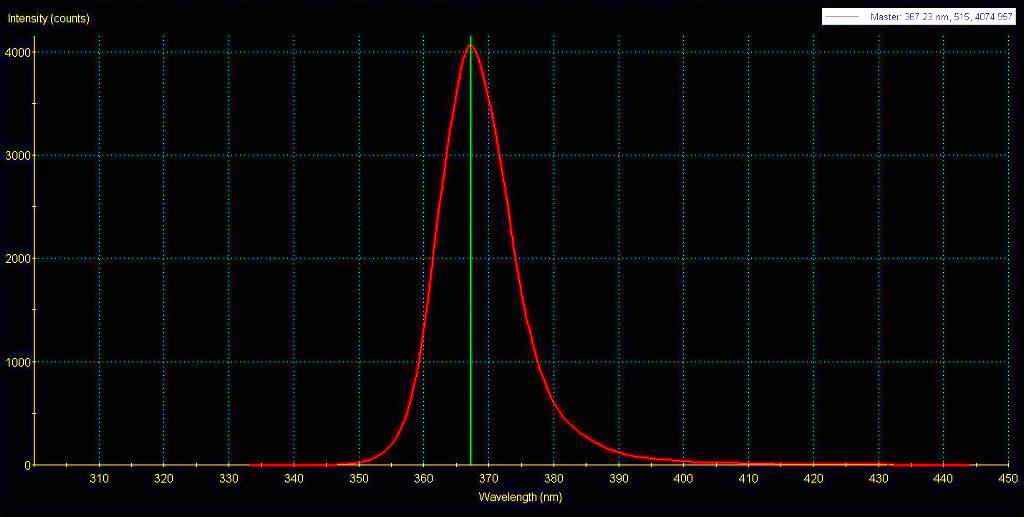
The emitted wavelength depends a bit on the power the LED operates at, but the shift is small (367 @10% vs. 369nm @ 100%), see attached spectras. The output of visual light is indeed very small, but of course visible esp. at full power.

@100% Power [normalized Intensity, not absolute output]:


@10% Power [normalized Intensity, not absolute output]:


The UV LED showed only minimal long term drift due to thermal effects of ca 0.7nm 
(from 370.0 to 370.7nm after 20mins @100%); start temp: 20 degrees, end temp ca. 42 degrees Celsius. The green line was the center wavelength at start, the blue line  shows the minimal shift of that wavelength over time thanks to the excellent control 
logic:


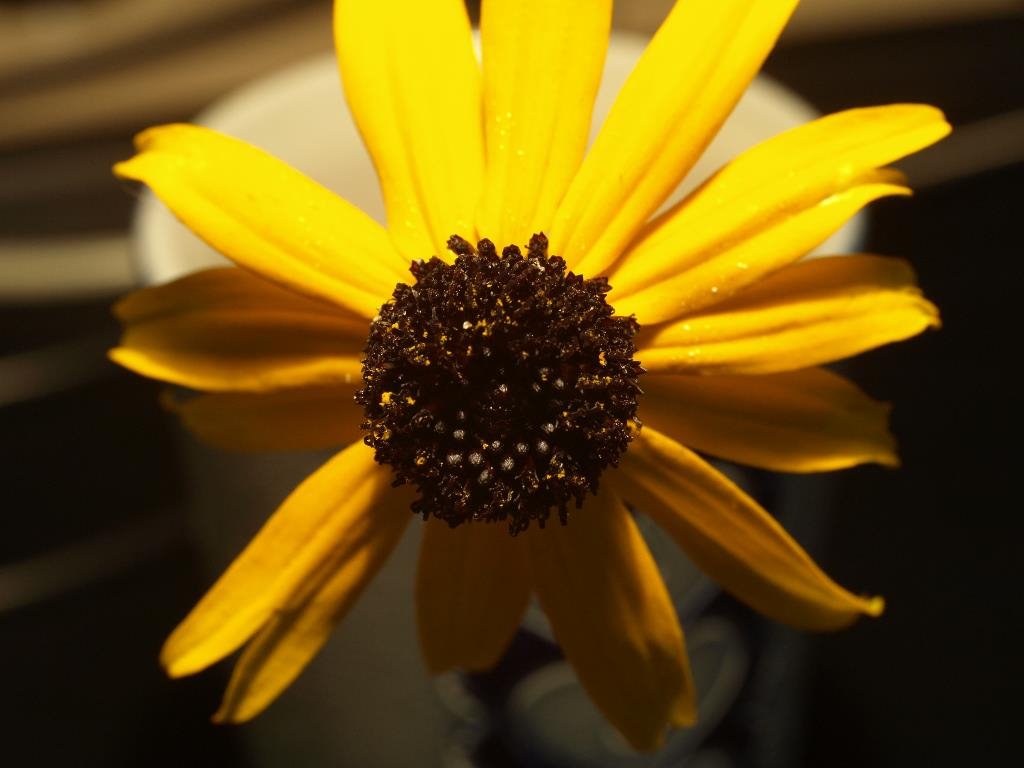
Now on to the photographic results using that UV LED. Target here was a Rudbeckia flower, since it sports a nice UV pattern.

VISUAL shot:


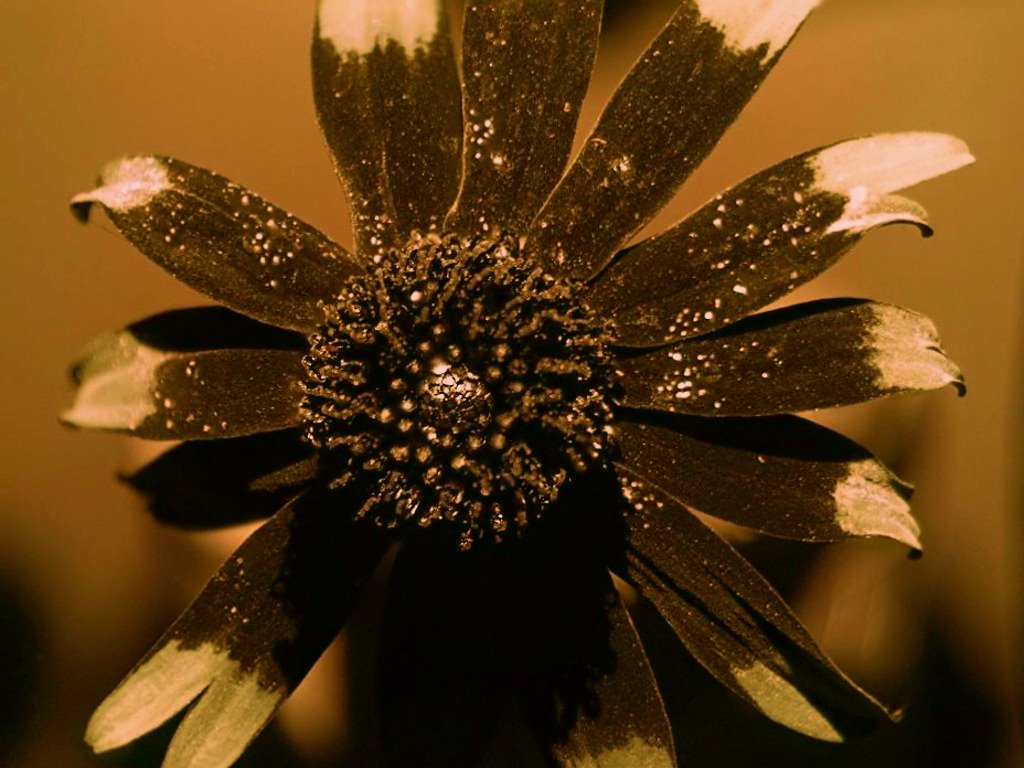
UV induced visual FLUORESCENCE (using Baader UV/IR Cut filter):


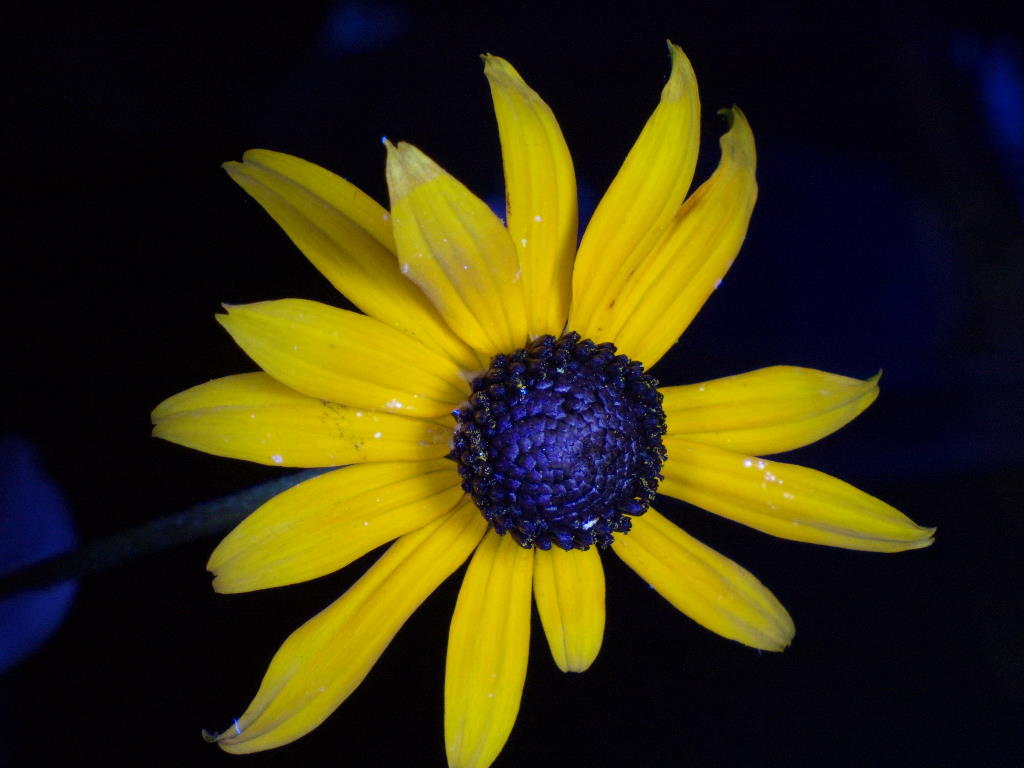
UV (using Baader 2" U-filter):


UV + UV induced visual FLUORESCENCE (no filter, shot in darkness):


Unaltered shots directly from the camera, just sized down.

And here some test using synthesized DOF for the UV shot:


and some shot from the side in much higher magnification using UV Rodagon 60mm + Baader UV/IR Cut filter to show the fluorescent pollen:


100% crop:


So in total I would find that litte gem quite useful...

Even more so since now it has been enhanced, so a camera is able to trigger the unit as long as the shutter is open to full power and then falls back to a preadjusted value. Quite nice, so one is not exposed to full power all the time and handling is much easier.


A further enhancement is an adjustable f1 quartz condensor lens which allows to focus/defocus the UV beam depending on the lighting situation needed. Plus there is also now an adaptor to a quartz or liquid light guide to direct UV light as needed.


P.S.: There are now also different LED heads available, such as a 385nm head, white light with different color temperatures (3500 - 8000 K) plus for IR (850nm and longer)

P.P.S.: there is now also a holder for a camera hotshoe which makes operation very easy.


A laser pointer also fits in to make it easy to target:


Stay tuned, more will follow on that technical subject...

More info on this very interesting field may be found on my site http://www.pbase.com/kds315/uv_photos
Wednesday, September 26, 2007

Dive into the wonders of the Mexican Zinnia

Today I would like to invite you to a journey into the wonders of the Mexican Zinnia, which is one of my favorites for UV shooting, since it has so much to offer.

Equipment used was two Macro Nikkors 35+19mm, a modified Olympus variable extention tube and a 375nm UV LED light. All shots were done at ISO400 to capture the faint fluorescence, thus the higher amount of visible noise.

So this was the one from a previous session...[click on image yields a larger version].


Now let's dive in...


and deeper...


Now let's switch modes from "visible and fluorescence" to "UV and UV induced visible fluorescence":


and deeper...


and deeper...


and deeper....reaching about 14x magnification on CCD, on screen ca 160x...


So this wonderful little flower has it all, a nice visible appearance, a sharp UV pattern, fluorescent petals, pollen and stems (even in different color!)...

Lenses used were Macro Nikkor 35mm+19mm on a modified Olympus variable extention tube + RMS mount adaptor. UV LED 375nm. Camera used was the Olympus E-510.


Stay tuned, more will follow on that subject...

More info on this very interesting field may be found on my site http://www.pbase.com/kds315/uv_photos

Tuesday, September 18, 2007

UV and the Quantum Computer Research


UV seems to be important to researchers, too.

I have been asked for advice by the University of Ulm/Germany which is part of the European Quantum Computer Project. Single Calcium ions are catched and isolated into a special fabricated deep temperature trap and targeted by laser radiation which brings them to emit UV light at about 397nm. To record this very faint radiation, a special lens is needed which has enough working distance, highest resolution and UV transmission. After some tests in my lab my advice was to use a Carl Zeiss Luminar 63mm for that purpose, which still has some 70% transmission at this wavelength.

Regarding resolution, the 63mm Luminar has a resolution of about 330lpm using white light and about 600lpm at ultraviolet /UV) light.

So enjoy some pictures from the forefront of research with me here; courtesy and (c) Institute for Quantum Information Processing, University of Ulm, Germany.

Experimental Setup showing a deep temperature dewar and laser injection:


Deep temperature Ion Trap:


Carl Zeiss Luminar 63mm as recording lens for 397nm Ca+ emissions (rear):


Recorded UV Ca ion emissions @397nm:


[All images in this thread (c) Institute for Quantum Information Processing, University of Ulm, Germany, used with permission]

More on the (various) series of Zeiss Luminar macro lenses, pictures, data etc. may be found on my site http://www.macrolenses.de together with some 300 other special macro lenses.

Stay tuned, more will follow on that fascinating subject...

More info on this very interesting field may be found on my site http://www.pbase.com/kds315/uv_photos

Monday, September 17, 2007

Canon DSLRs for UV?


I was a Canon shooter, always, for many years. Then something happened, I got infected by that "UV Photography Virus" and I switched to Nikon. Why? Easy answer, some Nikon DSLRs are pretty sensitive to UV, but Canons are not. Are they really?

So I did a test after some years of having neglected my Canon gear and shot using the Canon 20D and the Nikon D70 under otherwise identical conditions.

And the winner is...??

Here's the Canon 20D result:


And here is the Nikon D70 result:


Not much visible difference, right? But the real difference gets visible when we have a look at the exposure data:

- Canon:  EOS 20D, ISO3200 (!!!), 30sec, f5.6, UV Rodagon 60mm, Baader 2" U-filter, UV LED

- Nikon: Nikon D70, ISO200, 2sec, f5.6, UV Rodagon 60mm, Baader 2" U-filter, UV LED

which is about 8EV (!!!) in favour of the Nikon D70 - a clear winner for UV shooting.

That now does not mean you can't use a Canon DSLR at all, it is just that ISO3200 and 30sec exposure are not really that convenient if you shoot somewhat ambitiously UV, irrespectively of the much higher noise which occurs at that high ISO level.

(Remark as of 2017: Canon cameras also use SONY sensors now, no own developemnts, so also Canon cameras have useful UV sensitivity from what I have read and seen)

Ultra Achromatic Takumar 300mm for UV


So I also have this ultra rare Pentax Ultra Achromatic Takumar f5.6 300mm sitting in my cupboard and I wondered how that would perform in UV.

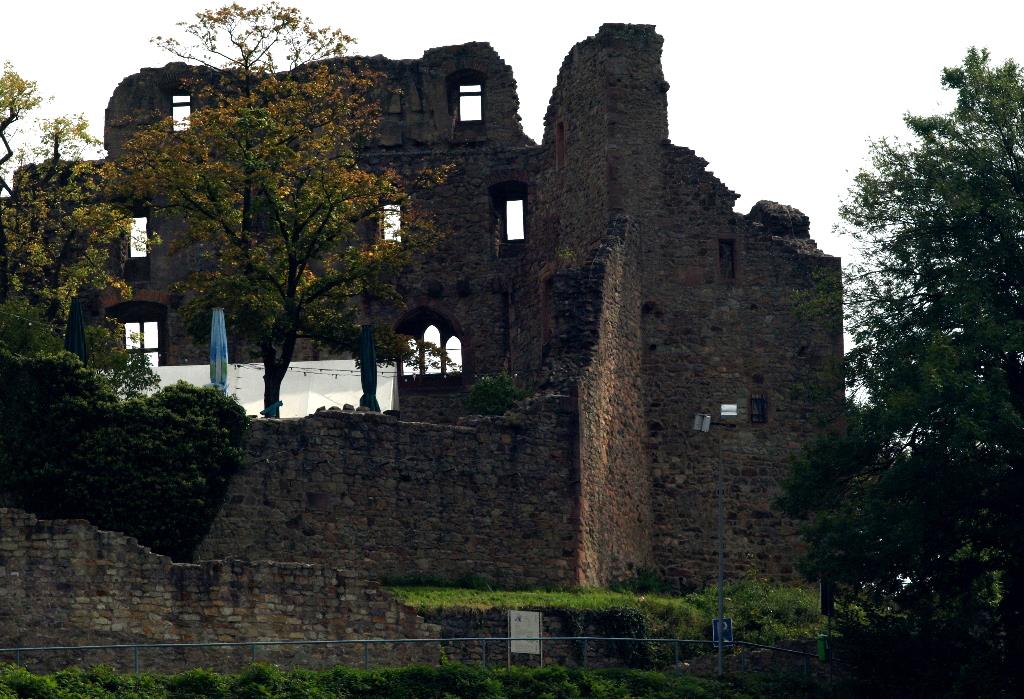
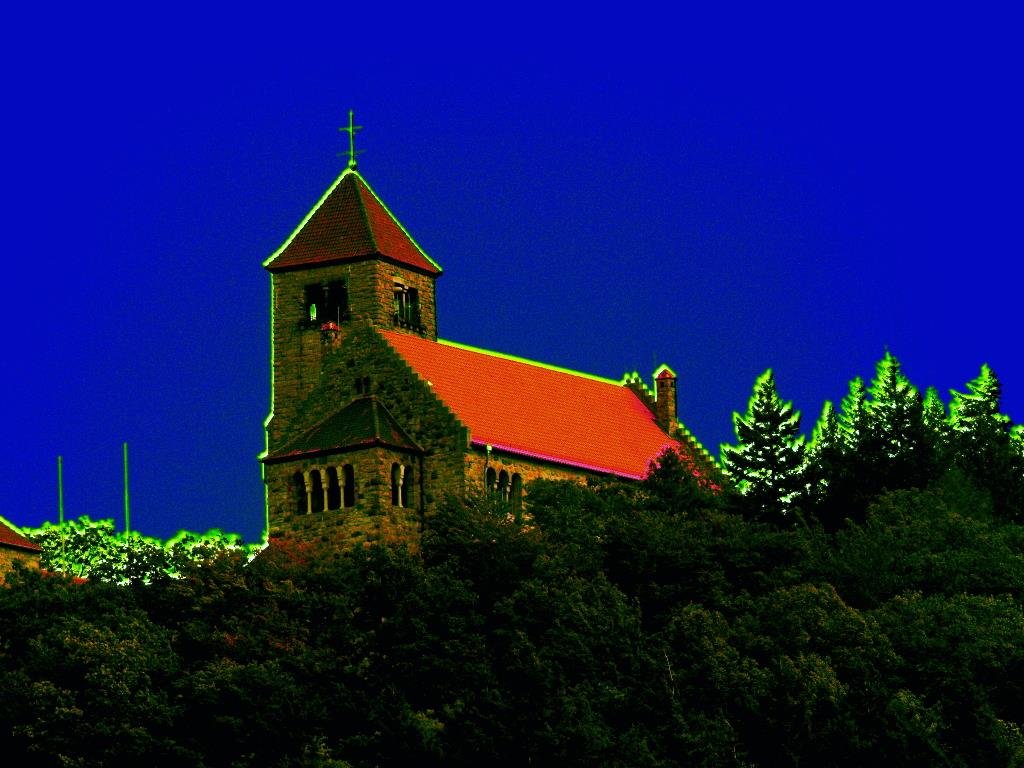
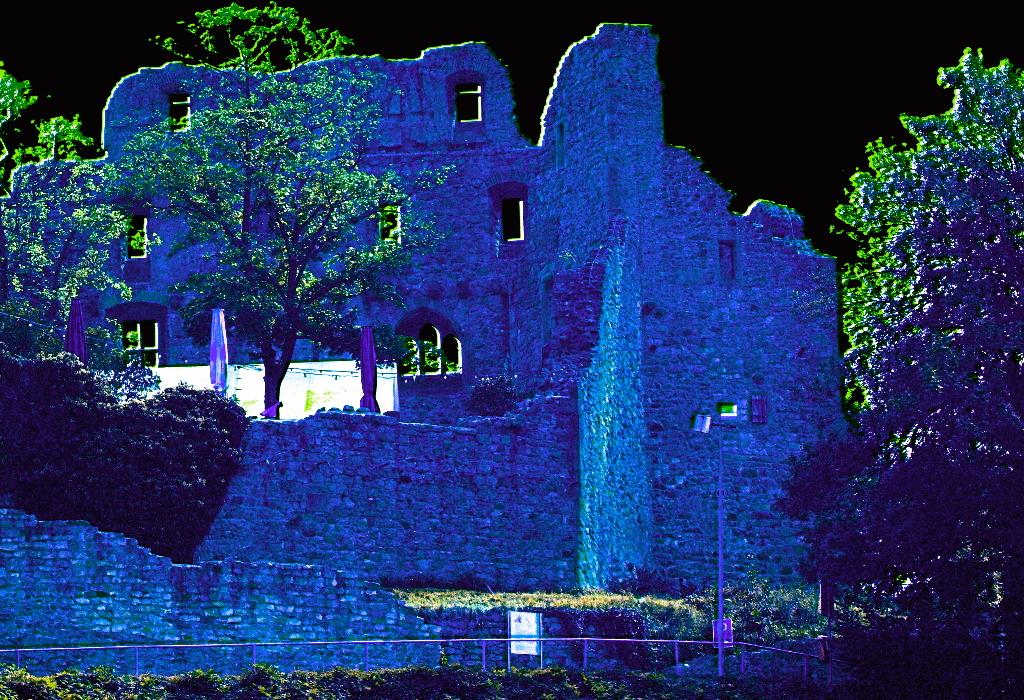
Just opposite my house is that little mountain about 2 kilometers away and just ideal to take some shots from the upper window of the Windeck castle. It turned out that this lens is razor sharp and produces nice differentials (difference between the visible and the UV shot).

It was slightly sunny, around noon (not ideal for shooting UV actually).


The second shot is the differential and shows how the UV shot differs from teh visual obe. Colors were somewhat adjusted to taste.


The detail resolution is quite astonishing for that lens, which may be seen here on the explainatory plate which is about legible from 2ooo meters!


So I guess I like that lens!

Stay tuned, more will follow on that fascinating subject...

More info on this very interesting field may be found on my site http://www.pbase.com/kds315/uv_photos

Saturday, September 15, 2007

Carl Zeiss Jena 60mm UV-Objektiv and Rudbeckia
So today I dug out my old Carl Zeiss Jena f4 60mm UV-Objektiv (a simple triplet actually, made of UV transmitting glass) mounted it with a suitable helicoid to an Olympus E-510 DSLR, and repeated the reflected UV and fluorescence shots as yesterday.

As light source a 365nm UV LED was used here and no other modifications were done. Here the UV shot using the Baader 2" U-filter (320-390nm), just color balanced to taste, no other modifications done. Interesting to note that since this lens is a simple, yet sharp triplet design, quite some massive focus difference between visible focus and UV shows, nearly 50mm in this case (closer for UV). [actually also the reason why the UV image is somewhat larger]


The second shot I used the same UV LED, but the filter used was the Baader UV/IR Cut filter, to suppress UV and to allow for fluorescence.


Oh, and if someone wondered how that flower looks like in normal white light, there you go...


Did you notice these aphids wondering around...? It seems to grin right into the lens on that last shot!

Stay tuned, more will follow on that fascinating subject...

More info on this very interesting field may be found on my site http://www.pbase.com/kds315/uv_photos