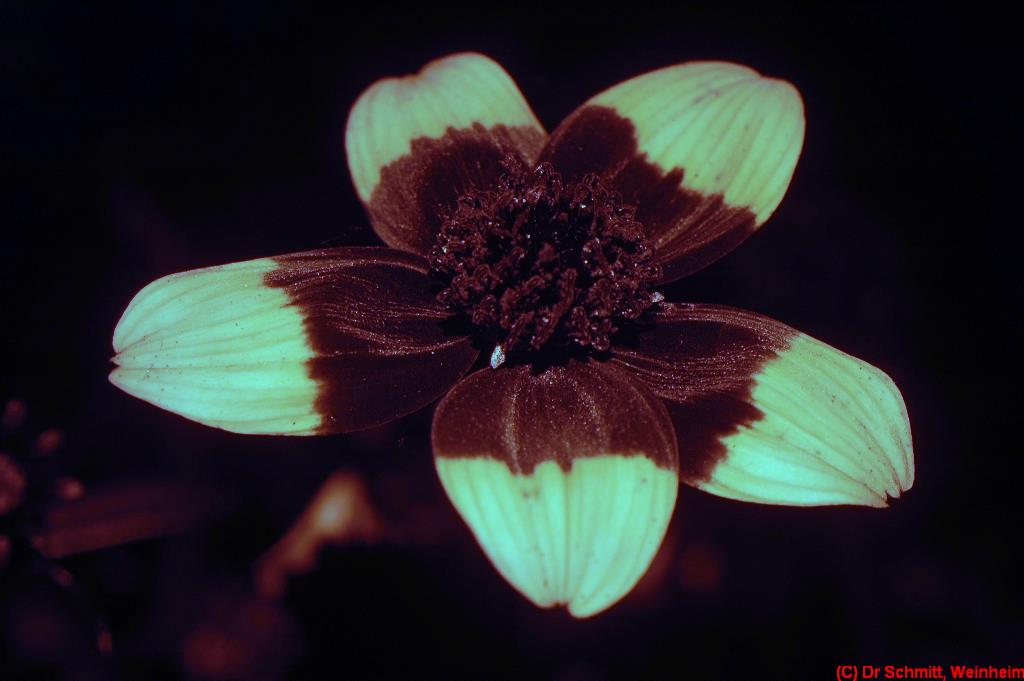
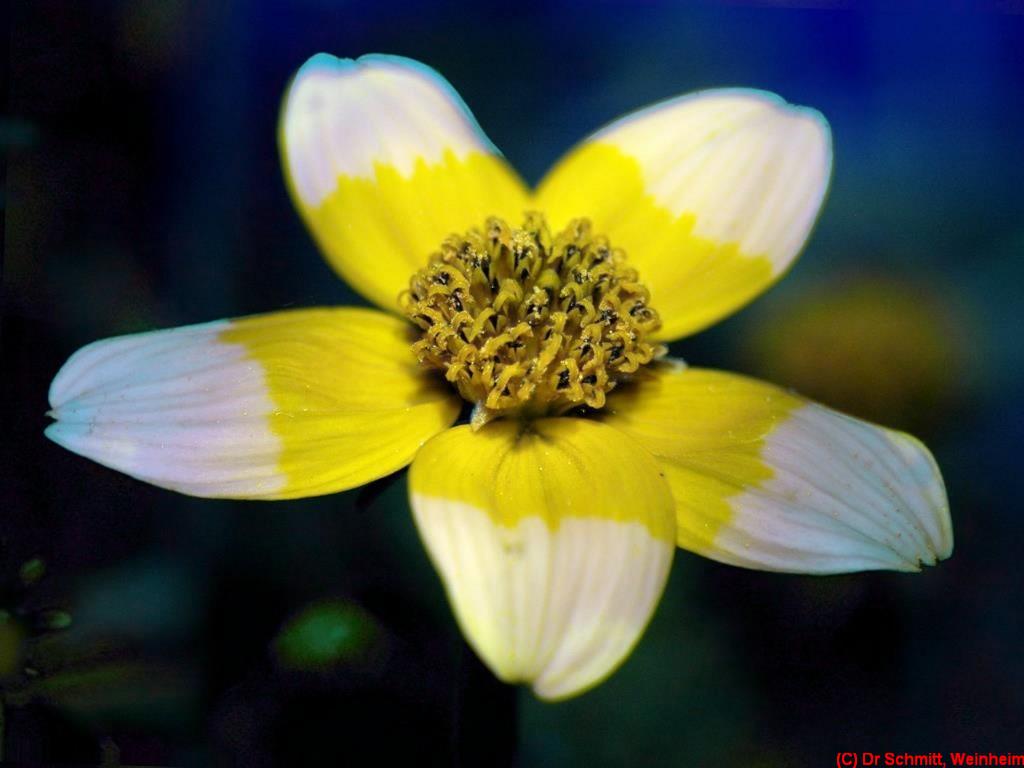
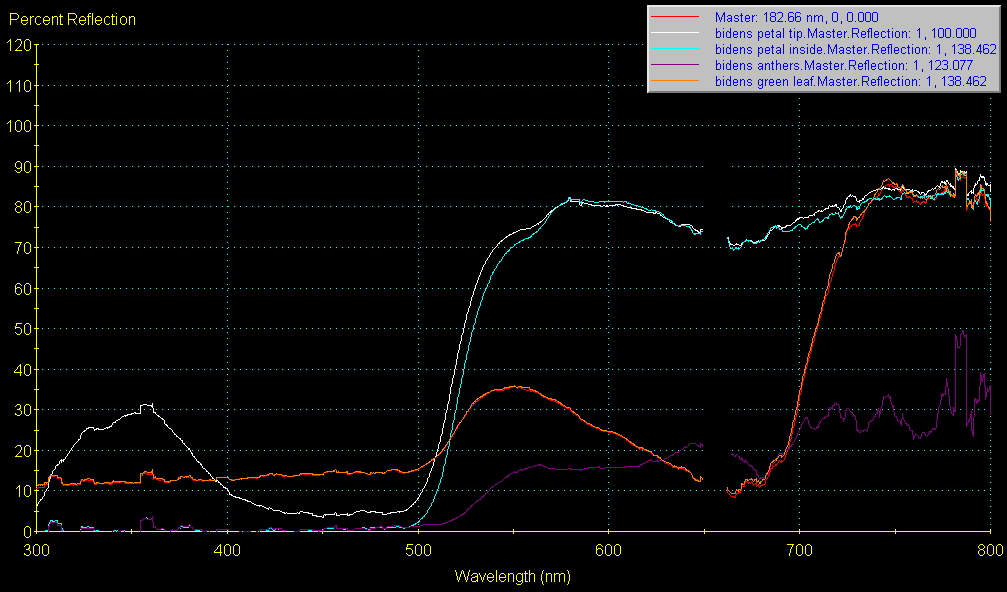
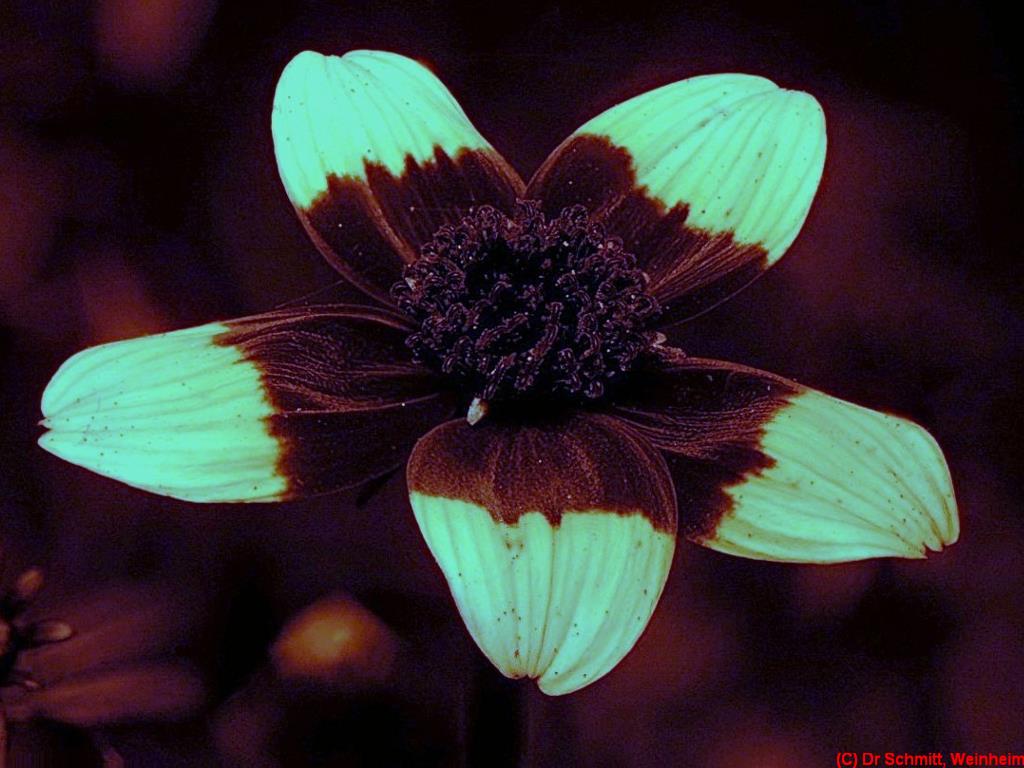
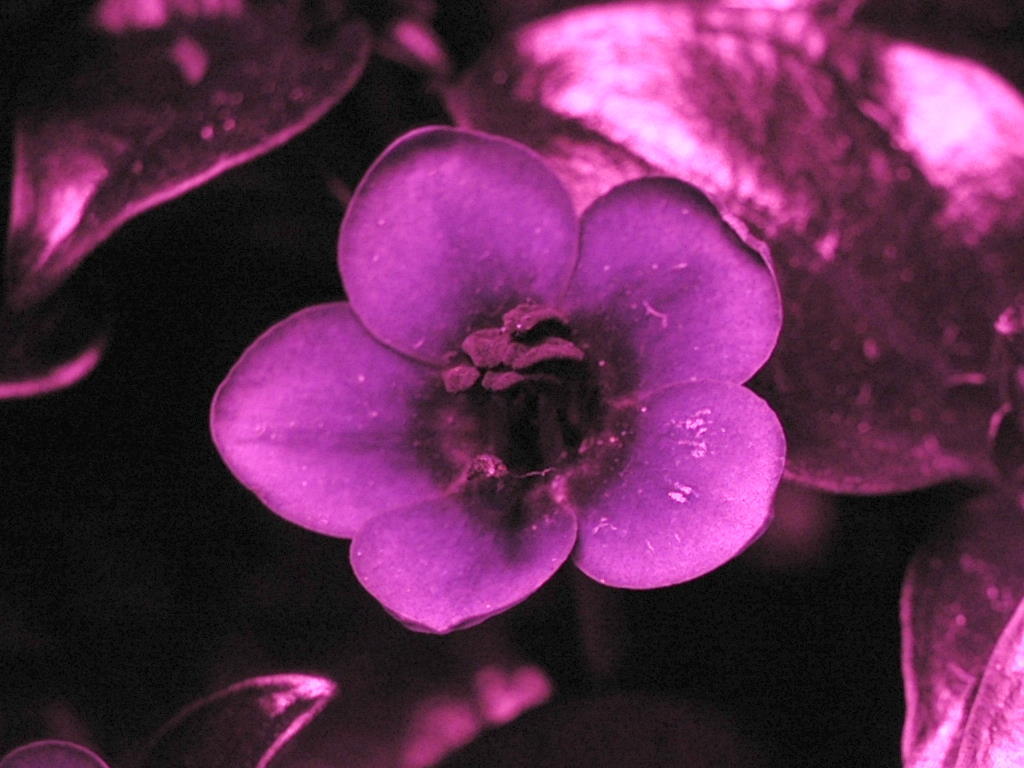
Well, I could not resist that one....BIGGRIN
But seriously, since I have two Nichia LED heads, one with 365nm (NCSU033A, 250mW) and also one with 385nm (NCSU034A, 330mW), I wanted to see, if in an identical controlled setup there would be significant differences in favour of using the shorter or longer wavelength.
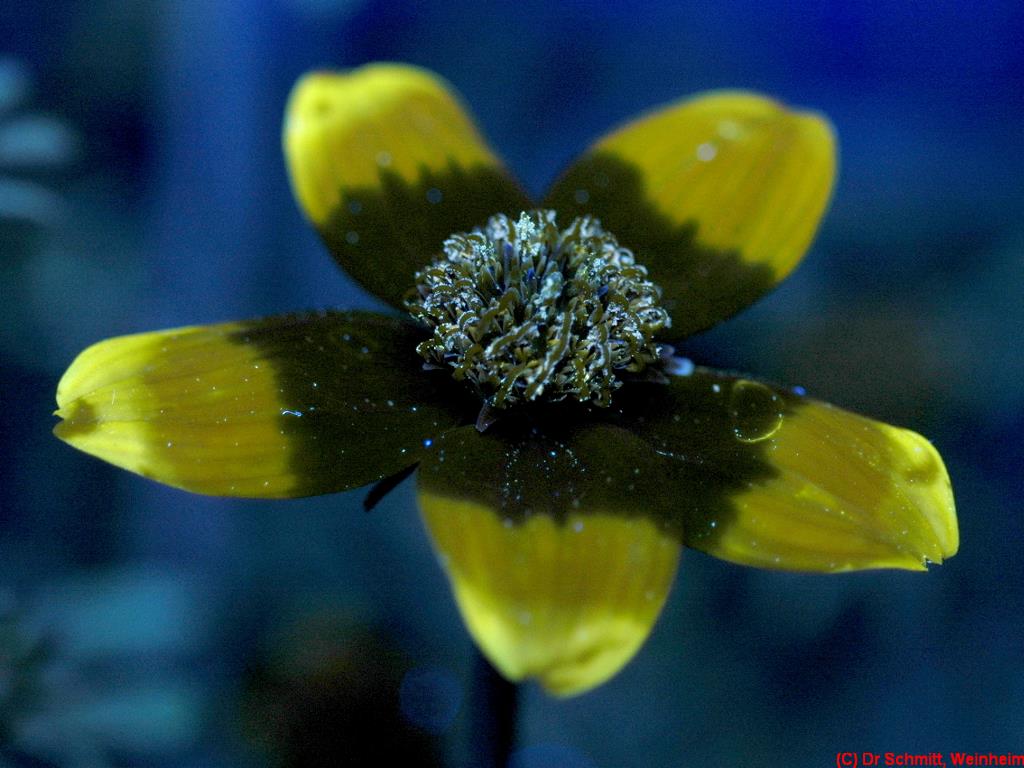
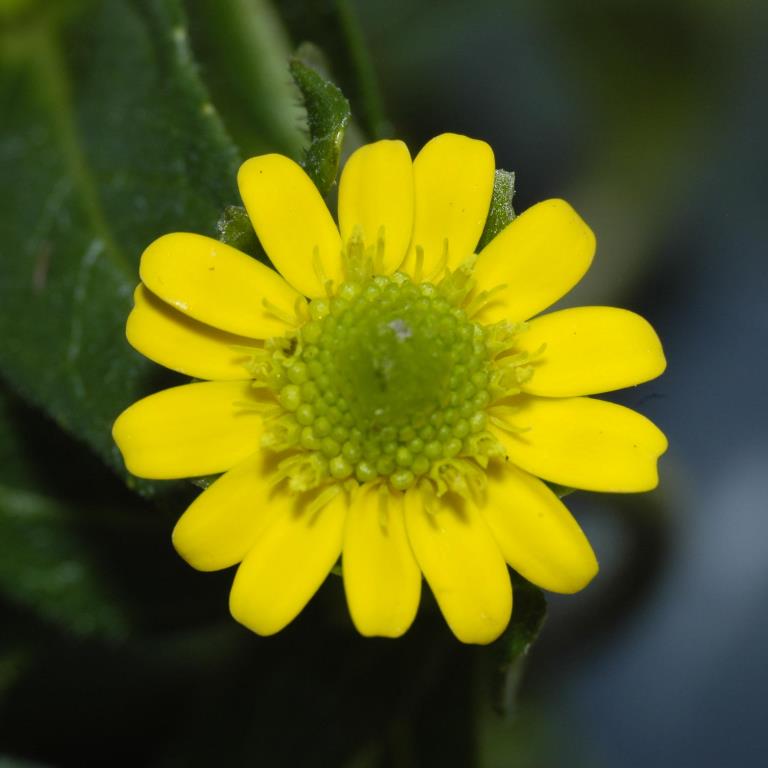
Target was again Bidens ferulifolia, camera a Nikon D70 (unmodified), Baader U-filter (310-390nm), 100mm old enlarger lens (good to 320nm) and the only change done was the change of the UV LED used; Identical exposure.
[click on image to see a larger one]
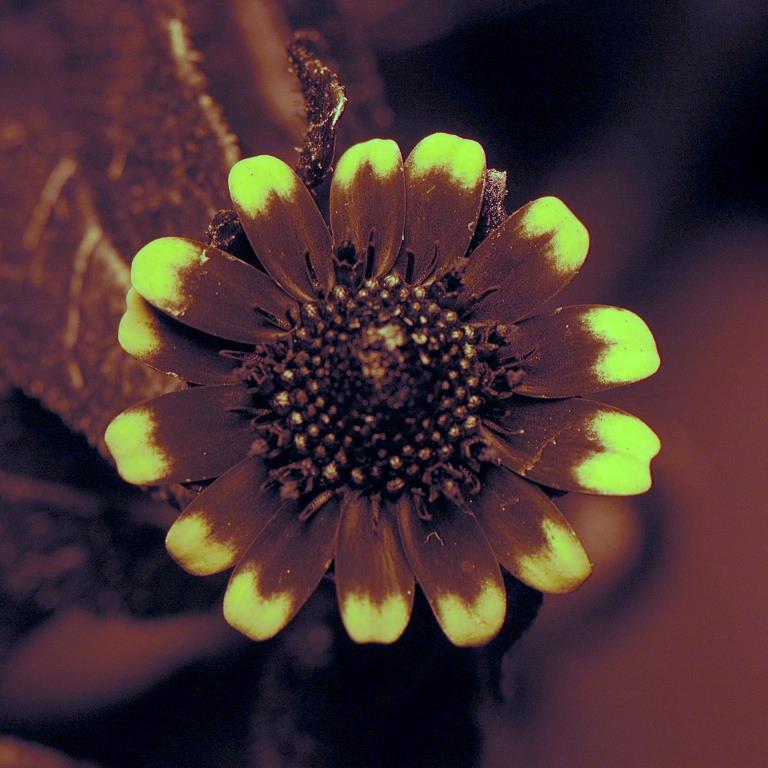
365nm straight from the cam, no WB:

385nm straight from the cam, no WB:

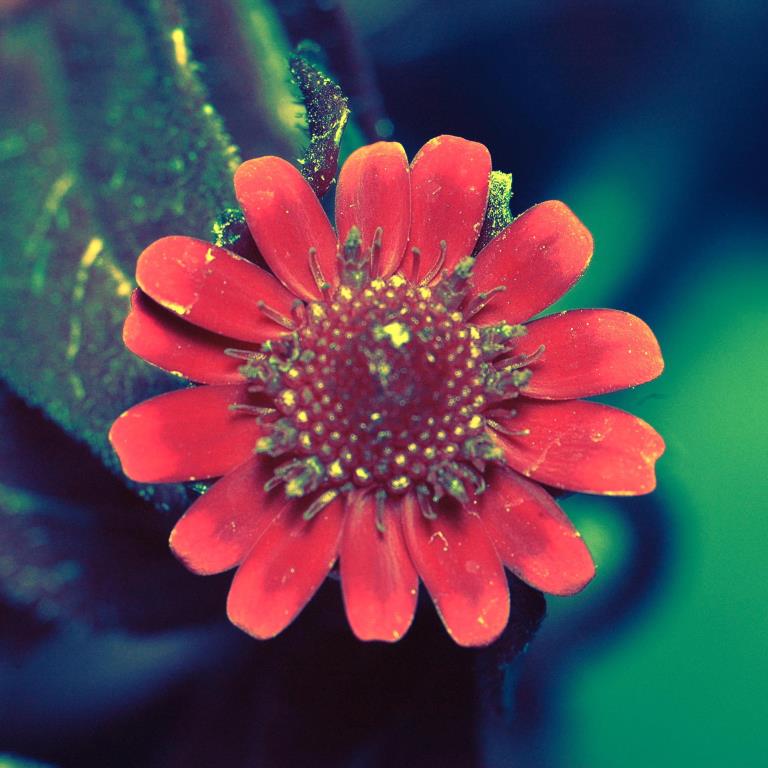
365nm straight from the cam, WB:

385nm straight from the cam, WB:

Not much differences I would say, the pattern gets nicely visible and also some structures of the petals are shown in both shots (with that flower! Others may react quite differently, so be aware...).
But, yes there is a BUT: 365nm is much more complicated to reach if you don't have a suitable UV lens. 385nm however may be reached with about any lens (with some focus shift most likely), so if you are on a tight budget, or just just want to explore if UV photography would be for you, 385nm might serve you well and save you some serious amount and still some acceptable results may be reached (depending on target, let me say that again...)
Stay tuned, more will follow on that fascinating subject...
More info on this very interesting field may be found on my site
http://www.pbase.com/kds315/uv_photos
 UV using Baader U filter:
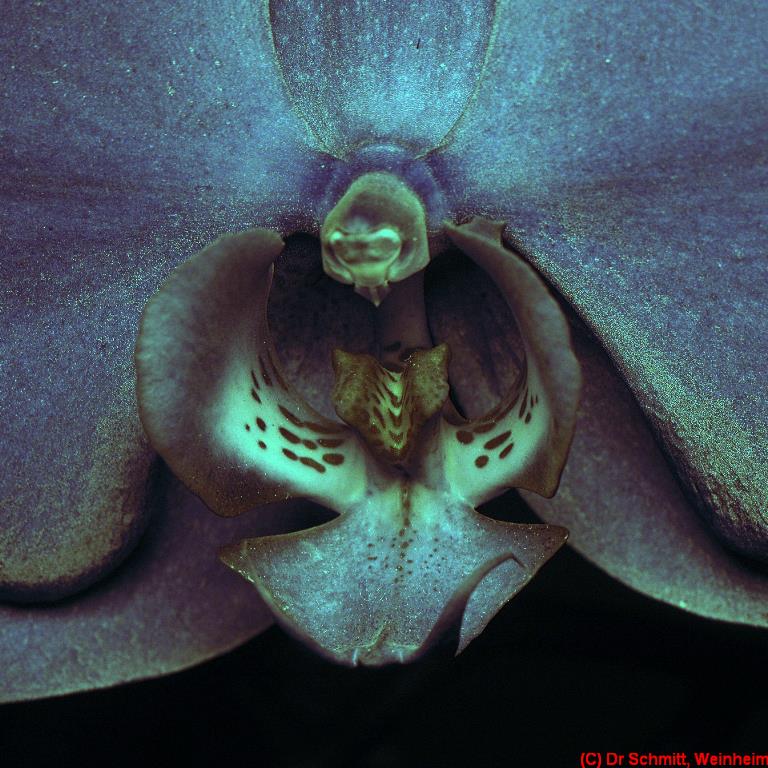 FL using XCUT2 filter:
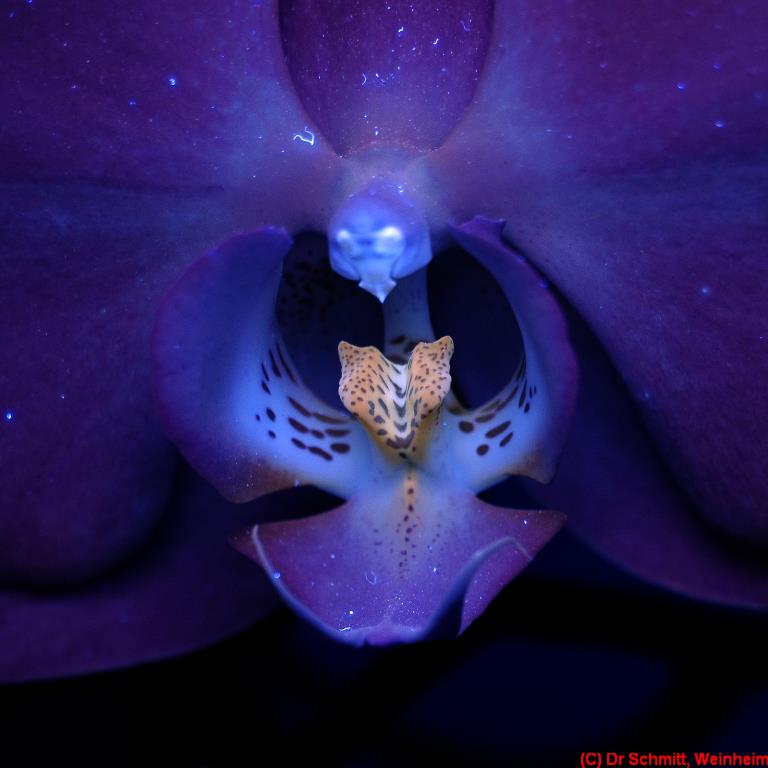 FL using Nichia 365nm UV LED (for comparison):
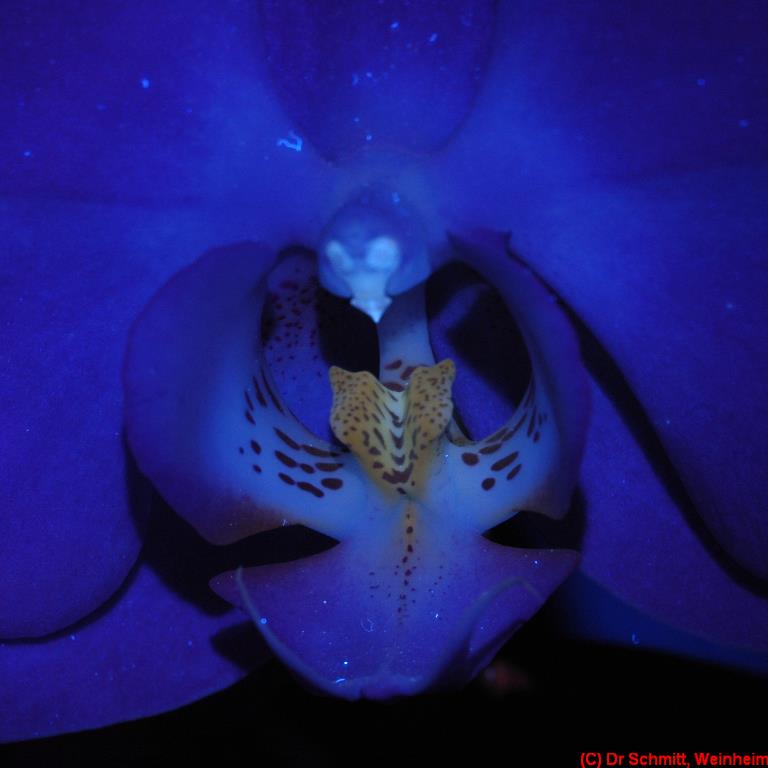 Stay tuned, more will follow on that fascinating subject...
More info on this very interesting field may be found on my site http://www.pbase.com/kds315/uv_photos
Stay tuned, more will follow on that fascinating subject...
More info on this very interesting field may be found on my site http://www.pbase.com/kds315/uv_photos