Wednesday, May 6, 2009

Bidens ferulifolia Bee Vision video - one step beyond still photography

Well, I thought it would be about time to go one step beyond still photography and show it as video now!

[ click links to see the videos in 1280x720 resolution and 16:9 format]

Bidens ferulifolia VIS
Bidens ferulifolia VIS HD video


Bidens ferulifolia Bee Vision using XBV2 filter
Bidens ferulifolia Bee Vision HD video


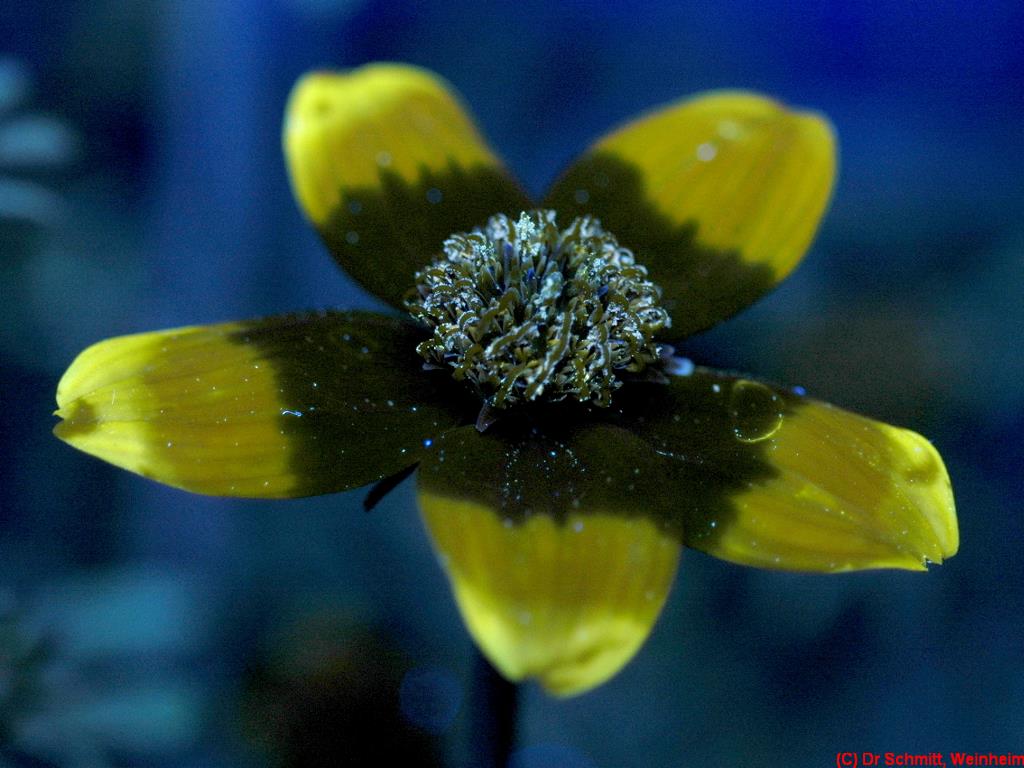
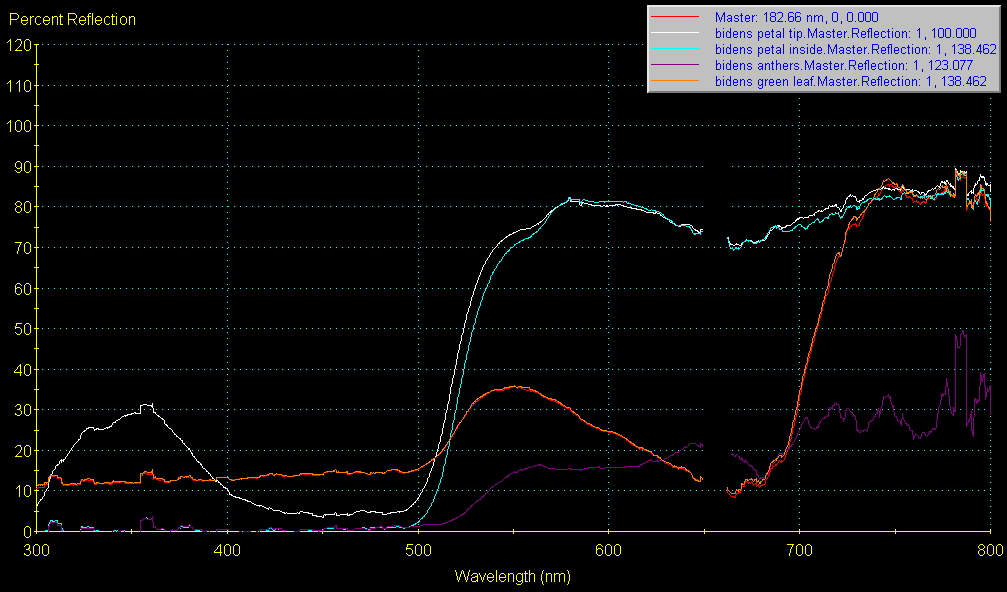
I have not seen videos of flowers in ultraviolet (UV) before,  but the second video clearly shows that prominent UV pattern Bidens exhibits.  The spectrometric reflection measurement of such a flower clearly shows the UV reflection of the petal tip (white line), whereas the rest of the petal is  just bright yellow (turqouise line).

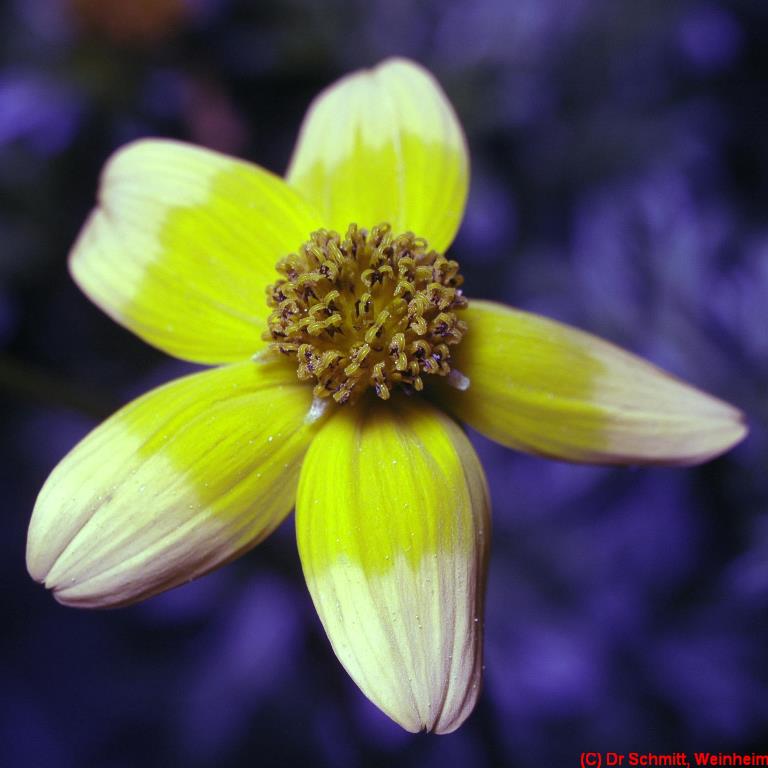
Using the XBV2 "Bee Vision" filter and an UV sensitive video camera, it is now possible using a UV transmitting lens (my X35 lens which allows up to 320nm in that case) and lightsource (ambient light plus my Nichia 365nm UV LED) to make that pattern visible - also in a video. So what you see in the 2nd video actually is a mapping of UV+B+G+R channels into our human visible B+G+R channels. [Since bees don't see red, the R channel could be (easily) suppressed in that 2nd video, but that hasn't been done here yet]

The XBV and XBV2 filters are my special development, so if that interest you, just ask me about it.

Stay tuned, more will follow on that fascinating subject...

More info on this very interesting field may be found on my site http://www.pbase.com/kds315/uv_photos

Wednesday, April 22, 2009

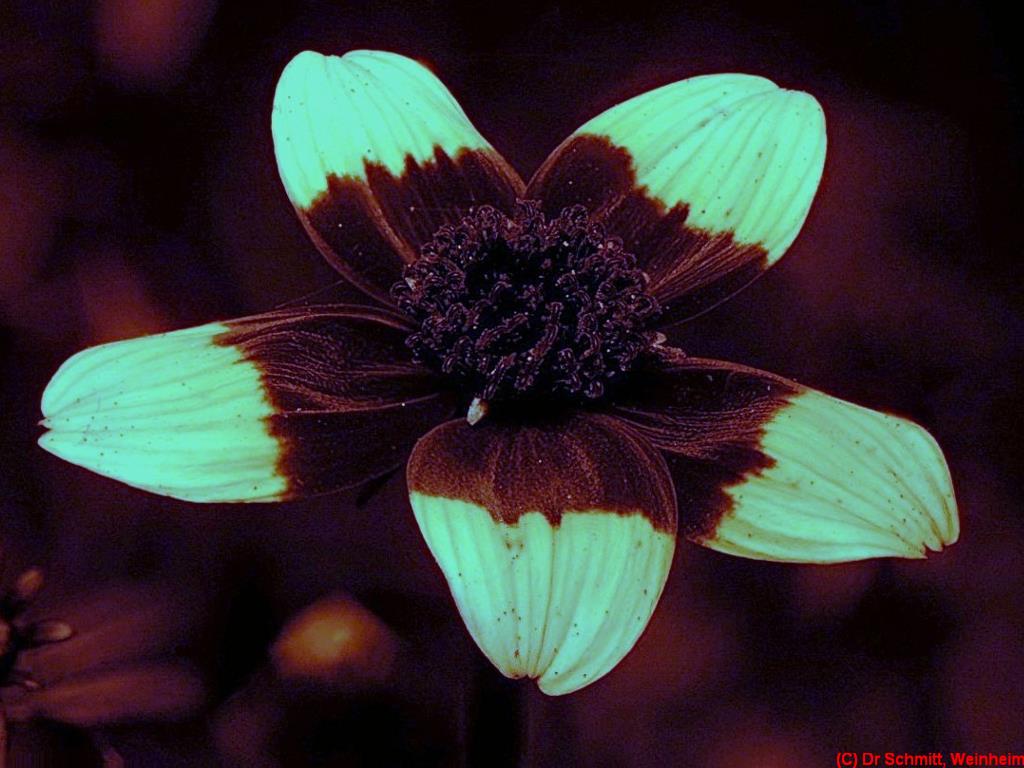
Bidens ferulifolia - Bee Vision II

I have worked a bit more on that XBV filter and have an XBV2 filter now also, which gives a more neutral representation.

[click on image to see a larger one]

For comparison the "bee vision" filter XBV as before:


an the more neutral XBV2 filter:


Stay tuned, more will follow on that fascinating subject...

More info on this very interesting field may be found on my site http://www.pbase.com/kds315/uv_photos

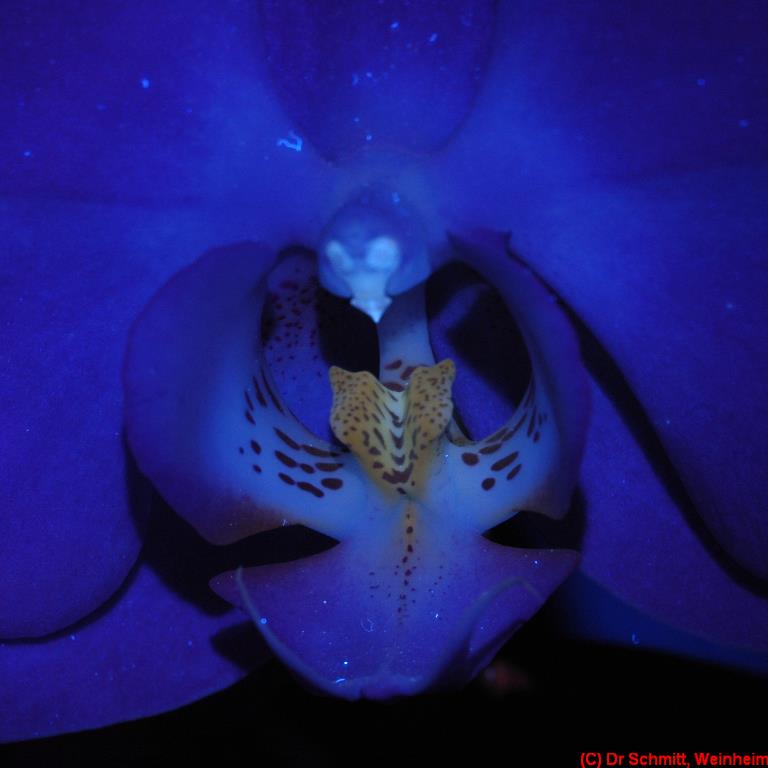
Phalaenopsis - UV, FL, Nichia 365nm UV LED

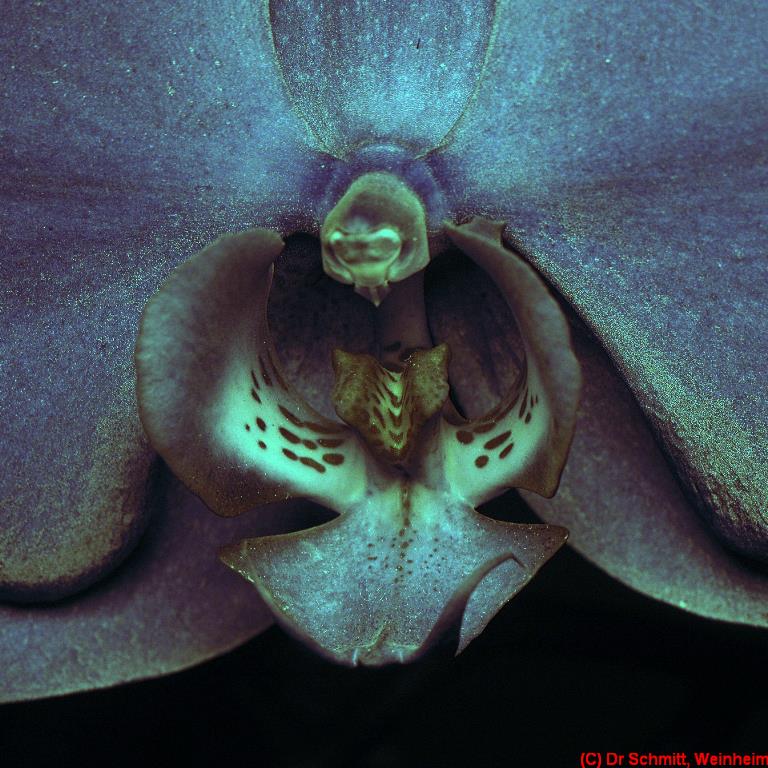
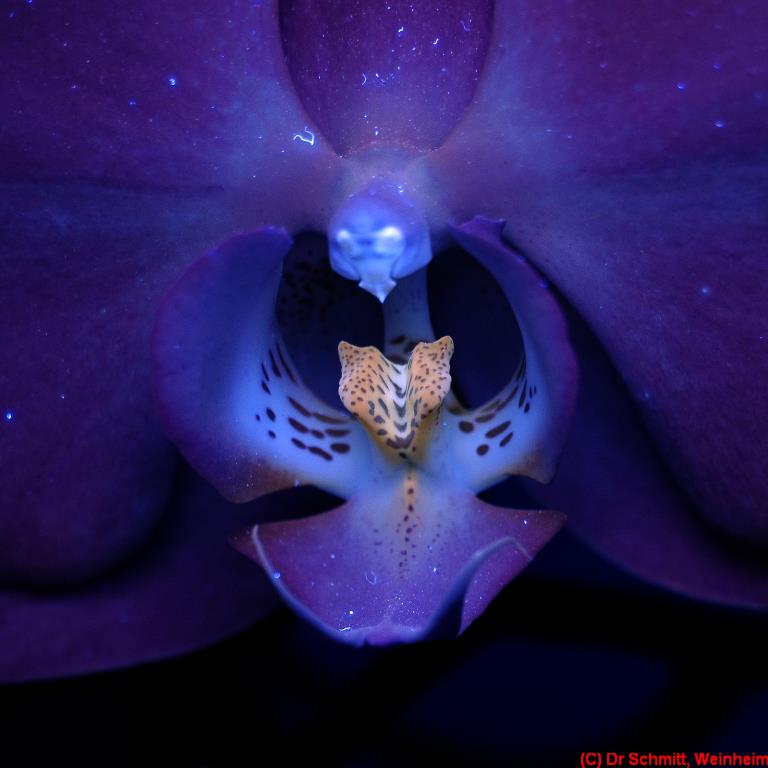
Just some test shots using a Phalaenopsis ("moth orchid") as a target.

Nikon D70 (unmod.), High Power UV flash, EL Nikkor 105mm, f8, 1/180sec, ISO400

[click on image to see a larger one]

VIS: UV using Baader U filter: FL using XCUT2 filter: FL using Nichia 365nm UV LED (for comparison): Stay tuned, more will follow on that fascinating subject... More info on this very interesting field may be found on my site http://www.pbase.com/kds315/uv_photos
Bidens - 365nm vs. 385nm: Is longer better?

Well, I could not resist that one....BIGGRIN

But seriously, since I have two Nichia LED heads, one with 365nm (NCSU033A, 250mW) and also one with 385nm (NCSU034A, 330mW), I wanted to see, if in an identical controlled setup there would be significant differences in favour of using the shorter or longer wavelength.

Target was again Bidens ferulifolia, camera a Nikon D70 (unmodified), Baader U-filter (310-390nm), 100mm old enlarger lens (good to 320nm) and the only change done was the change of the UV LED used; Identical exposure.

[click on image to see a larger one]

365nm straight from the cam, no WB:


385nm straight from the cam, no WB:


365nm straight from the cam, WB:


385nm straight from the cam, WB:


Not much differences I would say, the pattern gets nicely visible and also some structures of the petals are shown in both shots (with that flower! Others may react quite differently, so be aware...).

But, yes there is a BUT: 365nm is much more complicated to reach if you don't have a suitable UV lens. 385nm however may be reached with about any lens (with some focus shift most likely), so if you are on a tight budget, or just just want to explore if UV photography would be for you, 385nm might serve you well and save you some serious amount and still some acceptable results may be reached (depending on target, let me say that again...)


Stay tuned, more will follow on that fascinating subject...

More info on this very interesting field may be found on my site http://www.pbase.com/kds315/uv_photos

Tuesday, April 21, 2009

Bidens ferulifolia - Simulated Bee Vision

Well, and how might a bee now see that flower? Let me show you my "bee vision version" of that flower, compressing the UV information into the human spectral range, i.e. I use the visible and the UV image (cf. my previous BLOG entry on Bidens) and overlay them in a certain way, so as to get the UV-B-G information in one image. As you may see, this is quite a cumbersome process, since ideally one would need two identical shots, one UV and one VIS, to get an exactly matching result, which due to wind, mechanical movement when changing filters etc. is pretty impossible:

[click on image to see a larger one]


Now I was curious to see, if I could have that very same result with just one shot using a suitable filter, and indeed this seems to be possible! I call that filter now my "bee vision" filter XBV:


It is pretty obvious that the "one shot" bee vision image reveals plenty more information, if you look at the petals, the pollen on the anthers etc. No wonder actually, since the overlaying process destroys fine details since a perfect overlay of two shots minutes apart can never perfectly match! And forget that when there is the slightest brise of wind...

For the more scientifically interested (esp. why these tips are so bright, which cannot be seen in visible light with our human eyes), here a reflection measurement I just made (100% = white spectralon) which clearly shows the high reflection of the petal tips in the 300-400nm region, max. around 360nm - the maximum of the bee UV cone sensitivity. Coincidence? I don't think so....:

Stay tuned, more will follow on that fascinating subject...

More info on this very interesting field may be found on my site http://www.pbase.com/kds315/uv_photos
Monday, April 20, 2009

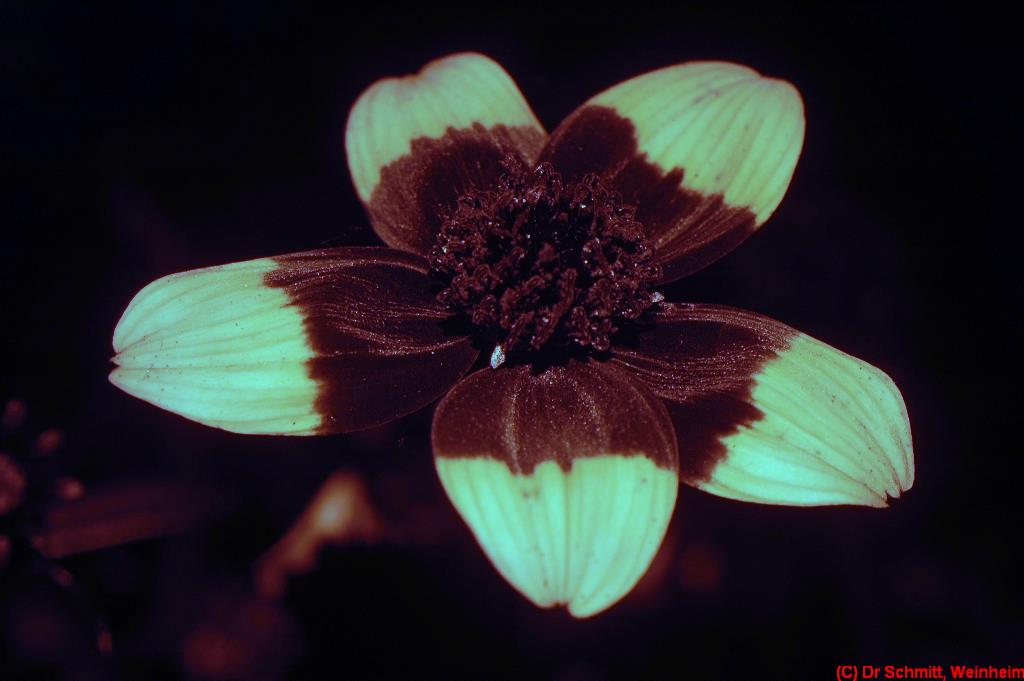
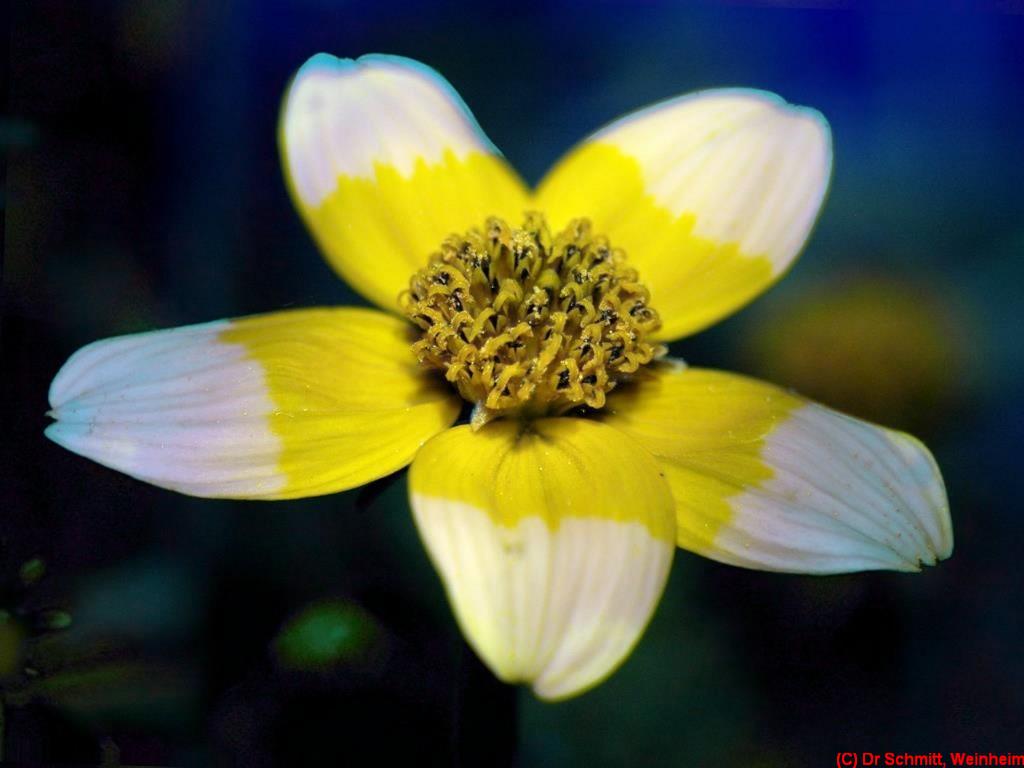
Bidens ferulifolia, various filters + light sources

Well, another nice target for UV photographic experiments is Bidens ferulifolia, the variety "Peters's Surprise".

Equipment used was: Nikon D70 (unmodified), ISO400, f5.6-8, 1/160sec, old 100mm enlarger lens.

[click on image to see a larger one]

VIS using XCUT2 filter (400-650nm):


UV using Baader U-filter (310-390nm) - synthetic DOF:


XUVIR multispectral filter (300-1000nm), UV Flash:


UV induced fluorescence using XCUT2 filter (400-650nm), UV flash:

So, as you may see, a variety of results also that flower shows us.

P.S.: if you wonder what "synthetic DOF" means, I used "stacking" to increase the DOF artificially.


Stay tuned, more will follow on that fascinating subject...

More info on this very interesting field may be found on my site http://www.pbase.com/kds315/uv_photos
Thursday, April 16, 2009

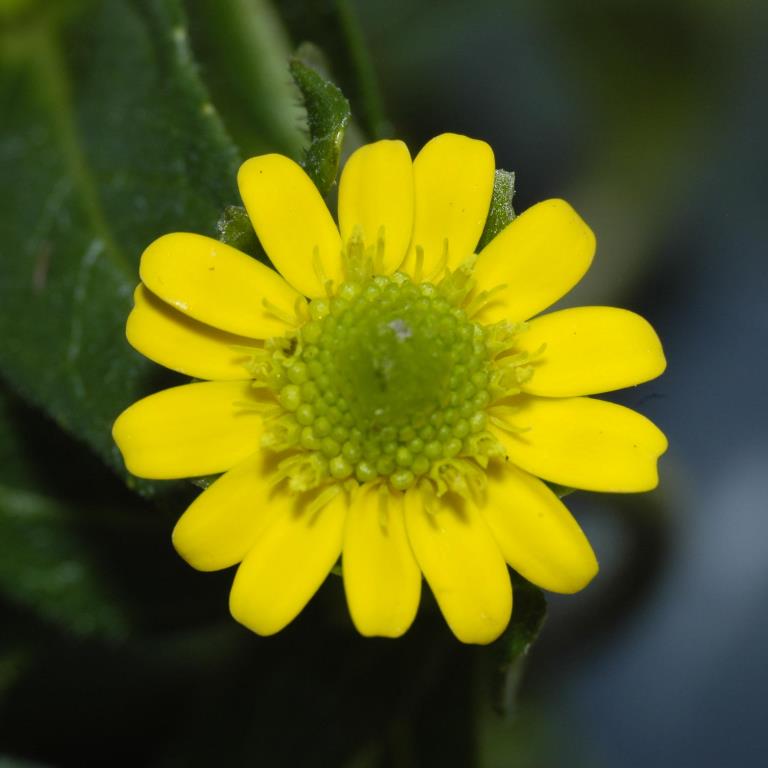
Creeping Zinna, multispectral, UV induced fluorescence, reflected UV etc.

A walk over the local market not only brought some nice white "Lambertheimer" asperagus and new "Galatiner" potatoes home, nope, also a nice "Creeping Zinna" (Sanvitalia procumbens) plant made it to my balcony.

An ideal target to test out the UV enhanced High Power Xenon, the XUVIR "one shot" filter, the Xcut2 filter as well as the well known Baader U filter.

Equipment used was: Nikon D70 (unmodified), UV Nikkor 105mm lens @ ISO400, f11, 1/180sec.

[click on image to see a larger one]

VIS using XCUT2 filter (400-650nm):


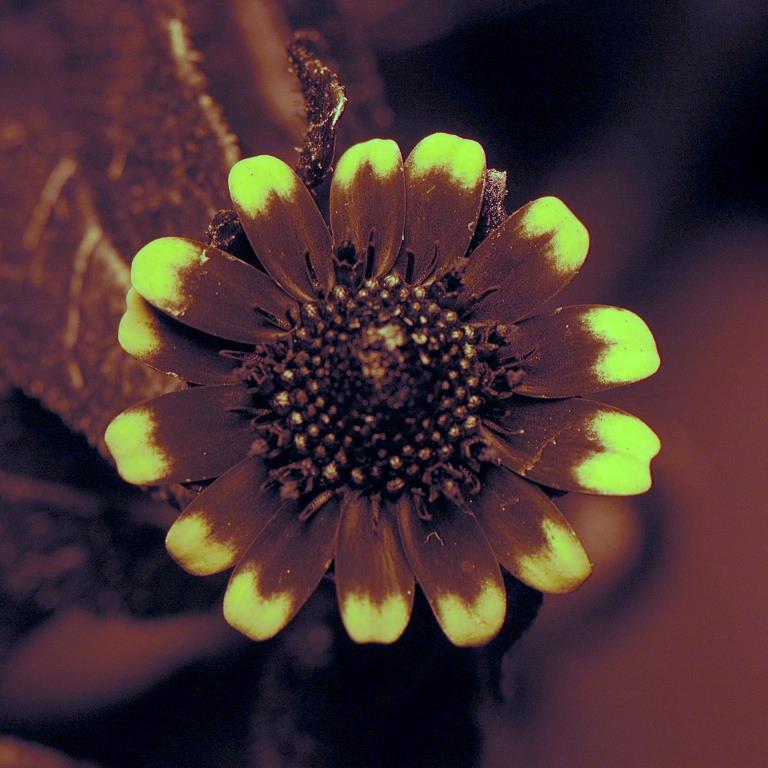
UV using Baader U-filter (310-390nm):


XUVIR multispectral filter (300-1000nm), UV Flash:


XUVIR filter (300-1000nm), unfiltered flash for multispectral recording


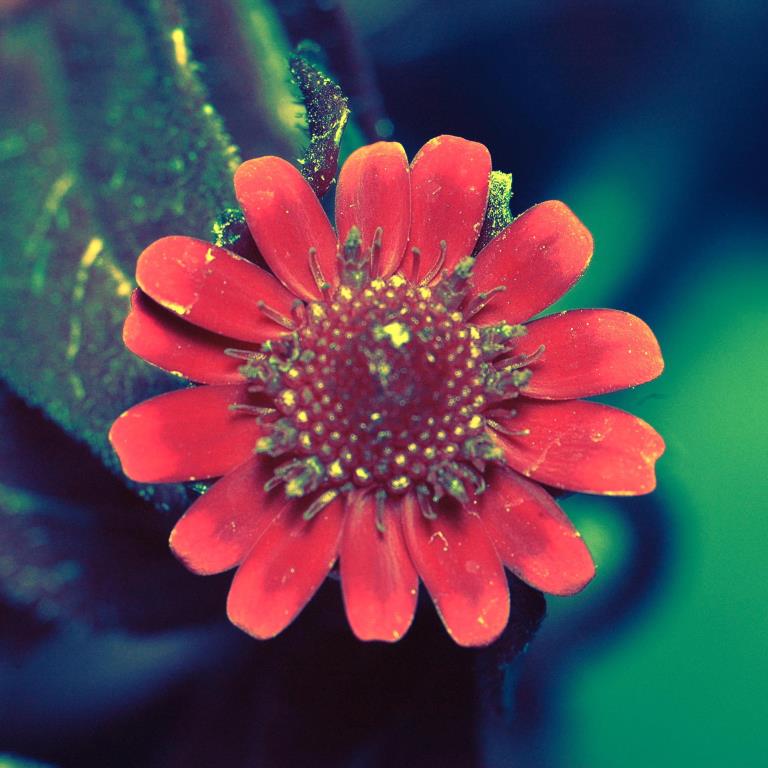
UV induced fluorescence using XCUT2 filter (400-650nm), UV flash:


Sanvitalias UV pattern is actually not that easy to shoot. That may been seen if you have a look at the reflection spectra which I took, since the UV reflection of the petal tip (white line) is less than 10%, just a little bit more than the rest of the petal (teal line) which has hardly any UV reflection. At the same time the IR reflection is very high. So very careful filtering and a strong UV source is needed :


So, as you may see, a variety of results may be produced....and yes, the asparagus was delicious...

Stay tuned, more will follow on that fascinating subject...

More info on this very interesting field may be found on my site http://www.pbase.com/kds315/uv_photos