Thursday, September 16, 2010

Helianthus tuberosus (Topinambur)

Last summer I took quite a few "in situ" shots of that flower using my butterfly vision (BV) filter, since found out that bees and bumblebees seem to be very fond of visiting Topinambur flowers (Helianthus tuberosus, also called "Jerusalem Artichoke") [the roots were used in former times here to make that famous Topinambur liquor]. So today here a few shots, to reveal in more detail, how that flower looks like and the very prominent UV pattern it has. 

[click on image to see a larger one]

Human Vision (400-700nm): 


Ultraviolet Vision (310-390nm) using Xenon High Power UV Flash: 


Ultraviolet Vision (310-390nm) using Nichia 365nm UV Torch: 


(Simulated) Butterfly Vision using XBV2 filter: 
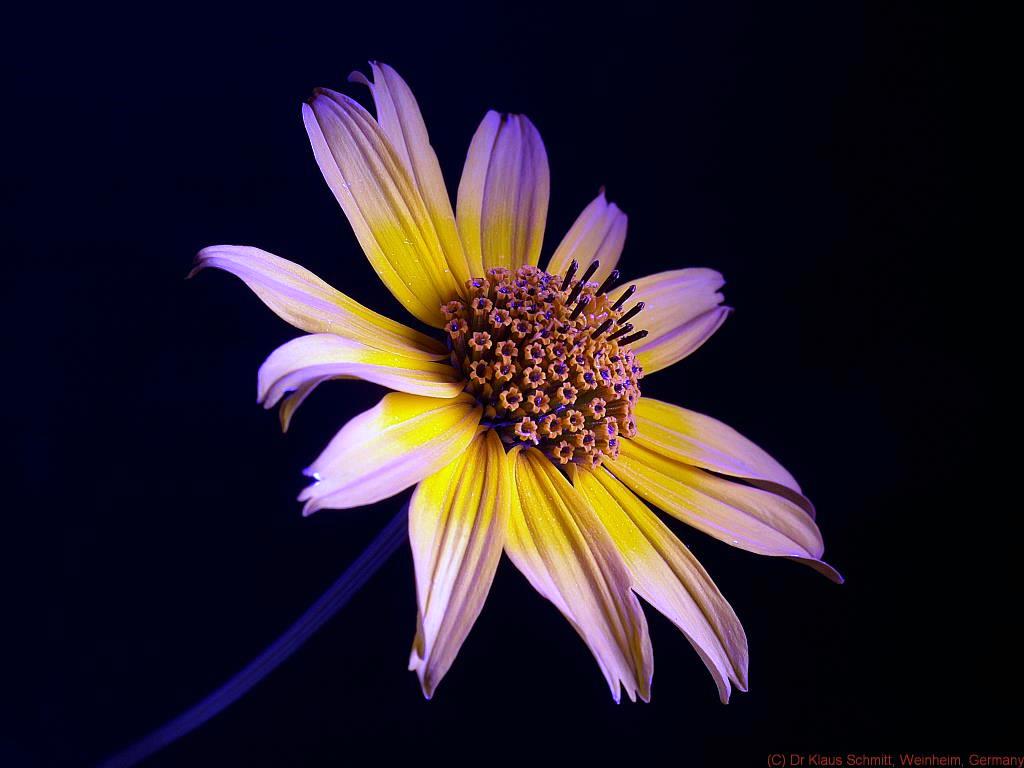

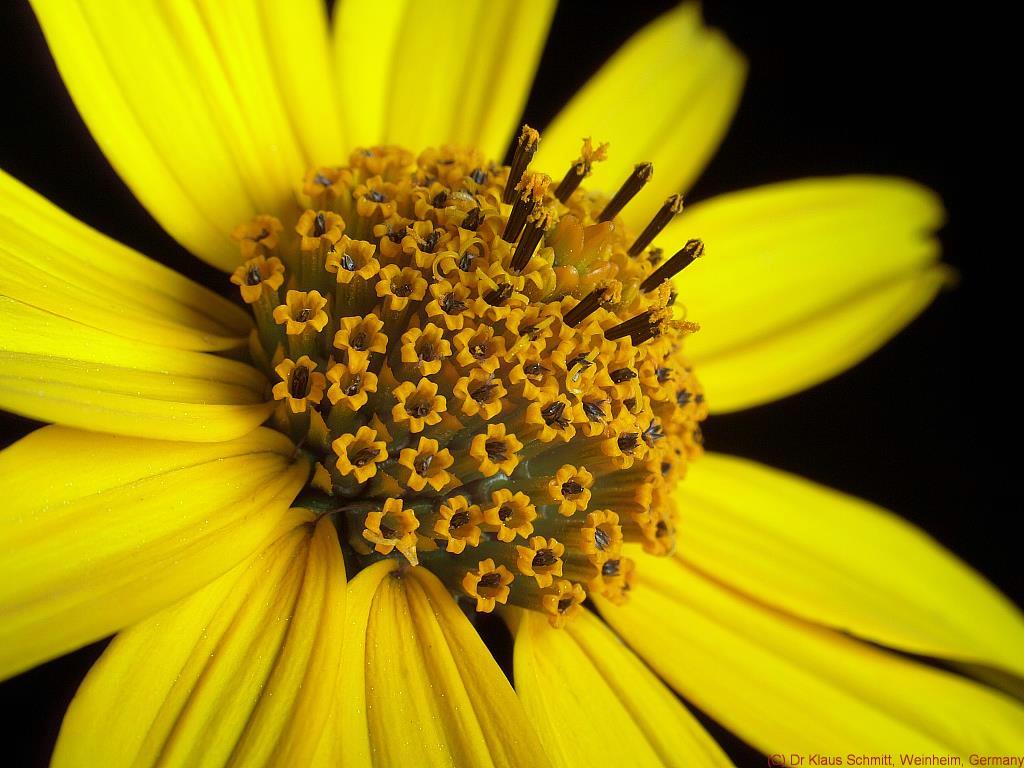
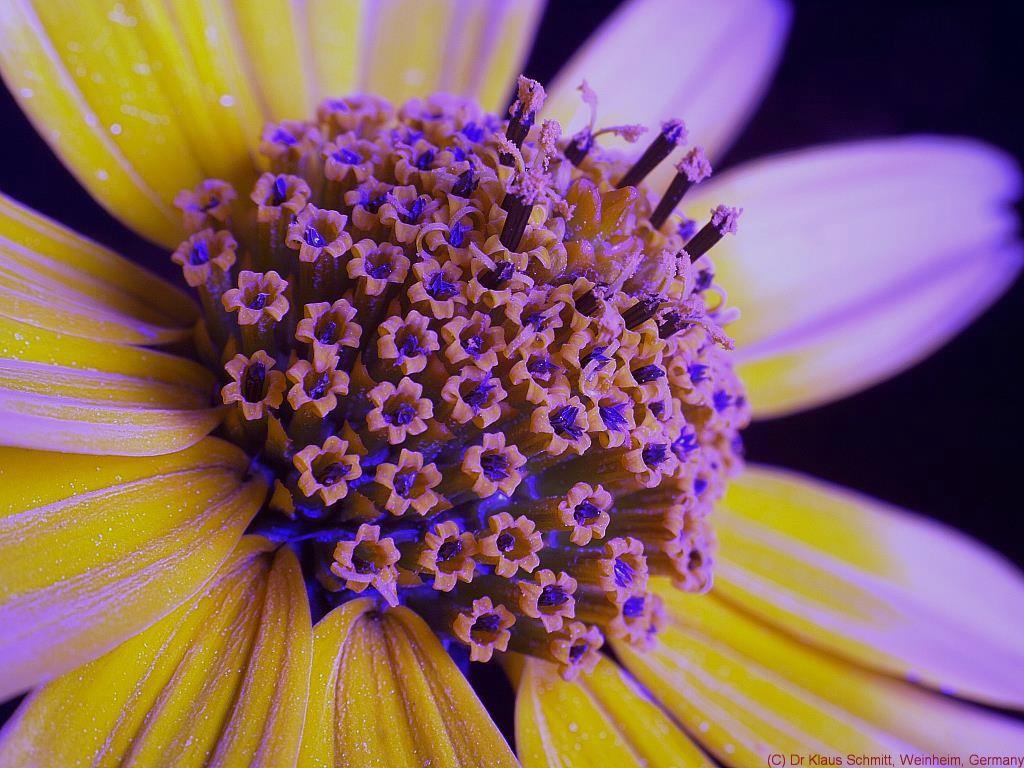
Here now some detail full format shots of that very same flower, but using that special russian quartz fluorite lens I had used before:

Human Vision (400-700nm): 

(Simulated) Butterfly Vision using XBV2 filter: 


Interestingly enough, a few minutes later I noticed, that the anthers have grown out and ripened, I guess they liked the light:

Human Vision (400-700nm): 


(Simulated) Butterfly Vision using XBV2 filter: 


Stay tuned, more will follow on that fascinating subject...

More info on this very interesting field may be found on my site http://www.pbase.com/kds315/uv_photos

Friday, September 10, 2010

Russian UFAR Mars Lens meets Rudbeckia fulgida

Well, some long time ago I had mentioned that I was able to "liberate" the two last survived multispectral quartz fluorite lenses from the russian mission to Mars. Made by LOMO and designed by GOI, they represent (to me) a top result of the designers under Prof. Volossov who headed the optical design department of GOI in St Petersburg. Transmission of that lens is flat approx. 65% for 230...1000nm. Center resolution is approx. 80lpm

Long story short, here now some results using that no-focusshift lens...

[click on image to see a larger one]

Human Vision (400-700nm):


Ultraviolet Vision (310-390nm):


(Simulated) Butterfly Vision using XBV2 filter:


Here a detail crop showing the very high resolution of that lens:


Stay tuned, more will follow on that fascinating subject...

More info on this very interesting field may be found on my site http://www.pbase.com/kds315/uv_photos

Tuesday, September 7, 2010

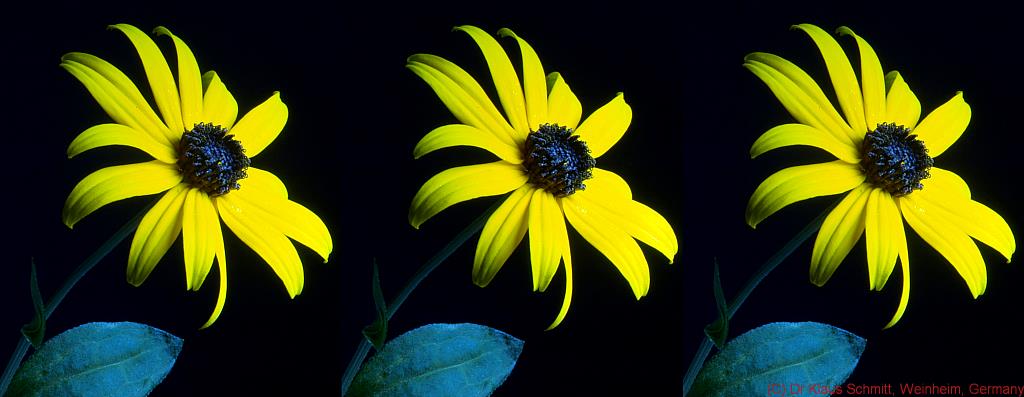
Rudbeckia fulgida 3d Stereo Butterfly Vision (simulated)

Today about Rudbeckia fulgida stereo shot using my XBV2 butterfly / bee vision filter, which maps in UV (ultraviolet) into the human visible range as blue but at the same time leaving the green and red channel intact, so it simulates the vision of a butterly.

This is s LRL stereo presentation which allows parallel and cross eyed viewing simultaneously.

[click on image to see a larger one]

Human Vision:


(Simulated) Butterfly Vision using XBV2 filter:


Stay tuned, more will follow on that fascinating subject...


More info on this very interesting field may be found on my site http://www.pbase.com/kds315/uv_photos

Sunday, September 5, 2010

Quartz Soft Focus Lens does Butterfly / Bee Vision

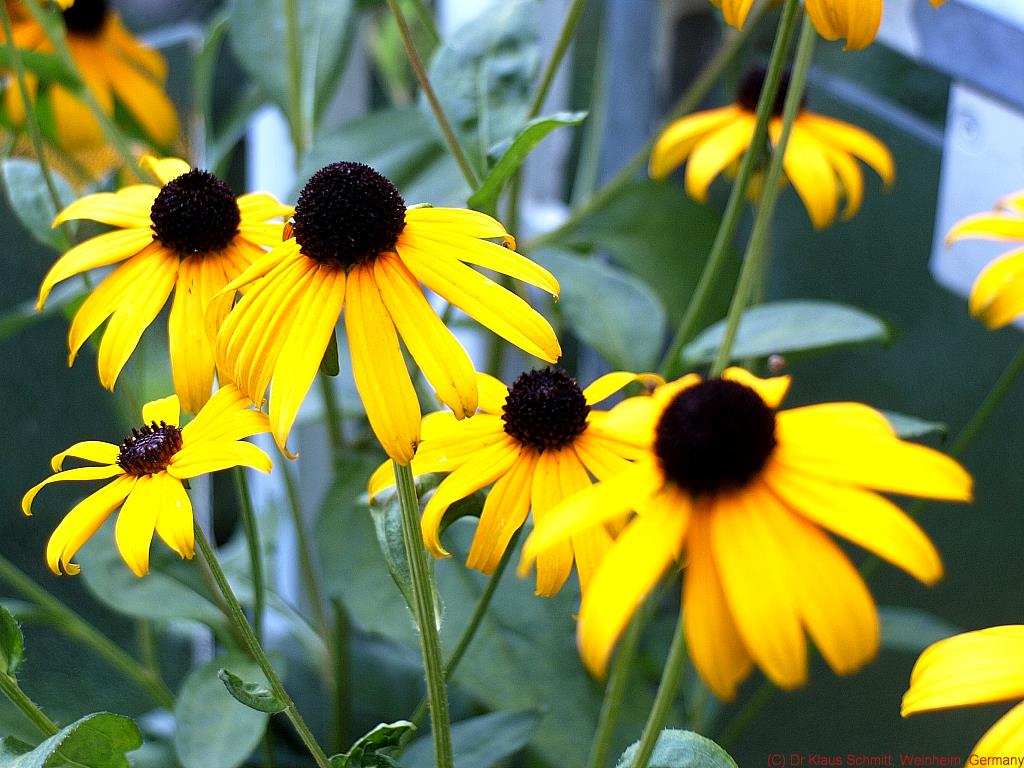
A quick test today confirmed, that my f1.0 Quartz Soft Focus Lens is able to reproduce also ultraviolet. This was proven using my XBV2 butterfly / bee vision filter, which allows to map in UV (ultraviolet) into the visible range as blue, leaving the green and red channel intact.

[click on image to see a larger one]

Human Vision 


(Simulated) Butterfly Vision using XBV2 filter (UV mapped in as blue) 

So you see, that the famous Rudbeckia UV "bullseye" pattern is correctly being reproduced and also the strong UV reflection from the central pitch black center (for us - hence the common name "Blackeyed Susan")  most prominently visible at the leftmost flower.

Stay tuned, more will follow on that fascinating subject...

More info on this very interesting field may be found on my site http://www.pbase.com/kds315/uv_photos

High Speed Xray Lens for Soft Focus Macro

Today about using a very special, f0.75/50mm high speed lens from an old Xray machine on a modern DSLR. I designed and had made a focusing mount for that lens, but focusing range is quite limited to macro only, due to the very short register length.

[click on image to see a larger one]


Due to its extremely shallow Depth of Field (DOF) and lacking color correction, it produces some very dreamy images.


Stay tuned, more will follow on that fascinating subject...

More info on this very interesting field may be found on my site http://www.pbase.com/kds315/uv_photos

Sunday, August 22, 2010

Journal of Zoology October Cover Page

The British Journal of Zoology, founded 1830 in London, has chosen my photo as the cover of their October issue. 

[click on image to see a larger one]

(detail crop from total image, left visual image, right UV image - color matched)


It shows a bumblebee (bombus terrestris) on a Mexican Zinnia (Sanvitalia procumbens) flower in visible light (left part) and UV (right part).

At the same time they will publish our paper:

Stelzer, R. J., N. E. Raine, K. D. Schmitt and L. Chittka (2010). "Effects of aposematic colouration on predation risk in bumblebees? A comparison between differently coloured populations, with consideration of the ultraviolet." 


Stay tuned, more will follow on that fascinating subject...

More info on this very interesting field may be found on my site http://www.pbase.com/kds315/uv_photos
Wednesday, August 18, 2010

f1.0 Quartz Singlet Soft Focus Lens IV

More soft focus shots using my Quartz Singlet Lens f1.0, this time from the Lorraine region in France (Reims, Metz, Nancy).

[click on image for a larger one]


Stay tuned, more will follow on that fascinating subject...

More info on this very interesting field may be found on my site http://www.pbase.com/kds315/uv_photos