Saturday, March 24, 2012

[UV] Spring Anemone Flowers in Reflected Ultraviolet UV Light

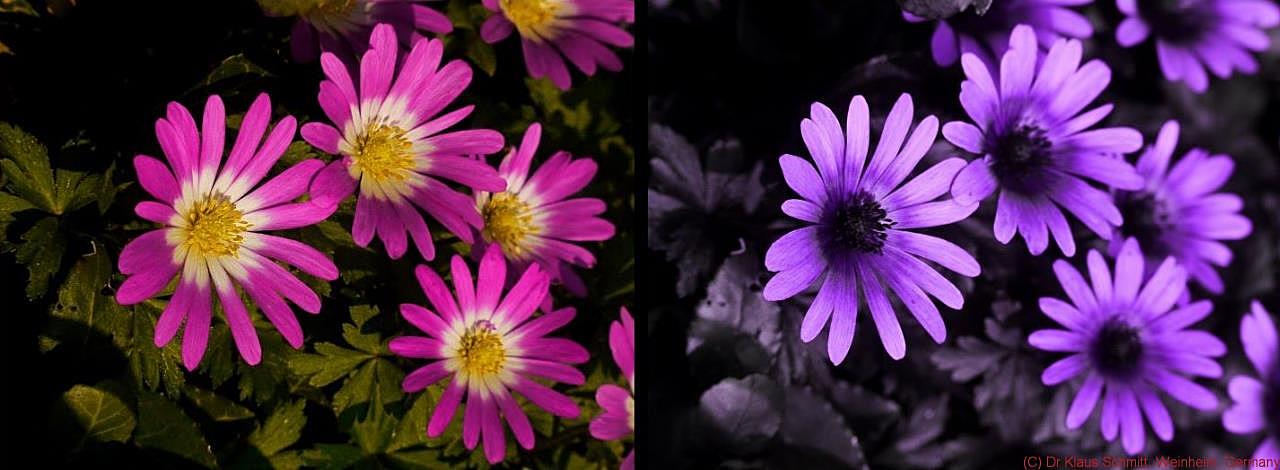
Today about yellow and pink Anemones in reflected ultraviolet light. Also these were shot using my Steinheil Quarzobjektiv f1.8 / 5cm (50mm) originating from the Steinheil Museum, which I have published earlier about.

[click on image to see a larger one]

I was able to record "UV yellow" Anemone flowers, reflecting UV around 360nm, which funny enough are also deep yellow in visible light.


Here more shots about those special pink Anemones, which have in UV a reverse pattern than in visible light!


Stay tuned, more will follow on that fascinating subject...

More info on this very interesting field may be found on my site http://www.pbase.com/kds315/uv_photos

Thursday, March 22, 2012

"Kingdom of Plants" Sir David Attenborough on Kew Gardens in 3D stereo (2)

I had reported earlier about that here, but now Kew Gardens has a preview video online on youtube about the forthcoming SKY 3D series "Kingdom of Plants" with Sir David Attenborough on Kew Gardens in 3D stereo as well as an overview on their site including an interview with Sir David.

((quote Sir David from an interview)) Attenborough: Kingdom of Plants 3D. "We wanted to use 3D in time-lapse, so that the plants move," he says. "They look sensational. They always do -- but in 3D, they look absolutely mind-blowing." ((unquote))

Have a look at what happens at 15:28 seconds onwards.... Mirabilis in UV stimulated visible fluorescence. But I am not allowed to say who shot this (LOL)....

According to imdb it will be released May, 2012

Reference: Kingdom of Plants on imdb

The DVD/BlueRay will be available from July 16, 2012 onwards and may already be preordered at amazon here as DVD and here as Blue Ray (HD) version

Stay tuned, more will follow on that fascinating subject...

More info on this very interesting field may be found on my site http://www.pbase.com/kds315/uv_photos

Wednesday, March 21, 2012

[UV] Steinheil Quarzobjektiv f1.8 / 50mm for reflected ultraviolet UV photography

This Steinheil Quarzobjektiv f1.8 / 5cm (50mm) is from the Steinheil Museum and I was very lucky to be able to be there at the right time when parts were dissolved. Only one lens is known, this one.


So today I was digging for some stuff in that lens fault, when the really nice weather made me want to give it a ride to the park for the last hour open. So here some results, quite open and quite closed aperture for comparison:

[click on image to see a larger one]


Even dating from the 20ies of this century, it performs quite well, especially at that enormous speed of f1.8 - which was needed, as it was made to record faint spectra of Steinheil's famous "Quarz Spektrograph". It is most likely a 4e4g lens design, so astonishingly not a triplet.

I was able to record some "UV yellow" flowers reflecting around 360nm, which funny enough are also deep yellow in visible light.


Stay tuned, more will follow on that fascinating subject...

More info on this very interesting field may be found on my site http://www.pbase.com/kds315/uv_photos

Tuesday, March 20, 2012

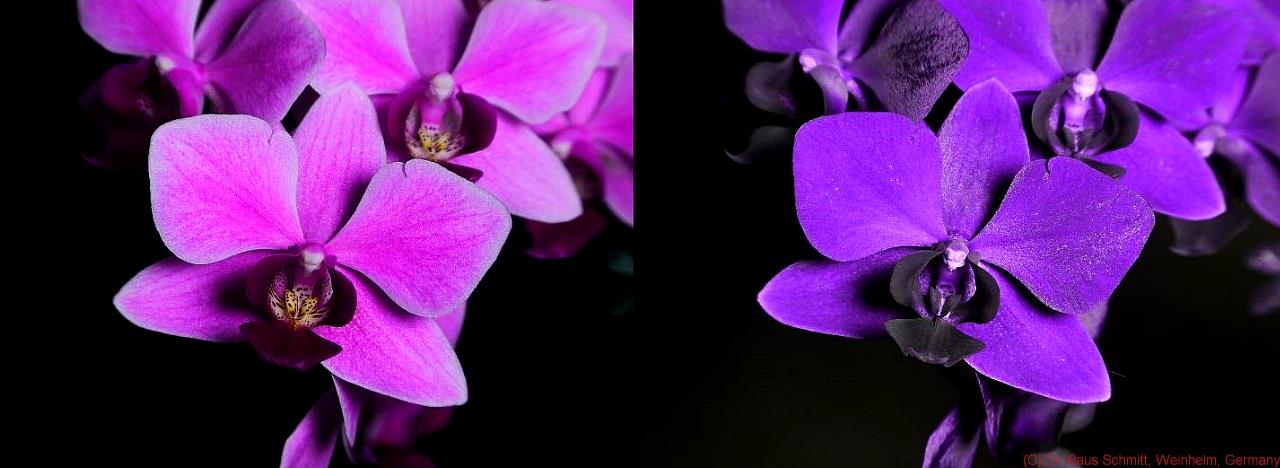
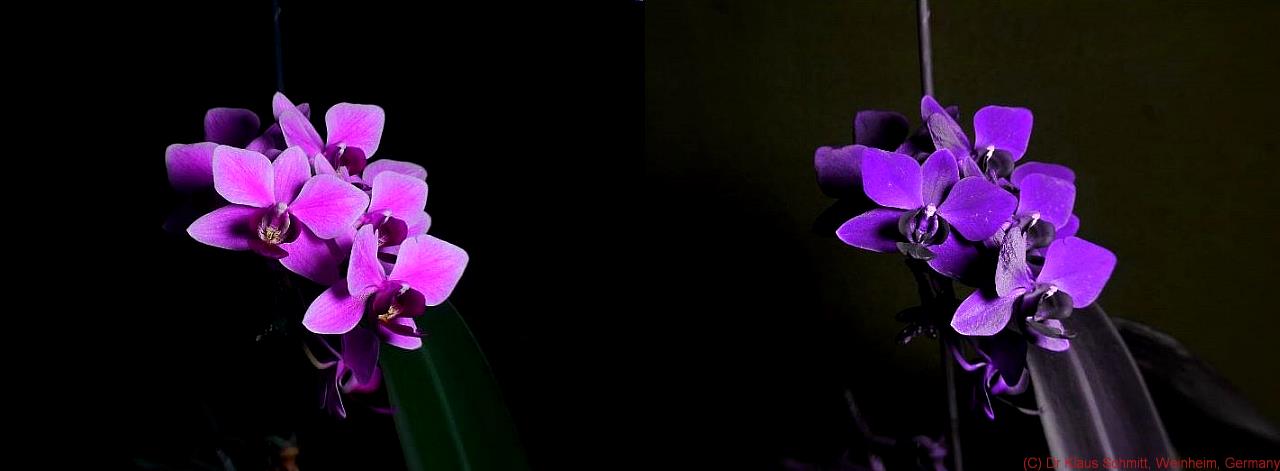
[UV] Noflexar 35mm with Focal Reducer for Ultraviolet Photography

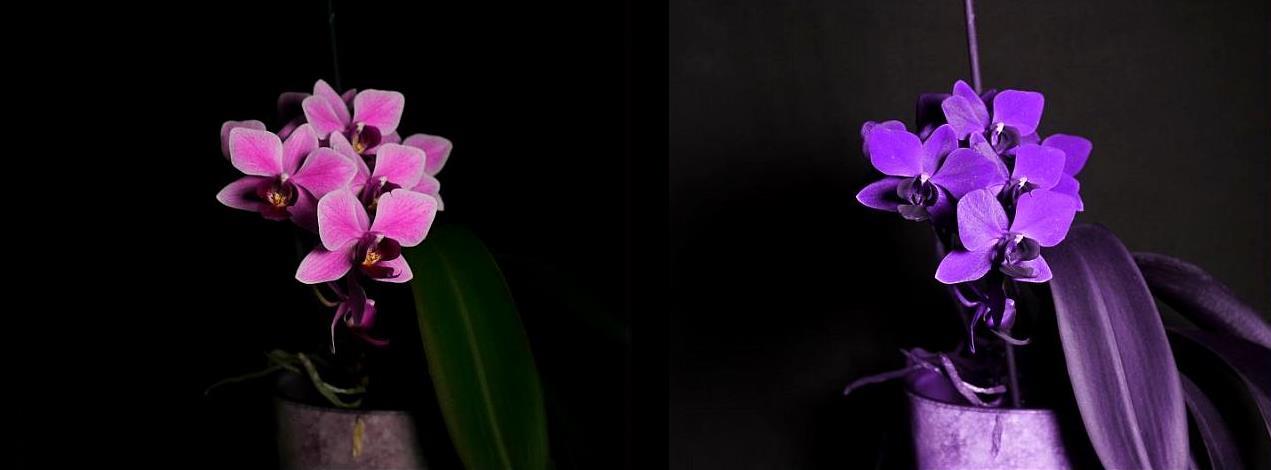
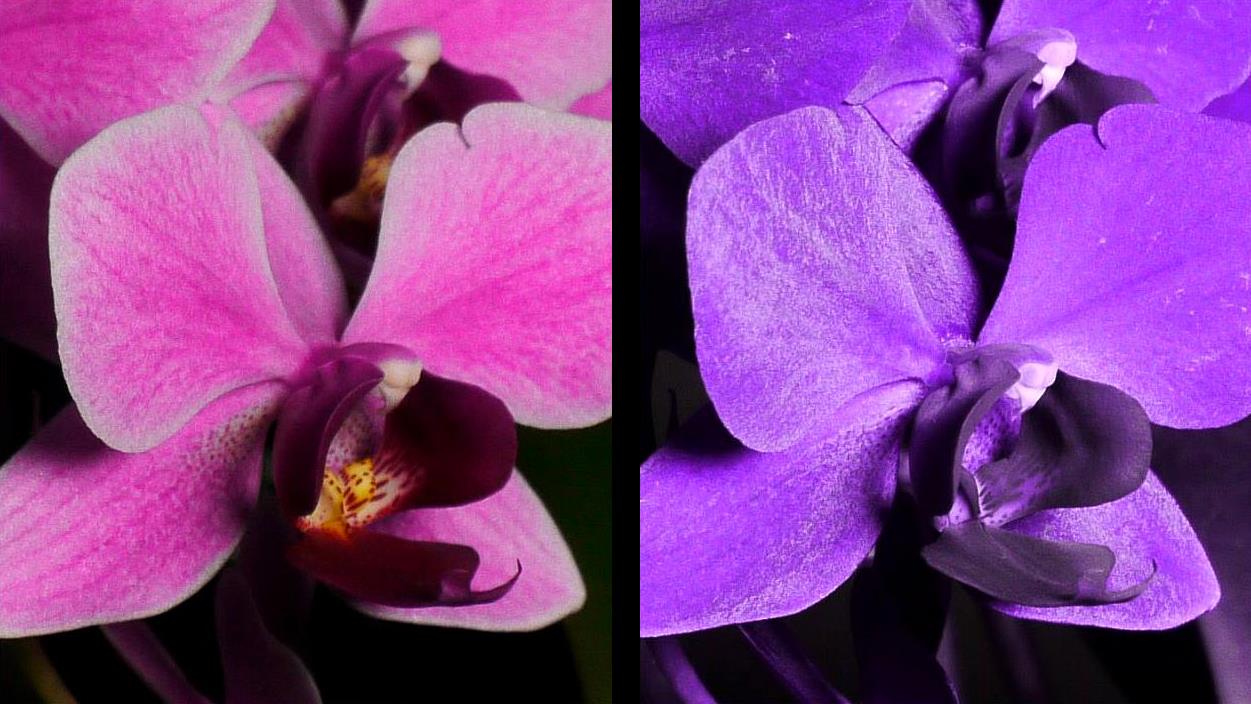
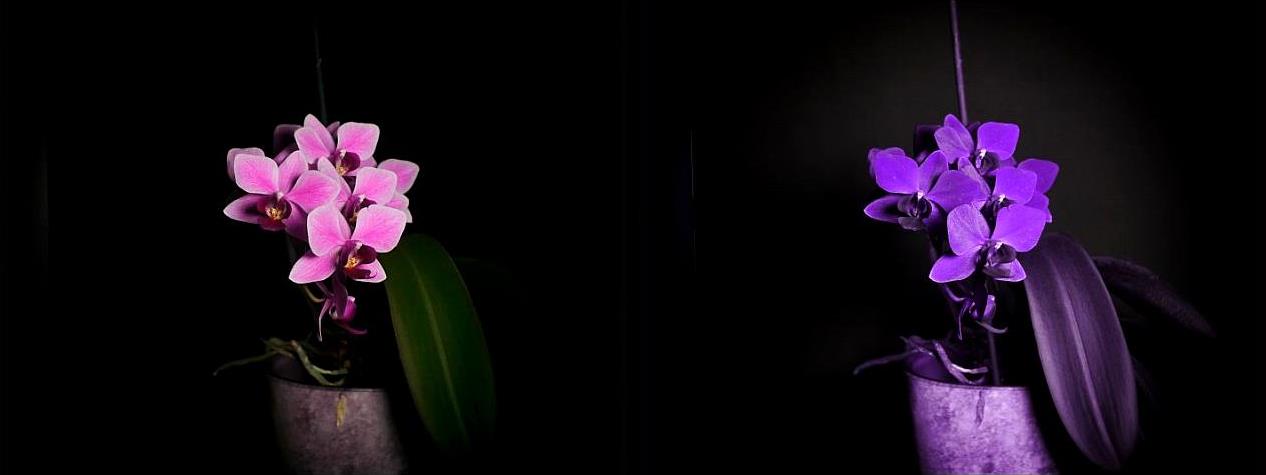
Here after having previously tested that with a quartz / fluorite achromat, now about using this focal reducer method to change the focal length of a Noflexar f3.5/35mm lens, a very well used lens for UV photography, to widen the field of view. This is also known as telecompressor in astronomy and it is the opposite of a (negative) Barlow lens. Here a positive (quartz in that case) element is used which achieves a 0.86x reduction, hence the lens now behaves as a f3/30mm lens. Here some results using some Phalaenopsis orchids.

[click on image to see a larger one]

no reducer full format:


no reducer 100% crop:


0.86x reducer full format:


0.86x reducer 100% crop:


As you may see, the image quality is hardly affected, even by this simple solution. Focus shift is a little increased, but hardly visible. Next step would be to try out a larger reduction factor. The visible vignetting is caused by a too small reducer lens and will disappear once I have a larger quartz reducer lens one on hand.

P.S.: Just made a test with another quartz focal reducer lens, achieving a) a 0.78 reduction factor and b) the vignetting is gone. That now makes a f2.7/27mm lens out of the Noflexar f3.5/35mm.

Stay tuned, more will follow on that fascinating subject...

More info on this very interesting field may be found on my site http://www.pbase.com/kds315/uv_photos

Monday, March 19, 2012

[UV] Focal Reducer or Telecompressor for Ultraviolet Photography

You may remember the recent contribution about using older quartz fluorite parts for taking UV images. It turned out to be a f4/84mm lens.

Here now about a modification of that to change the focal length, specifically using a focal reducer to widen the field of view which also means reducing the focal length. I'm using a focal reducer method, also known as telecompressor in astronomy and it is the opposite of a (negative) Barlow lens. Here a positive (quartz in that case) element is used.

Here some results. I'm showing full format shots here.

[click on image to see a larger one]

without focal reducer:


focal reducer at work:


I measured he reduction factor to about 0.41x and still, there is hardly any focus shift (no adjustments done between shots). In theory the speed of the overall system would change from f4 to f1.6 and the focal length from 84mm to 34mm - we have created a wide angle f1.6/34mm achromatic UV lens now.

Cropped image of focal reducer at work:


BUT, there are downsides which have to be mentioned: the whole projected image of the quartz/fluorite lens system is reduced in size, so the outer, less sharp and well defined image parts will now be visible, which before was cut off by the sensor size and mechanical restraints. If the image projected is not large enough, the vignetting will appear and only part of the sensor will be filled. So this method requires an image size that is at least 2.4x (1/reduction factor) larger before using that focal reducer. And another downside: the back focal distance will also be reduced, so this only works well, if before the system had enough working distance between lens and sensor as in this case here.

Stay tuned, more will follow on that fascinating subject...

More info on this very interesting field may be found on my site http://www.pbase.com/kds315/uv_photos

Thursday, March 15, 2012

[UV] Old Achromatic Quartz Fluorite Lens for Ultraviolet Photography

Well, I took apart some older equipment, as I remembered that is has some quartz fluorite optics in it. Added some focusing helicoid, iris and duct tape and here are some results using it.

[click on image to see a larger one]

Infinity at approx. f11:


Closeup at approx. f11:


Closeup at approx. f7:


Not that bad I'd say for something laying around, especially as it has a very small focus shift of only about 1/2mm when shooting macro.


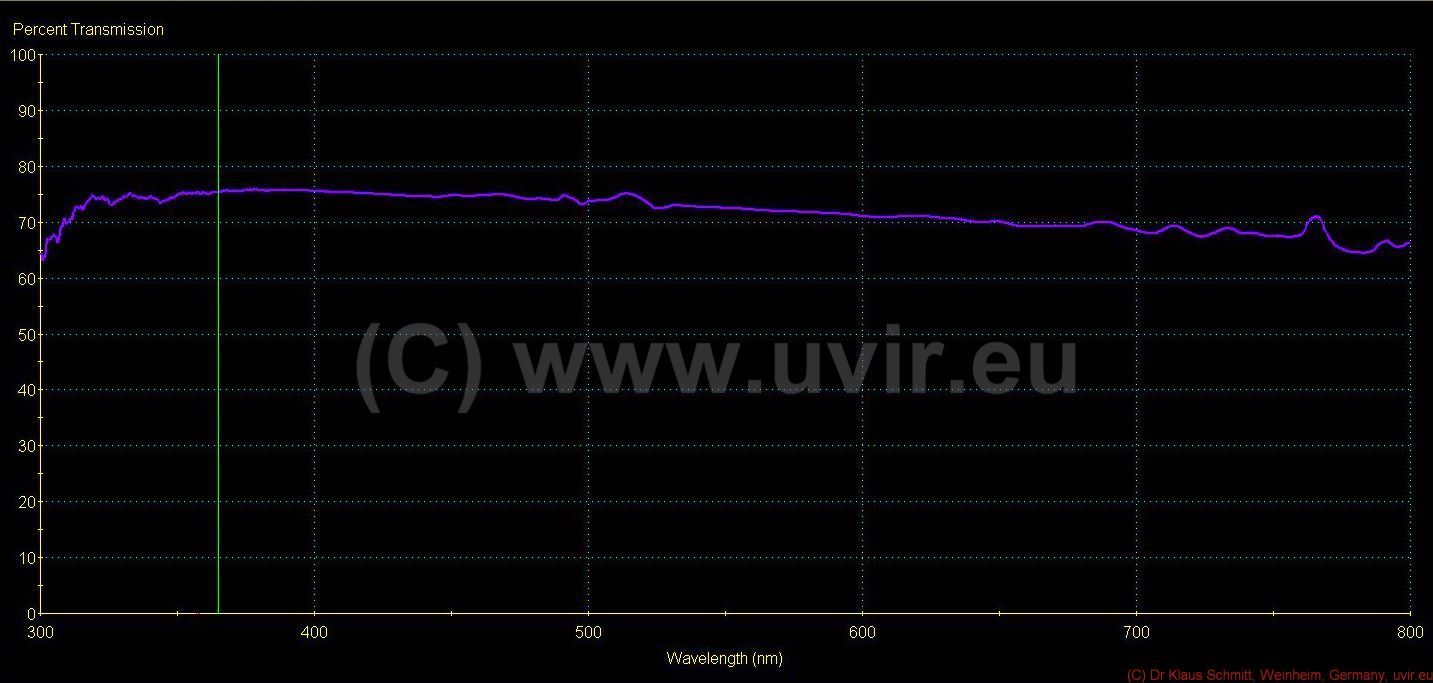
UV transmittance is quite good, but that was expected and goes beyond 300nm rather flat..

More about that used quartz fluorite lens is  HERE.

Stay tuned, more will follow on that fascinating subject...

More info on this very interesting field may be found on my site http://www.pbase.com/kds315/uv_photos

Sunday, March 11, 2012

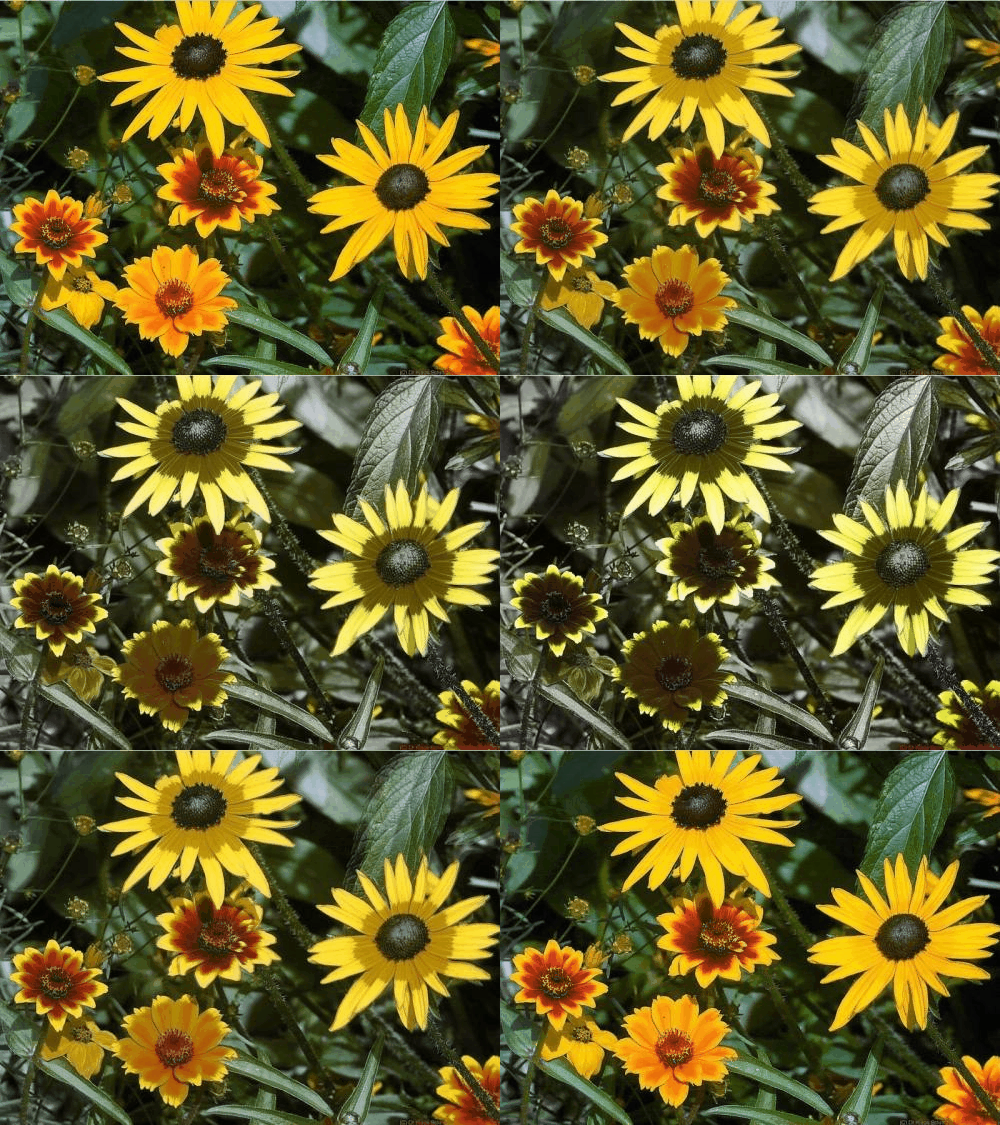
[VIS-UV] Zinna UV - VIS Bee - Human Vision ultraviolet transition

This here shows a transition between human Vison (VIS) and ultraviolet Bee vision (UV) as an illustration, how different both are.


Flowers shown are Rudbeckia fulgida (top right) various Mexican Zinnia flowers (bottom left).


Stay tuned, more will follow on that fascinating subject...

More info on this very interesting field may be found on my site http://www.pbase.com/kds315/uv_photos