Tuesday, August 4, 2015

Deep UV Ultraviolet Reflected Light Photography at UV-B 313nm

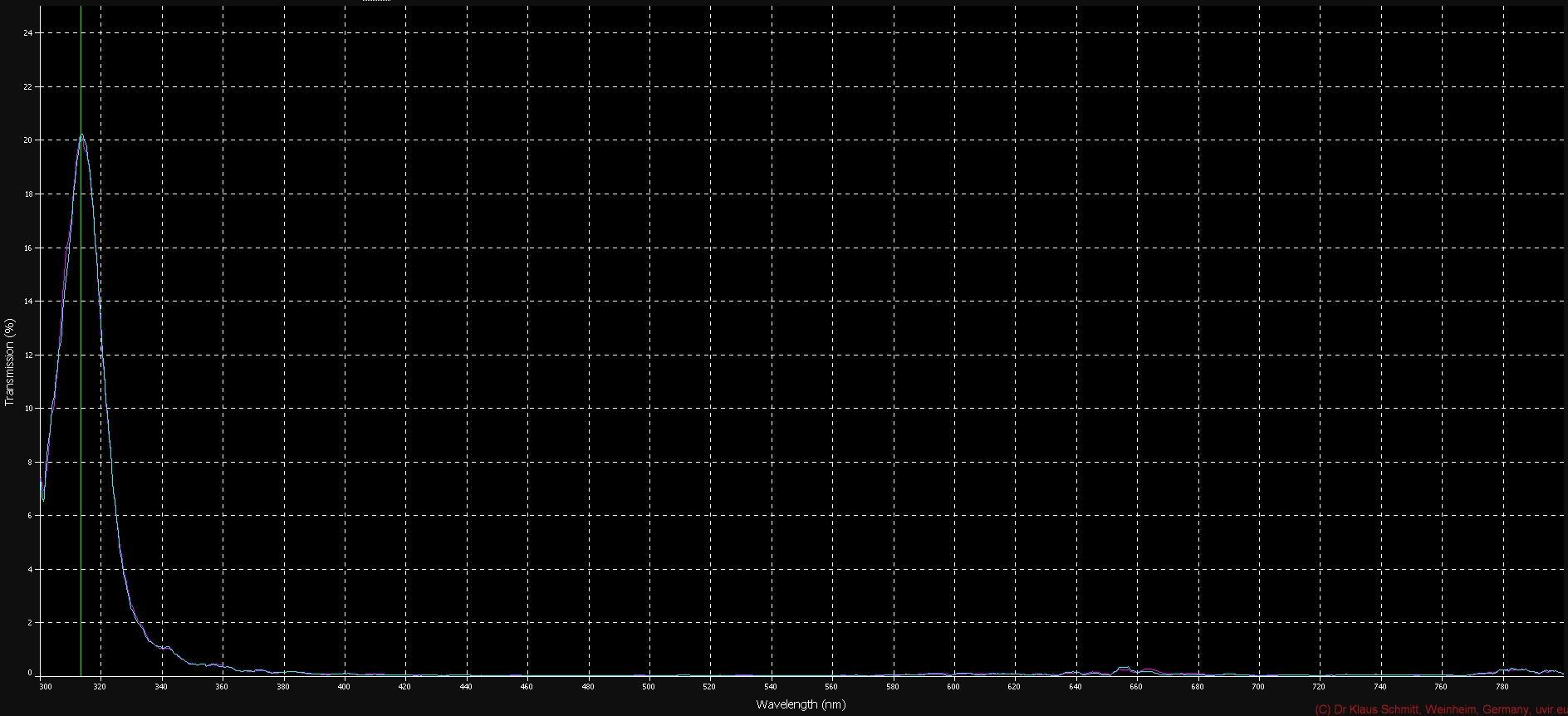
Today a proof that reflected UV photography is doable at UV-B using a special, up to NIR blocked, peak 313nm, FWHM 9nm narrowband filter and my special UV camera. Lens used was my UV-Nikkor 105mm quartz flourite lens. All shots were done at f4.5.

[click on image to see a larger one]

313nm FWHM 9nm Filter transmission spectra:

Reflected UV-B image at 313nm, 0.8 sec exposure:


This was just a proof of concept that reflected UV imaging can be successfully done even at such deep UV-B wavelengths (OH* 313nm) showing the stainless steel combustion emission valves of a central heating system.

In case you were wondering how a flame of a gas torch would look like in UV...

Triptych (top to bottom) Visual light, emitted UV (320-390nm, Baader-U), emitted UV-B (313nm):
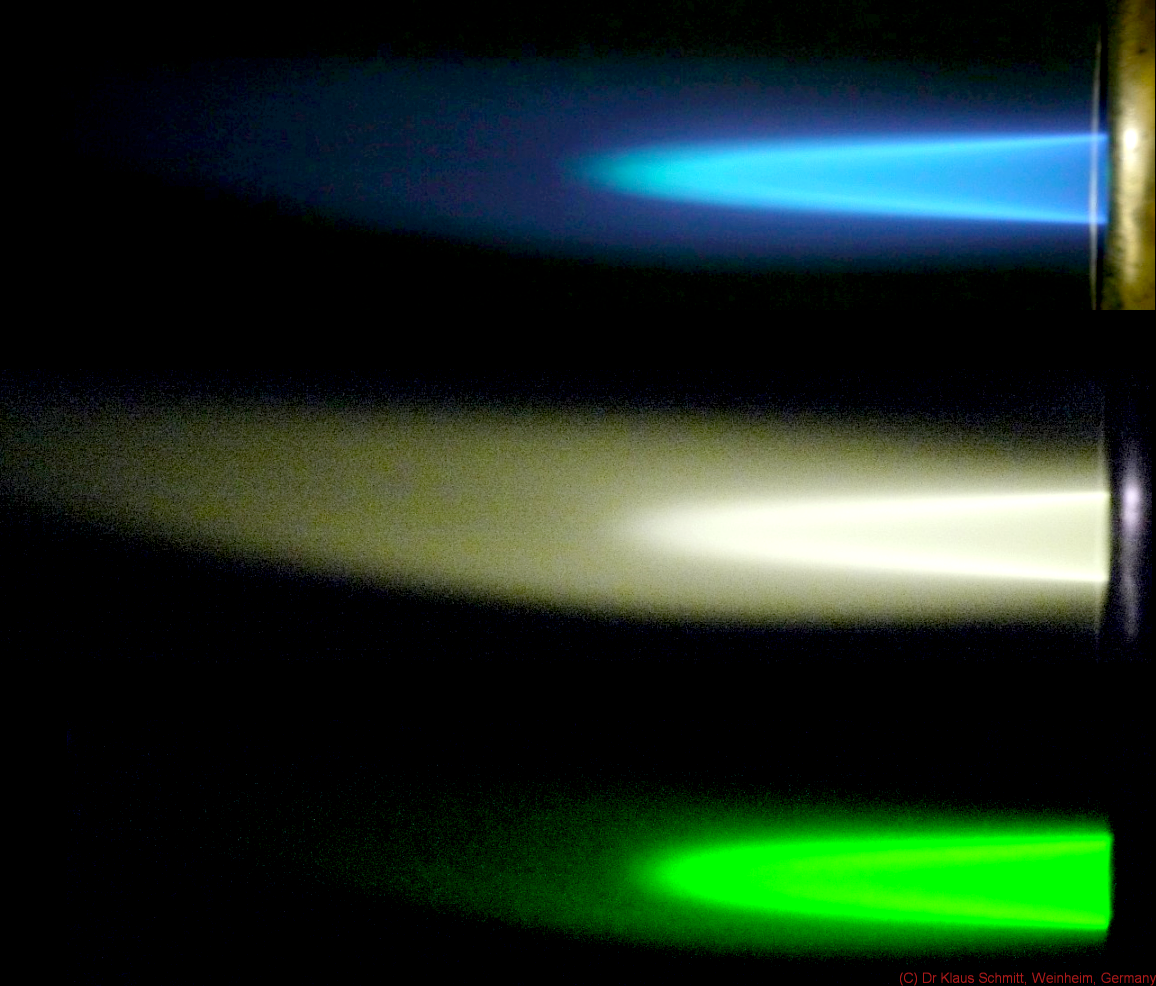

Triptych (top to bottom) Visual light, emitted UV (320-390nm, Baader-U), emitted UV-B (313nm) - morph. Gradient:


Diptych (black/white, top to bottom) emitted UV (320-390nm, Baader-U) vs emitted UV-B (313nm):


This reveals, that the broadband UV image shows a much broader, but less detailed gas flame, the 313nm image however, 313nm being the emission peak wavelength of the OH radical, shows a much more detailed flame image and is useful to judge how efficient the gas combustion process is.


Stay tuned, more will follow on that fascinating subject...

Royal Botanic Garden Edinburgh - Tropism Exhibit including Simulated Bee and Butterfly Vision

The Royal Botanic Garden Edinburgh Sat 20 June — Sun 27 Sept 2015 will host the first exhibition in Scotland by artists from the Dutch art collective Tropisme. "Featuring photographs of plants taken with unusual, often scientific, visualisation techniques, the exhibition provides a surprising and spectacularly different view on plants. Botanical installations located around the Garden will fuse art, poetry and science and combine audio, video and classic museum displays." It includes a video animation "Insecta Spectra" created by long time animation artist Robin Noorda which consists of some of my best simulated butterfly and bee vision works.

Works such as these were included, as well as an explanation of the background of insect vision in comparison to our human vision. Here for instance Helianthus tuberosus (Jerusalem artichoke) in human vision, simulated butterfly and bee vison (left to right)


Insects (butterflies, bees, ...) and some animals are able to see in ultraviolet (UV) light. Bees for instance can see Green and Blue and UV, but no Red, but butterflies and birds can see Red, Green, Blue and UV, and both able to see what we humans cannot see - UV. To make that visible for us humans, I have developed a special color mapping method, which allows to simulate, how we would see the world, if we had such special receptive eyes.

I hope you enjoy the beauty of the exhibit!

Stay tuned, more will follow on that fascinating subject...

Monday, August 3, 2015

Carl Bosch Museum Heidelberg Special Exhibit Fascination Color with simulated bee and butterfly vision images

Today about a forthcoming special exhibit "fascination Color" at the Carl Bosch Museum, Heidelberg Germany which will be open from 12. September 2015 - 3. April 2016. Some of my best works will be shown in our human vision, and in simulated bee and butterfly vision.

Here the introductory text: "How do colors come into existence? What are colors used for? What really is color? These and many other questions are answered by the exhibition and illustrates how broad ranged the subject of colors actually is. With many exciting exhibits, visitors learn that we see colors not only with our eyes and experience how other people and animals see the colorful world. The symbolic and social meanings of colors are explained, as is the extraction and use of historic natural colors, up to modern industrial dyes." [translation by me]

(C) Carl Bosch Museum, Heidelberg
The Carl Bosch Museum has chosen some of my best works, as they show quite surprisingly how different bees and butterflies see the world, as compared to how we humans see it!

If you find time to, pay it a visit, it will certainly be worth going with your whole family!

The Carl Bosch Museum Heidelberg has been founded and is being actively supported by Gerda Tschira, wife of recently deceased SAP founding member Klaus Tschira . The non-profit Klaus Tschira Foundation promotes the advancement of natural sciences, mathematics, and computer science and strives to raise appreciation for these fields. 

Stay tuned, more will follow on that fascinating subject...

Saturday, August 1, 2015

San Francisco Science Museum - Color of Life Exhibit with Rudbeckia fulgida in reflected ultraviolet (UV) photography

Today about a new exhibit at the San Francisco Science Museum - Color of Life which has opened in June this year and which has some of my work in it. They included my Rudbeckia fulgida var. deamii outside shots in visible and ultraviolet light.

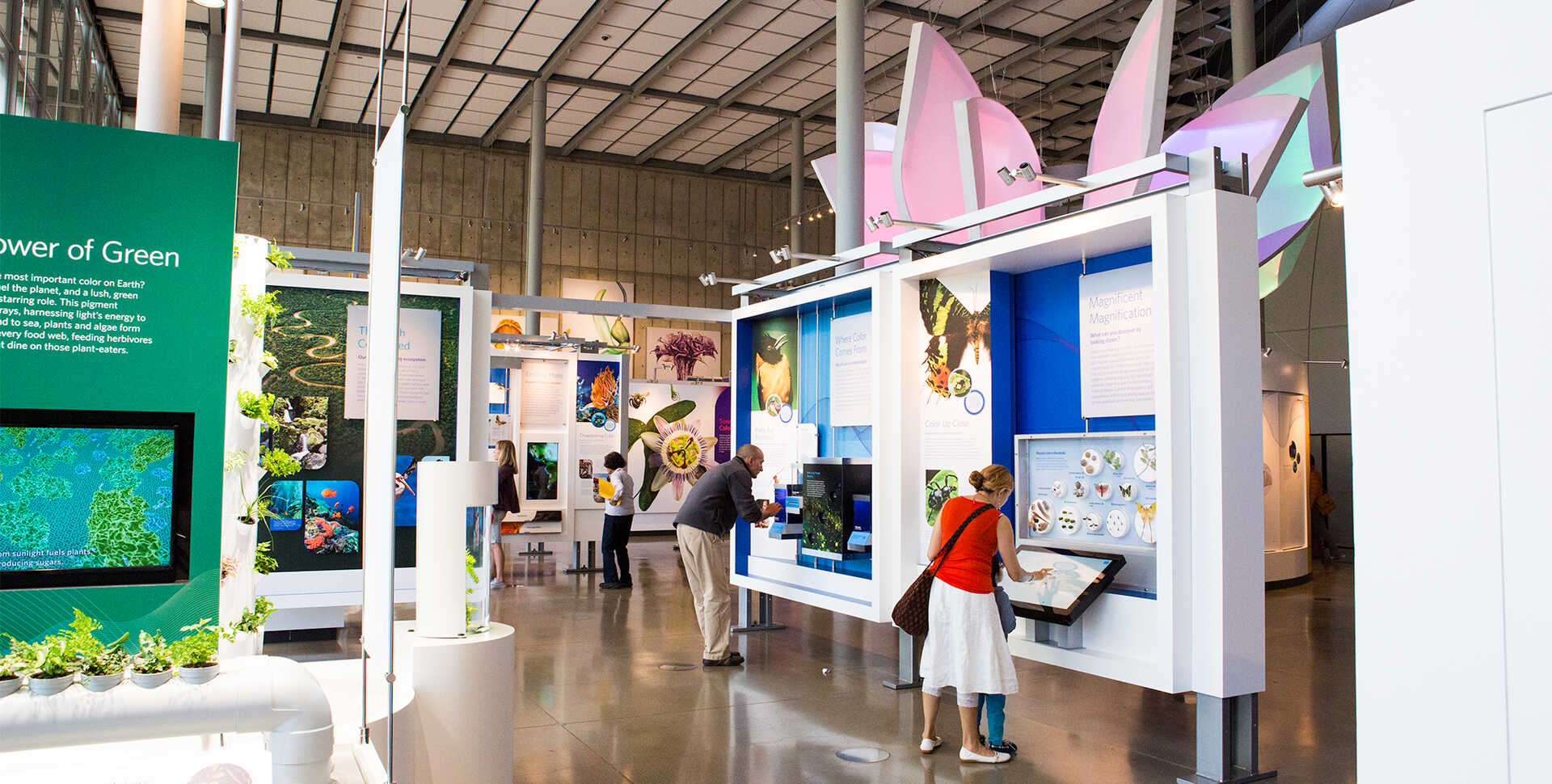
A glipse of the exhibit, located in several areas totalling an impressive 8.000sqft:
(C) California Science Museum

The Science Museum has chosen my work, as the petals of this R. fulgida exhibit a very prominent "bullseye" UV pattern, visible to bees and butterflies, but invisible to us humans.

Diptych of R. fulgida var deamii (left to right): Human vison, reflected UV:


This flower is reflecting UV strongly around 365nm at its petal tips (shown in yellow) with otherwise dark parts and hence creates a very distinct UV "bullseye pattern" nectar guide for its pollinators and all this gets nicely visible here.

If you find time to, pay it a visit, certainly worth going!!

I have written about this flower previously HERE
 
Stay tuned, more will follow on that fascinating subject...
European Starling - Sturnus vulgaris in reflected ultraviolet photography

Today shots of a well known, attractive bird, an European Starling - Sturnus vulgaris in reflected ultraviolet photography using my "work horse" UV filter, the Baader-U filter. Lens was my Zeiss UV-Planar f2 62mm quartz flourite lens. Light source was a modified for high UV output Xenon flashlight. All shots were done at f8.

[click on image to see a larger one]

Diptych (left to right): Human vison, reflected UV (Baader-U filter):


This attractive bird has iridescent feathers with a metallic magenta shine around his throat, chest and back, which reflect at maximum under a 45 degree reflection angle, however it also reflects UV quite strongly, peaking at around 365nm (shown as yellow) and to a much lesser quantity around 385m (shown as purple), invisible to us humans (but made visible here using special photographic methods), and all this gets nicely visible.

HERE is more about bird vision and how to simulate what birds might see.

Stay tuned, more will follow on that fascinating subject...

Friday, July 31, 2015

Blue Moon over Castle in reflected ultraviolet (UV) photography

Today is a 2nd full moon within the same month, a "Blue Moon", which I have previously shot in reflected ultraviolet photography using my "work horse" UV filter, the Baader-U filter, and then superimposed to a normal night light shot of our castle here. Lens was my CERCO 94mm quartz flourite lens. All shots were done at about f5.6.

[click on image to see a larger one]


Indeed, the moon has UV reflectance and it can be recorded using proper equipment which makes that nicely visible.

I have written about photographing the Moon previously HERE
 
Stay tuned, more will follow on that fascinating subject...

Thursday, July 30, 2015

ZDFzeit August 25 20:15h CET - UV videography to show the effect of sun protection

The ZDF has contracted me and my UV cameras to contribute to their series ZDFzeit which will now be aired on August 25, 2015 at primetime 20:15 hours CET showing the effect of dangerous UV radiation on human skin and the effect of using proper suncreme to protect against that (in German language, with subtitles).

[click on image to see a larger one]
(C) ZDF, used with permission
Here is a LINK to the official announcement.


Quite impressive and graphic results have been obtained, worth watching to see what a human sees and how that same scene looks like in ultraviolet (UV) light!


There is a part II about it showing the video HERE

Stay tuned, more will follow on that fascinating subject...