Monday, July 13, 2009

If you were a flower....

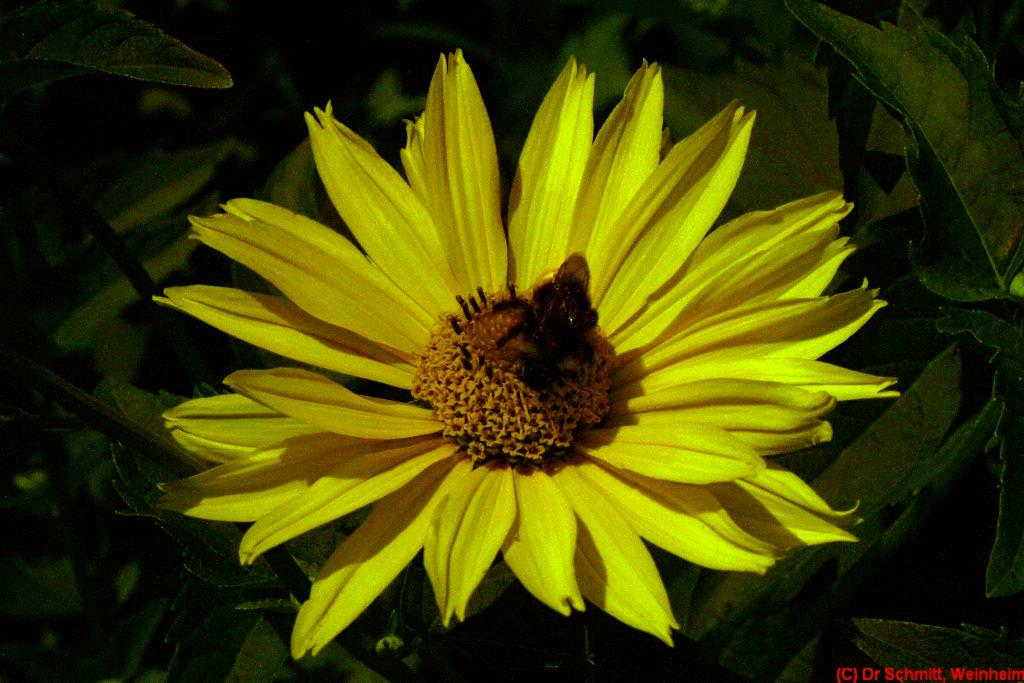
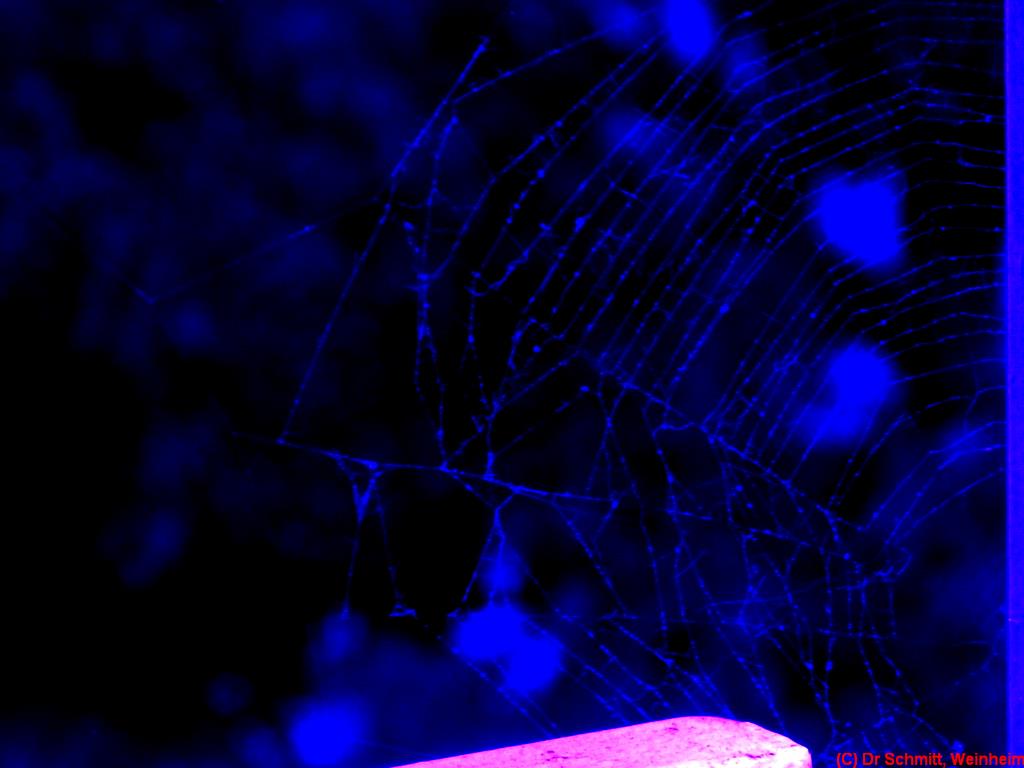
...and you want to make sure bees would find you, would you look like this?
[click on image to see a larger one]
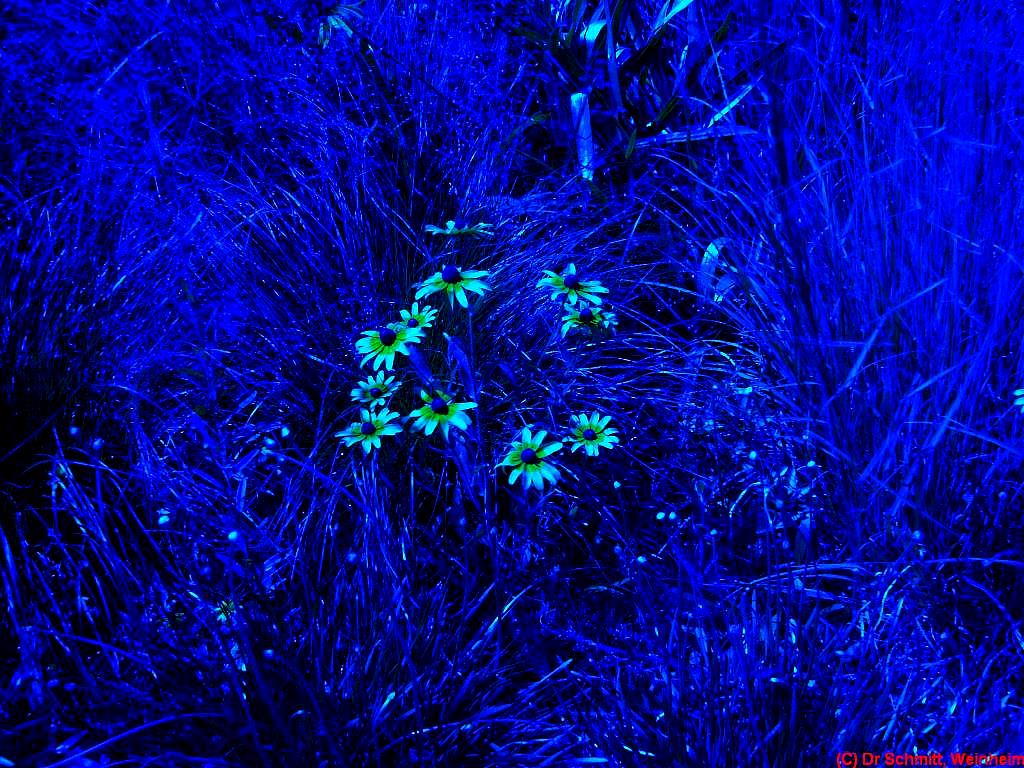


Well another one of my "bee vision" series, so what you see here is UV+Blue+Green, in this case a Rudbeckia fulgida nearly buried between masses of high growing green prairie grass. The flowers petals are all yellow, no visible pattern and the center is pitch black (that why it carries the common name "Blackeyed Susan") - well, but only to the human eye...

Maybe I should say a bit more about this: Grass and foliage also reflect a lot of UV. So "just" having a high UV reflection does not help a flower much to be found by its pollinators - it needs a bit more "creativity". So how does it make sure to stand out of the crowd? Some flowers found a tricky way, they create a "landing platform" for bees and bumble bees, consisting of concentric rings (or other "nectar guides"), like that white and another green one. And inside there is that bright UV reflective center. But only with the help of these contrasting petals around it stands it out. But why is that invisble to us humans? Very simple actually, since nature is so efficient: we don't pollinate flowers, so why should evolution develop something visible to us if the flower has no benefit from us??

Stay tuned, more will follow on that fascinating subject...

More info on this very interesting field may be found on my site http://www.pbase.com/kds315/uv_photos

Friday, July 10, 2009

Gaillardia "Summerwind"

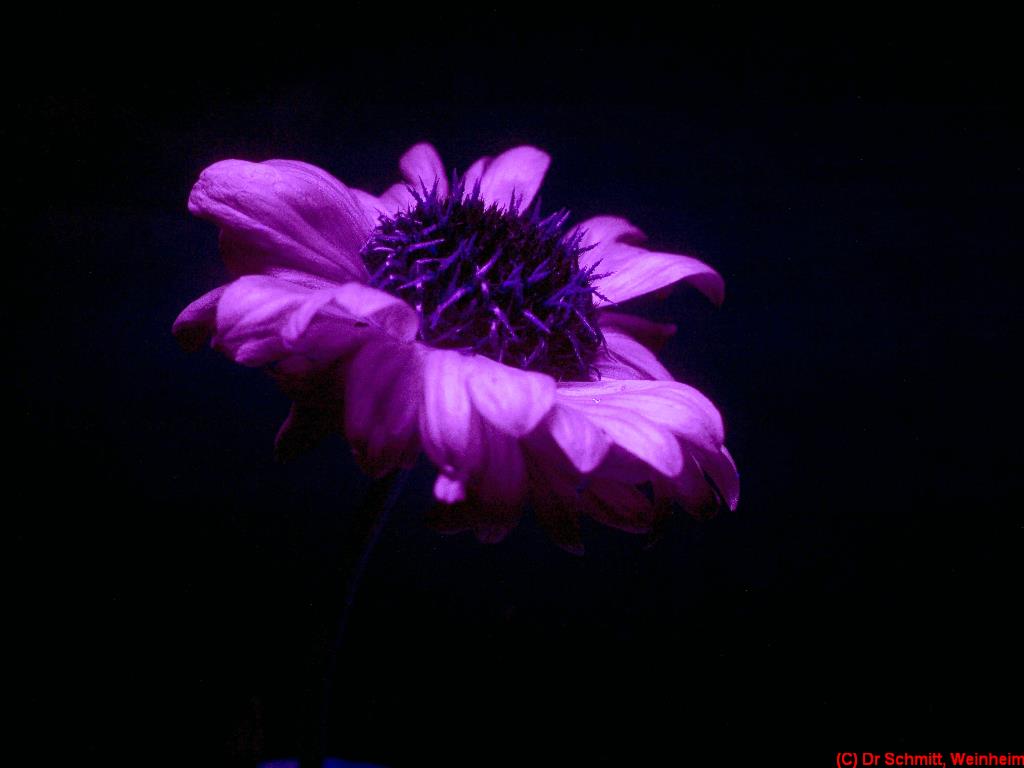
Well, I found a previously unknown (to me), pure yellow species of Gaillardia. Since that type of flower showed so many surprising aspects, I wanted to see what this new one hides from the human eye....

[click on image yields a larger one]

This now is the visual appearance as we humans are used to see:


The tetrachromatic image ("butterfly" shot) (UV+B+G+R) using XBV2 filter:


The trichromatic image ("bee vision" shot) (UV+B+G) using XBV2 filter:


This is the UV induced fluorescence shot using XCUT2 filter:


and this the reflected UV shot using XUVIR filter:


Well, also that flower shows some surprising properties ...

Stay tuned, more will follow on that fascinating subject...

More info on this very interesting field may be found on my site http://www.pbase.com/kds315/uv_photos

Tuesday, June 23, 2009

Bidens ferulifolia - Bee Vision III

Today again about Bidens ferulifolia, a plant which also amazes me with lots of hiddens details!

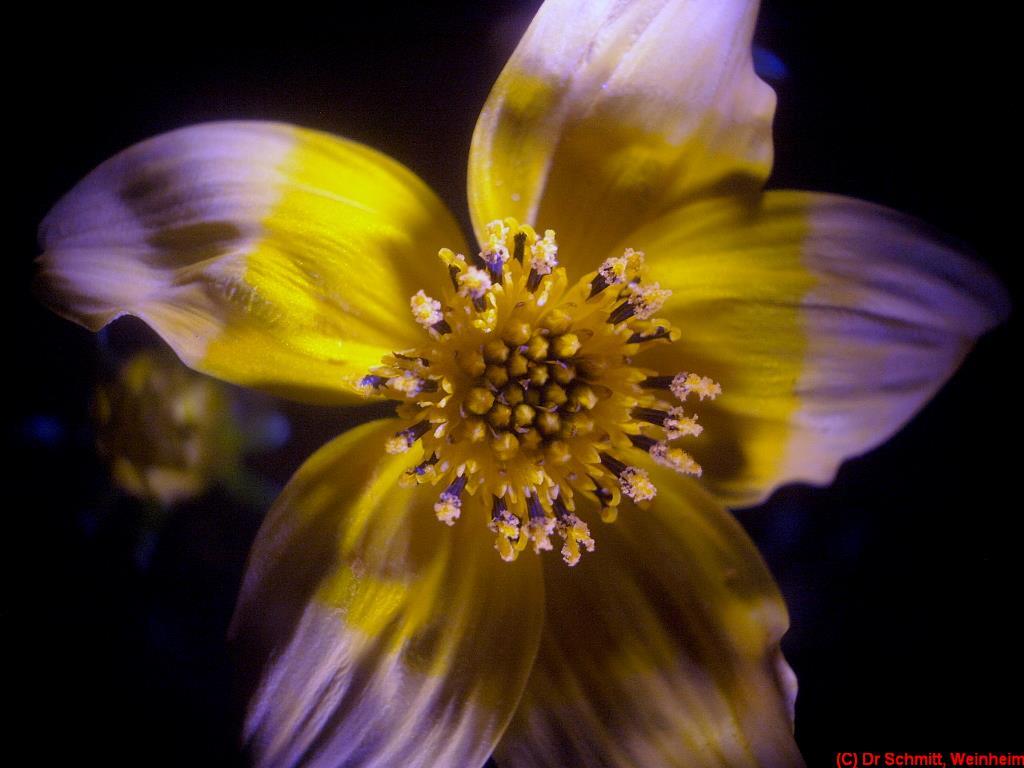
I used a fiber optic flash light today and my "bee vision" XBV2 filter and a special lens setup using an UV Mikrotar to create the following shot.

[click on image yields a larger one]


The flower is in its male stage, so a lot of pollen is visible, which light in a blueish white up as much as the petal tips do.

Now that is, from a different angle and magnification, the visual appearance of the very same flower:


Stay tuned, more will follow on that fascinating subject...

More info on this very interesting field may be found on my site http://www.pbase.com/kds315/uv_photos

Sunday, June 14, 2009

Gaillardia II - Spectrometric Measurements

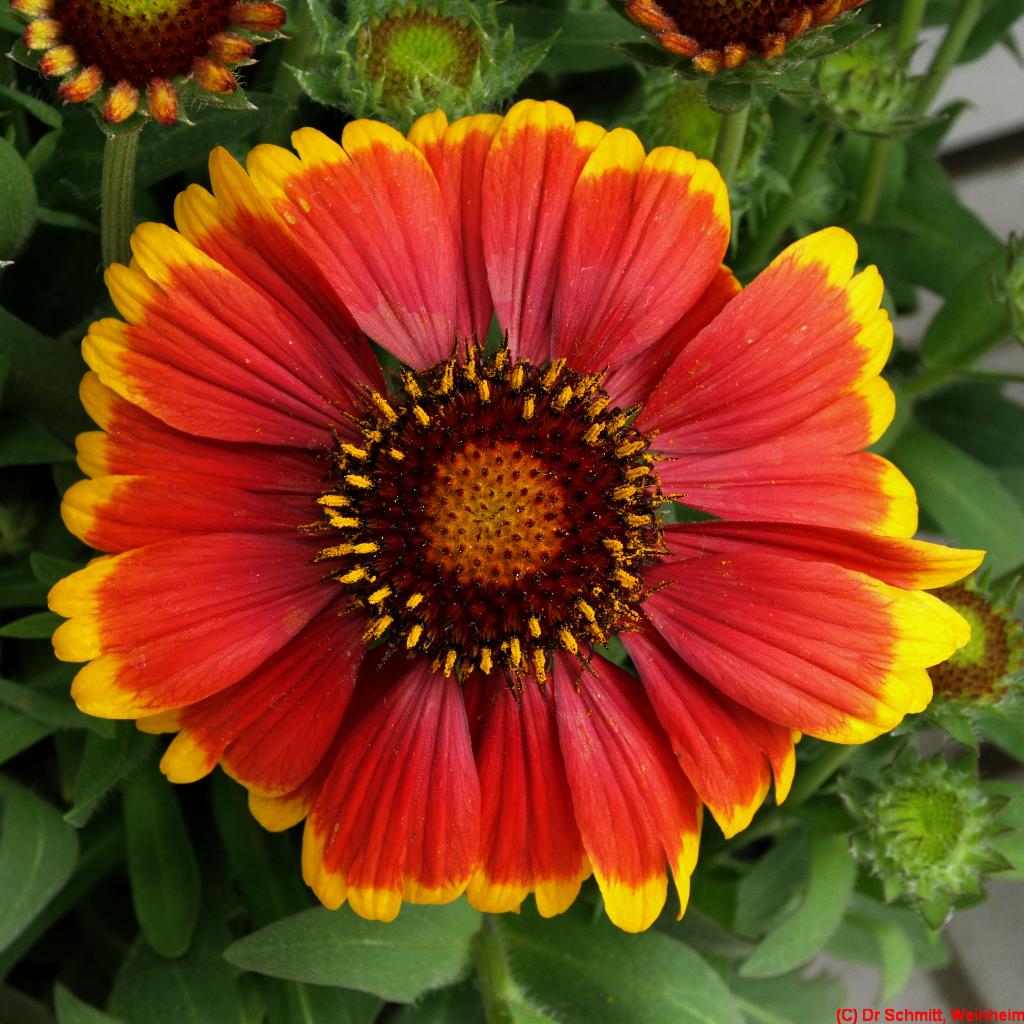
I have reported about my findings about Gaillardia and that prominent UV pattern it exhibits, hidden behind a beautiful yellow/red pattern. Now lets have a look at some spectrometric reflection measurements.

[click on image yields a larger one]

Remember, this is the visual appearance:


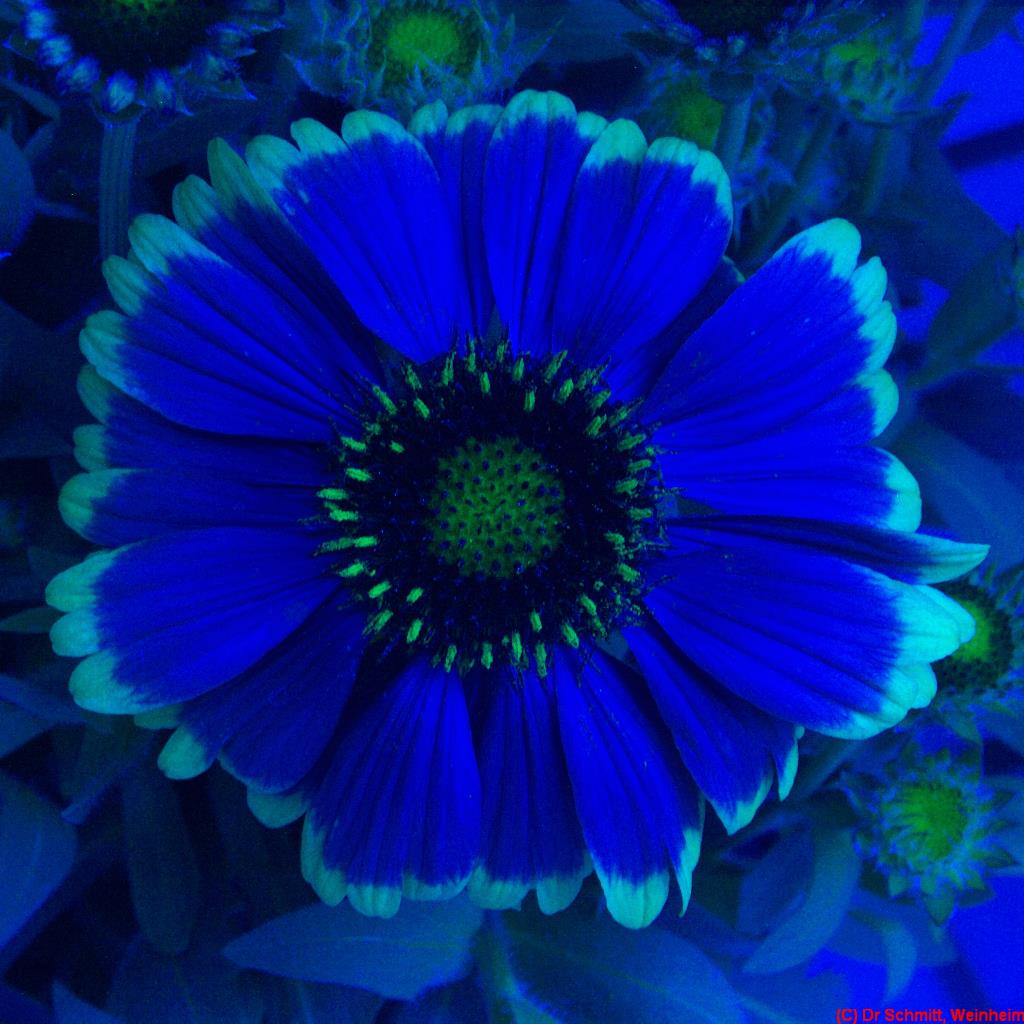
The trichromatic image ("butterfly vision" shot) (UV+B+G) using XBV2 filter:


shows this underlying strong UV reflection pattern of the petal body. The spectrometric analysis confirms, that the UV reflection  gets quite strong towards the tip (ca 320-420nm). The tip itself shows also some green reflection (this is why the tip appears yellow = red+green). 

Reflection measurement (100% = white Spectralon):


Now, my XBV2 filter allows UV to pass and to be recorded in the camera as Blue. This is why the body of the petal appears mainly blue. The tip appears whiteish green since it is Blue (=UV) mixed with Green. Remember: the red channel is suppressed in the trichromatic image, so the strong present orange + red reflectance from about 600nm onwards does not matter in that case!

The tetrachromatic vision image including the red channel would look like the following image, since it would also include the strong orange and red reflection. This results in white tips (UV=Blue + Green + Red) and a magenta petal body (UV=Blue + Red).

Tetrachromatic image ("bee vision" shot) (UV+B+G+R) using XBV2 filter:


Stay tuned, more will follow on that fascinating subject...

More info on this very interesting field may be found on my site http://www.pbase.com/kds315/uv_photos

Saturday, June 13, 2009

Coastal Optics 60mm Apo Macro: hotspot issues

****** NEWS as of June 2009 ******
It has turned out a few days ago, that this high rated lens has a  serious hotspotting issue (UV+IR) from 1:1.5 to about 1:3 magnification especially at small apertures. It hasn't been noticed before by Pro's and ambitioned amateurs, so that comes as a big suprise. Coastal Optics made this issue public and is working hard to get that issue fixed, which hopefully turns out not to be a design issue.
It will be reported here as soon as a solution has been found, so stay tuned!
*********************************
Current news (July 2009) is , that the issue has been identified and a redesign is  currently being investigated to cure that issue. Still no official statement has been made about that issue. No info is available if and when modified lenses will be available.

 ****** NEWS as of  July 2013 ******
It has been found out by users that a very narrow sunshade is able to solve the hotspot issue. The lens has not and will not be been modified in any way by the manufacturer. They recommend to use an external extension tube for the 1:1.5 to 1:3 magnification range.

Friday, June 12, 2009

Bombus terrestris on Helianthus tuberosus

Today on my walk through the wonderful parks here in my hometown Weinheim, I noticed a tall flower Helianthus tuberosus ("Topinambur" in german) which seemed to pretty frequently visited by bumble bees ("Bombus Terrestris"), so I took my camera and my "bee vision" filter XBV2 to find out why....

[click on image yields a larger one]

Tetrachromatic shot (UV+B+G+R) using XBV2 filter:


Trichromatic "bee vision" shot (UV+B+G) using XBV2 filter:


The proof that this flower strongly reflects UV and actually shows that "bulls eye pattern" in UV is here:


The visible light components do not show any of that pattern, actually the flower looks pretty much like this in visible light as seen with normal human eyes:


I also found it pretty interesting to notice that strong UV reflection of the bumble bee, especially of its "rear part".

Stay tuned, more will follow on that fascinating subject...

More info on this very interesting field may be found on my site http://www.pbase.com/kds315/uv_photos
Thursday, June 11, 2009

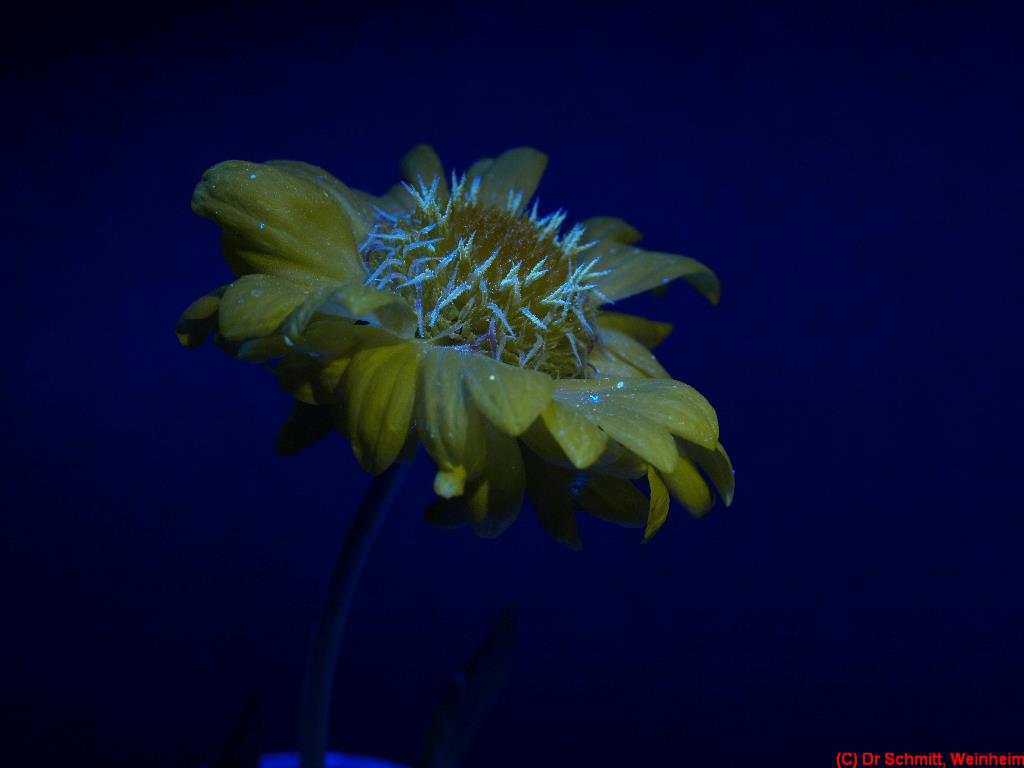
Spider Web reflects UV to attract prey

Another find: I was reading some time ago a paper that spider webs would actually reflect ultraviolet (UV) light, so as to attract prey (insects like bees etc). Well it just happened that I found a web in one corner of my balcony, so why not using my "bee vision" filter XBV2 take some shots and test it out?

[click on image yields a larger one]

Spider web tetrachromatic shot (UV+B+G+R) using XBV2 filter:


and now the proof that it actually only reflects UV+Blue light be taking away these two channels and just showing the Red and Green channel, which hardly shows anything of that web:


But the UV+Blue only (without G+R) makes it pretty obvious that the web is indeed pretty visible in ultraviolet light!


I just wonder how nature accomplishes that, to attract insects using a high UV reflection of that web and at the same time scare away birds which may pick the captured prey away and destroy the web?

I have many years later in 2019 shot this again HERE

Stay tuned, more will follow on that fascinating subject...

More info on this very interesting field may be found on my site http://www.pbase.com/kds315/uv_photos