Friday, August 4, 2017

Black-eyed Susan - Rudbeckia hirta in reflected ultraviolet photography and simulated bee and butterfly vision XIII

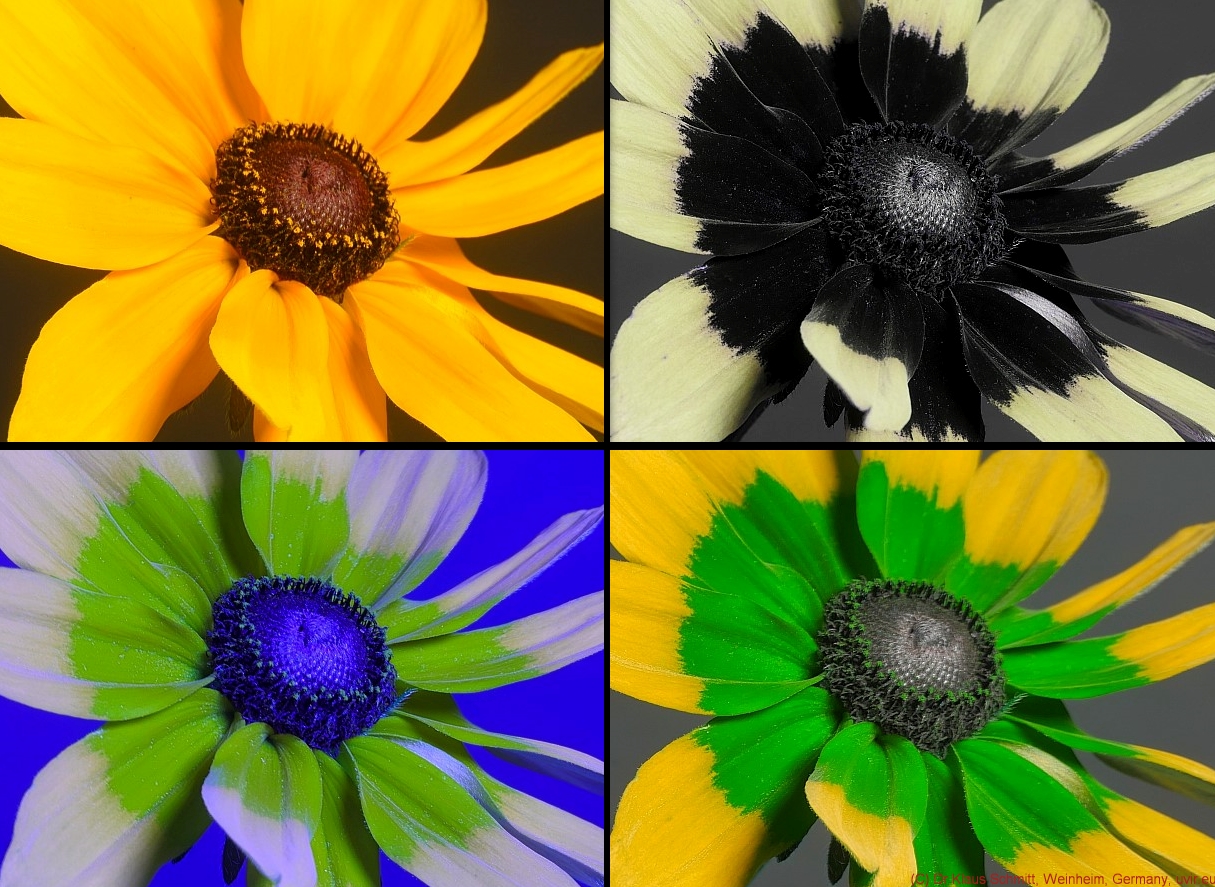
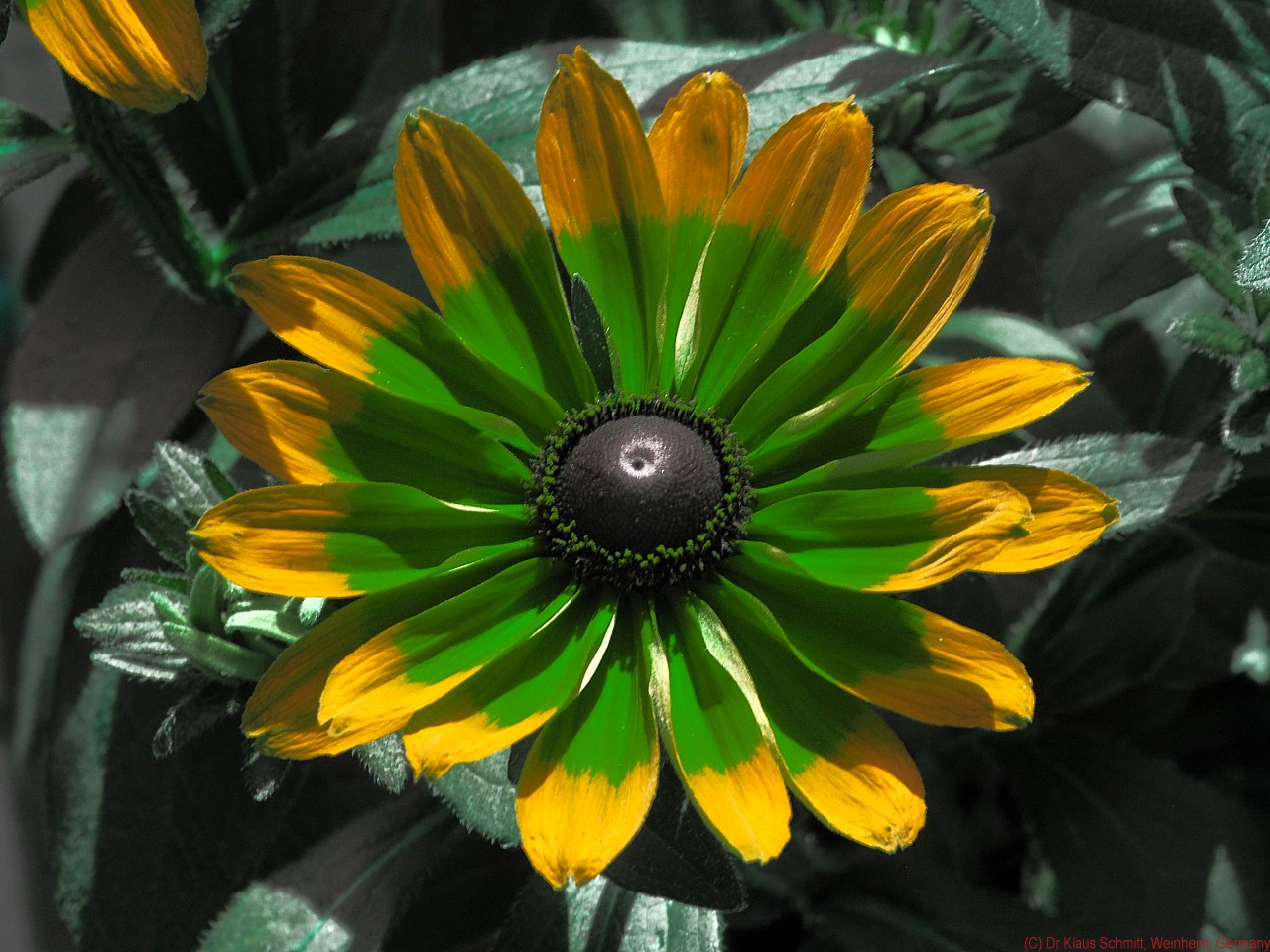
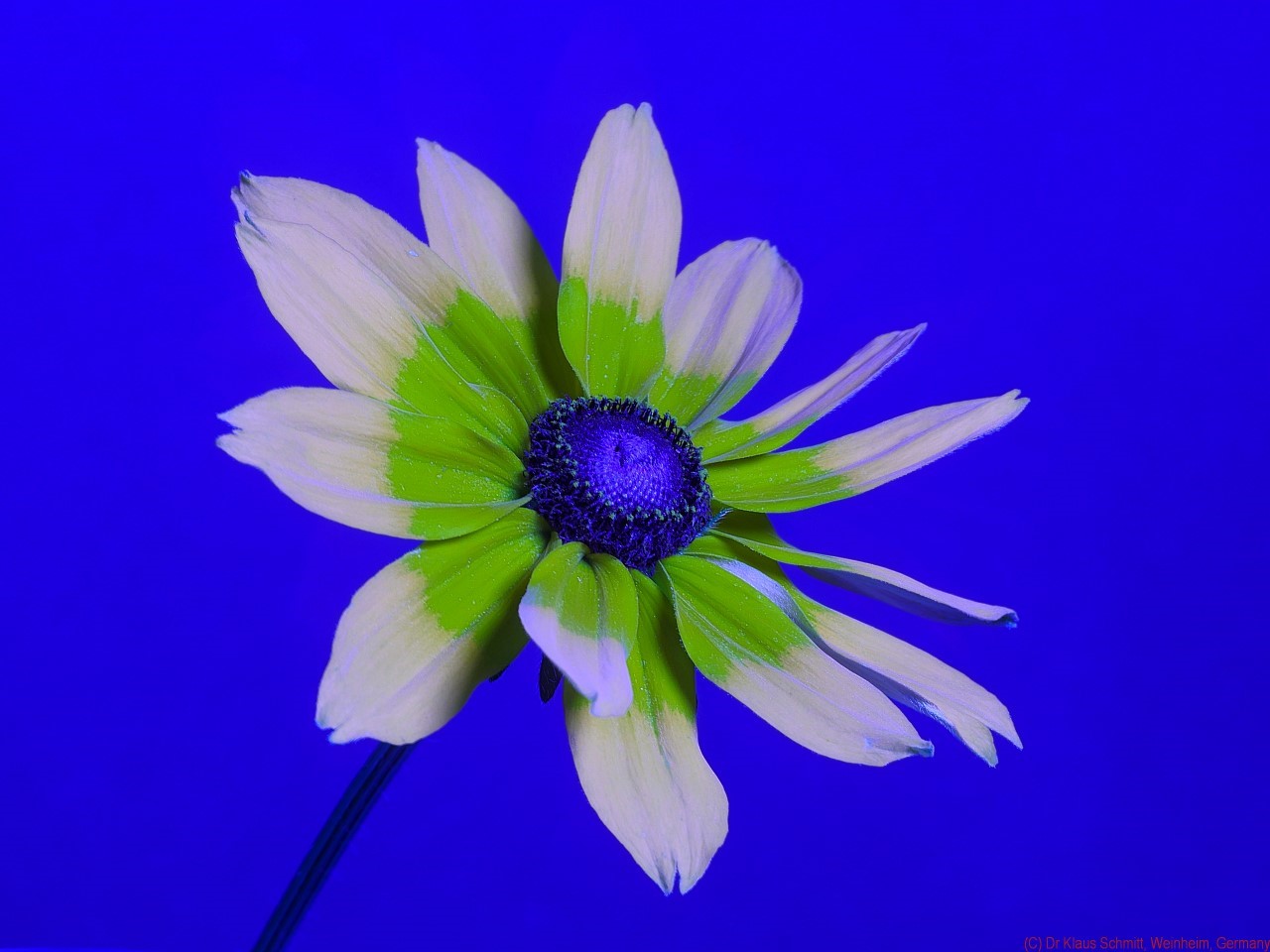
Today more shots of a cultivar flower, originating from the USA Prairie, a Black-eyed Susan - Rudbeckia hirta in reflected ultraviolet photography using my "work horse" UV filter, the Baader-U filter as well as in simulated bee and butterfly vision using my XBV filters. All shots were done at f11. Lens was a UV-Nikkor 105mm quartz fluorite lens. Light source was a modified Xenon flash. This was shot using my previously used modified high resolution camera (40/80Mpix), an Olympus M5 Mk2

[click on image to see a larger one]

Human vision:
 

Reflected UV:
 

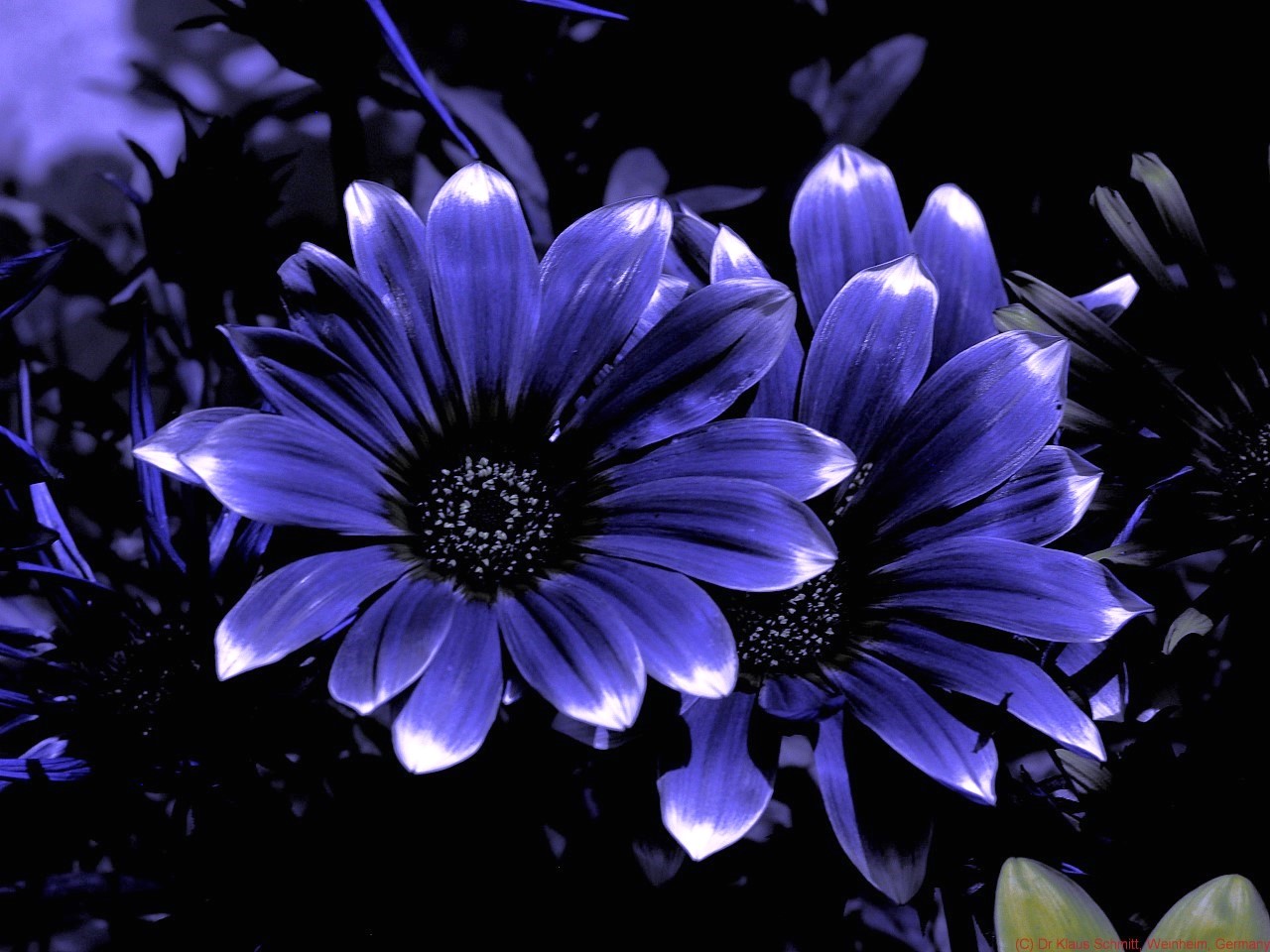
Simulated bee vision:
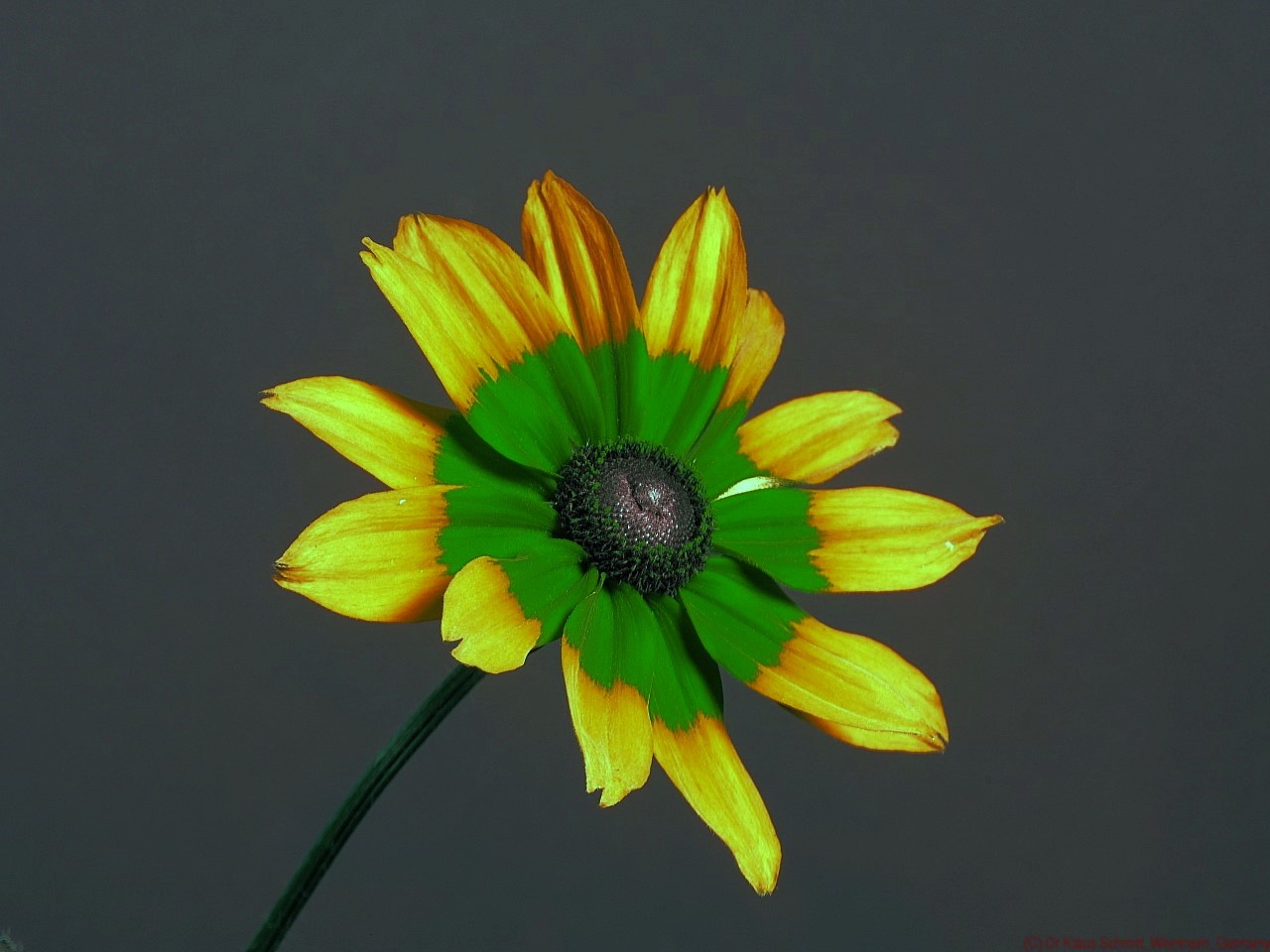
 

Simulated butterfly vision:
 

Quadriptych of human vision, UV, and simulated butterfly and bee vision (left to right, top to bottom):
 

Quadriptych in detail of human vision, UV, and simulated butterfly and bee vision (left to right, top to bottom):
 

This flower shows a very prominent UV bullseye pattern, as its petal tips are very UV bright (around 365nm) to about the middle and its center is very UV dark, and all this gets nicely visible also in simulated bee and butterfly vision. I have matched the previously done shooting for comparison reasons.

I have previously written about that flower HERE
 
Stay tuned, more will follow on that fascinating subject...

More info on this very interesting field may be found on my site http://www.pbase.com/kds315/uv_photos

Black-eyed Susan - Rudbeckia hirta in reflected ultraviolet photography and simulated bee and butterfly vision XII

Today more shots of a cultivar flower, originating from the USA Prairie, a Black-eyed Susan - Rudbeckia hirta in reflected ultraviolet photography using my "work horse" UV filter, the Baader-U filter as well as in simulated bee and butterfly vision using my XBV filters. All shots were done at f11. Lens was a UV-Nikkor 105mm quartz fluorite lens. Light source was a modified Xenon flash. This was shot using another modified camera, an Olympus M5 Mk2.

[click on image to see a larger one]

Human vision:
 

Reflected UV:
 

Simulated bee vision:
 

Simulated butterfly vision:
 

Quadriptych of human vision, UV, and simulated butterfly and bee vision (left to right, top to bottom):
 

Quadriptych in detail of human vision, UV, and simulated butterfly and bee vision (left to right, top to bottom):
 

This flower shows a very prominent UV bullseye pattern, as its petal tips are very UV bright (around 365nm) to about the middle and its center is very UV dark, and all this gets nicely visible also in simulated bee and butterfly vision. A matched set was shot using a newer camera system for comparison reasons HERE.

I have previously written about that flower HERE
 
Stay tuned, more will follow on that fascinating subject...

More info on this very interesting field may be found on my site http://www.pbase.com/kds315/uv_photos

Monday, July 17, 2017

My work on TV, Movie Theaters etc in UV and simulated animal vision

So if you would like to see some of my work on TV or on film (updated 02 2023), here you go ...

Work for NOVA PBS:

They will produce a TV special "Your Brain: Perception Deception" (working title) using my multispectral images of Bidens, Gazania and Rudbeckia in human vision and simulated bee vision. It will air in 2023.

Work for NEBRASCA PUBLIC MEDIA:

Our video "Insecta Spectra" done by Robin Noorda using my multispectral images will be used in an interactive lesson on bees and pollinators. There will be a section describing what bees see as opposed to what a human sees in the environment - particularly flowers. It will air in 2022.


Work for BBC London:

BBC ONE Richard Hammond's Invisible Worlds (HDTV)
BBC TWO The Science of Plants - How to Grow a Planet (HDTV)
BBC Four - Colour: The Spectrum of Science (HDTV)
BBC Science Interview on Bees and their UV Vision (HDTV)


Work for Sir David Attenborough:

Kingdom of Plants (HDTV for SKY 3D and IMAX Theaters; in 3D stereoscopic)


Work for Wall to Wall Productions:

Solved: Nature's Strangest Mysteries 

Work for the German TV:

ZDF TerraX "The Magic of Colors" (HDTV)
ZDFZeit about UV Sun protection (HDTV)
Hessischer Rundfunk (hr), production Alles Wissen, Blumen Quiz (2019)

WDR 2 Bienen live ("bees live")


Saturday, July 8, 2017

Black-eyed Susan - Rudbeckia hirta in reflected ultraviolet photography and simulated bee vision XI

Today detail shots of a cultivar flower, originating from the USA Prairie, a Black-eyed Susan - Rudbeckia hirta in reflected ultraviolet photography using my "work horse" UV filter, the Baader-U filter as well as in simulated bee vision using my XBV filter. All shots were done at f8. Lens was a UV-Nikkor 105mm quartz fluorite lens. Light source was sunlight.

[click on image to see a larger one]

Human vision:
 

Reflected UV:
 

Simulated bee vision:
 

Triptych of human vision, UV, and simulated bee vision (left to right, top to bottom):
 

This flower shows a very prominent UV bullseye pattern, as its petals are very UV bright (around 365nm) to about the middle and its center is very UV dark, and all this gets nicely visible also in simulated bee vision.

I have previously written about that flower HERE
 
Stay tuned, more will follow on that fascinating subject...

More info on this very interesting field may be found on my site http://www.pbase.com/kds315/uv_photos

Black-eyed Susan - Rudbeckia hirta in reflected ultraviolet photography and simulated bee vision X

Today shots of a cultivar flower, originating from the USA Prairie, a Black-eyed Susan - Rudbeckia hirta in reflected ultraviolet photography using my "work horse" UV filter, the Baader-U filter as well as in simulated bee vision using my XBV filter. All shots were done at f8. Lens was a UV-Nikkor 105mm quartz fluorite lens. Light source was sunlight.

[click on image to see a larger one]

Human vision:
 

Reflected UV:
 

Simulated bee vision:
 

Triptych of human vision, UV, and simulated bee vision (left to right, top to bottom):
 

This flower shows a very prominent UV bullseye pattern, as its petals are very UV bright (around 365nm) to about the middle and its center is very UV dark, and all this gets nicely visible also in simulated bee vision.

I have previously written about that flower HERE
 
Stay tuned, more will follow on that fascinating subject...

More info on this very interesting field may be found on my site http://www.pbase.com/kds315/uv_photos

Treasury flower - Gazania rigens in reflected ultraviolet photography and simulated bee vision XXI

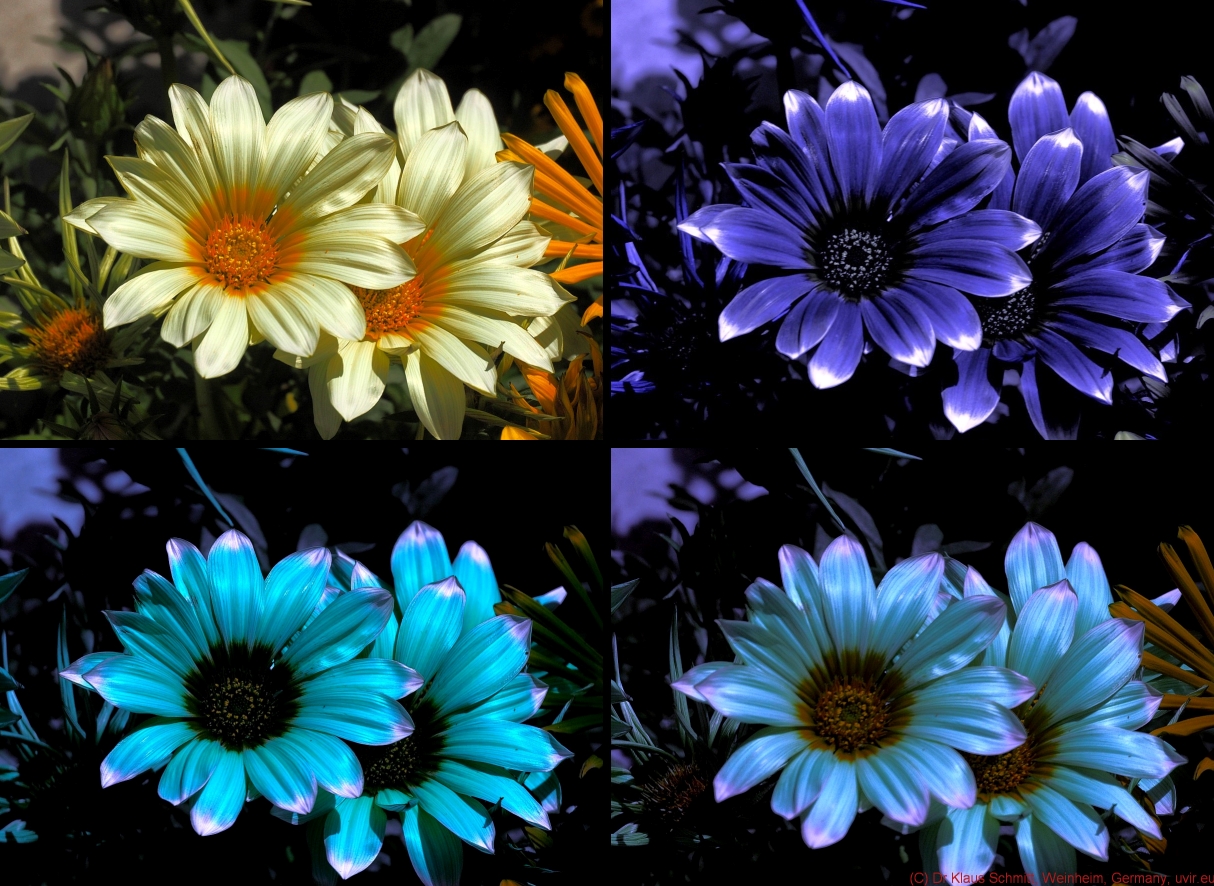
Today shots of a current, long blooming flower, a yellowish white variant of a Treasury flower - Gazania rigens in reflected ultraviolet photography and simulated bee and butterfly vision. All shots were done at f8 in reflected ultraviolet photography using my "work horse" UV filter, the Baader-U filter, as well as my XBV filters for simulated bee and butterfly vision. Lens was a UV-Nikkor 105mm quartz fluorite lens. Light source was sunlight, background was the flower's own foliage.

[click on image to see a larger one]

Human vision:
 

Reflected UV:
 

Simulated bee vision:
 

Simulated butterfly vision:
 

Quadriptych of human vision, UV, and simulated butterfly and bee vision (left to right, top to bottom):
 

This Gazania's outer petals reflect strongly UV around 372nm, wheras the inner parts are much darker hence forming UV nectar guides for bees. There are also highly UV reflecting marks inside around a dark UV center, all invisible to us humans but clearly visible to bees, and all this gets nicely visible here, also in simulated bee vision.

I have written about this Gazania previously HERE
 
Stay tuned, more will follow on that fascinating subject...

More info on this very interesting field may be found on my site http://www.pbase.com/kds315/uv_photos
Treasury flower - Gazania rigens in reflected ultraviolet photography and simulated bee vision XX

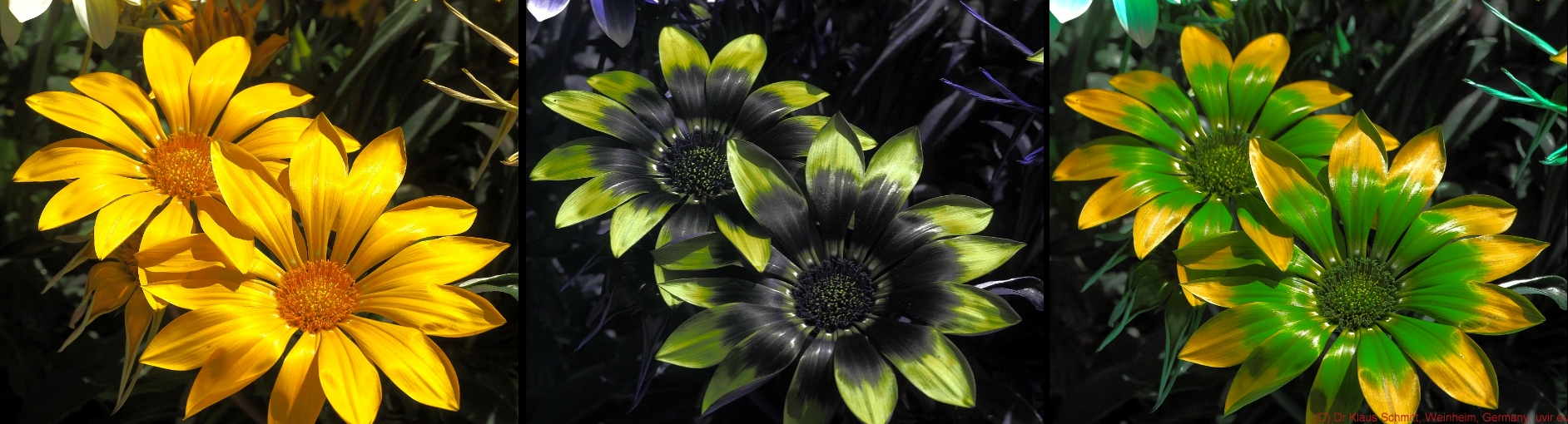
Today shots of a current, long blooming flower, an all yellow variant of a Treasury flower - Gazania rigens in reflected ultraviolet photography and simulated bee vision. All shots were done at f8 in reflected ultraviolet photography using my "work horse" UV filter, the Baader-U filter, as well as my XBV filters for simulated bee vision. Lens was a UV-Nikkor 105mm quartz fluorite lens. Light source was sunlight, background was the flower's own foliage.

[click on image to see a larger one]

Human vision:
 

Reflected UV:
 

Simulated bee vision:
 

Triptych of human vision, UV, and simulated bee vision (left to right, top to bottom):
 

This Gazania's outer petals reflect strongly UV around 365nm, and there are also highly UV reflecting marks inside around a dark UV center, all invisible to us humans, but all this gets nicely visible, also in simulated bee vision.

I have written about Gazania previously HERE
 
Stay tuned, more will follow on that fascinating subject...

More info on this very interesting field may be found on my site http://www.pbase.com/kds315/uv_photos