Showing posts sorted by relevance for query XBV6. Sort by date Show all posts

Thursday, July 5, 2012

Ratibida columnifera (Upright Prairie coneflower): human vision vs simulated bee vison; reflected UV ultraviolet photography

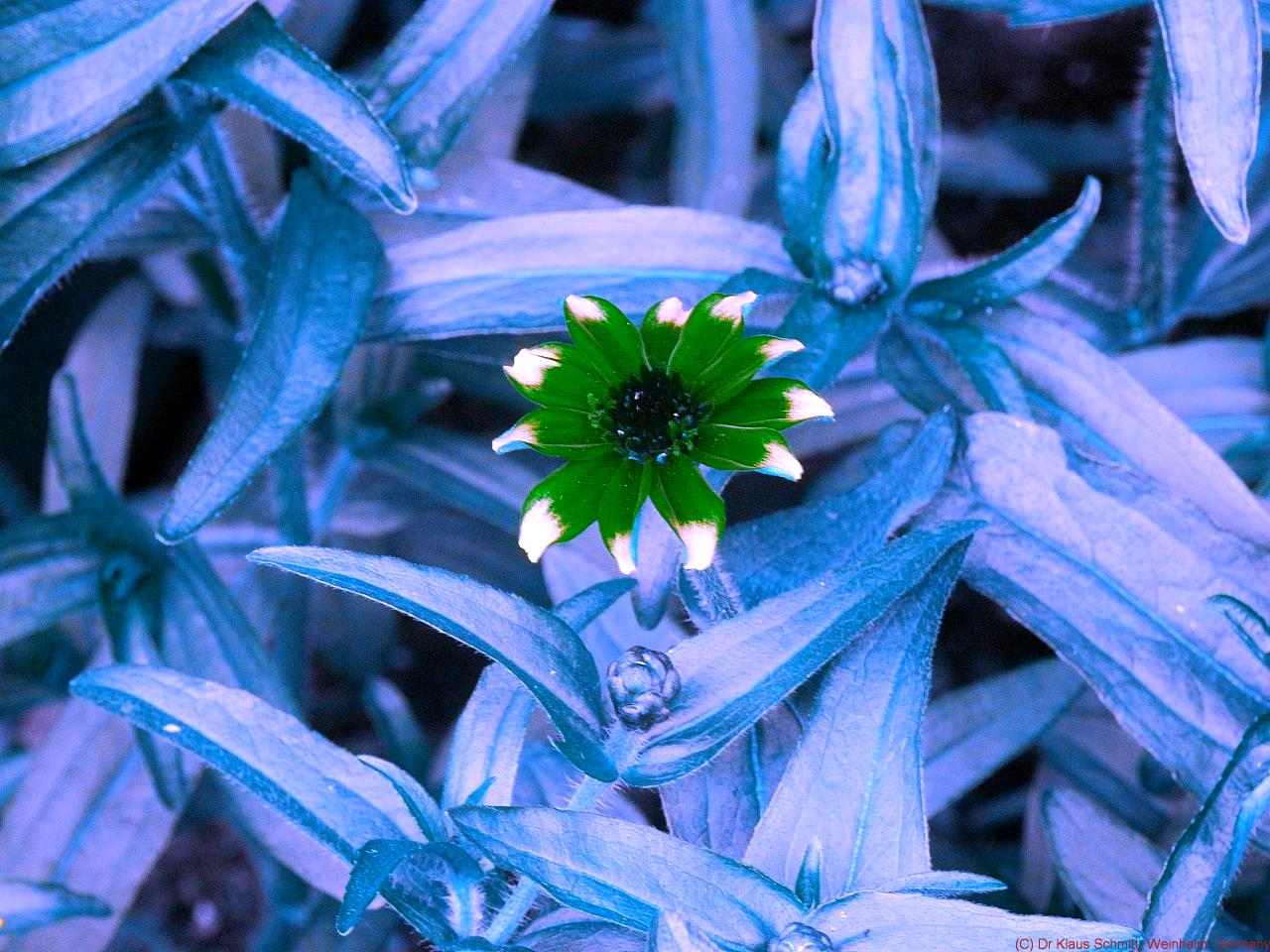
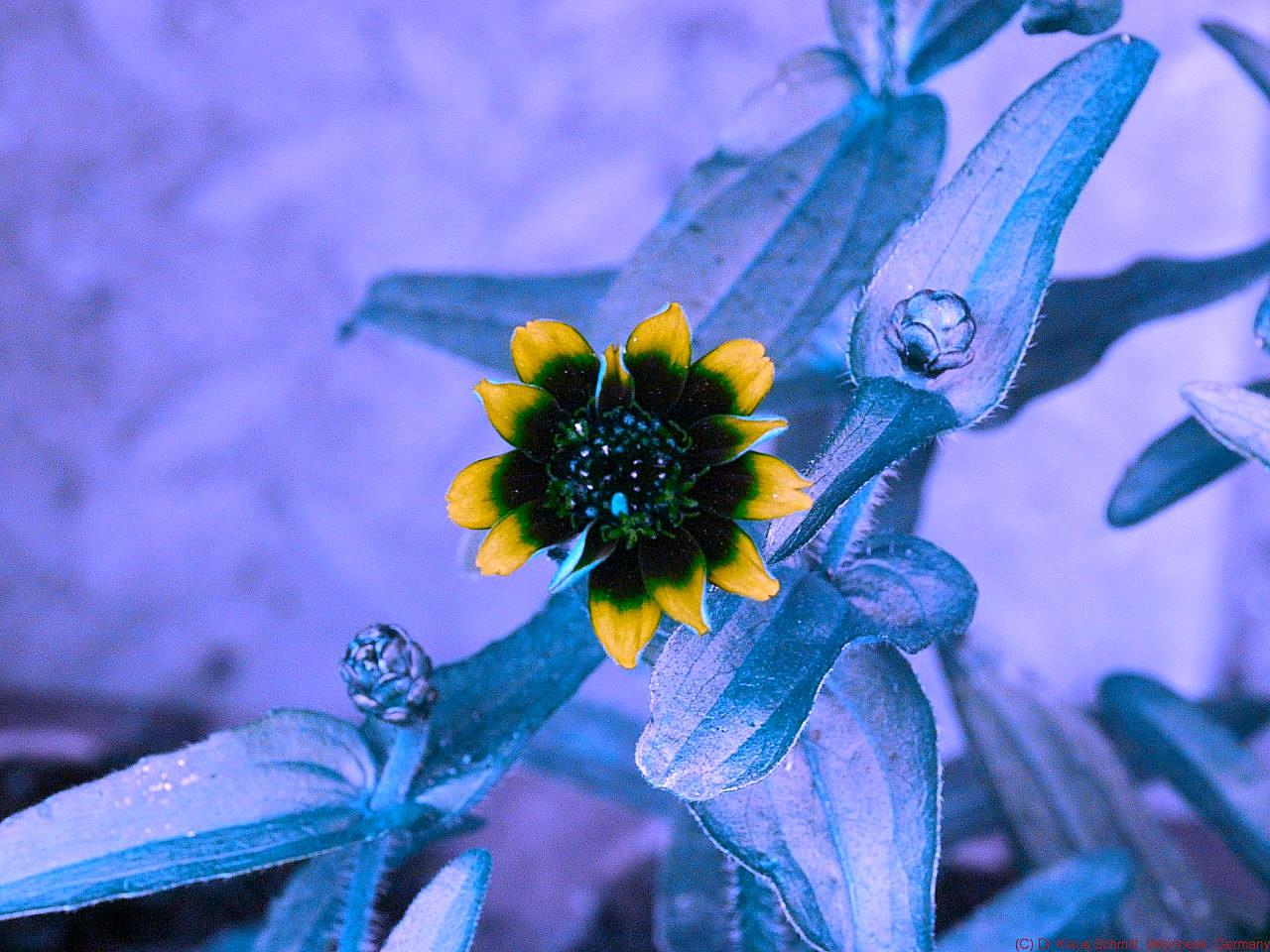
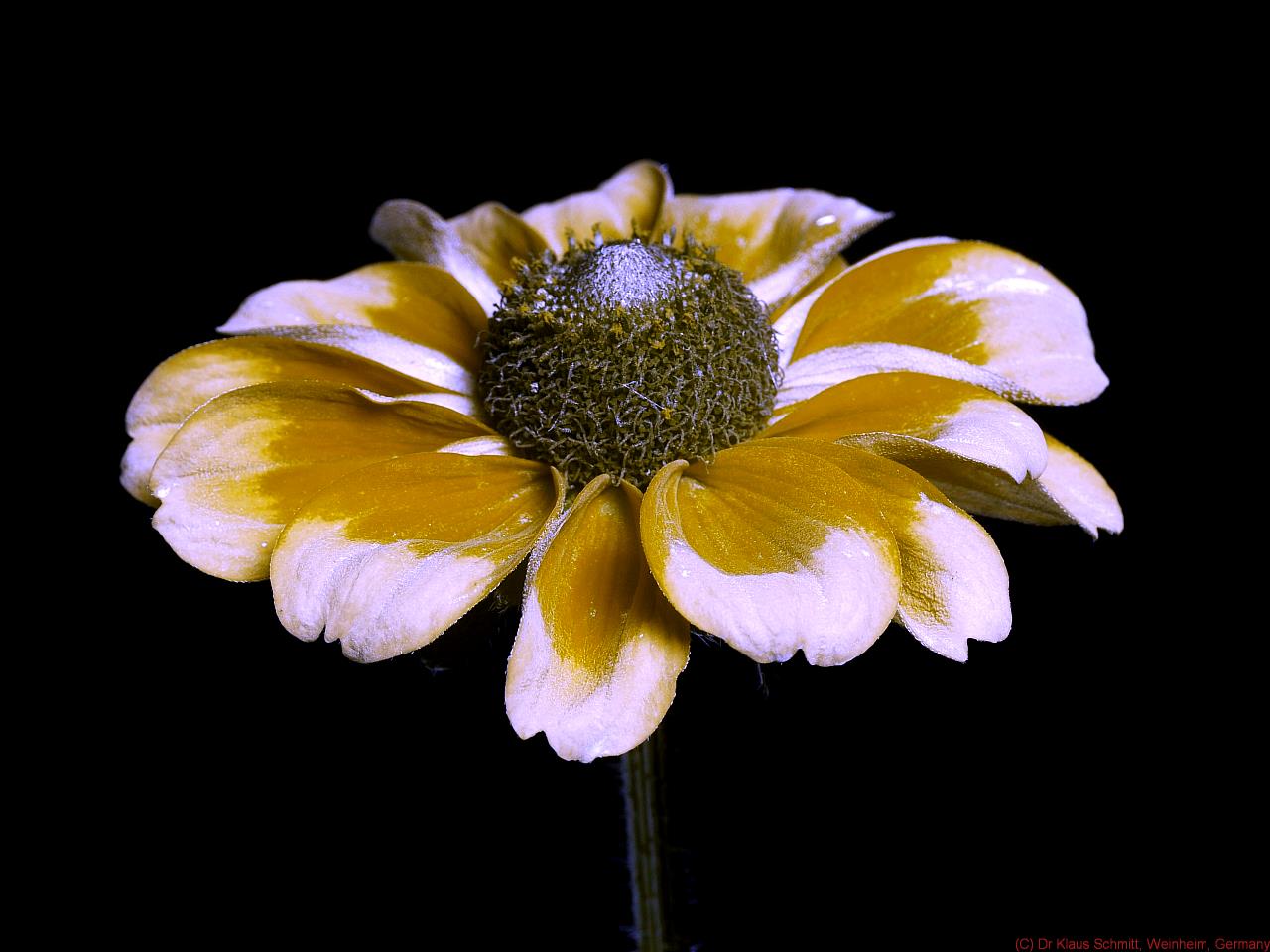
Today about Ratibida columnifera, the "Upright Prairie Coneflower" or "Mexican Hat" in its multispectral representation. I took some shots at Hermannshof, Weinheim, Germany in normal human vision VIS, in UV using the Baader-U filter, as well as in simulated bee vision using my XBV2 and new XBV6 filters respectively.

[click on image to see a larger one]

First showing a juvenile flower

Visual shot:


Simulated butterfly vison using XBV2 filter:


Simulated bee vison using XBV6 filter:
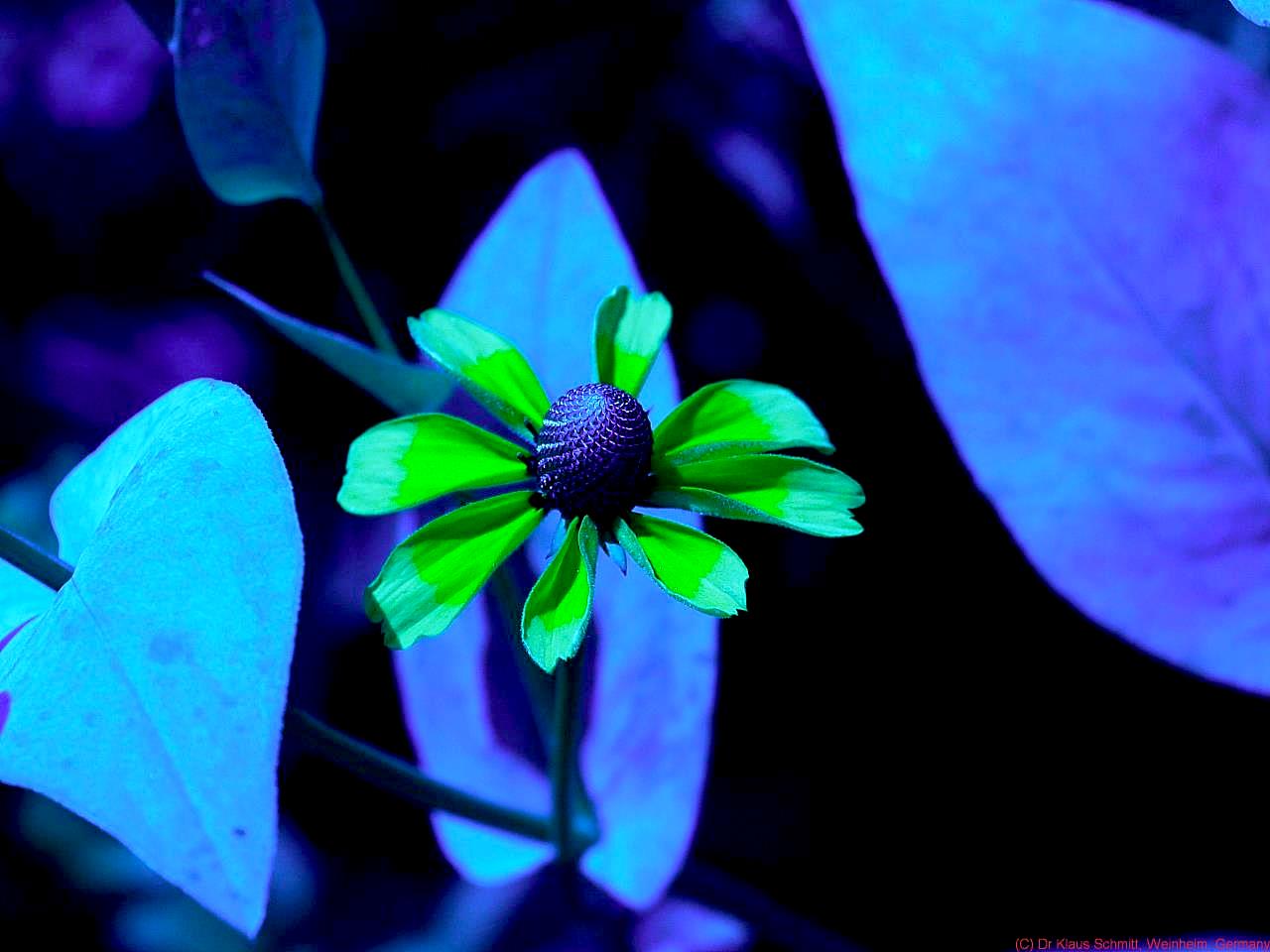

UV using Baader-U filter:
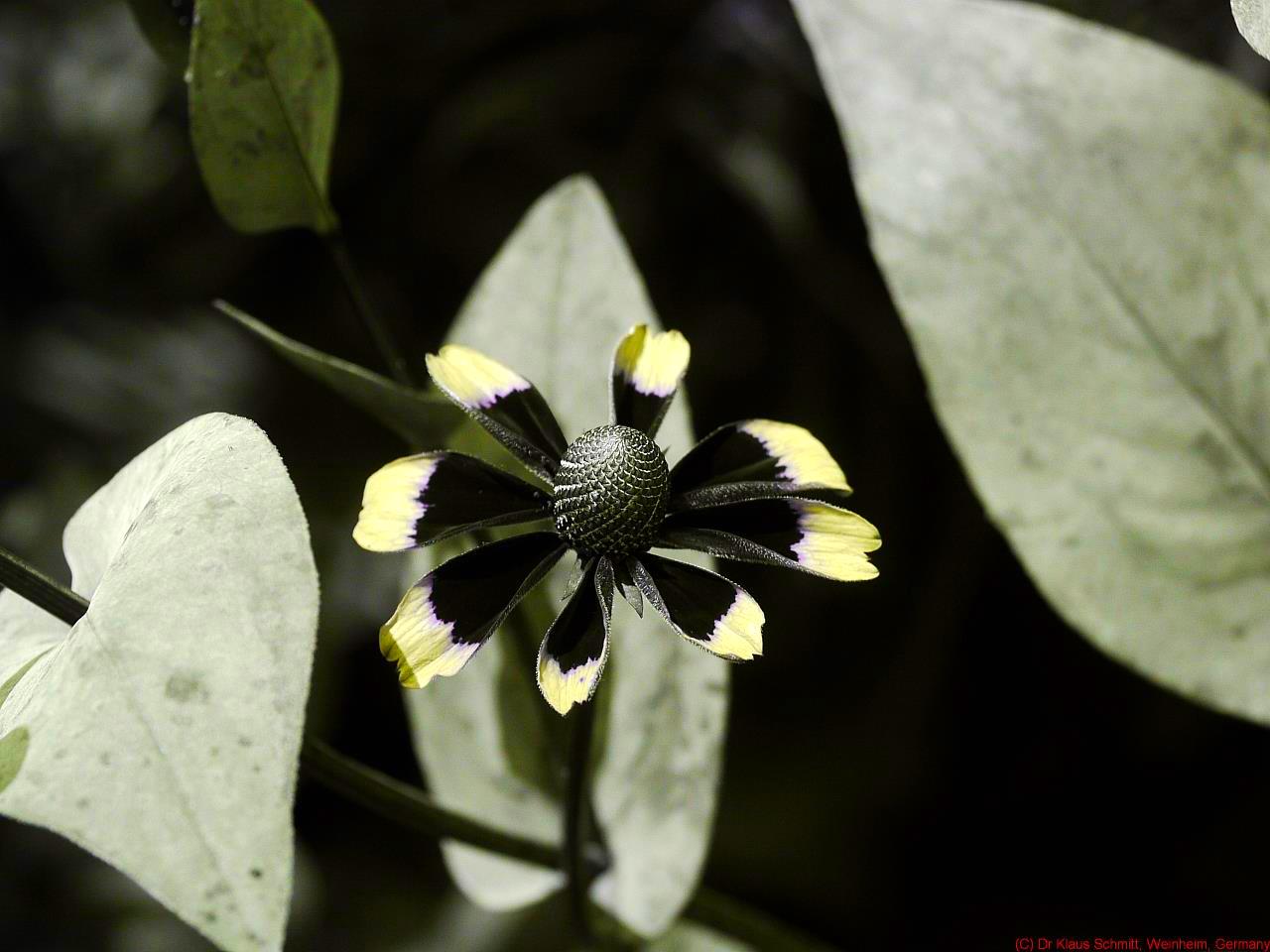

Then an adult flower

Visual shot:


Simulated butterfly vison using XBV2 filter:
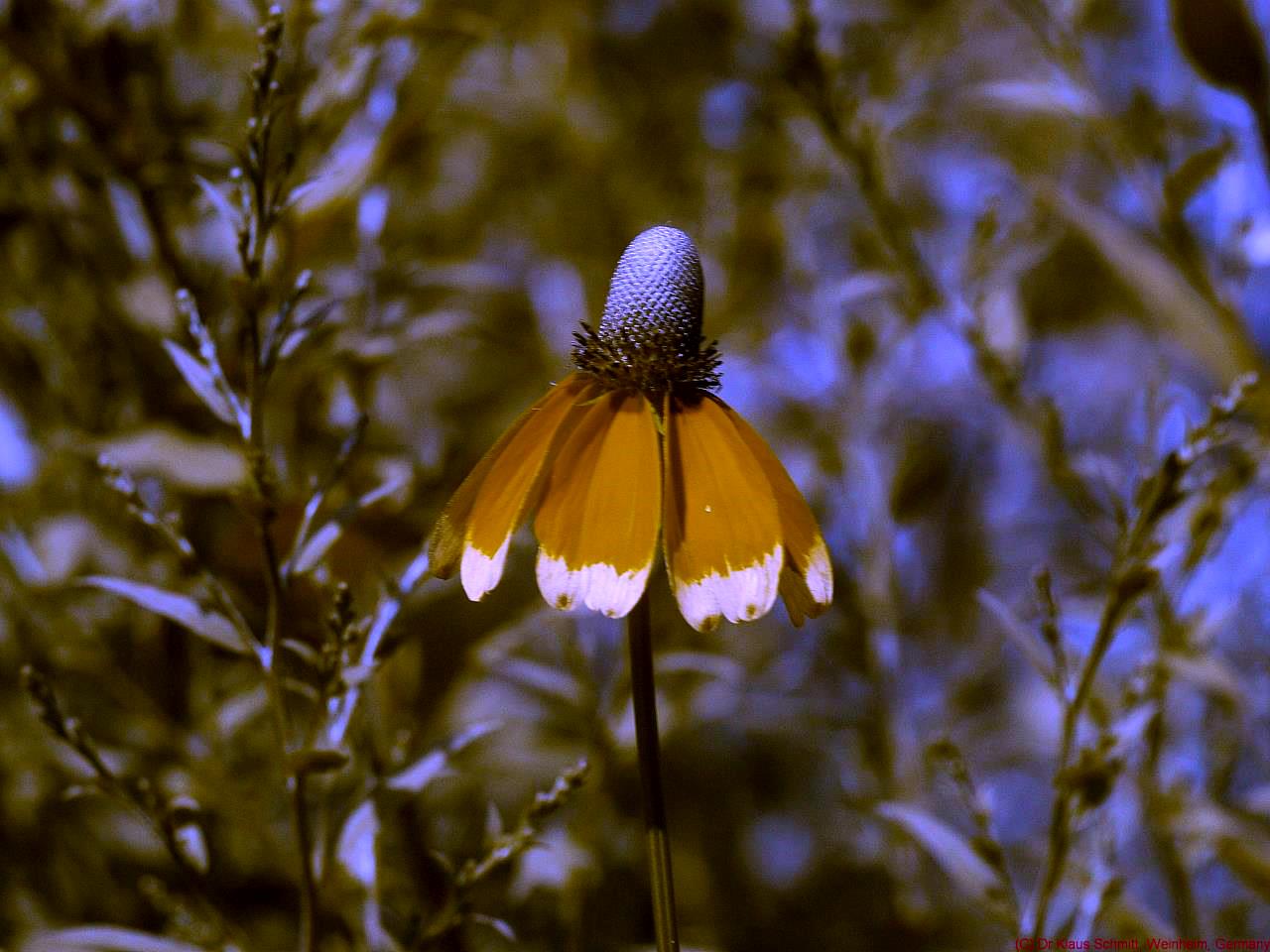

Simulated bee vison using XBV6 filter:
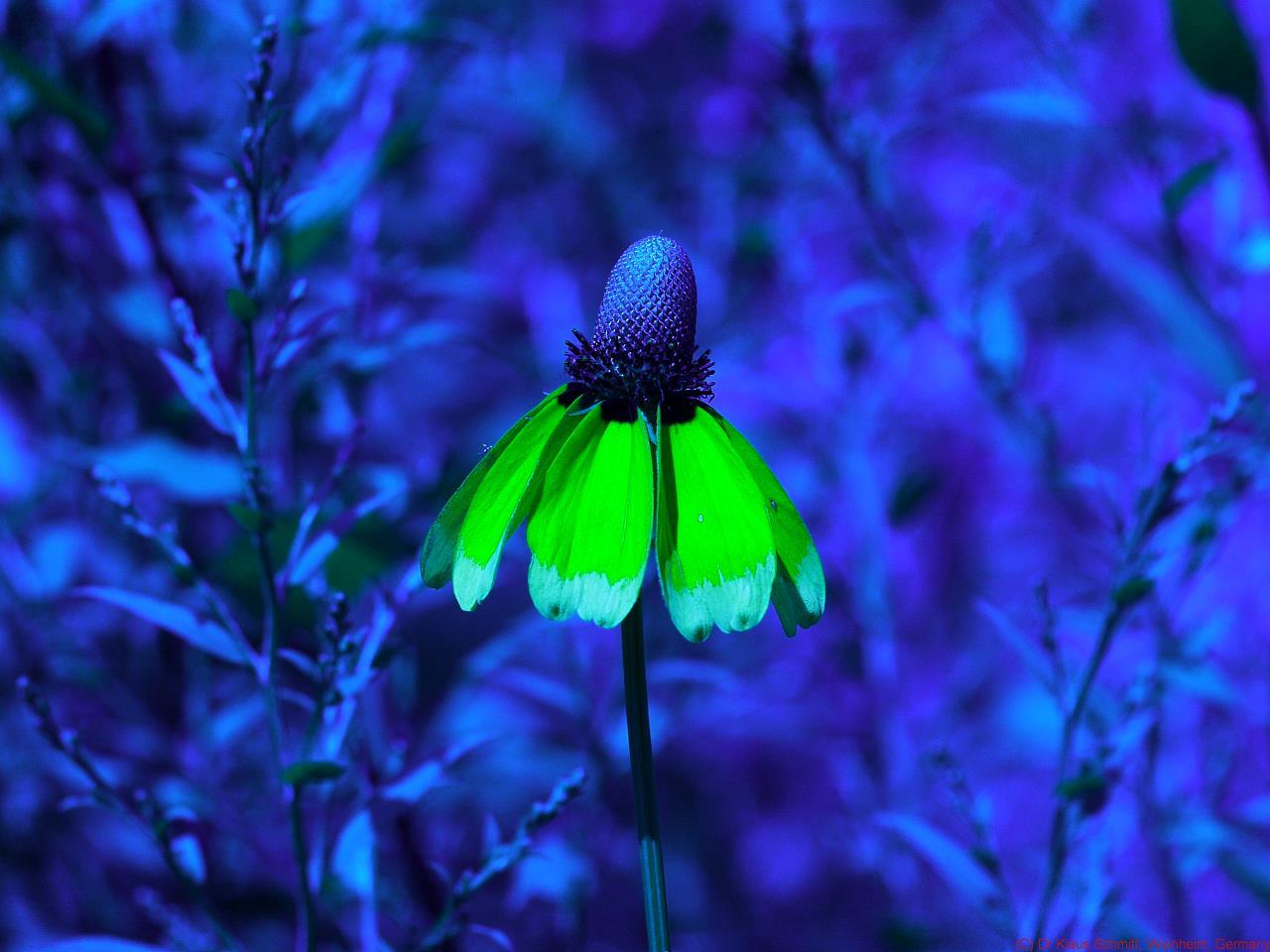

UV using Baader-U filter:


This attractive flower, pretty common to nearly all of the US shows a very intense, Rudbeckia-like bullseye pattern with a petal tip reflection around 365nm.

As you may have noticed, I'm still working on my bee vision (BV) filters; BV6 is one with very intensive colors and much shorter exposure time, due to new filter glass combinations.

More about these special new filters here later in a seperate entry.


Stay tuned, more will follow on that fascinating subject...

More info on this very interesting field may be found on my site http://www.pbase.com/kds315/uv_photos

Sunday, July 1, 2012

Opuntia humifusa: human vision vs simulated bee vison; reflected UV ultraviolet photography

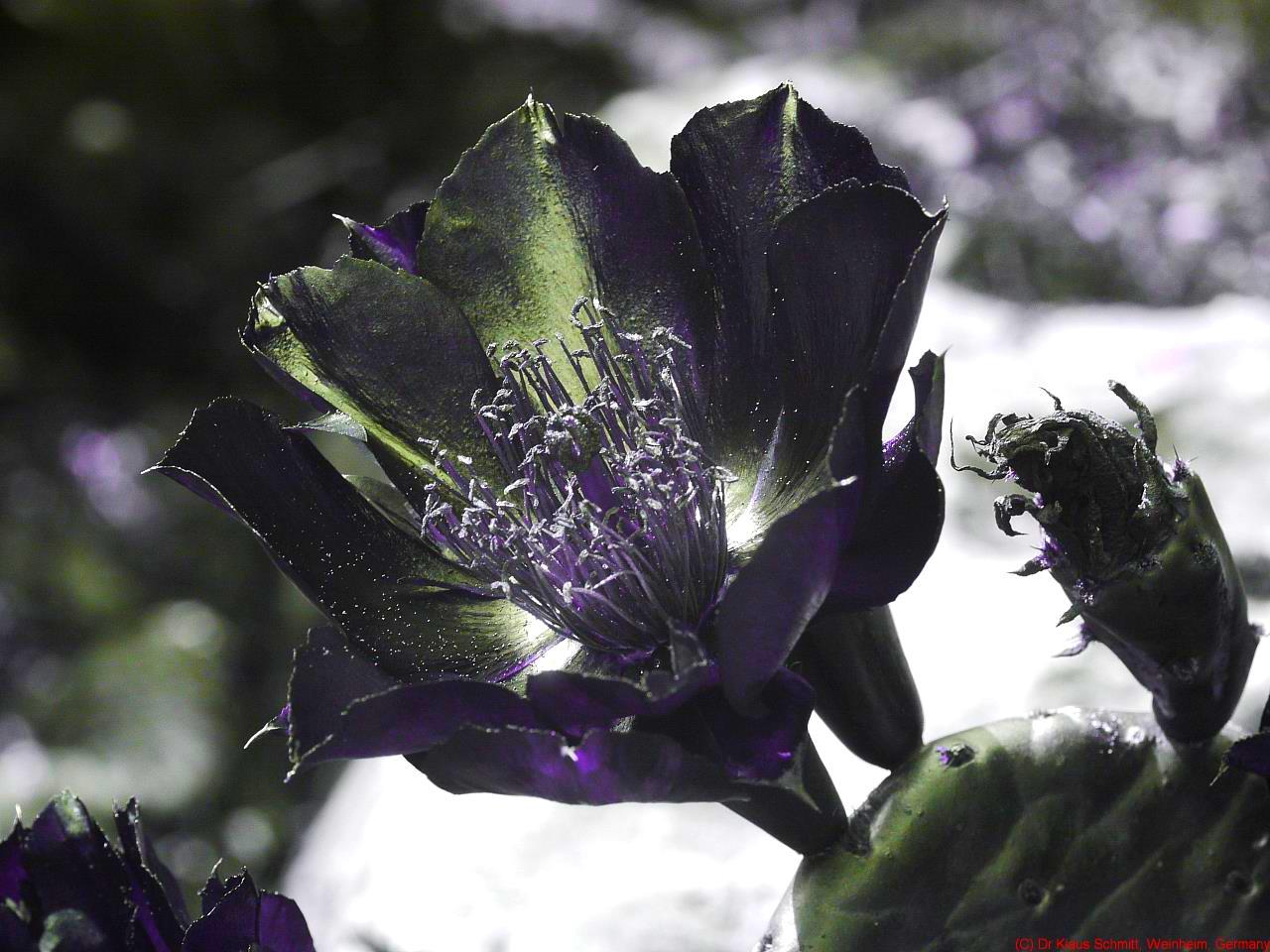
A walk today in the beautiful Hermanshof Park, Weinheim let me discover some flowering Opuntia humifusa, the reclining Opuntia. So here it comes in its multispectral representation. I took some shots at Hermannshof, Weinheim, Germany in normal human vision VIS, in UV using the Baader-U filter, as well as in simulated bee vision using my new XBV6 filter respectively.

[click on image to see a larger one]

Visual shot:


UV using Baader-U filter:


Simulated bee vison using XBV6 filter:


This specimen has very bright pollen even at daylight, which the XBV6 filter nicely shows. Reminds my of UV induced fluorescence photography. In UV the petals have a metallic like shine that reflects UV strongly, maybe to attract pollinators?

As you may have noticed, I'm still working on my bee vision (BV) filters; BV6 is one with very intensive colors and much shorter exposure time, due to new filter glass combinations.

More about these special new filters here later in a seperate entry.


Stay tuned, more will follow on that fascinating subject...

More info on this very interesting field may be found on my site http://www.pbase.com/kds315/uv_photos

Wednesday, June 5, 2013

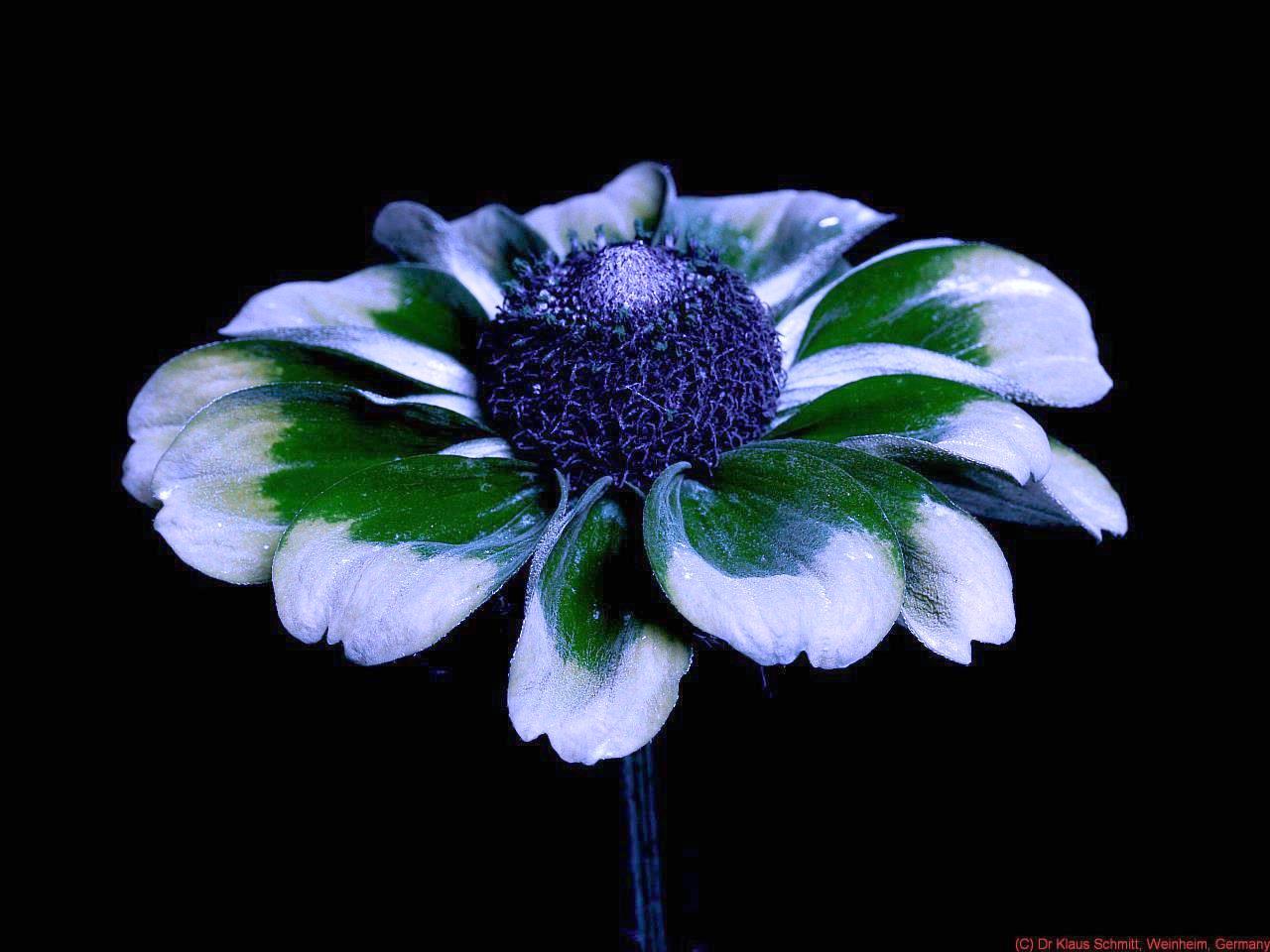
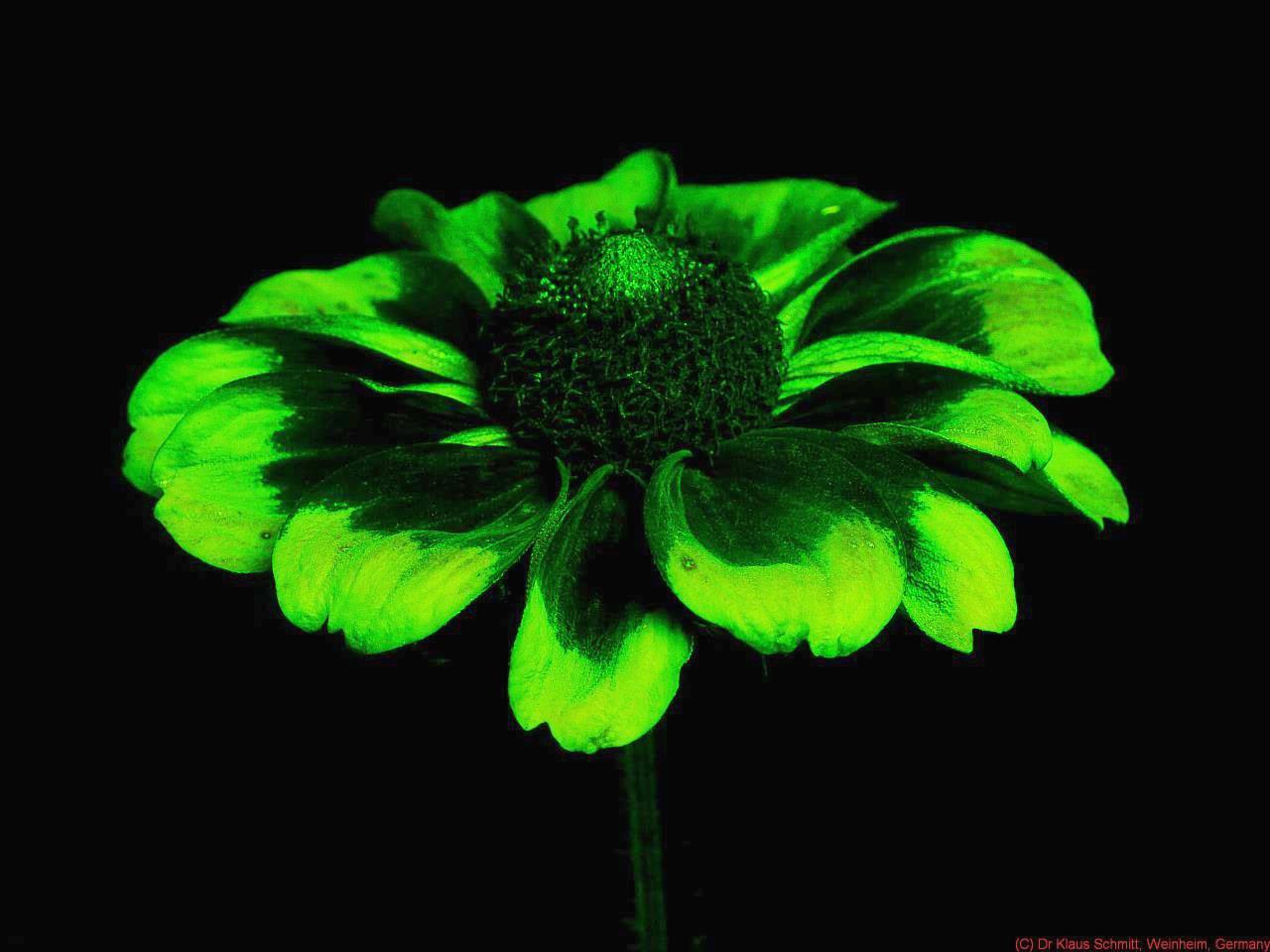
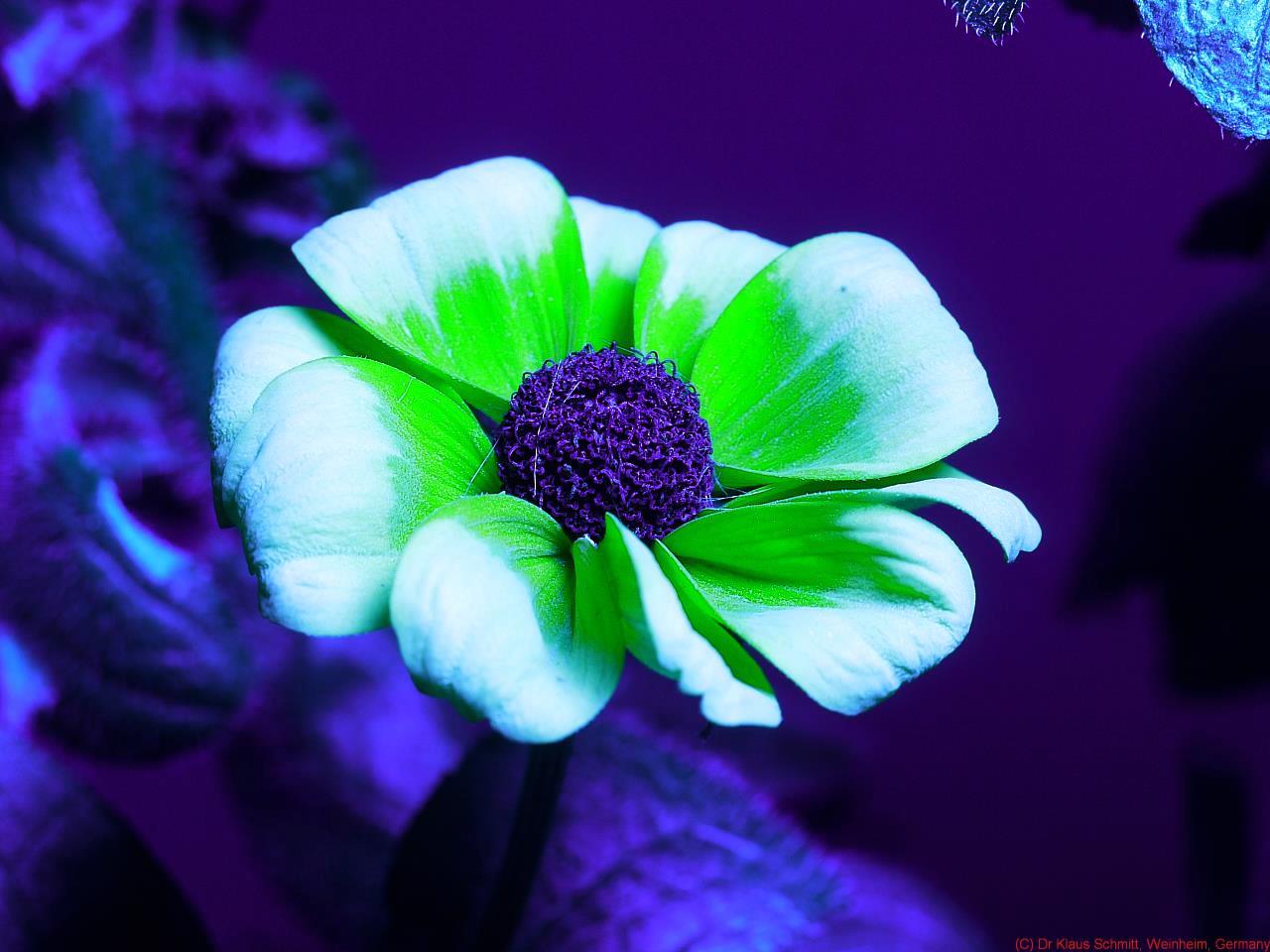
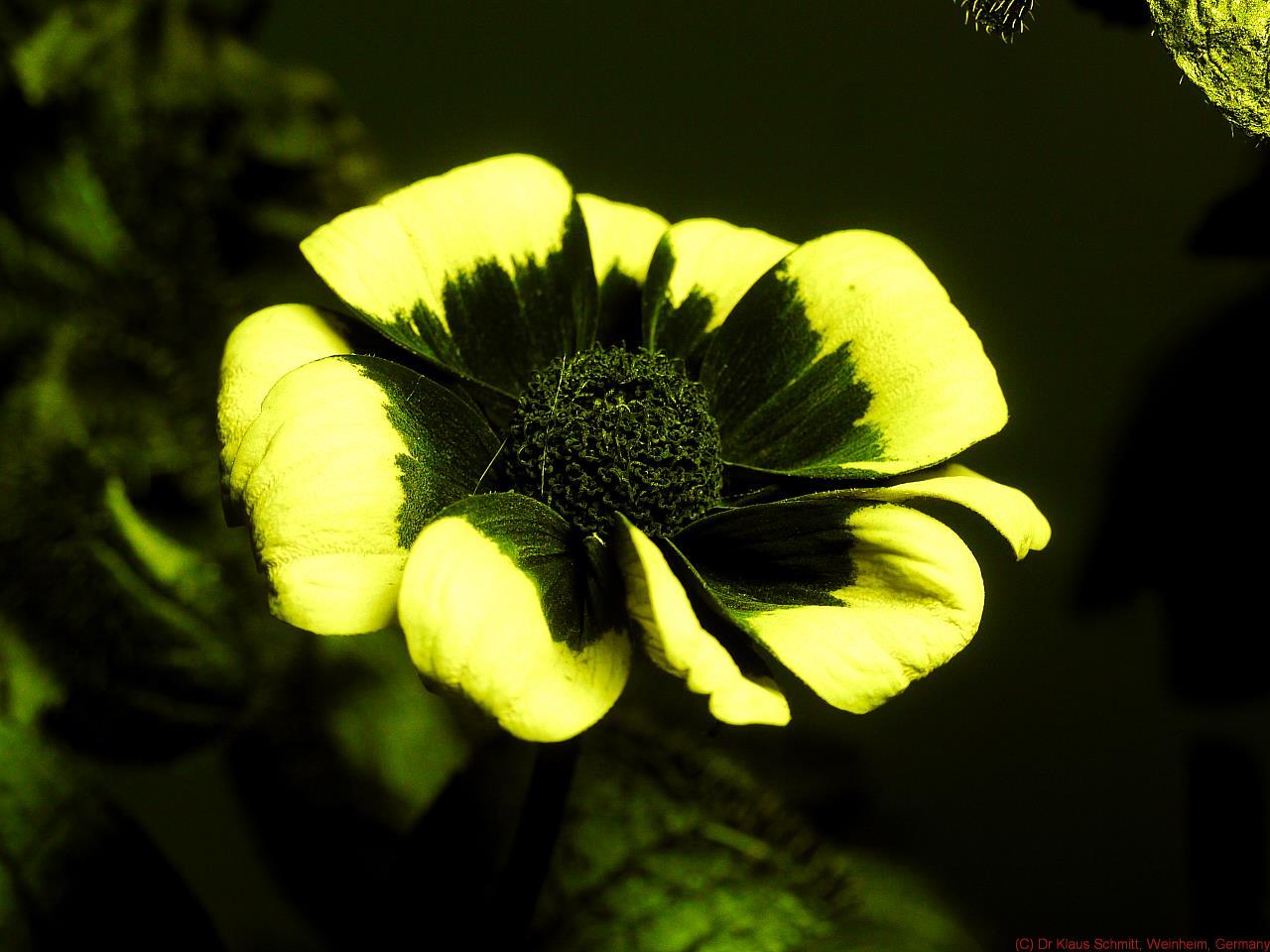
Mexican Zinnia - Zinnia haageana in reflected ultraviolet photography, simulated butterfly and bee vision

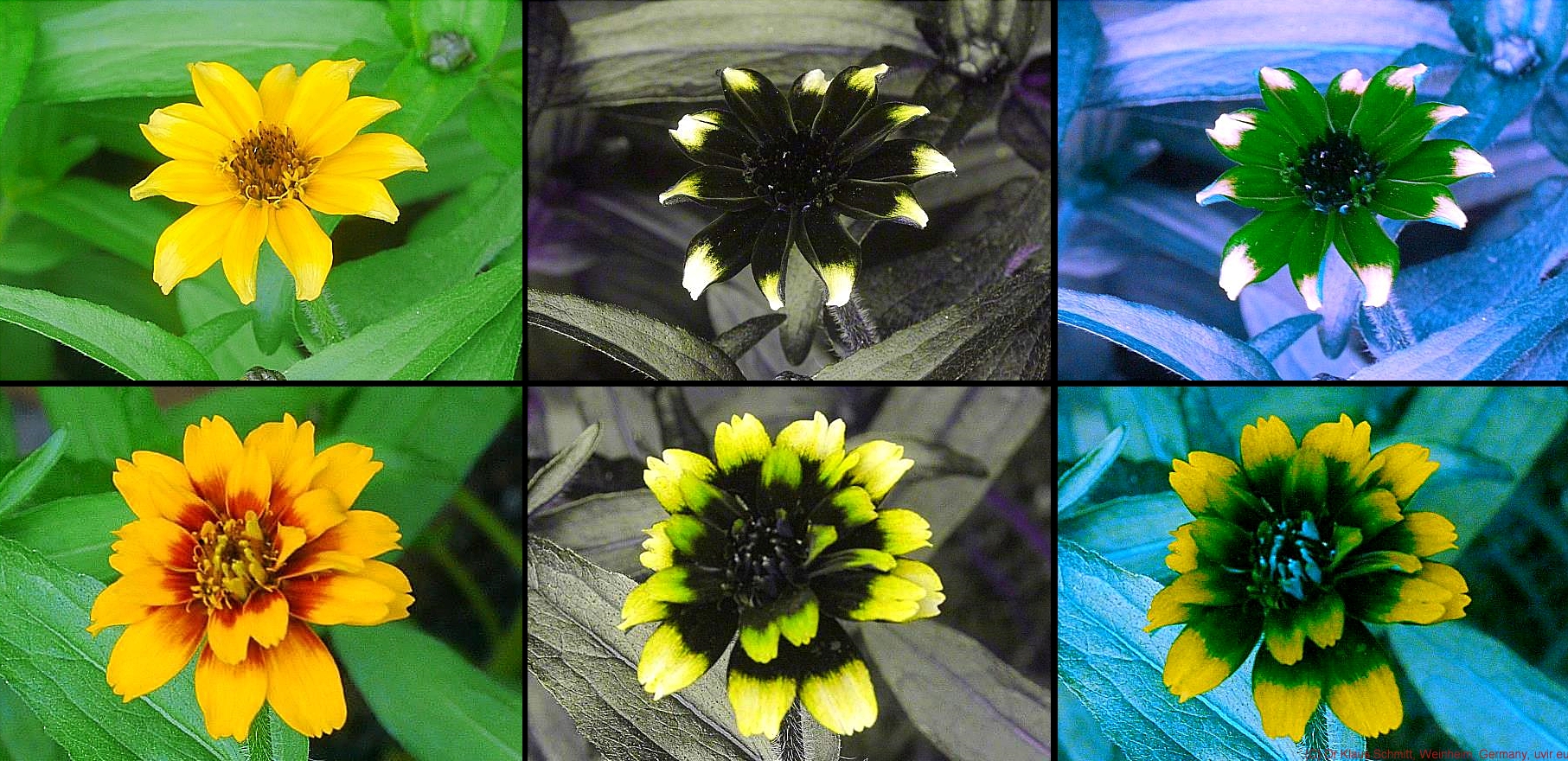
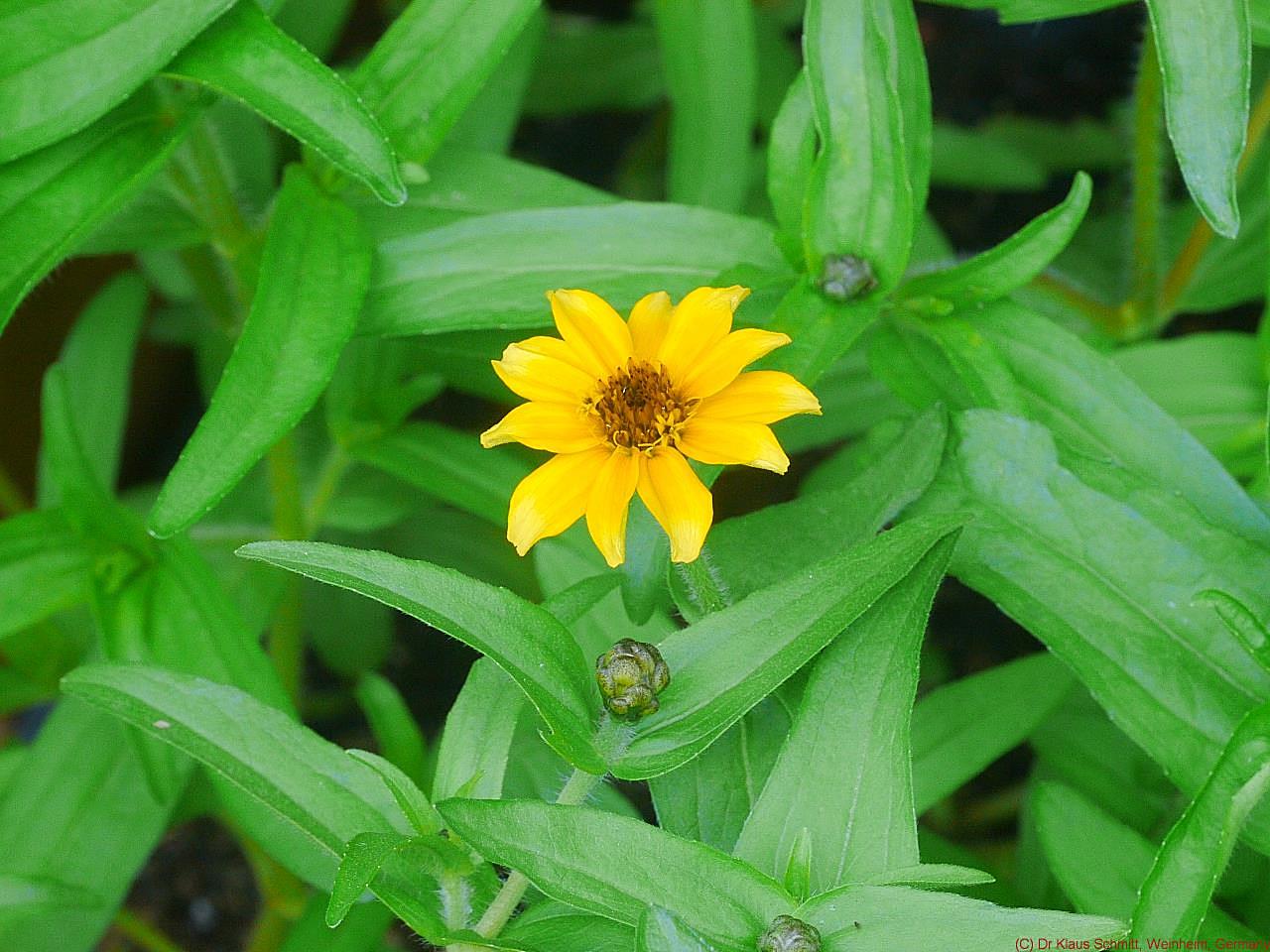
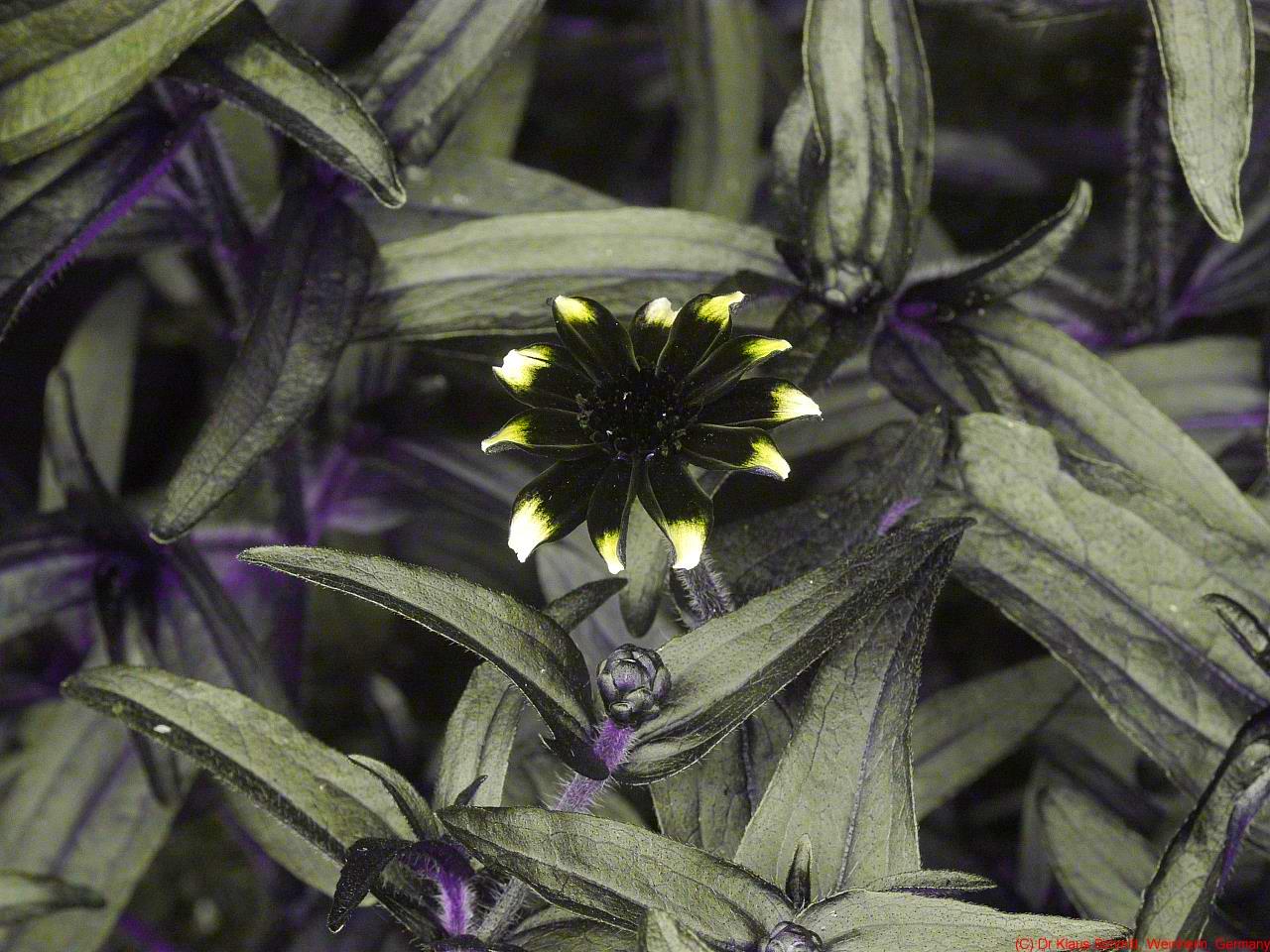
Today shots of some decorative flowers, all Zinnia haageana - Mexican Zinnia in reflected ultraviolet photography using my "work horse" UV filter, the Baader-U filter as well as my XBV filters for simulating bee and butterfly vision. Lens was a CERCO 94mm quartz fluorite lens. Light source was a modified Xenon flash. All shots were done at about f5.6.

[click on image to see a larger one]

Visible light image:
 

UV image using Baader-U filter (approx. 320-395nm, effective peak approx. 375nm):
 

Simulated bee vision (UV - VIS) using XBV6 filter:
 

Visible light image:
 

UV image using Baader-U filter (approx. 320-395nm, effective peak approx. 375nm):
 

Simulated bee vision (UV - VIS) using XBV6 filter:
 

Visible light image:
 

UV image using Baader-U filter (approx. 320-395nm, effective peak approx. 375nm):
 

Simulated bee vision (UV - VIS) using XBV6 filter:
 

Hexaptych of some of the above:


These Mexican Zinnia flowers have a very specific UV pattern, its petals are very UV dark on the middle and bottom, but its petal tips are very UV bright, reaching much deeper into UV as any other flower I know, reflecting UV in the greenish appearing region below 345nm, and in the yellow areas around 360nm and all this gets nicely visible.


Stay tuned, more will follow on that fascinating subject...

More info on this very interesting field may be found on my site http://www.pbase.com/kds315/uv_photos
Friday, June 29, 2012

Gazania splendens: human vision vs simulated bee vison; reflected UV ultraviolet photography

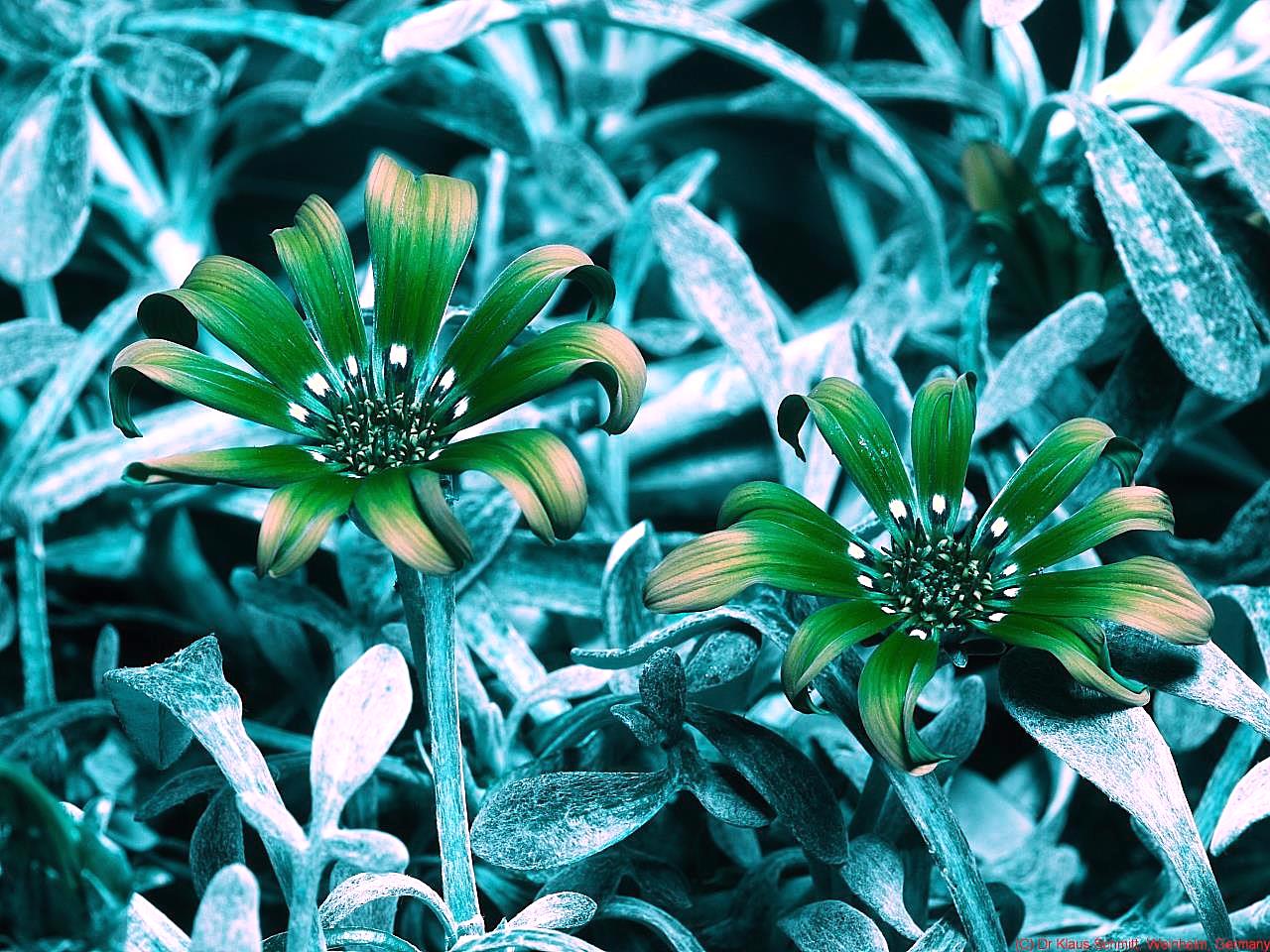
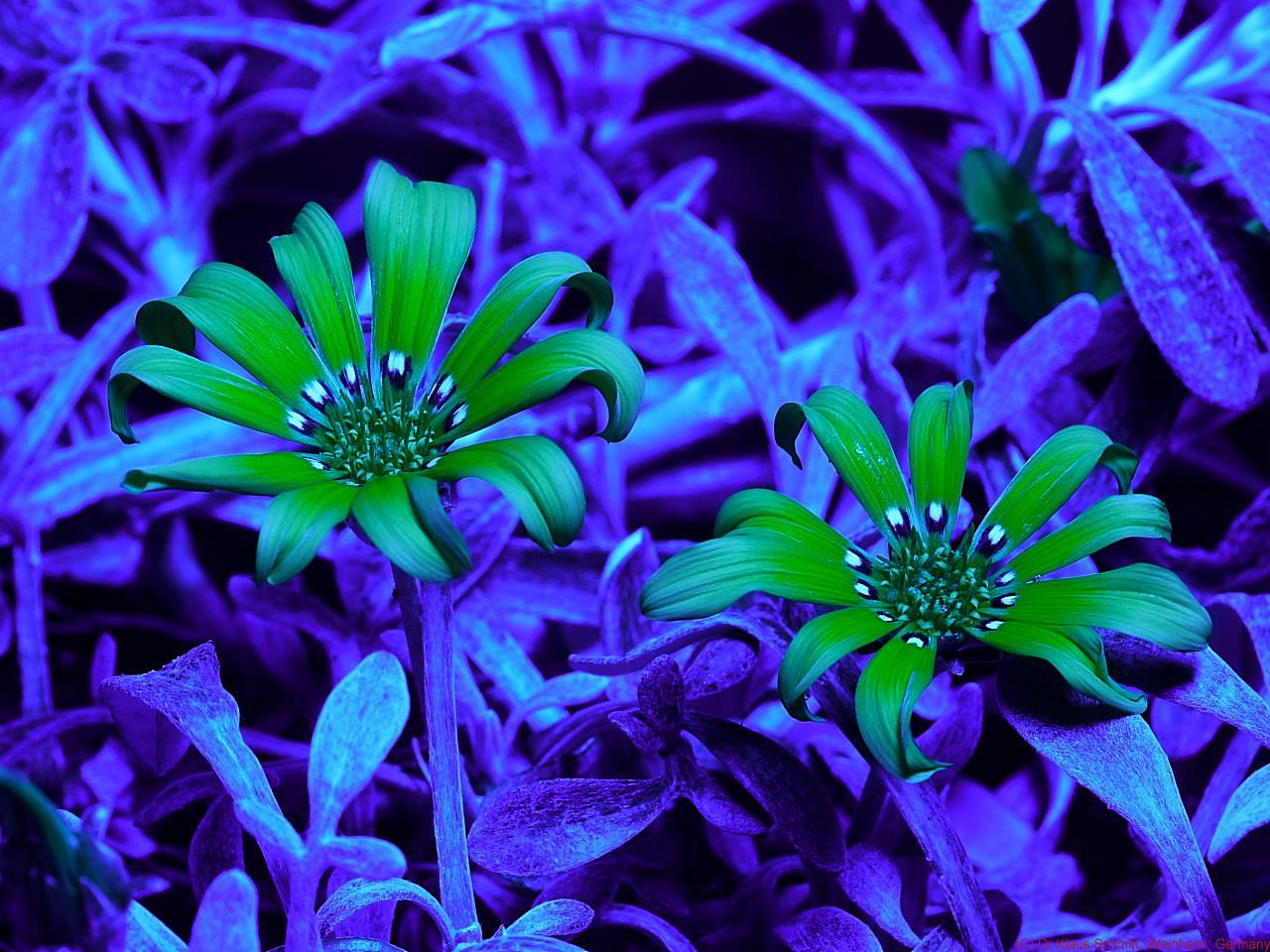
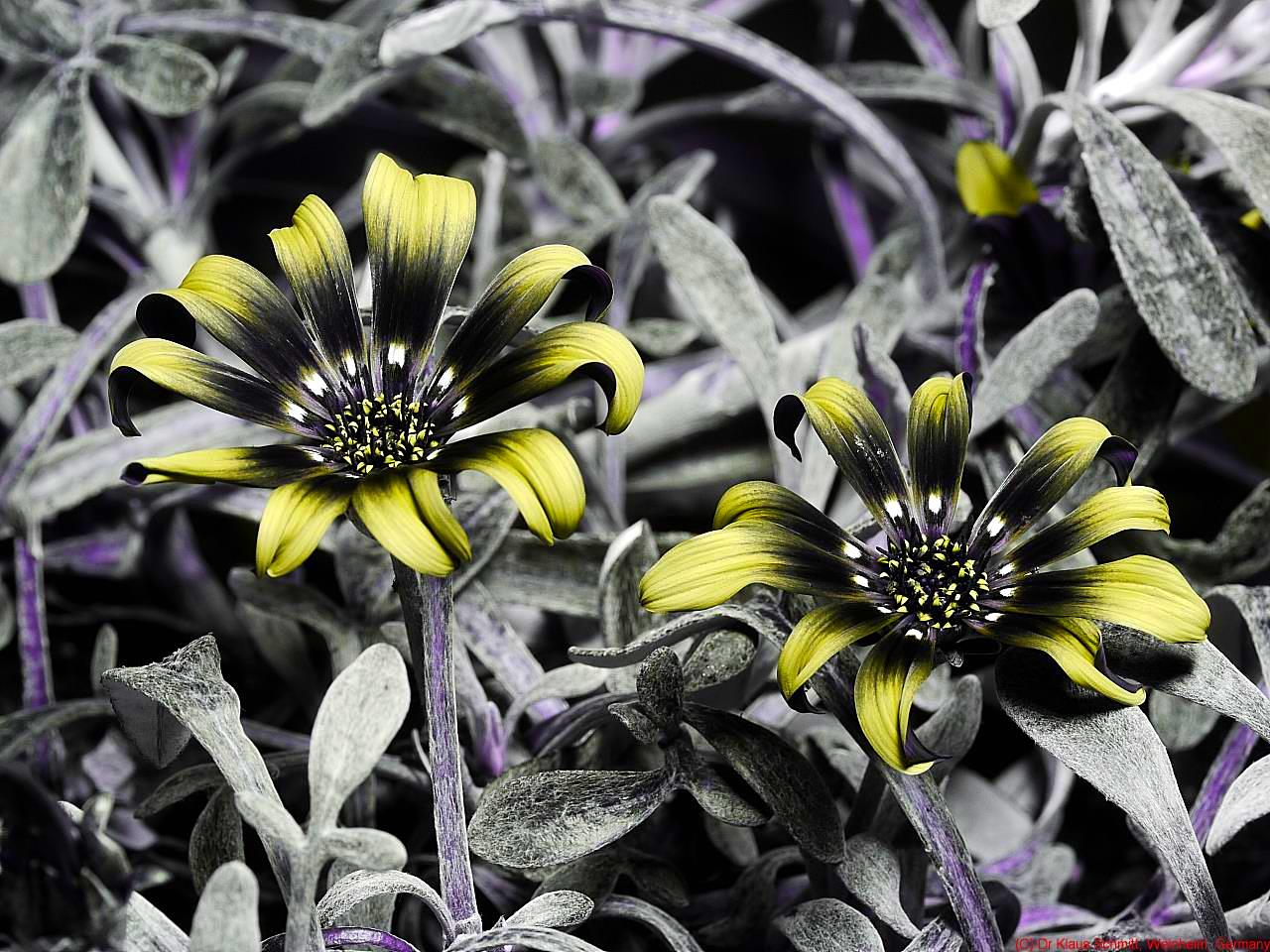
Today about a special yellow Gazania splendens flower I had shot a few times already, so since I was working on a new filter, here again it is in multispectral representation. I took some shots in normal human vision VIS, in UV using the Baader-U, Jupiter-U and Saturn-U filter, as well as in simulated bee vision using my XBV2, XBV3 and the new, stricter XBV5 and XBV6 filters respectively.

[click on image to see a larger one]

Visual shot:


Simulated bee vison using XBV3 filter:


Simulated bee vison using XBV2 filter:


Simulated bee vison using XBV5 filter:


Simulated bee vison using XBV6 filter:


UV using Baader-U filter:


UV using Jupiter-U filter:


UV using Saturn-U filter:


IR (basically) as it was shot using only a ND filter:


Also here it is uite interesting how this new filtering technique makes the very different reflectance of the petals visible.

As you may have noticed, I'm still working on my bee vision (BV) filters; BV5 is a very strict one that cuts all longer than short wave green, wheras BV6 now is one with very intensive colors and much shorter exposure time, due to new filter glass combinations.

More about these special new filters here later in a seperate entry.


Stay tuned, more will follow on that fascinating subject...

More info on this very interesting field may be found on my site http://www.pbase.com/kds315/uv_photos

Sunday, July 1, 2012

Hemerocallis (Day Lilly): human vision vs simulated bee vison; reflected UV ultraviolet photography

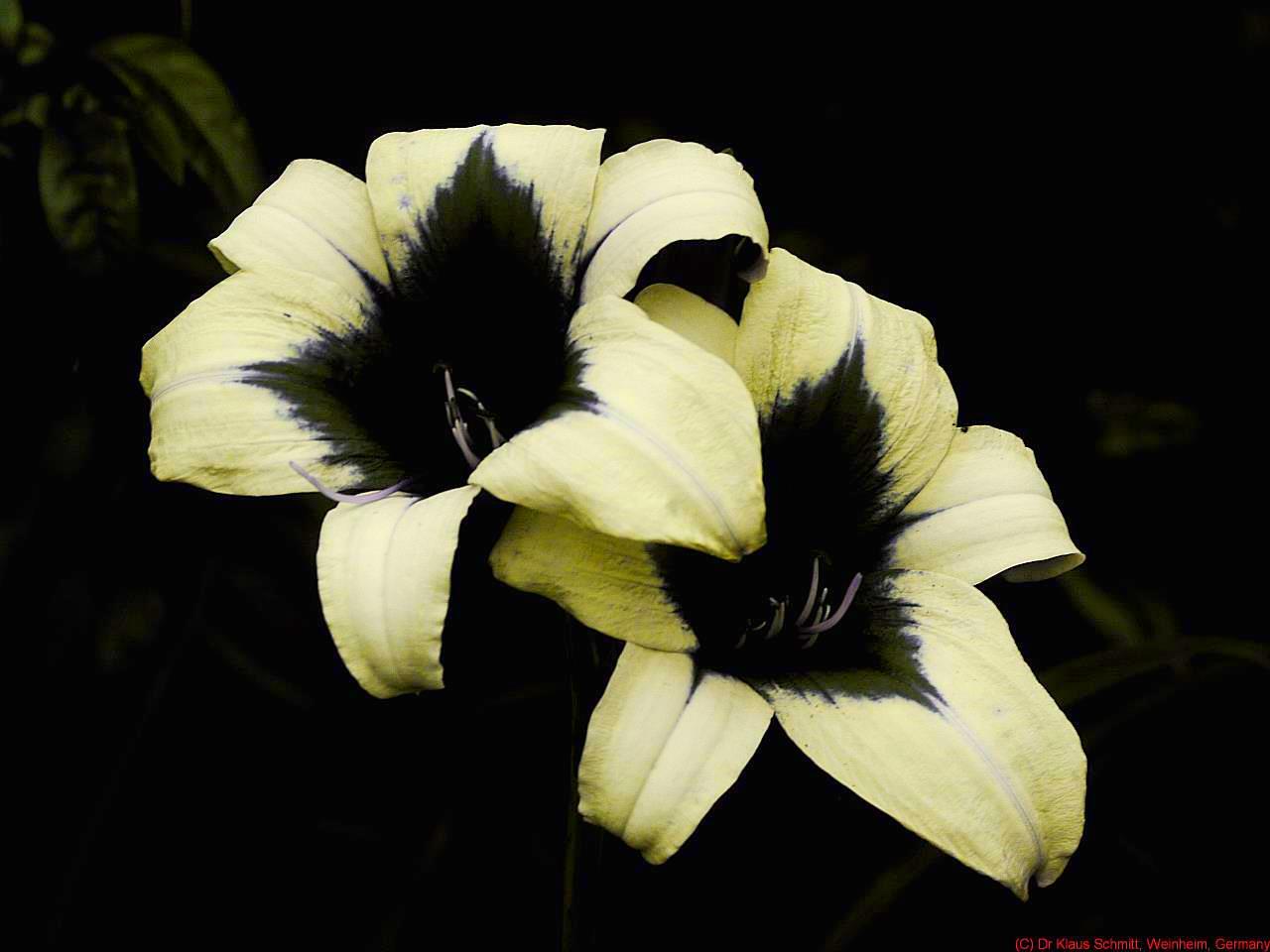
Today on my walk in the beautiful Hermanshof Park, Weinheim I discovered flowering Hemerocallis (Day Lillies), various varieties. So here comes one, a creamy whiteish yellow colored variant in its multispectral representation. I took some shots at Hermannshof, Weinheim, Germany in normal human vision VIS, in UV using the Baader-U filter, as well as in simulated bee vision using my new XBV2 and XBV6 filters respectively.

[click on image to see a larger one]

Visual shot:


Simulated bee vison using XBV2 filter:


Simulated bee vison using XBV6 filter:


UV using Baader-U filter:


Most Hemerocallis have a very prominent "dark throat" UV pattern, and also here that gets clearly visible.

As you may have noticed, I'm still working on my bee vision (BV) filters; BV6 is one with very intensive colors and much shorter exposure time, due to new filter glass combinations.

More about these special new filters here later in a seperate entry.


Stay tuned, more will follow on that fascinating subject...

More info on this very interesting field may be found on my site http://www.pbase.com/kds315/uv_photos
Tuesday, June 26, 2012

Rudbeckia hirta: human vision vs simulated bee vison; reflected UV ultraviolet photography III

I had discovered flowering Rudbeckias a few days ago and since I was working on a new filter, here as I have shown before again R. hirta in its multispectral representation. So I took some shots in normal human vision VIS, in UV using the Baader-U, Jupiter-U and the new Saturn-U (300-350nm) filter, as well as in simulated bee and butterfly vision using my XBV2, XBV3 and the new, stricter XBV5 and XBV6 filters respectively.

[click on image to see a larger one]

Visual shot:


Simulated butterfly vison using XBV3 filter:


Simulated butterfly vison using XBV2 filter:


Simulated bee vison using XBV5 filter:


Simulated bee vison using XBV6 filter:


UV using Baader-U filter:


UV using Jupiter-U filter:


UV using Saturn-U (300-350nm) filter:


IR (basically) as it was shot using only a ND filter:


As you may have noticed, I'm still working on my bee vision (BV) filters; BV5 is a very strict one that cuts all longer than short wave green, wheras BV6 now is one with very intensive colors and much shorter exposure time, due to new filter glass combinations.

More about these special new filters here later in a seperate entry.


Stay tuned, more will follow on that fascinating subject...

More info on this very interesting field may be found on my site http://www.pbase.com/kds315/uv_photos
Saturday, September 1, 2012

Rudbeckia hirta: human vision vs simulated bee vison; reflected UV ultraviolet photography V

Well today I modified my high power flash for even more UV output. So a few test shots using as target a R. hirta as I have shown before in its multispectral representation. I took some shots in normal human vision VIS, in UV using the Baader-U, my all proprietary filters Jupiter-U and Saturn-U (300-350nm) filter, as well as in simulated bee and butterfly vision using my XBV2, XBV3 and XBV6 filter respectively.

[click on image to see a larger one]

Visual shot - human vision: Simulated butterfly vision using XBV3 filter: Simulated butterfly vision using XBV2 filter: Simulated bee vision using XBV6 filter: UV using Baader-U filter: UV using Jupiter-U filter: UV using Saturn-U (300-350nm) filter: IR (basically) as it was shot using only a ND filter: About all Rudbeckias and also this R. hirta have a very prominent, otherwise invisible "bullseye pattern" which gets nicely visible in UV (around 360nm) and bee vision (BV). Since leafs (petals were leafs one) reflect from 700-750nm onwards, that pattern is also invisible in IR.

Stay tuned, more will follow on that fascinating subject...

More info on this very interesting field may be found on my site http://www.pbase.com/kds315/uv_photos