Showing posts sorted by date for query XBV6. Sort by relevance Show all posts

Wednesday, December 14, 2016

Cloisonné ceramics in reflected ultraviolet and simulated bee vision photography

Today about ceramics, Cloisonné especially and reflected UV photography. I have three different objects here as targets, from Thailand and India. For that test I'm using my the UV-Nikkor 105mm, as well as my "work horse" UV filter, the Baader-U filter and my bee vision simulating XBV6 filter. Light source was a modified Xenon flash. All shots were done at f11.

[click on image to see a larger one]

Diptych Visual light (top) and reflected UV light image (bottom):
 

Diptych Visual light (top) and simulated bee vision image (bottom):
 

Interesting to see how in reflected UV light and especially in simulated bee vision imaging, the center piece shows otherwise invisible patterns.


Stay tuned, more will follow on that fascinating subject...

More info on this very interesting field may be found on my site http://www.pbase.com/kds315/uv_photos

Thursday, June 30, 2016

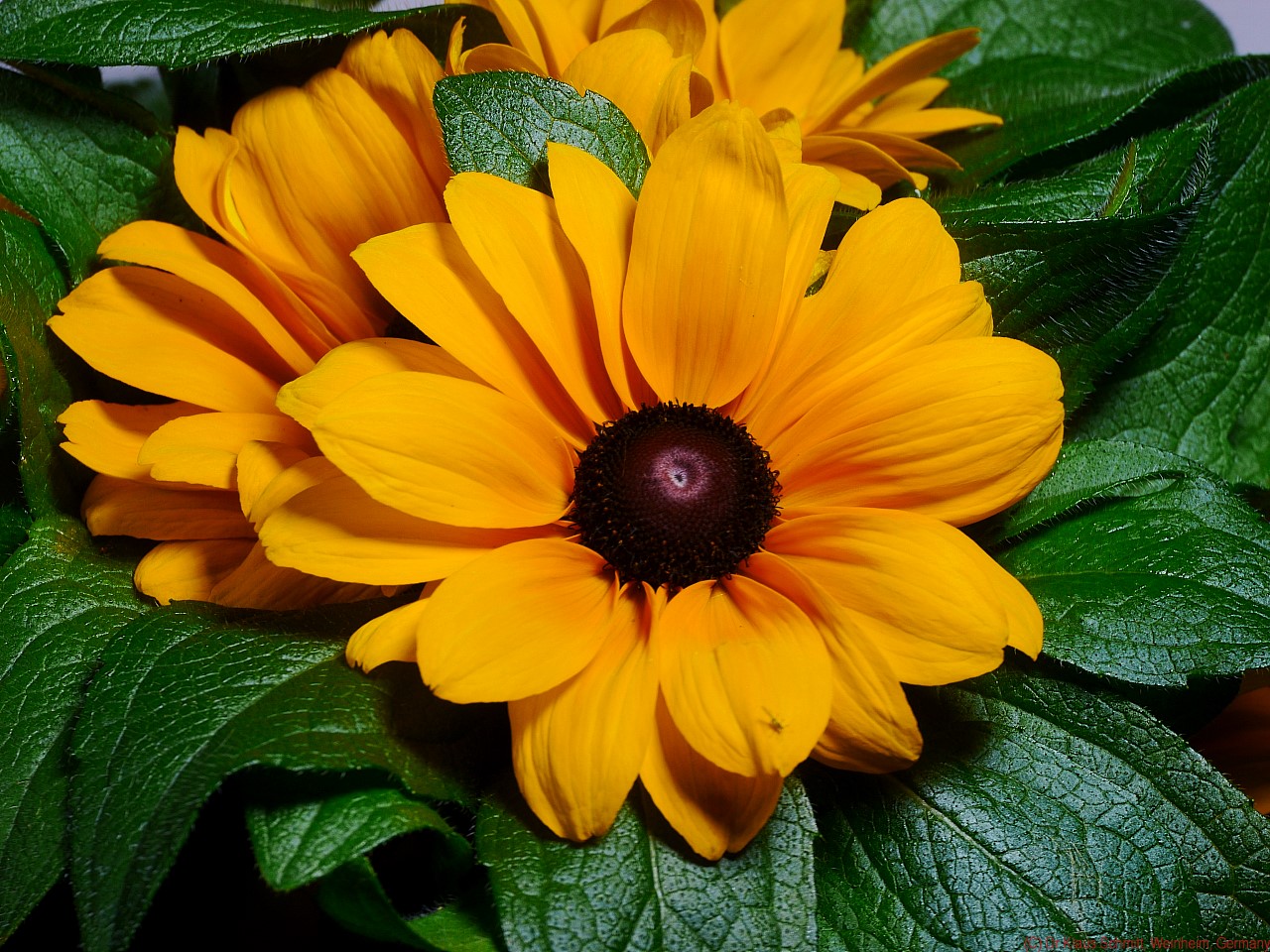
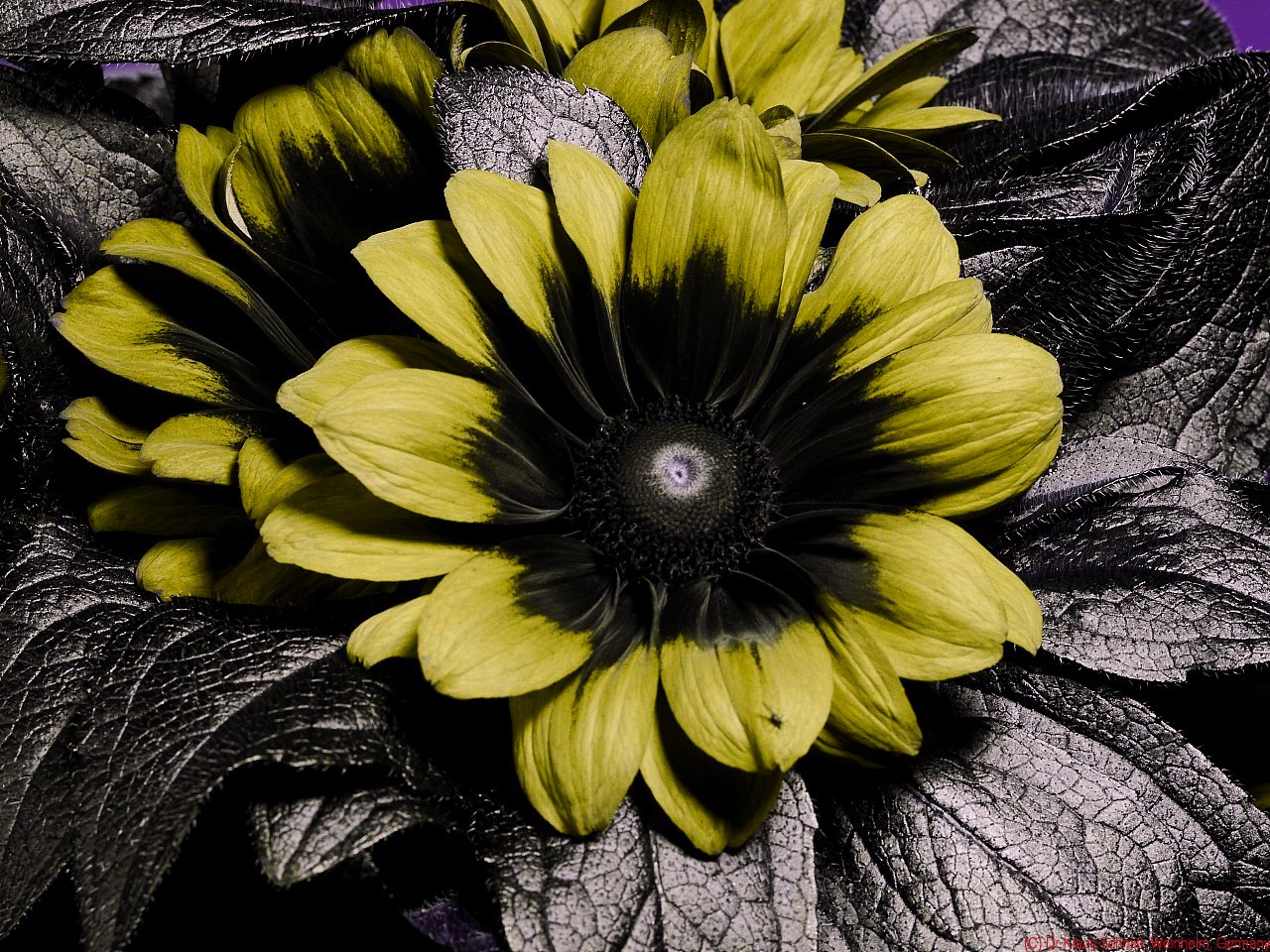
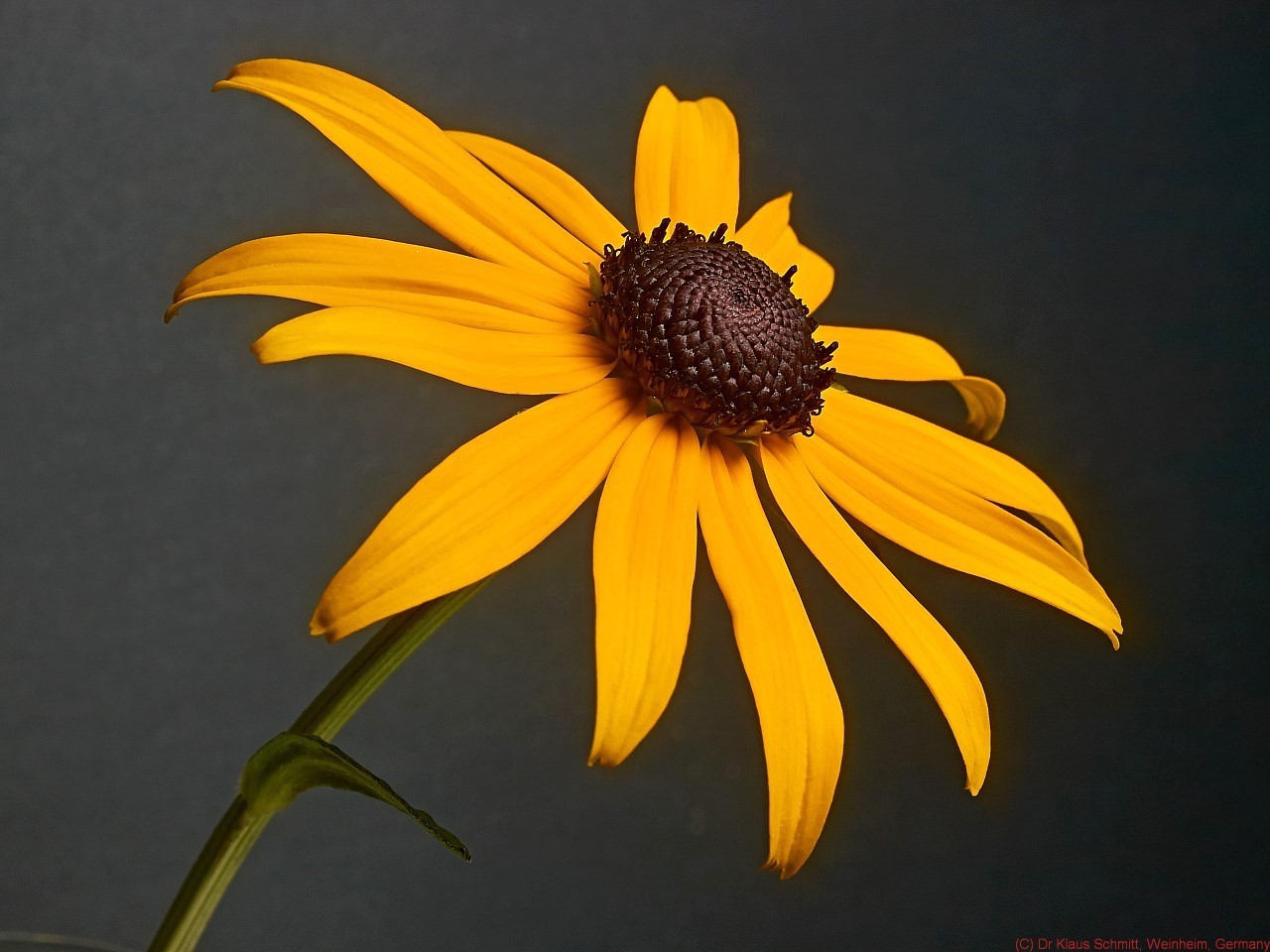
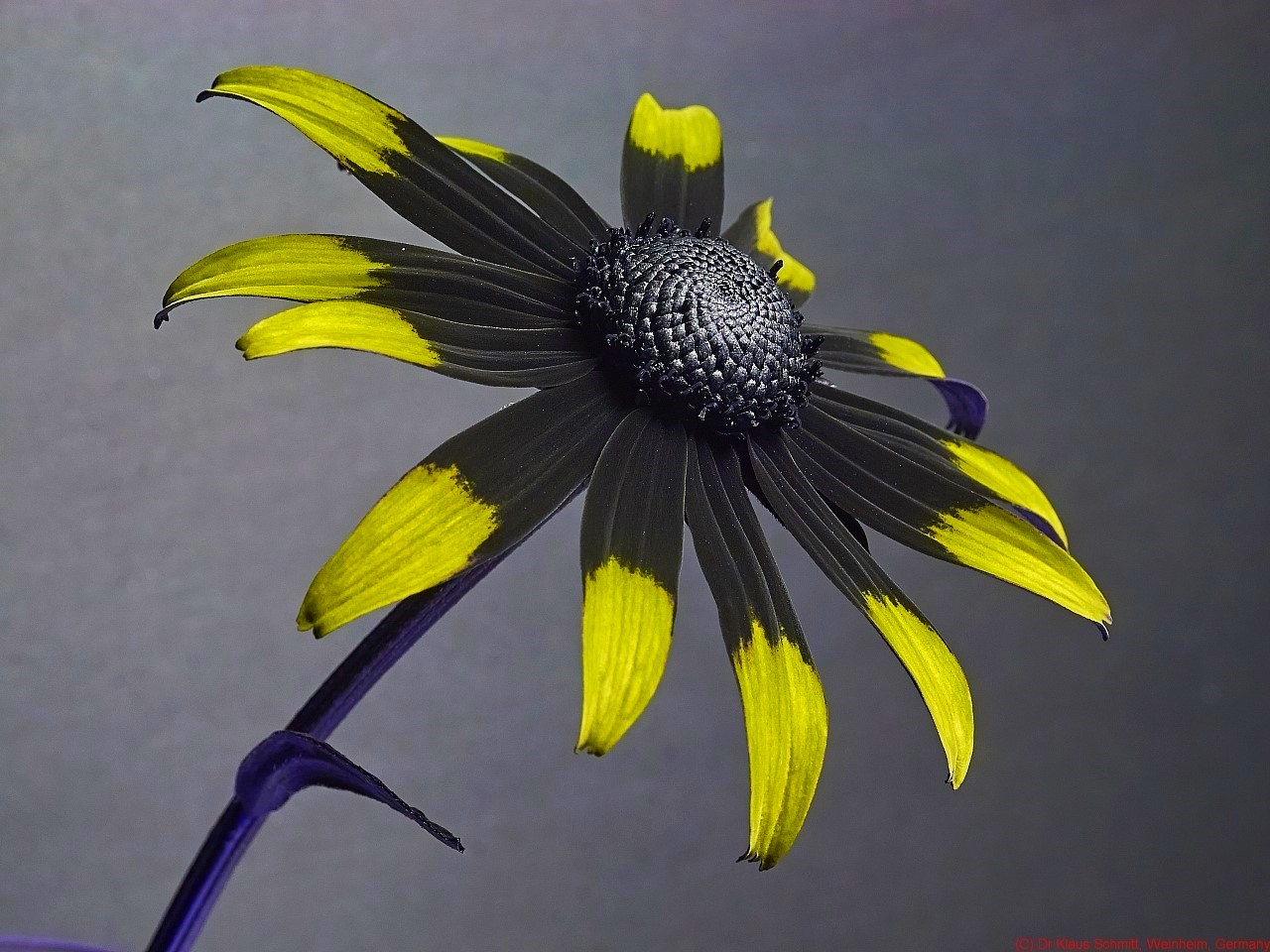
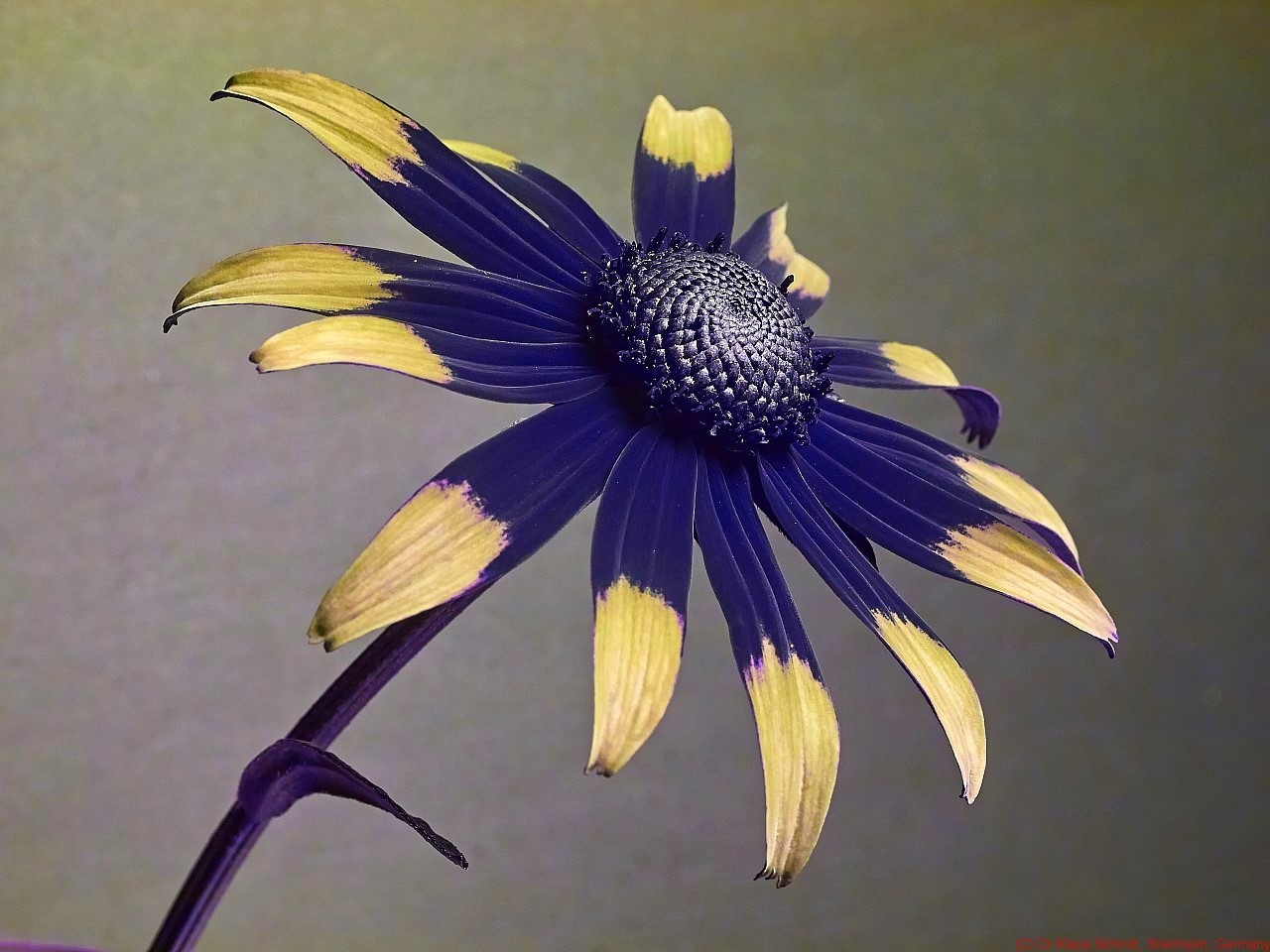
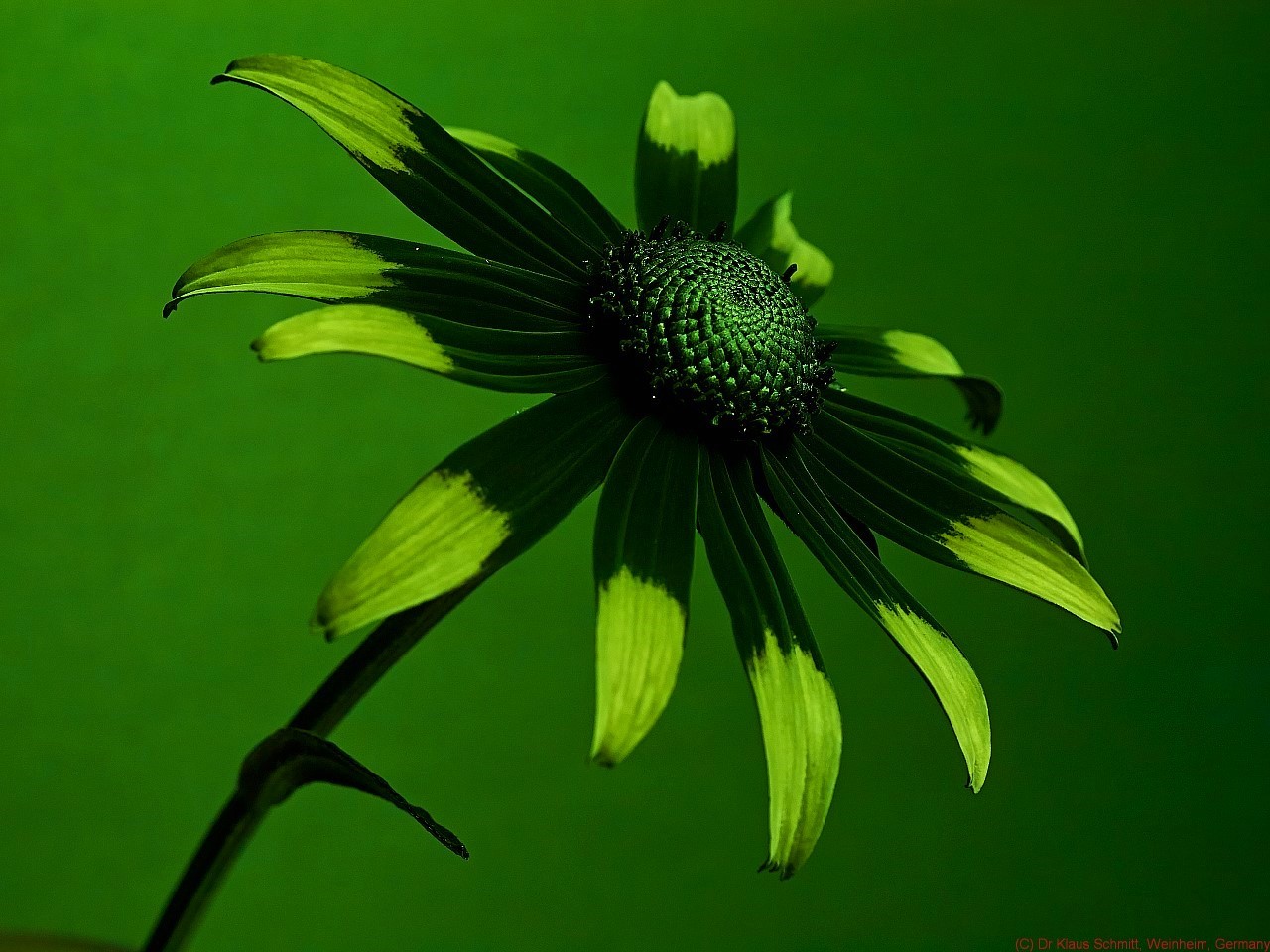
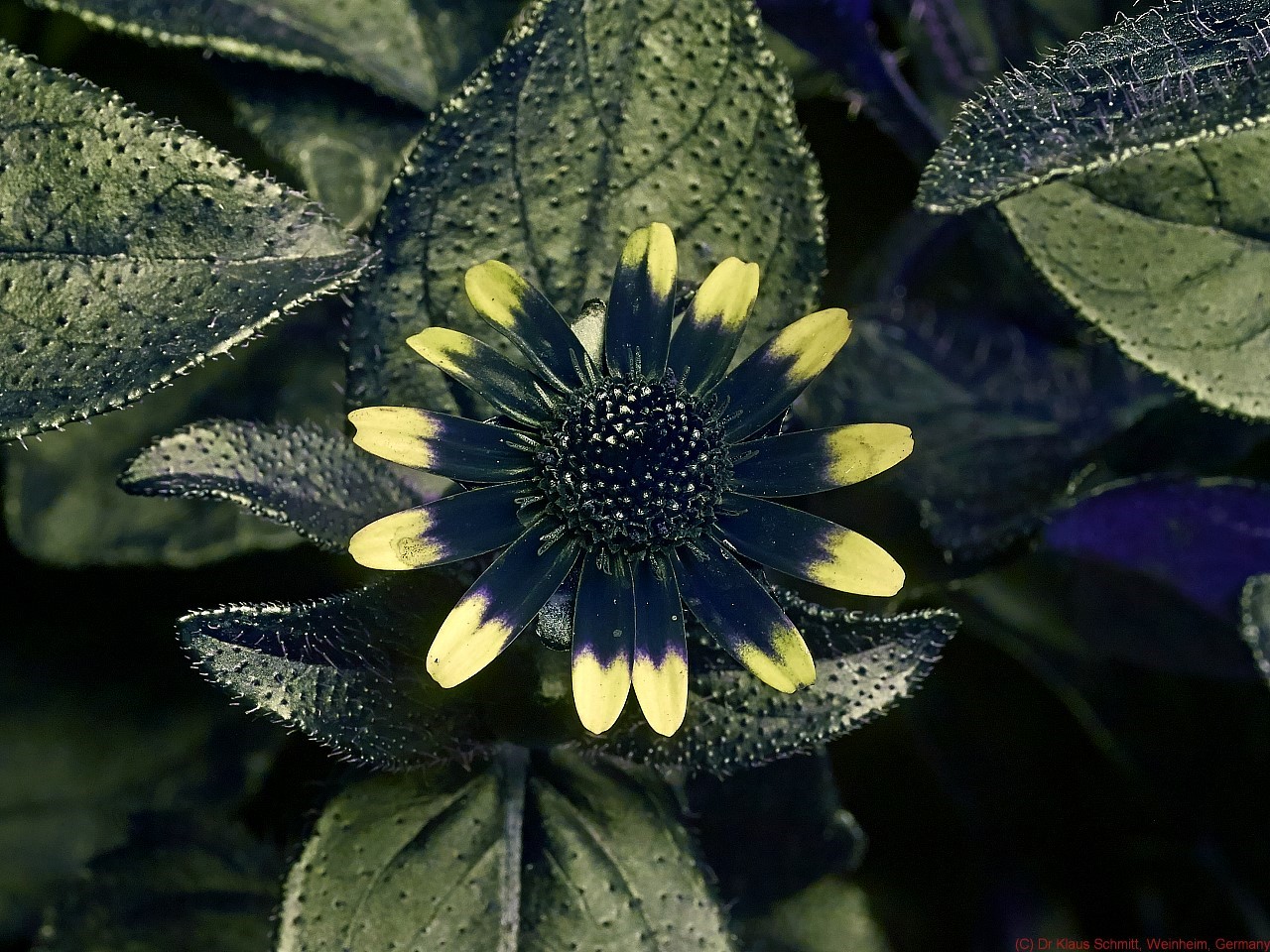
Black-eyed Susan - Rudbeckia hirta in reflected ultraviolet photography and simulated bee vision II

Today shots of a flower originating from the USA Prairie, a Black-eyed Susan - Rudbeckia hirta in reflected ultraviolet photography using my "work horse" UV filter, the Baader-U filter as well as in simulated bee vision using my XBV6 filter. Lens was my UV-Nikkor 105mm quartz flourite lens. Light source was a modified Xenon flash. All shots were done at f8.

[click on image to see a larger one]

Visible light image  

UV image using Baader-U filter (approx. 320-395nm, effective peak approx. 375nm):  

Simulated bee vision image using experimental XBV filter:  

Triptych of the above images:  


This flower shows a very prominent UV bullseye pattern, as its petals are very UV bright (around 365nm) to about the middle and its center is very UV dark, and all this gets nicely visible also in simulated bee vision.

I have previously written about that flower HERE.

Stay tuned, more will follow on that fascinating subject...

Friday, April 22, 2016

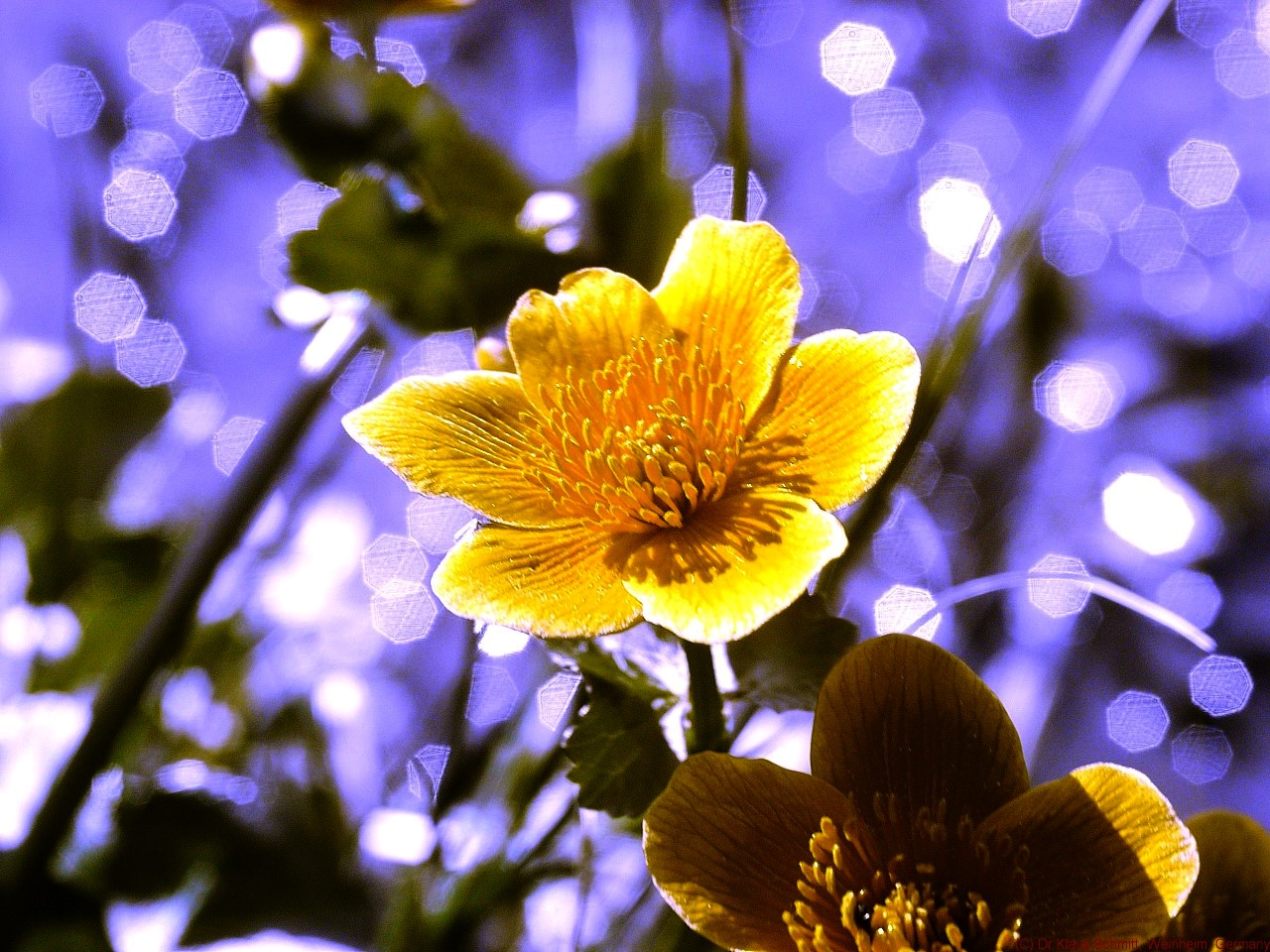
Marsh marigold - Caltha palustris flower in reflected UV ultraviolet photography and simulated bee and butterfly vision IV

Today shots of a spring flower I have written about before, Marsh marigold (Caltha palustris) in reflected ultraviolet photography using my "work horse" UV filter, the Baader-U filter as well as my XBV filters for simulating bee and butterfly vision. Lens was a UV-Nikkor 105mm quartz fluorite lens. Light source was sunlight. All shots were done at f8.

[click on image to see a larger one]


Visible light image:
 

UV image using Baader-U filter:
 

Simulated butterfly vision (UV - VIS) using XBV3 filter:
 

Simulated bee vision (UV - VIS) using XBV6 filter:
 

Quadriptych human vision, UV, sim. butterfly vision, sim. bee vision (left to right, top to bottom):
 

This Caltha flower has quite a prominent UV pattern, its center is UV dark, as well as some UV dark veins on its petals. The bee vision image additionally reveals some lit up anthers and all this gets quite nicely visible.


Stay tuned, more will follow on that fascinating subject...

More info on this very interesting field may be found on my site http://www.pbase.com/kds315/uv_photos

Friday, March 4, 2016

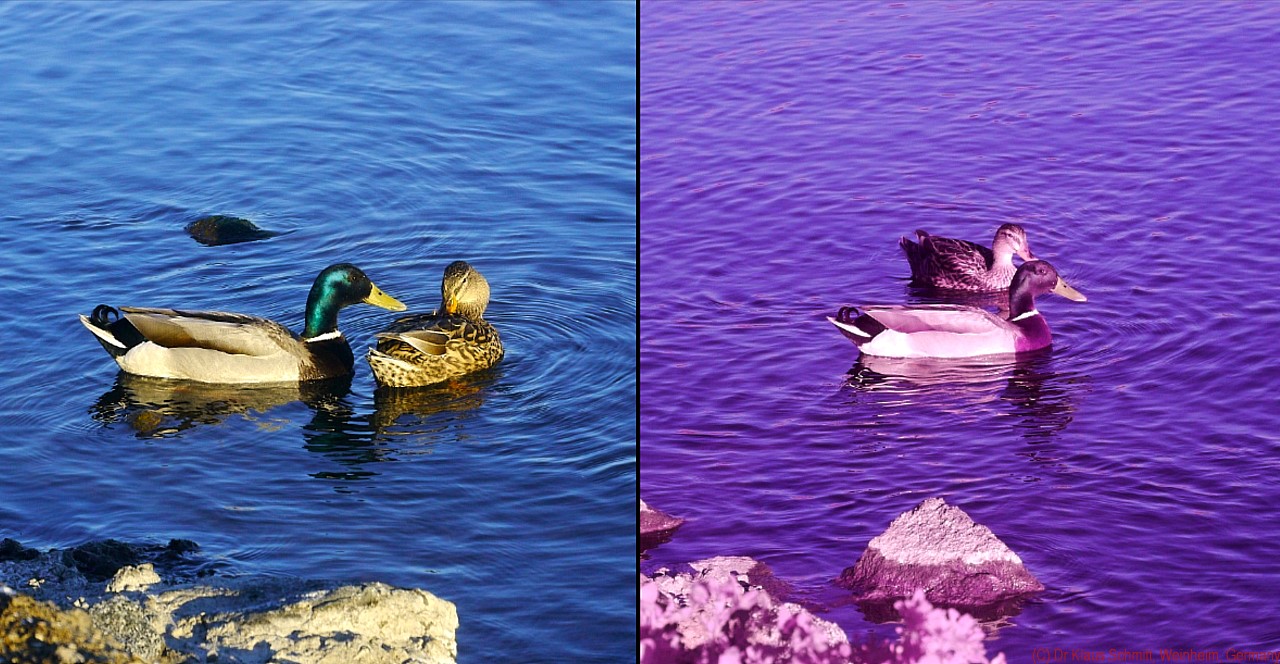
Ducks in visible, infrared and simulated bee vision photography

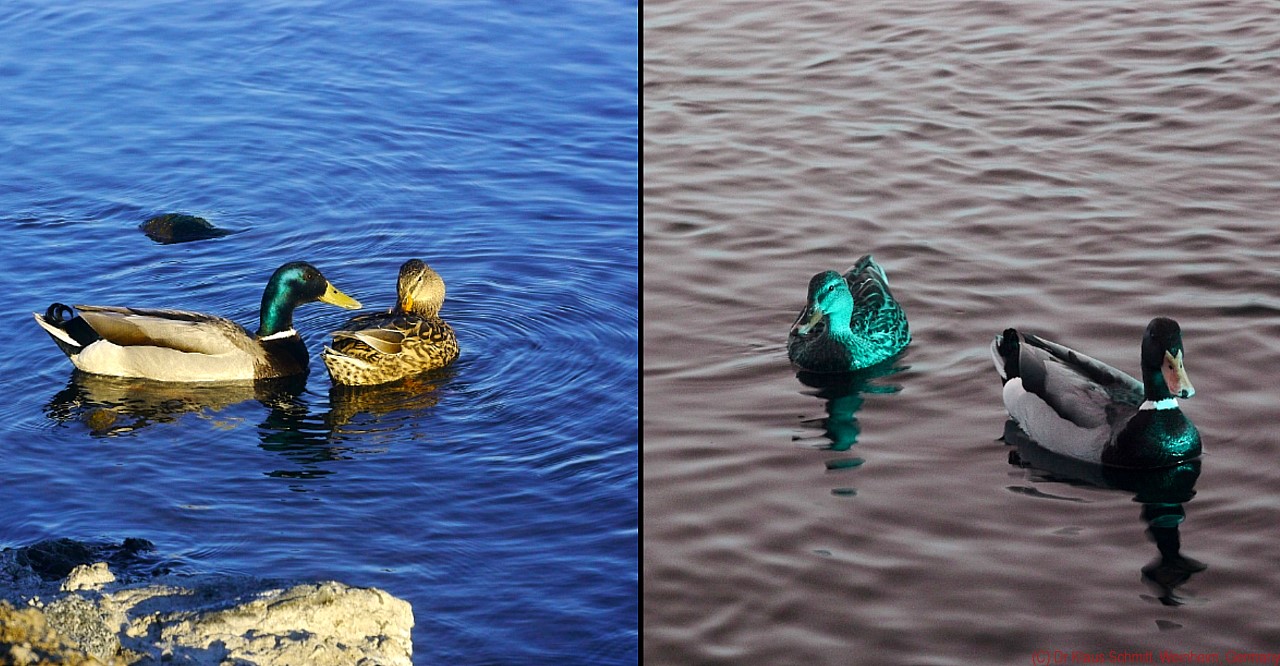
Today about some duck shots I took on my trip to California, shot at Shoreline Park in Mountain Vew, CA in visible light, infrared as well as in simulated bee vision using my XBV6 filter. Lens was my CERCO 94mm quartz fluorite lens. Light source was sun. All shots were done at f8.

[click on image to see a larger one]

Diptych: Human vision and infrared (left to right):


Diptych: Human vision and simulated bee vision (left to right):


These attractive birds shows some prominent patterns, also visible to bees, and all this gets nicely visible.

Stay tuned, more will follow on that fascinating subject...

Bermuda Buttercup - Oxalis pes-caprae in reflected ultraviolet (UV) and photography and simulated bee vision

Today about a very common weed flower Bermuda Buttercup - Oxalis pes-caprae I shot shot at Mountain Vew, CA in reflected ultraviolet photography using my "work horse" UV filter, the Baader-U filter as well as in simulated bee vision using my XBV6 filter. Lens was my CERCO 94mm quartz fluorite lens. Light source was sun. All shots were done at f8.

[click on image to see a larger one]

Bermuda Buttercup - Oxalis pes-caprae in Human vision, reflected UV, simulated bee vision (left to right):


This attractive yellow weed flower shows quite a tricky UV pattern, as shown in the following enhanced reflected UV image, a UV bright ring set on a negative space around the dark in UV petals, hence massively increasing contrast. Plus you also see the pyramidal cells in this enhanced resolution image (UV gives approx. 1.6x higher resolution) , which allows pollinators a much better grip while being at the flower.
 

All this invisible to us humans, but visible to bees and butterflies, and all this gets nicely visible here.

Stay tuned, more will follow on that fascinating subject...

Thursday, March 3, 2016

Californian flowers in visible, reflected UV and simulated bee vision photography

Today about some flower shots I took on my trip to California, shot at Shoreline Park in Mountain Vew, CA in reflected ultraviolet photography using my "work horse" UV filter, the Baader-U filter as well as in simulated bee vision using my XBV6 filter. Lens was my CERCO 94mm quartz fluorite lens. Light source was sun. All shots were done at f8.

[click on image to see a larger one]

Triptych: Hibiscus sp in Human vision, reflected UV, simulated bee vision (left to right):


Triptych: Mexican bush sage (Salvia leucantha) in Human vision, reflected UV, simulated bee vision (left to right):


Triptych: Brassica sp in Human vision, reflected UV, simulated bee vision (left to right):


These attractive flowers shows their prominent UV patterns, invisible to us humans, but very visible to bees and butterflies and also hummingbirds which were feeding on them, and all this gets nicely visible.

Stay tuned, more will follow on that fascinating subject...

Monday, May 11, 2015

Shikoko Cobra Lilly - Arisaema sikokianum in reflected ultraviolet photography and simulated bee vision II

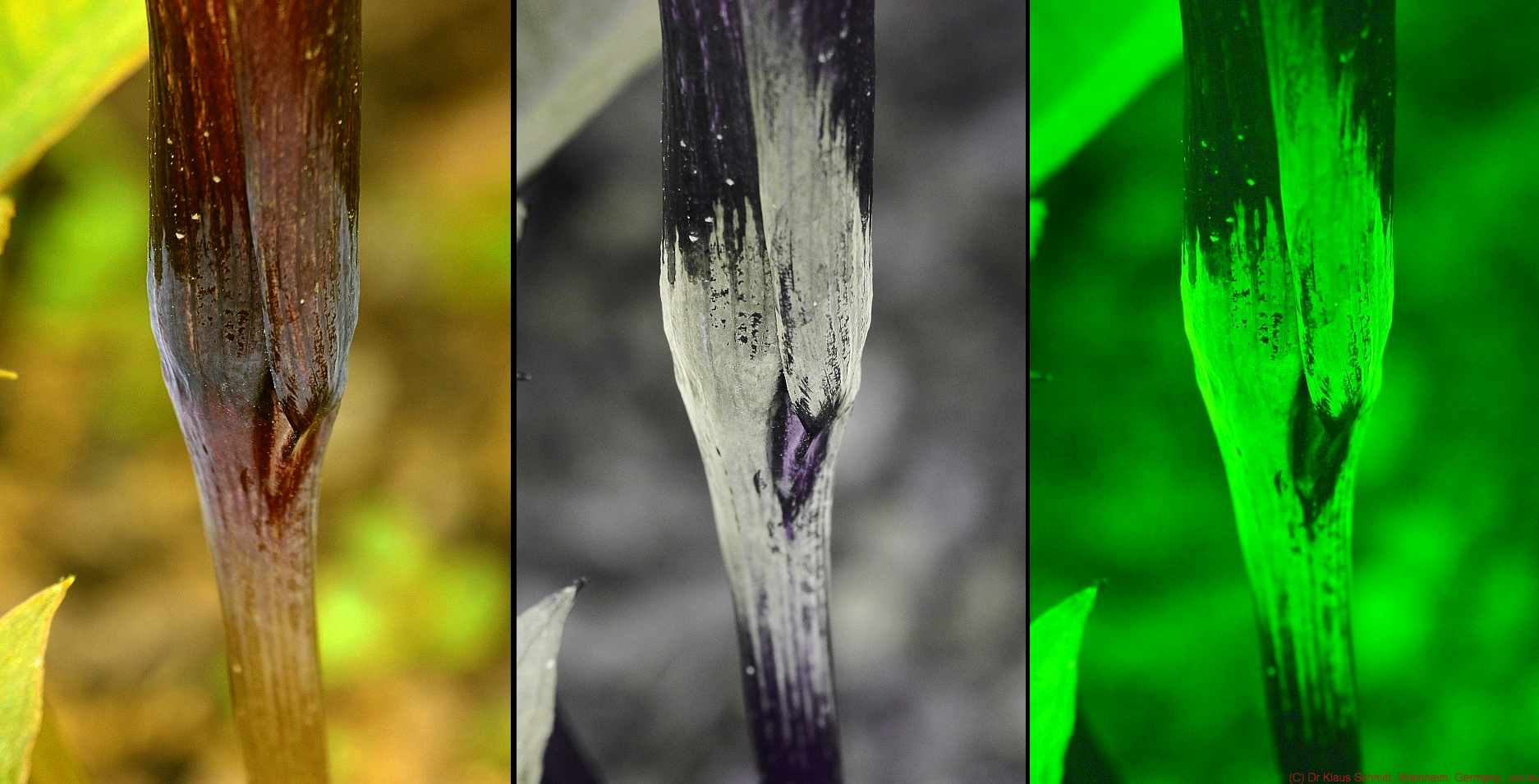
Today more shots of that rare early spring flower, common in Japan at Shikoko island, Shikoko Cobra Lilly - Arisaema sikokianum. in reflected ultraviolet photography and simulated bee vision. All shots were done at about f5.6 in reflected ultraviolet photography using my "work horse" UV filter, the Baader-U filter, as well as my XBV6 filter for simulated bee vision. Further for deeper UV, a 340nm short pass filter was used, stacked to the Baader-U filter. Lens was a CERCO 94mm quartz fluorite lens. Light source was sunlight.

I had mentioned before that I noticed some UV lighting around 340nm which caught my attention and here it is about that.

[click on image to see a larger one]

Triptych of human vision, UV and simulated bee vision (left to right):
 
Triptych of human vision, UV and deep UV below 340nm (left to right):
Triptych of human vision, UV and simulated bee vision (left to right):
 
Triptych of human vision, UV and deep UV below 340nm (left to right):

This Cobra Lilly flower has are extremely UV bright cup around 370nm, with parts drifting towards 380nm. Further to that, deeper UV photography below 340nm reveals, that their cup, but also an area at the bottom of the spathe reflects UV strongly. All that gets nicely visible.

I have previously written about that flower HERE
 
Stay tuned, more will follow on that fascinating subject...

More info on this very interesting field may be found on my site http://www.pbase.com/kds315/uv_photos

Saturday, May 9, 2015

Common Thyme - Thymus vulgaris in reflected ultraviolet photography and simulated bee vision

Today shots of a well known early spring flower, Common Thyme - Thymus vulgaris. in reflected ultraviolet photography and simulated bee vision. All shots were done at about f5.6 in reflected ultraviolet photography using my "work horse" UV filter, the Baader-U filter, as well as my XBV6 filter for simulated bee vision. Lens was a CERCO 94mm quartz fluorite lens. Light source was sunlight.

[click on image to see a larger one]

Triptych of human vision, UV and simulated bee vision (left to right):
 

Common Thyme has a less prominent UV pattern, its petals however are quite UV bright around 380nm, and all this gets nicely visible, also in simulated bee vision.

Stay tuned, more will follow on that fascinating subject...

More info on this very interesting field may be found on my site http://www.pbase.com/kds315/uv_photos

Himalayan mayapple - Podophyllum hexandrum in reflected ultraviolet photography and simulated bee vision

Today shots of an early spring flower, Himalayan mayapple - Podophyllum hexandrum. in reflected ultraviolet photography and simulated bee vision. All shots were done at about f5.6 in reflected ultraviolet photography using my "work horse" UV filter, the Baader-U filter, as well as my XBV6 filter for simulated bee vision. Lens was a CERCO 94mm quartz fluorite lens. Light source was sunlight.

[click on image to see a larger one]

Triptych of human vision, UV and simulated bee vision (left to right):
 

This Himalayan mayapple flower has a less prominent UV pattern, its petals however are quite UV bright around 380nm, and all this gets nicely visible, also in simulated bee vision.

Stay tuned, more will follow on that fascinating subject...

More info on this very interesting field may be found on my site http://www.pbase.com/kds315/uv_photos

Shikoko Cobra Lilly - Arisaema sikokianum in reflected ultraviolet photography and simulated bee vision

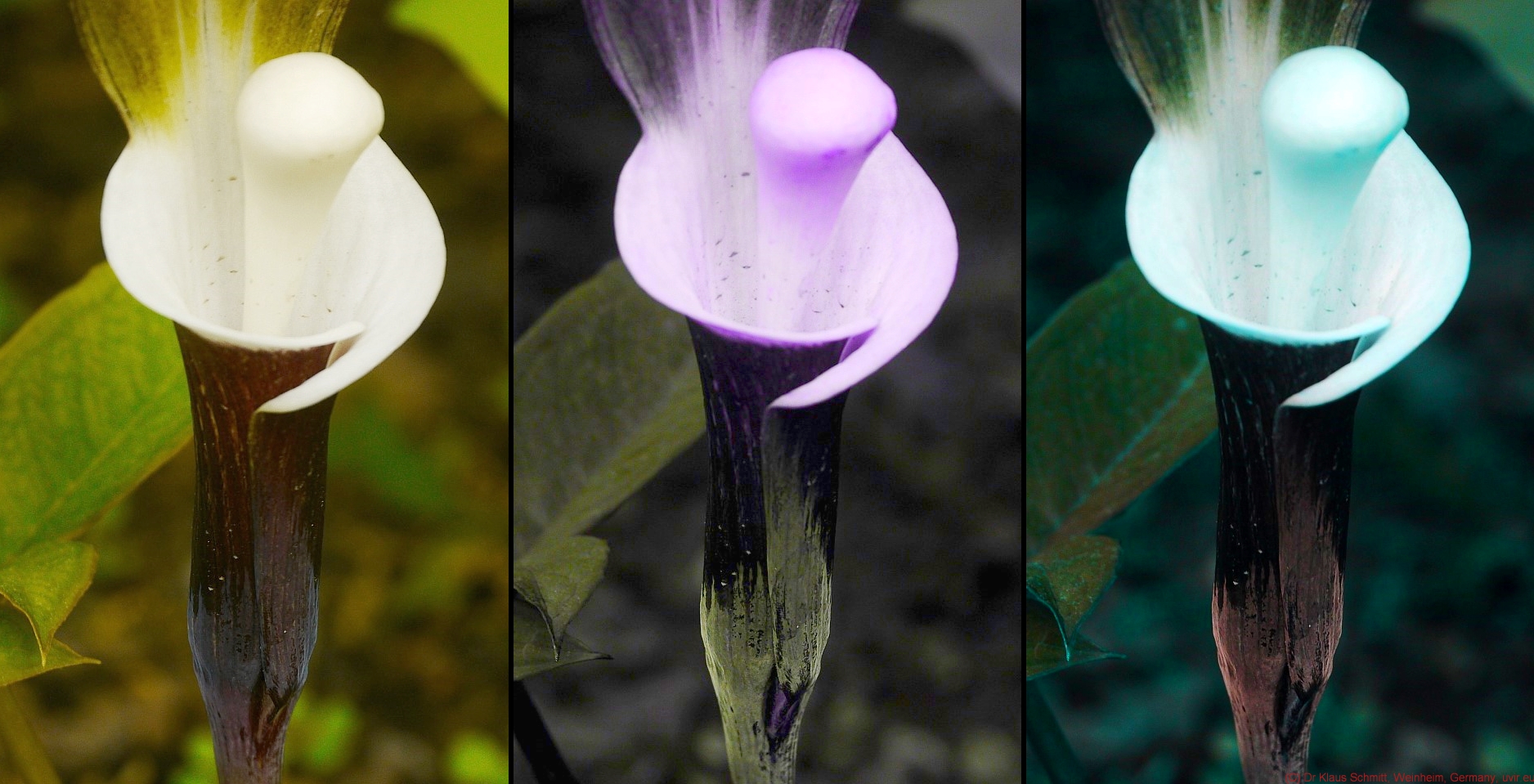
Today shots of a rare early spring flower, common in Japan at Shikoko island, Shikoko Cobra Lilly - Arisaema sikokianum. in reflected ultraviolet photography and simulated bee vision. All shots were done at about f5.6 in reflected ultraviolet photography using my "work horse" UV filter, the Baader-U filter, as well as my XBV6 filter for simulated bee vision. Lens was a CERCO 94mm quartz fluorite lens. Light source was sunlight.

[click on image to see a larger one]

Triptych of human vision, UV and simulated bee vision (left to right):


This Cobra Lilly flower has are extremely UV bright cup around 370nm, with parts drifting towards 380nm and its spadix has UV bright veins leading towards the cup. And all this gets nicely visible, also in simulated bee vision. There is however something lighting up around 340nm that caught my attention and I will investigate on that.

There is more about that deep UV reflection of this flower HERE
 
Stay tuned, more will follow on that fascinating subject...

More info on this very interesting field may be found on my site http://www.pbase.com/kds315/uv_photos

Flax - Linum angustifolium in reflected ultraviolet photography and simulated bee vision

Today shots of an early spring flower, Flax - Linum angustifolium. in reflected ultraviolet photography and simulated bee vision. All shots were done at about f5.6 in reflected ultraviolet photography using my "work horse" UV filter, the Baader-U filter, as well as my XBV6 filter for simulated bee vision. Lens was a CERCO 94mm quartz fluorite lens. Light source was sunlight.

[click on image to see a larger one]

Triptych of human vision, UV and simulated bee vision (left to right):
 

This Flax flower has a less prominent UV pattern, its petals however are quite UV bright around 380nm, its center is dark in UV forming the typical bullseye pattern and there are also UV dark veins visible leading to the UV dark center, where the nectar is and all this gets nicely visible, also in simulated bee vision.

Stay tuned, more will follow on that fascinating subject...

More info on this very interesting field may be found on my site http://www.pbase.com/kds315/uv_photos

Star-of-Bethlehem - Ornithogalum umbellatum in reflected ultraviolet photography and simulated bee vision

Today shots of an early spring flower, Star-of-Bethlehem - Ornithogalum umbellatum. in reflected ultraviolet photography and simulated bee vision. All shots were done at about f5.6 in reflected ultraviolet photography using my "work horse" UV filter, the Baader-U filter, as well as my XBV6 filter for simulated bee vision. Lens was a CERCO 94mm quartz fluorite lens. Light source was sunlight.

[click on image to see a larger one]

Triptych of human vision, UV and simulated bee vision (left to right):
 

This Star-of-Bethlehem flower has a less prominent UV pattern, its petals however are very UV bright around 370nm, its center is a bit darker in UV and shows a shifted reflection to about 380nm and all this gets nicely visible, also in simulated bee vision.

Stay tuned, more will follow on that fascinating subject...

More info on this very interesting field may be found on my site http://www.pbase.com/kds315/uv_photos

Field Buttercup - Ranunculus acris in reflected ultraviolet photography and simulated bee vision

Today shots of a spring flower, a Field Buttercup - Ranunculus acris in reflected ultraviolet photography using my "work horse" UV filter, the Baader-U filter as well as my XBV6 filter for simulating bee vision. Lens was a CERCO 94mm quartz fluorite lens. Light source was sunlight. All shots were done at about f5.6.

This well known plant has a very unique feature, it has very reflective petals which are able to light up your skin if held beneath. I make this visible here in human vision, ultraviolet and simulated bee vision.

[click on image to see a larger one]

Triptych of human vision, UV and simulated bee vision showing strong 45 degree reflection. Undersides are very UV dark, just petal inside reflect strongly UV (left to right):


Triptych of human vision, UV and simulated bee vision (left to right) showing how much this flower stands out for its pollinators against the background :
 

This Ranunculus flower indeed shows a quite unique feature, very strong specular highlights and directional reflection under a 45 degree angle. It also has a very specific UV bulls eye pattern, its petals are bright in UV around 365nm, but its center is very UV dark and all this gets nicely visible, also in simulated bee vision.

There is a very interesting scientific paper about that HERE
 
Stay tuned, more will follow on that fascinating subject...

More info on this very interesting field may be found on my site http://www.pbase.com/kds315/uv_photos

Thursday, April 23, 2015

Field Forget-me-not - Myosotis arvensis in reflected ultraviolet photography and simulated bee vision II

Today shots of a spring flower, a Field Forget-me-not - Myosotis arvensis in reflected ultraviolet photography using my "work horse" UV filter, the Baader-U filter as well as my XBV6 filters for simulating bee vision. Lens was a CERCO 94mm quartz fluorite lens. Light source was sunlight. All shots were done at about f5.6.

[click on image to see a larger one]

Triptych of human vision, UV and simulated bee vision (left to right):


This Myosotis flower has a quite specific UV pattern, its petals are bright in UV around 385nm, but its center is quite darker. Also very interesting to notice is, that this Myosotis signals the development state of its individual flowers (or even if it has been pollinated?) by different UV "colors" (meaning the reflectance peak changes from long wave UV to shorter wave UV) and all this gets nicely visible, also in simulated bee vision.

I have written about that flower previously HERE
 
Stay tuned, more will follow on that fascinating subject...

More info on this very interesting field may be found on my site http://www.pbase.com/kds315/uv_photos

Dandelion and Daisy - Taraxacum officinale and Bellis perennis flower in reflected UV ultraviolet photography and simulated bee vision

Today shots of two early spring flowers, Bellis perennis - Common Daisy. and Dandelion - Taraxacum officinale in reflected ultraviolet photography. Lens was a CERCO 94mm quartz fluorite lens. Light source was sunlight. All shots were done at about f8 in reflected ultraviolet photography using my "work horse" UV filter, the Baader-U filter, as well as my XBV6 filter for simulated bee vision. Lens was a CERCO 94mm quartz fluorite lens. Light source was sunlight.

[click on image to see a larger one]

Triptych of human vision, UV and simulated bee vision (left to right):
 

This Dandelion flower has quite a prominent UV pattern, its petals are UV bright around 365nm, its center is UV dark, especially the anthers. Common Daisy, however has a bulls-eye UV pattern, its center is UV dark, and the petals are UV reflective around 380nm and both gets quite nicely visible side-a-side, also in simulated bee vision. Wouldn't it be interesting to find out, which flower is actually preferred by its pollinators, based on the very different reflection patterns in UV and BV?

I have written about the Dandelion flower previously HERE and about the Daisy flower HERE

Stay tuned, more will follow on that fascinating subject...

More info on this very interesting field may be found on my site http://www.pbase.com/kds315/uv_photos

Wednesday, April 22, 2015

Dandelion - Taraxacum officinale flower in reflected UV ultraviolet photography and simulated bee vision III

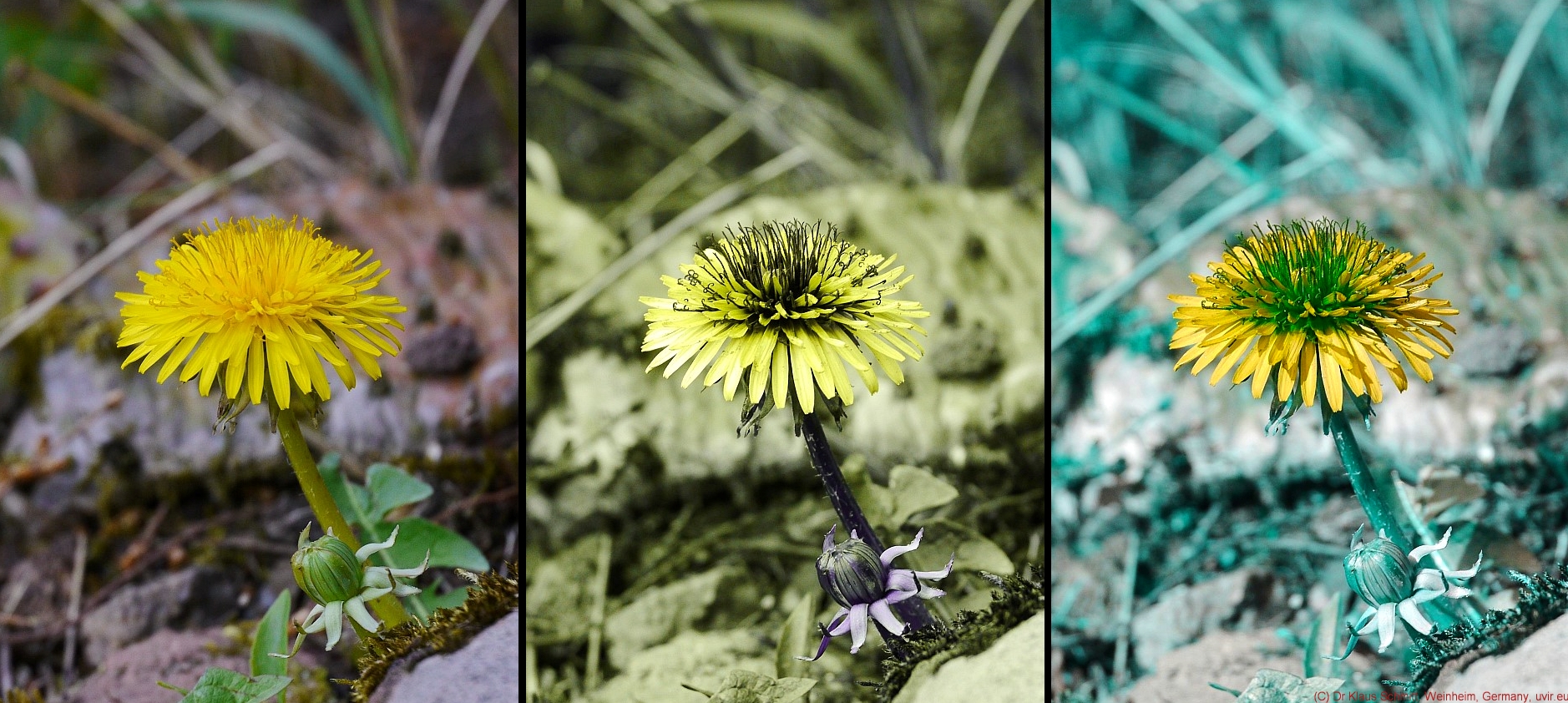
Today shots of an early spring flower, Dandelion - Taraxacum officinale in reflected ultraviolet photography. Lens was a CERCO 94mm quartz fluorite lens. Light source was sunlight. All shots were done in reflected ultraviolet photography using my "work horse" UV filter, the Baader-U filter, as well as my XBV6 filter for simulated bee vision. Lens was a CERCO 94mm quartz fluorite lens. Light source was sunlight. All shots were done at about f8.

[click on image to see a larger one]

Triptych of human vision, UV and simulated bee vision (left to right):
 

This Dandelion flower has quite a prominent UV pattern, its petals are UV bright around 365nm, its center is UV dark, especially the anthers, and this gets quite nicely visible, also in simulated bee vision.

I have written about this flower previously HERE

Stay tuned, more will follow on that fascinating subject...

More info on this very interesting field may be found on my site http://www.pbase.com/kds315/uv_photos

Cretian Rock Tulip - Tulipa saxatilis with crab spider in reflected ultraviolet photography and simulated bee vision

Today shots of a Cretian Rock Tulip - Tulipa saxatilis with a crab spider sitting in it, just having its lunch, in reflected ultraviolet photography, using my "work horse" UV filter, the Baader-U filter, as well as my XBV6 filter for simulated bee vision. Lens was a CERCO 94mm quartz fluorite lens. Light source was sunlight. All shots were done at about f5.6.

[click on image to see a larger one]

Triptych of human vision, UV and simulated bee vision (left to right):
 

This tulip has a rather subtle UV pattern, tricky with inside UV reflective petals, which reflect UV rather well around 380nm using a very shiny petal surface and quite classic, an UV dark center creating a bullseye pattern. Surpisingly the spider also appears quite well in UV and has UV bright spots on it - maybe to attract its prey? Only nature knows...

I have written about this Tulip previously HERE and about the crab spider HERE

Stay tuned, more will follow on that fascinating subject...

More info on this very interesting field may be found on my site http://www.pbase.com/kds315/uv_photos

Tuesday, July 22, 2014

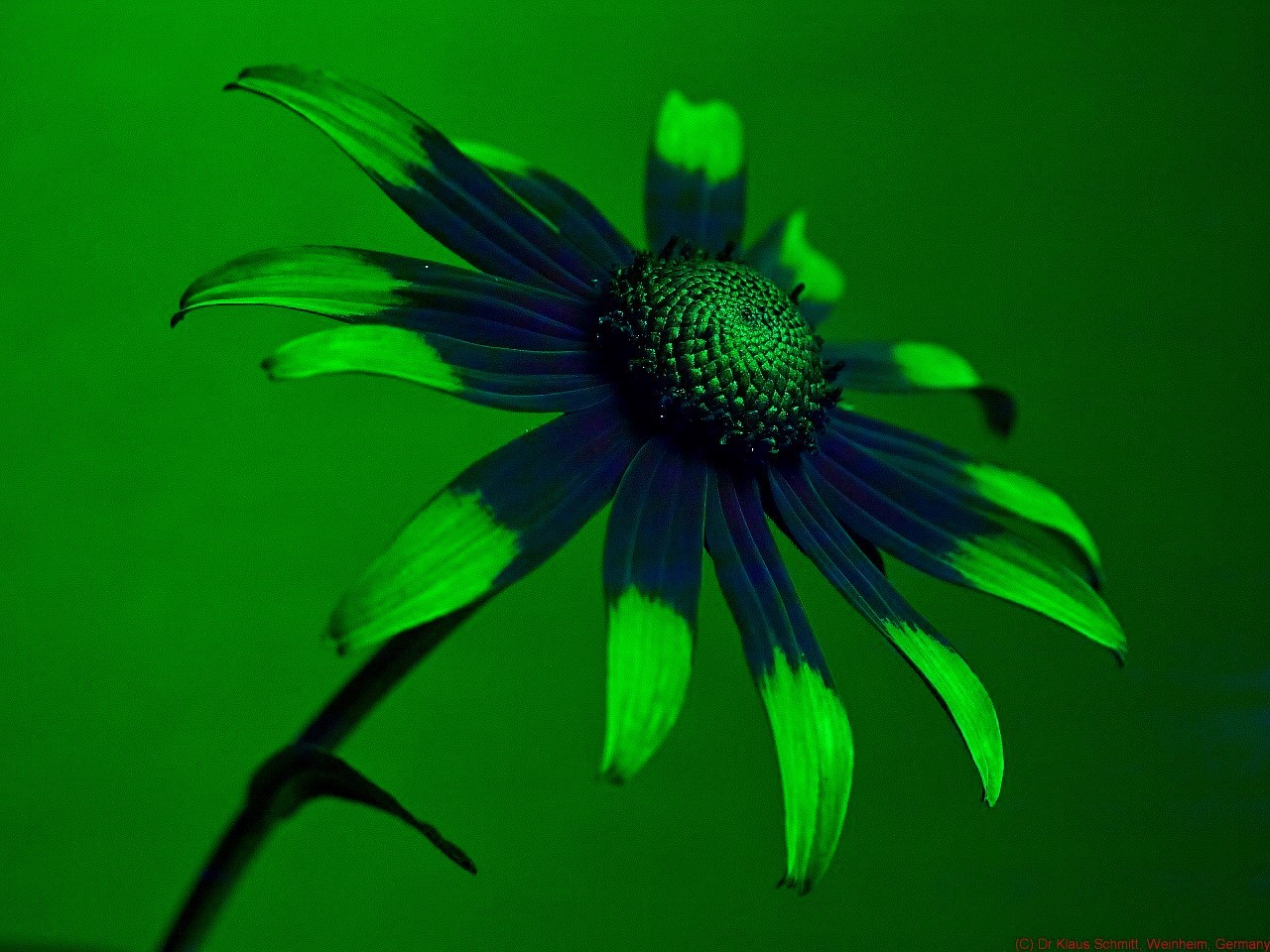
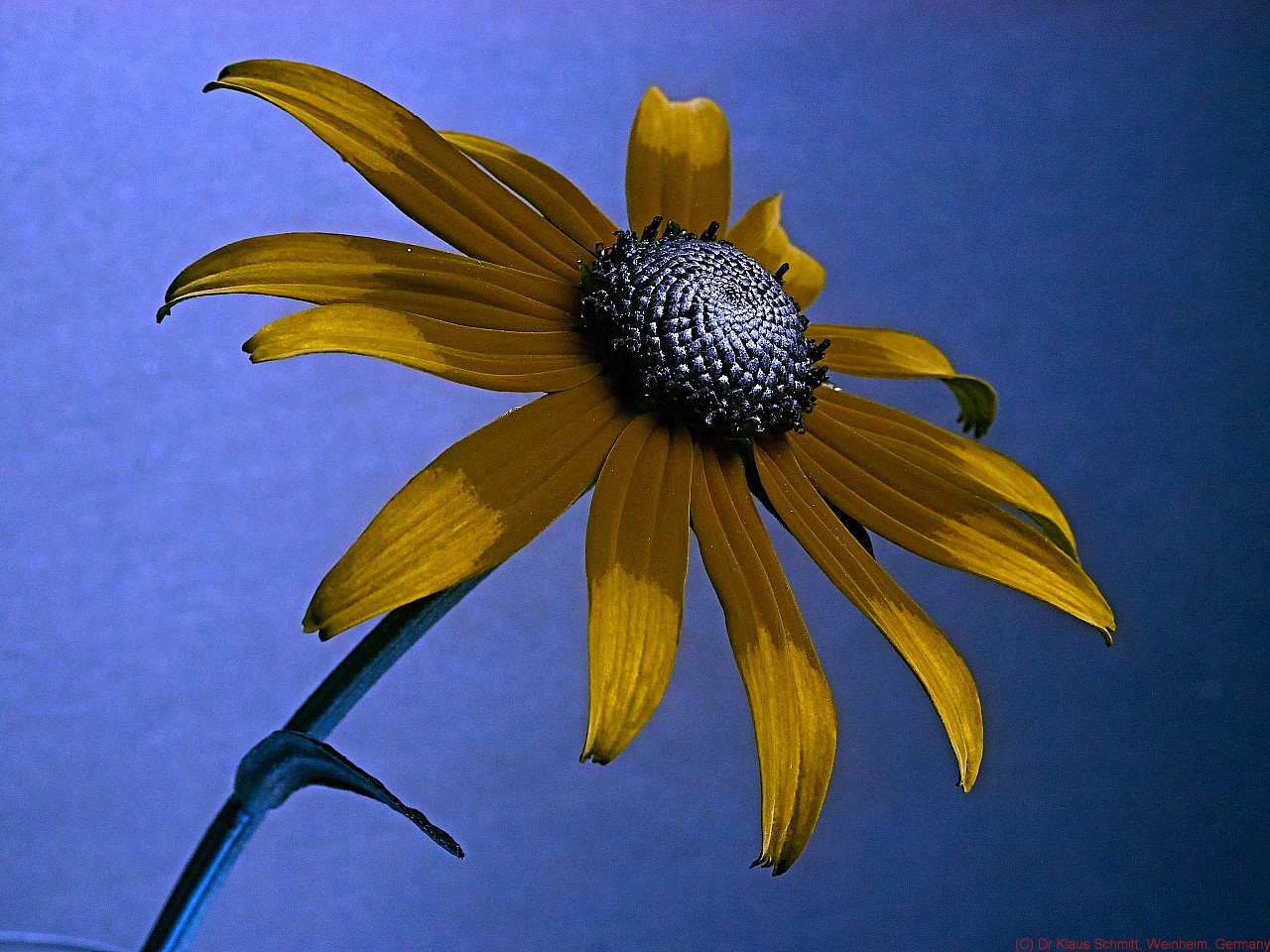
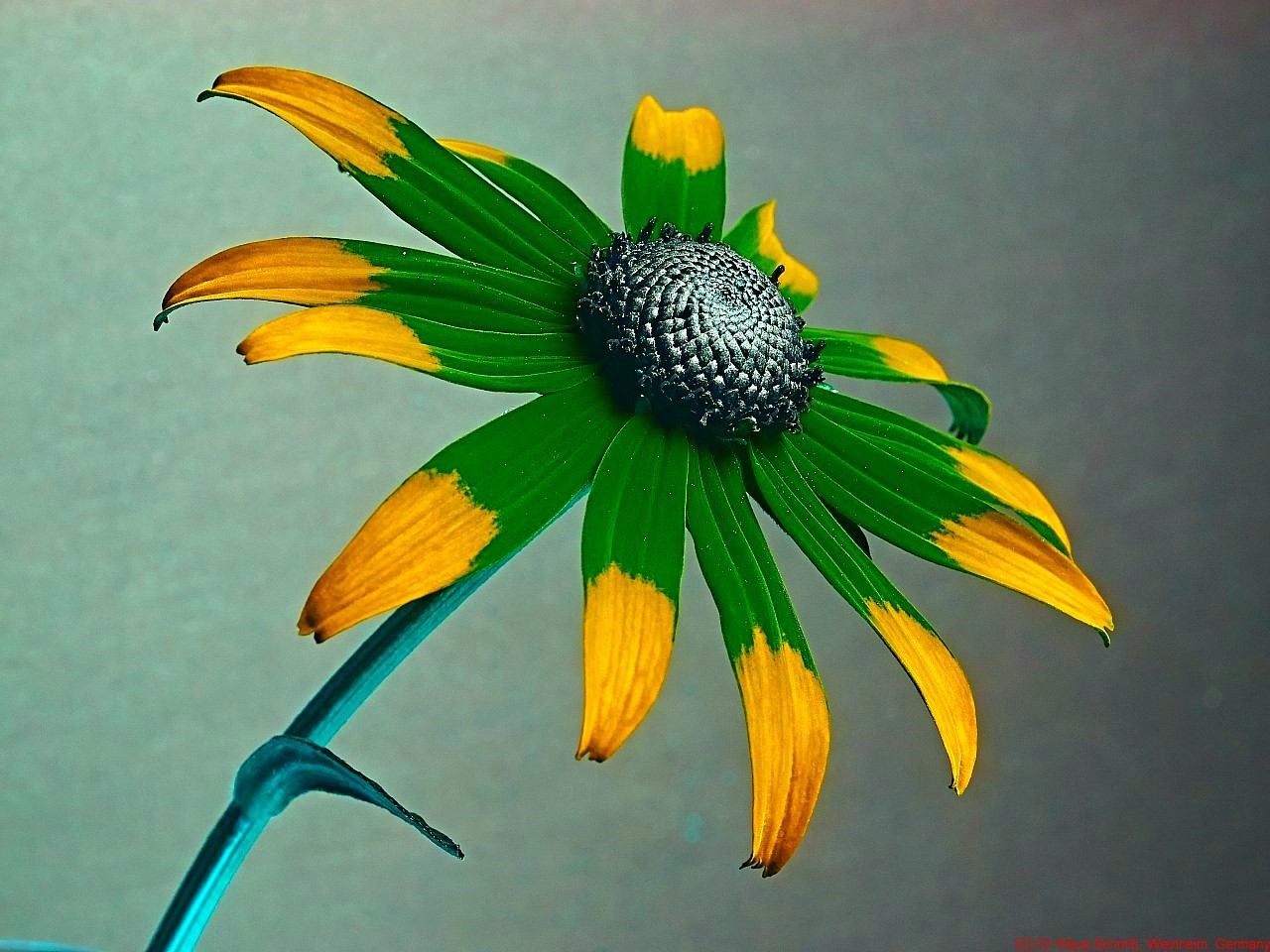
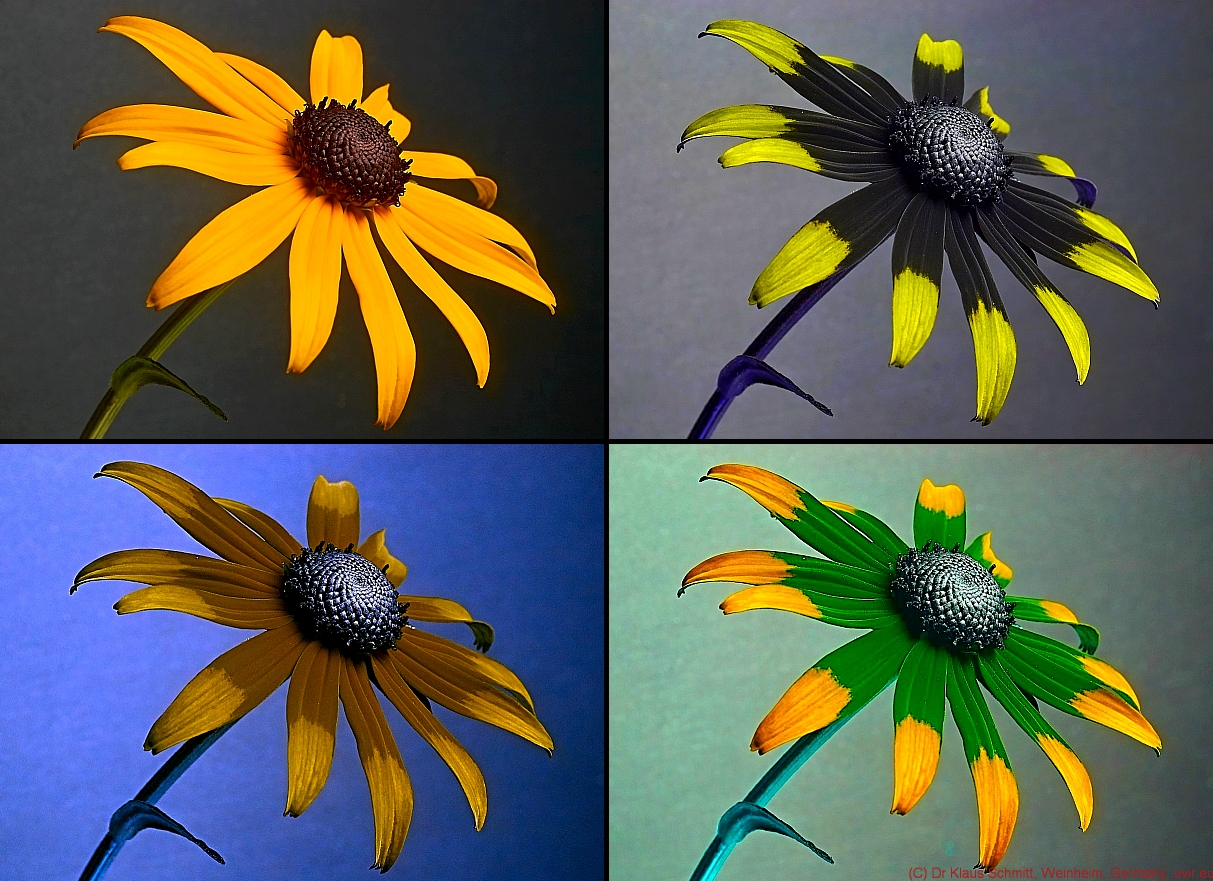
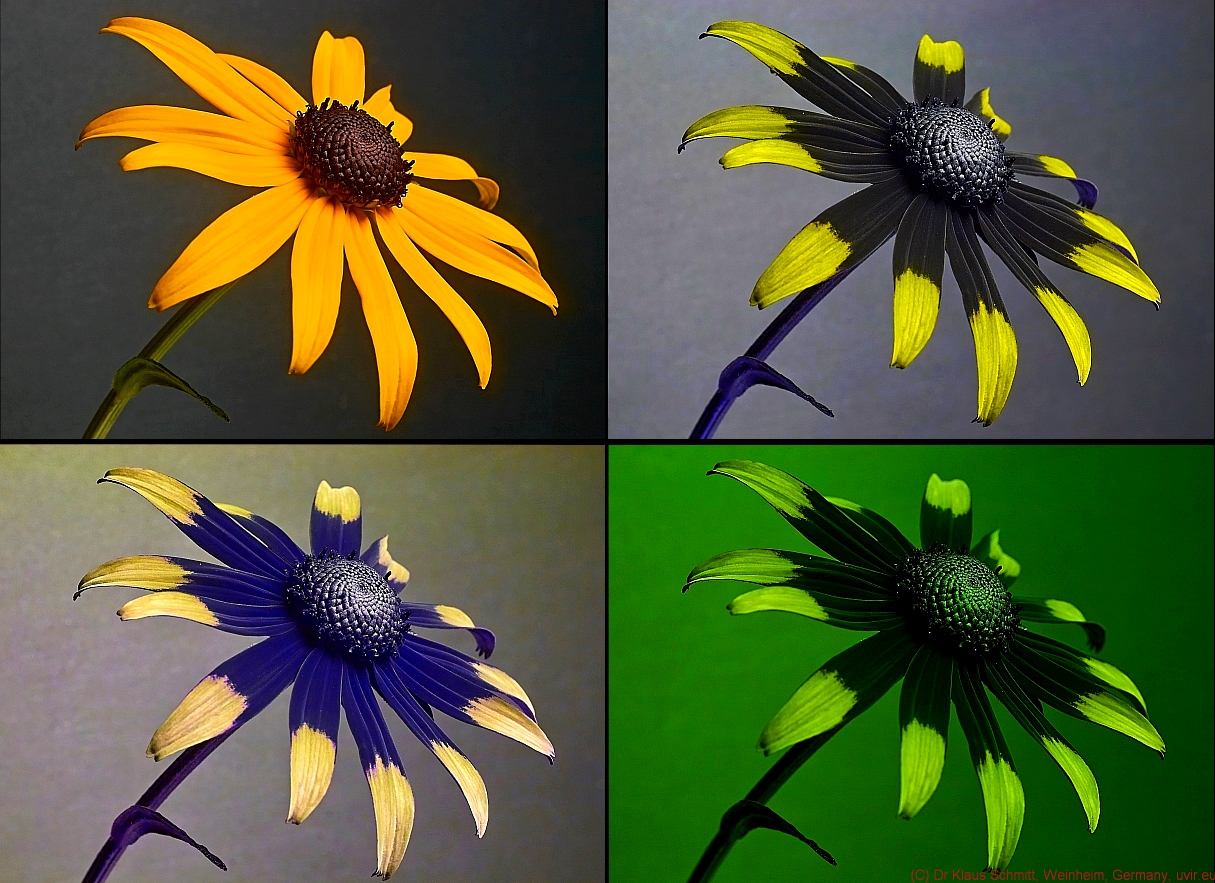
Orange coneflower - Rudbeckia fulgida in reflected deep ultraviolet photography and simulated butterfly and bee vision X

Today lab shots of a decorative summer flower which started to bloom on my balcony, Orange coneflower - Rudbeckia fulgida in reflected ultraviolet photography using my "work horse" UV filter, the Baader-U, Jupiter-U, Saturn-U and Uranus-U deep UV filter, as well as in simulated butterfly and bee vision using my proprietary XBV filters. Lens was my CERCO 94mm quartz flourite lens. Light source was a modified Xenon flash. All shots were done at about f8.

[click on image to see a larger one]

Visible light image
 

UV image using Baader-U filter (approx. 320-395nm, effective peak approx. 375nm):  

UV image using Jupiter-U filter (approx. 280-385nm, effective peak approx. 365nm):
 

UV image using Saturn-U filter (approx. 300-350nm, effective peak approx. 325nm):
 

UV image using Uranus-U filter (approx. 270-320nm, effective peak approx. 315nm):
 

Simulated butterfly vision image using XBV3 filter:  

Simulated bee vision image using XBV6 filter:  

Quadriptych of the above (with bee/butterfly vision):
 

Quadriptych of the above (with deep UV):
 

This attractive flower shows its very prominent UV bullseye pattern, its petals have an UV dark bottom and very UV bright tips (around 365nm), invisible to us humans, and all this gets nicely visible.


Stay tuned, more will follow on that fascinating subject...

Monday, July 7, 2014

Creeping Zinnia - Sanvitalia procumbens in reflected deep ultraviolet photography, simulated bee and butterfly vision III

Today shots of a spring flower, developed from RAW files, Creeping Zinnia - Sanvitalia procumbens in reflected ultraviolet photography using my "work horse" UV filter, the Baader-U filter, my Jupiter-U and Saturn-U deeper UV filters, as well as my XBV filters for simulating butterfly and bee vision. Lens was a CERCO 94mm quartz fluorite lens. Light source was a Xenon flash. All shots were done at about f8.

[click on image to see a larger one]

Visible light image:
 

UV image using Baader-U filter (approx. 320-395nm, effective peak approx. 375nm):
 

UV image using Jupiter-U filter (approx. 280-385nm, effective peak approx. 365nm):
 

UV image using Saturn-U filter (approx. 300-350nm, effective peak approx. 325nm):
 

Simulated butterfly vision (UV - VIS) using XBV3 filter:
 

Simulated bee vision (UV - VIS) using XBV4 filter:
 

Simulated bee vision (UV - VIS) using XBV6 filter:
 

Triptych of the above (with bee/butterfly vision):
 

Triptych of the above (with deep UV):


Sanvitalia has a strong UV pattern, its petal tips are UV bright around 365nm and its center is quite UV dark, and all this gets nicely visible.

Stay tuned, more will follow on that fascinating subject...

More info on this very interesting field may be found on my site http://www.pbase.com/kds315/uv_photos