Showing posts sorted by date for query hirta. Sort by relevance Show all posts

Saturday, August 22, 2026

Black-eyed Susan - Rudbeckia hirta in 3D reflected ultraviolet photography and simulated bee and butterfly vision XX

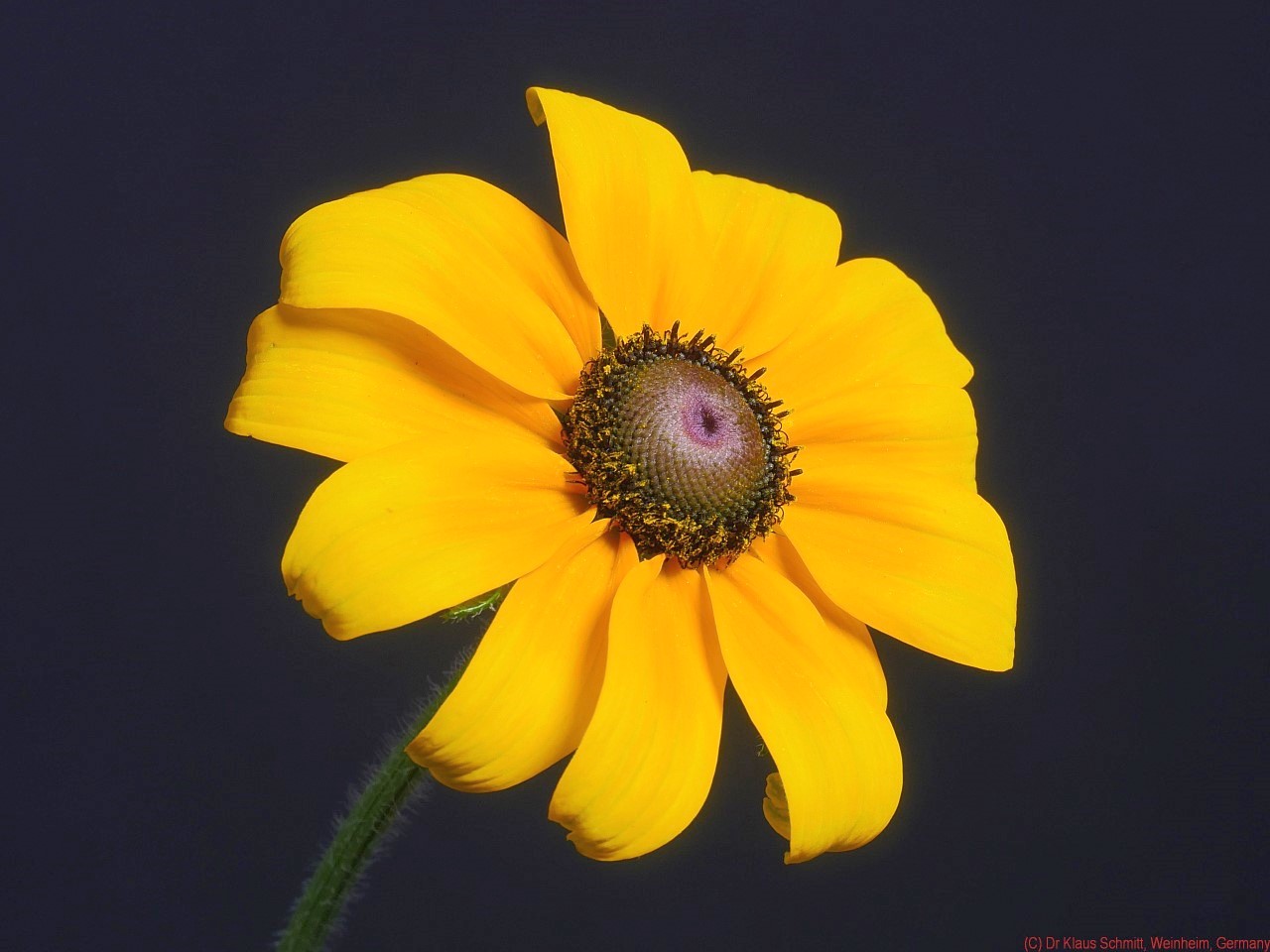
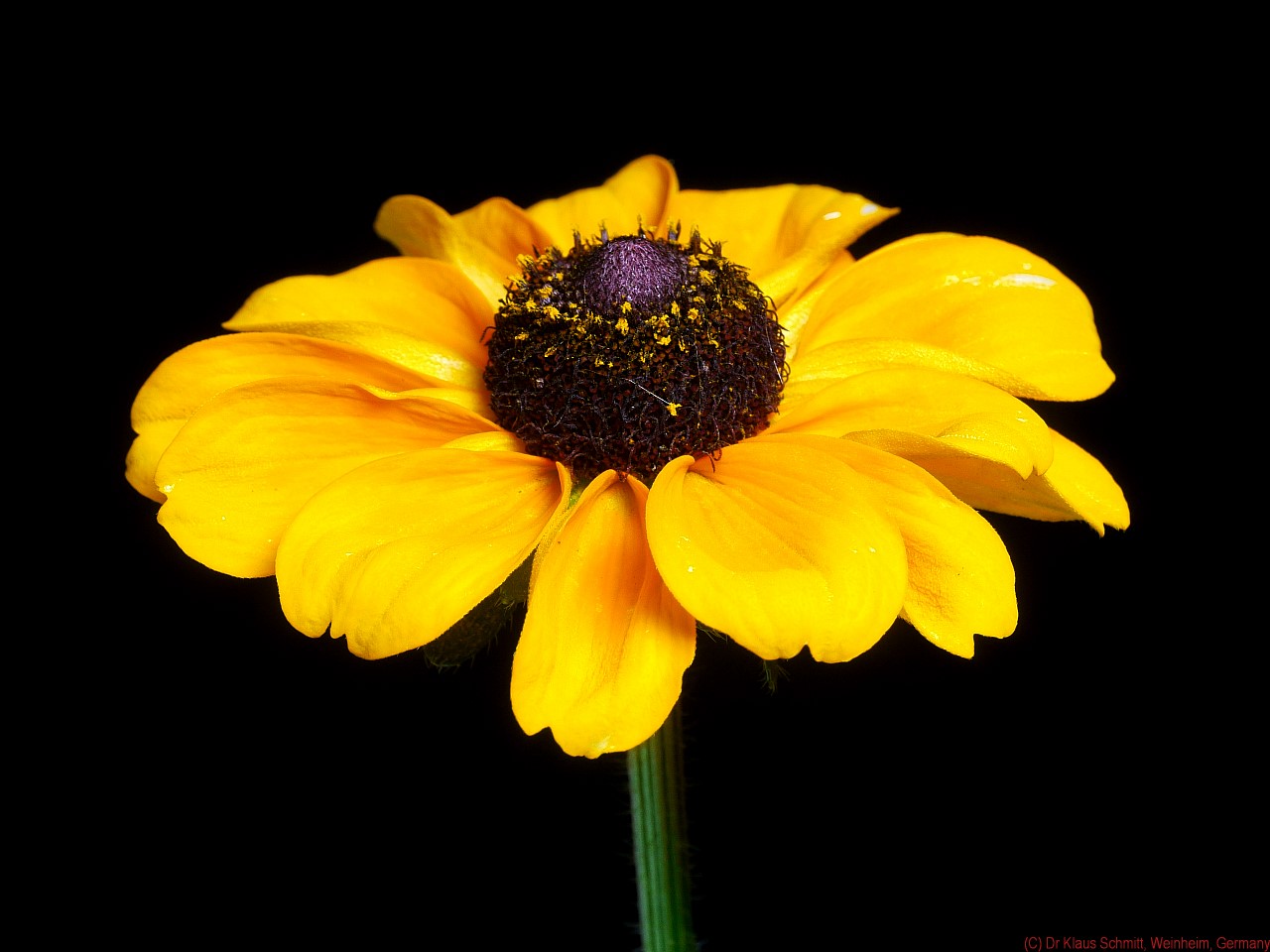
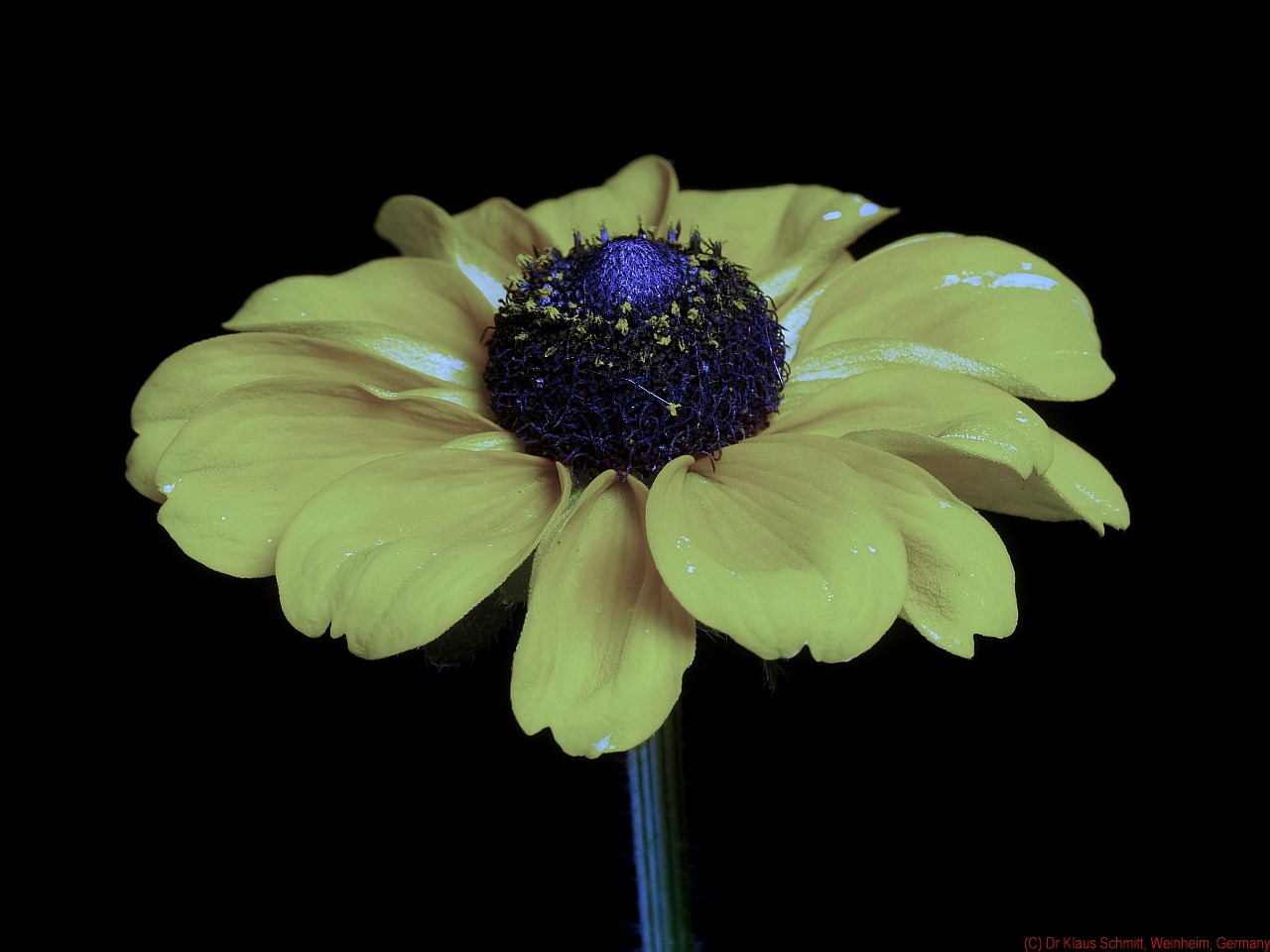
Today more shots of that beautiful flower, originating from the USA Prairie, here today again that commercially sold hybrid of a Black-eyed Susan - Rudbeckia hirta (possibly R. hirta x R. fulgida) in 3D STEREO (crosseye) in reflected ultraviolet photography using different filters aside from the Baader-U filter, but different ones today for simulated bee and butterfly vision but also part of my XBV filter set. All shots were done at f8-f11 on my balcony. Lens was a UV transmitting 35mm wide angle lens with an older Zeiss Jena Macro beamsplitter. Light source was direct sunlight. 

 
[click on image to see a larger one]

Human vision:
 

Reflected ultraviolet (UV - false color):
 

Simulated butterfly vision:
 

Simulated bee vision:
 

This flower shows a very prominent UV bullseye pattern, as its petal tips are very UV bright (around 365nm) and its center is very UV dark, and all this gets nicely visible, also in simulated bee and butterfly vision in 3D STEREO.

I have previously written about that flower HERE  


Stay tuned, more will follow on that fascinating subject...

More info on this very interesting field may be found on my site http://www.pbase.com/kds315/uv_photos

Thursday, July 23, 2026

Black-eyed Susan - Rudbeckia hirta in reflected ultraviolet photography and simulated bee and butterfly vision XIX

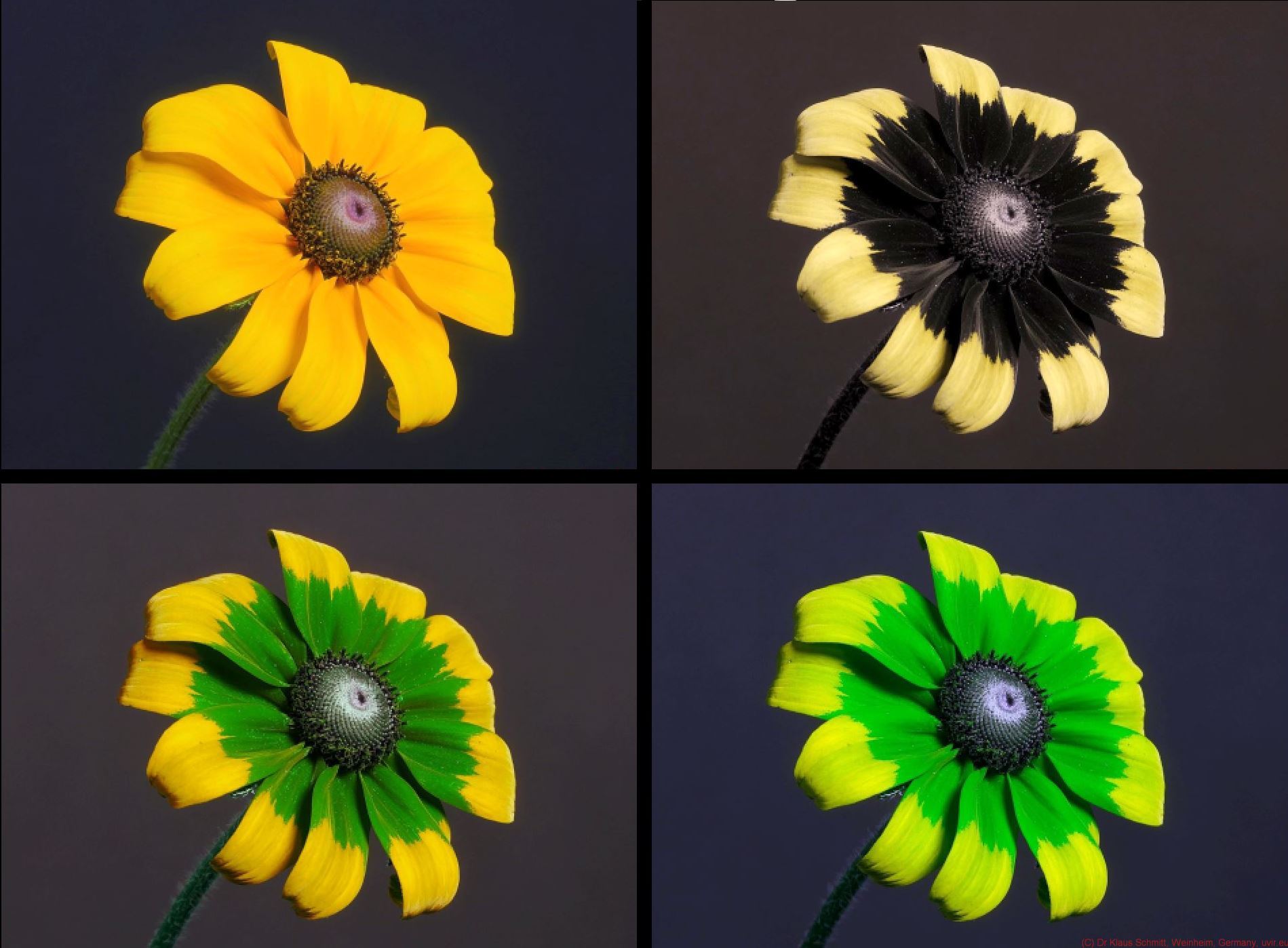
Today more shots of that beautiful flower, originating from the USA Prairie, here today again that commercially sold hybrid of a Black-eyed Susan - Rudbeckia hirta (possibly R. hirta x R. fulgida) in reflected ultraviolet photography using different filters aside from the Baader-U filter, but different ones today for simulated bee and butterfly vision but also part of my XBV filter set. All shots were done at f8-f11 on my balcony. Lens was a UV-Nikkor 105mm quartz fluorite lens. Light source was direct sunlight. 

PS: These other filters (filter stacks actually) I used have partially corroded over time, so I had to polish them using finest Cerium-Oxide powder. I made some slurry with that using filtered water, then polished the filter glasses with that using a very soft cloth and small circular movements, then rinsed them clean and dried them. So these images hopefully prove that this was successfully done....I think so.

[click on image to see a larger one]

Human vision:
 

Reflected ultraviolet (UV - false color):
 

Simulated butterfly vision:
 

Simulated bee vision:
 

Quadriptych of human vision, ultraviolet, simulated bee and butterfly vision (left to right, top to bottom):
 

This flower shows a very prominent UV bullseye pattern, as its petal tips are very UV bright (around 365nm) and its center is very UV dark, and all this gets nicely visible, also in simulated bee and butterfly vision.

I have previously written about that flower HERE  


Stay tuned, more will follow on that fascinating subject...

More info on this very interesting field may be found on my site http://www.pbase.com/kds315/uv_photos

Monday, July 13, 2026

Black-eyed Susan - Rudbeckia hirta in reflected ultraviolet photography and simulated bee and butterfly vision XVIII

Today shots of a beautiful flower, originating from the USA Prairie, here today a commercially sold hybrid of a Black-eyed Susan - Rudbeckia hirta (possibly R. hirta x R. fulgida) in reflected ultraviolet photography using my "work horse" UV filter, the Baader-U filter, as well as in simulated bee and butterfly vision using my XBV filters. All shots were done at f8-f11 on my balcony in shade. Lens was a UV-Nikkor 105mm quartz fluorite lens. Light source was available light.

[click on image to see a larger one]

Human vision:
 

Reflected ultraviolet (UV):
 

Simulated butterfly vision:
 

Simulated bee vision:
 

Quadriptych of human vision, ultraviolet, simulated butterfly and bee vision (left to right, top to bottom):
 

This flower shows a very prominent UV bullseye pattern, as its petal tips are very UV bright (around 365nm) and its center is very UV dark, and all this gets nicely visible, also in simulated bee and butterfly vision.

I have previously written about that flower HERE  
Stay tuned, more will follow on that fascinating subject...

More info on this very interesting field may be found on my site http://www.pbase.com/kds315/uv_photos

Wednesday, June 3, 2026

Slovakian Museum shows my works to show kids how bees and butterflies see flowers

Today about some of my works being used with my permission by the Zapadoslovenske Museum, Trnava, Slovakia  in an exhibition how bees and butterflies see flowers, March to October 2026.

They chose to use my multispectral photos of an attractive yellow flower, a Rudbeckia hirta, which were shot by me in reflected ultraviolet photography, simulated bee and butterfly vision. All shots were done at f8 in reflected ultraviolet photography using my "work horse" UV filter, the Baader-U filter, as well as my XBV filters for simulated bee and butterfly vision. Lens was a UV-Nikkor 105mm quartz fluorite lens. Light source was a modified Xenon studio flash, modified for high UV output.

[click on image to see a larger one]

Human vision:
 

Reflected UV:
 

Simulated butterfly vision:
 

Simulated bee vision:
 

Quadriptych of human vision, UV, simulated butterfly and bee vision (left to right, top to bottom):
 

Rudbeckia hirta's outer petals strongly reflect UV around 365nm, whereas its center parts are quite darker, reflecting around 365nm, hence forming invisible to us humans UV nectar guides for UV seeing insects. This is all invisible to us humans, but clearly visible to bees and butterflies, and all this will be nicely visible to the visitors.

I have written more about this flower HERE.

Stay tuned, more will follow on that fascinating subject...

More info on this very interesting field may be found on my site http://www.pbase.com/kds315/uv_photos 

Stay tuned, more will follow on that fascinating subject...

Wednesday, October 22, 2025

Nature in Brilliant Colors Exhibit at Canadian Museum of Nature (CMN) in Ottawa, Canada

Today about some of my works being used with my permission by the Canadian Museum of Nature (CMN) in Ottawa, Canada. Their idea was to have an digital interactive exhibition on floral seduction strategies, showing how flowers invisible to us interact with bees and butterflies using reflected ultraviolet (UV) light.

They chose to use an attractive yellow flower, a Rudbeckia hirta, which were shot by me in reflected ultraviolet photography, simulated bee and butterfly vision. All shots were done at f8 in reflected ultraviolet photography using my "work horse" UV filter, the Baader-U filter, as well as my XBV filters for simulated bee and butterfly vision. Lens was a UV-Nikkor 105mm quartz fluorite lens. Light source was a modified Xenon studio flash, modified for high UV output.

[click on image to see a larger one]

Human vision:
 

Reflected UV:
 

Simulated butterfly vision:
 

Simulated bee vision:
 

Quadriptych of human vision, UV, simulated bee and butterfly vision (left to right, top to bottom):
 

Rudbeckia hirta's outer petals strongly reflect UV around 365nm, whereas its center parts are quite darker, reflecting around 365nm, hence forming invisible to us humans UV nectar guides for UV seeing insects. This is all invisible to us humans, but clearly visible to bees and butterflies, and all this will be nicely visible to the visitors at the Canadian Museum of Nature (CMN) in Ottawa, Canada from May 15, 2026 to January 10, 2027

I have written more about this flower HERE.

Stay tuned, more will follow on that fascinating subject...

More info on this very interesting field may be found on my site http://www.pbase.com/kds315/uv_photos 

Stay tuned, more will follow on that fascinating subject...

Tuesday, May 27, 2025

Exhibition on Floral Seduction Strategies at Montreal Botanical Garden

Today about some of my works being used with my permission by the Montreal Botanical Garden. Their idea was to have an exhibition on floral seduction strategies, showing how flowers invisible to us interact with bees and butterflies using reflected ultraviolet (UV) light at the Montreal Botanical Garden, Canada.

They chose to use an attractive yellow flower, a Rudbeckia hirta, which were shot by me in reflected ultraviolet photography, simulated bee and butterfly vision. All shots were done at f8 in reflected ultraviolet photography using my "work horse" UV filter, the Baader-U filter, as well as my XBV filters for simulated bee and butterfly vision. Lens was a UV-Nikkor 105mm quartz fluorite lens. Light source was a modified Xenon studio flash, modified for high UV output.

[click on image to see a larger one]

Human vision:
 

Reflected UV:
 

Simulated butterfly vision:
 

Simulated bee vision:
 

Quadriptych of human vision, UV, simulated bee and butterfly vision (left to right, top to bottom):
 

Rudbeckia hirta's outer petals strongly reflect UV around 365nm, whereas its center parts are quite darker, reflecting around 365nm, hence forming invisible to us humans UV nectar guides for UV seeing insects. This is all invisible to us humans, but clearly visible to bees and butterflies, and all this will be nicely visible to the visitors at the Montreal Botanical Garden from June 27 to August 17, 2025.

I have written more about this flower HERE.

Stay tuned, more will follow on that fascinating subject...

More info on this very interesting field may be found on my site http://www.pbase.com/kds315/uv_photos 

Stay tuned, more will follow on that fascinating subject...

Wednesday, April 23, 2025

Texas State Park Authorities showing Rudbeckia hirta UV patterns at Lake Sommerville Park

Today about my works being used with my permission by the Texas State Park Authorities. Their idea is to show visitors how differently bees and butterflies see the world, including their ability to see reflected ultraviolet (UV) light in one of their state parks, the Lake Sommerville Park.

They chose to use an attractive yellow flower, a Rudbeckia hirta, which were shot by me in reflected ultraviolet photography, simulated bee and butterfly vision. All shots were done at f8 in reflected ultraviolet photography using my "work horse" UV filter, the Baader-U filter, as well as my XBV filters for simulated bee and butterfly vision. Lens was a UV-Nikkor 105mm quartz fluorite lens. Light source was a modified Xenon studio flash, modified for high UV output.

[click on image to see a larger one]

Human vision:
 

Reflected UV:
 

Simulated butterfly vision:
 

Simulated bee vision:
 

Quadriptych of human vision, UV, simulated bee and butterfly vision (left to right, top to bottom):
 

Rudbeckia hirta's outer petals strongly reflect UV around 365nm, whereas its center parts are quite darker, reflecting around 365nm, hence forming UV nectar guides for UV seeing insects. This is all invisible to us humans, but clearly visible to bees and butterflies, and all this will be nicely visible to the visitors at Lake Sommerville State Park, TX USA.

I have written more about this flower HERE.

Stay tuned, more will follow on that fascinating subject...

More info on this very interesting field may be found on my site http://www.pbase.com/kds315/uv_photos 

Stay tuned, more will follow on that fascinating subject...

Saturday, December 21, 2024

Nature in Brilliant Colour exhibit at the Royal Ontario Museum in Toronto, Canada showing butterfly vision

I have been asked by the Royal Ontario Museum (ROM), Queens Park, Toronto Canada for permission to exhibit a series of images to simulate the vision of butterflies at their forthcoming exhibit "Nature in Brilliant Colour " which is a travelling exhibit originally developed by the Field Museum Chicago. The exhibition will run from 14 December 2024 to 17 August 2025.

For that exhibit I chose images of a Rudbeckia hirta flower Black Eyed Susan - Rudbeckia hirta which I had shot using visible and reflected ultraviolet photography. All shots were then done at f8 in reflected ultraviolet photography using my "work horse" UV filter, the Baader-U filter, as well as my XBV filters for simulated animal vision. Lens was a UV-Nikkor 105mm quartz fluorite lens. Light source was a modified Xenon flash.

[click on image to see a larger one]

Human vision:
 

Simulated butterfly vision:
 

I chose Rudbeckia hirta, as it has a strong UV pattern, its petal tips are UV bright around 365nm, but its center is quite UV dark, so this gets quite nicely visible, hence why I used this flower here to simulate butterfly vision.

 
Stay tuned, more will follow on that fascinating subject...

More info on this very interesting field may be found on my site http://www.pbase.com/kds315/uv_photos

Friday, October 11, 2024

Rudbeckia hirta - Human vs simulated animal vision II: butterfly, bee, dog, horse, bat

I was asked by a member working for their program Jeux Photoniques at the Université Laval in Québec, Canada for a series of images to simulate the vision of different animals. I used images of a Rudbeckia hirta flower Black Eyed Susan - Rudbeckia hirta which I had shot using visible and reflected ultraviolet photography. All shots were then done at f8 in reflected ultraviolet photography using my "work horse" UV filter, the Baader-U filter, as well as my XBV filters for simulated animal vision. Lens was a UV-Nikkor 105mm quartz fluorite lens. Light source was a modified Xenon flash.

[click on image to see a larger one]

Human vision:
 

Simulated butterfly vision:
 

Simulated bee vision:
 

Simulated dog vision:
 

Simulated horse vision:
 

Simulated bat vision:
 

Hexaptych of the above:
 

The idea behind these mappings is, to demonstrate the different forms of vision, including the ability to see UV and with this ability, to see patterns which only appear in ultraviolet light (UV) but invisible to us humans.

 I chose Rudbeckia hirts, as it has a strong UV pattern, its petal tips are UV bright around 365nm, but its center is quite UV dark, so this gets quite nicely visible, hence why I used this flower here to simuate the following visions:

  1. Humans have trichromatic vision, they see Blue, Green, Red
  2. Butterflies see UV, Blue, Green, Red, they are Tetrachromats
  3. Bees see UV, Blue, Green, they are Trichomats
  4. Dogs are Dichromats, see Blue and Yellow, but also some UV
  5. Horses are Dichromats, they see Blue and Yellow, but no UV
  6. Bats do not see color, but some are sensitive to UV also

 
Stay tuned, more will follow on that fascinating subject...

More info on this very interesting field may be found on my site http://www.pbase.com/kds315/uv_photos

Sunday, June 26, 2022

Black-eyed Susan - Rudbeckia hirta in reflected ultraviolet photography and simulated bee and butterfly vision XVII

Today in 2022 shots of a beautiful flower, originating from the USA Prairie, a Black-eyed Susan - Rudbeckia hirta in reflected ultraviolet photography using my "work horse" UV filter, the Baader-U filter, as well as in simulated bee and butterfly vision using my XBV filters. All shots were done at f11. Lens was a UV-Nikkor 105mm quartz fluorite lens. Light source was a modified Xenon flash.

[click on image to see a larger one]

Human vision:
 

Reflected ultraviolet (UV):
 

Simulated butterfly vision:
 

Simulated bee vision:
 

Quadriptych of human vision, ultraviolet, simulated butterfly and bee vision (left to right, top to bottom):
 

This flower shows a very prominent UV bullseye pattern, as its petal tips are very UV bright (around 365nm) and its center is very UV dark, and all this gets nicely visible, also in simulated bee and butterfly vision.

I have previously written about that flower HERE
 
Stay tuned, more will follow on that fascinating subject...

More info on this very interesting field may be found on my site http://www.pbase.com/kds315/uv_photos

Monday, June 13, 2022

"Wandelmut" Exhibit at Museum Sinclair House, Bad Homburg

There is currently an exhibit in Germany at the Museum Sinclair-House, Bad Homburg within the "Wandelmut" (willingness to change) series, which has some of my multispectral works on display. Visible here is a Rudbeckia hirta flower in human vision, simulated bee and butterfly vision, showing the "landing platform" only bees and butterflies can see, as they have the ability to see ultraviolet light (300-400nm), which we humans cannot see.


(Human vision vs. simulated Bee + Butterfly vision; left to right) 

I have written about that Rudbeckia hirta flower HERE before,

Stay tuned, more will follow on that fascinating subject...

More info on this very interesting field may be found on my site http://www.pbase.com/kds315/uv_photos


Sunday, July 25, 2021

Black-eyed Susan - Rudbeckia hirta in reflected ultraviolet photography and simulated bee and butterfly vision XVI

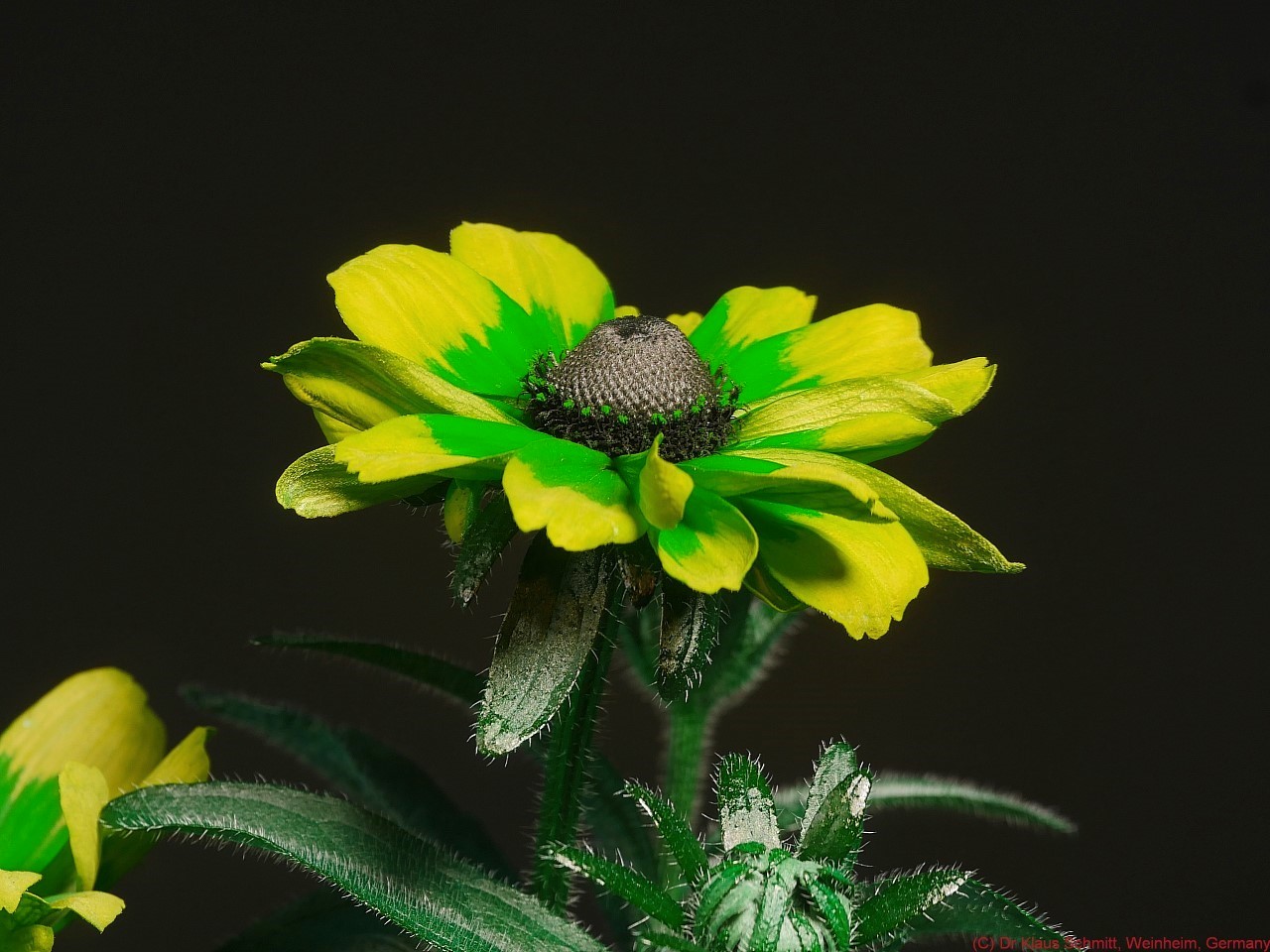
Today in 2021 shots of a human bread beautiful flower, originating from the USA Prairie, a Black-eyed Susan - Rudbeckia hirta in reflected ultraviolet photography using my "work horse" UV filter, the Baader-U filter, as well as in simulated bee and butterfly vision using my XBV filters. All shots were done at f8. Lens was a UV-Nikkor 105mm quartz fluorite lens. Light source was my UV enhanced studio flash.
[click on image to see a larger one]

Human vision:
 

Reflected ultraviolet (UV):
 

Simulated butterfly vision:
 

Simulated bee vision:
 

Quadriptych of human vision, ultraviolet, simulated bee and butterfly vision (left to right, top to bottom):
 

This flower shows a very prominent UV bullseye pattern, as its petal tips are very UV bright (around 365nm) and its center is very UV dark, and all this gets nicely visible, also in simulated bee and butterfly vision.

I have previously written about that flower HERE
 
Stay tuned, more will follow on that fascinating subject...

More info on this very interesting field may be found on my site http://www.pbase.com/kds315/uv_photos